We’d wanted to go to New Zealand for years. And one of us had wanted to go in a helicoptor for … well… for a long time. So, when the opportunity came, and finances allowed, we went. What I didn’t know was that someone had booked a trip to the summit of Mount Cook.

The New Zealand Southern Alps are a range of mountains formed millions of years ago by the clashing of the Pacific and Indo-Australian tectonic plates. Mount Cook (also called Aoraki – Cloud Piercer) at 3753 metres is the highest peak. And the highest place I’ve ever been – and most probably ever will go. It was truly spectacular. And, if I’m honest, rather Intimidating. But, if we’d gone before 1991, it would have been even more nail-biting. In that year a mighty avalanche sent millions of tons of debris crashing onto the glacier below, losing ten metres from the summit and completely changing the eastern face of the mountain.
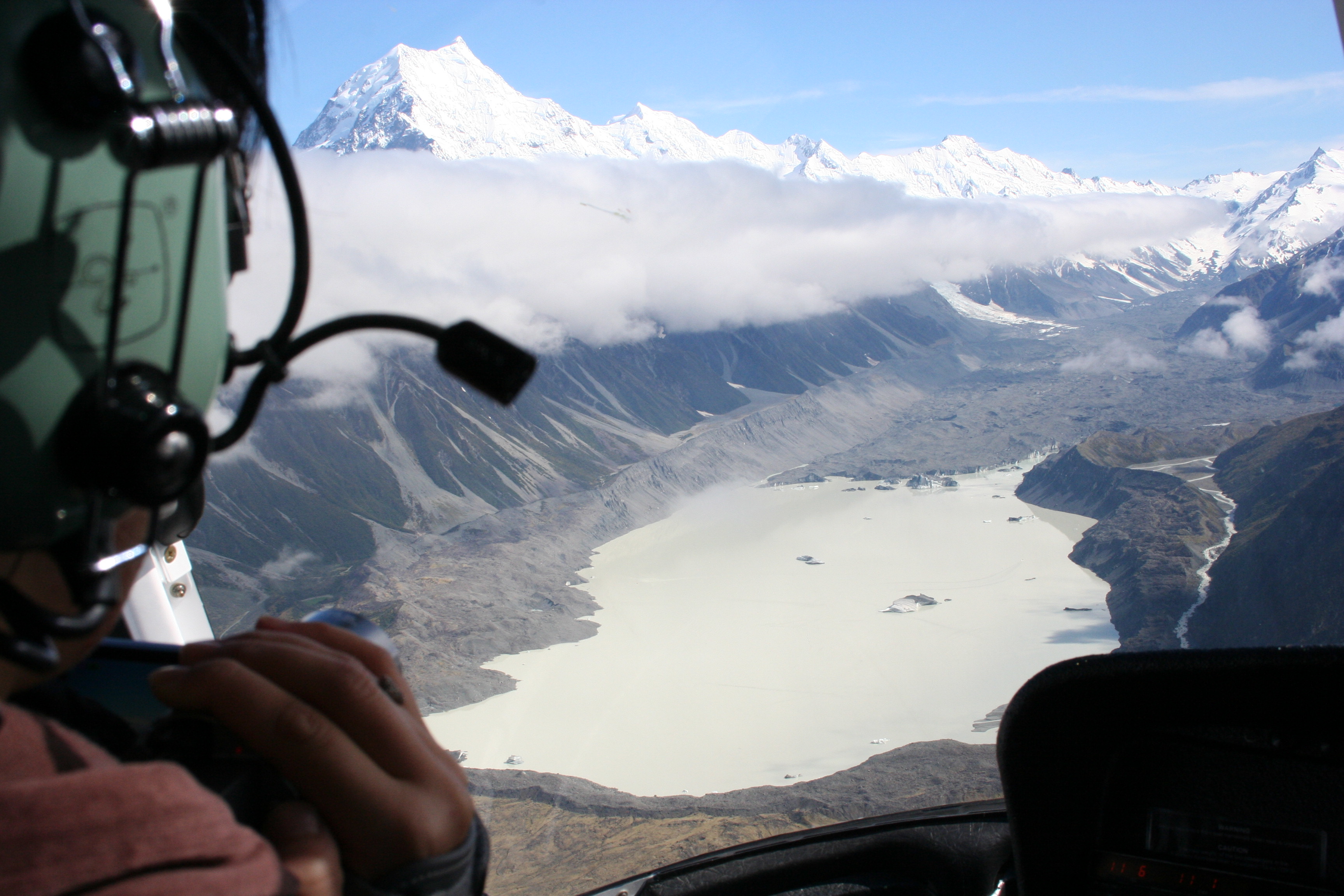
Mount Cook is bordered by two glaciers: the Tasman Glacier to the east and the Hooker Glacier towards the west coast. I think, at this stage I was just hoping we could land safely… and not on a glacier.

Mount Cook, helped Sir Edmund Hillary to develop his climbing skills in preparation for the conquest of Everest at the age of thirty-three. On the twenty-ninth of May 1953, at around 11:30am he and his Sherpa mountain guide Tenzing Norgay successfully reached the summit of Mount Everest (8844.43m), becoming the first man to stand on the top of the highest mountain in the world.
The first recorded ascent of Mount Cook is by the New Zealand climbing trio of Jack Clarke, Tom Fyfe and George Graham, who reached the top of the mountain on Christmas day in 1894.

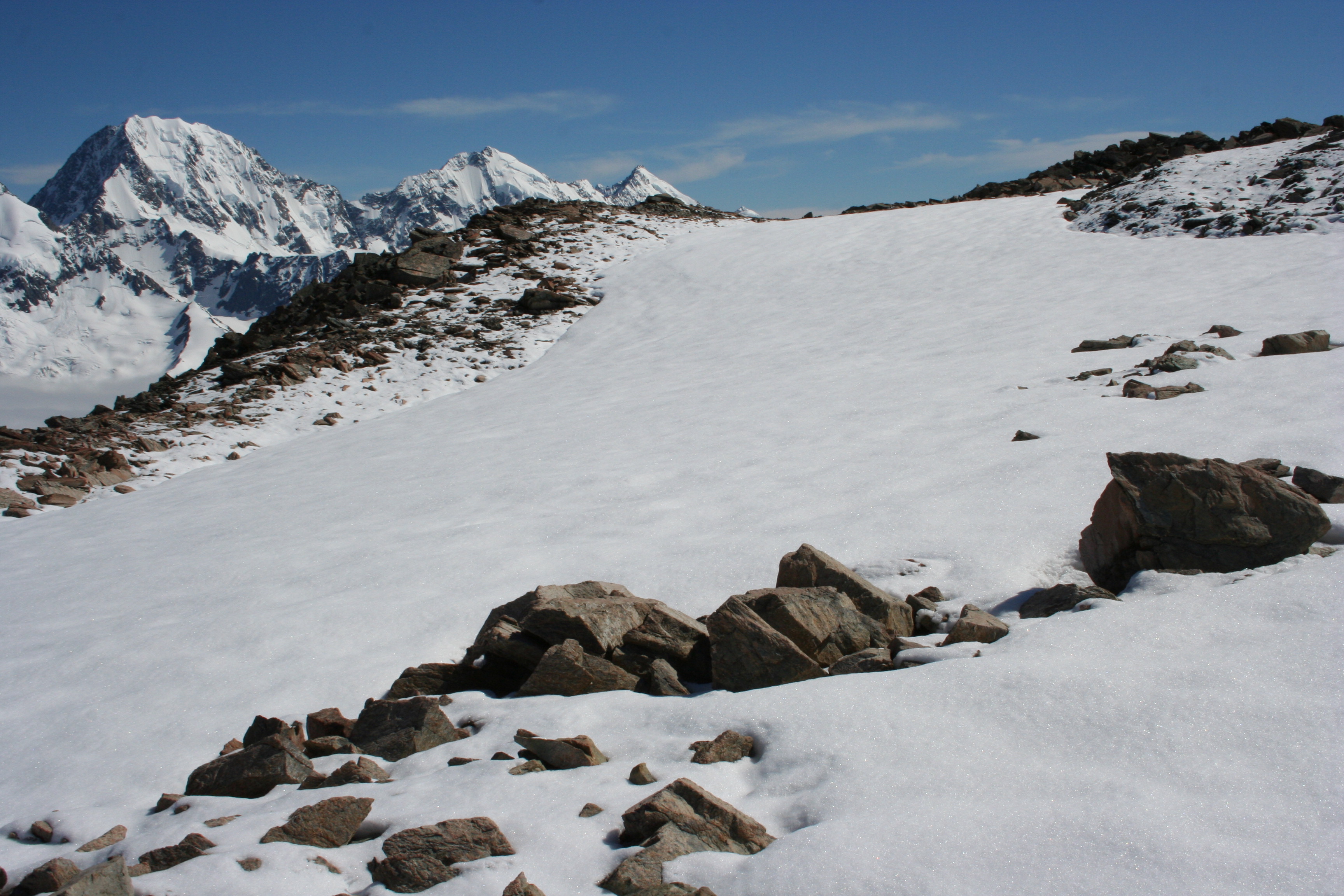
According to Māori (Ngāi Tahu) legend, Aoraki and his three brothers were the sons of Rakinui (the Sky Father). While on a sea voyage around the Papatūānuku, (the Earth Mother) their canoe became stranded on a reef. Aoraki and his brothers climbed onto the top side of their canoe when it overturned. The freezing south wind turned them to stone.
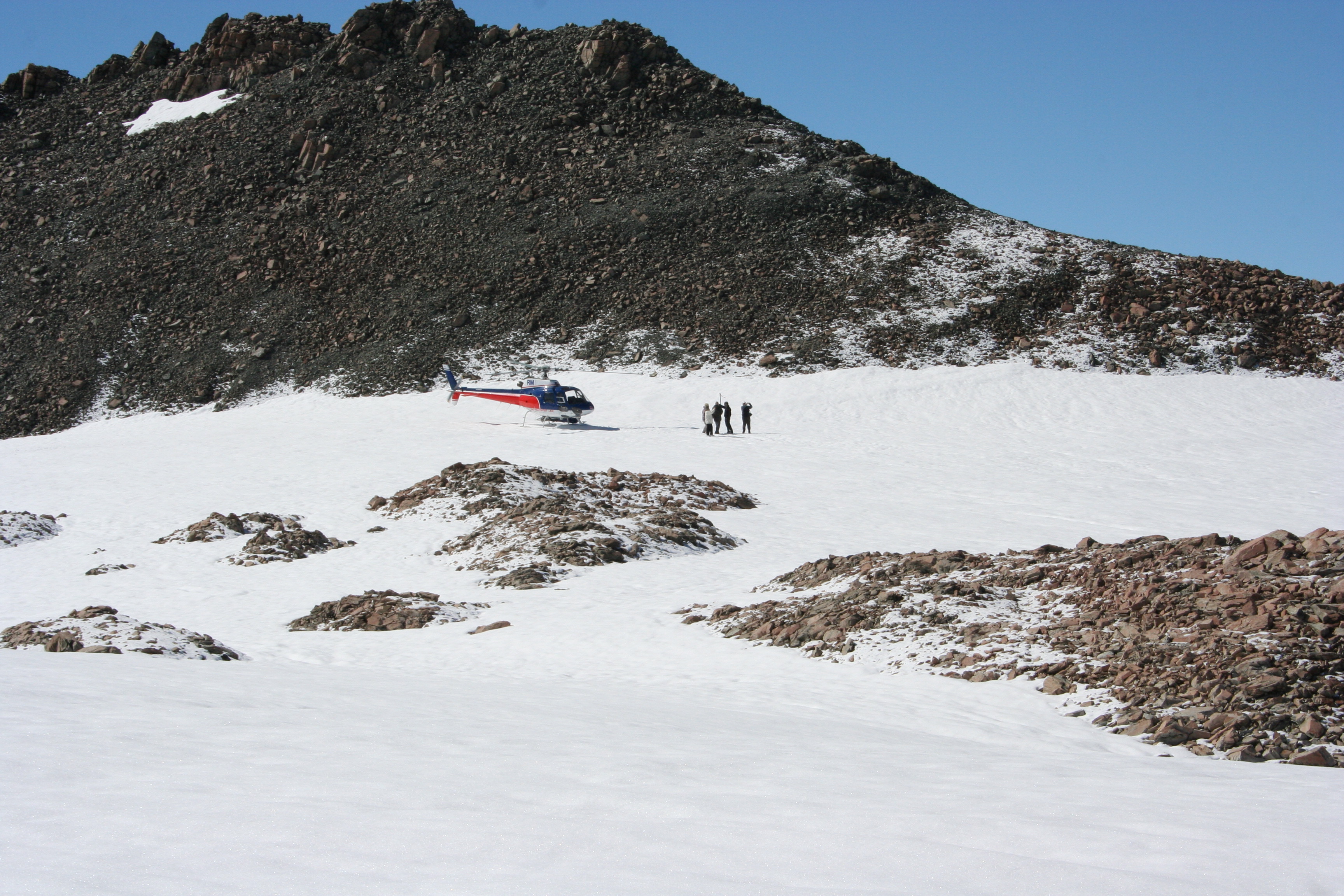
Those tiny figures are us, together with the other passenger and the pilot. As I’d glued the photographer to my side when we first got out of the helicopter, I haven’t a clue who took this photo! Whoever it was, they didn’t get back in the helicopter with us. There could be a story somewhere in that!

It was rather bright… and cold… and windy. The photographer clutched tight hold of his camera. And, as I said, I clutched tight hold to him.


I think by the time he’d finished we had about fifty photographs of the summit and surrounding mountain peaks. He does like to take every angle from all accessible places. I did get a little worried at times at his definition of accessible.

Back safe! It occurred to me afterwards, when I looked back on some of the more difficult hikes we’ve done, how different it is being in control of where your feet go on rocky trails, and how nervous I was actually standing on top of Mount Cook when I knew there was only one way down!
I think this is his “we did it” stance. And let’s go again!
But I was happy to go to the Aoraki Mount Cook village (known mostly for being the top South Island basecamp for climbers, where about only two hundred and fifty people live and there are only around ten pupils in the local school; New Zealand’s only school inside a national park) for some much needed refreshments.
And, anyway, the clouds had descended once more and all flights were off for the day. Phew!!




 Judith Barrow