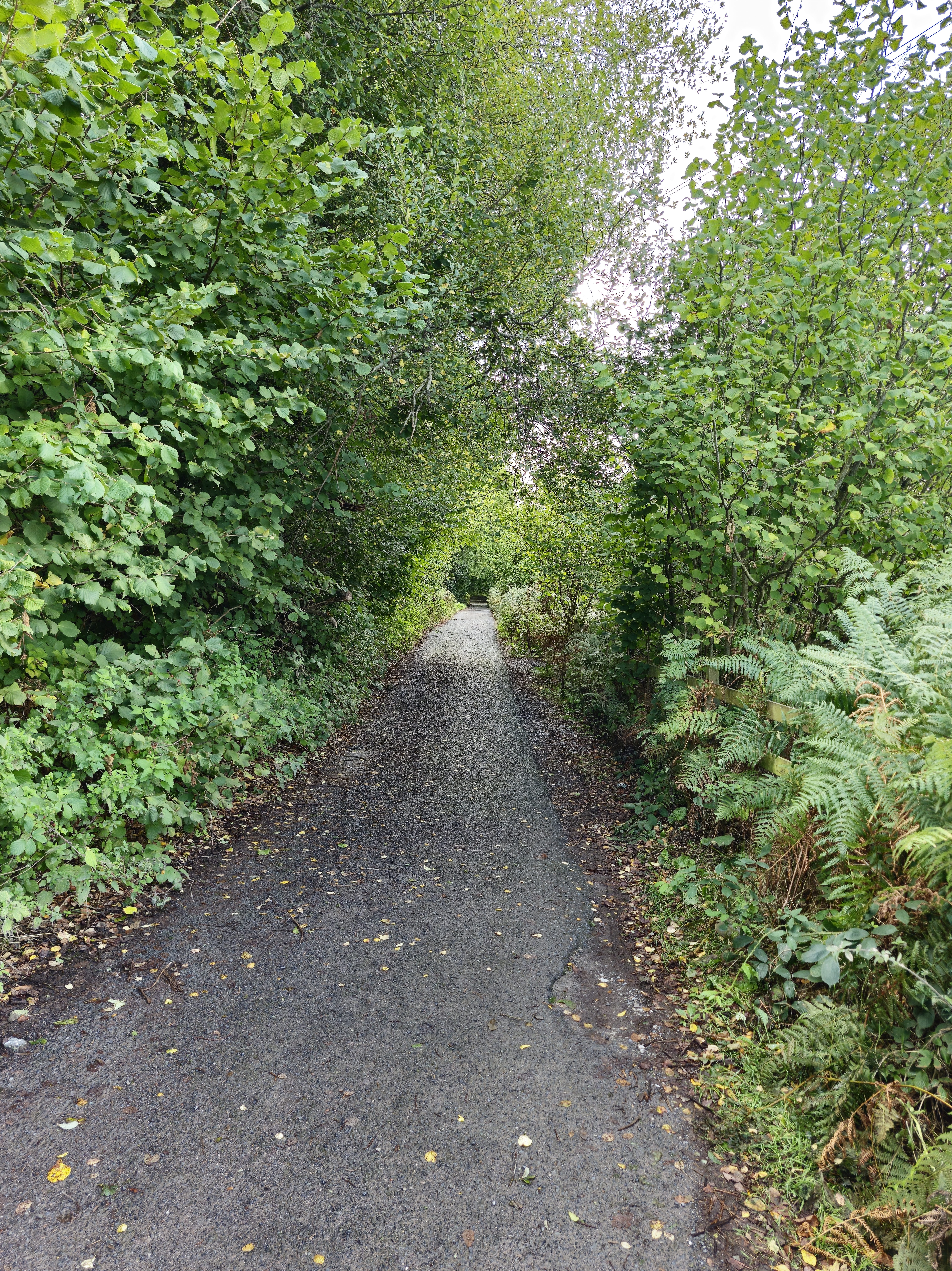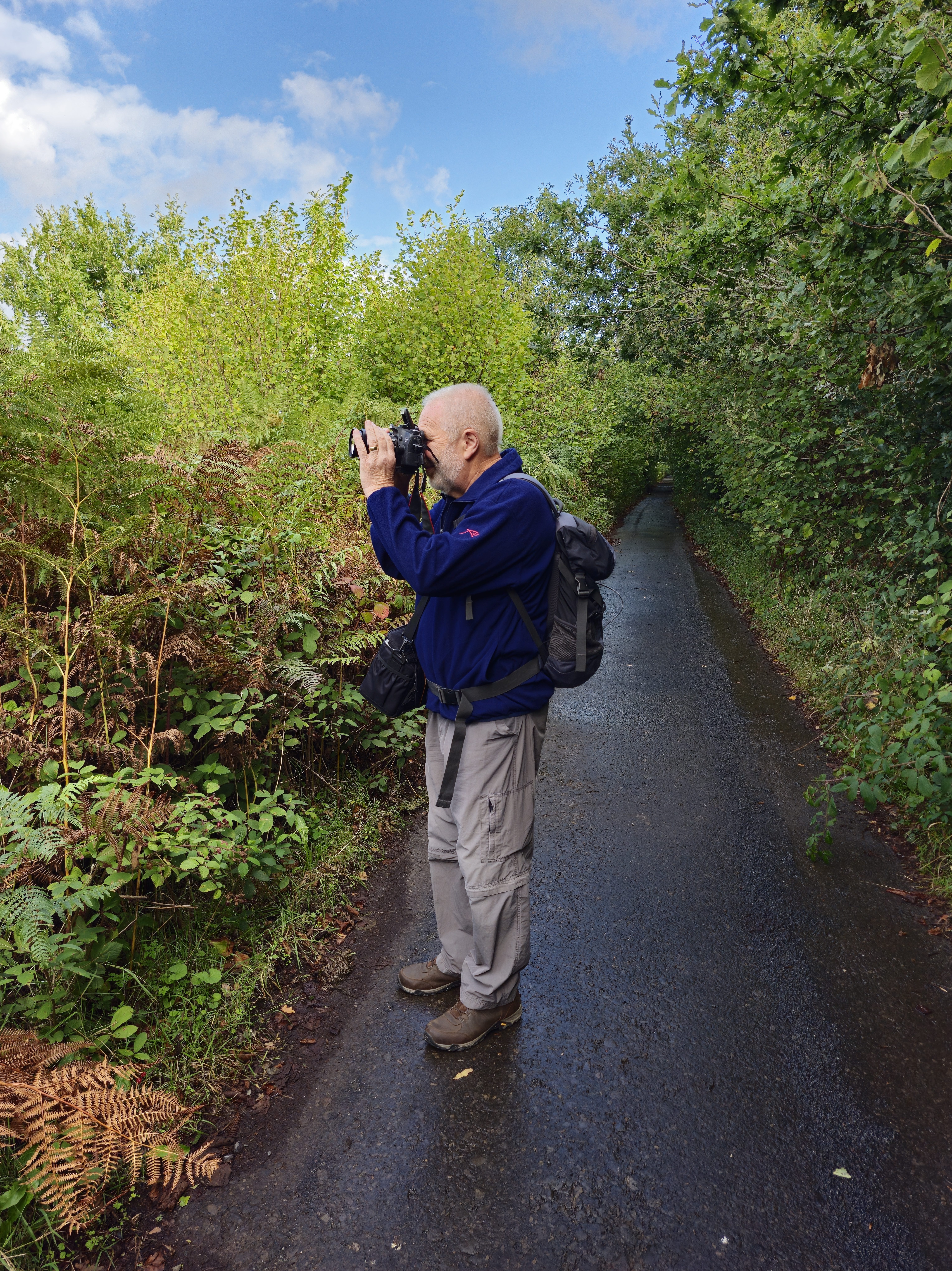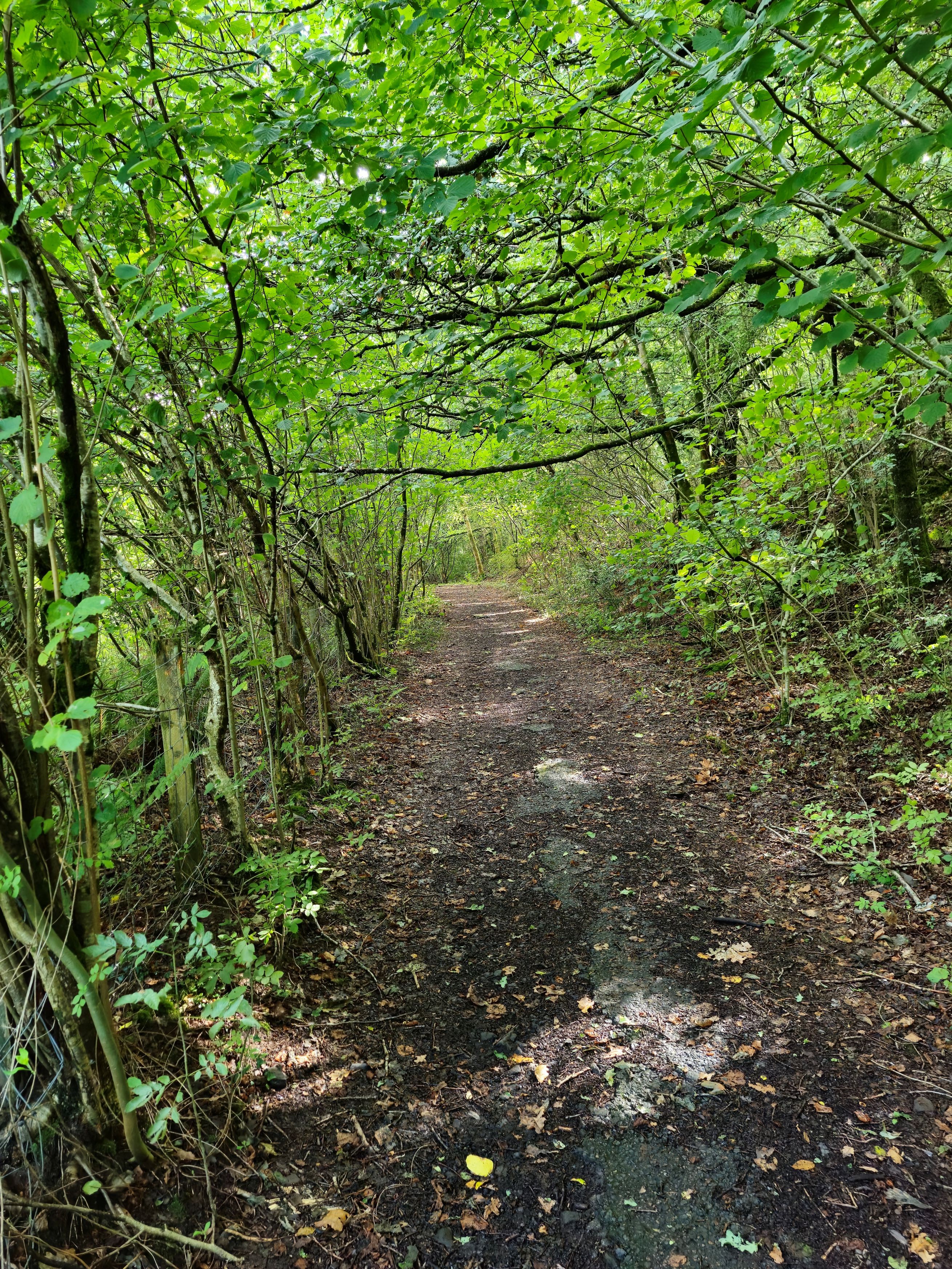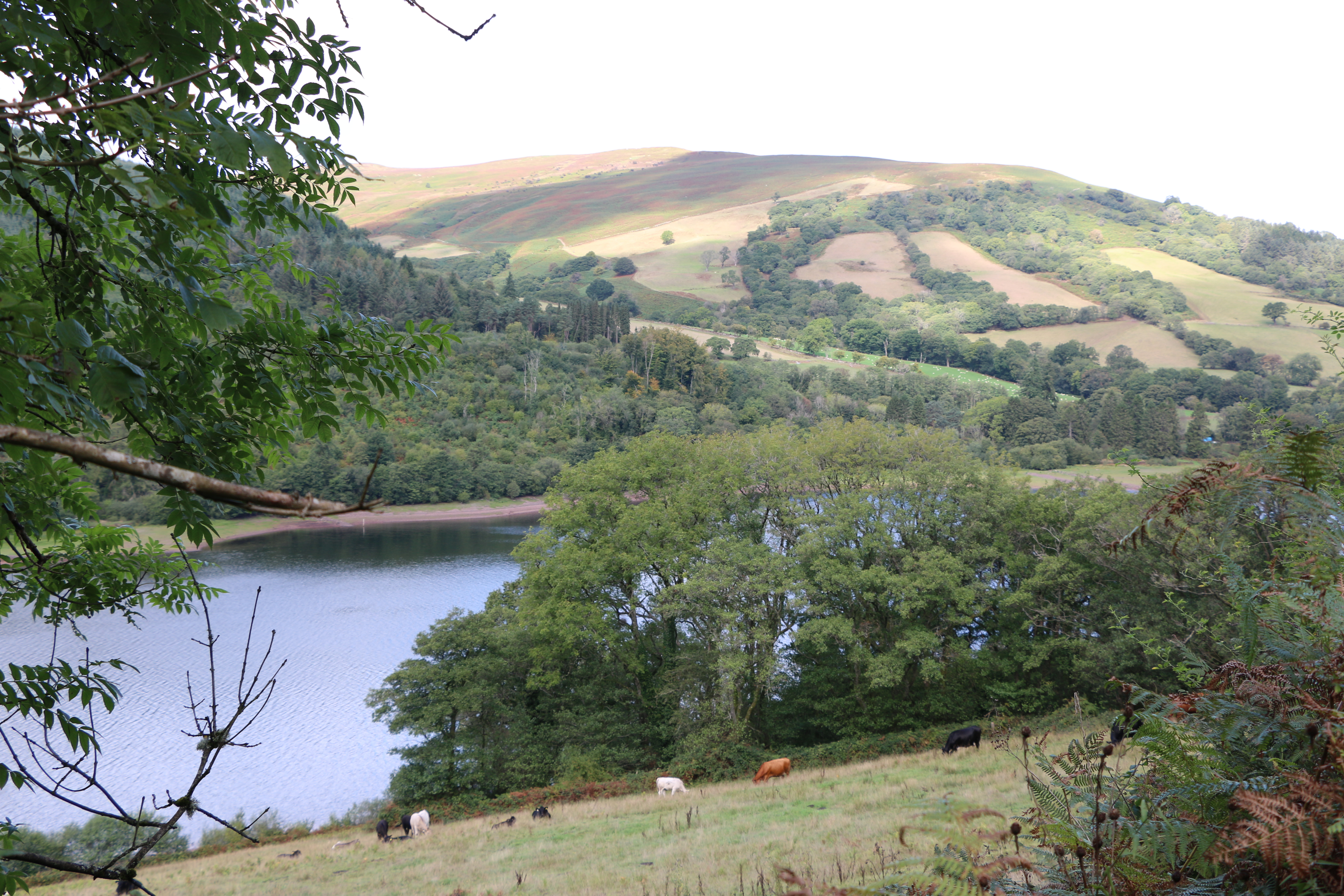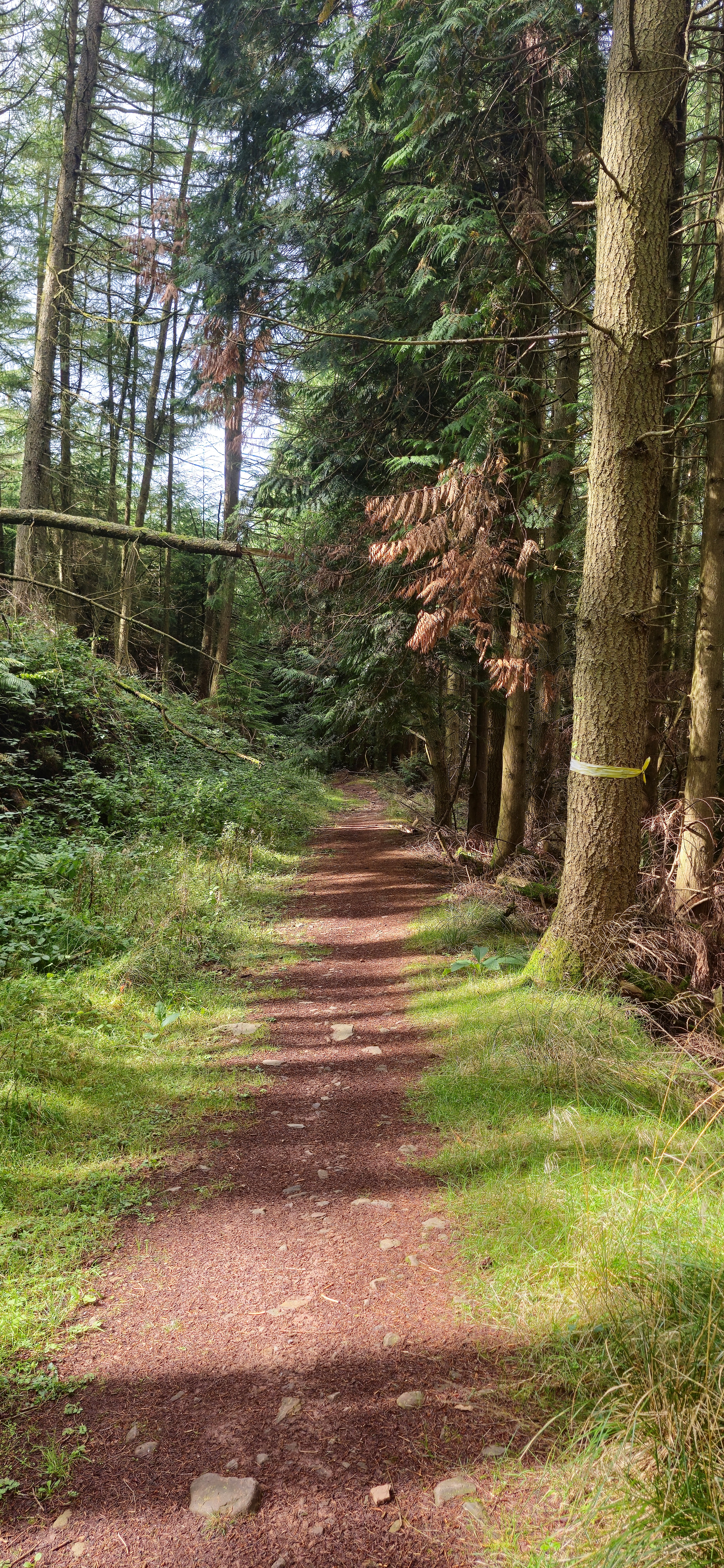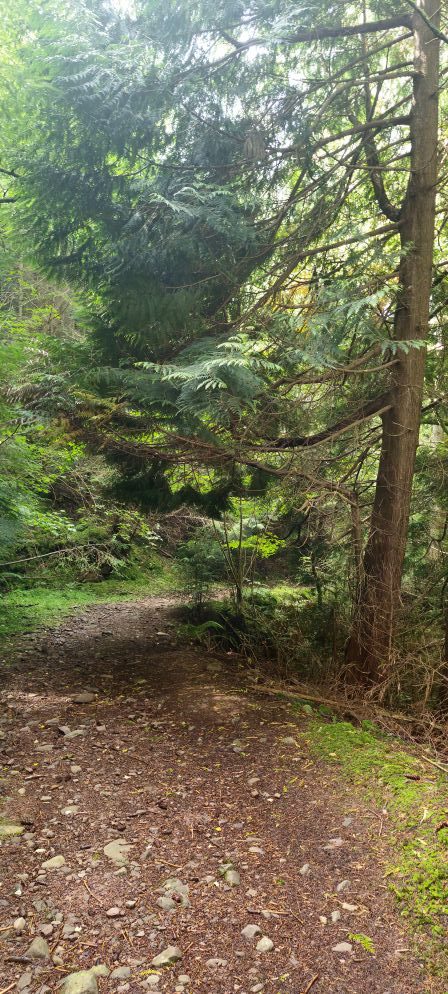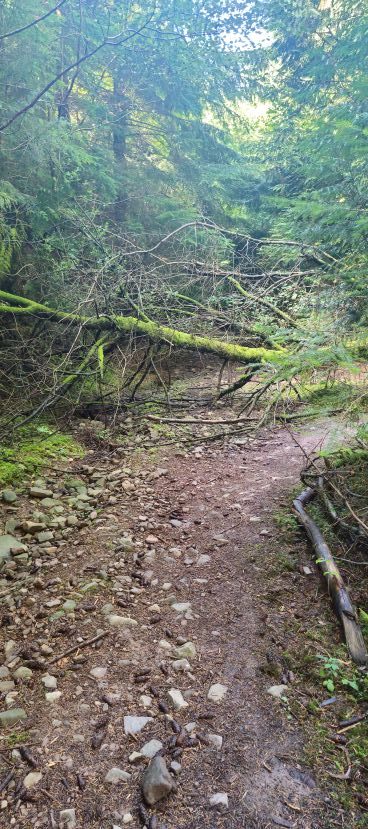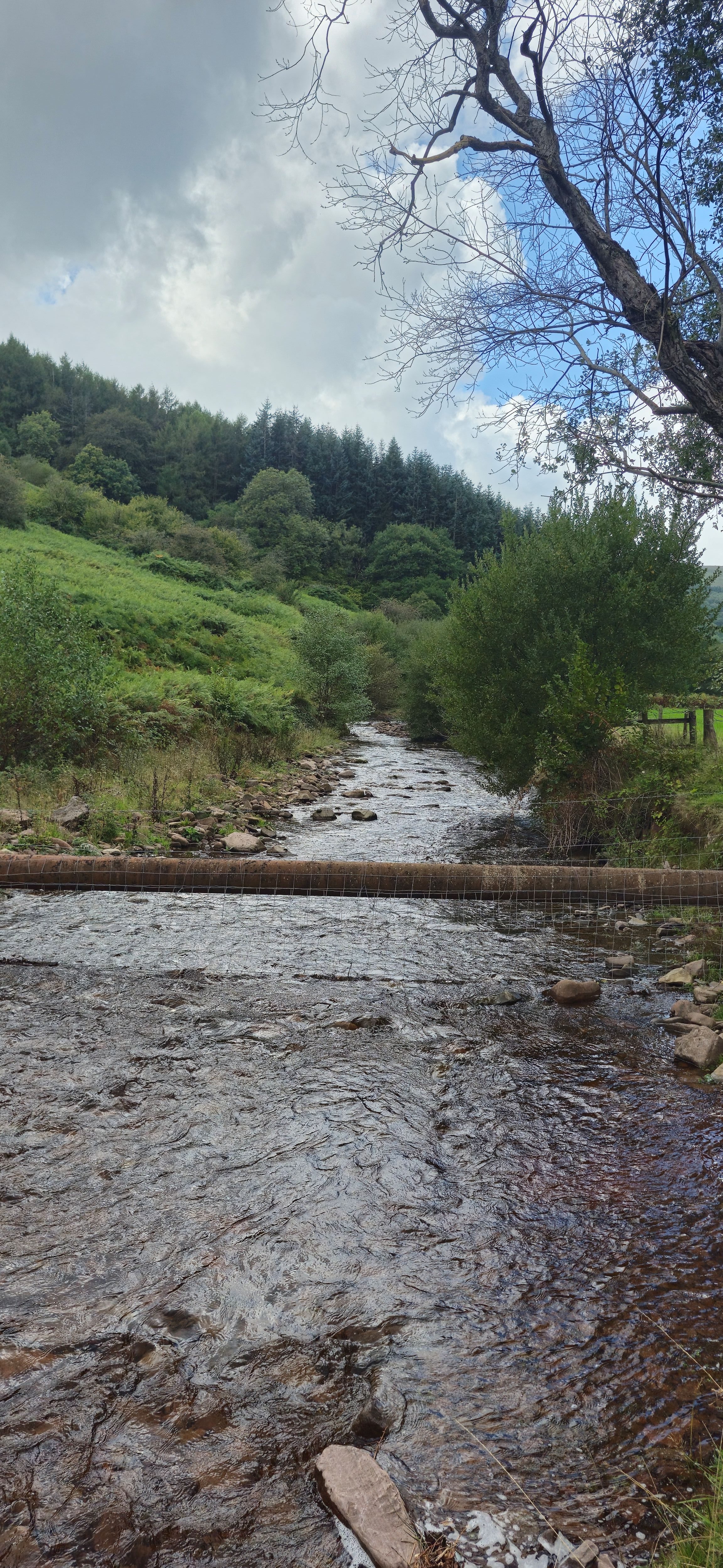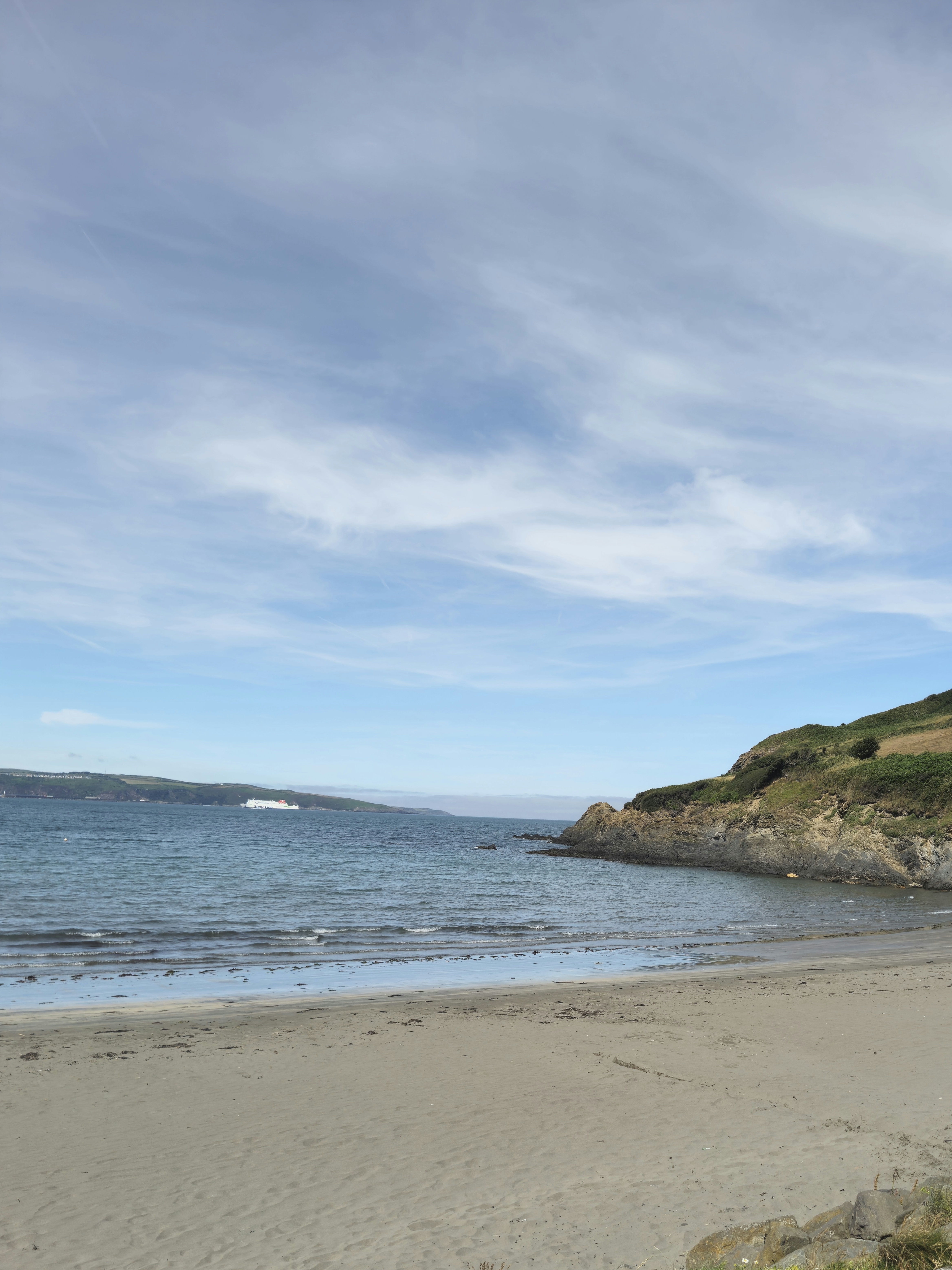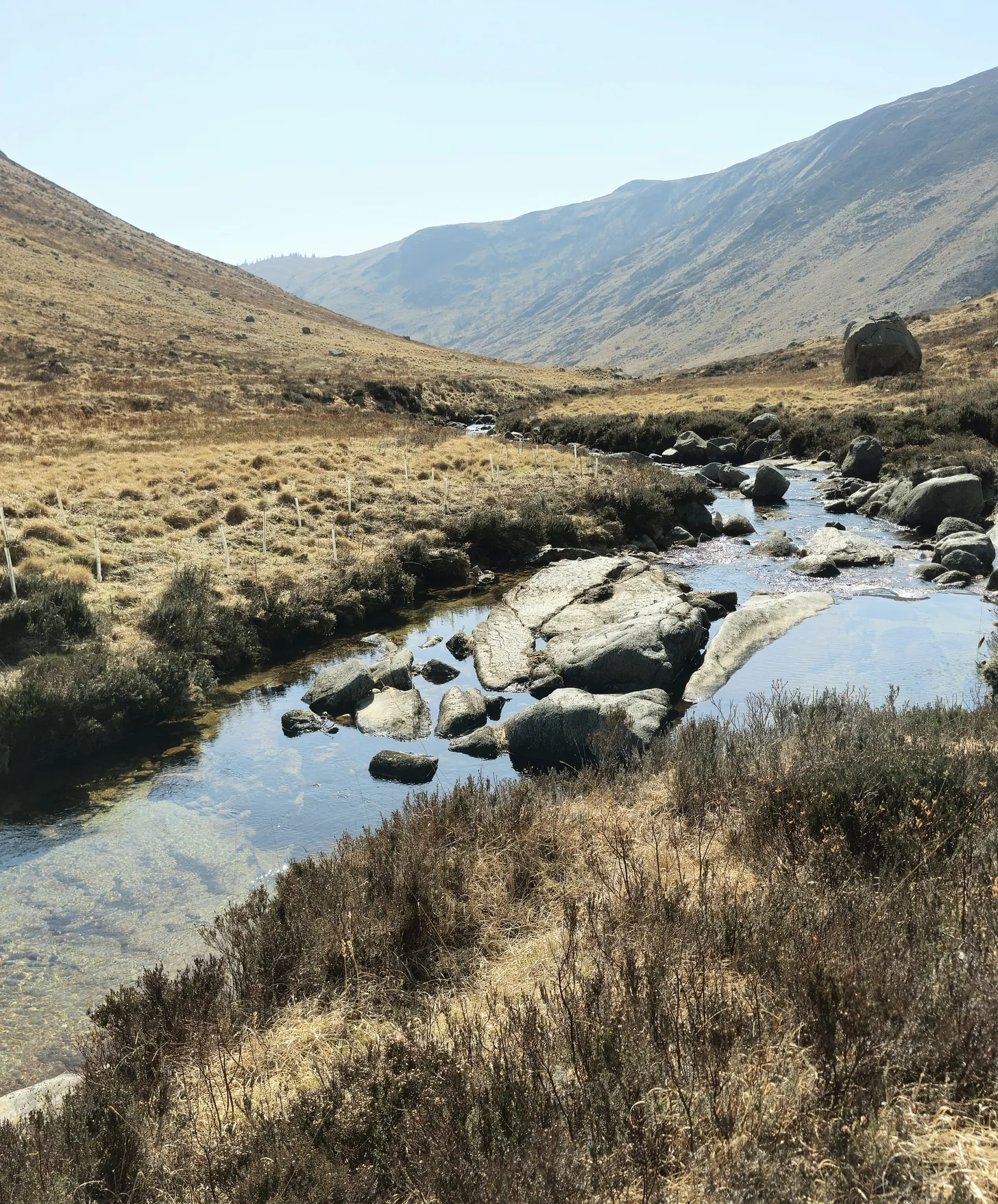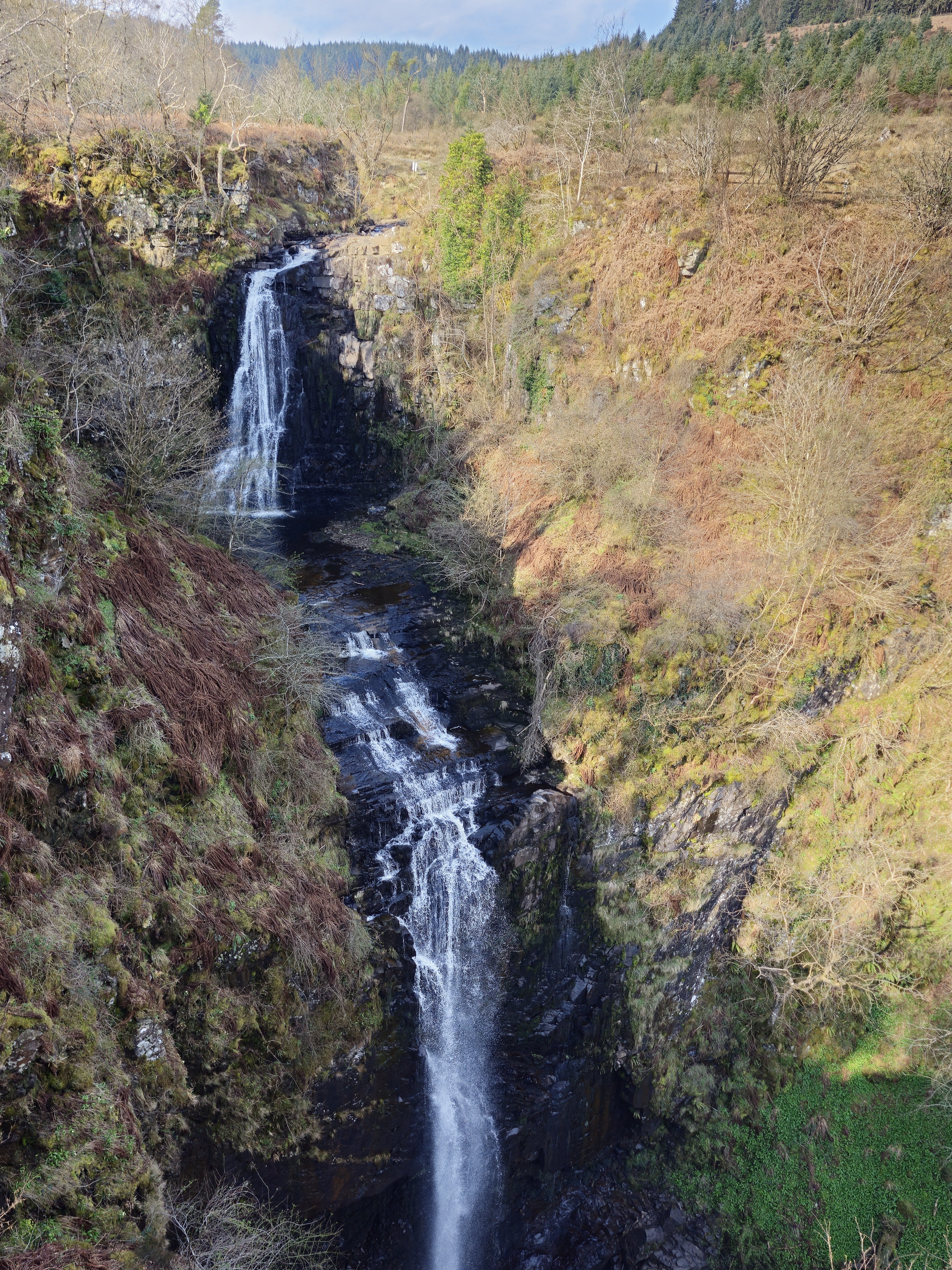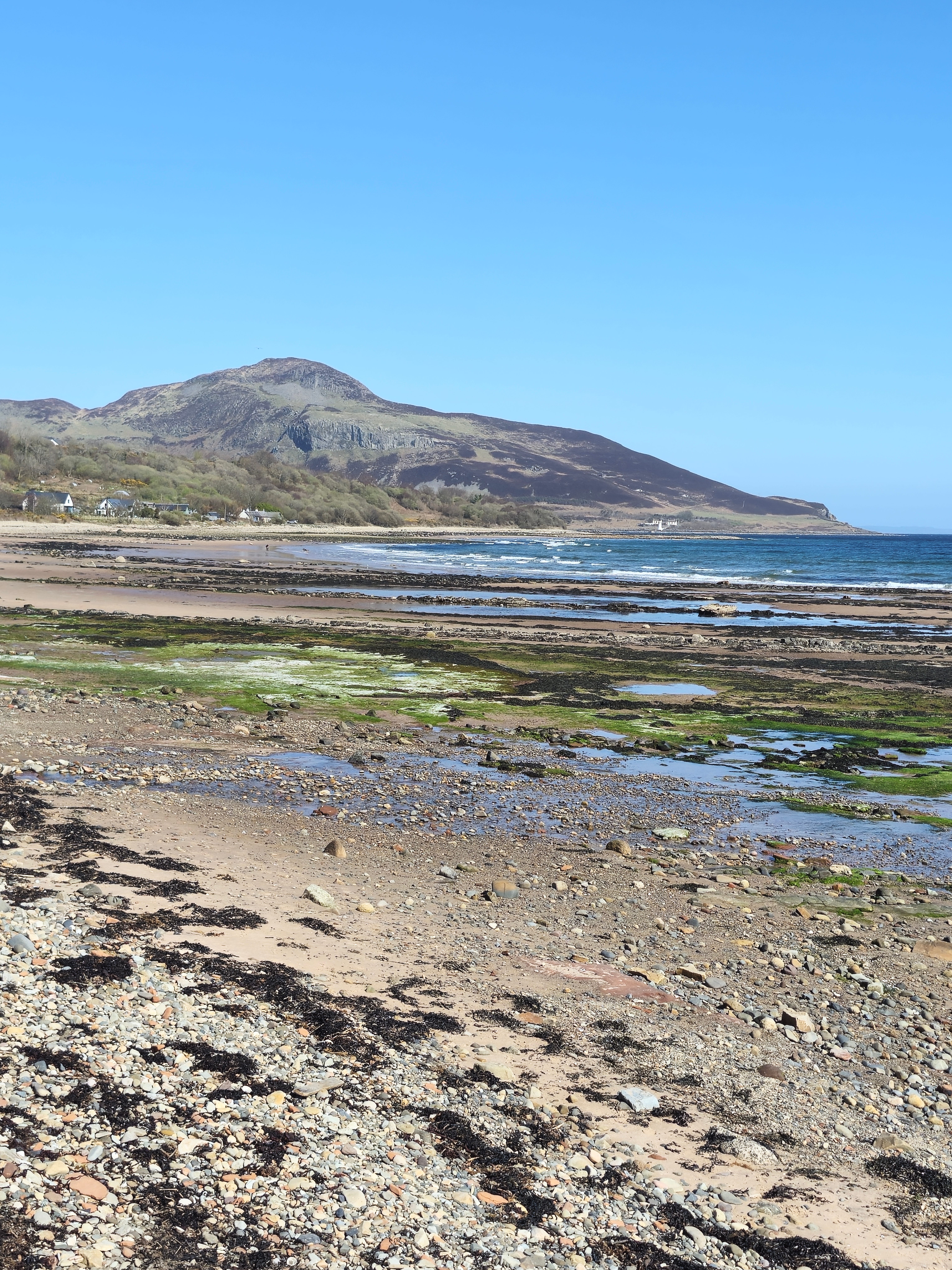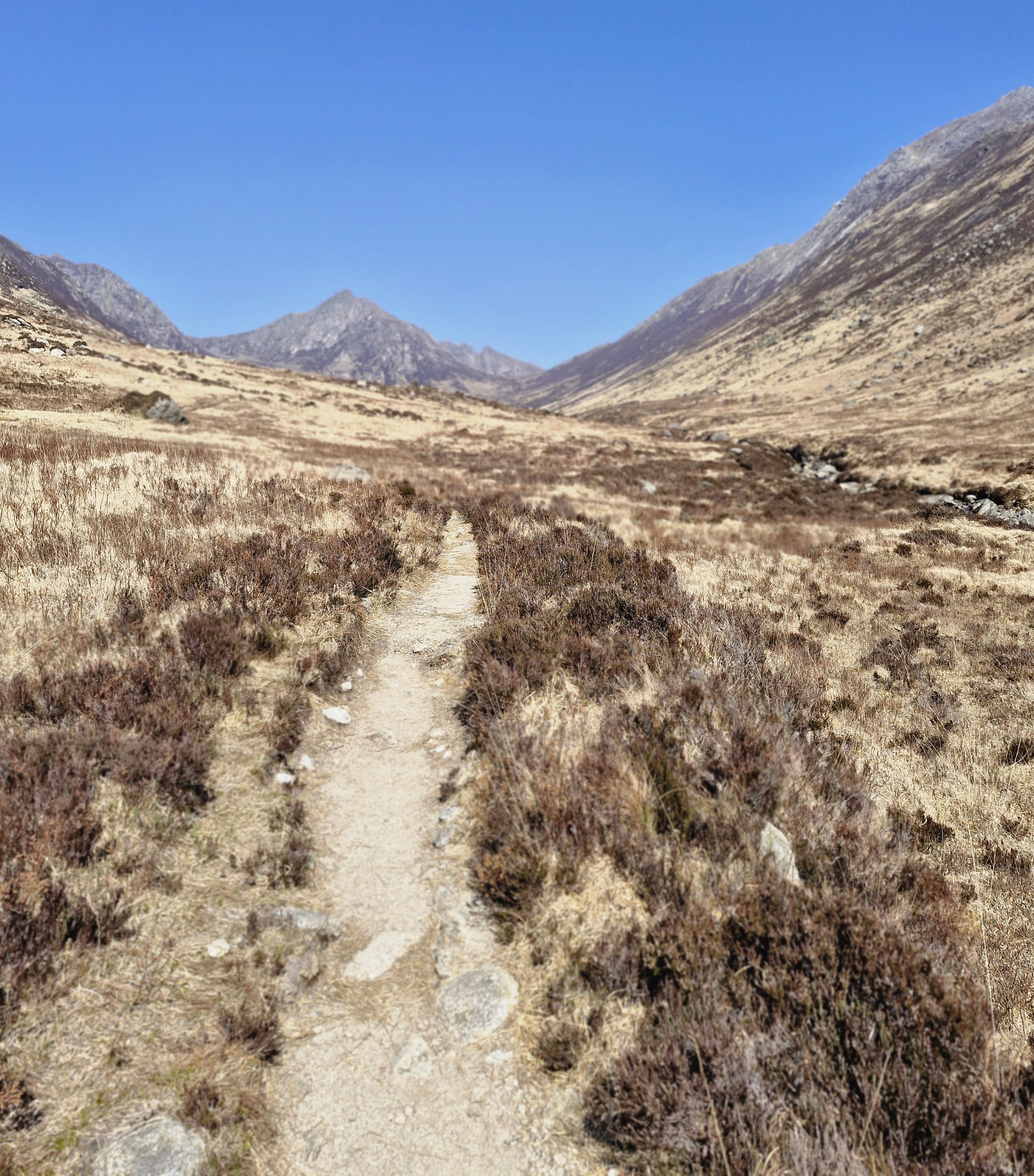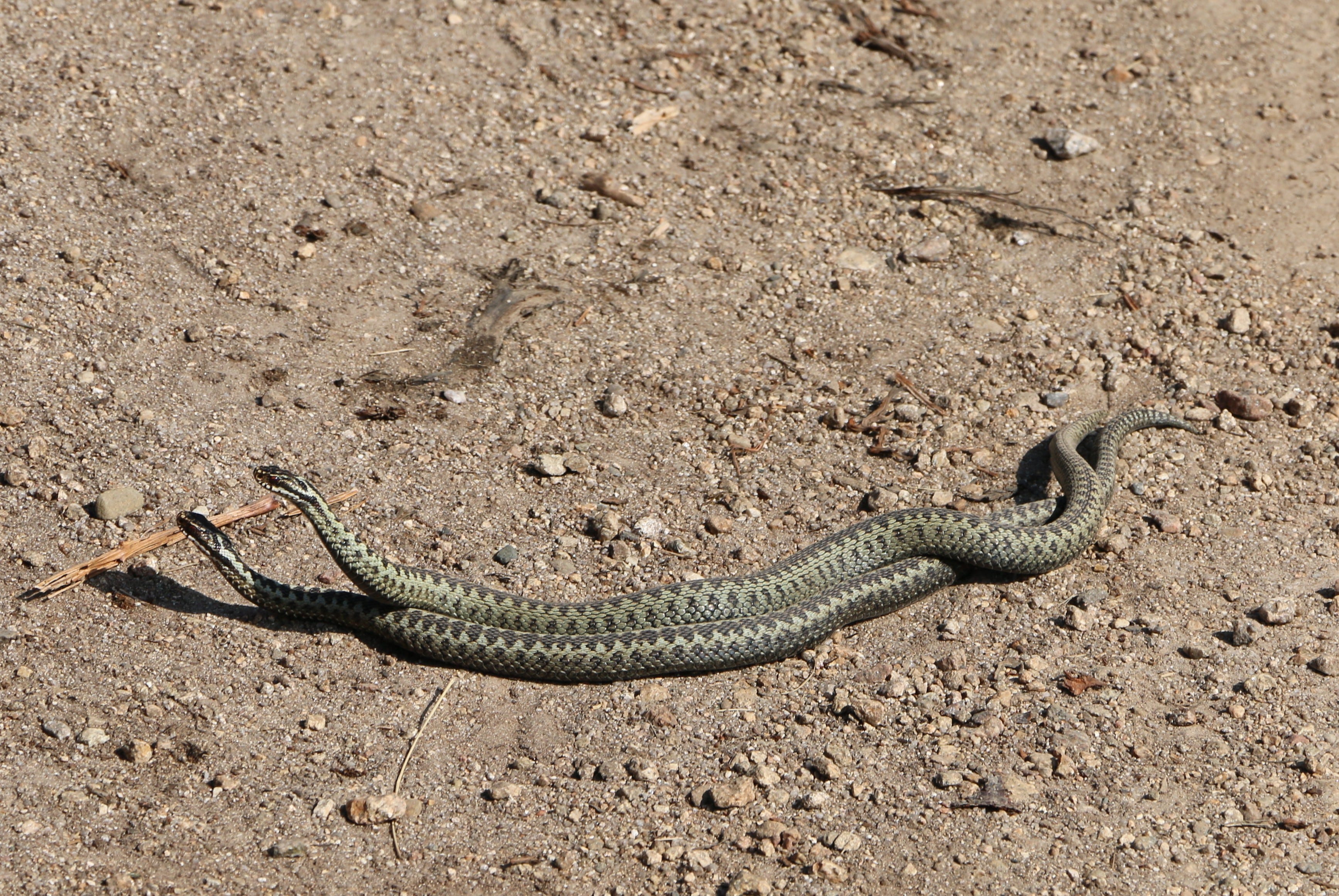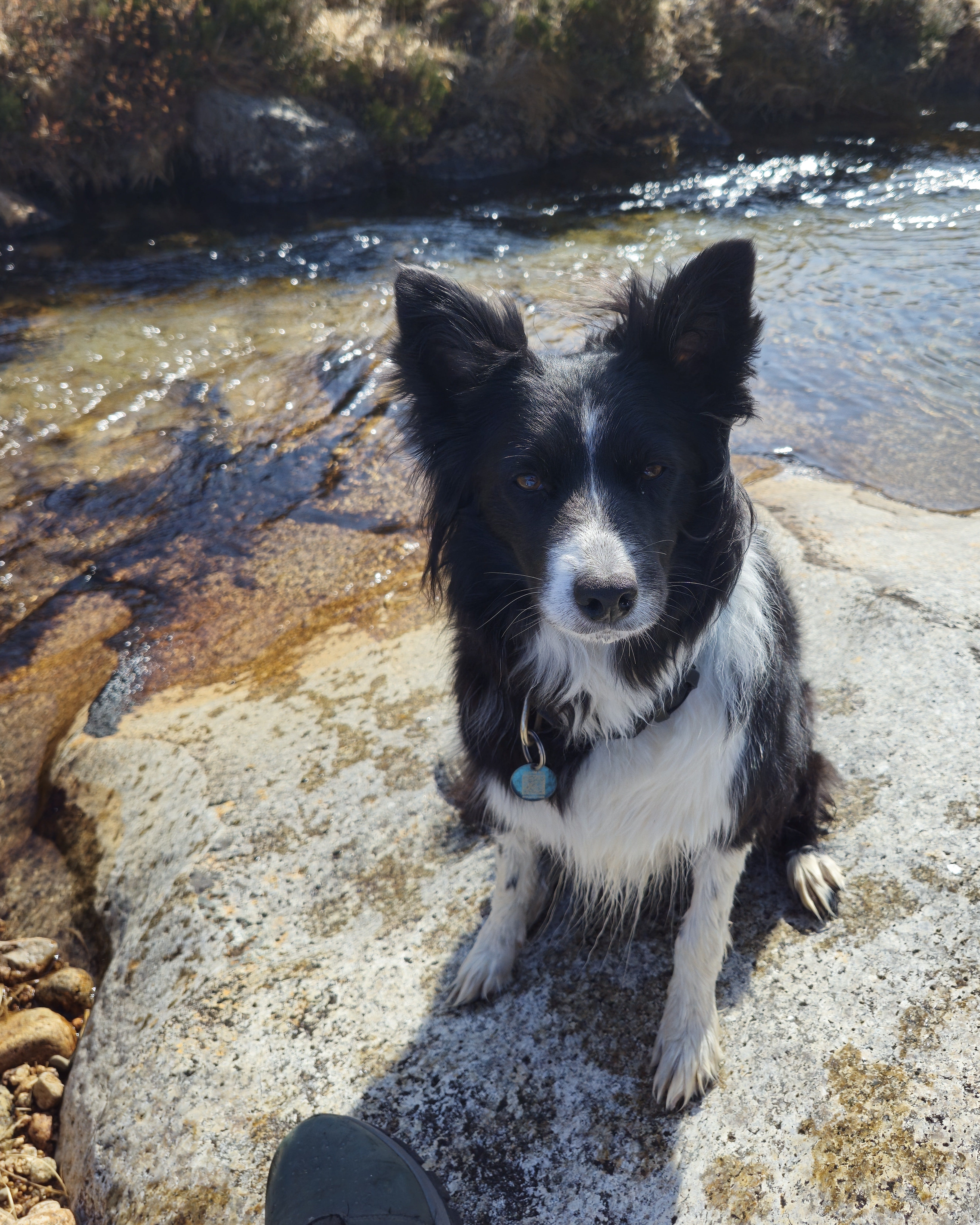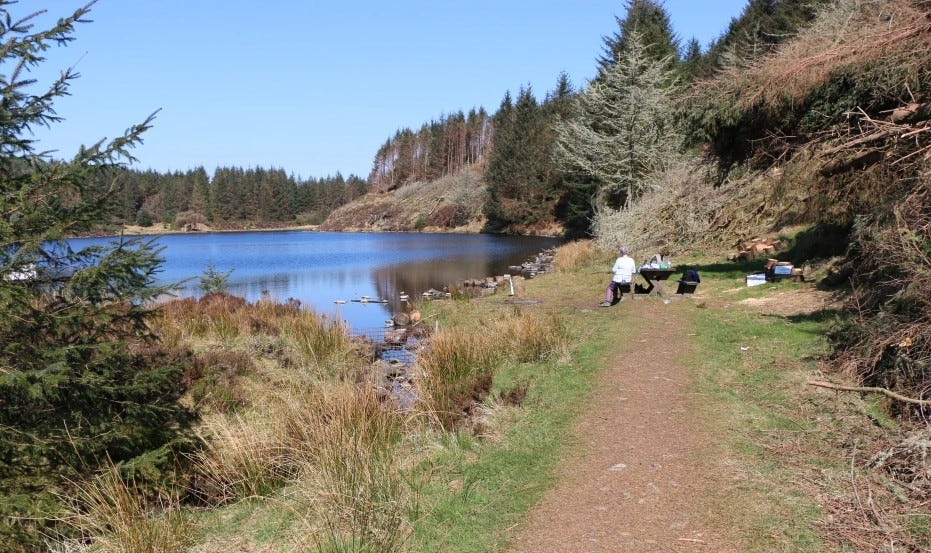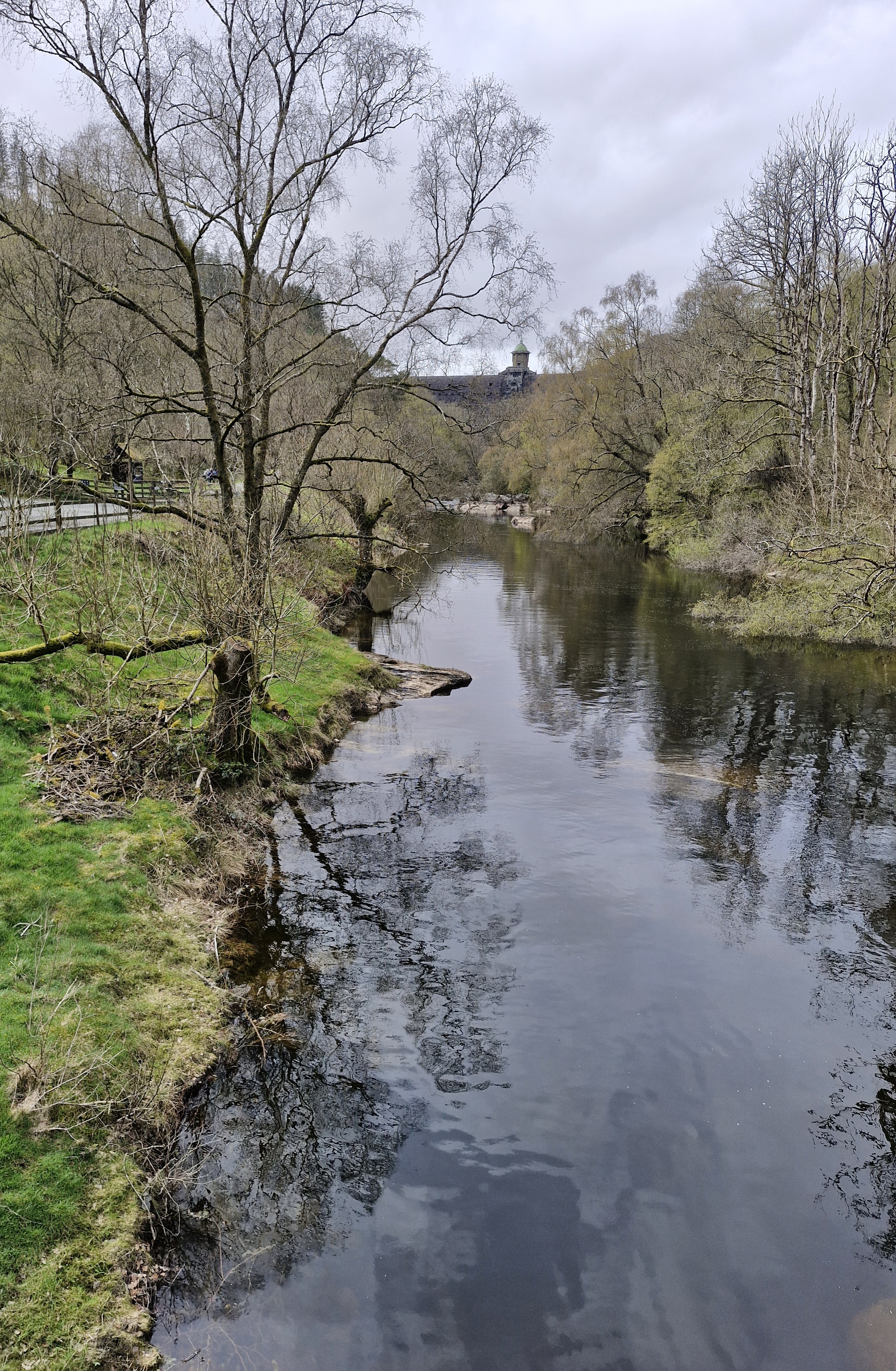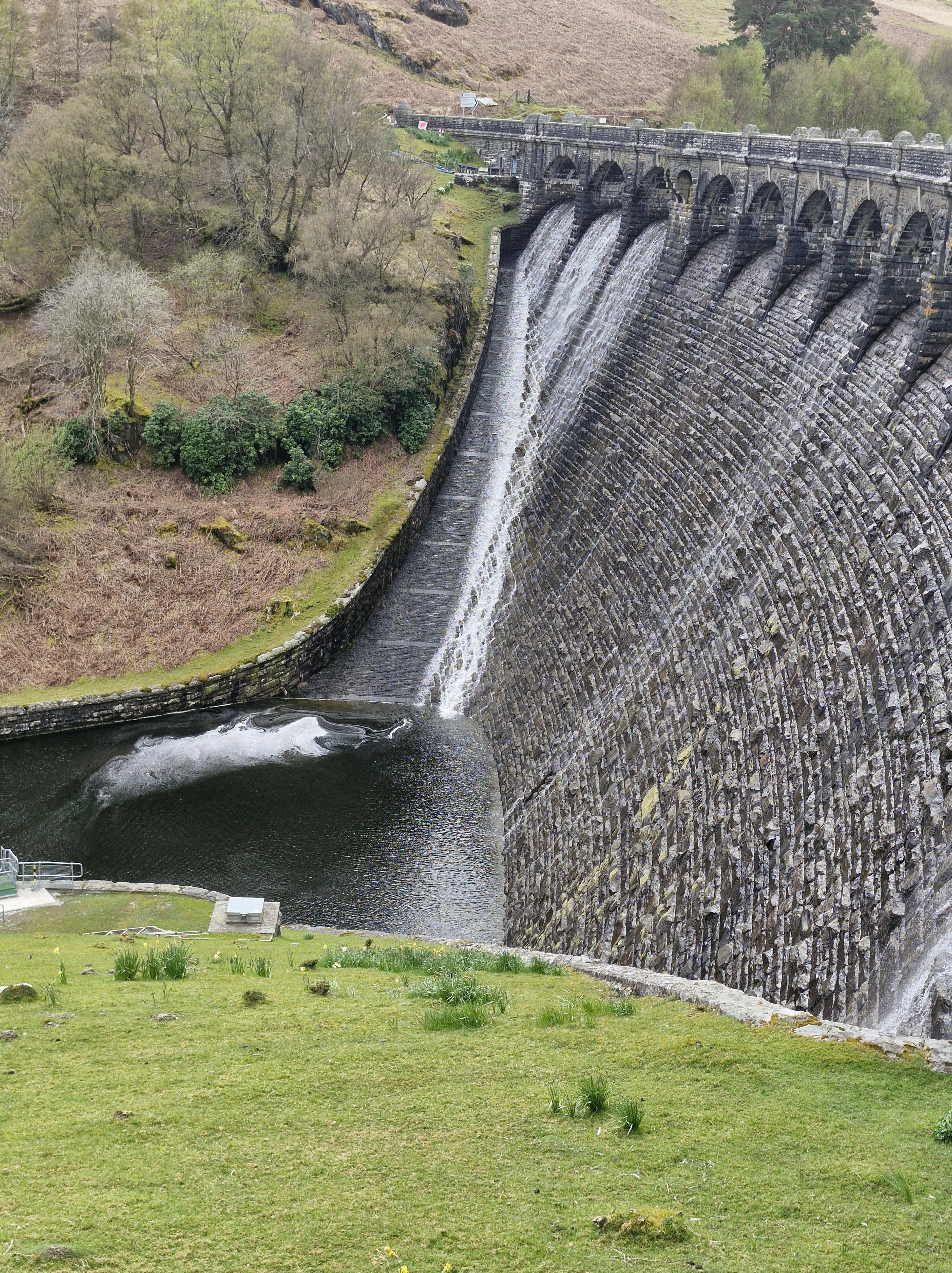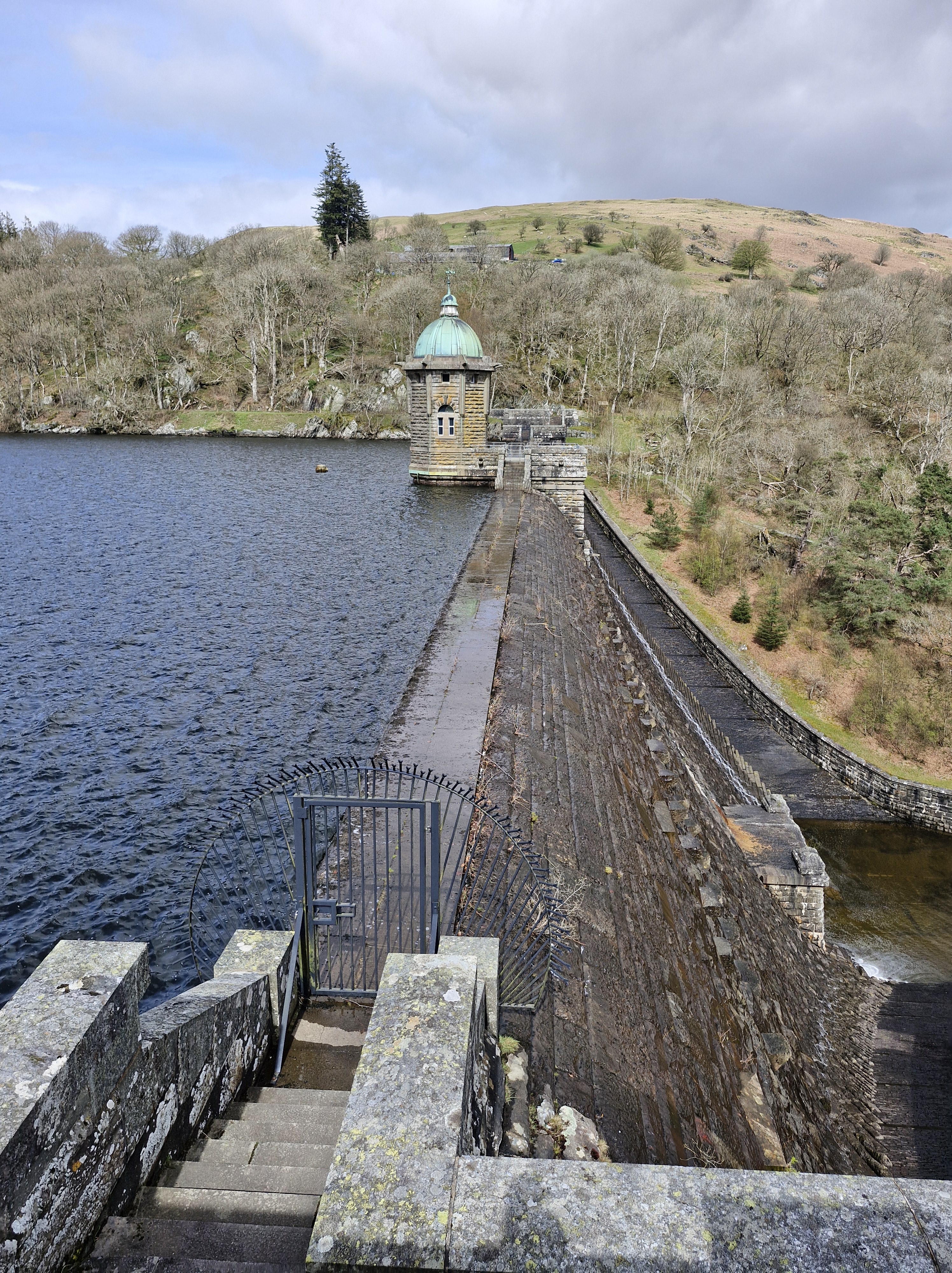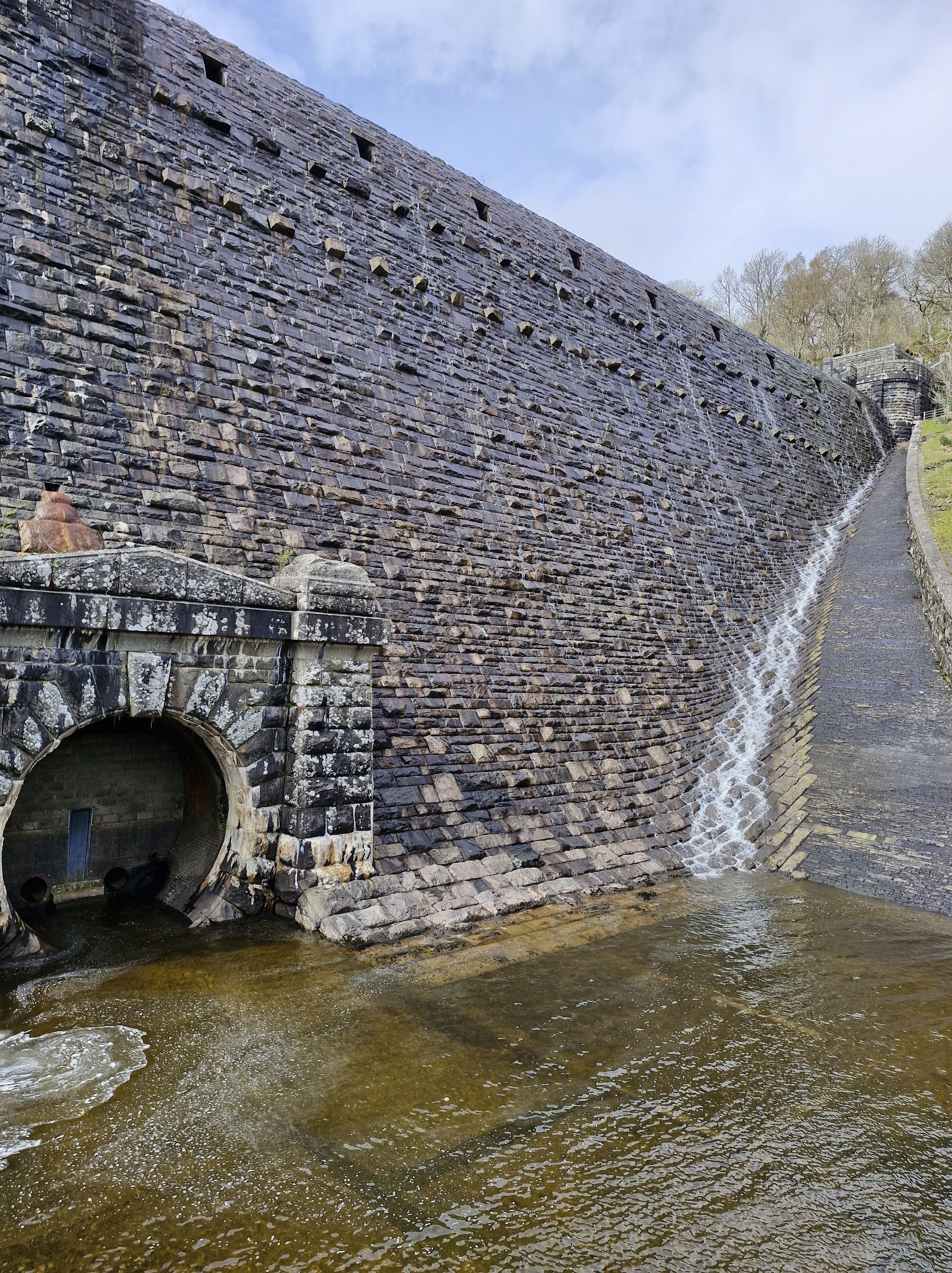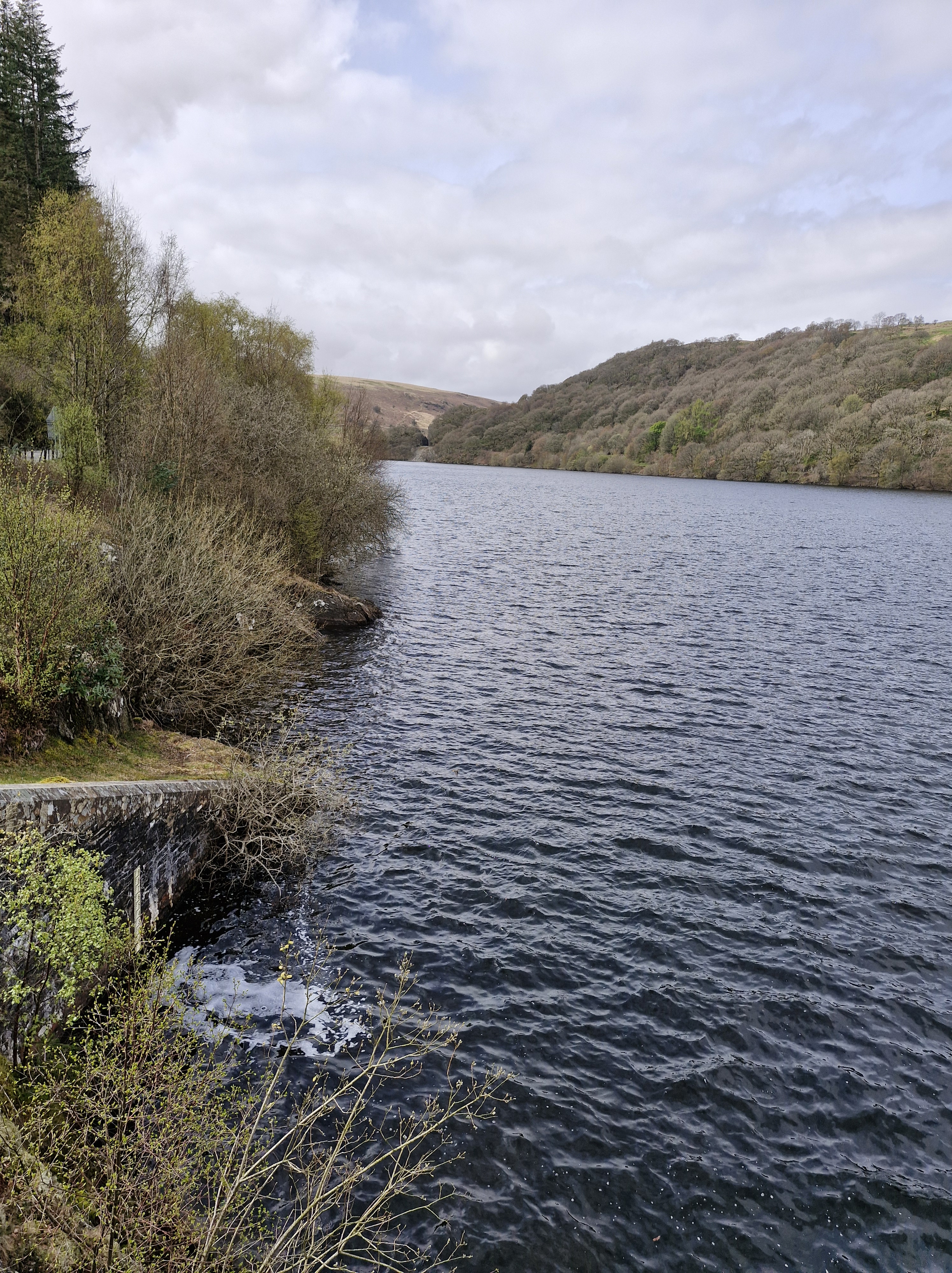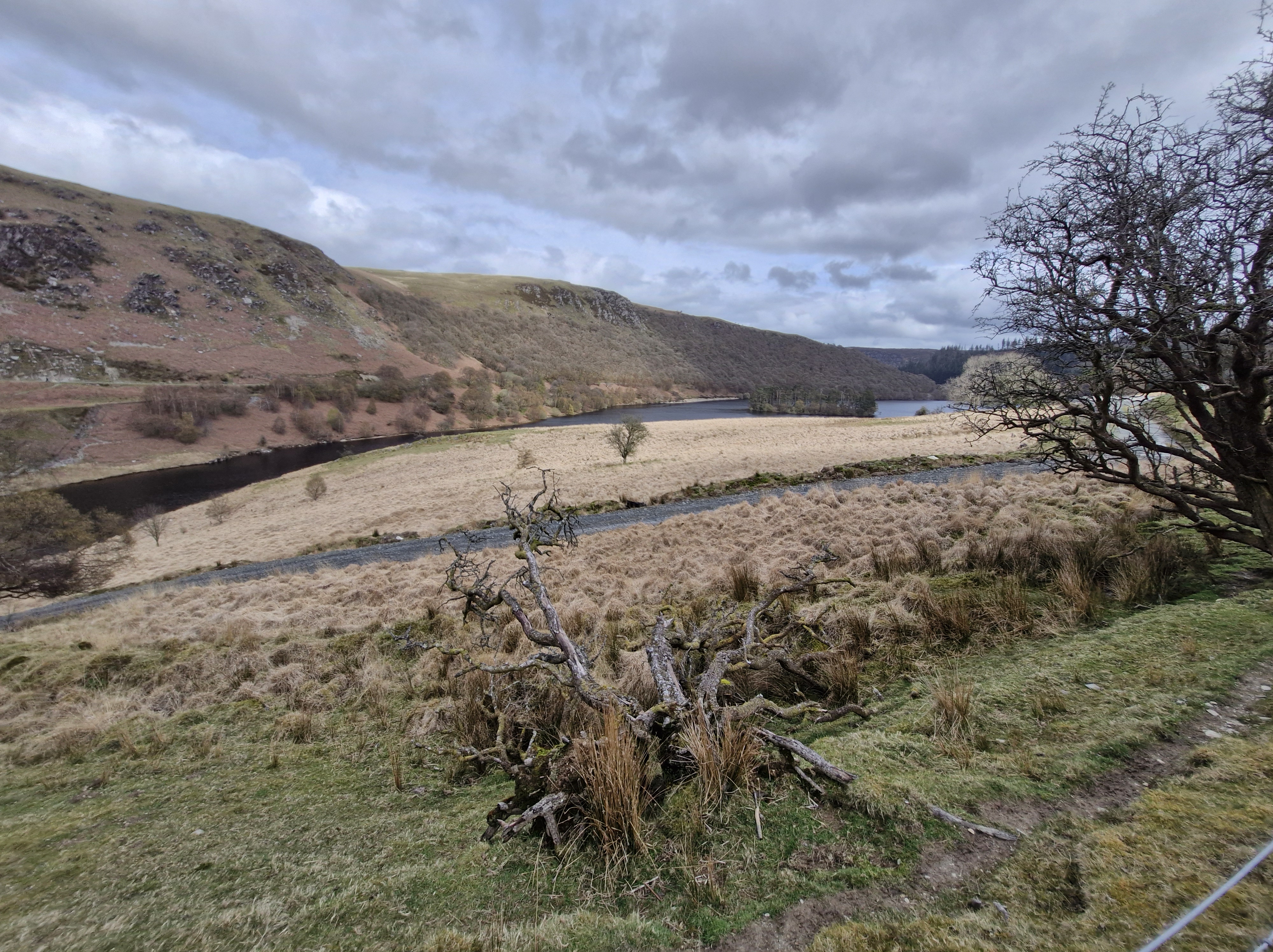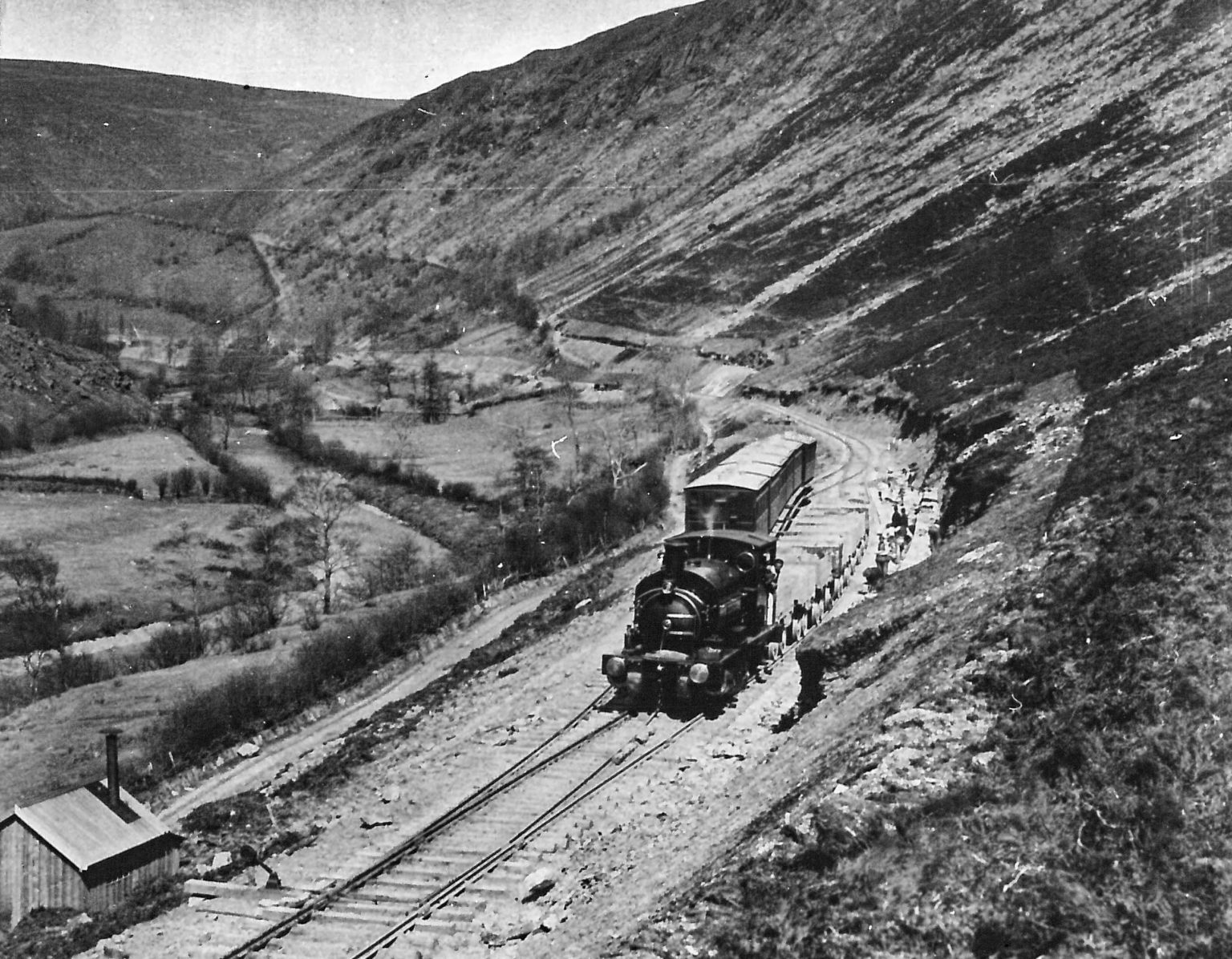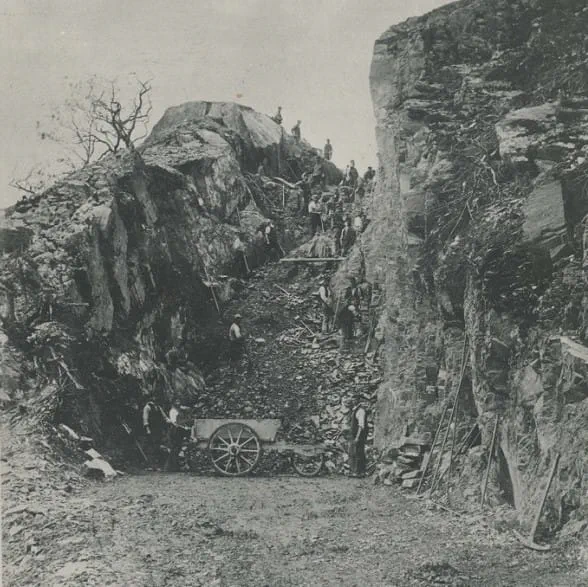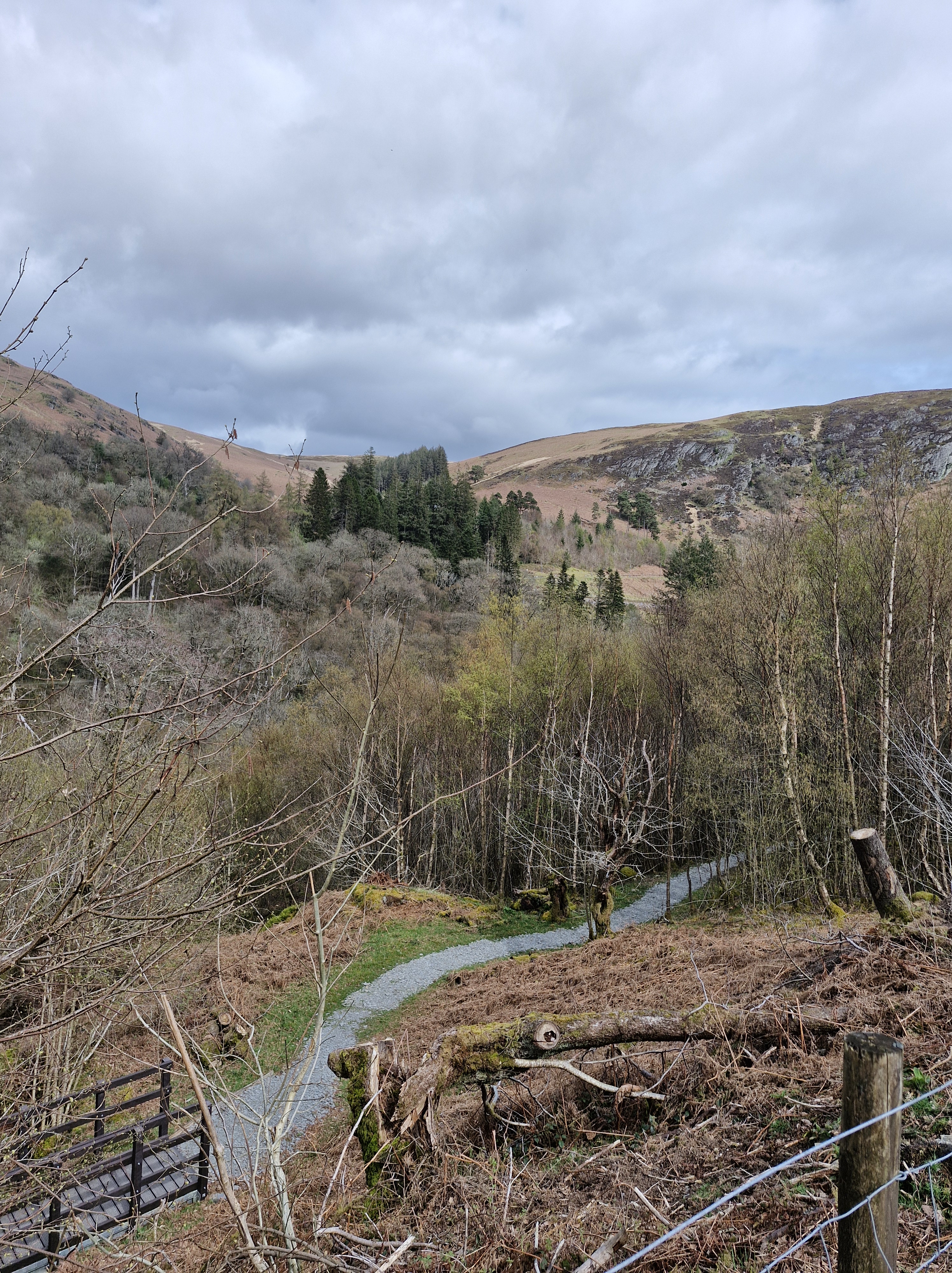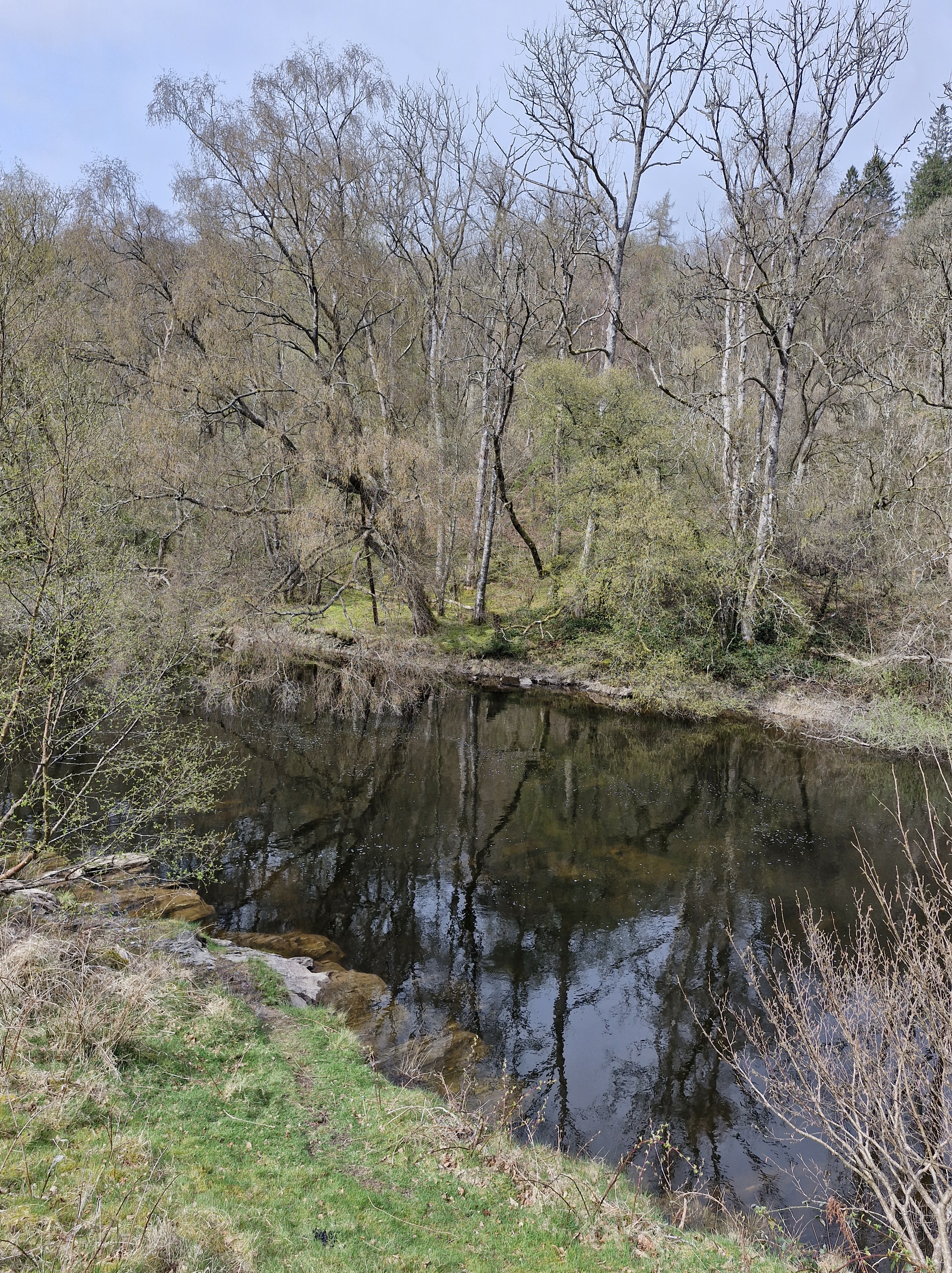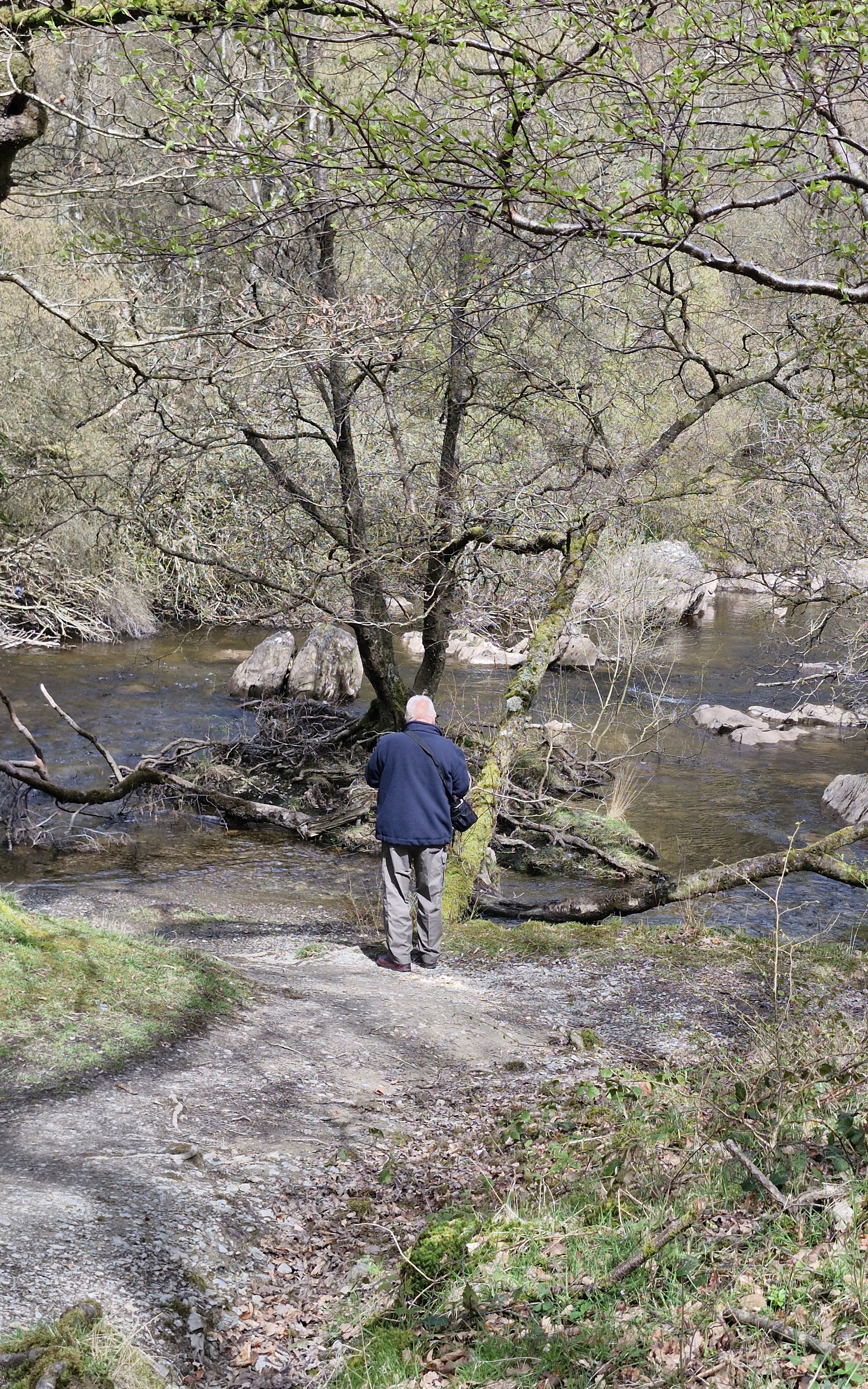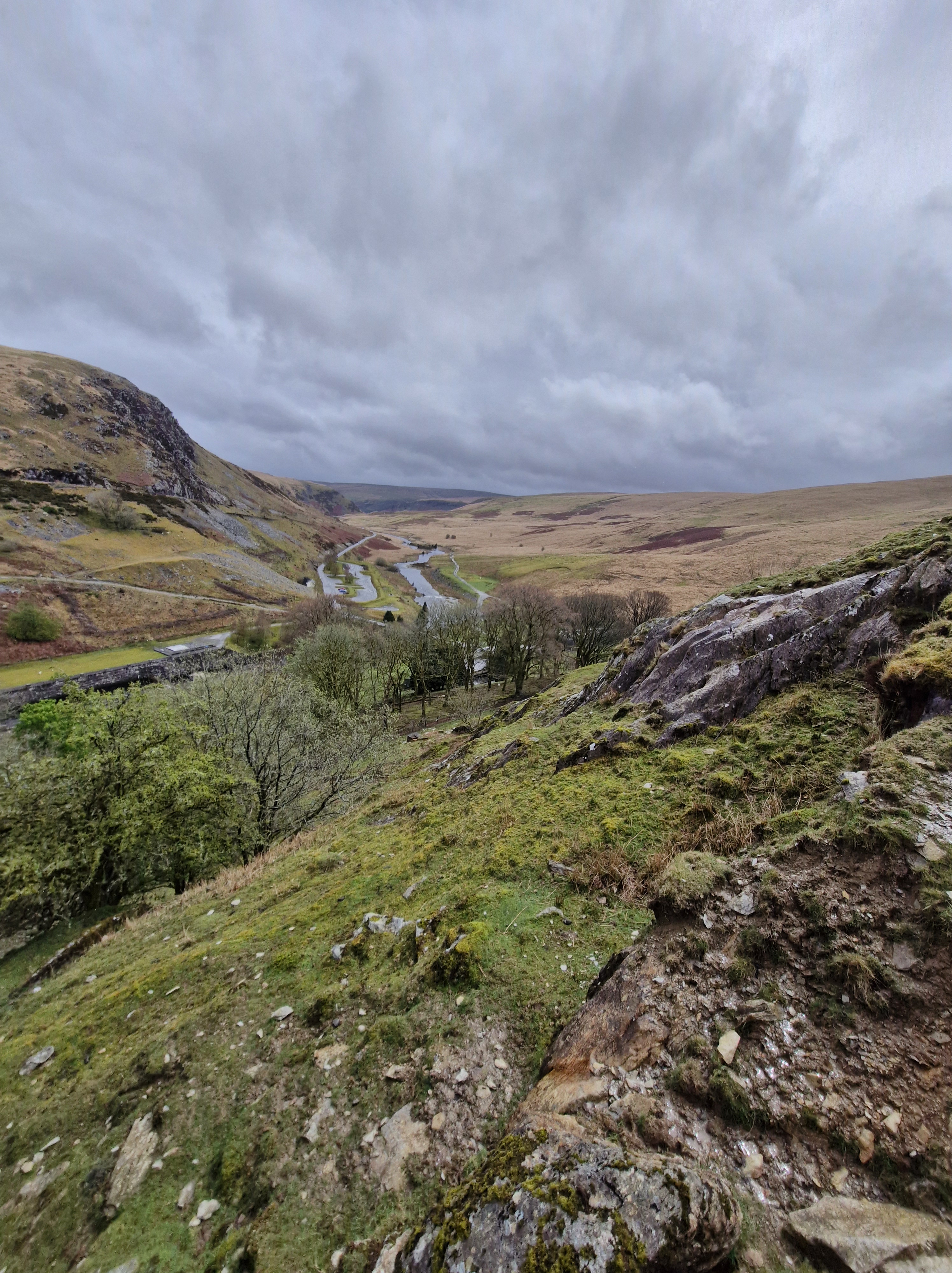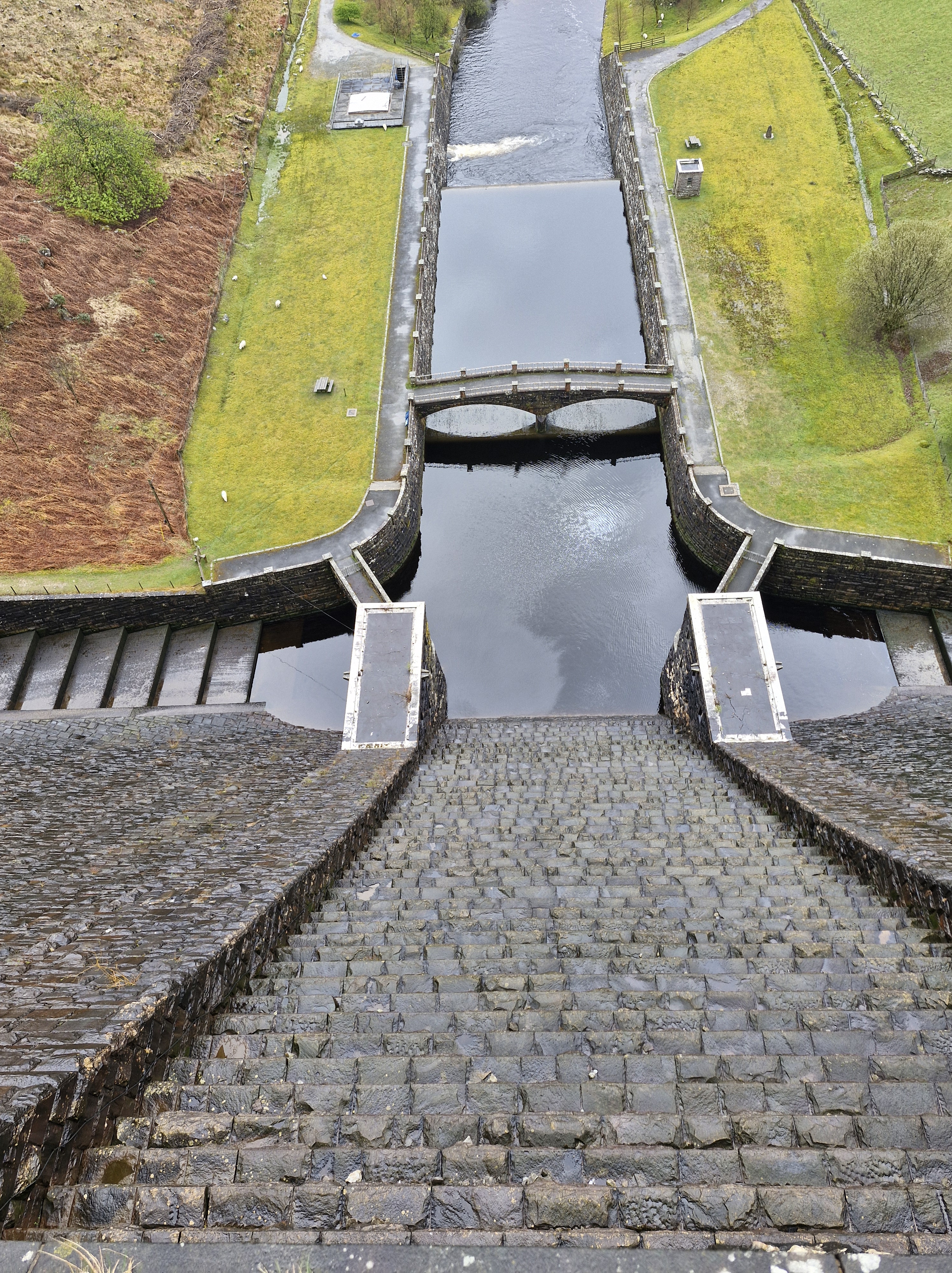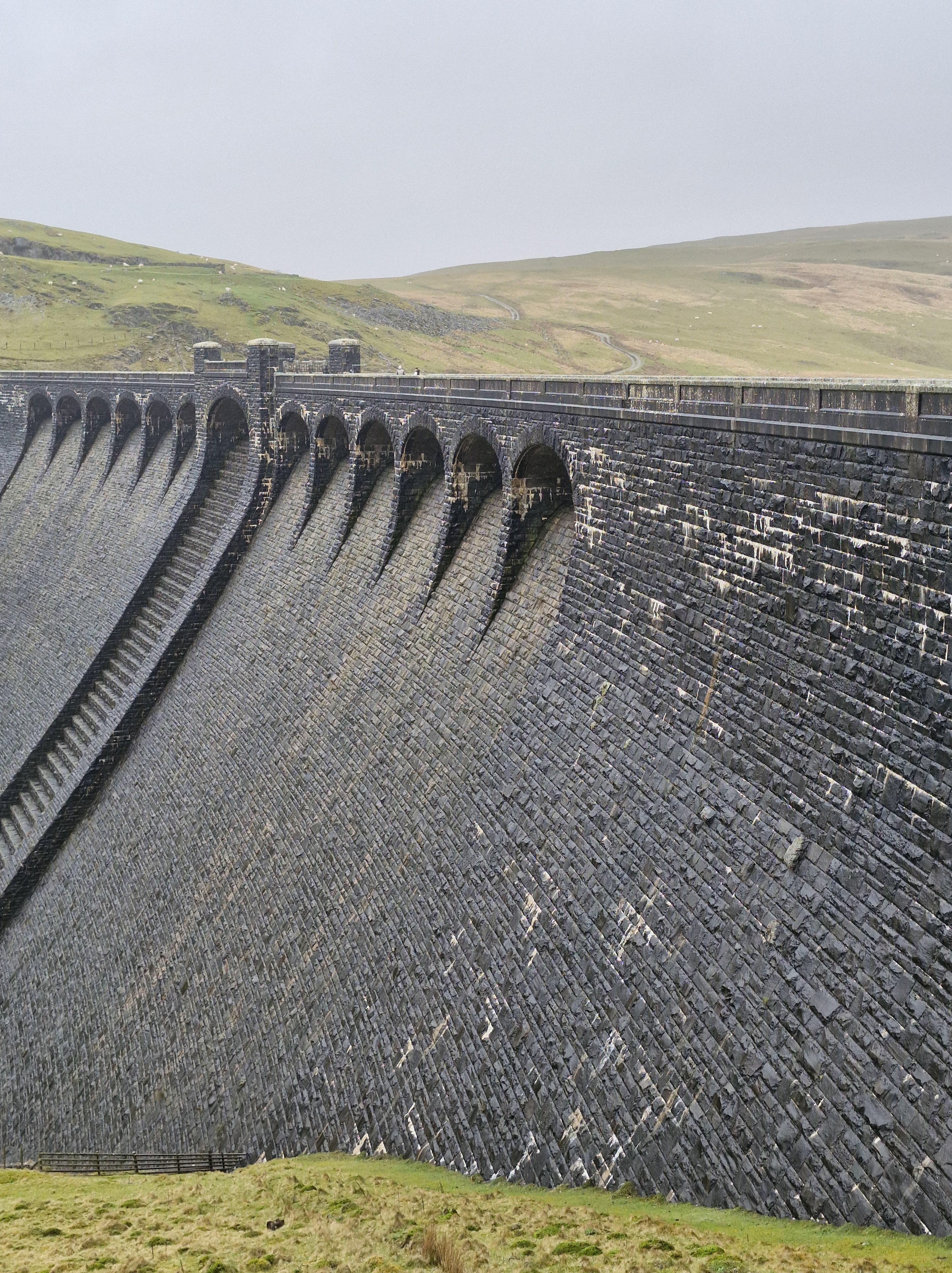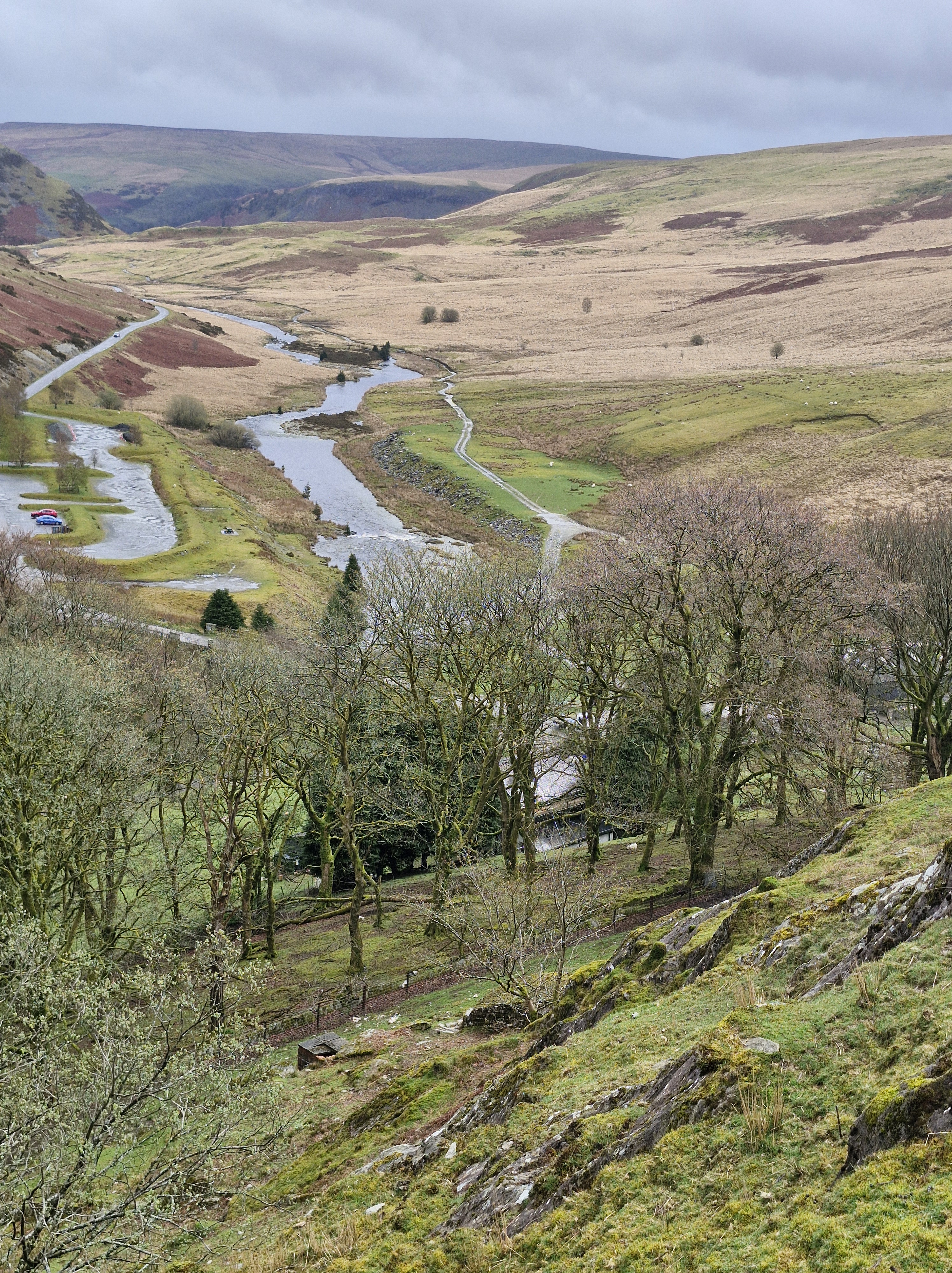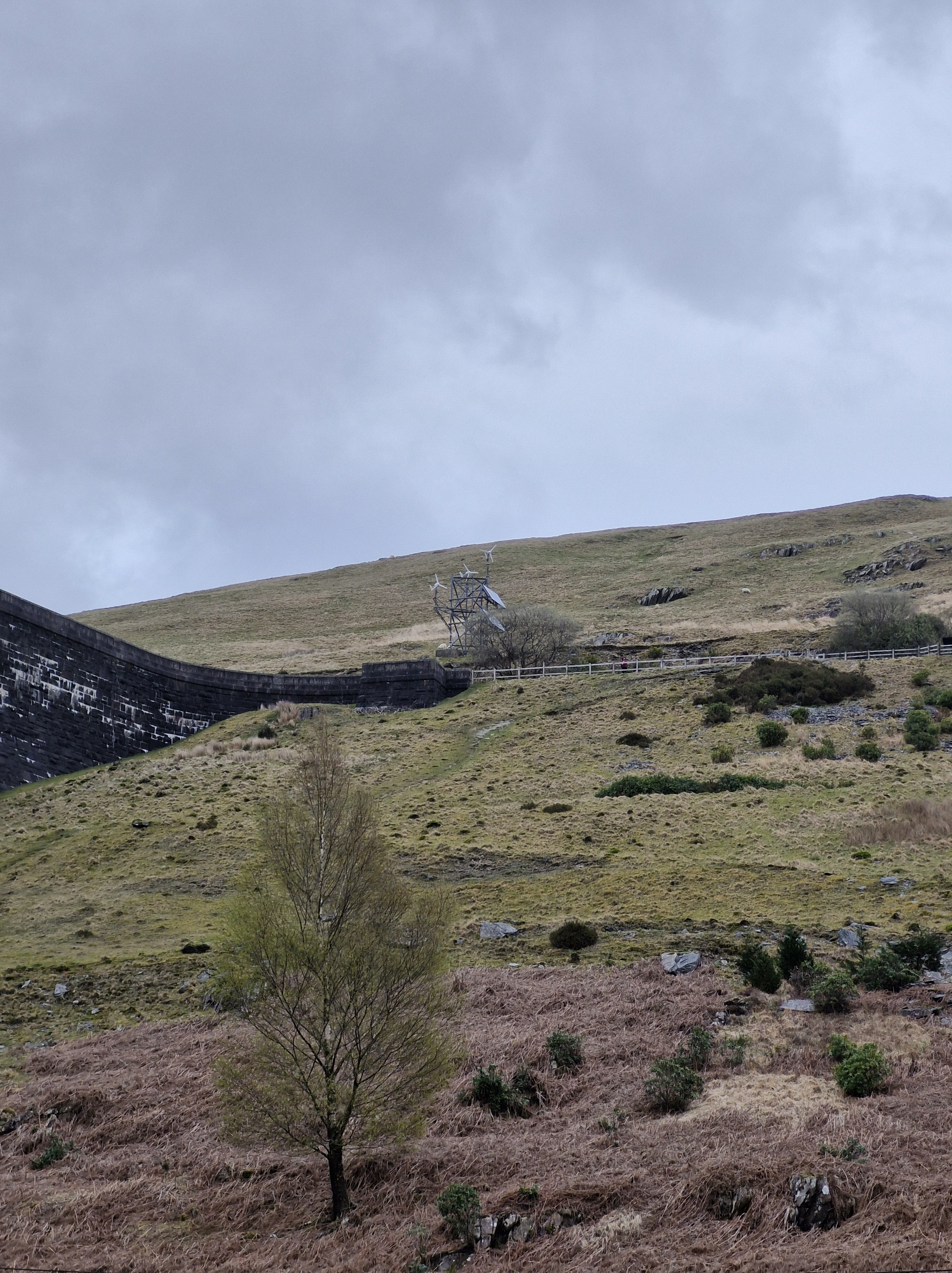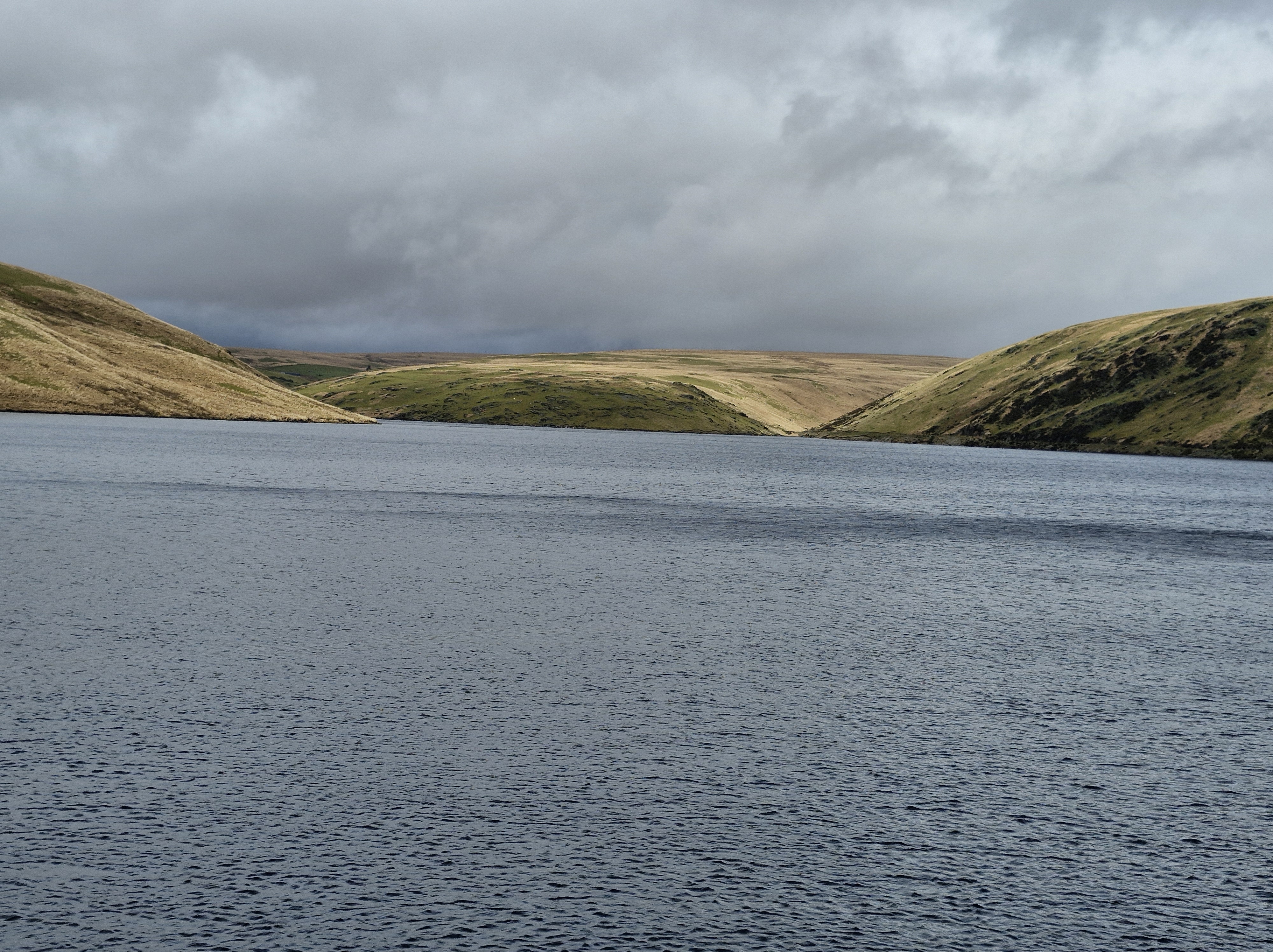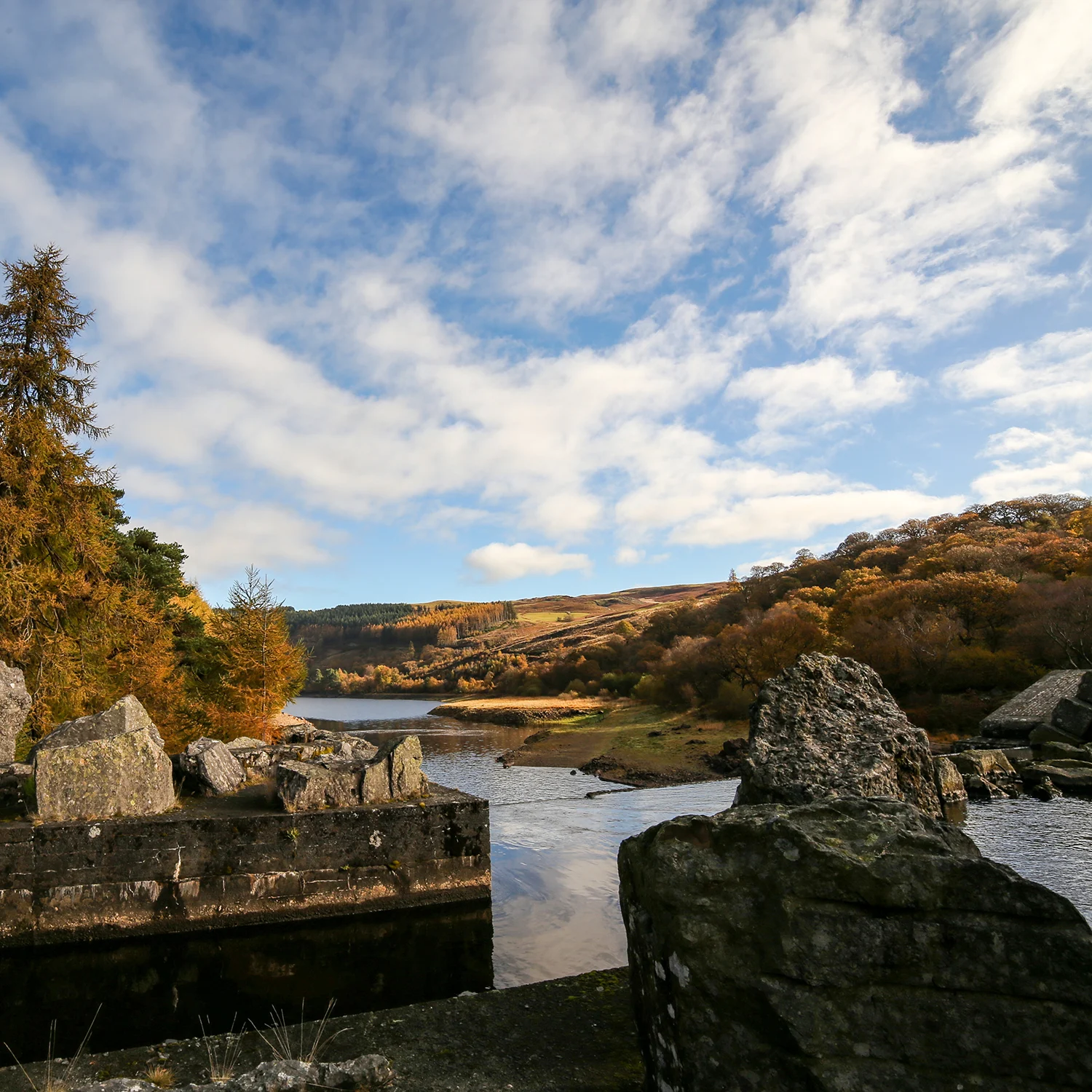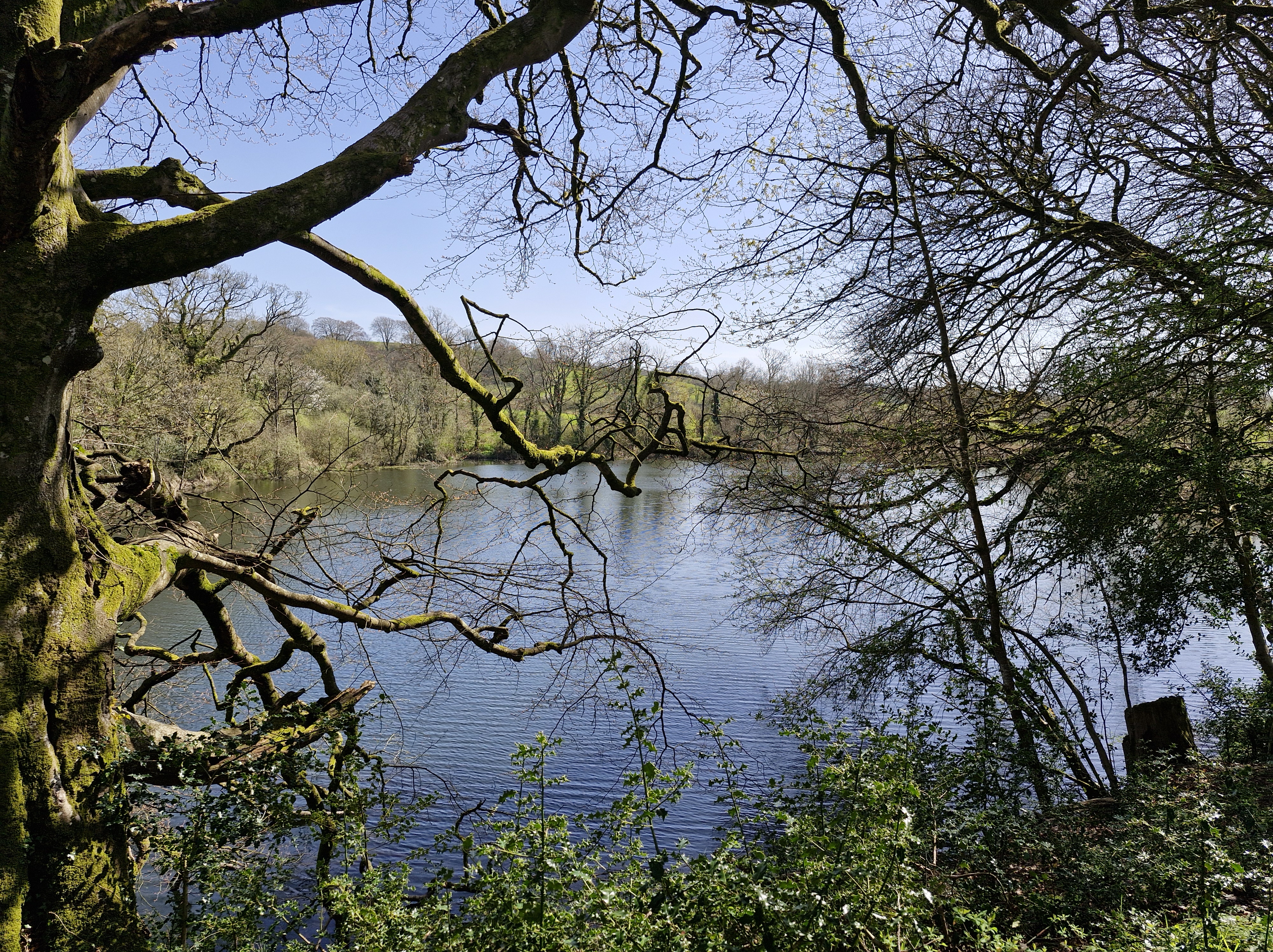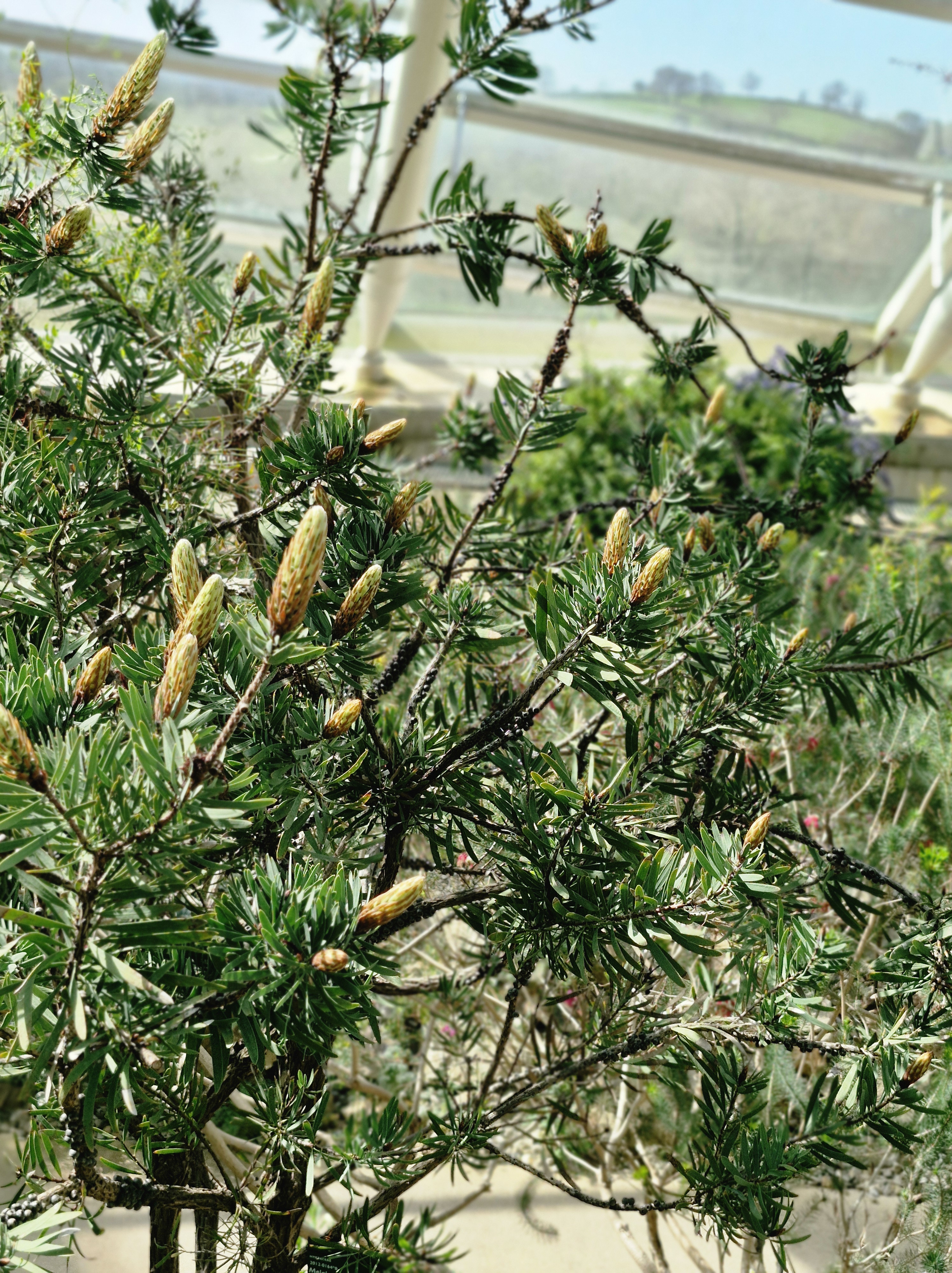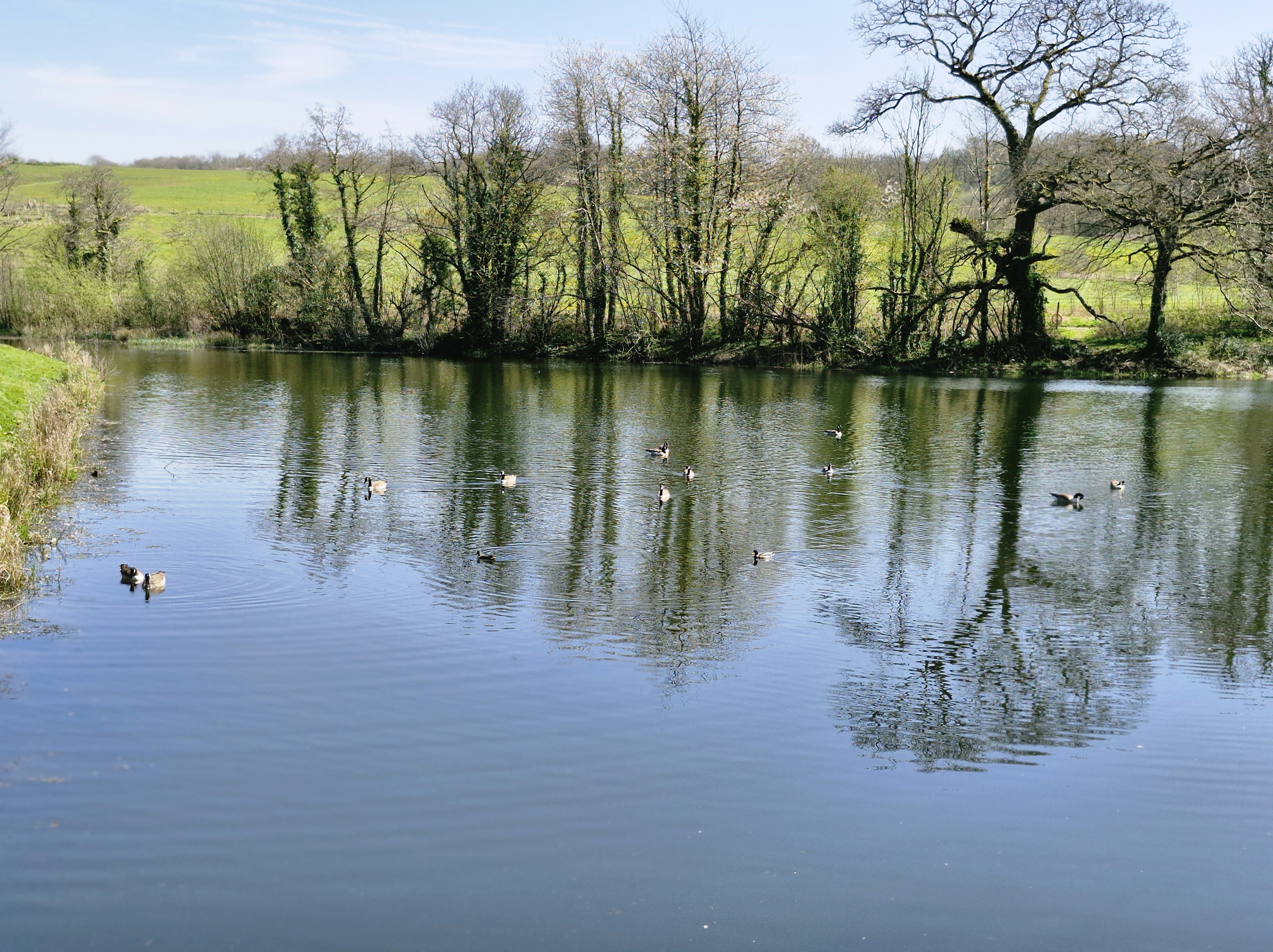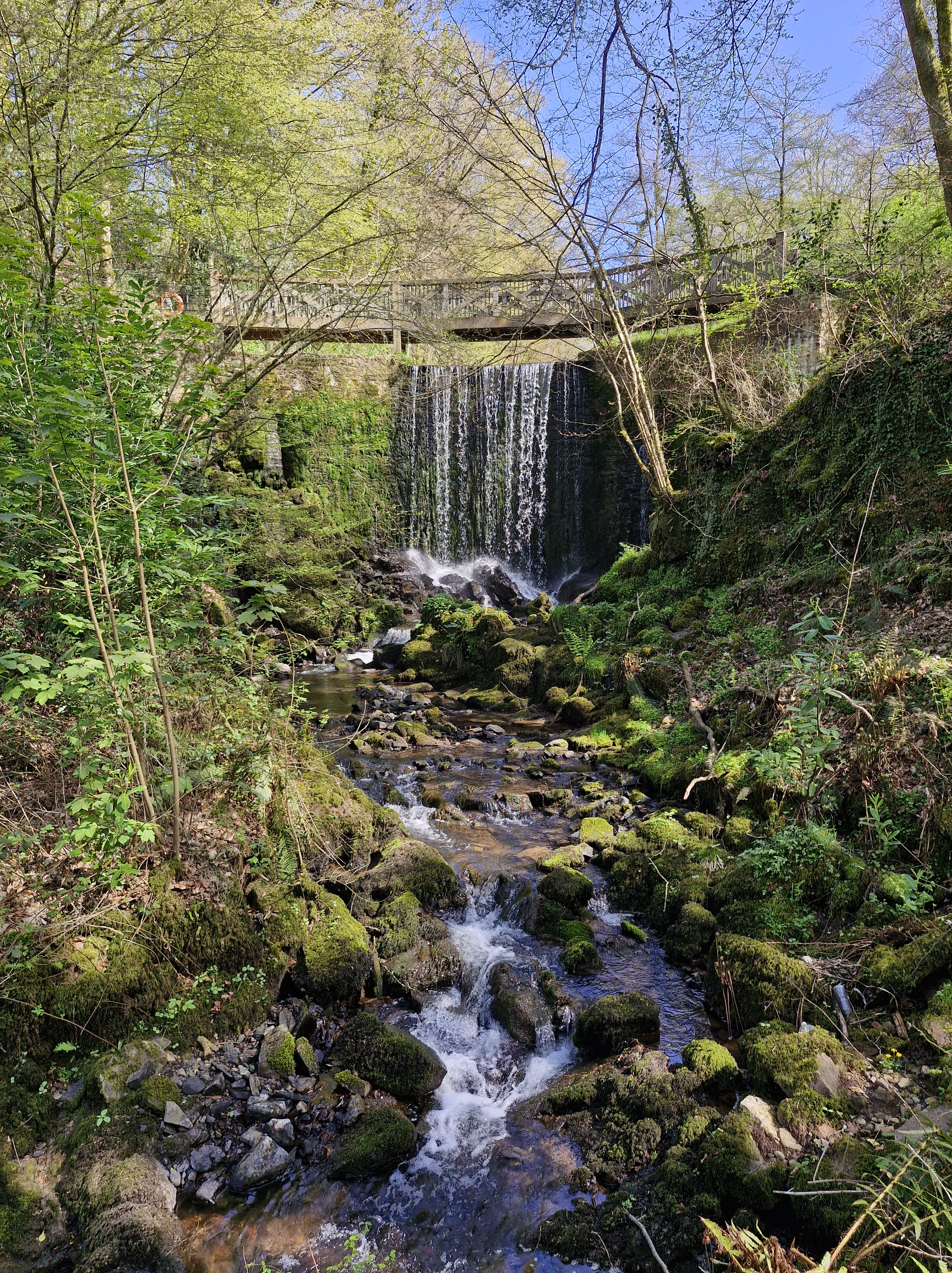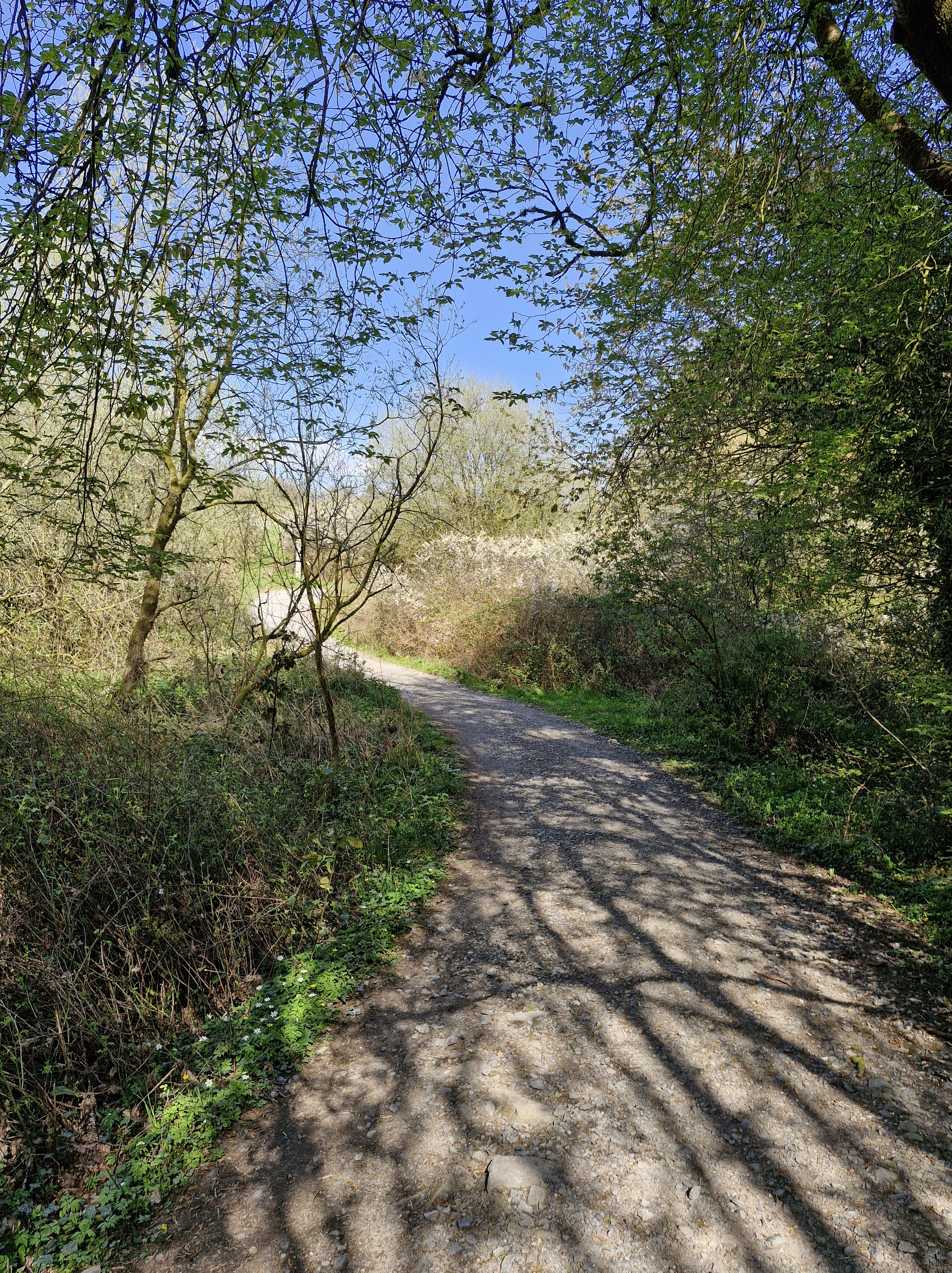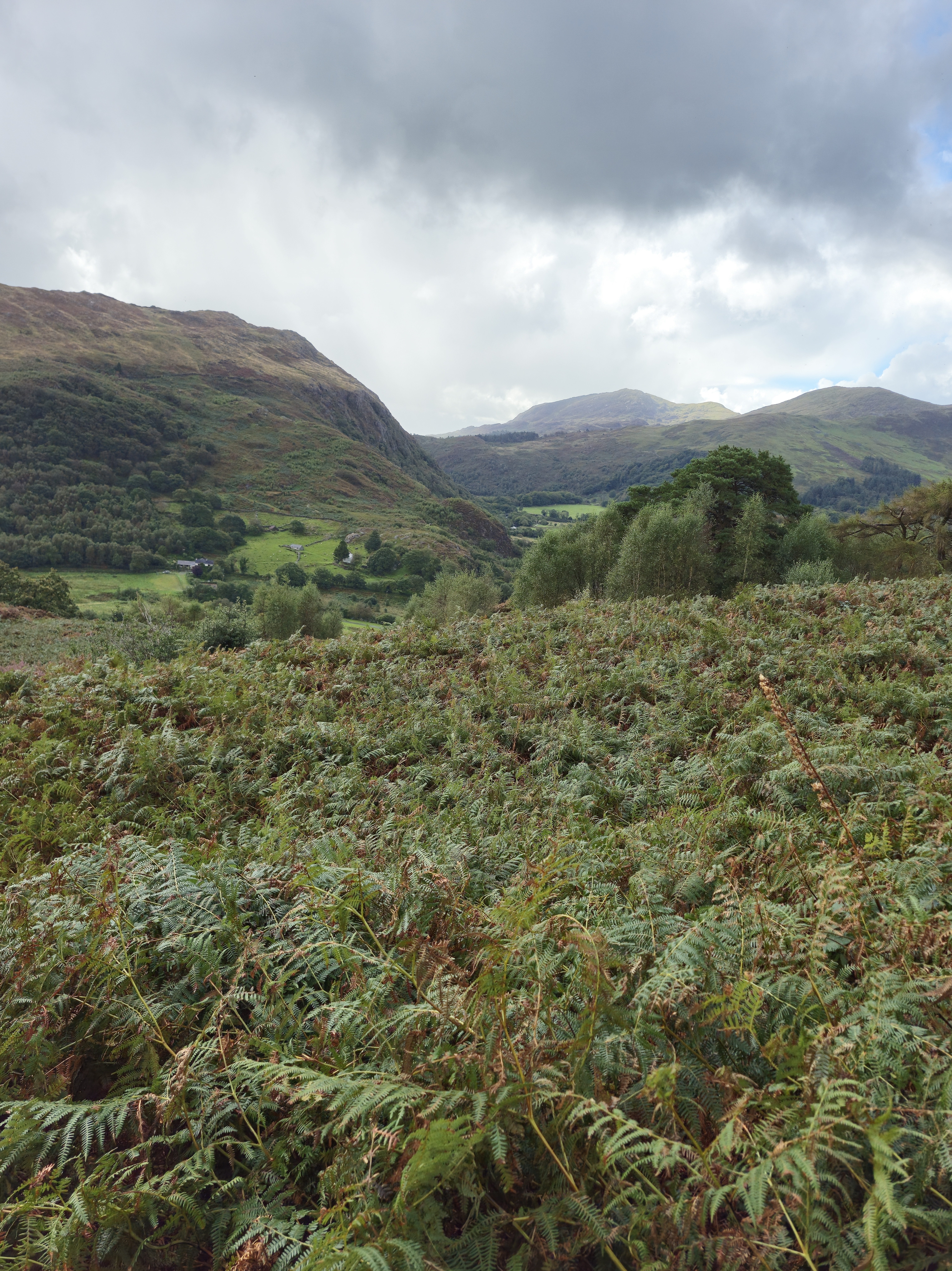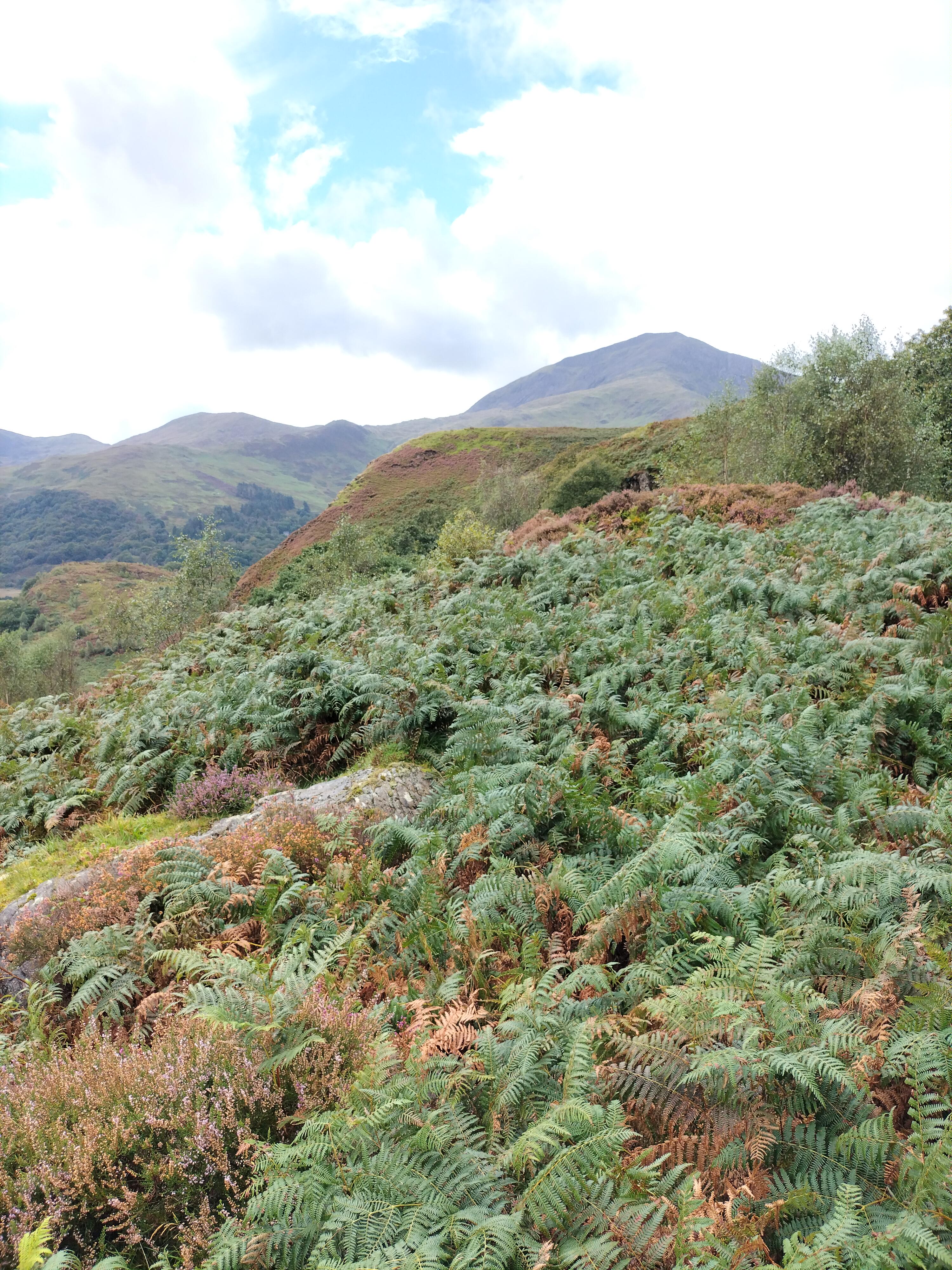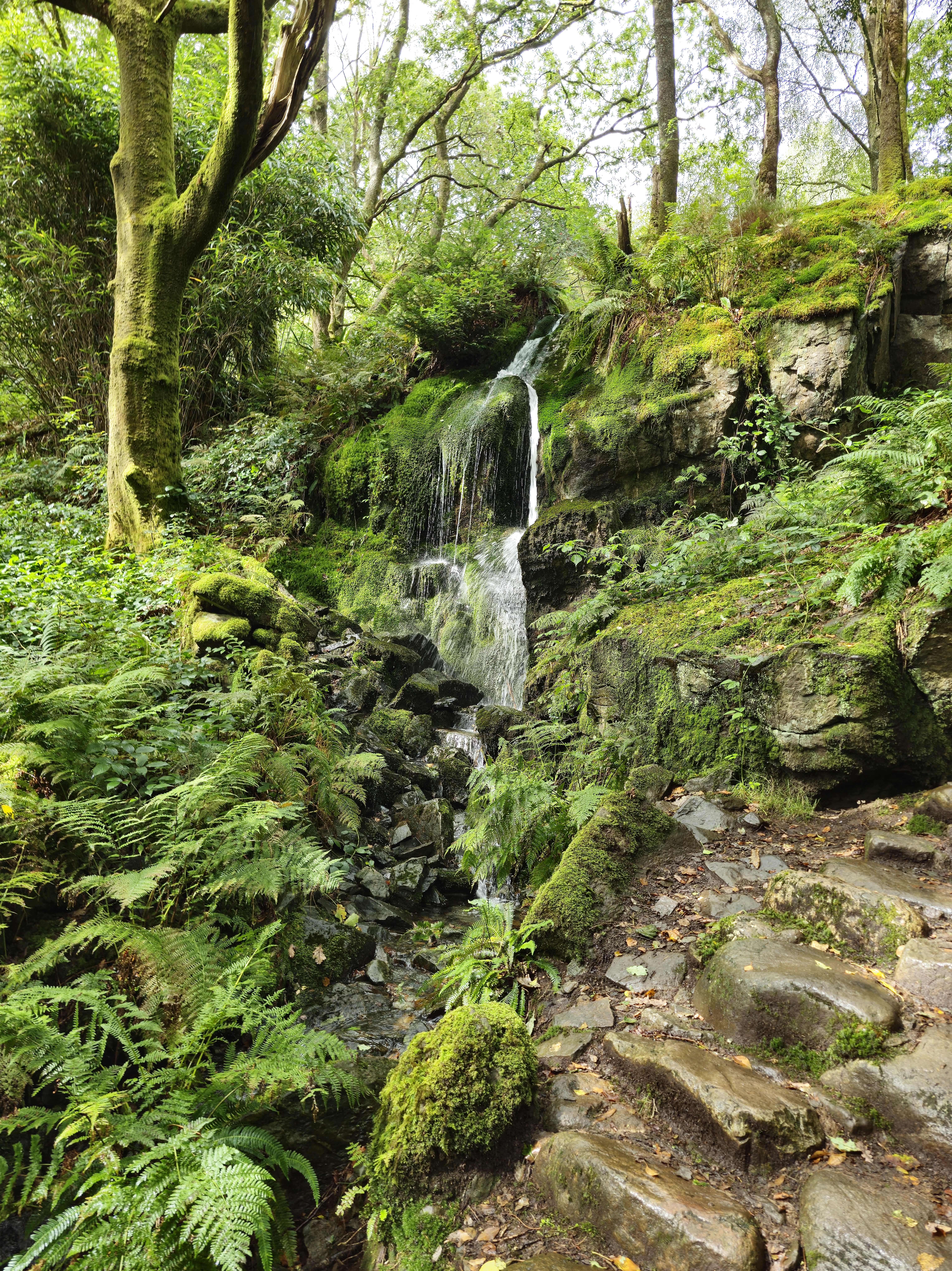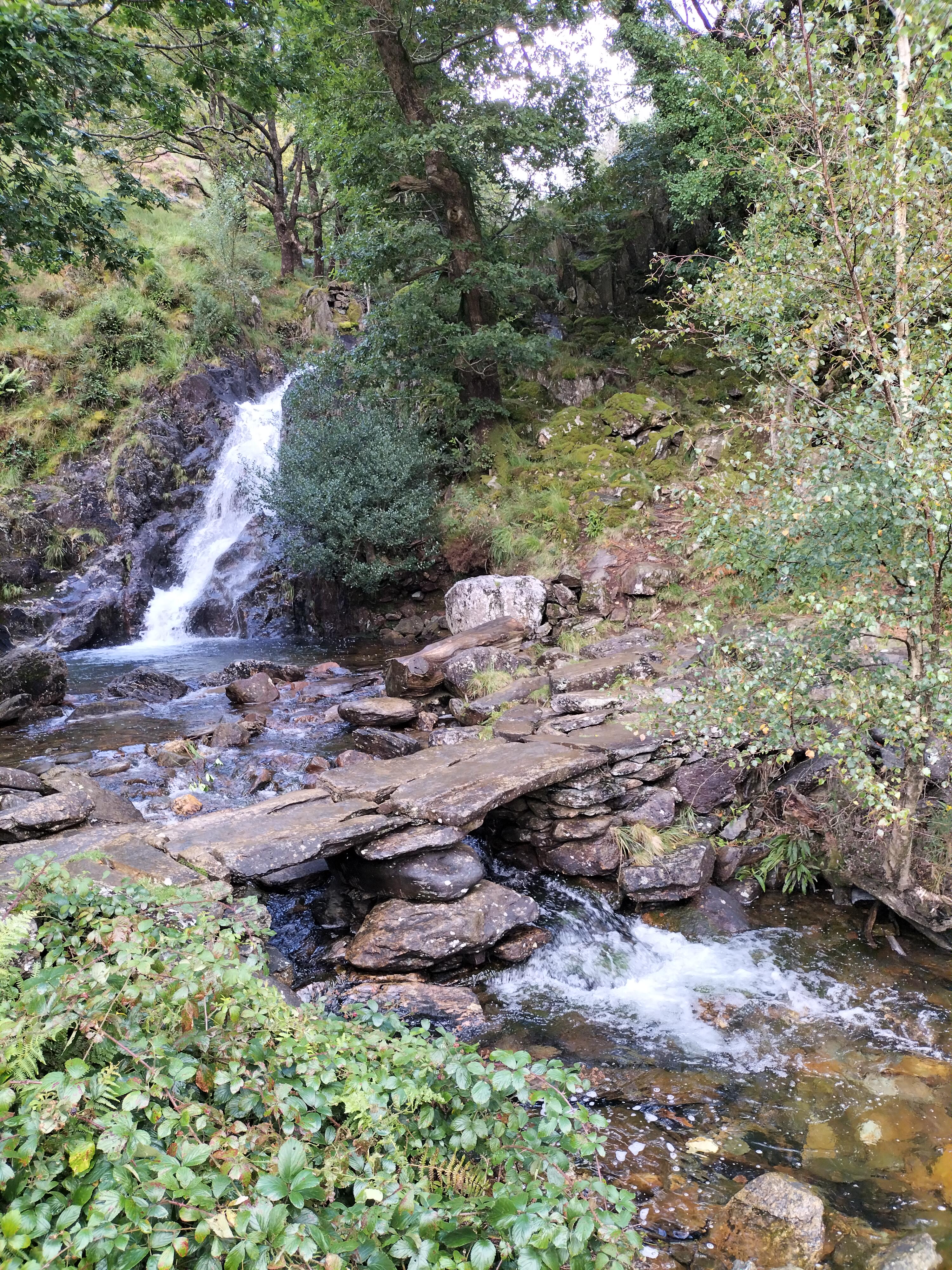
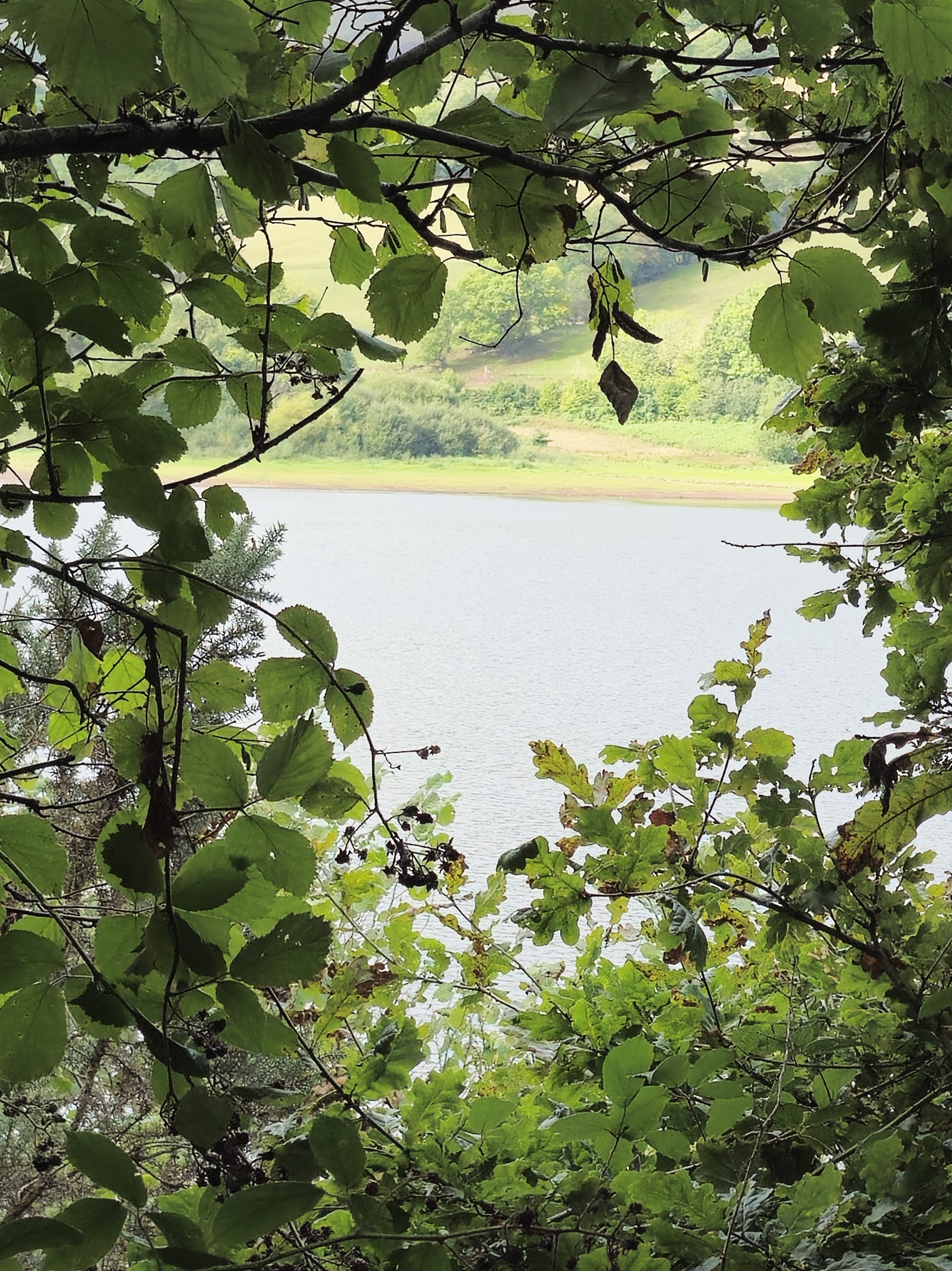
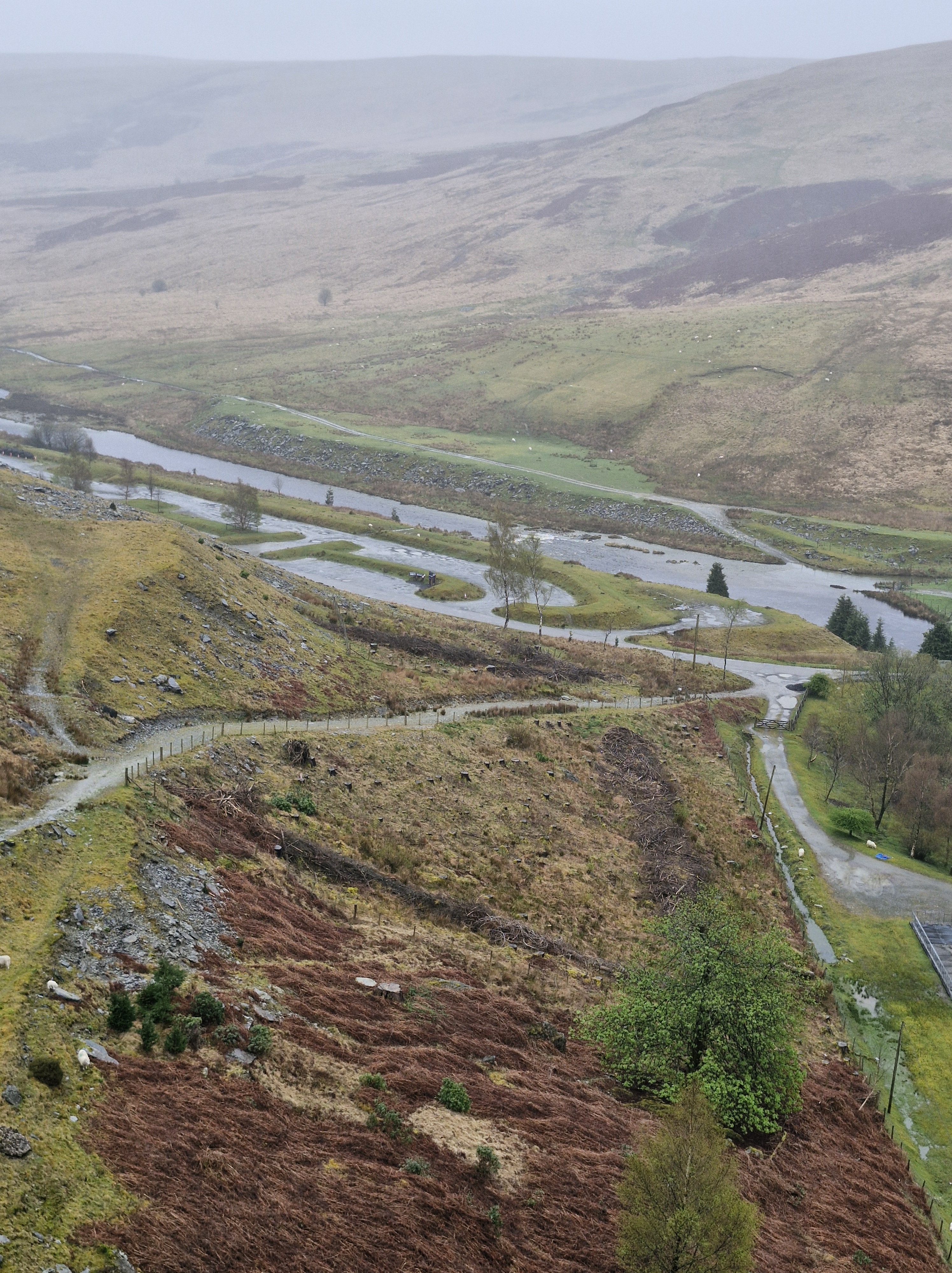
Although we have visited Elan Valley many times we had never been to the top of the Claerwen (Clear Light) dam.
Built between 1946 – 1952 by a workforce of almost five hundred men the outside of dam blends in with the other Elan Valley dams, although the inside is a concrete structure. Because British stonemasons were working in London after World War II Italian stonemasons were employed to work on the dressing stones,
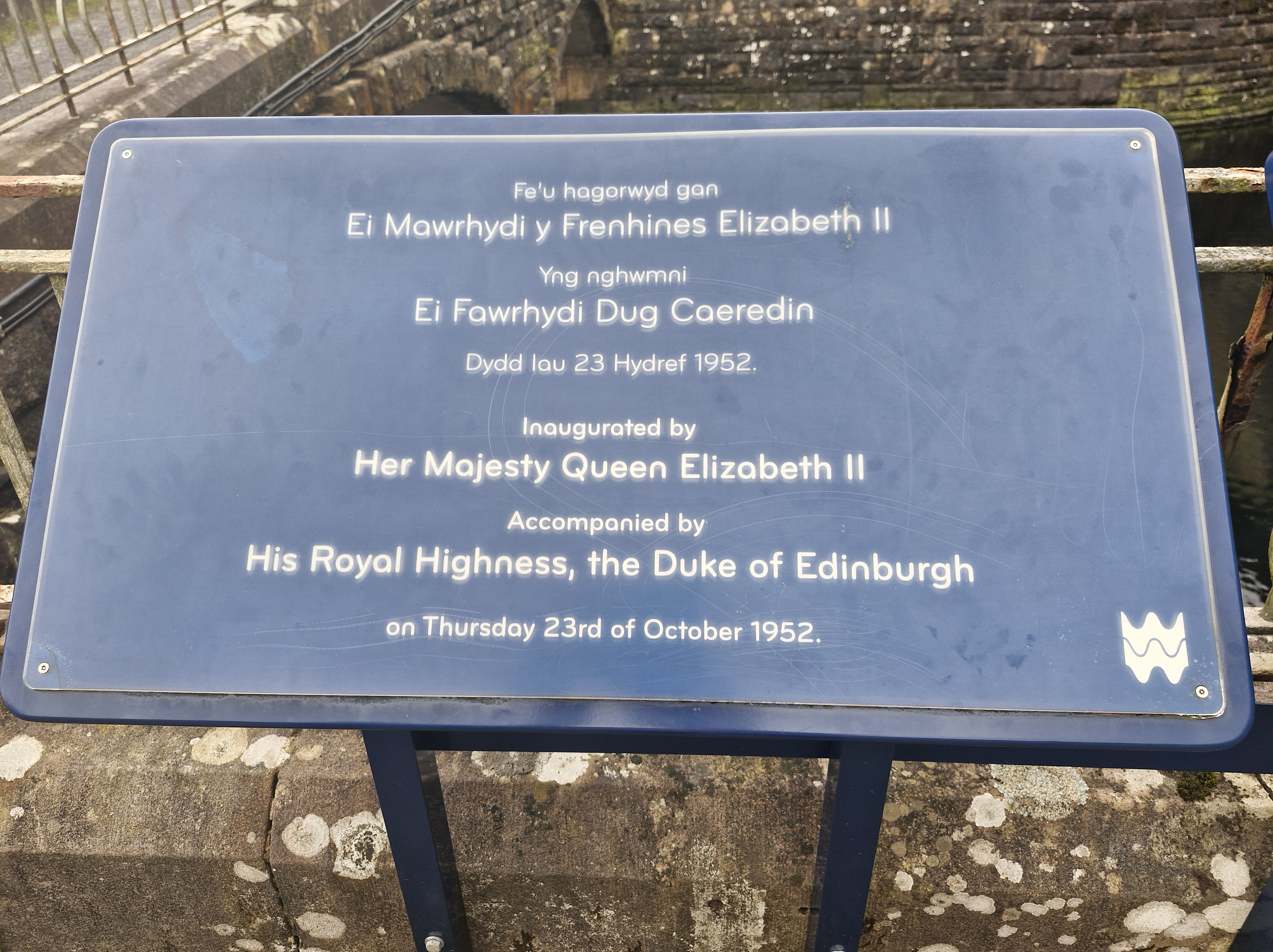
Claerwen was opened by Queen Elizabeth II on the 23rd of October 1952 on her first engagement in Wales.
At eighteen metres deep Claerwen holds almost as much water as all the other reservoirs combined.
There is potential for producing renewable electricity from the one hundred and ninety-nine million tonnes of water stored in the reservoirs. Since 1997 there has been hydropower production from turbines installed at the base of all the dams.Clearwen can produce 1680 kilowatts.Combined all the dams can produce 3.5 megawatts, which is about six thousand homes.
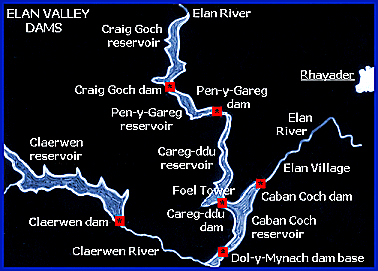
The day before we were here it was a gloriously sunny day and we’d driven and walked a little way around the four dams on the river Elan: Craig Goch, Pen y Garreg, Garreg Ddu, and Caban Coch.
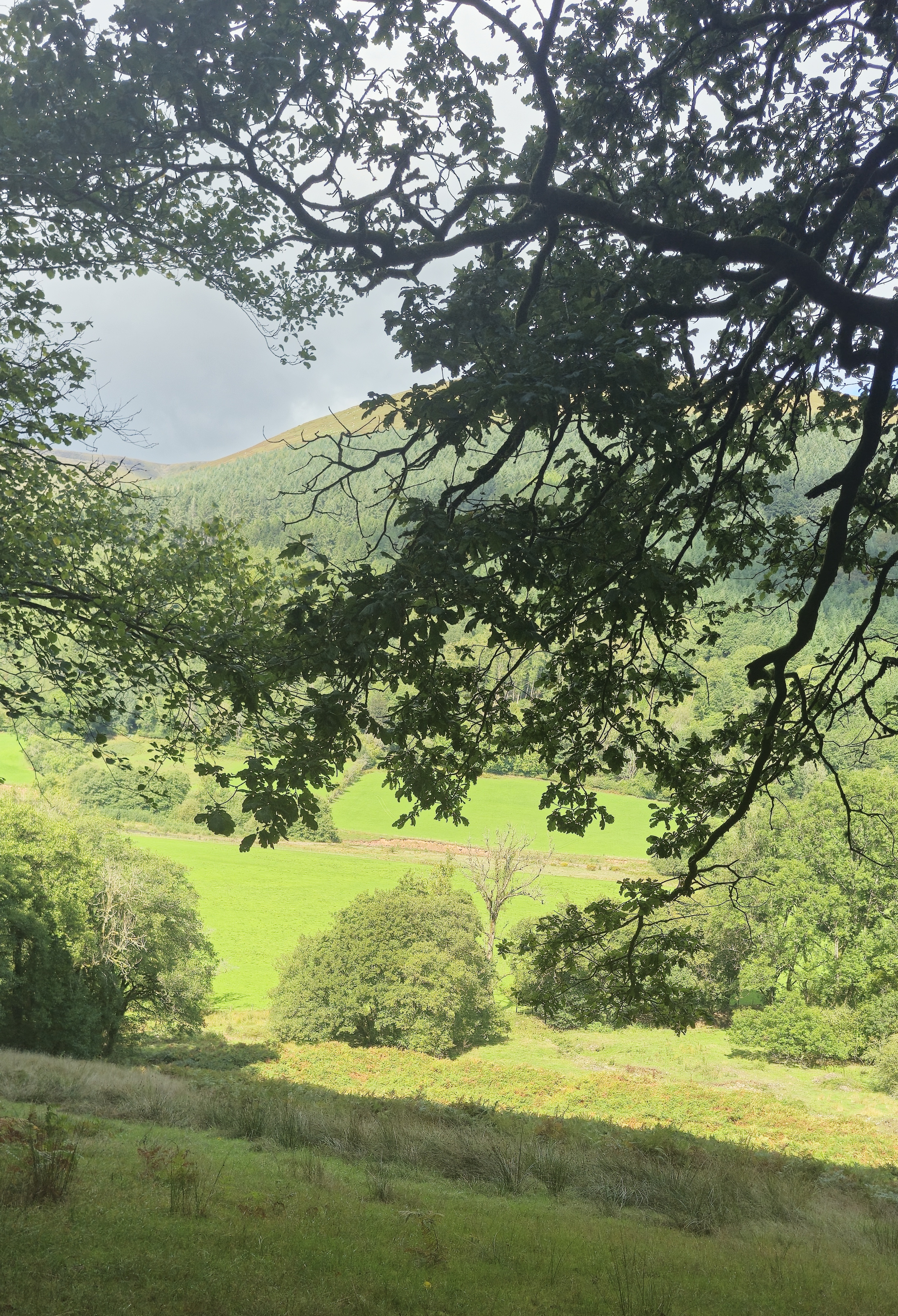
The following day it rained. But the photographer was adamant it would clear up (he’s an avid follower of the BBC weather forecast!), and, by the time we’d driven to the top Claerwen dam he was insistant there would be a break in the drizzle.
As usual he was right.
Next time we will walk to the Dol y Mynach dam. Dol y Mynach is the unfinished dam and is a Site of Special Scientific Interest (SSSI. There is a bird hide here from which Ospreys and other species of birds, including the Crested Grebe, have been spotted.
The late nineteenth century plan for the collection of dams and reservoirs in the Elan and Claerwen valleys included three dams on the River Claerwen. These would be constructed later when additional water supplies were needed.
So it was necessary to build the base of the Dol y Mynach Dam at the same time as the other dams in the adjacent valley of the River Elan.Dol y Mynach’s foundations were built during the first phase of the scheme, and was planned to be completed in the second phase, alongside plans for two other dams in the Claerwen valley. But after World War II, technology had advanced so the only the much larger Claerwen needed to be built. But, just in case it’s needed, a tunnel runs from Dol y Mynach to Garreg Ddu reservoir to fill up Garreg Ddu.
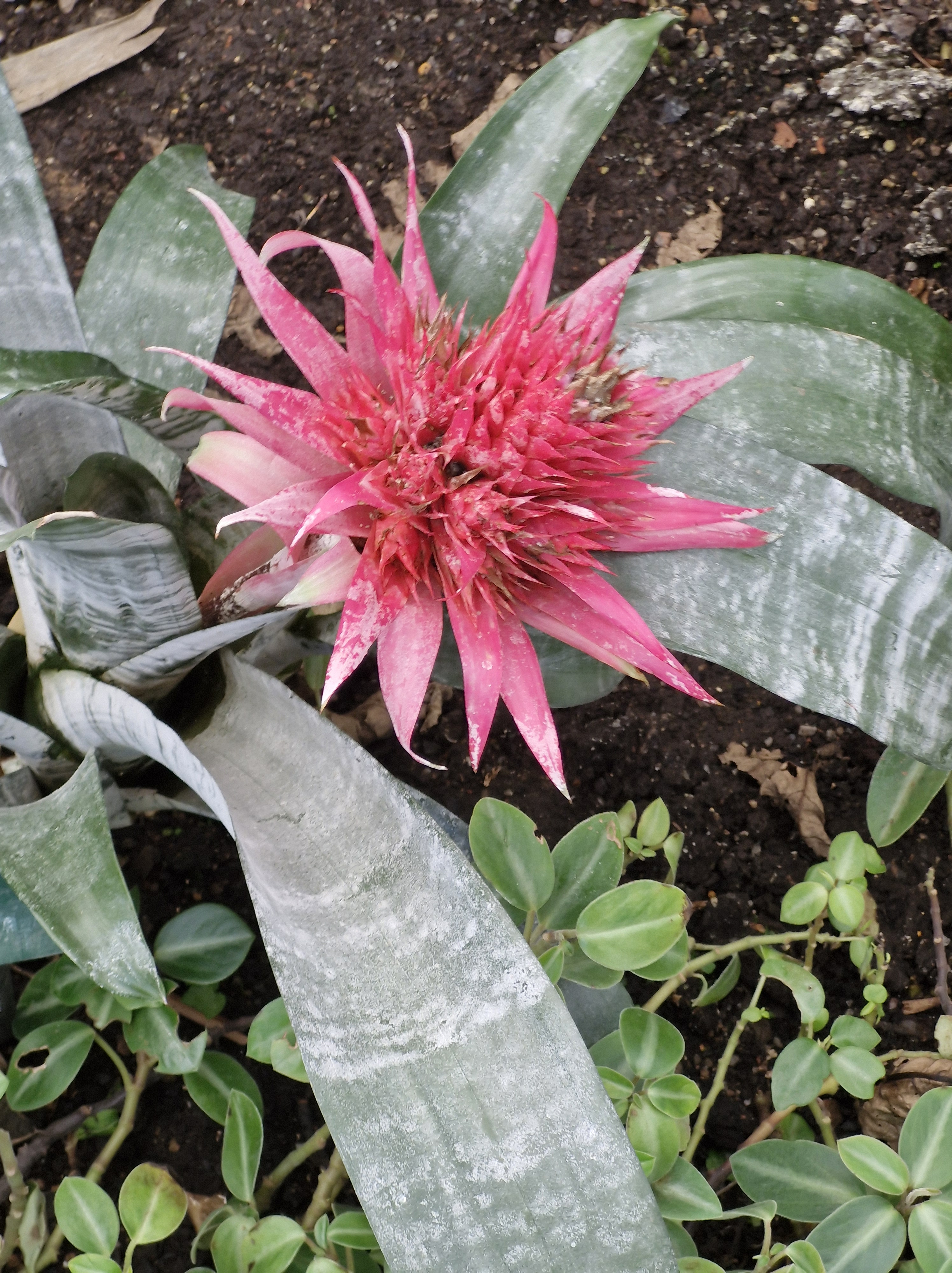
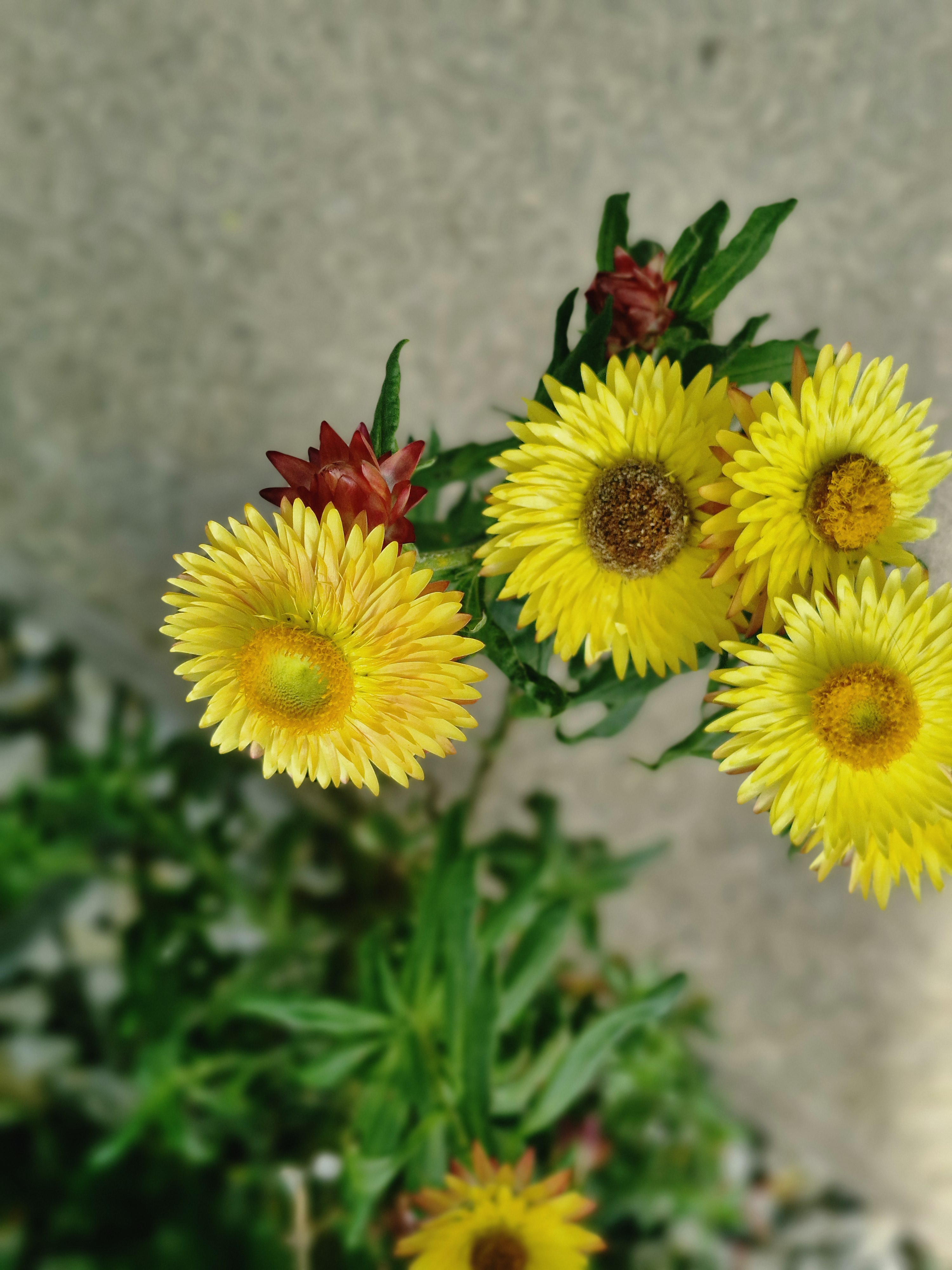
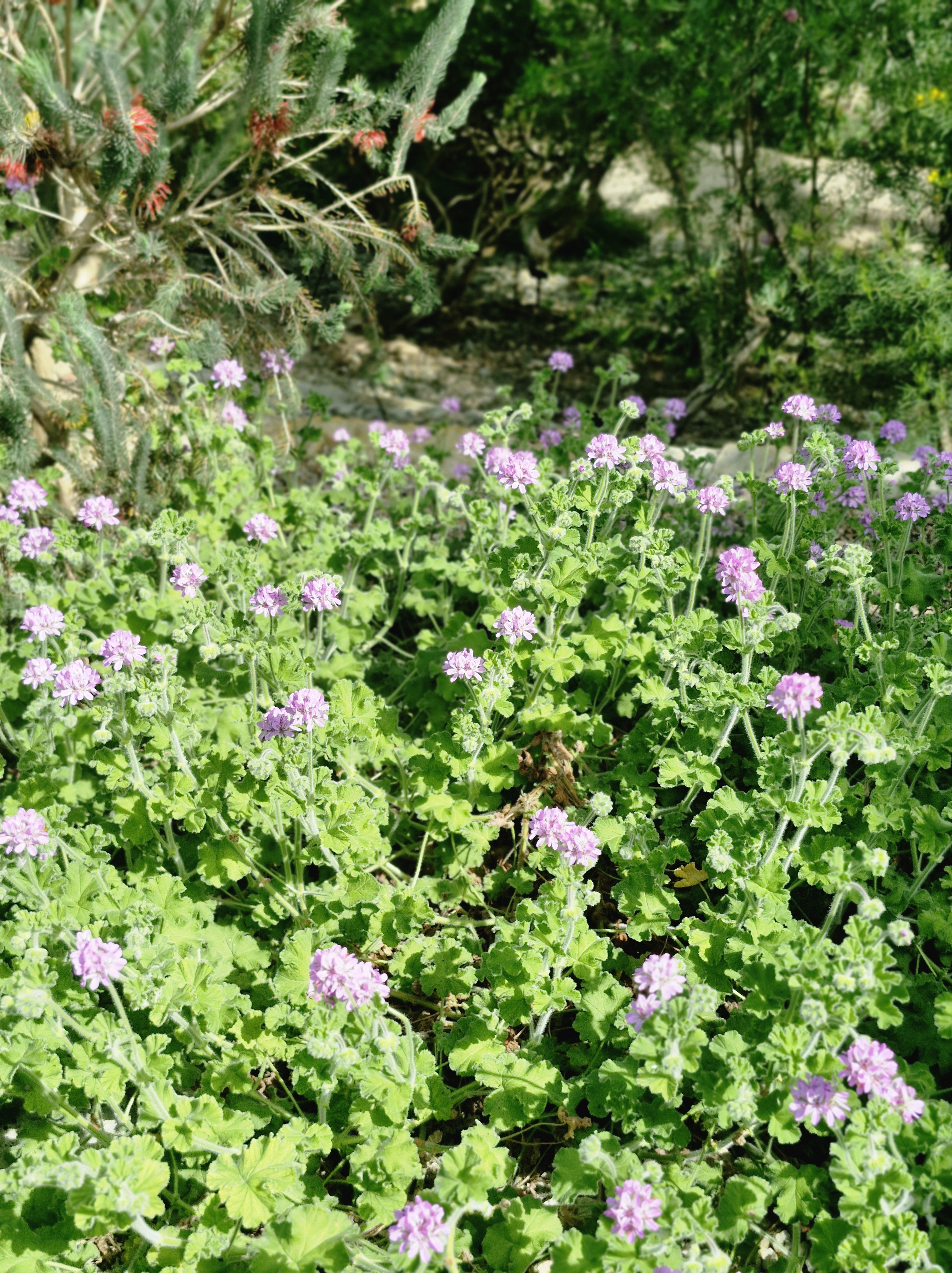
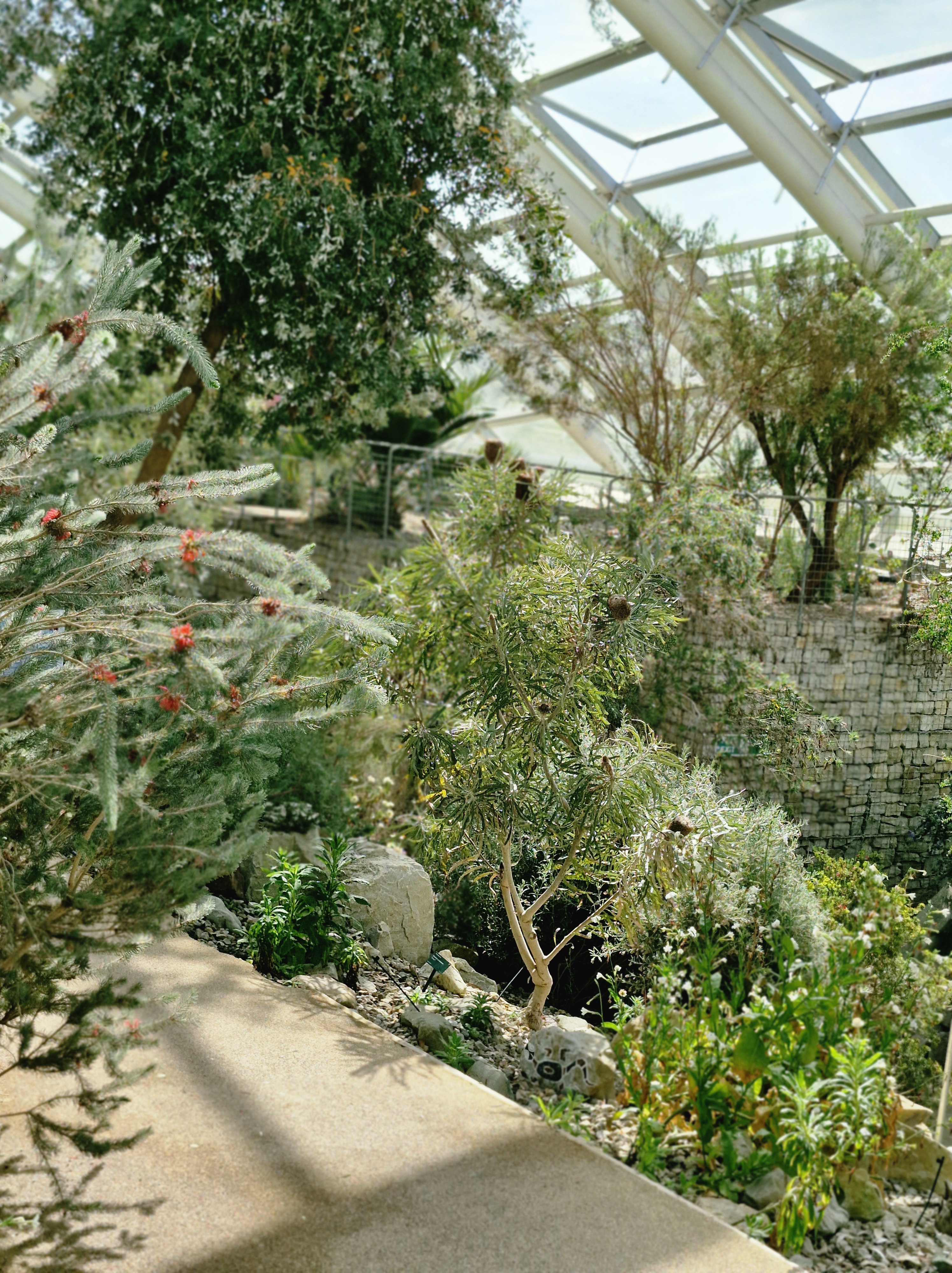
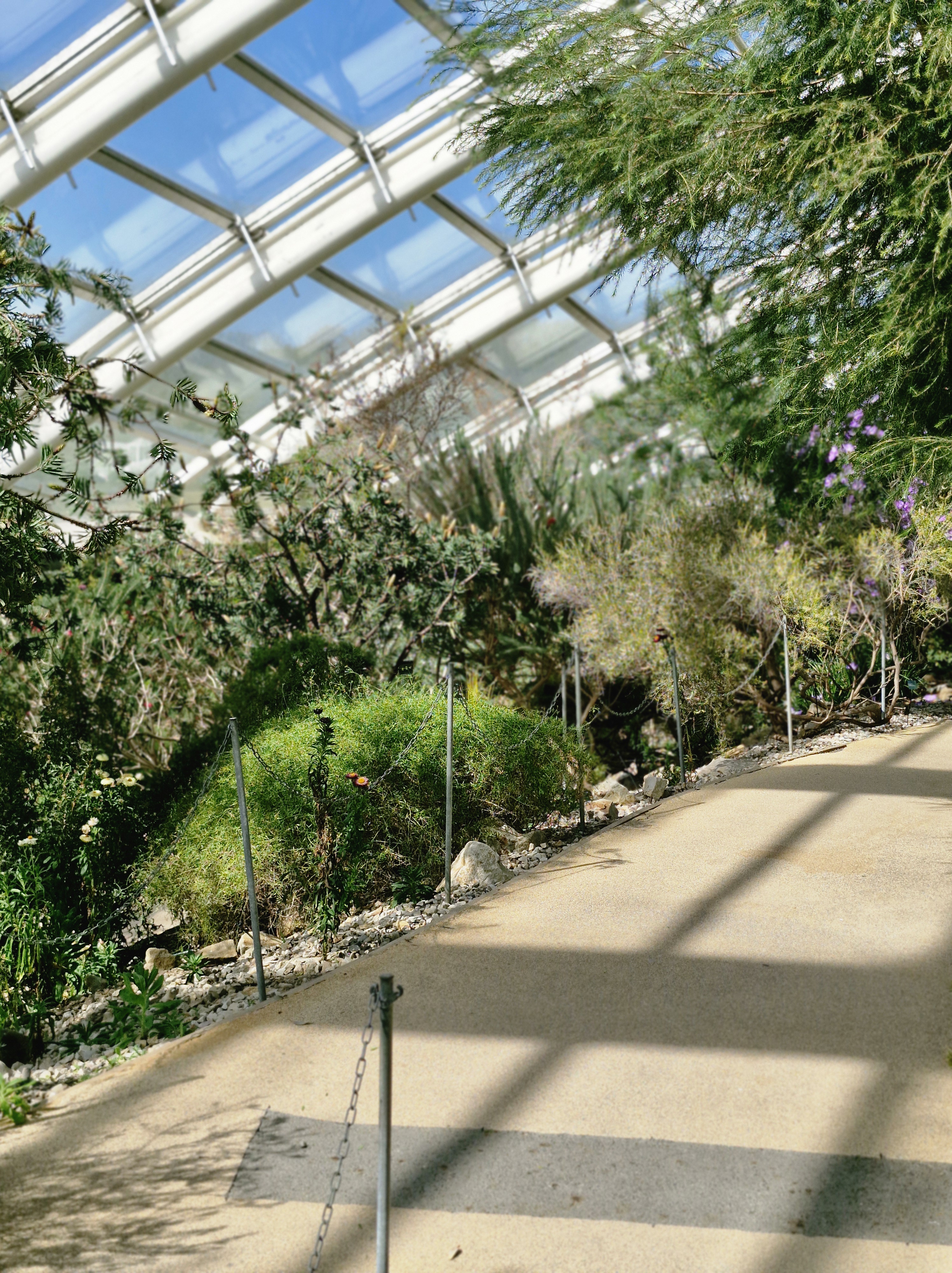
Or rather sauntered, because that’s the only way to take in these glorious grounds and to study the abundance of plants that are Indigenous to so many countries in the world’s largest single-span glasshouse.
The National Botanic Garden is located at Llanarthney in the River Tywi valley, Carmarthenshire, Wales, not too far from our home. So, not only are we lucky enough to live near the stunning Pembrokeshire coast, these impressive gardens are also almost on our doorstep. How fortunate are we!
And, on the day of our visit we had the one day of glorious weather that week.
The National Botanic Garden of Wales is on the former Middleton Estate.
The Middleton Estate was so named after the three Middleton brothers from Chester, who helped set up the East India Company in 1600 in order to trade in highly profitable spices.
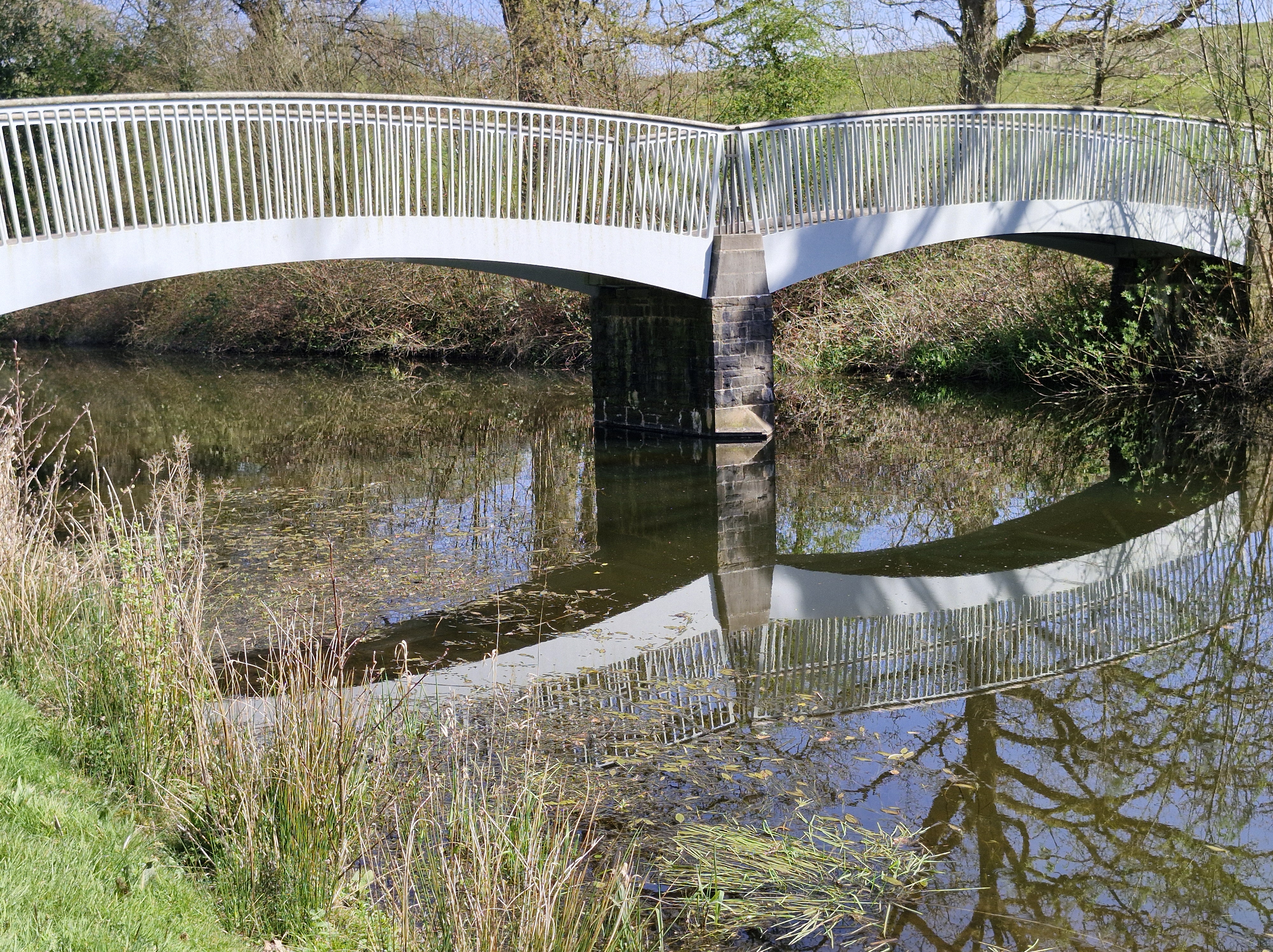
Two hundred years later, in 1789, William Paxton returned to Britain from being the Master of the Mint in Bengal for the East India Company. With the fortune he had made in India and together with his business associate, Charles Cockerell he employed Charles’ brother the architect Samuel Pepys Cockerell to design Middleton Manor. Paxton had the park laid out: planting trees, damming streams to form four lakes and waterfalls, having bridges and bath houses built. He also had a folly constructed to commemorate Nelson’s heroic deeds in the Battle of Trafalgar, named Paxton’s Tower.
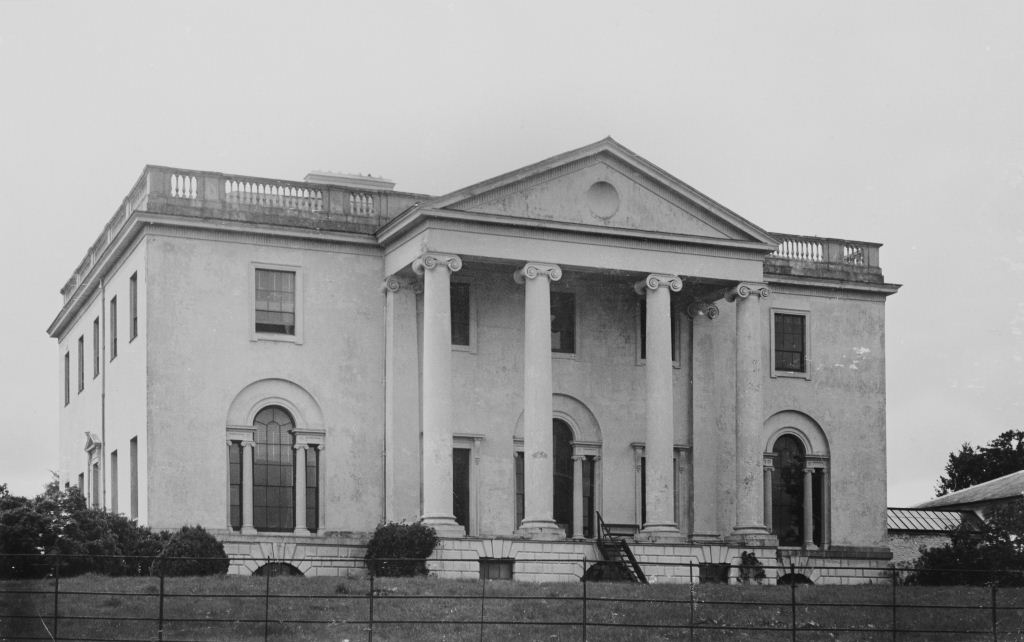
In the 1930s there was a fire that destroyed Middleton Manor. The remains were subsequently demolised in 1954. Only the foundations arestill visible.
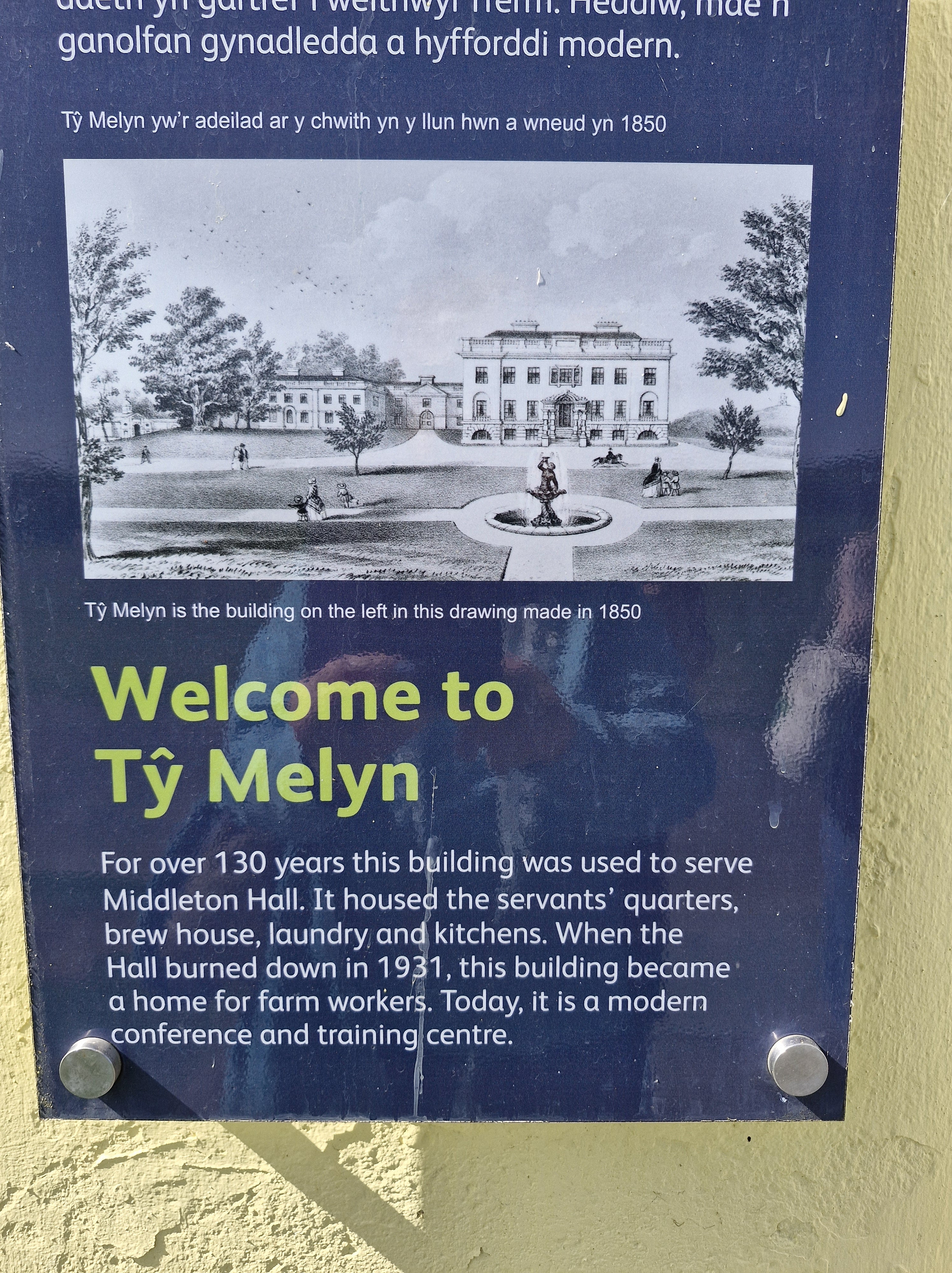
Ty Melyn is nowa venue for conferences, board meetings, training days. seminars, presentations, exhibitions etc.
Other buildings which survived were the stable buildings (now a café (( delicious food!!)) a gallery and offices) an ice-house and the double-walled garden with the remains of its Peach-house.
There is/has been acknowledgement of the unease about the heritage of the land that the Botanical Gardens stands on. Read more on this: https://tinyurl.com/227k9eyc. And there is an excellent article written by Meurig Williams under the umbrella of Nation Cymru: https://tinyurl.com/52v3ckf5.
But this shouldn’t detract from the initial and ongoing aims of National Botanic Garden of Wales, which is a charity backed by the Welsh Government. Since its opening it has been dedicated to research, conservation of biodiversity and sustainability, and lifelong learning and the enjoyment of the visitor.
Opened in May 2000, the site of the gardens was partly chosen because it was an example of the grand scale garden design of past eras. And the fundamental principles of the National Botanic Garden of Wales are strictly adhered to.
We’ve visited the gardens many times over the years, different times, different seasons, for different events. There is always much to see, much to enjoy.
This time I also learned that a certain Welsh Suffragette lived here at one time. During my research for the prequel of my Haworth Series, A Hundred Tiny Threads, I discovered that many Welsh Suffragettes and Suffragists joined the peaceful march to London in 1913. I’ve given many talks on that event. Tempted to write a post about her…
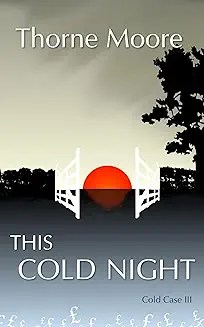
2011. Redemption House is a godly retreat for the Brothers and Sister rescued from life on the streets. But when sudden fortune comes to Sister Grace, all peace vanishes—and so does Sister Grace. 2024. Family is an issue for Rosanna Quillan, still nursing the trauma of her mother’s suicide. At sixteen, she left home, to escape the misery, and that’s why she feels compel to pursue the search for a girl who did the same, sixteen years before. What became of Lianne, the girl that everyone liked, but nobody missed? Rosanna’s quest leads to suspicion, deception and murder. Because not everyone wants Lianne’s mystery solved.
My Review:
This, the third in the Cold Case series, provides yet another rivetingcomplex case for Rosanna Quillan.As usual,Thorne Moore leads us in one direction so that it seems inevitable that a crime will be solved in a certain way – and then, ultimately, take us unawares.
In the past I have said that whichever genre this author writes in, there is one thing any reader can be certain of when holding one of her books in their hands. That they will have a well written “absorbing story, with an innovative plot, meticulous settings that instantly give a sense of place, minor characters they will often either love or hate, and a protagonist with whom they will empathise.”
And This Cold Night is no exception. I enjoyed reading and following Rosanna Quillin’s investigations into Lianne Michaels’s mysterious disappearance, while, at the same time, she struggles with her own past. I’m just glad she has the reliable and loving Gethin by her side. (Giving no spoilers here to prospective readers – but hopefully just enough temptation, because this is a story that anyone who loves crime fiction, threaded throughoutwith the everyday life of the protagonist, won’t want to miss!)
I’m not normally a reader of crime fiction per se, but this series isn’t only the solving of crime – well I don’t think so, anyway. We get to know Rosanna: the historical background intricacies of her career, her personal life, her weaknesses and strengths, her relationships, past and present.Even Rosanna, when trying to understand what she’s doing, says herself that, “she’s now not sure how to describe her career, except that it involved detection…“
I was gripped by this series from the start. The first book – Best Served Cold – started Rosanna Quillin’s journey as a detective. I reviewed that book here.
The second of this series, Cold In The Earth, reviewed here, revealed even more of Rosanna’s past and herown doubts, failings, and sucesses that have lead her to this point in her life.
So, I was extremely pleased to read that this third book, This Cold Night had been published.
And, now I’ve read it, I’m equally pleased to be able to recommend it. No reader who, not only enjoys crime fiction, but likes a book that brings characters to life, and a puzzle to be solved, will be disappointed
I will only add one thing – although they are stand alone books,to get the most out of the Cold Case Bookseries, I would suggest to anyone that they read these books in the order they were published.
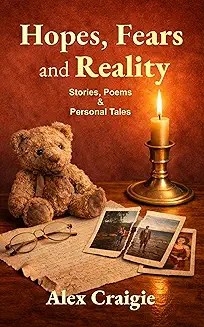
What do a terrified boy, a ruthless beauty queen, a fairy godmother from hell, and a group of quietly rebellious pensioners have in common?
In this eclectic collection of short stories, poems, and anecdotes, everyday moments uncover the hopes we cherish, the fears we try to hide, and the realities that shape us.
Inside this collection:
• Gently humorous pieces that find laughter in life’s small absurdities • Reflective moments that explore the experiences that shape who we are • Sharper, unexpected stories that catch you off guard and linger
Meet unforgettable characters and moments:
• A child facing what lurks beneath the bed • A teenager consumed by image • Elderly friends with secrets—and mischief—of their own • Twists on the familiar that don’t go quite as expected
Many of these pieces are brief and powerful, born from creative challenges—flash fiction, structured poetry, and writing shaped by rules and constraints—alongside glimpses drawn from real life.
Perfect for readers who enjoy:
• Short, impactful reads • A mix of humour, reflection, and edge • Dipping in and out whenever time allows
Open the book anywhere. There’s always something waiting—something to make you smile, pause, or see things a little differently.
My Review:
I’ve long been an admirer of Alex Craigie’s writing, so I was thrilled to discover that she has published this collection entitled Hopes, Fears and Reality.
Over the years she has produced an extensive range of genre. From her earlier books, stories threaded through with themes that provoke thought – to her wonderfully successful series of all things that were (and perhaps in some cases, still are) beloved by Baby Boomers. These later books, entitled The Rat In The Python, contain brilliant descriptions and images (whether clothes, shops, furniture, and household appliances) evoke memories for those of us at a certain age, and/or gasps of amazement and even disbelief in younger readers.
But I digress, this review is about Hopes, Fears and Reality. And the title says it all for me. In this book whether it’s in prose or poetry there are those moments in life that live forever in our memories. The characters we meet are multi-layered and unforgettable, their dialogue individual and reveal personalities, and the settings of the stories all give a brilliant sense of place.
I have favourites in this anthology, there are too many to list them all, so I’ll just mention one or two: Fear from the Past will stay with me, as will the poems Alone and Our World of Beauty and Hope. I chuckled at Stayin’ Alive and I was fascinated by the anecdotes of the author’s grandparents.
Alex Craigie’s work consistently portrays the emotions she intends to reveal in everything she writes. and instantly evoke a response in the reader.
And so I have no hesitation in recommending Hopes, Fears and Reality to any reader. Please read and savour every word.
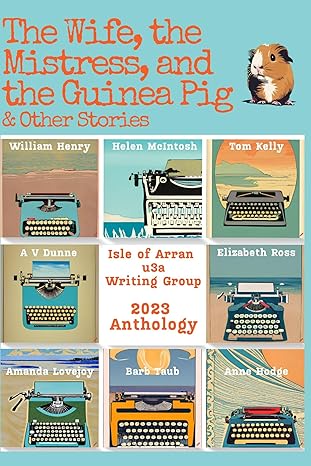
And a mention of their first Anthology:The Wife, the Mistress, and the Guinea Pig & Other Stories
Having been a member of the U3a for some time, I have discovered the value of being able to join in with the many groups and events. I also run a monthly creative writing group.
So, some time ago, I was thrilled to learn that there is a U3a on Arran; an island I’ve been lucky enough to stay on and which is close to my heart because of the wonderful memories and friends I’ve made there. When I discovered in 2023 that the writers’ group had produced an anthology: The Wife, the Mistress, and the Guinea Pig & Other Stories, I read and wrote a brief review:
“This is the first anthology written by the u3a writers on the Isle of Arran, and is a wonderfully engaging read encompassing short stories and poetry, with the underlying theme of ‘lives lived’, in brilliant descriptive detail. Nostalgic, reminiscent, sometimes humorous – but always enjoyable – this is an easy read, a ‘pick up and dive in!’ collection, with the occasional photograph and charming image. Highly recommended … to any reader who wants to be entertained.”
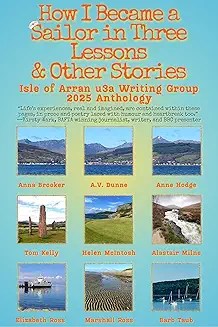
And now the group has written and published their second anthology, and it is equally enjoyable.
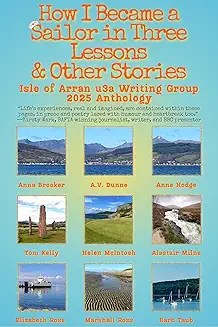
How I Became a Sailor in Three Lessons & Other Stories: 2025 Anthology: by Isle of Arran u3a Writing Group (Isle of Arran u3a Anthology Book 2
I’ll mention a few of my favourite reads in the book.
One piece of writing made me quietly envious – that of Alaster Milne’s view of life on Arran – which is that time on the isle is “ish;” there is a relaxed attitude to time. As he says: “Time on Arran is relative … it’s the Arran way of life that defines where we live.”
And there is both humour and an astute observance on human nature from A.V Dunne, both in poetry and prose. I laughed out loud reading one piece on not being “cut out for the twenty-first century” and could empathise with her Rage Against Age.
I loved revisiting Barb’s Do Not Wash Hands in Plates and her dealings with Delhi Belly and toothache. And then there is Lockdown, a bad knee, and a walking cane – even as I sympathised I’m afraid I chuckled. I hasten to add here that it is always the way she writes, Barb has a tremendous capacity of seeing the funny side of life, whatever happens.
I also enjoyed Helen McIntosh’s and Tom Kelly’s memoir contributions (memoirs are a favourite genre of mine), and the gentle writing of Marshal Ross.
There is an Arran in one hundred words section. Flash fiction is a brilliant writing discipline and all these pieces are fun and interesting to read.
And the black and white illustrations from photographs and drawings, throughout the anthology, from another U3a group, the photographers, add a lovely flavour to the writing.
Finally, there is an explanation of the University of the Third Age (U3a), and a description of the Arran U3a was formed in 2019. I was fascinated to learn that there are over a thousand chapters of people who, having retired, are still sharing experiences and expertise.
It’s eight years this month since the prequel, A Hundred Tiny Threads, to the Haworth Trilogy was published – so a little celebratory post – with an extra personal memory at the end – for one of my oldest books.
It’s 1911 and Winifred Duffy is a determined young woman eager for new experiences, for a life beyond the grocer’s shop counter ruled over by her domineering mother.
The scars of Bill Howarth’s troubled childhood linger. The only light in his life comes from a chance encounter with Winifred, the girl he determines to make his wife.
Meeting her friend Honora’s silver-tongued brother turns Winifred’s heart upside down. But Honora and Conal disappear, after a suffrage rally turns into a riot, and abandoned Winifred has nowhere to turn but home.
The Great War intervenes, sending Bill abroad to be hardened in a furnace of carnage and loss. When he returns his dream is still of Winifred and the life they might have had… Back in Lancashire, worn down by work and the barbed comments of narrow-minded townsfolk, Winifred faces difficult choices in love and life
A couple of reviews:
“When I emerged at the end of this book – during the reading, my immersion was total – it was with a sense of having experienced it all first hand, and of having deeply felt every moment. This was story-telling at its very best… and a book that will long linger in my memory.”
“I loved it… A page-turner that keeps you hooked. The story line has lots of twists and turns and you feel yourself moved on so many different levels. As the book unfolds it gives you moments of tenderness and love, hatred and spite all blended together with conflict, prejudice, guilt, grief and a desperate longing for change. Judith describes the period so well, with some very graphic, cruel and harrowing episodes, enabling you to empathise with each character in turn. I particularly like the fact that the story held together to the last page.”
Three year earlier, on the exact date – the 17th August – the book was published, I’d written the following…
My Grandad
My grandfather died seventy years ago this week. Obviously i never knew him and have only one small black and white photograph of him on my study wall. He’s standing in the backyard of the terraced house they lived in in Oldham. Lancashire. This is a poem I wrote about him a long time ago. My mother said he was gassed in WW1 and never recovered.
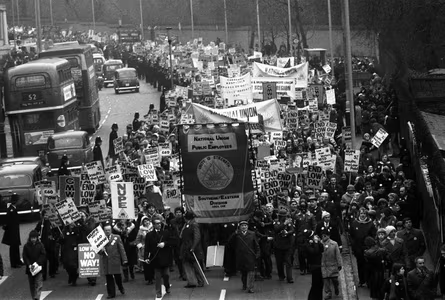
Part Two of The Stranger in my Houseis set against what is now called the Winter of Discontent – A term that comes from Shakespeare’s play Richard III, but it was used in an interview by the then Prime Minister James Callaghan and was taken up by the media. It lasted between November 1978 to February 1979 in the United Kingdom and, following opposition from the Trades Union Congress (TUC), took on the form of widespread strikes by both the private and public sector. Trade unions demandied pay rises greater than the limits Prime Minister, James Callaghan, and his Labour Party government imposed in an effort to control inflation.
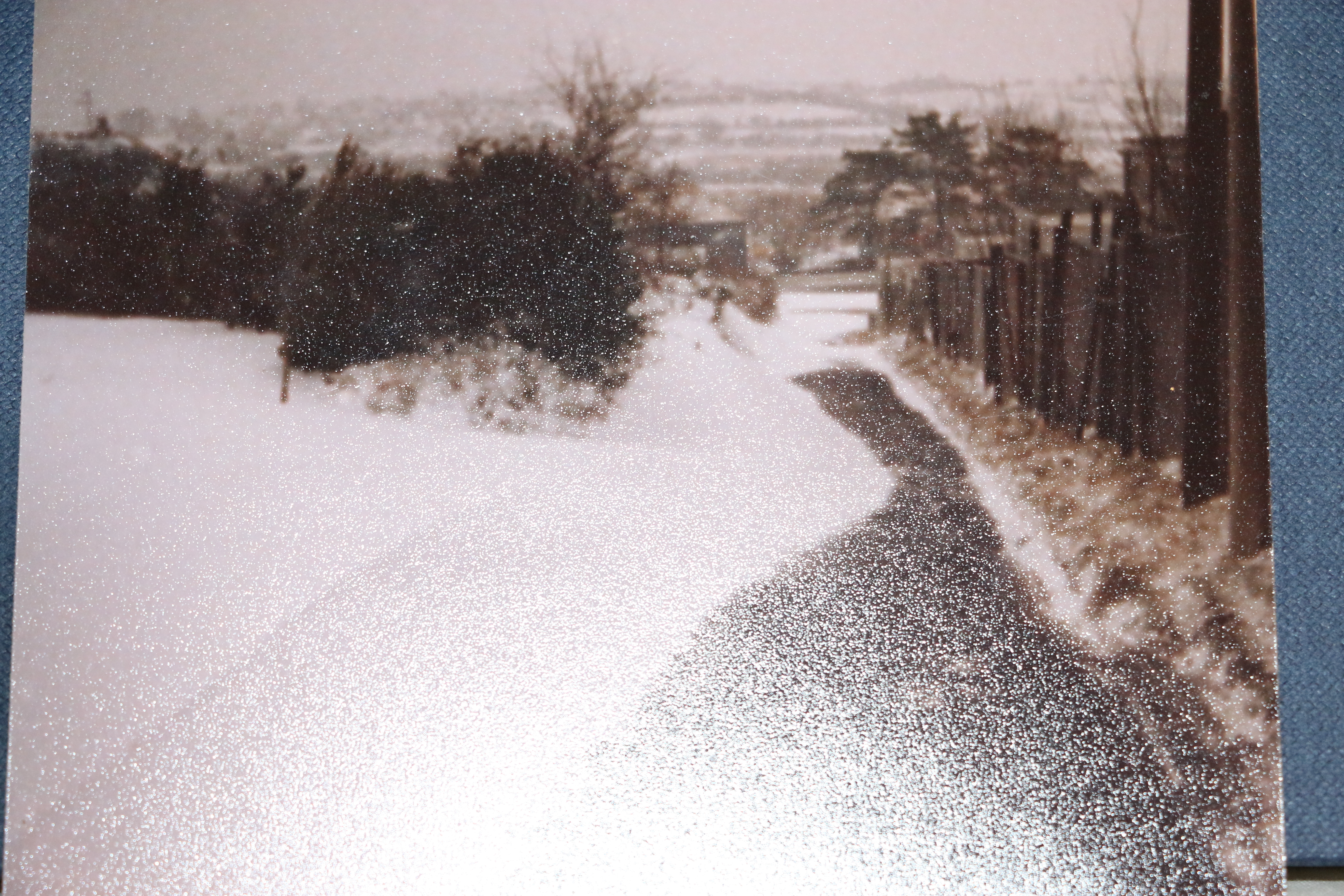
It was also the coldest winter in sixteen years. Heavy snowfall and freezing temperatures disrupted transport, businesses, and energy supplies.
In January 1979 (between the 1st and the 14th), some 20,000 railwaymen held four one-day strikes. There were strikes by haulage drivers, petrol tank drivers, and eventually municipal workers – 1,250,000 of them organised a one-day national strike on 22 January 1979.
The most notorious incident was the grave diggers’ strike on Merseyside, which hit the headlines with the press vilifying trade unions for their lack of sympathy with the bereaved, and, it was argued, with the needs of the nation.
But it was a strike by refuse collectors that came to symbolise the complete breakdown of UK public services. Local councils rapidly ran out of storage space as the binmen continued to strike, so rubbish was left in streets and open public spaces instead.
Photograph courtesy of The Guardian
Photo by Evening Standard/Hulton Archive/Getty Images)
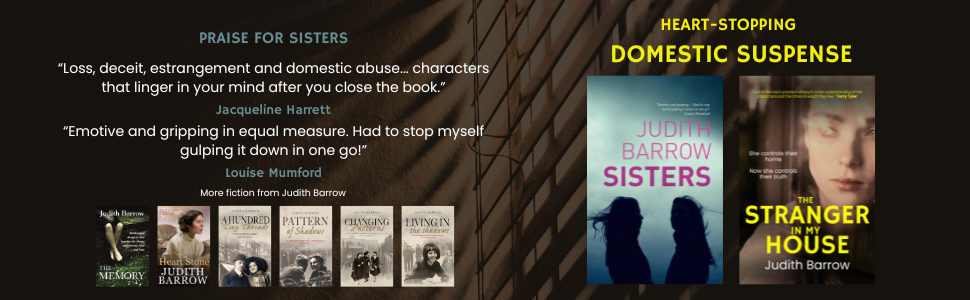
A gripping ‘cuckoo in the nest’ domestic thriller
After the death of their mum, twins Chloe and Charlie are shocked when their dad introduces Lynne as their ‘new mummy’. Lynne, a district nurse, is trusted in the community, but the twins can see her kind smile doesn’t meet her eyes. In the months that follow they suffer the torment Lynne brings to their house as she stops at nothing in her need to be in control.
Betrayed, separated and alone, the twins struggle to build new lives as adults, but will they find happiness or repeat past mistakes? Will they discover Lynne’s secret plans for their father? Will they find each other in time?
The Stranger in My House is a gripping ‘cuckoo in the nest’ domestic thriller, exploring how coercive control can tear a family apart. Set in Yorkshire and Cardiff, from the 60s to the winter of discontent, The Stranger in My House dramatises both the cruelty and the love families hide behind closed doors.
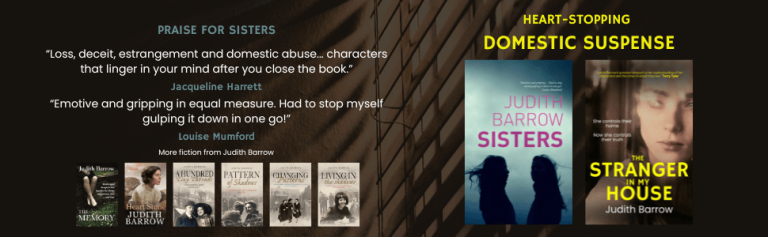
“Judith Barrow’s greatest strength is her understanding of her characters and the times in which they live.” Terry Tyler
Grateful for this reader’s review. One of the first for The Stranger in my House, when it was published in November 2024.
Judith Barrow’s done it again! The Stranger in My House is a book that showcases her renowned credentials. The characters are superbly drawn, the tension grows steadily and with each turn of the page your heart is gripped by the dilemmas facing the young protagonists, twins Charlie and Chloe, and their well-intentioned father. As with The Memory (shortlisted for Wales Book of the Year) it’s the way Barrow takes the ordinary and everyday, that we recognise and identify with, and skilfully uses her eye for human behaviour to turn it into something that becomes a nightmare we can readily believe in. The story begins in 1967 and over the following decade the sense of time and place is expertly done without being intrusive. At the core of the tale is coercion and the reader can see how cleverly the others are being manipulated by the woman who undermines them and shatters their family bonds. My dislike for Lynne and her son Saul built with the book’s momentum. There was that fear that they would get away with unimaginable cruelty and malice. To counter that, were those whose innate love and kindness provided a heartwarming buffer. From the start, I was gripped and that grip tightened inexorably. It’s becoming a cliché to say that you couldn’t put a book down – but I couldn’t. I had to know what was going to happen next. It mattered. That is the hallmark of a great author.
I love writing about people – especially people in families. There is such a richness of emotion, of action, within families. Nowhere else will love and loyalty vie with dislike and disloyalty, (even hatred in some case), pride with resentment, happiness with complete sadness. Nowhere else are human beings so close.
With The Stranger in my House, I wanted to explore a situation that would completely turn around the characteristic of a family. And I knew that needed to be something drastic. And that the family had to have a weakness within it it. And that weakness in the Collins family was grief, the sadness of losing the mother, the centre of their world. The father Graham is still grieving, bewildered, struggling to cope with running a business and trying to look after his children, eight-year-old twins, Chloe and Charlie.That “something drastic”; the situation that would completely change the characteristic of this family arrives in the form of Lynne, the district nurse who cared for Anna, the wife and mother of the family, who died when the twins were six. Lynne continued to call on Graham after Anna died and slowly but surely becomes part of his life… and consequently of the twins lives, when she and Graham marry.
I’ve always known about coercive control, although that’s not what it’s been called until these last few years. But it’s always been the patriarchal control, the accepted head of the family situation of past times, I was initially aware of. The earliest of my books, A Hundred Tiny Threads the prequel to the Haworth trilogy, is set after WW1 and the protagonist’s father, Bill, is a man of that era; he totally controls the family: by his moods, his temper, his fists.
But these days control of any sort is identified as coercive control, and it’s recognised that this can result in psychological damage that can last for life. It’s difficult, sometimes, for the victim to make sense of what’s happening, to see it as abuse. It’s like imprisoning someone, restricting everything they are. They are robbed of their independence, and their confidence is slowly undermined. It destroys who they are.
Anyone can be guilty of being a coercive controller. And guilt is the right word, because, today, it’s viewed as a crime. To totally have control over another adult human being is a crime. It’s shown in so many ways: physical assault, threats, humiliation, intimidation or other abuse intended to harm, punish or frighten. The perpetrator gaslights the victim by denying things have happened, using the confusion to control, criticising everything they do and say. Victims suffer in silence.
Which is what Graham in The Stranger in my House does, he tells no one, feels completely useless. Isolated, he has no control over what happens to his children or his life. And neither do his children.
But children grow up. Chloe and Charlie become young adults with minds of their own…
Today – Remembrance Day – has been a day when we paid homage to so many who gave their lives in past wars. A day that must have brought back memories for many. It has for me.
It’s eight years since my mother died. My sister arranged the funeral for eleven o’clock today. Eleven o’clock, on the eleven day of the year – perhaps no one else wanted that time or day – I was never told.
This is a post I wrote shortly afterwards. The relationship between Mum and me, and the one between her and my sister, proved so very different. There’s nothing wrong in that, but at no time was it more obvious than on that day…
I wrote…
Last week I was at my mother’s funeral. I say at because I felt it was a funeral I was a spectator to, not part of.
During the service I realised something strange. Being the eldest, and living nearer to Mum than me, my sister had insisted on organising the whole thing. It was a Humanist service which was fine; my mother had no beliefs.
But what was odd, was that what my sister had written about my mother was totally unlike the mum I knew.And I wonder if that is something all siblings share; a different view of the characters of their parents.
The mother my sister saw was a woman who liked poetry. So there were three poems in the service. I’ve never once seen my mother read poetry although she did like to misquote two lines from ‘ What is this life if, full of care…’
The mum I knew read and enjoyed what she herself called ‘trashy books.’ They weren’t, but she did love a romance and the odd ‘Northern-themed’ novels. (I’m always glad she was able to enjoy the first book of my trilogy – dementia had claimed her by the time the next two were published) She still managed a smiling grumble, though, telling me it had taken me ‘long enough to get a book out there’) And she loved reading anything about the history of Yorkshire and Lancashire. Oh, and recipe books… she had dozens of recipe books and could pour over them for hours. I often challenged her to make something from them. She never did… it was a shared joke.
Mum had a beautiful singing voice in her younger days. She and my father would sing duets together. Anybody remember Pearl Carr and Teddy Johnson? My parents knew all their songs. And so did my sister and I… I thought. The songs and singers chosen were not ones I remembered. And Mum loved brass bands! She’d have loved to have gone out to a rousing piece from a brass band, preferably the local band. She loved everything about the area and the house she’d live in for almost sixty years
Which brings me to the main gist of the service. No mention of Mum’s love of nature, of gardening, of walking. Nothing about Mum’s sense of humour; often rude, always hilarious. When telling a tale she had no compunction about swearing if it fitted the story. And her ability to mimic, together with her timing, was impeccable. She was smart, walking as upright in her later years as she had when in the ATS as a young woman, during the Second World War. She worked hard all her life; as a winder in a cotton mill, later as a carer, sometimes as a cleaner. Throughout the service there was no inkling of the proud Northern woman willing to turn her hand to any job as long as it paid. No mention of her as a loyal wife to a difficult man.
Thinking about it on the way home I realised that my sister had seen none of what I’d known and I knew nothing of what she’d seen in Mum. And then I thought, perhaps as we were such dissimilar daughters to her, Mum became a different mother to each of us? Hence the completely opposite funeral to the one I would have arranged for her.
Is that the answer? A funeral is a public service. Are they all edited, eased into the acceptable, the correct way to be presented for public consumption? Because it reflects on those left behind? I don’t know.
Perhaps, unless we’ve had the foresight to set out the plan for our own funerals, this will always be the case.
So I’d like it on record that, at my funeral, I’d like Unforgettable by Nat King Cole (modest as always!), a reading of Jenny Joseph’s When I Am Old (yes, I do know it’s been performed to death but won’t that be appropriate?). I’d like anybody who wants to say anything…yes anything…about me to be able to…as long as it’s true, of course! And then I’d like the curtains closed on me to Swan Lake’s Dance of the Little Swans. (Because this was the first record bought for me by my favourite aunt when I was ten. And because, although as a child I dreamt of being a ballet dancer, the actual size and shape of me has since prevented it.)
Thank you for reading this. I do hope I haven’t offended (or, even worse, bored) anyone. I was tempted to put this under the category ‘Fantasy’ but thought better of it!
And, today, I’ve also had thoughts of my grandad. Like do many young men he served in WW1
This is a post from quite a while ago, as well. Today was the day my grandad died. I never really knew him. He was always in bed in the front room of my grandmother’s house and had no patience for a small child. But I do remember that day: my mother crying, the fear of not knowing why, what had happened. Of not knowing what to do.
And I have only one small black and white photograph of him on my study wall. He’s standing in the backyard of the terraced house they lived in in Oldham. Lancashire. This is a poem I wrote about him a long time ago. My mother once told me that he was gassed in WW1 and never recovered.
My Grandad
I look at the photograph.
He smiles,and silently
he tells me
his story…
In my backyard I stand,
Hands wrapped around a mug of tea.
Shirt sleeves, rolled back,
Reveal tattoos – slack muscles.
I grin.
All teeth.
Who cares that they’re more black
Than white.
Underneath
That’s my life.
That’s the grin I learned
When burned
By poison
Spreading
Like wild garlic.
That’s the grin I wear
When I look
But don’t see
The dark oil glistening,
Blistering, inside me.
When I hear, but don’t listen
To my lungs closing.
I posture,
Braces fastened for the photo,
Chest puffed out.
Nothing touches me –
Now.
Later I cough my guts up –
Chuck up.
I trod on corpses: dead horses,
Blown up in a field
Where grass had yielded
To strong yellow nashers.
And in the pastures
I shat myself.
But smelled no worse
Than my mate, Henry, next to me
Whose head grinned down from the parapet –
Ten yards away.
He has perfect, white teeth.
Much good they’ve done him,
Except for that last night at home
When the girl smiled back.
It feels right that I post the images below – if it wasn’t for my mother and grandad, I probably wouldn’t have had the inspiration to write these books.
The two hundred acres of Craflwyn estate is set in the heart of beautiful Eryri (Snowdonia), an area steeped in legend.
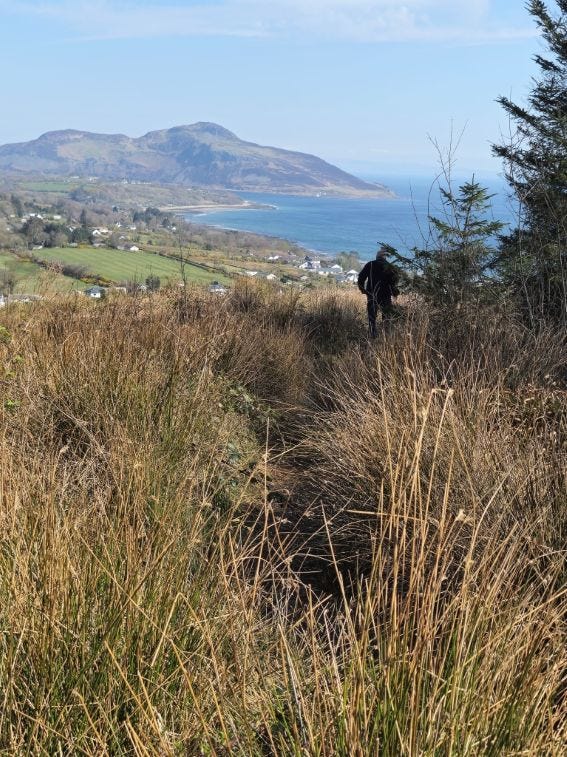
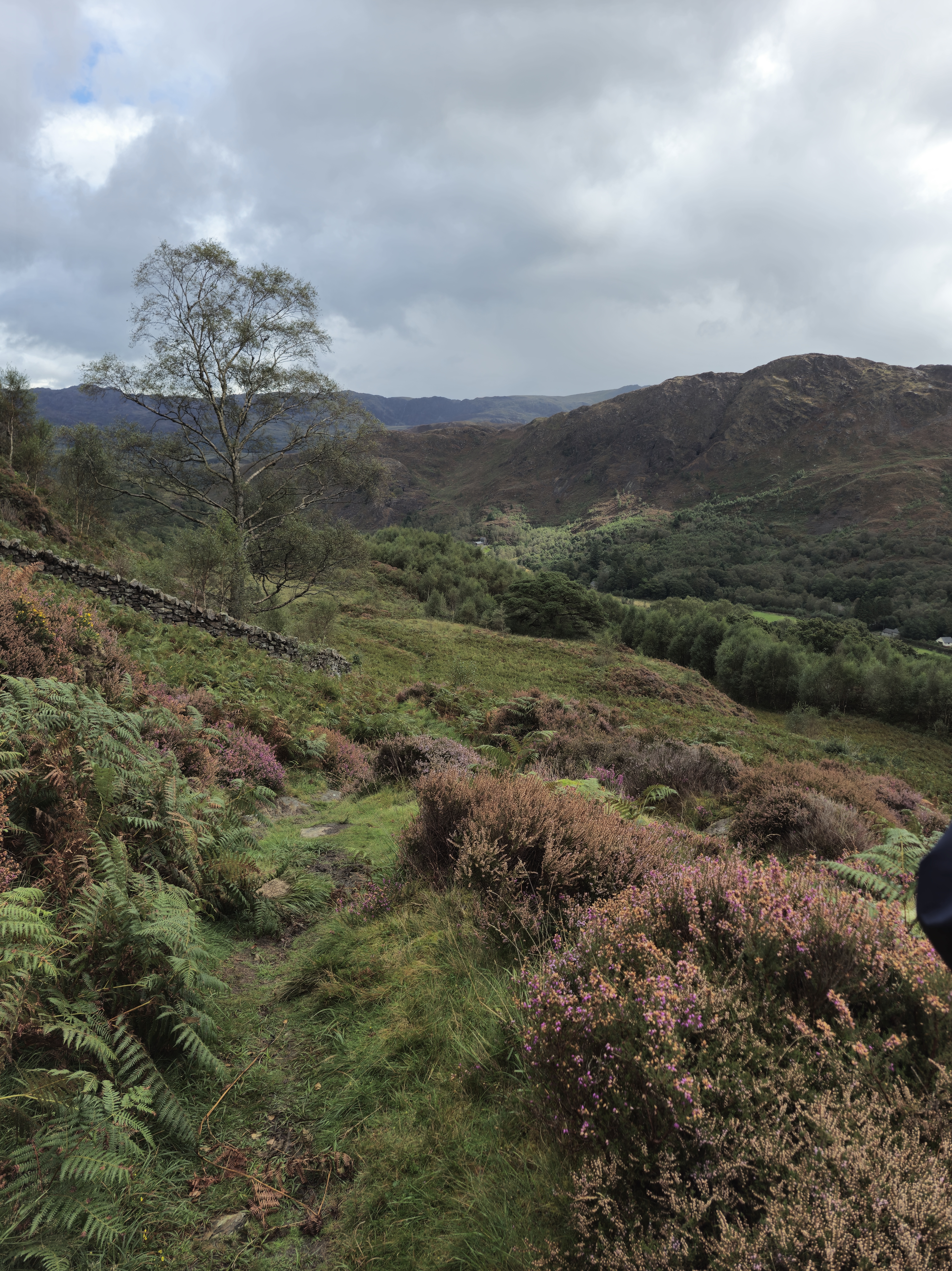
A walk of two halves today. We parked at the Crafwlyn Estate car park, just outside Beddgelert and, having read the information board, the Photographer and I decided to do the Green Walk. The sign promised an easy to moderately difficult ascent of only one and a half miles to the viewing point. It was the “spectacular views” that clinched it.
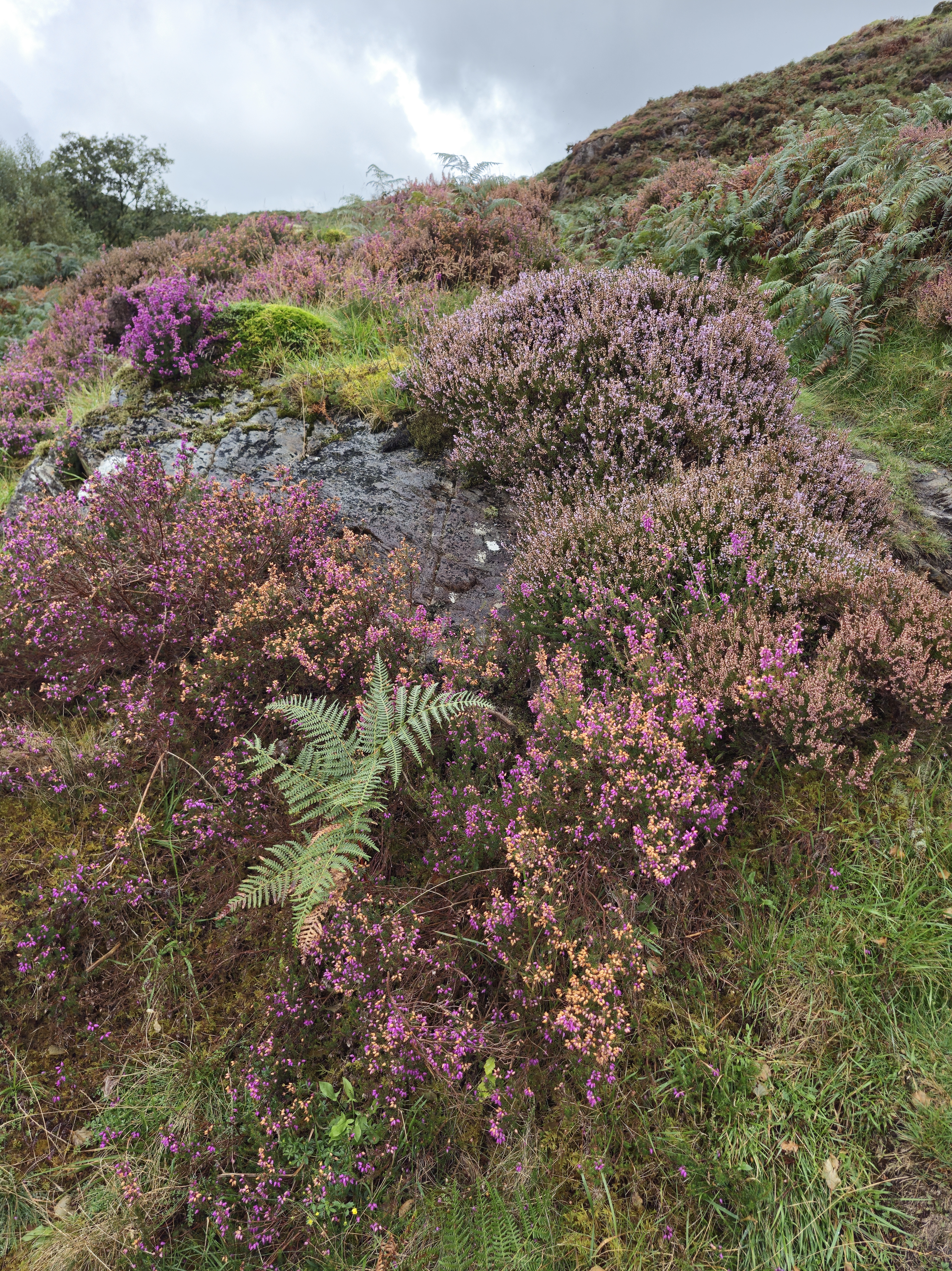
The heather was glorious. The path was … somewhere…
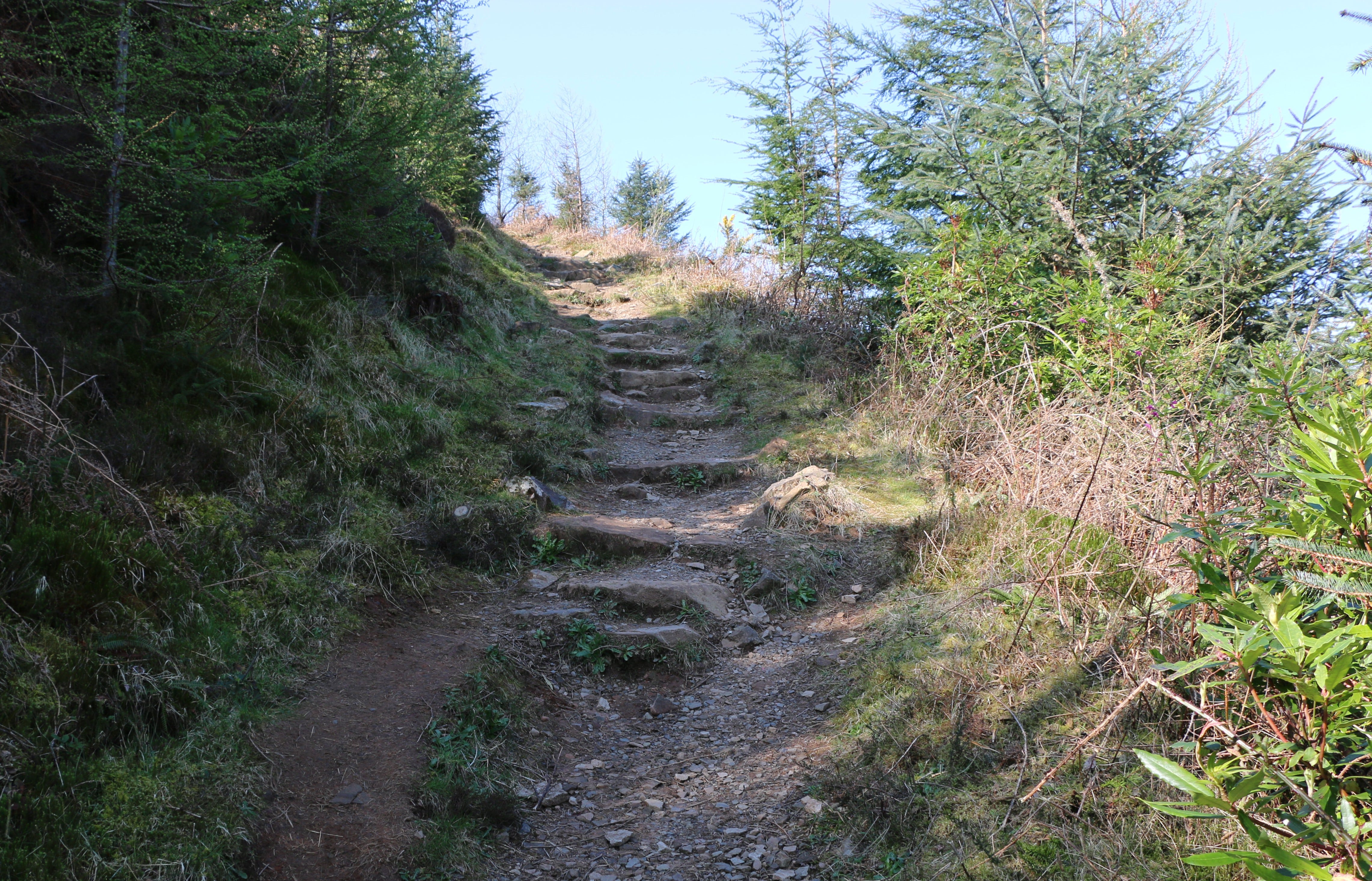
The walk turned out to be difficult, and certainly longer than one and a half miles. Quite the opposite in fact, and it and became steeper almost immediately, and very rocky. We assumed it would level out at some point but it never did and we just kept climbing and climbing.
Dinas Emrys is a rocky and wooded hillock near Beddgelert. Rising some seventy-six metres above the floor of the Glaslyn river valley, it overlooks the southern end of Llyn Dinas. The legend is that it’s where Merlin once trod and where a dragon still sleeps. At the top are the remains of a square tower and defensive ramparts belonging to the ancient princes of Gwynedd. We never saw that at any time over the week… ” the square stone tower at Dinas Emrys in Gwynedd, Wales is believed to be the base of a 12th century tower or citadel. The tower is now in ruins, but its rectangular shape and local rubble masonry are still visible. According to legend, the tower was built by King Vortigern as part of a castle he wanted to construct on Dinas Emrys. However, the walls would mysteriously collapse each night, which led Vortigern to seek the help of Merlin the wizard. Merlin revealed that two dragons, one red and one white, were fighting in a pool beneath the castle. Vortigern and his men dug into the mountain to release the dragons, and the red dragon eventually won the battle. The castle was then named Dinas Emrys in honor of Merlin, and the red dragon became a symbol of the fight against the Saxons.
oplus_32
Just at the point where the ferns and tufts of coarse grass petered out, and the way in front of us rose sharply and consisted of sharp rocks, it began to rain and the view disappeared. We turned and scrambled back down – the second time we’d turned back on a walk that week.
One disgruntled Photographer…
Twenty minutes later and wet through, we saw a sign for the Waterfall trail. A footpath lead through the woodland, following a waymarker to the right.
We passed the dragon bench. Too wet to sit on it though.
We walked up some steps to see a small waterfall. But we could hear loud splashing further along the path.
The large waterfall. Apparently deep enough to swim in. I didn’t test that theory.
It was a wonderfully peaceful end to the day – and to our last walk of the holiday.
We’d had a great week. The photographer was keen to get home to start downloading, printing off and framimg his photographs.
I was ready to finish the proofreading of my next book, The Stranger in my House, to be published by Honnoon the 14th November 2024 .
Described as…
“A gripping ‘cuckoo in the nest’ domestic thriller
After the death of their mum, twins Chloe and Charlie are shocked when their dad introduces Lynne as their ‘new mummy’. Lynne, a district nurse, is trusted in the community, but the twins can see her kind smile doesn’t meet her eyes. In the months that follow they suffer the torment Lynne brings to their house as she stops at nothing in her need to be in control.
Betrayed, separated and alone, the twins struggle to build new lives as adults, but will they find happiness or repeat past mistakes? Will they discover Lynne’s secret plans for their father? Will they find each other in time?
The Stranger in My House is a gripping ‘cuckoo in the nest’ domestic thriller, exploring how coercive control can tear a family apart. Set in Yorkshire and Cardiff, from the 60s to the winter of discontent, The Stranger in My House dramatises both the cruelty and the love families hide behind closed doors.” https://tinyurl.com/349ucdat
I’m happy to leave things as they are here. So, until next time … thank you for following the Photographer and I on our adventures.
National Day on Writing is celebrated every October 20. It’s a day dedicated to acknowledging the significance of writing as both a crucial skill and a form of art. This special day encourages everyone to appreciate and engage in writing activities.
So, I will be holding a workshop on forming characters at the Gwyl Lyfrau Aberaeron Book Festival. Booking available here: https://tinyurl.com/383zymrz
After the death of their mum, twins Chloe and Charlie are shocked when their dad introduces Lynne as their ‘new mummy’. Lynne, a district nurse, is trusted in the community, but the twins can see her kind smile doesn’t meet her eyes. In the months that follow they suffer the torment Lynne brings to their house as she stops at nothing in her need to be in control.
Betrayed, separated and alone, the twins struggle to build new lives as adults, but will they find happiness or repeat past mistakes? Will they discover Lynne’s secret plans for their father? Will they find each other in time?
The Stranger in My House is a gripping ‘cuckoo in the nest’ domestic thriller, exploring how coercive control can tear a family apart. Set in Yorkshire and Cardiff, from the 60s to the winter of discontent, The Stranger in My House dramatises both the cruelty and the love families hide behind closed doors.
“Judith Barrow’s greatest strength is her understanding of her characters and the times in which they live.” Terry Tyler
Promoting my books has always been something of a dilemma with me. Going to book fairs, giving talks, book signings, not so much; I always assume people are there because they want to be. They want to chat, to look at my books, to discuss the way I write – sometimes they way they write. It’s fun, I love meeting people. I love talking about my books, why I wrote them, how I came up with ideas, what they mean to me. The reviews readers have given them. I’m always grateful.
But how to talk about my books with people I just have met, casual acquaintances- even perfect strangers? It’s not something I do. It even makes me uncomfortable if I’m in the company of someone who does this, especially in public places, spaces that have nothing whatsoever to do with books, reading or writing. Although I admire that writer’s ability to pluck the subject of their work out of the air and present it to someone they have just met, or engineered a meeting, it’s not something I could do. After all, would I want anyone to feel cornered into buying a book, to be pressurised? Well, no, I wouldn’t. I’ve seen it happen, I’ve seen the reactions of the ‘cornered one’.
It’s a fine line in talking to a potential reader, to presenting my books to someone who might not be interested at all – who escapes with relief, albeit having had to buy a book!. Embarrassing!!
Social media, I know, is different in that there is no real life face to face appearance – it’s one step away. Even so, having followed many writers of all genres on the various platforms, I’ve seen those who singlemindedly try to sell their work, and those who use social media in it’s true sense (as a friend once said to me ” the clue is in the word ” social”). And there are those wonderful people who, so generously share the work, the promotions, the blogs and reviews of others. I’m grateful to those I have ‘met’ and become friends with in real life, as well as on social media.
And there’s another predicament for me when it comes to promoting my books – which platform am I most comfortable with. Which platform can I share general news and chat with, as well as publicity for my work … and which not.
Lately I decided to delete my Twiiter/X account. When the name changed I wondered why it had, what would be the difference, how would this formerly named Twitter be used. I have/had many friends who used and still use this platform in the way I did – to chat about life in general, to talk about books, reading, and writing.
But, gradually I saw something change on the feeds I received on Twitter/X. I’m not talking about all the “retired Generals/ Government Officials/ Admirers of our profiles etc. Bots, eager to get to ‘know’ us, that anyone on this platform (and other platforms, of course) receive. I mean the constant barrage of race/gender/political hatred, that was suddenly there. People, real people, eager for (bullying) us to join in, to follow whatever drum they are so fanatical about. For me (and I stress this is only me), it all got too much. I retreated – with a sigh of relief.
In a way it’s made me sad. Through the years I built up a moderate number of followers on Twitter; people I followed, who shared my passion for writing, for books; a lovely community. But the insiduous invasion of nastiness became something that affected me, my moods, my emotions. Perhaps I need a thicker skin? I was told by some of my real friends to ignore the constant chatter of predudice. But I couldn’t, and disn’t want to. It was too much. Circumventing these things in real life can be difficult enough, why did I need to be confronted with it on the screen? The screen where I write stories that I enjoy writing, where I chat and share emails, enjoy other social media platforms? So I made the decision and left Twitter/X.
I’m hoping by joining Instagram/Threads, and continuing on other platforms I will, eventually, connect again with the writers I got to know over many years. But, for my own peace of mind, it will never again be through Twittter/X.
Because I write about family dramas, family situations, I’ve always been aware of the relationships between people, between family members: the love, the loyalty, the friendship, the instinctive support. But also, I’m aware of and write about the dislike, the jealousy, the rivalry, the misunderstandings, the battle for control.
I don’t need it in the surreal world as well.
And so, a footnote: I’m not going to try to promote my books here. But … I do have links!!If you care to look for them…
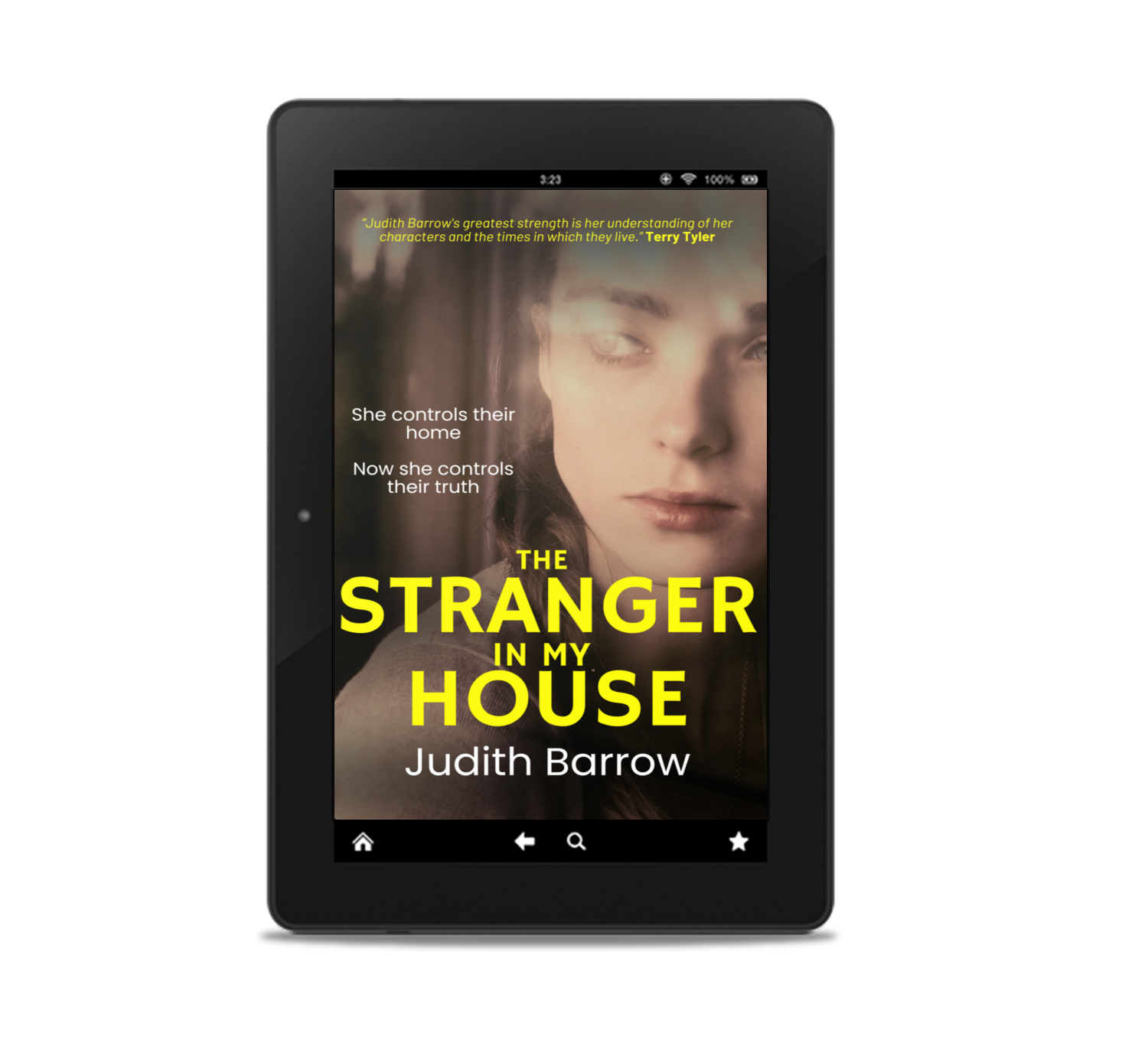
Seeing the cover of the next new book revealed is always a thrill for any author, so I am elated to be able to finally show the cover of The Stranger in My House.
A gripping ‘cuckoo in the nest’ domestic thriller
After the death of their mum, twins Chloe and Charlie are shocked when their dad introduces Lynne as their ‘new mummy’. Lynne, a district nurse, is trusted in the community, but the twins can see her kind smile doesn’t meet her eyes. In the months that follow they suffer the torment Lynne brings to their house as she stops at nothing in her need to be in control.
Betrayed, separated and alone, the twins struggle to build new lives as adults, but will they find happiness or repeat past mistakes? Will they discover Lynne’s secret plans for their father? Will they find each other in time?
The Stranger in My House is a gripping ‘cuckoo in the nest’ domestic thriller, exploring how coercive control can tear a family apart. Set in Yorkshire and Cardiff, from the 60s to the winter of discontent, The Stranger in My House dramatises both the cruelty and the love families hide behind closed doors.
This cover reveal after a glorious day wandering walking around the Ty Canol National Nature Reserve with the friendly Pembrokeshire U3A Natural History Group.
Ty Canol is the largest block of ancient woodland in West Wales. It’s wonderfully peaceful, an atmospheric mix of ancient oak woodland and pasture, set against the backdrop of the magnificent Preseli Mountains of northern Pembrokeshire.
To the north is Hagr y Coed (translation – ‘Ugly Wood’), an area of wet sessile oak, ash, and birch woodland. South is Carnedd Meibion Owen (translation – the Cairn of Owen’s Sons), so named because of the cairns that rise from the rocky outcrop.
Many of the trees are covered by epiphyte ferns and lichen, many of the latter are extremely rare.
These are not parasitic on the supporting fallen and bent branches, they grow on them only for the support they give. Apparently there are over four hundred varieties of lichen in these woods. They thrive, both because farm animals are allowed to graze in parts of the area, and because oak trees are culled in others, thus creating areas that let in the light: ideal for the plethora of light-loving lichens
I almost expected Frodo Baggins to pop out from behind one of the twisted oaks. Ty Canol,purported to be over six thousand years old, really is a fantastical place
Ty Canol, managed by Natural Resources Wales (NRW) together with the Pembrokeshire Coast National Park Authority is part of an area famous for its achaeological sites.
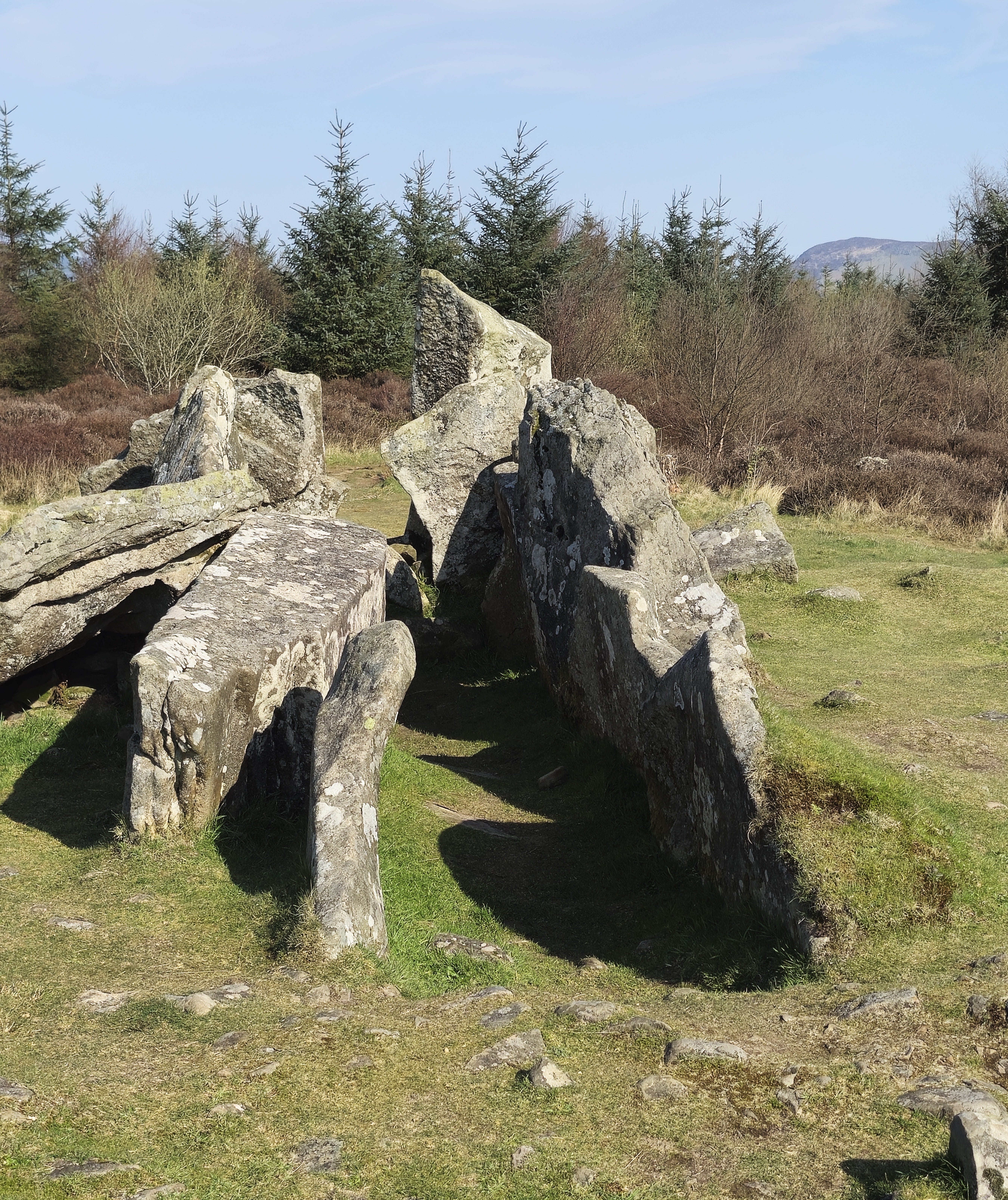
Ty Canol is the backdrop for Pentre Ifan, the famous Neolithic Chambered Dolmen that is thought to date from 3,500 BC.
This is a Cromlech or a Dolmen, typically built with several large upright stones and a cap stone on top. At the time it would have been an inderground tomb, covered by a mound of earth, but today, all the stones are exposed.
Having detoured to take a last look at Pentre Ifan we made our way back home by the scenic routeof Mynydd Preseli, passing Cerrig Lladron .
I thought I would revisit a time of my life when I despaired of ever being in print. It cheers me up as I agonise over yesterday’s efforts, altering and editing before I can even start with today’s writing and the realisation that one of my lovely characters has a cob on and won’t do as I want her to do. I’ve spent hours trying to persuade her, putting her in different scenarios, story lines. But no, she’s adamant – she wouldn’t act in that way, So I’ve gone back to the heady day when I found an agent. And I kept a diary. Sometime… a long time ago. It’s been a fortnight since I met with my agent (get me! – and it was in London and she treated me to a meal in a posh restaurant). Carried away with her enthusiasm for my writing, her promises to make me into a ‘brand name’ and her assurance that she had many contacts in the publishing world that would ‘snap her hand off for my novel’, I signed on the dotted line. Today she telephones, summarily dismissing an offer. ‘We can do better than this.’ What? What’s better than getting this novel published? Than seeing, holding, a book in my hand that I’ve actually written? I get an offer, perfectly acceptable to me, but according to this agent, it’s not enough. ‘We’ll try other publishers, bigger publishers,’ she says.
Image courtesy of Pixabay
I’m worried. But she knows the business.
Doesn’t she?
Still a long time ago … It’s been six months of waiting. So far, four rejections from publishers. Couched, mind you, in encouraging remarks:
“Believable characters … strong and powerful writing … gripping story … Judith has an exciting flair for plot … evocative descriptions.” And then the death knell on my hopes:
Image courtesy of Pixabay
‘Unfortunately … our lists are full … we’ve just accepted a similar book … we are only a small publishers … (what? The agent rejects one small independant publishers who I really liked the sound of, but then sends the manuscript to another?) …’I’m sure you’ll find a platform for Judith’s work …’
Yes, yes, we did, we did find ‘a platform’, as they put it. Or rather I did. I found a publisher: I liked their ethos, the way they presented and supported their authors – a feminist press, for goodness sake; one right up my street.
The self-doubt, the frustration, floods back. I’m never going to get the book published.
Still a long time ago: Another three months later.
I’ve had a call from the agent; ‘I think it’s time to re-evaluate the comments we’ve had so far,’ she says. ‘Parts of the storyline need tweaking. I’ve negotiated a deal with a commercial editor for you. It’s a realistic charge by today’s standards,’ she says. ’Think about it,’ she says. ‘In the end we’ll have a book that will take you to the top of your field.’
I think about it. Reject the idea. Listen to advice from my various acquaintances. Think about it again.
And think about it some more.
And then I ring the agent. ‘Okay,’ I say, ‘I’ll do it. I’ll pay’
I have no choice; after all she’s the expert. What do I know?
Still sometime … a long time ago (I have to keep saying “a long time ago”. just in case you think I’m still as gullible as I was then).
Another six months gone. The first commercial editor (the best, apparently) has succumbed to maternity leave. The one who was finally chosen by my agent (the second best?) has had my script all this time. I’ve already paid her.
You’re now wondering what kind of credulous idiot is this, yes? Well, let me say here that this latest saga (an apt word as my first book is actually a saga!) has been going on for over eighteen months and I’m desperate.
All creativity has gone. I can’t write anything but emails – and believe me, there are plenty on this subject. The commercial editor’s reasons (excuses) for the delay are numerous: an urgent journey to Europe to do research for a project, a family crisis (alright, I’ll believe that one) she’s ghost writing a celebrity’s autobiography (how can it be an autobiography if someone else is writing it? That always puzzles me. Surely then, it’s a biography?) Okay, okay, bitterness is creeping in.
We were supposed to be having a meeting to discuss the way forward with my book. It didn’t happen.
Now a friend, a successful and published author herself, is concerned I’m being conned. So am I! I feel foolish but say surely it’s only a few things that need tweaking.
It’s back! I read it in disbelief; if I follow all the ‘suggestions’ it will change from being a saga into romantic fiction. Okay, I like a bit romance; don’t we all? The book does have some romance threaded throughout, but it also crosses other genres: history, crime, domestic thriller.
I ring my agent,
‘Yes,’ she says, ‘it is a little more drastic than I expected but go with it.’
I tried- really I did. For two months I worked. With less and less interest. In the end I stopped. I didn’t recognise my story; I had no empathy with the characters. It wasn’t my book any-more.
So…
I made a decision, one of the biggest I’ve ever made. I sent a letter terminating our contract. Despite persuasive tactics from her I don’t waiver.
In trepidation I start again; I contact the publisher I first found, submit my manuscript. And wait
They will meet with me. No promises…
Pattern of Shadows, the first book of my Haworth trilogy published by Honno finally made the shelves.
This is my favourite review of all time for the trilogy: Mary’s story: WWII in Howarth family generational saga: “Every now and then, I come across books so beautifully written that their characters follow me around, demanding I understand their lives, their mistakes, their loves, and in this case, their families. Taken together, the Howarth Family stories are an achievement worth every one of the five stars I’d give them.”
And, in November, Honno will be publishing my eighth book with them. Cover reveal on the 30th July… so tomorrow!! Hooray!!!
The Stranger in My House.
A gripping ‘cuckoo in the nest’ domestic thriller
After the death of their mum, twins Chloe and Charlie are shocked when their dad introduces Lynne as their ‘new mummy’. Lynne, a district nurse, is trusted in the community, but the twins can see her kind smile doesn’t meet her eyes. In the months that follow they suffer the torment Lynne brings to their house as she stops at nothing in her need to be in control.
Betrayed, separated and alone, the twins struggle to build new lives as adults, but will they find happiness or repeat past mistakes? Will they discover Lynne’s secret plans for their father? Will they find each other in time?
The Stranger in My House is a gripping ‘cuckoo in the nest’ domestic thriller, exploring how coercive control can tear a family apart. Set in Yorkshire and Cardiff, from the 60s to the winter of discontent, The Stranger in My House dramatises both the cruelty and the love families hide behind closed doors.
“Judith Barrow’s greatest strength is her understanding of her characters and the time.” TerryTyler
It’s a writing, The Archers on Radio Four, Sunday lunch, and a gardening day – the latter if the rain holds off. Oh, and a small mention of the cover reveal by Honno, of my next book, The Stranger in my House…. on Tuesday 30th July 2024.
The garden is looking quite good, even after a day and night of being drenched in Pembrokeshire rain.
Photos of Bosherston Lily Ponds, courtesy of Husband, on one of the few sunny days. Lovely now – but when the lilies are out, even more gorgeous.
Swans again – but from a safe distance!!
Must get on…
Hope you all have a lovely Sunday, wherever you are. x