Where We Walked – Pwllgwaelod to Cwm-yr-Eglwys #Walks #photographs #Pembrokeshire #Wales #NarberthU3a

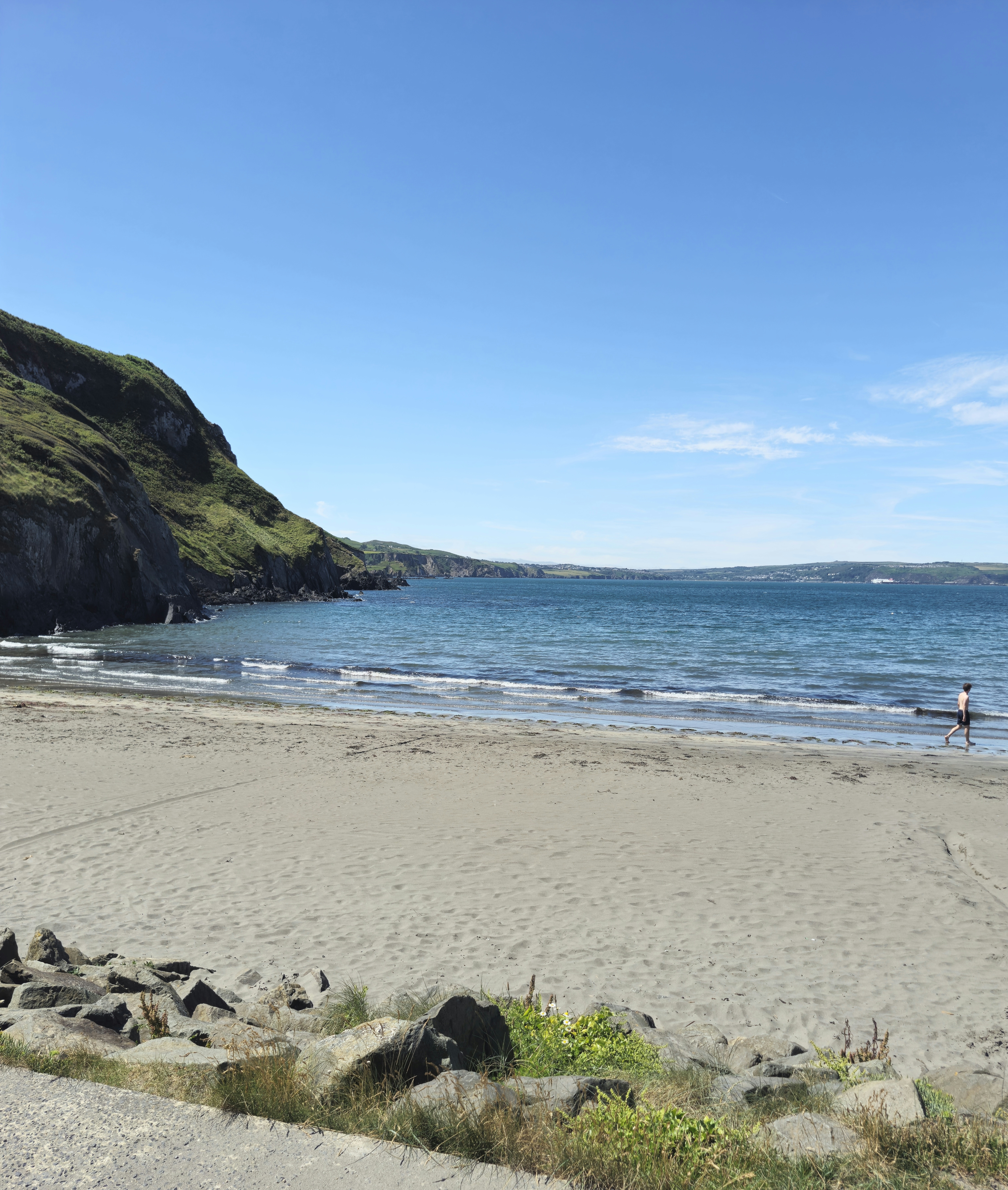
The first Monday of July, saw the Stroll group taking a leisurely stroll along the path from Pwllgwaelod (Translation – pwll refers to a pool, creek, or cove, and gwaelod denoting the depth) to Cwm-yr Eglwys (Translation – Valley of the Church)

Near the beach, there’s a medium-sized lime kiln. A lime kiln is a special oven used to heat limestone. Limestone was brought to Pwllgwaelod by boat. When heated in the kiln, it turned into “quicklime.” This quicklime was then used on the land, especially on Dinas Island, to improve the soil for farming.

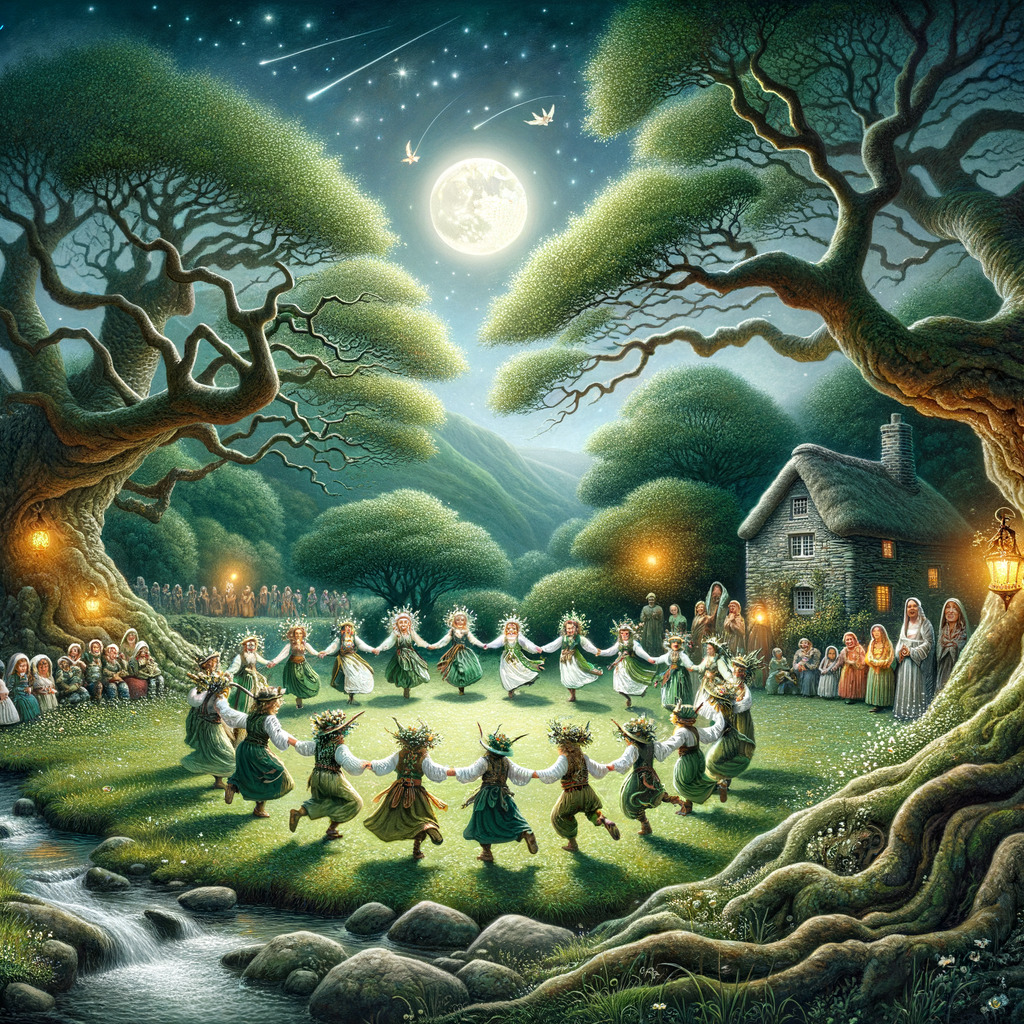
Sabine Baring-Gould (1834-1924), a British clergyman, antiquarian, and prolific writer, who wrote the famous hymn Onward Christian Soldiers, composed in 1864, also wrote about the legend of Pwllgwaelod in a book with the title A Book of South Wales , published in 1905. He wrote: ‘Now the story goes that under the sea by Dinas Point, in Pwll Gwaelod, lies a fairy city inhabited by a mysterious people called the Bendith y Mamau (The Blessing of the Mothers). When the sea is calm, through the crystal waters can be seen the golden roofs and spires and marble palaces of the underwater folk. The vision lasts for from five to ten minutes at a time. One day a ship of a Dinas fisherman cast anchor in the Pwll, when up the chain came swarming one of these subaqueous people, who stepped on deck and said to the captain, “What is this that you are doing? Your anchor is in the roof of my house.” The captain promised to disengage it and not cast anchor there again.’
https://tinyurl.com/5fp9zfts

Bendith y Mamau (The Blessing of the Mothers) is a phrase rich in ancient Welsh folklore and mythology. It is sometimes connected to the legendary creatures known as the fae, or fairies, whose existence was closely entwined with the natural surroundings. These creatures were seen with both respect and mistrust since their abilities to affect human life—often in unexpected ways—were thought to be great. The term itself captures the respect and dread ancient Welsh people experienced toward entities they couldn’t fully comprehend. Bendithy y Mamau captures the concept of blessings as well as the duality of the fairies’ nature; should they be insulted or disrespectful, their benefits might readily become curses.Copywrite: https://tinyurl.com/5fp9zfts

Pwllgwaelod was sometimes used as a safe harbour. When strong winds from the east made Fishguard Harbour dangerous, ships could find shelter here.

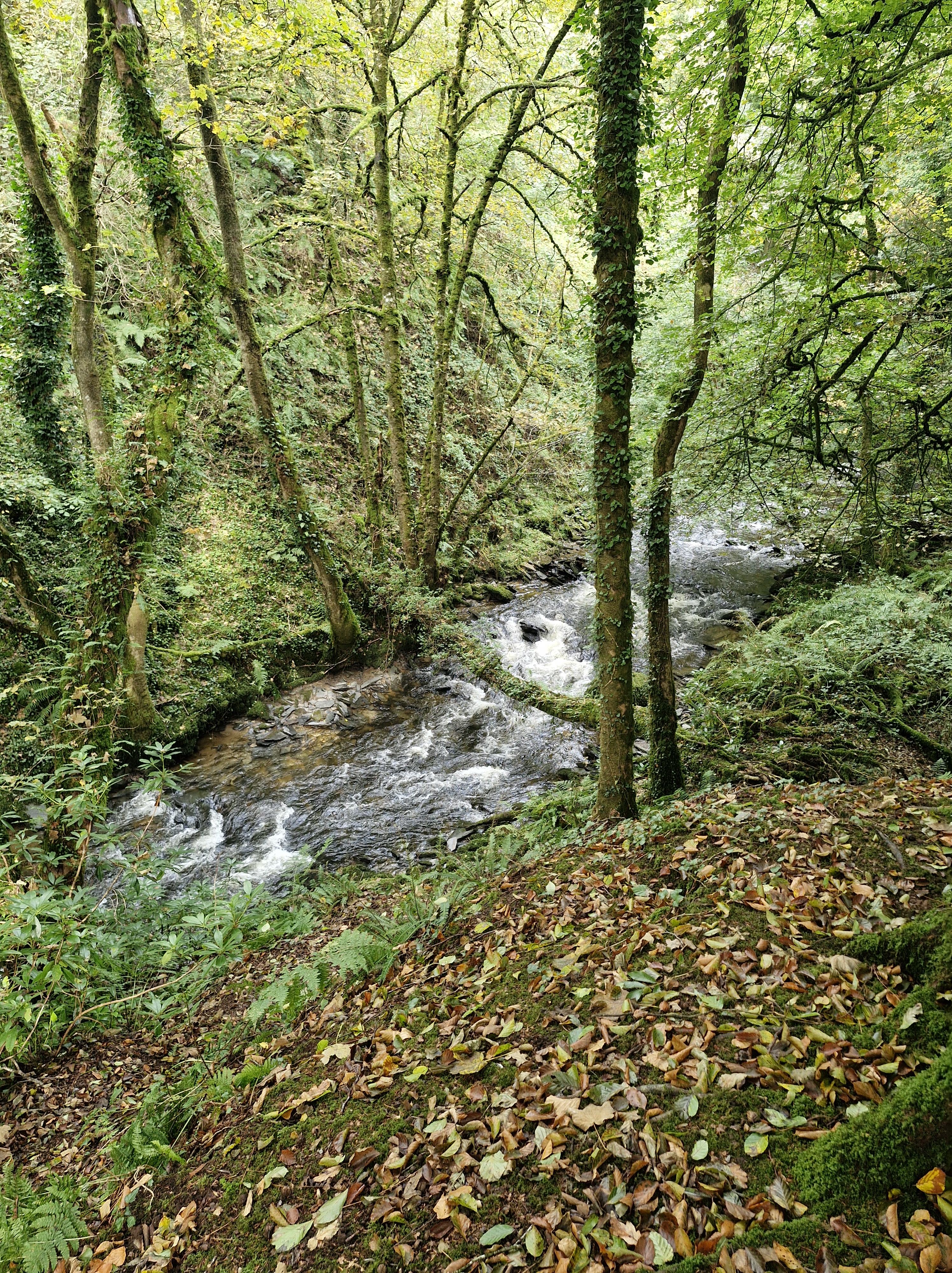
The walk follows a valley that was formed by the same Ice Age meltwater that formed the Gwaun Valley further down the coast.

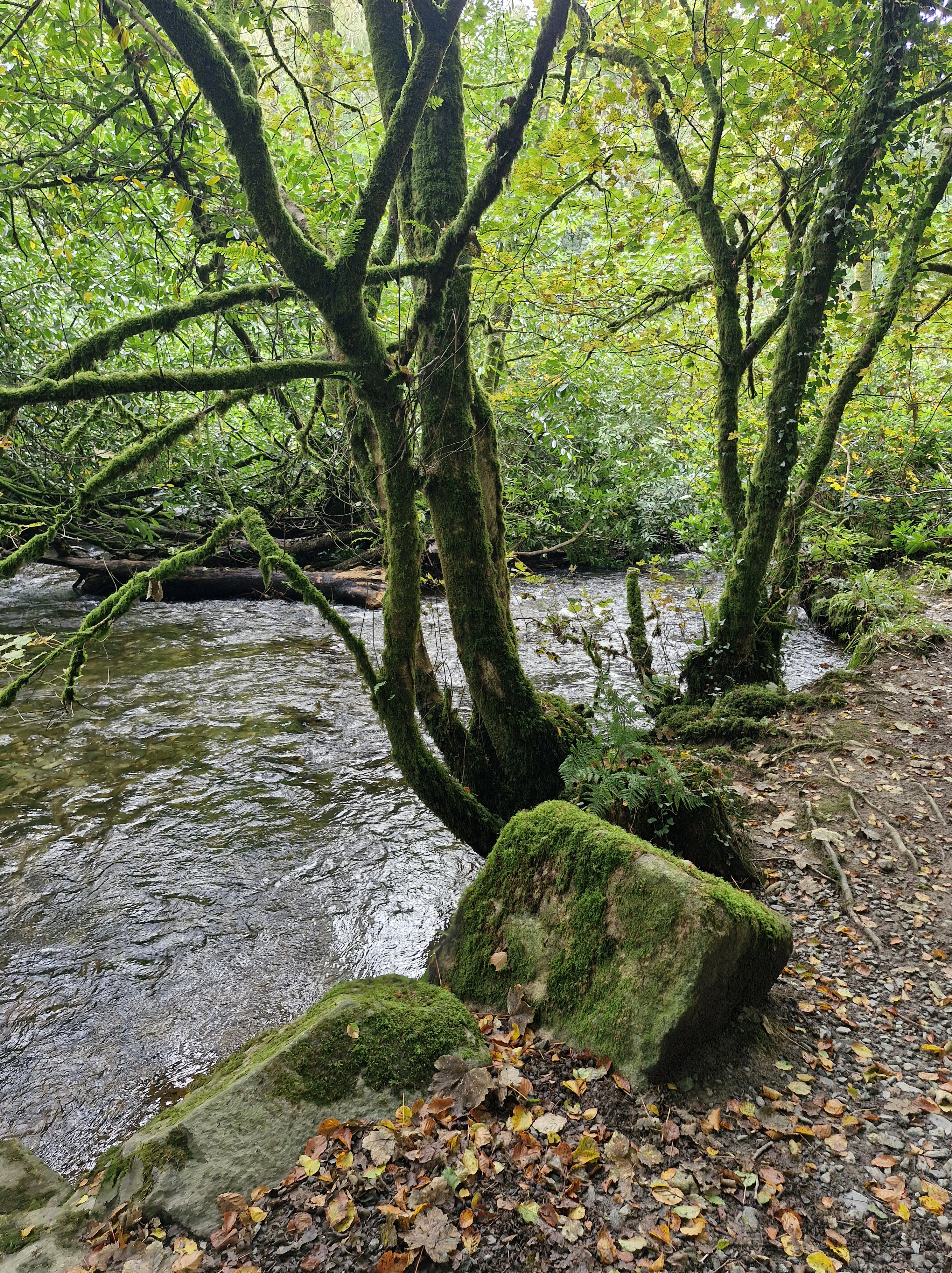
Although it was quite warm when we set off it was pleasant walking along the path through the valley with the overhanging trees giving some shade.

Before long we reached the sandy cove of Cwm-yr Eglwys, the hamlet on the eastern side of the Dinas Island Peninsula, so called because a stream separates it from the mainland. The bay is surrounded by tall headlands, and a rocky outcrop.
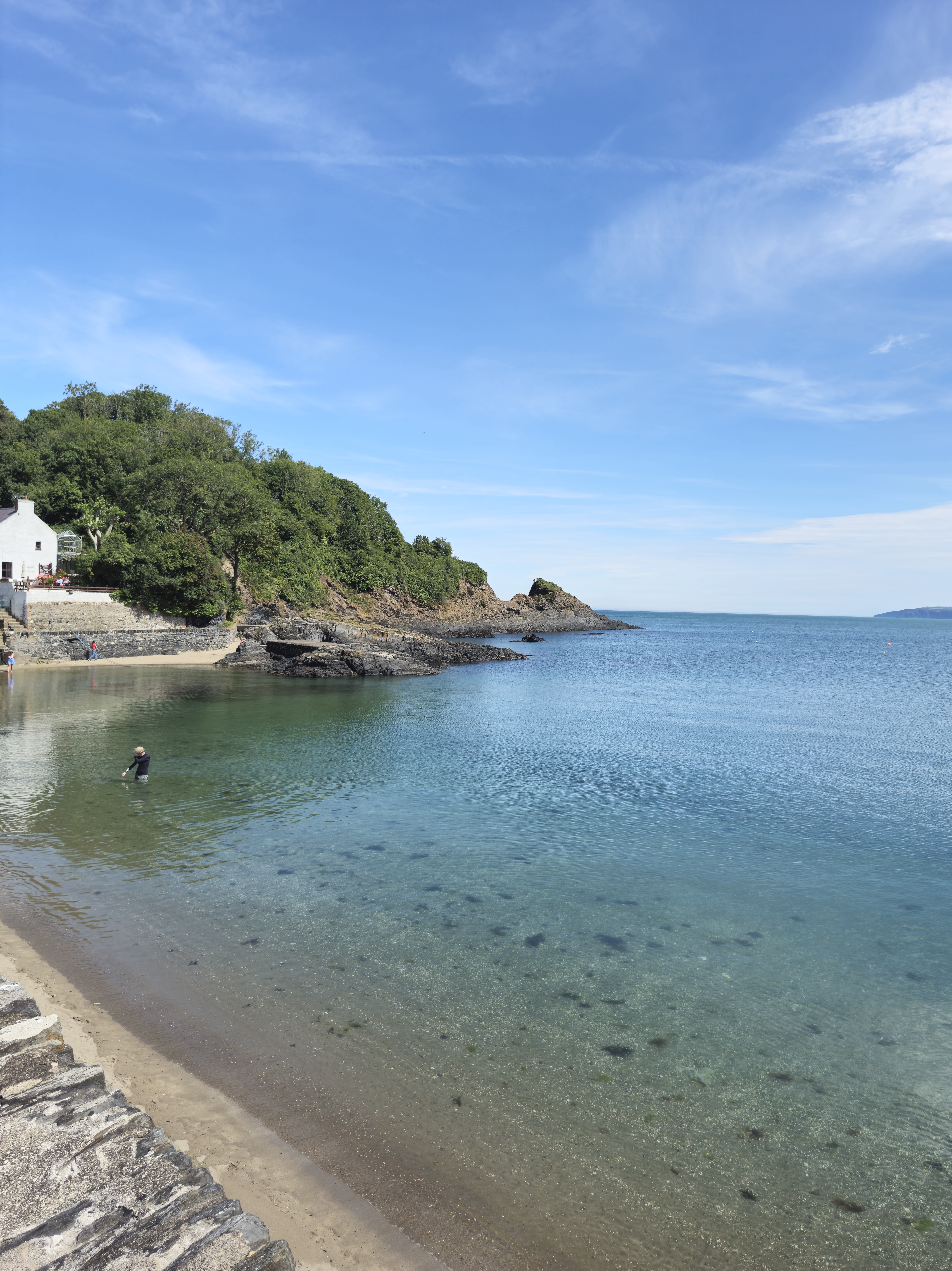
When the tide is out there are a number of rockpools, a perfect place to find such sea creatures as starfish, sea anemones, crabs and more. However, today the tide was well in and there were quite a few swimmers and paddle boards.
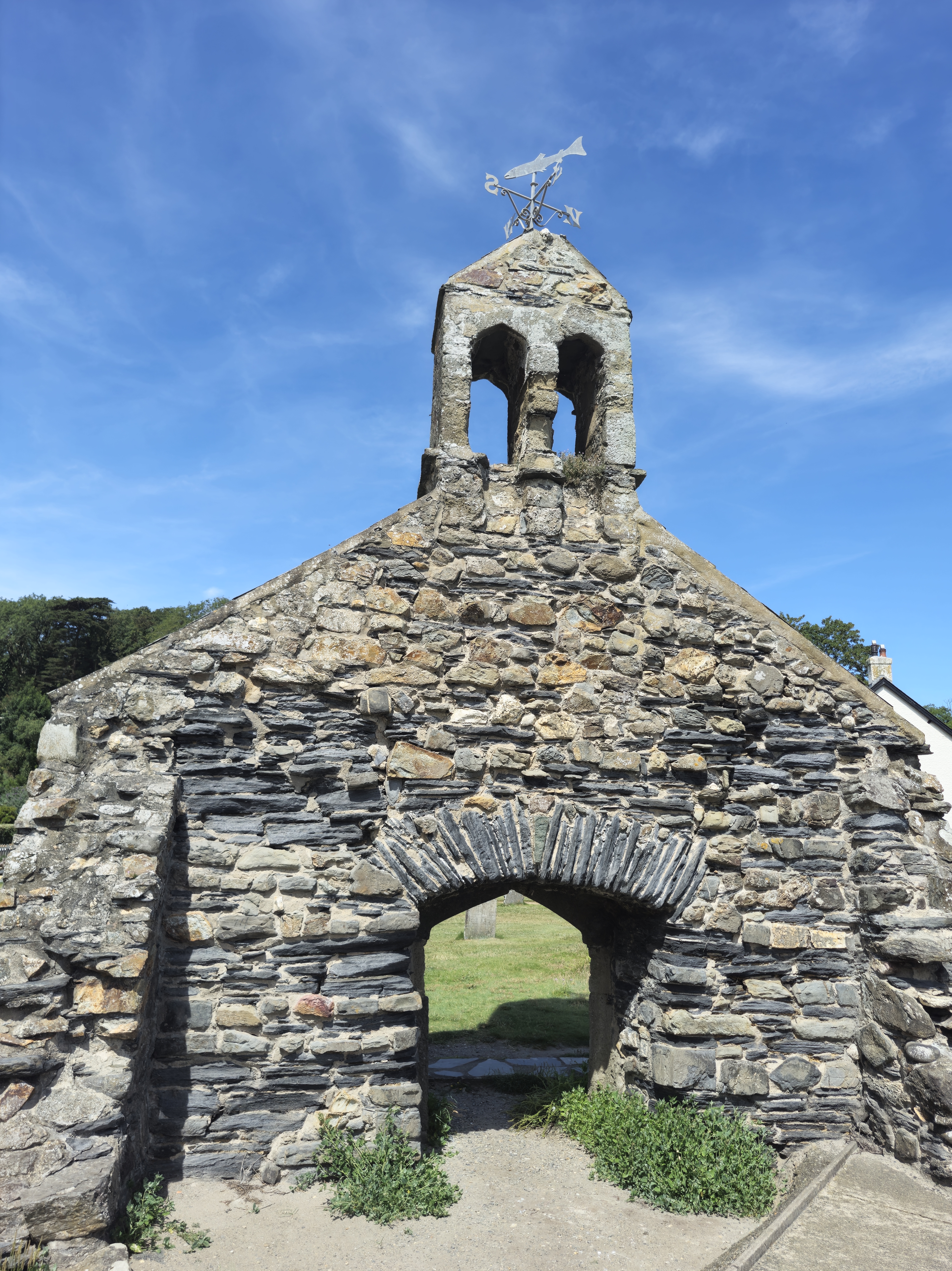
For a few moments we sat and enjoyed the peace before turning our attention to the remains of Cwm-yr-Eglwys church, which was dedicated to St Brynach.

The church was destroyed in the great storm during the night of 25th/26th October 859. This is recorded as one of the worst storms in history of the British Isles. As well as wreaking havoc amongst shipping, it caused considerable damage on land.

One of the greatest shipping losses was the Liverpool-Australia passenger steamship, the Royal Charter, which was wrecked off the coast at Moelfre, Anglesey, with the loss of four hunded and fifty lives. This tragedy motivated the implementation of the first storm warning service by the Board of Trade’s new Met Office.
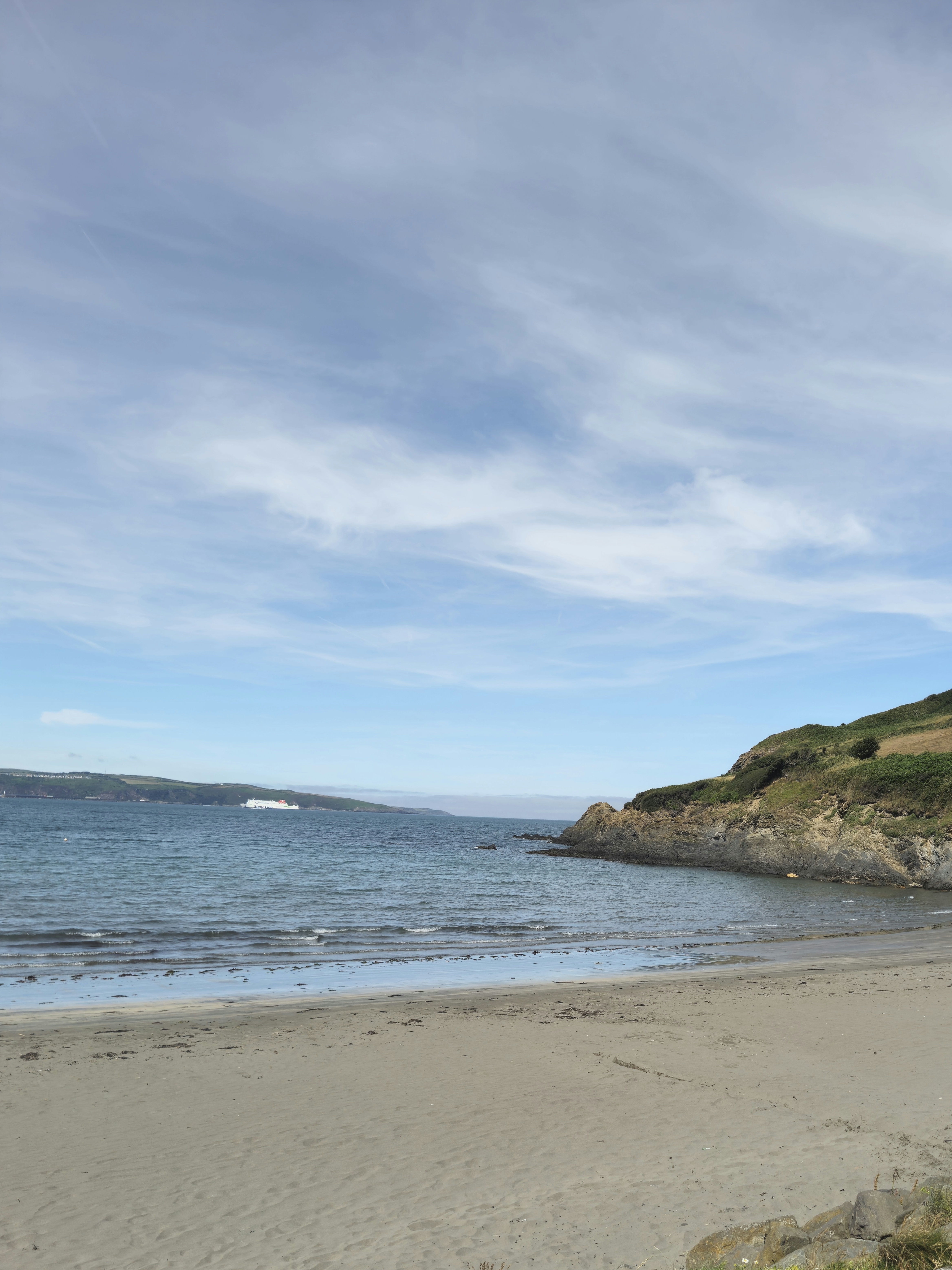
After a while we made our way back to Pwllgwaelod. The ferry was crossing towards Fishguard Harbour. We were hoping to have lunch at the Sailors’ Safety, the pub on the beach, but it was closed. Undaunted, we made our way to The Harp at Letterston, where we had a lovely meal that rounded off the day nicely
Author of Domestic Thrillers, Domestic Noir, Contemporary Fiction & Historical Family Sagas.
Link:
https://www.amazon.co.uk/Judith-Barrow/e/B0043RZJV6

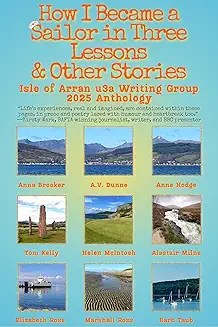
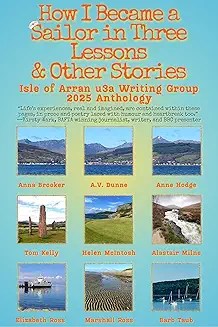
My Review of How I Became a Sailor in Three Lessons & Other Stories: 2025 Anthology: by Isle of Arran u3a Writing Group (Isle of Arran u3a Anthology Book 2

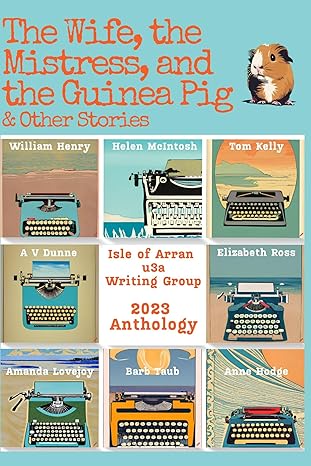
And a mention of their first Anthology:The Wife, the Mistress, and the Guinea Pig & Other Stories

Having been a member of the U3a for some time, I have discovered the value of being able to join in with the many groups and events. I also run a monthly creative writing group.

 So, some time ago, I was thrilled to learn that there is a U3a on Arran; an island I’ve been lucky enough to stay on and which is close to my heart because of the wonderful memories and friends I’ve made there. When I discovered in 2023 that the writers’ group had produced an anthology: The Wife, the Mistress, and the Guinea Pig & Other Stories, I read and wrote a brief review:

This is the first anthology written by the u3a writers on the Isle of Arran, and is a wonderfully engaging read encompassing short stories and poetry, with the underlying theme of ‘lives lived’, in brilliant descriptive detail. Nostalgic, reminiscent, sometimes humorous – but always enjoyable – this is an easy read, a ‘pick up and dive in!’ collection, with the occasional photograph and charming image. Highly recommended … to any reader who wants to be entertained.”

 And now the group has written and published their second anthology, and it is equally enjoyable.

How I Became a Sailor in Three Lessons & Other Stories: 2025 Anthology: by Isle of Arran u3a Writing Group (Isle of Arran u3a Anthology Book 2

I’ll mention a few of my favourite reads in the book.

One piece of writing made me quietly envious – that of Alaster Milne’s view of life on Arran – which is that time on the isle is “ish;” there is a relaxed attitude to time. As he says: “Time on Arran is relative … it’s the Arran way of life that defines where we live.”

 And there is both humour and an astute observance on human nature from A.V Dunne, both in poetry and prose. I laughed out loud reading one piece on not being “cut out for the twenty-first century” and could empathise with her Rage Against Age.

I loved revisiting Barb’s Do Not Wash Hands in Plates and her dealings with Delhi Belly and toothache. And then there is Lockdown, a bad knee, and a walking cane – even as I sympathised I’m afraid I chuckled. I hasten to add here that it is always the way she writes, Barb has a tremendous capacity of seeing the funny side of life, whatever happens.

 I also enjoyed Helen McIntosh’s and Tom Kelly’s memoir contributions (memoirs are a favourite genre of mine), and the gentle writing of Marshal Ross.

There is an Arran in one hundred words section. Flash fiction is a brilliant writing discipline and all these pieces are fun and interesting to read.

 And the black and white illustrations from photographs and drawings, throughout the anthology, from another U3a group, the photographers, add a lovely flavour to the writing.

 Finally, there is an explanation of the University of the Third Age (U3a), and a description of the Arran U3a was formed in 2019. I was fascinated to learn that there are over a thousand chapters of people who, having retired, are still sharing experiences and expertise.

Where We Walked #Pembrokeshire #Walks #Photographs #Leisure

One of our Interesting and Fun Group Walks with the U3a:

Yesterday we joined with Pembrokeshire U3a on their Monday Walk around the woods and alongside the River Sealy on the Sealyham estate near Wolfscastle.

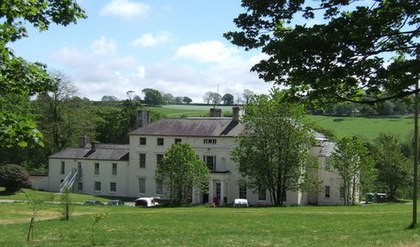
There is a long history of owners of the land dating from the time when King Edward III, in the fourteenth century, granted some land to Thomas Tucker (a captain in the King’s army), who subsequently built a house there.

A house that was later rebuilt in the mid-18th century. Eventually, in 1905, the last of the descendant family members, Catherine Octavia Edwardsn with her husband Victor James Higgon, the last of the Tucker family to live at  Sealyham house moved another mansion in Pembrokeshire, Treffgarne Hall.

Around 1910, portions of the land were sold to the Pembrokeshire County Council and, in 1920, Sealyham House and part of the land were sold to the King Edward VII Welsh National Memorial Association and converted into a tuberculosis hospital until 1954. In 1955, it was re-purposed for elderly patients but was permanently closed as a medical facility in 1964.
In 1970, the Sealyham house was sold to a Nancy Ellen Perkins. She converted it into an apartment building as rentals. In 1980, it was sold again to an investment firm that used it for an outdoor activities centre.
It was resold in 1986 to the Sealtham Activity Centre for young people, as an educational facility,

Sealyham is also well known for the Sealyham Terrier. The Tucker-Edwardes family of the nineteenth century were one of the leading landowners of Pembrokeshire. Breeding dogs was a favourite and expected pastime people of noble families or military background. Captain John Edwardes’ family had the time and the means. Although no records were kept it’s believed that The Welsh Corgi, The Wire Fox Terrier, and the now extinct English White Terrier all played a part in the make up of the Sealyham. After Edwardes’ death in 1891, other breeders began to work with Sealyhams, including a man called Fred Lewis who promoted the breed. But, according to the Kennel Club the Sealyham Terrier is one of the dog breeds of British and Irish origin that are … “considered to be vulnerable due to their declining registration numbers. These breeds are at risk of disappearing from our parks and streets, simply because people don’t know they exist or because they aren’t considered fashionable. in 2024 there are only a hundred dogs of Tucker-Edwardes’ breed, making it an endangered breed.”