
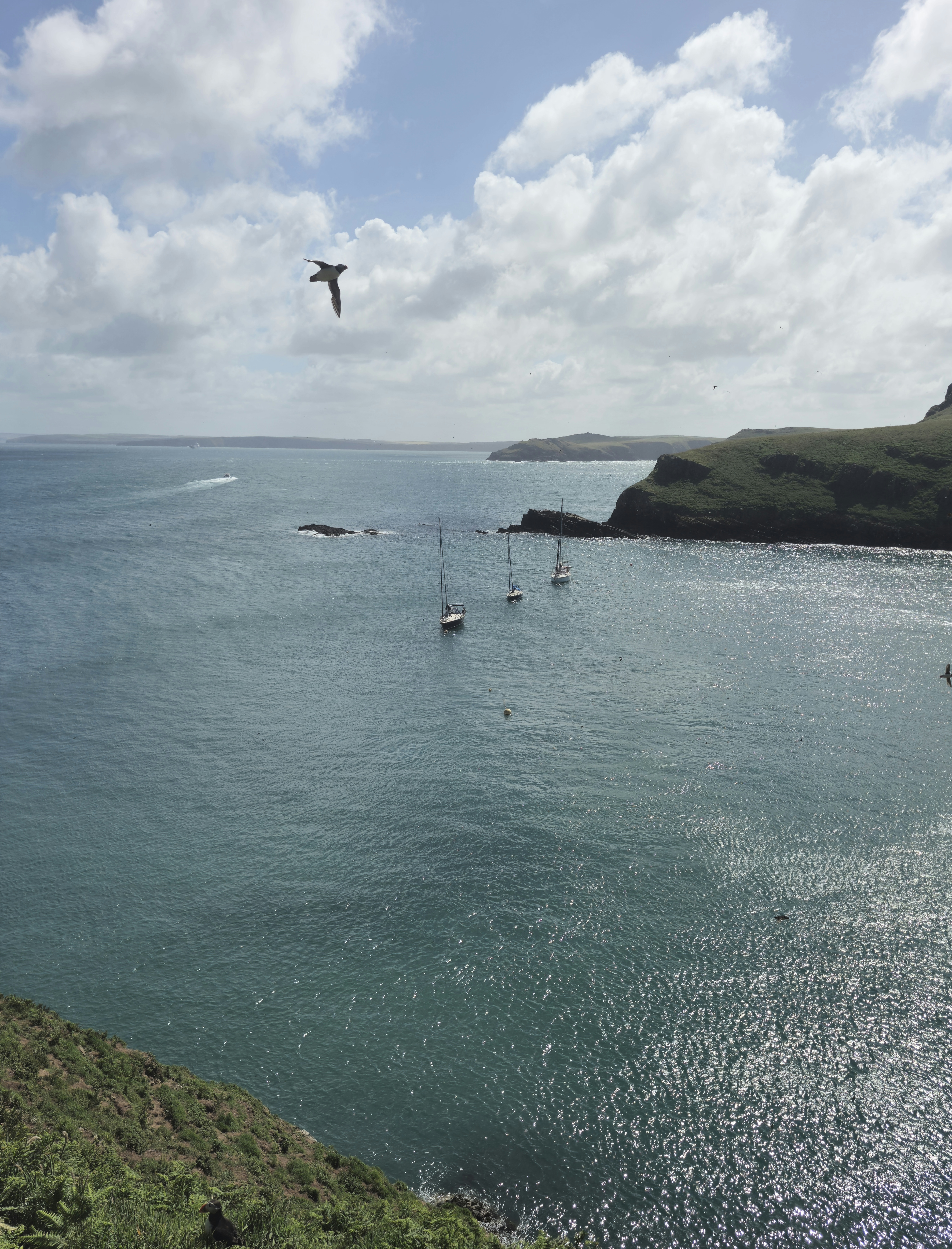
Last year I wrote – “At long last! After living in Pembrokeshire for the last forty-six years and despite walking many miles of the Pembrokeshire coast, and meandrering around a lot of the Welsh countryside discovering wonderful places, lakes, waterfalls … scenary, we hadn’t been on Skomer island.”
That post here: Crossing off the Bucket List: Part One.
This week we managed to visit Skomer again. Like last year, it was a glorious day’s adventure, and though warm, it was slightly … hmm … a lot more windy, especially on our walk along the rocky path to the far end of Skomer Head, the one place we missed seeing in 2025.
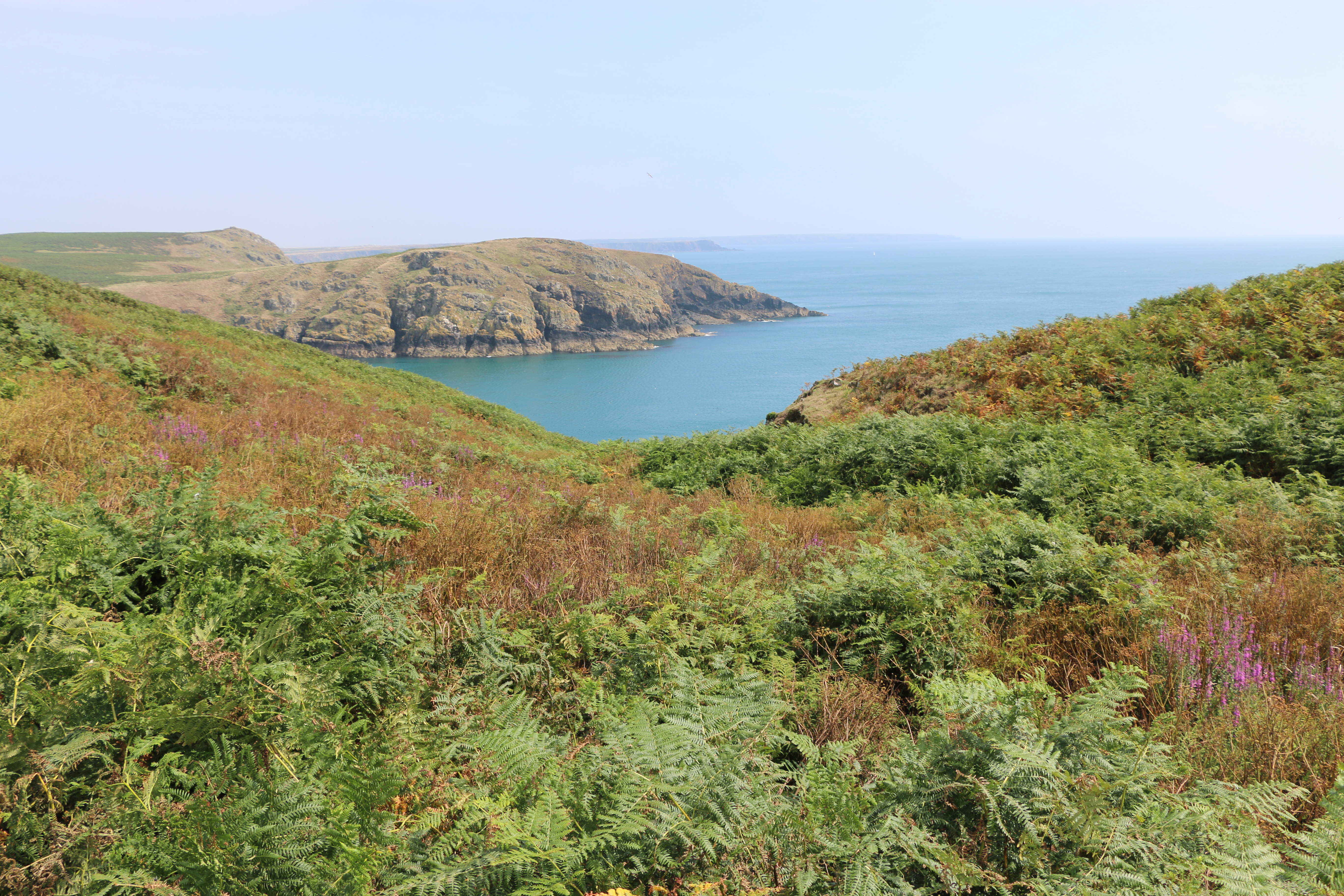
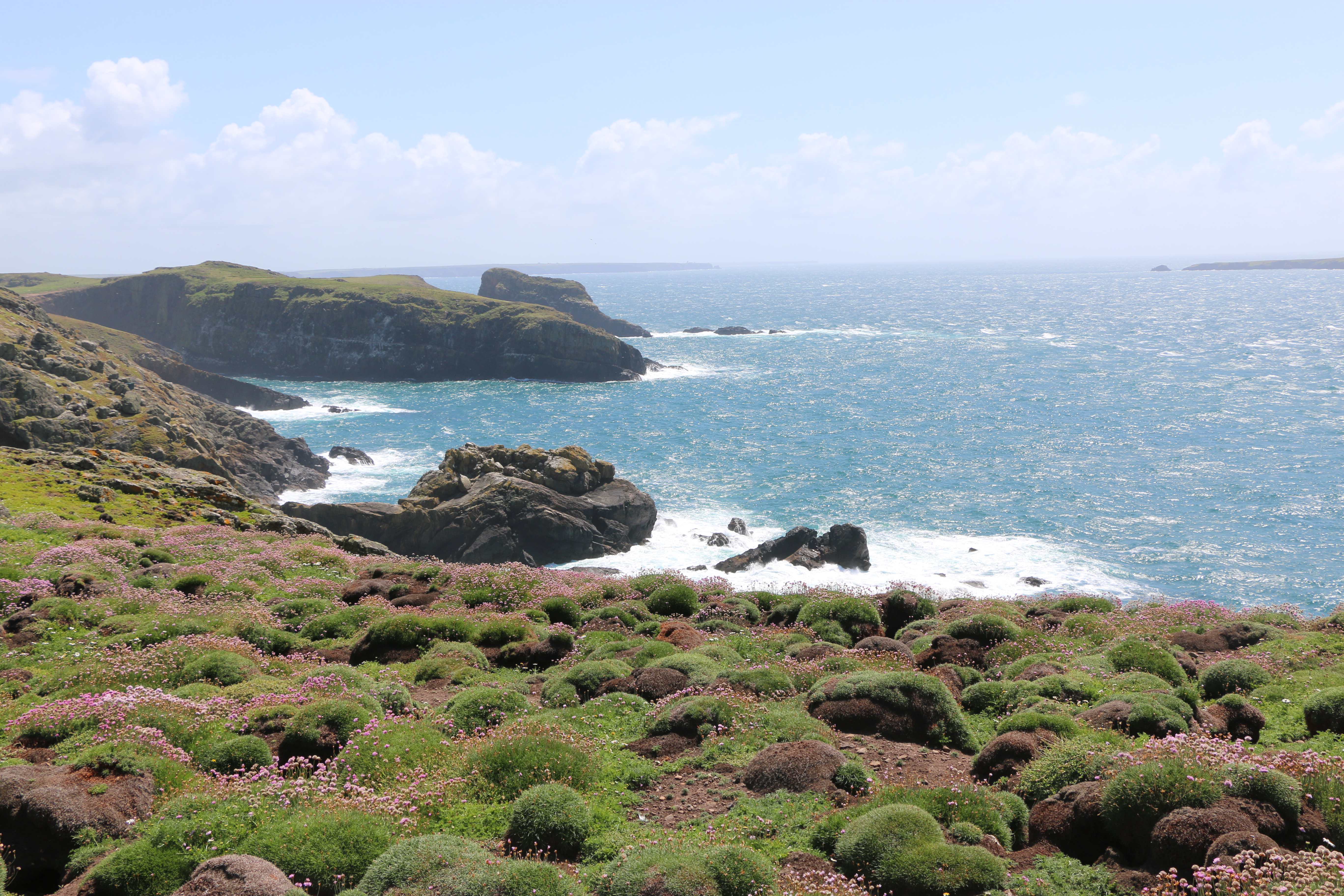
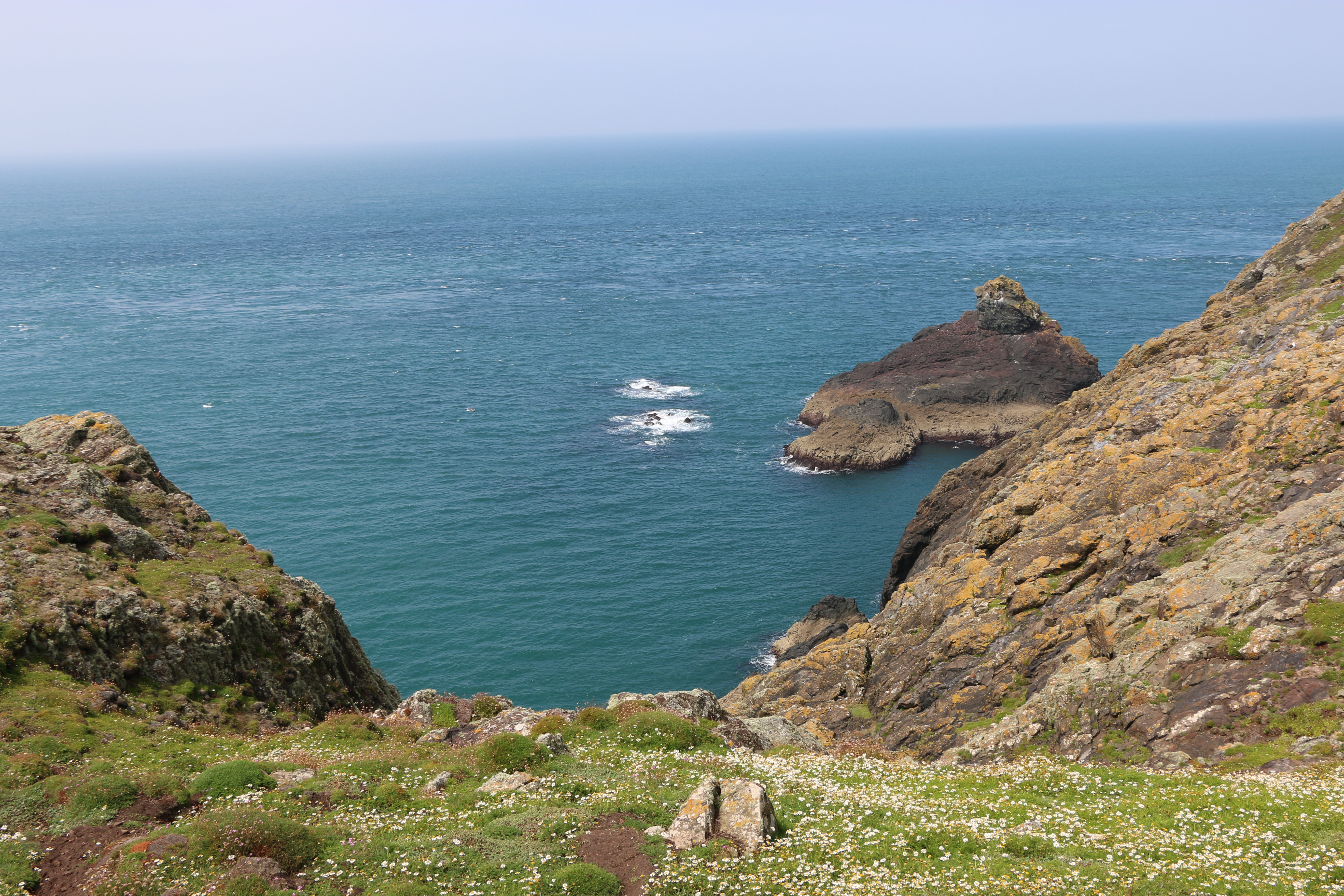
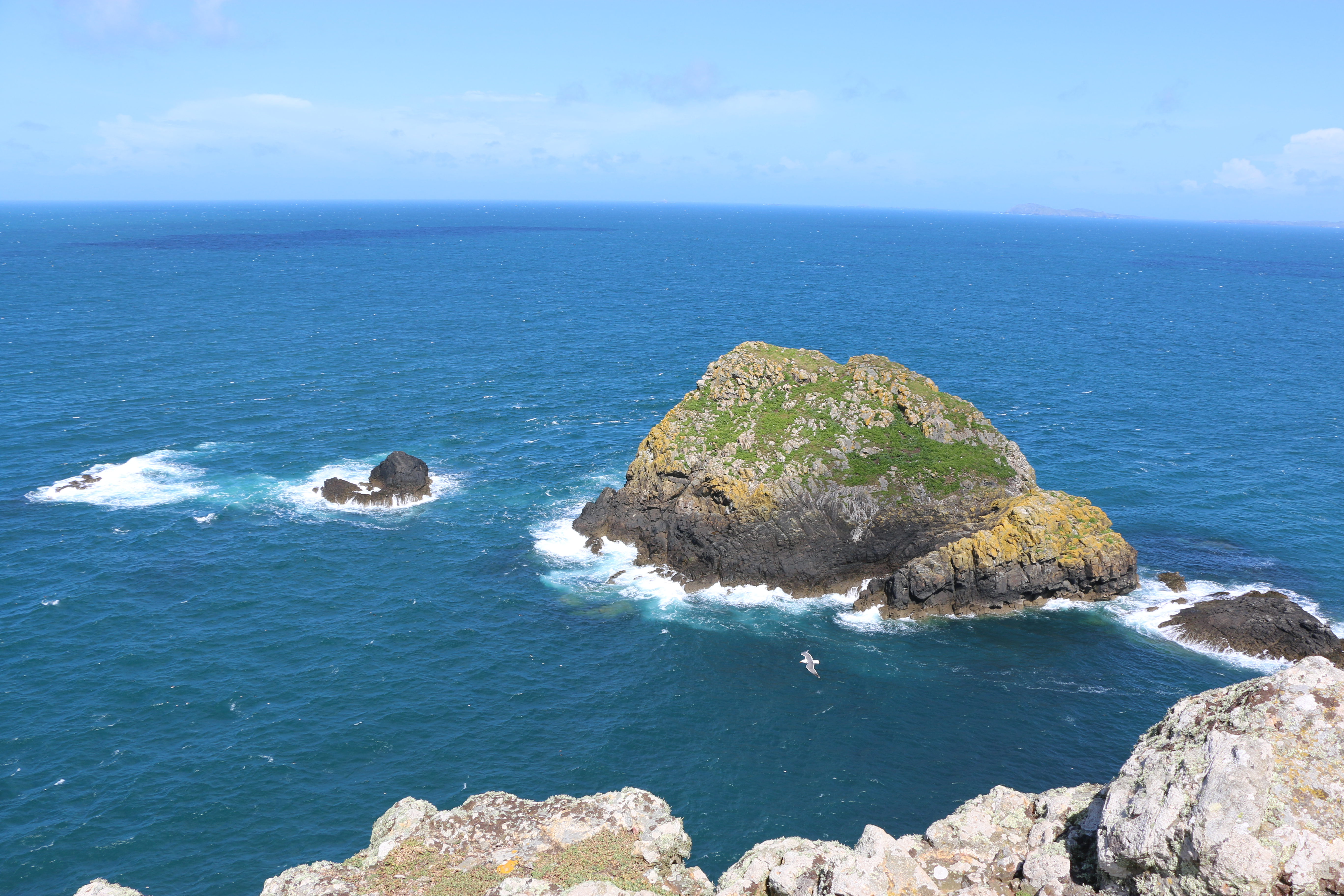
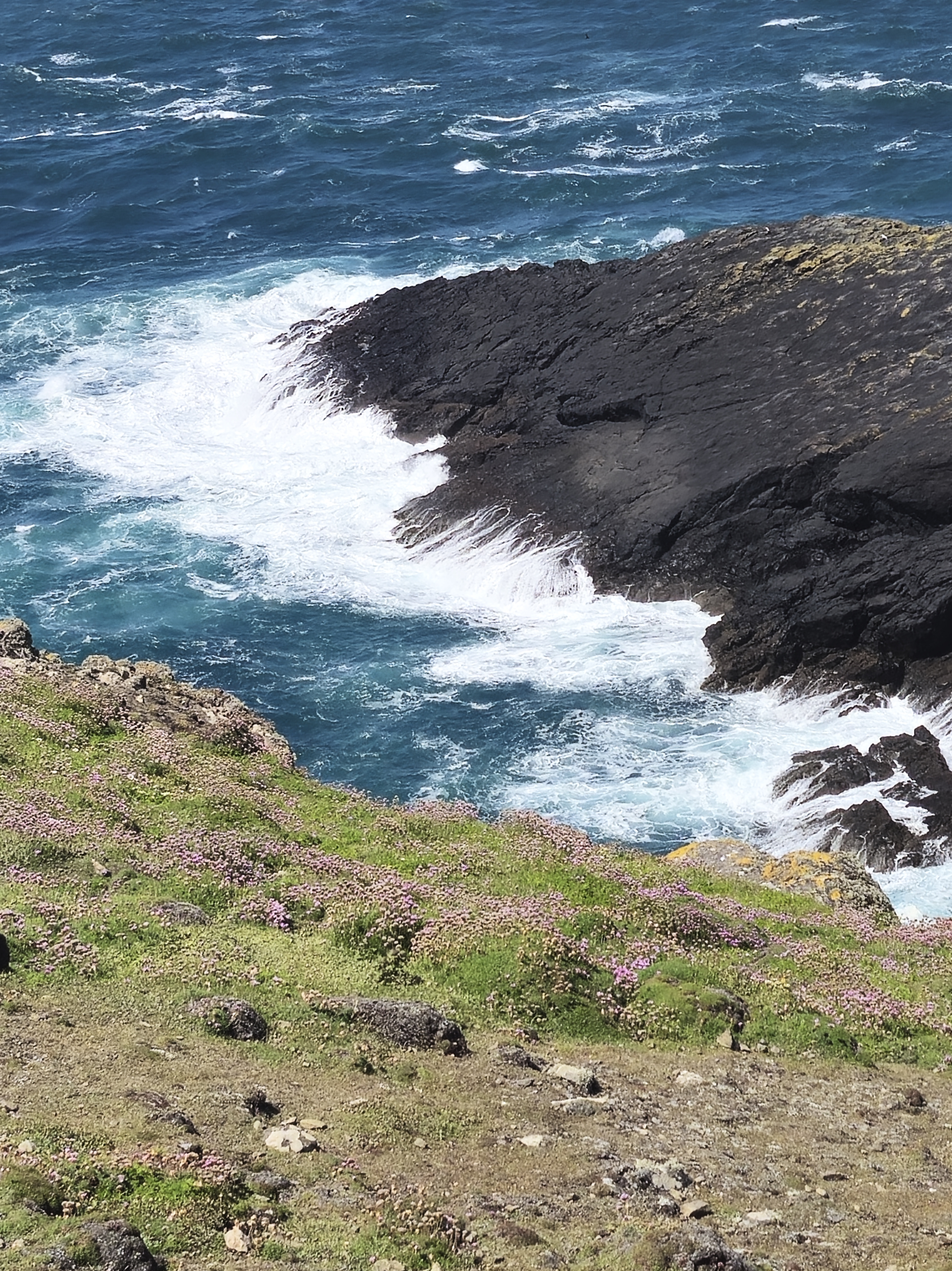
Skomer Head
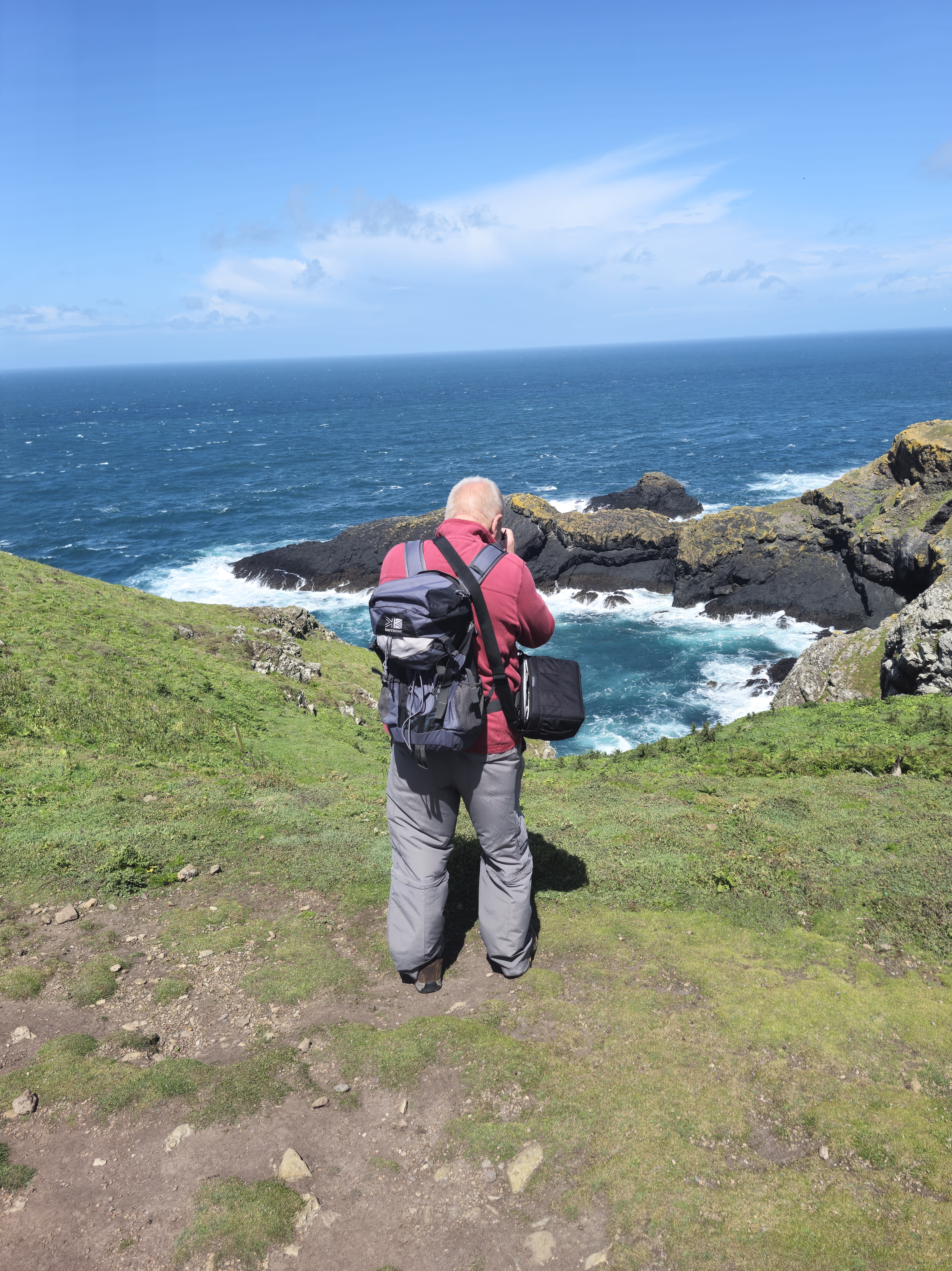
The wind was so strong at this point we struggled to walk. It gave the Photographer an excuse to stop many times.
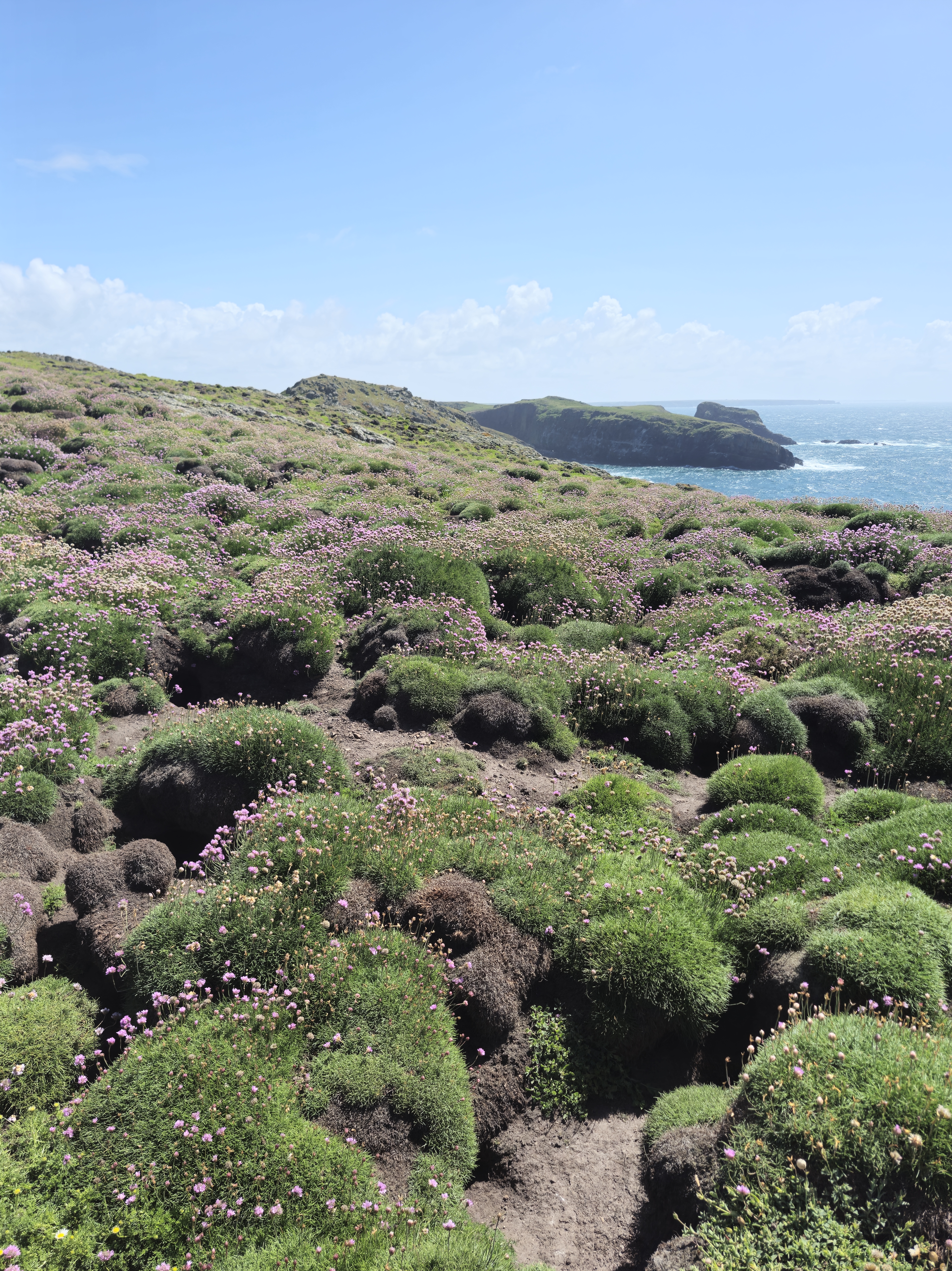
After being buffetted so much we were relieved to find that, when we turned inland, it was slightly calmer.
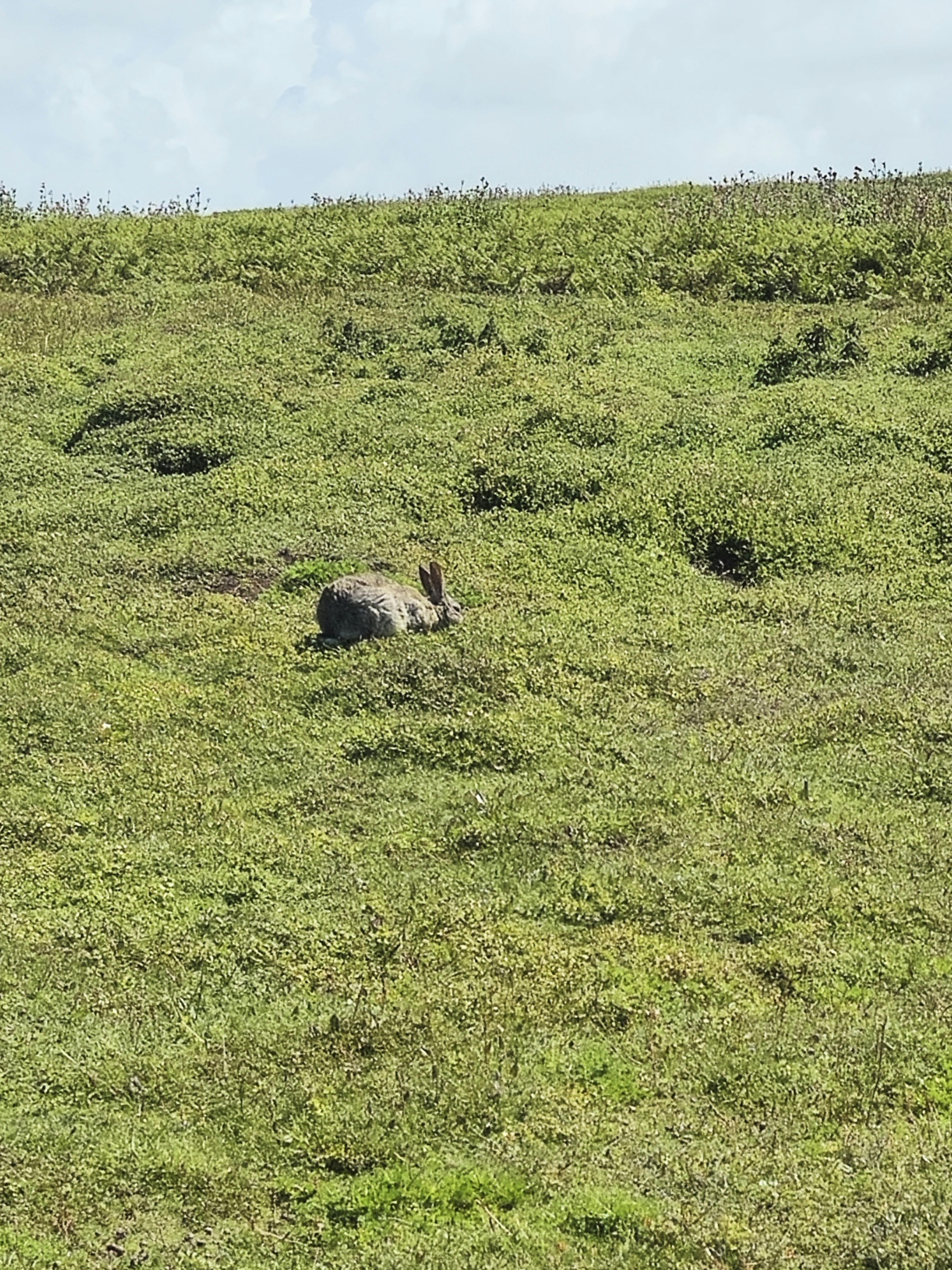
This rabbit took not the slightest notice of us.
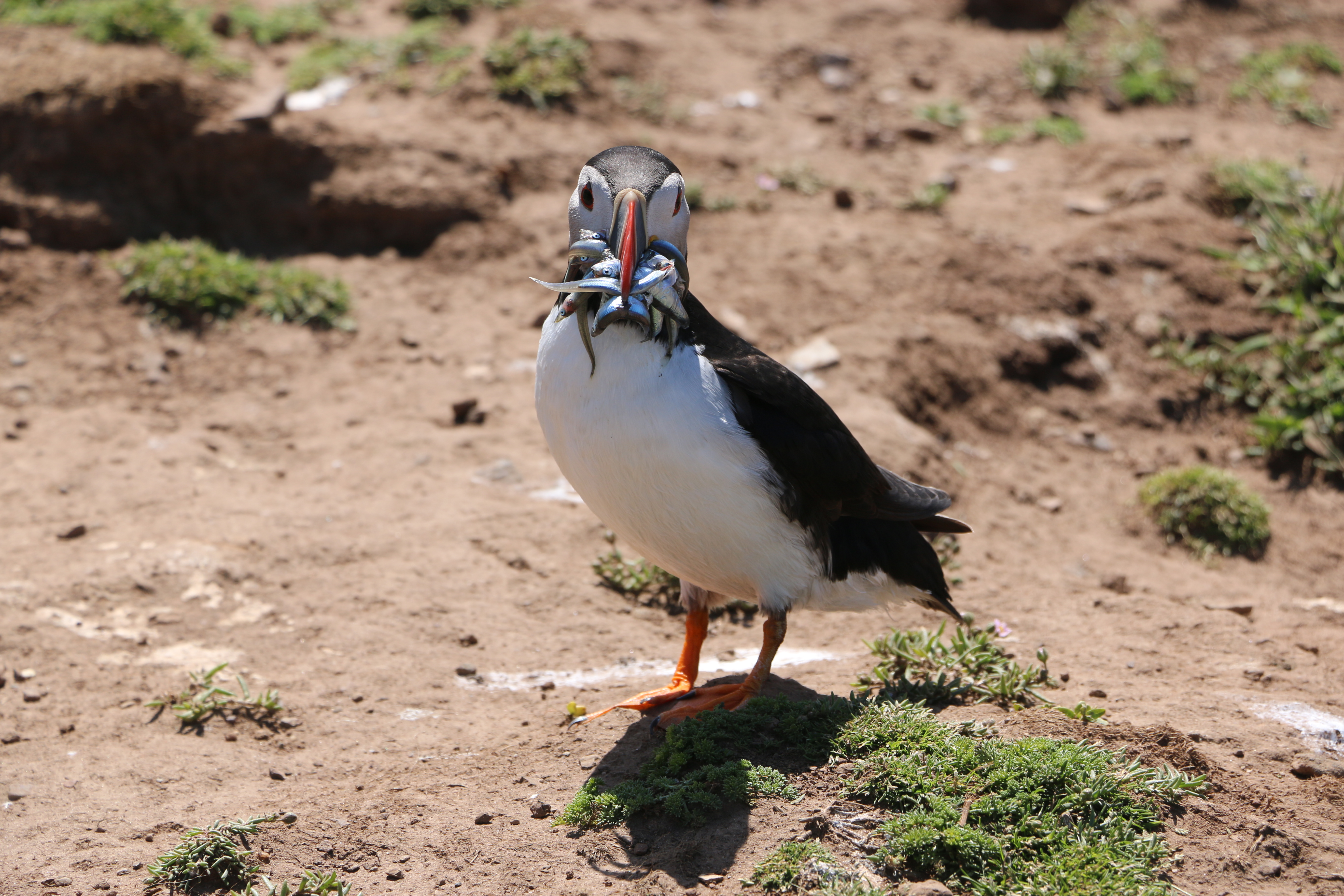
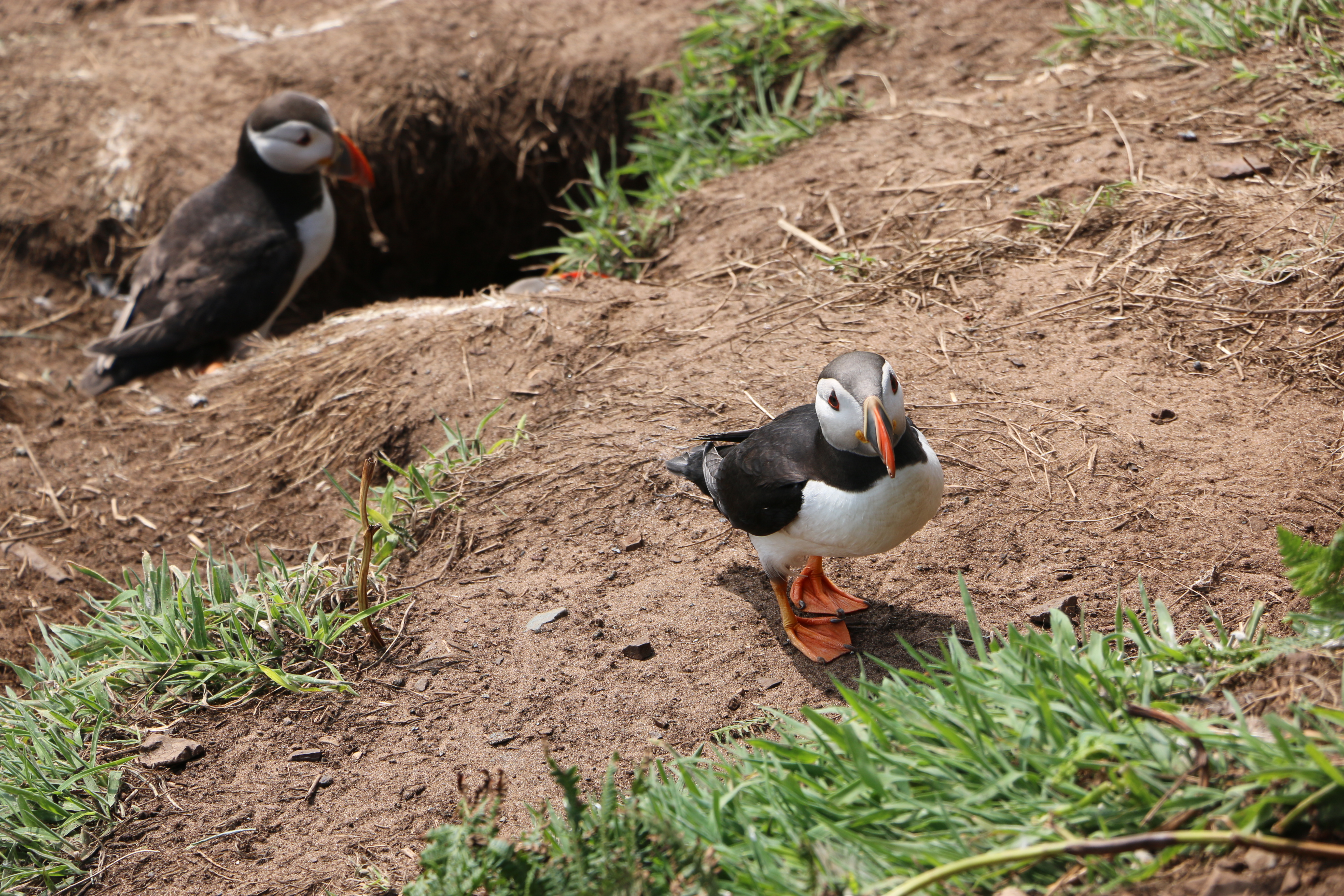
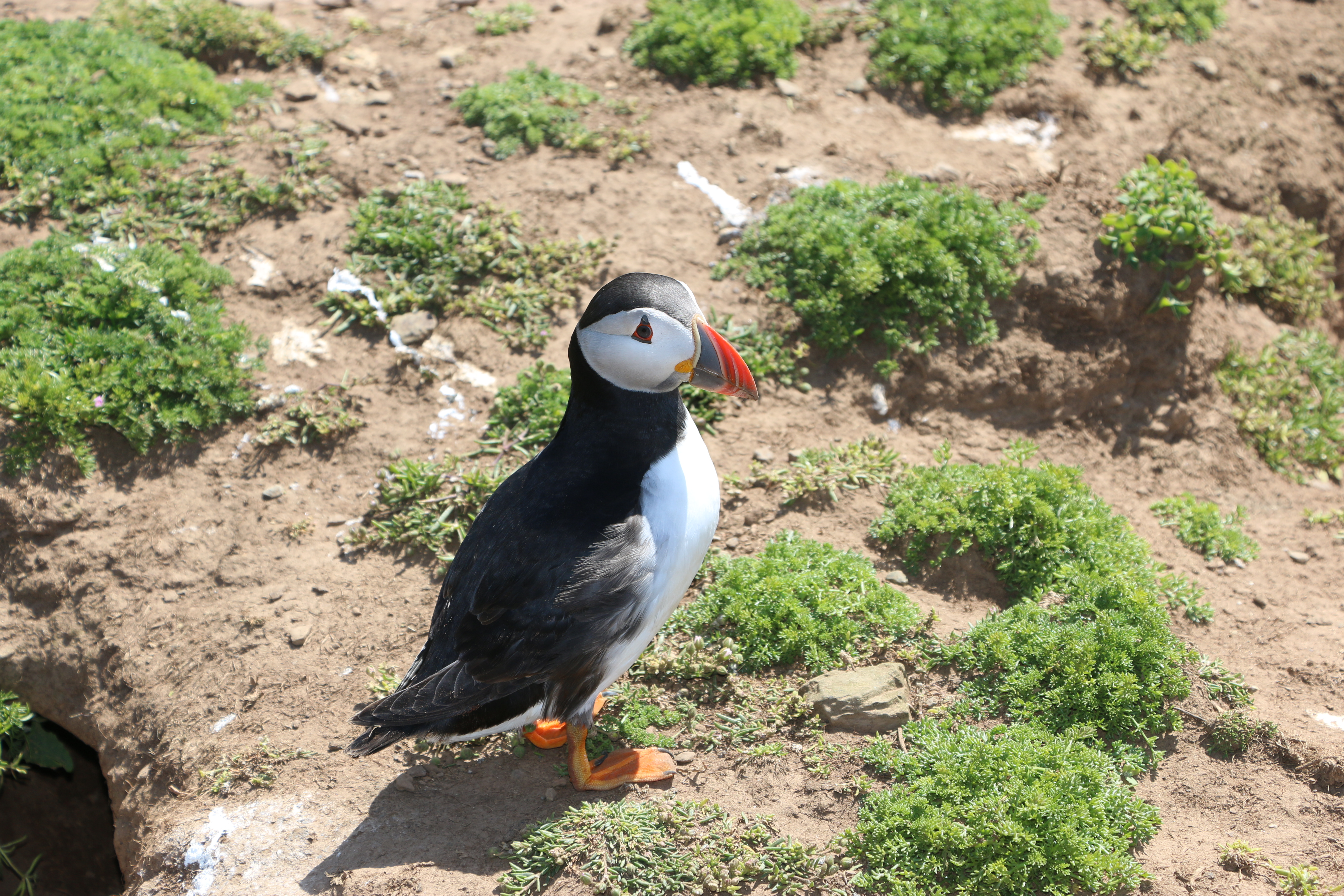
Unlike the Puffins …
Skomer is internationally important for seabird, especially Puffins. When the Photographer stopped to take their photos at The Wick, they were as curious of us as they were last year. Wonder if some of them were the same birds!
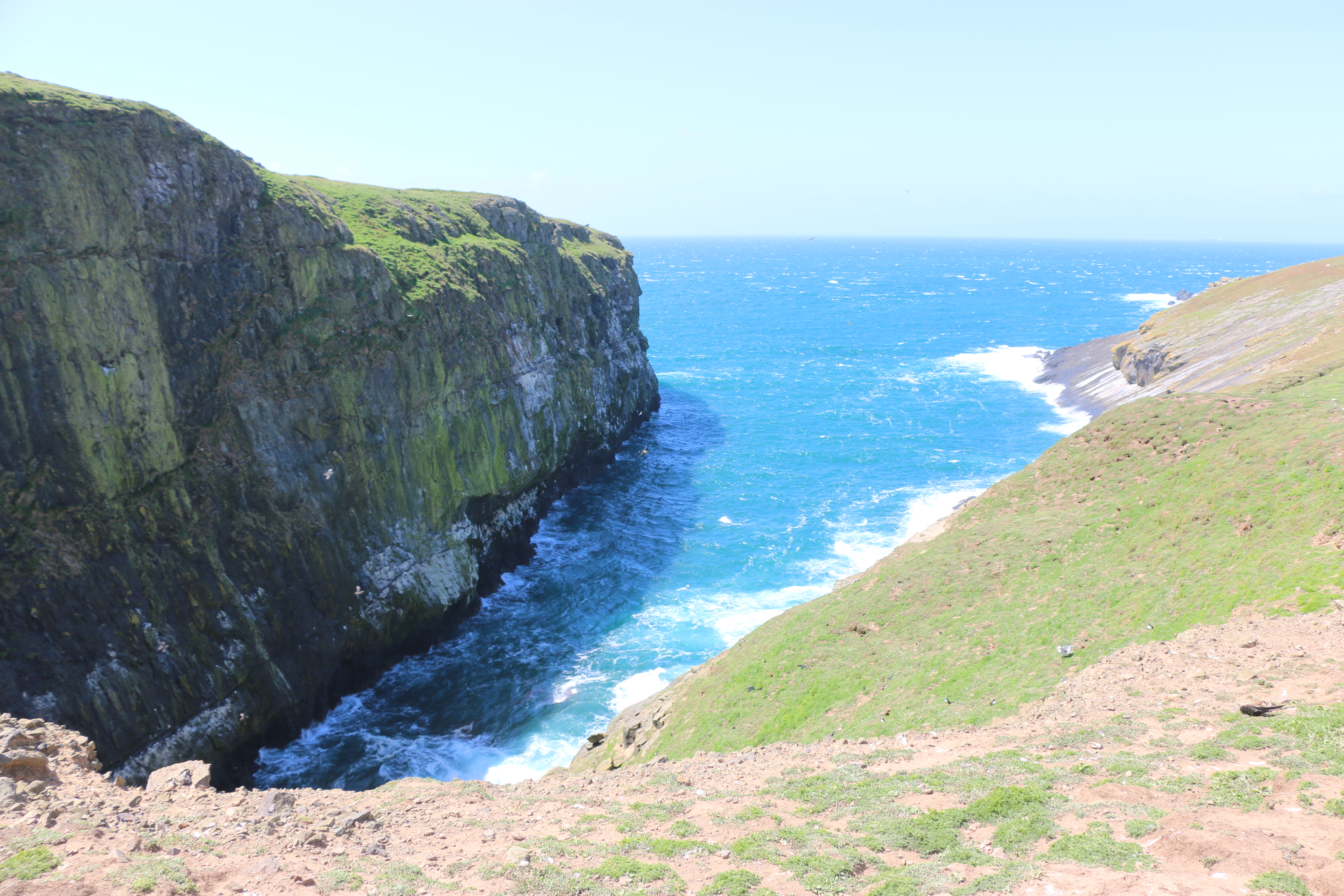
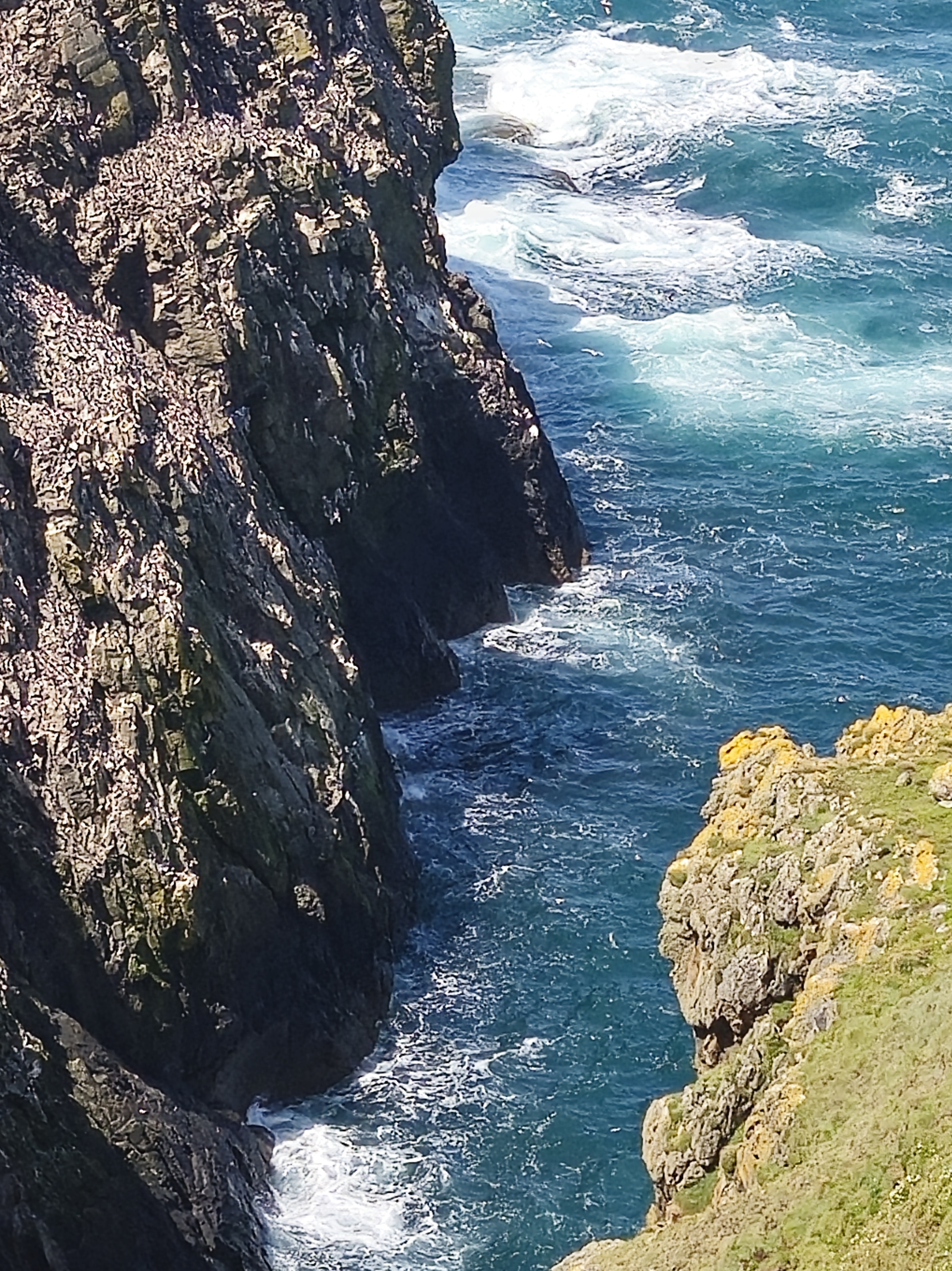
Last year I wrote about the geological fault activity and basaltic lava flows that long ago formed The Wick in Crossing Off the Bucket List Part Two). Looking over the edge of the cliff was just as scary to me as then. And, like last year, the Fulmars and Great Black-backed Gulls swooping and riding the air currants, were just as noisy.
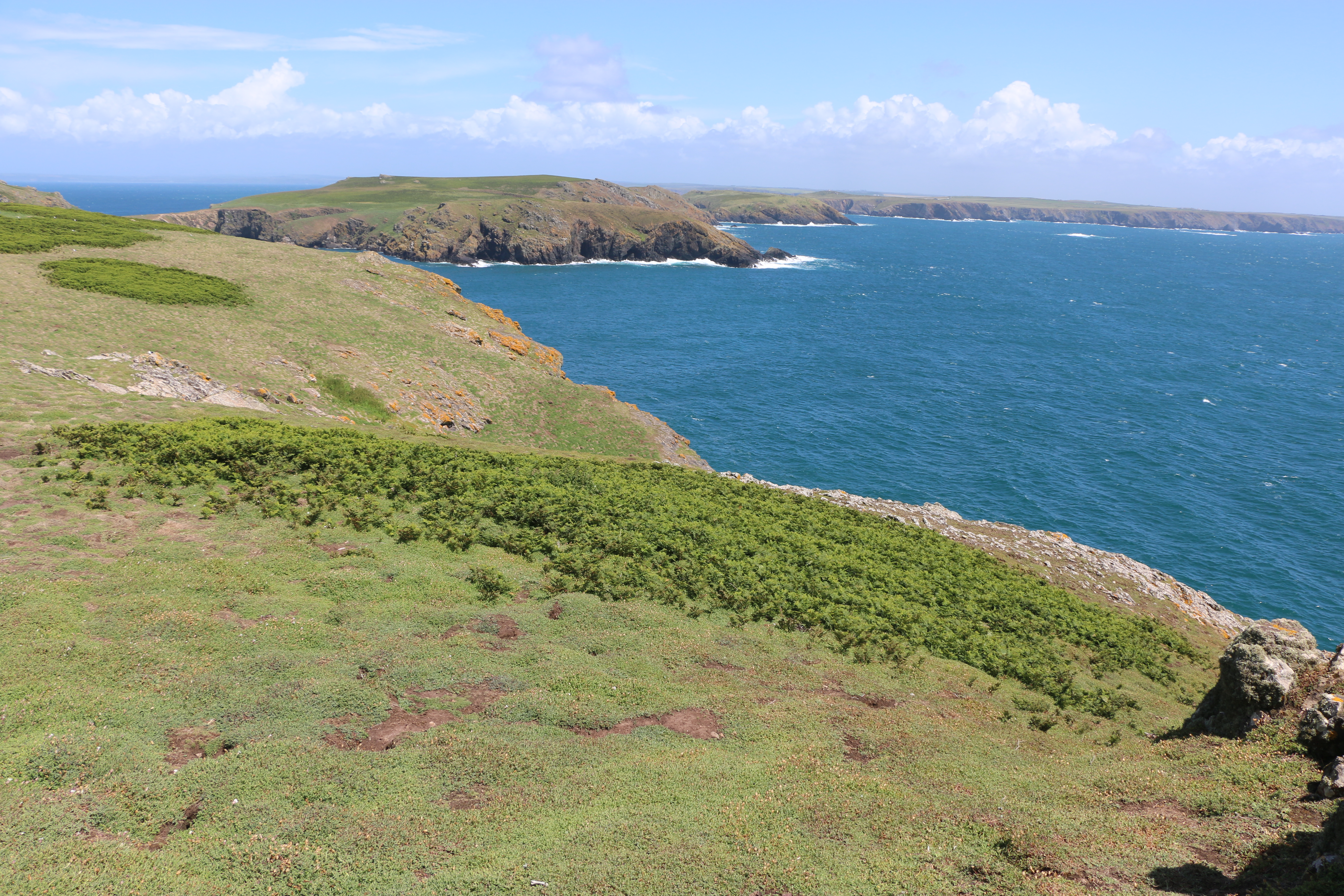
After almost four hours of walking we finally stopped by an outcrop of rocks to eat a belated lunch and admire the sweep of the glorious coastline.
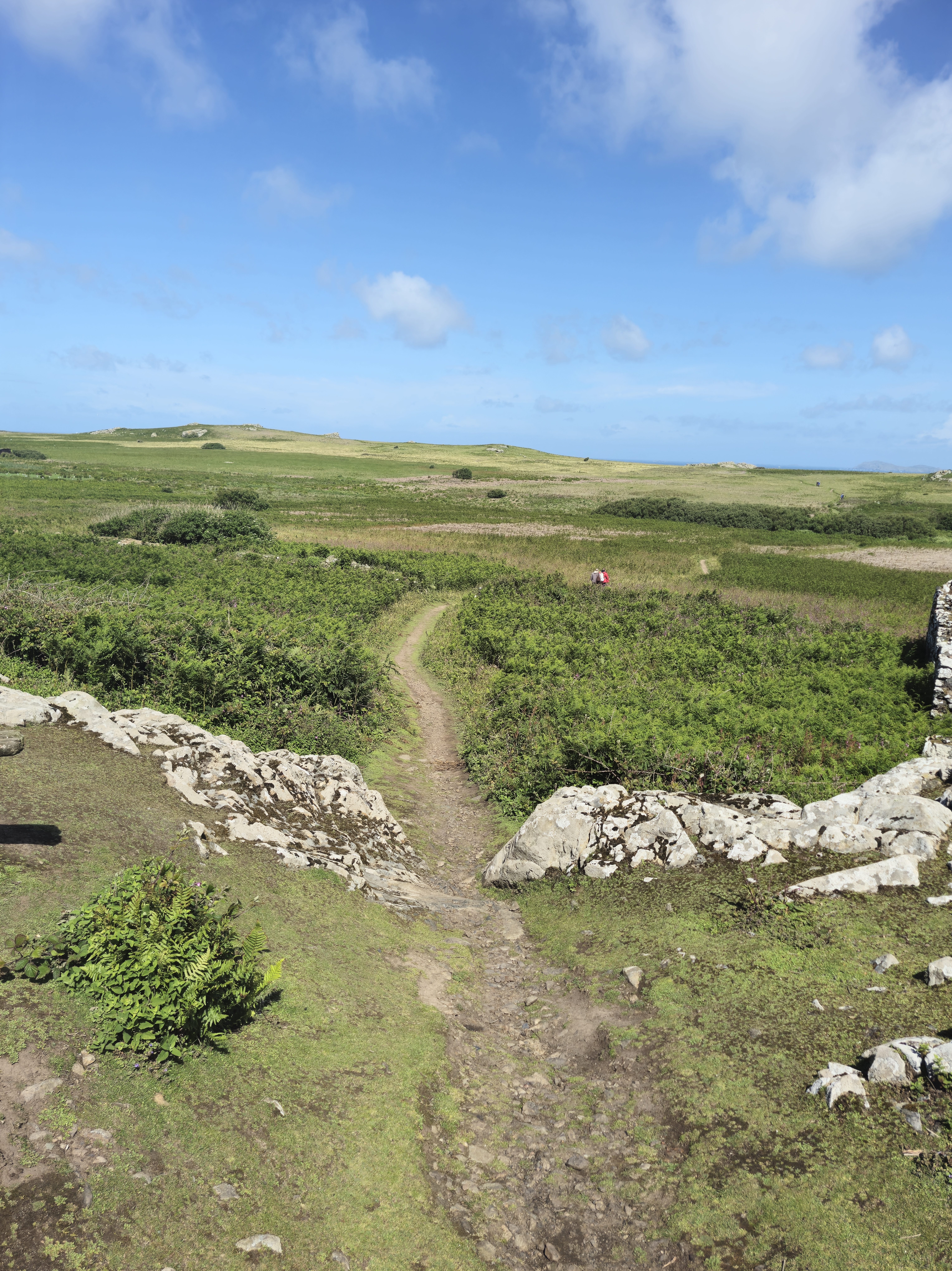
Packing up, I looked at the path we needed to take to get back to the harbour. It seemed a long way!! Undaunted the Photographer set off. “Come on,” he said, cheerfully. ” It’s further on where we saw the Manx Shearwaters, Guillemots, Razorbill, and Kittiwakes last year.” I followed. After all, he had the last bottle of water (and the chocolate) in his rucksack.
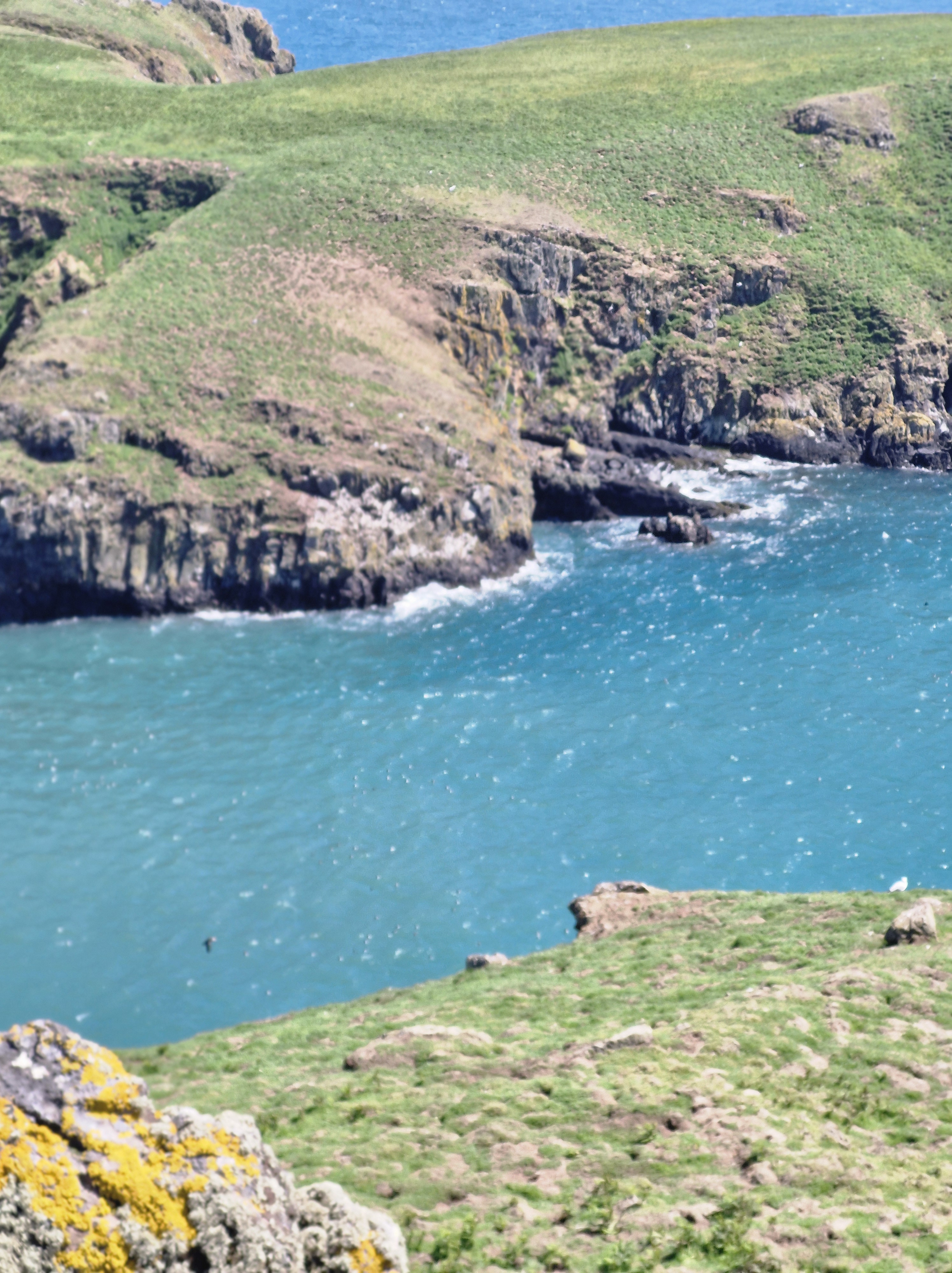
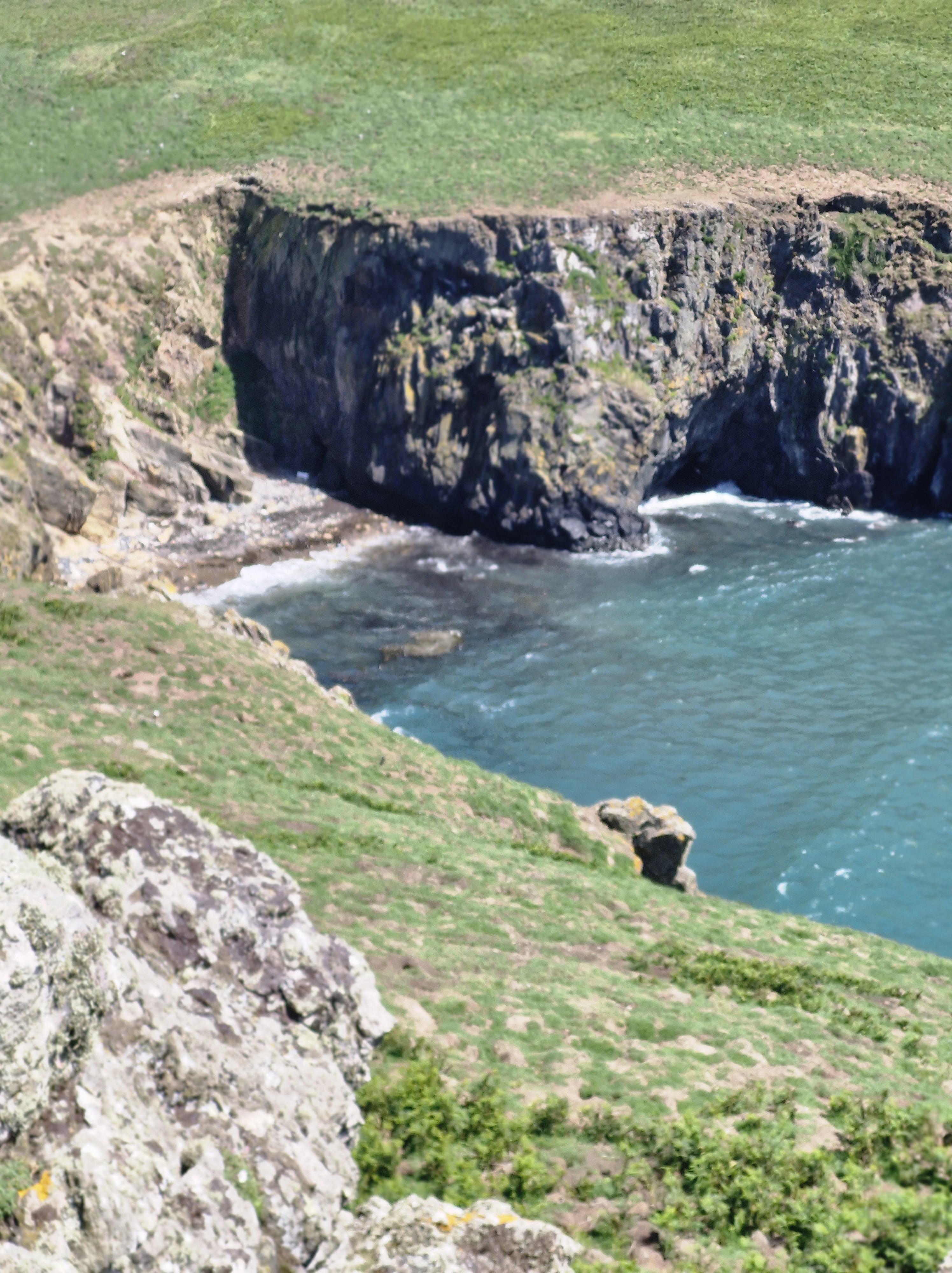
And, after all, who could resist a last look at the magnificent scenary of this island and another chance to spot different seabirds?
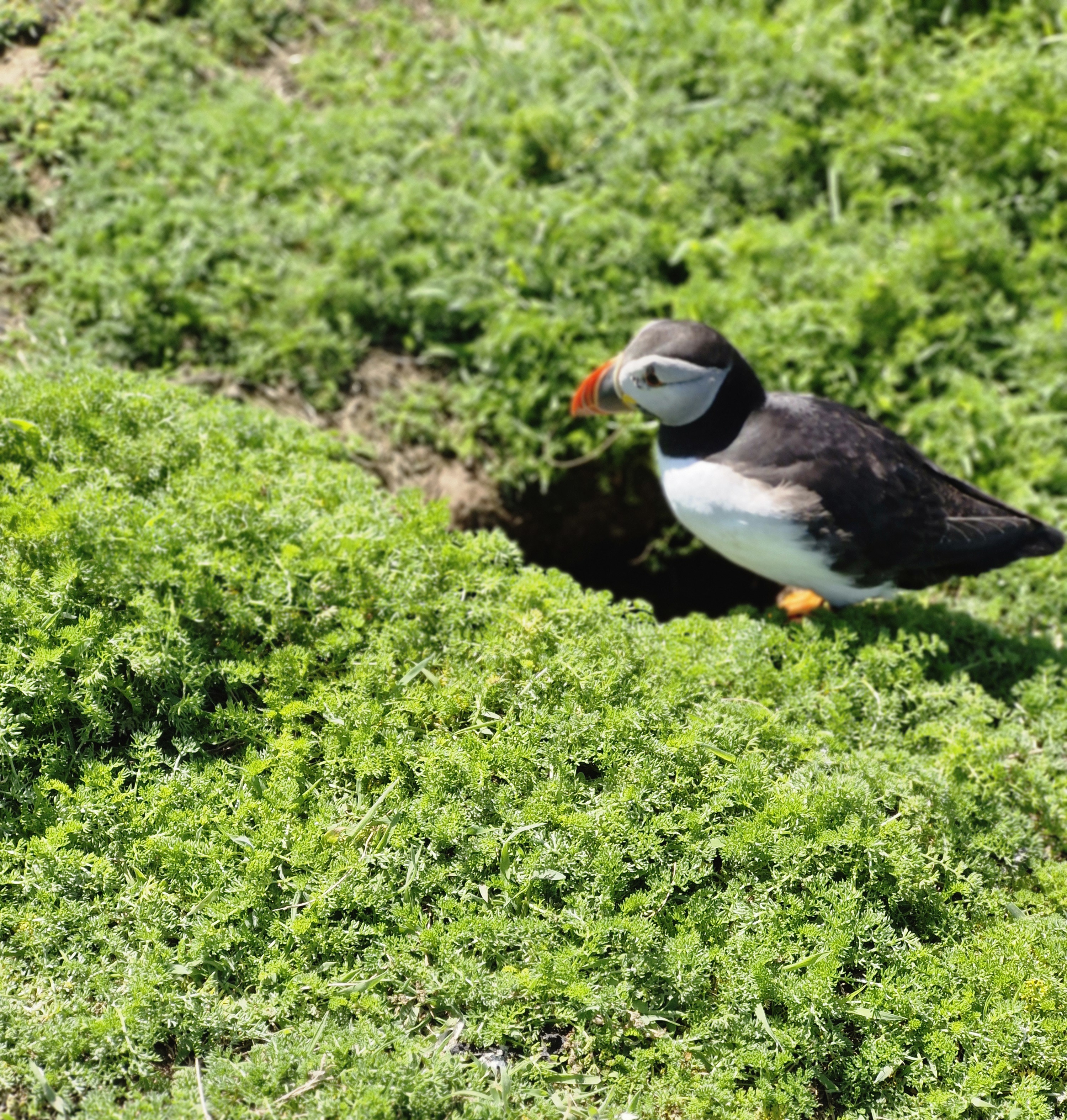
We arrived back at the harbour in good time to see the boat coming in. And to take a final Puffin photo.
A short reminder of the history of Skomer Island:
Around thirty-seven thousand years ago, Skomer would have been part of the mainland, only being cut off, following rising sea level, by the end of the last Ice Age around twelve thousand years ago
There is evidence of untouched remains of huts, fields and cairns that appear to prove that between five and twelve thousand years ago there was an Iron Age settlement of a small farming community on Skomer. Near the Garland Stone, a pyramidal (shaped like a pyramid), just off the northern tip of the island, there is a short circular detour off the main path across a ridge where a group of nine small cairns have been identified. This is probably a prehistoric cemetery. In North Valley, looking towards North Pond when conditions are suitable the remains of a number of circular Iron Age huts in pairs can be seen. This is the most complete and untouched remains of this period in the whole of Europe.
But then, except for some evidence of Medieval buildings on the island there is no clear record of any habitation until around the thirteenth century.
****************************************************************************************************

Author of Domestic Thrillers, Domestic Noir, Contemporary Fiction & Historical Family Sagas.
Link:
https://www.amazon.co.uk/Judith-Barrow/e/B0043RZJV6
Discover more from Judith Barrow
Subscribe to get the latest posts sent to your email.


Terrific photos! The blues of the sky and sea are so enticing and that coastline is so impressive. The puffins are perhaps my favourite – it’s been years since I was on Skomer and they had no fear of us at all. And I’m glad you made sure to keep close to the source of water and chocolate! xx
Thanks, Alex, climbing those first thirty – two steps from the boat are a challenge on legs and lungs, but so worth it! We had a wonderful day, David got the photos he wanted, the puffins are enchanting, and the chocolate was eaten! 😊💜
LikeLike
Wow, what an incredibly beautiful place!! Thank you for sharing the photos.
It is, Liz.It’s a place for good memories on cold, wet days. Many thanks to you for being here and commenting.
LikeLike
What a gorgeous place this island is to walk and take photos and admire the scenery! Wouldn’t it be nice to go back in time and see who lived there?
Noelle, whenever we walk in these kind of places, and especially on Skomer, I’m always aware we’re walking in thousand of footsteps – and we’ll never know those people and the lives they lived. It’s awesome, and poignant. Thank you so much for reading and commenting here.
LikeLike
It looks like a fabulous walk, Judith. I have yet to see a puffin and it is on my bucket list! Thanks for the pictures,
It’s a wonderful island, Darlene. And we’re lucky to live so near. Puffins galore!! Thank you for reading and commentint. x
LikeLike
Yes, he with the last bit of chocolate rules! I love those puffins – definitely worth the walk!
Jan, you are so right!! Chocolate was his last resort/enticement after we’d walked for four hours. Husband loves taking photos and the puffins are always happy to pose.
LikeLike
A terrific walk, Judith. Thanks for taking us along. Love the scenery and puffin shots.
Thank you, John. I seem to be walking more than writing these days. But, hopefully, inspiration will kick in soon as we wonder around. We are so lucky to live here in Pembrokeshire. Our day on Skomer was wonderful, and seeing the puffins again was joyous.
LikeLike