

The second day, we knew we needed to take it easy, so we planned a short walk for the afternoon. Around three miles from the cottage that we were staying in was the disused Cwm Bychan copper mine, so we decided to explore.
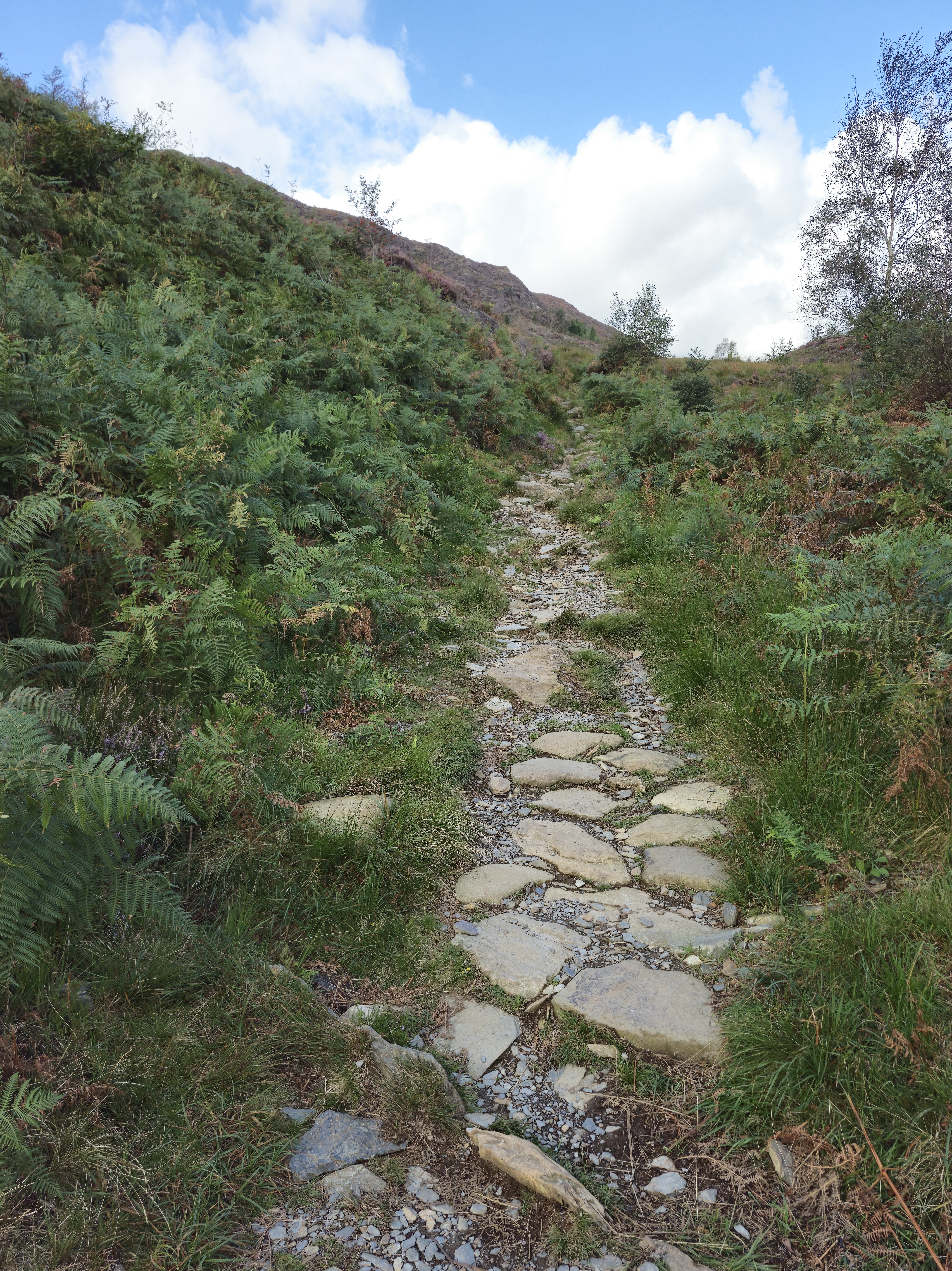
The start of the walk was from the Nantmor National Trust car park, easy enough to find. We went under the railway bridge (still no steam train), and onto the stony path that led up through woods.


We’d been told these were bluebell woods, but, of course, in September no signs of bluebells, but impressive heather anyway.The area also includes internationally rare heathland, found only in the western coastal areas of Europe that provides habitat for numerous butterflies and birds.
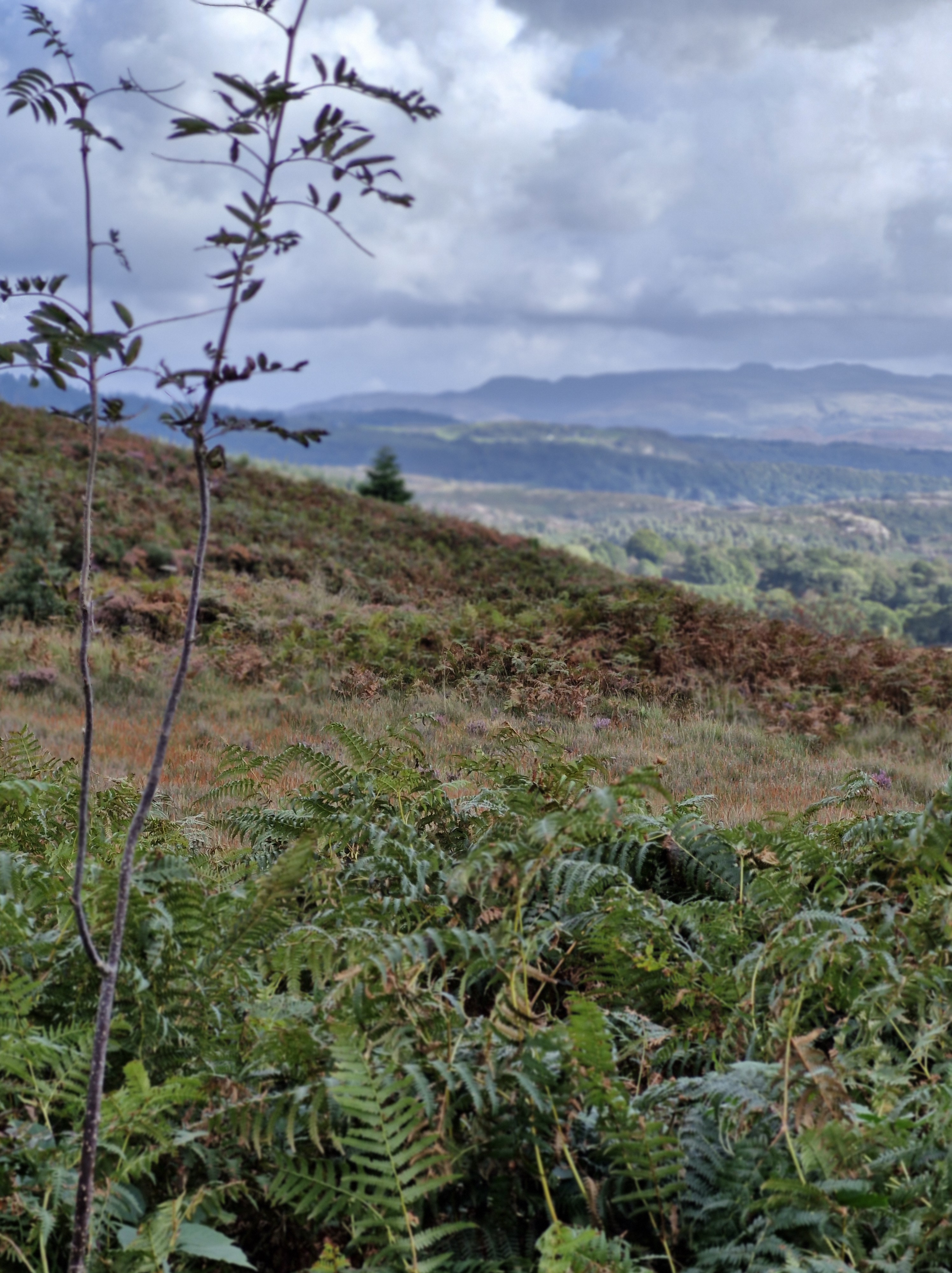

The path wound upwards, sometimes not as distinguishable, always following the stream.

We were tempted to sit here, but I knew if I sat down I might not stand up again; the short walk had turned into yet another climb – and the weather looked as though it was changing.

But, gradually the woodland path changed into easier, wider paths on the open mountain, and I was reliably informed that the remains of the copper mines was, “just around the corner”.
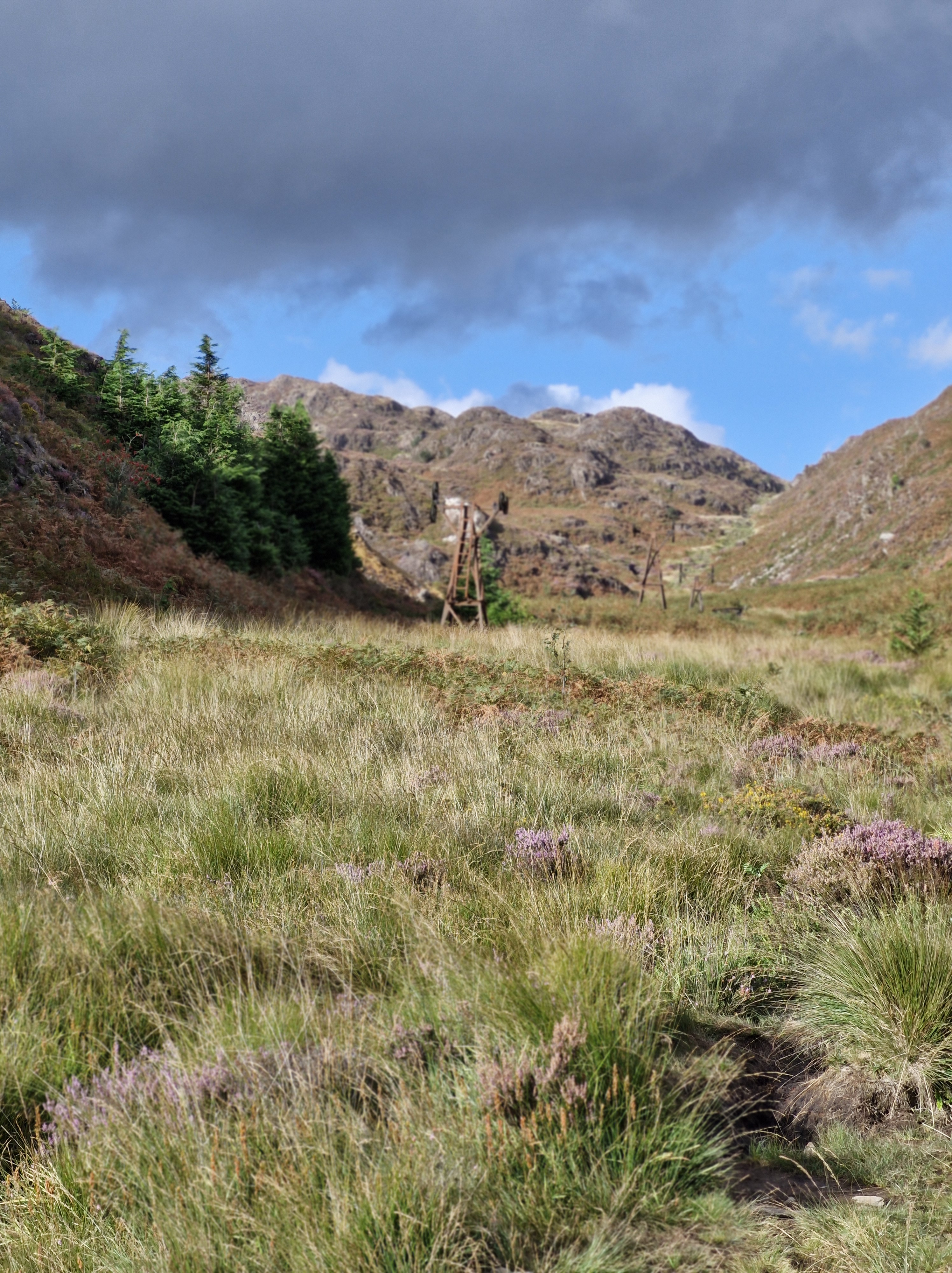

And there it was!

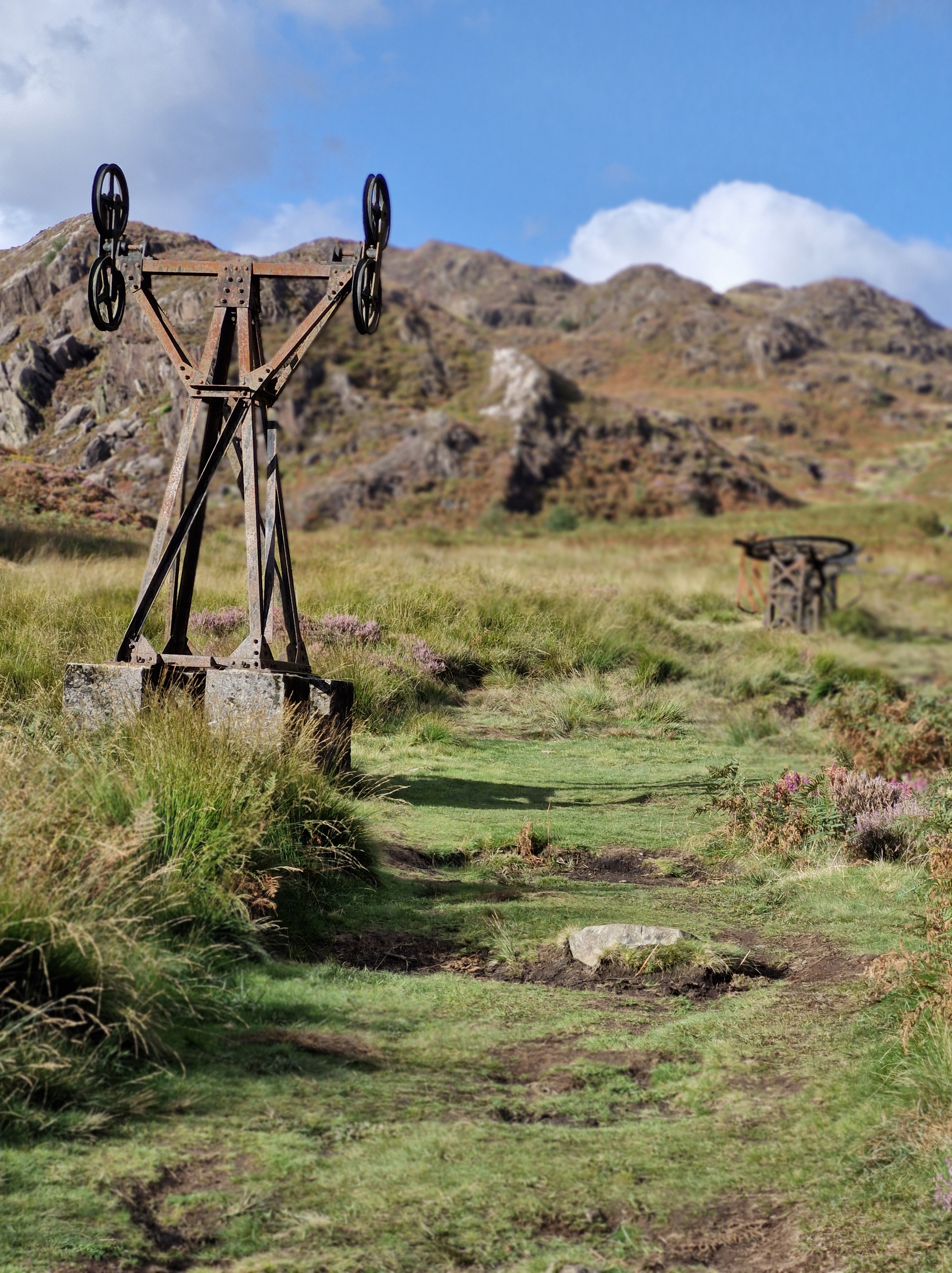

Various relics of that era can still be seen, including the aerial ropeway with its pylons and terminal wheel. And, in the background, the slag heaps of waste copper.
The evidence of the copper mining that used to be carried out here is quite poignant. The silence, broken only by occasional bird calls, the rustle of the breeze through the long grass, the bubbling of the stream, obviously a contrast to how things used to be.
Mining has been dated back to at least the seventeenth century in Cwm Bychan. The mines finally closed in the nineteenth century, then re-opened in the nineteen twenties. It was at this time that an aerial ropeway was built to help remove the Chalcopyrite ore for processing. But the attempt to restart production was short lived and the mine finally closed by the end of that decade.
I needed to research what Chalcopyrite is – a copper-iron sulphide mineral, the primary source of copper metal.

Image courtesy of Wikipedia
I learned that Chalcopyrite, also called Peacock Ore is thought to be an uplifting stone. It may ground nervous energy which allows the body and mind to let go of stress and embrace calm. It also may be used to remove energy blockages, cleansing, activating and aligning the chakras and energy bodies at the same time. To be an excellent aid to increase self-esteem, banish fears and doubts, and soothe the emotions. … fascinating. They must have known this in the nineteen twenties?
.
.
Discover more from Judith Barrow
Subscribe to get the latest posts sent to your email.


So was the walk really only 3 miles? – if so, I might have made it except for all the uphill parts. But then it’s downhill on the way back!
LikeLike
Only three miles, Noelle, but rocky in places. I always find the downhill bits worse, especially on slippery rocks. And the weather was closing in. I’m a wimp in rainy weather!!😊 x
LikeLike
Not so bad if I used my walking poles!
LikeLike
Walking poles are always the answer, Noelle – if it’s not possible to land on one’s husband in a fall!😄
LikeLiked by 1 person
Fascinating. I recall my dad wearing a copper bracelet to help ease his arthritis pain.
LikeLike
There has to be some benefit we don’t understand in the copper, Darlene.😊.If these things help, why not just except it?!
LikeLiked by 1 person
😘
LikeLike
Again, a fascinating and beautiful sojourn. The relics of the copper mine do give the area an eerie feel.
LikeLike
It was strange to think that the area was once industrialised, Liz. When we walk in places like this, I always feel I’m walking in thousands of footsteps from the past. Thanks for reading and commenting.
LikeLiked by 1 person
I would have been tempted by that chair too, Judith! I bet the place looks splendid in Bluebell season.
LikeLike
I know, Rosie!! We’re thinking of going back in the Spring – so it will be bluebells… and that seat!!
LikeLiked by 1 person
I just love these photo posts, J! And this:
The silence, broken only by occasional bird calls, the rustle of the breeze through the long grass, the bubbling of the stream, obviously a contrast to how things used to be.
LikeLike
Aw, thanks, Terry. David’s in his element with his photography – and I’m always glad of the breather when he stops. It was so peaceful there, it was hard to imagine how noisy and busy it once must have been. x
LikeLike
Lovely photos, Judith, The walk looked challenging but rewarding too.
LikeLike
Thanks, John. There was a little scrambling over rocks in places, but, as you say, it was very rewarding. And, strangely enough, very peaceful.
LikeLiked by 1 person
I can imagine it was peaceful.
LikeLike
Oh, it was, John – incredibly so! Thank you so much for reading and commenting here.😊
LikeLiked by 1 person
😊
LikeLike
It sounds like a wonderful walk – and the pictures back that up. To be exercising in that peaceful and tranquil setting must lift the spirits .I love the quirky seat! 🙂
LikeLike
It was a lovely walk 0n a lovely afternoon. After an exhausting day before, Trish. Next time, I’m going to try that seat!! xx
LikeLike
Looks like a long 3 miles, lol. With all those nooks and crannies, I’d say what better exercise and fresh air! Hugs ❤
LikeLike
Sometimes, Debby, I think these ‘walks’ turn into clambouring around over rocks rather than standing on two feet – but, hey-ho, it adds to the fun! 😉😊.Thanks for being here, lovely friend. xx
LikeLiked by 1 person
You’re doing great my friend! ❤
LikeLike
Isn’t it incredible that on a tiny island of a country of 68 million people, we can still find wide open spaces where we’re the only humans, Judith? I think that is what makes Wales so special.
We have a lot of copper mines in the Swansea valley, too. Sometimes, you can see the orange water of the copper in the streams, usually in the summer months.
That bench doesn’t look very comfortable, but I’d have joined you, taken out the Tupperware of Welsh cakes and a flask of hot tea and taken in the marvellous views.
P.S – Found you on Instagram!
LikeLike
It is, Hugh. We are so lucky – so many glorious places, with wonderful views. I remember seeing the water running like that as a child, on holiday,somewhere in Wales. I thought it was gold on the bed of the stream. Ah… Welsh cakes and coffee – tempting. I found you as well on Instagram – brilliant!!
LikeLiked by 1 person
Hi Judith, an interesting walk and place to visit. I love heather. When I first saw heather in 2019, I didn’t know it was purple.
LikeLiked by 1 person
Hi Robbie, we have heather in our garden. Heather cand be also red, orange and yellow in cultivation. Of course, wild heather is usually pruple and is glorious across the moors and scrubland when it’s the right season. WE used to live on the moors in the North of England and it’s the first thing I remember seeing, spread out in front of me for miles, as a child. I think I was being carried.
LikeLike
A brilliant tour thank you Judith and lovely to see the colour still on the hills. Certainly earnt your dinner I would say with that tough terrain and fabulous photos ♥
LikeLike
Thanks, Sally. I love our walks, And I love seeing the colours change through the seasons. Especially when looking at the photographs afterwards. Well worth the effort… I think!! 😊x
LikeLiked by 1 person