Walking the Taff Trail – Well a small section of it anyway. And more of a stroll than a walk. #walks #cycling #photos #ThursdayThrowback #memories #history

An update to my post: Tongwynlais: Historic tollhouse given new lease of life:https://www.bbc.co.uk/news/uk-wales-62718289

Edmundo Ferreira-Rocha, of Cardiff council’s Urban Park Rangers, and councillor Linda Morgan cut the ribbon at the opening ceremony. © Tongwynlais Historical Society.
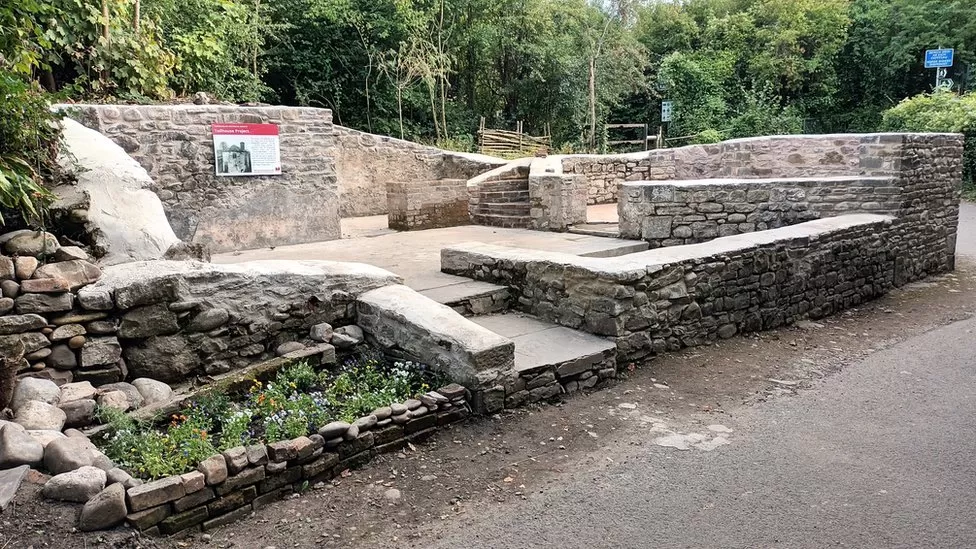
© Tongwynlais Historical Society.

Villagers have restored the shell of a historic “unloved eyesore” tollhouse demolished more than 70 years ago. The original building was among hundreds used to collect money from 18th and 19th century travellers. Volunteers in Tongwynlais, on the edge of Cardiff, have spent more than a year rebuilding it as the first step towards creating a local history trail. “Our volunteers have been fantastic,” said Sarah Barnes, of the Tongwynlais Historical Society.

*******************************************************************************************************

Before this wonderful restoration granddaughter and I walked the Taff Trailso thought you might like to see the before and after. Or, in the case of this blog, the “after and before”.

Put a lovely sunny day, with a dog desperate to go a walk, with a granddaughter who needs to be dragged from her mobile and bribed by the thought of a chocolate brownie and a drink of Sprite, and there was only one place to head for, the cafe in the garden centre at the end of the Taff Trail in Radyr.
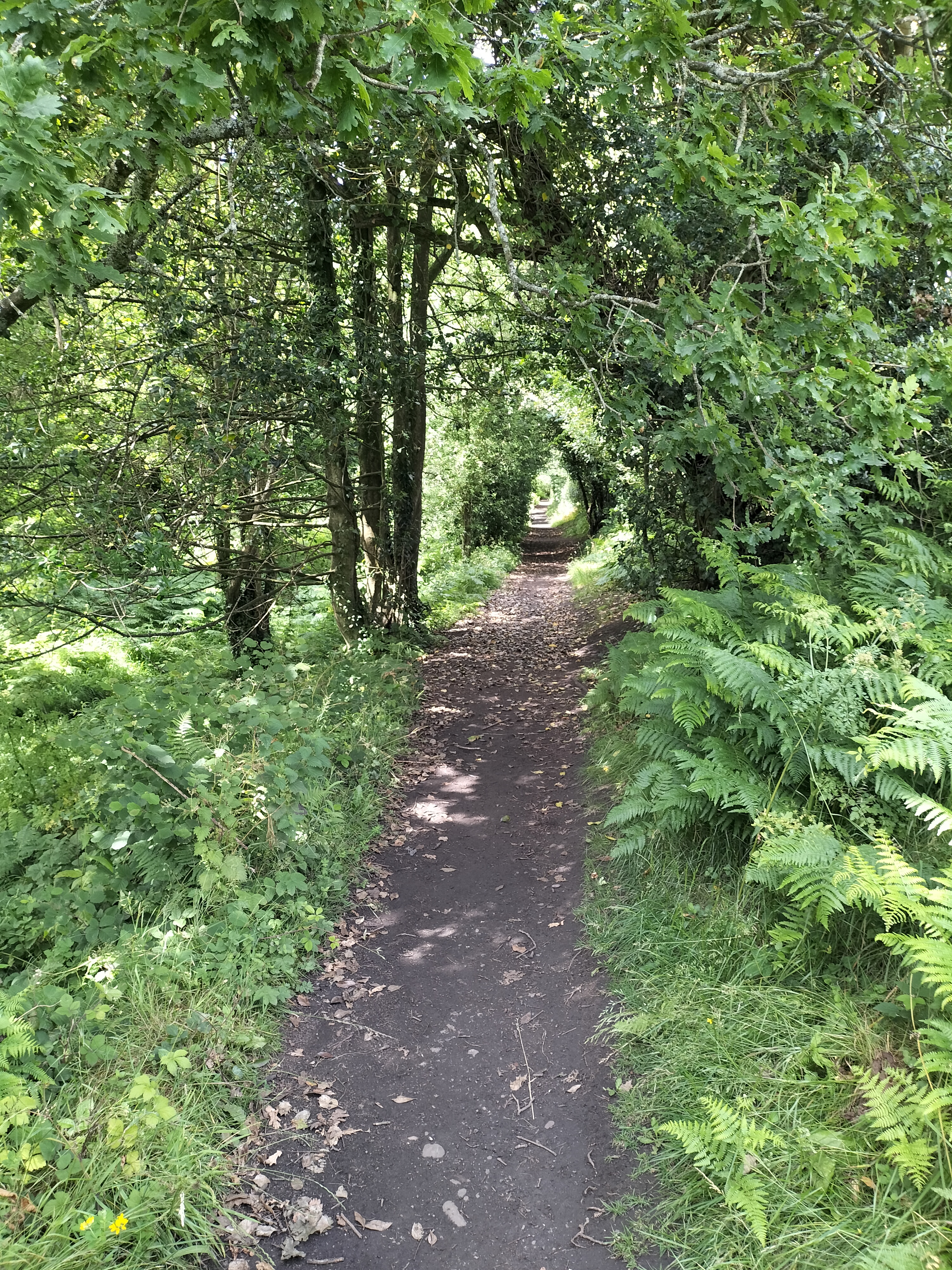
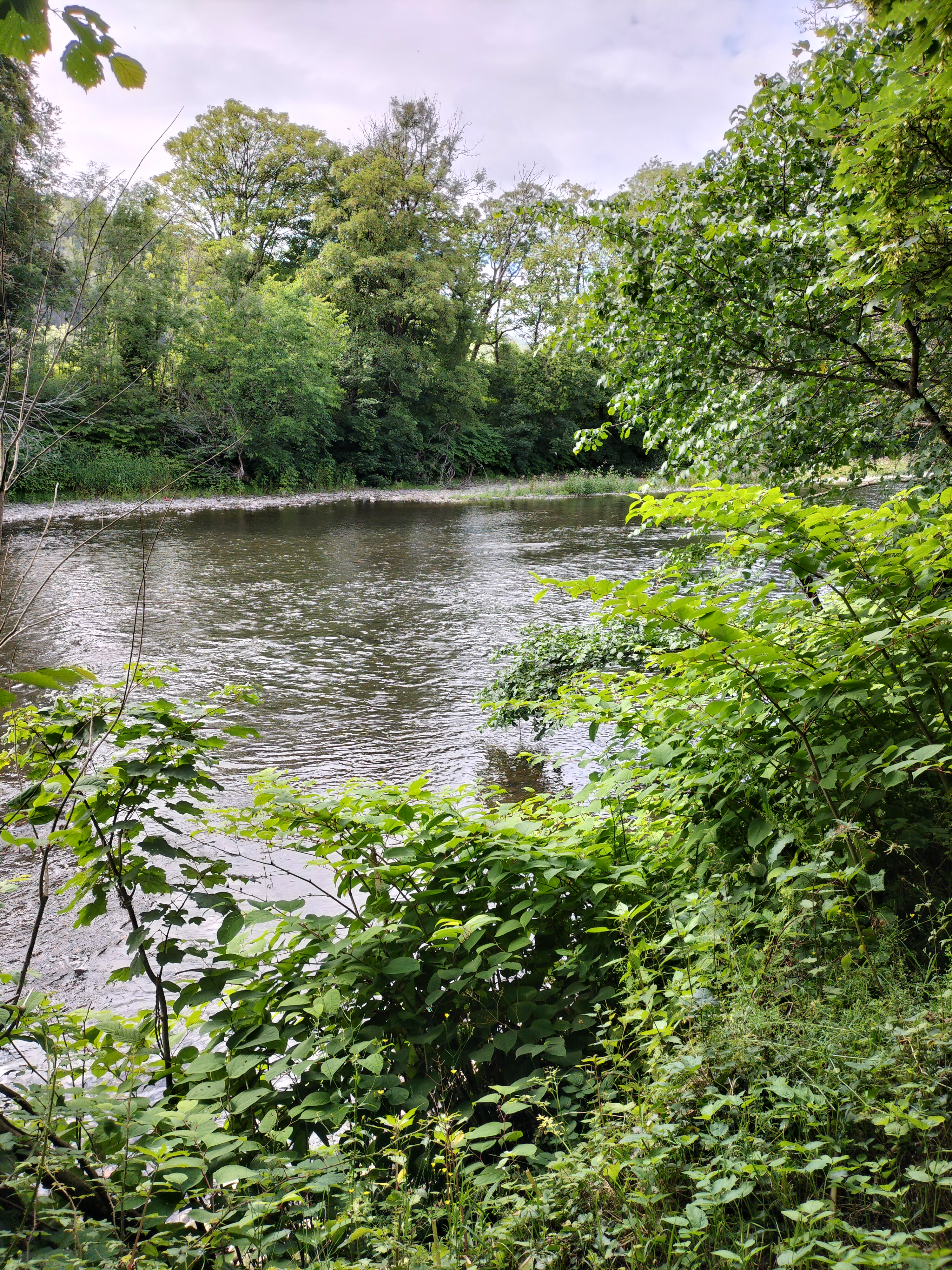
The Radyr section of this lovely river walk is one we’ve done often

But this time we decided to meander along various smaller paths, even though we needed to retrace our steps numerous times. I was so glad we did because look what we found:
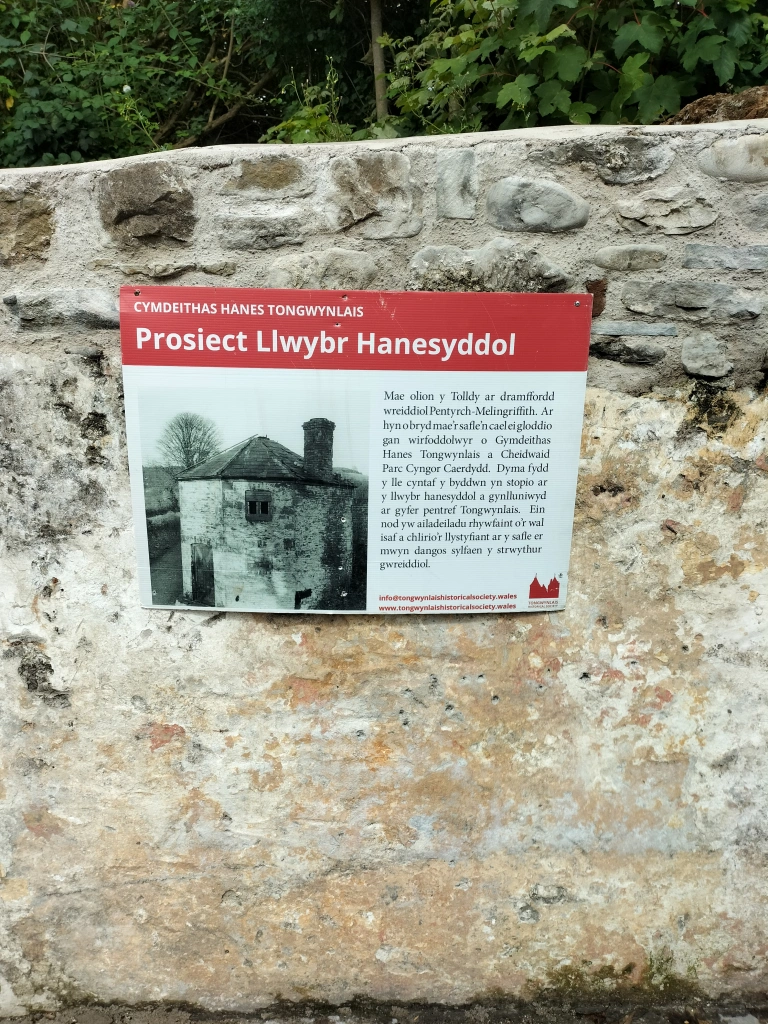
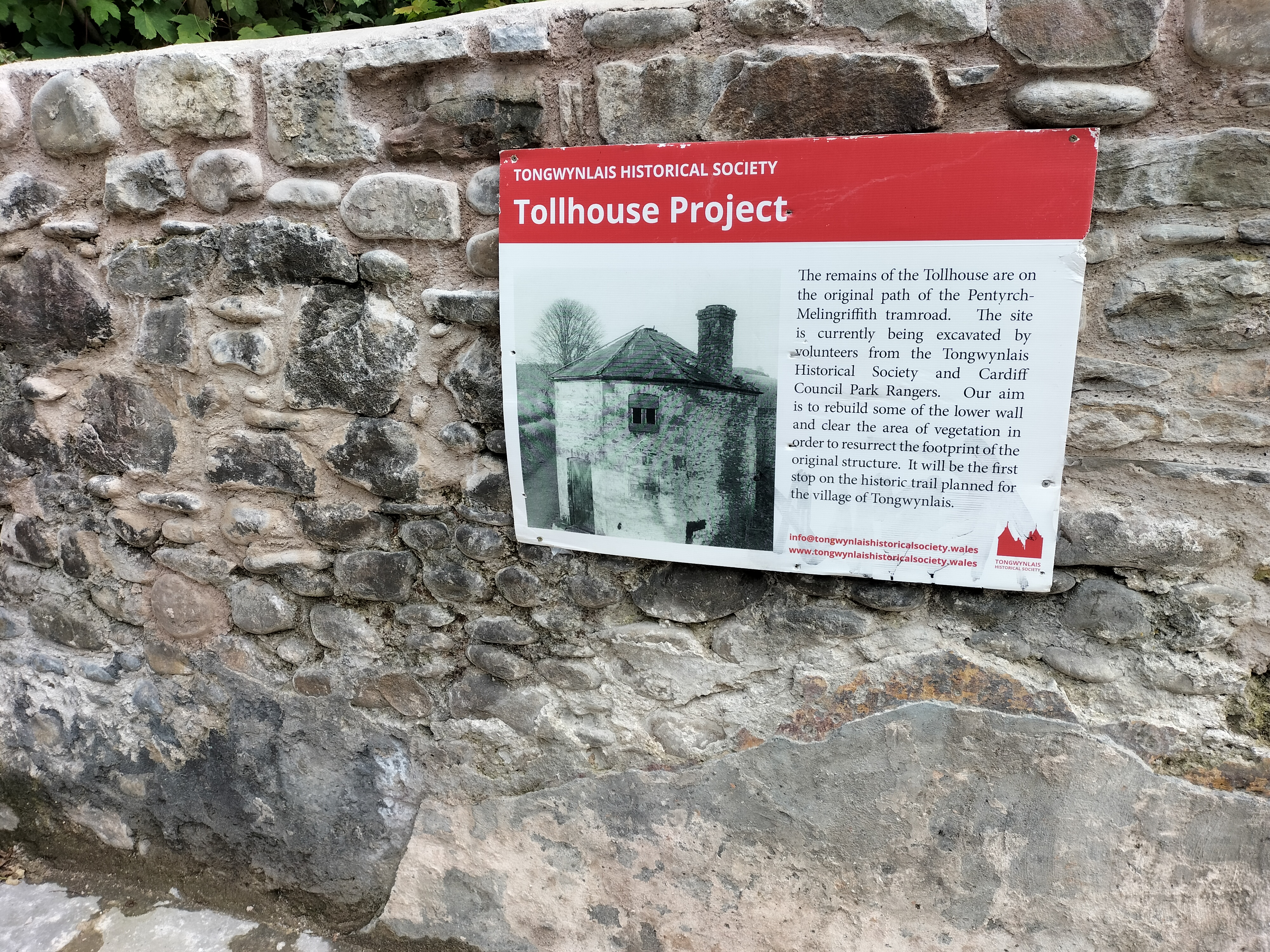
The tollhouse, once used by the Pentyrch and Melingriffith Iron and Tinplate Works in the late 1800s

Thanks to the Tongwynlais Historical Society ( co-founders,Sarah Barnes and Rob Wiseman) the Tollhouse returns to life. What was once nothing more than a few visible bricks covered in 70 years of vegetation, is now a recognisable shell complete with growing wildflower garden

I thought I’d better seek permission to add some of the photographs from the Tongwynlais Historical Society. I made contact with a very helpful chap, Jack Davies, whose fascinating website also contains an article about the Tollhouse and other history of the village: https://tongwynlais.com/history/
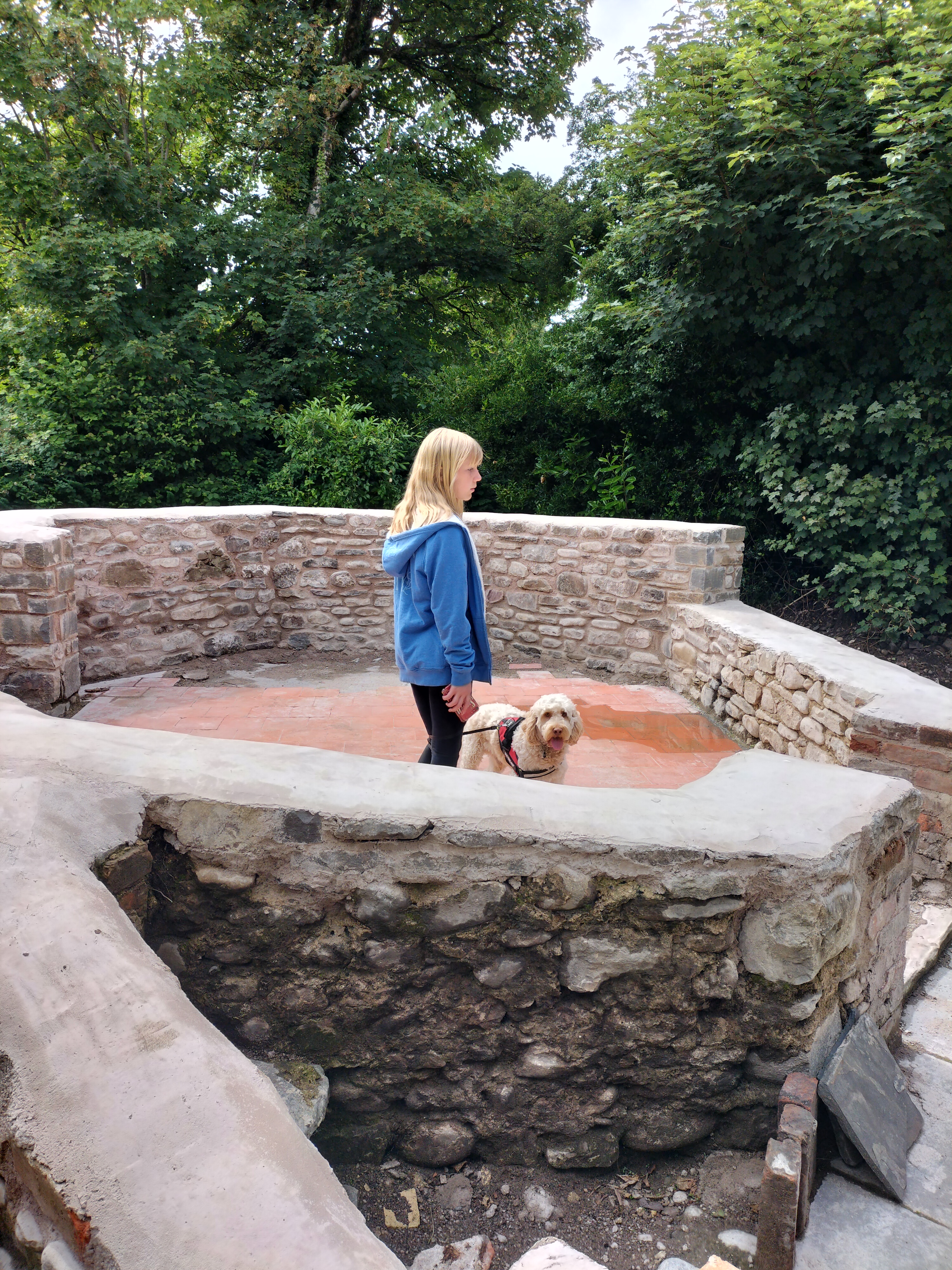
Granddaughter, Seren, with soulful companion, Benji, who patiently waited to continue his walk.

Seren also very kindly leant a hand to point out this lovely heart shaped stone, with a wonderful inscription:

Which immediately brought to mind (well, my mind anyway), my book, The Heart Stone, which was published by Honno, in 2021: So, never one to pass up on an opportunity…

The inspiration for The Heart Stone partly came from research for my degree on The First World War some years ago; a subject that both fascinates and repulses me. At the time I’d found my grandfather’s army records and discovered he’d volunteered to join the local Pals Battalion with two of his friends, although they were all underage.

I only ever remember him as a small man who spent his days in a single bed under the window in the parlour, who coughed a lot, and was very grumpy. He died when I was eight.

There was no conscription at the beginning of the war. The Pals Battalions were formed, to answer Lord Kitchener’s call for volunteers, by encouraging local magistrates to drum up community spirit and patriotic fervour.

 The gist of the speeches used were that young men,”…  should form a battalion of pals, a battalion in which friends will fight shoulder to shoulder for the honour of Britain and the credit of their town and villages.”

 My grandfather was gassed in 1916 near the Somme. He was also shell-shocked and was unemployed for the rest of his life. Once, my mother told me he had never spoken of his experience but had suffered nightmares for as long as she could remember. And that there were whole streets around the house where they’d lived where the men had never returned.

It’s a haunting image.

Four years ago, after my mother passed away and we were clearing her home, I found my grandfather’s army papers again.

 During the following week, whilst my husband and I were walking along the Pembrokeshire coastal path, we found a smooth stone, almost heart shaped, placed on top of a cairn amongst the Marram grass. Picking up the stone to examine it, a folded paper blew from underneath. There had been words on it but were, by then, indecipherable.

 A love note, I thought; a love note under a heart shaped stone.

 A love note, under a heart shaped stone, from a young man who had never returned.

 And so The Heart Stone started to form.

The Heart Stone was published by Honno Press in Feb 2021

And a Review of The Heart Stone:

https://amzn.to/3bCkx8w

And a buying link:

Amazon.co.uk: https://amzn.to/3hupbc1

Also available from Honno

And a little bit about me:

I’m,originally from Saddleworth, a group of villages on the edge of the Pennines, but have lived in Pembrokeshire, Wales, for over forty years.

I have an MA in Creative Writing with the University of Wales Trinity St David’s College, Carmarthen. BA (Hons) in Literature with the Open University, a Diploma in Drama from Swansea University. I’m also is a Creative Writing tutor and hold workshops on all genres.

And here I am:

https://twitter.com/judithbarrow77
https://www.facebook.com/judith.barrow.

An easy walk… I thought!. Warren Wood (beginning with a Short Visit to the Water-Break-its-Neck waterfall) @Powys #Wales #photographs #walks #holidaymemories

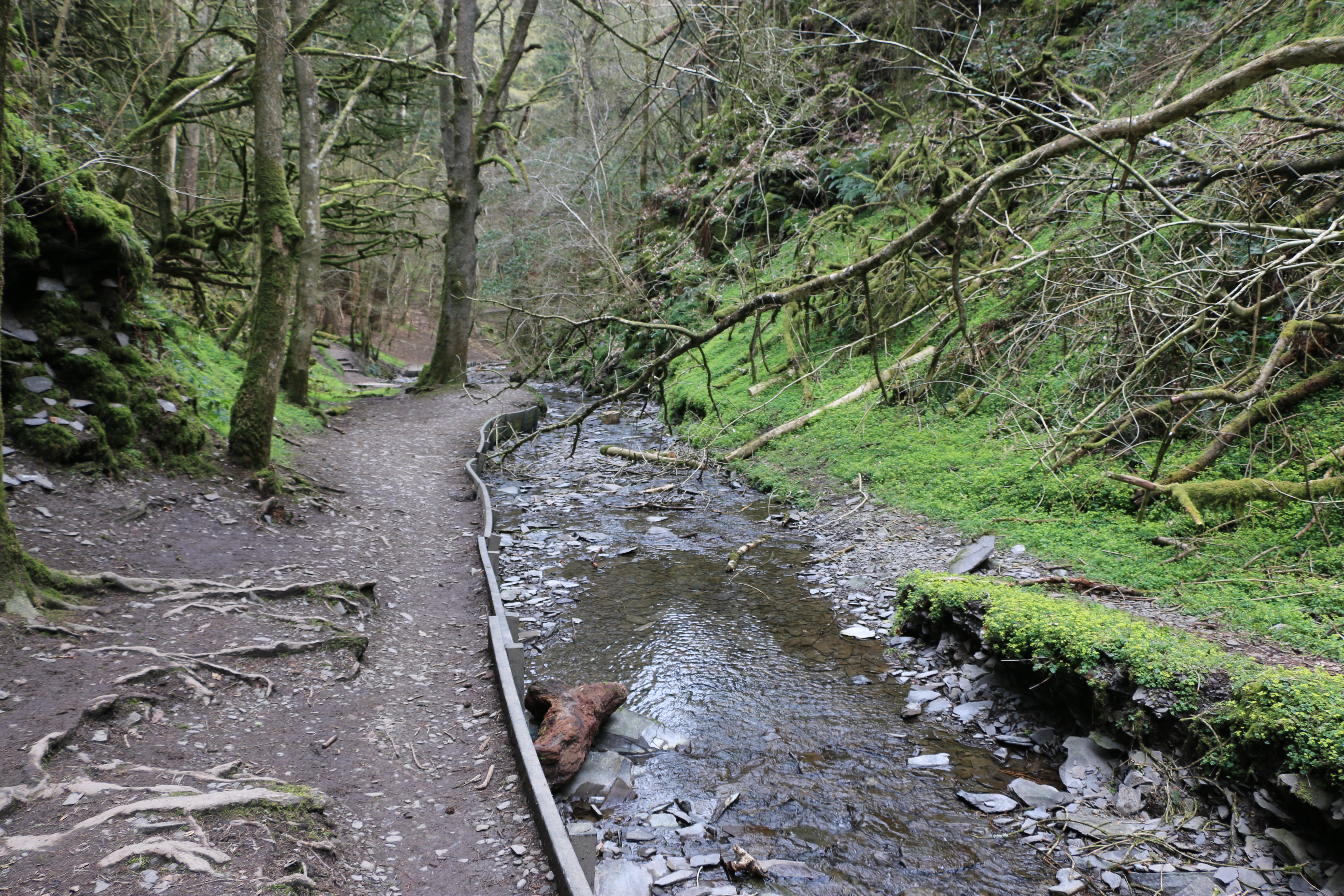
The sunny day disappeared as we walked through the short steep-sided gorge – following in the footsteps of Victorian tourist to the Water-Break-its-Neck waterfall, around a mile from the village of New Radnor ( Maesyfed – the Welsh name), in the county of Powys, Wales.

It was a spectacular sight. Yet, beyond the sound of the water it was strangely silent.

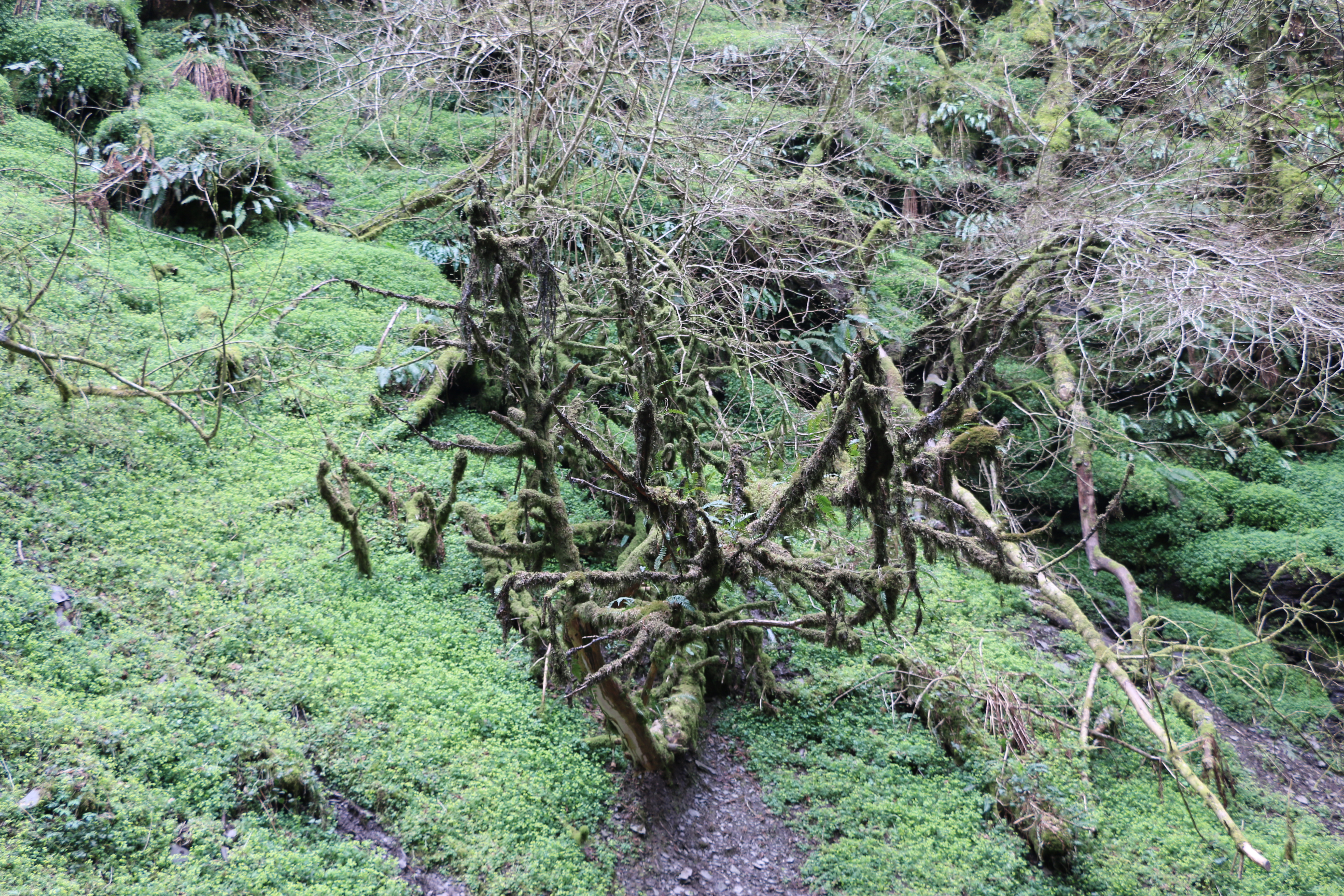
The water tumbled through the black slated rocks, a silvery mesmerising flow, to the small stream and creating a fine rainbow mist in the air. Yet there was an eerie and ephemeral feeling to the fallen, bare oak branches laced with lichen and boulders covered in dark green moss and surrounded by curtains of gently swaying ferns.

We made our way back along the narrow path. I thought we would be taking a slow ramble along the walking trails in Warren Wood – so named for the labyrinth of rabbit warrens that kept the locals fed for centuries, now dwarfed by towering beeches, oaks and conifers.

Husband had other ideas. ‘Let’s walk up the road to the top of Warren Wood,’ he said, pointing vaguely to the left as we left the path. ‘We could get some brilliant photographs.

‘How far is it?’

‘Not far.’

I’ve been caught out by “Not far”, before. Why do I always believe him?

If only I’d read the Nature reserve signage:

In the 1800s The Victorian landowners planted trees on the moorland, to provide a landscape of scenic beauty thus creating a forest, part of Radnor Forest which was once a royal hunting ground. In those days it wasn’t an area covered in trees but an unenclosed piece of land, legally set aside for the Norman kings to hunt deer. Today, Radnor Forest is a land of hill farming and moorlands, steep narrow valleys and hills, rising up to the highest point in Radnorshire, Black Mixen at 650 metres.

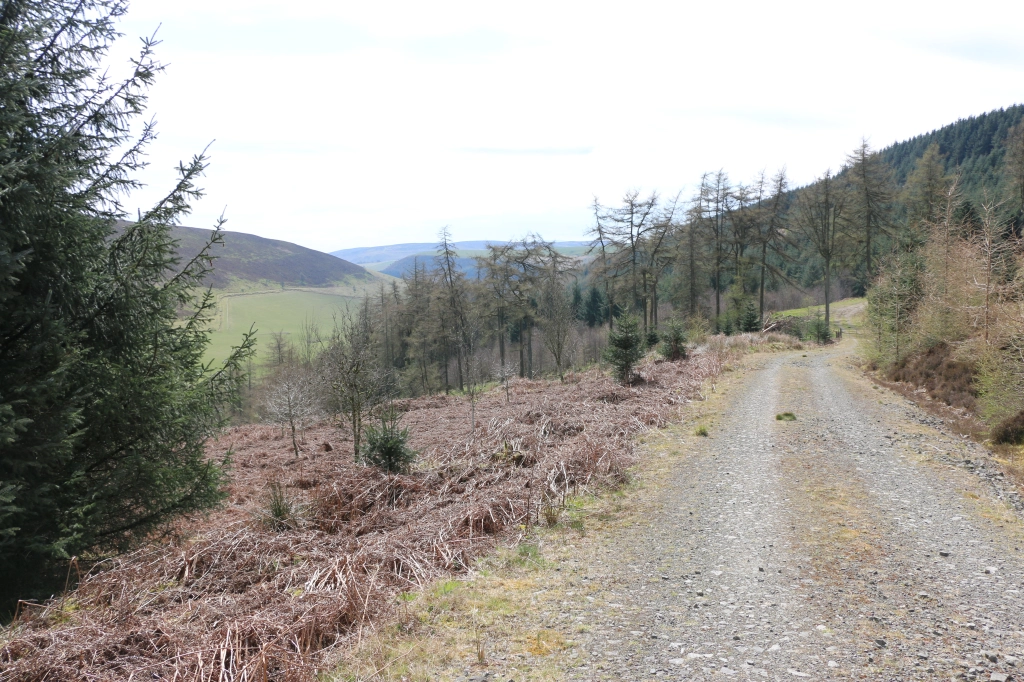
Note the words, ‘steep’, hills, and 650 metres. What we didn’t know, was that the wide concrete road in front of us was not only steep but has many twists and turns – and always upwards before it got to 650 metres.

Two and a half hours later, with stops for photographs, we reached the top… I thought. We sat on a convenient rock, drinking from our second bottle of water.

‘We could go on for a bit longer?’ Husband said.,looking around. ‘The road carries on.’

‘The proper road stops here not up there.’ I pointed to the dirt track behind us. Steep dirt track.

I’I bet we could get brilliant photos, though. I’ll go and check.’ Ten minutes later he was back. ‘Come on, it’s a fantastic view.’

We walked in silence. Well, to be honest I had no breath to use up in conversation.

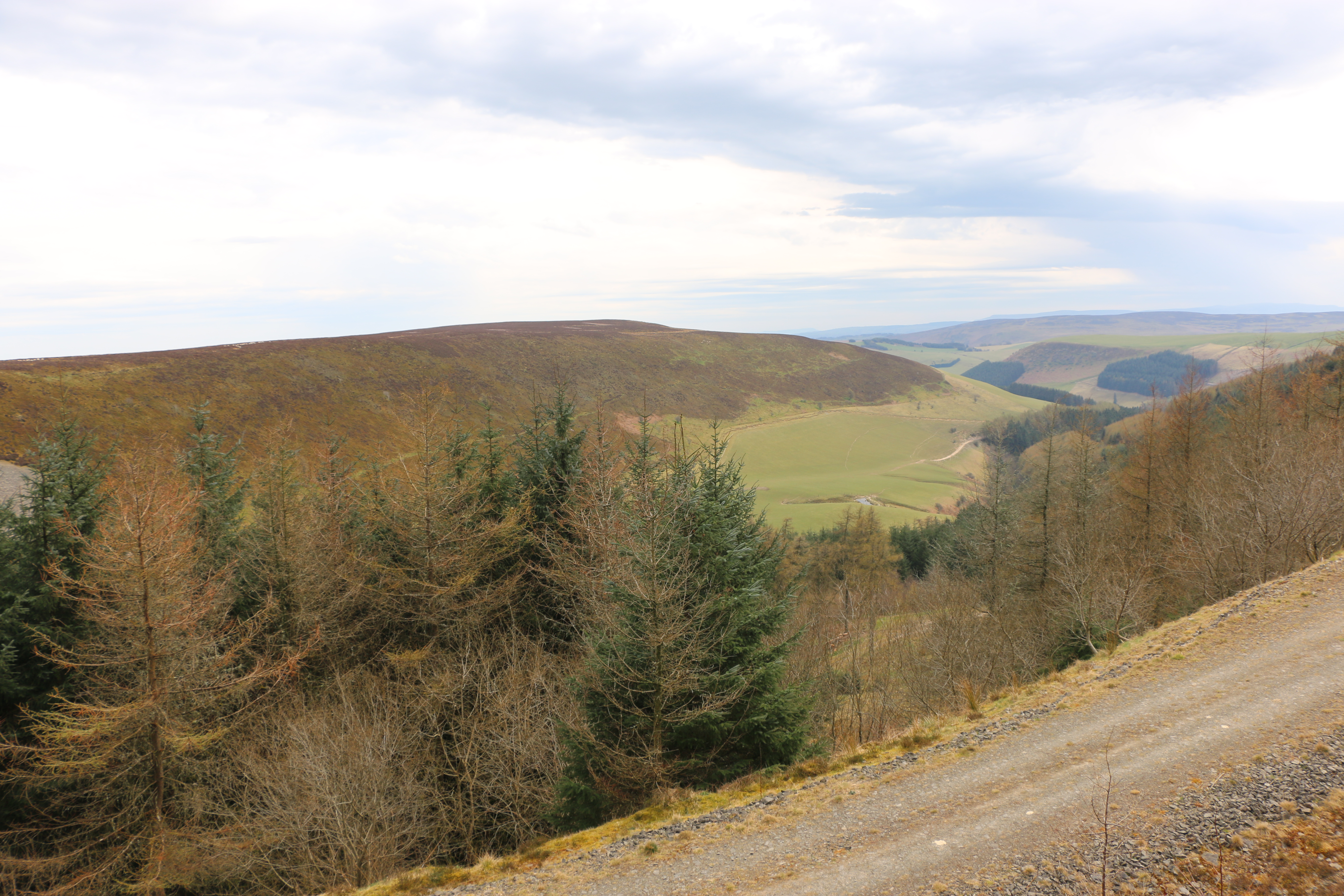
Though the views were wonderful. We could see as far away as Hereford and beyond…..

‘Ready to go back?’ Husband asked.

I didn’t think I could face that road again. ‘We could try going that way?’ I point to a gentle downward sloping track.’It looks like it’s going back to the start.’

‘It doesn’t.’

‘It does.’ I insisted.

I should,perhaps have said, before now – I have little sense of direction. We stumbled/slid down walked for over an hour with the wind whistling through the tall conifers that lined the ever-steeper, downward track. I became increasingly aware of a brooding silence, each time I said cheerfully,’It has to lead to somewhere…’ and, ‘We’re going in the right direction…’. Until we weren’t… we rounded a corner- to see the road end in a turning point for the Forestry Commission. A thick forest faced us…Hmm…

Back we went,stopping every fifty paces to catch our breath. To be fair there were only a few recriminations. Although I did hear some mutterings – which I ignored. Later,we worked out that we had walked thirteen miles – seven more than we had planned.

The following day we creaked our way rambled sedately around the fields where we were staying near Bettws Cedewain, a place in a sheltered valley on the banks of the river Bechan. around five miles from Newtown. The village grew around the crossing of the river where a church was founded by St Beuno in the sixth century. I read that the name of the village is thought to derive from the Welsh word ‘Betws’ – which means a prayer house or bead house where the number of prayers had been counted on beads by the earliest church-goers in Cedewain.

St Justinian’s to Porth Clais: Walking in the footsteps of St Justinian – or, Sometimes Scrabbling on Hands and knees #Pembrokeshire #Wales #walking #photos #memories

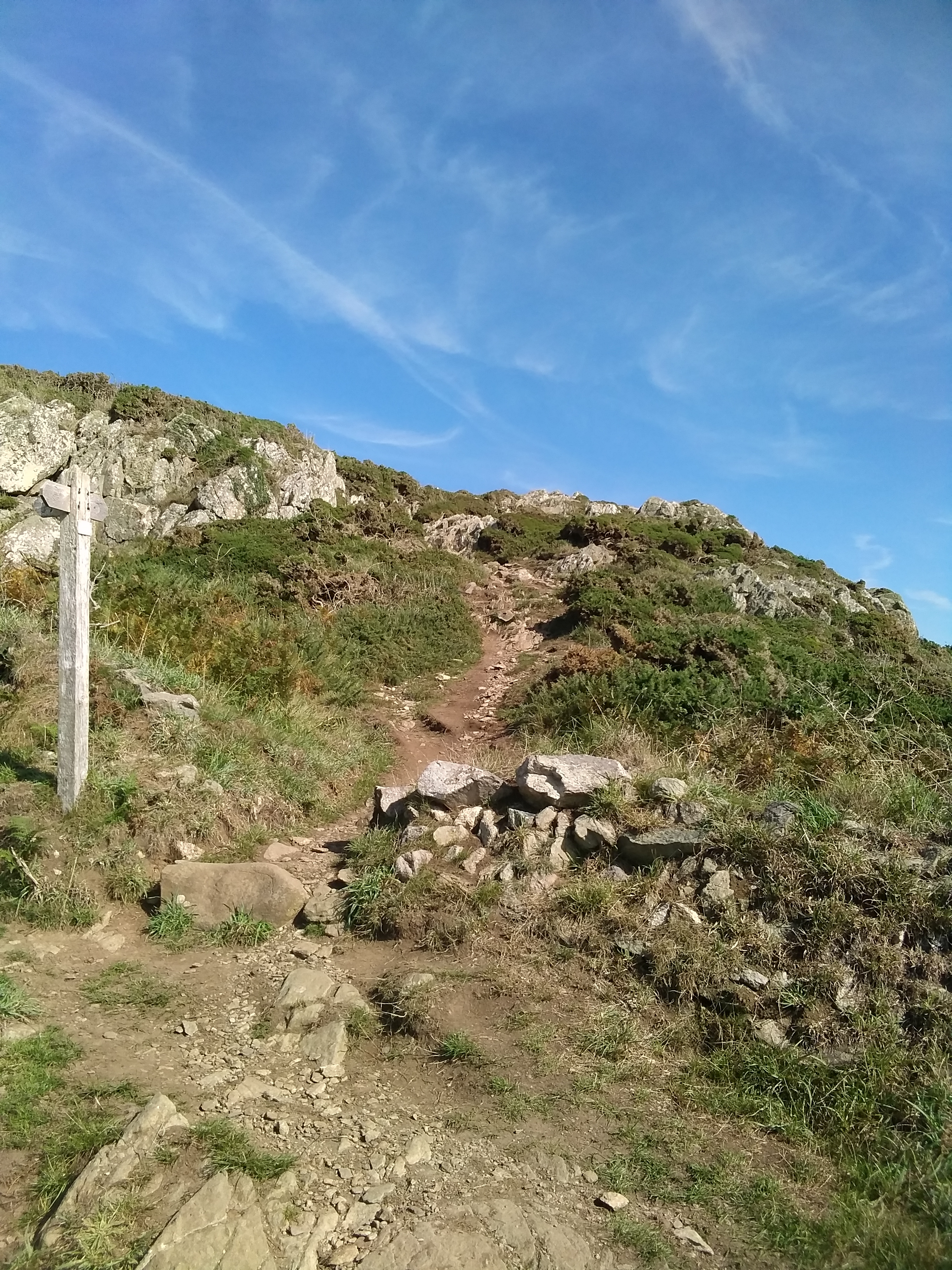
Literally on hands and knees

But it was worth it

This image has an empty alt attribute; its file name is img_0260.jpg
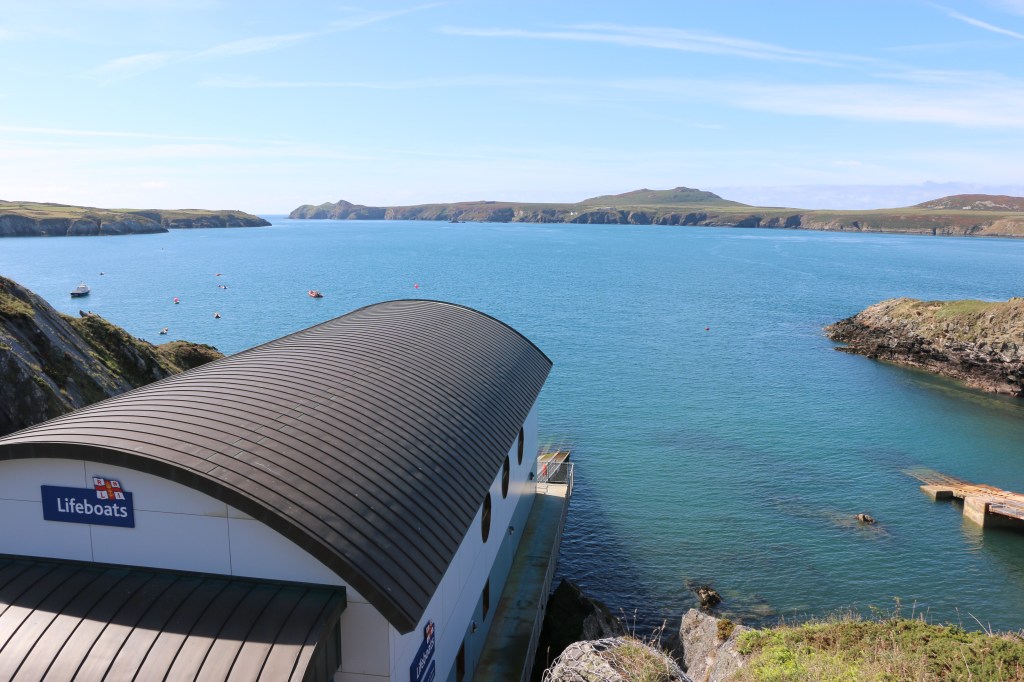
The new-ish Lifeboat Station
This image has an empty alt attribute; its file name is img_0261.jpg

And then wonderful views overlooking Ramsey Island

This image has an empty alt attribute; its file name is img_0264.jpg
This image has an empty alt attribute; its file name is img_0265.jpg

Just to prove I was there!!
This image has an empty alt attribute; its file name is img_0262.jpg
This image has an empty alt attribute; its file name is img_0284.jpg

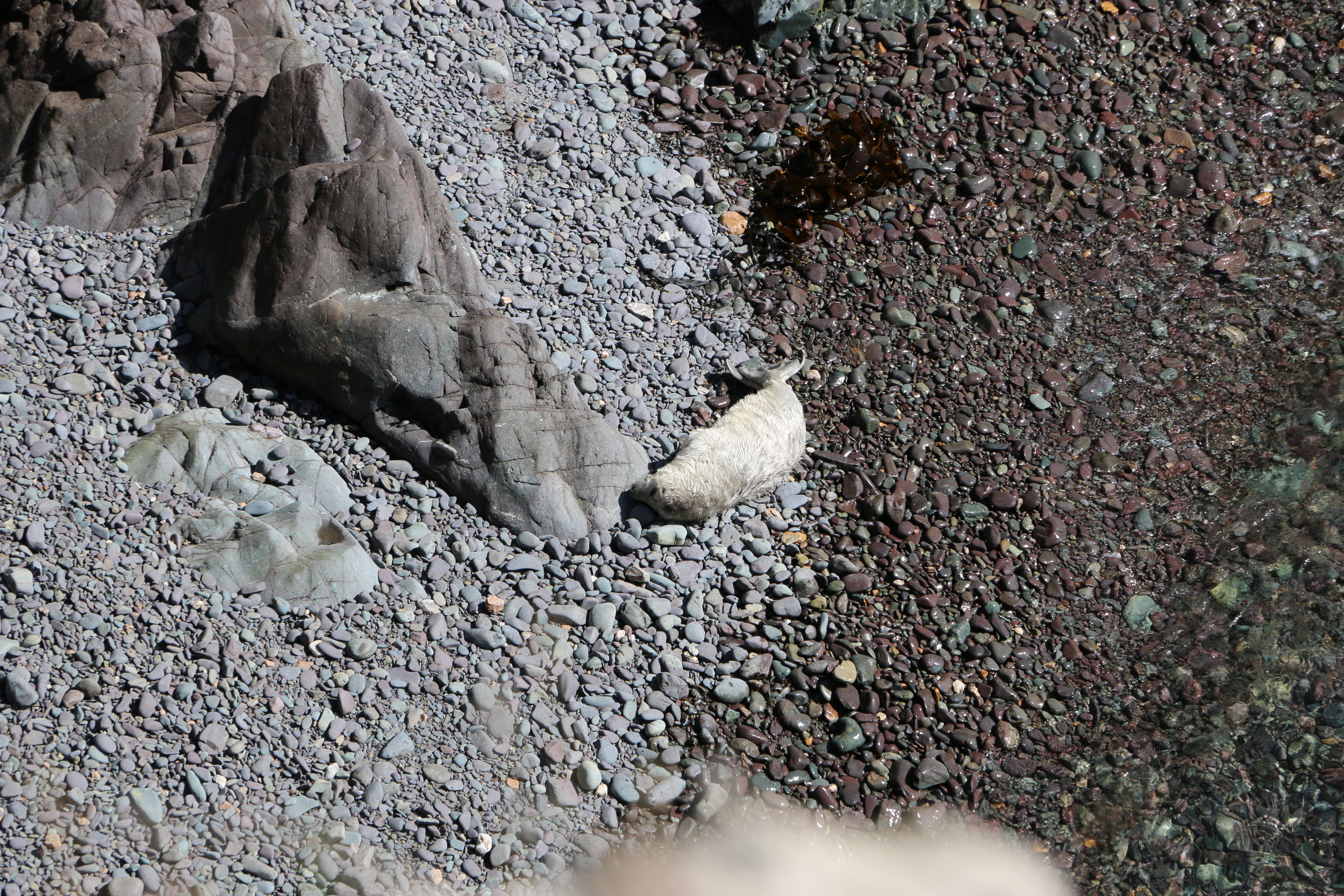
And look who we saw! (from a great distance)

This image has an empty alt attribute; its file name is img_0277.jpg
Seal pups and their mums
This image has an empty alt attribute; its file name is img_0267.jpg

So… who was St Justinian?

Justinian was born in Brittany in the 6th century. At some point in his life, he made his way to Wales, where he settled on Ramsey Island.

Justinian soon became close friends with St David, the patron saint of Wales, and visited him often in the monastery where the cathedral now stands.

He was less impressed however by the lax behaviour of some of the monks and decided to isolate himself on Ramsey island. According to legend, he took an axe and chopped up the land bridge that linked the island and the mainland. As he worked, the axe became blunter and the lumps of rock remaining became larger and larger. They are still visible today in Ramsey Sound, where the waters foam over them at high tide. Followers joined him on the island but his actions didn’t go down well with everyone though. They soon turned them against him and they beheaded him!

To the astonishment of his killers,he picked up his head and walked across the sea to the mainland, and where he set his head down, another spring of water issued forth. This is the one enclosed today by a stone canopy.

A spring of water gushed up from the ground where his head first fell and this became the famous healing well.

Justinian was buried where the chapel now stands. Within its walls are some stone footings, which may mark his original gravesite. His body was removed to the cathedral, probably at some time before the end of the 15th century.

During the early medieval period, two chapels were built on Ramsey. One was dedicated to St Tyfanog; the other to St Justinian. There is no trace of either building today, though their sites are known.