The last part of our hike walk was along the Fisherman’s Walk,following the course of the Afon Glaslyn, a sixteen mile sea trout river whose source is a lake in a valley on the edge of Snowdon,and eventually runs into Tremadog Bay near Porthmadog.
We’d rewarded ourselves with a fabulously tasty but light meal in a bistro in Beddgelert and a wander around for an hour or so, before tackling the last part of the walk. After refilling our water bottles we strolled along a paved footpath along the riverside. This will be a doddle, I thought, watching the Photographer indulge in a few photos shots. A nice, calm, wide river.
Further on we crossed a footbridge beside the railway bridge and went through two kissing gates that crossed the railway line (still no sign of the elusive steam engine – to his disappointment and my relief at that point – after the day we’d had I didn’t fancy being run over by a steam train!).
But I wasn’t prepared for what was around the corner…
Glorious though the river was, it had rained quite a lot in the previous few weeks. Now Afon Glaslyn flowed swiftly over rocks and gulleys. And the path is made up of slabs, rocks and, sometimes an indiscernible way forward. I think the only thing I said in the next hour was … “Where’s the path gone?”
See what I mean?
This section was especially challenging – note the handholds hammered into the rock face so we could swing around the corner of the rock on the narrow path … er … stone slabs above the churning Afon Glaslyn.
One last scramble over rocks before we reached the relatively safer gravel path
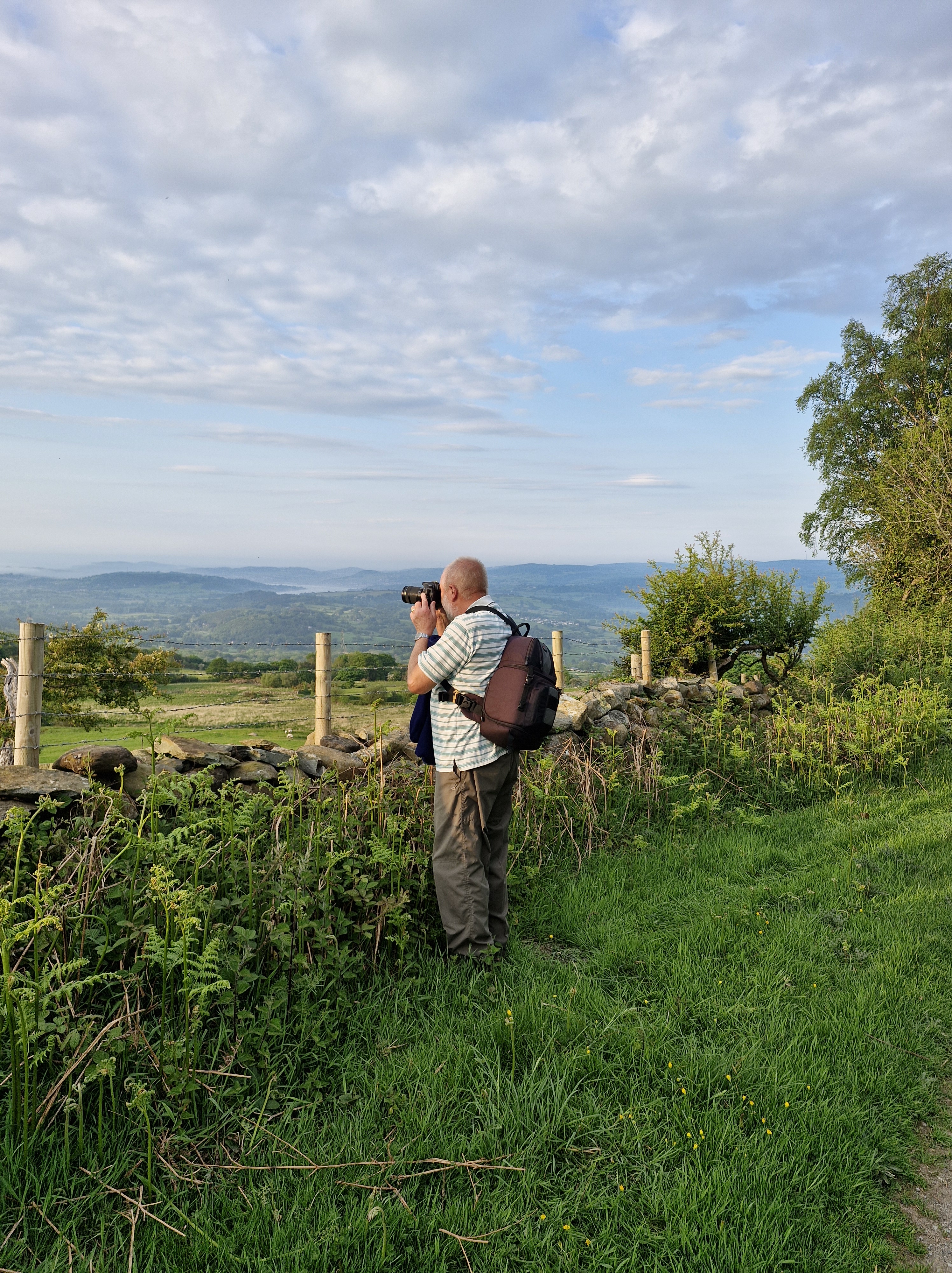
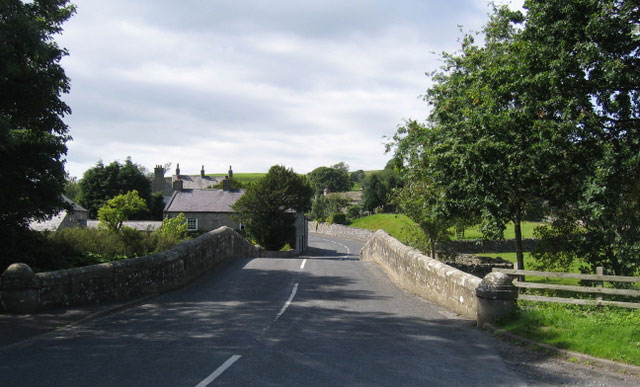
And back onto the bridge that we’d stood on at the beginning of the day. And a chance for a last photograph.
And … a welcome sight … back to the cosy farm cottage in Nantmor, where we were staying for the week. Ready for an evening of quiet editing of my next book – The Stranger in my House
Nantmor is famous for being the filming location of the 1958 film, Inn of the Sixth Happiness starring Ingrid Bergman and Robert Donat. The film was based on the true story of Gladys Aylward,a British nurse who became a missionary in China in the unsettled years leading up to the Second World War. Nantmor doubled as China and people from the Chinese communities in Liverpool were brought in as extras for filming.
I found an interesting article on the history and repairs of the Popular Fisherman’s path in Beddgelert when ” After winter storms and high river levels washed away a 100m section of the Fisherman’s path, the Welsh Highland Railway swapped its cargo of tourists for stone, reverting to its original purpose for a day. Repaired, thanks to special delivery by Welsh Highland Railway.” Published: 20 February 2023: https://tinyurl.com/32md9b3f
From the lookout point we could see Beddgelert – now only two miles away. All down hill. Very downhill!
The village is in the Snowdonia area of Gwynedd, Wales.It’s thought that it’s possibly named after an early Christian missionary called Cilert who settled there to become the leader in the eigth century. The earliest record of the name Beddgelert appears on a document dated 1258( recorded as Bekelert). The local Welsh dialect often shortens the name of the village to Begél.
It didn’t look very much closer through binoculars, to be honest.
Zig-zagging down the steep hillside to reach Beddgelert, and then through the magnificent Aberglaslyn Pass and on to Porthmadog, is the Welsh Highland Railway, the UK’s longest heritage railway. These trains are the world’s most powerful narrow gauge steam locomotives, and run for twenty-five miles from Caernarfon to Porthmadog. They climb from sea level to over six hundred and fifty feet below Snowdon, before descending to Beddgelert.On numerous walks we heard the ‘toot-toot’ of the train. Many times we waited for it to come into view … until we realised the sound echoed all around the mountains … and it was always miles away from where we eagerly anticipated (well, one of us did!) a “great photo opportunity”.
One of the most sought after/ looked for attraction – from a tourist point of view – is the raised mound in the village, called “Gelert’s Grave” and the statue of the faithful hound. The folk tale is synonymous with Beddgelert. By the way, the ‘hill’ (as the photographer first described it to me) in the background is Bryn Ddu mountain – the one we’d just scambled down.
But the grave was actually built by the late 18th-century landlord of the Goat Hotel, David Pritchard, who created it in order to encourage tourism.
We called in to have a wander around the local church, the Church of St. Mary stands at the end of Stryd yr Eglwys (Church Street). Parts of the building date from the 12th century; the chapel section being originally a part of an Augustinian Monastery. the rest the of the monastery was destroyed by fire during Edward I’s war of conquest. It really is a lovely peaceful church. And welcoming, as the following shows …
The village is also linked with the Rupert Bear stories.
Alfred Bestall wrote and illustrated some of the stories whilst he lived in the village, in a cottage at the foot of the Mynydd Sygun ( Sygun Mountain). There is even a small area known as ‘Rupert Garden’ in the village, dedicated to the Bear; a short walk from Alfred Bestall’s old home.
Lying in the heart of Snowdonia, Beddgelert is small, and a beautiful conservation village in the heart of the National Park, nestled below mountains at the confluence of the Glaslyn and Colwyn rivers. The path alongside the Glaslyn river was the last section of our walk back to Nantmoor. The path sounds so innocuous doesn’t it? Especially when it’s called the Fisherman’s Path – images of quiet contemplation, the swish of fishing rods, the ripple of water…
‘It’s the longest walk we’ll do,’ said the Photographer, ‘But it’s such a glorious day, and we’ll get some gorgeous views. Better take the walking poles as well.’
I know. I know… ‘walking poles’ should have been the clue!
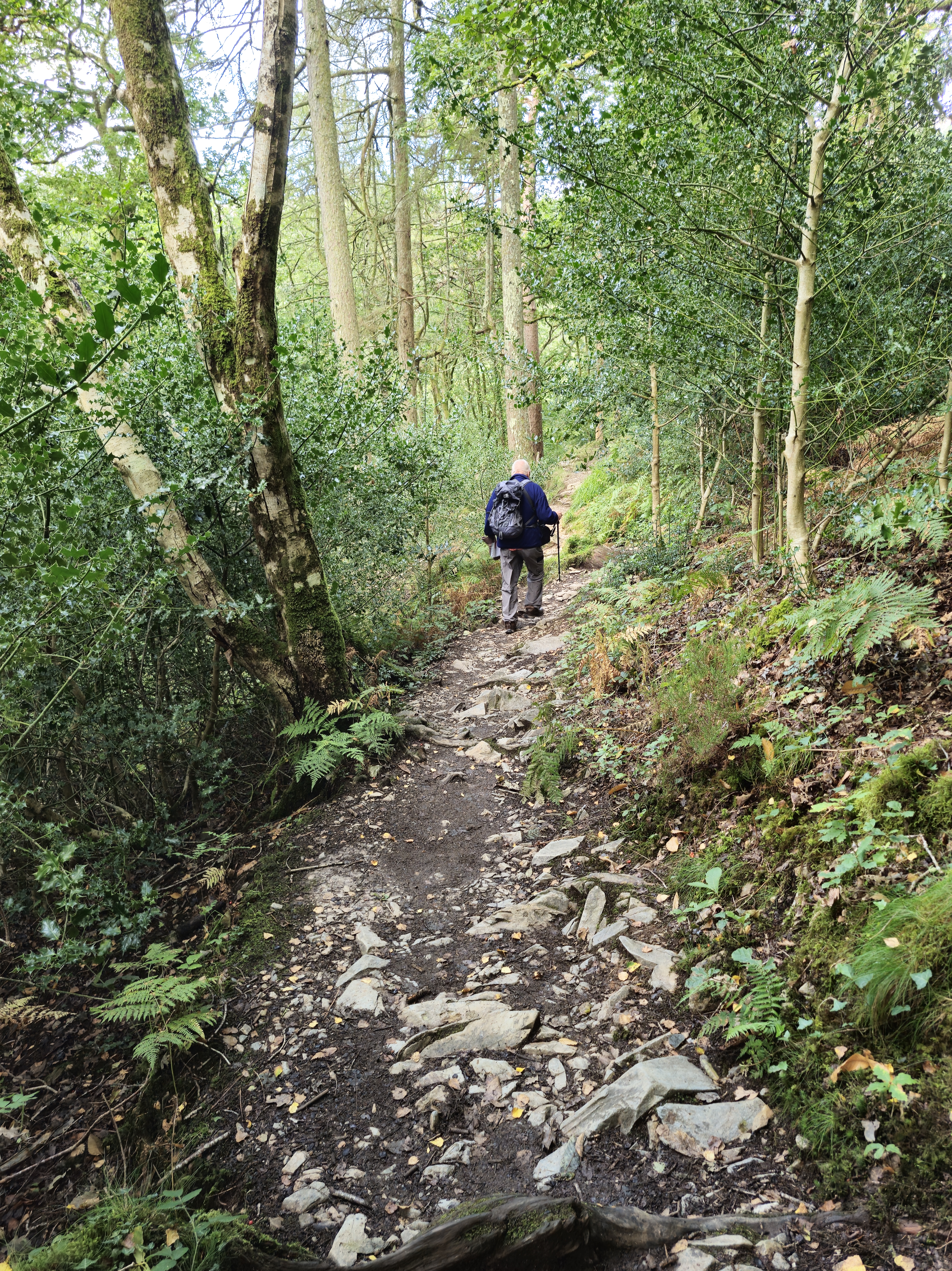
It was a gentle, if somewhat a rocky start to the walk through the woods.
And then the Afon Glaslyn (Glaslyn River) came into view. ‘We come back to here along the river bank,’ the Photographer said.
‘Oh, lovely, said I!’ And meant it… then
We went through the kissing gate, over the road bridge, turned left on the road, until we saw aNational Trust sign for Coed Aberglaslyn (Aberglaslyn Trees) and followed the footpath towards the stream.
So far so good. “Follow the waymarkers up through the woods”.But the waymarkers had long since disappeared. And here I need to say, the following was completely my fault. “Follow the path to the stream”, the directions read. So I did. But you would think, after all these years, the Photographer would know I have no sense of direction.
And here is the stream.
“Turn right,” the directions read. Across the stream? Which was flowing fast and deep. We read, and re-read the directions. We searched for a path.
For half an hour.
Suddenly we were joined by a couple. ‘We have the O.S.map on our mobiles,’ the man announced. ‘We know the way. You can follow us.’
So we did…
For almost an hour we followed them, clambering over boulders, up along boggy paths (sheep trails, they turned out to be), splashed through water, until we reached the top of the hill. To discover it wasn’t the top of the hill. Whereupon the woman turned to us and cheerfully said, ‘We’re not very good at orienteering. I think we’ve gone wrong.’
We went our separate ways. We slipped, negotiated the boulders, slithered through mud, back to the stream.And then back to the bridge. And there we found a waymarker – hanging off a post, pointing to the ground. We looked around – and there, going up through the wood were long narrow indents in the ground… steps!!Of a sort.
‘It says in the directions there should be a stile at the top. Chance it?’ the Photographer asked. ‘Or would you rather give up?’
A stile!! Buthis words sounded suspiciously like a challenge. I’ve never been able to resist a challenge…
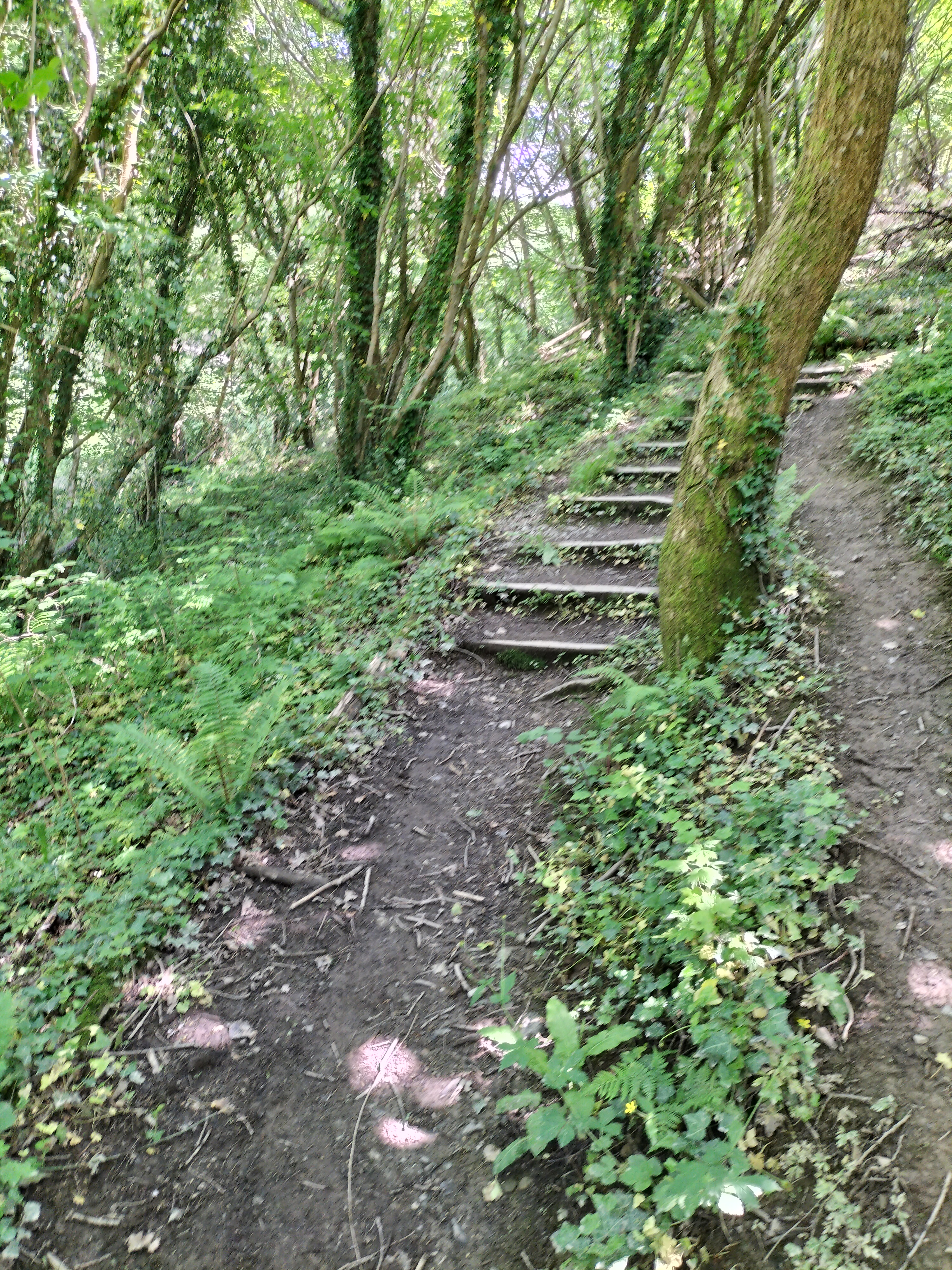
We tackled the way up the hill, winding through the trees. It turned out there were just over a hundred of the so-called steps, which necessitated hanging onto trees and hauling ourselves up branch by branch – or hauling one another up – in places. We had lots of stops for breath. And we needed those walking poles.
Until we were actually on Bryn Ddu. The halfway point to Beddgelert. Finally we were on the right track.
We stopped for a few photographs.
Before setting off again to search out the base of a tower, built on a prominent outcrop at a viewpoint overlooking Aberglaslyn Pass. The whole structure is built on a stone plinth which forms a narrow terrace around the tower. Thought to be a wartime lookout post.
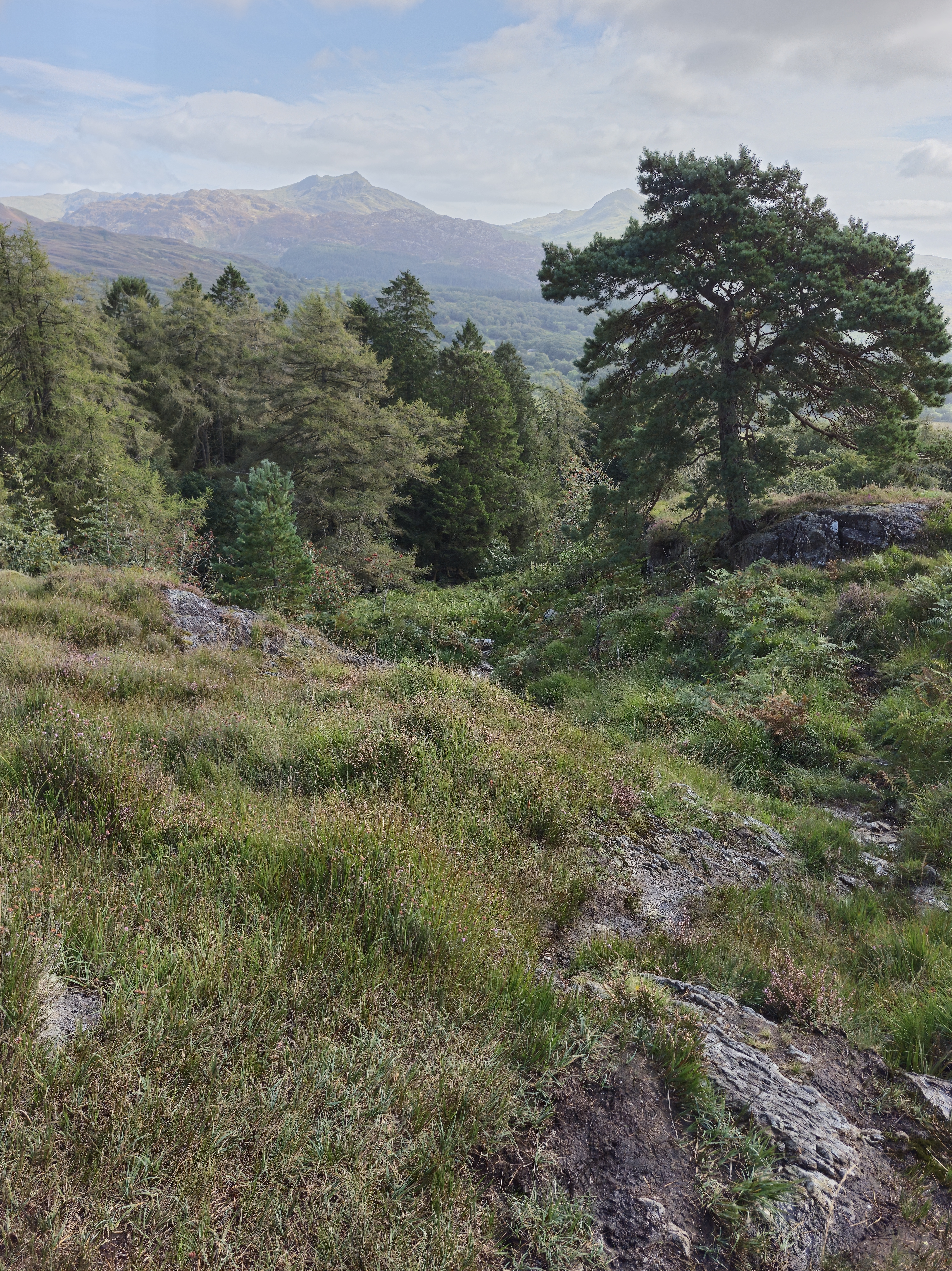
From the lookout point we could see Beddgelert … in the distance. And the narrow trail winding its way down the hill. We stopped for much needed refreshments, and to catch our breath before tackling the next half of the walk.
Seeing the cover of the next new book revealed is always a thrill for any author, so I am elated to be able to finally show the cover of The Stranger in My House.
A gripping ‘cuckoo in the nest’ domestic thriller
After the death of their mum, twins Chloe and Charlie are shocked when their dad introduces Lynne as their ‘new mummy’. Lynne, a district nurse, is trusted in the community, but the twins can see her kind smile doesn’t meet her eyes. In the months that follow they suffer the torment Lynne brings to their house as she stops at nothing in her need to be in control.
Betrayed, separated and alone, the twins struggle to build new lives as adults, but will they find happiness or repeat past mistakes? Will they discover Lynne’s secret plans for their father? Will they find each other in time?
The Stranger in My House is a gripping ‘cuckoo in the nest’ domestic thriller, exploring how coercive control can tear a family apart. Set in Yorkshire and Cardiff, from the 60s to the winter of discontent, The Stranger in My House dramatises both the cruelty and the love families hide behind closed doors.
This cover reveal after a glorious day wandering walking around the Ty Canol National Nature Reserve with the friendly Pembrokeshire U3A Natural History Group.
Ty Canol is the largest block of ancient woodland in West Wales. It’s wonderfully peaceful, an atmospheric mix of ancient oak woodland and pasture, set against the backdrop of the magnificent Preseli Mountains of northern Pembrokeshire.
To the north is Hagr y Coed (translation – ‘Ugly Wood’), an area of wet sessile oak, ash, and birch woodland. South is Carnedd Meibion Owen (translation – the Cairn of Owen’s Sons), so named because of the cairns that rise from the rocky outcrop.
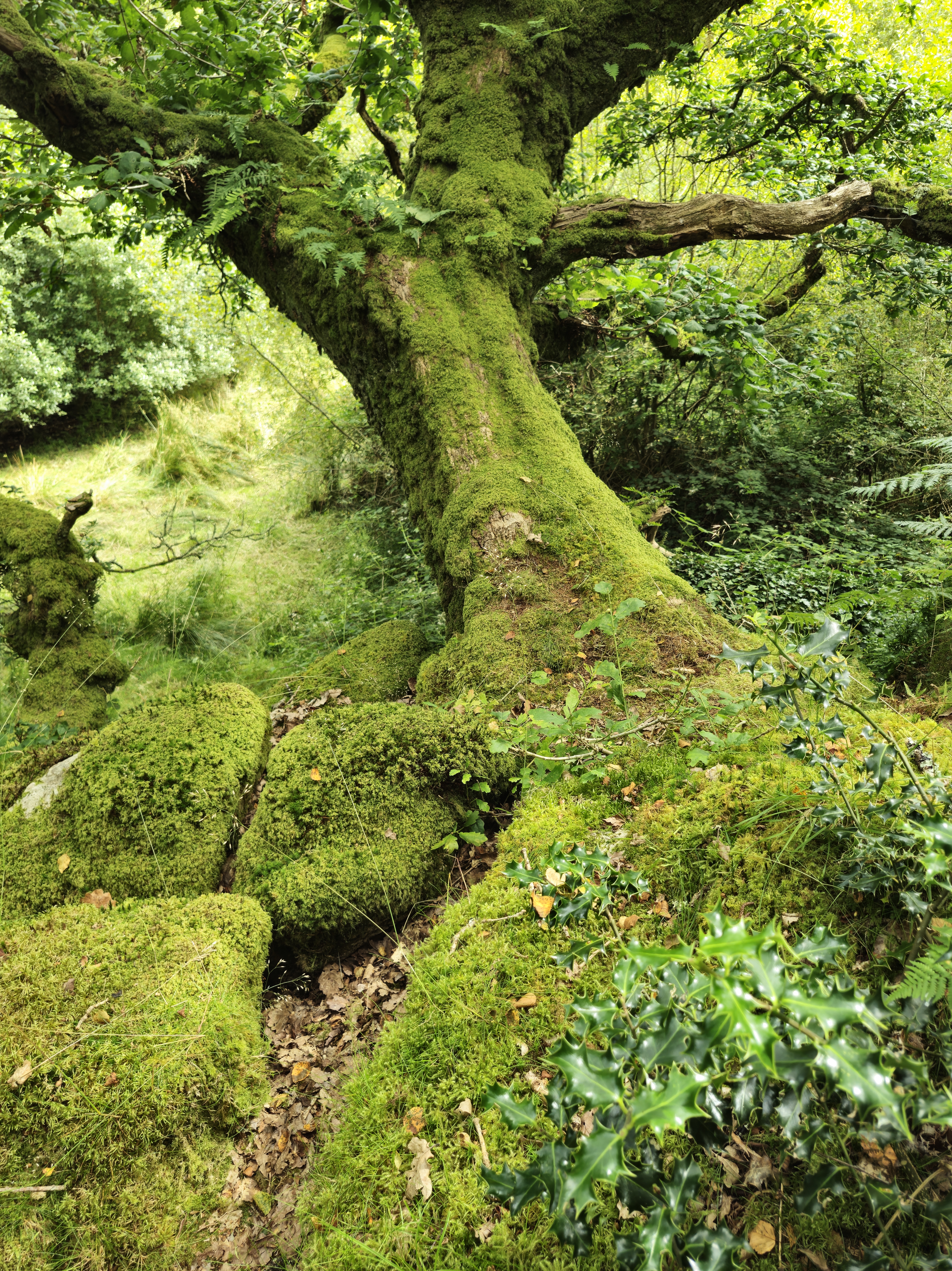
Many of the trees are covered by epiphyte ferns and lichen, many of the latter are extremely rare.
These are not parasitic on the supporting fallen and bent branches, they grow on them only for the support they give. Apparently there are over four hundred varieties of lichen in these woods. They thrive, both because farm animals are allowed to graze in parts of the area, and because oak trees are culled in others, thus creating areas that let in the light: ideal for the plethora of light-loving lichens
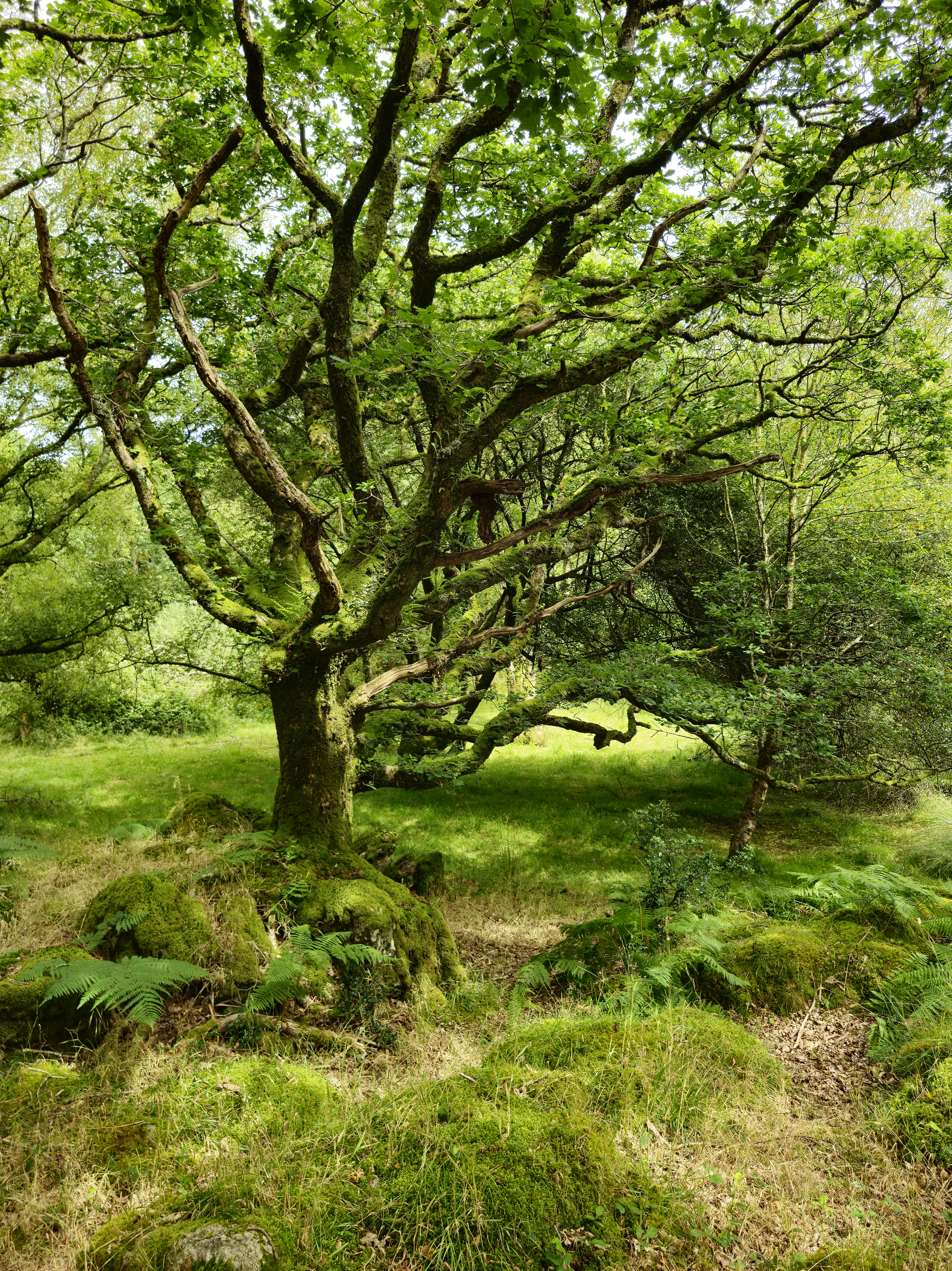
I almost expected Frodo Baggins to pop out from behind one of the twisted oaks. Ty Canol,purported to be over six thousand years old, really is a fantastical place
Ty Canol, managed by Natural Resources Wales (NRW) together with the Pembrokeshire Coast National Park Authority is part of an area famous for its achaeological sites.
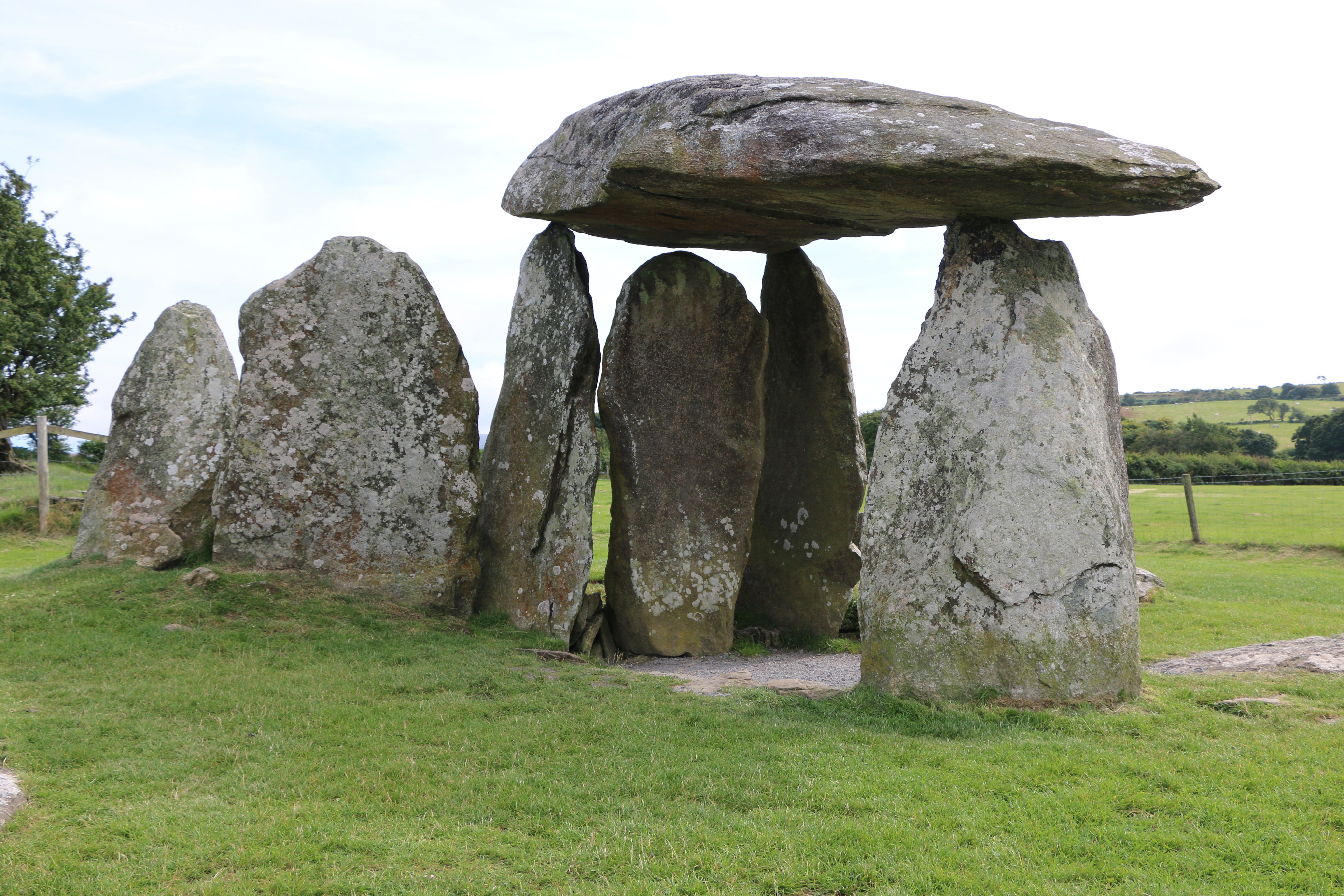
Ty Canol is the backdrop for Pentre Ifan, the famous Neolithic Chambered Dolmen that is thought to date from 3,500 BC.
This is a Cromlech or a Dolmen, typically built with several large upright stones and a cap stone on top. At the time it would have been an inderground tomb, covered by a mound of earth, but today, all the stones are exposed.
Having detoured to take a last look at Pentre Ifan we made our way back home by the scenic routeof Mynydd Preseli, passing Cerrig Lladron .
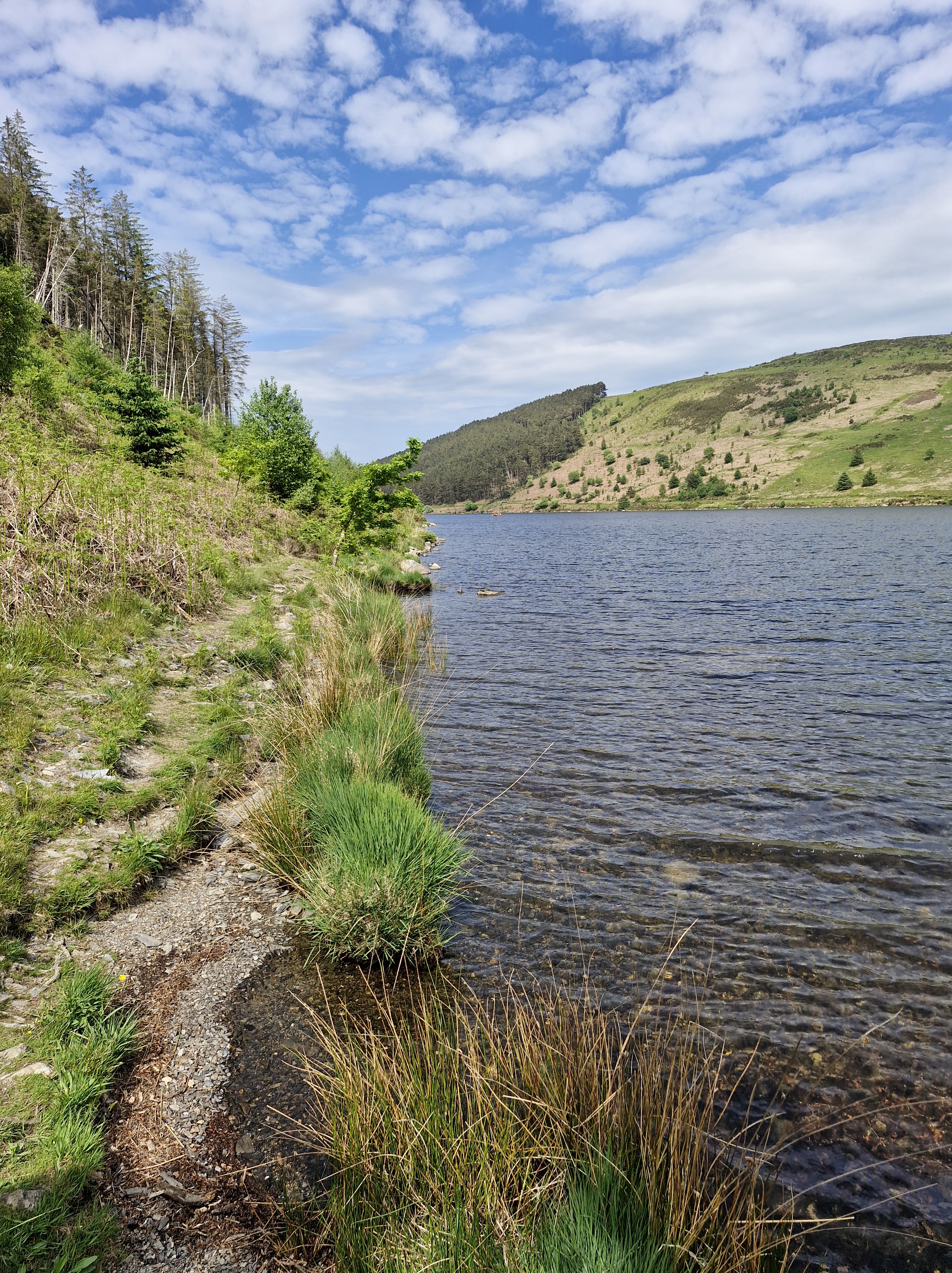
Llyn Crafnant and LlynGeirionydd are separated by the forested slopes of Mynydd Deulyn (Mountain of the Two Lakes) and lie within wonderfully scenic valleys where the Gwydyr forest meets the lower slopes of the Carneddau mountains in Conwy.”The lakes are about a mile apart,” said the photographer casually. “The walk’s about five miles.” What actually happened was that we took the circular route which covers a distance of eight miles and involved some steep climbing.
But, at this point I have to say that wasn’t his fault. We ended up – or should I say – started off walking in the opposite way to the route in the book, having parked in the car park nearLlynGeirionydd, instead of the one near Llyn Crafnant.
This was due to the fact that, at one point, the SatNav took us in the wrong direction. It’s always the SatNavs fault, you know; we once got stuck on a very narrow dirt farm track faced with a sign that joyfully said in large red writing, ” Use your eyes, the SatNav lies”. I think I might have said that before, it’s something I bear in mind when sitting by a certain irate driver having to turn back on a journey.
Anyway, I thought, it’ll be alright; we’ll just read the directions backwards.
I waited on the edge of the grass while the photographer took his first photo of Llyn Geirionydd.
Gwydir Forest is named after the Gwydir River, which takes its name from the ancient Gwydir Estate, established by the John Wynn family of Gwydir Castle, who owned this area (Gwydir is translated as River with Red Banks) The land here was once dominated by lead and zinc mines. Some of the mines have been partially restored and made safe for visitors, but we didn’t visit; our sights were set on getting to Llyn Crafnant Though we did pass an old restored engine-house, and also the waste tips, now left to be naturally covered over.
The First World War had highlighted a shortage in wood production and the forest was stripped bare at the time because many of the early forestry workers, former employees in the forest’s mines, had no experience of forestry. This caused the 1919 Forestry Act to be passed and Gwydir Forest was acquired from Lord Ancaster by the Forestry Commission in 1921.
Most of the original plantations have now been felled and replanted as part of the forestry cycle. We passed quite a few places where this was happening.
The majority of the forest is conifer such as Japanese larch, Norway spruce and Scots pine but apparently, over the last two decades there has been more Welsh Oak, ash and beech planted to give a more varied and softer outline to the forest
“When we get to the top of this track, there’s a little bit of a short climb and the track narrows a bit,” said the Photographer over his shoulder as I puffed and panted behind him. ” Don’t worry, it’ll be so worth it for the view.’
The track did narrow a bit indeed. As the directions said, ‘…into a steep narrow footpath, less than forty centimetres wide (that’s about sixteen inches in old money) in some places, on an unmade and uneven surface, where you can expect mud, rocks and tree roots.‘. The embarrassing thing is, just as I was wobbling leaping gazelle-like from rock to another a young couple (stressing young here!) ran past… with a dog … very quickly.And they even had the breath to wish us a cheerful “good morning.”
Every now and then we caught glimpses of the view. Went past a stile. Down a wider path. Through a gate. Saw the obligatory cow. And then…
The Photographer got his first proper shot of Llyn Crafnant on the northern edge of the Gwydir Forest.
And then lots more. It really is a glorious place
One last look and we walked away from Llyn Crafnant …
Following the arrows we crossed over the road into a small wooded area. And there the arrows stopped. We looked around: there was a stile in the far corner, but it was broken, covered in brambles and branches and looked unused. On the other side of the clearing there was a broad track. After some discussion we chose the track. (later realising we should have tackled the stile).
After an hour of walking up the never-ending road we stopped for breath, and for the Photographer to revell in the scenery and take many photos of the craggy slopes of Mynydd Deulyn.
And for me to have a rest. It wasn’t until we got back to the car that I realised I had somehow managed to take the attractive shot below whilst I was rummaging in my rucksack for the fourth, and last, bottle of water. Naming no names, but someone dared me to include this in the post – and I’m never one to pass on a dare. Which is probably the reason I find myself on these hikes walks.
Another hour of uphill, round a bend, and the road began to descend, until we were …
Back to the start…
I’m often asked what do I think about when I’m walking and with not enough breath to talk. I must say not having enough breath to talk isn’t something that often happens to me. But usually I’m taking in what’s all around us. We walk in so many diifferent kinds of places, so I just soak up the sights and the sounds whether in the country or in more urban areas.
But there are times when I’m thinking how to describe what I’m seeing, wondering if it will fit into a scene in the book I’m currently working on – or intend to work on. Sometimes it will, sometimes it won’t. It’s usually the latter, but that’s okay. And if I can keep it in mind for when we next stop for the Photographer to capture the scenary, I’ll make notes.
And I remembered that moment, that feeling of almost sinister atmosphere when I wrote one of the scenes in Sisters.
“‘Whoops! Watch your step, Miss Clumsy.’ Said in a jokey manner, it still manages to imply the familiar censure. ‘If it wasn’t for me always looking out for you, I don’t know what you’d do.’ He laughs. ‘Probably kill yourself, one of these days.’ He pulls her close, turns her so they are facing the lake, standing on the edge of the steep banking. The sun is sinking lower in the sky, the black shadows of the trees lengthen, their reflection stretch and waver over the lake, the water rendered blood-red.“
Book Description:
An accident and a terrible lie by sixteen-year-old Angie tears her family apart and her younger sister, Lisa, being sent away. They don’t speak for thirteen years, until their mother’s death brings them together. Lisa quickly realises her sister is trapped in a dangerous marriage.
What does Lisa owe to the family that betrayed her? And if she tries to help, will she make things more dangerous for them all?
A powerful story of domestic violence, courage and forgiveness.
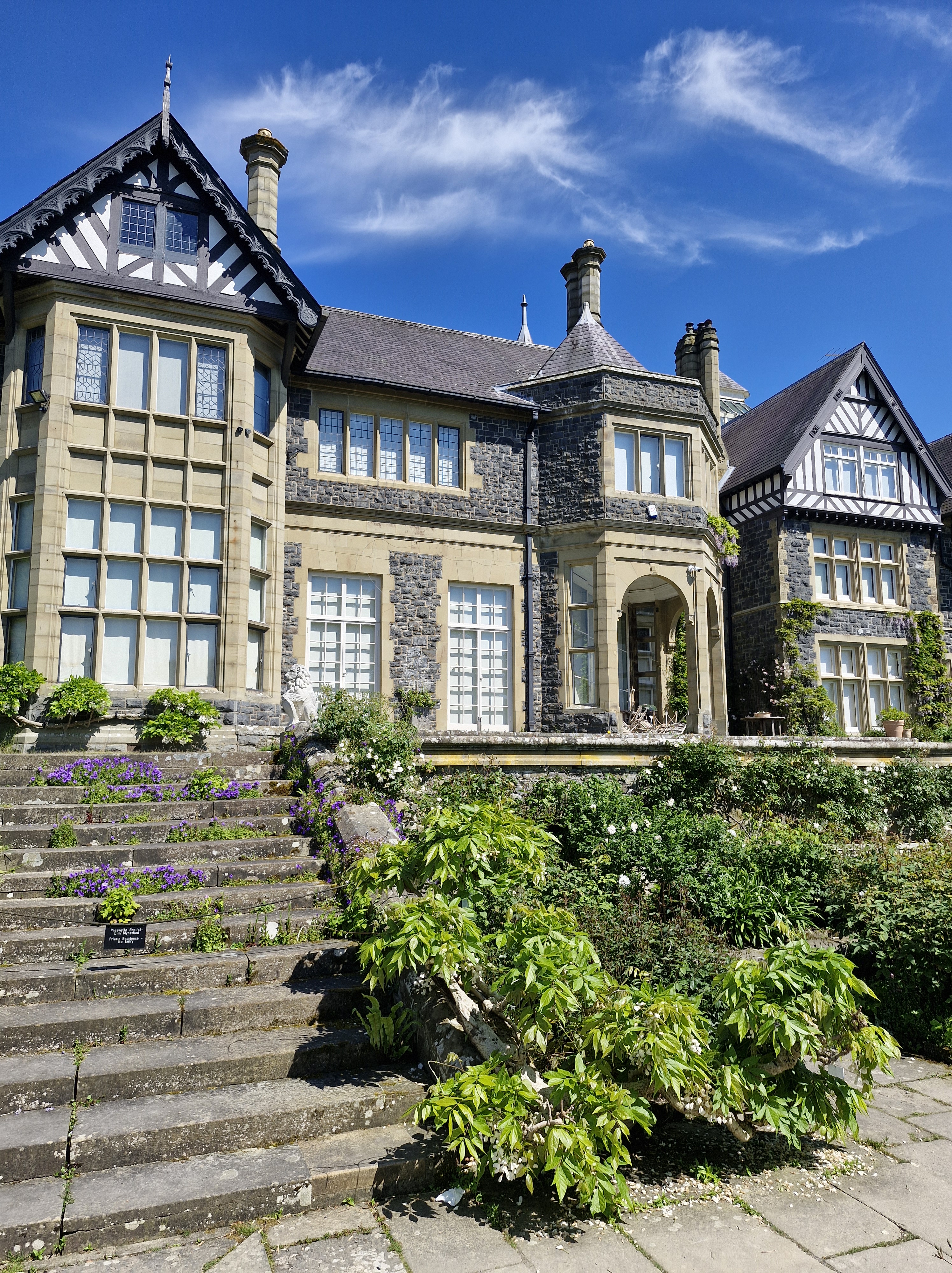
Our one leisurely day: Bodnant Gardens, which nestles in the Snowdonian foothills of North Wales, near Conwy. On a hot and sunny day it took us seven hours to walk around and savour the horticultural delights of the gardens and admire the buildings.
Bodnant (Welsh for ‘dwelling by a stream’) was home to the Lloyd family from the reign of James I until the mid 1700s when it passed to the Forbes family. The parkland was designed into the style of an English landscape, and the earlier house was replaced by an Italianate mansion in 1792, courtesy of Colonel Forbes. On his death in 1820 the estate passed to William Hanmer of Bettisfield Park in Flintshire who extended the garden around the mansion house between 1828 and 1837. In 1874 the estate was bought by Henry Davis Pochin, Victorian industrialist, and his wife. There’s an interesting post on the people of Bodnant here.
2024 marks seventy-five years since Bodnant Garden was gifted to the National Trust by Henry McLaren, The 2nd Lord Aberconway.
Our first glimpse of the gardens was through the wonderful and reknowned Laburnum Arch, a fifty-five metre-long avenue of golden flowers. It was created in Victorian times by Henry Davis Pochin in 1880. He employed Edward Milner, apprentice to Joseph Paxton (landscape gardener, designer of hothouses, and the architect of the Crystal Palace for the Great Exhibition of 1851 in London), to help design the formal garden around Bodnant Hall, including the Laburnum Arch, based on pergola walkways of the 16th and 17th centuries. It is believed to be the longest and oldest in Britain.
Rhododendrons are wild shrubs native to South-East Asia. They were first introduced to Bodnant Garden around 1900, many grown from original seed collected on expeditions in central China, sponsored by Bodnant’s owner, Henry Duncan McLaren the second Lord Aberconway). The plants flourished,producing some of the largest shrubs in the western hemisphere. Then some were hybridised to create varieties that were more compact, more richly coloured,with a longer flowering season. This is Rhododendron ‘Elizabeth’ a compact plant with vibrant pink flowers – the most famous of all the Bodnant hybrids and one that is today found in many domestic gardens. The gardeners at Bodnant are always searching to identify ‘lost’ varieties and propagate those under threat to ensure the future of the collection for many more years to come.
Two of the terraces have ponds, which are home to water lilies and a variety of wildlife (we saw ducks).
The borders on each of the five terraces are planted with careful consideration of the surrounding environment and are in keeping with the year of their creation. They are absolutely wonderful.
We also saw a Harlequin ladybird. These are about the same size as native ladybirds. They range in colour and pattern, but some of the most common forms are black with red spots, red with black spots and orange with black spots.Harlequins have attracted negative publicity since they were introduced in Britain 2004, but in reality they are nothing to worry about. They are known to reproduce quickly, gather in large swarms and compete with native ladybirds for aphids. They have shown signs of cannibalism, consuming the larvae and eggs of other ladybirds. But disease and predators are bringing the population under control. Harlequins can also carry an STD ( What?!) called laboulbenia. It is a fungus that forms little scales on the wing cases, and sometimes white crust on some parts of the exoskeleton, which can be seen with the naked eye.The STD also infects native ladybirds – the harlequin is simply another host for the fungus to live on. (the good news is humans cannot be infected. Sigh of relief!!)
I love reflections in water. The river runs throughout the gardens. Above is the Waterfall Bridge, with its vertical torrent of water on one side, and the calm, reflective pool on the other. Home to wildlife including kingfishers, dippers, heron and ducks. (and tadpoles, lots of tadpoles).
The photographer outside The Poem, a poetically-named mausoleum, built by Henry Davis Pochin. Located in an area of the Shrub Borders within the garden, The Poem is the McLaren family mausoleum. It sits on an outcrop of rock at the end of the valley known as the Dell.
The building below is the known as the Pin Mill. Originally built in 1730 as a gazebo at Woodchester, Gloucestershire, and later used as a pin mill and later still as a tannery, the building was moved to Bodnant gardens and reconstructed in 1938/9 as a pavilion at the south end of the canal terrace. The coat of arms on the building is of the family Surman or Shurmer whose connection with the building is a mystery.(One to solve sometime in the future)
The 2020 Sky Original adaptation of The Secret Garden, based on the classic 1910 novel by Frances Hodgson Burnettwas, was partly filmed in Bodnant Garden. The canopy of the cascading yellow flowers of the Laburnum Arch, the gnarled, fantasy-like woods and Italianate follies, all added to the sense of magic in the film.After a day walking around this glorious place, we could understand why Bodnant Gardens was chosen. It truly is one of, if not the best, National Trust gardens we’ve explored.
“A lovely evening walk,” said the photographer. “With spectacular views.”
It was that last sentence that should have warned me before we set off, I thought as I climbed over the stile and looked upwards.
He’s such a clever clogs: climbing the stile one- handed and taking a video. Hmph!!
A little information here: Pen y Gaer is a mountain summit in the Snowdonia – Beddgelert to Conwy region in the county of Conwy, Wales. It’s the location of a Bronze Age and Iron Age hillfort near the village of Llanbedr-y-Cennin. It’s a natural defensive site. There is a long history of occupation.
There are two Bronze Age cairns on the north-west slope, and extensive prehistoric and later field systems, nearby. The remains seen today are mostly of Iron Age origin, but further earthworks, probably of medieval origin, lie on the south-eastern slopes.
The summit can be identified by one of the large cairns.
Pen y Gaer is three hundred and eighty-five metres high with a prominence of thirty-six metres. (My legs and feet can confirm this!)
The photographer was right though, the views are spectacular.
There’s a broad bank of stones about two metres in width, with a partial kerb of large, irregularly placed boulders before getting to the summit; these are the remains of two defence walls, as well as the outlines of a chevaux-de-frise (A defence, usually a timber or an iron barrel covered with projecting spikes and often strung with barbs of glass).
There are two stone circles. Archaeological evidence indicates that in addition to being used as places of burial, the purpose of stone circles was probably connected to agricultural events, such as the summer solstice.
And, of course, sheep – which moved a lot quicker that we did.
The sun was setting, a mist was creeping in. We were (as far as I was concerned) on top of a mountain. At this point there was a discussion: we could carry on having an adventure and take a track (over a stile) to fields and marshland, and meander until we saw buildings, which could or could possibly not be the cottage we were staying in. Or we could take the windy, steep lane that would definitly lead to the cottage where we were staying.
Whilst someone couldn’t resist one last photo … I staggered sauntered past, with that glass of wine in mind, and carried on.
“A lovely evening walk,” said the photographer, gazing admiringly at photographs on the screen of his camera. “And brilliant scenary.”
I have to admit I agreed, as I soaked my feet in a bowl of cool water. Though next time, I decided, I would check out the mileage… and the ascent … of further ‘walks’.
Our first walk: an easy five mile circular walk. We thought…
We followed a footpath alongside a stream and through a field covered in glorious wildflowers, including one that we later discovered was called the Deptford pink which is nationally rare. I took a photo of the flower: it had a long and deep pink petals with pale spots and ragged edges. Unfortunately, later (not having the expertise of the photgrapher), I saw that I’d had my mobile phone turned the wrong way round and had an image of a red, sweaty face … mine (well it was a hot day).
So here is a photo of the Deptford pink courtesy of The Species Recovery Trust.Apparently the plant has been used in traditional medicine for various purposes, such as treating digestive ailments and as a diuretic.
This area is called Coed y Felin and includeds an ancient oak/ash woodland planted with sycamore, beech and sweet chestnut.
Pathways criss-cross this ancient woodland site, leaving clues to its long-held links with the local population. Its timber has been used to support local mining villages for centuries. But Llanrwst has also long been known as a market town with a history of a whole range of industries over the centuries, one of which is a thriving woollen industry. Apparently it’s historically recorded that in the Middle Ages the price for wool at Llanrwst market set the price for wool throughout England and Wales in that period.The photographs below are the ruins of a woollen mill, Felin Uchaf.
The directions told us to zig zag up a steep lane.
And then continue for about one and a half mile along a lane.Or rather, up a very steep lane!
And this is where the five mile circular walk became … a little longer. The signs disappeared. And there were four turn-offs to choose from. So, three times, we wandered up this lane, (which I swear was at least half a mile long from bottom to top) and then down and then up again.
Until I stopped for breath and the photographer declared joyfully, ‘There’s a lovely view from up here.’
After that I believe the person who wrote the directionsbecame bored, jotted down a few notes about going through fields, and went home. And we more or less followed our noses. Or, should I say, because anyone who knows me knows I have no sense of direction whatsoever, I followed the photographer (who, true to form, was really only looking for “great shots”)
We meandered through fields along vague paths, which I was sure were sheep trails … see the evidencebelow?
And note … a stile! After last year’s walks in the Yorkshire Dales here and here, the photographer promised no stiles this time. And yet, on the very first walk – a stile.
It was quite a quiet walk back to the start after that…
PS: The following is an interesting article about Y Pont Fawr – the bridge in Llanrwst that, on our way to the cottage we were staying at, we tried to cross three times before being successful. Because of the high crown of the bridge it’s impossible to see if there’s another vehicle coming the opposite way … until it’s almost too late.
As this piece says further down: “The bridge is too narrow for vehicles to pass on it, and its hump limits forward visibility. This explains the local nickname Pont y Rhegi – “bridge of swearing”.” I’m not saying who added to this nickname, but the photographer refused my request to stop to take a photograph of the bridge.
Pont Fawr, Llanrwst
A ford crossed the river Conwy in this vicinity long before it was bridged. The original bridge was declared unsafe in 1626 and preparations began for its replacement, funded by the people of Caernarfonshire (west of the river) and Denbighshire (east of the river). In 1634 four Lancashire stonemasons were contracted to build the new bridge. The year 1636 and the royal coat of arms are shown on a plaque on the upstream side of the bridge, which is known as Pont Fawr (“large bridge”).
The workmen who built the bridge inserted the keystones for the central arch upside down. This was not discovered until the opening day, when the arch collapsed! The central arch rises to c.18 metres above the water.
The renowned architect Inigo Jones was professionally associated with the wealthy Wynn family of Llanrwst, and legend has it that he designed Pont Fawr. The pictures of the bridge and Inigo Jones (courtesy of The National Library Wales) were used to illustrate Thomas Pennant’s books about his travels in Wales in the 1770s.
Pennant wrote that two of the arches were extremely beautiful, marking “the hand of the architect”, but the third was inferior, having been rebuilt in 1703. Inigo had changed Ynyr, his real Christian name, to Inigo or Ignatius when he went to Italy, according to Pennant.
The bridge features full-height cutwaters (stonework shaped like a ship’s bow). The river is the outlet for rainwater and meltwater from across a large area of Snowdonia including Dyffryn Mymbyr (around Capel Curig), one of the wettest places in Britain. Since the western arch collapsed in 1702 and was rebuilt, the bridge has stood the test of countless floods and the advent of motorised lorries and buses.
The bridge is too narrow for vehicles to pass on it, and its hump limits forward visibility. This explains the local nickname Pont y Rhegi – “bridge of swearing”.
William Peers may have uttered an expletive on a dark night in 1907 when the traction engine he was driving crashed through the wall at the Llanrwst end of the bridge. After crossing the river, he had misjudged the position of the main road. The stoker and two navvies (engaged in building Dolgarrog aluminium works) jumped clear. Mr Peers fell about three metres onto the riverbank. The engine was said to have made a complete rotation in mid air before hitting the riverbed about six metres below the road.
Twenty years ago we went to Crete. Enticed by the write up in brochure in a cafe we decided to walk the Samaria Gorge. The entrance to the Gorge is from Xyloscalo, near the village of Omalos, leads past the old village of Samaria and (sixteen kilometres, that’s ten miles in old money) later eventually ends at Agia Rouméli, a small pretty coastal village with glorious views of the Mediterranean Sea. And tavernas under canopies of eucalyptus and cypress trees. I have to say it was the thought of this last description that persuaded me.
Last week, much to his excitement, husband (the photographer) found some of his photographs taken with one of his old cameras. These reminded me that this was the very first long walk that we actually did together.
Shades of things to come!
When I say “together” I actually mean that, if I didn’t keep an eye on what he was doing, I’d often be walking for ages before realising I’d been talking to myself and he was nowhere in sight. Since then I’ve learned to take a notebook and pen on these excursions so I can sit and write while he takes dozens of different photographs of the same scene, but from different angles, with different lenses, and all that technical stuff.
Armed with strong hiking boots, sunhats, sun cream, bottles of water and snacks we caught the bus at Chania to take us to Xiloskalo at five in the morning. By the end of the hike I was glad we’d started so early; it was sweltering. But I must admit that, at first, I wasn’t quite as enthusiastic as the photographer to be getting up at that time on holiday.
How wrong I was. This is one hike I will never forget.
Declared a National Park in 1962, mainly to protect the endangered Cretan goats (Kri-Kri) which live in the area, the gorge has a rich history dating back to ancient times. Inhabited by people who worshipped the goddess Samaria. It also served as a refuge for Cretan rebels and freedom fighters during various periods of oppression and occupation by foreign powers such as the Turks, the Germans, and the British.
It also is home to the most exquisite plant life…
The Cretan ebony is found only in Crete, with purple flowers that adorn the Cretan mountains. Other endemic Cretan plant species are the Cretan crocus, the beautiful Cretan bell several aromatic herbs that thrive on the island. ( N.B. This is not one of husband’s photographs but courtesy of CRETA MARIS.I couldn’t resist showing this gorgeous plant, which wasn’t flowering at the time we went – otherwise you would definitely be seeing various angles and shots of it courtesy of husband)
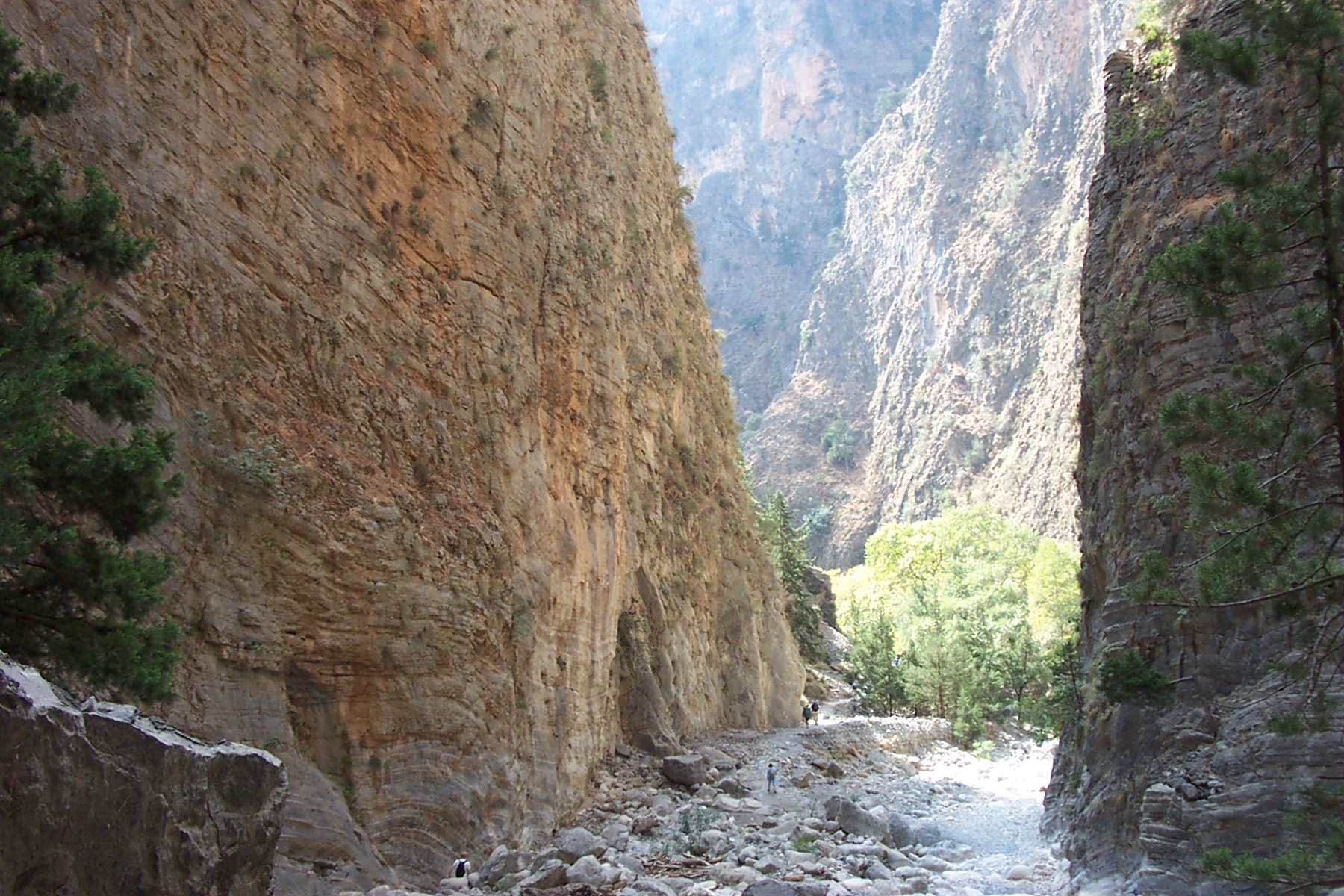
The above is the narrowest and most famous section of the gorge – called Portes or The Iron Gates. It’s thirteen foot wide and one thousand six hundred and forty foot high. This was the most rocky part to walk – though as far as I remember we did much clambering over and around boulders all the way.I was very glad of the stout boots.
It took us six hours before we reached Agia Roumeli and relaxed outside a taverna with a cold glass of water and a dakos ( a hard barley rusk soaked in olive oil with coriander seeds, chopped tomatoes, oregano and cheese). I asked how this was made but I’ve never quite managed to achieve that special flavour we tasted that day)
The gorge is only open from May to October; in the first and last few weeks of that period it may close if there’s a danger of flash floods.
And I was glad that I wasn’t told before we set off that the gorge is home tofour different snakes, the Balkan whip snake, the dice snake, the cat snake and the leopard snake. Although not dangerous I’m relieved i didn’t see one.
Now husband has discovered photographs from his old camera I’m hoping he can find more from other walks we’ve done over the years. They’ve brought back many memories.
Our last walk in the Yorkshire Dales was a short early evening stroll to a small waterfall called Janet’s Foss, just outside Malham. The name for the waterfall apparently comes from an old folktale that a fairy queen, Janet (sometimes Jennet), lives in a cave at the rear of the fall. There are numerous stories about this: usually wraiths are not thought to be ghosts or demons, but rather a strange entity somewhere in between the two, similar to poltergeists but much more powerful when appearing as a full-bodied apparition. With Janet, there are claims that she would have practised black magic in life and this eternal damnation is her punishment. So, from the numerous conflicting tales we were told when we asked, she was either a magical fairy, or a vengeful creature.
The waterfall carries Gordale Beck over a limestone outcrop into a deep pool below. The pool was traditionally used for sheep dipping, which drew in local villagers as a social occasion. We were told that there have also been a few wedding ceremonies there.Our resident font of all knowledge in the local pub told us that the pool is occasionally used by all-weather wild swimmers. When I mentioned this to the photographer he announced he hadn’t brought his swimming trunks. Not sure he had the right idea about ‘wild swimming’.
Image courtesy of Annabelle Bradley
The footpath from Malham starts from Malham Smithy, where the female blacksmith, Annabelle Bradley, runs blacksmith experience days, and also designs and hand forges sculptural and functional wrought ironwork. We’d stopped to watch her work from outside the door, earlier in the week. It was fascinating. Just leaving the link here, just in case you’re interested: https://www.malhamsmithyonline.co.uk/
Walking over a short bridge and alongside a small beck we went through fields and kissing gates. (No stiles!!)
On the footpath to Janet’s Foss a couple of old tree stumps have become home to hundreds of pennies where people have left them and made a wish to Janet.
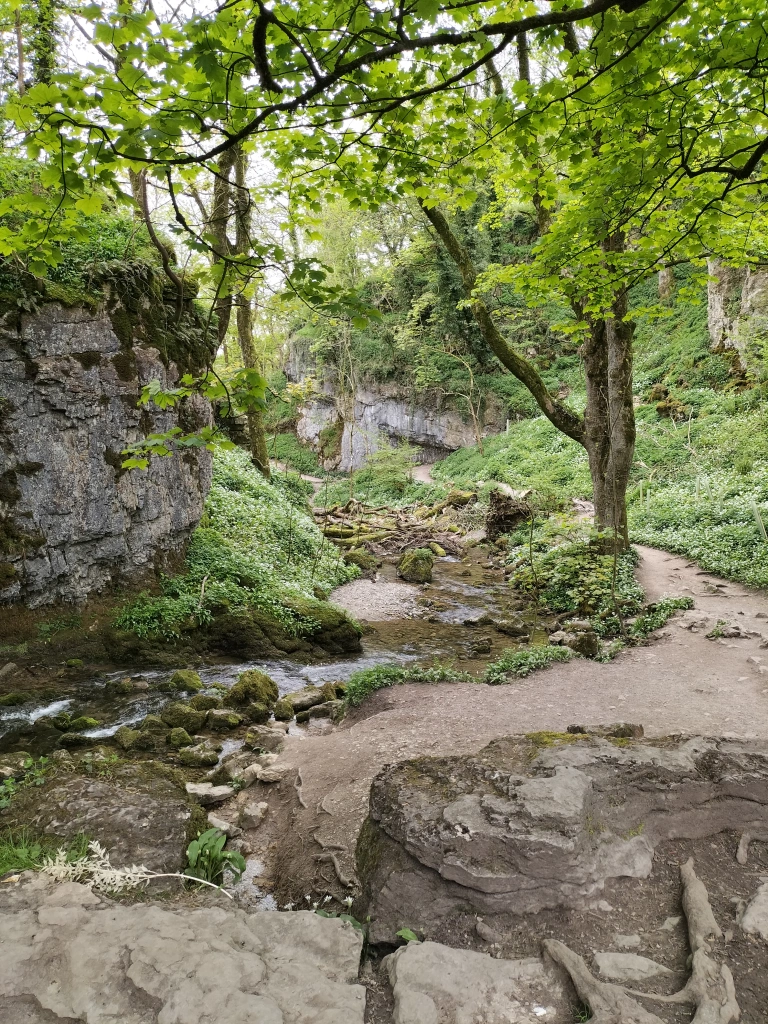
We could smell the garlic even before we entered the wood.
Here I go again … can anyone else see the profile of a face in these rocks?
We stayed listening to the rhythmic flow of the water, and waiting for the mysterious green mist that was supposed to sometimes rise from the water- until the chattering and clattering of boots announced the arrival of walkers, and brought us back to reality.
Time to make our way back to the cottage we were staying in. Time to pack for our return home the following morning. Time for just one more glass of wine.
Remember me saying in the last post about our visit toCatrigg Force – a small but impressive waterfall just east of the village of Stainforth? And that the first time we found it we’d actually planned to call to see it as the first part of a massively, more strenuous, longer walk – a longer walk, planned by the photographer? One where we could take in the landscape from the Victoria Cave in Ribblesdale? And I said, more to come on that another time? Well, this is it. The above is the last (nearly last) part of the track up to the cave
Another of my photographs when I stopped to take a breath on the path (path?!!) on the way up to the cave.The photographer was already there. Give him his due, he did come back to help me to the top.
And here it it, the limestone Victoria Cave, located east of Langcliffe in Ribblesdale and discovered by chance in 1837, the year of Queen Victoria’s coronation.
Until then the cave was unknown. Tinsmith Michael Horner (1813-1878) struggled through a small hole between rocks,searching for his dog and found the cave. Inside tound bones, coins and various metal objects on the sediment floor. Later, on the 28th June 1838, Joseph Jackson, a keen amateur archaeologist, investigated further. The Victorians were fascinated by ‘bone caves’ where there might be a possibility of finding evidence for the earliest humans and extinct animals. Some animal bones were actually found here. It’s thought that hyenas used the cave as a den and dragged bones that had been scavenged into it, including hippos, narrow-nosed rhino, elephants and spotted hyenas bones. After the last Ice Age the cave was used by hibernating brown bears. In amongst the animal bones of reindeer was an 11,000 year old antler harpoon point, the first evidence for people in the Yorkshire Dales.Some items from the cave are held at the Craven Museum in Skipton.
The roof of the cave has become increasingly unstable over the years and roof falls are possible.We didn’t go in!
This is another one of my photos (yes I do know it’s less inspiring than the photographer’s). But I spotted this from up high, from outside the cave – and thought it was a large teddy bear, or the skeleton of a teddy bear!! Of course, when we got closer… it was just a pile of rocks. Note to self – contact optician
Just before we set off on the downward trail, and with an eye on the clouds bubbling up in the distance, a photograph of the next five miles we needed to go.
And it’s here I will reveal a moment of a basic and elementary photographer’s mistake.
” One last photo before the rain sets in,” he says, scanning the vista. “I didn’t realise it had become so dark so quickly.”
I waited, didn’t say a word while he huffed and puffed, and glared at the sky. For quite a while Then I stated the obvious. ” Your lens cap is still on.”
Good job he has a brilliant sense of humour!!
We followed the trail past the rugged terrain of the Warrendale Knotts before descending the hillside on the way back to Settle.
Where we had a well- earned cup of tea and a scone.
This was a walk we did twice when we were in the Yorkshire Dales. The second time we were here was by accident. We got lost – surprise, surprise – and came over a hill to find us again at …
Catrigg Force … a small but impressive waterfall just east of the village of Stainforth. The first time we found it we’d actually planned to call to see it as the first part of a longer walk (more to come on that another time!)
After a snack in the local pub (called the The Craven Heifer in Stainforth – spot a theme in these posts?!!) we headed up a bridleway called Goat Lane. (not sure why it’s called that, we only saw sheep and lambs – definitely no cows… well not at this point anyway!). The track, between parallel stone walls, is a small section of the Pennine Bridleway
We meandered along the upward track for about a mile, past several derelict farm buildings, and stopping to admire the view. In the distance on the moorland, are the Winskill Stones, pedestals of limestone and topped with slate, left behind by ice-age glaciers.Finally we reached the signpost for Catrigg Foss on the left of the track.
No stile this time, a kissing gate, leading to a steep, rocky, narrow, path, down to the stream, Catrigg Beck, which flows from the hills and feeds the waterfall.
The poor quality and lack of any particular viewpoint/perspective in this photograph is because it was taken by me, on my mobile phone, while balancing on the edge of the waterfall and hanging onto a branch of a nearby tree. All without the knowledge of the photographer, who’d wandered off to find the the base of the waterfall.
I followed. Leaving the stream, I made my way down another narrow path alongside a sheer wall of limestone rock and a tree-lined drop to a deep, hidden gully that holds the waterfall and the shallow river, the continuation of Catrigg Beck. There were two separate, quite magical falls, well over six metres in height in the long wooded copse. The sprays of water, a sparkling shower of colours in the sunshine that flickered through the leaves, landed all around us. The only sounds were the waterfalls and the calls of birds. Perfect peace …
Ah well… as I said, this was only the start of a massively, more strenuous, longer walk – a longer walk, planned by the photographer, to take in the landscape from the Victoria Cave in Ribblesdale (discovered by chance in 1837, the year of Queen Victoria’s coronation). This second time we were here was purely by coincidence, and at the end of a quite sedate walk … for us! We ambled through fields, back to where we were staying in a tiny cottage in Langcliffe.
By the way…
Apparently Catrigg Force was a favourite haunt of composer Edward Elgar. He visited the waterfalls and, during his visits to the Yorkshire Dales, was inspired to compose Pomp and Circumstance and the Enigma Variations, his most famous works.
Three fun facts about Elgar – Not only was he a composer, but he was also an amateur chemist. In his spare time, he would tinker with experiments. He was the first composer to fully embrace recording music. And he loved cycling. He had a Royal Sunbeam bicycle that he nicknamed ‘Mr. Phoebus. ‘
I was promised an easy walk on one of the days. This is it; the Oxenber and Wharf Wood and Feizor walk from Austwick. It should have taken around two hours… we didn’t allow for the stiles.
We left Austwick by the Pennine Bridleway and walked over the Flascoe footbridge heading up the path towards Oxenber Wood.
We met the obligatory cow – who followed us along her side of the wall in the next field. In fact, by the time we reached the end of this path, there were six of them jostling for a view of us.
And the first of the stiles. This one was stone, sturdy, easy to climb over. We’ve got this sussed, I thought; easy walk, conventional stiles. The photographer couldn’t resist taking in the view of Austwick and the miles of glorious scenery around Ingleborough and Fountains Fell. Then he casually strode halfway over the stile – and was abruptly stopped when his rucksack decided to stay on the other side. We manhandled it over the wall, and carried on, ignoring the snorts from the cows…
And saw this…
Bluebells! Stretching seemingly for miles. And, miles away on the horizon … Pen y Ghent, the destination of one of our … hmm!… shall I say … more strenuous walks in that week: https://tinyurl.com/3e48vc7a
Hundreds of years ago, this area of woodland and pasture was part of the village quarry, and is still rough underfoot with hollows and dips under the grass. We were told it’s a site of special scientific interest and an area of conservation. The trees (as stated on the information board at the beginning of the walk) are mainly Ash, Hazel and Hawthorn.
As we clambered over the limestone rocks to enter the woods, a young man came puffing up behind us. He was a teacher, supposed to be on a day out with a colleague and their class from his school, but had overslept and was now in pursuit. We stopped to let him pass, pretending we didn’t need the break to get our breath back. That hill was steeper than we thought… or looks.
From the loud cheer that rang out a few minutes later, the teacher had obviously found the children.
In the woodland there were areas of slabs of limestone paving with various wild flowers and plants.
Wood Sorrel
Hart’s Tongue Fern.
Dog’s Mercury
There was quite a lot of theDog’s Mercury (as stated on the Information Board) We were told, by a man in the pub where we were having a meal that evening – (we did seem to meet the local naturalist, whichever pub we went in) – that it is a poisonous coloniser of ancient woodland. But, if thoroughly dried, apparently (I’m stressing the “apparently” here), the plant loses its poisonous quality. The juice of the plant is emetic, ophthalmic and purgative, and can be used externally to treat ear and eye problems, warts, and sores.And other ailments!
As a writer I couldn’t help thinking about using this last plant in a story … to kill off a character … maybe?!!
We left the woods, through a wooden gate and onto a path which at first gently rose and then zig-zagged down through a jumble of exposed limestone towards the hamlet of Feizor. Where we stopped at a tea room for a cuppa.
Leaving the tea room we climbed over the first of five high stiles in a stone wall, and along a public footpath through four sloping fields.
You may have noticed that I have no photographs of the fields, nor of the stiles here. We were either too anxiously gazing across the fields, knowing we’d have difficulty both going back to the tea room lane or forwards to continue our walk. This was because of the stiles. There was the stile where the first stone step was three foot high in the wall (“You need to get your leg higher,” I encouraged the photographer), having only been able to reach it myself by taking a running jump at the thing. Then there was the one where the middle stone was broken off revealing only a sharp corner that protruded only enough for the toe of our boots (That one resulted in scraped shins). The two wooden stiles had seesaw wobbles enough to cause seasickness, and the next seemed fine until we found that the space in the wall for us to get through was the width off one boot only. (One narrow ladies’ walking boot – which isn’t mine) Which meant a dare-devil leap forward to the next field was the only way to ‘dismount’!)
At this point I said I was never going over another stile again. Before I saw the next one! We were only glad there was no one nearby who could see us struggling, or worse still, waiting for their turn to climb over any of them.
Finally we triumphed over the last stile (more a small hole in the wall, thankfully), and back onto the tarmac lane… when we realised that, if we’d only walked a few metres further along the lane after leaving the cafe, we would have met the main road that eventually led to the tarmac lane.
And on to the first path …where the cows were waiting for us.
And so into Austwick again.
‘Easier today wasn’t it? Rested now?’ He said later. ‘Try for a longer walk tomorrow?’