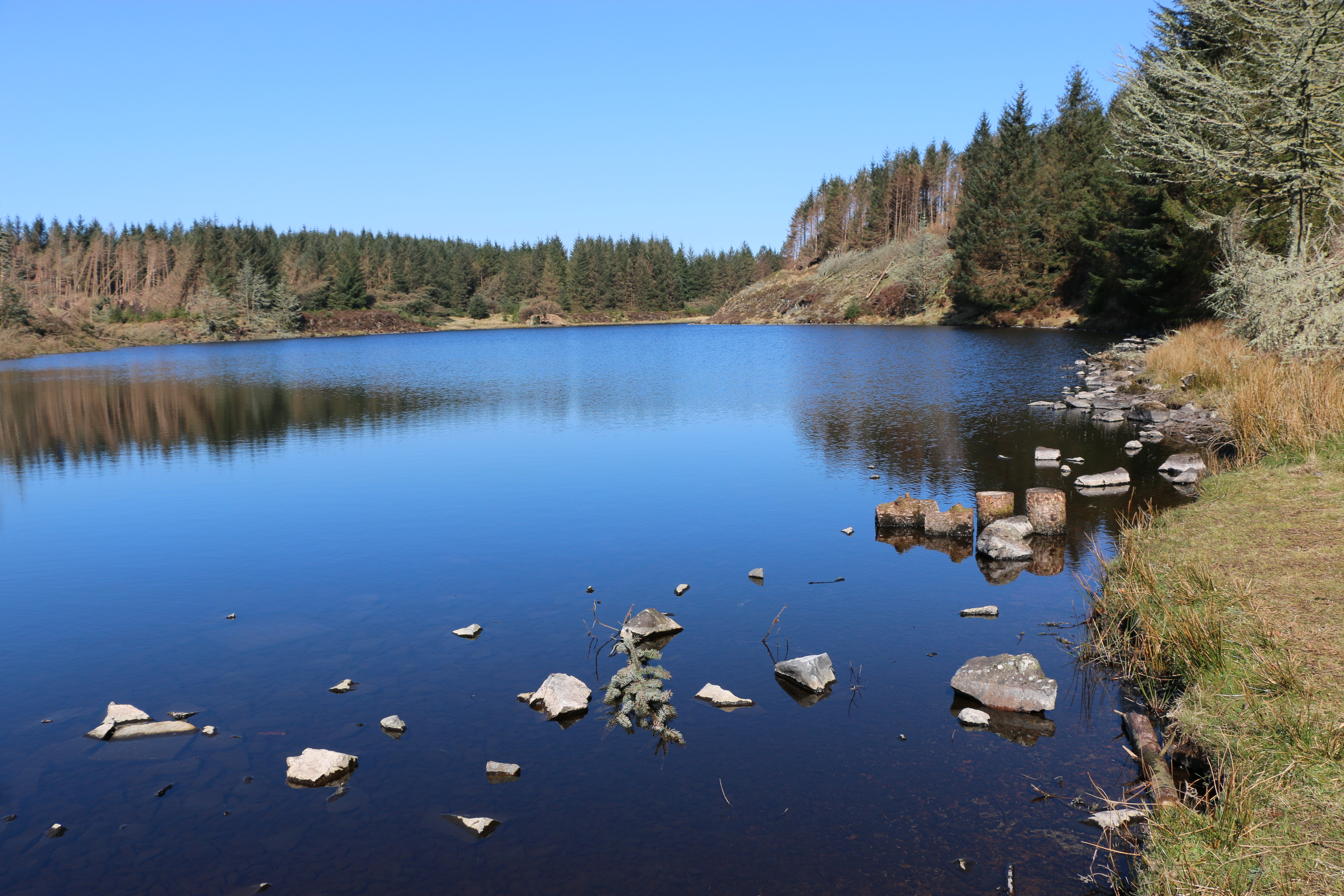
Where We Walked Garbad Loch #Arran #Scotland #walks #photography

We parked opposite the Eas Mòr Ecology centre, and crossed the road to pass the Forest at the Falls cafe. “We can call in for a drink and a bite to eat afterwards,” the Photographer says when I look longingly at the table where a couple are enjoying a coffee. The aroma is tempting but Dusk and I follow him up the short, steep path ….
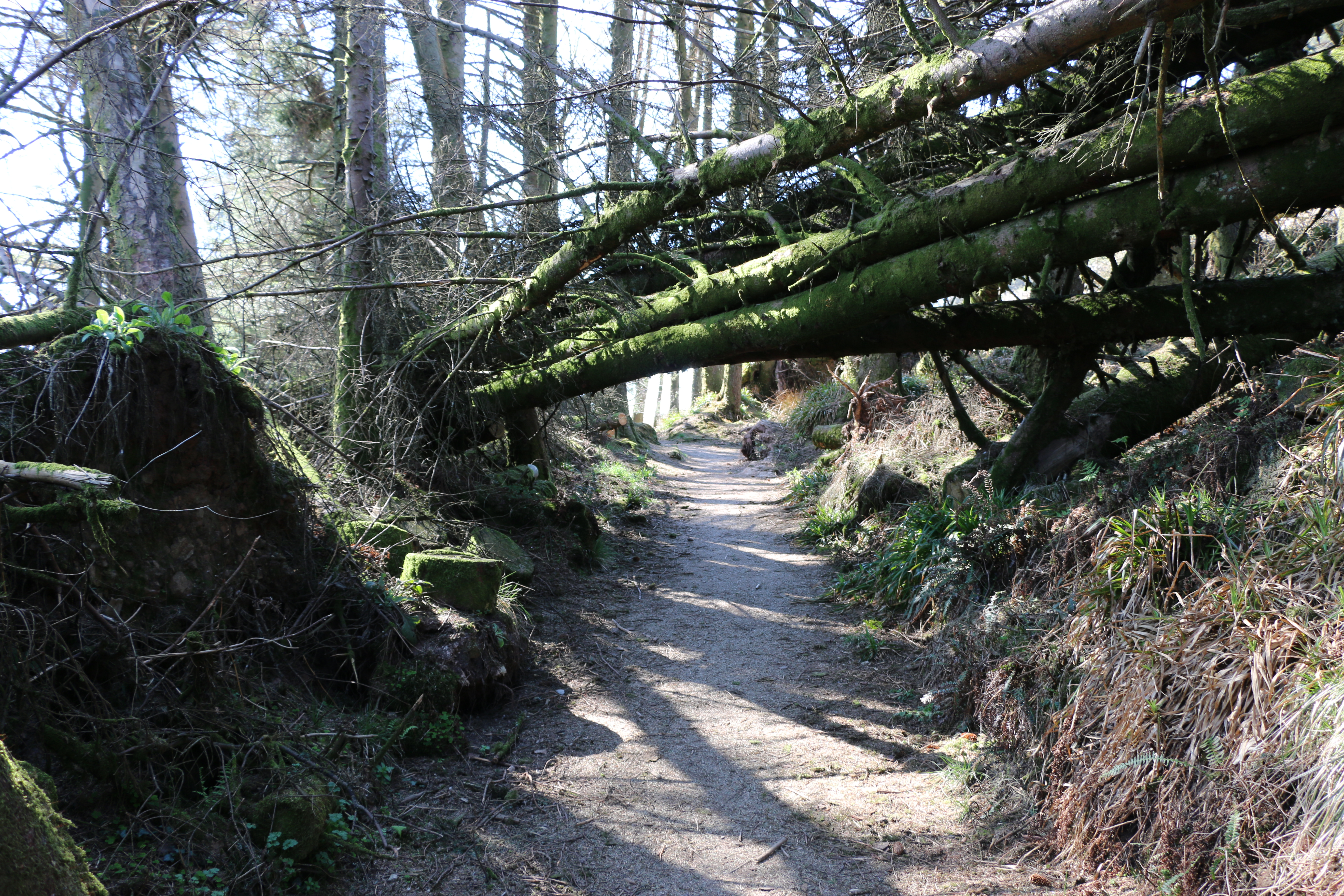
We duck under the trunks of a couple of trees that have fallen across the path. One has a plaque nailed to it – “Bow your heads for you enter sacred and magical lands”. As we were to discover when we finally reached Loch Garbad. But first to the Eas Mór falls.

Photo cortesy of https://tinyurl.com/msk5skns

Today the falls are not as magical as the photographs from the travel website promised when we discovered this walk. It’s a little disappointing but it’s because the weather has been so dry. Only a small slender stream of water runs, mostly obsured by the surrounding shrubs and grasses from where we stand. (hence the above borrowed photograph). It’s certainly not as impressive as the Glenashdale Waterfall from our first walk on Arran, but it does fall over the cliff in a single dramatic drop into a deep dark gorge.
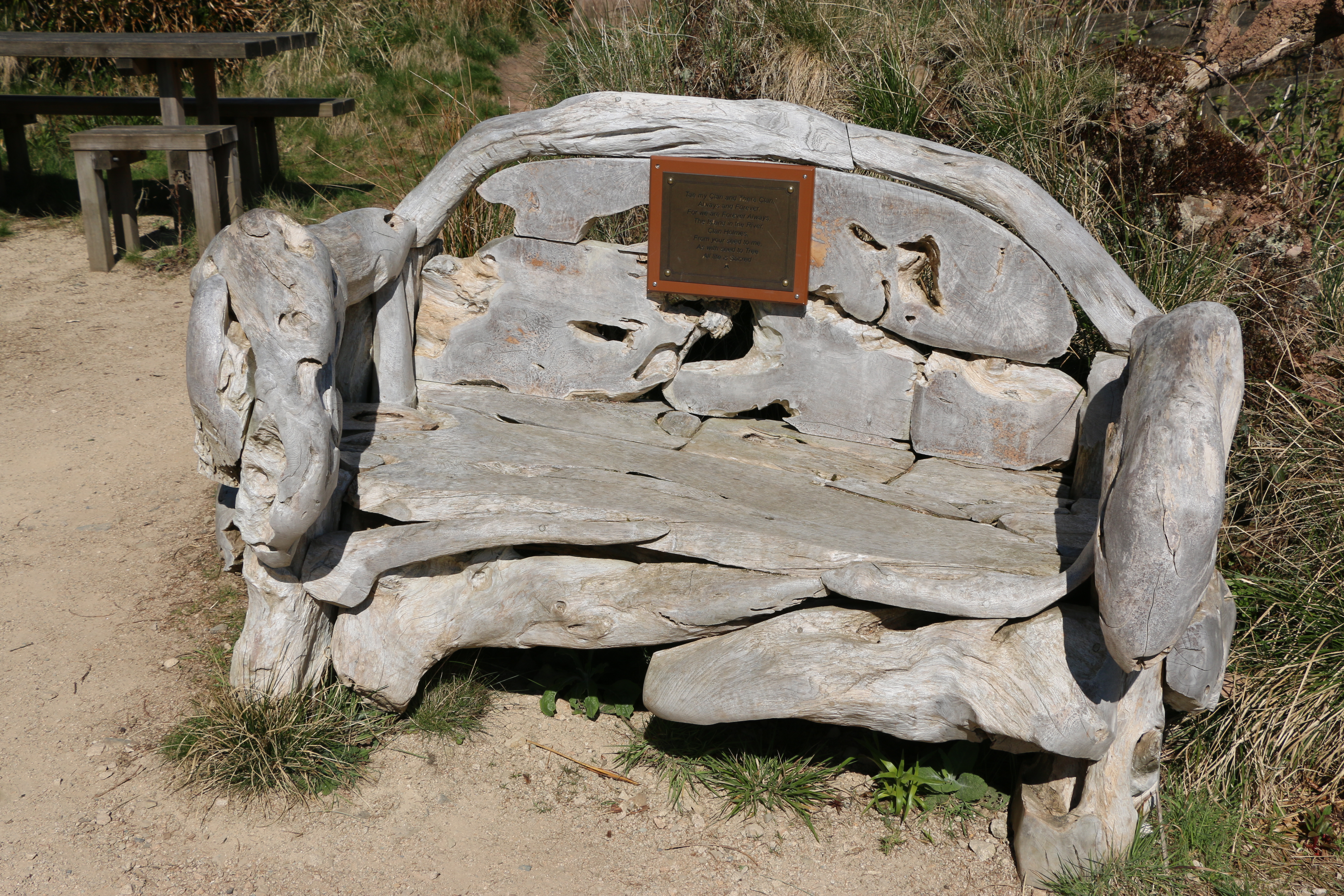
At a stone seat there’s a path junction with a signpost for Loch Garbad. From the description on the map we are following we expected to be walking though woodland but no; all the forest towards the loch has been felled under the Eas Mor project. This is the gradual conversion of the commercial conifer plantations back to semi-natural trees, so many of these have already been planted as saplings. (I’ve included the Facebook link above, because I think it is so impressive what they are doing in so many areas).This is a vast open area of brash (the above ground parts of the tree that hasn’t been removed from the site after felling – the foliage, branches and crown). Not yet as attractive as it will be, but it has opened up a terrific view across to Pladda Island to Ailsa Craig….

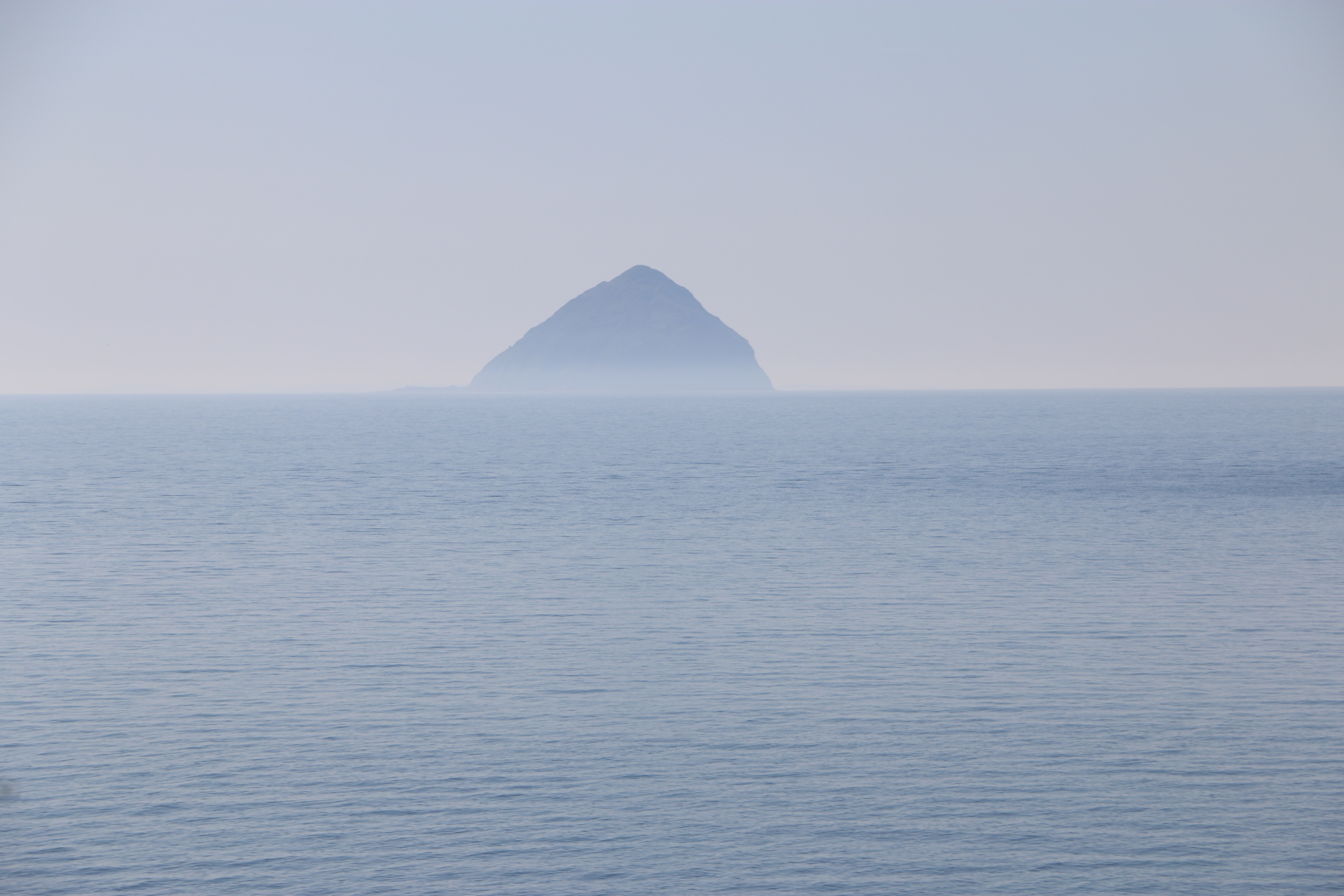
We stop for a while to admire and take photographs. Then carry on along the track …

It’s a bit of a slog. We meet only one other couple with a dog. Dusk and it exchange pleasantries, as do we, and then we plod on. (Yes, that is a sly photo of Dusk and me, taken by the Photographer!) The track is rough and narrow in places. I wonder how it must have felt in past times, winding through the overgrown woods, and I appreciate the openness, being able to see that last hill before we get to Loch Garbad.

Not far now.

We’re told to ‘pose’ – As you may be able to see, neither Dusk nor I appreciate this.
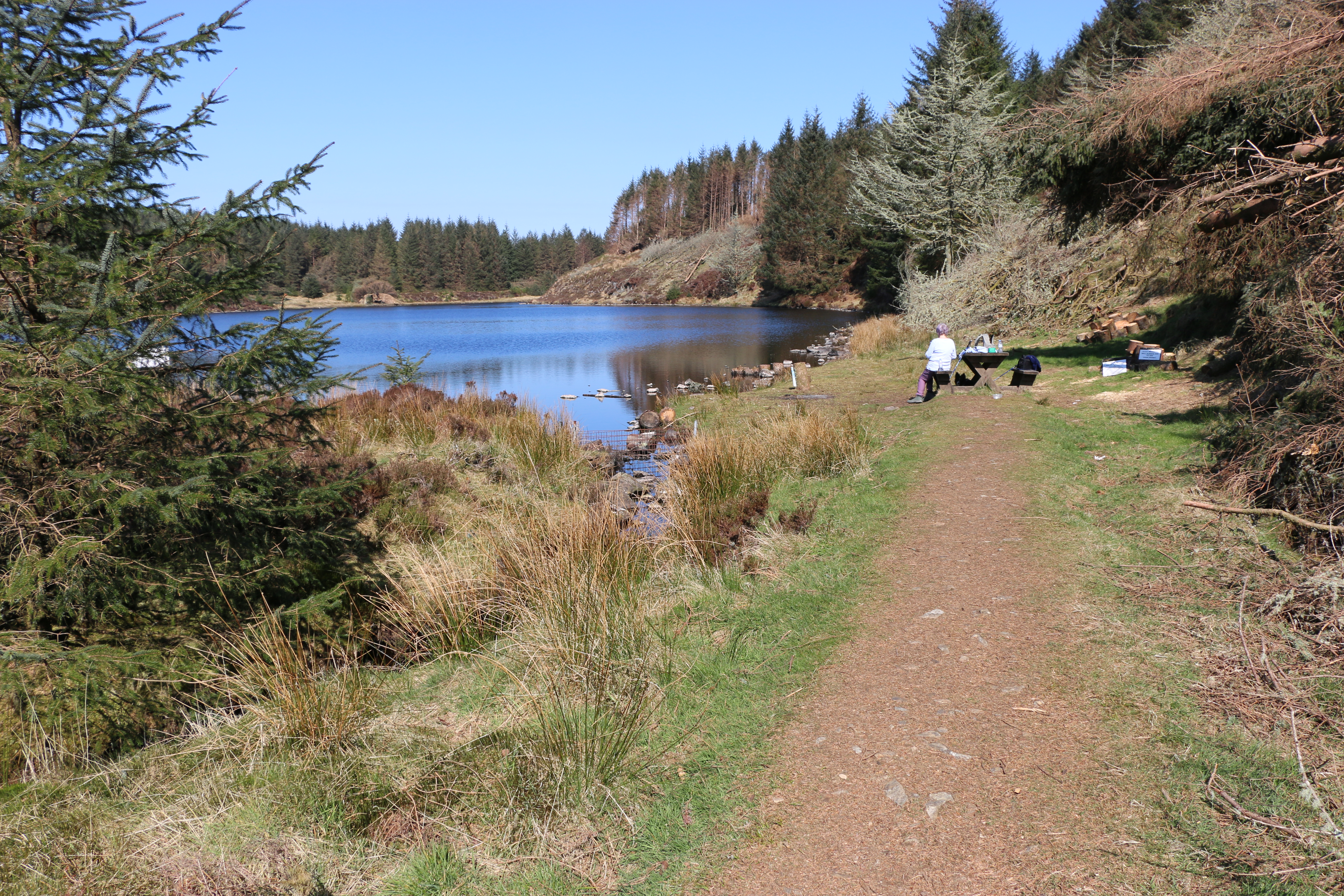
We’re both much happier sitting down for a welcome drink of water and taking in the remote beauty of the loch, whilst the Photographer goes off to do his own thing.

An hour later and we’re off again, somehow managing to take a wrong turn and having to retrace our steps to get onto the right path down the hill. Eventually taking the steps past the waterfall again and towards

The Library in the Woods – which is exactly what it says – housed in a small log cabin it’s a hidden library in beautiful woodland, and filled with books and messages left by visitors over the years. Another project created by Eas Mor Ecology and built in 1998 from trees felled in a storm on Boxing Day.

Time to leave. We take a narrow path downwards through woods and across the bridge over the stream fed by the waterfall. Just in time … to see the cafe closing. “Never mind,” says the Photographer, ” We’ll be back at the house in no time. We can have a coffee there. What’s for tea?”

https://tinyurl.com/4y3ftdnw

Where We Walked … Well, What We Saw From Where We Walked #Pladda Isle #Arran #Scotland

We are on our way to walk to Loch Garbad. Dusk is on the back seat. When I hear her move, feel her patting me on the shoulder with her paw, I presume she needs a ‘comfort break’ (as they politly say on coach trips). We turn off the road onto a side lane towards the village of Kildonan, and park on the first layby we come to.

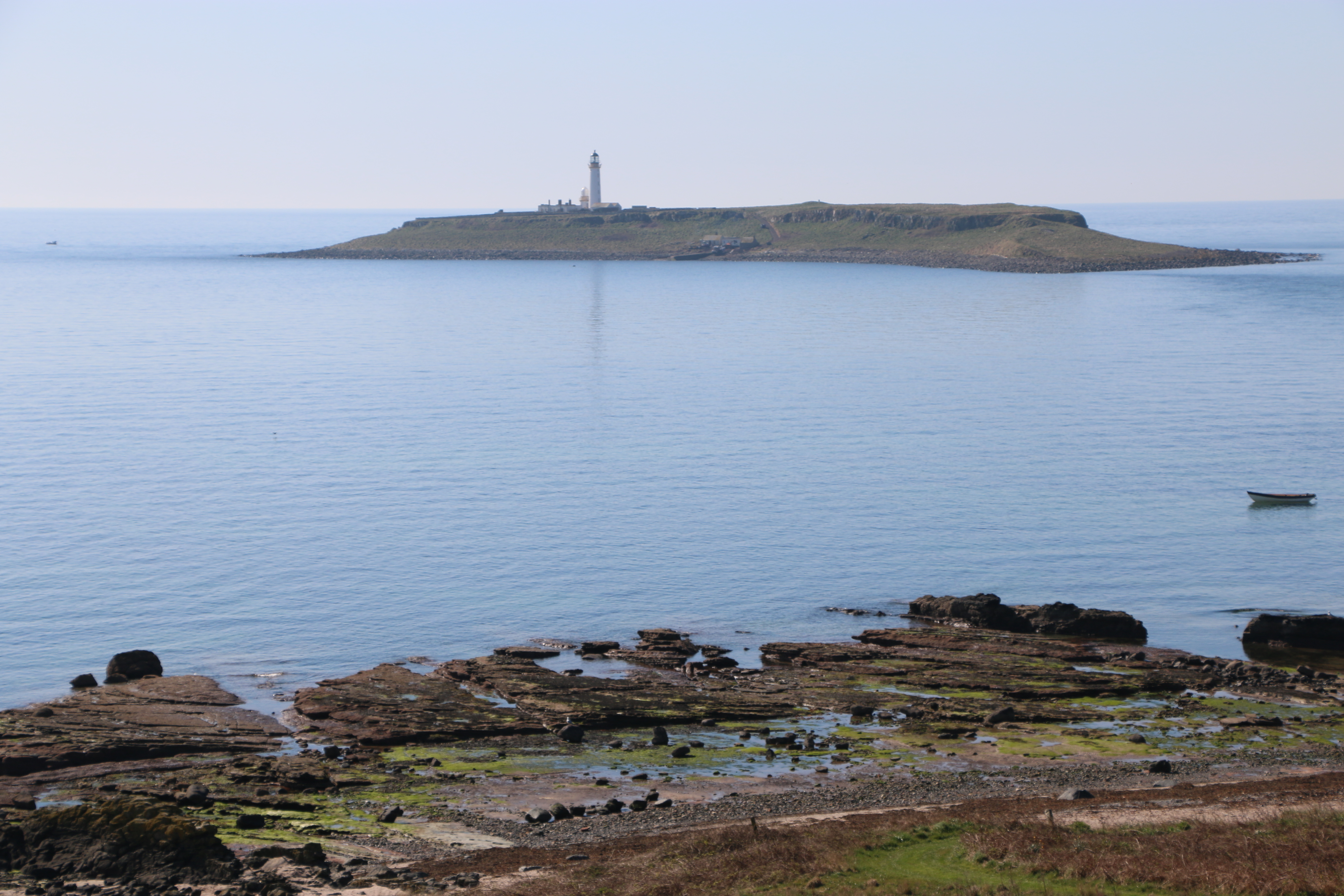
I think Dusk just wanted us to see the glorious coastline and the two islands nearby: Ailsa Craig and Pladda. Ailsa Craig deserves its own blog, so what follows is what we discovered about Pladda Isle.

Pladda Isle (Pladda – Scottish Gaelic: Pladaigh –  the name comes from Old Norse and means “flat isle”)  has been the site of a lighthouse since 1790).

The main structures of the Pladda lighthouse date from 1820 and were constructed under the administration of Thomas Smith of the Stevenson company.

To allow seafarers to distinguish it from the other nearby lighthouses at the Mull of Kintyre, Cumbrae and Copeland, a lower light from a small lantern twenty feet lower than the original one was installed and this carried on for more than one hundred years. And in 1876, a fog signal was also installed on Pladda..  This arrangement operated for about 100 years.

Pladda Isle (Pladda – Scottish Gaelic: Pladaigh –  the name comes from Old Norse and means “flat isle”)  has been the site of a lighthouse since 1790).

In 1901 fixed lights were no longer regarded as suitable for the island so coastal lights and a group of flashing lights were installed. The lower tower was then no longer needed.

The lighthouse keepers who were permanently attached to the station were brought provisions four times a month, two of which landed on Sundays to allow light keepers to attend church.

Everything changed in 1972 when a helicopter began to be used to transport the keepers. But then, in 1990 lighthouse became automated and the lighthouse keepers were no longer needed. The lighthouse is now monitored remotely from Edinburgh and the island is unoccupied. The traditional lantern and lens have been replaced by a couple of solar powered LED lights.

The modern plaque at the base of the main tower bears the crest of the Northern Lighthouse Commisioners and the motto “In Salutem Omnium” – For the Safety of the island

Previously the island was part of the Arran Estate, but in 2022 it was bought and is now privately owned. There are plans to build a luxury property on the island.

ENDNOTE:

For over one hundred and fifty years Robert Stevenson and his descendants designed most of Scotland’s Lighthouses. Battling against the odds and the elements – the Stevensons constucted wonders of engineering that have withstood the test of time, an amazing historical achievement.


Family Crest
“Coelum Non Solum”

Robert Stevenson’s talented family also included the famous writer/novelist Robert Louis Stevenson (his grandson). Visits with his family to remote lighthouses are thought to have inspired his books Kidnapped and Treasure Island.


“There is scarce a deep sea light from the Isle of Man to North Berwick,
but one of my blood designed it.
The Bell Rock stands monument for my grandfather;
the Skerry Vhor for my uncle Alan;
and when the lights come out along the shores of Scotland,
I am proud to think that t
hey burn more brightly for the genius of my father.”


Robert Louis Stevenson

The above was found on the link https://tinyurl.com/yb9x6mpj when I was researching Pladda. It’s fascinating going down these rabbit holes!!