“Words are an impure medium; better far to have been born into the silent kingdom of paint.” © Virginia Woolf
Virginia Woolf and her sister, the artist, Vanessa Bell, were the daughters of the historian Sir Leslie Stephen and Julia Prinsep Duckworth.

Left: Vanessa Bell, 1902. Right: Virginia Woolf, 1902. Images via Wikimedia Commons © https://tinyurl.com/5n7z87cs
Their mother, Julia Prinsep Stephen had become a widow in 1870 after her first husband, Herbert Duckworth, died of a burst abscess. She already had three children: George, Stella, and Gerald. The latter was born shortly after Herbert’s death in 1870.
Eight years later Julia married Leslie Stephen. English society in the late 1800s was built on a rigid social class system, and as a graduate of Eton and Cambridge, a respected literary critic and biographer, Leslie was seen as one of the literary aristocracy. He was also a widower and father of a girl, Laura, who had a learning disability, and who, incidentally, was the granddaughter of the Victorian novelist William Makepeace Thackeray.

Laura Stephen at Earlswood Asylum: Reproduced by permission of Surrey History Centre © https://tinyurl.com/36sj5mc5
Despite Leslie doting on Laura as a tiny child, by the time she was nine it was obvious that something was wrong; she was slow to talk or read, and veered from total fatigue to violent tantrums. It was a problem for both her father and Julia (although Julia, as friend of the family, had already partly taken on the role as a surrogate parent after Leslie’s wife, Minny, had died when Laura was five). But marriage and producing four children in quick succession: Vanessa in 1879, Thoby in 1880, Virginia in 1882, and Adrian in 1883, increased the difficulties for the two parents. Neither of them were equipped to deal with a child who had special needs.
Besides being agnostics, both Leslie and Julia were humanists, who advocated the rights for women to be the same as for men, to reach their own conclusions in matters of religion. Yet both believed that the home was the true basis for morality, a sanctuary free from corruption, and therefore home was the place for women. So Julia, who despaired that she was unable to discipline Laura, or train her to carry out domestic chores, apparently felt that her stepdaughter was deliberately wilful. And Leslie, who, during a time when society viewed anyone who was not seen as “normal” as undermining that society, was ashamed of her. His domineering patriarchy in in this upper-class, intellectual, and claustrophobic household would be viewed as bullying these days.
He must have been very frustrated by Laura, and it was a conflicted family: having little parental authority over one daughter, whilst succeeding in having total control over the other two.
Unlike their brother, Thoby, neither Vanessa nor Virginia were allowed to go to school. It was still not considered suitable to send girls to school, so they were educated at home by tutors.
Initially, as small children, they spent their days inventing whimsical stories about their neighbours, then progressed to writing illustrated stories and poems, and making up riddles and jokes for a family magazine they called the Hyde Park Gate News. In years to come, biographers of the two sisters were to declare this as early proof of the reciprocal nature between them that, well before any formal training, they nurtured each other’s art, acting as the other’s friend, adversary, and creative muse. And they must have decided between themselves which of them followed which creative path: Virginia the writer, Vanessa the artist. Yet each one’s individual talents led to the same ending, an endeavour to tell stories through their craft, Virginia with words, Vanessa through her paintings.
But, in the background there was always the perceived family problem of Laura. And, in 1886 at the age of sixteen, when Vanessa was seven, and Virginia was four, Laura was sent away to live with a governess. And was absent from the public family.

This is a family photograph of Gerald Duckworth, Virginia Stephen, Thoby Stephen, Vanessa Stephen, and George Duckworth (back row); Adrian Stephen, Julia Duckworth Stephen, and Leslie Stephen (front row) at Alenhoe, Wimbledon. (Reproduction of plate 37a from Leslie Stephen’s Photograph Album Original: albumen print (7.8 x 10.4 cm.) Presented by Quentin and Anne Olivier Bell. Mortimer Rare Book Room, Smith College) © https://tinyurl.com/3mjxe2uw
Four years later, despite being deprived of any early official schooling, and notwithstanding the Victorian restrictions on girls and women, Julia and Leslie decided to encourage their other daughters to pursue their talents. Over time, Vanessa studied both at the Royal Academy Schools and the Slade School of Fine Art, Virginia took classics and history in the Ladies’ Department of King’s College London.
Laura, on the other hand had been diagnosed by psychiatrists as suffering from ‘imbecility’. However I do need to point out that, despite extensive research, I could find no established medical rules of defining mental illnesses at this time. Yet in law, under such acts as the Lunacy Act of 1845 and the Idiots Act of 1886, there were precise specific and distinct legal classifications for certain conditions. These groupings fluctuated though. Laura was initially admitted to Earlswood Asylum in 1893, aged twenty-three, as an “imbecile” but in the 1901 census she was labelled a “lunatic”. which could suggest worsening symptoms
Virginia and Vanessa had battles of their own to contend with; both, as children, were sexually abused by their half-brothers, George and Gerald Duckworth. As an adult Virginia Woolf wrote extensively about this incestuous abuse in her diaries and letters, although there is little I can find about the abuse with either sister. Understandably, many say this was the origin of the fragility of Virginia’s psychological state. But It needs saying that it has been suggested in various papers that there were genetic connections of mental instability on the paternal side: Leslie Stephen was prone to violent mood swings, his father suffered from depression, a nephew had a bipolar disorder and was admitted into an asylum for mania. Virginia herself suffered from depression, and Vanessa is reported to have had at least one nervous breakdown. I should also add here that therefore it could follow that this family history of the Stephen family means it is likely that whatever condition Laura suffered from in her life, her genetic composition means she was more susceptible to other mental disorders.
In 1895, their mother. Julia Stephen died of heart failure, following a bout of influenza. Shortly afterwards, Virginia had her first mental breakdown. And, when their older half-sister Stella Duckworth, who in the absence of their mother had stepped in to run the household, also died two years later, and after their father died in 1904 after a long battle with stomach cancer, Virginia made her first suicide attempt.
Vanessa took charge. After dealing with all the domestic affairs, she moved the family (Vanessa, Thoby, Virginia, and Adrian) from Hyde Park Gate to the Bloomsbury district of London in 1904 to begin a new life.
Here Vanessa, Thoby, Adrian and Clive Bell started The Bloomsbury Group with friends who were writers, intellectuals, philosophers, and artists who rejected the oppressive Victorian principles of their parents’ generation, and they adopted creative freedom, sexual permissiveness, and atheism. They became known for their unconventional lifestyles and love affairs, shocking many outside their social group.

Vanessa Bell © https://tinyurl.com/5n7944n4
As the older sister Vanessa dealt with many of Virginia’s emotional and mental breakdowns. But she also held true to her own code of conduct; her lifestyle, her unconventional, sometimes eccentric relationships, were reflected in her art: the nude portraits of her friends and family, the use of design in her work. (both considered to be the prerogative of male artists) Yet her loving care for her sister was balanced by the long term and continuous rivalry in their separate spheres of creativity. Reading through the lines during my research I wondered whether, sometimes, this conflict was wearisome for the older sister; whether Vanessa’s marriage, in 1907, to Clive Bell was subconsciously an effort to distance herself from Virginia.
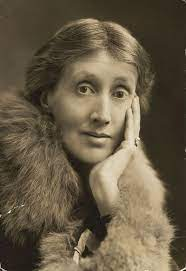
circa 1927 Harvard Theater Collection, Houghton Library, Harvard University. https://tinyurl.com/mryj58p5
The marriage, a year after their brother Thoby’s death from typhoid, made Virginia descend again into some sort of nervous breakdown. The marriage meant that Virginia and their brother Adrian had to move out of the Bloomsbury house, thus providing a distancing between the two sisters. A distance Virginia resented, because, before long, she began to pursue Vanessa’s husband, Clive. Their love affair lasted, intermittently, over six years. And there is plenty of anecdotal evidence that reveals enough proof, I think, to believe that the underlying reason for the affair was so that Virginia was once again at the centre of her sister’s life.
In 1914 Vanessa began a life-long relationship with Duncan Grant, who was bi-sexual. Taking Vanessa’s two sons, Julian and Quentin, from her marriage to Clive, and accompanied by Duncan’s lover, the writer David Garnett, they moved to Charleston Farmhouse, Sussex. In 1918 Vanessa and Duncan had a daughter, Angelica.
Because I have concentrated on these two women as sisters, and because much has been written about their achievement by far more scholarly people than me, I have left out details of the body of work that both women produced. I was more interested in what made them ‘be’, what formed them as human beings.
I found an extensive amount of articles, journals, newspaper reviews, discussions, diary quotes, lectures etc. on Virginia that revealed much of her personality and mental health. But far less details on Vanessa’s character. Because she didn’t keep a diary as Virginia did there is little written about her personally, except for the time of her son, Julian’s death during the Spanish War, when she became extremely and understandably depressed. But, mainly, there are only facts about her place in the family, about her marriage and relationships, her part in the Bloomsbury set, and the cannon of her work. And I found almost nothing on Laura. Having left few records of her own, she’s as invisible in history as she was in her family. And yet, her small story needs to stand alongside her famous sisters, because, I think, her presence (wherever she was during her life) must have had some effect on Vanessa and Virginia. There had to be some experiences, some memories they shared, that would always have impacted on the three of them.
Troubled by mental illness throughout her life, Virginia was institutionalized several times and attempted suicide twice before drowning herself by filling her overcoat pockets with stones and walking into the River Ouse on March 28, 1941. Her ashes are buried in the National Trust garden of Monks House, Rodmell.
Vanessa died at Charleston Farmhouse, at the age of eighty-one, after a bout of bronchitis, on 7th April 1961. She was buried on 12th April, without any form of service, in Firle Parish Churchyard.

Laura Stephen, c.1870 Reproduction of plate 35f from Leslie Stephen’s Photograph Album.© Mortimer Rare Book Room, Smith College.https://tinyurl.com/2zxbrek8
Laura Makepeace Stephen (1870-1945) was born prematurely on 7 December 1870. She was the only child of Leslie and Minny Thackeray Stephen. Laura was “mentally deficient,” according to Leslie Stephen, and may have suffered from a form of autism. She lived at home with a German nurse, Louise Meineke, when Virginia Woolf was a child. In 1888, Laura was settled with Dr. Corner at Brook House, Southgate, and she died at the Priory Hospital, Southgate, in 1945. https://tinyurl.com/2zxbrek8. Her burial details are unknown.
N.B. Leslie and Julia visited Laura until Julia’s death in 1895. Stella visited her until her death in 1897. Her aunt Annie Thackeray Ritchie visited her until her death in 1919. Annie’s daughter Hester Ritchie brought her home for visits on occasion. Then the visits stopped. When Laura died in 1945 the asylum did not know of any living relatives, though both Vanessa and Adrian outlived her and even inherited the remainder of the legacy Leslie had left for her care
Sometimes, family members can become estranged from one another, either by choice or by circumstances. “In one of her informal reminiscences from around 1922, Virginia describes ‘Thackeray’s grand-daughter, (Laura) a vacant-eyed girl whose idiocy was becoming daily more obvious, who could hardly read, who would throw scissors into the fire, who was tongue-tied and stammered and yet had to appear at table with the rest of us.’ Virginia makes the difference between them clear: Laura was not, in fact, one of “us,”’ https://tinyurl.com/36sj5mc5
And, in a way, this is how Lisa (formerly Mandy) feels about her sister, Angie, in my book, Sisters, when she says, “I never wanted to be in Micklethwaite ever again. Yet here I am. And meeting the one person I never wanted to see again. “
Sisters was published by Honno on the 26th January 2023:

Reader’s Review: https://tinyurl.com/y9vxs7v8
5.0 out of 5 stars Beautifully written, devastating, but ultimately hopeful family saga
It’s a funny thing about Judith Barrow’s books. I start reading, thinking they will follow an expected genre, get about halfway through, and realize that they are about something else entirely. In Sisters, for example, I thought I was going to meet another Cinderella, one who lives through and overcomes family trauma, meets her prince, and lives happily ever after. Only… not so much.
When we meet thirteen-year-old Mandy, she’s the classic middle-child of a working-class family on a 1970s housing estate. She’s proudly pushing the pram containing their family’s much-anticipated and beloved baby brother when she runs into her big sister, Angie, a typically boy-crazy young teen. Angie is attempting to show off for a boy when a terrible accident occurs and the precious baby is killed.
A devastated Mandy rushes back to her home, but to her shock is blamed for the tragedy. She waits confidently for her big sister to explain, but Angie doesn’t step forward. Instead, their family falls apart in a meltdown of grief, blame, and shame. Publicly branded a baby-killer, Mandy is bullied at school, shunned by her parents, and lied about by her sister, the one person who could have saved her.
Of course, we can see how the adults who should have provided love and support in spite of what was obviously an accident, instead fail their child. How the sister she’d always looked up to allowed her own fear to keep her from protecting Mandy or even telling the truth. And how all of the social structures of home and school and church fail to protect and support.
The bewildered girl is sent to Wales to live with her aunt and uncle. Mandy changes her name, rejects her birth family, and reinvents herself as Lisa. But that’s only the beginning of the story. As the two girls grow up, we can see that their split-second reactions in a moment of trauma are actually reflections of the people they will grow to be.
Both leave their broken family, and very soon come to life-changing forks in their separate journeys. Angie starts down a dark path where the only piece of herself she sees as valuable, her appearance, is regularly sold.
QUOTE: “There was a moment when Angie had a chance to change her life: that first time she stepped through the door of that house, that first night, that first week, that first time, that first man… But she didn’t.”
At almost the same moment, Lisa steps up to prevent a little boy being kidnapped. She recognizes that protective spirit as her life-calling, and begins training to become a child advocate.
QUOTE: “That day with the little boy, I knew I’d never have a choice if I saw a child in distress. And I knew what I wanted to do with my life.“
The meltdown of Mandy/Lisa’s nuclear family, the way everyone fails each other and her in a moment of ultimate stress— that was the story I expected to read. But it wasn’t the story Sisters had to tell. Instead, as the years pass, we see each sister tentatively begin to rebuild their lives, to unfold their personalities and characters from the smashed wrecks of that devastating moment.
Raised by her loving Aunt Barb and Uncle Chris in far-off Wales, Lisa finds her own strengths and life purpose. As she grows, she rebuilds some of the tattered relationship with her mother, and becomes a strong woman unafraid to love. The frightened little girl who keeps silent to protect the big sister who has betrayed her, channels that strength to protect other children.
But Angie’s path is one where that first instinctive cowardly betrayal sets the pattern for her inability to stand up for herself. It leads almost inevitably to a shameful existence and an abusive marriage.
When their mother dies, the two sisters finally meet up again. And this is where my expected story turned around completely. Instead of vindication for Lisa, we see a family whose core has disappeared, leaving each of them fundamentally lost. Each one has to forgive themselves for the all-too-human failings of being weak, angry, judgemental, scared. Along with each member of the family, the reader has to decide if it’s even possible to reclaim their humanity by reforming the family bonds shattered by tragedy, weakness, and time.
For me, Sisters is more than a story about a family destroyed by tragedy. It’s an exploration of how much we can give up in the face of devastating betrayal and loss, and how much we must give to reclaim our identity in the face of our imperfections.
I was particularly drawn to the settings. I enjoyed the contrasting descriptions of the family home, and the very different worlds the two sisters flee to, from the comfortable chaos of Wales that welcomes Lisa, to the sterile, compulsively bleached home that imprisons Angie. And yes, there was a bad guy, but somehow he lacked substance for me, an outline of nastiness rather than a fully-rounded villain. Instead, the true antagonists are the human failings in each member of the family, and even more their inability to forgive themselves and each other.
Sisters is a slow simmer, an intimate look at a gradually unfolding train wreck. It invites the reader to examine the effects of tragedy in the moment, but also as those effects ripple outward across the years, and especially the amount of strength and determination needed to swim against those ripples until feet finally find firm ground again. It’s not an easy read, but readers willing to explore the collapse of a family will be rewarded with characters who ultimately redeem their lives, reclaim their humanity, and most of all, affirm their båonds of love and family.
I unreservedly recommend this beautifully written, devastating, but ultimately hopeful story.

 Judith Barrow