
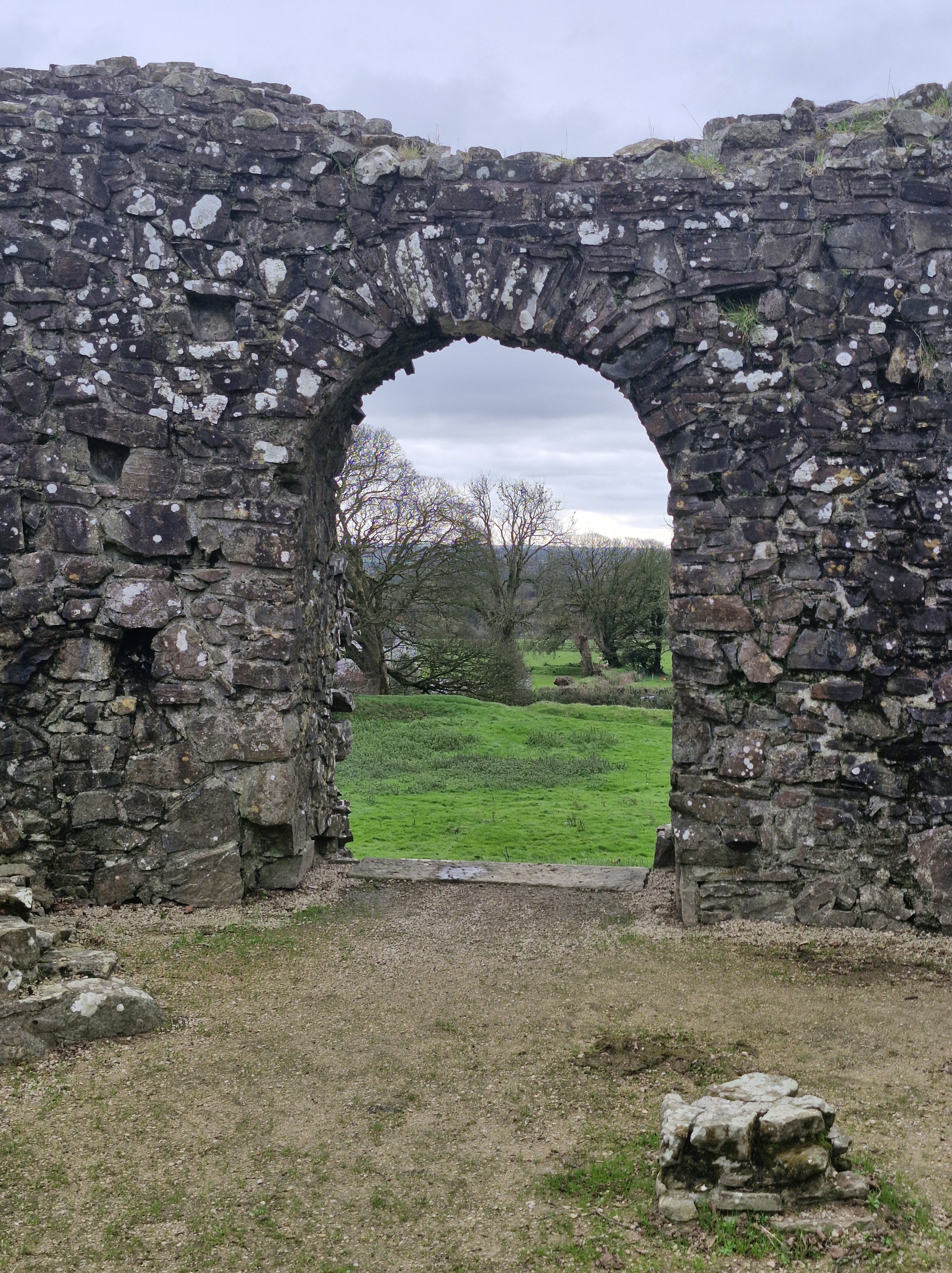
Following a recce for a Narberth U3a future Stroll and Photo at Llys-y- Fran, we took a diversion to Wiston castle. Even though not long enough for a walk, the castle and nearby church are historically interesting.
The castle was built by an early Flemish settler with the unusual name of Wizo (in Latin) or Gwys (Welsh). Wizo was one of the powerful Norman lords who took control of southern Wales in the decades following the Norman Conquest. The settlement was called Wiston, which was an old Flemish/Saxon word for Wizo’s enclosure. And I am reliably informed, by someone who knows far more about these things than I do, that Wiston is pronounced Wizon,

Wiston is one of the best-preserved motte-and-bailey castles in Wales, (A bailey is an enclosed courtyard within a castle, typically surrounding a central mound (the motte), a small mound or hill which was fortified in the past).
The castle is first mentioned in documents in 1147 when it was attacked by the Welsh, and then again by Hywel Sais, who was the son of The Lord Rhys who ruled this area of Wales, in1193. The castle was again attacked and destroyed in 1220 by Llywelyn ap Iorwerth (Llywelyn the Great). There is more information of the history of Wiston castle here:
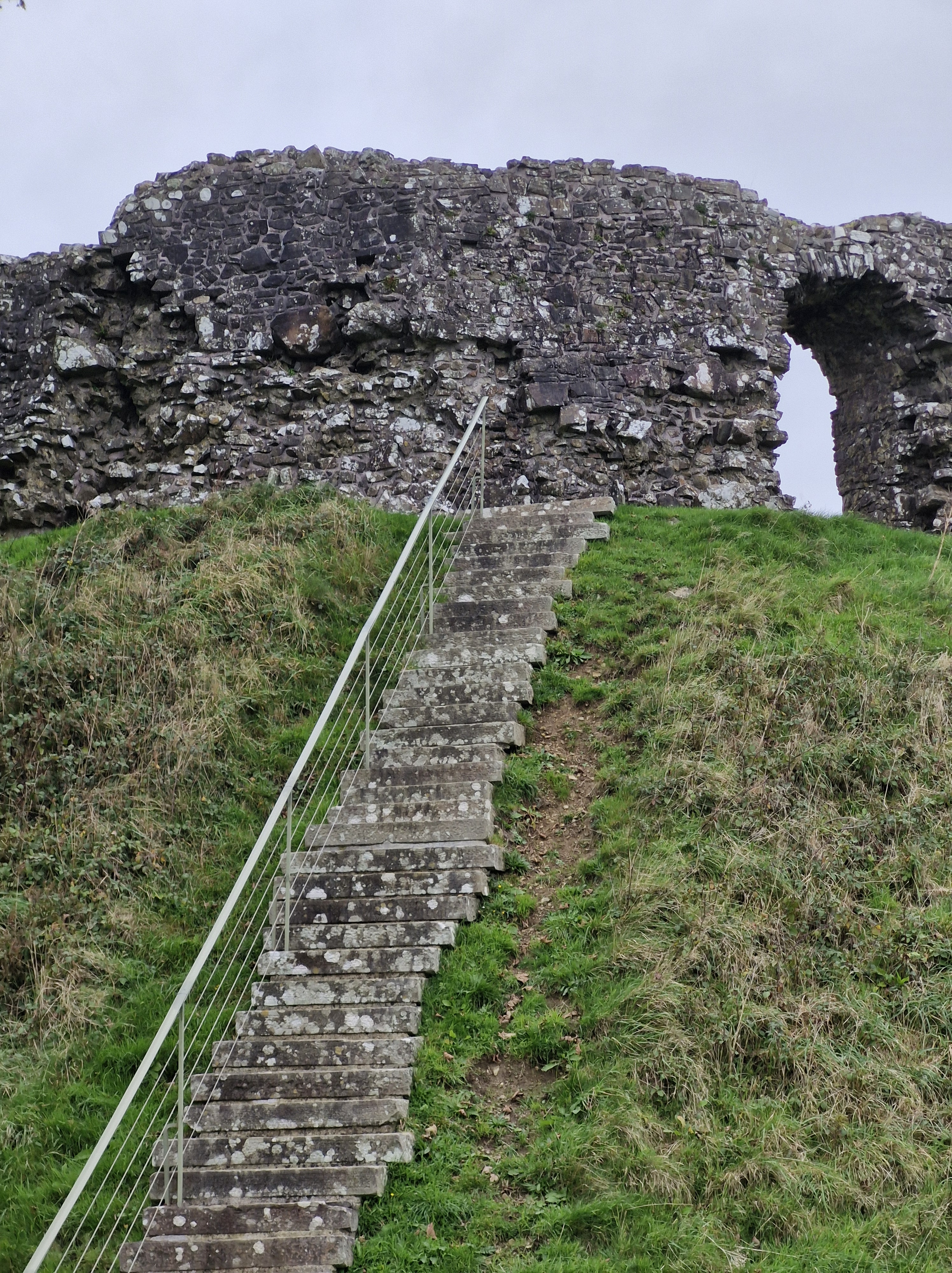
There are forty-nine steps … I counted!
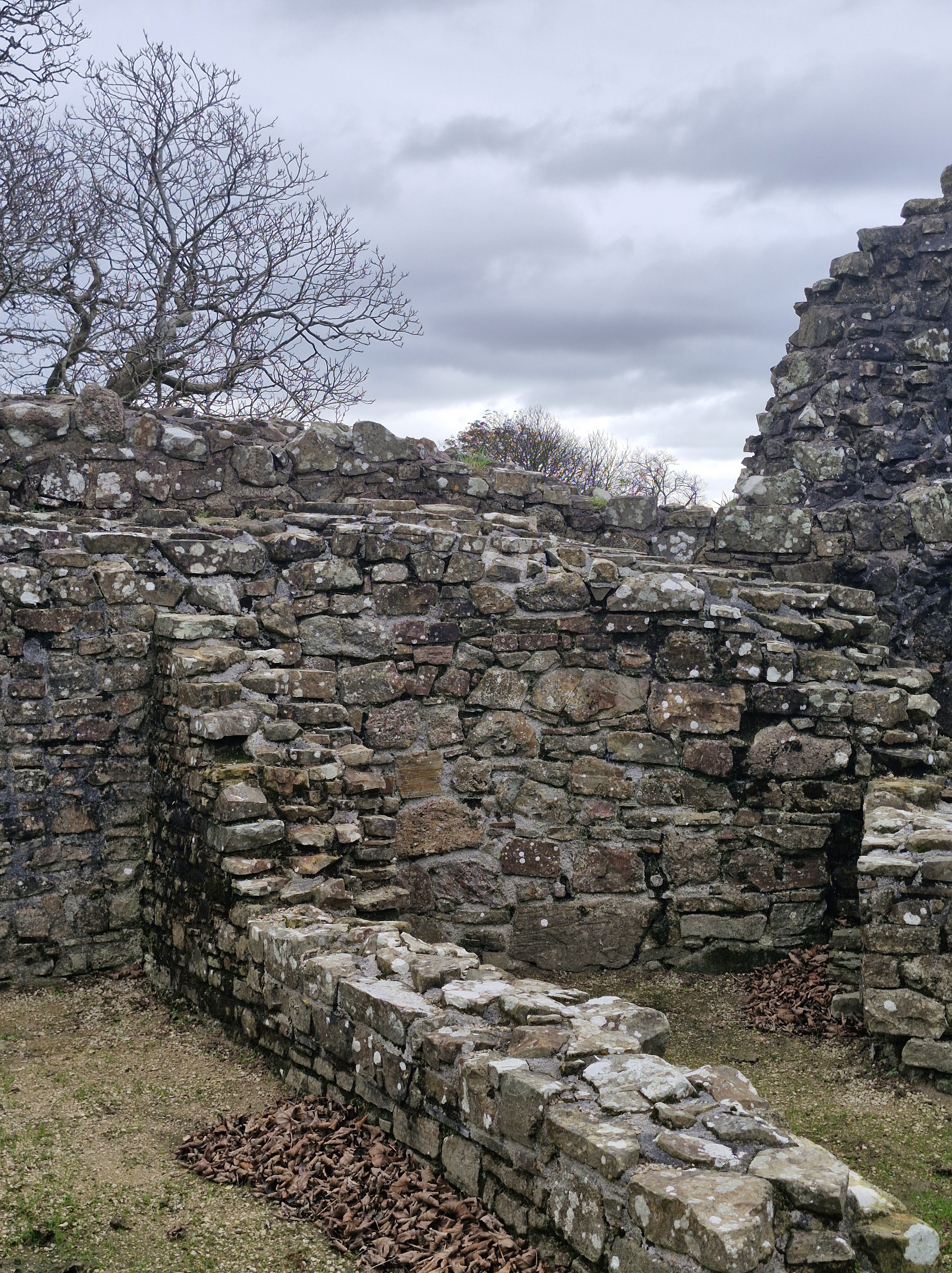

The Keep was a large fortified enclosure. This would originally be an early thirteenth century timber tower within a palisade. The present sixteen-sided stone shell keep was a replacement and would have risen another story with a parapet. The entrance was barred by a stout wooden door and the residential upper floor was reached by stone steps just inside the doorway.
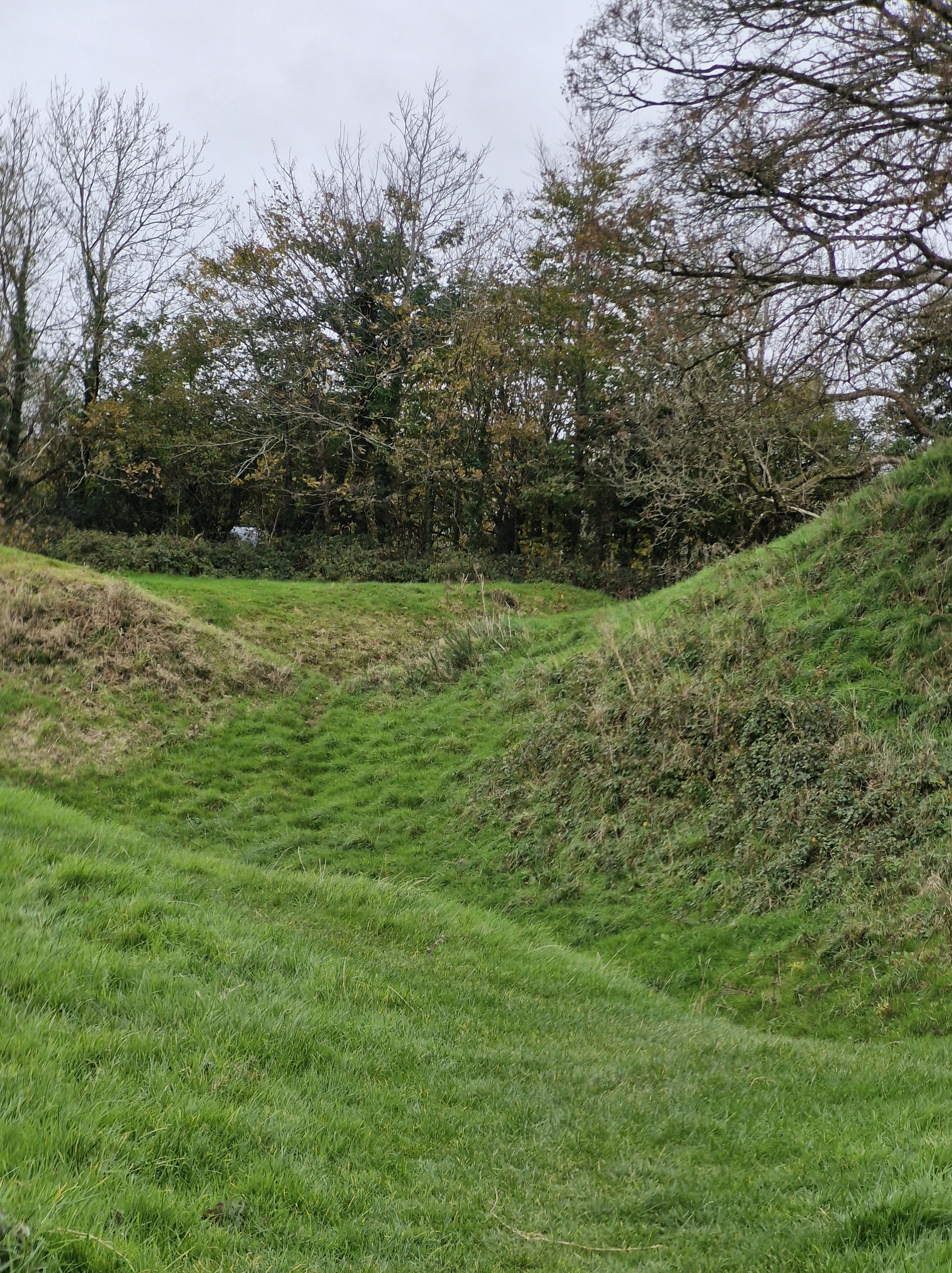
A deep ditch surrounds the base of the mound, separating it from the bailey (the enclosed courtyard within a castle) to the south, and connecting with the moat of the outer bailey on the eastern and western sides. This would have contained essential buildings like stables, barracks, and a chapel – the fortified area where soldiers, servants, and livestock lived and where the day-to-day activities of the castle took place.

Impressive stone walls. Spot the lookout!

And, of course, who goes up … must then go down. Much easier!
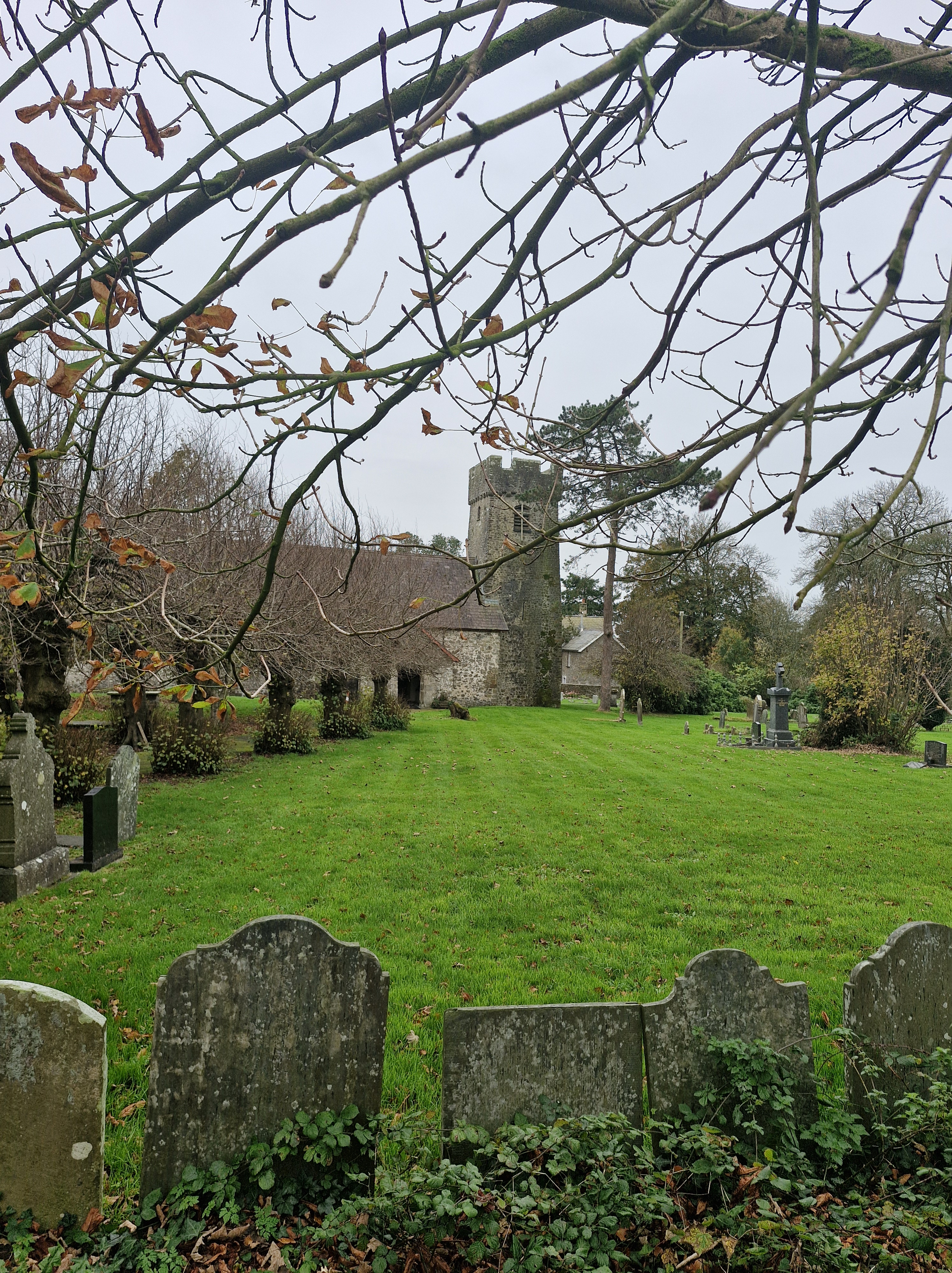
The Church of St Mary Magdalene.
Wizo also founded the church nearby at the same time. Though altered by subsequent generations, the church is essentially a Norman building, entered by a very simple doorway made of large slabs of local red sandstone. An interesting church to visit at a later time, I think.
 Judith Barrow