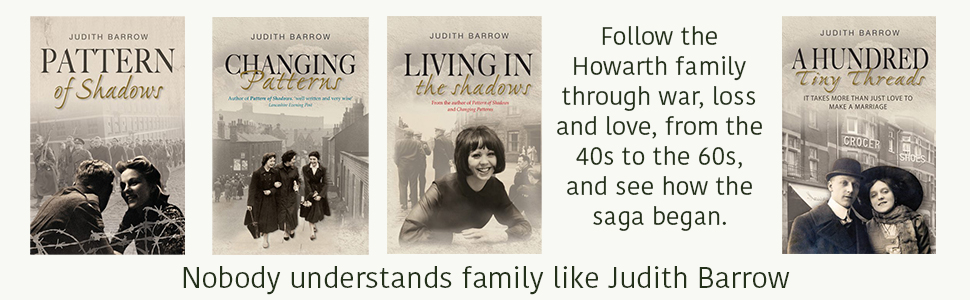
And so, with Changing Patterns the Story of the Haworth Trilogy continues: Sequel to Pattern of Shadows and the book before Living in the Shadows. #Excerpt #weekendRead #Promotion #Novelines #Honno

Although all three of the books in the Haworth trilogy are based on the same family, they are also stand alone. And yet, to be completely honest, I do need to add this from one of the reviewers…

“This is the part where I’m supposed to tell you that each of these wonderful books can be read alone. But no, don’t do that. In fact, if you haven’t read any of them, you’re luckier than I am, because you can start with the prequel and read in chronological order. I chose to review these books as a set, and I believe that’s how they should be read.
Every now and then, I come across books so beautifully written that their characters follow me around, demanding I understand their lives, their mistakes, their loves, and in this case, their families. Taken together, the Howarth Family stories are an achievement worth every one of the five stars I’d give them.

Changing Patterns – a bargain!

Book Description:

May 1950, Britain is struggling with the hardships of rationing and the aftermath of the Second World War. Peter Schormann, a German ex-prisoner of war, has left his home country to be with Mary Howarth, matron of a small hospital in Wales. The two met when Mary was a nurse at the POW camp hospital. They intend to marry, but the memory of Frank Shuttleworth, an ex-boyfriend of Mary’s, continues to haunt them and there are many obstacles in the way of their happiness, not the least of which is Mary’s troubled family.
When tragedy strikes, Mary hopes it will unite her siblings, but it is only when a child disappears that the whole family pulls together to save one of their own from a common enemy
.

Excerpt:

16th June 1950

Sometimes Mary couldn’t believe he was there. Sleepless, she would reach out and touch Peter just to reassure herself that after five years apart they were together again. He’d given up a lot to be with her.

‘You are happy?’ He slung his arm around her shoulder and pulled her closer.

The breeze ruffled their hair. The tide was on the turn and Mary watched the waves collide and dissolve. High above, gulls hung motionless their cries lost in the air currents

‘Mm.’ Mary rested against him. The smell of the mown lawn on his skin mingled with the salty tang of spray blown off the sea and the faint smell of pipe tobacco. ‘You?’

‘Of course.’

She turned her head to look at him, brushed a few blades of grass from his cheek. In the four months since he’d found her he’d lost the gaunt pallor, the weariness, and gained a quiet contentment.

‘It is good, the two of us sitting here, alone,’ he said.

‘Tom won’t be long though, he’ll be back from Gwyneth’s soon; he said he was only just digging her vegetable plot over for planting tomorrow.’

‘I do not mean Tom. He is family.’

Mary allowed a beat to pass. ‘I know you didn’t, love. And I know what you really mean. But it’s not our problem. If people don’t like our being together that’s their lookout.’ She kissed him. His mouth was warm.

Smiling she drew back. ‘Tom?’ she murmured, her voice rueful.

They sat peacefully on the doorstep of the cottage, each savouring the other’s closeness.

Gradually the sun disappeared behind the cliffs. The trees became shifting silhouettes and the wind slapped the surface of the sea into rolling metallic arcs and carried the spray towards the cottage. Mary licked her lips, tasted the salt

‘It’s getting chilly.’ She shivered.

Peter stood, reached down and lifted her to her feet, holding her to him. ‘Ich liebe dich, my Mary.’

‘And I love you.’

A few moments passed before she forced herself to stand back and, giving him a quick kiss, take in a long breath. ‘Now,’ she said, ‘I’m late sorting tea out. If you put those things away, I’ll go and give that batter a whisk. I’m making Spam fritters to go with that mash from last night.’

She stood on the top step watching him walk down the gravel path to where he’d left the lawnmower and then glanced towards the cottage next door. Although it was only just dusk the window in Gwyneth Griffith’s parlour suddenly lit up and the oblong pattern spilled across the garden. Tom emerged out of the shadows swinging a spade in his hand and turned onto the lane. Mary waved to him and he waggled the spade in acknowledgement. ‘Tom’s coming now,’ she called out to Peter. ‘I’ll stick the kettle on. He’ll want a brew before he eats.

The van came from nowhere, a flash of white. Mary saw it veer to the right towards Tom. Hurtling close to the side of the lane it drove along the grass verge, smashing against the overhanging branches of the blackthorn. Caught in the beam of the headlights her brother had no time and nowhere to go. Frozen, Mary watched as he was flung into the air, heard the squeal of the engine and the heavy thud of his body on the bonnet of the van. The spade clattered along the tarmac. Peter threw open the gate and was running before she could move.

‘Tom,’ she heard him yell. Somewhere, someone was screaming. She was screaming.

Links to buy:

Amazon.co.uk: https://tinyurl.com/4wj2jedc

Amazon.com: https://tinyurl.com/nj87jz6k

Shell Shock – Legacy of the Trenches #WW1

Image courtesy of the Mirror

The First World War ended with the deaths of a generation of young men. But the devastation of the  conflict didn’t end with that last blast of a howitzer. Thousands of soldiers went home still re-living their horrific experiences of the battlefields for many years. Their lives were damaged by shell shock, a condition many had suffered from during their military service. And, throughout Britain, doctors were baffled by this unknown illness. Soldiers were returning from the trenches paralysed, blind, deaf. Some were unable to speak. Many had bouts of dizziness, hysteria, anxiety, Families reported that their returned husbands, sons, brothers, were often unable to sleep. And, if they did, had horrendous nightmares that resulted in depression, refusal to eat, erratic behaviour.  Many so-called lunatic asylums and private mental institutions were assigned as hospitals for mental diseases and war neurosis.

Many men felt shame; often they  were unable to return to military duty and on their return home, they were viewed as being emotionally weak or cowards. Bewildered by the changes seen in shell shocked soldiers, people had little sympathy; there was little understanding for them. Even worse,  many families felt only the disgrace and humiliation that one of their own had been charged with desertion and executed by a firing squad of their fellow soldiers. It would be many decades before they would be given posthumous pardons.

Soldier being bombarded
Image courtesy of BBC.co.uk Inside Out Extra

In the first years of the war, shell shock was assumed to be a physical injury to the nervous system, a result of soldiers facing heavy bombardment from exploding shells. Victims were at the mercy of the armed forces’ medical officers. Determined to ‘cure’ the soldier, the treatments given by them were cruel and humiliating: extreme physical instruction, shaming and severe discipline in front of their fellow soldiers, solitary confinement, electric shock treatment.

By the second year of the war almost half of the casualties in fighting regions were victims of the condition and military hospitals were unable to cope; the unexpected numbers of soldiers suffering from the condition meant that there was a drastic shortage of beds. And medical staff discovered that many men suffered the symptoms of shell shock without having even been in the front lines. More so, it was noticed that many officers, desperate to hide their emotions and to set an example for their men, became psychotic, suffering from some of the worst symptoms of shell shock..

But it wasn’t until 1917 that the condition of shell shock was identified by a Medical Officer called Charles Myers as combat stress, today also known as Post Traumatic Stress Disorder (PTSD).

So, the thousands of soldiers who went home still re-living their horrific experiences of the battlefields had a name for the condition they were living with. Many had lost their ability to walk or, speak. Some regressed to a baby-like state. It seemed there was no expectation of recovery.

But then one man, an army major and general physician, Arthur Hurst, despite much cynicism and opposition established a hospital at Seale Hayne, Newton Abbott, Devon. (now part of Plymouth University). The men who arrived there, ostensibly destroyed by their horrendous experiences of war were given hope.

Community spirit: On the wards at Seale Hayne hospital men were encouraged to write and to produce a magazine with a gossip column called Ward Whispers
Image courtesy of the Daily Mail

Hurst’s innovative method had never been witnessed before. Psychiatrists who, after the disorder was identified towards the end of the war, were adamant that a process of mental rehabilitation was needed; that the shell-shocked soldier was trying to cope with harrowing experiences by repressing any memories. They thought that the symptoms revealed involuntary detachment from events lived through and the man could only be cured by the traditional method of reviving memories, a process that could require a number of psychiatric therapy sessions.

Arthur Hurst
Image courtesy of BBC.co.uk Inside Out Extra

As a general physician, Arthur Hurst believed that there was a simpler treatment;  that humane understanding and sympathetic persuasion was the way to into the ex-soldiers’ awareness of the new life now around them.  He thought that during a terrifying bombardment, a soldier might experience tremor, be unable to move or speak. So, sometimes, the power of suggestion could cause the symptoms to survive once that intense reaction had passed. The cure, as far as he was concerned was the re-education of the mind and his methods  were what was needed to resolve the lingering symptoms of the trauma endured.

He used hypnosis and patience, giving them work to do on the land around Seale Hayne; a revolutionary occupational therapy. The tranquillity of the Devon countryside, the encouragement given to the men was thought to be a place where the men could get over their hysteria. They were urged to use inventive and resourceful ways to work.

Soldiers working in field
Image courtesy of BBC.co.uk Inside Out Extra

Then, In a ground-breaking move, he ordered the reconstruction of the battlefields of Flanders on Dartmoor even encouraged his patients to shoot. to help the men relive and come to terms with their experiences.

Hurst also believed it important for the men to express themselves creatively and persuaded some to write and publish a magazine with a gossip column called Ward Whispers.

Nurses and patients
Image courtesy of BBC.co.uk Inside Out Extra

He made the only film in existence about how shell shock victims were treated in Britain. This gives an insight into his treatments. Though upsetting initially to watch, they also reveal the dramatic recovery Arthur Hurst’s methods produced. It was indeed pioneering and gives a mark of respect to the men who survived the terrors of the First World War. Arthur Hurst proved his methods were truly effective but I have been unable to find any studies of what happened to any of the men who had therapy at Seale Hayne. However I did find this fascinating programme on Radio Four’s Homefront: https://bbc.in/36SmD1J.

I have two books set against the background of WW1

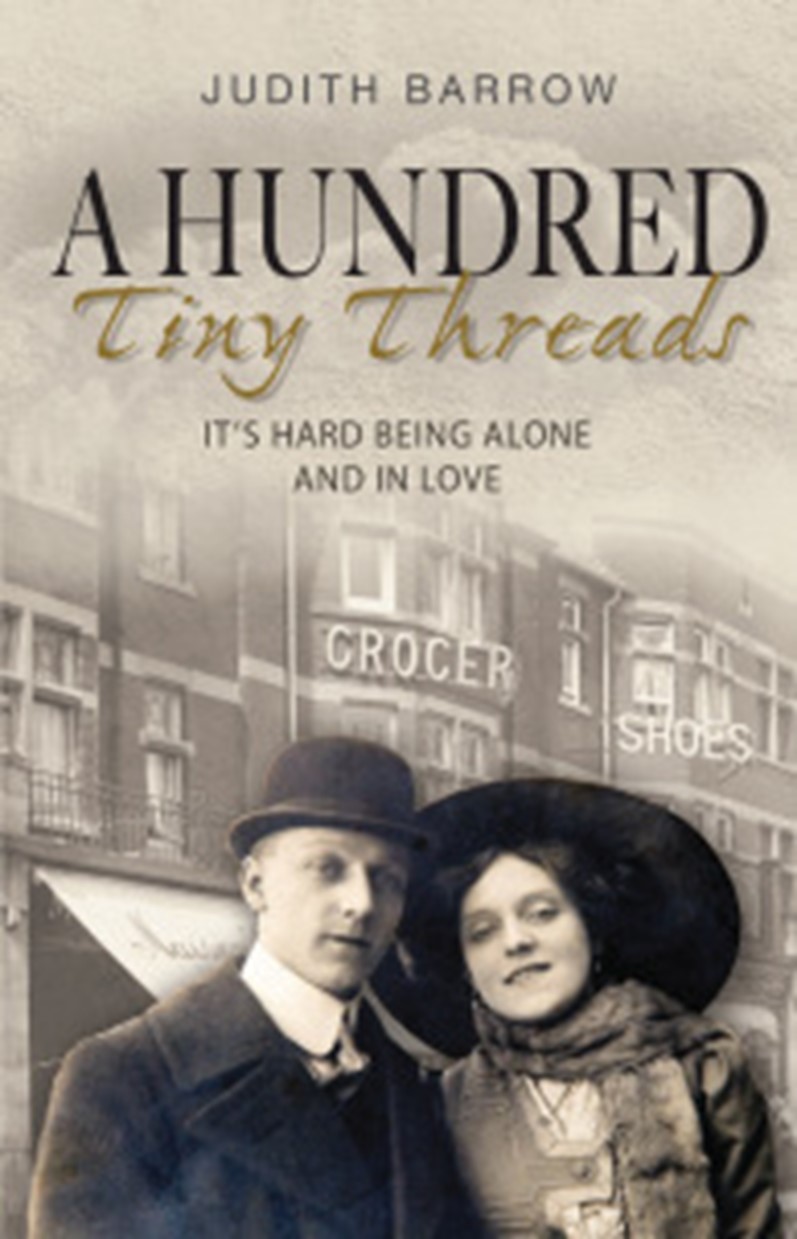
A Hundred Tiny Threads – the prequel to the Haworth trilogy

It’s 1911 and Winifred Duffy is a determined young woman eager for new experiences, for a life beyond the grocer’s shop counter ruled over by her domineering mother. The scars of Bill Howarth’s troubled childhood linger. The only light in his life comes from a chance encounter with Winifred, the girl he determines to make his wife. Meeting her friend Honora’s silver-tongued brother turns Winifred’s heart upside down. But Honora and Conal disappear, after a suffrage rally turns into a riot, and abandoned Winifred has nowhere to turn but home. The Great War intervenes, sending Bill abroad to be hardened in a furnace of carnage and loss. When he returns his dream is still of Winifred and the life they might have had… Back in Lancashire, worn down by work and the barbed comments of narrow-minded townsfolk, Winifred faces difficult choices in love and life.

The Heart Stone

1914. Everything changes for Jessie on a day trip to Blackpool. She realises her feelings for Arthur are far more than friendship. And just as they are travelling home, war is declared.

Arthur lies about his age to join his Pals’ Regiment. Jessie’s widowed mother is so frightened, she agrees to marry Amos Morgan. Only Jessie can see how vicious he is. When he turns on her, Arthur’s mother is the only person to help her, the two women drawn together by Jessie’s deepest secret.

Facing a desperate choice between love and safety, will Jessie trust the right people? Can she learn to trust herself?

Links:

https://judithbarrowblog.com/

https://twitter.com/judithbarrow77

https://www.facebook.com/judith.barrow.3

https://www.honno.co.uk/authors/b/judith-barrow/

https://www.amazon.co.uk/Judith-Barrow/e/B0043RZJV6

@judithbarrowauthor.bsky.social‬

judith barrow