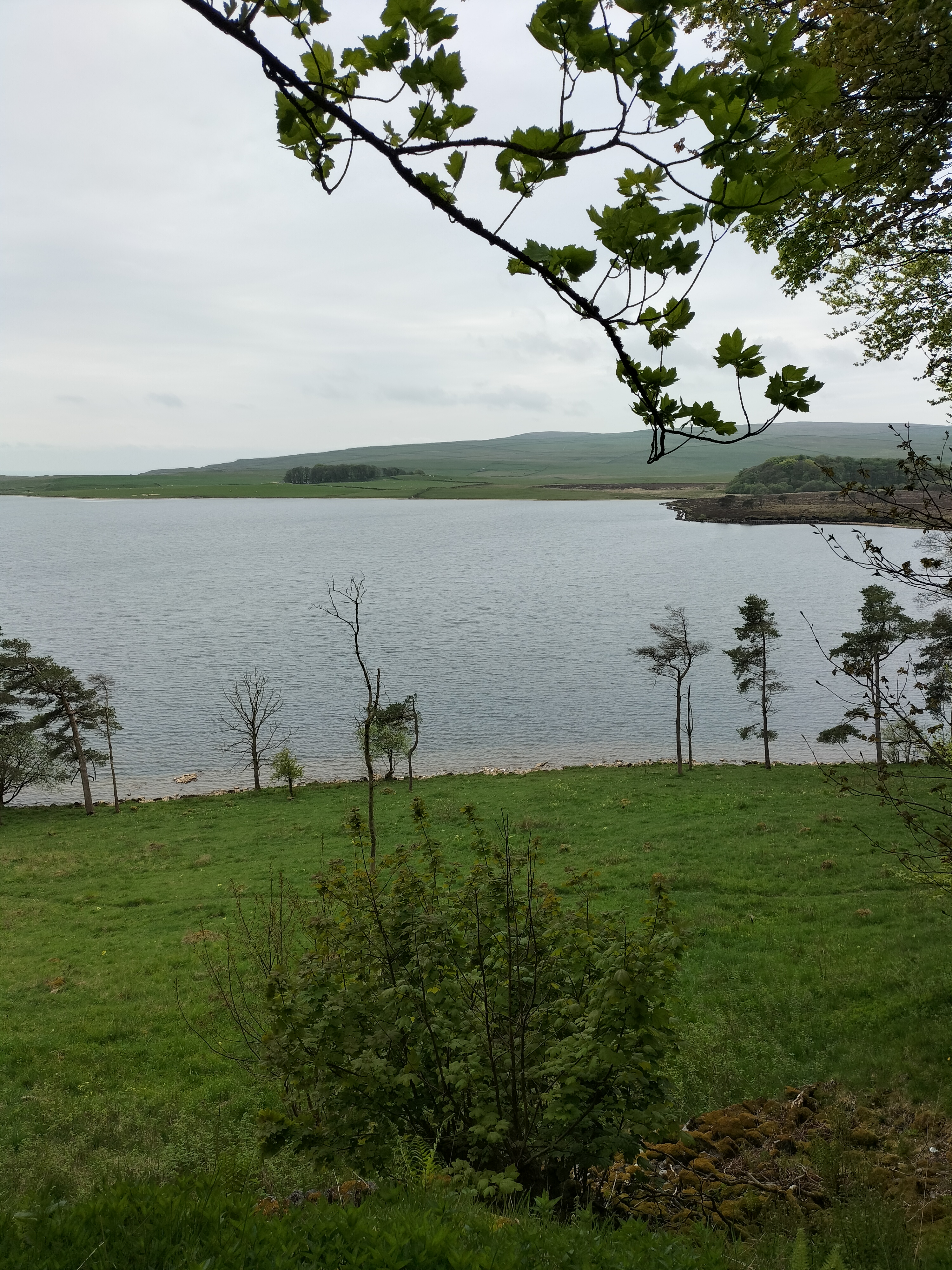
Malham Tarn is a shallow glacial lake three hundred and seventy seven metres above sea level, making it the highest lake in England. Situated above the village of Malham in the Yorkshire Dales National Park, it’s owned by the National Trust. It’s also the source of the River Aire; water flows out of the southern end of the lake and disappears underground to reappear as the River Aire at the foot of Malham Cove about one and a half miles away. Later, we were told by someone local that Malham Tarn is unusual because the water doesn’t sink into the ground. Apparently, during the Ice Age glaciers scraped away the the limestone down to the ancient slate layer underneath, and because slate is impermeable, it doesn’t let the water through. Then, when the glacier melted, the mouth of the Tarn was sealed by banks of clay and gravel.
I studied the map. ‘You said we were having an easy day today.’

‘I told you; eleven miles,’ said the photographer.
‘No, you said a mile.’
It’ s all flat, so it is easy… most of the way.’ And off he strides…
Towards some cows. Who look at us with interest and then decide to follow.
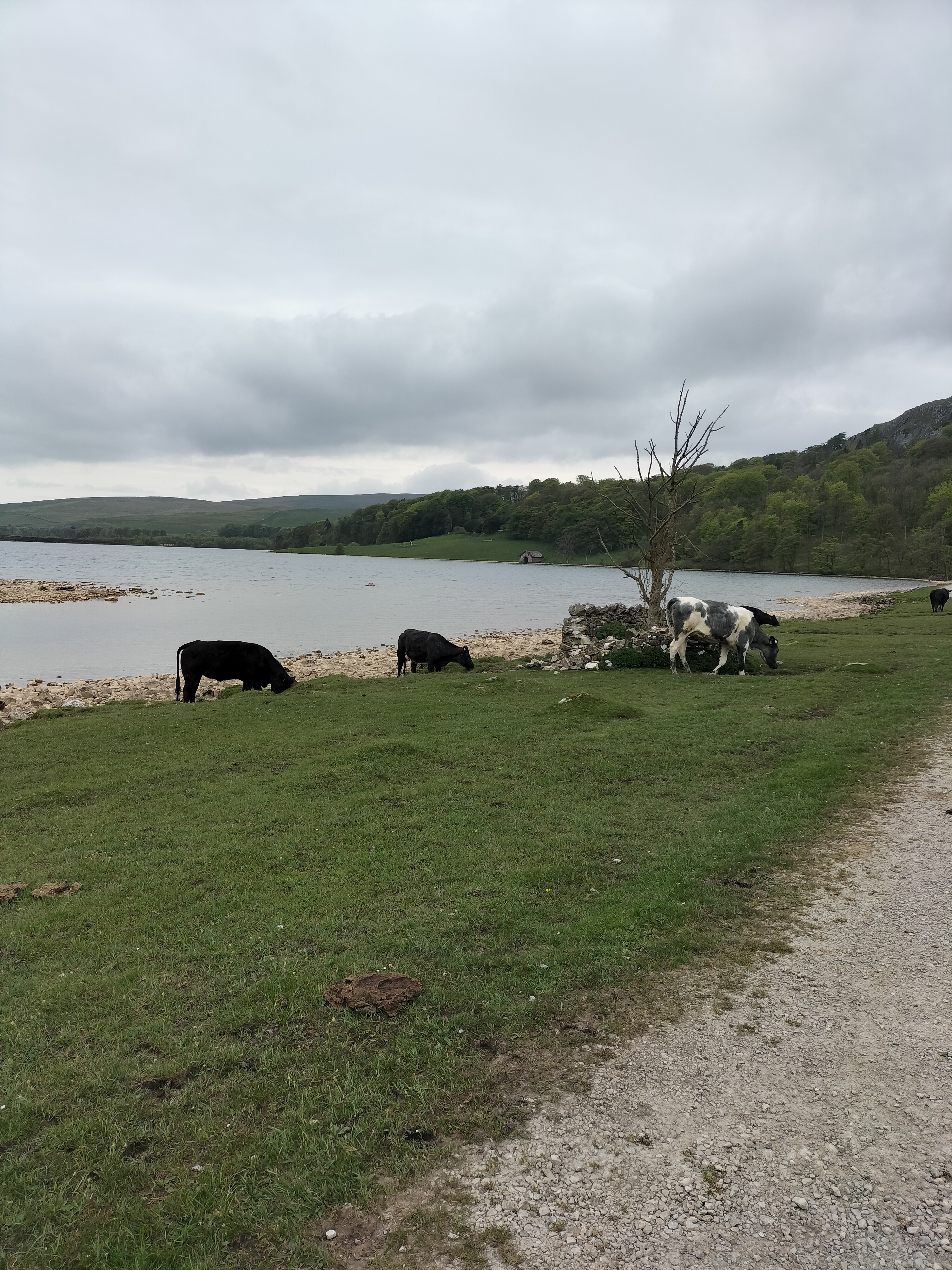

All the way as we walked along the shore of the tarn, through a gate and along a path into the woods.

We passed Tarn House, which was built as a hunting box in the late-18th century, and is now now owned by the National Trust. Used as a Field Studies Centre, there is an Orchid House, which usually has an exhibition area. Seeing the exhibition subject on our day, I passed by.

The house itself must once have been quite grand. It still is impressive, though obviously needs money spending on it.


There isn’t a lot of open water in the area, and, in the Stone Age, the lake was inundated with herds of wild animals, and consequently brought hunters from far and wide. Archaeologists have found the remains of their campsites and stone tools along the shoreline. We walked down to the bird hide.

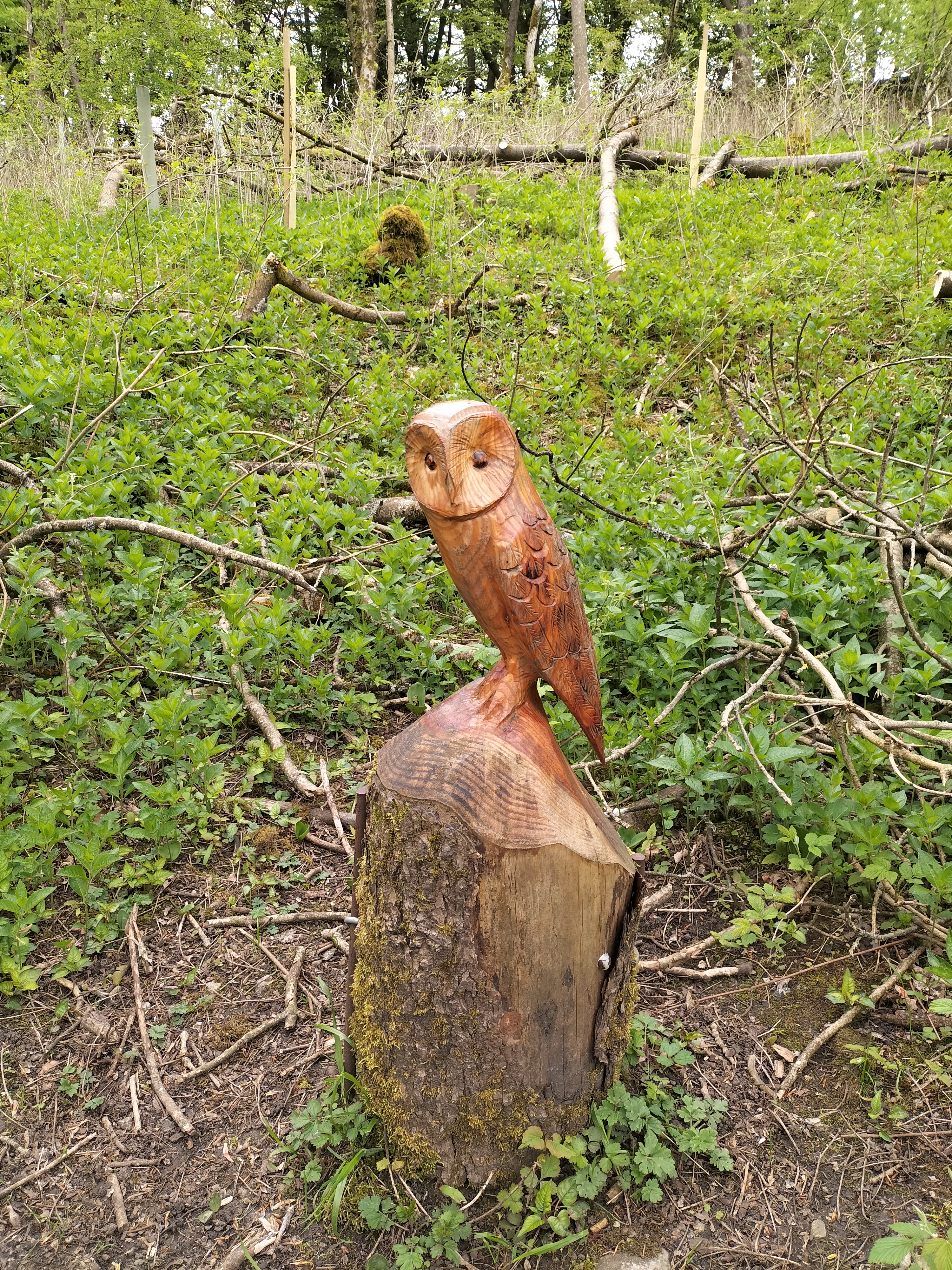
Although we saw Canada geese, a pair of mallard ducks, a greater-spotted woodpecker – and many sparrows, this was the only other wildlife we found…


But what was really impressive was the man-made track that leads to the National Nature Reserve. We leisurely followed the boardwalk through the reserve for the next half an hour.


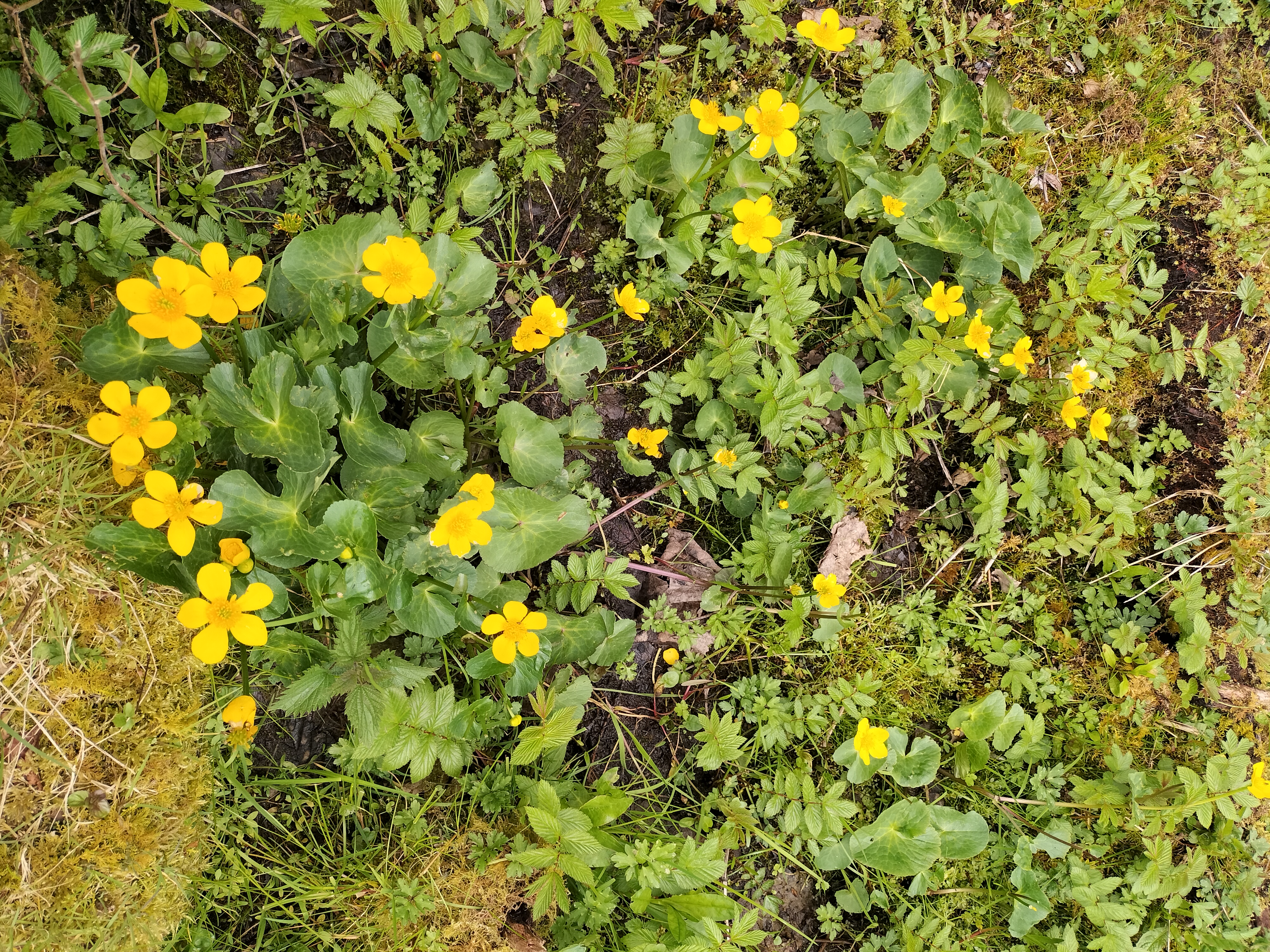

We came out of the reserve onto an unmade track . I expected to turn right to retrace our steps.
‘No left, we’re only halfway around the walk,’ the photographer said. Earlier on I’d seen this in the distance.
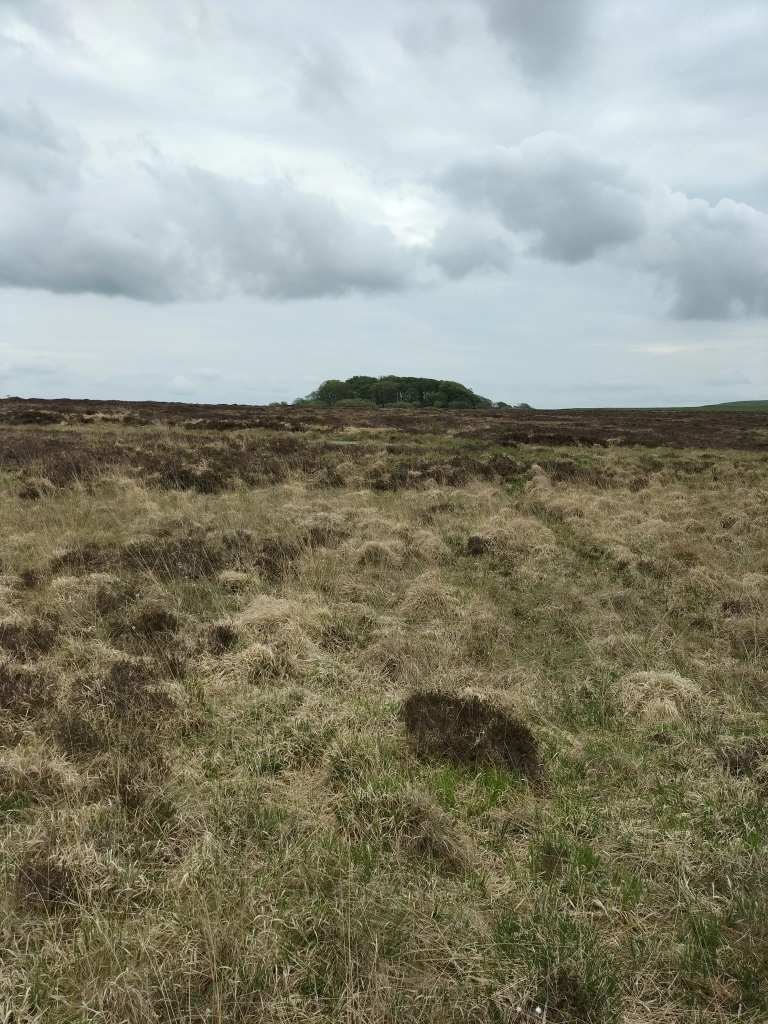
Reassured that he’d said the walk was a flat walk, I’d just admired the shape of Great Close Scar. I said nothing. I was saving my breath … and waiting…
More next time!

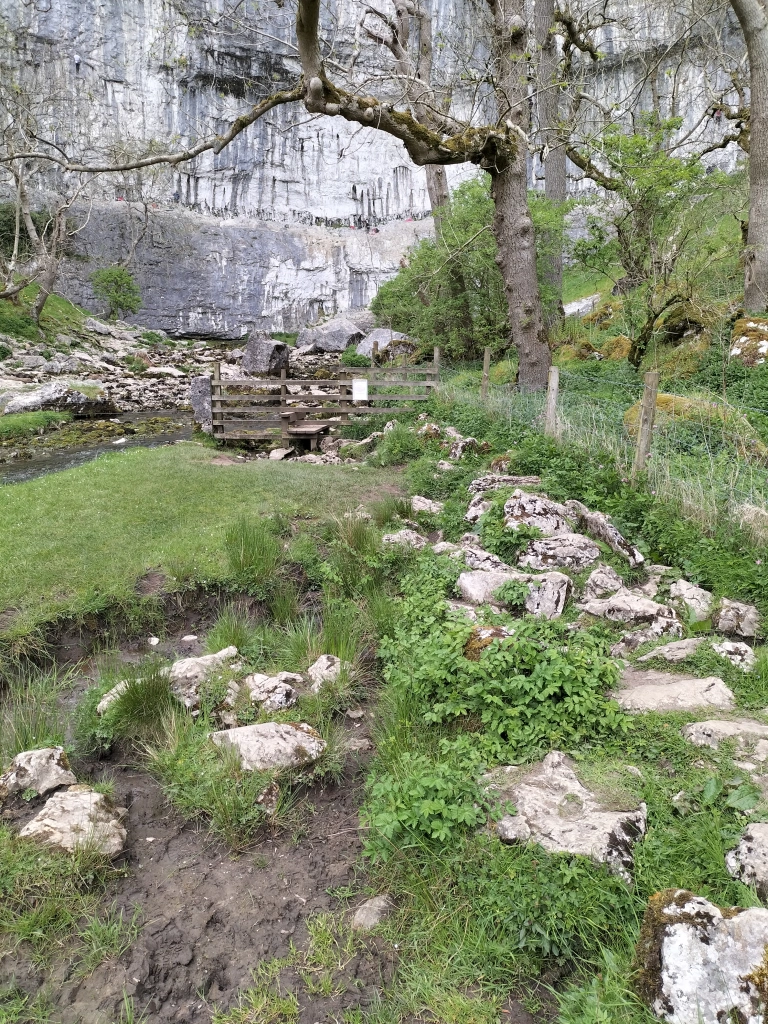


 Judith Barrow