A long time ago I was told that the first rule in writing memoirs is to be truthful. It’s the only way. To tell your own particular truth, what you see and have seen, what you know and have known. And because you need to hold, and own, your own particular truth., to find your own voice, one that suits the story you have to tell.
So, if I wanted to write about my childhood,, about myself within my family, how would I do it? As a child, to observe the world around me with a child’s eyes? Or as an adult, looking back, remembering a distant past?
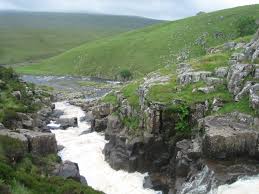
It took me many years to write the poem below. Because that’s when I felt safe to bring back the memory; the fear we had at the time. The years when it was happening. When the moors I’d loved – Saddleworth Moors – the moors I’d walked on, collecting peat with my parents for the garden (at a time when it was legal to do so) … became an evil place.

Missing on Saddleworth Moors
Still missing.
Despite the changes
All remains the same.
Amongst the blackened heather,
The tufts of faded grass,
grey sheep huddle.
Yellow clouds
tarnish the translucence of winter light,
release rain.
Ghostly images – lines of figures
Struggle over uneven terrain,
silhouetted against the sky:
listening to the sighs.
In perpetual search.
Rain carries whispers of the missing
as it drains through Pennine peat.
Tracks of water move silently underground,
lurch from dark passages
into the open streams of summers,
dancing over rocks,
green with the film of watery years.
And the fear that flows
around crevices and stones
to reach the River Tame
sustains the whispers.
Despite the changes
 all remains the same.
c) Judith Barrow
ist Prize. Roundyhouse Poetry Magazine 2003