A Hundred Tiny Threads #Prequel #familysaga #histfiction #WW1 #reviews #family #relationships #Poetry

It’s eight years this month since the prequel, A Hundred Tiny Threads, to the Haworth Trilogy was published – so a little celebratory post – with an extra personal memory at the end – for one of my oldest books.

It’s 1911 and Winifred Duffy is a determined young woman eager for new experiences, for a life beyond the grocer’s shop counter ruled over by her domineering mother.

The scars of Bill Howarth’s troubled childhood linger. The only light in his life comes from a chance encounter with Winifred, the girl he determines to make his wife.

Meeting her friend Honora’s silver-tongued brother turns Winifred’s heart upside down. But Honora and Conal disappear, after a suffrage rally turns into a riot, and abandoned Winifred has nowhere to turn but home.

The Great War intervenes, sending Bill abroad to be hardened in a furnace of carnage and loss. When he returns his dream is still of Winifred and the life they might have had… Back in Lancashire, worn down by work and the barbed comments of narrow-minded townsfolk, Winifred faces difficult choices in love and life

A couple of reviews:

“When I emerged at the end of this book – during the reading, my immersion was total – it was with a sense of having experienced it all first hand, and of having deeply felt every moment. This was story-telling at its very best… and a book that will long linger in my memory.”

“I loved it… A page-turner that keeps you hooked. The story line has lots of twists and turns and you feel yourself moved on so many different levels. As the book unfolds it gives you moments of tenderness and love, hatred and spite all blended together with conflict, prejudice, guilt, grief and a desperate longing for change. Judith describes the period so well, with some very graphic, cruel and harrowing episodes, enabling you to empathise with each character in turn. I particularly like the fact that the story held together to the last page.”

Three year earlier, on the exact date – the 17th August – the book was published, I’d written the following…

My Grandad

grandad for sally's blog

My grandfather died seventy years ago this week. Obviously i never knew him and have only one small black and white photograph of him on my study wall. He’s standing in the backyard of the terraced house they lived in in Oldham. Lancashire. This is a poem I wrote about him a long time ago. My mother said he was gassed in WW1 and never recovered. 

My Grandad

I look at the photograph.

He smiles,and silently

he tells me

his story…

In my backyard I stand,

Hands wrapped around a mug of tea.

Shirt sleeves, rolled back,

Reveal tattoos – slack muscles.

I grin.

All teeth.

Who cares that they’re more black

Than white.

Underneath

That’s my life;

That’s the grin I learned

When burned

By poison

Spreading

Like wild garlic.

That’s the grin I wear

When I look

But don’t see

The dark oil glistening,

Blistering, inside me.

When I hear, but don’t listen

To my lungs closing.

I posture,

Braces fastened for the photo,

Chest puffed out.

Nothing touches me –

Now.

Later I cough my guts up –

Chuck up.

I trod on corpses: dead horses,

Blown up in a field

Where grass had yielded

To strong yellow nashers.

And in the pastures

I shat myself.

But smelled no worse

Than my mate, Henry, next to me

Whose head grinned down from the parapet –

 Ten yards away.

He has perfect, white teeth.

Much good they’ve done him,

Except for that last night at home

When the girl smiled back.

The Winter of Discontent: The Background to Part Two of The Stranger in my House. #CreativeControl #Families

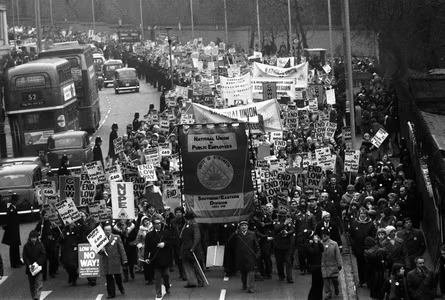
Part Two of The Stranger in my House is set against what is now called the Winter of Discontent – A term that comes from Shakespeare’s play Richard III, but it was used in an interview by the then Prime Minister James Callaghan and was taken up by the media. It lasted between November 1978 to February 1979 in the United Kingdom and, following opposition from the Trades Union Congress (TUC), took on the form of widespread strikes by both the private and public sector. Trade unions demandied pay rises greater than the limits Prime Minister, James Callaghan, and his Labour Party government imposed in an effort to control inflation.

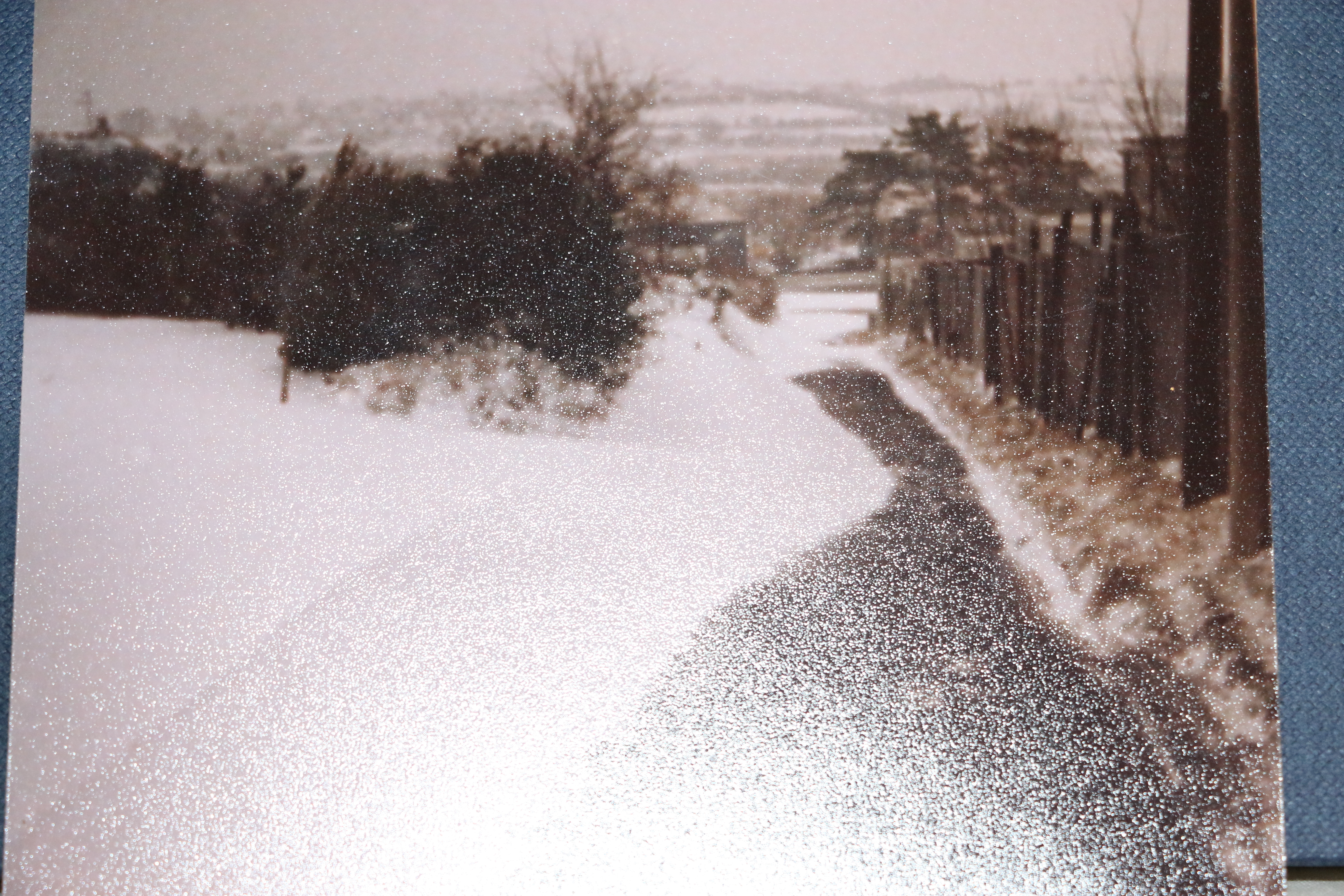
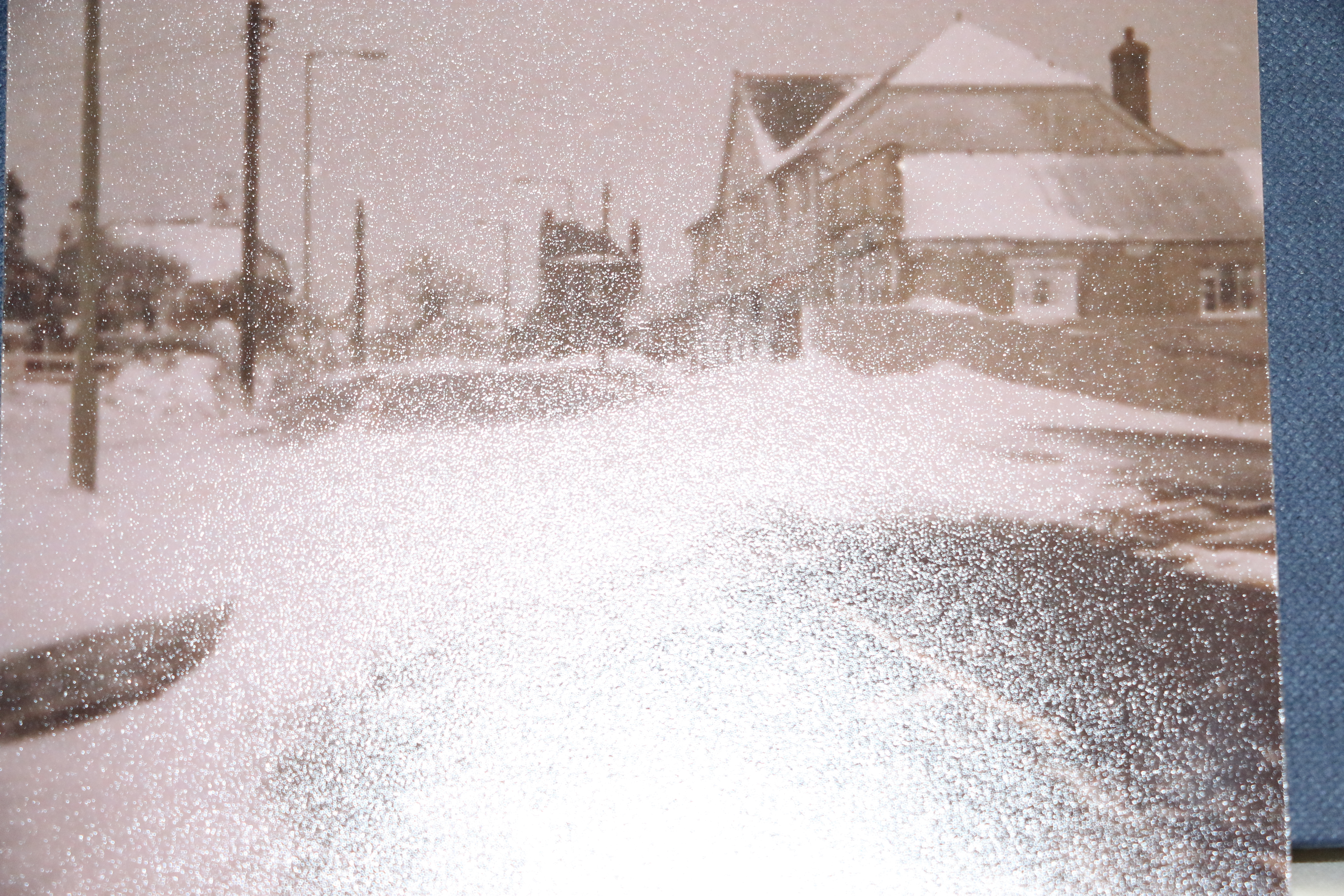
It was also the coldest winter in sixteen years. Heavy snowfall and freezing temperatures disrupted transport, businesses, and energy supplies.

In January 1979 (between the 1st and the 14th), some 20,000 railwaymen held four one-day strikes. There were strikes by haulage drivers, petrol tank drivers, and eventually municipal workers – 1,250,000 of them organised a one-day national strike on 22 January 1979.

The most notorious incident was the grave diggers’ strike on Merseyside, which hit the headlines with the press vilifying trade unions for their lack of sympathy with the bereaved, and, it was argued, with the needs of the nation.

But it was a strike by refuse collectors that came to symbolise the complete breakdown of UK public services. Local councils rapidly ran out of storage space as the binmen continued to strike, so rubbish was left in streets and open public spaces instead.

Photograph courtesy of The Guardian
Photo by Evening Standard/Hulton Archive/Getty Images)

A gripping ‘cuckoo in the nest’ domestic thriller

After the death of their mum, twins Chloe and Charlie are shocked when their dad introduces Lynne as their ‘new mummy’. Lynne, a district nurse, is trusted in the community, but the twins can see her kind smile doesn’t meet her eyes. In the months that follow they suffer the torment Lynne brings to their house as she stops at nothing in her need to be in control.

Betrayed, separated and alone, the twins struggle to build new lives as adults, but will they find happiness or repeat past mistakes? Will they discover Lynne’s secret plans for their father? Will they find each other in time?

The Stranger in My House is a gripping ‘cuckoo in the nest’ domestic thriller, exploring how coercive control can tear a family apart. Set in Yorkshire and Cardiff, from the 60s to the winter of discontent, The Stranger in My House dramatises both the cruelty and the love families hide behind closed doors.

“Judith Barrow’s greatest strength is her understanding of her characters and the times in which they live.” Terry Tyler

Grateful for this reader’s review. One of the first for The Stranger in my House, when it was published in November 2024.

Received the book today and finished it in the one sitting!

Judith Barrow’s done it again! The Stranger in My House is a book that showcases her renowned credentials. The characters are superbly drawn, the tension grows steadily and with each turn of the page your heart is gripped by the dilemmas facing the young protagonists, twins Charlie and Chloe, and their well-intentioned father. As with The Memory (shortlisted for Wales Book of the Year) it’s the way Barrow takes the ordinary and everyday, that we recognise and identify with, and skilfully uses her eye for human behaviour to turn it into something that becomes a nightmare we can readily believe in.
The story begins in 1967 and over the following decade the sense of time and place is expertly done without being intrusive. At the core of the tale is coercion and the reader can see how cleverly the others are being manipulated by the woman who undermines them and shatters their family bonds. My dislike for Lynne and her son Saul built with the book’s momentum. There was that fear that they would get away with unimaginable cruelty and malice. To counter that, were those whose innate love and kindness provided a heartwarming buffer.
From the start, I was gripped and that grip tightened inexorably. It’s becoming a cliché to say that you couldn’t put a book down – but I couldn’t. I had to know what was going to happen next. It mattered. That is the hallmark of a great author.

My Review of Nine Lives by Terry Tyler #ShortStories #Review #Reading

Book Description:

Winner of ‘Best Short Story Collection’ in the 2014 eFestival of Words, “Nine Lives” comprises nine short dramas in the vein of Terry Tyler’s well-loved novels, some funny, some sad, with her usual unpredictable twists. The first chapter of full-length novel and tale of sibling rivalry, WHAT IT TAKES, is to be found at the end.

The stories:

Angel – The perfect wife of the perfect husband is tempted by the fruit of another.
Shut Up And Dance – Paul says he will love Laura whatever size she is. But will he?
Mia – The threat of ‘the other woman’…
Kiss Your Past Goodbye – Zoe finds out what happened to her first love, who broke her heart.
We All Fall Down – Two old friends meet for a drink – just a swift one, of course!
Bright Light Fright – A tale of vengeance, a burglary, and a nasty shock.
Mama Kin – Emma and Melanie have very different approaches to childcare – oh dear!
Don’t Get Mad – Get Even – Kevin and Marcus have been best friends

My Review:

At the moment I’m finding it difficult to concentrate on reading ( well on anything actually). But, having been a fan of Terry Tyler’s writing for a long time I was pleased to come across this collection of short stories. Not a clue why I haven’t found it before!

The one thing (well, not only the one thing – I could expound on this for ages) that I love about this author’s work is her ability to get inside each character’s head, whoever they are, whether a protagonist or the antagonist … or even a minor character. She brings them alive instantly and draws the reader into the story.

Each of these stories are short, but they pack a punch and made me think. There is always something beyond the words, the characters, the plot. I think it’s life – and the general affliction of humanity; whether it’s pride, or greed, or revenge- or whatever else that lies beneath the facade of what is called ‘real life’.

They may be short, they may be easy reads on the surface – but they dig dip and I loved them.

And the book was the winner of ‘Best Short Story Collection’ in the 2014 Festival of Words, which says everything.

So … highly recommended … to any reader.

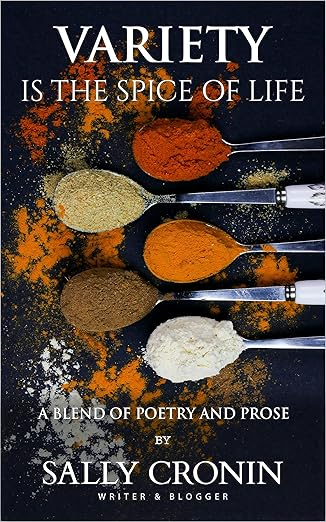
My Review of Variety is the Spice of Life: A blend of poetry and prose by Sally Cronin

Book Description:

Variety is the Spice of Life is a collection of poetry and short stories about relationships with others, including pets and animals inhabiting the world around us. The connection with others brings love and friendship, excitement and sometimes surprises, danger, mystery and sometimes the unexpected.

The poetry explores human nature, the fears, desires, expectations and achievements. Nature offers a wonderful opportunity to observe animals both domesticated and wild. Even in a back garden you can observe a wide variety of creatures and the daily challenges to survive a harsh environment.

The short stories introduces you to a healer whose gift comes with danger, a neighbour determined to protect a friend, a woman on the run, an old couple whose love has endured, an elderly retired teacher who faces a life changing accident, a secret that has been carried for over 70 years and a village who must unite as they face devastating news.

My Review:

I read Sally Cronin’s Variety is the Spice of Life quite a while ago, and recently when ‘tidying up’ my kindle I was surprised and somewhat dismayed to see I’d made notes on this lovely collection of poetry and prose that encompasses such a variety of themes – and not reviewed it.


So here I’m rectifying that.


The poetry at the start of the book is almost a study of the world around us. It’s an invitation to look once more at nature, however small and seemingly insignificant, and is portrayed through wonderfully insightful and sensitive words, so evocative that each piece evokes an image. I remember how, the first time I saw the poems, I read each of them out loud, relishing the sounds, the rhymes, the rhythms. And I would invite any reader to do the same – they come alive in that way, as does all good poetry. Sally has a way of capturing emotions and sensitively showing the uniqueness of the world around us – and the many layers in human nature.


The theme of the individuality, the variety of actions and reactions we are all capable of, is repeated over and over again in many subtle, and sometimes overt ways, throughout her prose. I was tempted to quote, to unpick each of the eight short stories, to describe the core, the main premise that runs through them. But, sticking to my decision not to reveal any spoilers in my reviews, I would just urge any potential reader to discover them for themselves. All reveal the writer’s natural gift for storytelling, of capturing the essence of characters and the world they inhabit. Some stories brought chuckles and a wry smile, others the feelings of sadness, of sharing fears and loss. And tears. Writing a short piece of prose is not an easy task; wrapping up a scene or a journey into a package that reveals a whole plot to the reader in so few words requires a special intuition on the part of the author. Sally Cronin shows she has a talent for such an understanding.


I can do no more, having given Variety is the Spice of Life a second reading, than to stress how much I recommend this offering from Sally. You won’t be disappointed.


A last word on the cover – a brilliant spicy image of the promising within!!

About the author

Sally Cronin is the author of eighteen books including her memoir Size Matters: Especially when you weigh 330lb first published in 2001 which followed her weight loss of 150lbs and the programme she designed to achieve a healthy weight and regain her health. A programme she shared with her clients over her 26 year career as a nutritional therapist and on her blog. This has been followed by another seventeen books both fiction and non-fiction including multi-genre collections of short stories and poetry.

Her latest book Size Always Matters is an extended and updated version of her original book Size Matters and now includes the nutritional element to losing weight and some recipes with ingredients that provide the nutrients necessary for healthy weight loss and continued good health.

As an author she understands how important it is to have support in marketing books and offers a number of FREE promotional opportunities in the Café and Bookstore on her blog and across her social media.

After leading a nomadic existence exploring the world, she now lives with her husband on the coast of Southern Ireland enjoying the seasonal fluctuations in the temperature of the rain.

Find Sally through the following links:

Smorgasbord Blog Magazine: https://tinyurl.com/5xskmavn

LinkedIn: https://tinyurl.com/3tn378xb

Facebook: https://www.facebook.com/sally.cronin

X: https://x.com/sgc58

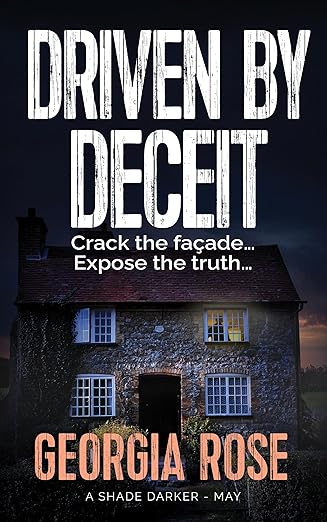
My Review of A Stolen Future ( A Shade Darker Book 4 by Georgia Rose

Book Description

A rival to overcome… A truth to reveal…

A family firm. A long-held promise. What will it take to protect all she loves?

Alice Fraser has everything she needs. A comfortable home. A few good friends. A satisfying career. But when the promise made doesn’t materialise and everything changes at work she finds herself losing control of all she once held dear.

She could have left. She should have left. Instead she decides to dig in, and make life uncomfortable for her tormentor.

Petty revenge, she calls it. And that’s how it starts. But one day she is pushed too far, and once she takes the next step there is no going back.

A Stolen Future is a gripping domestic suspense novel. If you like character-driven action, suspenseful storytelling and unexpected twists then you’ll love this psychological thriller.

My Review:

From the word go I’ve loved this series from Georgia Rose. In fact I’ve loved all her books, whatever genre. But A Stolen Future is the fourth story that is special, because it’s set in the same village, Melton, and besides being centred on the protagonists and her antagonist, it also touches on and includes characters, now minor ones, whose lives we have seen in depth before.

To that end, I woud encourage any reader to begin – as they say – at the beginning: so it’s

https://tinyurl.com/5n8v36v2

https://tinyurl.com/mw7y2f7b

https://tinyurl.com/55d8brph

I always try not to give spoilers in my reviews, and feel that I’m in danger of doing just that, so I’ll stop there. But what I do need to say is that all these characters are multi layered and immediately identifiable through their dialogue, both spoken and internal. And, together with a cast of wonderful minor characters,, they are embedded in a community that is indicative of so many villages and small towns. And as with all of Georgia Roses’ books the descriptions of the settings give a good sense of place, so I almost felt like on onlooker to life in Melton.

I thoroughly agree with the books description: A Stolen Future is a gripping domestic suspense novel. If you like character-driven action, suspenseful storytelling and unexpected twists then you’ll love this psychological thriller. It’s a book I thoroughly recommend.

About the Author:

Georgia Rose is a writer and the author of the romantic and suspenseful Grayson Trilogy books: A Single Step, Before the Dawn and Thicker than Water. Following completion of the trilogy she was asked for more and so wrote a short story, The Joker, which is based on a favourite character from the series and the eBook is available to download for free at the retailer of your choice.

Her fourth novel, Parallel Lies, encompasses crime along with Georgia’s usual blending of genre and its sequel, Loving Vengeance, has now completed The Ross Duology.

Georgia’s background in countryside living, riding, instructing and working with horses has provided the knowledge needed for some of her storylines; the others are a product of her passion for people watching and her overactive imagination.

She has also recently started running workshops and providing one-to-one support for those wishing to learn how to independently publish and you can find her, under her real name, at http://www.threeshirespublishing.com.

Following a long stint working in the law Georgia set up her own business providing administration services for other companies which she does to this day managing to entwine that work along with her writing.

Her busy life is set in a tranquil part of rural Cambridgeshire in the UK where she lives with her much neglected husband.

The Hidden Danger in Families #coercivecontrol

I love writing about people – especially people in families. There is such a richness of emotion, of action, within families. Nowhere else will love and loyalty vie with dislike and disloyalty, (even hatred in some case), pride with resentment, happiness with complete sadness. Nowhere else are human beings so close.


With The Stranger in my House, I wanted to explore a situation that would completely turn around the characteristic of a family. And I knew that needed to be something drastic. And that the family had to have a weakness within it it. And that weakness in the Collins family was grief, the sadness of losing the mother, the centre of their world. The father Graham is still grieving, bewildered, struggling to cope with running a business and trying to look after his children, eight-year-old twins, Chloe and Charlie.That “something drastic”; the situation that would completely change the characteristic of this family arrives in the form of Lynne, the district nurse who cared for Anna, the wife and mother of the family, who died when the twins were six. Lynne continued to call on Graham after Anna died and slowly but surely becomes part of his life… and consequently of the twins lives, when she and Graham marry.

I’ve always known about coercive control, although that’s not what it’s been called until these last few years. But it’s always been the patriarchal control, the accepted head of the family situation of past times, I was initially aware of. The earliest of my books, A Hundred Tiny Threads the prequel to the Haworth trilogy, is set after WW1 and the protagonist’s father, Bill, is a man of that era; he totally controls the family: by his moods, his temper, his fists.


But these days control of any sort is identified as coercive control, and it’s recognised that this can result in psychological damage that can last for life. It’s difficult, sometimes, for the victim to make sense of what’s happening, to see it as abuse. It’s like imprisoning someone, restricting everything they are. They are robbed of their independence, and their confidence is slowly undermined. It destroys who they are.

Anyone can be guilty of being a coercive controller. And guilt is the right word, because, today, it’s viewed as a crime. To totally have control over another adult human being is a crime. It’s shown in so many ways: physical assault, threats, humiliation, intimidation or other abuse intended to harm, punish or frighten. The perpetrator gaslights the victim by denying things have happened, using the confusion to control, criticising everything they do and say. Victims suffer in silence.

Which is what Graham in The Stranger in my House does, he tells no one, feels completely useless. Isolated, he has no control over what happens to his children or his life.
And neither do his children.

But children grow up. Chloe and Charlie become young adults with minds of their own…

The Stranger in my House: https://bit.ly/3DGwMCU

Find me here:

Amazon: https://bit.ly/3UIid6I

Honno: https://www.honno.co.uk/authors/judith-barrow

Instagram: https://www.instagram.com/judithbarrowauthor/

Threads: judithbarrowauthor

Facebook: https://www.facebook.com/judith.barrow.3/