
This morning, with the weather fine, though a little chilly, we wrap up and take another of our favourite walks. As usual, Slebech Park Country Estate doesn’t fail to provide great views, some glorious wild flowers, and impressively maintained grounds.
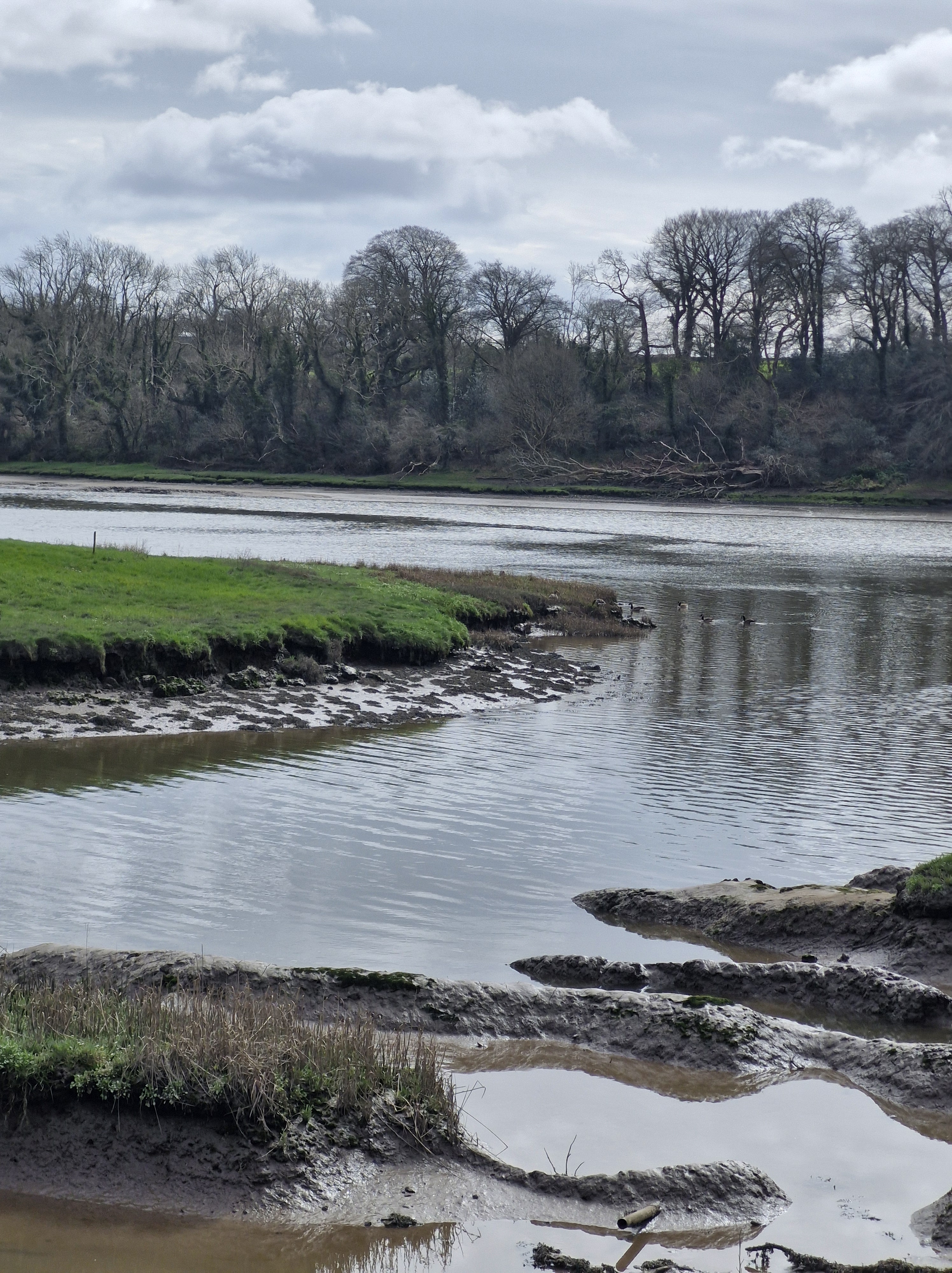
Over the years we’ve visited the park many times, in all weathers, at all times of the year. Maybe Spring is our favourite season here – or maybe summer – or autumn – or even winter, when even the bleakness of the days can’t detract from the scenery.
We’ve walked the trail from Canaston Bridge, always looking forward to our first glimpse of the Cleddau. Sometimes, as a tidal river, the water is low, the mud flats glistening in the sun, sometimes it’s high, lapping quietly against the banks, and with ducks and seagulls floating on the surface alongside one another.
Today, though, is different. Not wanting to walk along the usual, longer path from Canaston Bridge, we park in a layby alongside the busy road to Haverfordwest, climb stiles, walk along a rough track – muddy from recent rain – and alongside the estate farm.
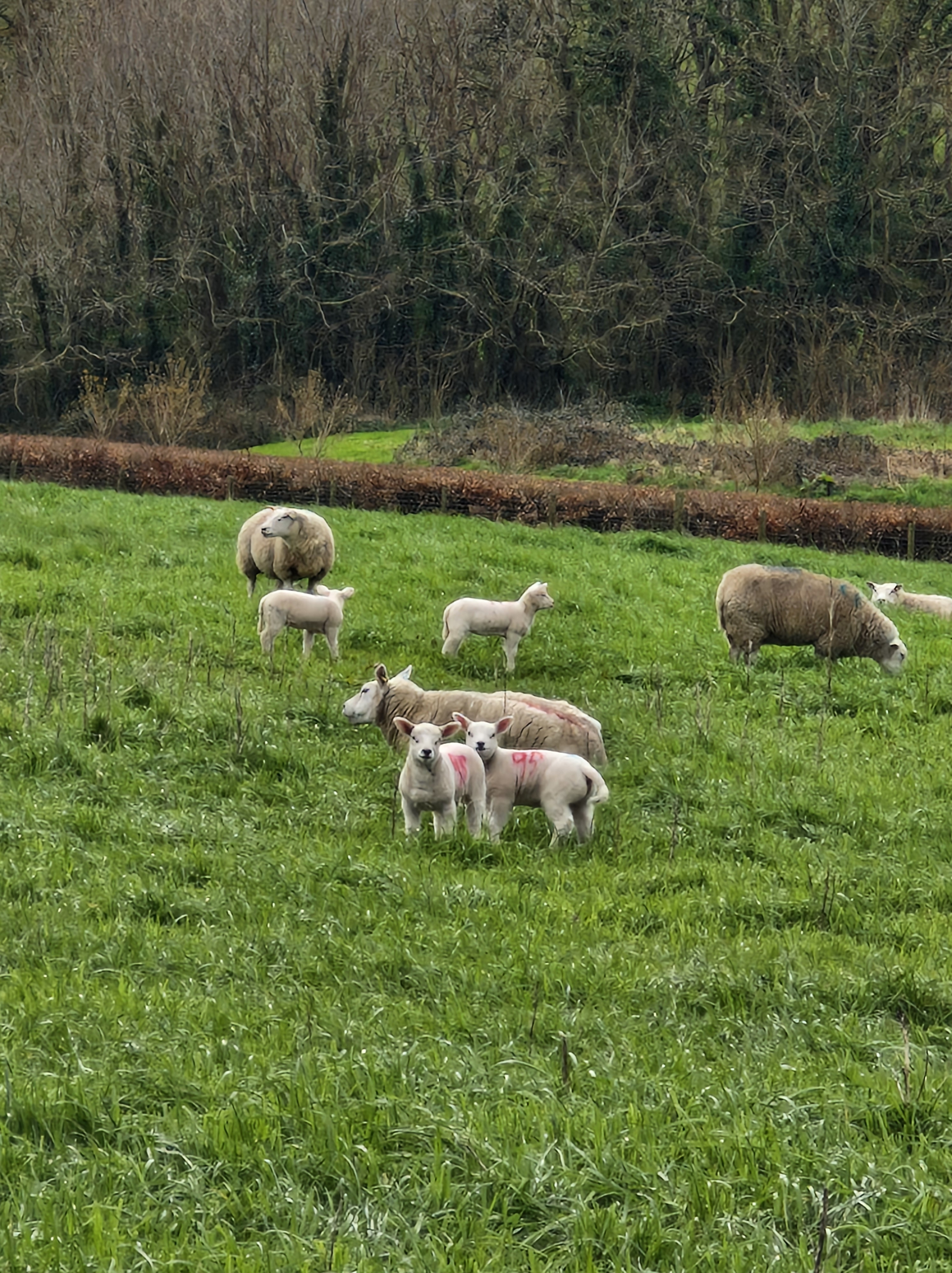
And say hello to the lambs, in the nearby field, who fix their eyes on us until we are safely past them.
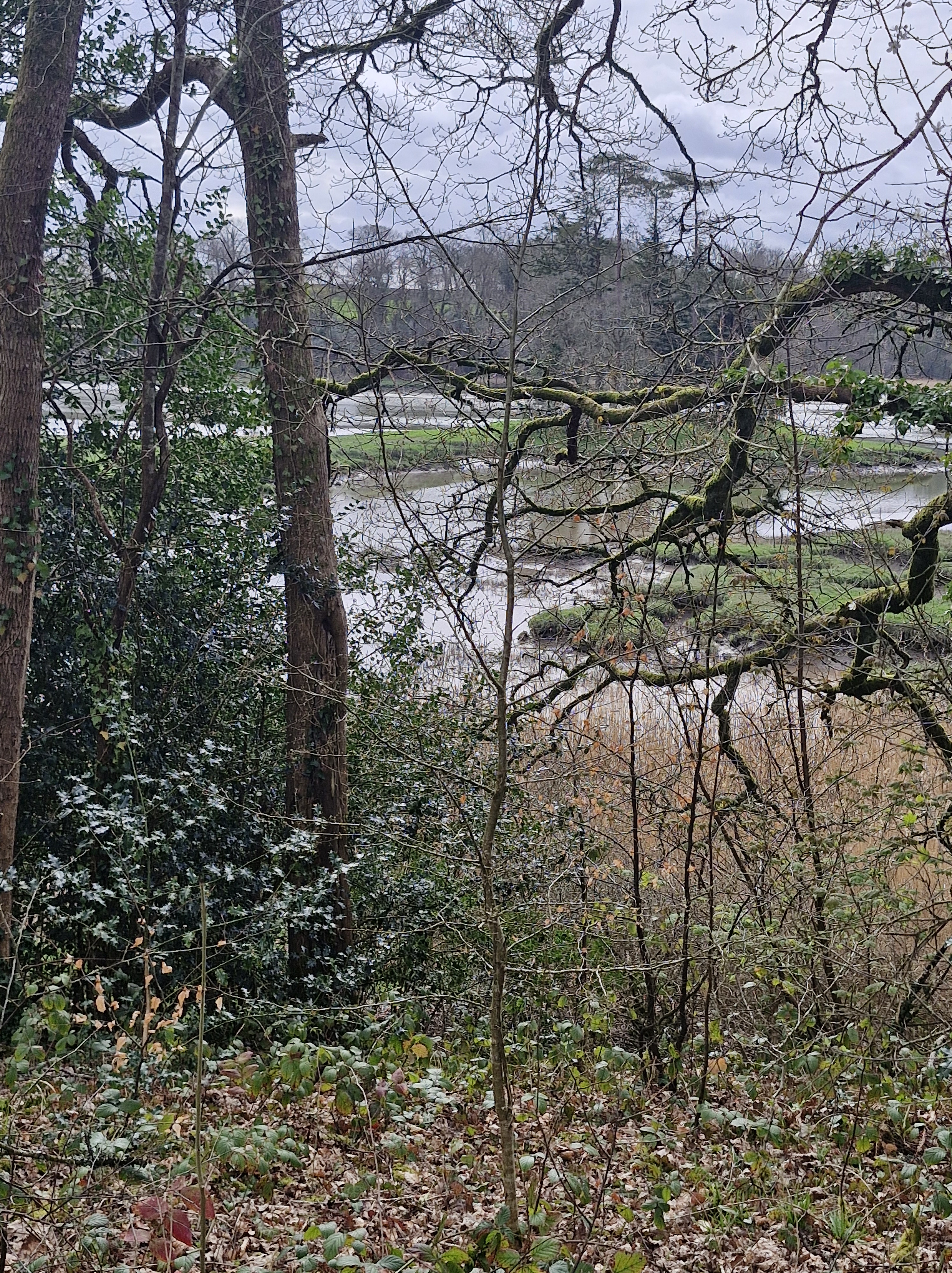
This morning the tide is in.
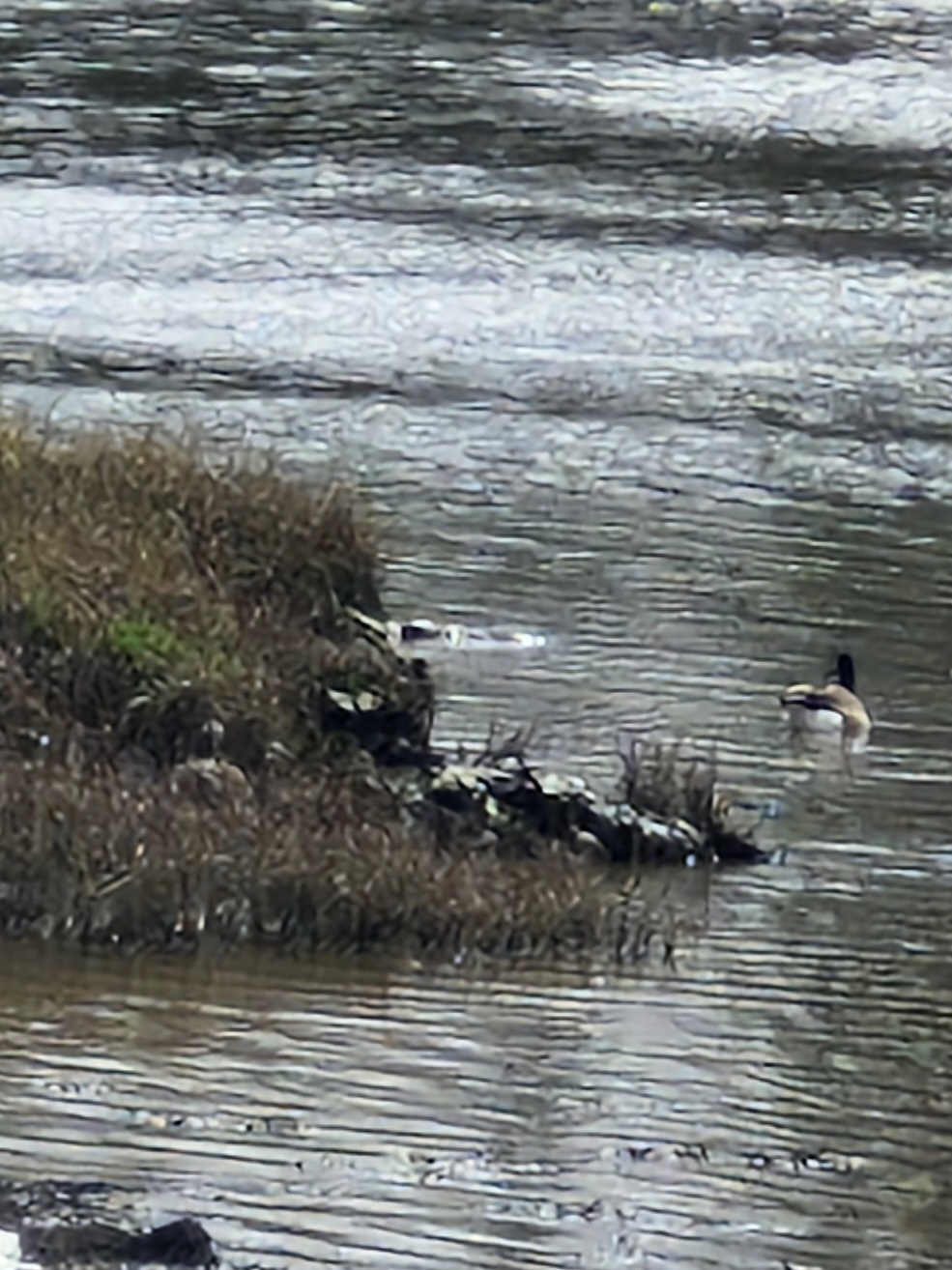
But the ducks are quite elusive. Except for one!
We saunter around the park, conscious that we are actually carrying out a recce for a stroll for members of our local U3a: somewhere fairly flat, easy walking … and no stiles!!
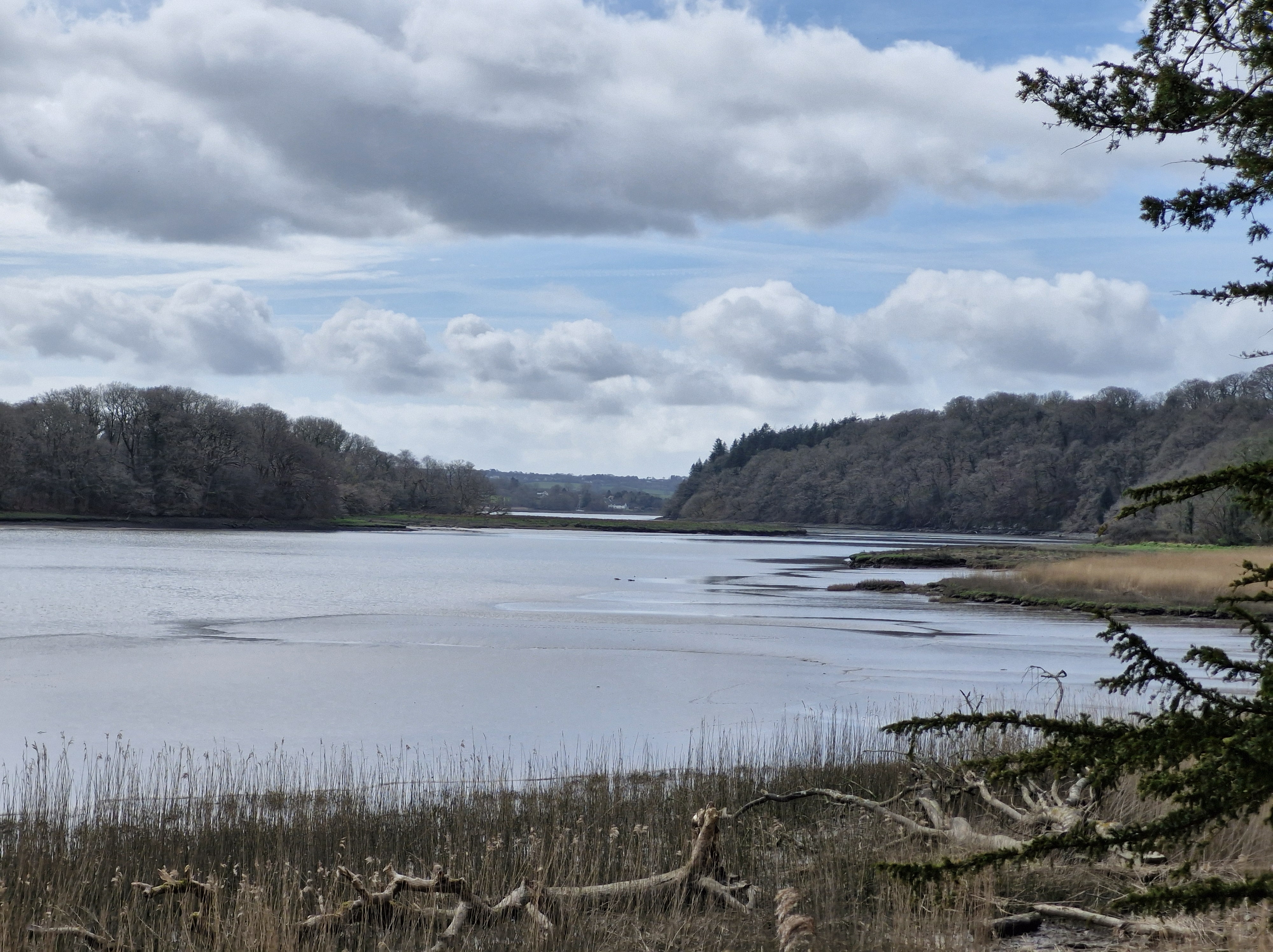
With moments when we are able to stop – to admire – to just be! …
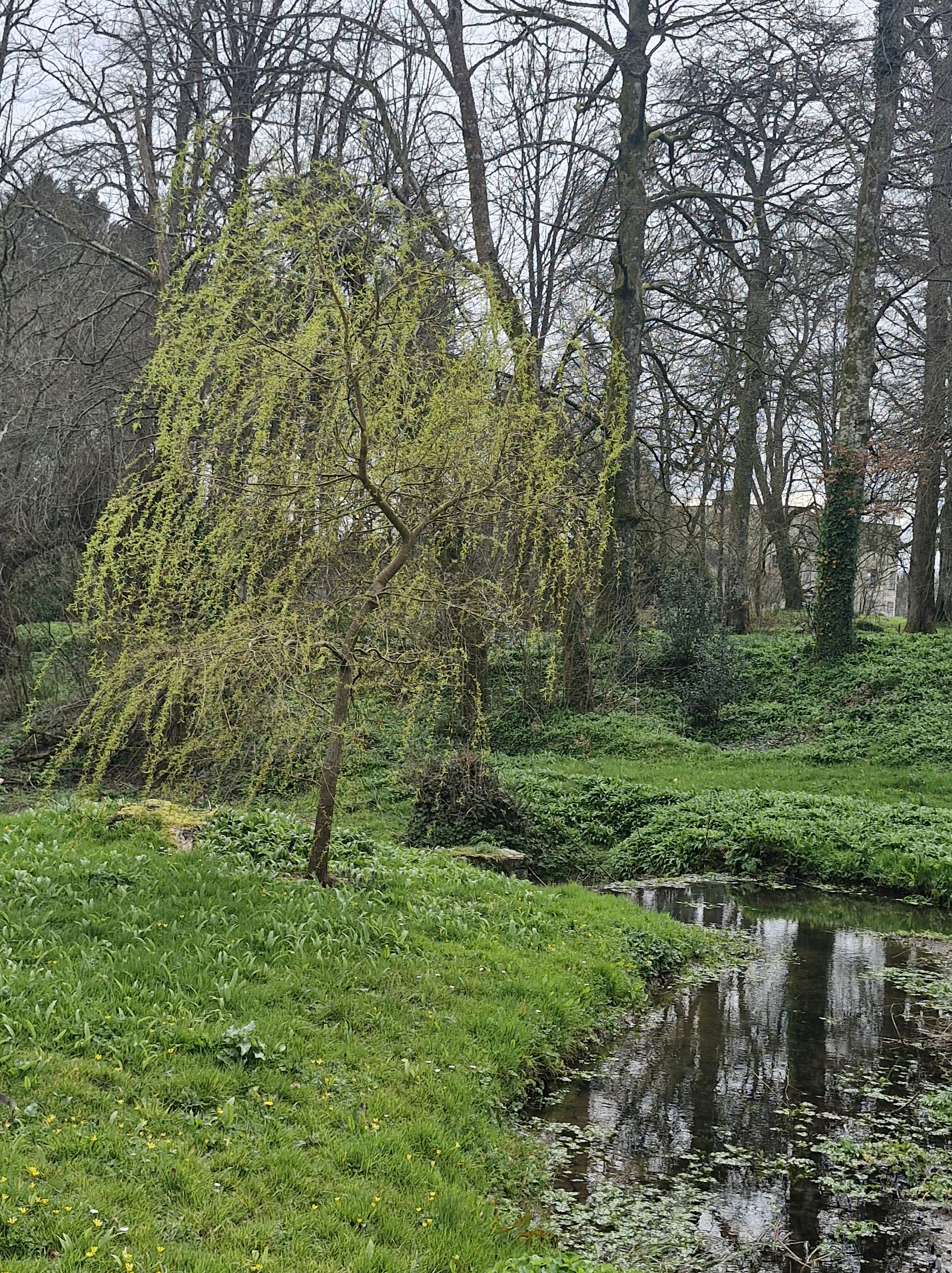
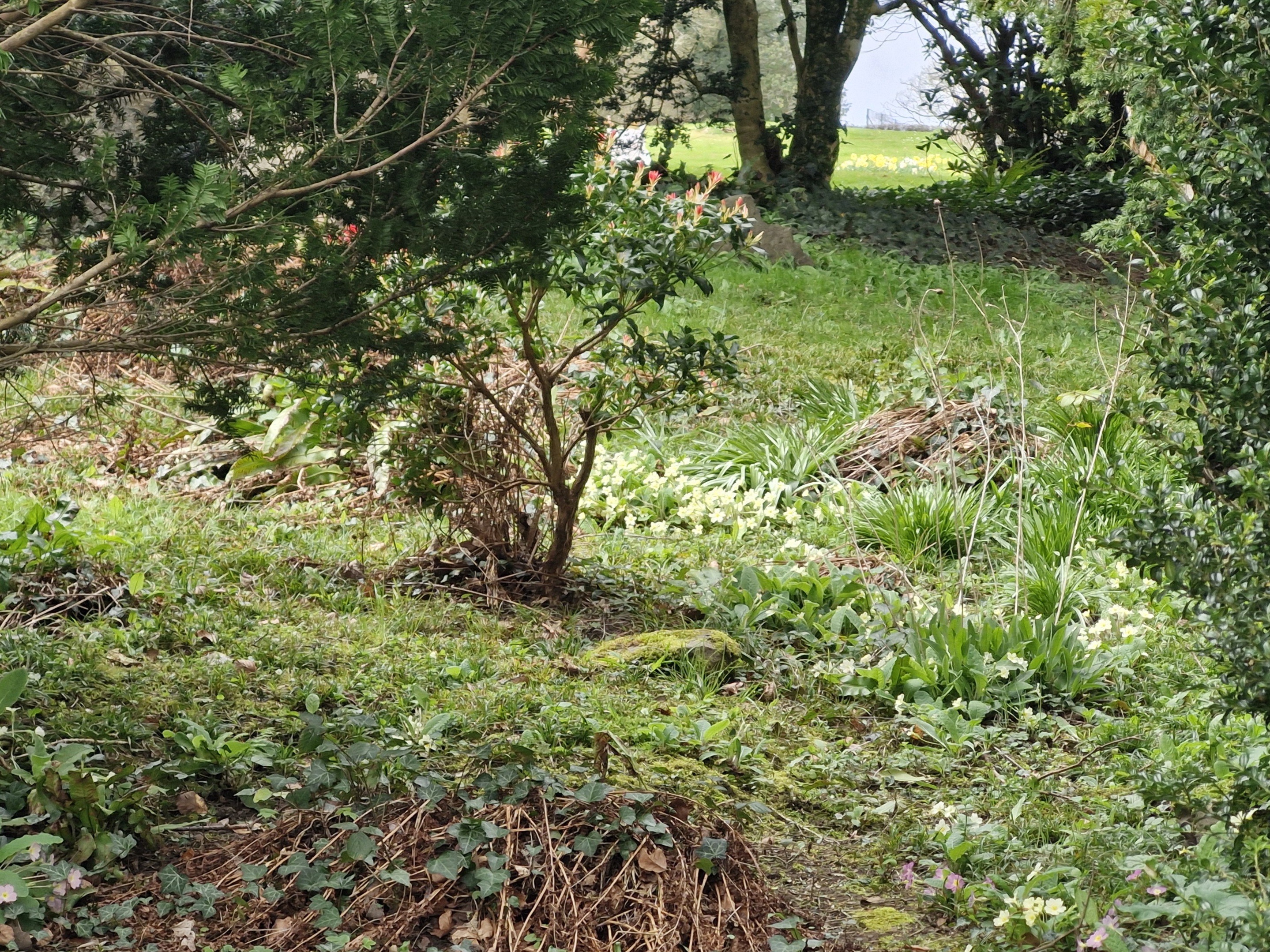
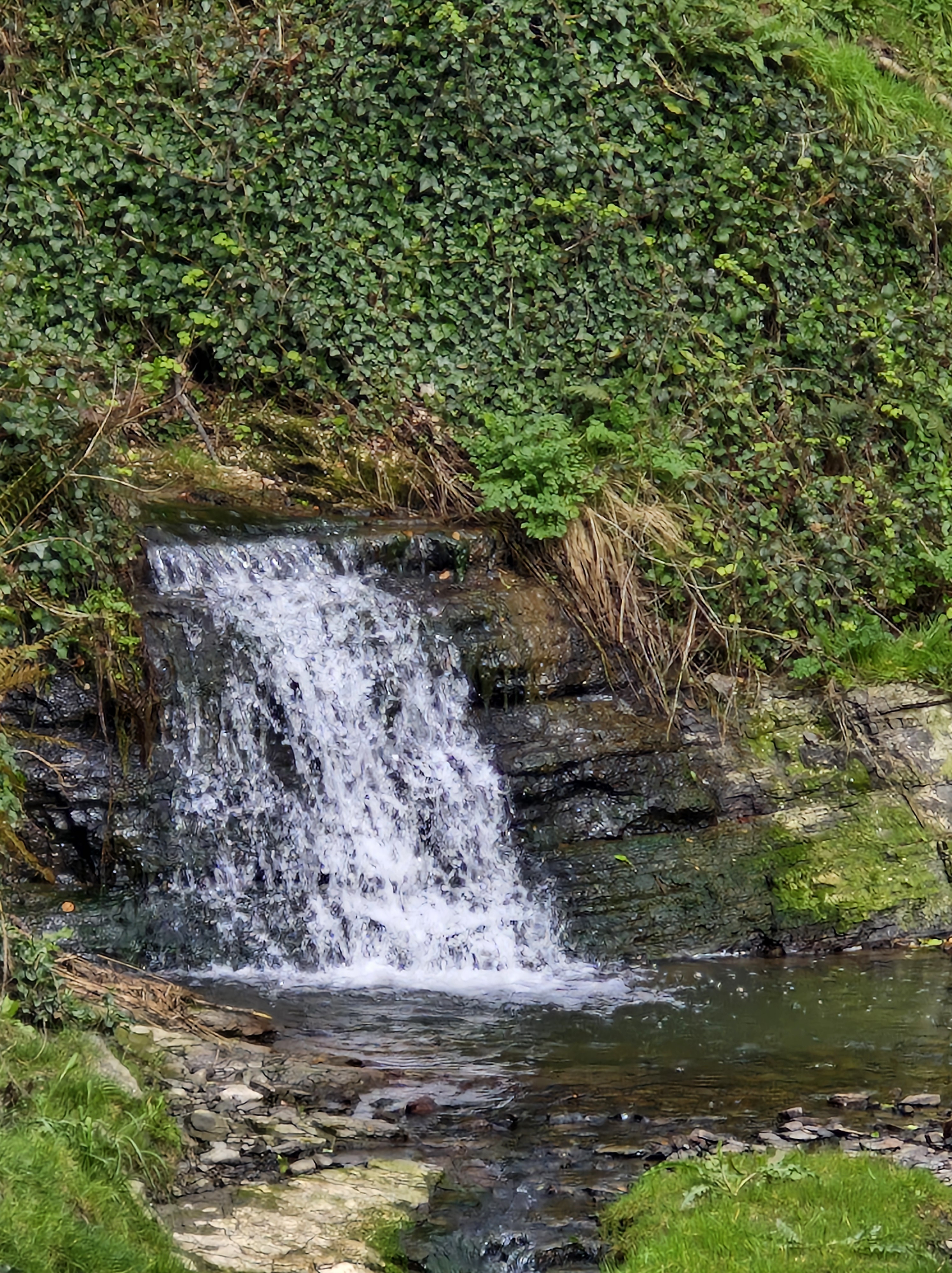
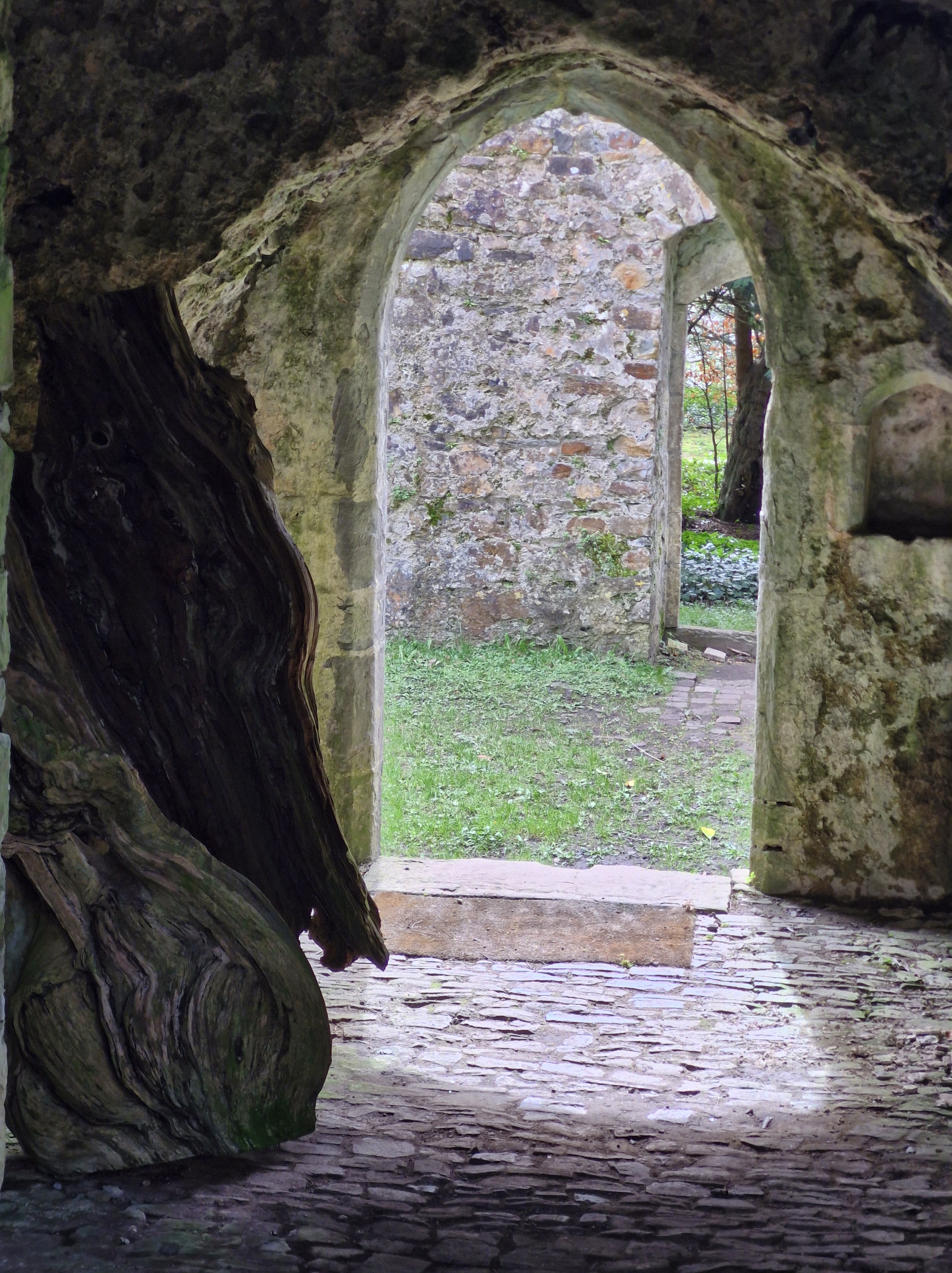
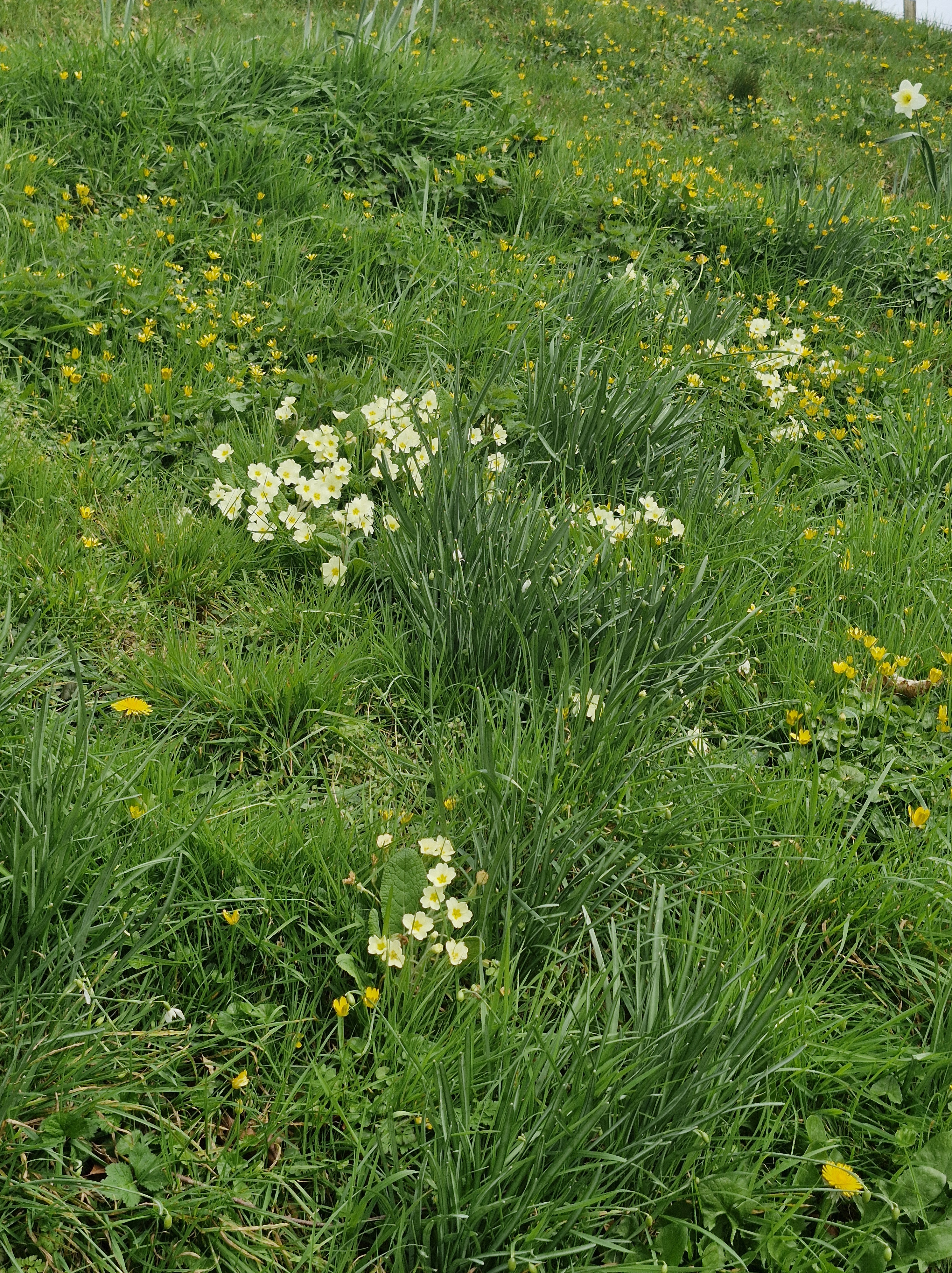
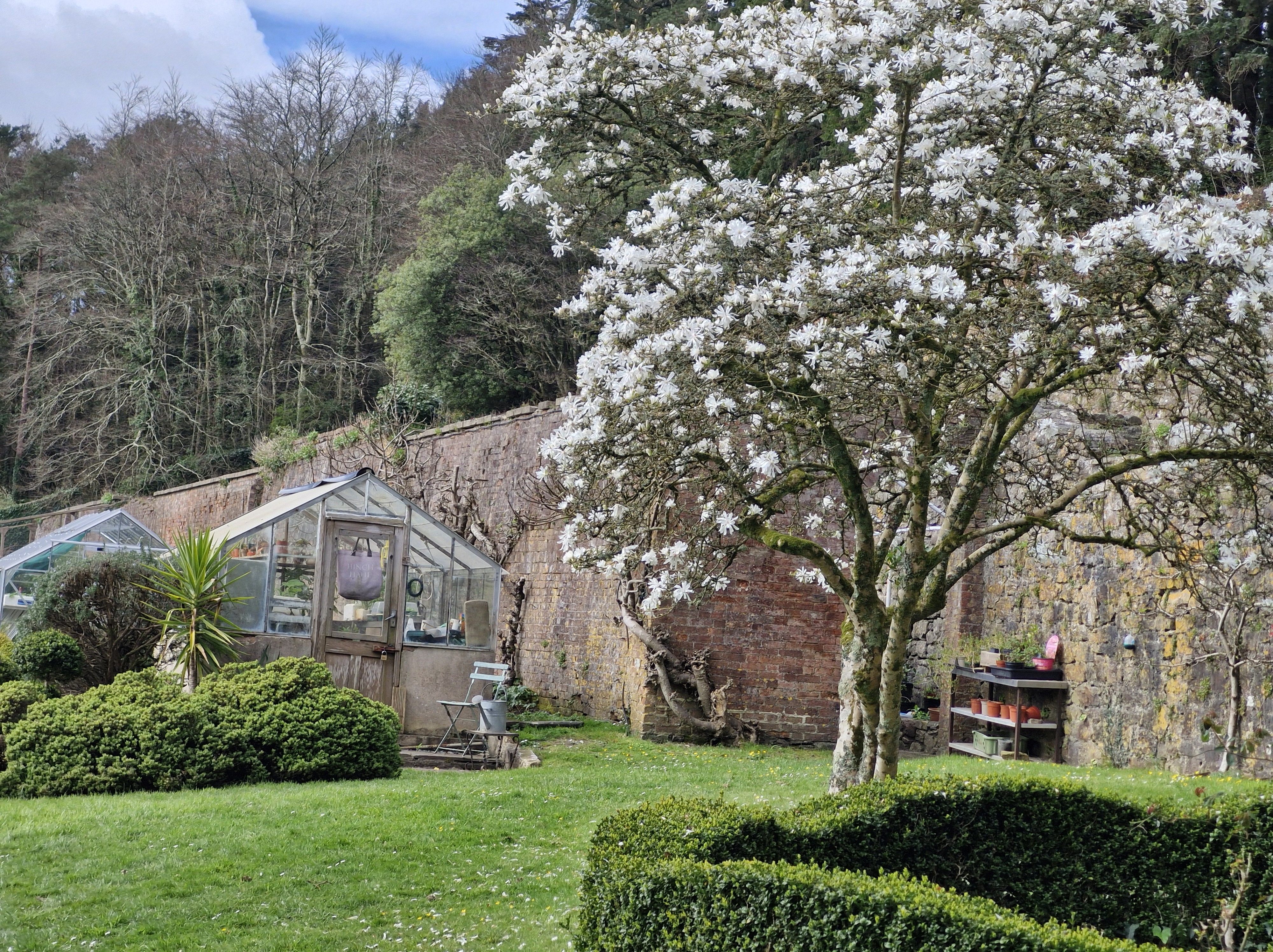
Time for lunch! We walk back to the car, having established that a stroll around the estate will be enjoyed by all.
The history of Slebech Park:
The origin of the word Slebech is thought by some to be derived from a Viking term meaning “Stoney Beach.” It is likely that Vikings sailed inland to Slebech on raiding parties and, upon seeing its commanding position on the river and small harbor, viewed it as a place of refuge. Slebech has long held a significant place in the history of Wales. From the 6th century onwards, it served as a major meeting point for pilgrims traveling to St. David’s Cathedral. Over the centuries, it has been visited by notable figures including William the Conqueror, Henry II, Edward I, and Queen Eleanor.
The estate’s history is intertwined with social stratifications of the time, as it hosted lands divided for the rich and poor. A “Beggars’ Field” is believed to have existed, though its location remains undiscovered. In recognition of its importance, Pope Calixtus decreed that two visits to St. David’s equaled one pilgrimage to Rome.
The oldest building standing today is the Norman tower in the estate’s 12th-century church. Likely part of a watchtower, it strategically overlooks the river. This site was connected to other Norman castles, forming a defensive line across Pembrokeshire. During the 13th and 14th centuries, Slebech became home to Wales’s most powerful monastic foundation, managed by the Knights of St. John (formerly the Knights Templar, now known as St. John’s Ambulance). The hospice here made Slebech a crucial gathering point for knights embarking on crusades. In fact, knights killed in foreign battles had their hearts pickled and reburied in the church crypt and on Dog Island, now a Scheduled Ancient Monument. A 12th-century sword, found on Dog Island, is now displayed in the Welsh National Museum.
Slebech’s prominence waned during Henry VIII’s Reformation when the powerful Commandery was disbanded, and its lands were redistributed. Today, only the 12th-century church, some tunnels, and remnants of thick walls from Slebech Hall remain from this period. The rest of the estate’s medieval structures were destroyed during the English Civil War.
After being sold by the Crown, the estate came into the hands of Roger Barlow, a powerful Tudor gentleman and close confidant of Henry VIII. An adventurer, Barlow sailed with the Spanish fleet on voyages to the Americas. The Barlow family owned Slebech until the 18th century, when Catherine Barlow inherited the estate. Catherine married Sir William Hamilton, but died childless in 1782. Sir William later married Lady Emma Hamilton, famous for her affair with Admiral Lord Nelson. When Sir William died, he was buried alongside his first wife, Catherine, in Slebech’s old churchyard.
Slebech Hall, one of Wales’s finest Georgian manor houses, was constructed in the 1750s. It was reputedly designed by architect Anthony Keck, also believed to have designed Highgrove House, home to Prince Charles. Around the same time, the estate’s modest granary buildings were transformed into stables and coach houses, some of which still retain their original charm today. These buildings were castellated, inspired by nearby Picton Castle. Slebech Hall remains largely intact and is Grade II* listed, with future plans to restore it to its original grandeur and incorporate it into the hotel operations.
The estate later passed to Nathaniel Phillips, a Jamaican sugar plantation owner known for his duels and his marriage at 65 to a 19-year-old heiress from Picton Castle. His daughter, Mary Dorothea, married Baron De Rutzen, an eccentric figure who built the “back to front” church on the A40, an imposing structure still standing today. The family line ended with John Frederick Foley, who died in Italy during WWII.
During WWII, Slebech was used by the US Army as they prepared for D-Day, with local lore suggesting a Willis jeep remains submerged in the estate’s lake—a symbol of youthful folly.
Eventually, the estate was sold to the Honorable William Phillips, father of Geoffrey Mark Phillips, who began the current hotel operation. The Phillips name quietly exited the estate’s history in 2013, marking the beginning of a new chapter.
Today, Slebech Park continues to welcome travelers, just as it has for over a thousand years. With its rich history, bespoke bedrooms, fine dining, and serene walks through stunning landscapes, Slebech offers a truly historic and unique destination that embodies both luxury and heritage.
The above history of the estate is courtesy of: https://www.slebech.co.uk/
 Judith Barrow