
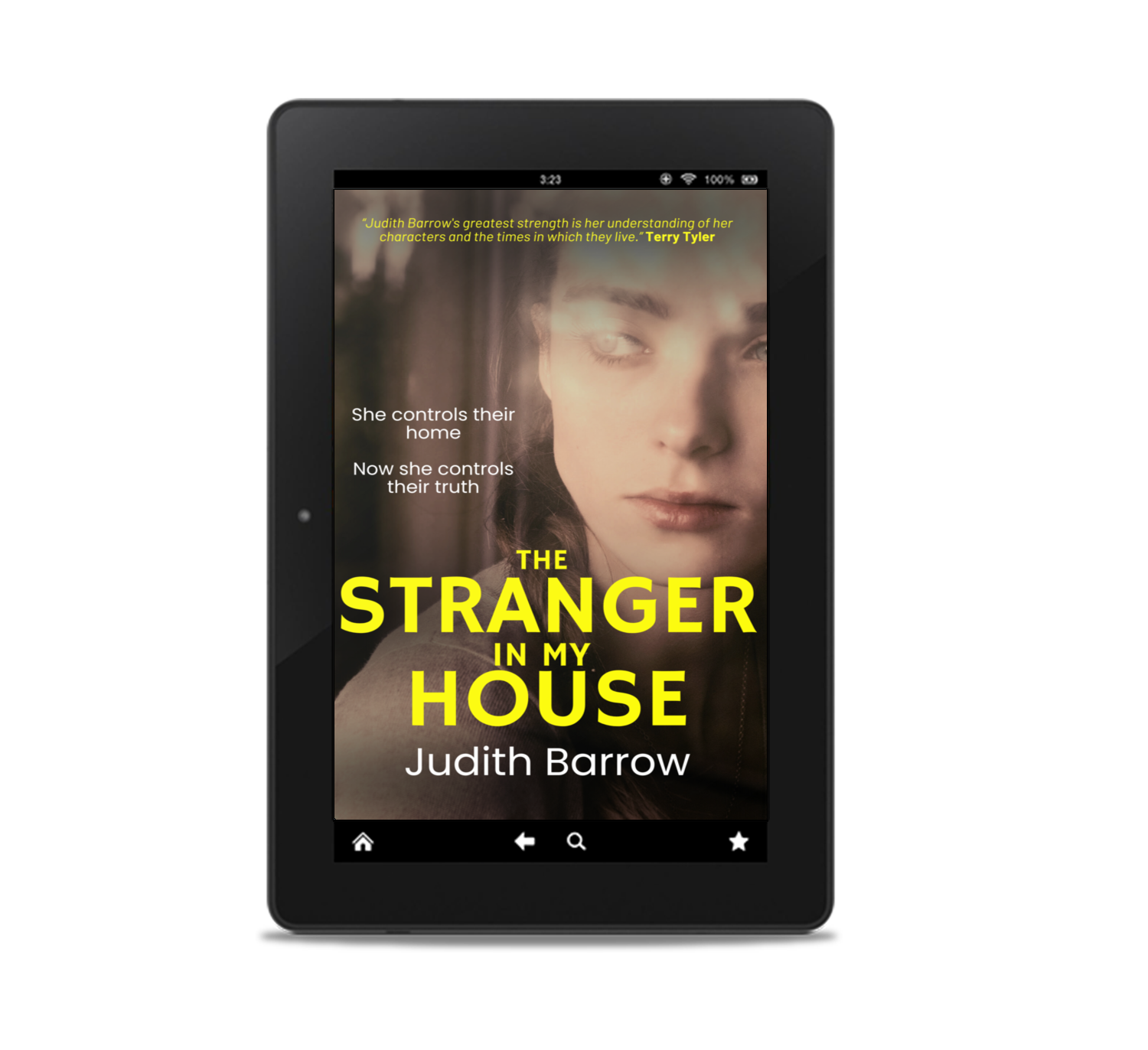
The Stranger in my House – published November 2024
One of my greatest pleasures – besides writing – is walking. In fact walking is what I mostly post about on social media; mainly because I realised a long time ago that across many of the socials, it’s writers talking/commenting/sharing with other writers. And it’s my own fault; I have never got around to writing a newsletter to potential readers. Nevertheless I’ve made some lovely friends over the years online as well as in real life.
And, as a creative writing tutor, I’ve also made friends with many people who wanted to learn to write …. something … whether it was a novel, a short story, poetry, travel writing, or writing for children.
Alongside many of the authors I know, I share a fascination of people, and I admit I people watch. Which is probably why all my novels are character led, whatever genre I’m writing in. This no more so than in The Stranger in my House, published on the 14th of November last year (2024). The story has a main theme, coercive control; the ability of one woman to change the lives of a man and also those of his children. And not for the better.
Building characters layer by layer in a story has to have a balance: of their backgrounds, their history, the way they respond to life and to the people around them. Much as in real life. I believe there comes a time when we are all mostly what we have lived, what has happened to us, how we responded, how we were treated, how we treated others. Yes, there is always the argumant of inherited, biological traits, but I do believe that, in later life it’s what our lives have been like. However, I’m always open to that statement being challenged, and I have been involved in many discussions, on many occasions.
In all my stories, as with most writers, my characters take on a personality and life of their own. I found this especially so in The Stranger in my House. So much so that I wondered what happened to Charlie and Chloe, the two protagonists in the story, after the reader closes the book on their lives. At the beginning they are just over six years old. By the end they are adults.
I like to think that Chloe and her husband, Mark, and Charlie and his partner, Simon, become as smitten with being outside, with looking at nature, the change of the seasons, and with walking, as my husband and I are.
And there is nothing better on cold, wet, and windy winter evenings than looking back at photographs of our walks.
So here is another treasured memory:
St Justinian’s to Porth Clais:
Walking in the footsteps of St Justinian, or sometimes scrabbling to get to the top of the next path.
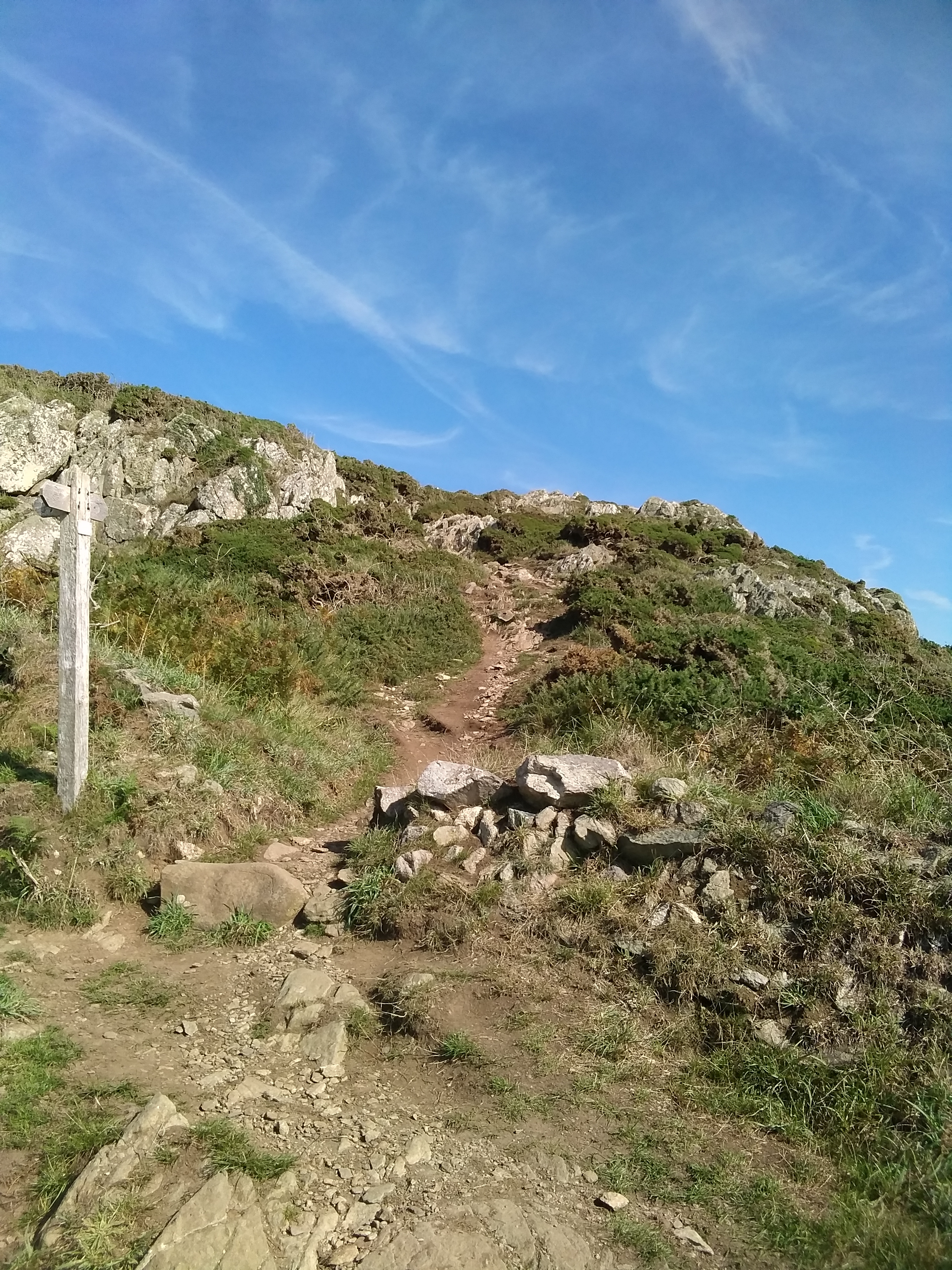
Literally on hands and knees. But it was so worth it

Wonderful views overlooking Ramsey Island


And look who we saw. (from a great distance,of course. As I’ve written in a recent post, we saw the seals and their pups last month, just before the mothers decided their offspring was able to fend for theirselves after only a month or so.

So… who was St Justinian?
Justinian was born in Brittany in the 6th century. At some point in his life, he made his way to Wales, where he settled on Ramsey Island.
Justinian soon became close friends with St David, the patron saint of Wales, and visited him often in the monastery where the cathedral now stands.
He was less impressed however by the lax behaviour of some of the monks and decided to isolate himself on Ramsey island. According to legend, he took an axe and chopped up the land bridge that linked the island and the mainland. As he worked, the axe became blunter and the lumps of rock remaining became larger and larger. They are still visible today in Ramsey Sound, where the waters foam over them at high tide. Followers joined him on the island but his actions didn’t go down well with everyone though. They soon turned them against him and they beheaded him!
To the astonishment of his killers,he picked up his head and walked across the sea to the mainland, and where he set his head down, another spring of water issued forth.
A spring of water gushed up from the ground where his head first fell and this became the famous healing well known as St. Non’s Well, situated next to the ruins of St. Non’s Chapel.
Justinian was buried where the chapel now stands. Within its walls are some stone footings, which may mark his original gravesite. His body was removed to the cathedral at St Davids, probably at some time before the end of the 15th century.
During the early medieval period, two chapels were built on Ramsey. One was dedicated to St Tyfanog; the other to St Justinian. There is no trace of either building today, though their sites are known.


 Judith Barrow