Where We Walked #NationalTrust #PembrokeshireU3a #Pembrokeshirecoast #sealspotting #walks #photography

Over the last few weeks we have walked along the Pembrokeshire coast with the Pembrokeshire U3a and the National Trust …

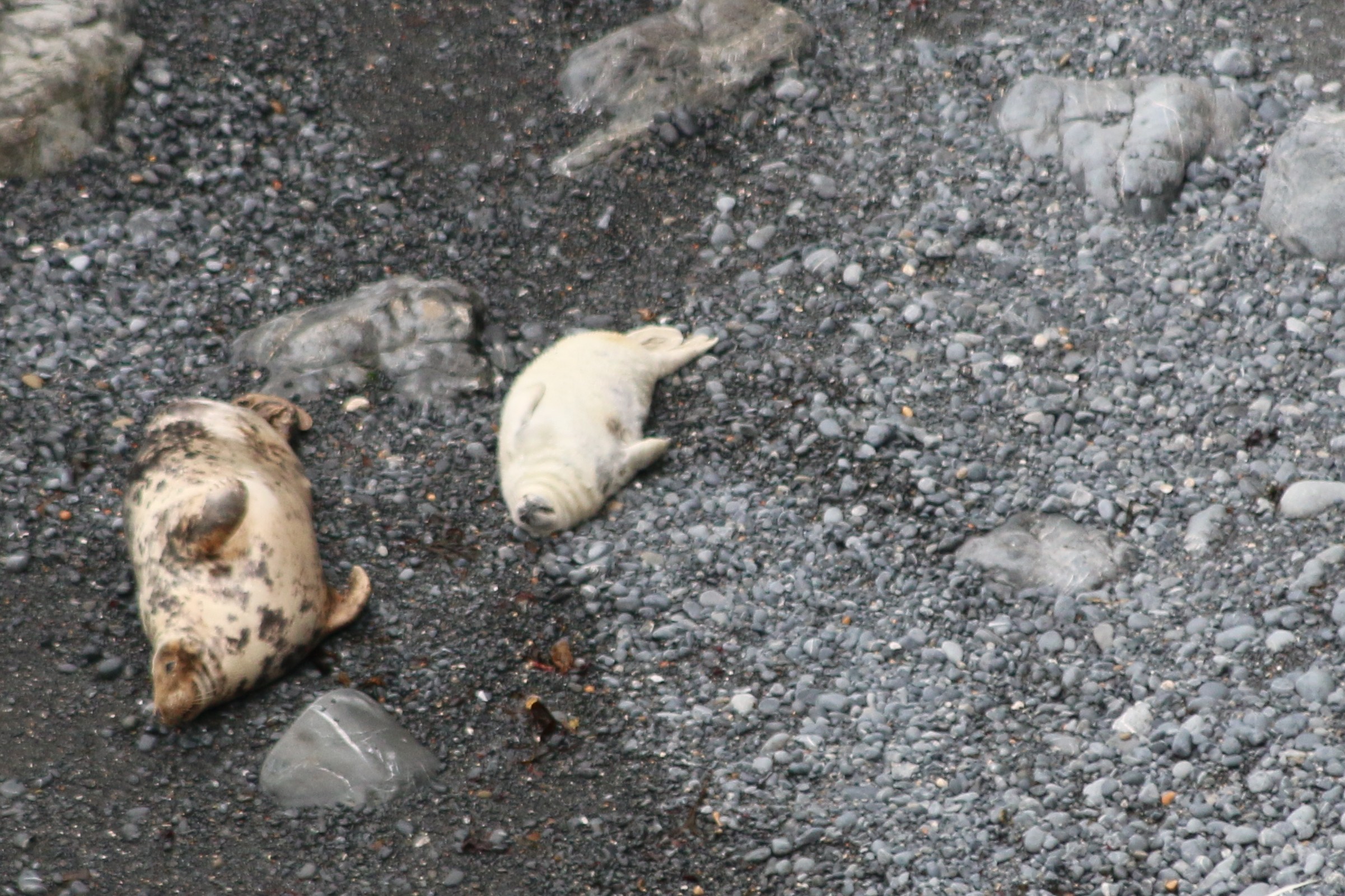
And joined in with a couple of days seal spotting … from the clifftops, so at a distance, of course.

And watching the mothers with their pups was fascinating
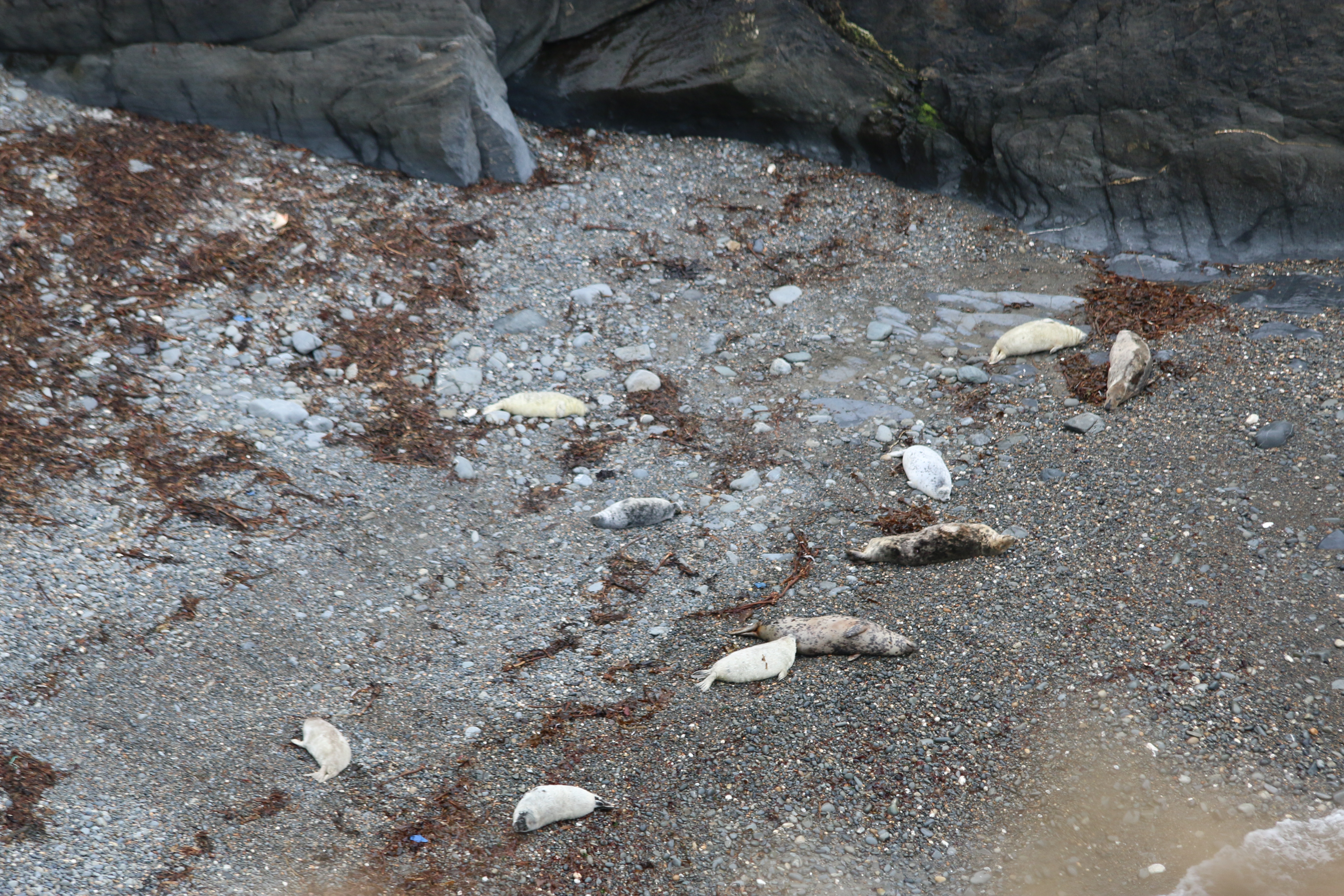
Around the coast of West Wales, grey seals can be seen throughout the year. In the summer, around sunset, the seals begin to return to the beach hauling out their daily catch of fish. Mostly, at this time, they bob about in the water, waiting to come ashore to rest. Seals spend a lot of time at sea but come ashore to breed from August until early November, when parents and their pups can be spotted on beaches around Pembrokeshire.
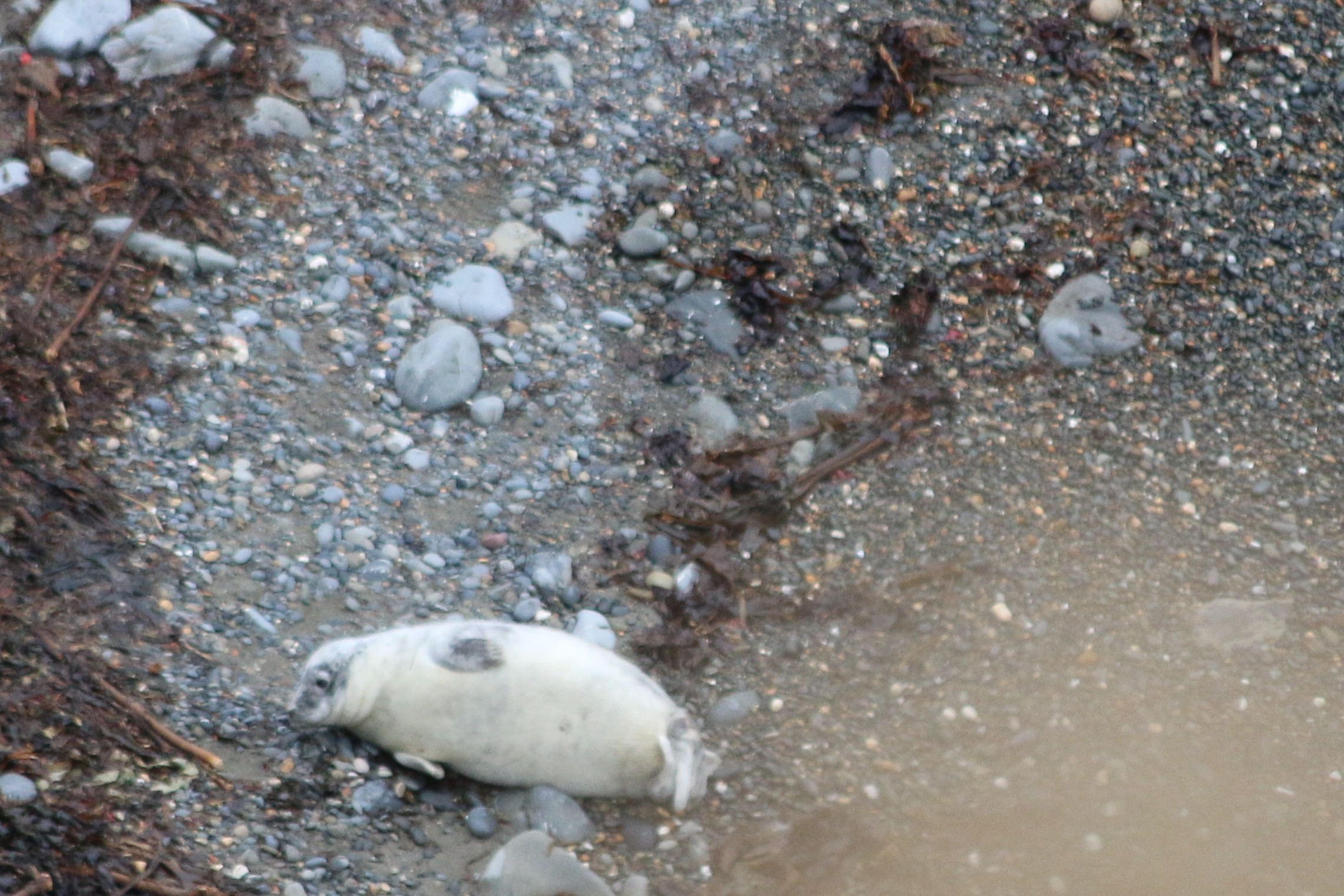
On land they are cumbersome and slow, compared with their agility in the ocean.
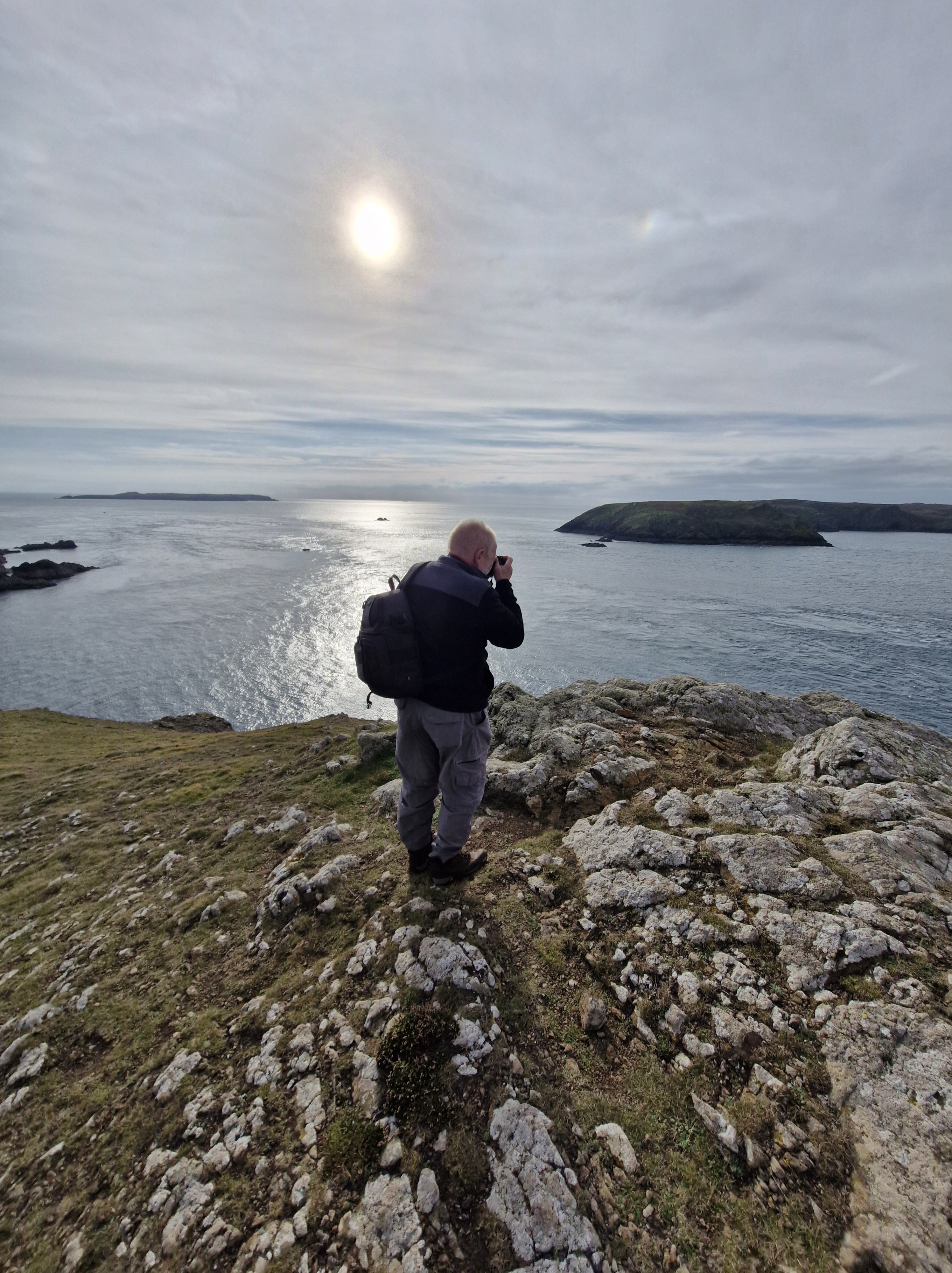
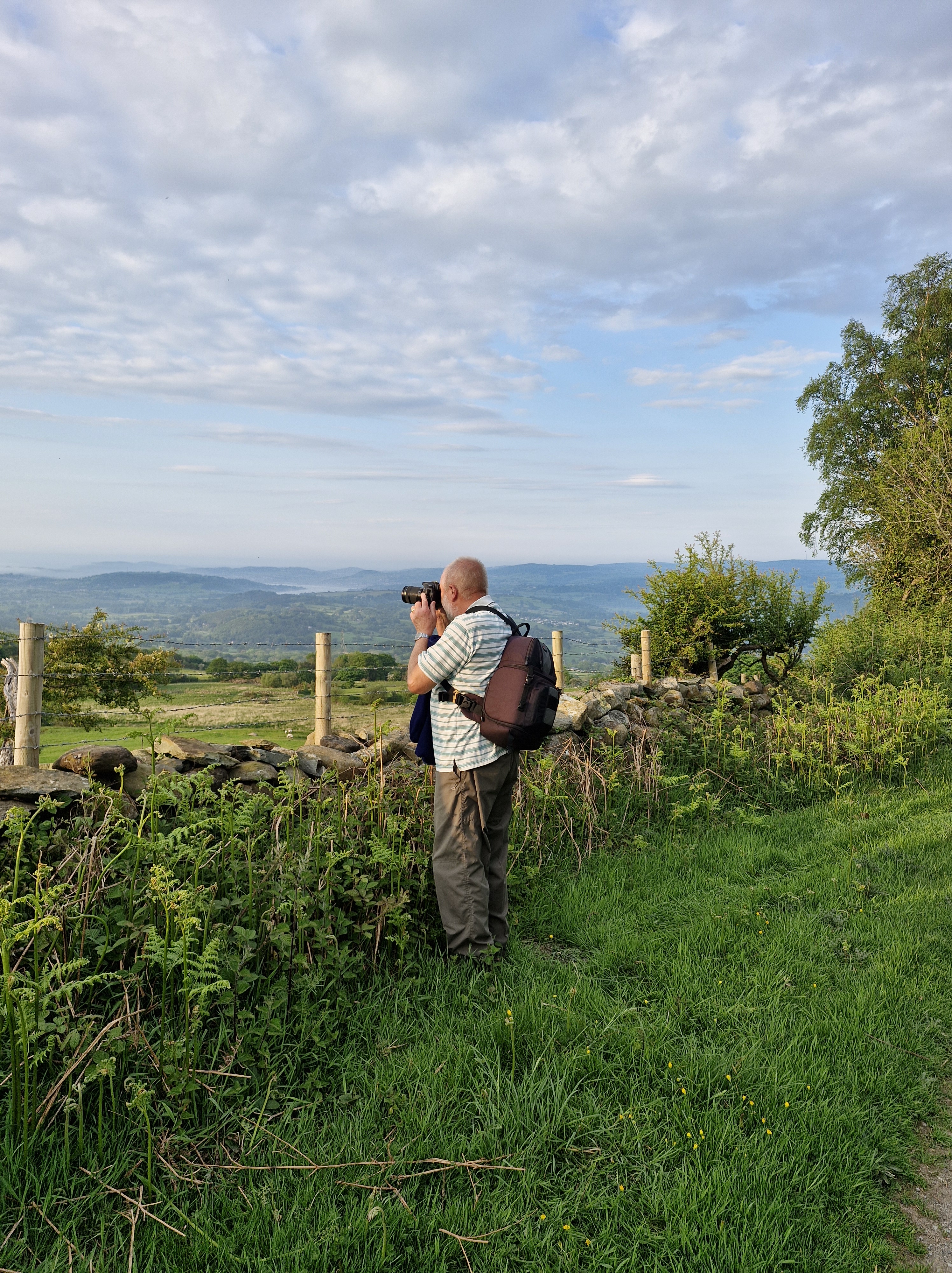
Which gave The Photographer plenty of time to get his pictures!

Many thanks Pembrokeshire U3a and the National Trust for two brilliant days .

Fun Facts (courtesy of https://tinyurl.com/5n8ukdyz )

Fossil records indicate that the ancestors of modern seals first entered the ocean on the west coast, about 28–30 million years ago.

Seals see very well under water—better than they do in bright light above water. Their eyes are adapted with round lenses (like fish) and a large iris that fully opens underwater. On land the iris closes the pupil to a small pin point that lets the seal see clearly through the round lens. A seal’s eye is also adapted for low-light vision with a lining (similar to a cat’s eye) that reflects and amplifies the weak light at depth in the ocean.

A seal’s body stores enough fat in the blubber layer to allow the animal to go for extended periods of time without eating. In addition, most seals are opportunistic feeders and will consume a variety of fish, shellfish, and crustaceans. Seals do not eat on land.

Like all marine mammals, seals get all the water they need from their food. Their bodies are very efficient at removing and recycling water from their food. They avoid drinking sea water; if a seal drinks too much sea water it can become seriously sick. Arctic seals, which spend time on ice, may sometimes eat fresh water ice and snow.

NB: Seals are protected in the UK under various acts, including the Conservation of Seals Act 1970, which prohibits killing, injuring, or taking them except under specific circumstances. Both native species, the grey seal and common seal, are protected, along with any other seal species found in UK waters.
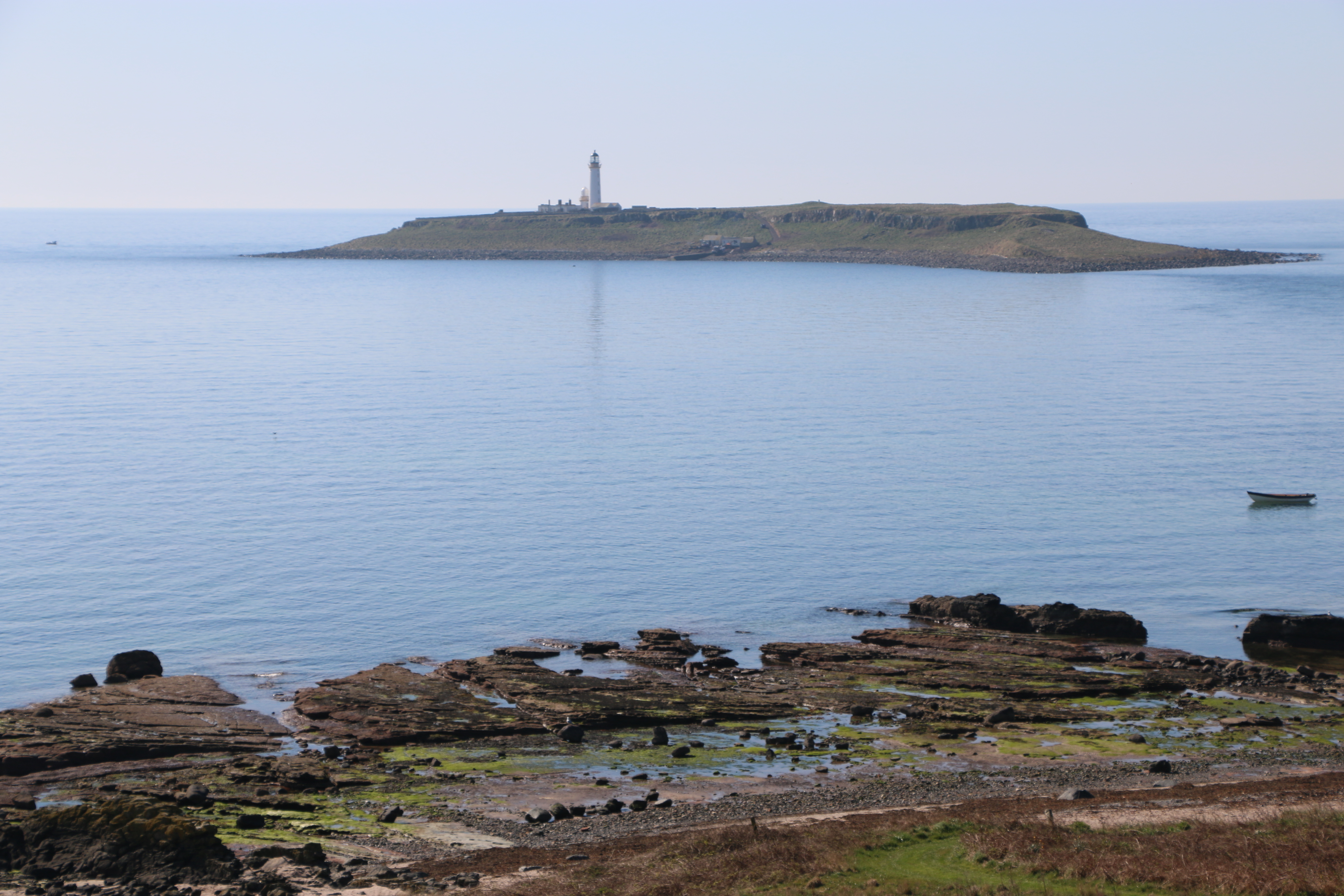
Where We Walked … Well, What We Saw From Where We Walked #Pladda Isle #Arran #Scotland

We are on our way to walk to Loch Garbad. Dusk is on the back seat. When I hear her move, feel her patting me on the shoulder with her paw, I presume she needs a ‘comfort break’ (as they politly say on coach trips). We turn off the road onto a side lane towards the village of Kildonan, and park on the first layby we come to.

I think Dusk just wanted us to see the glorious coastline and the two islands nearby: Ailsa Craig and Pladda. Ailsa Craig deserves its own blog, so what follows is what we discovered about Pladda Isle.

Pladda Isle (Pladda – Scottish Gaelic: Pladaigh –  the name comes from Old Norse and means “flat isle”)  has been the site of a lighthouse since 1790).

The main structures of the Pladda lighthouse date from 1820 and were constructed under the administration of Thomas Smith of the Stevenson company.

To allow seafarers to distinguish it from the other nearby lighthouses at the Mull of Kintyre, Cumbrae and Copeland, a lower light from a small lantern twenty feet lower than the original one was installed and this carried on for more than one hundred years. And in 1876, a fog signal was also installed on Pladda..  This arrangement operated for about 100 years.

Pladda Isle (Pladda – Scottish Gaelic: Pladaigh –  the name comes from Old Norse and means “flat isle”)  has been the site of a lighthouse since 1790).

In 1901 fixed lights were no longer regarded as suitable for the island so coastal lights and a group of flashing lights were installed. The lower tower was then no longer needed.

The lighthouse keepers who were permanently attached to the station were brought provisions four times a month, two of which landed on Sundays to allow light keepers to attend church.

Everything changed in 1972 when a helicopter began to be used to transport the keepers. But then, in 1990 lighthouse became automated and the lighthouse keepers were no longer needed. The lighthouse is now monitored remotely from Edinburgh and the island is unoccupied. The traditional lantern and lens have been replaced by a couple of solar powered LED lights.

The modern plaque at the base of the main tower bears the crest of the Northern Lighthouse Commisioners and the motto “In Salutem Omnium” – For the Safety of the island

Previously the island was part of the Arran Estate, but in 2022 it was bought and is now privately owned. There are plans to build a luxury property on the island.

ENDNOTE:

For over one hundred and fifty years Robert Stevenson and his descendants designed most of Scotland’s Lighthouses. Battling against the odds and the elements – the Stevensons constucted wonders of engineering that have withstood the test of time, an amazing historical achievement.


Family Crest
“Coelum Non Solum”

Robert Stevenson’s talented family also included the famous writer/novelist Robert Louis Stevenson (his grandson). Visits with his family to remote lighthouses are thought to have inspired his books Kidnapped and Treasure Island.


“There is scarce a deep sea light from the Isle of Man to North Berwick,
but one of my blood designed it.
The Bell Rock stands monument for my grandfather;
the Skerry Vhor for my uncle Alan;
and when the lights come out along the shores of Scotland,
I am proud to think that t
hey burn more brightly for the genius of my father.”


Robert Louis Stevenson

The above was found on the link https://tinyurl.com/yb9x6mpj when I was researching Pladda. It’s fascinating going down these rabbit holes!!

Where We Walked #Pen Y Gaer #Snowdon #Yr Wyddfa #Wales #walks #climbs #photographs #MondayBlogs #stiles #humour #holidays

“A lovely evening walk,” said the photographer. “With spectacular views.”

It was that last sentence that should have warned me before we set off, I thought as I climbed over the stile and looked upwards.

He’s such a clever clogs: climbing the stile one- handed and taking a video. Hmph!!

A little information here: Pen y Gaer is a mountain summit in the Snowdonia – Beddgelert to Conwy region in the county of Conwy, Wales. It’s the location of a Bronze Age and Iron Age hillfort near the village of Llanbedr-y-Cennin. It’s a natural defensive site. There is a long history of occupation.

There are two Bronze Age cairns on the north-west slope, and extensive prehistoric and later field systems, nearby. The remains seen today are mostly of Iron Age origin, but further earthworks, probably of medieval origin, lie on the south-eastern slopes.

The summit can be identified by one of the large cairns.

Pen y Gaer is three hundred and eighty-five metres high with a prominence of thirty-six metres. (My legs and feet can confirm this!)

The photographer was right though, the views are spectacular.

There’s a broad bank of stones about two metres in width, with a partial kerb of large, irregularly placed boulders before getting to the summit; these are the remains of two defence walls, as well as the outlines of a chevaux-de-frise (A defence, usually a timber or an iron barrel covered with projecting spikes and often strung with barbs of glass).

There are two stone circles. Archaeological evidence indicates that in addition to being used as places of burial, the purpose of stone circles was probably connected to agricultural events, such as the summer solstice.

And, of course, sheep – which moved a lot quicker that we did.

The sun was setting, a mist was creeping in. We were (as far as I was concerned) on top of a mountain. At this point there was a discussion: we could carry on having an adventure and take a track (over a stile) to fields and marshland, and meander until we saw buildings, which could or could possibly not be the cottage we were staying in. Or we could take the windy, steep lane that would definitly lead to the cottage where we were staying.

Whilst someone couldn’t resist one last photo … I staggered sauntered past, with that glass of wine in mind, and carried on.

“A lovely evening walk,” said the photographer, gazing admiringly at photographs on the screen of his camera. “And brilliant scenary.”

I have to admit I agreed, as I soaked my feet in a bowl of cool water. Though next time, I decided, I would check out the mileage… and the ascent … of further ‘walks’.

Who am I kidding?!