Where we Walked @CraflwynEstate @Beddgelert @Snowdonia @ Eryri @Wales #walks #photographs #mountains #viewpoints

The two hundred acres of  Craflwyn estate is set in the heart of beautiful Eryri (Snowdonia), an area steeped in legend.

A walk of two halves today. We parked at the Crafwlyn Estate car park, just outside Beddgelert and, having read the information board, the Photographer and I decided to do the Green Walk. The sign promised an easy to moderately difficult ascent of only one and a half miles to the viewing point. It was the “spectacular views” that clinched it.

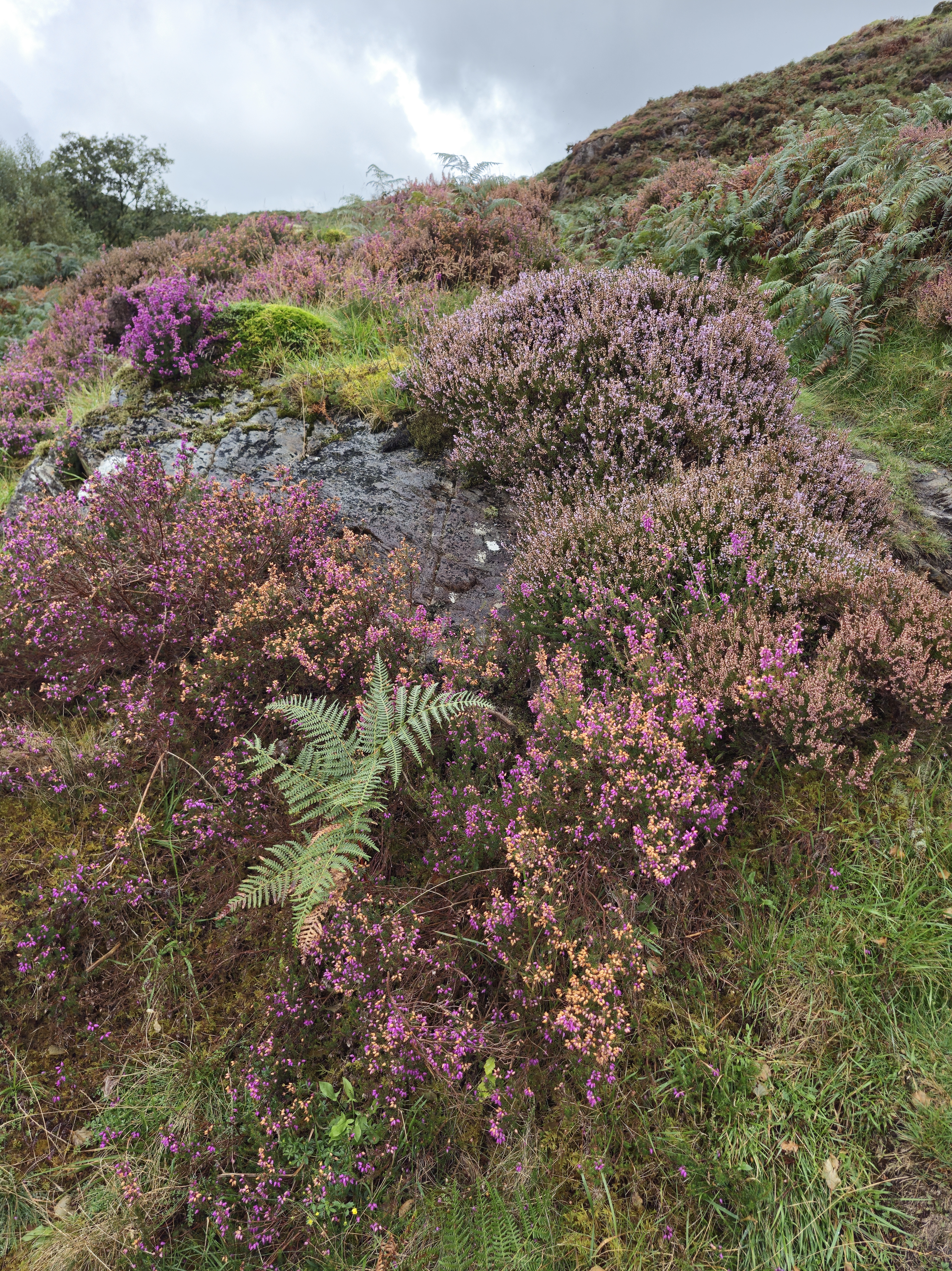
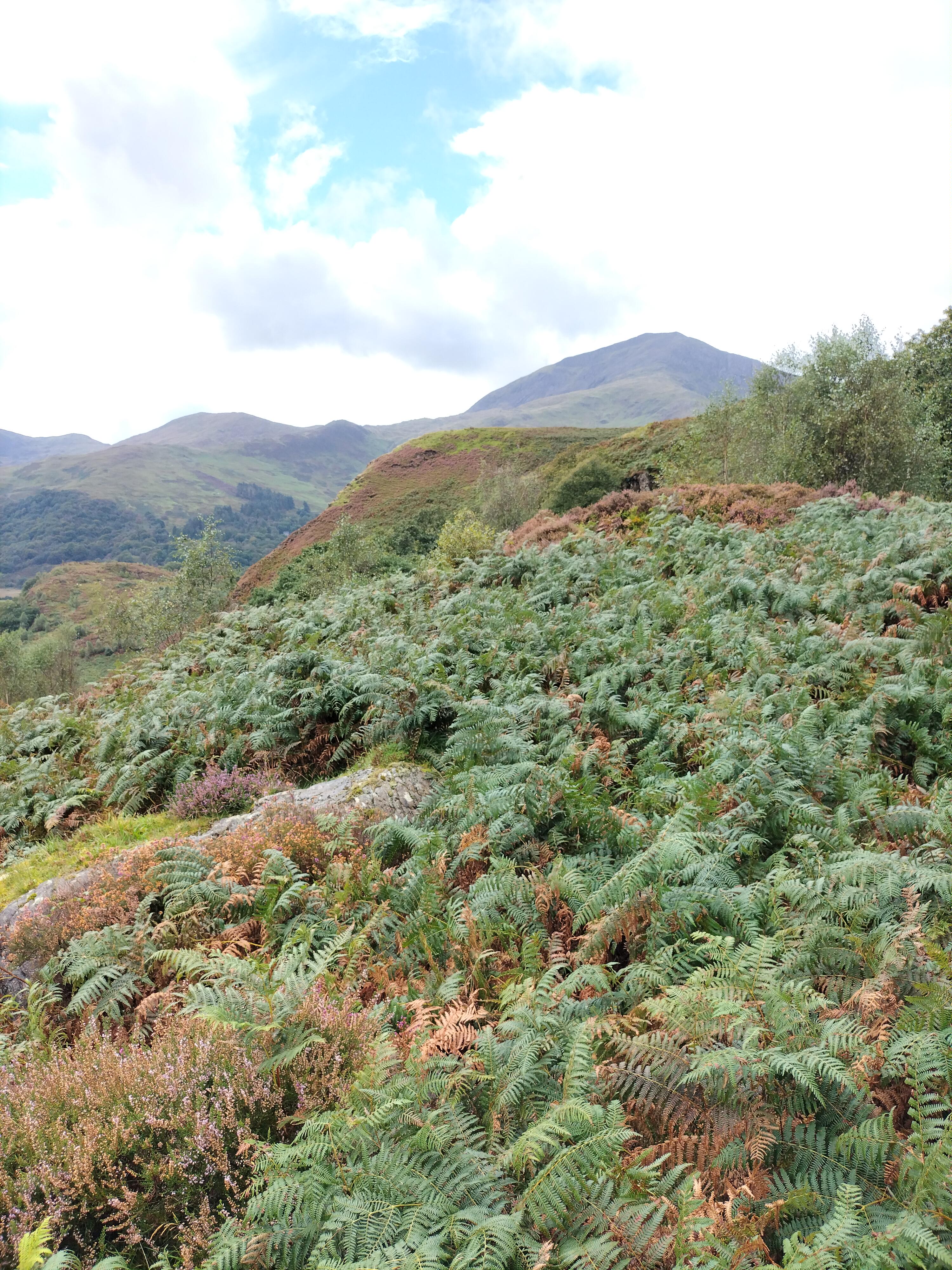
The heather was glorious. The path was … somewhere…
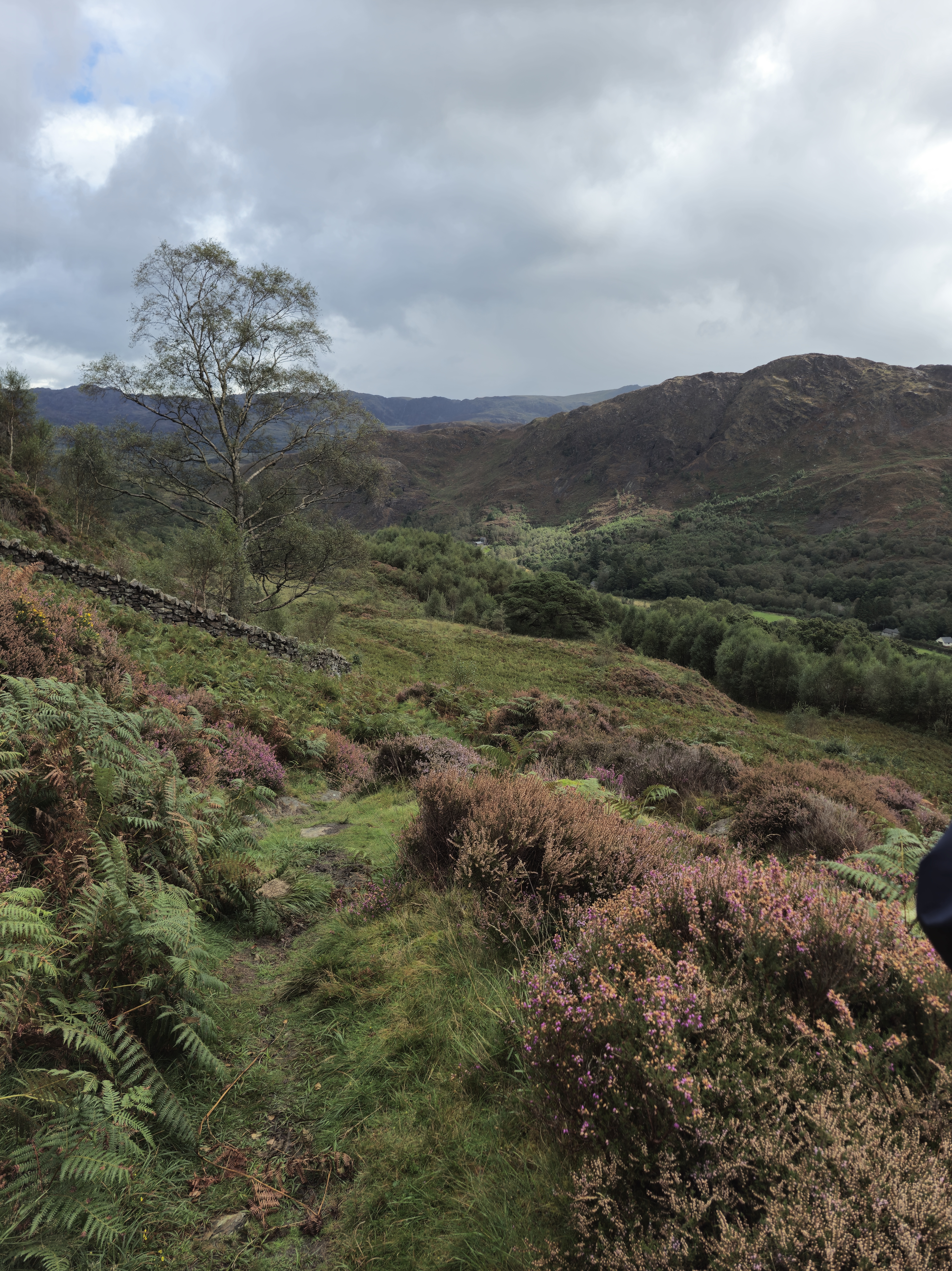
The walk turned out to be difficult, and certainly longer than one and a half miles. Quite the opposite in fact, and it and became steeper almost immediately, and very rocky. We assumed it would level out at some point but it never did and we just kept climbing and climbing.
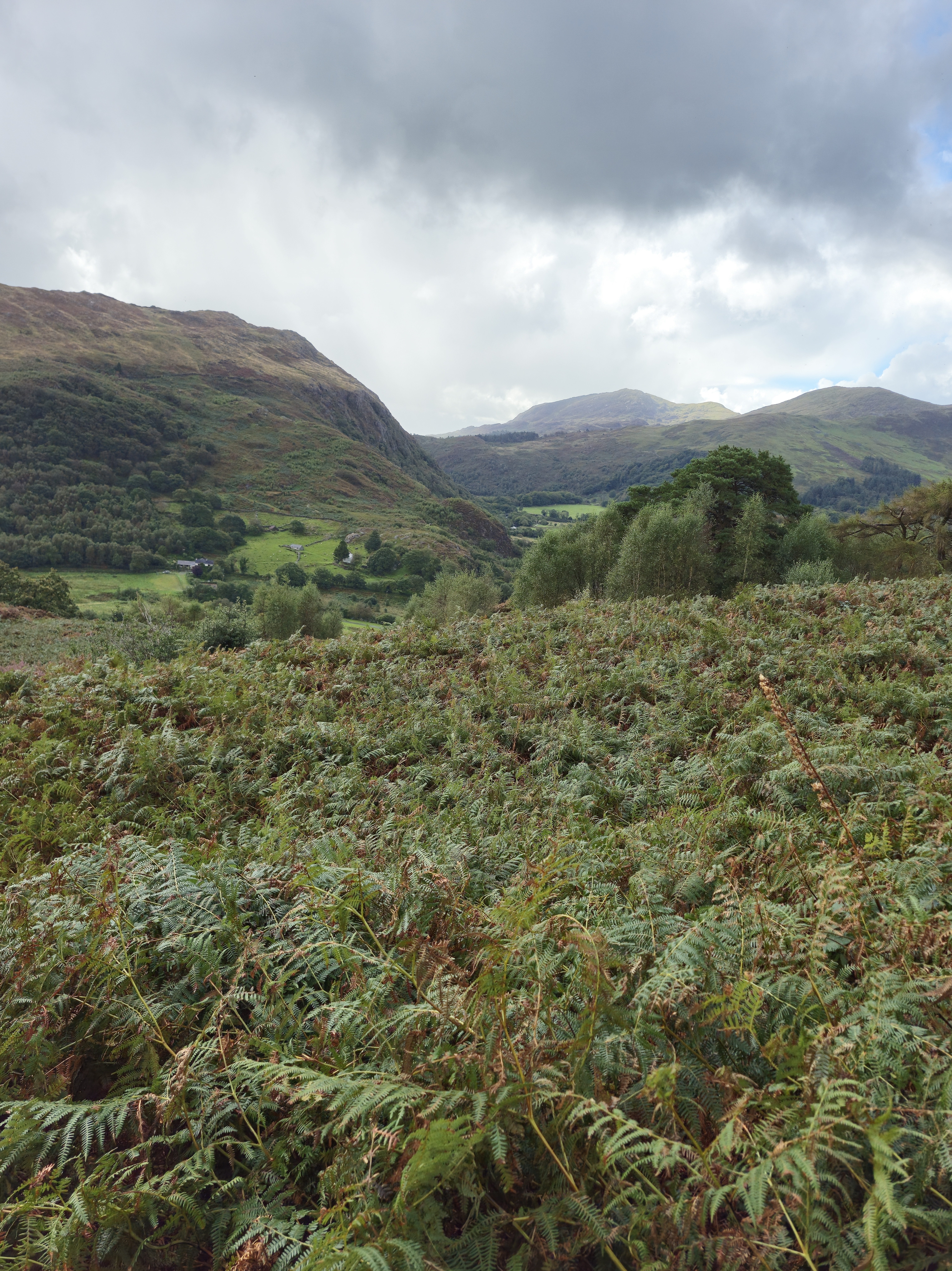
Dinas Emrys is a rocky and wooded hillock near Beddgelert. Rising some seventy-six metres above the floor of the Glaslyn river valley, it overlooks the southern end of Llyn Dinas. The legend is that it’s where Merlin once trod and where a dragon still sleeps. At the top are the remains of a square tower and defensive ramparts belonging to the ancient princes of Gwynedd. We never saw that at any time over the week… ” the square stone tower at Dinas Emrys in Gwynedd, Wales is believed to be the base of a 12th century tower or citadel. The tower is now in ruins, but its rectangular shape and local rubble masonry are still visible.
According to legend, the tower was built by King Vortigern as part of a castle he wanted to construct on Dinas Emrys. However, the walls would mysteriously collapse each night, which led Vortigern to seek the help of Merlin the wizard. Merlin revealed that two dragons, one red and one white, were fighting in a pool beneath the castle. Vortigern and his men dug into the mountain to release the dragons, and the red dragon eventually won the battle. The castle was then named Dinas Emrys in honor of Merlin, and the red dragon became a symbol of the fight against the Saxons.
oplus_32

Just at the point where the ferns and tufts of coarse grass petered out, and the way in front of us rose sharply and consisted of sharp rocks, it began to rain and the view disappeared. We turned and scrambled back down – the second time we’d turned back on a walk that week.

One disgruntled Photographer…

Twenty minutes later and wet through, we saw a sign for the Waterfall trail. A footpath lead through the woodland, following a waymarker to the right.

We passed the dragon bench. Too wet to sit on it though.
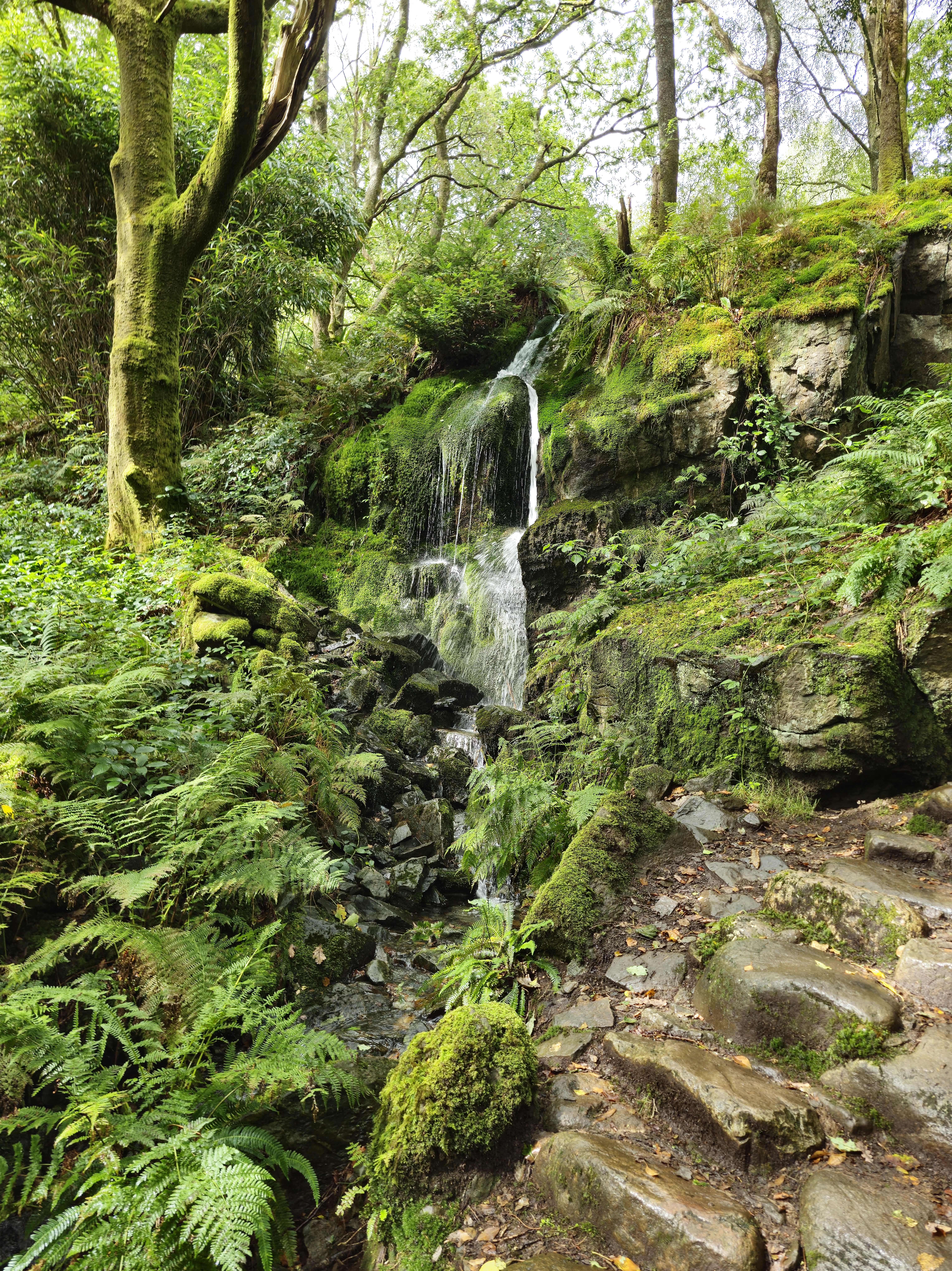
We walked up some steps to see a small waterfall. But we could hear loud splashing further along the path.


The large waterfall. Apparently deep enough to swim in.
I didn’t test that theory.
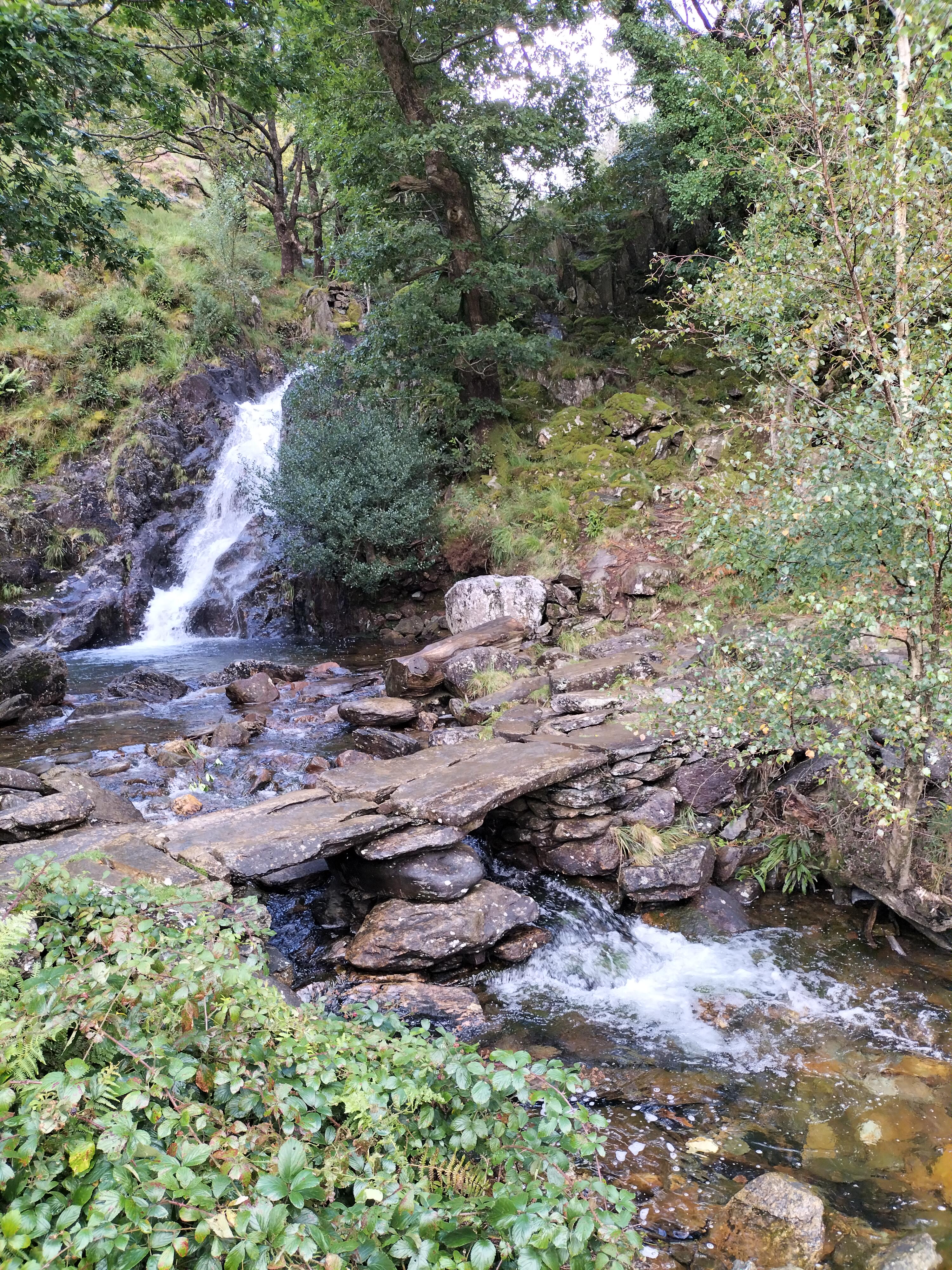
It was a wonderfully peaceful end to the day – and to our last walk of the holiday.

We’d had a great week. The photographer was keen to get home to start downloading, printing off and framimg his photographs.

I was ready to finish the proofreading of my next book, The Stranger in my House, to be published by Honno on the 14th November 2024 .

Described as…

A gripping ‘cuckoo in the nest’ domestic thriller

After the death of their mum, twins Chloe and Charlie are shocked when their dad introduces Lynne as their ‘new mummy’. Lynne, a district nurse, is trusted in the community, but the twins can see her kind smile doesn’t meet her eyes. In the months that follow they suffer the torment Lynne brings to their house as she stops at nothing in her need to be in control.

Betrayed, separated and alone, the twins struggle to build new lives as adults, but will they find happiness or repeat past mistakes? Will they discover Lynne’s secret plans for their father? Will they find each other in time?

The Stranger in My House is a gripping ‘cuckoo in the nest’ domestic thriller, exploring how coercive control can tear a family apart. Set in Yorkshire and Cardiff, from the 60s to the winter of discontent, The Stranger in My House dramatises both the cruelty and the love families hide behind closed doors.https://tinyurl.com/349ucdat

I’m happy to leave things as they are here. So, until next time … thank you for following the Photographer and I on our adventures.

Where We Walked – Oxenber & Wharfe Woods #Walks #Photographs @Yorkshire Dales @England #MondayBlogs #Holidays #memories #PathsandStiles

I was promised an easy walk on one of the days. This is it; the Oxenber and Wharf Wood and Feizor walk from Austwick. It should have taken around two hours… we didn’t allow for the stiles.

We left Austwick by the Pennine Bridleway and walked over the Flascoe footbridge heading up the path towards Oxenber Wood.

We met the obligatory cow – who followed us along her side of the wall in the next field. In fact, by the time we reached the end of this path, there were six of them jostling for a view of us.

And the first of the stiles. This one was stone, sturdy, easy to climb over. We’ve got this sussed, I thought; easy walk, conventional stiles. The photographer couldn’t resist taking in the view of Austwick and the miles of glorious scenery around Ingleborough and Fountains Fell. Then he casually strode halfway over the stile – and was abruptly stopped when his rucksack decided to stay on the other side. We manhandled it over the wall, and carried on, ignoring the snorts from the cows…

And saw this…

Bluebells! Stretching seemingly for miles. And, miles away on the horizon … Pen y Ghent, the destination of one of our … hmm!… shall I say … more strenuous walks in that week: https://tinyurl.com/3e48vc7a

Hundreds of years ago, this area of woodland and pasture was part of the village quarry, and is still rough underfoot with hollows and dips under the grass. We were told it’s a site of special scientific interest and an area of conservation. The trees (as stated on the information board at the beginning of the walk) are mainly Ash, Hazel and Hawthorn.

As we clambered over the limestone rocks to enter the woods, a young man came puffing up behind us. He was a teacher, supposed to be on a day out with a colleague and their class from his school, but had overslept and was now in pursuit. We stopped to let him pass, pretending we didn’t need the break to get our breath back. That hill was steeper than we thought… or looks.

From the loud cheer that rang out a few minutes later, the teacher had obviously found the children.

In the woodland there were areas of slabs of limestone paving with various wild flowers and plants.

Wood Sorrel

Hart’s Tongue Fern.

Dog’s Mercury

There was quite a lot of the Dog’s Mercury (as stated on the Information Board) We were told, by a man in the pub where we were having a meal that evening – (we did seem to meet the local naturalist, whichever pub we went in) – that it is a poisonous coloniser of ancient woodland. But, if thoroughly dried, apparently (I’m stressing the “apparently” here), the plant loses its poisonous quality. The juice of the plant is emetic, ophthalmic and purgative, and can be used externally to treat ear and eye problems, warts, and sores. And other ailments!

As a writer I couldn’t help thinking about using this last plant in a story … to kill off a character … maybe?!!

We left the woods, through a wooden gate and onto a path which at first gently rose and then zig-zagged down through a jumble of exposed limestone towards the hamlet of Feizor. Where we stopped at a tea room for a cuppa.

Leaving the tea room we climbed over the first of five high stiles in a stone wall, and along a public footpath through four sloping fields.

You may have noticed that I have no photographs of the fields, nor of the stiles here. We were either too anxiously gazing across the fields, knowing we’d have difficulty both going back to the tea room lane or forwards to continue our walk. This was because of the stiles. There was the stile where the first stone step was three foot high in the wall (“You need to get your leg higher,” I encouraged the photographer), having only been able to reach it myself by taking a running jump at the thing. Then there was the one where the middle stone was broken off revealing only a sharp corner that protruded only enough for the toe of our boots (That one resulted in scraped shins). The two wooden stiles had seesaw wobbles enough to cause seasickness, and the next seemed fine until we found that the space in the wall for us to get through was the width off one boot only. (One narrow ladies’ walking boot – which isn’t mine) Which meant a dare-devil leap forward to the next field was the only way to ‘dismount’!)

At this point I said I was never going over another stile again. Before I saw the next one! We were only glad there was no one nearby who could see us struggling, or worse still, waiting for their turn to climb over any of them.

Finally we triumphed over the last stile (more a small hole in the wall, thankfully), and back onto the tarmac lane… when we realised that, if we’d only walked a few metres further along the lane after leaving the cafe, we would have met the main road that eventually led to the tarmac lane.

And on to the first path … where the cows were waiting for us.

And so into Austwick again.

‘Easier today wasn’t it? Rested now?’ He said later. ‘Try for a longer walk tomorrow?’