Unknown's avatar

About Judith Barrow

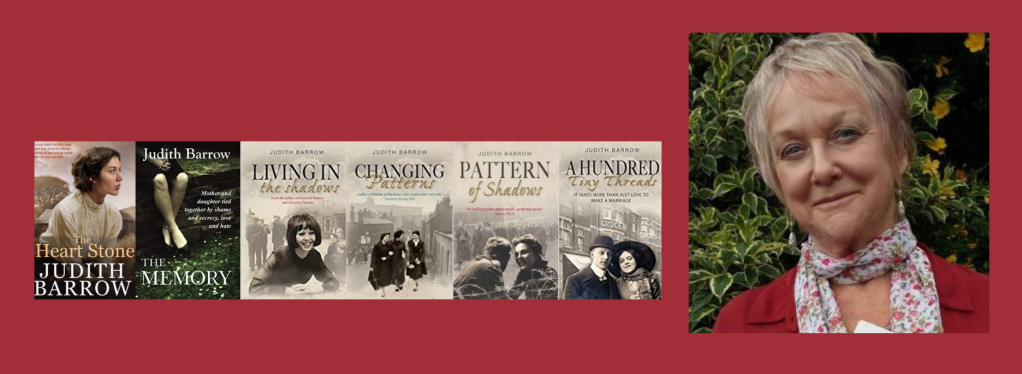
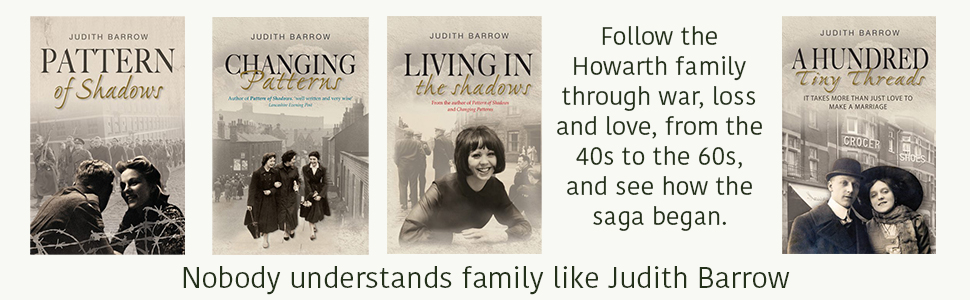
Pattern of Shadows was my first novel, the sequel, Changing Patterns was published in May 2013. The last of the trilogy, Living in the Shadows was published July 2015. In August 2017, the prequel to the trilogy, A Hundred Tiny Threads,was published. In March 2010, The Memory was published by Honno, a contemporary family saga. I also have an eBook, Silent Trauma, a fiction built on fact novel, published as an eBook. I have an MA in Creative Writing, B.A. (Hons.) in Literature, and a Diploma in Drama and Script Writing. I've had short stories, poems, plays, reviews and articles published throughout the British Isles, notably in several Honno anthologies. I am also a Creative Writing tutor and run workshops on all genres and available for talks and workshops.My blogs are on my website: https://judithbarrowblog.com/ where I review,interview other authors, and generally write about walks & photographs. At the moment I'm running a series of posts called Places in our memories, where writers talk about somewhere that brings back a memory. Always happy to hear from anyone who would like to join in with that. When I'm not writing or teaching creative writing I spend time researching for my writing, painting or walking the Pembrokeshire coastline

Remembering Past Places in our Memories #memories #writerslife #houses #holidays #family #amusementparks #countries #SundayVibes

There are places that remain in our memories, the details may become slightly blurred, nostalgia may colour our thoughts, but they don’t fade. And how those places made us feel at the time is the one thing that remains.

This is a round-up of the Places in our Memories posted over the last few weeks. There have been some wonderful memories shared by writers from all over the world who have joined in the series so far:

Thorne Moore tells us about her first real grasp of history. “The past was just under my feet and nothing was permanent after all…”

https://tinyurl.com/2vmwx53r

Carol Lovekin recalls how much her mother has influenced her life

https://tinyurl.com/26ua74jt

Sally Cronin enthralls us with memories of her childhood of Ceylon, now known as Sri Lanka, 

https://tinyurl.com/yc32zjh9

Robbie Cheadle tells us about her life as a child and how she’d lived in twenty-one houses and attended fourteen schools, before the age of twelve. And of her love for her sisters…

https://tinyurl.com/4cpjuk7h

Teagan Ríordáin Geneviene remembers an old amusement park, a memory that gave background to her books…

https://tinyurl.com/473desej

D G Kaye poignantly recalls one memory that is forever engraved in her mind and heart of her beloved husband.

https://tinyurl.com/yd8835yn

Terry Tyler recalls family holidays on the Norfolk coast, and the genuine gypsy caravan in the garden of their holiday home.

https://tinyurl.com/2z5rh3mu

Alex Craigie shares memories and photographs of her childhood home.

https://tinyurl.com/35pkn288

And then there are my own memories of the street I lived in until the age of five, and the area where I grew up.

https://tinyurl.com/zu7wu94u

Tomorrow we begin another round of Places in our Memories. I hope you enjoy reading them as much as I do.

Walking the Taff Trail – Well a small section of it anyway. And more of a stroll than a walk. #walks #cycling #photos #ThursdayThrowback #memories #history

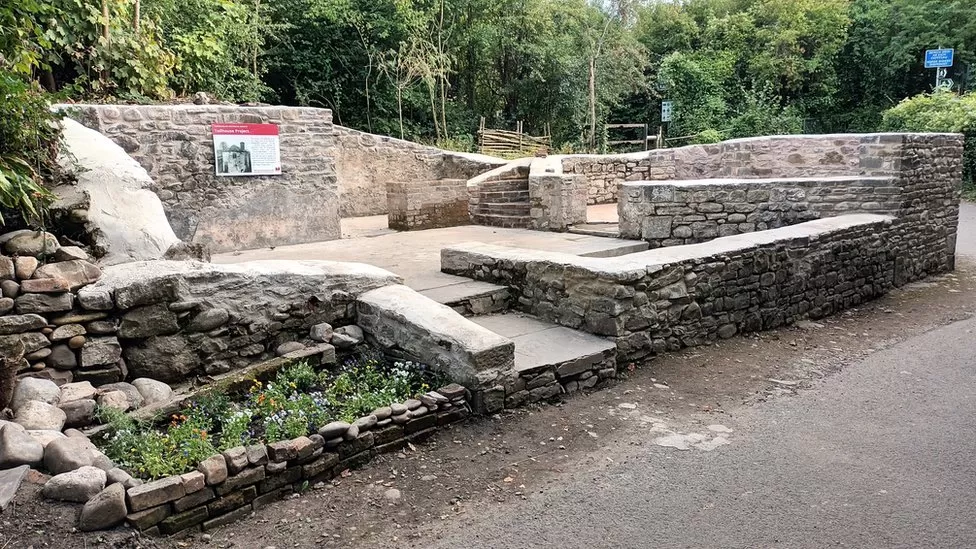
An update to my post: Tongwynlais: Historic tollhouse given new lease of life:https://www.bbc.co.uk/news/uk-wales-62718289

Edmundo Ferreira-Rocha, of Cardiff council’s Urban Park Rangers, and councillor Linda Morgan cut the ribbon at the opening ceremony. © Tongwynlais Historical Society.

© Tongwynlais Historical Society.

Villagers have restored the shell of a historic “unloved eyesore” tollhouse demolished more than 70 years ago. The original building was among hundreds used to collect money from 18th and 19th century travellers. Volunteers in Tongwynlais, on the edge of Cardiff, have spent more than a year rebuilding it as the first step towards creating a local history trail. “Our volunteers have been fantastic,” said Sarah Barnes, of the Tongwynlais Historical Society.

*******************************************************************************************************

Before this wonderful restoration granddaughter and I walked the Taff Trailso thought you might like to see the before and after. Or, in the case of this blog, the “after and before”.

Put a lovely sunny day, with a dog desperate to go a walk, with a granddaughter who needs to be dragged from her mobile and bribed by the thought of a chocolate brownie and a drink of Sprite, and there was only one place to head for, the cafe in the garden centre at the end of the Taff Trail in Radyr.

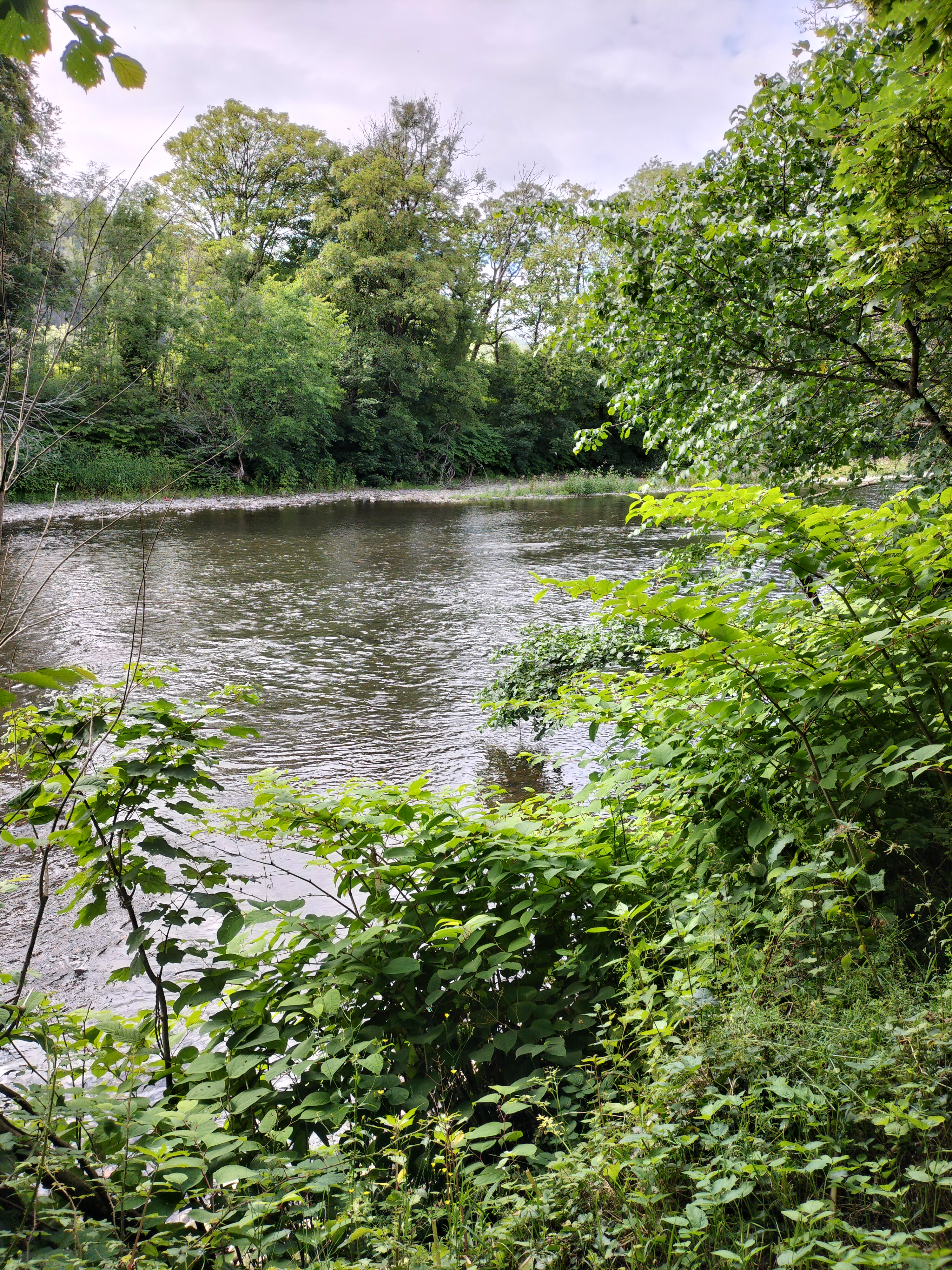
The Radyr section of this lovely river walk is one we’ve done often

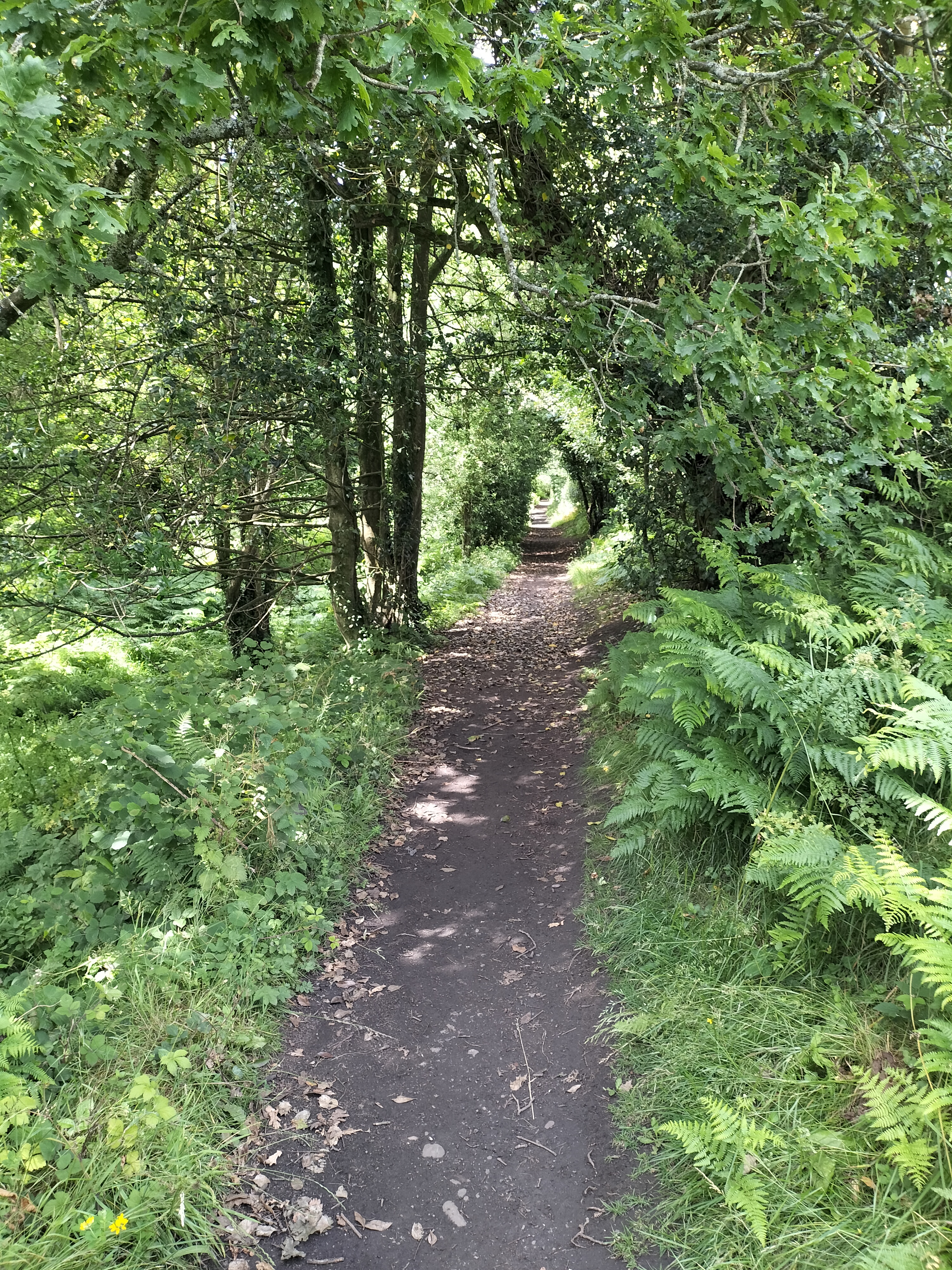
But this time we decided to meander along various smaller paths, even though we needed to retrace our steps numerous times. I was so glad we did because look what we found:

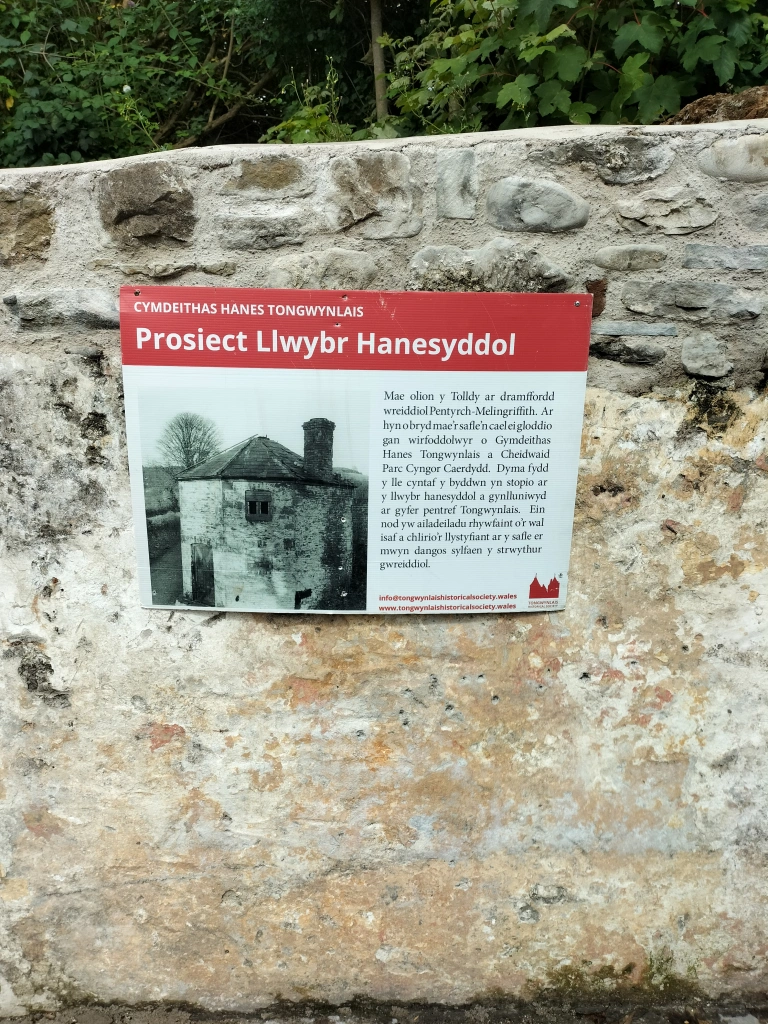
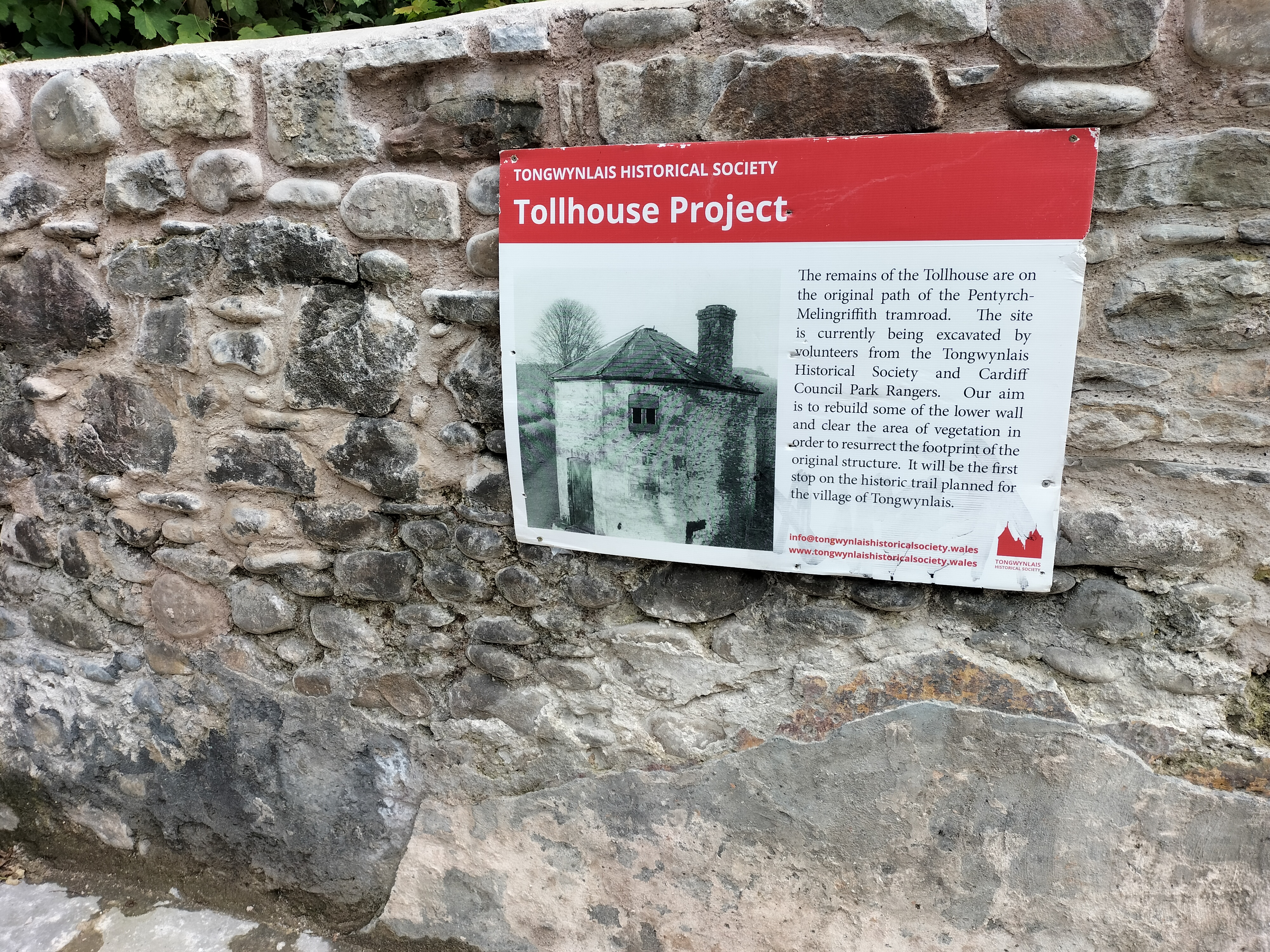
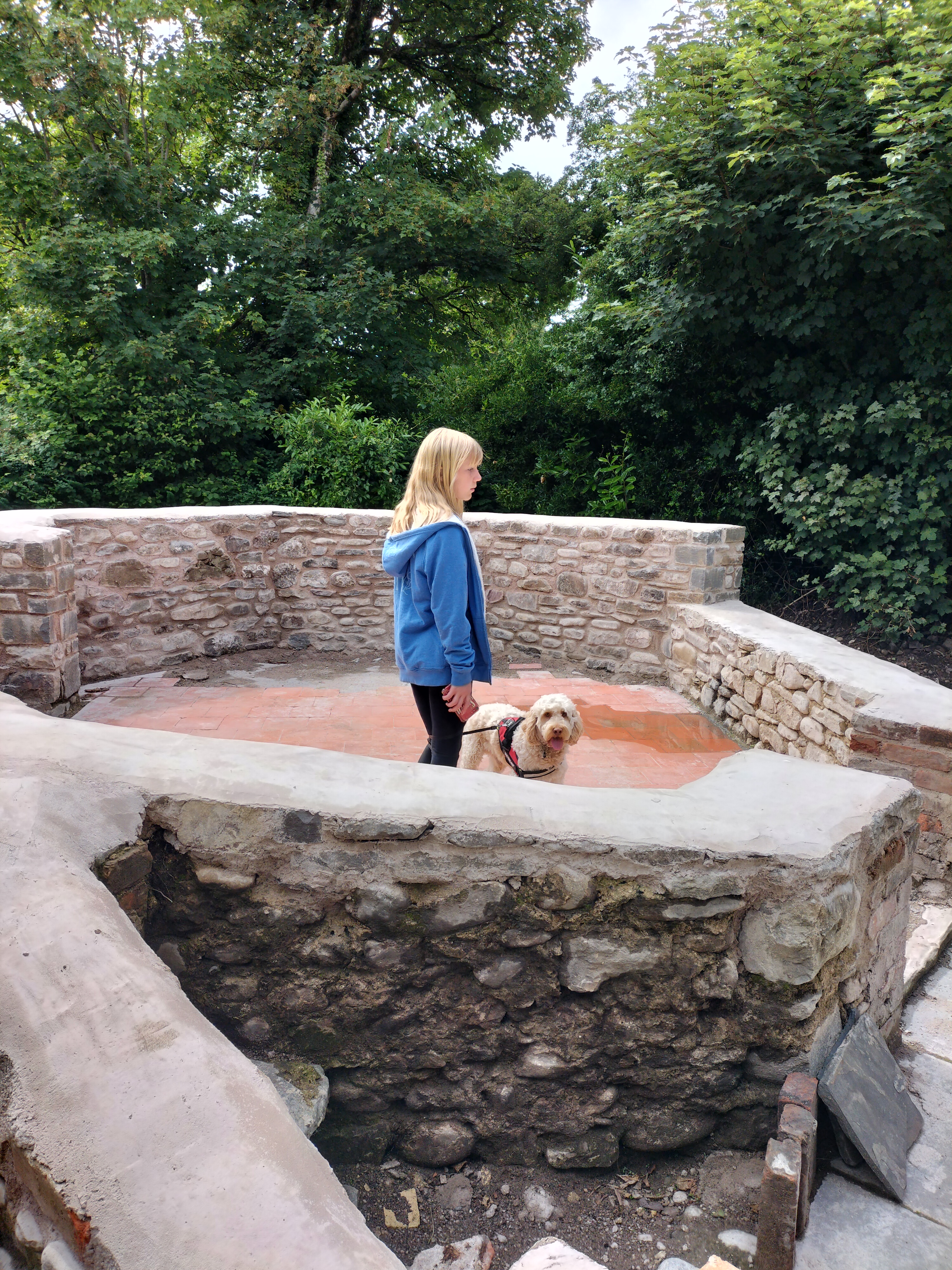
The tollhouse, once used by the Pentyrch and Melingriffith Iron and Tinplate Works in the late 1800s

Thanks to the Tongwynlais Historical Society ( co-founders,Sarah Barnes and Rob Wiseman) the Tollhouse returns to life. What was once nothing more than a few visible bricks covered in 70 years of vegetation, is now a recognisable shell complete with growing wildflower garden

I thought I’d better seek permission to add some of the photographs from the Tongwynlais Historical Society. I made contact with a very helpful chap, Jack Davies, whose fascinating website also contains an article about the Tollhouse and other history of the village: https://tongwynlais.com/history/

Granddaughter, Seren, with soulful companion, Benji, who patiently waited to continue his walk.

Seren also very kindly leant a hand to point out this lovely heart shaped stone, with a wonderful inscription:

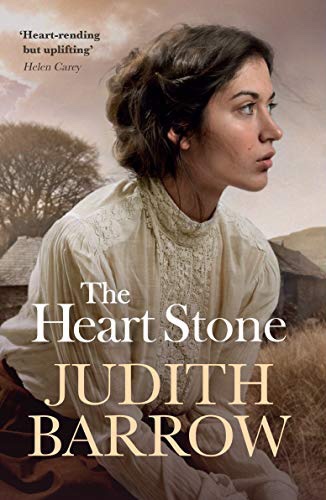
Which immediately brought to mind (well, my mind anyway), my book, The Heart Stone, which was published by Honno, in 2021: So, never one to pass up on an opportunity…

The inspiration for The Heart Stone partly came from research for my degree on The First World War some years ago; a subject that both fascinates and repulses me. At the time I’d found my grandfather’s army records and discovered he’d volunteered to join the local Pals Battalion with two of his friends, although they were all underage.

I only ever remember him as a small man who spent his days in a single bed under the window in the parlour, who coughed a lot, and was very grumpy. He died when I was eight.

There was no conscription at the beginning of the war. The Pals Battalions were formed, to answer Lord Kitchener’s call for volunteers, by encouraging local magistrates to drum up community spirit and patriotic fervour.

 The gist of the speeches used were that young men,”…  should form a battalion of pals, a battalion in which friends will fight shoulder to shoulder for the honour of Britain and the credit of their town and villages.”

 My grandfather was gassed in 1916 near the Somme. He was also shell-shocked and was unemployed for the rest of his life. Once, my mother told me he had never spoken of his experience but had suffered nightmares for as long as she could remember. And that there were whole streets around the house where they’d lived where the men had never returned.

It’s a haunting image.

Four years ago, after my mother passed away and we were clearing her home, I found my grandfather’s army papers again.

 During the following week, whilst my husband and I were walking along the Pembrokeshire coastal path, we found a smooth stone, almost heart shaped, placed on top of a cairn amongst the Marram grass. Picking up the stone to examine it, a folded paper blew from underneath. There had been words on it but were, by then, indecipherable.

 A love note, I thought; a love note under a heart shaped stone.

 A love note, under a heart shaped stone, from a young man who had never returned.

 And so The Heart Stone started to form.

The Heart Stone was published by Honno Press in Feb 2021

And a Review of The Heart Stone:

https://amzn.to/3bCkx8w

And a buying link:

Amazon.co.uk: https://amzn.to/3hupbc1

Also available from Honno

And a little bit about me:

I’m,originally from Saddleworth, a group of villages on the edge of the Pennines, but have lived in Pembrokeshire, Wales, for over forty years.

I have an MA in Creative Writing with the University of Wales Trinity St David’s College, Carmarthen. BA (Hons) in Literature with the Open University, a Diploma in Drama from Swansea University. I’m also is a Creative Writing tutor and hold workshops on all genres.

And here I am:

https://twitter.com/judithbarrow77
https://www.facebook.com/judith.barrow.

Guest Feature – Judith Barrow

With many thanks to Patricia for including me in her Guest Feature.

Patricia M Osborne's avatarPatricia M Osborne

It gives me great pleasure today to introduce, Judith Barrow, an author I greatly admire. Judith has come along to Patricia’s Pen to talk about her writing journey. Without further ado, it’s over to Judith.

My Writing Journey

Judith Barrow

Every now and then I read about an author’s journey into publishing, which always leads into thoughts about my own convoluted journey.

Like many writers I’ve dabbled in creative writing since childhood: poems, articles, short stories, competitions, and pieces in newspapers.

Years ago when the children joined in various sport activities, and in the spirit of giving something back to those groups, I joined their committees ‒ usually fooled into the unpopular post of minute secretary. It was after the presentation of one set of minutes that I was bluntly told by another member that I “should go into writing novels” after presenting the minutes of a particularly volatile…

View original post 514 more words

How I Write – Judith Barrow

crimecymruwriters's avatarCrime Cymru

This week Judith Barrow gives us an insight into how she constructs her excellent storylines and the importance of having a key “inciting incident”

The Inciting Incident – a Must for Every Story

Every story needs an inciting incident; without that the narrative becomes fixed, without movement; it’s no longer a story, but just a series of events.

An inciting incident is an unexpected occurrence that upsets the balance of the plot, especially for the protagonist. It complicates the character, gives them a central motivation, and sets them on the path that they will follow throughout the story.

So it has to be a convincing inciting action, one that the reader will believe in, be drawn into right away. There are a couple of writing techniques that can ensure this:

It’s essential that it should drive the protagonist to think, to behave (whether intentionally or subconsciously), in a certain way…

View original post 781 more words

An easy walk… I thought!. Warren Wood (beginning with a Short Visit to the Water-Break-its-Neck waterfall) @Powys #Wales #photographs #walks #holidaymemories

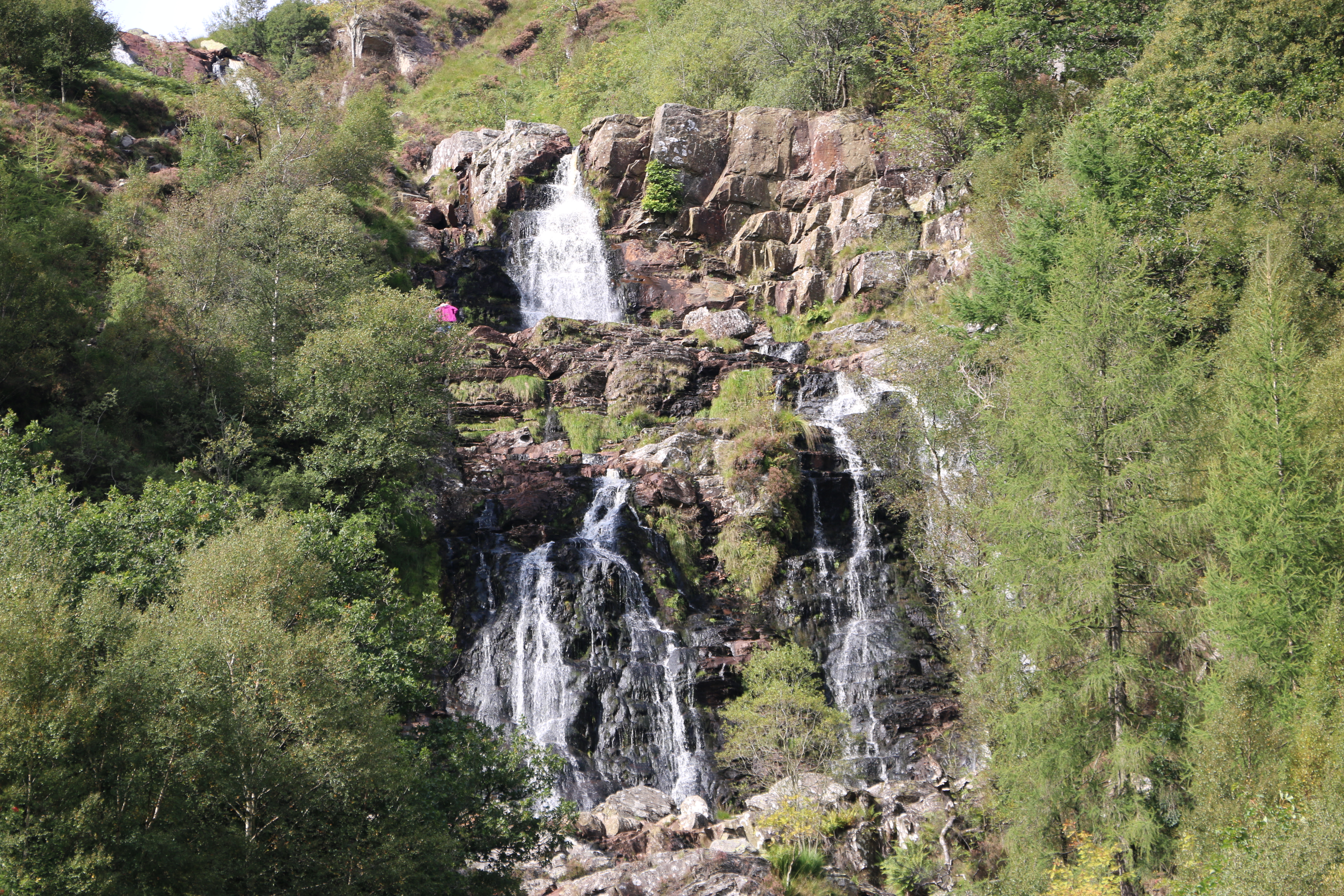
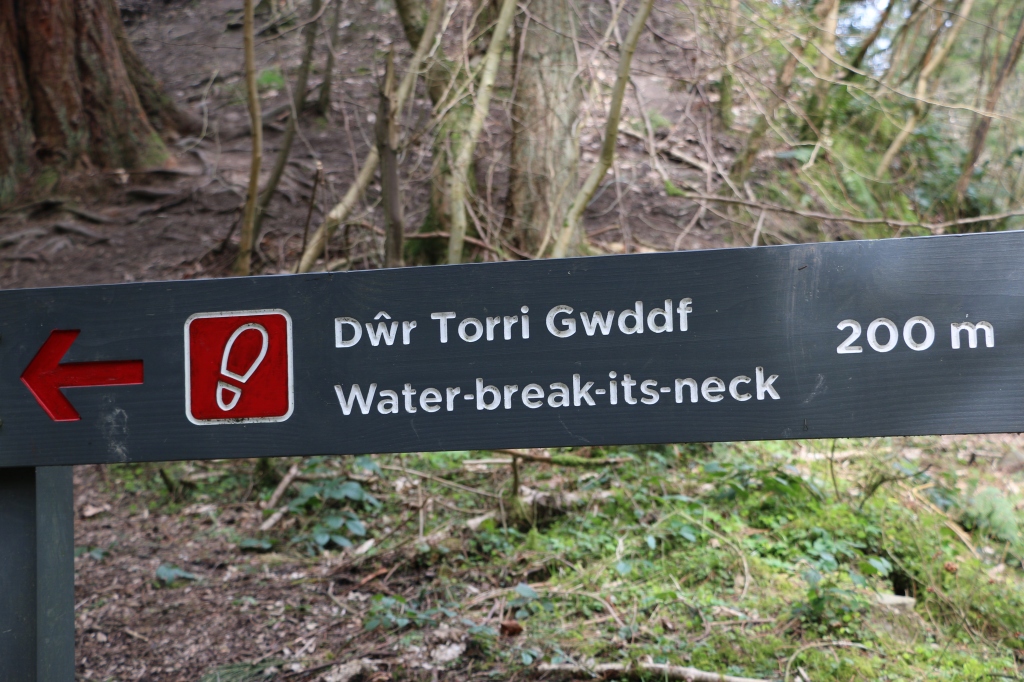
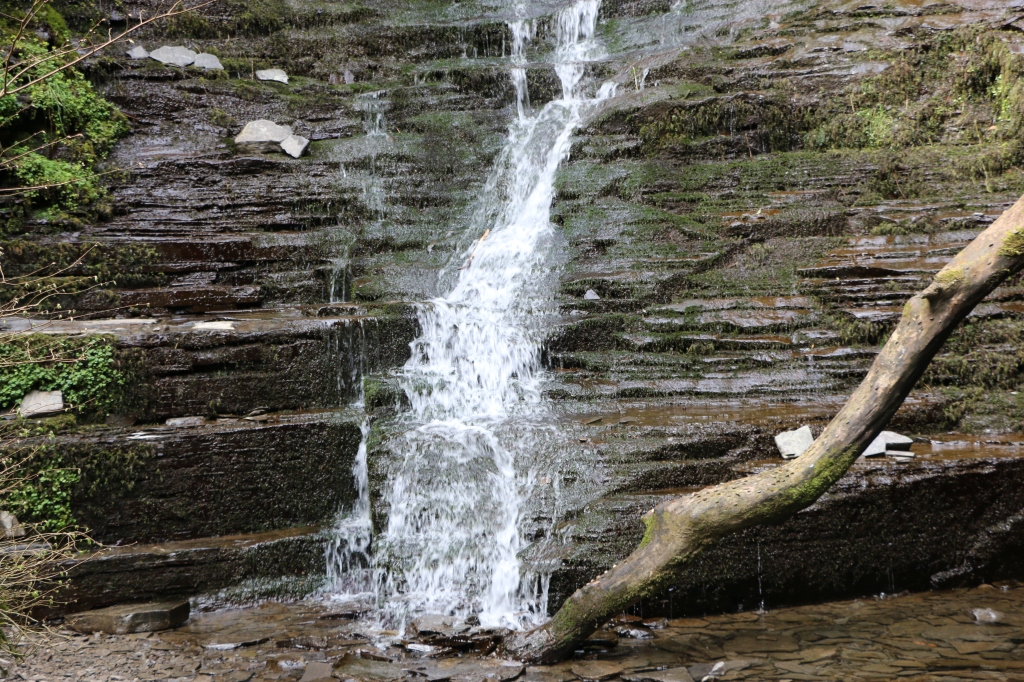
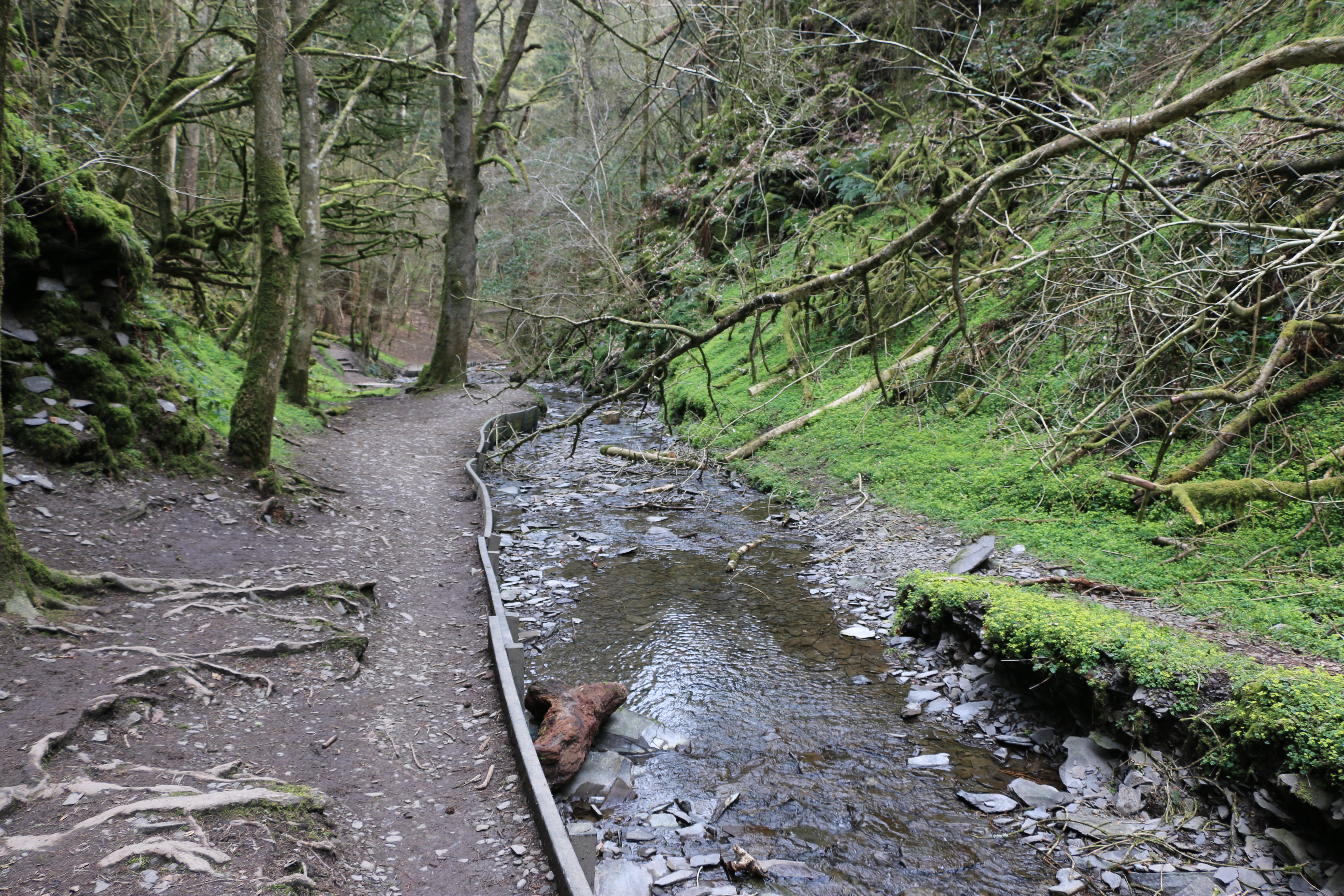
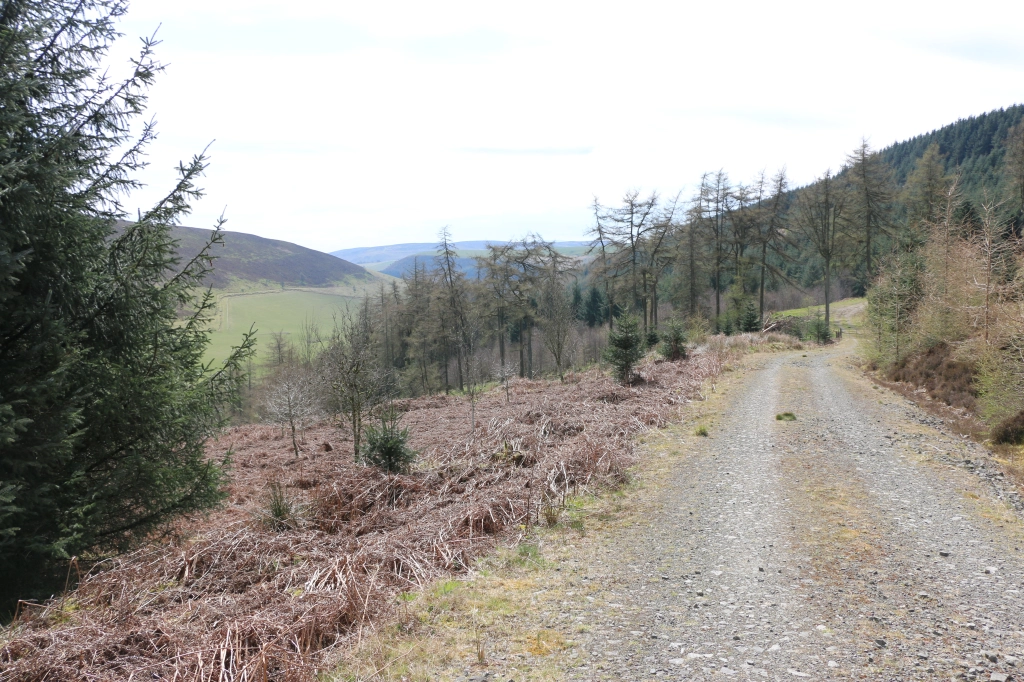
The sunny day disappeared as we walked through the short steep-sided gorge – following in the footsteps of Victorian tourist to the Water-Break-its-Neck waterfall, around a mile from the village of New Radnor ( Maesyfed – the Welsh name), in the county of Powys, Wales.

It was a spectacular sight. Yet, beyond the sound of the water it was strangely silent.

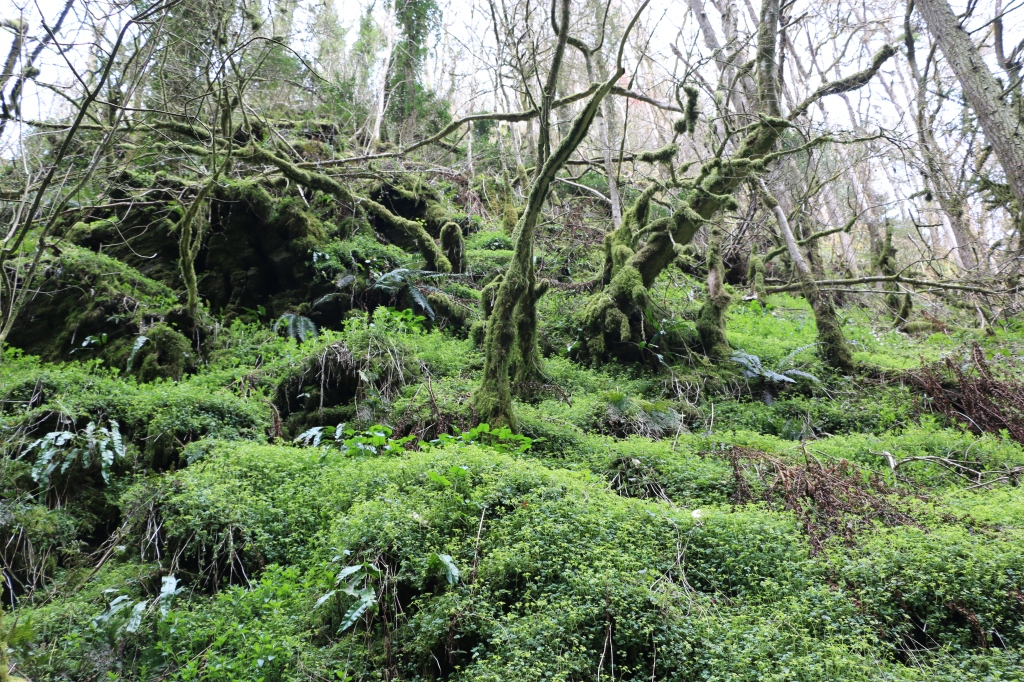
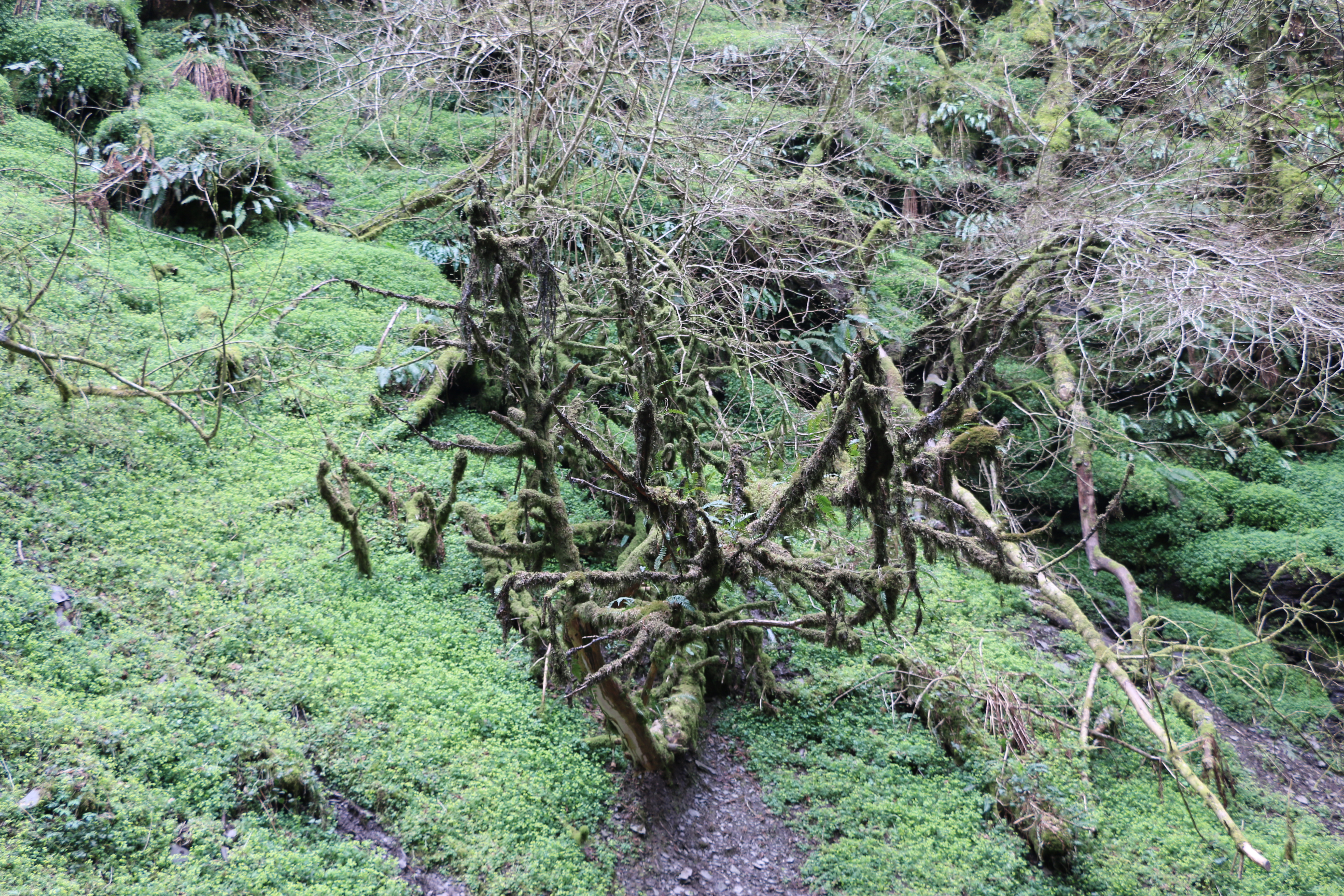
The water tumbled through the black slated rocks, a silvery mesmerising flow, to the small stream and creating a fine rainbow mist in the air. Yet there was an eerie and ephemeral feeling to the fallen, bare oak branches laced with lichen and boulders covered in dark green moss and surrounded by curtains of gently swaying ferns.

We made our way back along the narrow path. I thought we would be taking a slow ramble along the walking trails in Warren Wood – so named for the labyrinth of rabbit warrens that kept the locals fed for centuries, now dwarfed by towering beeches, oaks and conifers.

Husband had other ideas. ‘Let’s walk up the road to the top of Warren Wood,’ he said, pointing vaguely to the left as we left the path. ‘We could get some brilliant photographs.

‘How far is it?’

‘Not far.’

I’ve been caught out by “Not far”, before. Why do I always believe him?

If only I’d read the Nature reserve signage:

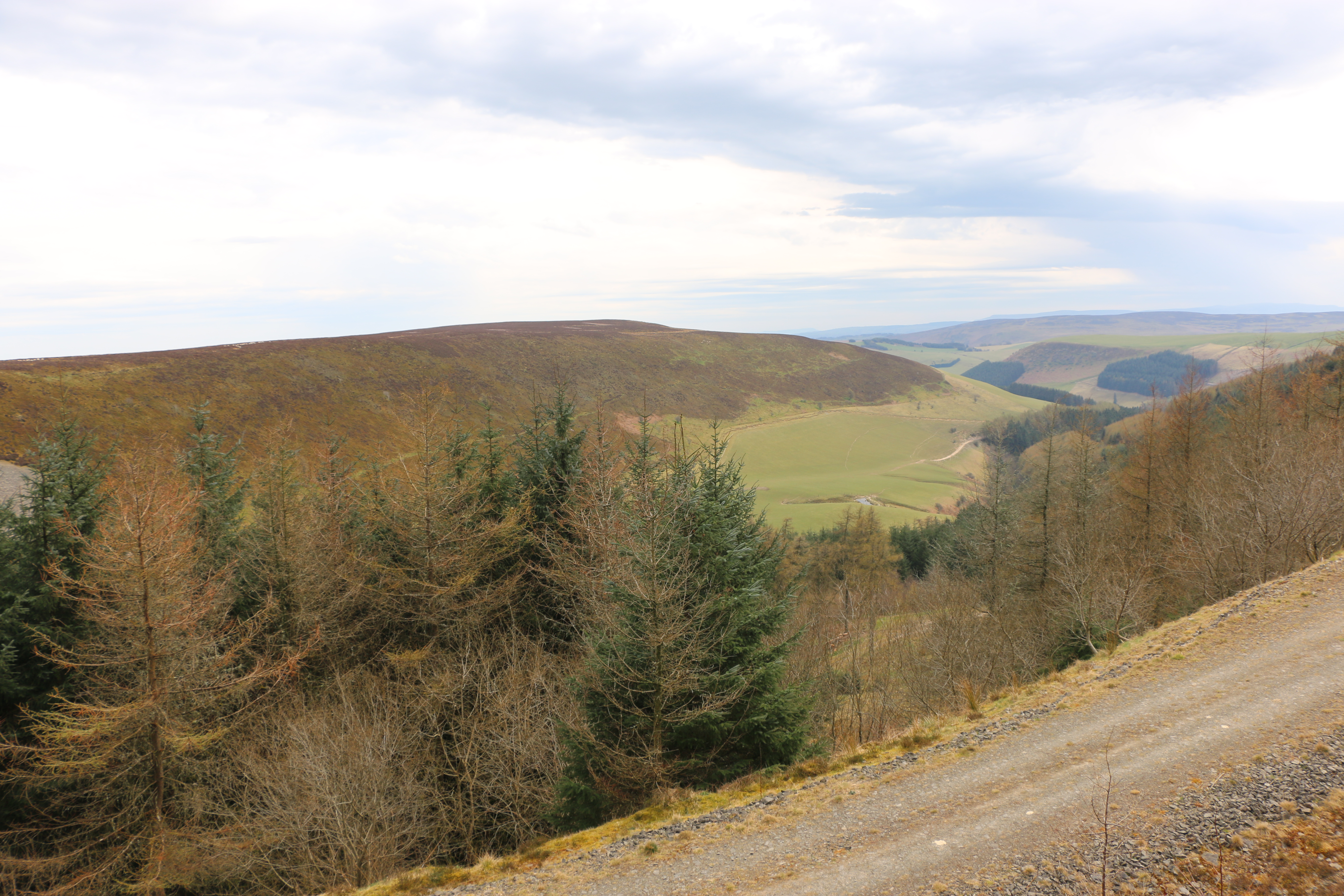
In the 1800s The Victorian landowners planted trees on the moorland, to provide a landscape of scenic beauty thus creating a forest, part of Radnor Forest which was once a royal hunting ground. In those days it wasn’t an area covered in trees but an unenclosed piece of land, legally set aside for the Norman kings to hunt deer. Today, Radnor Forest is a land of hill farming and moorlands, steep narrow valleys and hills, rising up to the highest point in Radnorshire, Black Mixen at 650 metres.

Note the words, ‘steep’, hills, and 650 metres. What we didn’t know, was that the wide concrete road in front of us was not only steep but has many twists and turns – and always upwards before it got to 650 metres.

Two and a half hours later, with stops for photographs, we reached the top… I thought. We sat on a convenient rock, drinking from our second bottle of water.

‘We could go on for a bit longer?’ Husband said.,looking around. ‘The road carries on.’

‘The proper road stops here not up there.’ I pointed to the dirt track behind us. Steep dirt track.

I’I bet we could get brilliant photos, though. I’ll go and check.’ Ten minutes later he was back. ‘Come on, it’s a fantastic view.’

We walked in silence. Well, to be honest I had no breath to use up in conversation.

Though the views were wonderful. We could see as far away as Hereford and beyond…..

‘Ready to go back?’ Husband asked.

I didn’t think I could face that road again. ‘We could try going that way?’ I point to a gentle downward sloping track.’It looks like it’s going back to the start.’

‘It doesn’t.’

‘It does.’ I insisted.

I should,perhaps have said, before now – I have little sense of direction. We stumbled/slid down walked for over an hour with the wind whistling through the tall conifers that lined the ever-steeper, downward track. I became increasingly aware of a brooding silence, each time I said cheerfully,’It has to lead to somewhere…’ and, ‘We’re going in the right direction…’. Until we weren’t… we rounded a corner- to see the road end in a turning point for the Forestry Commission. A thick forest faced us…Hmm…

Back we went,stopping every fifty paces to catch our breath. To be fair there were only a few recriminations. Although I did hear some mutterings – which I ignored. Later,we worked out that we had walked thirteen miles – seven more than we had planned.

The following day we creaked our way rambled sedately around the fields where we were staying near Bettws Cedewain, a place in a sheltered valley on the banks of the river Bechan. around five miles from Newtown. The village grew around the crossing of the river where a church was founded by St Beuno in the sixth century. I read that the name of the village is thought to derive from the Welsh word ‘Betws’ – which means a prayer house or bead house where the number of prayers had been counted on beads by the earliest church-goers in Cedewain.

St Justinian’s to Porth Clais: Walking in the footsteps of St Justinian – or, Sometimes Scrabbling on Hands and knees #Pembrokeshire #Wales #walking #photos #memories

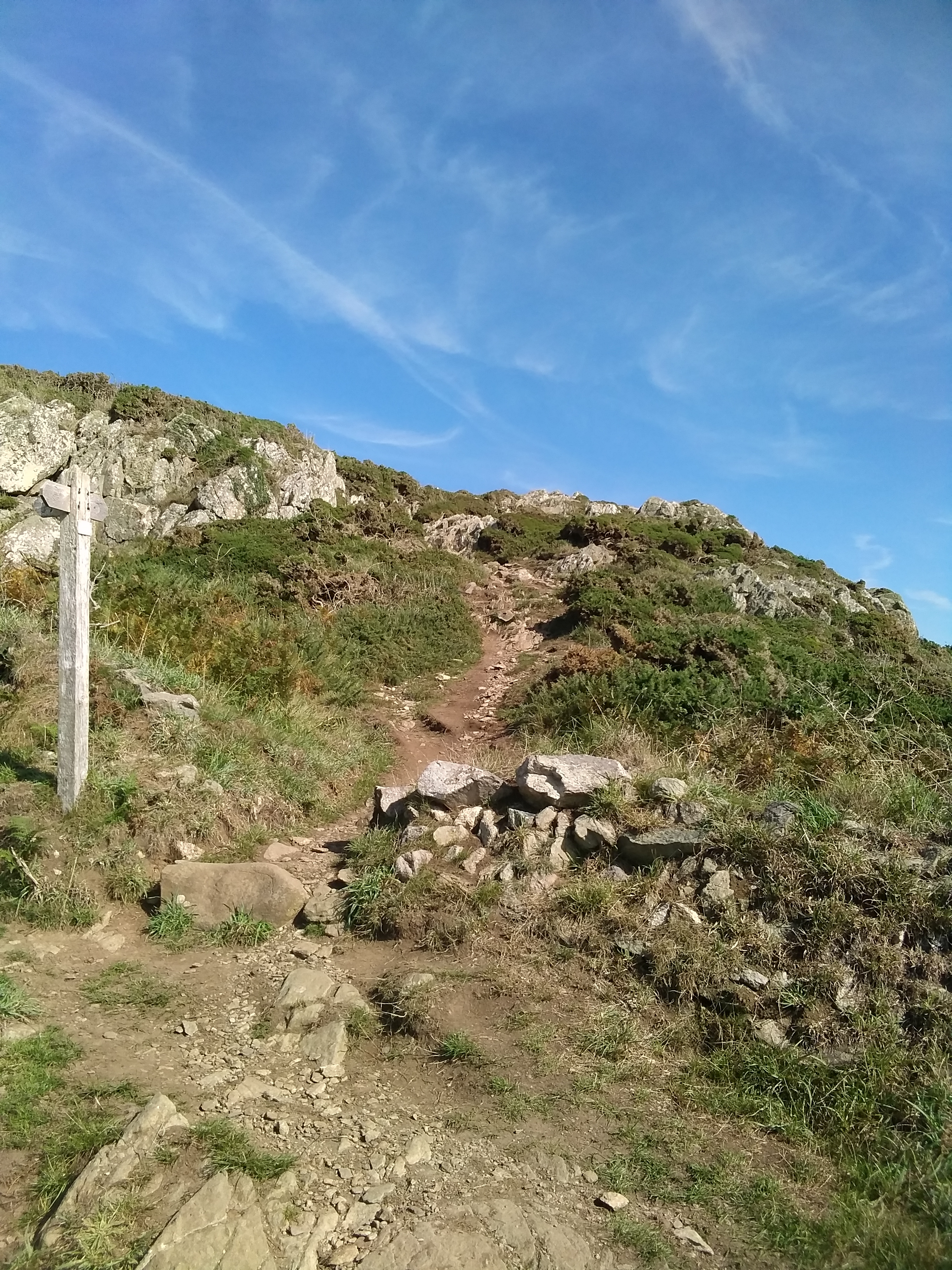
Literally on hands and knees

But it was worth it

This image has an empty alt attribute; its file name is img_0260.jpg
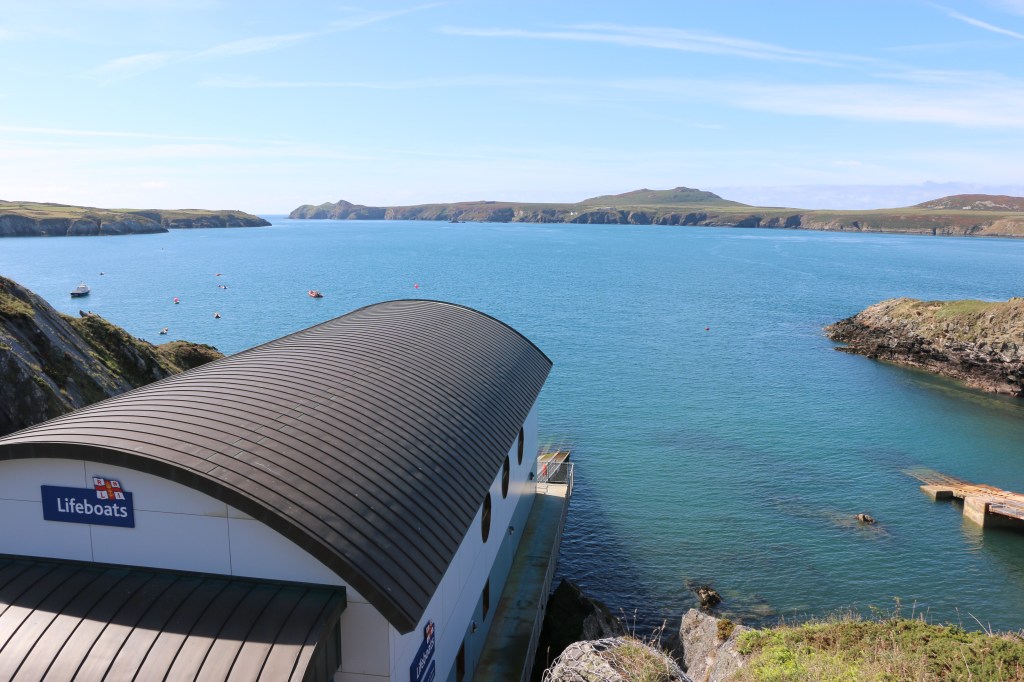
The new-ish Lifeboat Station
This image has an empty alt attribute; its file name is img_0261.jpg

And then wonderful views overlooking Ramsey Island

This image has an empty alt attribute; its file name is img_0264.jpg
This image has an empty alt attribute; its file name is img_0265.jpg

Just to prove I was there!!
This image has an empty alt attribute; its file name is img_0262.jpg
This image has an empty alt attribute; its file name is img_0284.jpg

And look who we saw! (from a great distance)

This image has an empty alt attribute; its file name is img_0277.jpg
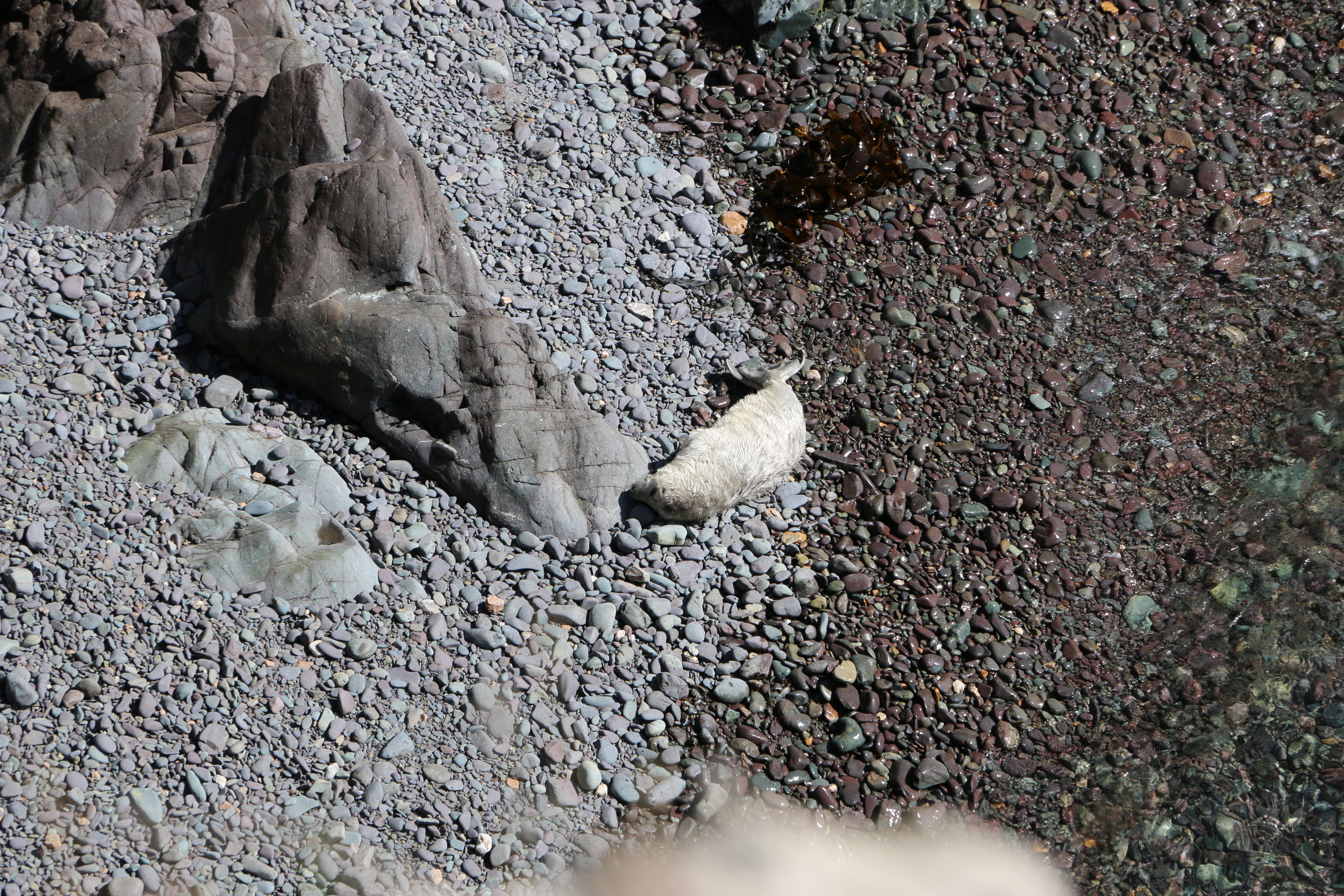
Seal pups and their mums
This image has an empty alt attribute; its file name is img_0267.jpg

So… who was St Justinian?

Justinian was born in Brittany in the 6th century. At some point in his life, he made his way to Wales, where he settled on Ramsey Island.

Justinian soon became close friends with St David, the patron saint of Wales, and visited him often in the monastery where the cathedral now stands.

He was less impressed however by the lax behaviour of some of the monks and decided to isolate himself on Ramsey island. According to legend, he took an axe and chopped up the land bridge that linked the island and the mainland. As he worked, the axe became blunter and the lumps of rock remaining became larger and larger. They are still visible today in Ramsey Sound, where the waters foam over them at high tide. Followers joined him on the island but his actions didn’t go down well with everyone though. They soon turned them against him and they beheaded him!

To the astonishment of his killers,he picked up his head and walked across the sea to the mainland, and where he set his head down, another spring of water issued forth. This is the one enclosed today by a stone canopy.

A spring of water gushed up from the ground where his head first fell and this became the famous healing well.

Justinian was buried where the chapel now stands. Within its walls are some stone footings, which may mark his original gravesite. His body was removed to the cathedral, probably at some time before the end of the 15th century.

During the early medieval period, two chapels were built on Ramsey. One was dedicated to St Tyfanog; the other to St Justinian. There is no trace of either building today, though their sites are known.

Six of One with Judith Barrow

crimecymruwriters's avatarCrime Cymru

In this feature, we ask our Crime Cymru authors to name six things that influenced their life and shaped them as a writer. This week, Wales Book of the Year Award shortlisted author Judith Barrow writes an extraordinarily powerfuland moving account of a harrowing childhood experience.

Six of One

One book:

As a young child I remember reading The Tree That Sat Down. I had to search for this online, my copy has long gone. Basically, it was about an enchanted forest where Judy (guess why I liked the book!) helps her granny run The Shop Under the Willow Tree. They sell all sorts of lovely things, such as boxes of wonderful dreams fastened with green ribbon. But then Sam and the charming Miss Smith, who is a witch in disguise, open a rival business. I think what struck me then, something I mulled over for quite a while…

View original post 1,380 more words

The Heart Stone

littlemissbooklover87's avatarLittle Miss Book Lover 87

1914. Everything changes for Jessie on a day trip to Blackpool. She realises her feelings for Arthur are far more than friendship. And just as they are travelling home, war is declared.

Arthur lies about his age to join his Pals’ Regiment. Jessie’s widowed mother is so frightened, she agrees to marry Amos Morgan. Only Jessie can see how vicious he is. When he turns on her, Arthur’s mother is the only person to help her, the two women drawn together by Jessie’s deepest secret.

Facing a desperate choice between love and safety, will Jessie trust the right people? Can she learn to trust herself?

I love a historical drama and this one has transported me to the 1900’s. This is a book which has allowed me to meet Jessie and Arthur. This is an interesting novel which has completely absorbed me into the pages.

This is a well-written novel…

View original post 64 more words

A Love/Hate Story #Bookreview: The Heart Stone by @JudithBarrow77 #HistoricalFiction #FamilySaga

Reblogged with heartfelt thanks to Barb Taup.

barbtaub's avatarBarb Taub

“Surplus Women”

Women of Britain say GO [image credit: E J Kealey (artist) Parliamentary Recruiting Committee (copyright owner/commissioner) Hill, Siffken & Co. (L.P.A. Ltd.) (Publisher) Adam Cuerden (Restoration) - Te Papa Tongarewa (The Museum of New Zealand)] https://en.wikipedia.org/wiki/Music_hall#/media/File:Women_of_Britain_Say_-_%22Go%22_-_World_War_I_British_poster_by_the_Parliamentary_Recruiting_Committee,_art_by_E_J_Kealey_(Restoration).jpgWomen of Britain say GO [image credit: E J Kealey (artist) Parliamentary Recruiting Committee – Te Papa Tongarewa (The Museum of New Zealand)]

“There used to be tea rooms on almost every street in England.” An older friend was reminiscing about her youth and her parents’ generation.  “Women needed something to do, and they knew how to bake, and to make proper tea.”

With bureaucratic cruelty, the post-war census labelled them “Surplus Women”. After almost ten percent of British men under the age of 45 died in World War I—the Great War—Britain was left with two million more women than men. In my friend’s family, none of the women of the previous generation had husbands or sweethearts who survived the war. One of her aunts said that when they sent their husbands, sweethearts, brothers, and cousins off to fight, so few returned that girls were told only one in ten…

View original post 1,301 more words

A Christmas Story by Judith Barrow

crimecymruwriters's avatarCrime Cymru

This has been a tough year, but now that Christmas is nearly upon us, our brilliantly talented Crime Cymru authors have decided to bring us all some seasonal cheer with stories of murder, mayhem and the office party. In today’s story, Judith Barrow reveals the full and chilling horror of the office Christmas celebrations from hell.


THE WRONG ANGLE by Judith Barrow

‘There, that’s better?’ Anne Morgan steps back to admire the office, festooned in Christmas decorations. She touches the red and green balloons tied to the stapler on her desk and smiles as they bob around. Picking up the glass musical globe, she winds the key before placing it, first at one side of the phone, then the other. In the end she arranges it just a centimetre or two in front, next to her pen tray.

Humming let it snow, let it snow, let it snow, Anne smears…

View original post 1,411 more words

Shell Shock – Legacy of the Trenches #WW1

Image courtesy of the Mirror

The First World War ended with the deaths of a generation of young men. But the devastation of the  conflict didn’t end with that last blast of a howitzer. Thousands of soldiers went home still re-living their horrific experiences of the battlefields for many years. Their lives were damaged by shell shock, a condition many had suffered from during their military service. And, throughout Britain, doctors were baffled by this unknown illness. Soldiers were returning from the trenches paralysed, blind, deaf. Some were unable to speak. Many had bouts of dizziness, hysteria, anxiety, Families reported that their returned husbands, sons, brothers, were often unable to sleep. And, if they did, had horrendous nightmares that resulted in depression, refusal to eat, erratic behaviour.  Many so-called lunatic asylums and private mental institutions were assigned as hospitals for mental diseases and war neurosis.

Many men felt shame; often they  were unable to return to military duty and on their return home, they were viewed as being emotionally weak or cowards. Bewildered by the changes seen in shell shocked soldiers, people had little sympathy; there was little understanding for them. Even worse,  many families felt only the disgrace and humiliation that one of their own had been charged with desertion and executed by a firing squad of their fellow soldiers. It would be many decades before they would be given posthumous pardons.

Soldier being bombarded
Image courtesy of BBC.co.uk Inside Out Extra

In the first years of the war, shell shock was assumed to be a physical injury to the nervous system, a result of soldiers facing heavy bombardment from exploding shells. Victims were at the mercy of the armed forces’ medical officers. Determined to ‘cure’ the soldier, the treatments given by them were cruel and humiliating: extreme physical instruction, shaming and severe discipline in front of their fellow soldiers, solitary confinement, electric shock treatment.

By the second year of the war almost half of the casualties in fighting regions were victims of the condition and military hospitals were unable to cope; the unexpected numbers of soldiers suffering from the condition meant that there was a drastic shortage of beds. And medical staff discovered that many men suffered the symptoms of shell shock without having even been in the front lines. More so, it was noticed that many officers, desperate to hide their emotions and to set an example for their men, became psychotic, suffering from some of the worst symptoms of shell shock..

But it wasn’t until 1917 that the condition of shell shock was identified by a Medical Officer called Charles Myers as combat stress, today also known as Post Traumatic Stress Disorder (PTSD).

So, the thousands of soldiers who went home still re-living their horrific experiences of the battlefields had a name for the condition they were living with. Many had lost their ability to walk or, speak. Some regressed to a baby-like state. It seemed there was no expectation of recovery.

But then one man, an army major and general physician, Arthur Hurst, despite much cynicism and opposition established a hospital at Seale Hayne, Newton Abbott, Devon. (now part of Plymouth University). The men who arrived there, ostensibly destroyed by their horrendous experiences of war were given hope.

Community spirit: On the wards at Seale Hayne hospital men were encouraged to write and to produce a magazine with a gossip column called Ward Whispers
Image courtesy of the Daily Mail

Hurst’s innovative method had never been witnessed before. Psychiatrists who, after the disorder was identified towards the end of the war, were adamant that a process of mental rehabilitation was needed; that the shell-shocked soldier was trying to cope with harrowing experiences by repressing any memories. They thought that the symptoms revealed involuntary detachment from events lived through and the man could only be cured by the traditional method of reviving memories, a process that could require a number of psychiatric therapy sessions.

Arthur Hurst
Image courtesy of BBC.co.uk Inside Out Extra

As a general physician, Arthur Hurst believed that there was a simpler treatment;  that humane understanding and sympathetic persuasion was the way to into the ex-soldiers’ awareness of the new life now around them.  He thought that during a terrifying bombardment, a soldier might experience tremor, be unable to move or speak. So, sometimes, the power of suggestion could cause the symptoms to survive once that intense reaction had passed. The cure, as far as he was concerned was the re-education of the mind and his methods  were what was needed to resolve the lingering symptoms of the trauma endured.

He used hypnosis and patience, giving them work to do on the land around Seale Hayne; a revolutionary occupational therapy. The tranquillity of the Devon countryside, the encouragement given to the men was thought to be a place where the men could get over their hysteria. They were urged to use inventive and resourceful ways to work.

Soldiers working in field
Image courtesy of BBC.co.uk Inside Out Extra

Then, In a ground-breaking move, he ordered the reconstruction of the battlefields of Flanders on Dartmoor even encouraged his patients to shoot. to help the men relive and come to terms with their experiences.

Hurst also believed it important for the men to express themselves creatively and persuaded some to write and publish a magazine with a gossip column called Ward Whispers.

Nurses and patients
Image courtesy of BBC.co.uk Inside Out Extra

He made the only film in existence about how shell shock victims were treated in Britain. This gives an insight into his treatments. Though upsetting initially to watch, they also reveal the dramatic recovery Arthur Hurst’s methods produced. It was indeed pioneering and gives a mark of respect to the men who survived the terrors of the First World War. Arthur Hurst proved his methods were truly effective but I have been unable to find any studies of what happened to any of the men who had therapy at Seale Hayne. However I did find this fascinating programme on Radio Four’s Homefront: https://bbc.in/36SmD1J.

I have two books set against the background of WW1

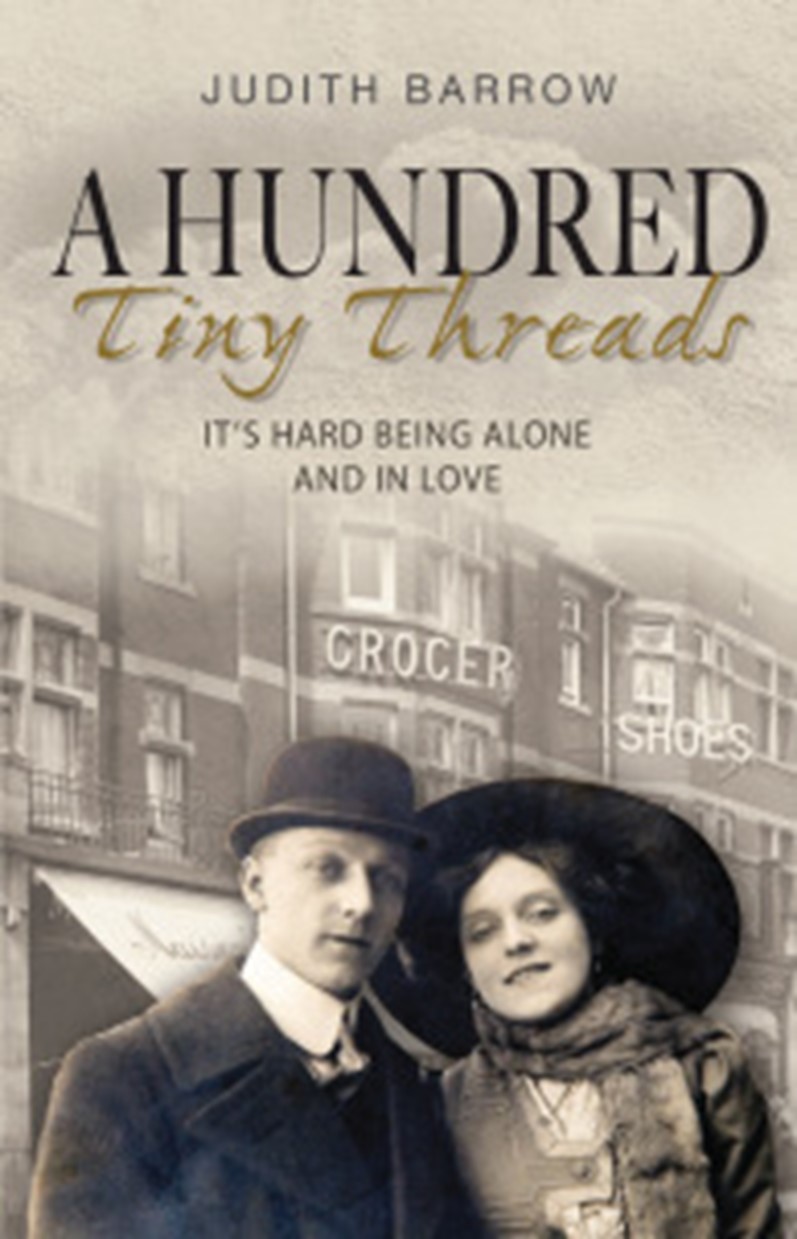
A Hundred Tiny Threads – the prequel to the Haworth trilogy

It’s 1911 and Winifred Duffy is a determined young woman eager for new experiences, for a life beyond the grocer’s shop counter ruled over by her domineering mother. The scars of Bill Howarth’s troubled childhood linger. The only light in his life comes from a chance encounter with Winifred, the girl he determines to make his wife. Meeting her friend Honora’s silver-tongued brother turns Winifred’s heart upside down. But Honora and Conal disappear, after a suffrage rally turns into a riot, and abandoned Winifred has nowhere to turn but home. The Great War intervenes, sending Bill abroad to be hardened in a furnace of carnage and loss. When he returns his dream is still of Winifred and the life they might have had… Back in Lancashire, worn down by work and the barbed comments of narrow-minded townsfolk, Winifred faces difficult choices in love and life.

The Heart Stone

1914. Everything changes for Jessie on a day trip to Blackpool. She realises her feelings for Arthur are far more than friendship. And just as they are travelling home, war is declared.

Arthur lies about his age to join his Pals’ Regiment. Jessie’s widowed mother is so frightened, she agrees to marry Amos Morgan. Only Jessie can see how vicious he is. When he turns on her, Arthur’s mother is the only person to help her, the two women drawn together by Jessie’s deepest secret.

Facing a desperate choice between love and safety, will Jessie trust the right people? Can she learn to trust herself?

Links:

https://judithbarrowblog.com/

https://twitter.com/judithbarrow77

https://www.facebook.com/judith.barrow.3

https://www.honno.co.uk/authors/b/judith-barrow/

https://www.amazon.co.uk/Judith-Barrow/e/B0043RZJV6

@judithbarrowauthor.bsky.social‬

judith barrow

Drawing a Likeness: describing characters

Another great post from Thorne Moore.

thornemoore's avatarThorne Moore

How much detail do you give in describing a character’s appearance? Do you convey with precision the shape of their nose, their eyes, their lips, their hair, the quality of their skin, the size of their waist, or do you leave it vague? I have read and enjoyed cinematic book in which every detail is described so precisely that all readers would conjure up an identical image of each character. Personally, though, I lean towards keeping it very very vague.

I am inspired in this by various sources. Firstly, my Latin teacher at school who was much like Mary Beard in her enthusiasm for the subject. She thought Latin should be a spoken language and wanted us to read Virgil’s Aeneid as an exciting novel. Unfortunately, she left to have a baby and was replaced by a hapless peripatetic teacher with the result that the whole class failed their Latin…

View original post 549 more words

Pals Regiments – An Experiment Never Repeated #WW1 #crime #romance #excerpt #TheHeartStone #historicalFiction #Honno

 As members of the human race we feel safest with those we know and trust. And we choose who to trust; friends and those members of our families with whom we can empathise. Those who think like us, who, on the whole, believe in the things we believe in, who share group values.

Even if those ideals are instigated by someone else, we can sometimes be persuaded to take them onboard. To consider them as our own core principles. And, as such we cooperate; we work together towards a shared goal.

It was this theory; that man has evolved to cooperate within a trusted group and so is able to achieve more than any one person could ever accomplish alone, that in nineteen fourteen led to the formation of the Pals Battalions.

When the First World War broke out in the August, Britain was the only major power not to begin with a mass conscripted army. It quickly became clear that the small professional British Army was not large enough for such a comprehensive conflict. Despite the general belief that the war would be over by Christmas, the newly appointed Secretary of State for War, Lord Kitchener, was unconvinced. He approached Asquith’s Government to allow conscription, but this was considered politically dangerous for the Liberals. However, Parliament did sanction strengthening the Army through volunteering.  And so, on the sixth of August, Kitchener set about recruiting.

General Henry Rawlinson, serving as Director of Recruiting at the War Office on the outbreak of war, believed that men would be more willing to join up if they could serve with men they already knew, they would enlist if they could serve alongside their friends, relatives and, local football teams, church members, workmates.

pals-batallion

Image courtesy of A Date with History

Building on General Rawlinson’s idea Lord Derby, Conservative member of the House of Lords, organised one of the most successful recruitment campaigns to Kitchener’s Army.

In  a speech to the men of Liverpool , he said: “This should be a battalion of pals, a battalion in which friends from the same office will fight shoulder to shoulder for the honour of Britain and the credit of Liverpool.”

Pals battalions were formed on patriotic fervour and community spirit, spurred on by local magistrates and officials on behalf of Lord Kitchener. Thousands answered the call. Cities, driven by civic pride, competed to sign up new recruits until there were too many for the military to train. So they were drilled in their own towns by those same magistrates and officials, until the army could take over.

December 1915, London: A recruiting campaign attacts recruits to Southwark  Town Hall. Read more: http://www.mademan.com/ga… | World war one, World war  i, World war
Image courtesy of Pinterest

It was easier to sign on recruits from areas where mining or mass industry were the main employment. It appears that, to many men, the army gave them a great opportunity to escape dire poverty: to have regular pay, food, clothing, sometimes better living conditions in barracks compared with their homes. Most had never been abroad. The war offered the opportunity to go to France and Belgium with their friends and get paid for it.

Hull and the First World War | World war one, World war, War
Image courtesy of Pinterest
World War One: Manchester Pals battalion details to go online - Manchester  Evening News

Members of Manchester pals battalions – image courtesy of Manchester Evening news

Once they had been formed, most Pals Battalions spent 1914 and 1915 training in Britain. But plans were being made for a major offensive on the Somme that was intended to relieve the pressure on the French and break through German lines to force an early victory. It would be the first major battle for most volunteers.

For many it would also be their last. The first day of the Somme was disastrous. Most of these units sustained heavy casualties.

Certainly the Pals Battalions increased the number of volunteers. However, poor military tactics by the higher ranks meant that there was a heavy price to pay by the men in those battalions. Neighbourhoods and families were devastated.

 With the introduction of conscription in 1916, the close-knit nature of the Pals battalions was never to be replicated.

Quote from one Pal: ‘Two years in the making. Ten minutes in the destroying. That was our history.‘.

Image courtesy of The Manchester Evening News

The Heart Stone

Excerpt:

In The Heart Stone, Jessie’s young love, Arthur, joins the local Pals Brigade, even though, at sixteen, he is too young.

They held onto one another for a while.

‘I have to go, sweetheart.’ Arthur pulled away from her. ‘Best I go first, eh?’

Jessie nodded, not trusting herself to speak. She didn’t watch him walk away...

Chapter Eighteen September 20th 1914

She didn’t go to watch him leave the town with the other two hundred men and boys either. Through her opened bedroom window, she listened to the uneven thud of their undisciplined marching between the changing tunes of the brass band and the singing. How she resented the singing. And the cheering.

Sitting on her bed, her handkerchief sodden between her fingers, she tried to shut down the images she’d conjured up in her mind of what Arthur might face. She had no idea, but she’d read in the newspapers about the atrocities the Germans were committing in Belgium; killing randomly, deliberate cruelty. What kind of men were they?

Despite Amos Morgan’s constant calls to go down to serve in the shop, she ignored him. She wouldn’t face the excitement, the proud chatter of the customer. She didn’t, wouldn’t, couldn’t share it.

Eventually the crowds moved away from in front of the shop. She heard the noise from below quieten to a low murmur and thought bitterly that Amos Morgan would be worried about making less money now so many men had gone. Gone to a foreign land to be killed in a war that her own country shouldn’t have become involved in. It didn’t make sense to her.

Links:

https://twitter.com/judithbarrow77

https://www.facebook.com/judith.barrow.3

https://www.instagram.com/judithbarrow2912/

https://www.honno.co.uk/authors/judith-barrow

Welcoming Guest Author Judith Barrow

With thanks to both Elaine Roberts & Francesca Capaldi Burgess for giving me some time on their website: Write Minds.https://bit.ly/2VhEPg7

WriteMindsWritePlace's avatarWrite Minds

We welcome Judith Barrow today, talking about her research and settings

Hello Judith, and welcome to the blog. First of all, could we ask what kind of research you do?

Writing historical family sagas necessitates a lot of research. It’s what I enjoy. It’s fun discovering the fashions of an era, the hairstyles and cosmetics. The toys, the games that occupied the children tell a lot about the times. Mostly I research late nineteenth and early twentieth century when children had less time to play; childhood often ended before the age of twelve, with chores and work to bring in money for the family. I researched the kind of employment given to them, unbelievable in this days and age. And it has made me see how far society has changed when it comes to the houses built: from terraces to high-rise flats to housing estates. And how there are differences…

View original post 1,037 more words

Looking Back… and Looking Forward #ThrowbackThursday #Review #Excerpt

Every now and again one my books receive a review that takes my breath away – that makes my day/week/month… even makes me think that, if I never write another word, this is what I’ll treasure. Something that says I succeeded in writing something I can be proud of.

This review from author Barb Taub covered not only one of my books, but the whole of the Haworth trilogy and the prequel. So chuffed was I that I copied, pasted and printed it off to pin on my notice board to remind me that I can write – even on the days when I am banging my head on the keyboard and writing xmjhnsdjhsdjhfjhf

This is Barb’s review:

We’ve all read epic family sagas—sweeping multi-generational tales like The Thorn Birds, The Godfather, Roots, the Star Wars franchise, and anything remotely connected to the British Monarchy. So as I read Judith Barrow’s Howarth Family trilogy, I kept trying to slot them into those multigenerational tropes:

*First generation, we were supposed to see the young protagonist starting a new life with a clean slate, perhaps in a new country.
*The next generation(s) are all about owning their position, fully assimilated and at home in their world.
*And the last generation is both rebel and synthesis, with more similarities to the first generation made possible by the confidence of belonging from the second one.

But the complex, three-dimensional miniatures I met in the first three books of the trilogy stubbornly refused to align with those tropes. First of all, there’s Mary Howarth—the child of parents born while Queen Victoria was still on the throne—who is poised between her parents’ Victorian constraints, adjustment to a world fighting a war, and their own human failures including abuse, alcoholism, and ignorance.When Pattern of Shadows begins in 1944, war-fueled anti-German sentiment is so strong, even the King has changed the British monarchy’s last name from Germanic Saxe-Coburg to Windsor. Mary’s beloved brother Tom is imprisoned because of his conscientious objector status, leaving their father to express his humiliation in physical and emotional abuse of his wife and daughters. Her brother Patrick rages at being forced to work in the mines instead of joining the army, while Mary herself works as a nurse treating German prisoners of war in an old mill now converted to a military prison hospital.

Mary’s family and friends are all struggling to survive the bombs, the deaths, the earthshaking changes to virtually every aspect of their world. We’ve all seen the stories about the war—plucky British going about their lives in cheerful defiance of the bombs, going to theaters, sipping tea perched on the wreckage, chins up and upper lips stiff in what Churchill called “their finest hour”. That wasn’t Mary’s war.

Her war is not a crucible but a magnifying glass, both enlarging and even inflaming each character’s flaws. Before the war, the Shuttleworth brothers might have smirked and swaggered, but they probably wouldn’t have considered assaulting, shooting, raping, or murdering their neighbors. Mary and her sister Ellen would have married local men and never had American or German lovers. Tom would have stayed in the closet, Mary’s father and his generation would have continued abusing their women behind their closed doors. And Mary wouldn’t have risked everything for the doomed love of Peter Schormann, an enemy doctor.

I was stunned by the level of historical research that went into every detail of these books. Windows aren’t just blacked out during the Blitz, for example. Instead, they are “criss crossed with sticky tape, giving the terraced houses a wounded appearance.” We’re given a detailed picture of a vanished world, where toilets are outside, houses are tiny, and privacy is a luxury.

The Granville Mill becomes a symbol of these dark changes. Once a cotton mill providing jobs and products, it’s now a prison camp that takes on a menacing identity of its own. Over the next two volumes of Howarth family’s story, it’s the mill that continues to represent the threats, hatred, and violence the war left behind.

Unlike the joyful scenes we’re used to, marking the end of the war and everyone’s return to prosperity and happiness, the war described in these books has a devastatingly long tail. When Changing Patterns takes up the story in 1950, Mary and Peter have been reunited and are living in Wales, along with her brother Tom.

But real life doesn’t include very many happy-ever-afters, and the Howarths have to live with the aftermath of the secrets each of them has kept. The weight of those secrets is revealed in their effect on the next generation, the children of the Howarth siblings. The battle between those secrets and their family bonds is a desperate one, because the life of a child hangs in the balance.

Finally, the saga seems to slide into those generational tropes in Living in the Shadows, the final book of the Howarth trilogy. Interestingly enough, this new generation does represent a blend of their preceding generations’ faults and strengths, but with the conviction of their modern identities. Where their parents’ generation had to hide their secrets, this new generation confidently faces their world: as gay, as handicapped, as unwed parents, and—ultimately shrugging off their parents’ sins—as family.

But I didn’t really understand all of that until I considered the title of the prequel (released after the trilogy). 100 Tiny Threads tells the story of that first generation, their demons, their loves, their hopes, and their failures, and most importantly, their strength to forge a life despite those failures. That book, along with the novella-sized group of short stories in Secrets, gives the final clues to understanding the trilogy. As Simone Signoret said, “Chains do not hold a marriage together. It is threads, hundreds of tiny threads, which sew people together through the years.” And it’s both those secrets and those threads not only unite them into a family, but ultimately provide their strength.

This is the part where I’m supposed to tell you that each of these wonderful books can be read alone. But no, don’t do that. In fact, if you haven’t read any of them, you’re luckier than I am, because you can start with the prequel and read in chronological order. I chose to review these books as a set, and I believe that’s how they should be read.

Every now and then, I come across books so beautifully written that their characters follow me around, demanding I understand their lives, their mistakes, their loves, and in this case, their families. Taken together, the Howarth Family stories are an achievement worth every one of the five stars I’d give them.”

This image has an empty alt attribute; its file name is image-1.png

An edited excerpt from the first of the trilogy, Pattern of Shadows. (Taken from the chapter where Mary Haworth, the protagonist – has just had her first date with Frank Shuttleworth.)

Frank stared into the flames for a couple of minutes and then said. ‘Tell me about your brother, Tom. Patrick told me he’s a Conscientious Objector. There doesn’t seem much love lost there.

 The anger flared immediately. ‘My younger brother has a big mouth. Tom’s a lovely bloke and entitled to his own beliefs.

Frank held his hands up. ‘Whoa, I was only saying.’

‘Yes, well,’ Mary said, ‘for some reason, Patrick’s been jealous of him for as long as I can remember. Her voice faltered. ‘Look, I know what people think about COs. I’m not expecting you to feel any different. Let’s leave it for tonight.’

‘No. I want to know.’ Frank was insistent. ‘Tell me.’

Mary felt the clench of her stomach muscles. ‘Tom was always the odd one out, the only one in the family who still went to church when the rest of us lapsed years ago.’ How many times had she tried to understand the depths of Tom’s unquestioning faith? ‘His beliefs rule his life. It would have been easier for him if they didn’t. After it all came out, we discovered he’d belonged to a group in Manchester for ages. You know, meetings, talks on pacifism, how he felt about violence, how he felt it wrong to get involved with the war. When he first refused to sign up, he was given exemption, provided he continued to work in local government; he was in the Stationery Department. But he turned that down; he said he wouldn’t work for a government of a country at war.’ Mary met Frank’s stare. ‘He was sent to London to Wormwood Scrubs and he’s been there on and off ever since. They keep trying to make him do fire watching and he won’t do that either. They’ve extended his sentence loads of times. Dad won’t have his name mentioned in the house … won’t let Mam visit him, wouldn’t let him come home the times he’s been released.’

A memory of the last grubby bed-sit Tom lived in flashed into her mind. It had been in a part of Bradlow she didn’t even know existed, a maze of narrow streets lined with shabby back- to back terraced houses and filled with gangs of dirty kids and barking dogs. She’d studied the bit of paper with the address written on it before pushing her way past the two women smoking on the bottom step of a flight of stairs. The door to Tom’s room was open and for a moment she’d watched him sitting on the edge of the bed, his head in his hands, his arms sticking out of the sleeves of a jacket too small for him, his back shuddering with sobs.

They keep saying he has to do work that involves the war and he refuses. I think they do it for spite.’ Sparks flew from the fire onto the hearthrug and Frank reached out with his foot and stamped down on them. She couldn’t tell from his expression what he was thinking. ‘I admire what he did. I think it took a lot of courage.’

Frank leant forward, his hands clasped in front of him. Then he pressed his thumb against the first knuckle of each finger until it cracked. The noise jarred in the silence between them…

Links to buy:

Amazon.co.uk: http://amzn.to/2klIJzN

Amazon.com: https://amzn.to/3jqHYUy

Honno: http://bit.ly/2jXy28Z

About Barb Taub:

In halcyon days BC (before children), Barb Taub wrote a humor column for several Midwest newspapers. With the arrival of Child #4, she veered toward the dark side and an HR career. Following a daring daytime escape to England, she’s lived in a medieval castle and a hobbit house with her prince-of-a-guy and the World’s Most Spoiled AussieDog. Now all her days are Saturdays, and she spends them consulting with her occasional co-author/daughter on Marvel heroes, Null City, and translating from British to American.

Links to Barb:

Amazon. co.uk: https://amzn.to/3lgiJq3

Website: https://barbtaub.com/

Facebook: https://www.facebook.com/barbtaub

Twitter: https://twitter.com/barbtaub