How much detail do you give in describing a character’s appearance? Do you convey with precision the shape of their nose, their eyes, their lips, their hair, the quality of their skin, the size of their waist, or do you leave it vague? I have read and enjoyed cinematic book in which every detail is described so precisely that all readers would conjure up an identical image of each character. Personally, though, I lean towards keeping it very very vague.
I am inspired in this by various sources. Firstly, my Latin teacher at school who was much like Mary Beard in her enthusiasm for the subject. She thought Latin should be a spoken language and wanted us to read Virgil’s Aeneid as an exciting novel. Unfortunately, she left to have a baby and was replaced by a hapless peripatetic teacher with the result that the whole class failed their Latin…
Well, best laid plans and all that! For one reason and another we were unable to walk around the Bosherston Lily Ponds, as I had planned and mentioned in January. http://bit.ly/39PXzZ8. So here’s what we did instead… We joined a group of walkers, led by Sam, a Pembrokeshire Coast National Park representative. We walked through the oak woodlands at Little Milford; now, thanks to the Pembrokeshire Coast National Park, going back to its natural state after much commercial devastation in the last century; a refuge for wildlife.
Due to Lock-down it was the last walk with Sam and the group we took part in.
But, then we were asked by Sam to take part in a walking project across West Wales in partnership with the National Exercise Referral Scheme- setting a challenge of virtually walking the world. So we joined in with thisfor West Wales and… drum-roll, here…WE WALKED AROUND THE WORLD and some more. In fact a lot more.In total, 560 exercise referral clients, local walking groups members and staff members, from 13 counties in Wales walked an incredible 38,000 miles.
Remembering that last walk with Sam…
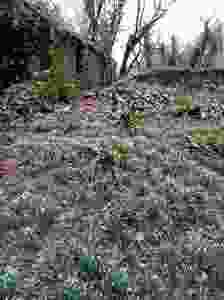
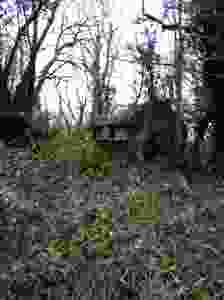
A Sign of Spring on its way; a lovely spread of snowdrops
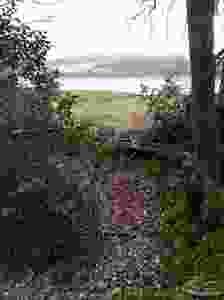
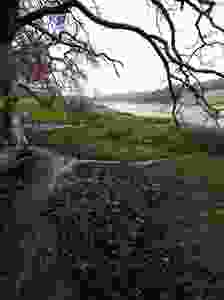
The Cleddau waterway is seen through the ancient woodland.
We followed the network of footpath’s network through oak, hazel, birch and holly trees.
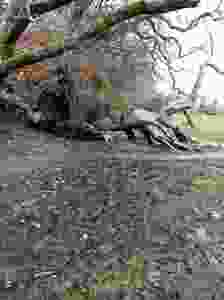
Yes, that’s how muddy it was. No wonder one of the walkers called Sam, “mud-seeking”. She only laughed as we splodged our way through.
The tide was well out; the salt marsh, tidal creeks and mudflats glistened in the brightness of the white sky.
We saw the remains of lime kilns and former coal workings, slowly giving way to nature.
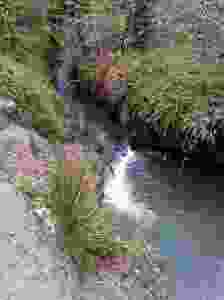
A gushing stream, swollen from all the recent rain, making its way down to the Cleddau.Just as we arrived back at the mini-bus, it began to rain.First time in weeks Husband and I had stayed dry on a walk.
The article below is taken from Go for a Woodland Walk in Little Milford: http://bit.ly/2wErHIM:
The story behind Little Milford?
The woodland itself is believed to date back to at least the 11th century, with locals throughout the ages making the most of the deciduous trees. The Normans took timber and firewood, and oak was routinely coppiced here until the 1920s.Coal played an active part in the area too. In its heyday, the bordering village of Hook had a number of small pits extracting anthracite – the last closed in 1959.Little Milford became a commercial site during this period, with large swathes of the woodland felled and replanted with conifers.The land and several dwellings were then gifted to the National Trust in 1975 by Mr Harcourt Roberts, the descendant of the estate-owning family who experimented with profitable forestry.We’ve been managing the conifers and caring for the woodland ever since. In 2012 we harvested most of the conifers and replanted the cleared areas with a mix of broadleaved trees.Little Milford Farmhouse and Little Milford Lodge are now cared for as National Trust holiday cottages and provide a tranquil holiday retreat in a beautiful estuary and woodland setting.
Pembrokeshire Coast National Park Authority also run a Walkability Project::http://bit.ly/2Pgdb0q The Walkability Project helps people of all abilities who live in Pembrokeshire to enjoy the spectacular countryside and coast around them.
I have a new website where I ramble on about anything, including other authors’ reviews: https://judithbarrowblog.com/
And I have a website where I normally post my views on books and connect with other authors.Writings and Reviewings: https://judithbarrow.blogspot.com/ Please feel free to visit anytime.
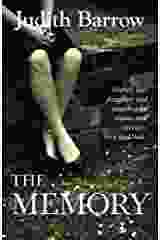
My latest book, The Memory, was released on March 19, 2020
And, to my shame, I’d completely missed this, and now can’t resist adding this wonderful review from the Culture section of… NATION●CYMRU:@NationCymru:A news service by the people of Wales, for the people of Wales
Review: The Memory has a tightly wrought and finely controlled plot by Jon Gower: https://bit.ly/2Yiagc9
After a sprawling, four-volume Howarth family saga set in Lancashire and Ireland this latest novel by Pembrokeshire writer Judith Barrow has a much tighter focus, being essentially the life of one woman, Irene. She is a woman tested to the very limits and beyond as she weaves her way past breaking point after breaking point.
Her exceedingly well-loved sister Rose dies in very suspicious circumstances and the finger of blame for her demise points firmly at Irene’s mother Lil, an increasingly needy, fully-paid-up-member-of-the-awkward-squad. But life has a habit of conspiring against Irene and she finds herself having to care for mother.
Which means Irene’s builder husband Sam can’t live in the same house, especially when his estranged mother – who abandoned him many moons ago – moves in too, in the meanest twist of fate. As with any tragedy the ratchet turns and turns on Irene, intensifying the pain of her caring, carer existence. Every hour is a test. She spends her days tending to her mother even though she has ample reason to hate her. She watches her mother in bed, wondering if a photograph of a family trip to Morecambe she is looking at has triggered memories of the occasion:
“Or is she seeing something else? A memory? That memory? I’m hoping that of all the recollections that linger, if any do linger in that blankness that has been her mind for so long, it’s that one. The one that makes hate battle with pity and reluctant love. If nothing else, I hope she remembers that.”
Irene, meanwhile, is sustained by very different memories and spectral glimpses of her dead sister Rose, an affectionate young girl with Downs’ Syndrome who seems to haunt the family home even thirty years after her mysterious death, thus making it impossible for Irene to leave. Irene does manage to break free for a brief while for after a long wait, a council house for her and Sam rewards them with a new home brim-full of hope and an intention to start a family.
Redemptive
But in a life crammed to the gills with disappointment, the young couple find they are infertile and despite the advances of HRT their local GP won’t prescribe such expensive fertility treatment. Irene’s life seems like a thick Littlewoods catalogue of such thwartings.
Irene’s life is told in a series of flashbacks to the 60s and early 70s, with a soundtrack of Billy J. Kramer and Rod Stewart in a time of romantic meals washed down with Mateus Rosé wine and people tottering around on platform soles. This wash of memories is interspersed by brief, highly intense glimpses of Irene’s present life of sufferance over the span of twenty-five hours when the heating fails and she is forced to clean her incontinent mother by joining her in a cold shower.
Hour by hour we feel the wearing, wearying, spirit-breaking nature of the daily grind. Fortuitously, Judith Barrow has put us very much on Irene’s side, batting for her, and it comes as enormous relief when life finally picks up for her and this turns into an ultimately redemptive novel.
The cover blurb suggests this is a book about a ‘Mother and daughter tied together by shame and secrecy; love and hate’ and it’s all that and more and I won’t spoil the tightly wrought and finely controlled plot by revealing the biggest secret of all but will say the reveal is very deftly handled.
The writing throughout The Memory is clear, uncluttered and unadorned and it’s interesting to see how Barrow manages to flesh out Irene’s life without slathering on the psychology but rather by sticking to the story.
You put the book down having got to know a woman who melds steel with sensitivity and find yourself wishing her well, as a better future unrolls deservedly before her and the long, long suffering is finally over.
The Memory by Judith Barrow is published by Honno and can be bought here.
It’s four years since Mum died. My sister arranged the funeral for eleven o’clock today. This is a post I wrote shortly afterwards. The relationship between Mum and me, and the one between her and my sister, proved so very different. There’s nothing wrong in that, but at no time was it more obvious than on that day…
I wrote…
I haven’t been online much over the last few months; my mother had been on end of life care for over a year and she passed away peacefully three weeks ago. It’s been a difficult time, both for her and for all the family. There have been many occasions when I’ve wished her at peace. Now she is.
I didn’t intend to write anything publicly about this. But something happened after she died that made me think and to remember a piece I wrote some years ago on motherhood, for an anthology.
I gave it the title I Am Three Mothers because, after much thought on what to write, I realised that although generally the same (and hopefully fair) in all the practical things and the everyday stuff of sharing attention, giving time, listening to each, I was actually a different mum to each of my three children when they were young. My approach to each child differed because they were all such diverse personalities.
With our eldest daughter I was more careful how I said things, knew I needed to give her time to tell me anything she was worried about (even though my instinct was to jump right in there…hmm…still is) She tended to try to sort things out for herself and would only come to me as a last resort. She was strong-willed, disliked authority and was loyal to both us as a family and her friends. This last, at times, tended to land her into trouble in school. She had (still has, a wonderful sense of humour – one, I like to believe, is inherited from my mother)
With our son I had a more laid-back relationship. He loved sport and, as long as we got him to his football practice and games on time, didn’t complain much. More open about anything that worried him, nevertheless there were still times we needed to sit with him and wait for him to talk.
With our youngest daughter, his twin, it was a different matter. She put herself under so much pressure in everything she did, striving all the time for perfection that, sometimes, we had to say, ‘stop…enough… relax’. An anxious child, she needed a lot of reassurance and was very shy. She too loved sport and, for someone so quiet, was very competitive.At school she absorbed education like a sponge and loved to write stories. The family sense of humour, sometimes a little dark, burned brightly in her.
I’m glad to say that, whatever mistakes I made as a mother, they all three turned into great adults. We’re very proud of them. And it’s such fun watching them deal with parenthood!
Bear with me; I’m rambling on, I know. But this is leading somewhere…
Last week I was at my mother’s funeral. I say at because I felt it was a funeral I was a spectator to, not part of.
During the service I realised something strange. Being the eldest, and living nearer to Mum than me, my sister had insisted on organising the whole thing. It was a Humanist service which was fine; my mother had no beliefs.
But what was odd, was that what my sister had written about Mum was totally unlike the mum I knew.
And I wonder if that is something all siblings share; a different view of the characters of their parents.
The mother my sister saw was a woman who liked poetry. So there were three poems in the service. I’ve never once seen my mother read poetry although she did like to misquote two lines from ‘ What is this life if, full of care…’
The mum I knew read and enjoyed what she herself called ‘trashy books.’ They weren’t, but she did love a romance and the odd ‘Northern-themed’ novels. (I’m always glad she was able to enjoy the first book of my trilogy – dementia had claimed her by the time the next two were published. She still managed a smiling grumble, though,telling me it had taken me ‘long enough to get a book out there’) And she loved reading anything about the history of Yorkshire and Lancashire. Oh, and recipe books… she had dozens of recipe books and could pour over them for hours. I often challenged her to make something from them. She never did… it was a shared joke.
Mum had a beautiful singing voice in her younger days. She and my father would sing duets together. Anybody remember Pearl Carr and Teddy Johnson? My parents knew all their songs. And so did my sister and I… I thought. The songs and singers chosen were not ones I remembered. And Mum loved brass bands! She’d have loved to have gone out to a rousing piece from a brass band. preferably the local band. She loved everything about the area and the house she’d live in for almost sixty years
Which brings me to the main gist of the service. No mention of Mum’s love of nature, of gardening, of walking.Nothing about Mum’s sense of humour; often rude, always hilarious. Telling a tale she had no compunction about swearing if it fitted the story. And her ability to mimic, together with her timing, was impeccable. She was smart, walking as upright in her later years as she had when in the ATS as a young woman, during the Second World War. She worked hard all her life; as a winder in a cotton mill, later as a carer, sometimes as a cleaner. Throughout the talk there was no inkling of the proud Northern woman willing to turn her hand to any job as long as it paid. No mention of her as a loyal wife, even in difficult times.
Thinking about it on the way home I realised that my sister had seen none of what I’d known and I knew nothing of what she’d seen in Mum. And then I thought, perhaps as we were such dissimilar daughters to her, Mum became a different mother to each of us? Hence the completely opposite funeral to the one I would have arranged for her.
Is that the answer? A funeral is a public service. Are they all edited, eased into the acceptable, the correct way to be presented for public consumption? Because it reflects on those left behind? I don’t know.
Perhaps, unless we’ve had the foresight to set out the plan for our own funerals, this will always be the case.
So I’d like it on record that, at my funeral, I’d like Unforgettable by Nat King Cole (modest as always!), a reading of Jenny Joseph’s When I Am Old (yes, I do know it’s been performed to death but won’t that be appropriate?). I’d like anybody who wants to say anything…yes anything…about me to be able to…as long as it’s true, of course! And then I’d like the curtains closed on me to Swan Lake’s Dance of the Little Swans. (Because this was the first record bought for me by my favourite aunt when I was ten. And because, although as a child I dreamt of being a ballet dancer, the actual size and shape of me has since prevented it.)
Thank you for reading this. I do hope I haven’t offended (or, even worse, bored) anyone. I was tempted to put this under the category ‘Fantasy’ but thought better of it!
It’s 1969 and Mary Schormann is living quietly in Wales with her ex-POW husband, Peter, and her teenage twins, Richard and Victoria. Her niece, Linda Booth, is a nurse – following in Mary’s footsteps – and works in the maternity ward of her local hospital in Lancashire. At the end of a long night shift, a bullying new father visits the maternity ward and brings back Linda’s darkest nightmares, her terror of being locked in. Who is this man, and why does he scare her so? There are secrets dating back to the war that still haunt the family, and finding out what lies at their root might be the only way Linda can escape their murderous consequences.
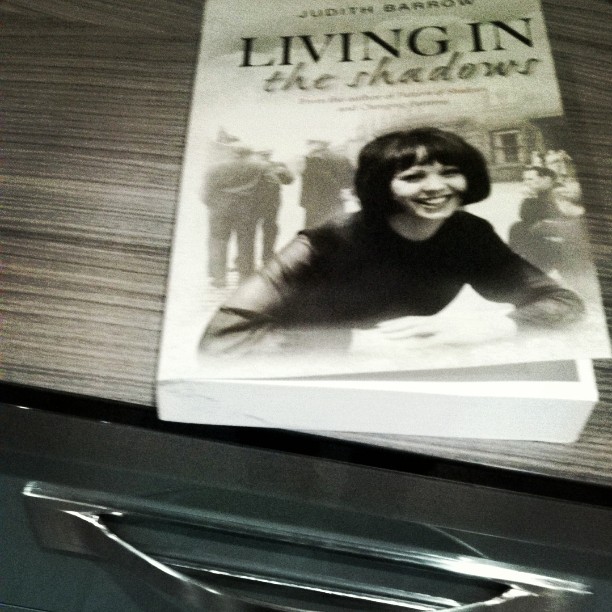
I’d recommend reading Living in the Shadows by Judith Barrows. This particular novel is the third in the series, published by Honno Press: ‘Honno is an independent co-operative press run by women and…
I am so proud that we have finally forged a friendship after a life-time of avoiding each other. Of course, I knew of your existence when I was a little girl. but you were always in the distance, hanging around with Outgoing, Popular and Fearless, whilst I played in the shadows with Shy, Timid and Awkward. Actually these three were to remain loyal companions for many, many years.
During my school years, you were still just a little out of reach, and I coasted along with my usual crowd, and joined up with Average, and Unremarkable. I always wanted to get to know you, but you became more elusive when I got caught smoking, and ended up in the Deputy Head’s office. She rather firmly introduced me to Failure, Shame and Embarrassment. That was it for the rest of my school days, I knew my place, amongst these…
This is My Mum.. She’s the one on the left. Next to her (the dark-haired toddler, is her sister Olive, who lived with us for many years) …
This is My Mum, a photograph taken in her early teens …
This is My Mum – The girl on the left …
This is My Mum, elegantly posed in her late teens…
This is My Mum in her Auxiliary Territorial Service (ATS) uniform during the war…
This is My Mum – on her wedding Day to Dad. Sitting in a car in a photographer’s studio with a pretend background …
This is My Mum – with my sister and me – I’m the grumpy-looking blond one…
This is My Mum in her forties outside the house she lived in until 2014 …
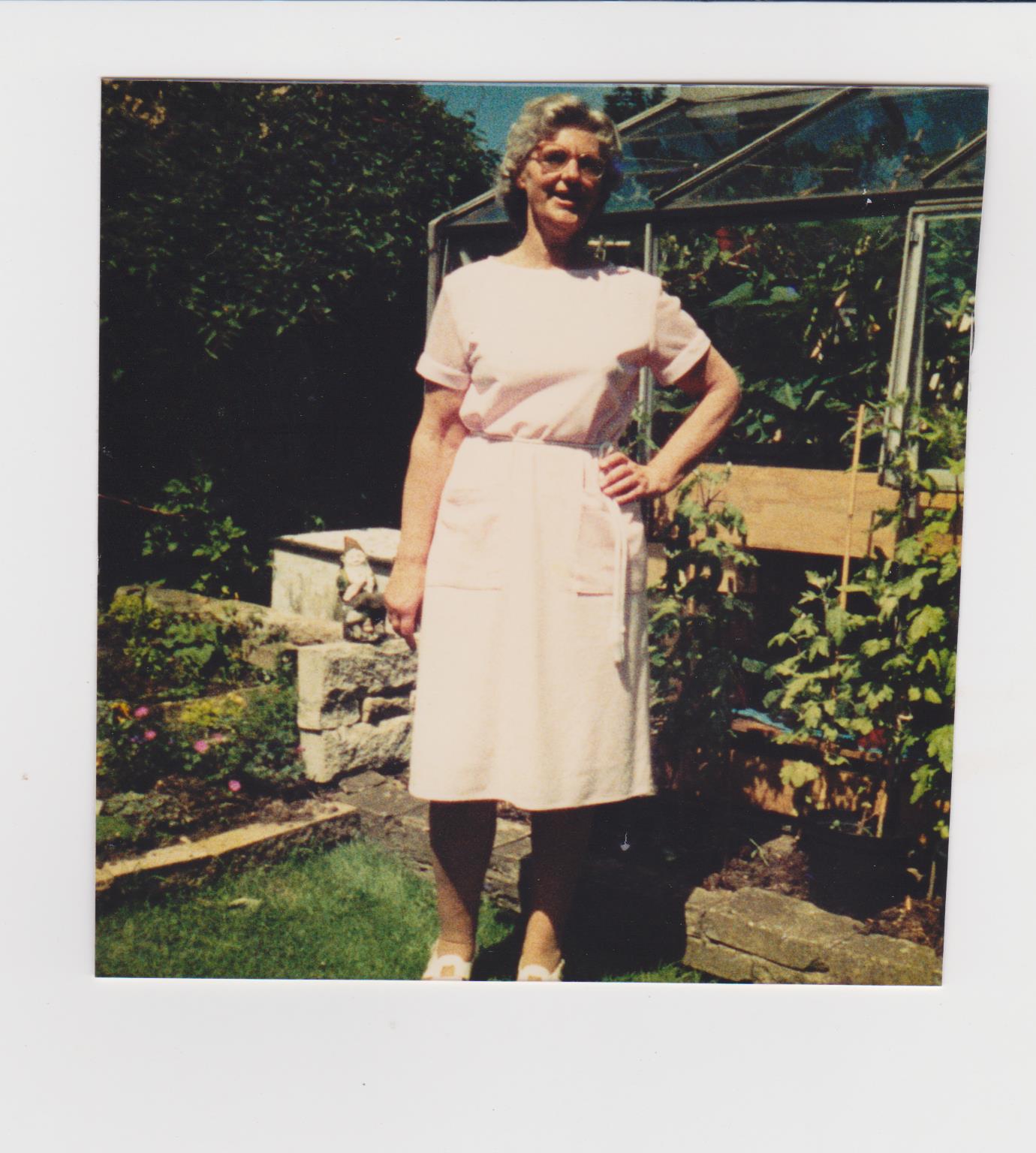
This is My Mum in her sixties, enjoying the sun in the garden …
This is My Mum -aged eighty, at our son’s wedding …
This is My Mum …
This is My Mum …
I will give her some dignity so I won’t show her as she is now; a small frail figure huddled under the bedclothes. She sleeps most of the time, only speaks the odd disconnected word, she’s doubly incontinent and can’t feed herself,
My Mum would not have wanted to live like this. I do not want her to have to to live like this. I wouldn’t want to live like this What I should say is … ‘exist like this.’
You’ve seen the photographs of my mum as she was. That’s how I want to remember her. In a similar way, that’s how I want my children to remember me.
I think I’ve had the wrong idea about blogging. When I first started writing a blog it was to introduce myself to others and to get to know other writers/ authors/poets/artists. Oh and to find different genres of books.
But I’ve been lucky; I’ve made some online friends along the way who, I hope, would be the kind of friend I’d like to have in ‘real’ life. Some, especially, have been so supportive.
But lately I’ve noticed two things. There have been posts asking for more followers (one in particular was asking to raise the numbers because it was her/his birthday). And the others have been blogs to celebrate that a certain number of followers has been achieved.
Chasing numbers.
Now don’t get me wrong; if that’s what’s important to these bloggers, that’s fine, it’s no business of mine. And there has to be a reason for ‘upping the ante’ to get to a certain number of followers. For instance, perhaps, for authors, it’s about finding new readers, or, for certain causes, it’s to highlight that charity/society/ organisation.
I read it again. I mulled over this for a while. I looked back at some of my own posts. I saw who’d commented and/or shared. I thought about it. I left the thought to simmer.
Wise advice in both posts.
And it’s occurred to me that I jumped on the band wagon – so to speak – and I’ve dutifully followed everyone who, I’ve been informed, follows me.
But I have a problem (well, actually I have lots of problems – thought I’d add that bit before I heard a wave of snorts of derision; ‘a problem, Judith?’ ‘Just the one problem?’) My problem is I have two sites I blog from, purely by choice. It’s been a deliberate choice. I use my other site: http://www.judithbarrow.co.uk/ initially for my personal posts, the ones I actually write myself: about my life and the things that have happened to me, my own interviews with authors, my reviews of the books I read for Rosie Amber’s Review Team; https://rosieamber.wordpress.com/ . On this site: https://judithbarrowblog.com/ I copy the blogs from the first site but mainly I use BarrowBlogs to mention/promote other authors, other bloggers’ interviews with authors, other peoples’ thoughts on all sorts of subjects.
So what to do? I don’t want to be like the blogger who wrote a post saying that she had so many followers she’d stopped reading anything they wrote and just ‘liked’ the posts. I try to read everything I’m sent. And yes, I know that’s probably daft and very few do that. But I do!
I’ve made a decision! I’ve decided it’s quality not quantity. Besides I’ve noticed that the same bloggers who do like my contributions to the blogging world, also share other types of posts I’m interested in; what I would choose to like, share and comment on. I won’t name them; it wouldn’t be fair. But they do know who they are.
So, I’m thinking, why not just follow and share their posts?
To sum up, I’m taking Hugh’s advice and have trawled through the bloggers I’ve been following for ages and who he calls ‘Ghost Followers’. I’ll carry on much the same when it comes to commenting and sharing stuff I’ve enjoyed reading – but I’ll keep an eye out and delete those who ‘pretend’ to follow but don’t. Please don’t think of that as a threat, it’s not; it’s what I intend to do for ‘self – care’.
I read this today http://yadadarcyyada.com/2015/08/27/message-in-a-bottle/ and I know that the way I blog isn’t perfect (or even close to it) And it’s up to anyone to decide whether I’m interesting or boring and to follow or not
But the bottom line is I can’t carry on supporting those who I never see hide or hair of.
I’ll always try to acknowledge anybody who takes the trouble to let me know they’ve seen any of my personal posts; it’s only courteous and I enjoy the banter. I do like meeting and chatting to people but … I need to stay connected with my ‘friendly’ bloggers
And, like you all, I have a life away from here. And a book to write
Despite being the single highest cost of self-publishing so far, the copyedit will be the one expense I will never regret.
That would have been the list if this article was entitled “A single most important thing I’ve learned”. But it’s not, so there are ten more below. Which I guess makes it eleven…never mind! Anyway, after getting eight quotes and four samples from Australian and American editors, I chose Lu Sexton of A Story to Tell to copyedit Shizzle, Inc and I’m blown away with the results. To be honest, I had a lot of reservations about paying for editing. After all I’ve already had a structural edit; I’ve revised the draft no less than a hundred times myself; I speaka English real good. Handing over cash for a promise of making your draft better is scary, even if that promise comes with a professional reputation and an exceptional…
I arrive at my book-signing event to be greeted with a small table covered with an immaculate table cloth, my books already displayed, a notice announcing my presence and, as always, a lovely vase of flowers as a centrepiece. The staff are friendly and chatty (today it’s Carolyn … and Sharon, complete with big smiles ). I already know them; after all I’ve been holding book-signings here for the last five years and I’ve been a customer of the shop for more years than I care to remember. Nothing unusual in that, I hear you say; we’ve all done events in stores we know. But this venue is special, this is our local chemist, Kilgetty Pharmacy. And, when first forced to admit to myself that I needed to go forth and sell, this was the second local event I was welcomed to.
Putting on a pose – me with Jane Gilbert (who owns the shop with her husband, Bart)
I’d talked with Jane about my writing for years (I’m not sure she ever thought I’d be published but she was always tremendously encouraging). Anyway, the day that Pattern of Shadows came out I couldn’t wait to show her. Without hesitation she asked, would I like to hold a book-signing in the shop. I was thrilled – thought there was nothing odd about appearing at a chemist. Up to date I’ve been four times, they’ve sold loads of my books,and I’ll be there again just before Christmas.
Kilgetty Pharmacy isn’t just a place where people go to have prescriptions filled; it’s an Aladdin’s cave of goodies. It’s where I’ve bought gorgeous scarves and unusual handbags. Husband tries to ban me from going into the shop; the temptations to buy are always too strong!
And their claim to fame? In 2013, in a UK wide Easter competition held by Bronley for the best window display, this chemist won first prize. I believe the prize was a jolly to Paris for two of the staff!!
A few shots of the busy shop … er … well it was busy until I produced my mobile to take photos … then the staff scuttled off and customers disappeared. (I made the mistake of asking permission.) Hah!
Two kind ladies who did agree to pose, while looking for a present. There are treasures for all kinds of occasions: Engagements, Weddings, Births,, Birthdays (from one to a hundred years old!)) Celebrations of all kinds, Cards, Festive ornaments, Treats for pets, Treats for the birds in the garden … and … and …
Highlight of the day? No less than three sales reps came in to sell their stock to the shop … and I sold a signed copy of one of my books to each of the . Yay!!
My thanks go to Jane & Bart Gilbert, Carolyn Finlay,, Sharon, Val, Linda, Carolyn Jones, Jane Goldsmith and Sue for a great day. See you next time!
So, all you authors out there – a challenge! Where’s the most unusual place you’ve held a book signing? Do please tell – with photos if possible!
Didn’t realise I was doing an ‘elevator pitch’ when I sold one of my books to the guy who delivered them to the door. Must have worked! Wish now I could remember what I said!
Every author has been in the position where someone asks them to describe his/her book. It happened to me several times at a book-signing last Saturday (although, if you read my previous blog post, it didn’t happen as often as I hoped it would).*
What’s your book about?
The answer you give to that question is called an “elevator pitch.”
The term itself comes from the scenario of an accidental meeting with someone important. It’s any quick, catchy pitch you can deliver in the short time it takes for an elevator to reach its destination.
I’m sure you’ve heard the term before. I didn’t invent it. It’s been around the business world for decades. Now, however, as an indie author you need to think about it in terms of your new book.
By preparing an elevator pitch in advance for your book…




 Goodreads Synopsis:


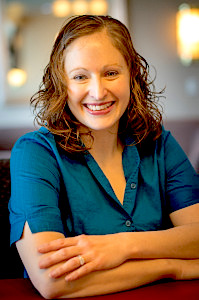


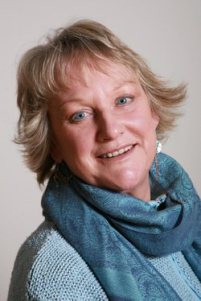 Over the last week I’ve seen a lot of blog posts about a very talented writer and a wonderful woman: Judith Barrow.


 Judith Barrow