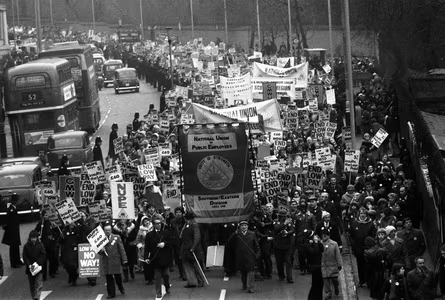
Part Two of The Stranger in my Houseis set against what is now called the Winter of Discontent – A term that comes from Shakespeare’s play Richard III, but it was used in an interview by the then Prime Minister James Callaghan and was taken up by the media. It lasted between November 1978 to February 1979 in the United Kingdom and, following opposition from the Trades Union Congress (TUC), took on the form of widespread strikes by both the private and public sector. Trade unions demandied pay rises greater than the limits Prime Minister, James Callaghan, and his Labour Party government imposed in an effort to control inflation.
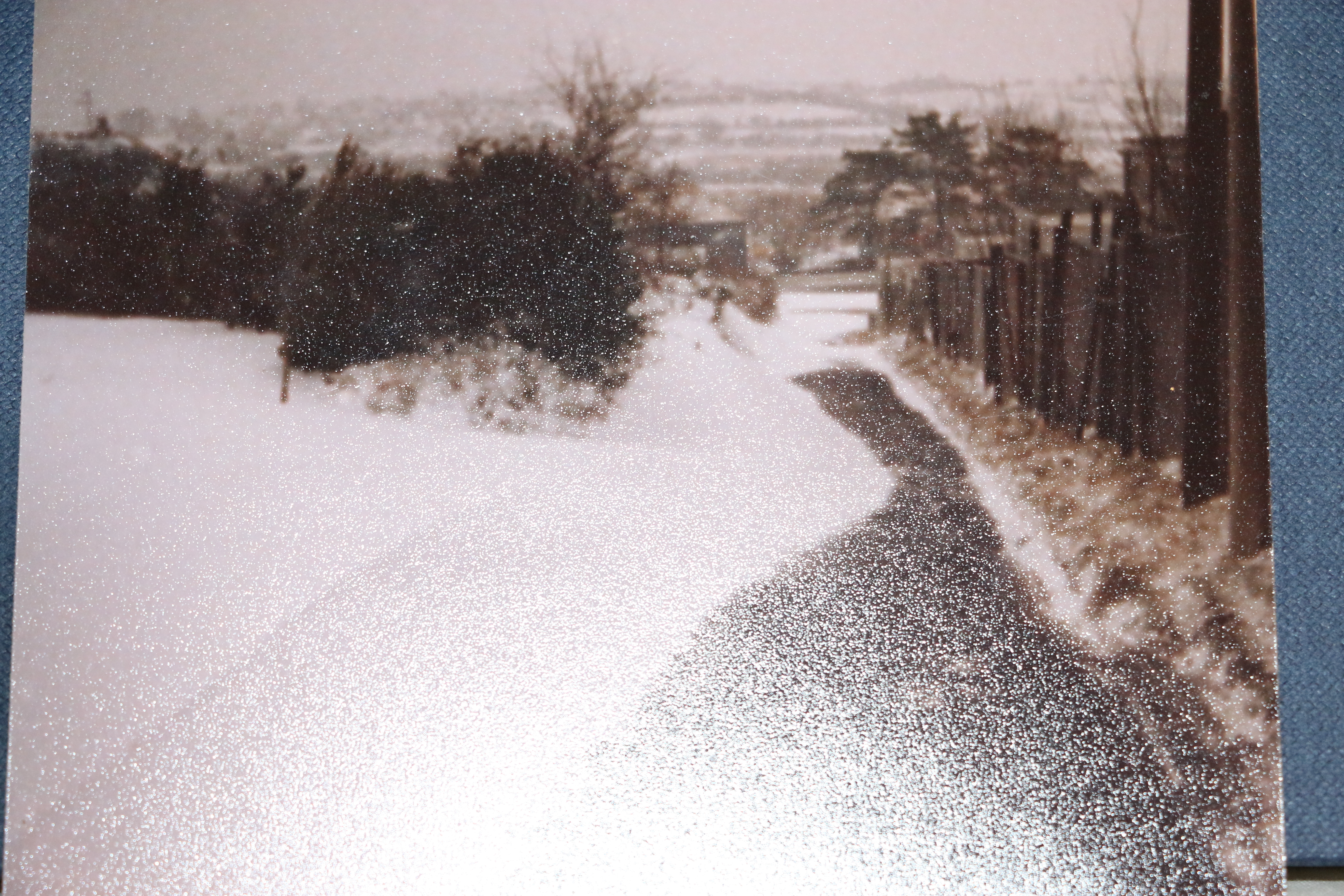
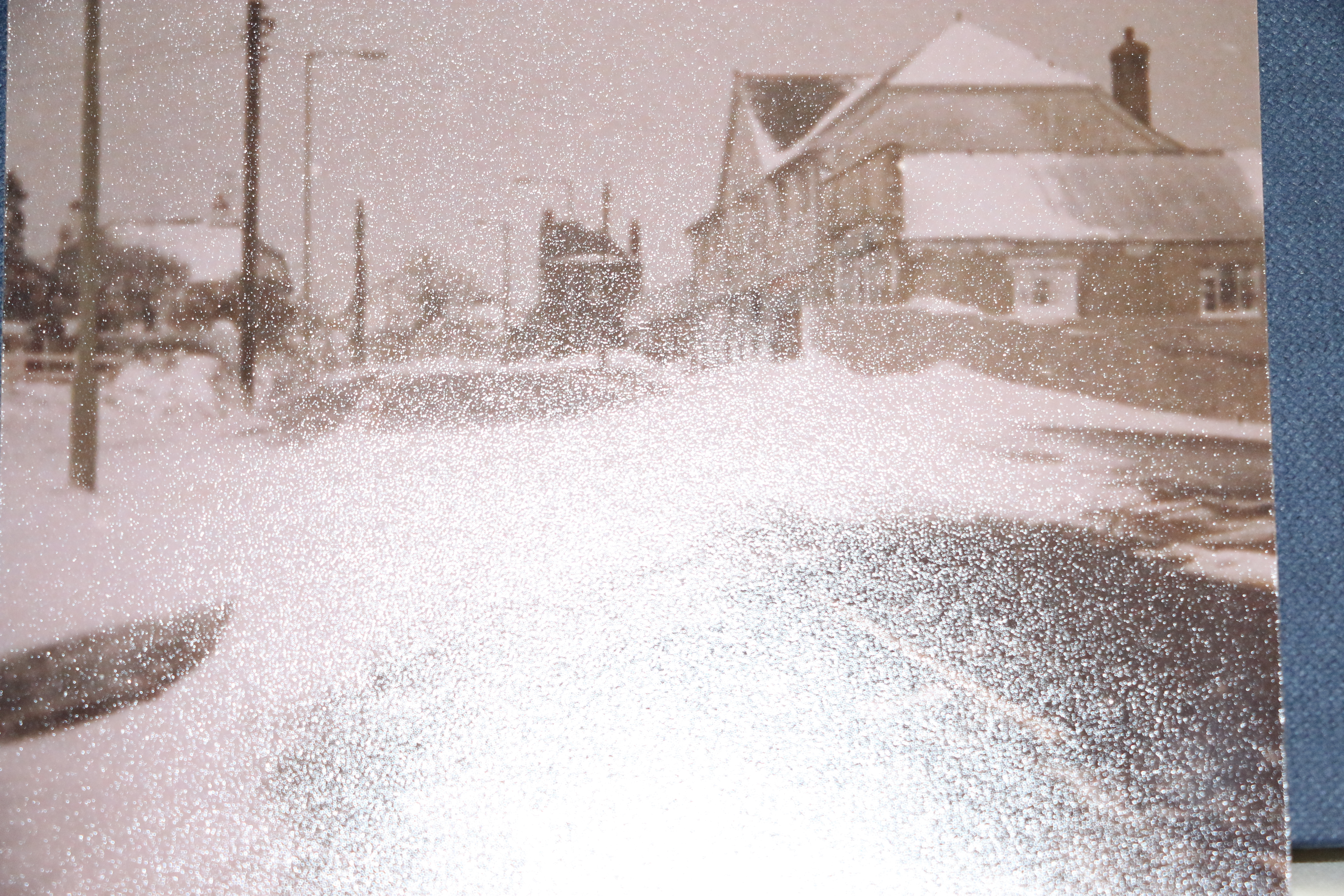
It was also the coldest winter in sixteen years. Heavy snowfall and freezing temperatures disrupted transport, businesses, and energy supplies.
In January 1979 (between the 1st and the 14th), some 20,000 railwaymen held four one-day strikes. There were strikes by haulage drivers, petrol tank drivers, and eventually municipal workers – 1,250,000 of them organised a one-day national strike on 22 January 1979.
The most notorious incident was the grave diggers’ strike on Merseyside, which hit the headlines with the press vilifying trade unions for their lack of sympathy with the bereaved, and, it was argued, with the needs of the nation.
But it was a strike by refuse collectors that came to symbolise the complete breakdown of UK public services. Local councils rapidly ran out of storage space as the binmen continued to strike, so rubbish was left in streets and open public spaces instead.
Photograph courtesy of The Guardian
Photo by Evening Standard/Hulton Archive/Getty Images)
A gripping ‘cuckoo in the nest’ domestic thriller
After the death of their mum, twins Chloe and Charlie are shocked when their dad introduces Lynne as their ‘new mummy’. Lynne, a district nurse, is trusted in the community, but the twins can see her kind smile doesn’t meet her eyes. In the months that follow they suffer the torment Lynne brings to their house as she stops at nothing in her need to be in control.
Betrayed, separated and alone, the twins struggle to build new lives as adults, but will they find happiness or repeat past mistakes? Will they discover Lynne’s secret plans for their father? Will they find each other in time?
The Stranger in My House is a gripping ‘cuckoo in the nest’ domestic thriller, exploring how coercive control can tear a family apart. Set in Yorkshire and Cardiff, from the 60s to the winter of discontent, The Stranger in My House dramatises both the cruelty and the love families hide behind closed doors.
“Judith Barrow’s greatest strength is her understanding of her characters and the times in which they live.” Terry Tyler
Grateful for this reader’s review. One of the first for The Stranger in my House, when it was published in November 2024.
Judith Barrow’s done it again! The Stranger in My House is a book that showcases her renowned credentials. The characters are superbly drawn, the tension grows steadily and with each turn of the page your heart is gripped by the dilemmas facing the young protagonists, twins Charlie and Chloe, and their well-intentioned father. As with The Memory (shortlisted for Wales Book of the Year) it’s the way Barrow takes the ordinary and everyday, that we recognise and identify with, and skilfully uses her eye for human behaviour to turn it into something that becomes a nightmare we can readily believe in. The story begins in 1967 and over the following decade the sense of time and place is expertly done without being intrusive. At the core of the tale is coercion and the reader can see how cleverly the others are being manipulated by the woman who undermines them and shatters their family bonds. My dislike for Lynne and her son Saul built with the book’s momentum. There was that fear that they would get away with unimaginable cruelty and malice. To counter that, were those whose innate love and kindness provided a heartwarming buffer. From the start, I was gripped and that grip tightened inexorably. It’s becoming a cliché to say that you couldn’t put a book down – but I couldn’t. I had to know what was going to happen next. It mattered. That is the hallmark of a great author.
Although all three of the books in the Haworth trilogy are based on the same family, they are also stand alone. And yet, to be completely honest, I do need to add this from one of the reviewers…
“This is the part where I’m supposed to tell you that each of these wonderful books can be read alone. But no, don’t do that. In fact, if you haven’t read any of them, you’re luckier than I am, because you can start with the prequel and read in chronological order. I chose to review these books as a set, and I believe that’s how they should be read. Every now and then, I come across books so beautifully written that their characters follow me around, demanding I understand their lives, their mistakes, their loves, and in this case, their families. Taken together, the Howarth Family stories are an achievement worth every one of the five stars I’d give them.“
Changing Patterns – a bargain!
Book Description:
May 1950, Britain is struggling with the hardships of rationing and the aftermath of the Second World War. Peter Schormann, a German ex-prisoner of war, has left his home country to be with Mary Howarth, matron of a small hospital in Wales. The two met when Mary was a nurse at the POW camp hospital. They intend to marry, but the memory of Frank Shuttleworth, an ex-boyfriend of Mary’s, continues to haunt them and there are many obstacles in the way of their happiness, not the least of which is Mary’s troubled family. When tragedy strikes, Mary hopes it will unite her siblings, but it is only when a child disappears that the whole family pulls together to save one of their own from a common enemy.
Excerpt:
16th June 1950
Sometimes Mary couldn’t believe he was there. Sleepless, she would reach out and touch Peter just to reassure herself that after five years apart they were together again. He’d given up a lot to be with her.
‘You are happy?’ He slung his arm around her shoulder and pulled her closer.
The breeze ruffled their hair. The tide was on the turn and Mary watched the waves collide and dissolve. High above, gulls hung motionless their cries lost in the air currents
‘Mm.’ Mary rested against him. The smell of the mown lawn on his skin mingled with the salty tang of spray blown off the sea and the faint smell of pipe tobacco. ‘You?’
‘Of course.’
She turned her head to look at him, brushed a few blades of grass from his cheek. In the four months since he’d found her he’d lost the gaunt pallor, the weariness, and gained a quiet contentment.
‘It is good, the two of us sitting here, alone,’ he said.
‘Tom won’t be long though, he’ll be back from Gwyneth’s soon; he said he was only just digging her vegetable plot over for planting tomorrow.’
‘I do not mean Tom. He is family.’
Mary allowed a beat to pass. ‘I know you didn’t, love. And I know what you really mean. But it’s not our problem. If people don’t like our being together that’s their lookout.’ She kissed him. His mouth was warm.
Smiling she drew back. ‘Tom?’ she murmured, her voice rueful.
They sat peacefully on the doorstep of the cottage, each savouring the other’s closeness.
Gradually the sun disappeared behind the cliffs. The trees became shifting silhouettes and the wind slapped the surface of the sea into rolling metallic arcs and carried the spray towards the cottage. Mary licked her lips, tasted the salt
‘It’s getting chilly.’ She shivered.
Peter stood, reached down and lifted her to her feet, holding her to him. ‘Ich liebe dich, my Mary.’
‘And I love you.’
A few moments passed before she forced herself to stand back and, giving him a quick kiss, take in a long breath. ‘Now,’ she said, ‘I’m late sorting tea out. If you put those things away, I’ll go and give that batter a whisk. I’m making Spam fritters to go with that mash from last night.’
She stood on the top step watching him walk down the gravel path to where he’d left the lawnmower and then glanced towards the cottage next door. Although it was only just dusk the window in Gwyneth Griffith’s parlour suddenly lit up and the oblong pattern spilled across the garden. Tom emerged out of the shadows swinging a spade in his hand and turned onto the lane. Mary waved to him and he waggled the spade in acknowledgement. ‘Tom’s coming now,’ she called out to Peter. ‘I’ll stick the kettle on. He’ll want a brew before he eats.’
The van came from nowhere, a flash of white. Mary saw it veer to the right towards Tom. Hurtling close to the side of the lane it drove along the grass verge, smashing against the overhanging branches of the blackthorn. Caught in the beam of the headlights her brother had no time and nowhere to go. Frozen, Mary watched as he was flung into the air, heard the squeal of the engine and the heavy thud of his body on the bonnet of the van. The spade clattered along the tarmac. Peter threw open the gate and was running before she could move.
‘Tom,’ she heard him yell. Somewhere, someone was screaming. She was screaming.
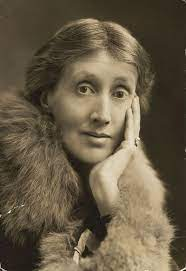
Their mother, Julia Prinsep Stephen had become a widow in 1870 after her first husband, Herbert Duckworth, died of a burst abscess. She already had three children: George, Stella, and Gerald. The latter was born shortly after Herbert’s death in 1870.
Eight years later Julia married Leslie Stephen. English society in the late 1800s was built on a rigid social class system, and as a graduate of Eton and Cambridge, a respected literary critic and biographer, Leslie was seen as one of the literary aristocracy. He was also a widower and father of a girl, Laura, who had a learning disability, and who, incidentally, was the granddaughter of the Victorian novelist William Makepeace Thackeray.
Despite Leslie doting on Laura as a tiny child, by the time she was nine it was obvious that something was wrong; she was slow to talk or read, and veered from total fatigue to violent tantrums. It was a problem for both her father and Julia (although Julia, as friend of the family, had already partly taken on the role as a surrogate parent after Leslie’s wife, Minny, had died when Laura was five). But marriage and producing four children in quick succession: Vanessa in 1879, Thoby in 1880, Virginia in 1882, and Adrian in 1883, increased the difficulties for the two parents. Neither of them were equipped to deal with a child who had special needs.
Besides being agnostics, both Leslie and Julia were humanists, who advocated the rights for women to be the same as for men, to reach their own conclusions in matters of religion. Yet both believed that the home was the true basis for morality, a sanctuary free from corruption, and therefore home was the place for women. So Julia, who despaired that she was unable to discipline Laura, or train her to carry out domestic chores, apparently felt that her stepdaughter was deliberately wilful. And Leslie, who, during a time when society viewed anyone who was not seen as “normal” as undermining that society, was ashamed of her. His domineering patriarchy in in this upper-class, intellectual, and claustrophobic household would be viewed as bullying these days.
He must have been very frustrated by Laura, and it was a conflicted family: having little parental authority over one daughter, whilst succeeding in having total control over the other two.
Unlike their brother, Thoby, neither Vanessa nor Virginia were allowed to go to school. It was still not considered suitable to send girls to school, so they were educated at home by tutors.
Initially, as small children, they spent their days inventing whimsical stories about their neighbours, then progressed to writing illustrated stories and poems, and making up riddles and jokes for a family magazine they called the Hyde Park Gate News. In years to come, biographers of the two sisters were to declare this as early proof of the reciprocal nature between them that, well before any formal training, they nurtured each other’s art, acting as the other’s friend, adversary, and creative muse. And they must have decided between themselves which of them followed which creative path: Virginia the writer, Vanessa the artist. Yet each one’s individual talents led to the same ending, an endeavour to tell stories through their craft, Virginia with words, Vanessa through her paintings.
But, in the background there was always the perceived family problem of Laura. And, in 1886 at the age of sixteen, when Vanessa was seven, and Virginia was four, Laura was sent away to live with a governess. And was absent from the public family.
Four years later, despite being deprived of any early official schooling, and notwithstanding the Victorian restrictions on girls and women, Julia and Leslie decided to encourage their other daughters to pursue their talents. Over time, Vanessa studied both at the Royal Academy Schools and the Slade School of Fine Art, Virginia took classics and history in the Ladies’ Department of King’s College London.
Laura, on the other hand had been diagnosed by psychiatrists as suffering from ‘imbecility’. However I do need to point out that, despite extensive research, I could find no established medical rules of defining mental illnesses at this time. Yet in law, under such acts as the Lunacy Act of 1845 and the Idiots Act of 1886, there were precise specific and distinct legal classifications for certain conditions. These groupings fluctuated though. Laura was initially admitted to Earlswood Asylum in 1893, aged twenty-three, as an “imbecile” but in the 1901 census she was labelled a “lunatic”. which could suggest worsening symptoms
Virginia and Vanessa had battles of their own to contend with; both, as children, were sexually abused by their half-brothers, George and Gerald Duckworth. As an adult Virginia Woolf wrote extensively about this incestuous abuse in her diaries and letters, although there is little I can find about the abuse with either sister. Understandably, many say this was the origin of the fragility of Virginia’s psychological state. But It needs saying that it has been suggested in various papers that there were genetic connections of mental instability on the paternal side: Leslie Stephen was prone to violent mood swings, his father suffered from depression, a nephew had a bipolar disorder and was admitted into an asylum for mania. Virginia herself suffered from depression, and Vanessa is reported to have had at least one nervous breakdown.I should also add here that therefore it could follow that this family history of the Stephen family means it is likely that whatever condition Laura suffered from in her life, her genetic composition means she was more susceptible to other mental disorders.
In 1895, their mother. Julia Stephen died of heart failure, following a bout of influenza. Shortly afterwards, Virginia had her first mental breakdown.And, when their older half-sister Stella Duckworth, who in the absence of their mother had stepped in to run the household, also died two years later, and after their father died in 1904 after a long battle with stomach cancer, Virginia made her first suicide attempt.
Vanessa took charge. After dealing with all the domestic affairs, she moved the family (Vanessa, Thoby, Virginia, and Adrian) from Hyde Park Gate to the Bloomsbury district of London in 1904 to begin a new life.
Here Vanessa, Thoby, Adrian and Clive Bell started The Bloomsbury Group with friends who were writers, intellectuals, philosophers, and artists who rejected the oppressive Victorian principles of their parents’ generation, and they adopted creative freedom, sexual permissiveness, and atheism. They became known for their unconventional lifestyles and love affairs, shocking many outside their social group.
As the older sister Vanessa dealt with many of Virginia’s emotional and mental breakdowns. But she also held true to her own code of conduct; her lifestyle, her unconventional, sometimes eccentric relationships, were reflected in her art: the nude portraits of her friends and family, the use of design in her work. (both considered to be the prerogative of male artists) Yet her loving care for her sister was balanced by the long term and continuous rivalry in their separate spheres of creativity. Reading through the lines during my research I wondered whether, sometimes, this conflict was wearisome for the older sister; whether Vanessa’s marriage, in 1907, to Clive Bell was subconsciously an effort to distance herself from Virginia.
The marriage, a year after their brother Thoby’s death from typhoid, made Virginia descend again into some sort of nervous breakdown. The marriage meant that Virginia and their brother Adrian had to move out of the Bloomsbury house, thus providing a distancing between the two sisters. A distance Virginia resented, because, before long, she began to pursue Vanessa’s husband, Clive. Their love affair lasted, intermittently, over six years. And there is plenty of anecdotal evidence that reveals enough proof, I think, to believe that the underlying reason for the affair was so that Virginia was once again at the centre of her sister’s life.
In 1914 Vanessa began a life-long relationship with Duncan Grant, who was bi-sexual. Taking Vanessa’s two sons, Julian and Quentin, from her marriage to Clive, and accompanied by Duncan’s lover, the writer David Garnett, they moved to Charleston Farmhouse, Sussex. In 1918 Vanessa and Duncan had a daughter, Angelica.
Because I have concentrated on these two women as sisters, and because much has been written about their achievement by far more scholarly people than me, I have left out details of the body of work that both women produced. I was more interested in what made them ‘be’, what formed them as human beings.
I found an extensive amount of articles, journals, newspaper reviews, discussions, diary quotes, lectures etc. on Virginia that revealed much of her personality and mental health. But far less details on Vanessa’s character. Because she didn’t keep a diary as Virginia did there is little written about her personally, except for the time of her son, Julian’s death during the Spanish War, when she became extremely and understandably depressed. But, mainly, there are only facts about her place in the family, about her marriage and relationships, her part in the Bloomsbury set, and the cannon of her work. And I found almost nothing on Laura. Having left few records of her own, she’s as invisible in history as she was in her family. And yet, her small story needs to stand alongside her famous sisters, because, I think, her presence (wherever she was during her life) must have had some effect on Vanessa and Virginia. There had to be some experiences, some memories they shared, that would always have impacted on the three of them.
Troubled by mental illness throughout her life, Virginia was institutionalized several times and attempted suicide twice before drowning herself by filling her overcoat pockets with stones and walking into the River Ouse on March 28, 1941. Her ashes are buried in the National Trust garden of Monks House, Rodmell.
Vanessa died at Charleston Farmhouse, at the age of eighty-one, after a bout of bronchitis, on 7th April 1961. She was buried on 12th April, without any form of service, in Firle Parish Churchyard.
N.B. Leslie and Julia visited Laura until Julia’s death in 1895. Stella visited her until her death in 1897. Her aunt Annie Thackeray Ritchie visited her until her death in 1919. Annie’s daughter Hester Ritchie brought her home for visits on occasion. Then the visits stopped. When Laura died in 1945 the asylum did not know of any living relatives, though both Vanessa and Adrian outlived her and even inherited the remainder of the legacy Leslie had left for her care
Sometimes, family members can become estranged from one another, either by choice or by circumstances. “In one of her informal reminiscences from around 1922, Virginia describes ‘Thackeray’s grand-daughter, (Laura) a vacant-eyed girl whose idiocy was becoming daily more obvious, who could hardly read, who would throw scissors into the fire, who was tongue-tied and stammered and yet had to appear at table with the rest of us.’ Virginia makes the difference between them clear: Laura was not, in fact, one of “us,”’ https://tinyurl.com/36sj5mc5
And, in a way, this is how Lisa (formerly Mandy) feels about her sister, Angie, in my book, Sisters, when she says, “I never wanted to be in Micklethwaite ever again. Yet here I am. And meeting the one person I never wanted to see again. “
Sisters waspublished by Honno on the 26th January 2023:
It’s a funny thing about Judith Barrow’s books. I start reading, thinking they will follow an expected genre, get about halfway through, and realize that they are about something else entirely. In Sisters, for example, I thought I was going to meet another Cinderella, one who lives through and overcomes family trauma, meets her prince, and lives happily ever after. Only… not so much.
When we meet thirteen-year-old Mandy, she’s the classic middle-child of a working-class family on a 1970s housing estate. She’s proudly pushing the pram containing their family’s much-anticipated and beloved baby brother when she runs into her big sister, Angie, a typically boy-crazy young teen. Angie is attempting to show off for a boy when a terrible accident occurs and the precious baby is killed.
A devastated Mandy rushes back to her home, but to her shock is blamed for the tragedy. She waits confidently for her big sister to explain, but Angie doesn’t step forward. Instead, their family falls apart in a meltdown of grief, blame, and shame. Publicly branded a baby-killer, Mandy is bullied at school, shunned by her parents, and lied about by her sister, the one person who could have saved her.
Of course, we can see how the adults who should have provided love and support in spite of what was obviously an accident, instead fail their child. How the sister she’d always looked up to allowed her own fear to keep her from protecting Mandy or even telling the truth. And how all of the social structures of home and school and church fail to protect and support.
The bewildered girl is sent to Wales to live with her aunt and uncle. Mandy changes her name, rejects her birth family, and reinvents herself as Lisa. But that’s only the beginning of the story. As the two girls grow up, we can see that their split-second reactions in a moment of trauma are actually reflections of the people they will grow to be.
Both leave their broken family, and very soon come to life-changing forks in their separate journeys. Angie starts down a dark path where the only piece of herself she sees as valuable, her appearance, is regularly sold.
QUOTE: “There was a moment when Angie had a chance to change her life: that first time she stepped through the door of that house, that first night, that first week, that first time, that first man… But she didn’t.”
At almost the same moment, Lisa steps up to prevent a little boy being kidnapped. She recognizes that protective spirit as her life-calling, and begins training to become a child advocate.
QUOTE: “That day with the little boy, I knew I’d never have a choice if I saw a child in distress. And I knew what I wanted to do with my life.“
The meltdown of Mandy/Lisa’s nuclear family, the way everyone fails each other and her in a moment of ultimate stress— that was the story I expected to read. But it wasn’t the story Sisters had to tell. Instead, as the years pass, we see each sister tentatively begin to rebuild their lives, to unfold their personalities and characters from the smashed wrecks of that devastating moment.
Raised by her loving Aunt Barb and Uncle Chris in far-off Wales, Lisa finds her own strengths and life purpose. As she grows, she rebuilds some of the tattered relationship with her mother, and becomes a strong woman unafraid to love. The frightened little girl who keeps silent to protect the big sister who has betrayed her, channels that strength to protect other children.
But Angie’s path is one where that first instinctive cowardly betrayal sets the pattern for her inability to stand up for herself. It leads almost inevitably to a shameful existence and an abusive marriage.
When their mother dies, the two sisters finally meet up again. And this is where my expected story turned around completely. Instead of vindication for Lisa, we see a family whose core has disappeared, leaving each of them fundamentally lost. Each one has to forgive themselves for the all-too-human failings of being weak, angry, judgemental, scared. Along with each member of the family, the reader has to decide if it’s even possible to reclaim their humanity by reforming the family bonds shattered by tragedy, weakness, and time.
For me, Sisters is more than a story about a family destroyed by tragedy. It’s an exploration of how much we can give up in the face of devastating betrayal and loss, and how much we must give to reclaim our identity in the face of our imperfections.
I was particularly drawn to the settings. I enjoyed the contrasting descriptions of the family home, and the very different worlds the two sisters flee to, from the comfortable chaos of Wales that welcomes Lisa, to the sterile, compulsively bleached home that imprisons Angie. And yes, there was a bad guy, but somehow he lacked substance for me, an outline of nastiness rather than a fully-rounded villain. Instead, the true antagonists are the human failings in each member of the family, and even more their inability to forgive themselves and each other.
Sisters is a slow simmer, an intimate look at a gradually unfolding train wreck. It invites the reader to examine the effects of tragedy in the moment, but also as those effects ripple outward across the years, and especially the amount of strength and determination needed to swim against those ripples until feet finally find firm ground again. It’s not an easy read, but readers willing to explore the collapse of a family will be rewarded with characters who ultimately redeem their lives, reclaim their humanity, and most of all, affirm their båonds of love and family.
I unreservedly recommend this beautifully written, devastating, but ultimately hopeful story.
I wrote Whose House is This? in answer to a call for submissions from Honno for short stories for their anthology, Coming up Roses . The story is that of a mother and daughter and the changes in their garden throughout the seasons running parallel to the changes in the mother’s illness; her dementia. Because time and a mother’s dementia has hidden a memory for many years in my latest book, The Memory,much in the same way that memories disappear in Whose House is This?, I was given permission from the publishers to reproduce the story here.
Coming up Roses: A collection of garden stories from Wales
Edited by Caroline Oakley “Sad, tense, funny, bizarre but best of all, original plots and a huge variety of themes show how creative writers can transform fruit and veg, flower borders and potting sheds to delve into our deepest fears and unrequited longings but also bring on the growth of new possibilities with each passing season.” Western Mail. http://bit.ly/2GlXuQ4
Whose House is This? by Judith Barrow I’ve given up trying to persuade Mum to stay indoors, so here we both are, huddled in a shed no bigger than a telephone box, our breath, white vapour, mingling in the coldest December day this year.I’ve wrapped her up as best I can: coat, blankets, woolly hat and gloves. The gloves are the most important; she will insist on trying to touch the shears and secateurs. I’ve cleaned, sharpened and oiled them and the shine of the blades fascinates her. ‘Just let me hold them,’ she says for the tenth time after I’ve put them safely out of her reach. ‘Not today, you’ll get oil on your coat.’ Her hat has fallen over one eye and she tilts her head upwards and glares crossly at me. I straighten it. ‘I think we’ve done enough in here for today.’ Ignoring the loud sigh that balloons her cheeks I add, ‘Let’s go in for a drink.’ Hands under her armpits, I haul her to her feet. The blankets drop to the floor. I kick them to one side; I’ll pick them up later. We shuffle out of the door. ‘Mind the step. And watch the ice on the path.’ ‘I can manage, I’m not a baby.’ ‘I know.’ Even so, I hold one hand under her elbow and my other arm around her shoulders. She seems so tiny. ‘How about we have a whiskey and hot water to warm us?’ We pick up pace towards the back door. Just before we go in, she stops. ‘Whose house is this?’ ‘It’s ours, Mum; we’ve been here thirty years.’ But she won‘t go in. Stubbornly she holds on to the frame with stiff arms. ‘This isn’t our door, our door is blue.’ ‘No, we had double glazing last summer. This is our new back door.’ She doesn’t speak. I wait, my hands on her waist. She turns, her arms dropping to her sides; the many layers she wears means that they are at an angle from her body as though she is gesturing in surprise. She looks around the garden.‘Whose house is this?’‘Ours.’I wait. It’s best too keep quiet when she’s in one of these moods.The birds are making short work of the seeds and bread we scattered earlier. The squirrel stares at us, still as a statue, hanging from the peanut holder. ‘I don’t like winter,’ she says. And then in one of her sudden changes of subject, ‘Do you remember your granddad’s allotment?’And, in a flash, I’m there. It’s a memory long forgotten. I don’t know why or where I’ve conjured it up from. Perhaps it’s the clouds, bruised with threatening rain or hail, just like that day so long ago, or it’s the blackbird scuttling around on the lawn. Anyway, there I am, after all this time.
Seven years old, sitting on the outside lavatory, picking the whitewash off the wall and watching the blackbird following my grandfather as he digs in his allotment, which is on the other side of the low wall of our yard. He’s turning the soil over one last time before winter sets in. I’ve left the door open. If it’s closed the darkness smothers me and I’m afraid; there would be only a thin line of light at the bottom of the door where the wind whistles through and causes goose-bumps on my legs. Heavy drops begin to fall to the ground, turning into muddy water on the clay soil. My grandfather pushes the peak of his cap off his forehead, squints up at the sky, and takes a tab end of cigarette from behind his ear. He rolls the flattened tip between forefinger and thumb but his hands are wet and the paper quickly becomes saturated. The strands of tobacco fall out. He swears softly, unaware I am there, and takes a small yellow tin from his trouser pocket. Balancing his spade against his leg, he carefully taps the remains of the cigarette into the box. I lean forward and tear a square of newspaper off the loop of string hanging from the back of the door, use it, and stand to pull up my knickers. The rain slants down in a sudden rush, hitting the flags in the yard with loud slaps. Granddad has disappeared into his shed. I shiver, thread the belt of my navy gabardine coat through the buckle and tighten it. Lowering the wooden lid of the lavatory, I sit on it, waiting for the rain to stop so that I can make a run for the house. After a few minutes it turns into a drizzle and, as I hesitate, my grandfather reappears to stand in the doorway of the shed. He glances to his left and I follow his gaze. I can hear the muffled clucking of the hens in their shelter in the run at the far side of his allotment. Granddad drags on the gold chain across his chest until he is holding his fob watch in his hands. His lips move with a low breathy whistle… It‘s a Long Way to Tipperary.If I go now he will see me and know I have been watching him. He hates being watched. A small dour man in poor health, we have lived with him since Grandma died, three years ago. Resentful of his need for my mother, he speaks as little as possible and spends much of his time in his allotment. He slips the watch back into the pocket in his padded brown waistcoat and begins the laborious process of rolling another cigarette. This always fascinates me and I watch until he finally crouches down to strike a match along the brick that he keeps by the shed door just for that purpose. Cupping his hands he shelters the flame and sucks vigorously. The paper flares for a second and then the tobacco glows red. Slouching against the door-frame Granddad lifts his chin and, making faces like a fish gulping, blows smoke rings upwards. We both watch as each circle floats away, expanding outwards until it is only a wisp of white against the glowering sky. Finally he pushes himself upright and strides towards the hen house, flicking the stump of cigarette into the air. It scatters sparks as it arcs away. I stop swinging my legs, uncross my ankles and peep around the door frame. The gate of the hen run is made from chicken wire, stretched over thin pieces of wood. He lifts it on its hinges and squeezes through. He stands still for a minute. The hens become quiet. He bends down, disappearing below the yard wall. There is a sudden commotion and when he stands up he is holding a hen by its legs. I turn my head sideways to look at it. It’s Ethel; I recognise her by the black patch of feathers on her wing that contrasts with the auburn ones. She is squawking and flapping frantically. Somehow I know what is going to happen. I open my mouth to shout but no sound comes out. I begin to run towards Grandad. With a quick twist he snaps her neck before I reach the gate. ‘Yes,’ I say to Mum. ‘Yes, I remember Granddad’s allotment.’Mum and I are vegetarians. I have been for as long as I can remember; Mum, since I started doing the cooking ten years ago.
Today we are planning to plant shallot and onion sets into the vegetable patch and to transfer the small tomato plants, I’ve grown from seed, into Gro-Bags, in the greenhouse.It’s cool for the beginning of May. The pale sun struggles through a skein of lemon clouds and a chilly breeze causes the line of Leylandii in next door’s garden to shiver constantly but in the shelter of our fence it’s pleasant and, in the greenhouse, quite warm. Mum is sitting, muffled up as usual, in her chair, just outside the doorway. ‘Warm enough?’ She doesn’t answer and, when I kneel down at her side, I see she is asleep; gentle snores bubbling her lips. I tuck her hands under the blanket and take the opportunity to carry the Gro-Bags from the shed to the greenhouse. The rattle of the wheelbarrow doesn’t wake her and I manage to get most of the tomato plants transferred before she starts to move restlessly, muttering to herself. Standing up I wipe my hands on my trousers and then kneel next to her, waiting for her to open her eyes. She gets frightened if she can’t see me at once. ‘Tea?’ ‘Whose house is this?’ ‘Tea?’ I ask again and she nods, touching my cheek. We sit on the bench outside the back door, holding hands, waiting for the kettle to boil.‘I’ll have to have a wash before I make the tea.’ But she won’t let go of my fingers. I hear the kettle switch off. ‘Just let me make the tea. I’m only in the kitchen.’ But as soon as I disappear she cries out. ‘Joyce…Joyce? Whose house is this? Joyce?’ ‘Won’t be a minute. Watch the birds. And just look at the Clematis; that plant, next to you in the tub. It’s never had so many flowers on it. Isn’t it pretty?’ I keep talking but she still calls my name. Hurriedly I brew, put two cups, a jug of milk, a packet of digestives and the teapot on the tray. The ’phone rings,‘No, thanks I don’t need double glazing, nor a conservatory.’ But the woman is persistent and keeps talking, so in the end I put the receiver down on her. ‘Coming now Mum.’ There is no answer. I look out of the window but can’t see her. ‘Mum?’ She’s not there. I hurry to the greenhouse, then the shed. A quick look around the garden proves fruitless. She’s nowhere to be seen. The gate’s swinging open. I run down the lane. There isn’t a footpath and I hope there are no boy racers trying the twists and turn of our narrow road today. The scent of the bluebells mixes with that of the wild garlic; the vivid blue diminished by the prolific cowslip. And there she is. I can hardly believe it; she is walking quite quickly in her pink fluffy slippers. Her white hair flows down her back and from the way she’s waving her arms around I can tell she’s upset, even before I hear her crying. There’s a wet patch on the back of her skirt so that the material clings to her skinny buttocks. ‘Mum.’ She doesn’t hear me. My breath is shallow; I’m not as young as I was. I catch up with her, careful not to touch or frighten her. ‘Mum?’ She stops and looks at me, sobbing; tears and snot mingle. ‘Lost,’ she says, ‘lost.’ ‘No, you’re not lost. I’m here now. Come on, let’s go home.’ She won’t move. She prods me in the chest. ‘No,’ she says, ‘no. Joyce, Joyce…lost…again. Always getting lost.’ ‘No, I’m here, Mum. See, I’m here. It’s me, Joyce,’ she hesitates, shaking her head. I say again, ‘Your daughter, Joyce. I’m here.’ She pushes me away, flapping her hands at me. ‘Not Joyce. Joyce…little. My little girl…lost. Frightened…without me…ends in tears.’ And I know what she means. When I was young, I would slip away from her in town; eager to explore but, inevitably, I would finish up being frightened by the freedom I had gained. Scared and alone and surrounded by strangers. ‘Oh, that Joyce,’ I say, ‘that Joyce. She’s back at the house, she came back.’ She stares at me suspiciously. ‘Came back? Never gets back…can’t get back.’ Looking into her eyes, the blue faded by years, I see a flicker of comprehension as she repeats, ‘…can never get back.’ I hold out my hand to her. Through the thin material of her cotton gloves, her fingers feel cold. And even though I know I am lying, I say firmly. ‘It’s never too late to go back, Mum. Now, let’s go home for that cup of tea.’ On the drive the cherry blossom floats its flowers down on us. ‘It’s a wedding.’ She laughs. And catches a petal.
The rain pounds heavily on the porch roof and when I open the door it gusts in with me. Mum, sitting in the wheelchair lent to us by Social Services, shouts, ‘Shut.’ She shouts a lot these days. She hates being inside but weeks of dull, grey days and rain have stopped us from going outside and, for some inexplicable reason, being in the greenhouse now frightens her, so things in there have been neglected. The garden has suffered, too. The grass on the lawn is inches long. It never dries out enough to be mown. The flower beds are a flattened slimy mess and the riot of colour that was spring has degenerated under one of the worst summers I can remember. Sometimes I feel that there is a scream waiting to burst from my mouth; one, which if I let it escape, will never stop. ‘What a day,’ I say, not expecting an answer. I straighten the blanket over her knees but she throws it off and punches my arm. Yet another bruise to add to the others. ‘Whose house…this?’ She’s wearing the purple satin evening gloves she once wore to a mayor’s ball she went to with Dad. She found them a few days ago, in a charity bag I’d put in the hall for the church jumble sale. ‘Mine,’ she’d shouted, triumphantly. She refuses to take them off. ‘Biscuit,’ she yells now, ‘tea and biscuit.’ ‘In a minute, Mum.’ I speak sharper than I meant to but I’m tired. Last night’s full moon had lit up the fuchsia outside her bedroom and the strong breeze that’s been blowing all week had whipped the branches around. The shadows had frightened her and kept her awake. I’m going to cut the bloody thing down. ‘It’s that fuck you thingy,’ she’d cried, ‘it’s getting in.’ ‘Fuchsia, Mum,’ I’m sure she knows what she’s saying. Long ago, a family friend, a Polish woman, had visited and admired the shrubs in the garden, ‘especially the fuckyas’ she’d enunciated carefully. Dad had left the room but we heard his guffaws as he went down the hall and it had become a family joke. ‘Fuck you,’ Mum says, obstinately. Like I say, sometimes I swear she knows what she’s saying. I bring in the last of the tomatoes. It’s been a poor year. They are tiny and green. I could throw them away but old habits die hard. ‘I’ll make chutney out of these.’ She doesn’t answer; she’s lost in her own world. I was never a cook. Mum had insisted on trying to teach me, years ago but had failed.‘You’ll need to attract a man somehow,’ she’d said, ‘with your looks you’ll have to find something that will make them want to stay.’ Lately, the more I think about it, the more I realise how spiteful she was when I was younger. I should have left her years ago. It’s too late now. I look through the kitchen window; there are some panes missing in the greenhouse. They were blown out in a gale, a few weeks ago and I haven’t bothered doing anything about it. I’m waiting for another storm; hopefully one that will flatten the bloody thing. I put Mum in the lounge, in front of the television. ‘Not our house,’ she mumbles.I ignore her. Alan Titchmarsh is telling her it’s time to tidy the garden before the long winter months. He’s always so damn cheerful. I’m not going to bother with the garden next year, it’s more trouble than it’s worth. I brew the tea and pour Mum’s into the beaker with the spout. I make myself a sandwich, take a bite and throw it in the bin. I’m not hungry. I mash a banana for her. I don’t rush; she’s no sense of day or night anymore and wants to eat all the time. She’s put on a lot of weight. I’ve lost two stones and I am so tired. I haven’t been sleeping much and when I do I have nightmares. I wish Mum hadn’t reminded me about Granddad and Ethel. She’d laughed, all those years ago, when I told her what he’d done. Said not to be so soft.It’s starting to rain again.
Last night I killed my mother.I could say I didn’t want her to go in a home.Or the thought of winter depresses me.But, to be truthful, I’d had enough. I couldn’t carry on.It would have been easier to smother her. But it seemed right, somehow.It was so easy; just one quick twist.She never liked winter anyway.
Back in 1816, Jane Austen (yes, I always try to bring her into anything if I can) commiserated with her nephew when he reported that he had lost 2 whole chapters of his own tentative novel. She hadn’t stolen them, she promised. “What should I do with your strong, manly, spirited Sketches, full of Variety & Glow? — How could I possibly join them on to the little bit (two Inches wide) of Ivory on which I work with so fine a Brush, as produces little effect after much labour?”
Being Jane Austen, she was, of course, being ironic, suggesting that her own writing was on such a slight and insignificant scale. Sir Walter Scott recognised that her work was fair more powerful than a little bit of ivory would allow. “The big bow-wow strain I can do myself like any now going; but the exquisite touch, which renders ordinary commonplace things and characters interesting, from the truth of the description and the sentiment, is denied to me.”
And yet critics have dared to complain that Austen’s novels are too limited, confined to “three or four families in a country village,” when all around her, the social upheaval of the industrial revolution, the French Terror, the Napoleonic wars were playing out. She knew well enough what great dramas were happening out there. A cousin’s husband was guillotined, an aunt was hauled off to prison, two brothers were serving in the navy, and yet she chose to concentrate on a small group of people interacting on a tiny stage as if the outside world didn’t exist. But what Jane Austen appreciated was that there is just as much emotional and psychological drama to be found in closed families as on wide battlefields.
I write about crime. My genre has been defined as Domestic Noir and it always focuses on the dark dynamics at work within a family, a neighbourhood, a close circle of friends. Does that mean it lacks the drama of a crime novel set, say, among Columbian drug barons, or the Mafia, or human traffickers or crooked financiers in the city? It probably lacks the extreme gore of a hard-boiled thriller. I work on the assumption that lashing out wildly and causing a loved one’s death with a misplaced blow is just as tragic and dramatic as a gruesome plot involving a victim’s head being chewed off by a bear.
Domestic drama might lack the fast pace of mainstream crime fiction too. It tends to be a matter of a slow burn, rising gradually to a rolling boil, scalding oil and an all-consuming blaze. That’s what I like, because it is what goes on in families – and with isolating lock-down, even more so. You don’t have to look to the scheming world of international crime or the grimy nastiness of the underworld to discover every facet of human emotion – thundering passion, consuming rage, seething jealousy, love, hope, disappointment, despair, joy, triumph, resentment, remorse. They are all there, simmering behind lace curtains.
Judith Barrow’s latest book, The Memory, proves the point exactly. Following the story of Irene from young girl greeting the birth of her beloved Downs Syndrome sister to aging carer of a mother with dementia, it is an exquisite study of how family ties and stresses stir up every possible joy and anguish from deep protective love to long-nursed hatred, with sheer bloody exhaustion nudging inexorably towards a fatal brink.
Read it and tell me a domestic drama can’t shake the reader as much as a shoot-out in bank vaults or torture in a cellar.







 Judith Barrow