Where We Walked – Marloes Sands #BoxingDay #Pembrokeshire #Wales #Walks #Photographs #memories

The last time we were here was last summer, on a warm and sunny day. After parking the car we’d walked down the winding track to the beach. The tide was well out and we’d strolled along the edge of the lapping gentle waves on the long stretch of sand.

This time: Boxing Day 2025, so bitterly cold that initially it took away our breath. But the sun was shining and the sky was a gloriously clear blue. It was good to be outside after days of rain. We sauntered down the track to the grassy path that led to the beach
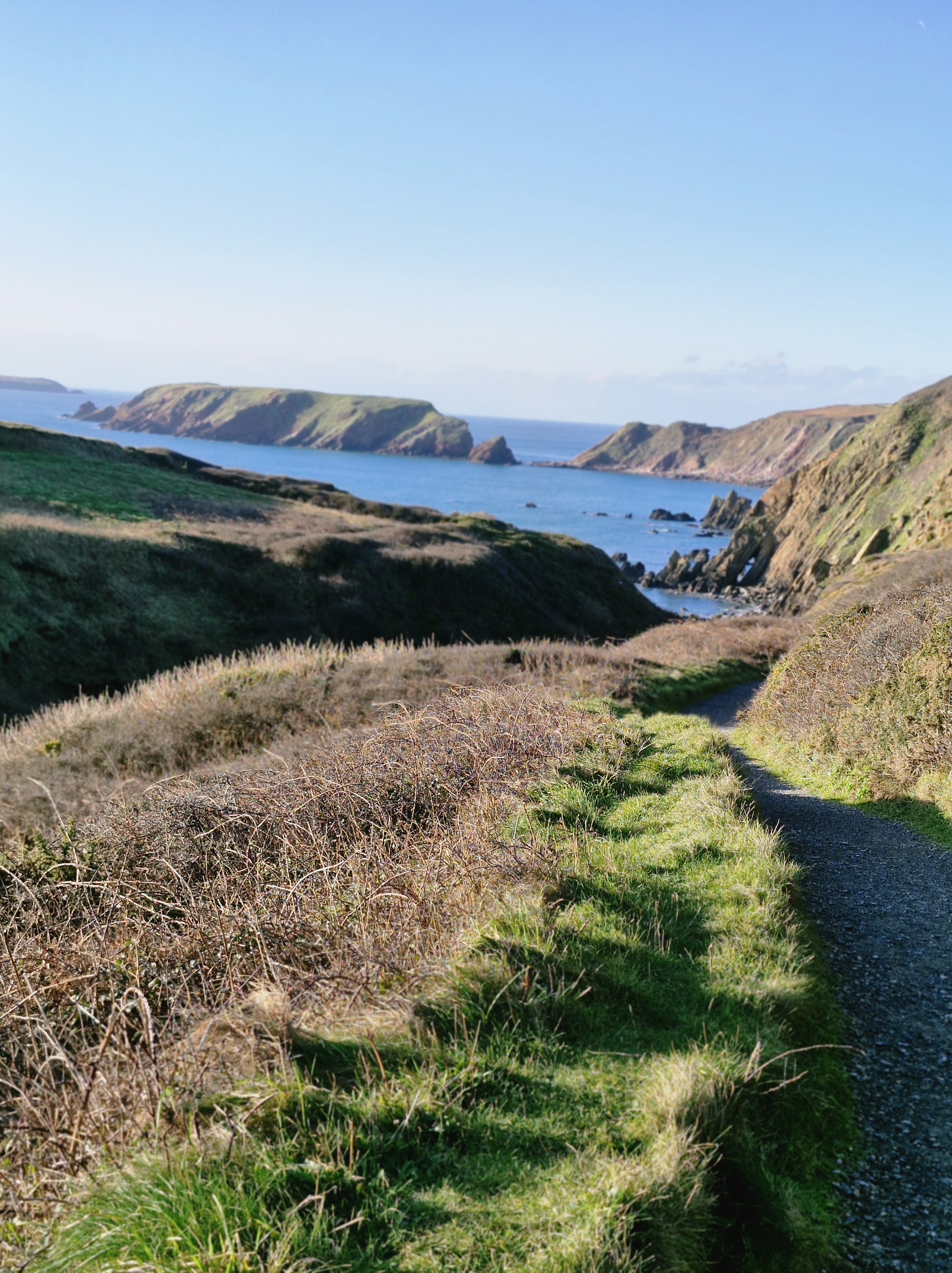
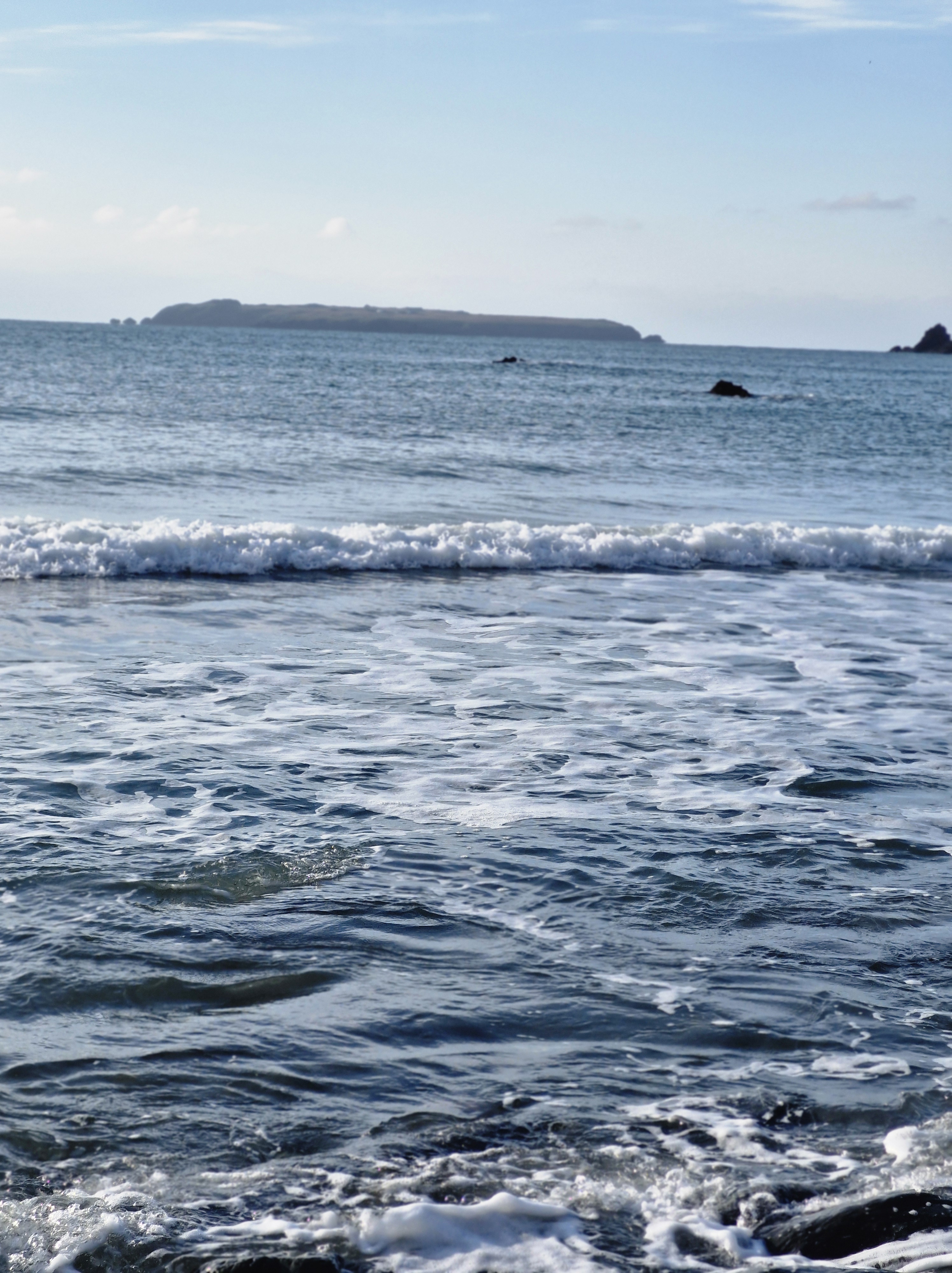
The tide was in. In the distance we could see Skomer Island which we’d visited inJuly. An adventure I’d written about here and here.

We turned away from the beach and, after only slight hesitation, we crossed a small footbridge over a stream and followed a path to the top of the cliff that we’d not walked on before.

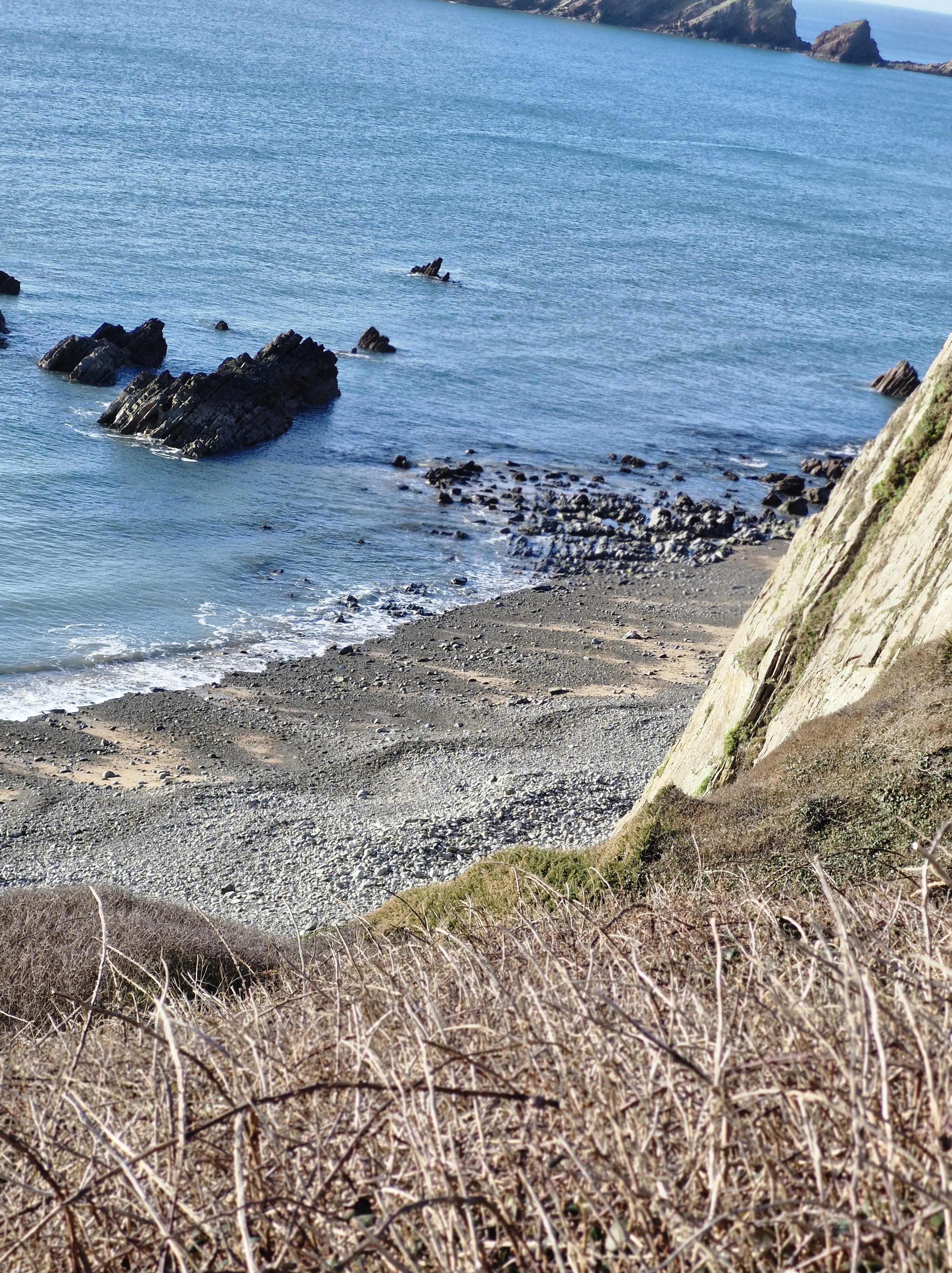
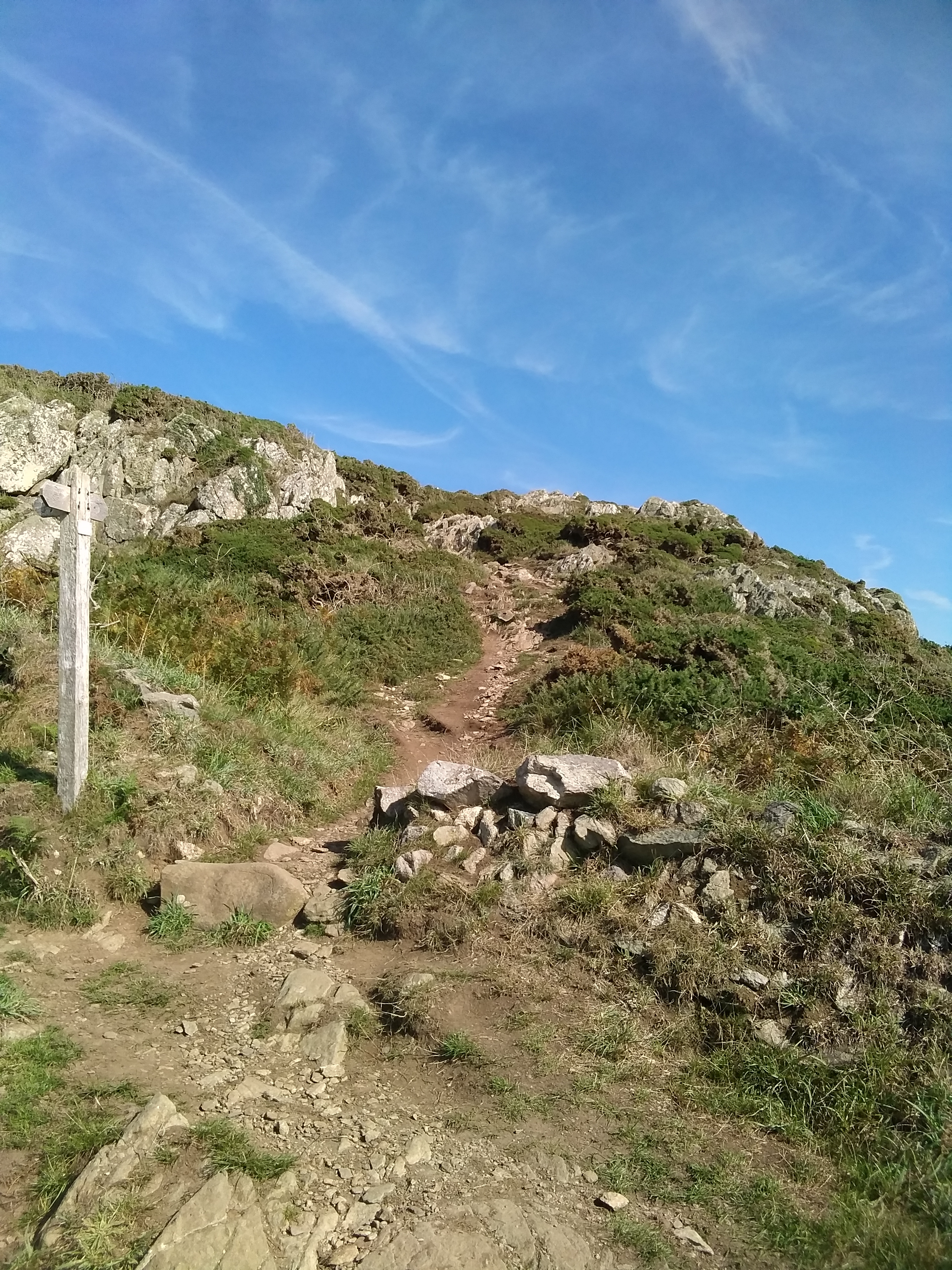
It was a little hair-raising to be honest. But the views were wonderful. After half an hour along an ever rising, and narrowing path we came to a halt at the top of steep and winding steps that obviously led down to the beach. Go on, or go back? We’re not very good at going back on walks, however lost we are, or in this case, however daunting the steps. So we decided – in for a penny and all that…
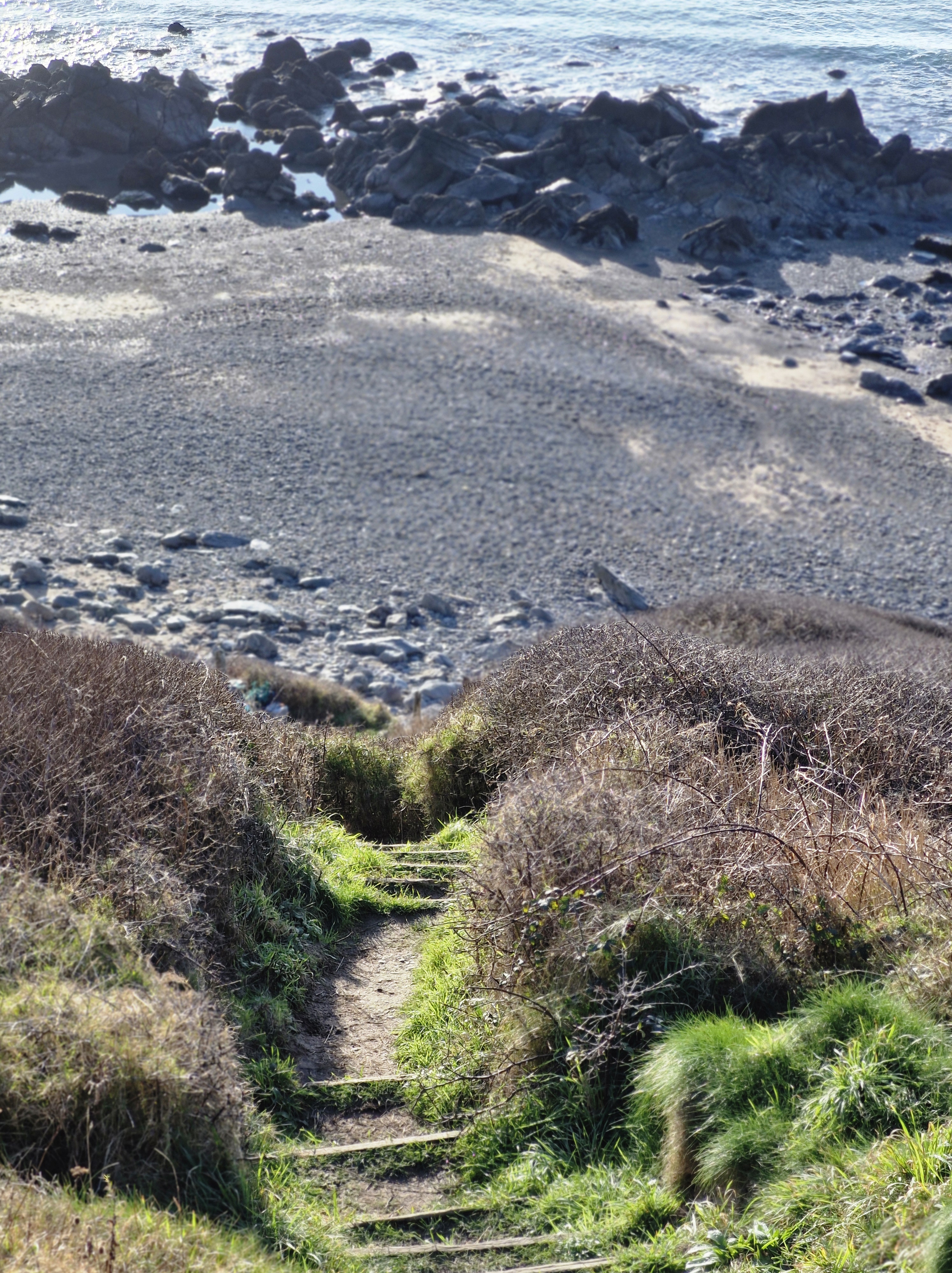
It took us ten minutes of walking sideways down each step and being very grateful for the walking poles we’d debated on bringing with us – (After all, it’ll only be a beach walk!” I’d said, foolishly).

I don’t know who’d built those steps but they’d obviously decided that anyone who could navigate them thus far would be fit enough to leap over the last two metres of sheer rock at the bottom to reach the beach.

Before I could decide to either slide down the rock on my backside, or roll down through the gorse bushes on either side of the path I heard a cry. ” Bravo! You are legends!” A lady appeared below. “Stay there. I’ll help you down, you legend. Grab my hand.” I was, I have to say, very grateful for the help.
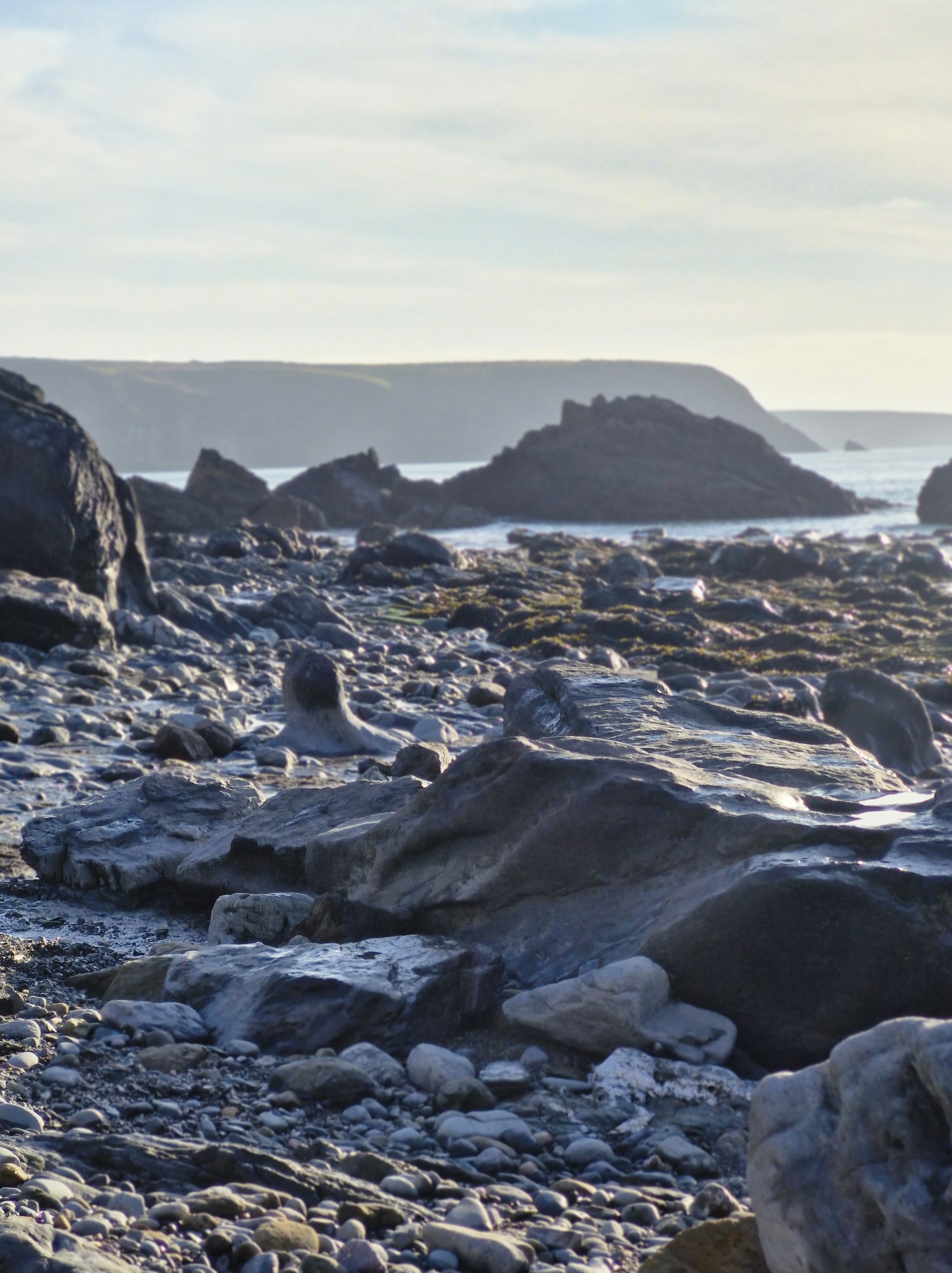
Until, finally on level ground – (levelish – i looked it up, there is such a word, specially invented i guess for rocky beaches) – I looked at this lovely lady – and realised she was probably around our age.

To be clear though, she did tell us she’d arrived at this particular spot at low tide, and had walked along the wide stretch of sand from the other end of the beach – where we’d we’d originally planned to walk from. And also that the steps we’d come down were locally know as the emergency exit steps for when someone was caught out by the high tide. So that was the answer – whoever built the steps knew that anyone wanting to use them would probably be swimming to them – and not by choice; to escape being trapped by the tide.
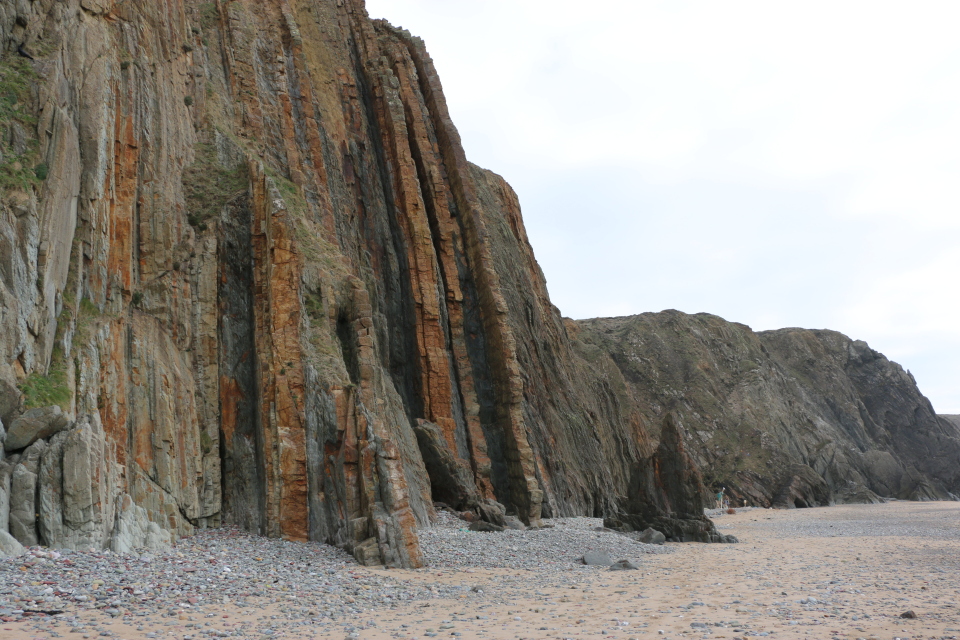
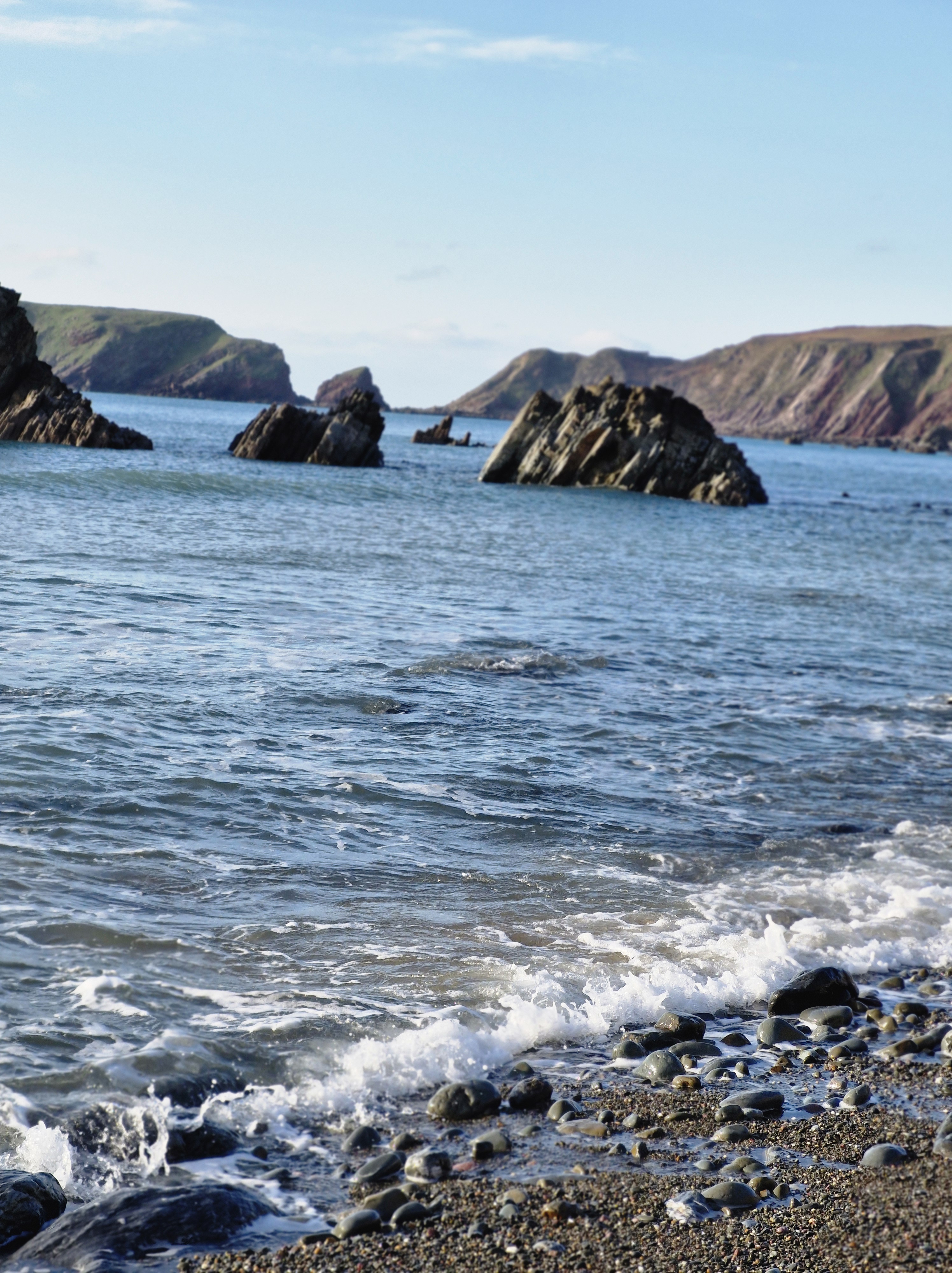
Luckily for us the tide was on its way out. There was no way I was tackling those steps again to the top of the cliffs. We judged that, if we took our time, we could navigate around and over the rocks to get back to our originally planned starting point at the other end of the beach.
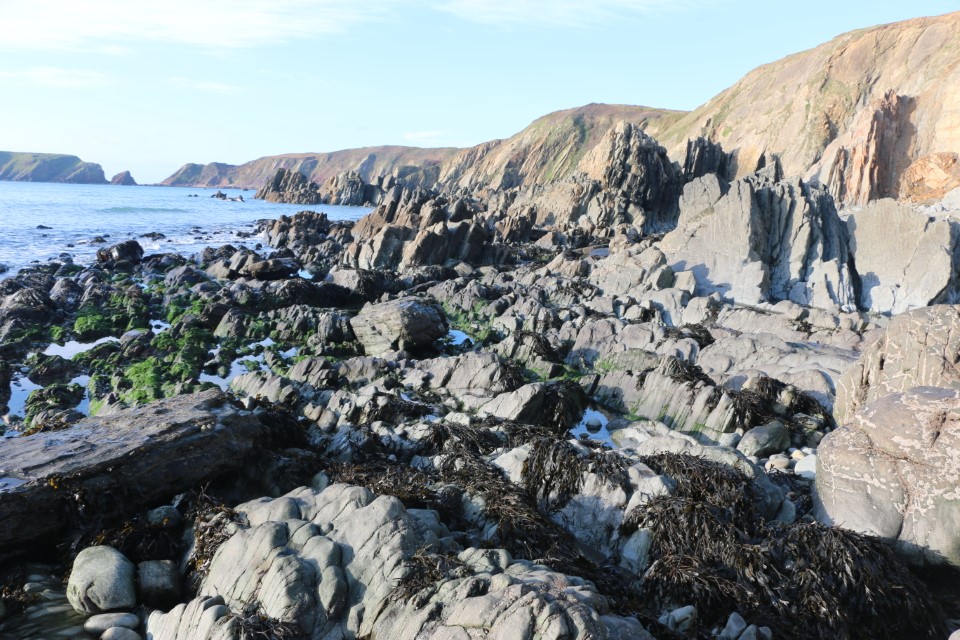
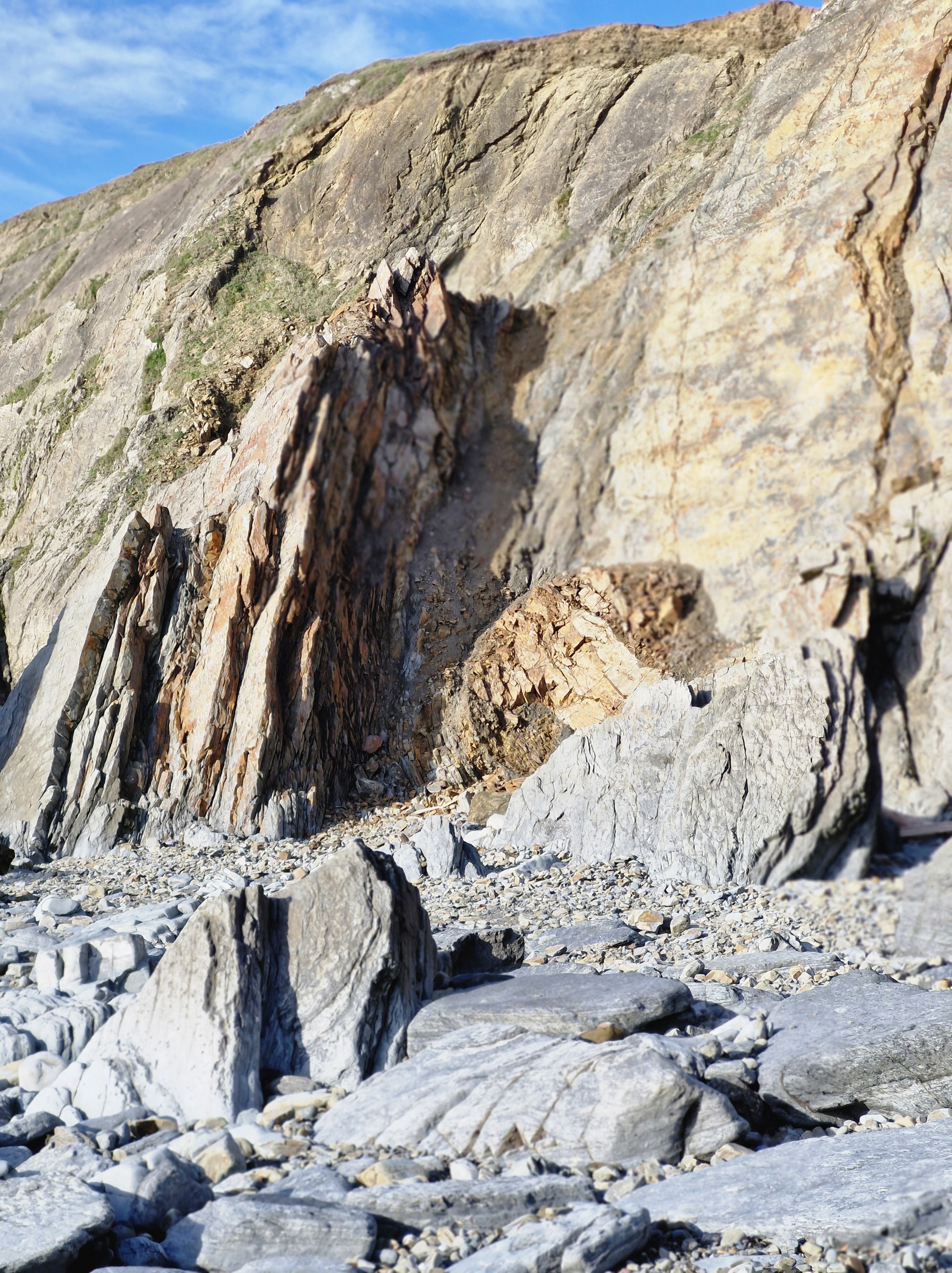
Having navigated rocks near the sea’s edge we made our way to the top of the beach near the cliffs where there was a gap between two tall, jagged rocks. A group of people came through as we were deciding on our next move. If they could do it so could we! Yes, I know … mad!! But we don’t like to be beaten.
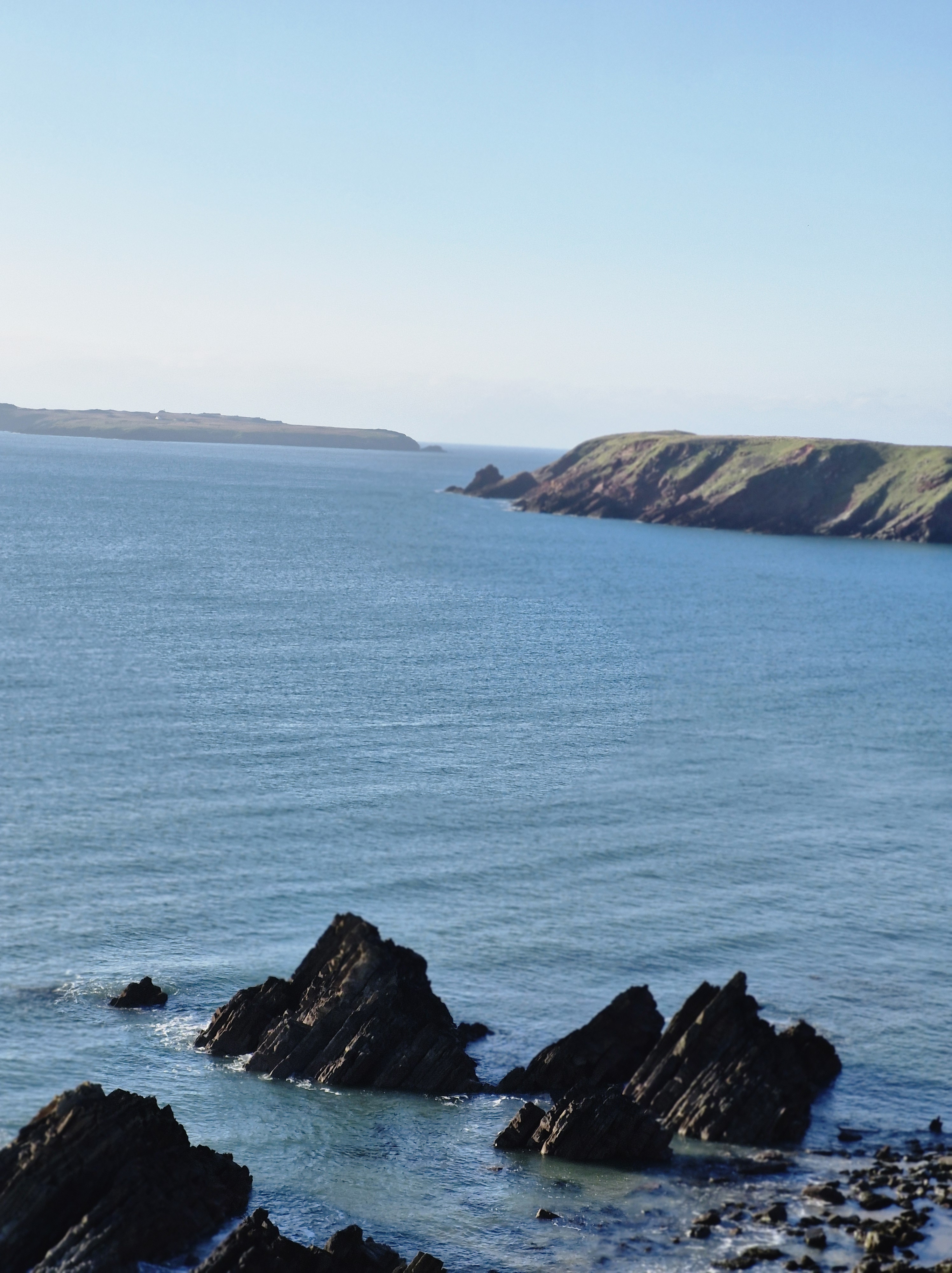
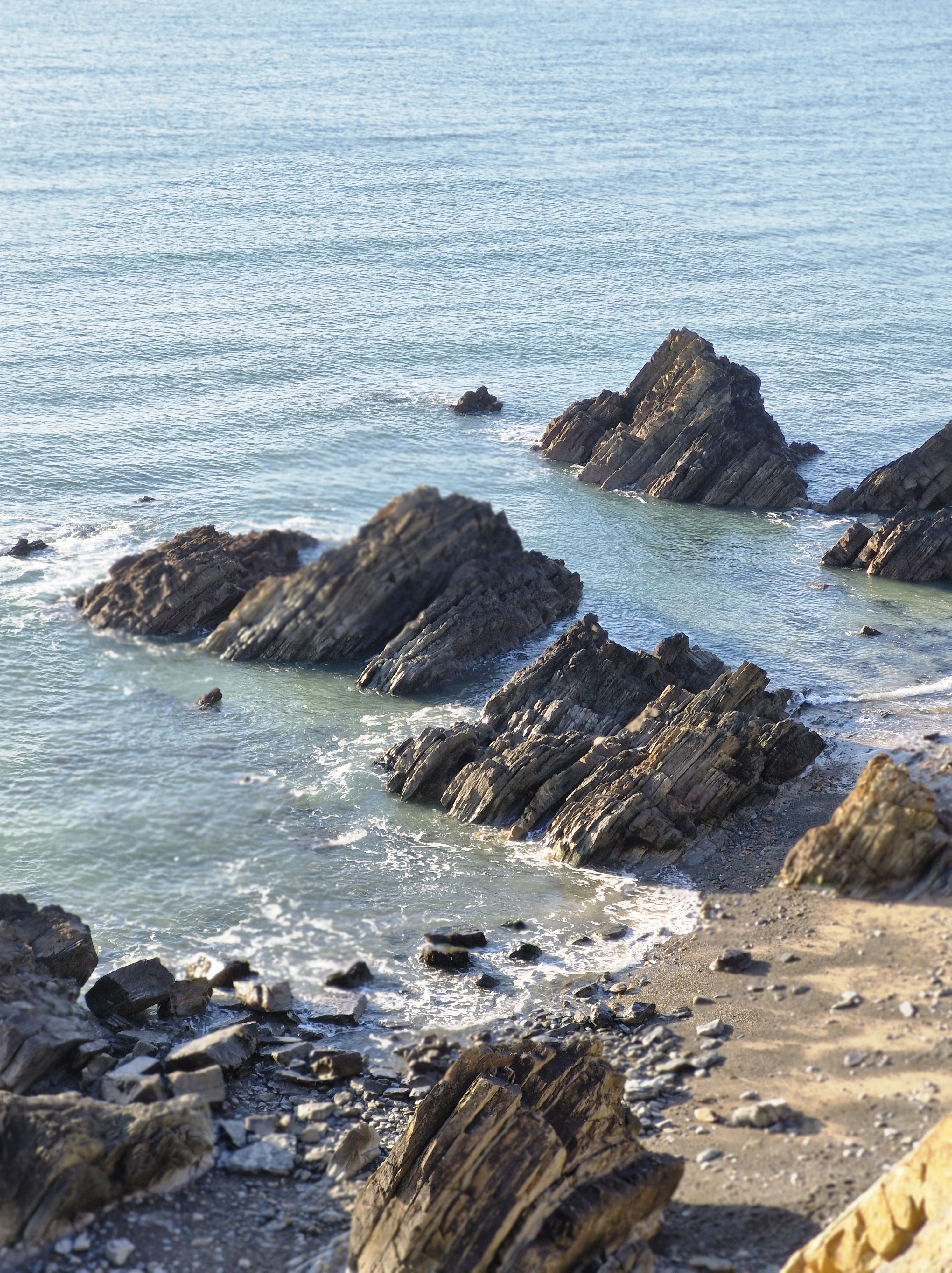
We made it to the other side. “No problem,” said the photographer (He was standing on the sand taking this photograph with the path that leads up to the track, and on up to the car park, behind us). I ignored his confident smile; there were a few moments when I’d thought we would be needing a sea rescue.

N.B: Just as a matter of interests, Marloes Sands was the filming location for: Snow White & the Huntsman (September 2011). The Lion in Winter (1968).

And could I, should I, leave this post without a small metion of my books?

As I’m hoping the book I’m working on at the moment, and hope to publish in 2026 (Well, one can always live in hope!), I guess not. So here is the link to my Amazon page.

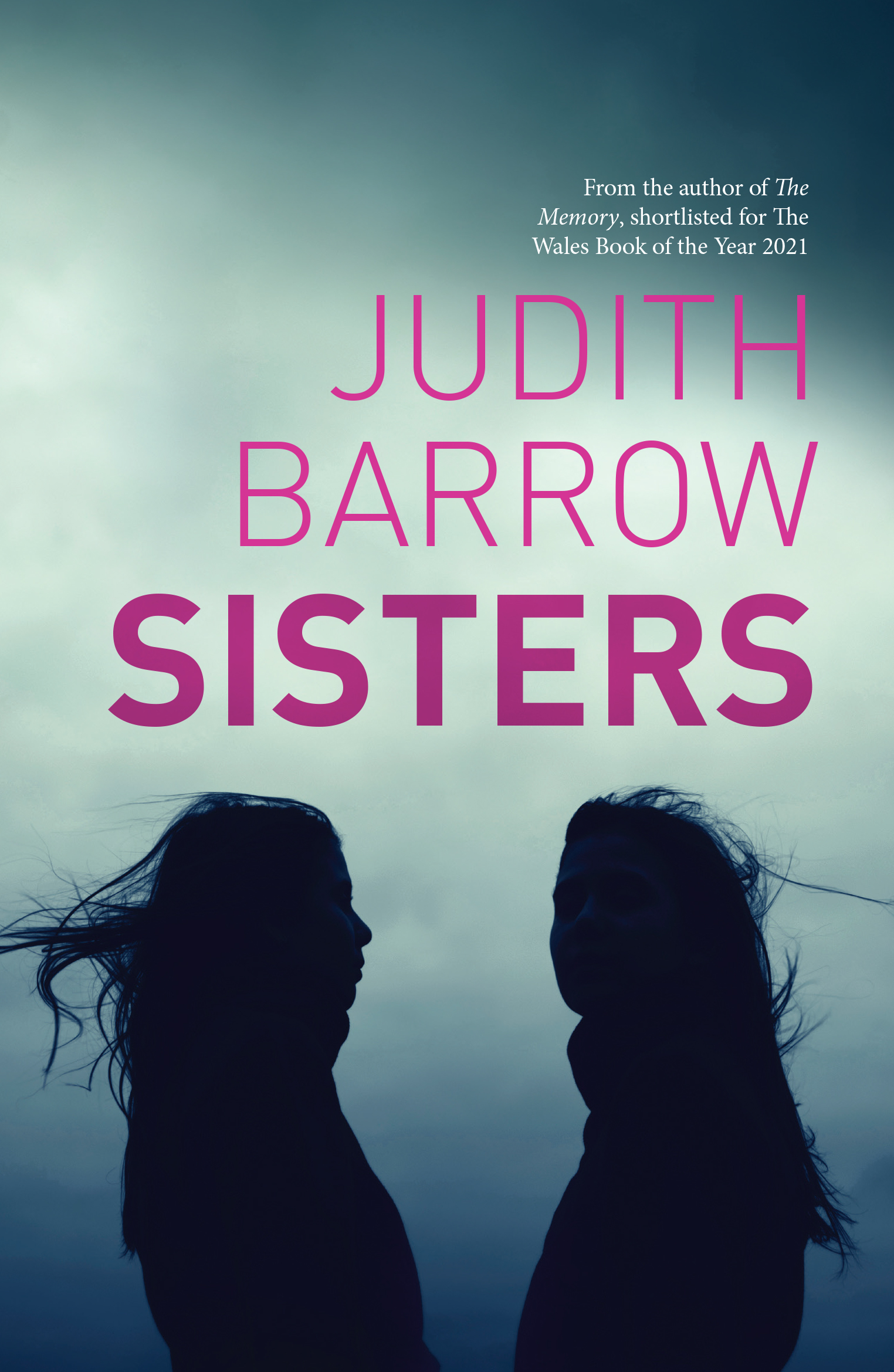
Thank you to all my readers; I appreciate each and every one of you.
Writing is one of my biggest pleasures in life … besides walking. #books #anniversaries #writing #walking #photography #Pembrokeshire #Wales #Saints #mythsandlegends #memories

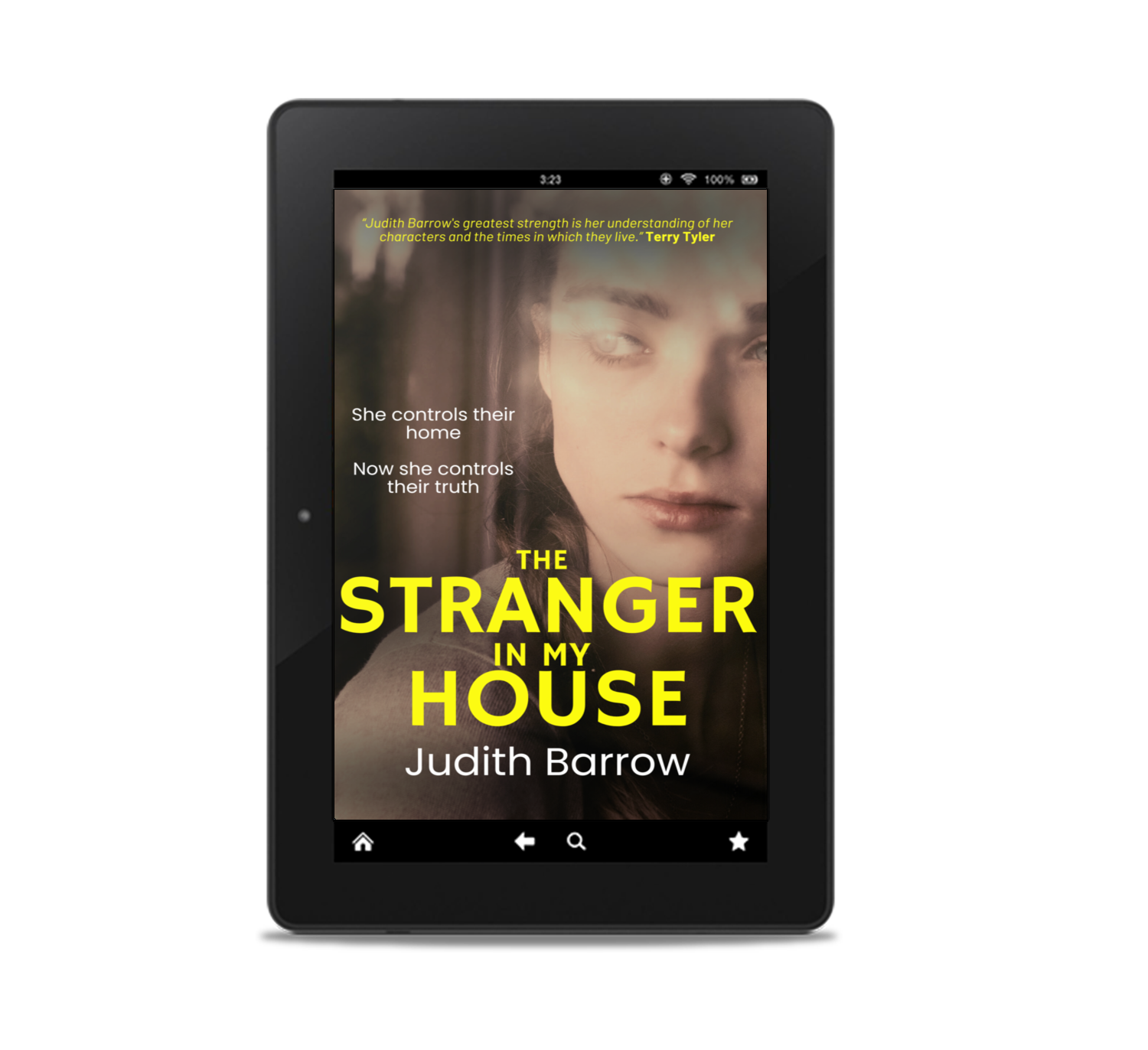
The Stranger in my House – published November 2024

One of my greatest pleasures – besides writing – is walking. In fact walking is what I mostly post about on social media; mainly because I realised a long time ago that across many of the socials, it’s writers talking/commenting/sharing with other writers. And it’s my own fault; I have never got around to writing a newsletter to potential readers. Nevertheless I’ve made some lovely friends over the years online as well as in real life.

And, as a creative writing tutor, I’ve also made friends with many people who wanted to learn to write …. something … whether it was a novel, a short story, poetry, travel writing, or writing for children.

Alongside many of the authors I know, I share a fascination of people, and I admit I people watch. Which is probably why all my novels are character led, whatever genre I’m writing in. This no more so than in The Stranger in my House, published on the 14th of November last year (2024). The story has a main theme, coercive control; the ability of one woman to change the lives of a man and also those of his children. And not for the better.

Building characters layer by layer in a story has to have a balance: of their backgrounds, their history, the way they respond to life and to the people around them. Much as in real life. I believe there comes a time when we are all mostly what we have lived, what has happened to us, how we responded, how we were treated, how we treated others. Yes, there is always the argumant of inherited, biological traits, but I do believe that, in later life it’s what our lives have been like. However, I’m always open to that statement being challenged, and I have been involved in many discussions, on many occasions.

In all my stories, as with most writers, my characters take on a personality and life of their own. I found this especially so in The Stranger in my House. So much so that I wondered what happened to Charlie and Chloe, the two protagonists in the story, after the reader closes the book on their lives. At the beginning they are just over six years old. By the end they are adults.

I like to think that Chloe and her husband, Mark, and Charlie and his partner, Simon, become as smitten with being outside, with looking at nature, the change of the seasons, and with walking, as my husband and I are.

And there is nothing better on cold, wet, and windy winter evenings than looking back at photographs of our walks.

So here is another treasured memory:

St Justinian’s to Porth Clais:

Walking in the footsteps of St Justinian, or sometimes scrabbling to get to the top of the next path.

Literally on hands and knees. But it was so worth it

This image has an empty alt attribute; its file name is img_0261.jpg

Wonderful views overlooking Ramsey Island

This image has an empty alt attribute; its file name is img_0264.jpg
This image has an empty alt attribute; its file name is img_0265.jpg
Just to prove I was there – I hate having my photo taken, but waa caught unawares by the Photographer.
This image has an empty alt attribute; its file name is img_0262.jpg
This image has an empty alt attribute; its file name is img_0284.jpg

And look who we saw. (from a great distance,of course. As I’ve written in a recent post, we saw the seals and their pups last month, just before the mothers decided their offspring was able to fend for theirselves after only a month or so.

This image has an empty alt attribute; its file name is img_0277.jpg
Seal pups and their mums

So… who was St Justinian?

Justinian was born in Brittany in the 6th century. At some point in his life, he made his way to Wales, where he settled on Ramsey Island.

Justinian soon became close friends with St David, the patron saint of Wales, and visited him often in the monastery where the cathedral now stands.

He was less impressed however by the lax behaviour of some of the monks and decided to isolate himself on Ramsey island. According to legend, he took an axe and chopped up the land bridge that linked the island and the mainland. As he worked, the axe became blunter and the lumps of rock remaining became larger and larger. They are still visible today in Ramsey Sound, where the waters foam over them at high tide. Followers joined him on the island but his actions didn’t go down well with everyone though. They soon turned them against him and they beheaded him!

To the astonishment of his killers,he picked up his head and walked across the sea to the mainland, and where he set his head down, another spring of water issued forth.

A spring of water gushed up from the ground where his head first fell and this became the famous healing well known as St. Non’s Well, situated next to the ruins of St. Non’s Chapel.

Justinian was buried where the chapel now stands. Within its walls are some stone footings, which may mark his original gravesite. His body was removed to the cathedral at St Davids, probably at some time before the end of the 15th century.

During the early medieval period, two chapels were built on Ramsey. One was dedicated to St Tyfanog; the other to St Justinian. There is no trace of either building today, though their sites are known.