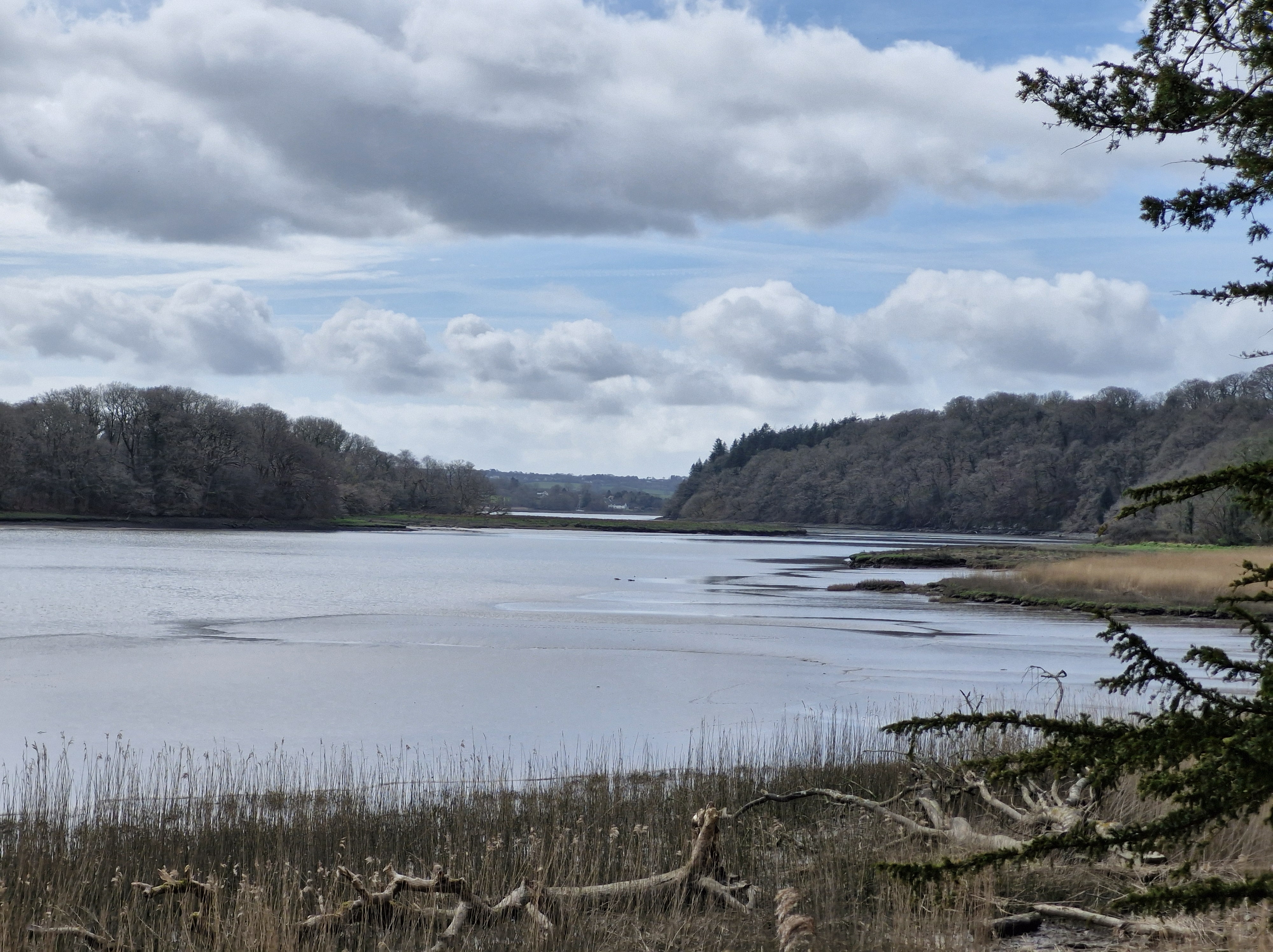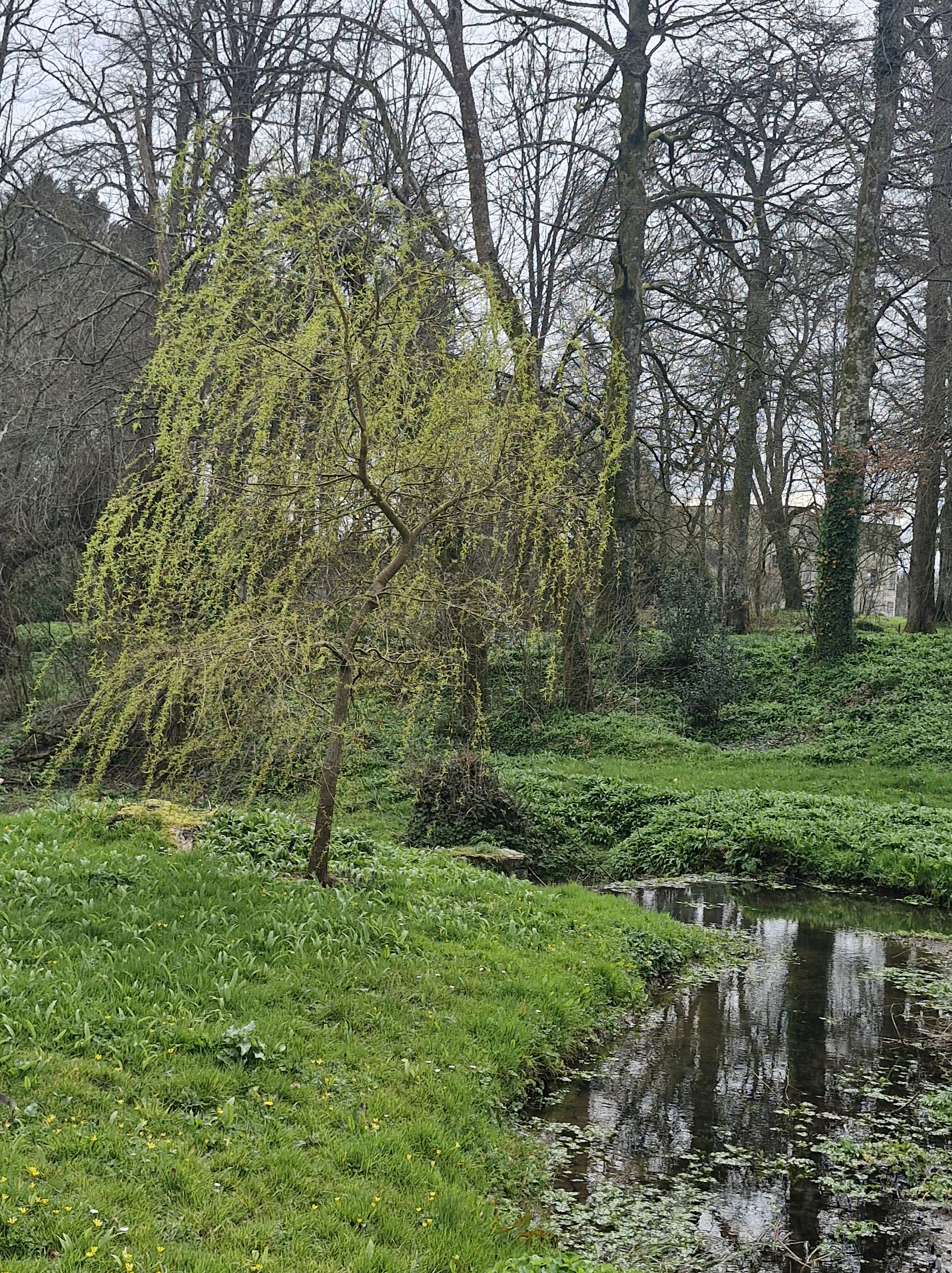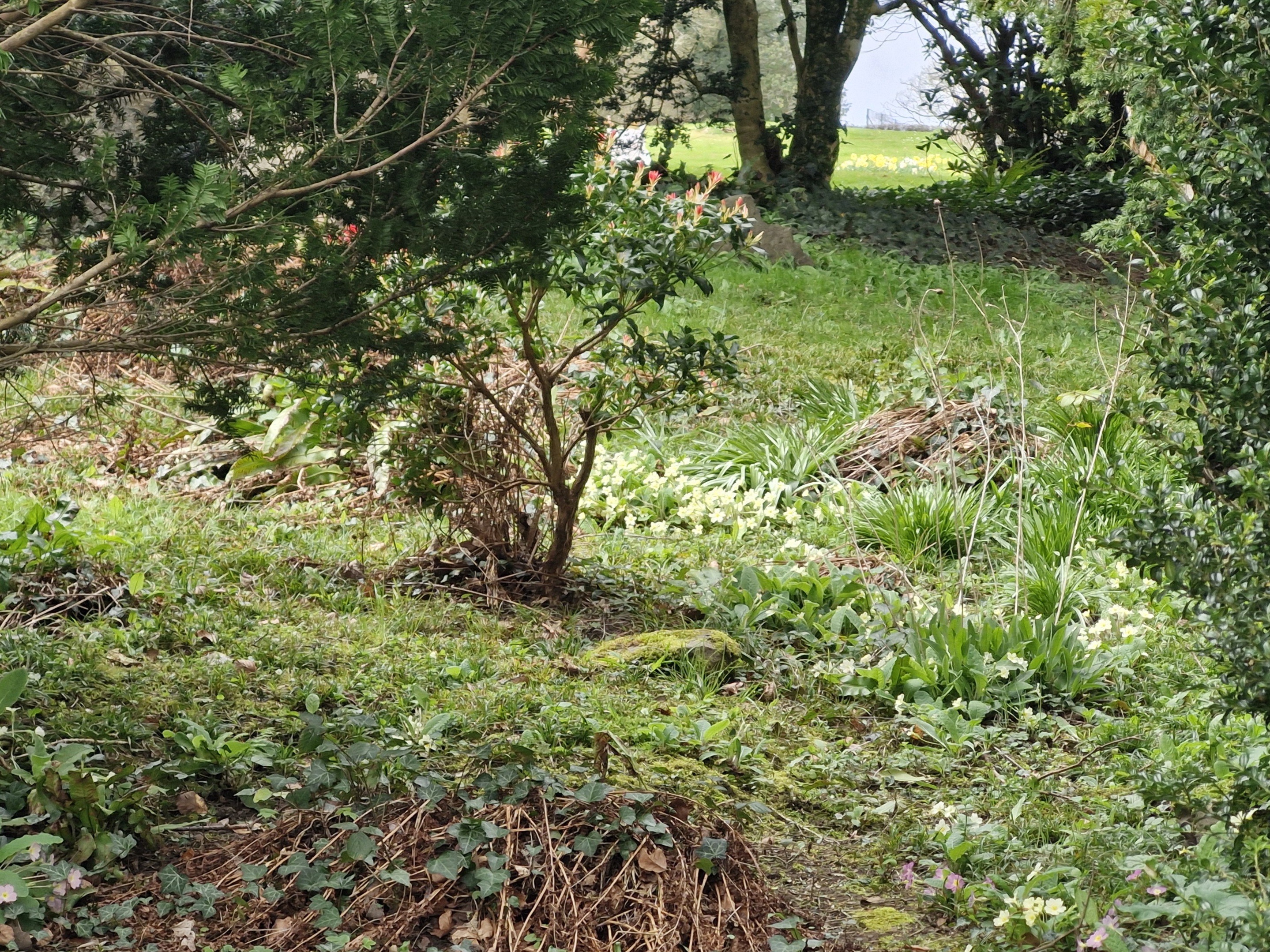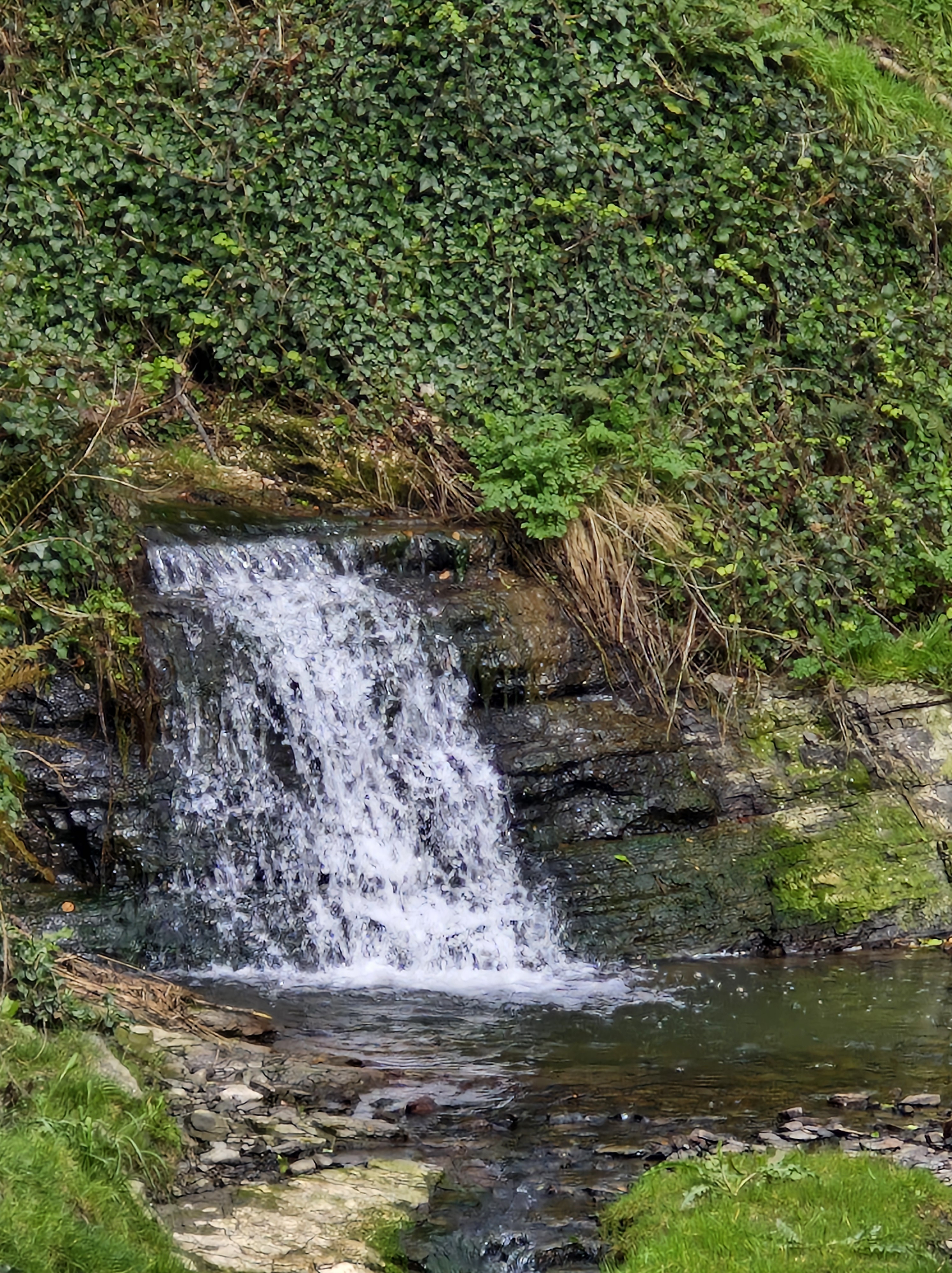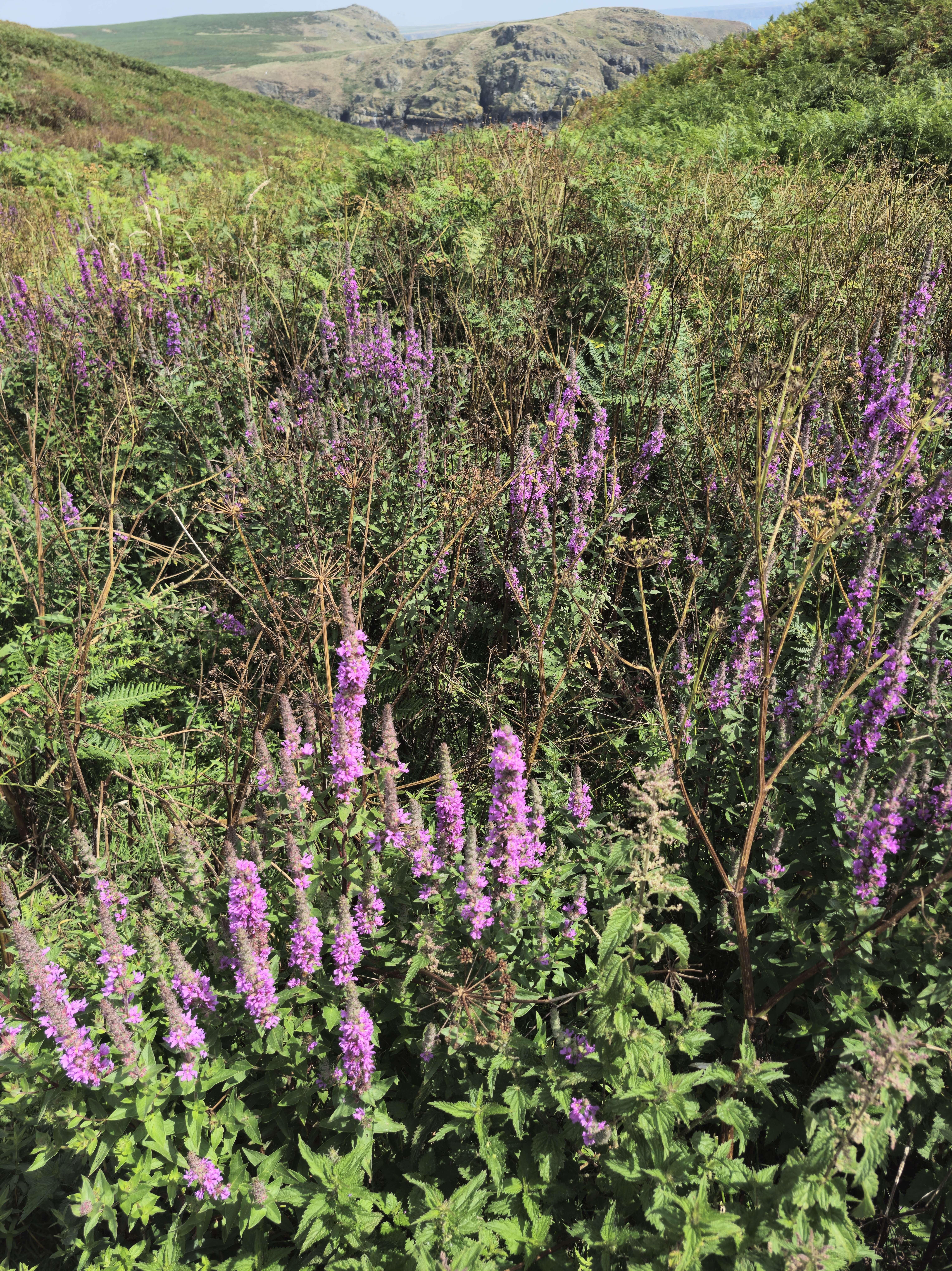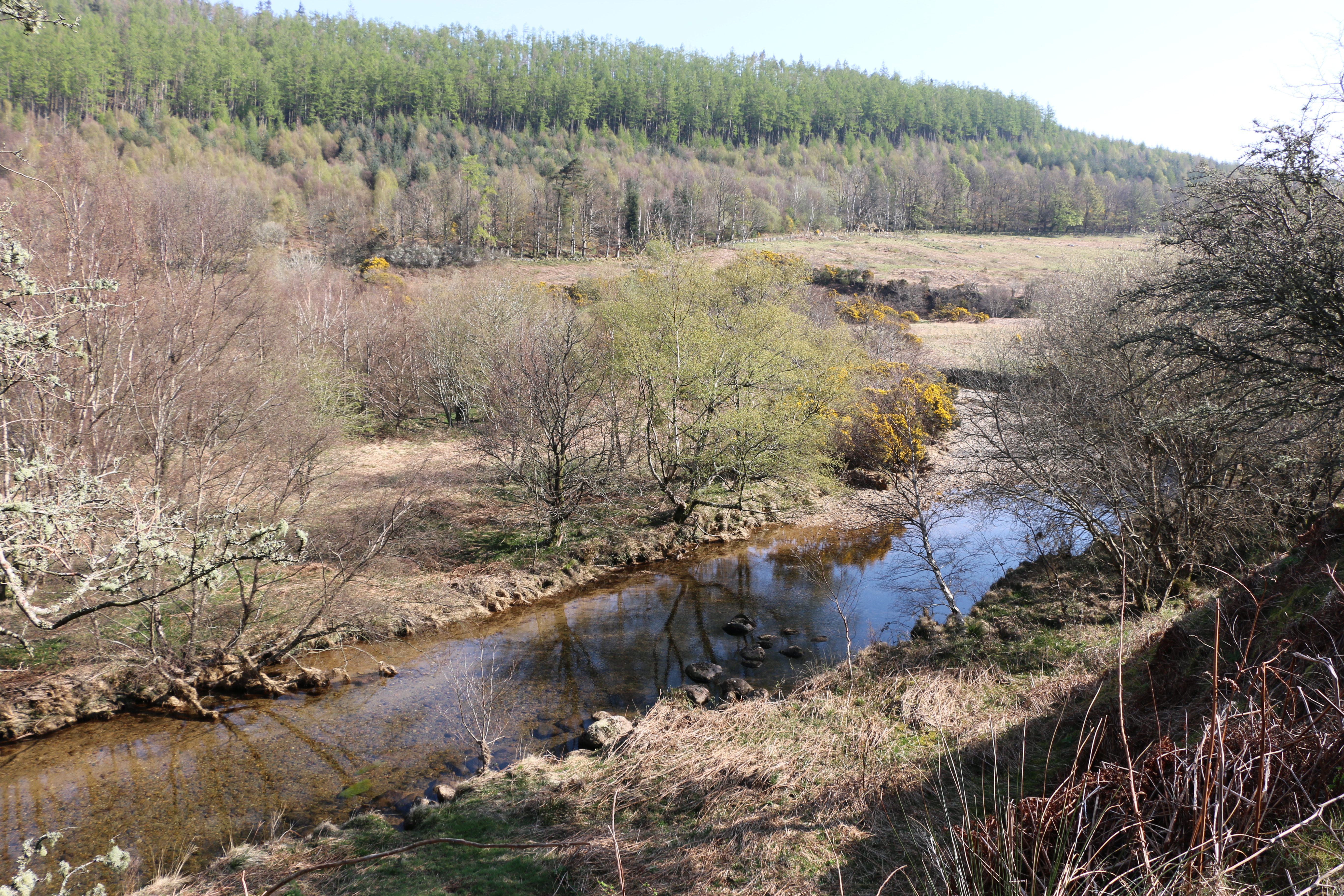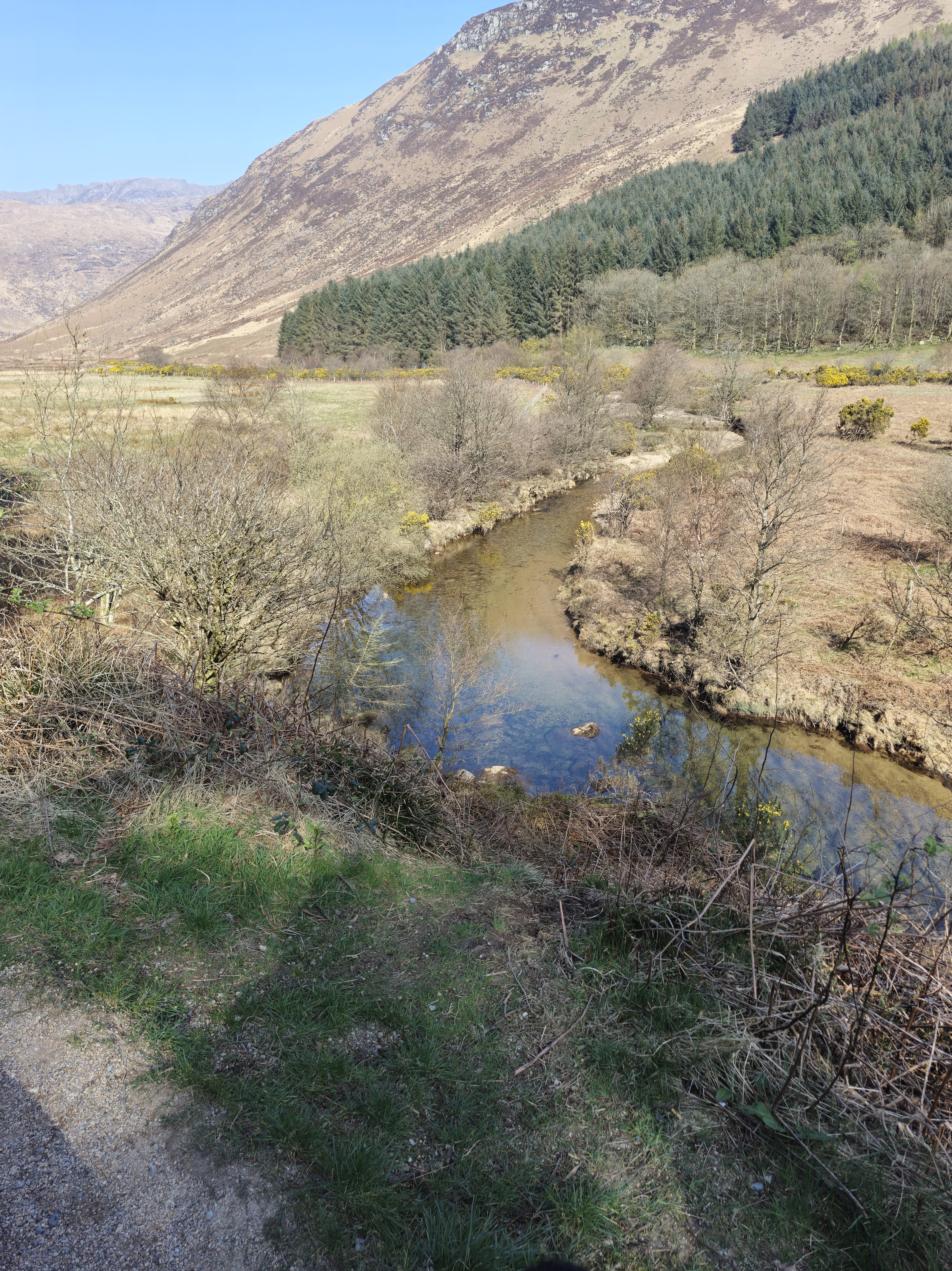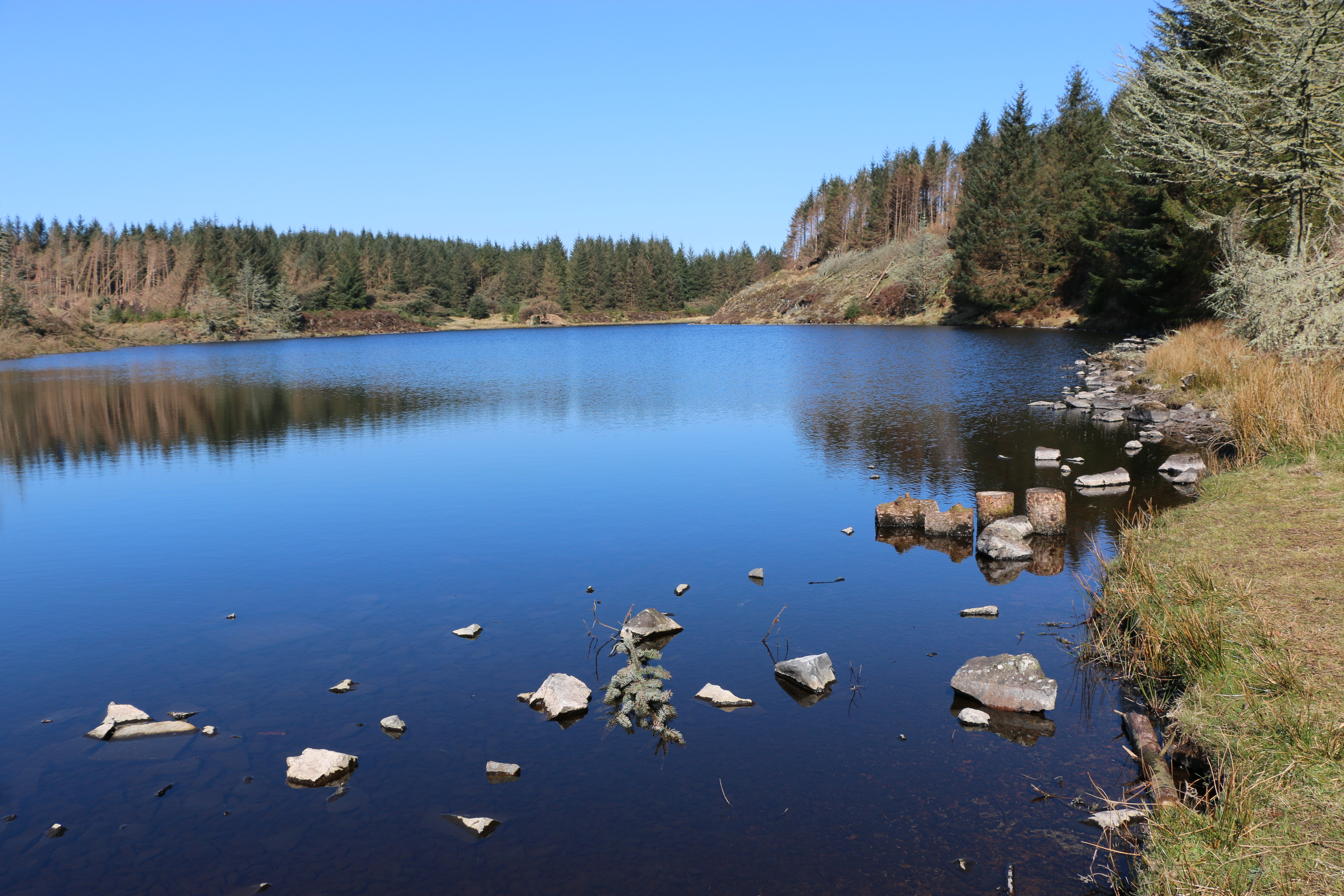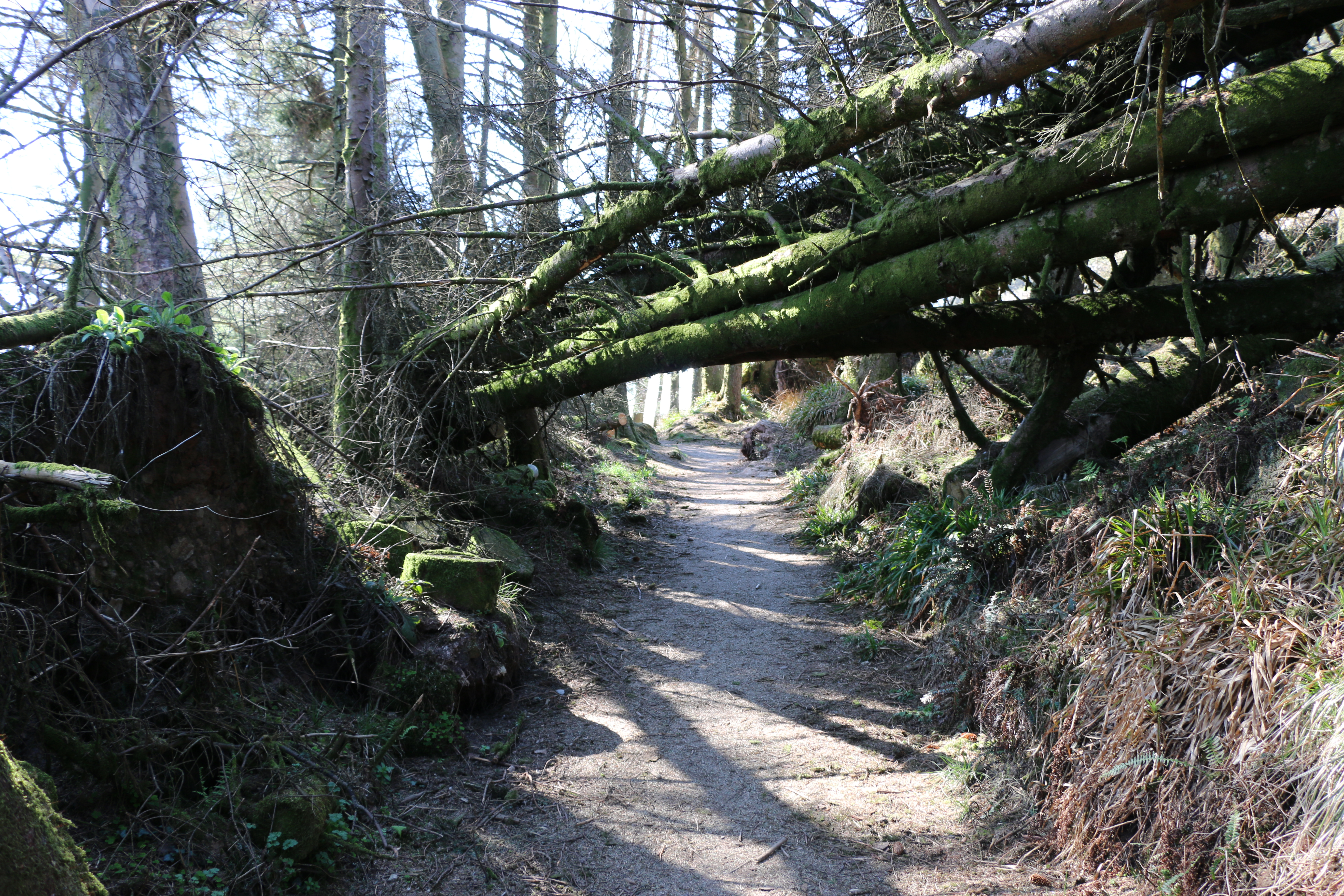
Where We Walked Loch Rannoch #Perthshire #Scotland #walks #photographs

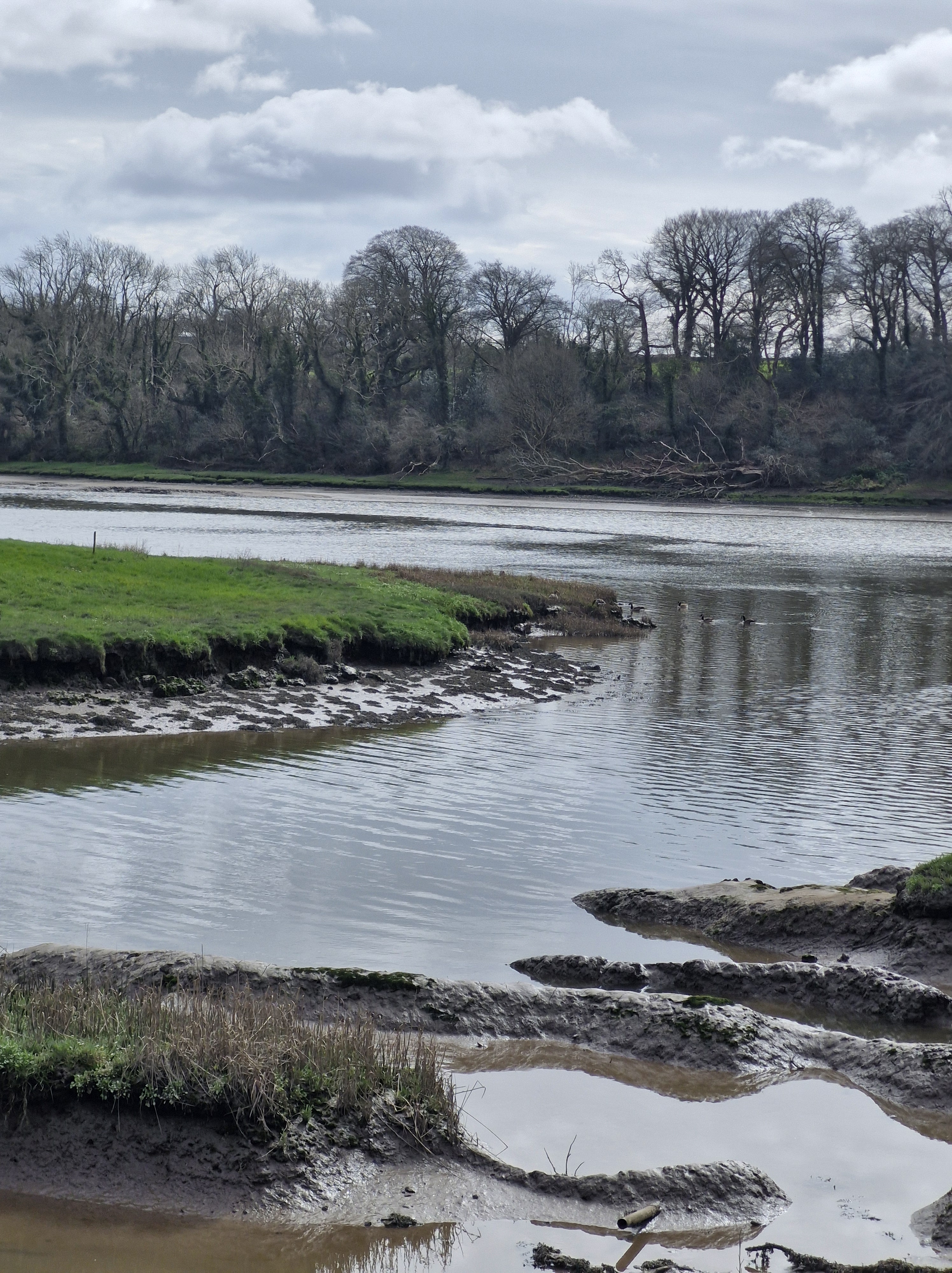
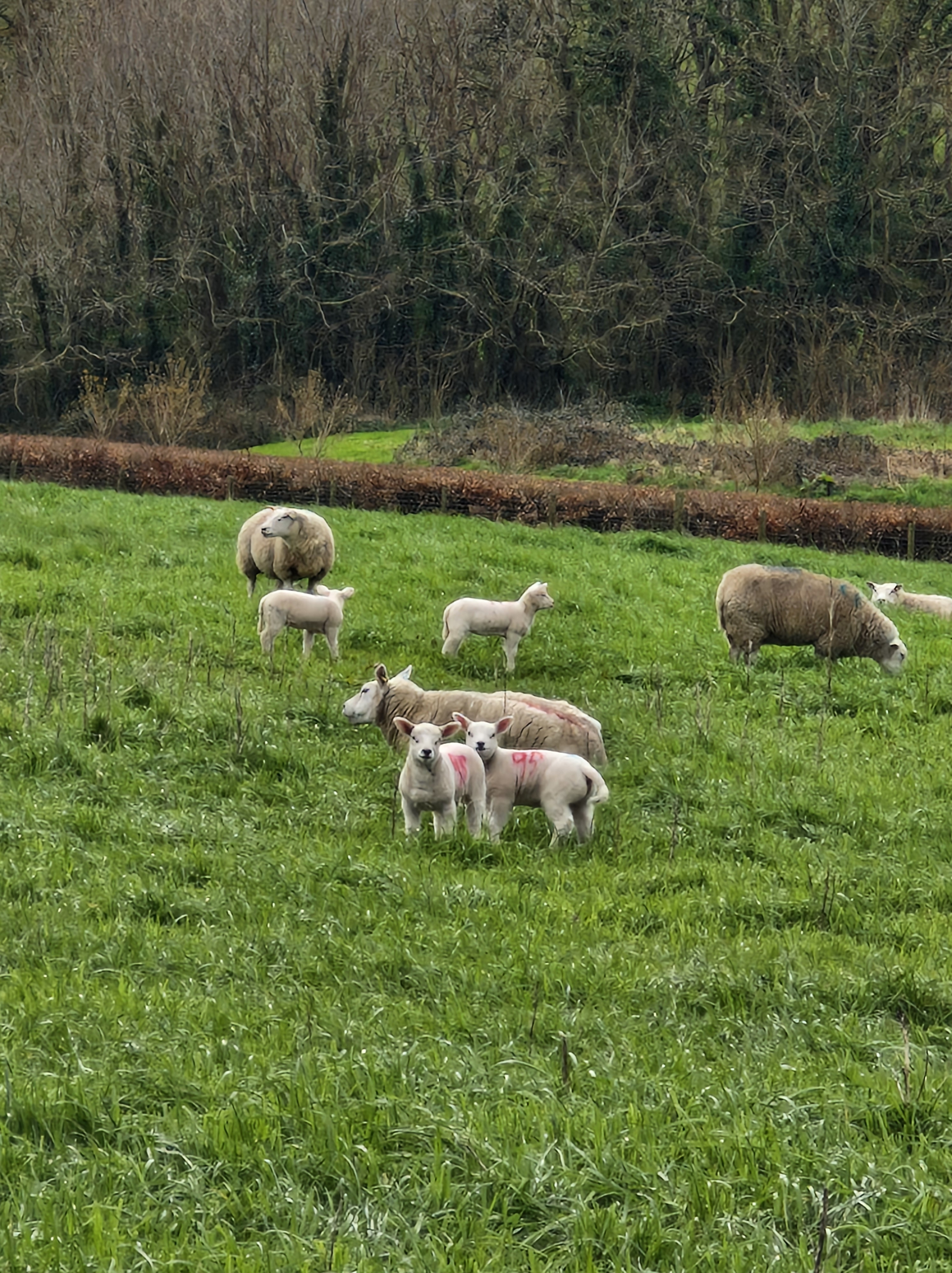
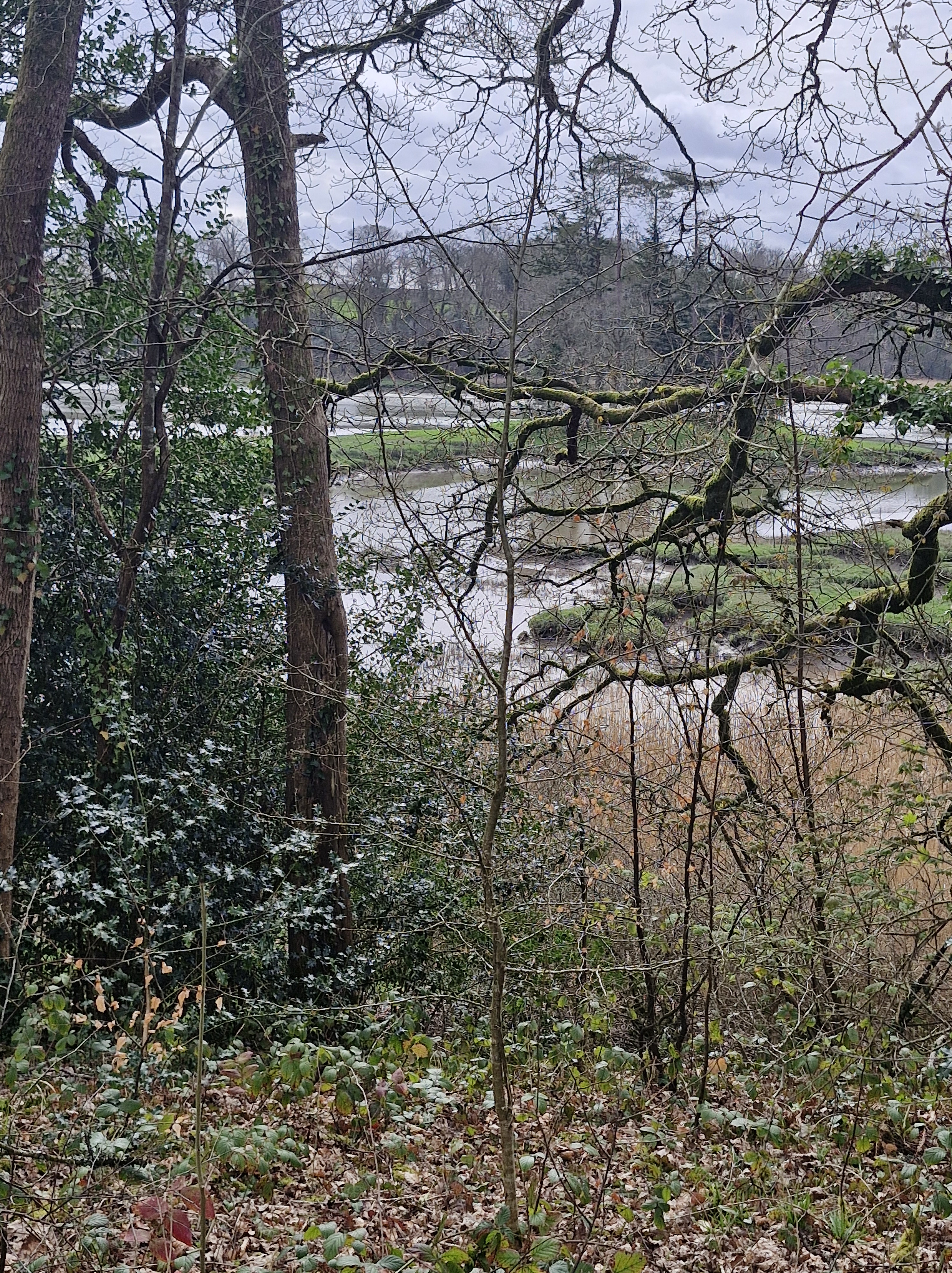
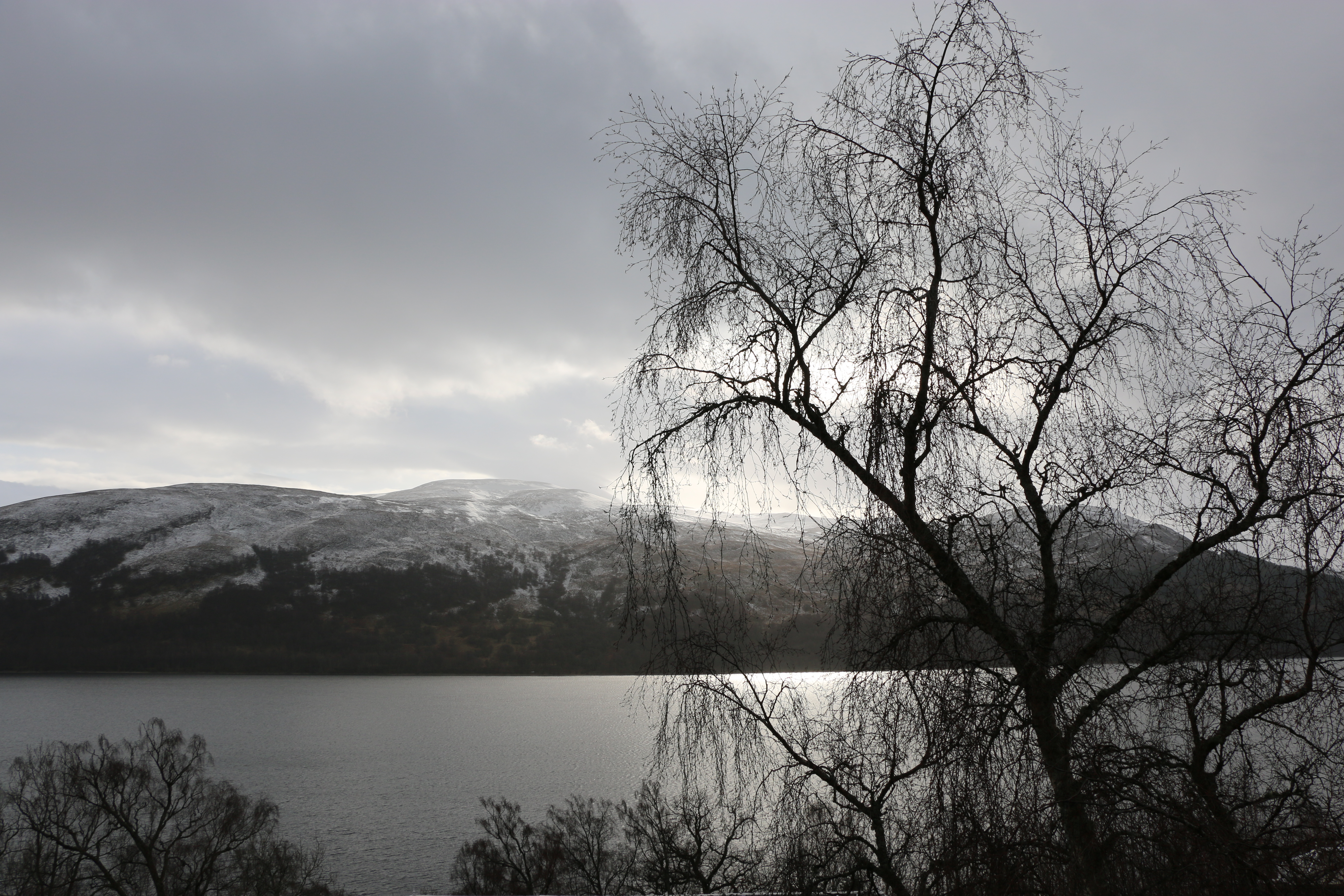
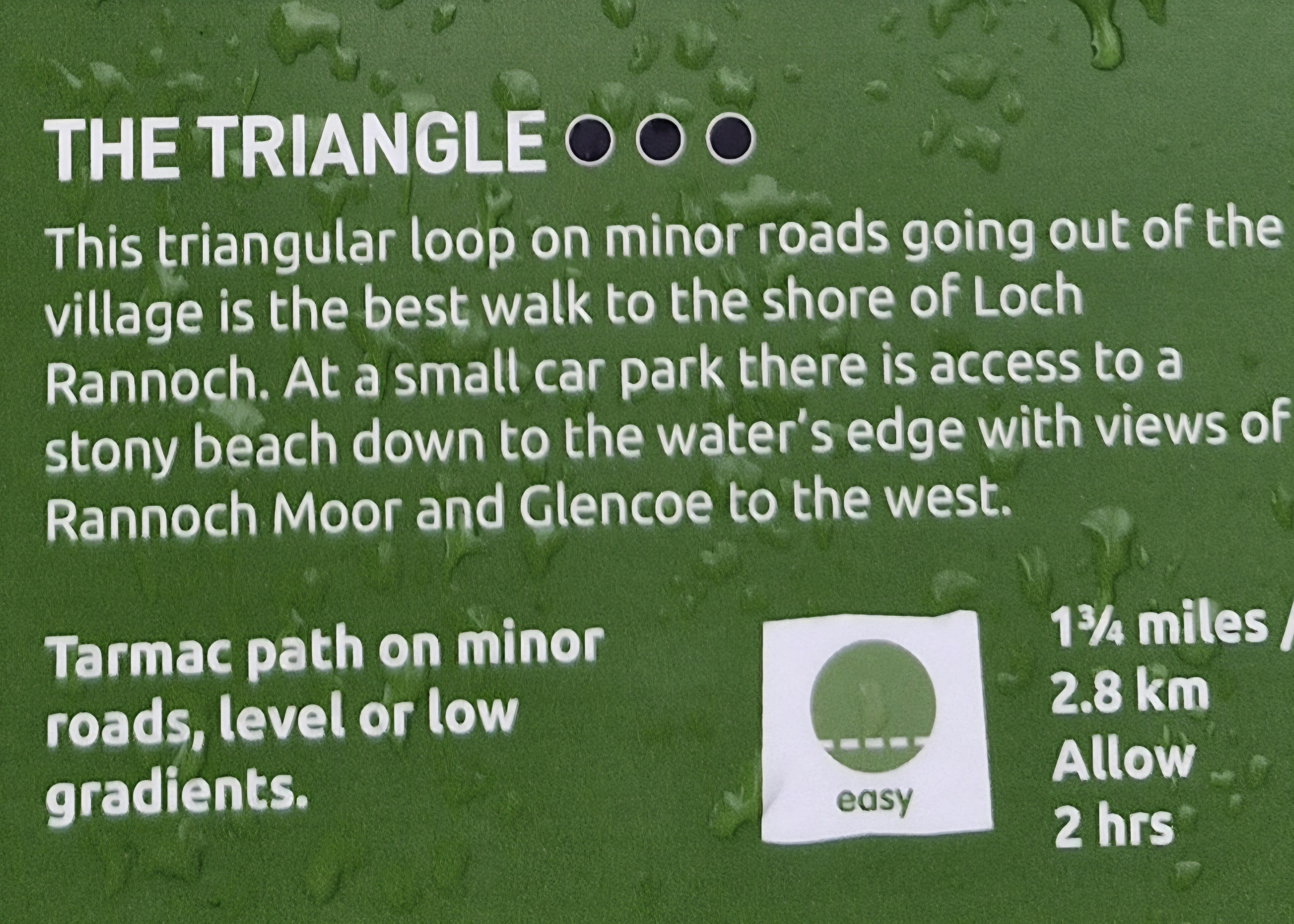
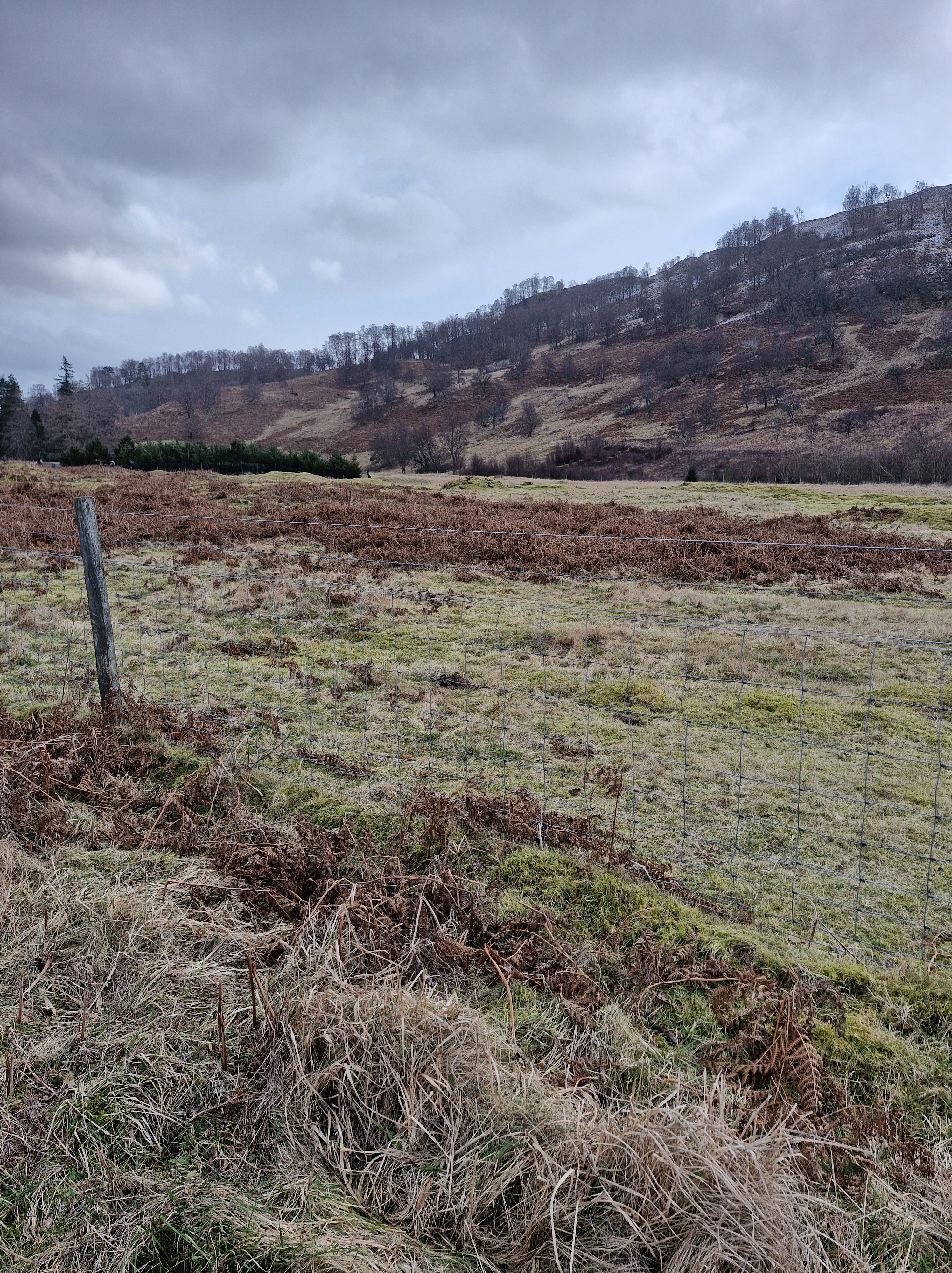
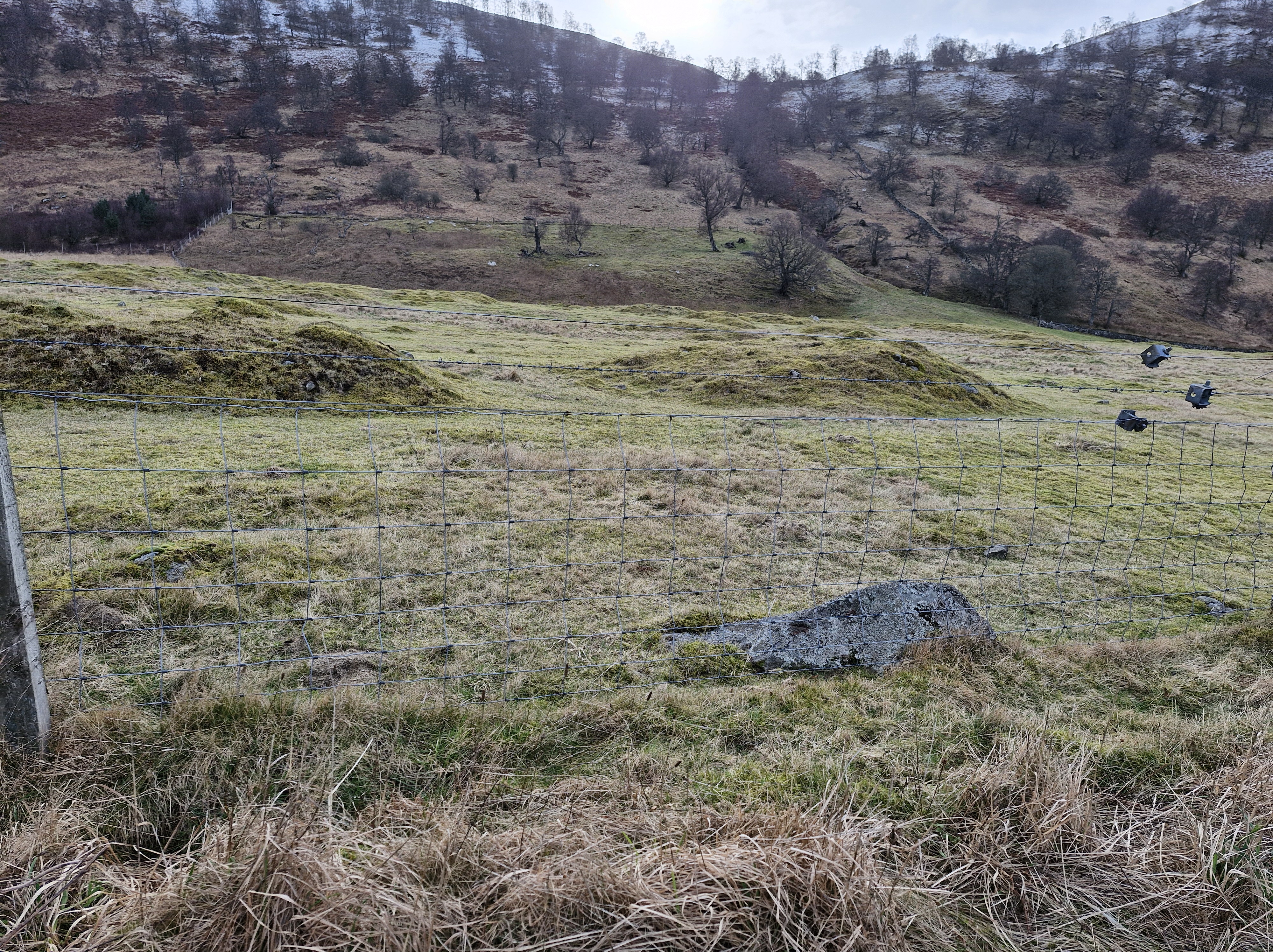
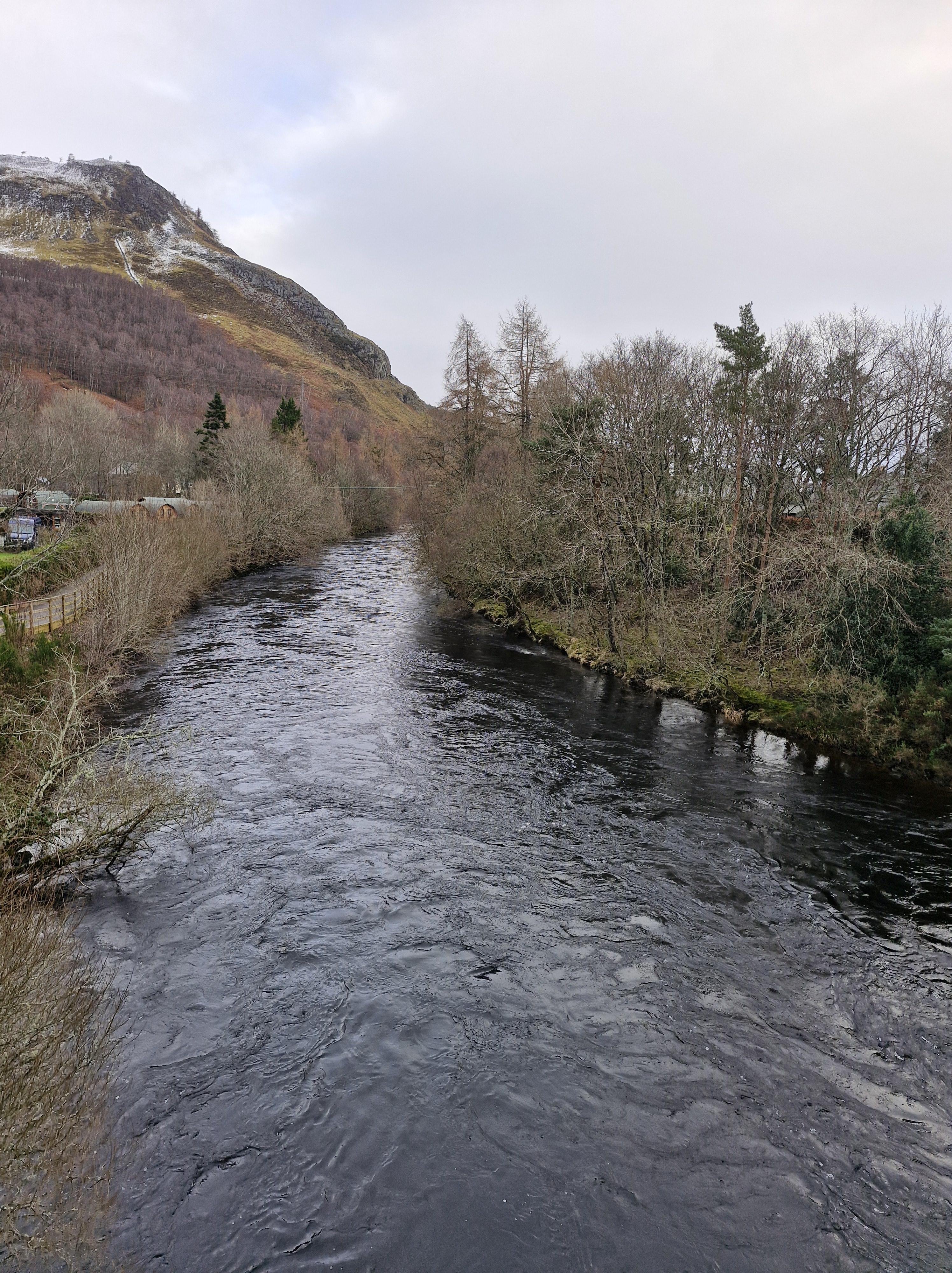
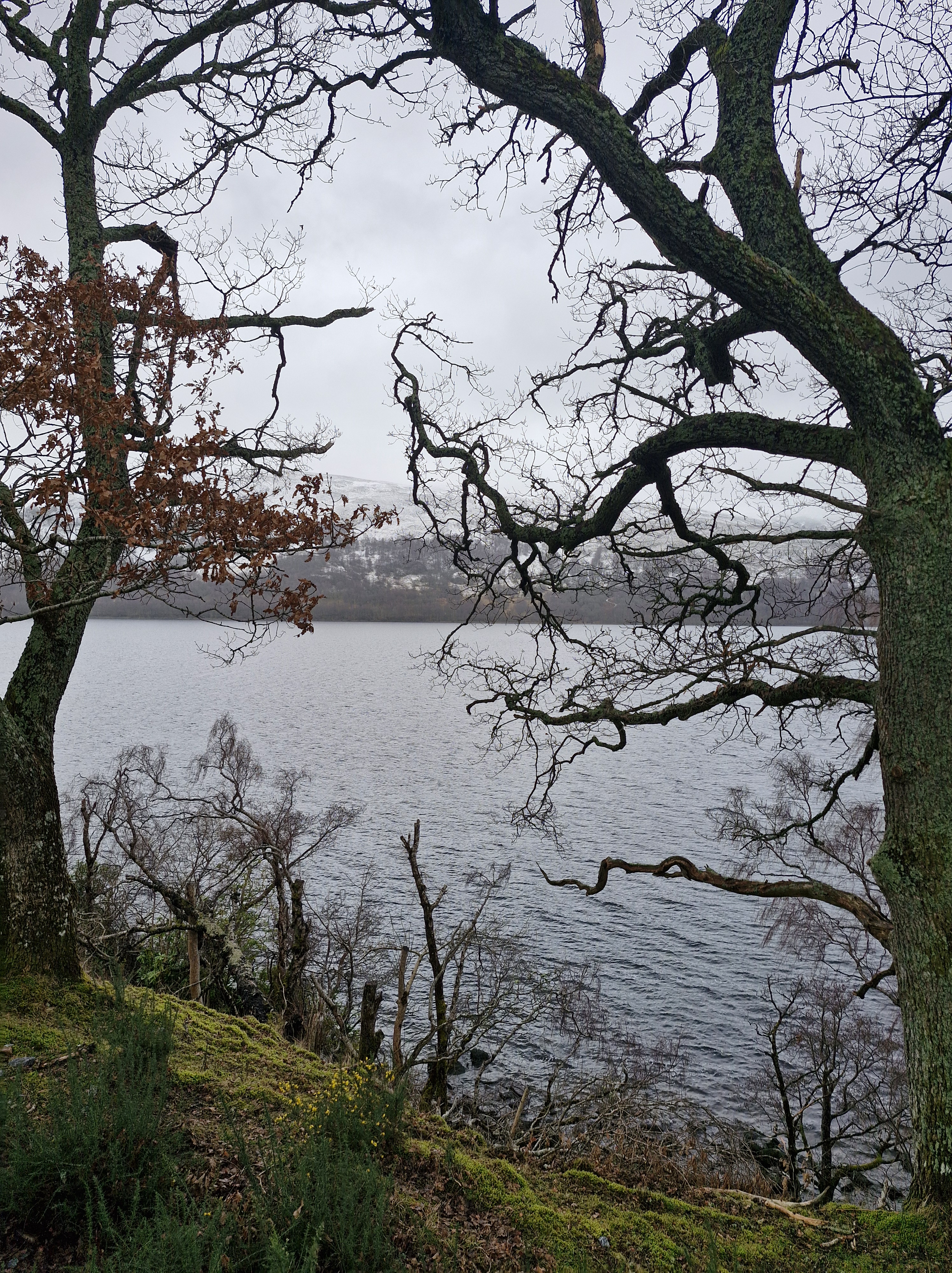
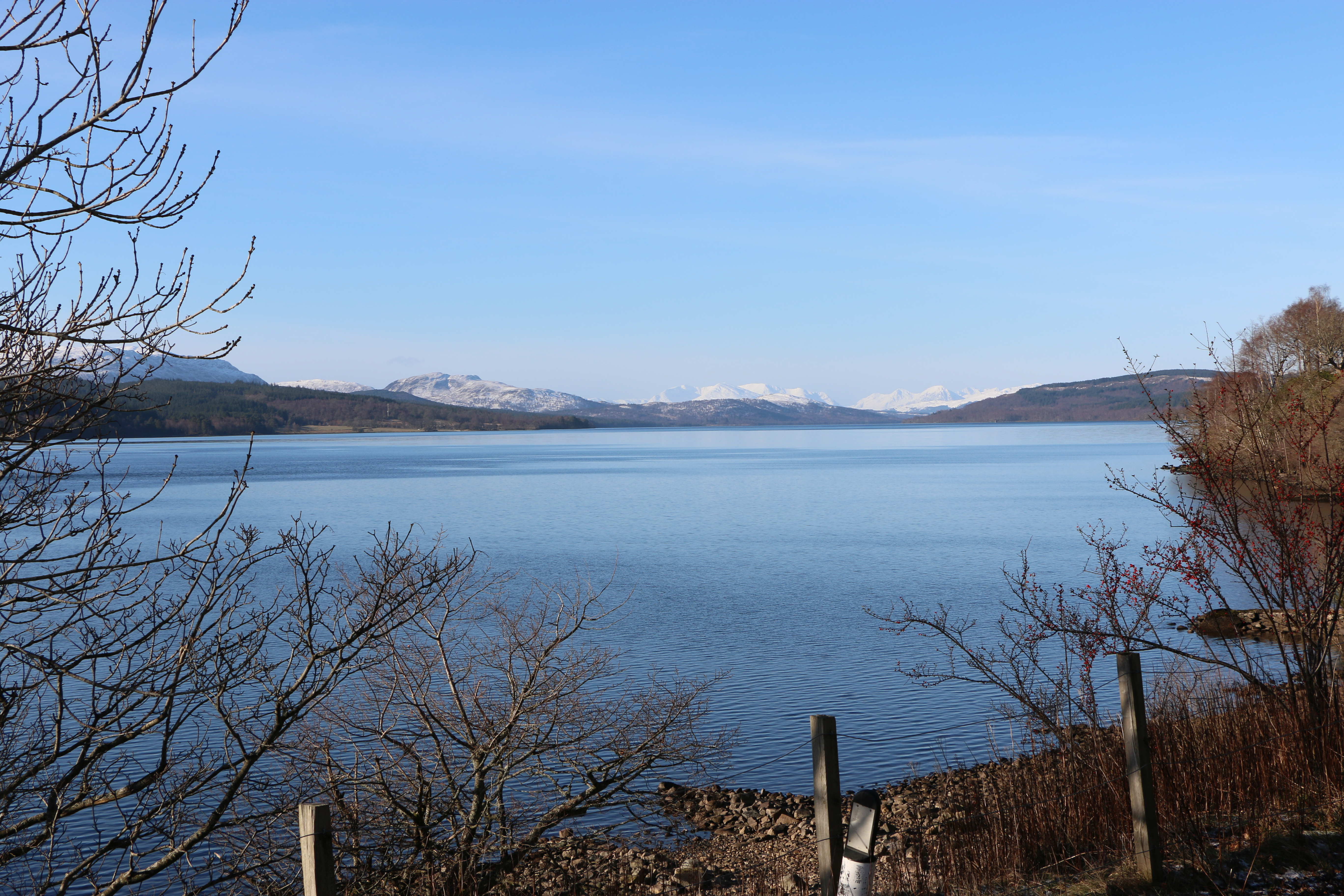
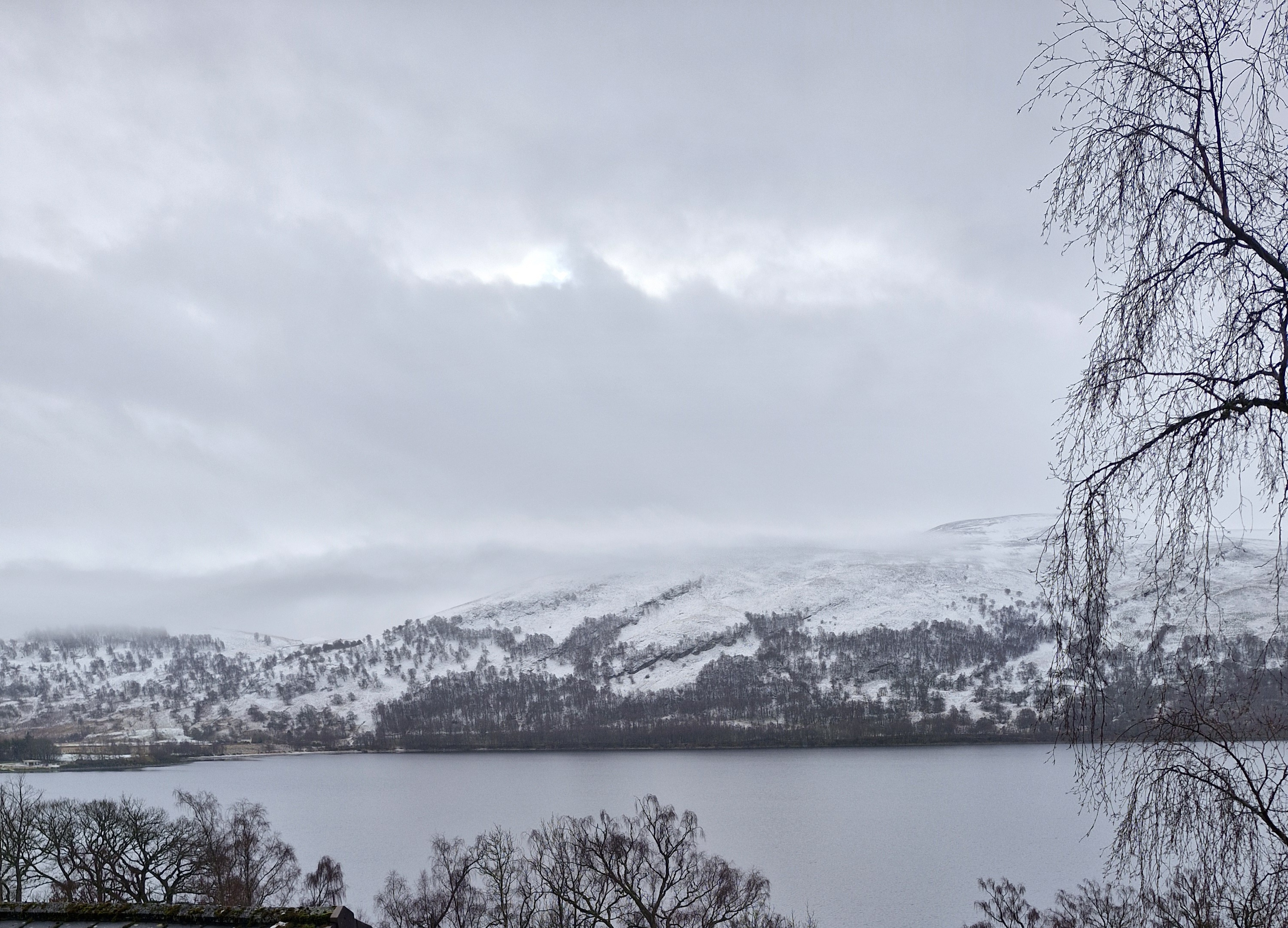
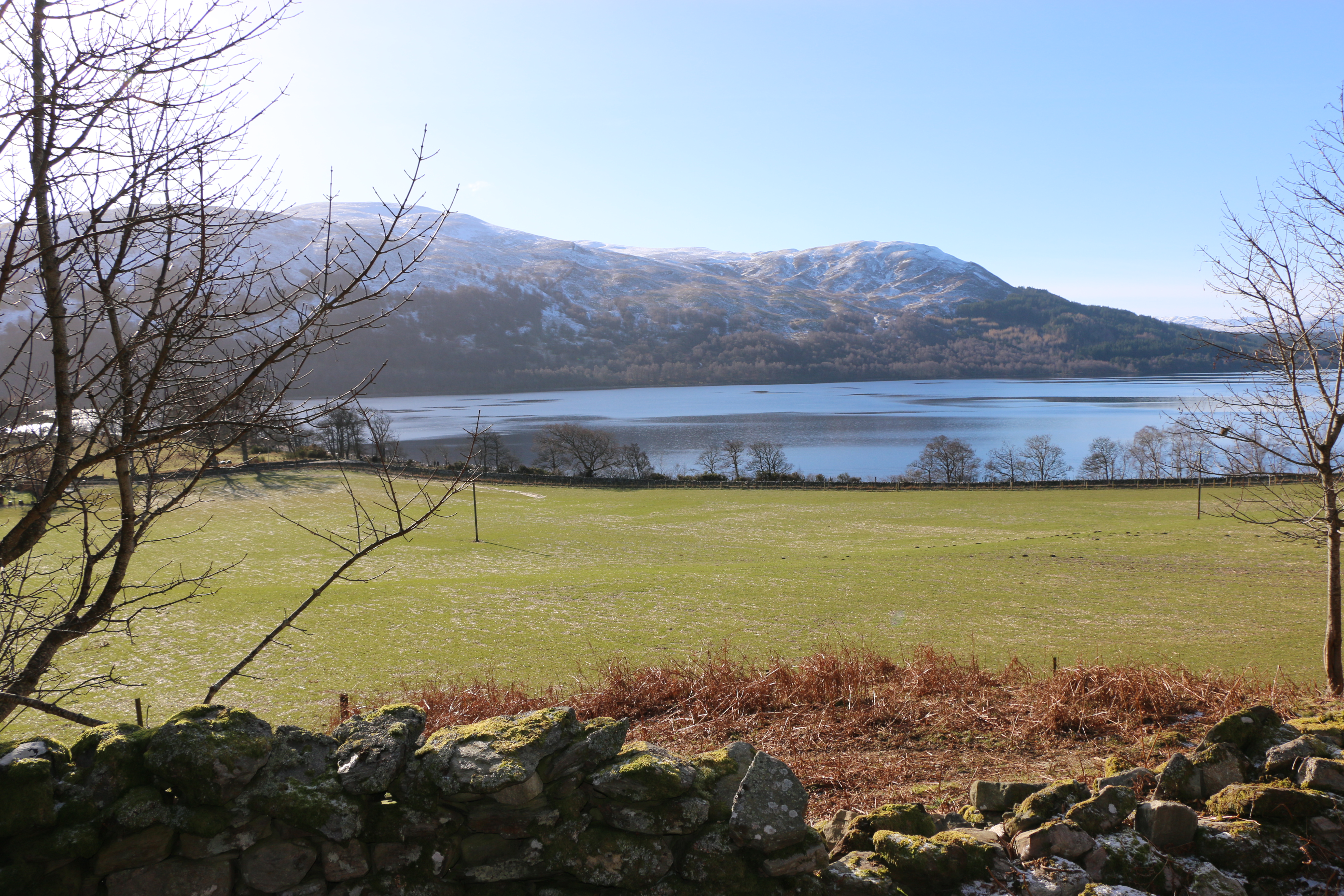
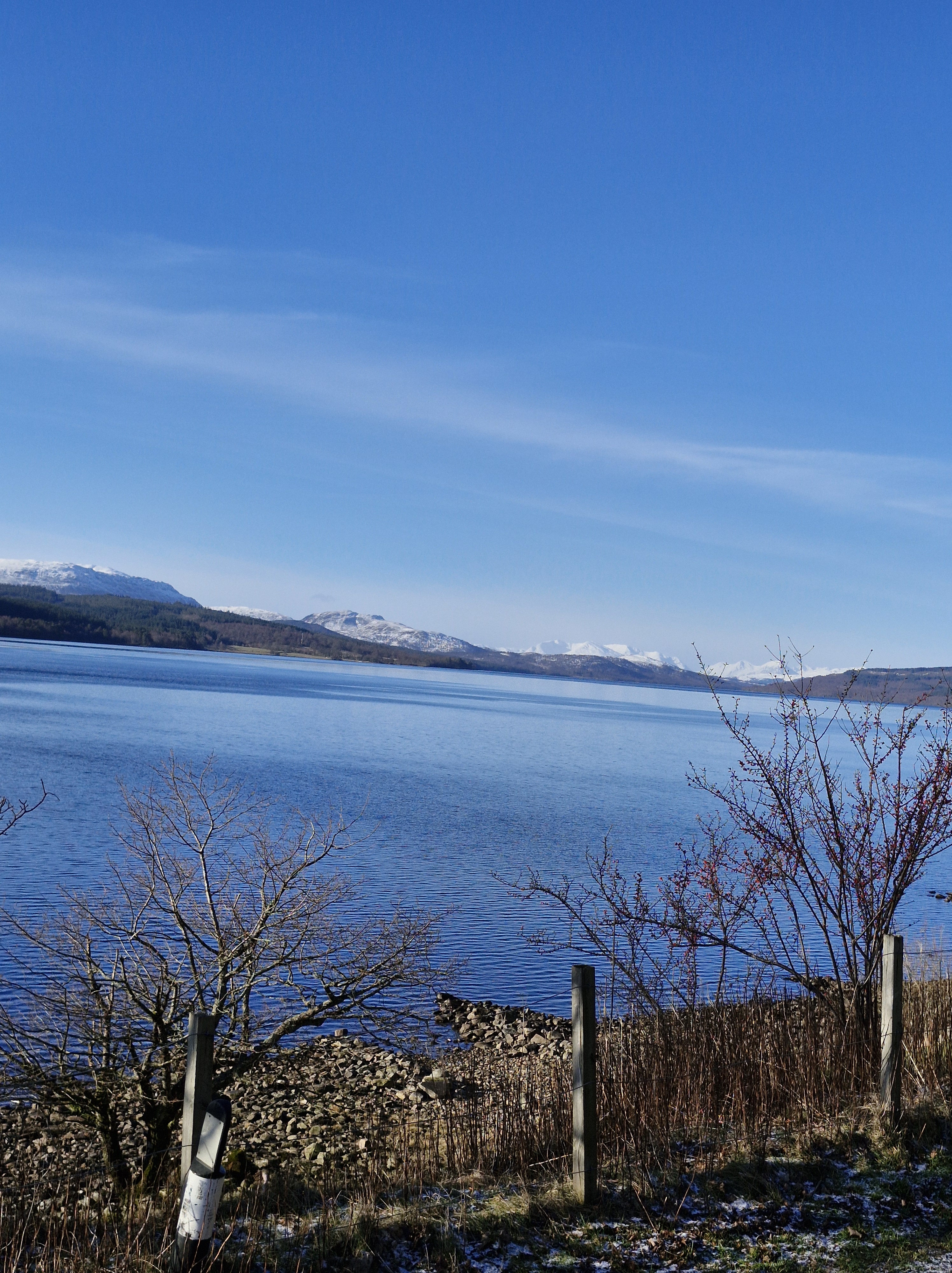
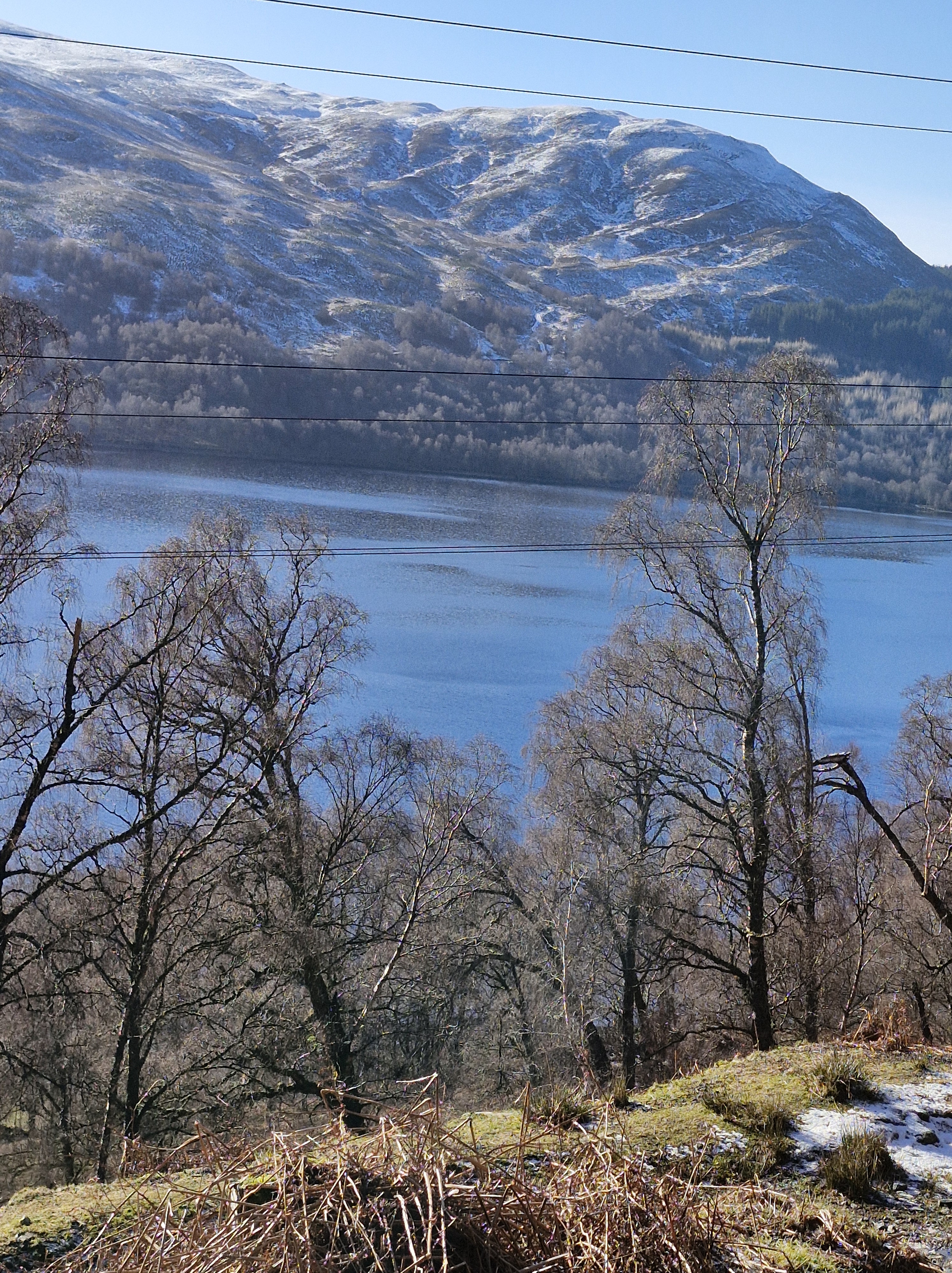
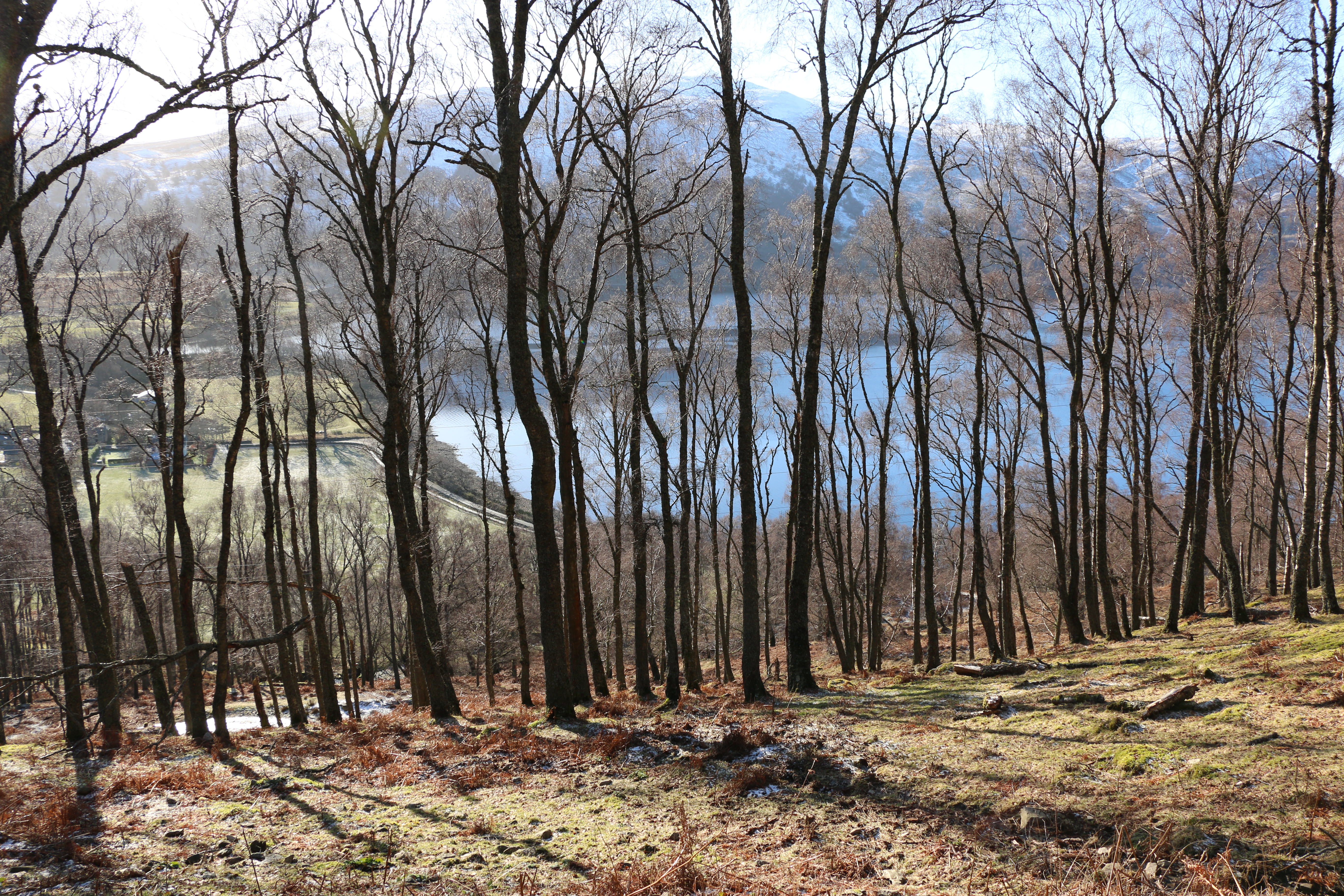
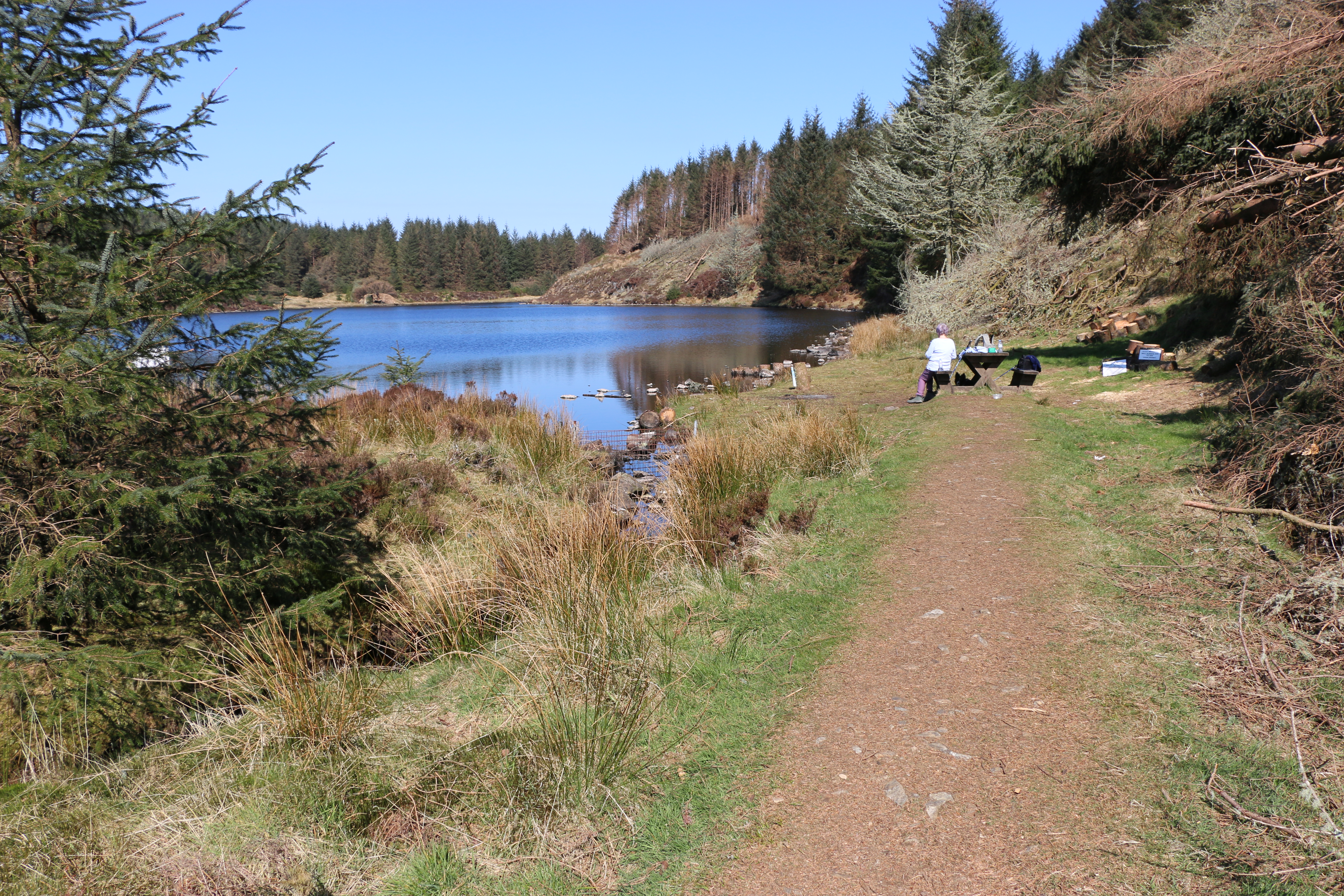
After our venture onto Craig Varr we decided to take an easier walk alongside Loch Rannoch.

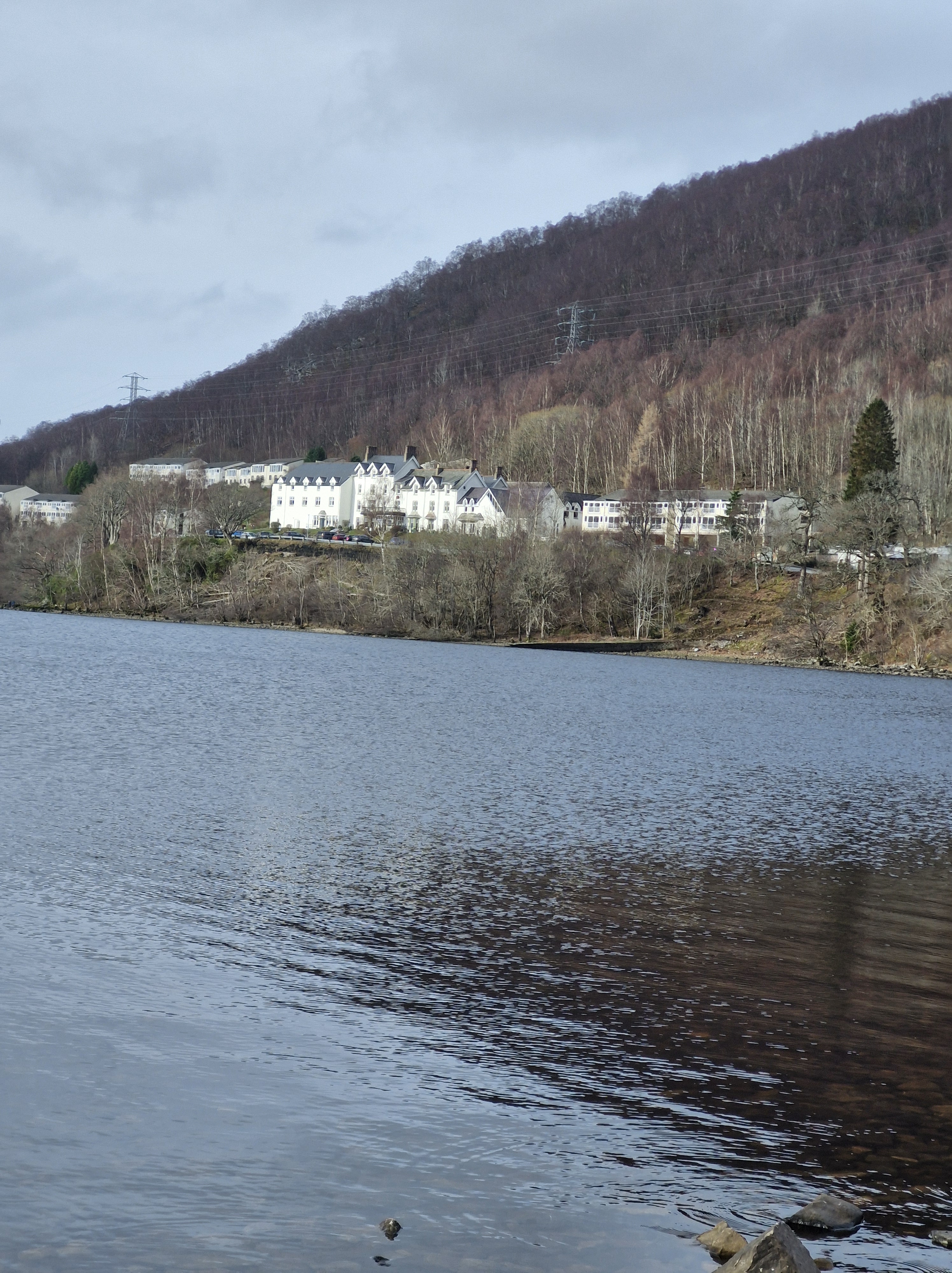
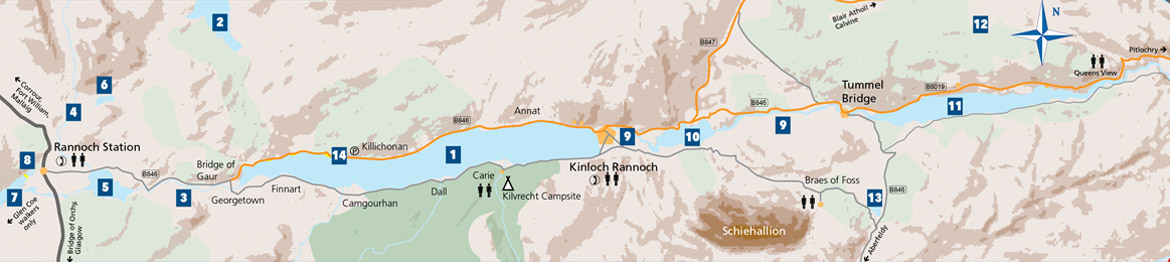
Loch Rannoch is glorious: set in one of the most peaceful areas we’ve ever been fortunate to visit, it’s a freshwater loch. Long and narrow it was carved out by glaciers during the last Ice Age. At a circumferance of twenty-two miles or thereabouts I balked – just a little – at the thought of walking all the way around.

We could go halfway,’ the Photographer suggests. I’m not daft; halfway means turning round and we’d still be treking twenty-two miles. And, as the loch is a mile wide, and it’s February, swimming across the water back to the lodge we’re staying at is definitely out of the question.

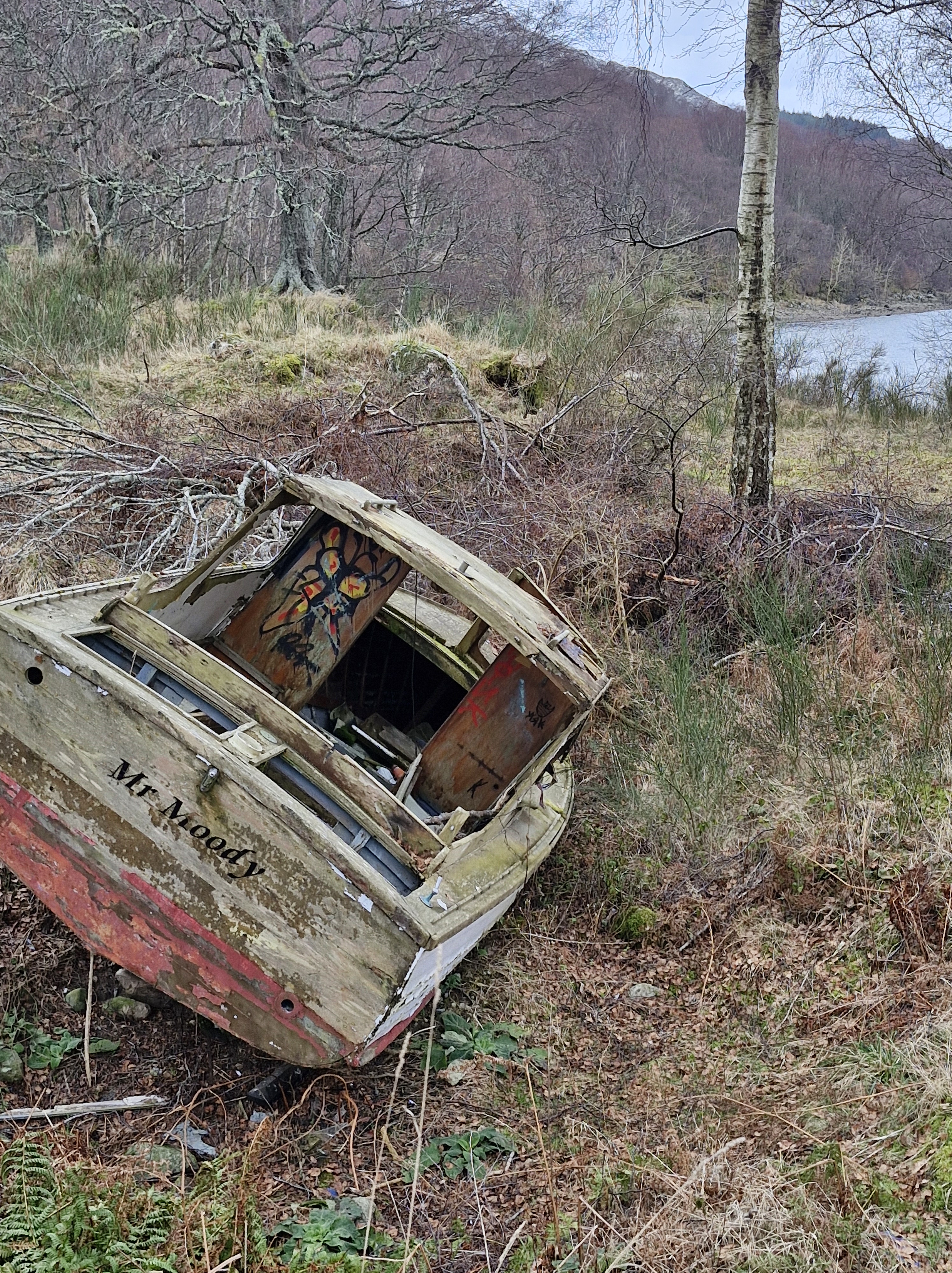
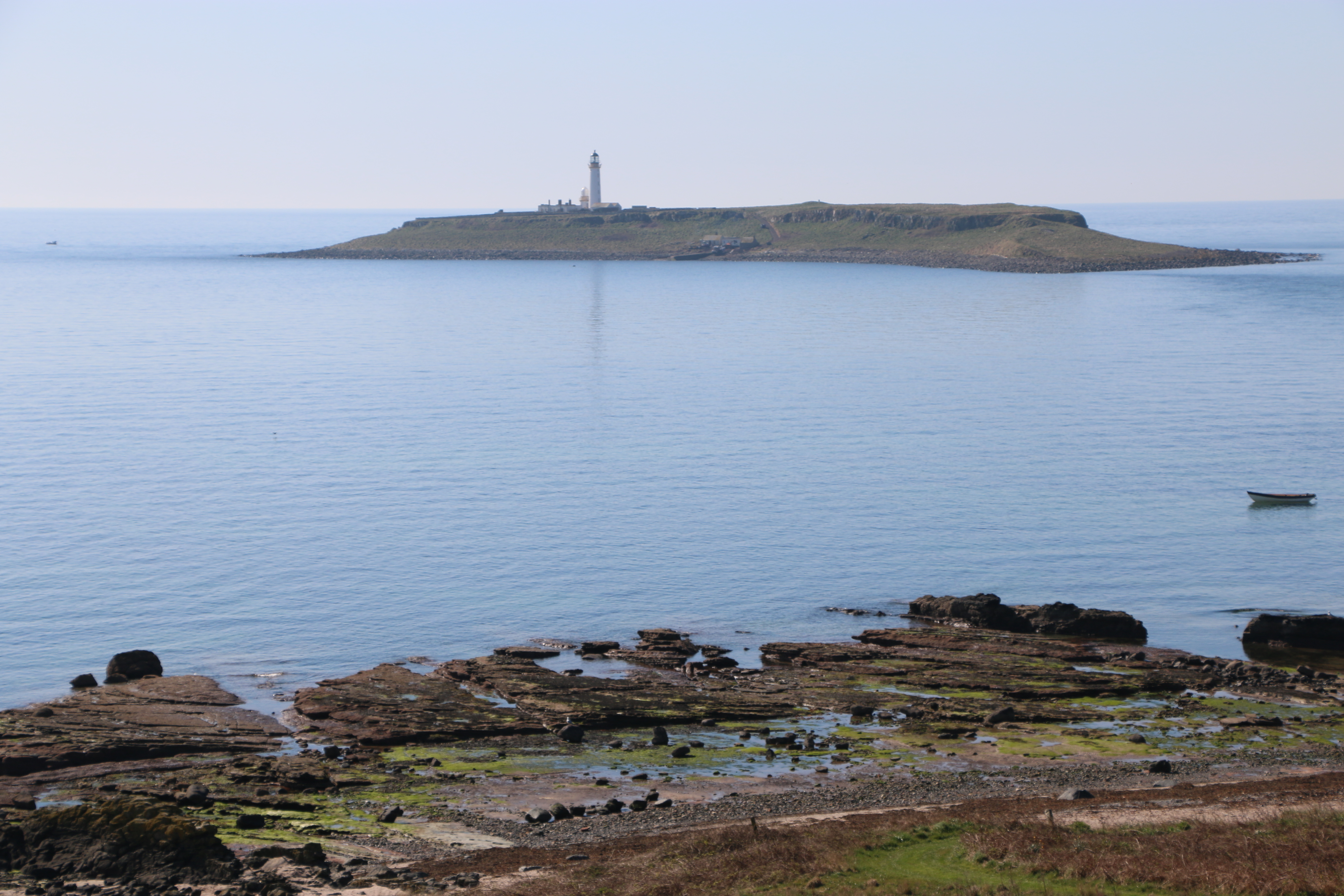
And I wasn’t going to trust the abandoned boat we discovered. I wasn’t surprised its name was Mr Moody!!

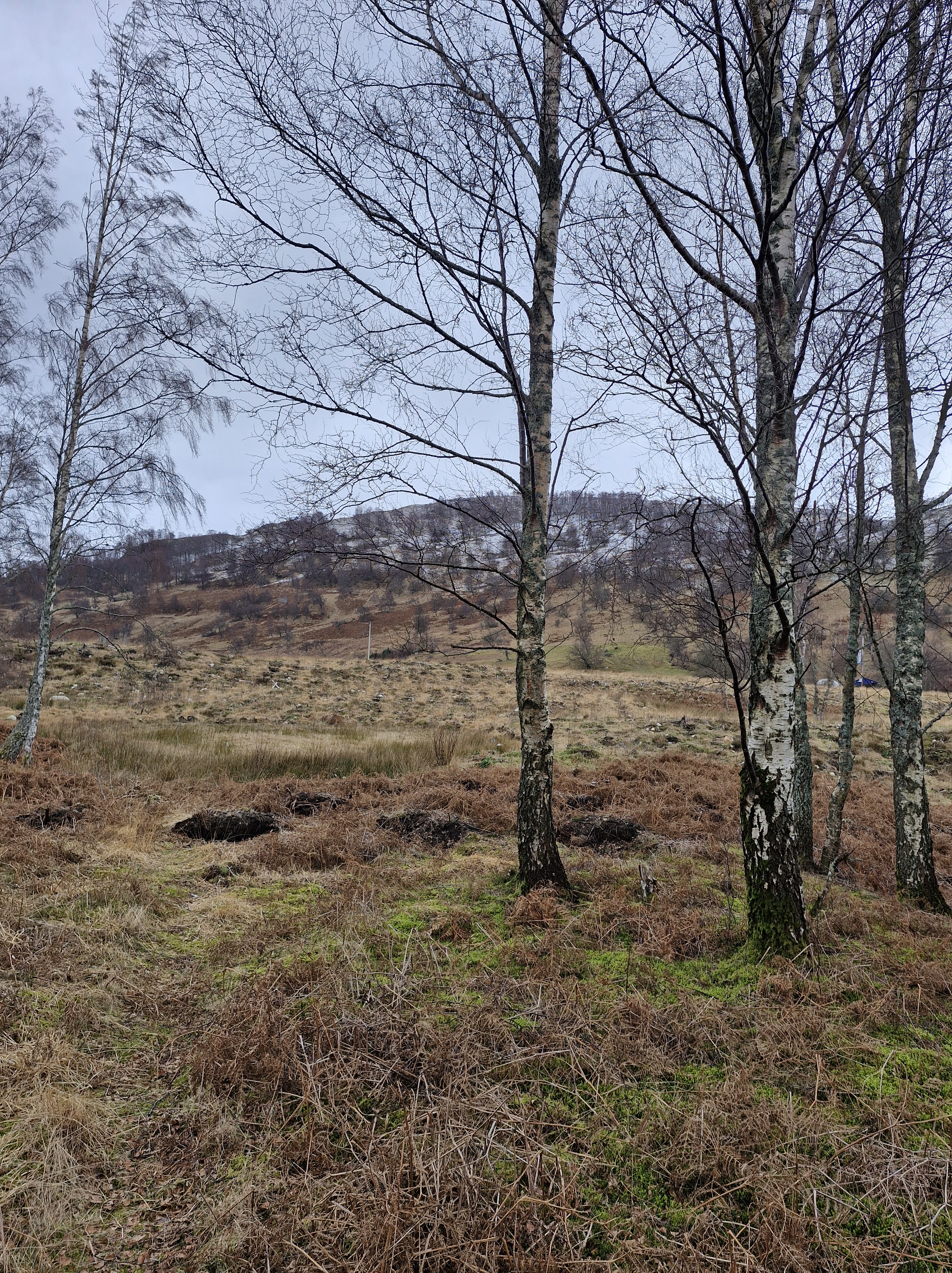
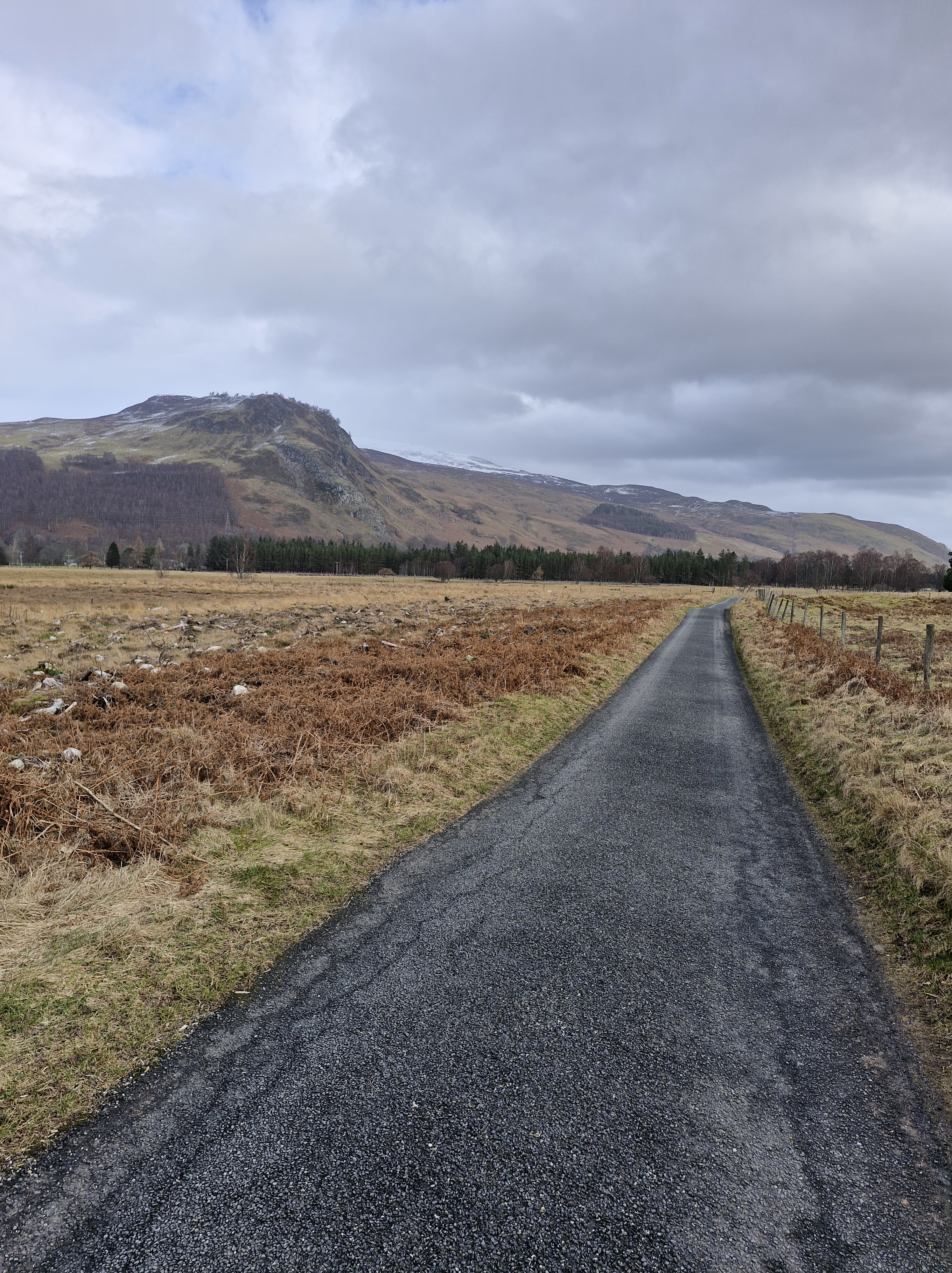
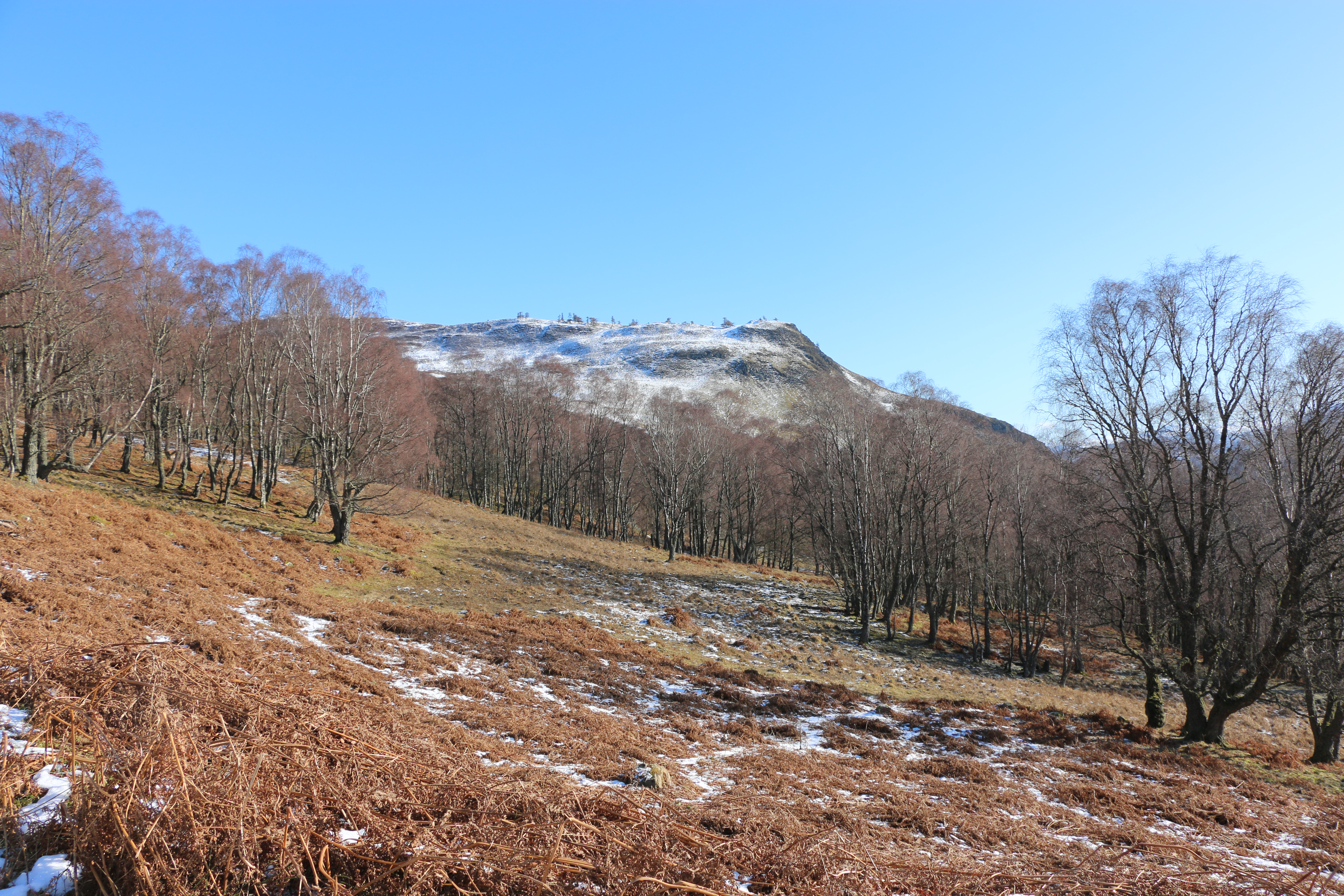
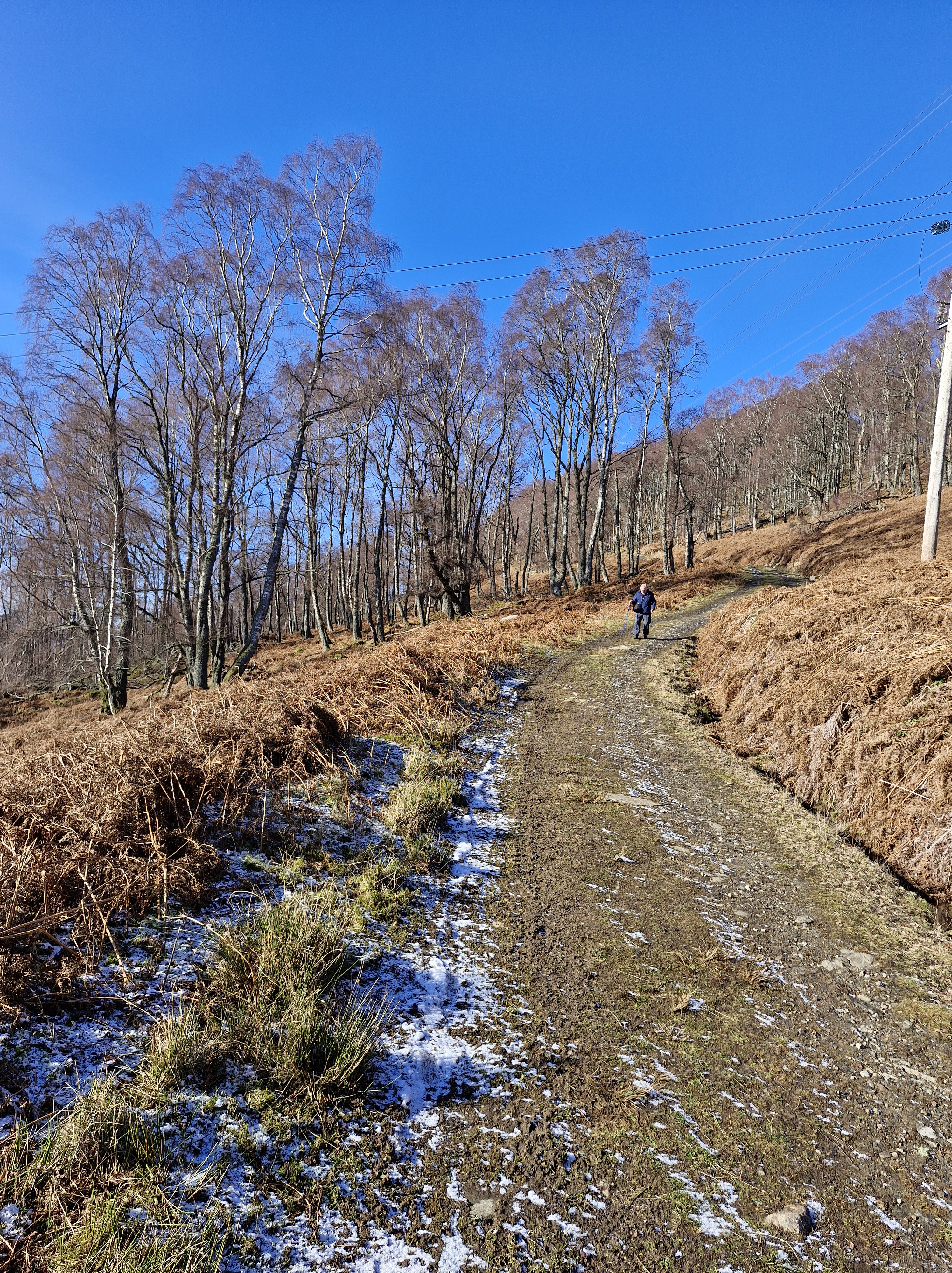
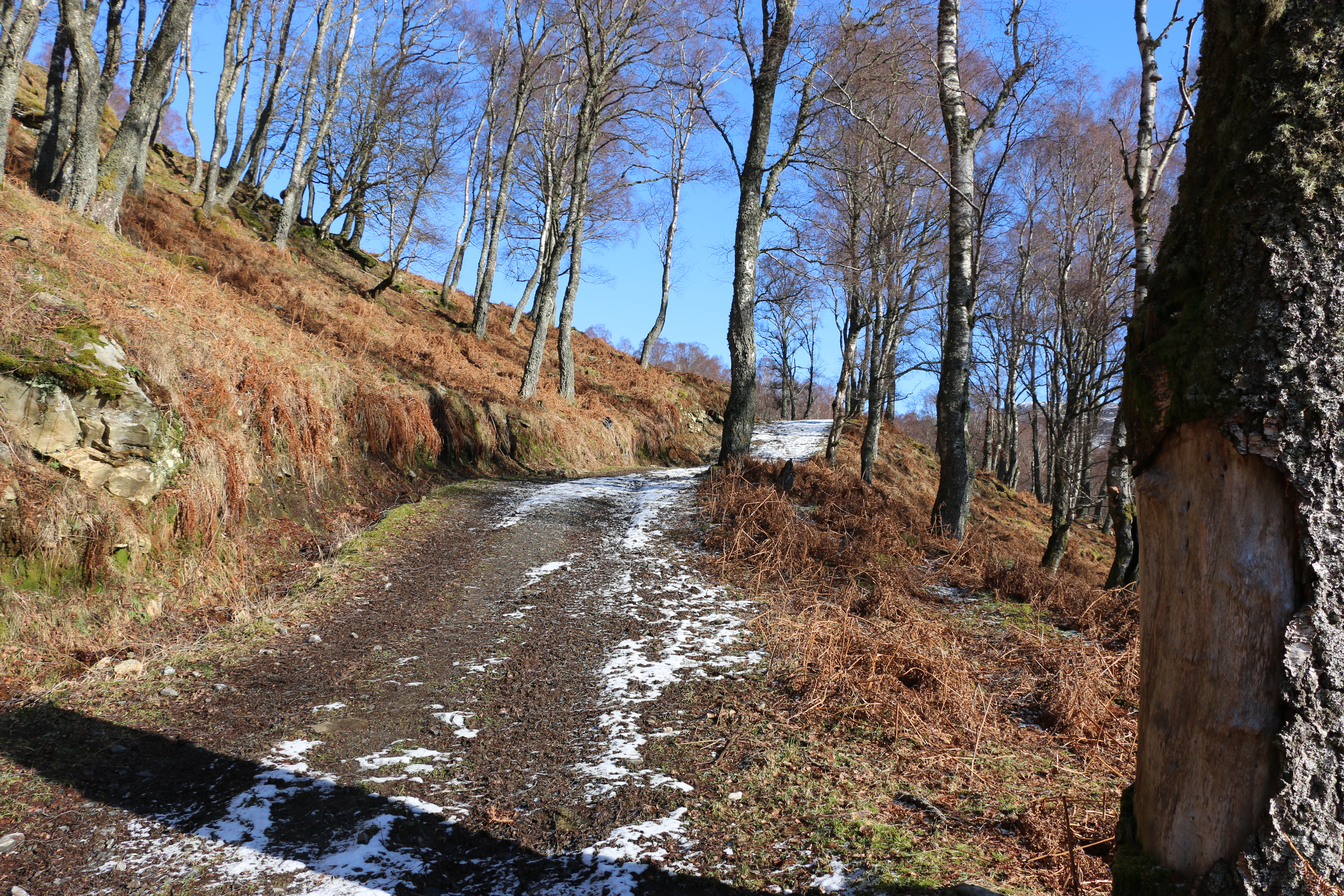
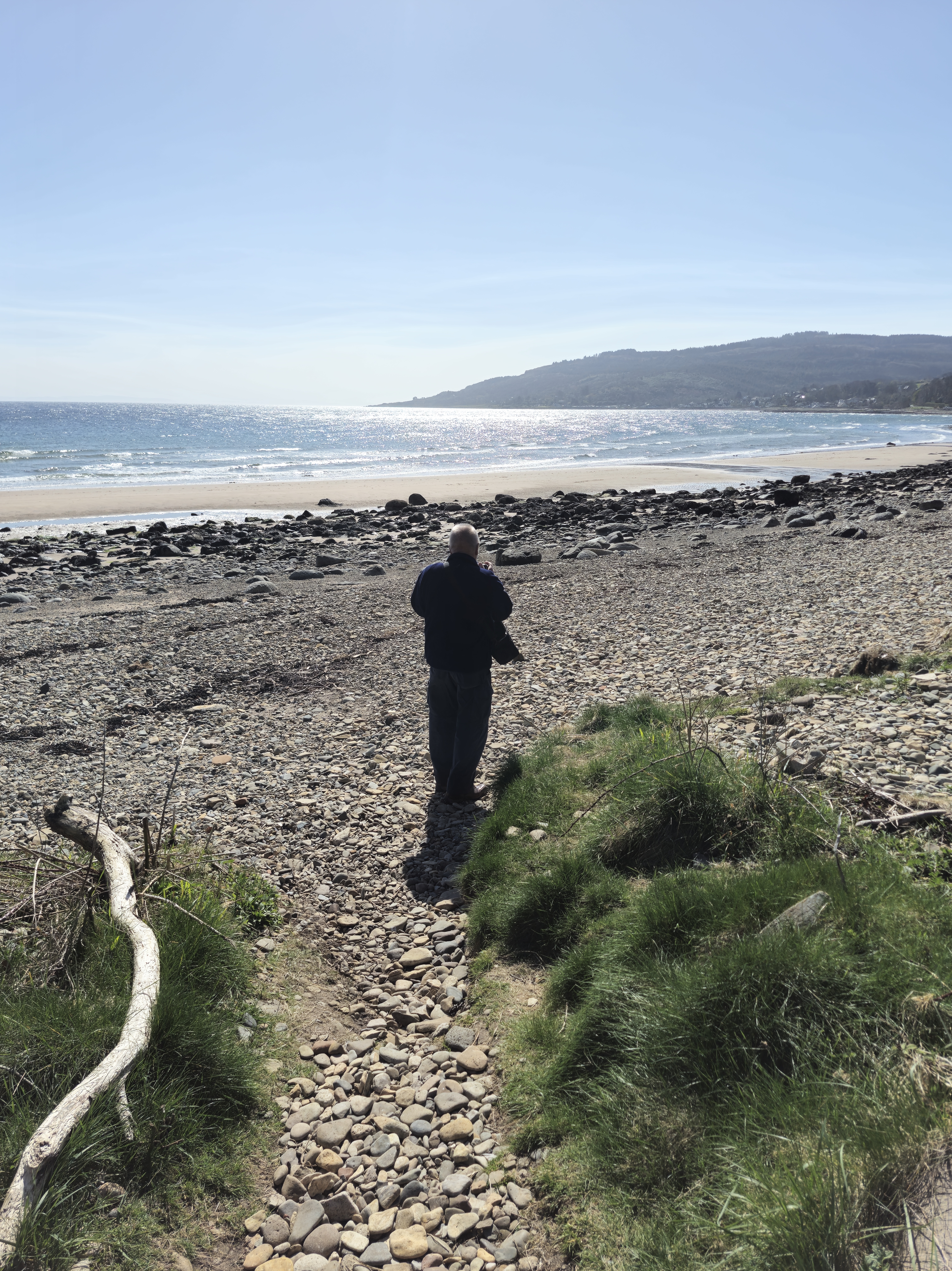
So, in the end, it was a short, and very pleasant stroll.

Later that evening we settled down on the balcony of the lodge, with a glass of wine, to watch the sunset over the loch.

There are many legends and stories of Loch Rannnoch and the surrounding areas.

We particulary enjoyed the following::

The story of the sword that lies in the depths of Loch a’Chlaidheimh (The Loch of the Sword) in Rannoch.

There were two clans that resided on Rannoch Moor: the Camerons, and the Rannochs. Frequently, these clans would clash over the ownership of Beinn a’bhric, a valuable grazing ground. Year in, and year out, the two clans would come to loggerheads over who owned the land and whose livestock had the right to graze there. Year in, and year out, no solution was reached, and the issue only increased the rift between the two factions with each passing season.
Eventually, the two parties decided that enough was enough, and it was time to, at last, put an end to the conflict. So it was that Ewen Cameron of Lochiel and the Earl of Atholl decided to meet and they would not part until the boundaries of their lands were decided once and for all. In order to avoid potential violence, the meeting was to be arranged under specific conditions: each man would venture alone, with only one piper for company.
So Cameron set off, piper at his back playing a merry tune, setting a positive mood for what he hoped would be a productive meeting. As he travelled through Rannoch Moor, Cameron thought deeply about the confrontation at hand, concocting an iron-clad argument that might win him the grazing grounds. So deep in thought he was, that he hadn’t noticed striding straight onto the land of an infamous wise woman who lived upon the moor, known as The Blue-Eyed One.
‘You are going to meet the Earl of Atholl without any men?’ she asked, askance.
‘Aye, lady, I am,’ said Cameron. ‘Those were the terms of our agreement.’
The Blue-Eyed One shook her head ‘Do not meet the Earl alone, man. Take sixty five of your best men, and hide them among the heather, ready to be called, should you need them.’
Cameron was swayed by the old woman’s words, as she was known for her wisdom and sight. So, Cameron did as she had suggested, and called his sixty five best men to his side, and ordered them to conceal themselves in the heather, and to be ready should the Earl of Atholl look to turn violent. When the sun reached its zenith, the two proud leaders approached each other on the seemingly empty moor.
The discussions opened with the easy exchange of pleasantries, and progressed swiftly to the matter at hand. Where at first it appeared the pair would remain cordial, the exchange heated as the boundary was debated, working up to an inferno, until the men were shouting and drawing their swords upon the other. It was then, that the Earl of Atholl whistled, and from the moor behind him sprung fifty soldiers, armed and ready to defend their master.
‘These are the Atholl sheep coming to eat the Lochaber grass!’ the Earl of Atholl cried.
And so, Cameron, grateful for the words of the Blue-Eyed One, whistled, and his own men sprung from the heather. ‘Here are the Lochaber hounds going to eat the flesh of the Atholl sheep!’ he responded.
The Earl of Atholl sized up Cameron’s forces, but he could only admit that Cameron’s hounds outnumbered his sheep, and reluctantly, he sheaved his sword and called his men down. He bent his head, renounced the contested lands, and, as a signifier of the deal struck and the peace that would come from it, he hurled his blade into the loch.
There, the sword remained. That was until 1812 during a long, dry summer, when a herd-boy was working that same old disputed land. The loch had drained with the drought, unveiling the sword cradled in its peaty belly. For a time, the sword was removed and ogled by the locals, until a blue eyed woman who lived nearby told them a tale of a conflict solved by the throwing of a sword, and so it was decided the sword should be returned to the Loch of the Sword.
Seton Gordon described the moment the sword was thrown once more into the depths: ‘For an instant as it sped, its trusty blade turned to glowing bronze in the sunlight, then, like Excalibur, it sank forever from sight!’

©A.D. Cunningham – Adapted from Tales of Rannoch: Publisher: ‎ A.D.Cunningham and Perth & Kinross District Libraries

Where We Walked Craig Varr Kinloch Rannoch Loch Rannoch @Scotland #walks #photography #mountains #lochs

Craig Varr is a truncated spur; a ridge cut off by the glaciers of the last ice age around ten thousand years ago. The result of the ice erosion is a cliff close to Kinloch Rannoch and a ridge that leads northeast to Beinn a’ Chuallaich (Mountain of the Herding”) .

Craig Varr – the first walk that the Photographer had identified when we knew we were going to Kinloch Rannoch. We perhaps should have taken notice of the warning: ‘Very steep initial ascent on a wide path; then pathless and boggy for a section before a final rough ascent’,

Especially when, on the day we arrived, it snowed!

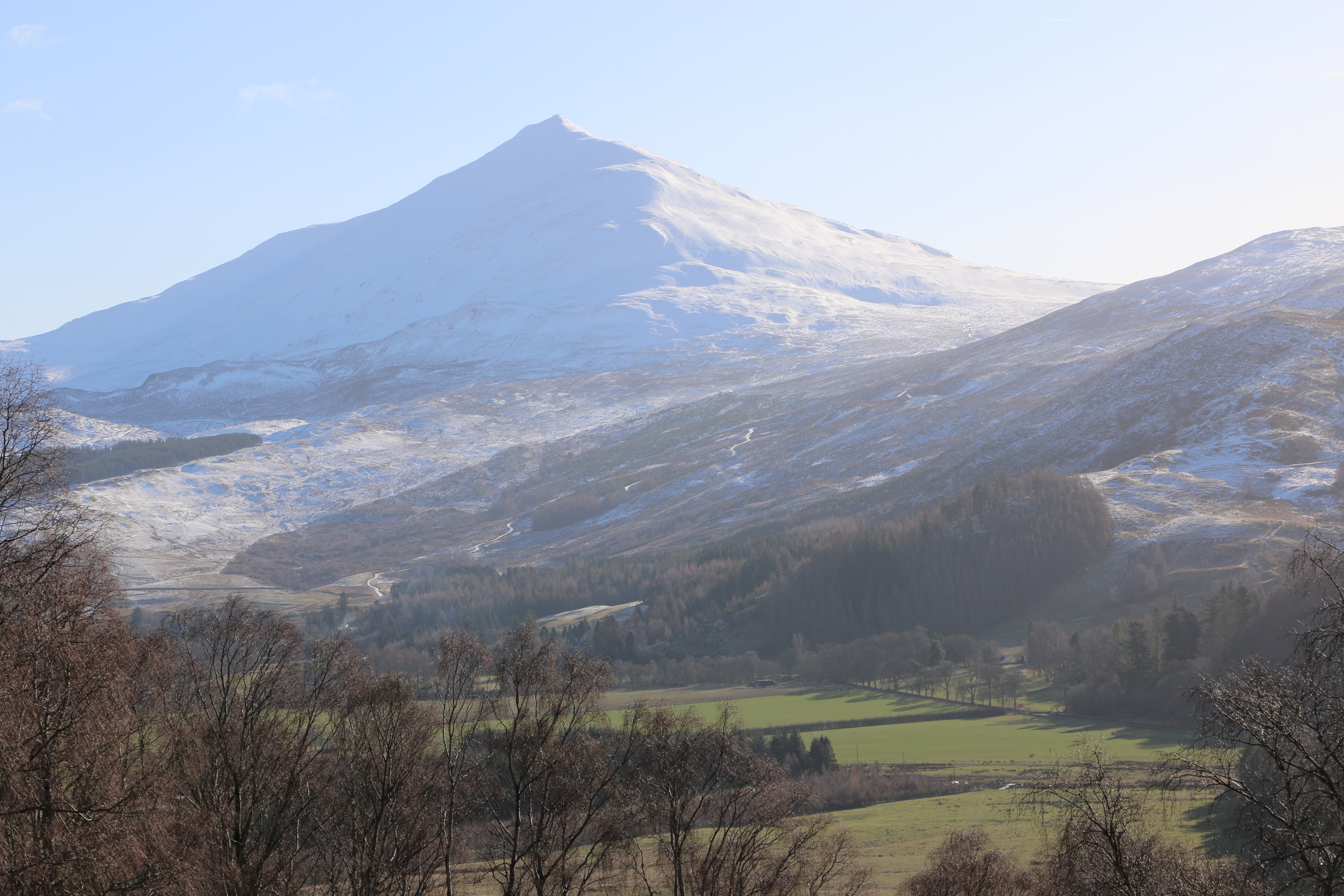
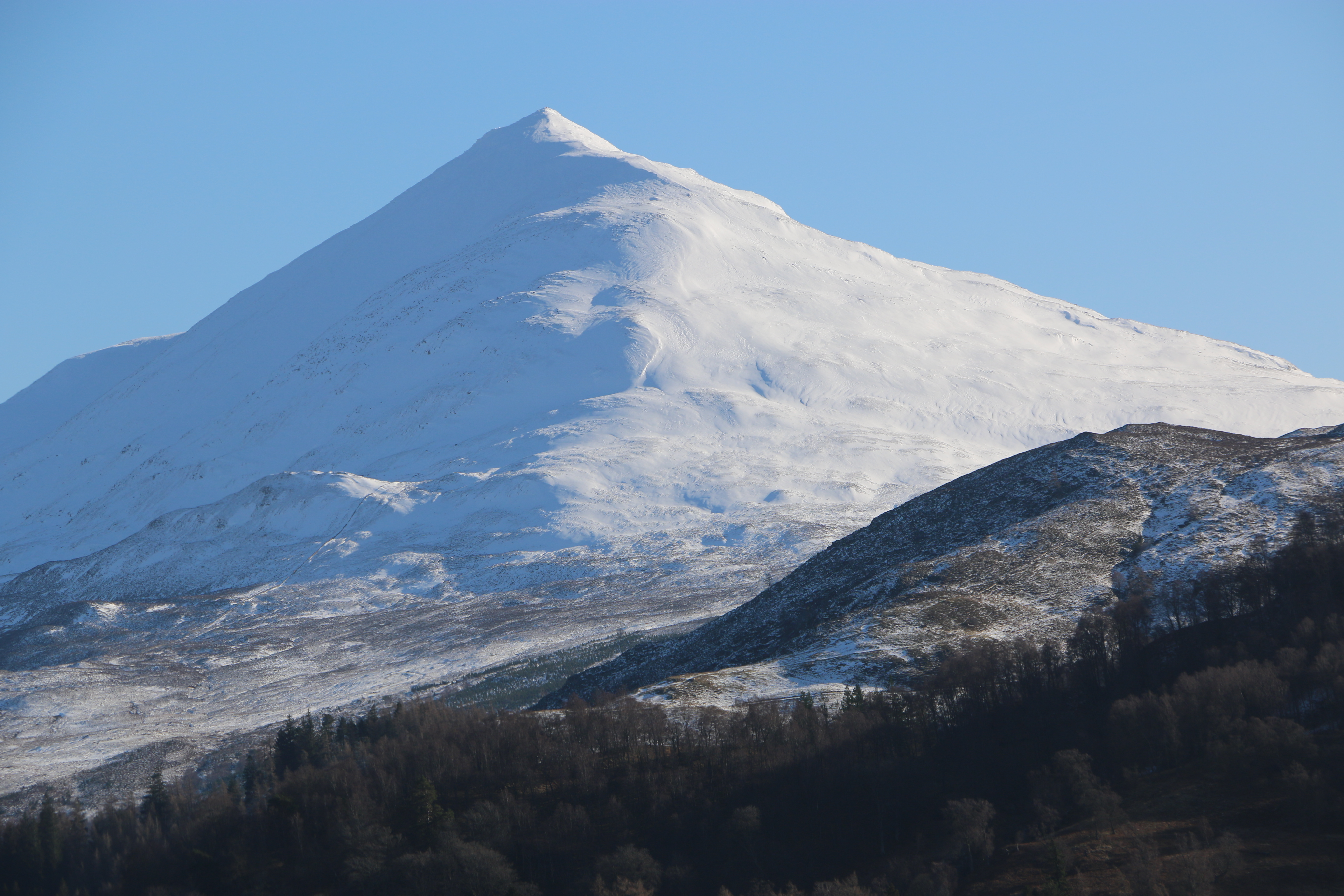
But the Photographer was keen – very keen – to take some photographs, particularly of the mountain to the south, the triangular profile of Schiehallion. He was convinced that if we could climb only a short way up to Craig Varr, he would get a decent phtograph. As you can see, he did!

We often forget how old we are. And it was with this oblivious attitude that we set off in hiking boots and with poles.

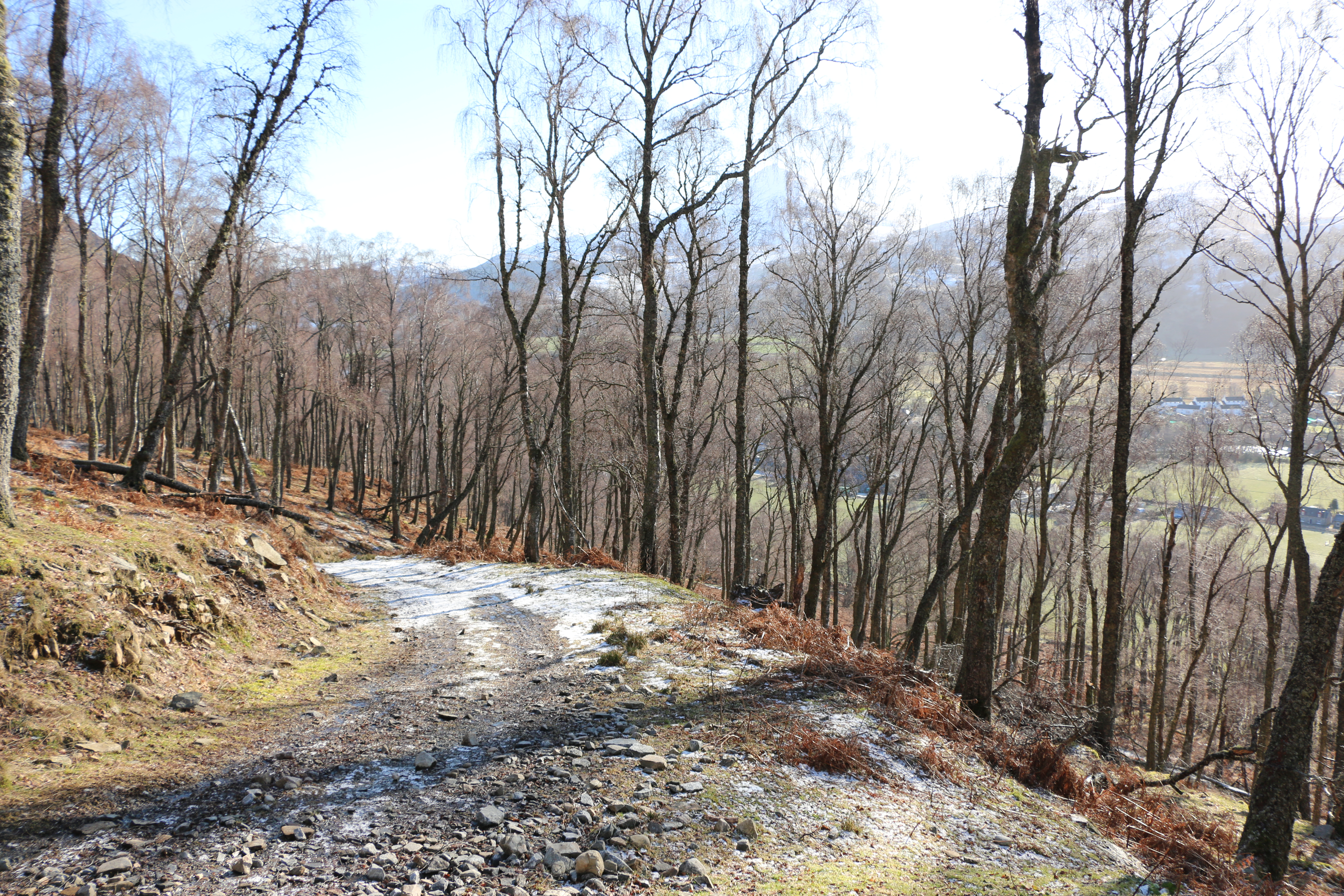
We left mid morning: the snow had disappeared from the roads, the sun shone, the air was quite warm, and from the path overlooking the loch it felt like a lovely Spring day, despite it only being February.

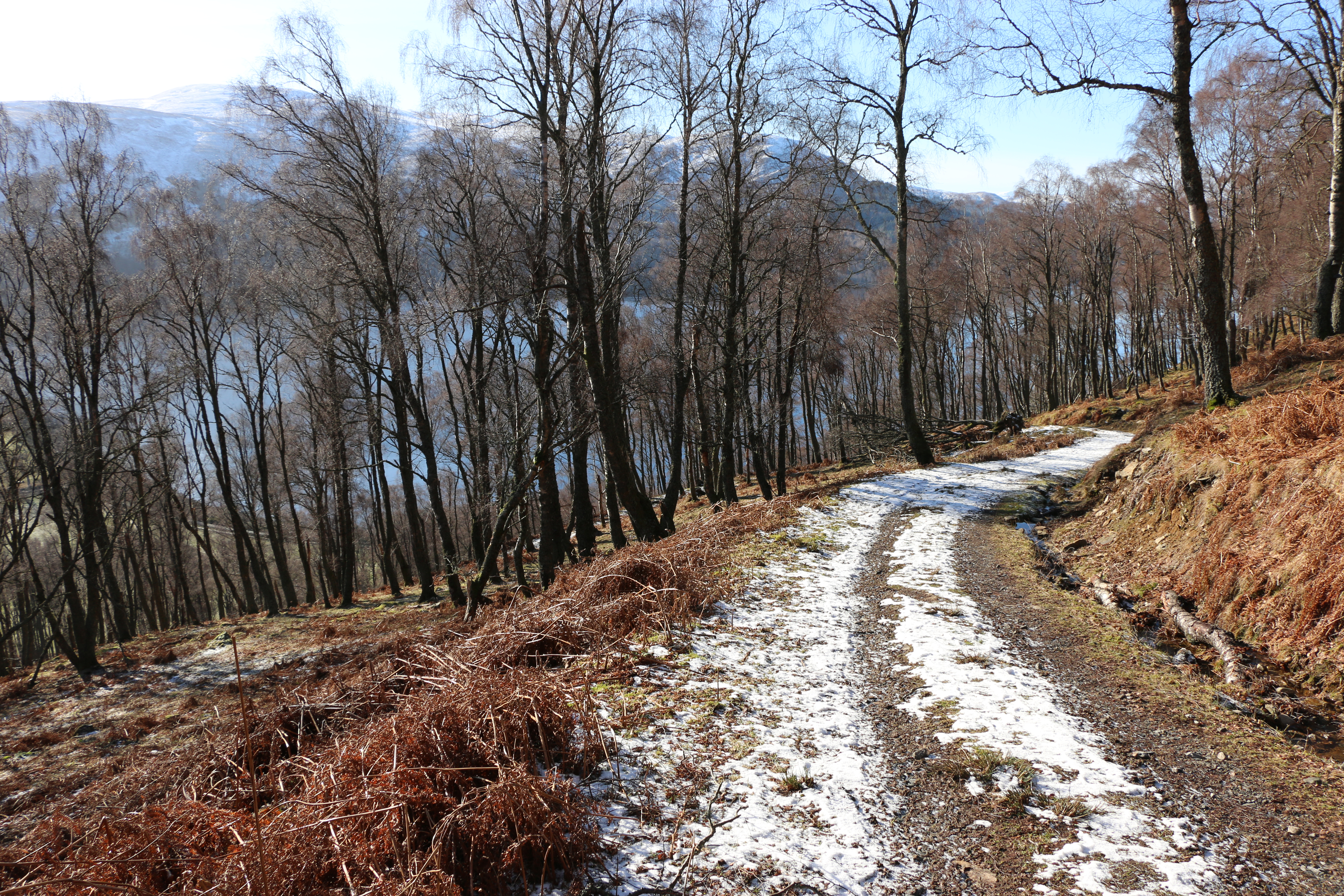
Against the clear sky the loch was impressive through the trees.

The Photographer stopped often to take photos.

The track, though rough, was easy at first. We resolved to walk as far as it proved so.

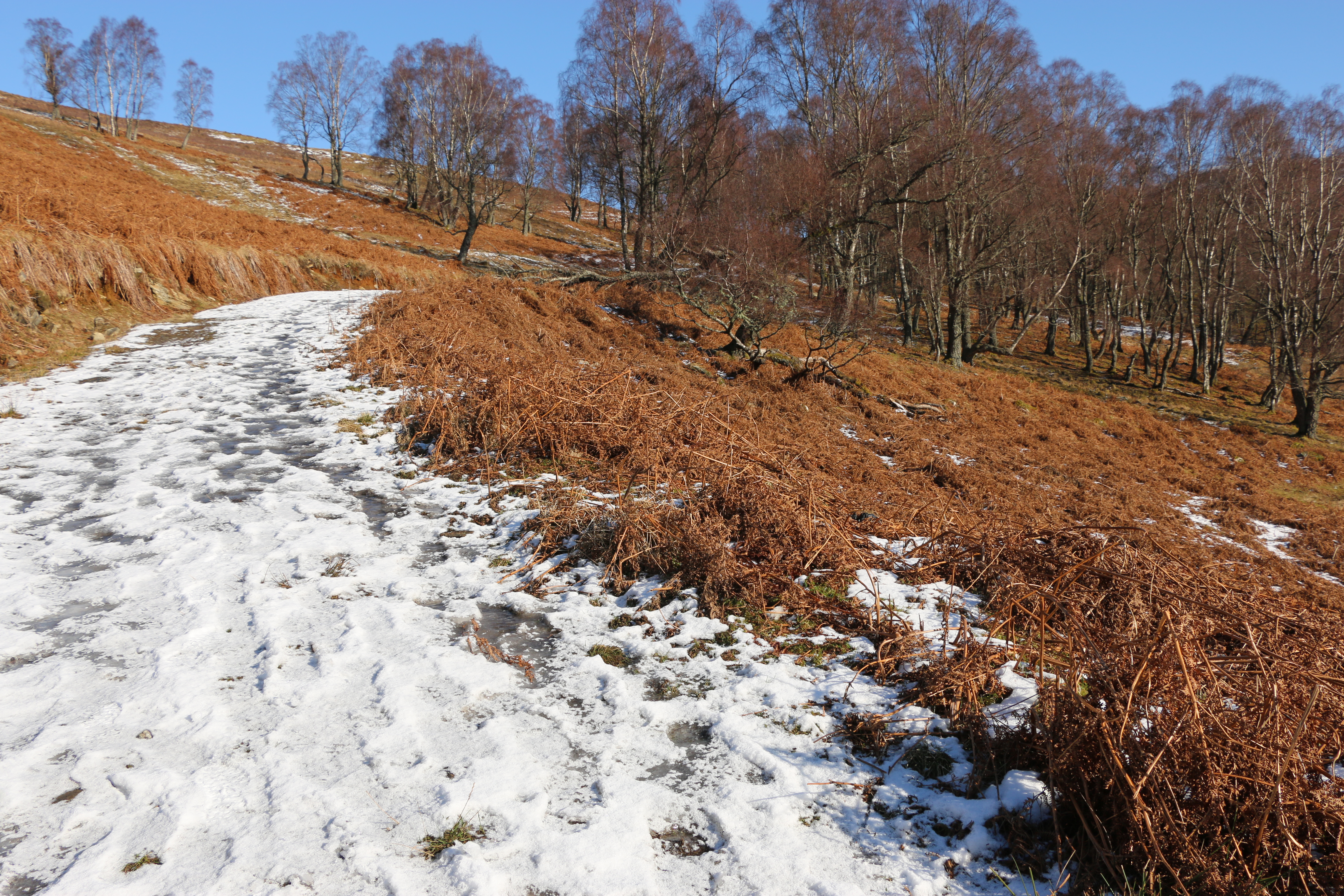
But soon we encountered more snow and ice

Common sense kicked in – we turned back. The climb would be for another day, preferably a long summer’s day. Or at least a day when there wasn’t any snow.

Back at the lodge we agreed that tomorrow’s walk would be on lower ground – probably around the loch.

N.B. For interest:

Schiehallion: the mountain that weighed the Earth

This superb quartzite mountain was chosen in 1774 as the site of a famous experiment to weigh the Earth; today it is an unrivalled viewpoint.
Six to seven hundred million years ago the area that now forms the Grampian Highlands was a shallow sea. Layer upon layer of sediment was formed from mud eroded from the land, white quartz sands, and limy deposits. As these layers were buried and compressed, they became mudstone, sandstone and limestone. At that time Scotland was at the edge of a continent which included North America, separated by the deep Iapetus Ocean from the rest of Europe. Plate tectonic movements closed this ocean 470 to 430 million years ago, subjecting the buried rocks to great heat and pressure. Mudstone became schist and slate; sandstone became very hard, creamy-white quartzite; all were folded and fractured in complex patterns. At the end of these earth movements the rocks were uplifted to form the Caledonian Mountains.
Perhaps one of the most amazing things about Schiehallion is that this folding and fracturing of the rock layers is so pronounced in the area around the mountain that the mountain itself is almost ‘upside-down’! In other words, the older rock layers can be found at the top of the mountain and the younger layers at the bottom.
Several different rock types can be seen on the main path up Schiehallion,. You may come across a limestone pavement with water-worn fissures and potholes. Locally, these limey soils support unusual plants. The same rock can be seen in quarries and a restored 19th century lime kiln at Tomphubil. . Most of the ridge is grey to white quartzite, with current bedding in a few places and an occasional band of pinkish brown microdiorite. In the Tempar Burn to the northwest is the famous Schiehallion Boulder bed, an ancient glacial tillite.
During the Ice Ages of the last two million years, glaciers flowed east from Rannoch Moor, carving the hard quartzites of Schiehallion into a streamlined ridge and digging deep valleys on either side. The ice has carried blocks of granite and schist, and dropped them all the way along the east ridge, up to a height of about 980m. From there to the summit the path goes over bedrock with only local quartzite boulders.
The experiment of 1774 to weigh the Earth involved measuring the deflection of a plumb line resulting from the gravitational pull of a nearby mountain. Schiehallion was considered the ideal mountain, due to its isolation and almost symmetrical shape. The tiny deflection of a plumb-line from the vertical must be measured relative to the fixed background of the stars, which requires extremely careful measurements on either side of the mountain. The mass of the mountain can be worked out from its volume and the density of its rocks. These values can be used to find the gravitational pull of the Earth, and thus its mass.

Text contributed by Carol Pudsey for https://www.scottishgeologytrust.org/
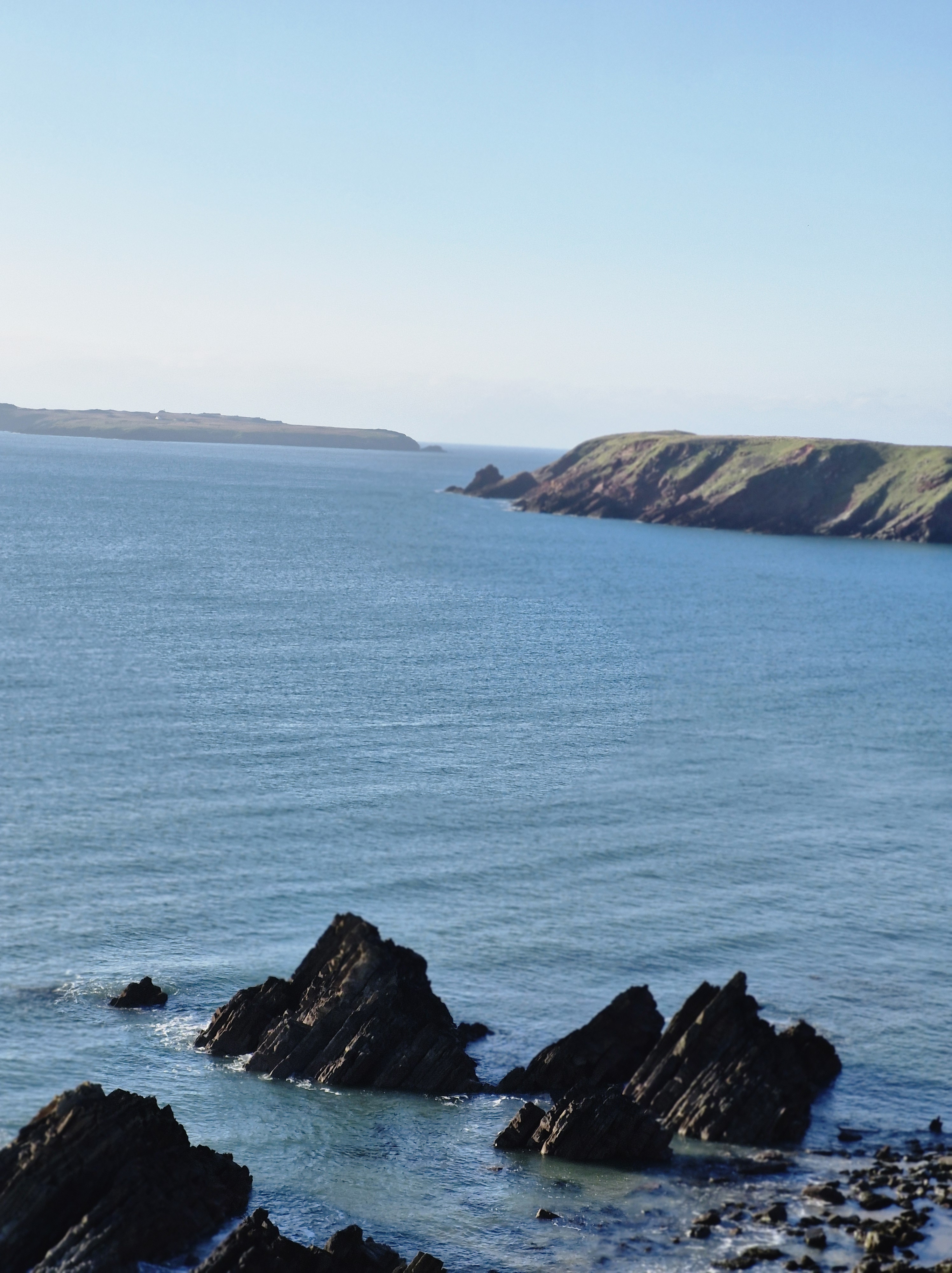
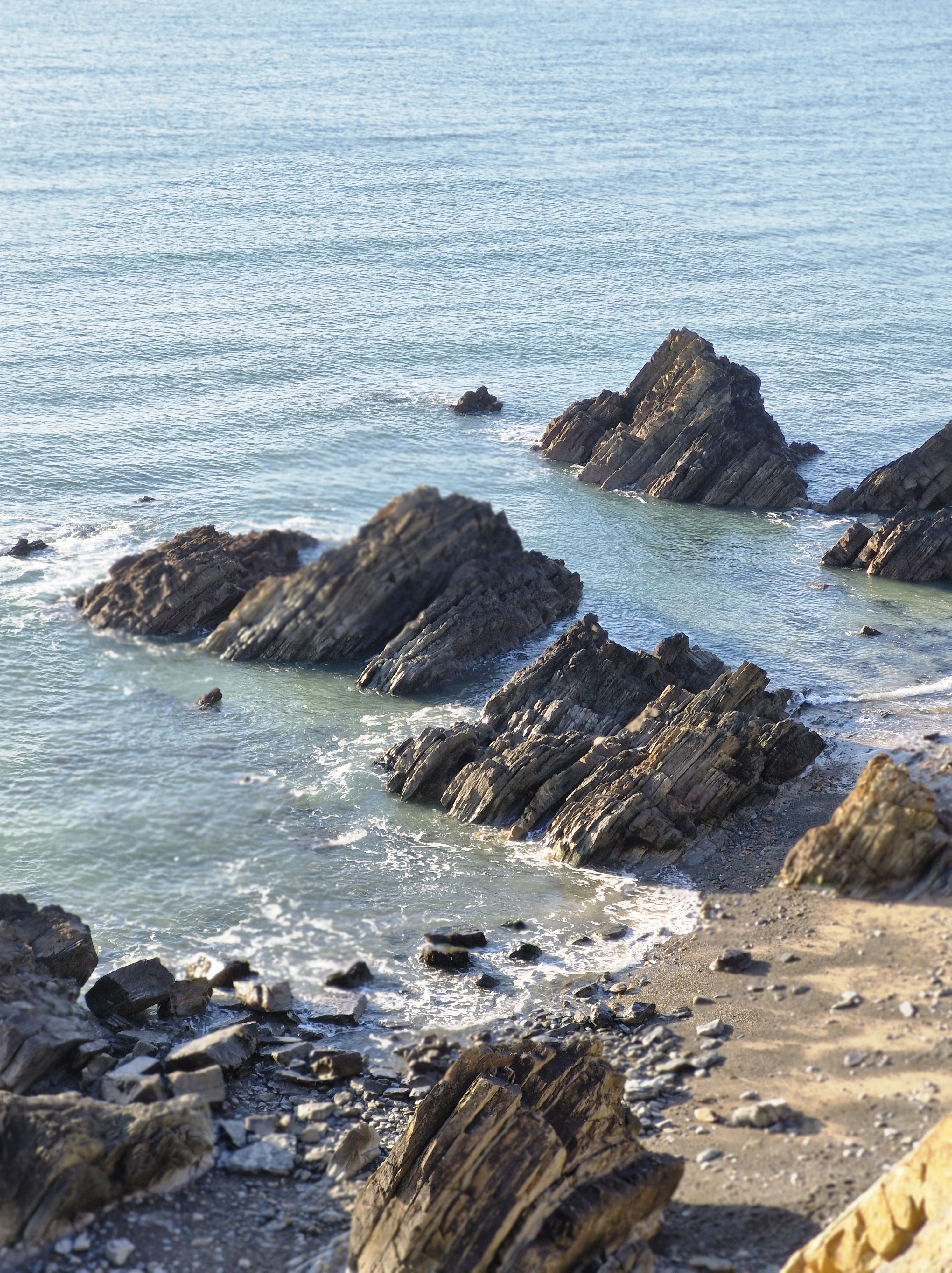
Where We Walked – Marloes Sands #BoxingDay #Pembrokeshire #Wales #Walks #Photographs #memories

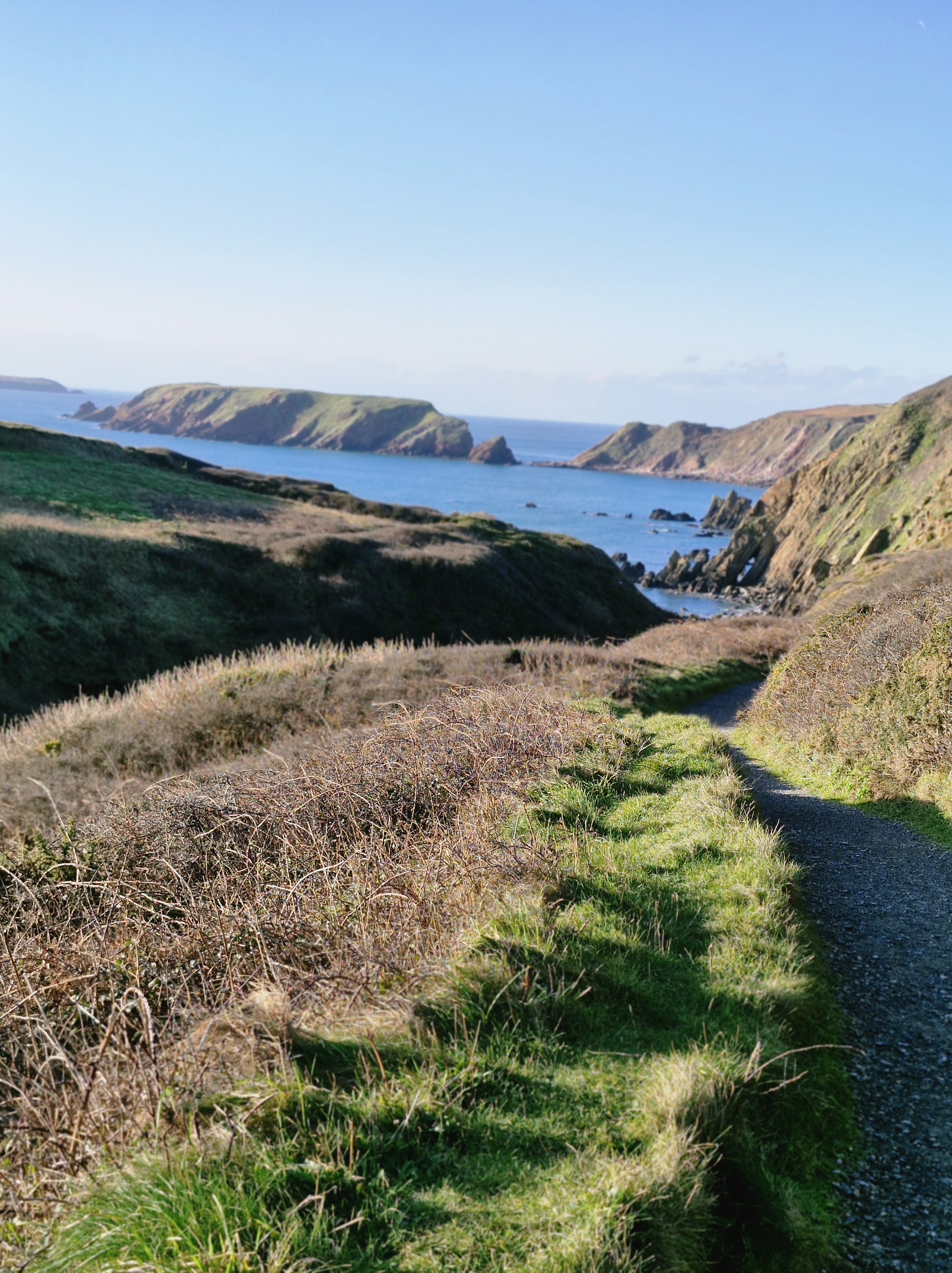
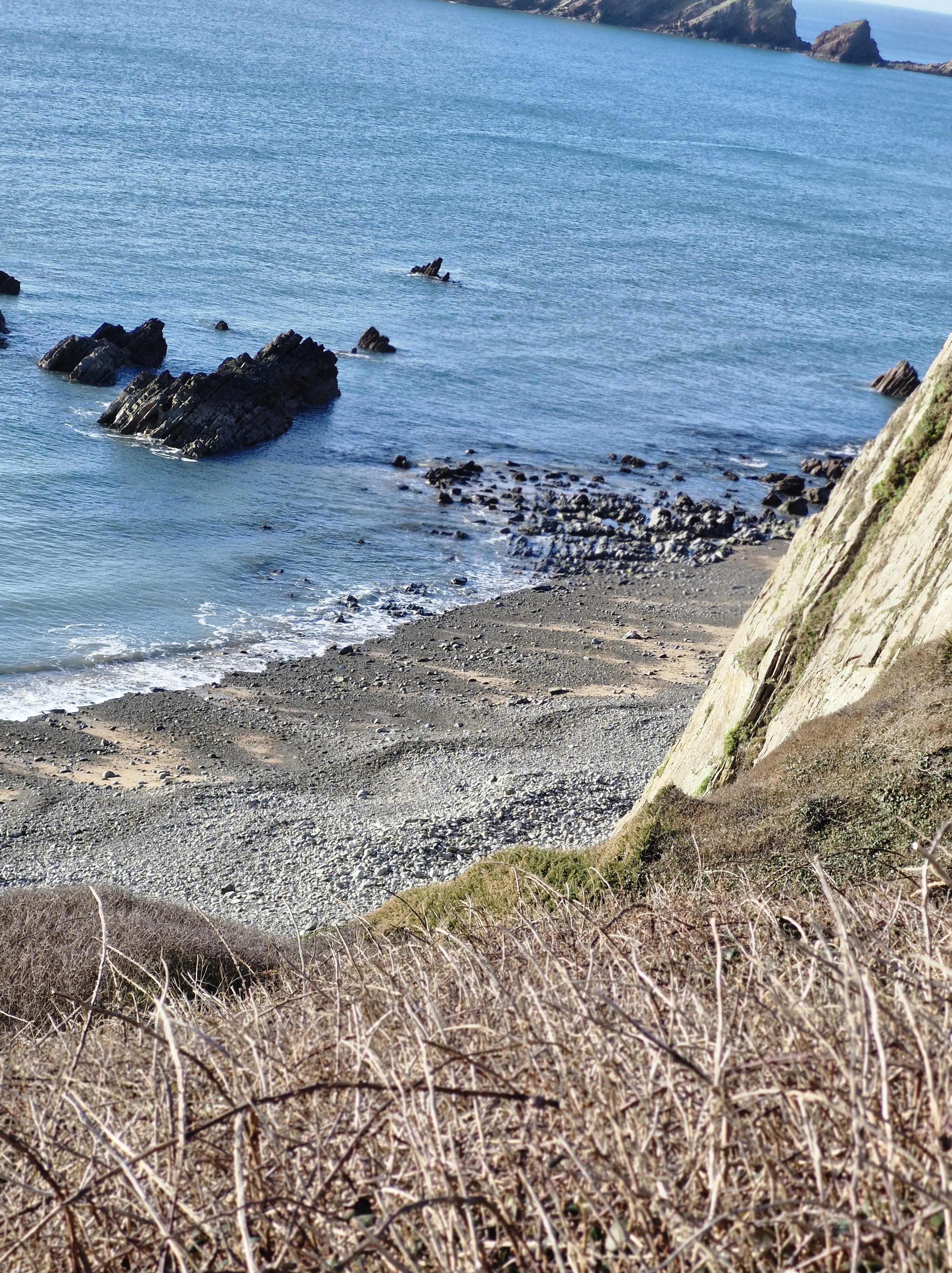
The last time we were here was last summer, on a warm and sunny day. After parking the car we’d walked down the winding track to the beach. The tide was well out and we’d strolled along the edge of the lapping gentle waves on the long stretch of sand.

This time: Boxing Day 2025, so bitterly cold that initially it took away our breath. But the sun was shining and the sky was a gloriously clear blue. It was good to be outside after days of rain. We sauntered down the track to the grassy path that led to the beach

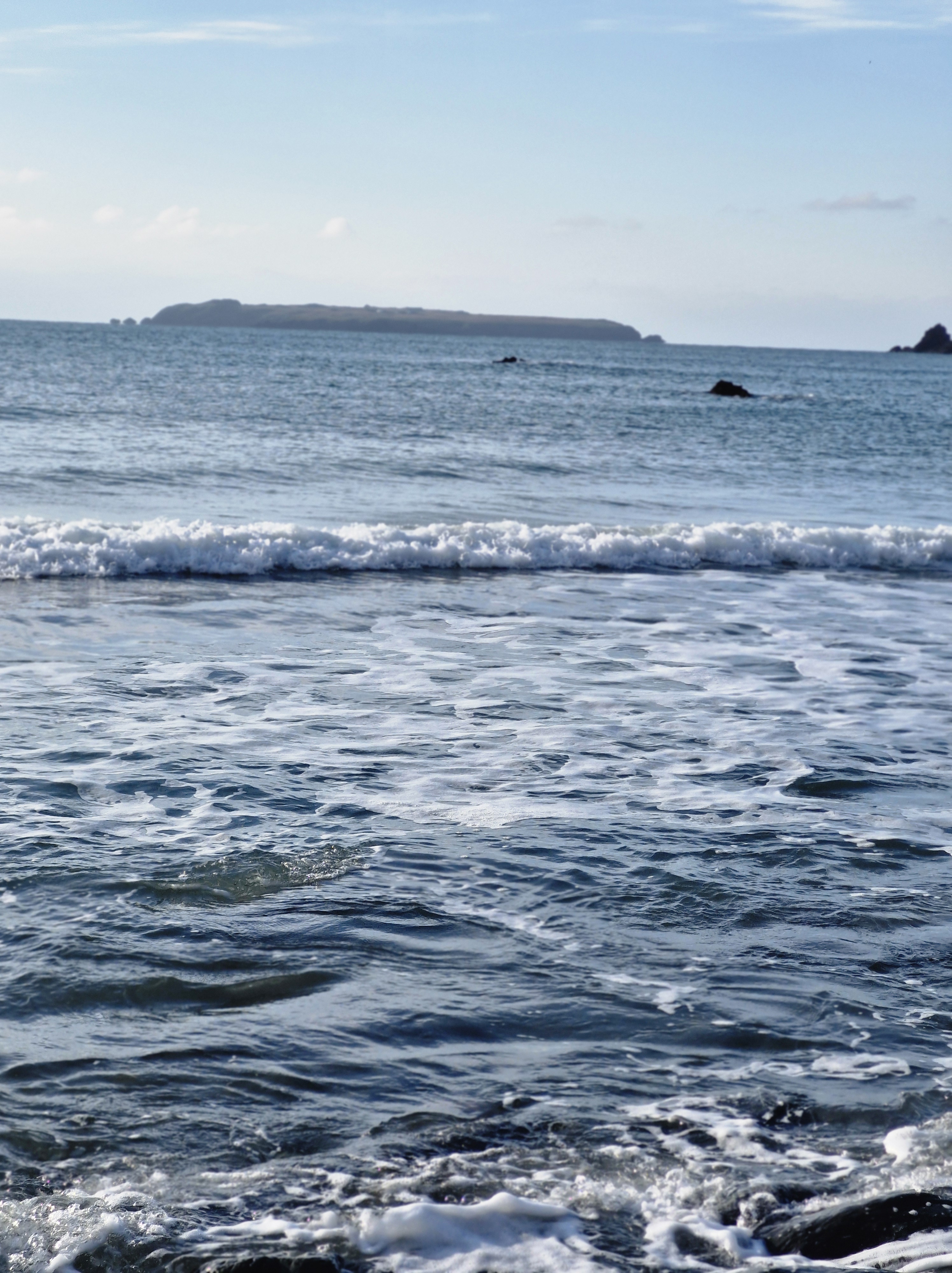
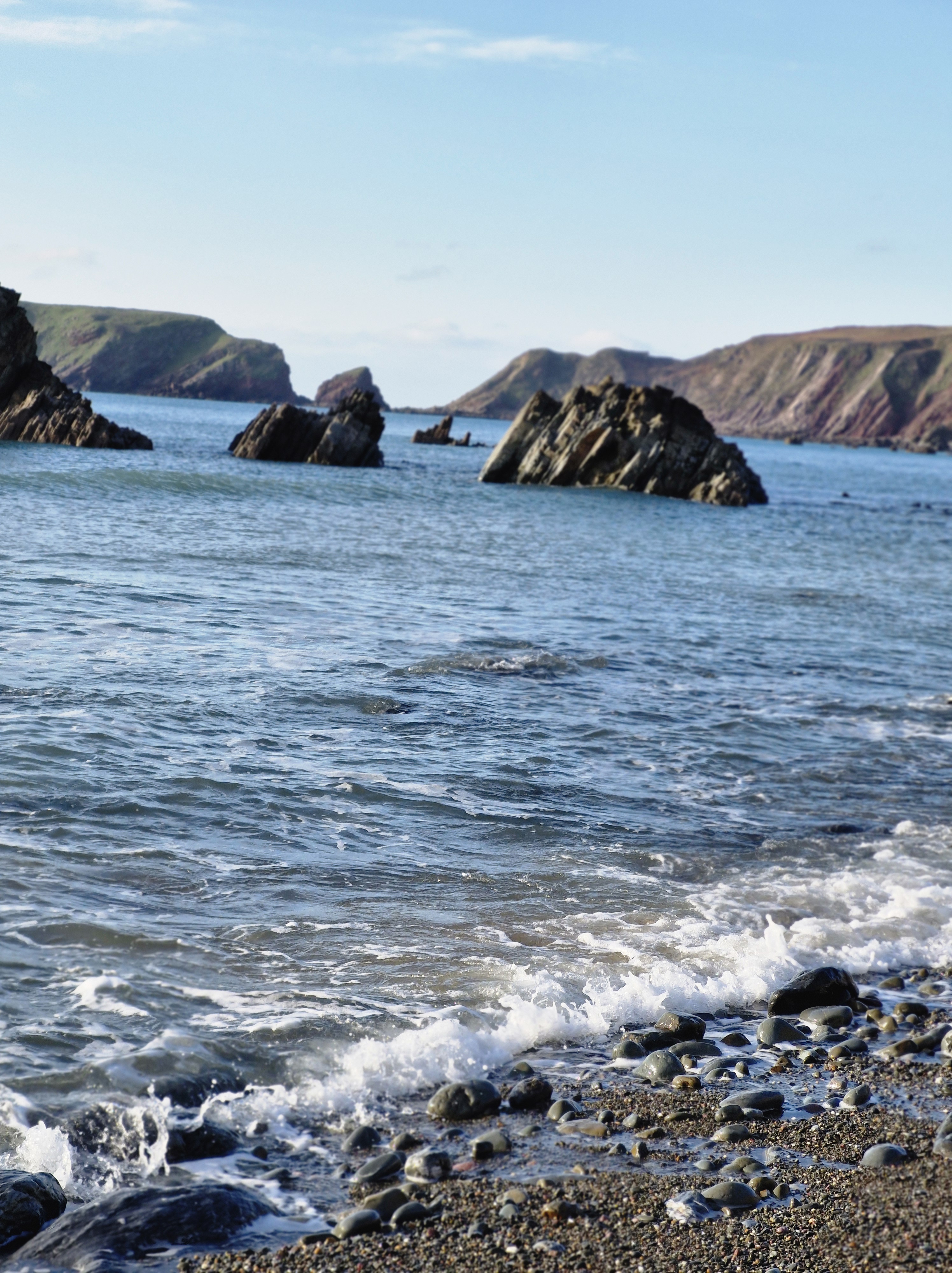
The tide was in. In the distance we could see Skomer Island which we’d visited inJuly. An adventure I’d written about here and here.

We turned away from the beach and, after only slight hesitation, we crossed a small footbridge over a stream and followed a path to the top of the cliff that we’d not walked on before.

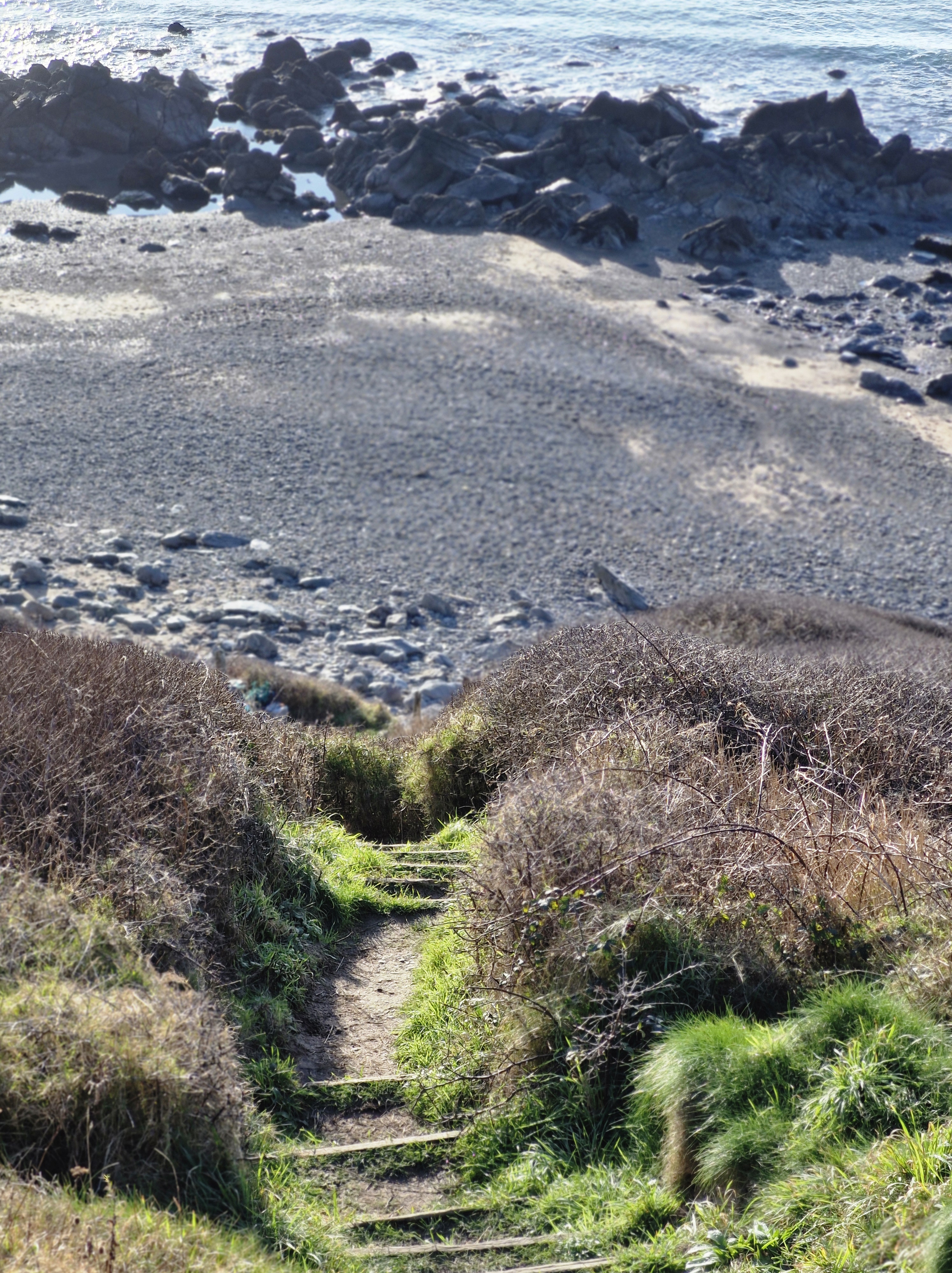
It was a little hair-raising to be honest. But the views were wonderful. After half an hour along an ever rising, and narrowing path we came to a halt at the top of steep and winding steps that obviously led down to the beach. Go on, or go back? We’re not very good at going back on walks, however lost we are, or in this case, however daunting the steps. So we decided – in for a penny and all that…

It took us ten minutes of walking sideways down each step and being very grateful for the walking poles we’d debated on bringing with us – (After all, it’ll only be a beach walk!” I’d said, foolishly).

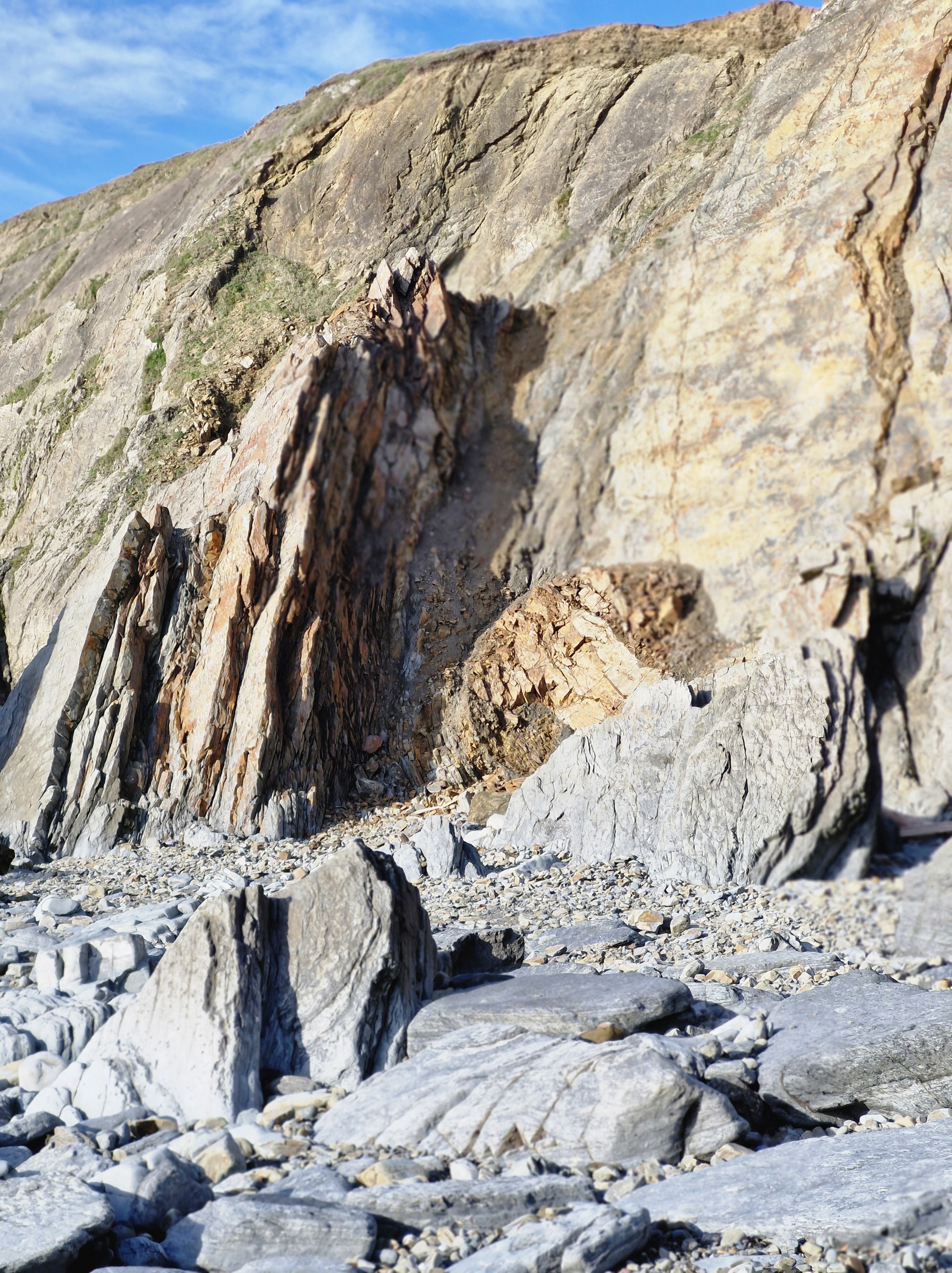
I don’t know who’d built those steps but they’d obviously decided that anyone who could navigate them thus far would be fit enough to leap over the last two metres of sheer rock at the bottom to reach the beach.

Before I could decide to either slide down the rock on my backside, or roll down through the gorse bushes on either side of the path I heard a cry. ” Bravo! You are legends!” A lady appeared below. “Stay there. I’ll help you down, you legend. Grab my hand.” I was, I have to say, very grateful for the help.

Until, finally on level ground – (levelish – i looked it up, there is such a word, specially invented i guess for rocky beaches) – I looked at this lovely lady – and realised she was probably around our age.

To be clear though, she did tell us she’d arrived at this particular spot at low tide, and had walked along the wide stretch of sand from the other end of the beach – where we’d we’d originally planned to walk from. And also that the steps we’d come down were locally know as the emergency exit steps for when someone was caught out by the high tide. So that was the answer – whoever built the steps knew that anyone wanting to use them would probably be swimming to them – and not by choice; to escape being trapped by the tide.

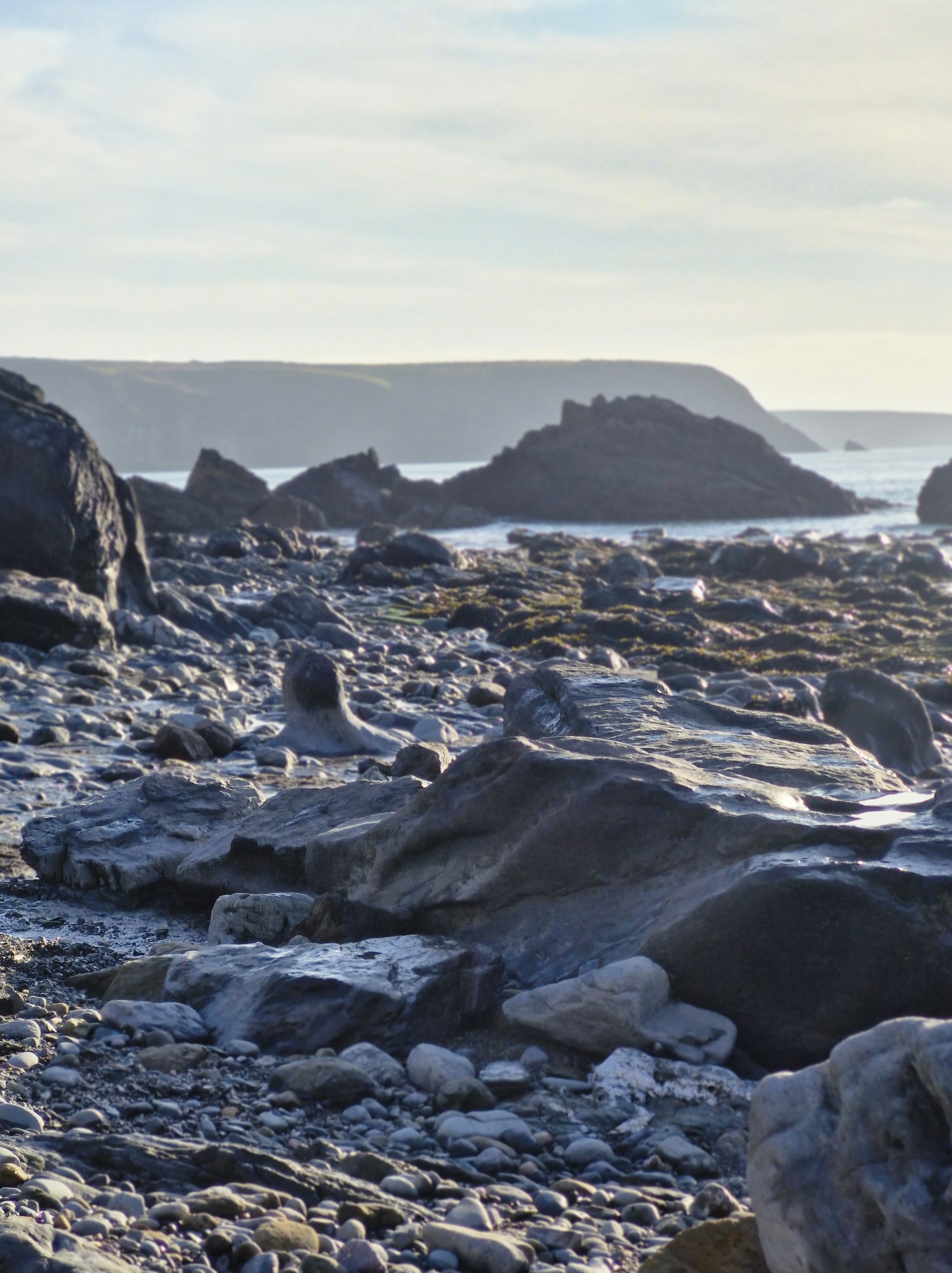
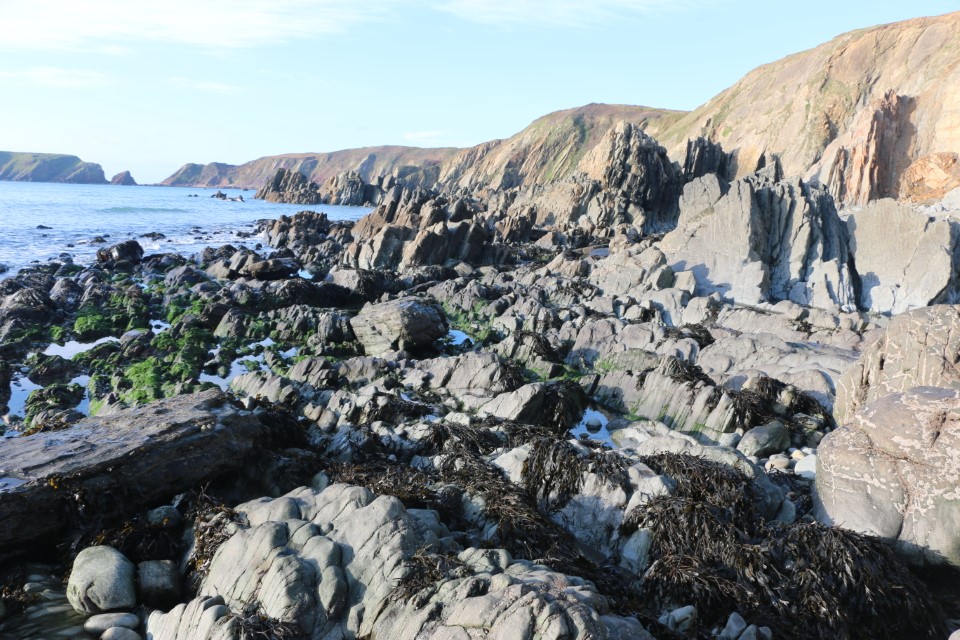
Luckily for us the tide was on its way out. There was no way I was tackling those steps again to the top of the cliffs. We judged that, if we took our time, we could navigate around and over the rocks to get back to our originally planned starting point at the other end of the beach.

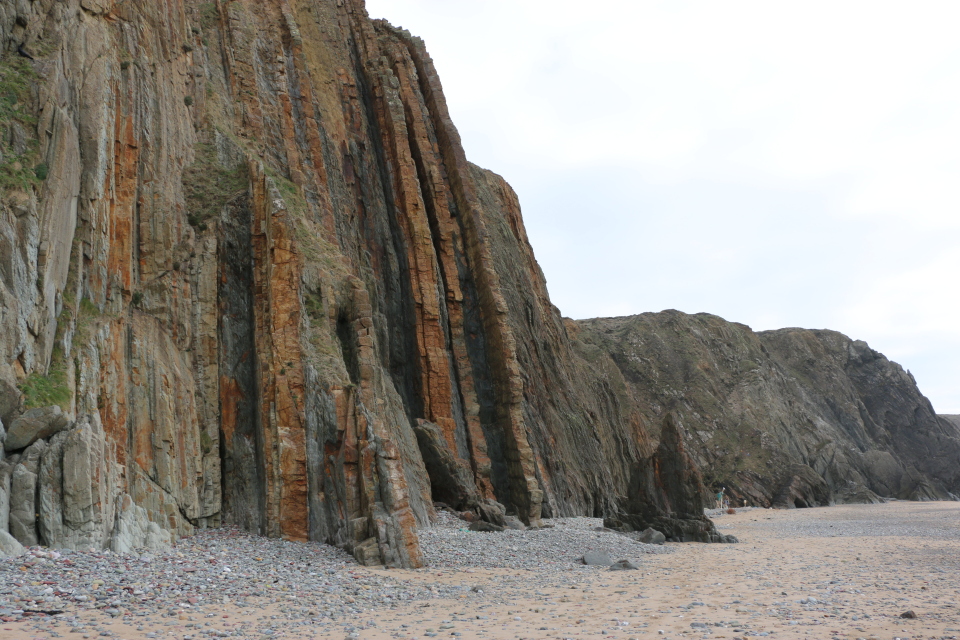
Having navigated rocks near the sea’s edge we made our way to the top of the beach near the cliffs where there was a gap between two tall, jagged rocks. A group of people came through as we were deciding on our next move. If they could do it so could we! Yes, I know … mad!! But we don’t like to be beaten.

We made it to the other side. “No problem,” said the photographer (He was standing on the sand taking this photograph with the path that leads up to the track, and on up to the car park, behind us). I ignored his confident smile; there were a few moments when I’d thought we would be needing a sea rescue.

N.B: Just as a matter of interests, Marloes Sands was the filming location for: Snow White & the Huntsman (September 2011). The Lion in Winter (1968).

And could I, should I, leave this post without a small metion of my books?

As I’m hoping the book I’m working on at the moment, and hope to publish in 2026 (Well, one can always live in hope!), I guess not. So here is the link to my Amazon page.

Thank you to all my readers; I appreciate each and every one of you.

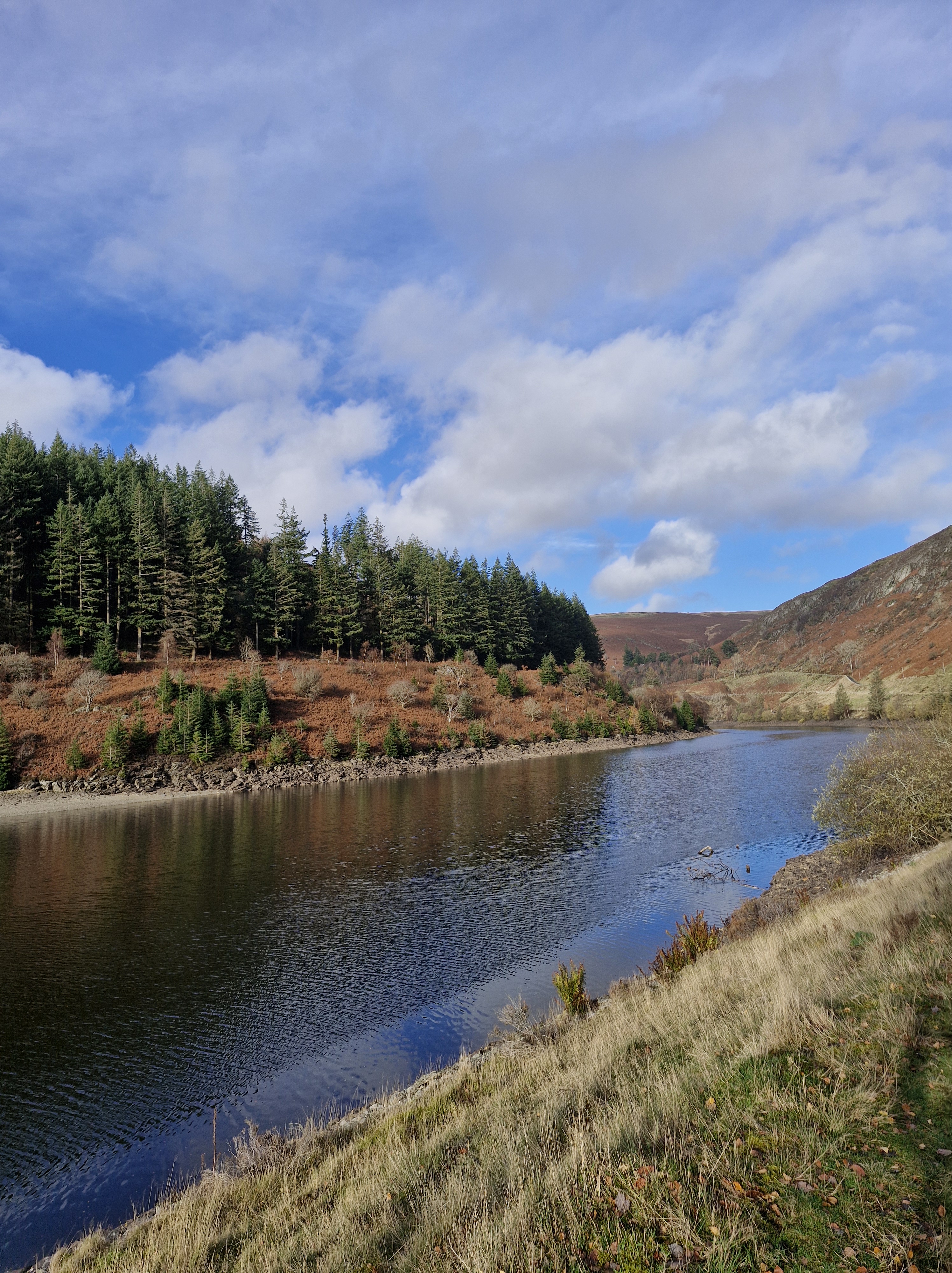
Where We Walked – Elan Valley and the Carvings #memories #walks #photographs #Wales

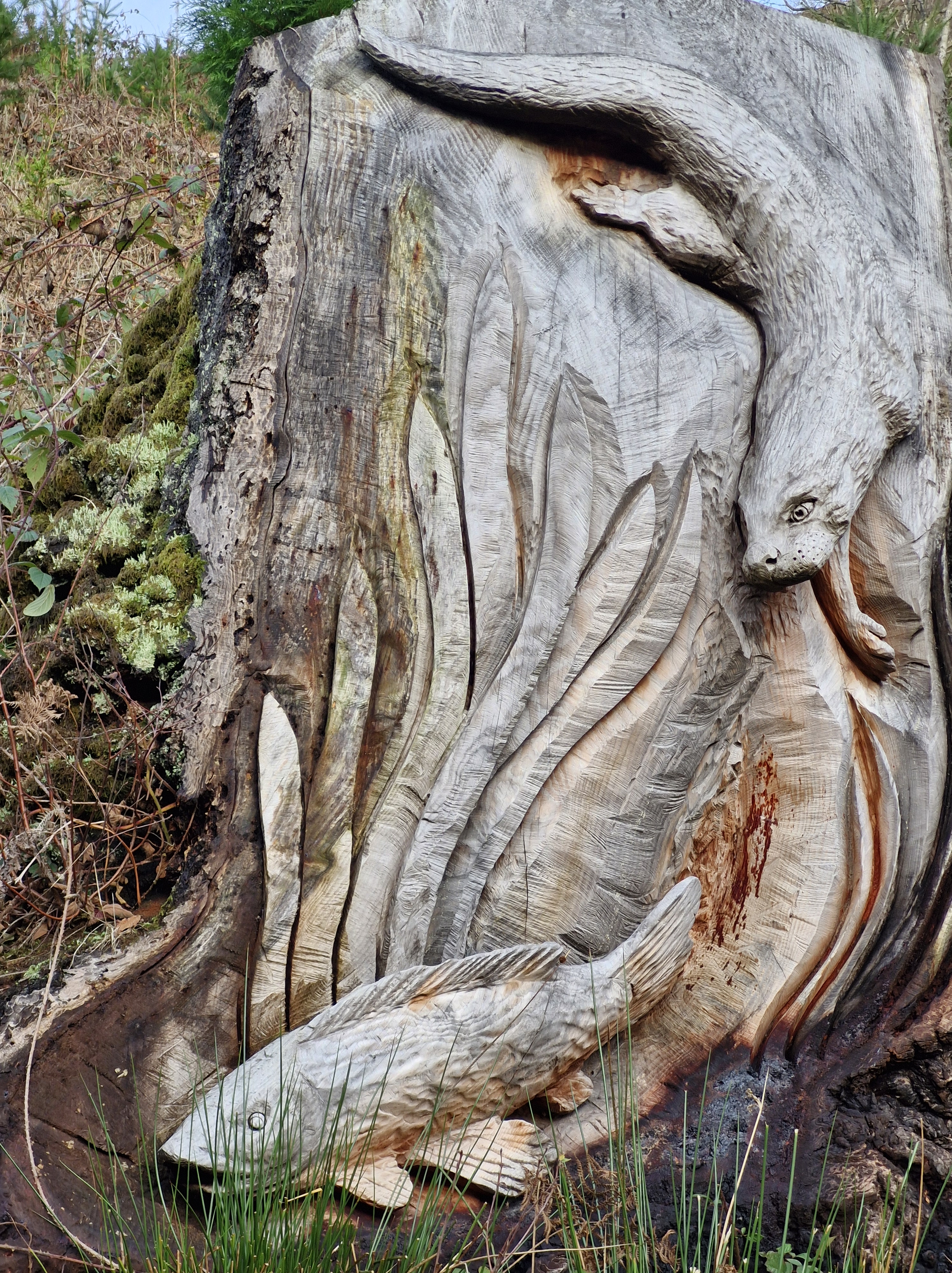
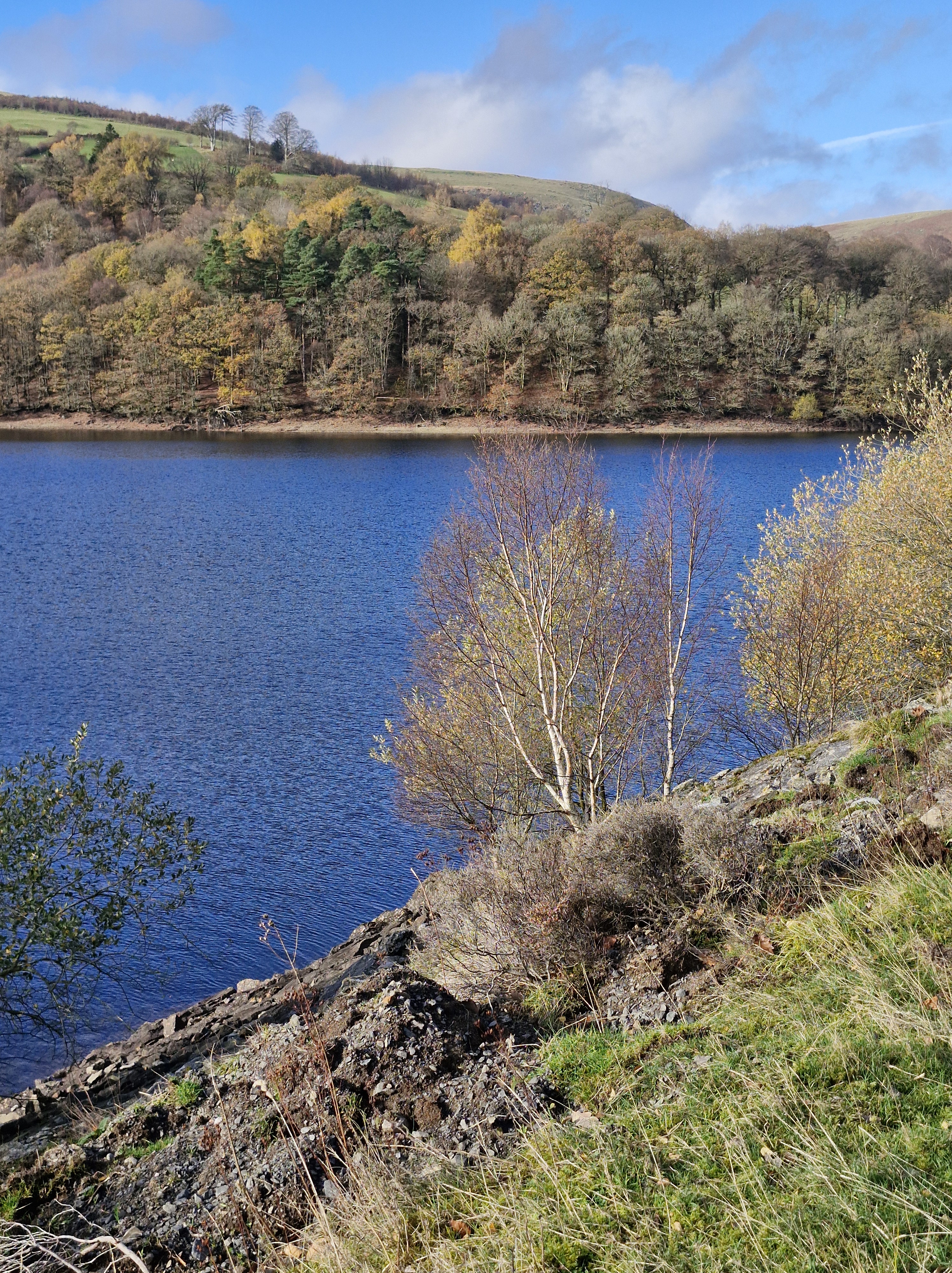
On our recent walk around Garreg Ddu Dam in the lower Elan Valley we noticed that, since we were last here, even more carvings had been created along the trail.

This area of land was originally a Victorian Douglas Fir plantation, clear-felled to reintroduce native species and increase biodiversity. The project to carve the trees lining the road was commissioned Dŵr Cymru Welsh Water and created by chainsaw sculptors Simon O’Rourke, Paul Edwards, and Matthew Crabb, who worked from ideas presented by schoolchildren from the community.

More information can be found here

It was getting late in the afternoon, the day had been gloriously sunny and warm, but now dusk was settling in and the gathering clouds in the sky were showing signs of the rain forecast for the following day.

Foel Tower: a point of interest at the start and end of our walk around Garreg-ddu: Just upstream from the submerged dam at Garreg-ddu is the Foel Tower, the starting point for the 70 mile journey of the water supply to Birmingham.


The lower section of Foel Tower has a number of openings inside at different levels where a system of valves and cylinders can be raised and lowered to draw off water from the reservoir at the right depth for the current water level.

Photographs courtesy of http://history.powys.org.uk/history/rhayader/foel.html

The above photograph was taken in 1947 showing the Foel Tower during very low water levels in the Garreg-ddu. Most of the openings in this image are normally underwater.

Foel Tower takes in water from the Claerwen Valley through a pipeline which takes water underground from the dam system. Water is also collected by Pen-y-garreg and Craig Gochhe, the two dams higher up in the Elan Valley.

Links to my books:

Amazon.co.uk: https://tinyurl.com/55r6s5vp

Amazon.com:https://tinyurl.com/53ndmrhe

https://www.honno.co.uk/fiction

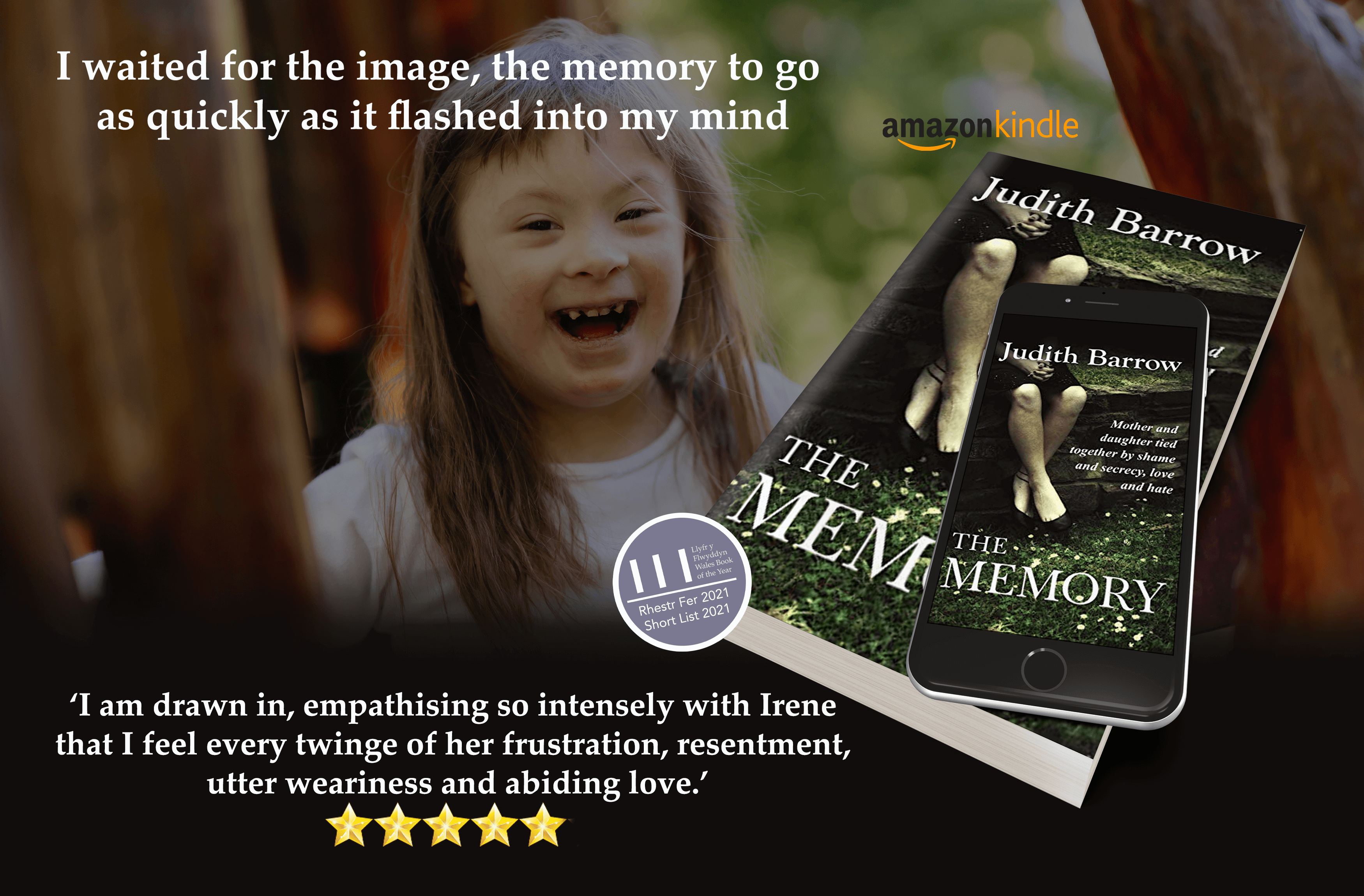
My latest book, published in November 2024 is The Stranger

Review for The Stranger:
5.0 out of 5 stars
 Storytelling in a class of its own… stunning.

One of the author’s many strengths is in capturing the clear and authentic voice of a confused child – Mandy’s voice, in The Stranger, still haunts me, torn between her own grief, her sense of right and wrong, and her love for her family. And once more, in her latest book she wonderfully portrays the suffering of eight-year-old twins Chloe and Charlie – already grieving the loss of their mother, their lives torn apart by their father’s marriage to her former nurse, an evil manipulator of the highest order…

Where We Walked – Elan Valley #walks #photographs #memories #books

After weeks of what seems to have been constant rain, we embarked on a couple of days away, determined to walk, whatever the weather. We headed for Mid Wales.

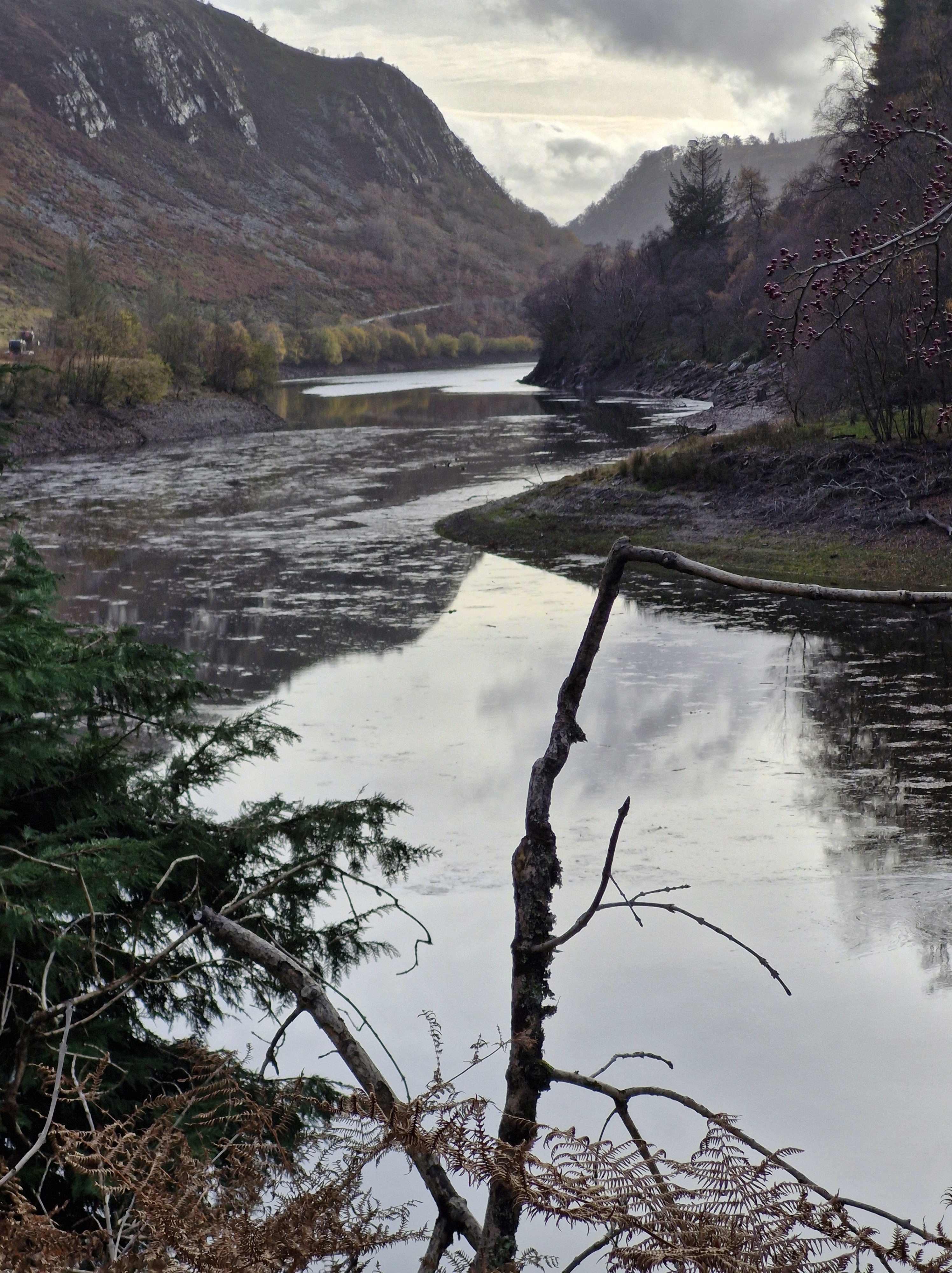
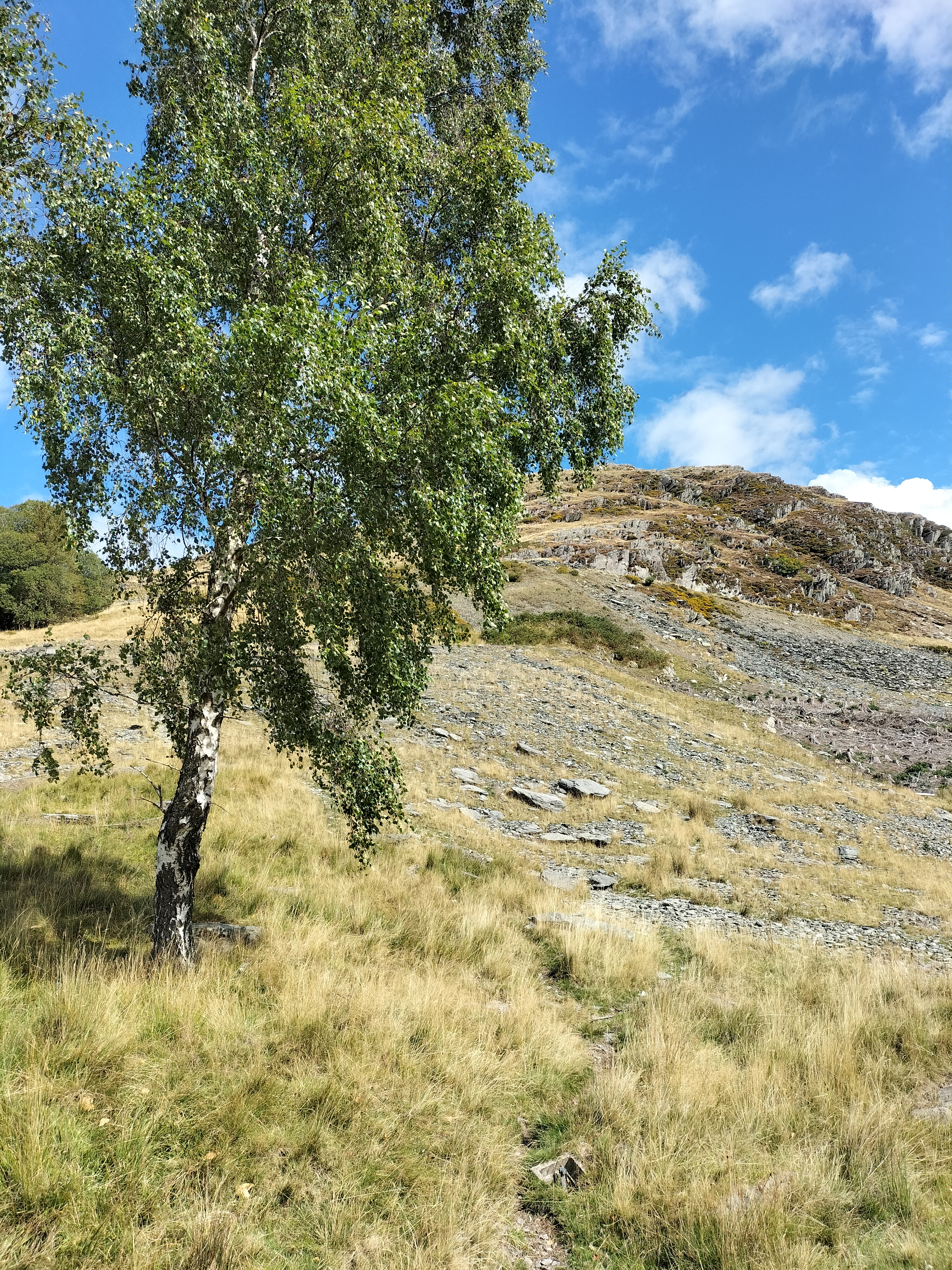
We were lucky: the clouds parted, the rain stopped, the sun came out. We took a trip to Elan Valley and walked around Garreg Ddu to Pen y Garreg.

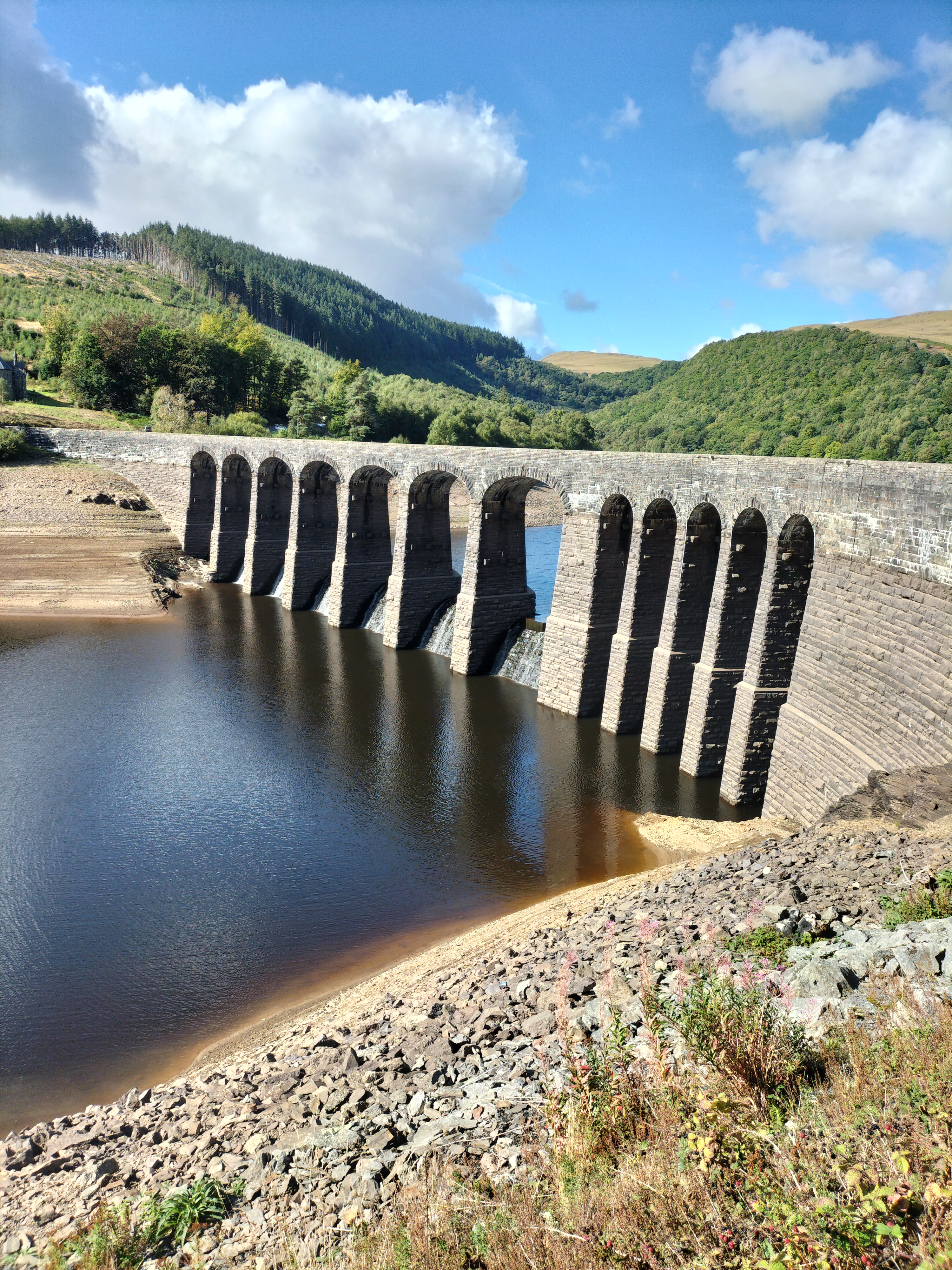
We’ve been a few times in the past, the last being in 2023 when there was a drought declared. Below is the road bridge/ wall between Garreg Ddu and Caban Coch. On the left 2023, on the right this time, in November.
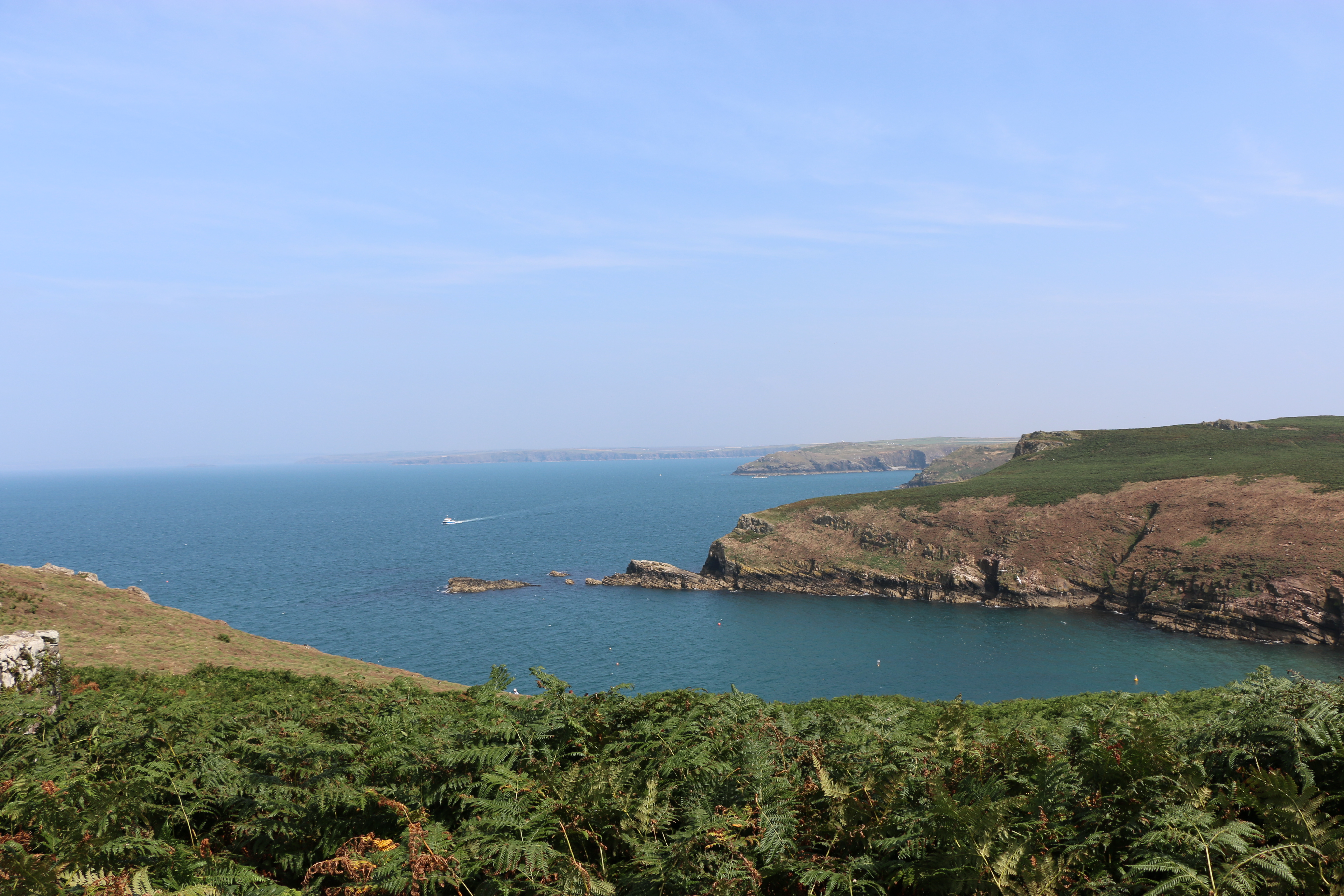
Though there were less daylight hours this time to walk we still were able to see some of the differences in the water levels in the reservoirs between our visits in 2023 to this November.

In 2023 the water was so low we could see the outlines of the houses, the roads and the church that were compulsory purchased in 1892 in order to dam the Elan and Claerwen rivers within the Elan Valley and supply water to Birmingham. This was because of the rapid growth of that industrial city, and the numerous outbreaks of disease that prompted Birmingham City Council to petition the British government to pass the Birmingham Corporation Water Act in 1892, allowing the corporation to acquire the land.

Building work began in 1883. There are six impressive dams altogether. Four follow the Elan River – Craig Goch, Pen y Garreg, Garreg Ddu, and Caban Coch and two are on the river Claerwen – the Claerwen dam and the unfinished Dol y Mynach dam.

The History of Elan Valley:

In 1893 one hundred people in Elan Valley had to move to allow the work to begin, but only landowners received compensation payments. Many buildings were demolished: three manor houses, eighteen farms, a school and a church – the latter being replaced by the corporation and renamed Nantgwyllt Church. Over the next three years a railway line was constructed to transport the workers and thousands of tonnes of building material each day.

Thousands of men and their families lived in wooden huts in the the purpose-built Elan Village, where, eventually a library, a public hall, a shop, and a canteen were built. There was also a hospital, used for injuries and as an isolation hospital. There was even street lighting which was powered by hydroelectric generators. New workers were initially expected to spend the first overnight in a lodging house to be deloused and examined for infectious diseases. Only then were they allowed across the river to the village. Single men lived in groups of eight in a terrace house shared with a man and his wife. A guard was employed to check for illegal importation of liquor and unauthorised visitors. There was a bath house which the men could use up to three times a week but the women only once. And the pub was for the men only. A school was provided for those under elevens, after this the children were expected to work.

The dams were built in two phases. The first phase, which cost six million pounds and employed fifty thousand was opened on the twenty-first of July 1904 by King Edward VII and Queen Alexandra. The building of the second phase dams was delayed due to the two World Wars and work only started in 1946. Because of engineering advancements just one large dam was built instead of the three smaller ones originally planned for. This was the Claerwen. This dam was completed in 1952 and opened by Queen Elizabeth II on the twenty-third of October.

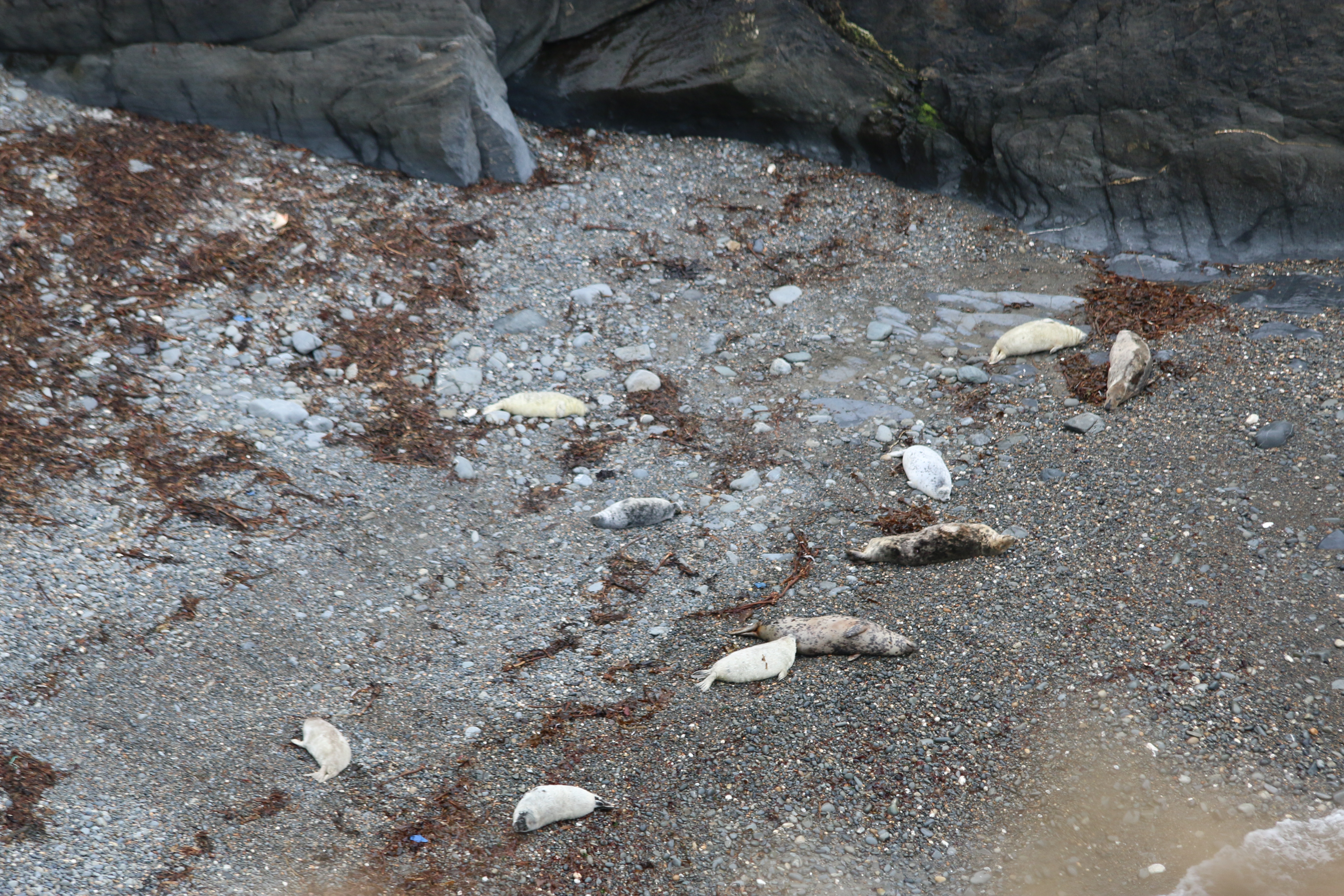
Where We Walked #NationalTrust #PembrokeshireU3a #Pembrokeshirecoast #sealspotting #walks #photography

Over the last few weeks we have walked along the Pembrokeshire coast with the Pembrokeshire U3a and the National Trust …

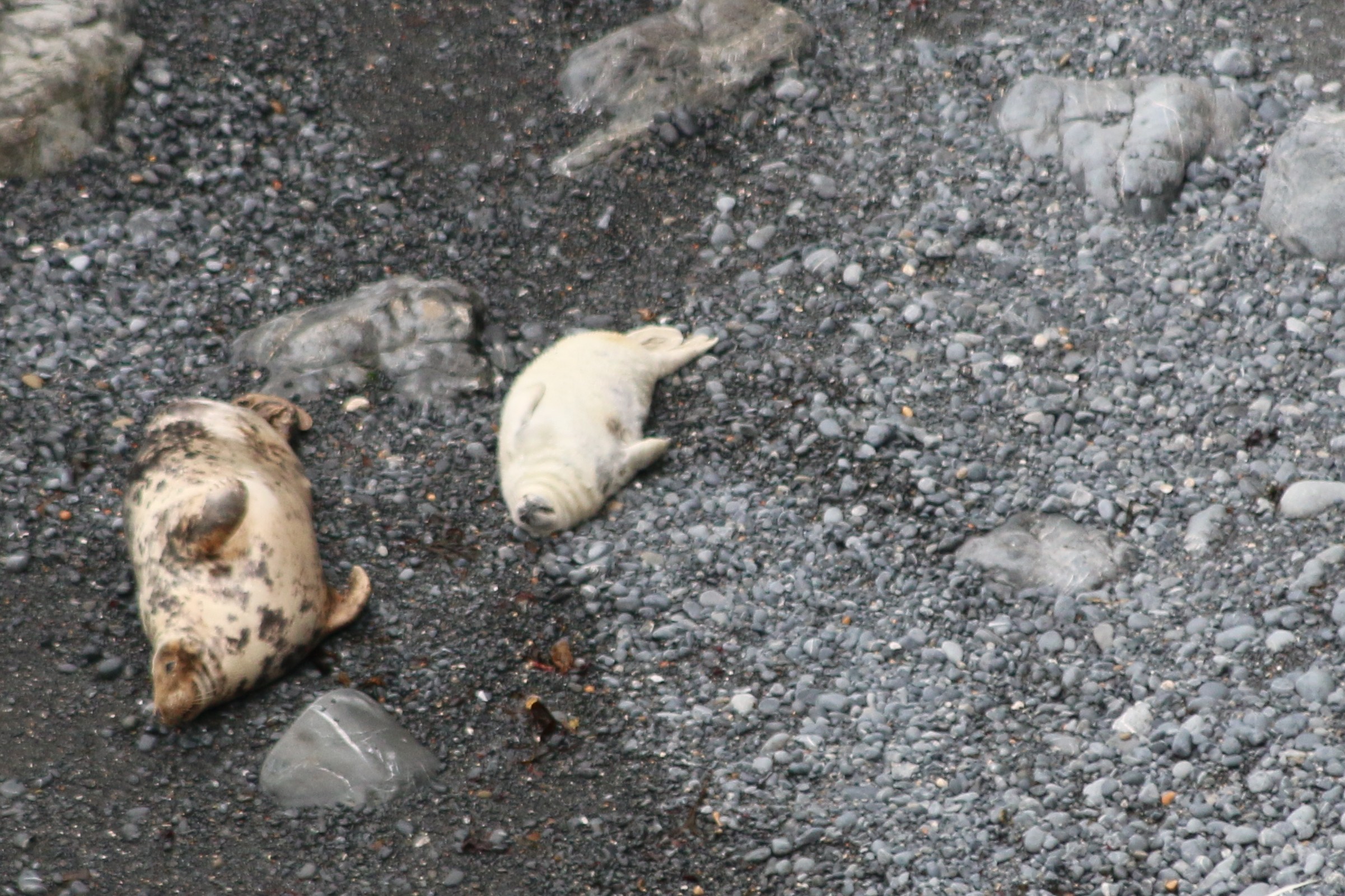
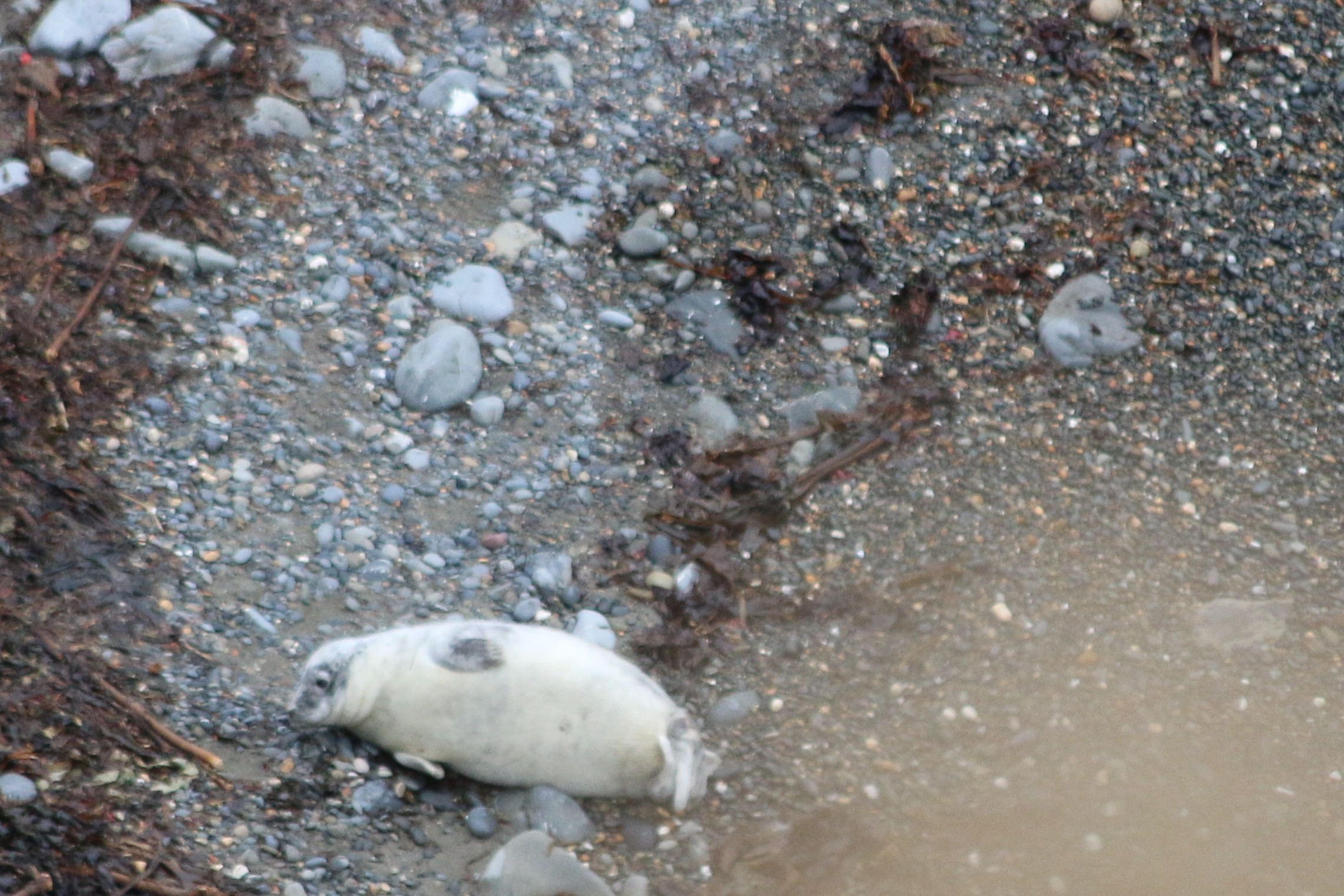
And joined in with a couple of days seal spotting … from the clifftops, so at a distance, of course.

And watching the mothers with their pups was fascinating

Around the coast of West Wales, grey seals can be seen throughout the year. In the summer, around sunset, the seals begin to return to the beach hauling out their daily catch of fish. Mostly, at this time, they bob about in the water, waiting to come ashore to rest. Seals spend a lot of time at sea but come ashore to breed from August until early November, when parents and their pups can be spotted on beaches around Pembrokeshire.

On land they are cumbersome and slow, compared with their agility in the ocean.

Which gave The Photographer plenty of time to get his pictures!

Many thanks Pembrokeshire U3a and the National Trust for two brilliant days .

Fun Facts (courtesy of https://tinyurl.com/5n8ukdyz )

Fossil records indicate that the ancestors of modern seals first entered the ocean on the west coast, about 28–30 million years ago.

Seals see very well under water—better than they do in bright light above water. Their eyes are adapted with round lenses (like fish) and a large iris that fully opens underwater. On land the iris closes the pupil to a small pin point that lets the seal see clearly through the round lens. A seal’s eye is also adapted for low-light vision with a lining (similar to a cat’s eye) that reflects and amplifies the weak light at depth in the ocean.

A seal’s body stores enough fat in the blubber layer to allow the animal to go for extended periods of time without eating. In addition, most seals are opportunistic feeders and will consume a variety of fish, shellfish, and crustaceans. Seals do not eat on land.

Like all marine mammals, seals get all the water they need from their food. Their bodies are very efficient at removing and recycling water from their food. They avoid drinking sea water; if a seal drinks too much sea water it can become seriously sick. Arctic seals, which spend time on ice, may sometimes eat fresh water ice and snow.

NB: Seals are protected in the UK under various acts, including the Conservation of Seals Act 1970, which prohibits killing, injuring, or taking them except under specific circumstances. Both native species, the grey seal and common seal, are protected, along with any other seal species found in UK waters.

Crossing off the Bucket List: Part Two @SkomerIsland #walks #photographs #birds #plantlife #Memories

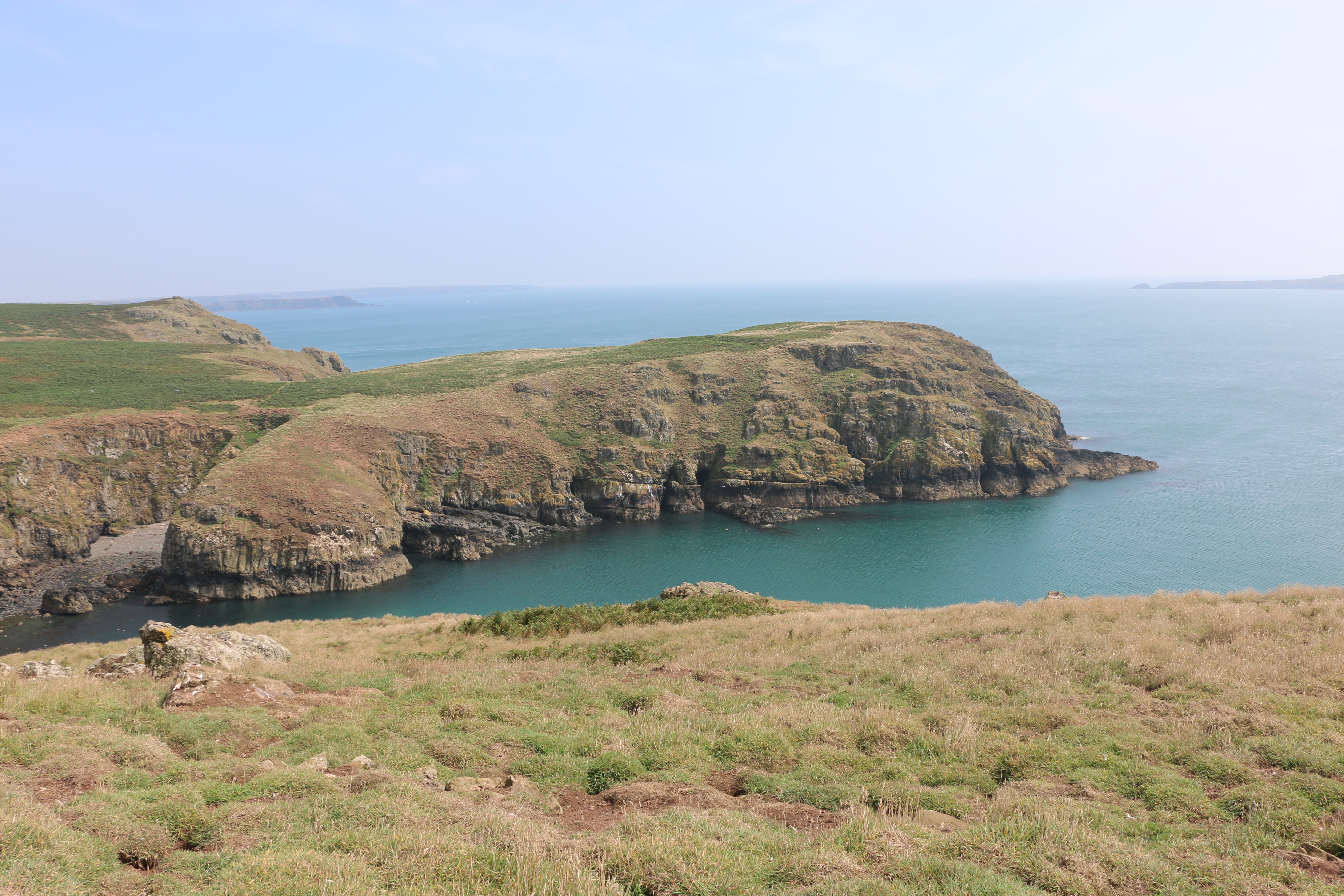
At long last! After living in Pembrokeshire for the last forty-six years and despite walking many miles of the Pembrokeshire coast, and meandrering around a lot of the Welsh countryside discovering wonderful places, lakes, waterfalls … scenary, we hadn’t been on Skomer island. This week we finally managed to go. And it was a glorious day’s adventure.

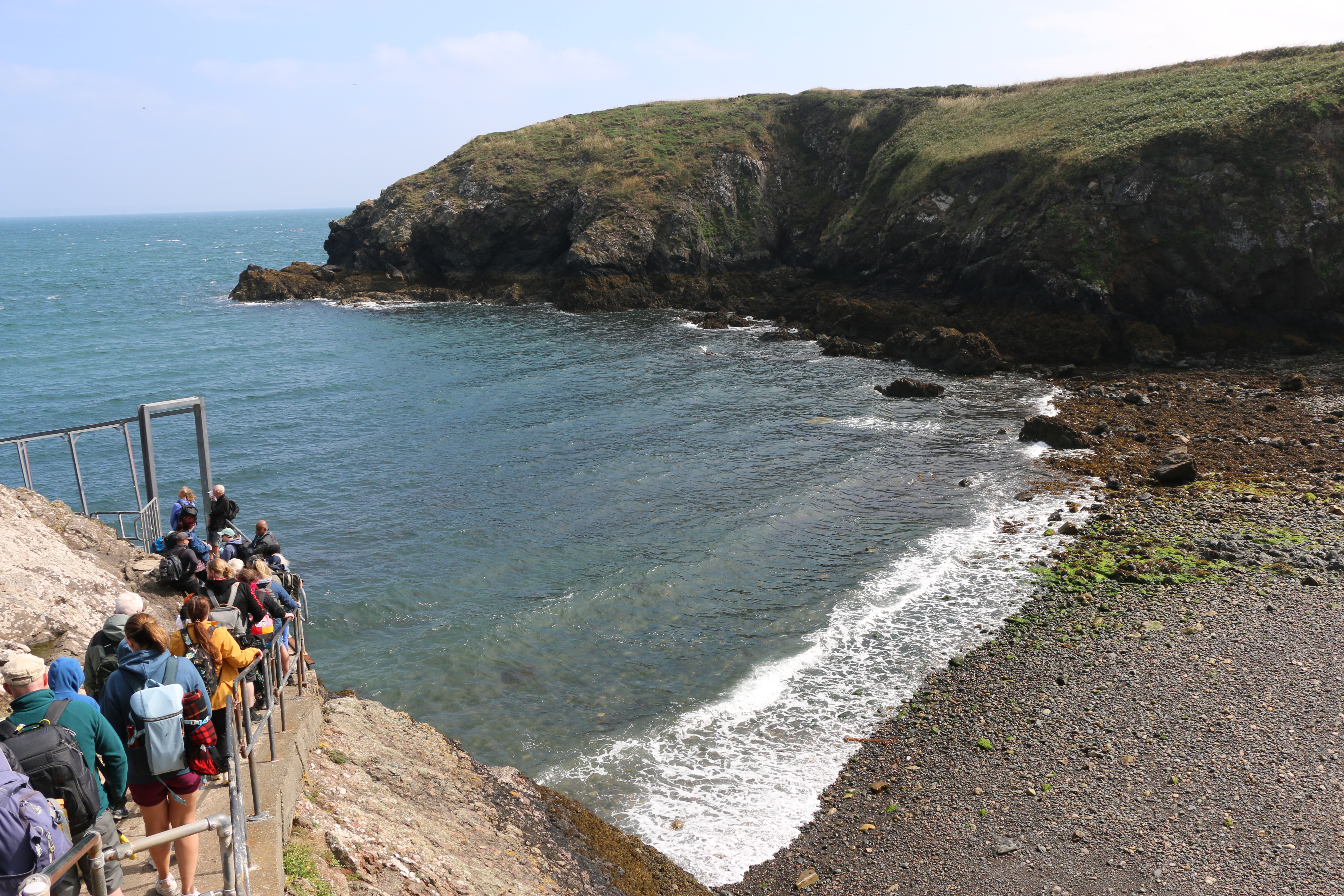
Together with the thirty other people we had been on the boat with, we climbed the steps and slopes from North Haven beach to the Information and Welcome Point, passing the ruins of one of the lime kilns on the island, now used as a shelter.

Following the short introductory talk by one of the National Trust volunteers on the numerous species of birds on the island, and advice on which paths to take, according to what we were most looking forward to seeing, we set off. Surprisingly it soon seemed that we were on our own as we began our walk of the south section of the island.

During the more prosperous farming days of the nineteenth century lime was important on the island, both as mortar for the buildings and to spread on the land as fertilizer. Limestone and coal would have been imported from the mainland, landed on the beach at North Haven and moved to the kilns to be heated.

In search of the second of the lime kiln ruins, which is beyond the Harold Stone we took a diversion.

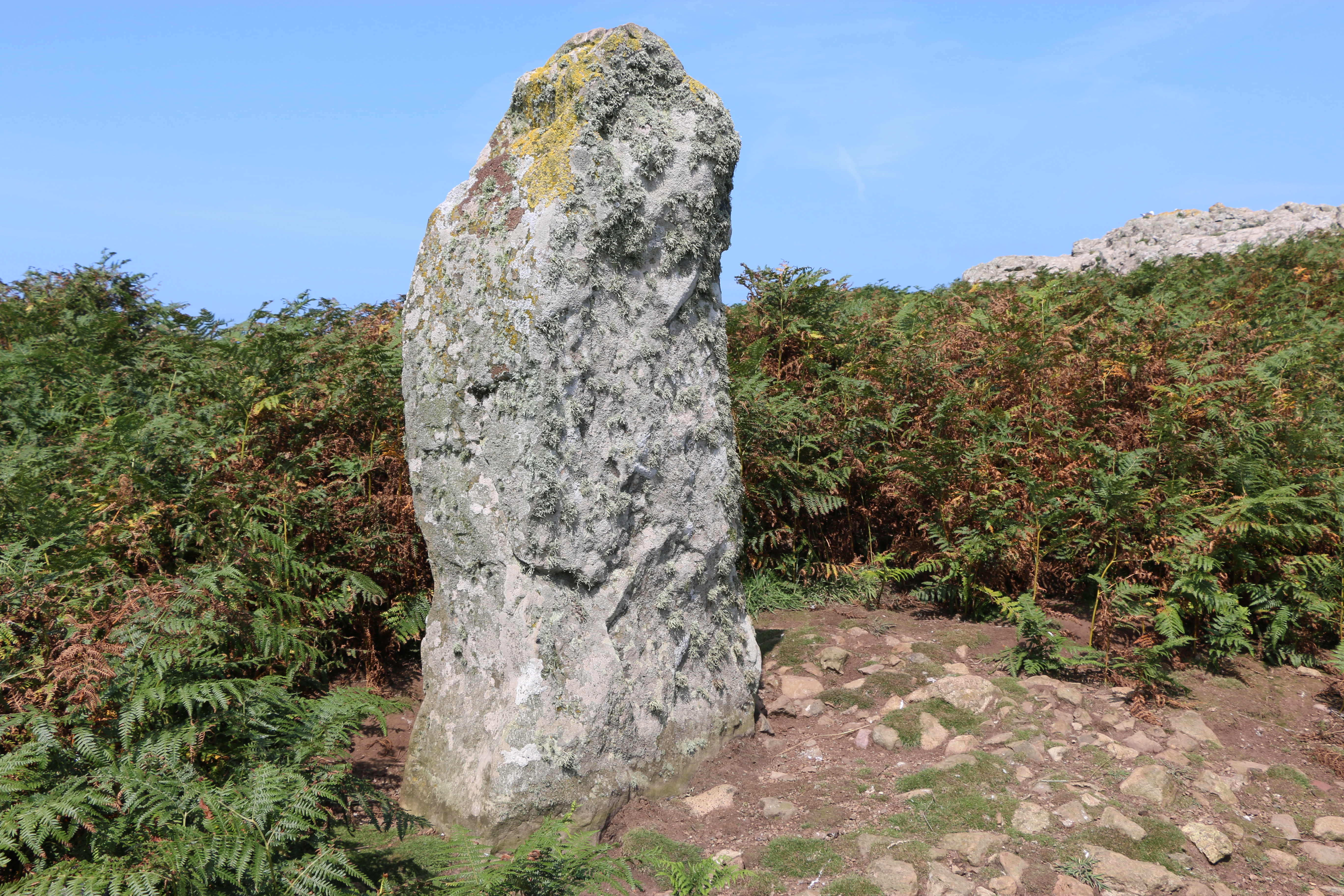
The Harold Stone has no cutting or tool marks, so seems to be mostly unshaped by man, and apparently smoothed by decades of cattle and other animals rubbing against it. As with many standing stones there are various ideas as to its function: the site of an ancient burial ground, a ritual or lookout area of an Iron Age settlement, (there are a number of Iron Age settlements around the Island, each one slightly different),or a marker for boats to approach North Haven.

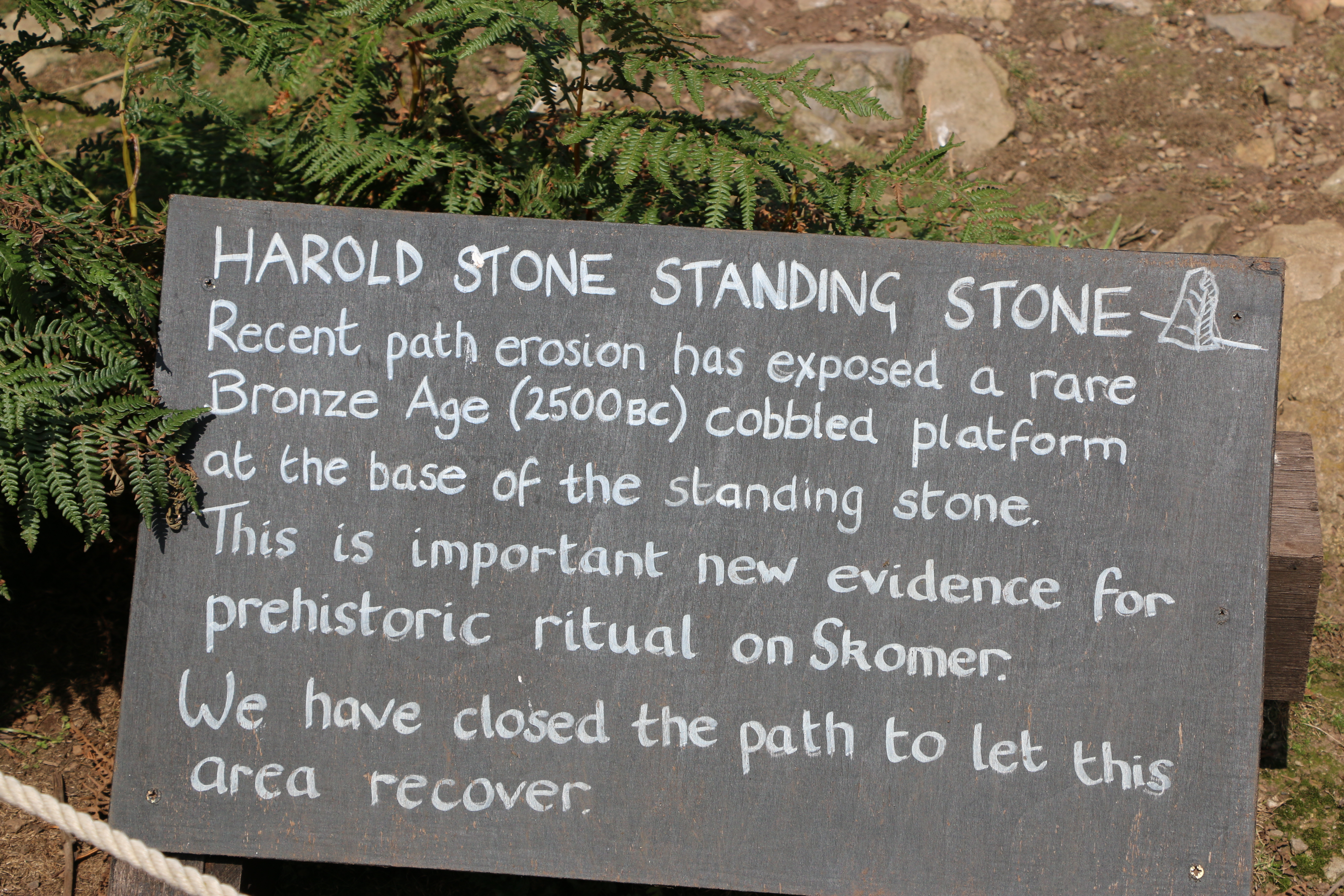
We were impressed by the care that is taken by the National Trust volunteers in preserving numerous areas of paths and grassland. At one point we saw an outline of a figure, dark against the bright sunshine, carrying an enormous scythe. As she passed us, she laughed and said she felt like the Grim Reaper. Walking on we saw the area she’d cleared and roped off to allow a patch of ground to recover.

We walked on...

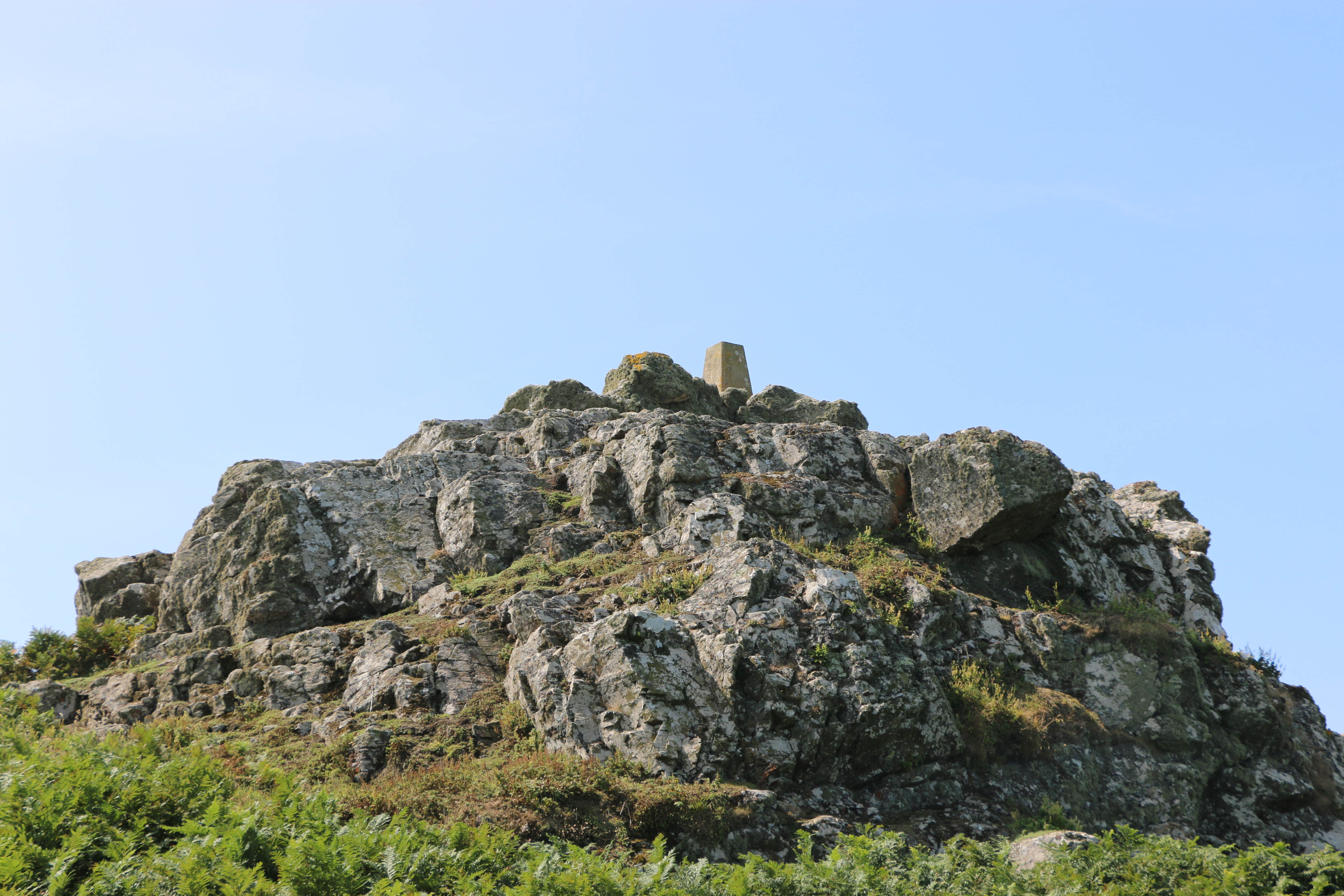
We couldn’t find out what the small ‘monument ‘ is on top of this rock formation.

True to form we didn’t follow our intended circuit and meandered along paths, and retraced our steps in rather a haphazard fashion, (although the Photographer will dispute this and declare our route to be organised according to the circuit he planned). However true his statement was, I must admit we did pass numerous impressive limestone outcrops covered in lichen, and vast expanses of ferns, heather, gorse and wild flowers.

And we did see the majority of Skomer by the end of our time there.

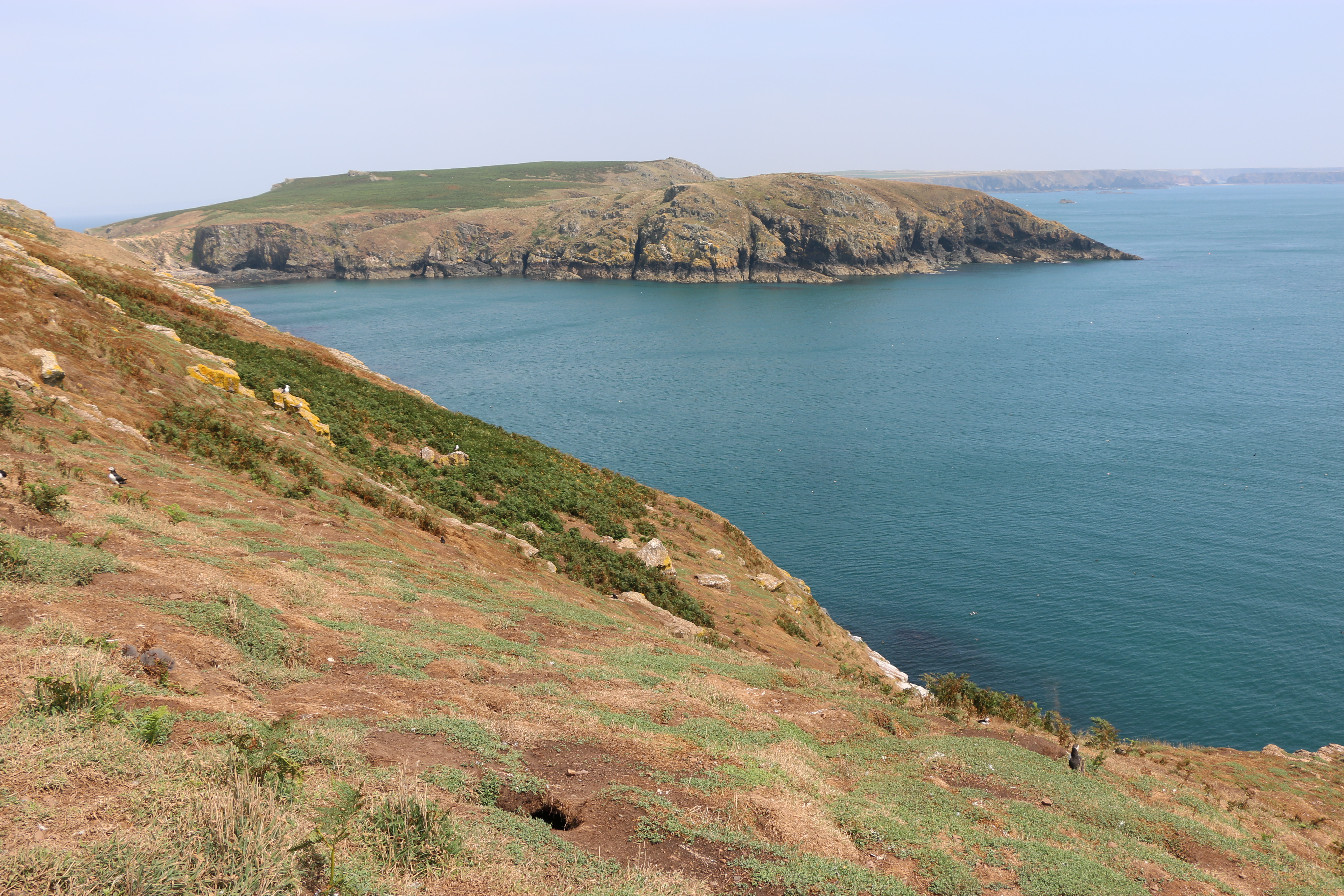
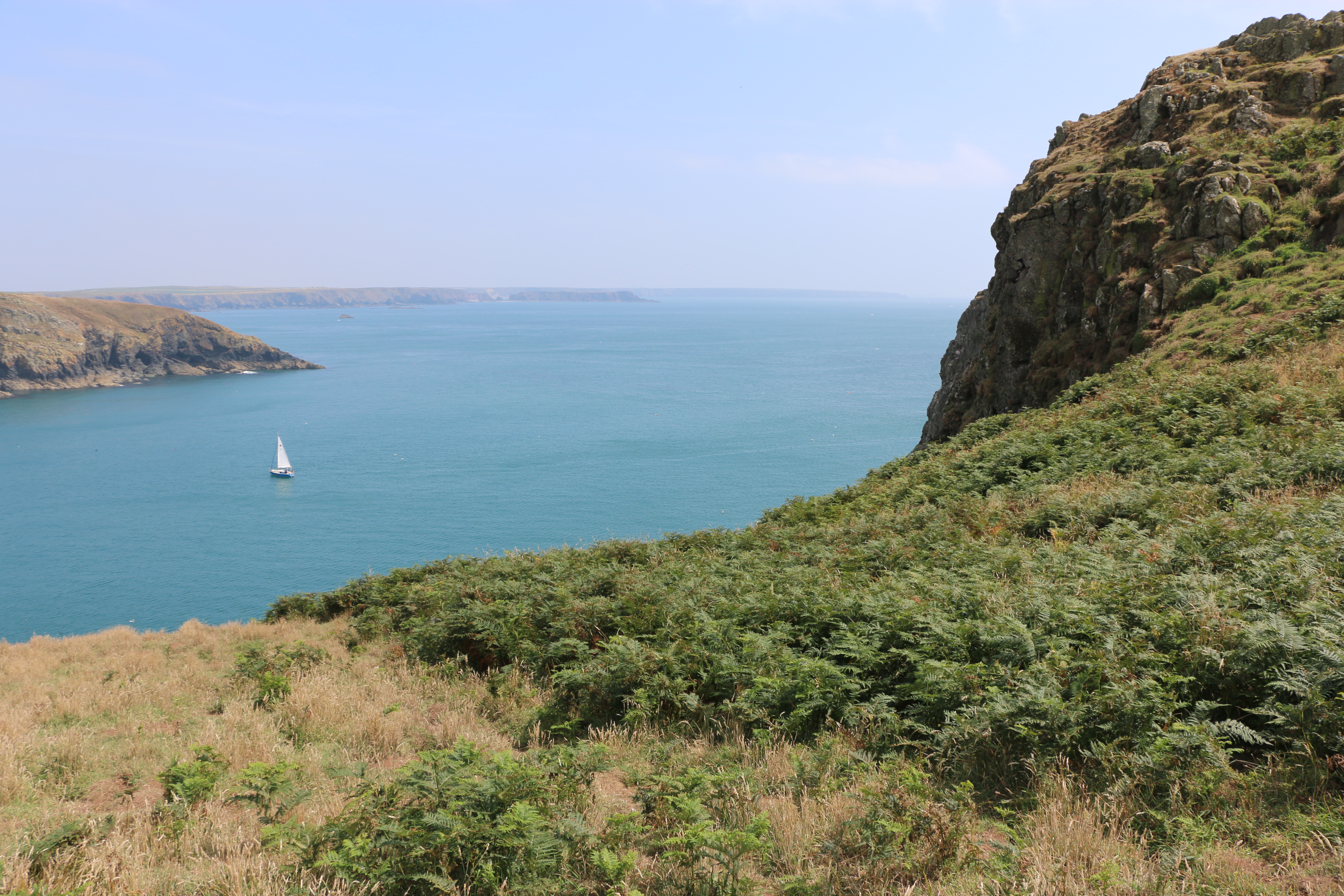
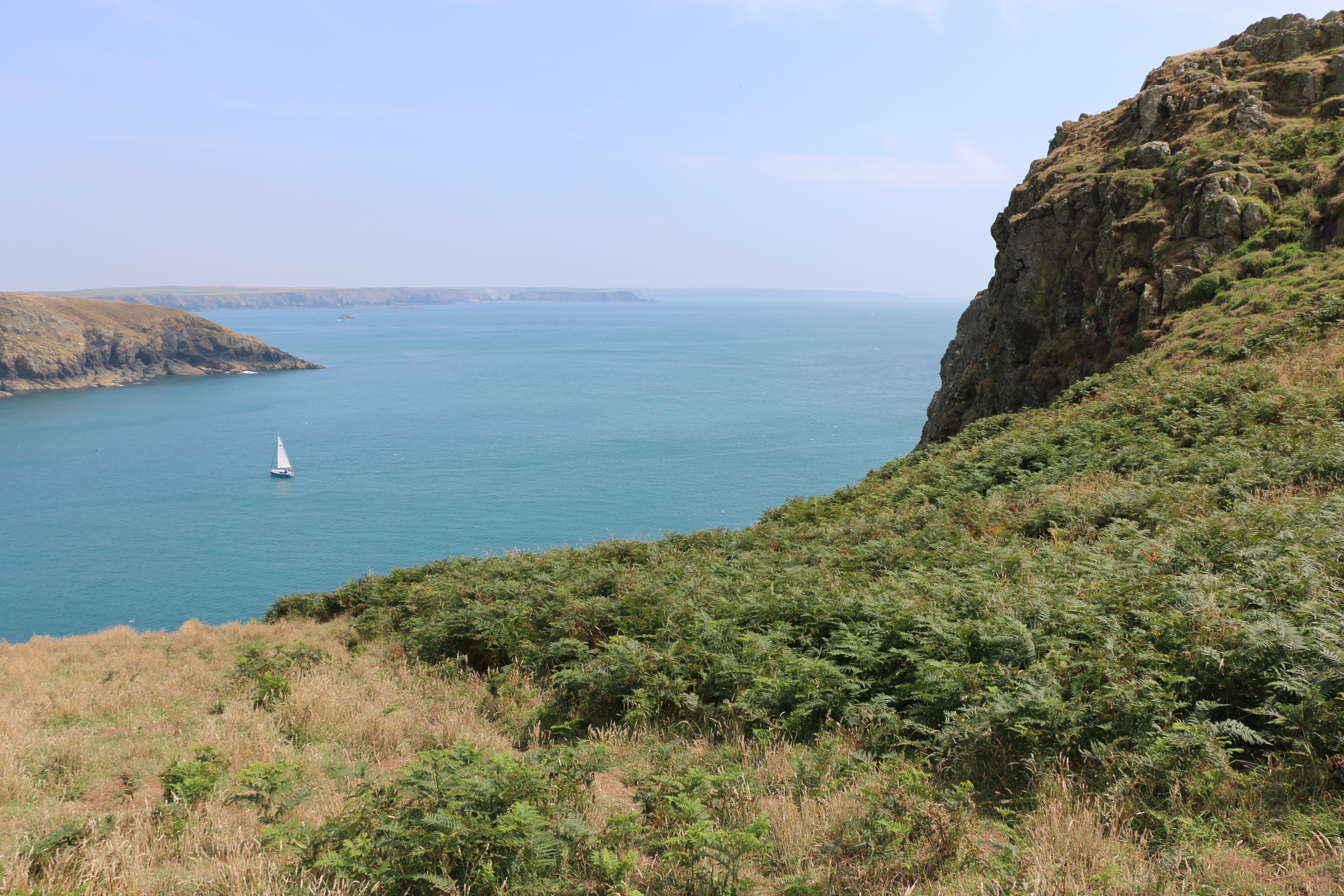
After our short respite at the farmhouse we moved on to Skomer Head. The rocky headland was covered with fading pink Thrift (and evidence of the rabbits). It’s an impressive view from there; we could see Skokholm, which is a sandstone island, and, less clear but still visible, the island of Grassholm. I remembered that. many years ago, we took a trip on the Waverley (the last seagoing paddle steamer) and passed Grassholm. It’s the third largest Gannet colony in the world, and the island is covered in white. I’ll leave that last statement to your imagination!

There are the remains of an Iron Age boundary wall running parallel to more modern boundary walls from Skomer Head. The modern one is close to the path and the remaining stones of the prehistoric one on the nearby rock ridge above.

We crossed Wick Stream; a wetland area with small streams that are apparently connected by six dams. We couldn’t see them, though it was interesting to be told by one of the National Trust volunteers that they could be part of the Iron Age walls but they might also be of later origin. Their purpose is not known ,although it’s most likely that they were for water conservation, creating ponds for storage of water and watering stock. The paths along the way were protected by boardwalks, but mostly were rough and rocky on our way to The Wick.

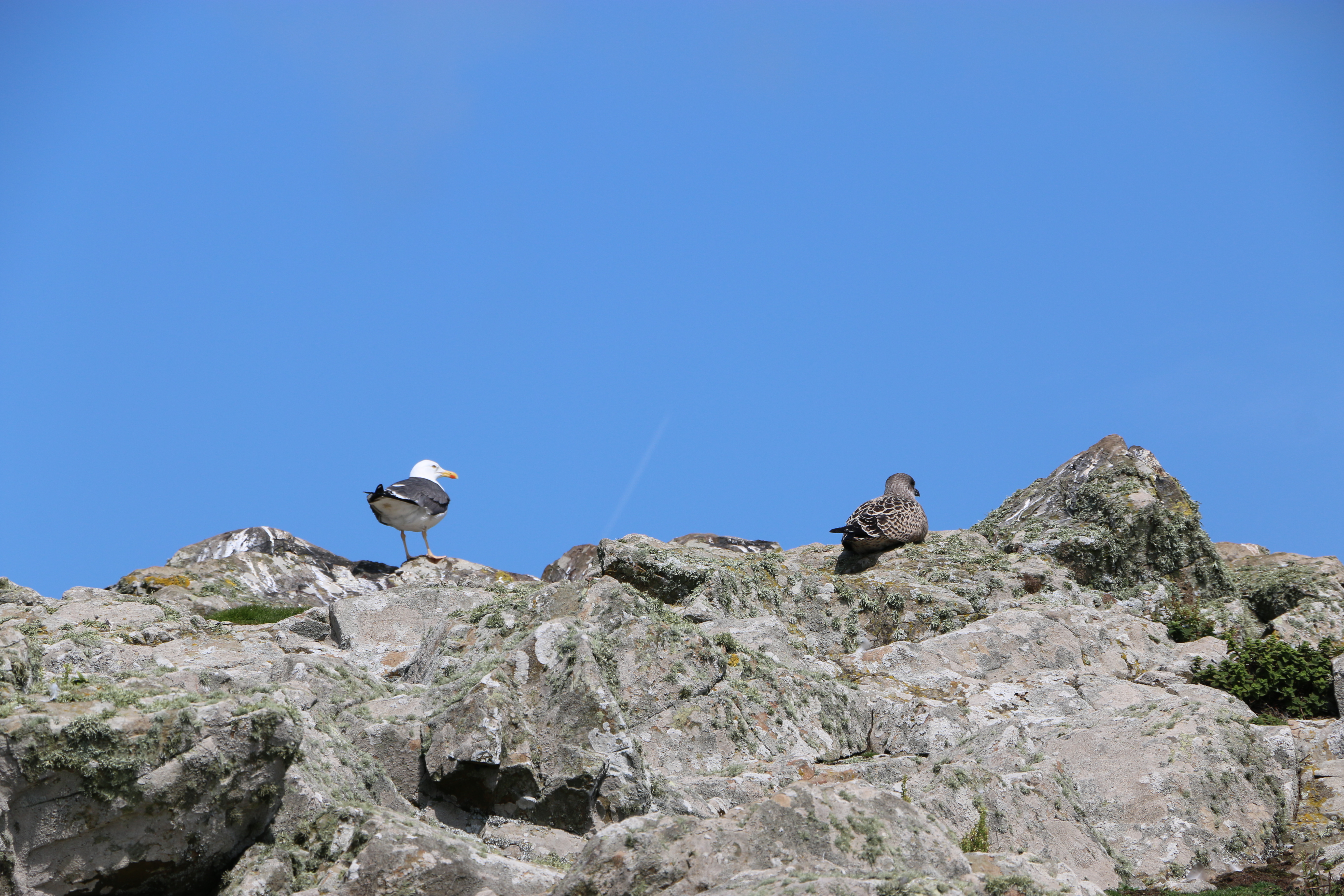
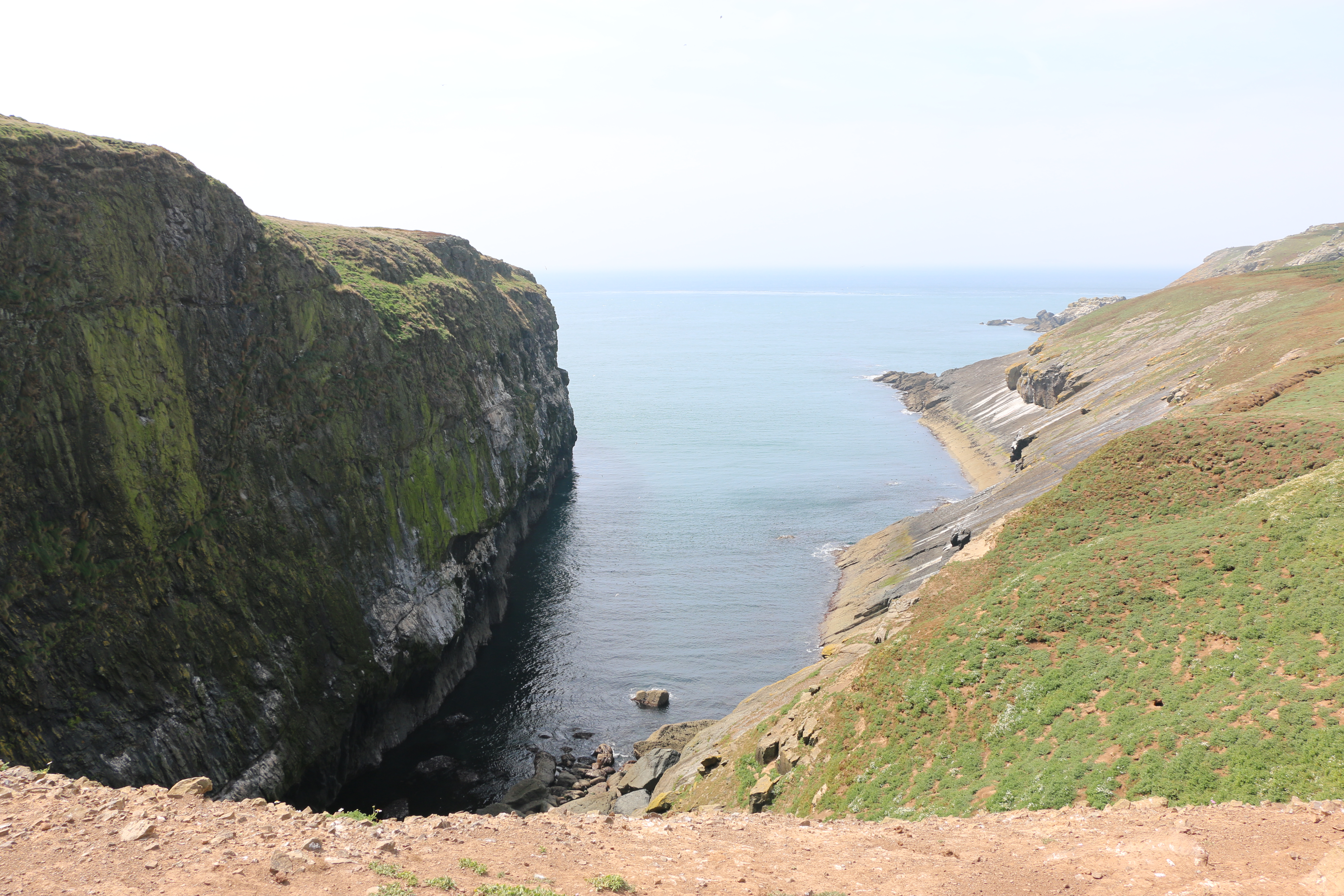
The Wick was formed by geological fault activity and basaltic lava flows. It’s a magnificent cliff face, rocky on one side, steep slopes opposite, and filled with the sound of the breeze and the waves. We saw Fulmars and Great Black-backed Gulls swooping and riding the air currants. It was quite nerve-wracking to peer over the edge from the safety of the ledge that appeared to be especially placed there for that purpose (I could be wrong, but it was what most people were using it for – but as the area was cordoned off to protect the puffins to cross the space to reach their burrows – otherwise the gulls would predate them – the ledge was useful)

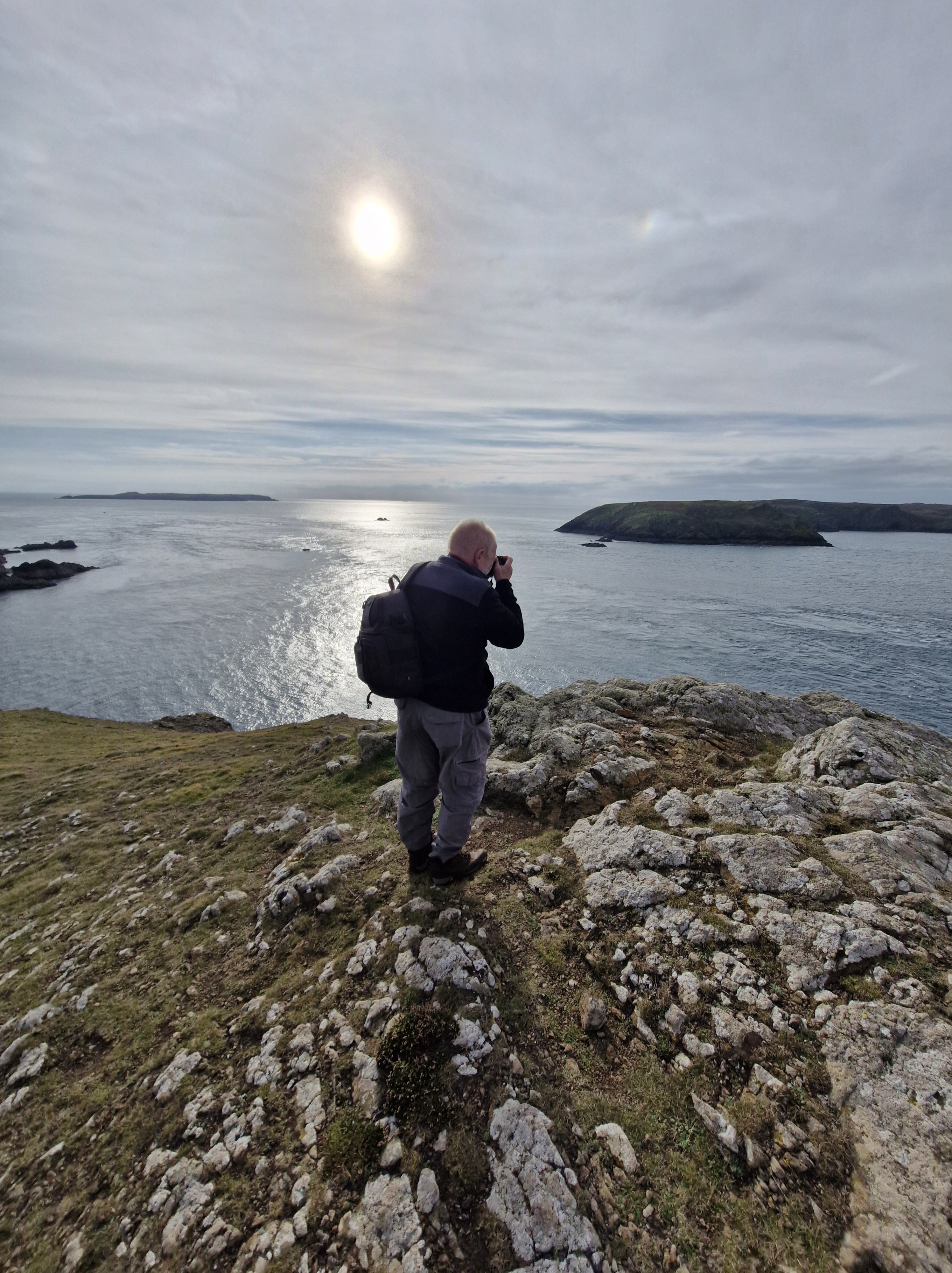
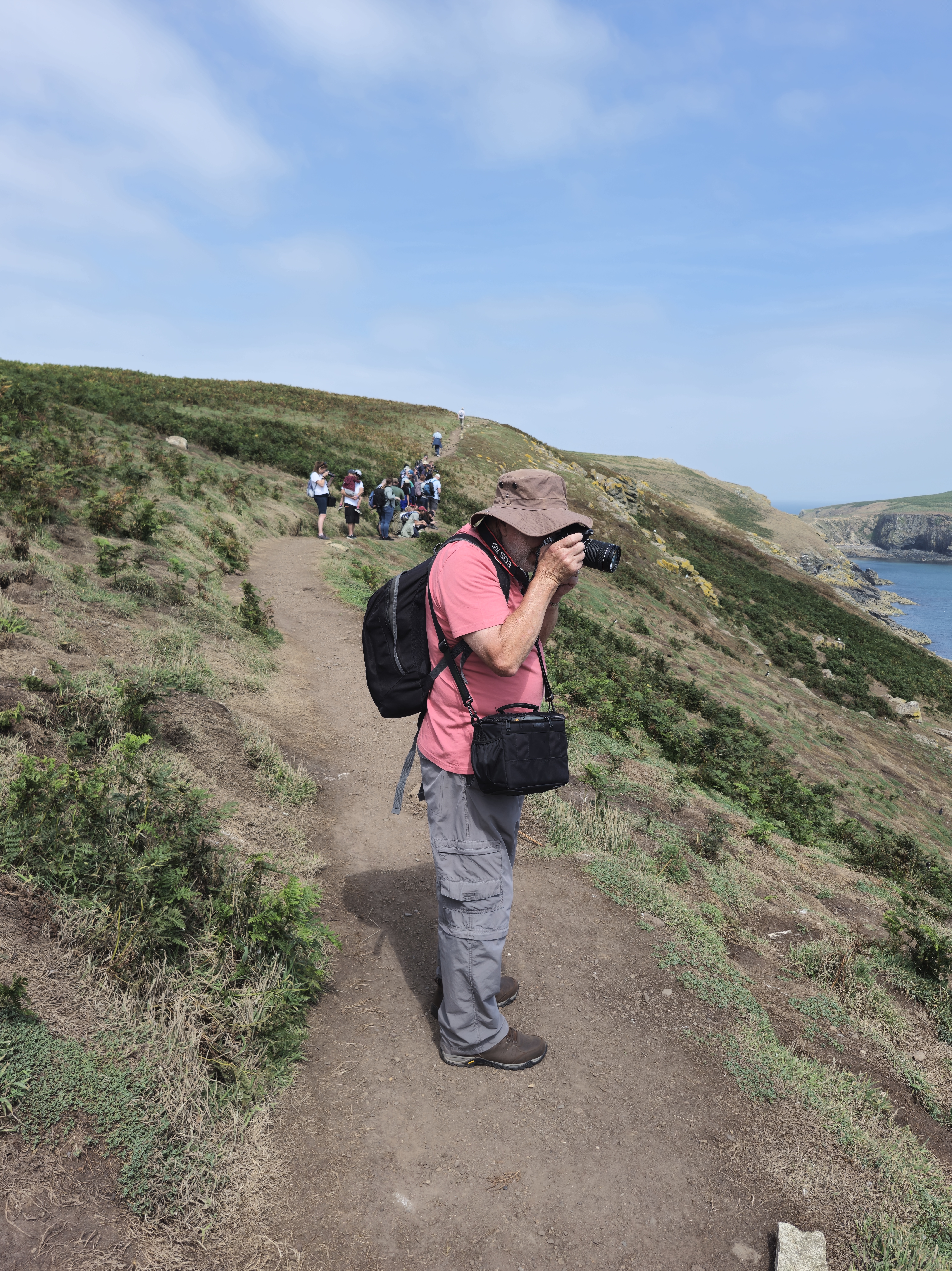
The Photographer! Just to prove he took the photos and that it was really hot, sunny weather.

We were running out of time so began to make our way back to North Haven. The path was steep and even more rocky in places but the views were still imposing.

Reluctant though we were to leave Skomer, we arrived back in good time for our departure slot for Dale Princess to take us back to the mainland with many photographs and great memories.

A short history of Skomer Island:

Around thirty-seven thousand years ago, Skomer would have been part of the mainland, only being cut off, following rising sea level, by the end of the last Ice Age around twelve thousand years ago

There is evidence of untouched remains of huts, fields and cairns that appear to prove that between five and twelve thousand years ago there was an Iron Age settlement of a small farming community on Skomer. Near the Garland Stone, a pyramidal (shaped like a pyramid), just off the northern tip of the island, there is a short circular detour off the main path across a ridge where a group of nine small cairns have been identified. This is probably a prehistoric cemetery. In North Valley, looking towards North Pond when conditions are suitable the remains of a number of circular Iron Age huts in pairs can be seen. This is the most complete and untouched remains of this period in the whole of Europe.

But then, except for some evidence of Medieval buildings on the island there is no clear record of any habitation until around the thirteenth century.

Farm Complex – I researched for a more detailed history of the farmhouse described in Part One, which may be of interest to some:

The farm was lived in by various tenants and owners of the island:

Lord Kensington bought the island in 1897 and used it mainly as part of his sporting estate. A J  Neale, a trawler owner from Cardiff, leased the Island in 1905 with the aim of protecting the wildlife, but had to relinquish the lease later and then it was bought by a Mr Sturt, who stayed on the island with his family. His daughter eventually married a local man Reuben Codd.  The Codd family farmed the Island until the outbreak of the Second World War in 1939. Afterwards the Island became a Field Study Centre for a year until 1946, run by the West Wales Field Society, and visitors stayed in the house. In 1950 the Codds left the Island. Then, in 1954, the roof of the old farmhouse was severely damaged during a major storm – it was left a ruin. The Skomer Island Heritage Project enabled the old farmhouse was reinstated and took in  visitors  again. The old barn, once a two-story barn for storage and animals, is now used for visitor and research accommodation.

Crossing off the Bucket List: Part One @SkomerIsland #walks #photographs #birds #plantlife #Memories

At long last! After living in Pembrokeshire for the last forty-six years and despite walking many miles of the Pembrokeshire coast, and meandrering around a lot of the Welsh countryside discovering wonderful places, lakes, waterfalls … scenary, we hadn’t been on Skomer island. This week we finally managed to go. And it was a glorious day’s adventure.

Boarding the Dale Princess

Arriving on Skomer

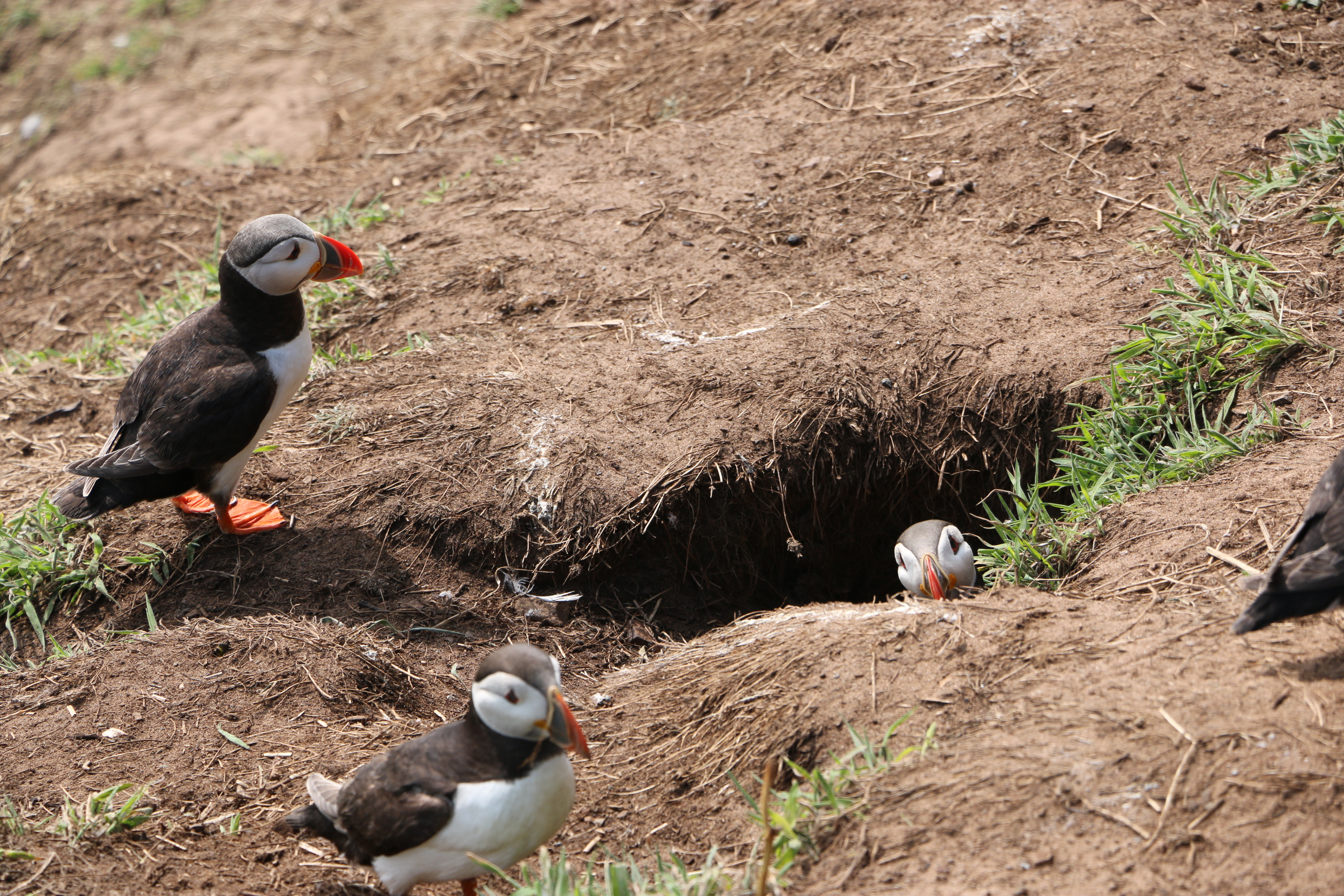
To be greeted by numerous curious puffins who seemed as interested in us as we were in them….

Skomer is internationally important for seabirds and, of course, there are necessary rules to protect the birds so we were told where and how we could walk the paths. One of the National Trust volunteers told us about the numerous species of birds on the island which included the Puffins – now in their last week before they leave the island – we were so lucky to see them.

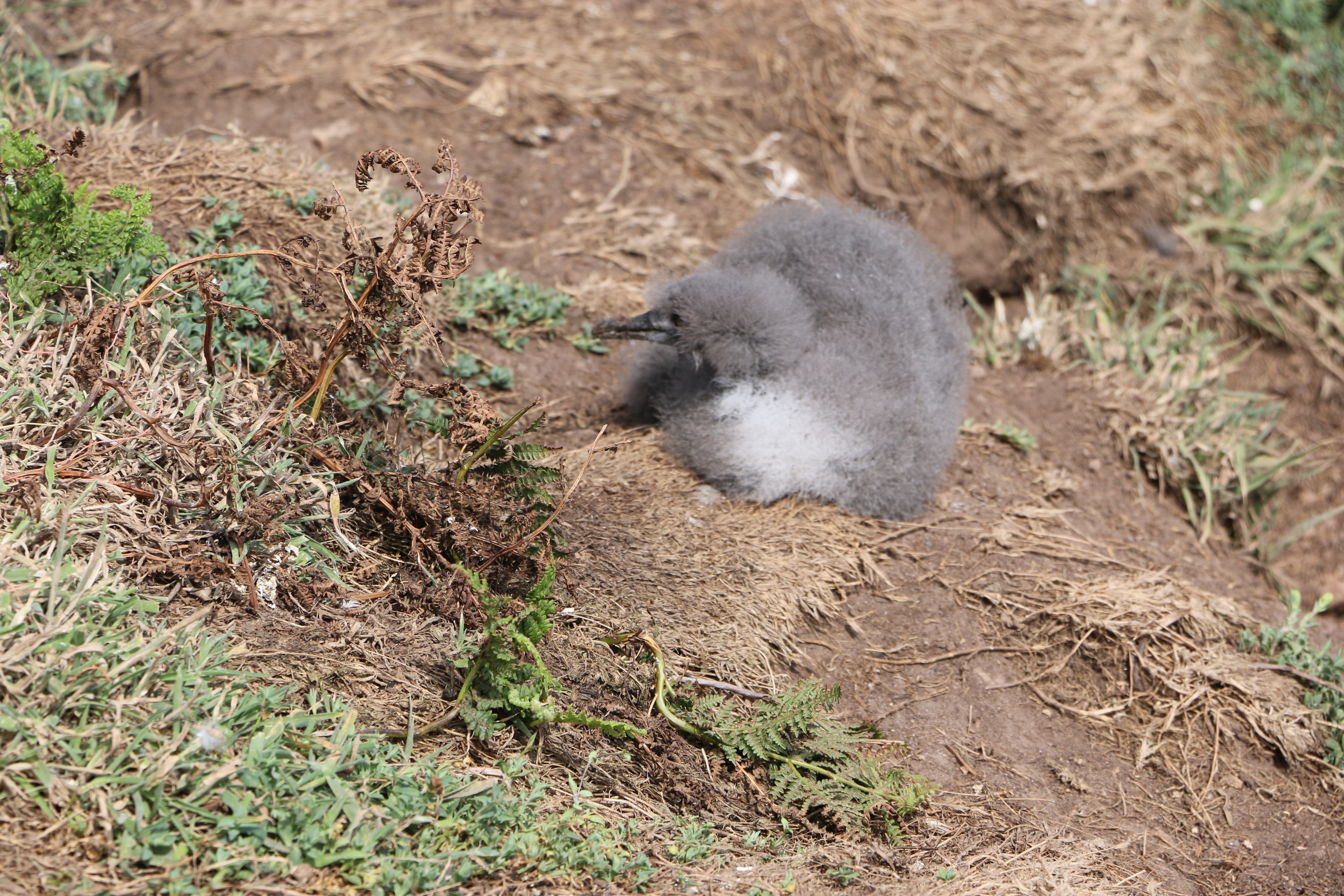
The colony of Manx Shearwaters is the largest colony in the world. Unfortunately we found quite a few remains of these on the narrow paths, apparently caught by the Great Black-backed Gulls. Later in the day we came across a crowd of people watching a Manx Shearwater chick which had wandered out of its ground nest. Seeing the amount of Gulls flying overhead, we hoped it managed to shuffle back to safety.

We weren’t lucky enough to see the Storm Petrels that are usually here on the island (they probably were but our binoculars were of slightly less quality than those hired out for five pounds by the National Trust). But we did see Guillemots, Razorbill, Kittiwakes, and so many of the ubiquitous Carrion Crows and Ravens

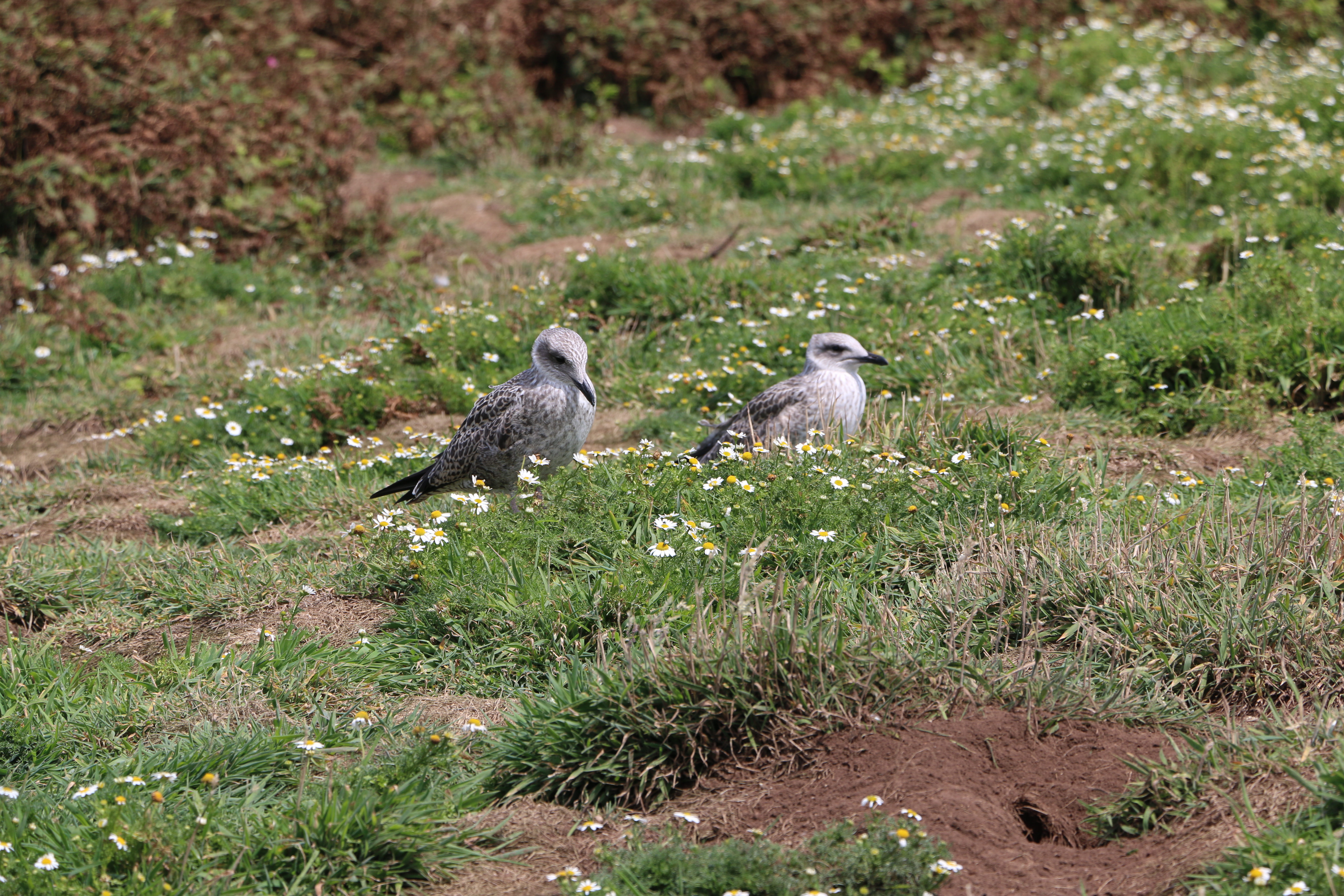
And at the Bird Hide, we watched Fulmars, Herring, Lesser and Great Black-backed Gulls as well as a pair of Canada Geese around the North Pond. (Well, I think they were Canada Geese, the Photographer said they were … ducks!) Huh!

Two watchful Kittiwakes

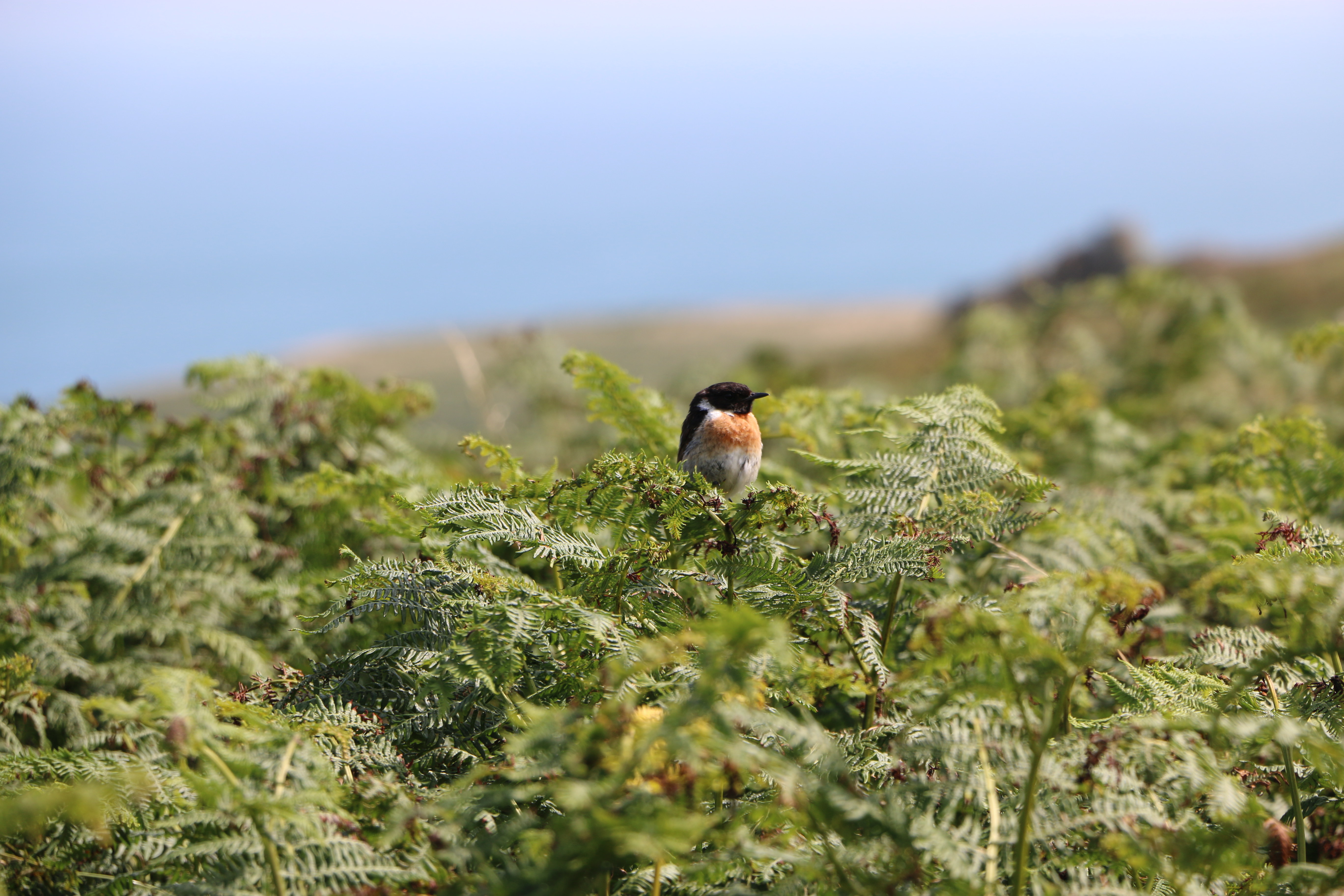
And, later in the day we were followed by a pair of these little birds – we think they were trying to lure us away from their nest.

We thought they were Stonechats – or Linnets – but maybe someone more knowledgeble will be able to correct us?

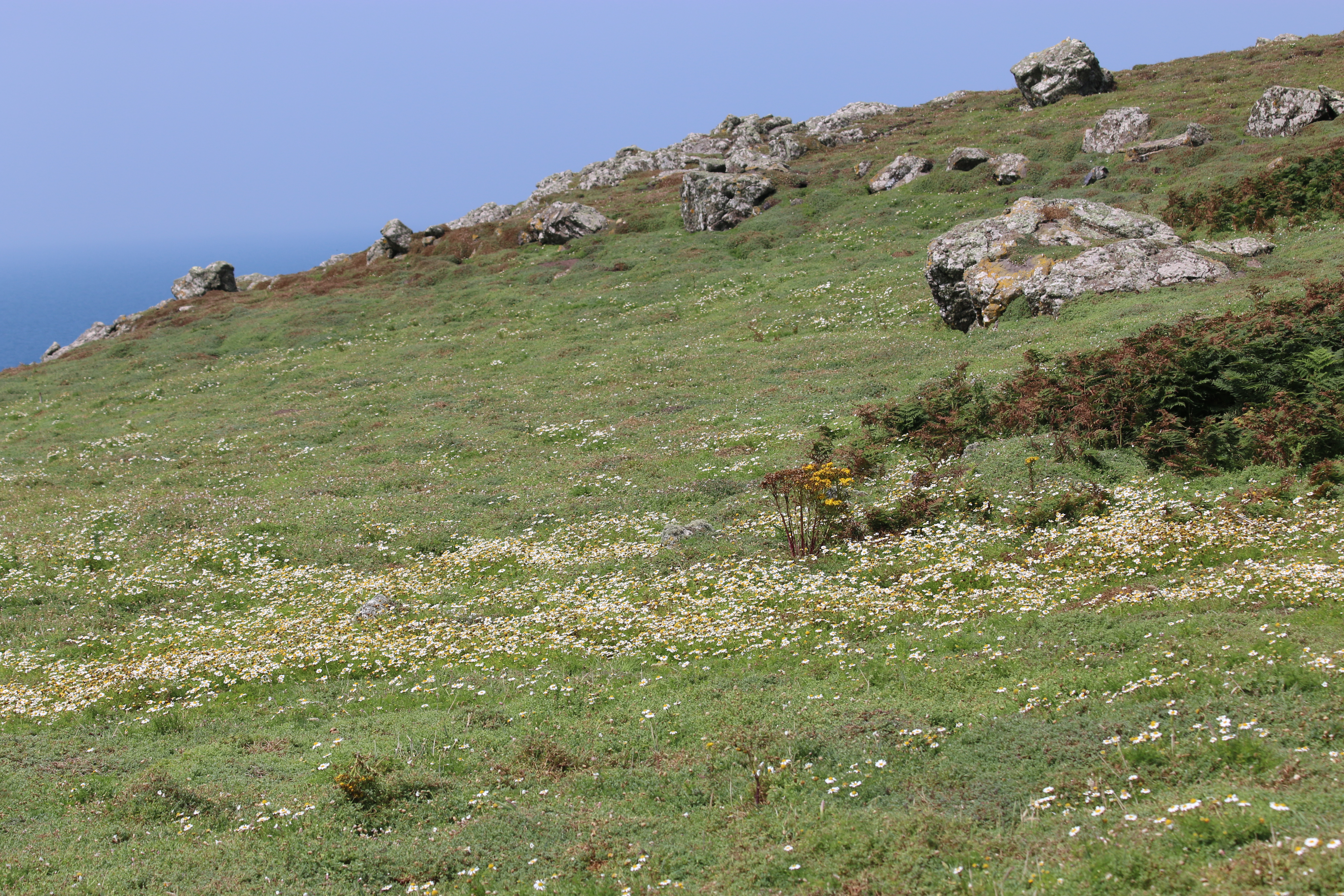
Some of the paths are so narrow they were designated one way paths – we were warned not to stand on the grass alongside in case there there were still Puffin burrows with chicks in them. Others are wider and surrounded by ferns, daisies, wild flowers … a treat to see.

We arrived at the old farmhouse where we stopped for our picnic.

History of the farmhouse:

There are unsubstantiated records of a house built in the centre of the island, thought to be around seventeen hundred on which are the ruins of the old farmhouse, itself dated from about 1840. This was once an impressive and substantial house, built in the traditional Pembrokeshire style with small slates fixed in mortar, protecting the front of the house. Early pictures show a metal veranda running the length of the house, and at the back of the building, an old smoking oven where fish and meats would have been preserved.
The slightly thicker soils in this part of the island and access to water in North Valley enabled a range of crops to be grown. There are records of the farm supporting three families at one time with cows and sheep grazing on the land as well as horses to help with the heavy work. Farming was largely abandoned after the outbreak of the First World War and all agriculture on the island finally ended in 1950.

And onwards to today:

In 1959 the Island was bought by the Nature Conservancy (the Government department that became the Countryside Council for Wales) helped by the West Wales Field Society (the charity that became the Wildlife Trust of South and West Wales). It was declared one of the country’s first National Nature Reserves and is now owned by National Trust and managed by the Wildlife Trust of South and West Wales.

In the next part of our visit to Skomer we move on from the farmhouse to the magnificent coastline and impressive views.

Where we Walked Glen Rosa #Arran #Scotland

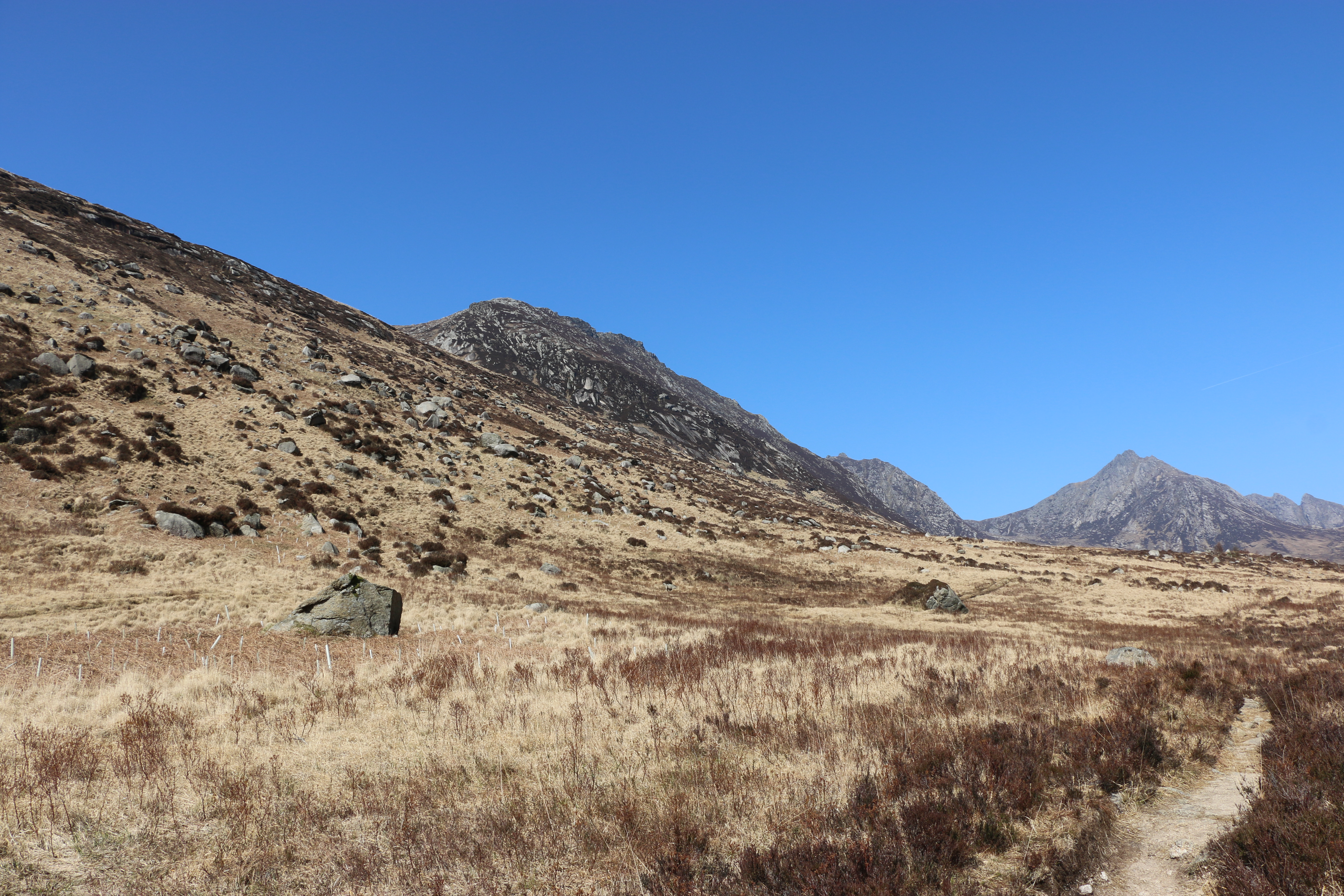
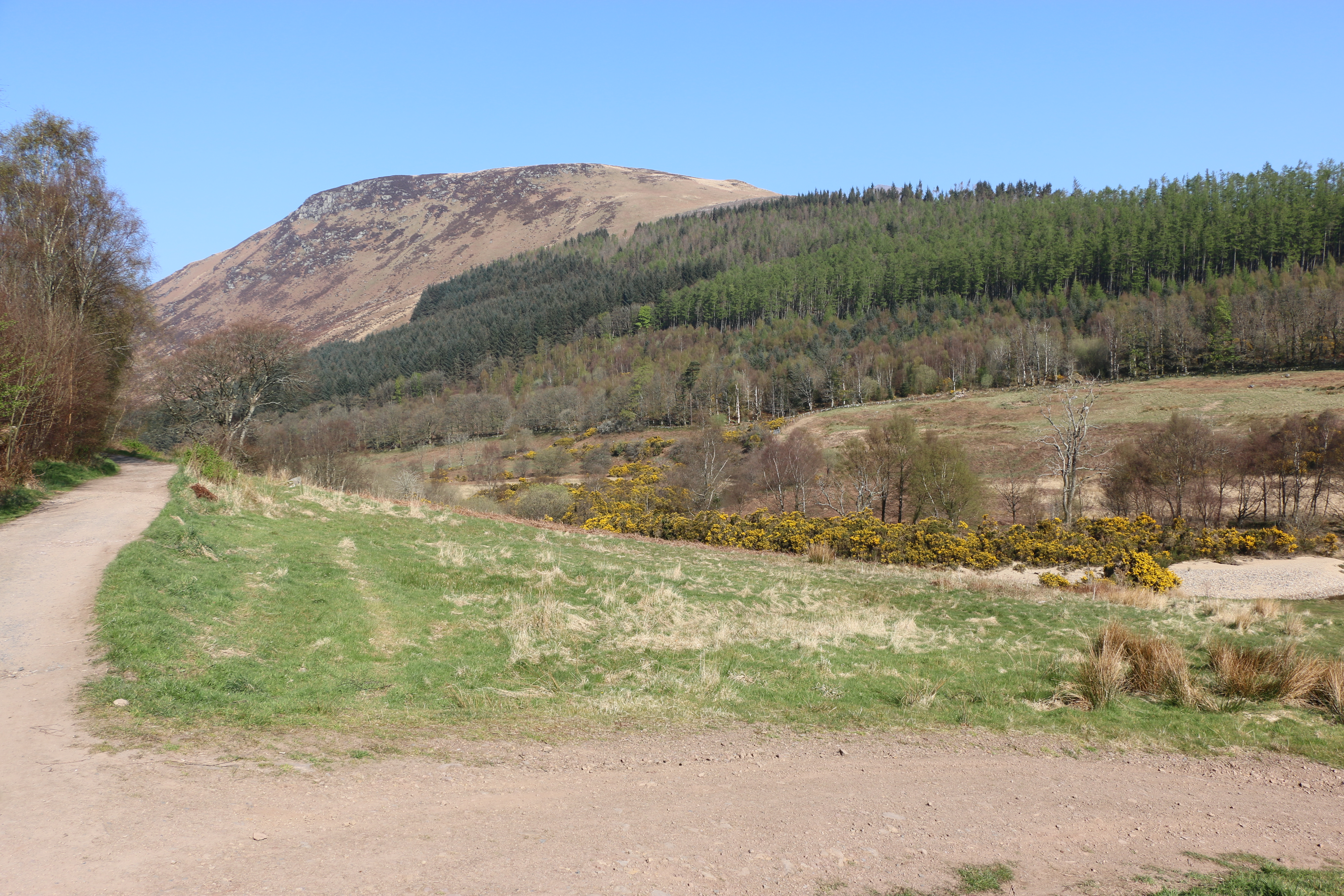
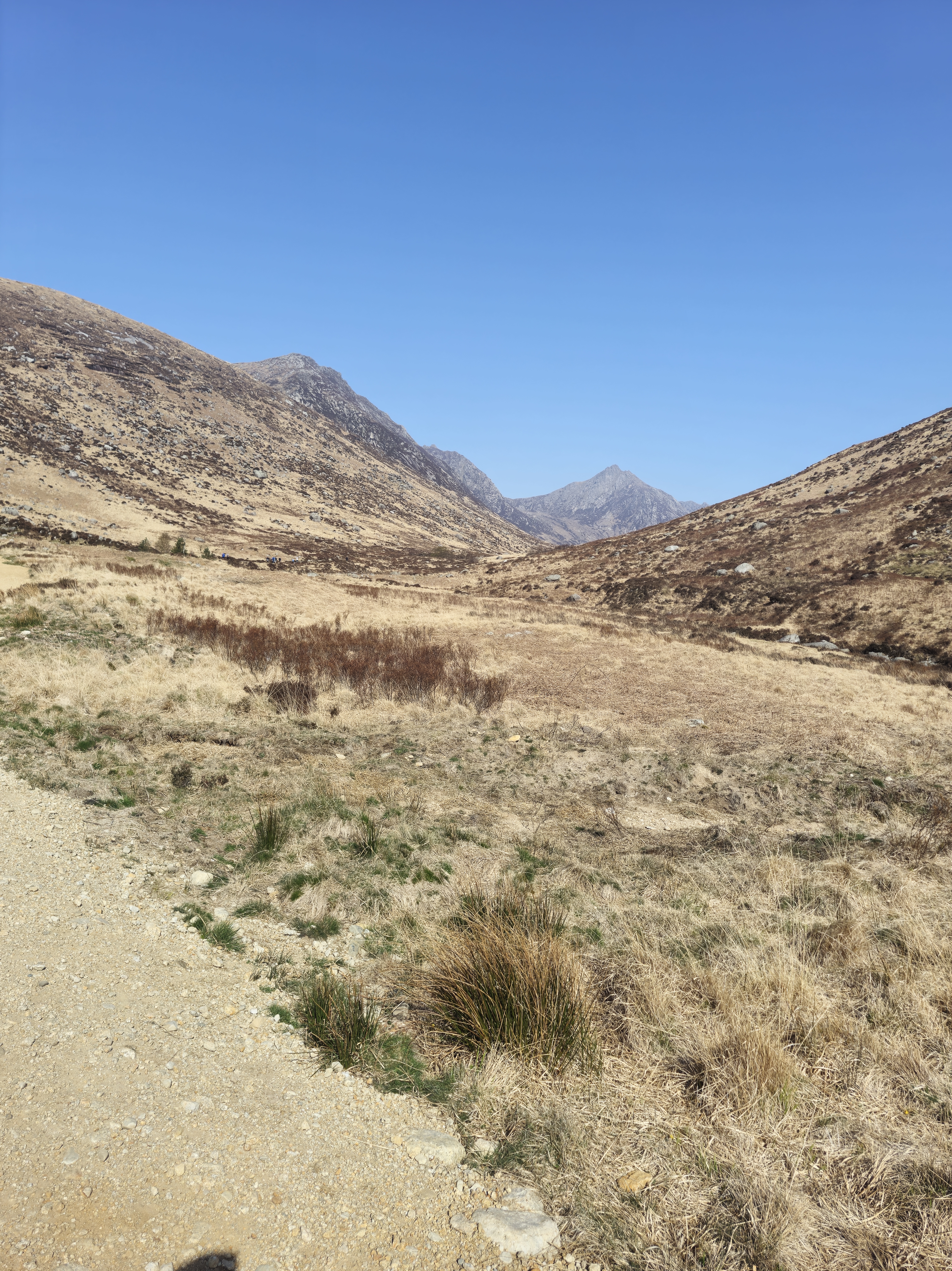
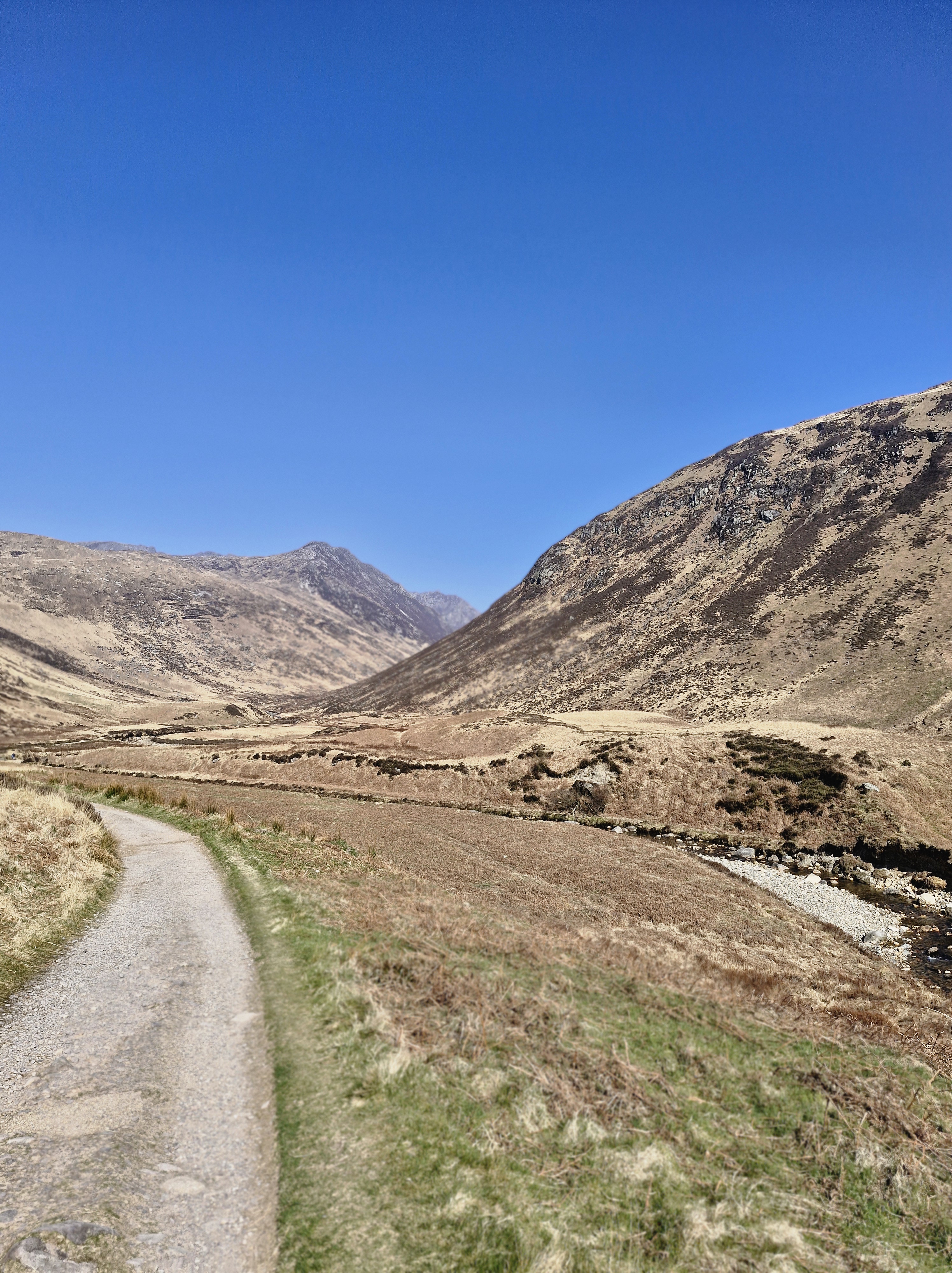
Glen Rosa is a beautiful glen with Goat Fell mountain in the distance – stunning scenery.

Early morning (apparently the best time to do this walk), and we are already driving through Brodick. We turn into a lane just before the Old Brodick Burial Ground, signposted Cart Track, Glen Rosa’. There are two choices according to the directions; drive the first mile on a lane to where the track begins. or walk it. We debate. If it’s interesting, we’ll walk. We park, walk a little way … it’s just a lane between two hedges … nothing much to see.

Photo courtesy of https://creativecommons.org/licenses/by-sa/2.0/The

The Photographer is keen to photograph the glorious views that the directions promise, so back to the cemetary.

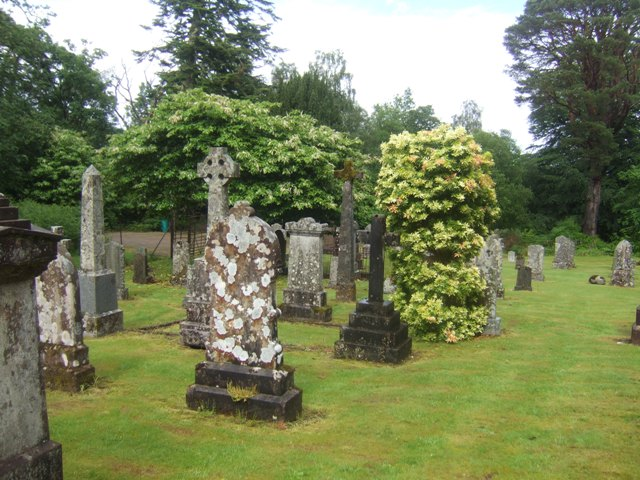
The Brodick Old Cemetery was formerly associated with the Glen Shurig church,, erected in 1839 and demolished about 1931 when the congregation joined the Church of Scotland in Brodick. It looks like an isolated forest clearing and is difficult to acess, but the graveyard has a hundred and twenty-one monumental stones. They are mostly illegible but we do find one dated 1863.

When we arrive where the lane ends and the track begins, just alongside a campsite, we follow the example of others and pull onto the grass verge behind three other cars. We can see the riverbank of Glenrosa Water. We’re keen to get going: out of the car, hoist our rucksacks on our backs, the lead on Dusk.

The view up the glen opens up. We see Cir Mhor in the distance. And beyond it the summit of Cul nan Creagan, Glenshant Hill, and Goat Fell. I see the Photographer’s eyes light up; my heart sinks. ” We’re not going too far are we? It’s quite warm already.” He doesn’t answer – sets off almost at a gallop. Dusk and I follow…

The track is rocky and dusty, but wide, and the surroundings absolutely inspirational.

We arrive at a timber footbridge where the tributary, Garbh Allt, joins the Glenrosa Water and the path splits, with the left-hand fork tracing the smaller stream. The Photographer is already on the path at the other side. We see him looking down …

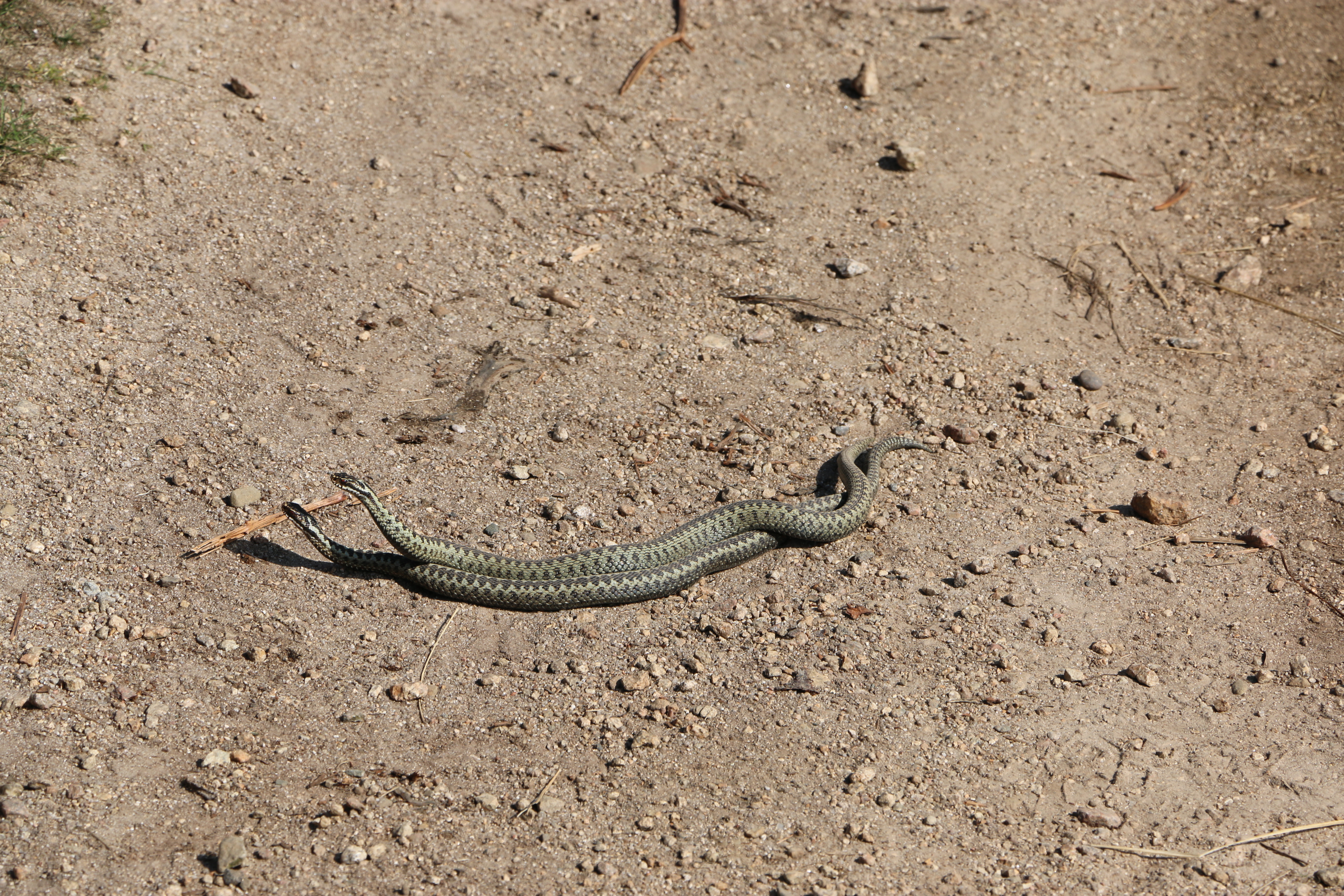
.Dusk and I stop. Two tiny snakes are wriggling around on the path. (For totally personal squeamish reasons I’ve made this photo as small as I can). However tiny they are, we are not going past them. We are going no further

We wait. The Photographer is fascinated, as are three other walkers. But they don’t have a dog – “I need to stay here to protect Dusk!I call. Eventually the snakes wriggle away into the grass, and I tentatively pass the spot they’d been cavorting on.

We follow the path alongside the Glenrosa Water. Before long we arrive at the Blue Pool.

A favoured spot for wild swimming, as a wet Dusk demonstrates.

After a stop for a picnic for us and a half of a dog treat for Dusk, we decide to carry on for more photo opportunities. But the path becomes narrower, more overgrown...

Until almost impassable. And after a friendly hiker informs us that it is the start of the breeding seaon for the adders who are coming out of hibernation (I don’t query his knowledge – just the thought decides me) … it’s time to be setting off back to the car … at a gallop.

We could have crossed an old stone bridge to join onto the circular walk, but we’ve been out for quite a few hours and it’s hot, so we retrace our steps and head back to the house.

N.B. Technical note: Goat Fell is labelled as a Corbett mountain. Corbetts are defined as Scottish mountains between 2,500–3,000 feet (762.0–914.4 m) in height with a prominence of at least 500 feet (152.4 m). They are named after John Rooke Corbett, a district valuer from Bristol, who compiled a list of them in the 1920s. He completed the Corbetts in 1939, when he was in his early 60s.

Climbers who climb all of the Corbetts are called Corbetteers, with the first being John Corbett himself. The second completion was by William McKnight Docharty in May 1960. A list of Corbetteers is maintained which as of July 2018 totalled 678.

Where We Walked Garbad Loch #Arran #Scotland #walks #photography

We parked opposite the Eas Mòr Ecology centre, and crossed the road to pass the Forest at the Falls cafe. “We can call in for a drink and a bite to eat afterwards,” the Photographer says when I look longingly at the table where a couple are enjoying a coffee. The aroma is tempting but Dusk and I follow him up the short, steep path ….

We duck under the trunks of a couple of trees that have fallen across the path. One has a plaque nailed to it – “Bow your heads for you enter sacred and magical lands”. As we were to discover when we finally reached Loch Garbad. But first to the Eas Mór falls.

Photo cortesy of https://tinyurl.com/msk5skns

Today the falls are not as magical as the photographs from the travel website promised when we discovered this walk. It’s a little disappointing but it’s because the weather has been so dry. Only a small slender stream of water runs, mostly obsured by the surrounding shrubs and grasses from where we stand. (hence the above borrowed photograph). It’s certainly not as impressive as the Glenashdale Waterfall from our first walk on Arran, but it does fall over the cliff in a single dramatic drop into a deep dark gorge.

At a stone seat there’s a path junction with a signpost for Loch Garbad. From the description on the map we are following we expected to be walking though woodland but no; all the forest towards the loch has been felled under the Eas Mor project. This is the gradual conversion of the commercial conifer plantations back to semi-natural trees, so many of these have already been planted as saplings. (I’ve included the Facebook link above, because I think it is so impressive what they are doing in so many areas).This is a vast open area of brash (the above ground parts of the tree that hasn’t been removed from the site after felling – the foliage, branches and crown). Not yet as attractive as it will be, but it has opened up a terrific view across to Pladda Island to Ailsa Craig….

We stop for a while to admire and take photographs. Then carry on along the track …

It’s a bit of a slog. We meet only one other couple with a dog. Dusk and it exchange pleasantries, as do we, and then we plod on. (Yes, that is a sly photo of Dusk and me, taken by the Photographer!) The track is rough and narrow in places. I wonder how it must have felt in past times, winding through the overgrown woods, and I appreciate the openness, being able to see that last hill before we get to Loch Garbad.

Not far now.

We’re told to ‘pose’ – As you may be able to see, neither Dusk nor I appreciate this.

We’re both much happier sitting down for a welcome drink of water and taking in the remote beauty of the loch, whilst the Photographer goes off to do his own thing.

An hour later and we’re off again, somehow managing to take a wrong turn and having to retrace our steps to get onto the right path down the hill. Eventually taking the steps past the waterfall again and towards

The Library in the Woods – which is exactly what it says – housed in a small log cabin it’s a hidden library in beautiful woodland, and filled with books and messages left by visitors over the years. Another project created by Eas Mor Ecology and built in 1998 from trees felled in a storm on Boxing Day.

Time to leave. We take a narrow path downwards through woods and across the bridge over the stream fed by the waterfall. Just in time … to see the cafe closing. “Never mind,” says the Photographer, ” We’ll be back at the house in no time. We can have a coffee there. What’s for tea?”

https://tinyurl.com/4y3ftdnw

Where We Walked … Well, What We Saw From Where We Walked #Ailsa Craig #Arran #Scotland

Image courtesy of https://ayrshireandarran.com/ailsa-craig/

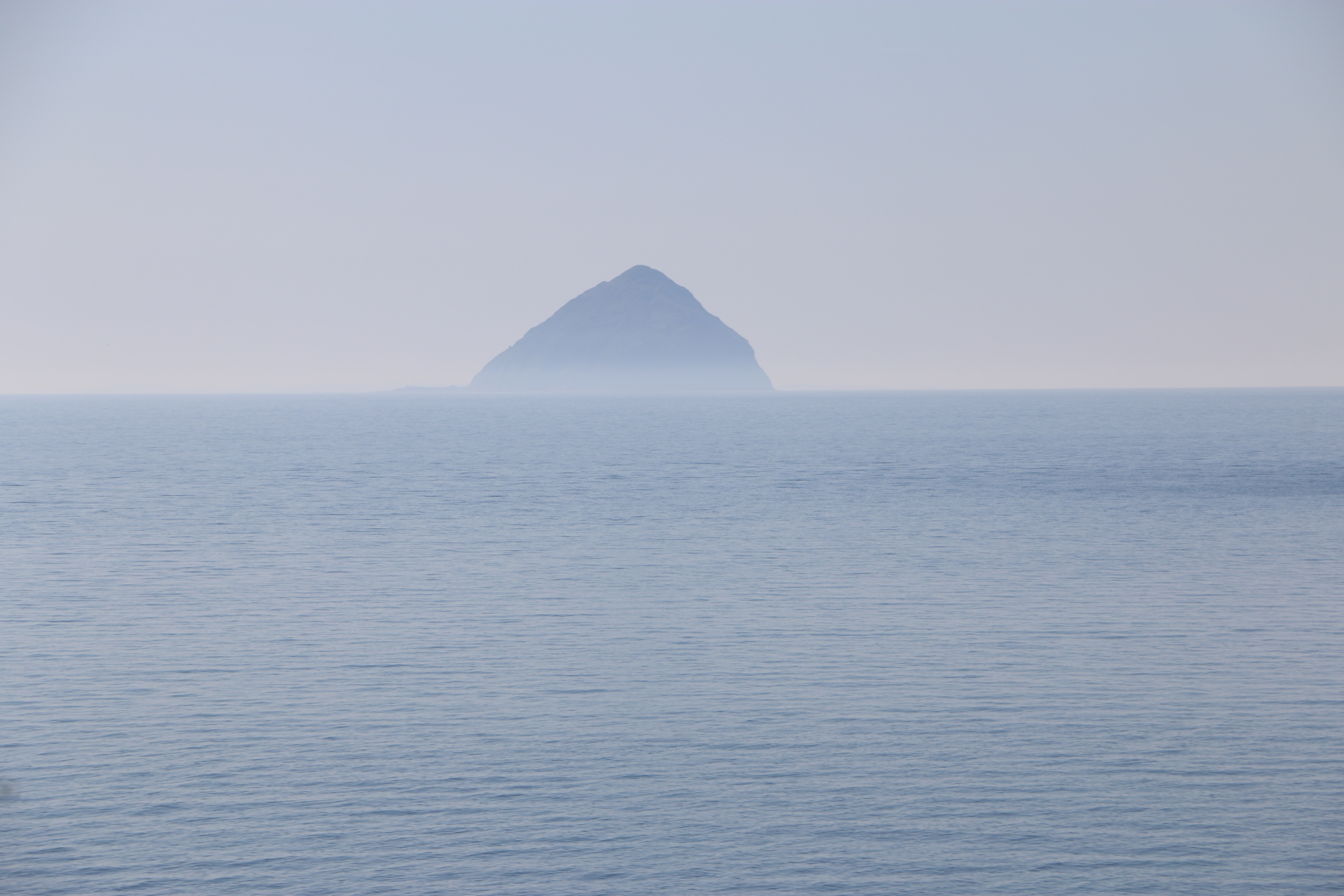
Ailsa Craig, sometimes referred to as the Granite Jewel of the Firth of Clyde, is an island that is colloquially known as “Paddy’s Milestone”. It was a haven for Catholics during the Scottish Reformation in the 16th century, and is also reknowned for being approximately the halfway point of the sea journey from Belfast to Glasgow, which was a traditional route for Irish labourers emigrating to Scotland to seek work.

The island is actually a volcanic plug from an extinct volcano, and is owned by David Thomas Kennedy, the 9th Marquess of Ailsa – except for the two hectares which were sold to the Northern Lighthouse Board in 1883.

The lighthouse was built around 1886, by Thomas Stevenson, a pioneering Scottish civil engineer. It originally used oil-burning lamps, but these were later replaced with incandescent lighting, and then, in 1990, the lighthouse was automated. Further refurbishment, in 2001, meant it was converted to run on solar power.

The island contains some of Europe’s most important bird colonies, which includes the continent’s biggest gannet colony, as well as puffins, so is managed as a nature reserve by the Royal Society for the Protection of Birds (RSPB). It’s also designated a Site of Special Scientific Interest (SSSI) and a Special Protection Area, mainly because of the colony of grey seals, and the occasional whale. There are also visiting large basking sharks during the warm summer months which can be seen feeding at the surface on the planktonic bloom.

The texture of the rocks on Ailsa Craig is a granite called microgranite that is so hard and resistant to impact, it makes it ideal for the manufacture of curling stones. The manufacturer, Kays of Mauchline, Ayrshire in Scotland, has the exclusive rights to the granite, granted by the Marquess of Ailsa, and has been making these stones since 1851, and providing them for the Winter Olympics since Chamonix in 1924.

I thought it interesting that boulders of of the Ailsa Craig microgranite were transported by glaciers as far afield as County Donegal and Pembrokeshire. Of course this led me down another rabbit hole …

The microgranite is part of the geology of the Precambrian rock of the Pembrokeshire Coast National Park. Formed as the lava pushed through the existing rocks and solidified, these rocks can be seen in various locations, such as the coastline of St Bride’s Bay and the southwest tip of the St David’s Peninsula.

Something else I discovered…

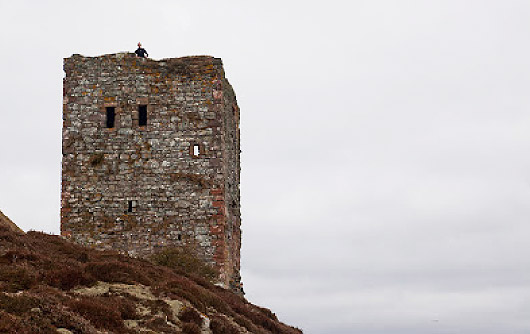
There are ruins on the island of a castle.

Ailsa Craig Castle today – photgraph courtesy of Douglas Wilcox www.seakayakphoto.com

These remains are of a castle built in the middle of the sixteenth century by the Hamilton Family to protect the island from King Philip II of Spain. It stands on a shoulder of rock around three hundred feet above the sea, the only approach to it a steep and narrow footpath, although there used to be an external set of stairs to the tower. The castle was in ruins after the Reformantion but was later restored by Thomas HamiltonIn and the work recorded by an armorial panel high up on the south gable, showing the Hamilton arms. Today only the tower remains.

Where We Walked … Well, What We Saw From Where We Walked #Pladda Isle #Arran #Scotland

We are on our way to walk to Loch Garbad. Dusk is on the back seat. When I hear her move, feel her patting me on the shoulder with her paw, I presume she needs a ‘comfort break’ (as they politly say on coach trips). We turn off the road onto a side lane towards the village of Kildonan, and park on the first layby we come to.

I think Dusk just wanted us to see the glorious coastline and the two islands nearby: Ailsa Craig and Pladda. Ailsa Craig deserves its own blog, so what follows is what we discovered about Pladda Isle.

Pladda Isle (Pladda – Scottish Gaelic: Pladaigh –  the name comes from Old Norse and means “flat isle”)  has been the site of a lighthouse since 1790).

The main structures of the Pladda lighthouse date from 1820 and were constructed under the administration of Thomas Smith of the Stevenson company.

To allow seafarers to distinguish it from the other nearby lighthouses at the Mull of Kintyre, Cumbrae and Copeland, a lower light from a small lantern twenty feet lower than the original one was installed and this carried on for more than one hundred years. And in 1876, a fog signal was also installed on Pladda..  This arrangement operated for about 100 years.

Pladda Isle (Pladda – Scottish Gaelic: Pladaigh –  the name comes from Old Norse and means “flat isle”)  has been the site of a lighthouse since 1790).

In 1901 fixed lights were no longer regarded as suitable for the island so coastal lights and a group of flashing lights were installed. The lower tower was then no longer needed.

The lighthouse keepers who were permanently attached to the station were brought provisions four times a month, two of which landed on Sundays to allow light keepers to attend church.

Everything changed in 1972 when a helicopter began to be used to transport the keepers. But then, in 1990 lighthouse became automated and the lighthouse keepers were no longer needed. The lighthouse is now monitored remotely from Edinburgh and the island is unoccupied. The traditional lantern and lens have been replaced by a couple of solar powered LED lights.

The modern plaque at the base of the main tower bears the crest of the Northern Lighthouse Commisioners and the motto “In Salutem Omnium” – For the Safety of the island

Previously the island was part of the Arran Estate, but in 2022 it was bought and is now privately owned. There are plans to build a luxury property on the island.

ENDNOTE:

For over one hundred and fifty years Robert Stevenson and his descendants designed most of Scotland’s Lighthouses. Battling against the odds and the elements – the Stevensons constucted wonders of engineering that have withstood the test of time, an amazing historical achievement.


Family Crest
“Coelum Non Solum”

Robert Stevenson’s talented family also included the famous writer/novelist Robert Louis Stevenson (his grandson). Visits with his family to remote lighthouses are thought to have inspired his books Kidnapped and Treasure Island.


“There is scarce a deep sea light from the Isle of Man to North Berwick,
but one of my blood designed it.
The Bell Rock stands monument for my grandfather;
the Skerry Vhor for my uncle Alan;
and when the lights come out along the shores of Scotland,
I am proud to think that t
hey burn more brightly for the genius of my father.”


Robert Louis Stevenson

The above was found on the link https://tinyurl.com/yb9x6mpj when I was researching Pladda. It’s fascinating going down these rabbit holes!!

Where We Walked Kingscross Point Arran Scotland #Walks #Photographs

Our second walk was an easy circular stroll – the Photographer assured me. I was suspicious; I’d heard that before… many times. But this time he was telling the truth!

We walk from the house where we are staying – (borrowed house in order, borrowed dog, Dusk, in tow, borrowed cats fed and left behind) – and saunter along a road and past a church towards the sea. Crossing a bridge onto an unsurfaced road we pass several houses ( noting that alongside one was a building that offered fish and chips ‘occasionally’. I wondered, aloud, whether today was one of the ‘occasional’ days as we clamber over rocks onto the beach …

but eventually realise that the Photographer has lingered way behind Dusk and I.

So she and I turn off at a signpost, go through a gate which leads to a path where we negotiate our way through, between gorse and brambles.

And onto a wooded area with a section of boardwalk.

There is the wonderfully evocative scent of wild garlic. Dusk is more intent on leading the way. Leaving the boardwalk, we enter fields, keeping to the path alongside the hedgerows and past the horses grazing in the next field. Through another gate, another field that slopes upwards. I am reminded here of the Rowan tree that I saw when I was here with a friend on our writing retreat in August last year. Then it was covered in berries – today it’s just in budding leaf.

The Photographer with us once again, we climbed over some large stones to reach the site of the ruins of a Viking fort. Actually, there is very little to see .but apparently there is a Viking boat burial near King’s Cross. The above photograph is courtesy of Walking Arran: Iron Age forts, a Viking burial and Buddhist pilgrims. https://tinyurl.com/yc3fupz9. Unfortunately I deleted the Photographer’s photo – which then was lost in the ether… oops!!

A little snippet of information:

Around the ninth century Arran was part of Viking territories; the Kingdom of Mann and the Isles. Many local place names have Old Norse origins which includes Brodrick (where the ferry lands providing the weather is good and the boat is up to the crossing). Brodick is derived from ‘breda-vick’, meaning ‘broad bay’ and Sannox, from ‘Sandvik’ or ‘sandy bay’, in Old Norse.

We stop for a few moments to take in the peace and quiet, and to look over again towards Holy Isle with the lighthouse and buildings that house those on a Buddhist retreat on the island.

And linger to look across the sea towards the range of mountains in the distance. One of our walks later in the week will take us closer to them. But there’s no doubt we won’t be tackling Goat Fell, the highest one the island – intrepid pensioners though we are!!

Then we scramble down to the path alongside the beach on the other side of the cove. The beach here is more rocky, We turn inland and uphill on a path through fields, then onto a lane which eventually leads back to the church – and homeward.

Another satisfying walk in this lovely island of Arran.

The following day we, and Dusk, had a rest, much to the annoyance of Clary, our friend’s cat – because I was sitting in her place on the settee …

before our next adventure – a hike walk to Loch Garbad

The following gives the ( rather long) history of the Holy Island, which I find fascinating – is courtesy of the website Holy Isle: Centre for World Peace and Health: https://www.holyisle.org/the-island/history/

History

The earliest recorded name for Holy Isle was Inis Shroin, which is old Gaelic for ‘Island of the Water Spirit’.

After the time when the Celtic Christian saint St. Molaise lived on the island at the end of the 6th century, it became known as Eilean Molaise, which is Gaelic for ‘Molaise’s Island’. This name gradually evolved over the course of centuries until early in the 19th century the island became generally known as Holy Isle (or the Holy Isle) and the village on the other side of the bay became known as Lamlash.

Saint Molaise (566 – 640 A.D.)

St. Molaise was born in Ireland, the son of Cairell, the Irish king of what is now called Ulster, and the Scottish princess Gemma. Molaise was a very gifted and spiritually inclined child. He was much loved by his own people and was offered the throne of Ulster when he came of age, but instead he chose a religious and secluded life in a cave on the west coast of Holy Isle. He was then only 20 years old. Some people believe that when St. Molaise chose the cave on Holy Isle as his hermitage, the island was already considered a special, “holy” place.

When he was about 30 years old, Molaise went to Rome and was ordained as a priest by Pope Gregory the Great. When he returned, he entered the great monastery in Leighlin, Ireland which St. Gobban had established. Soon after he became its abbot. Under his guidance the monastery grew in fame and number to about 1500 monks. Molaise played an important part in adopting the controversial Roman method of dating Easter within Ireland. This was an important issue among the different Christian churches, who debated it for several centuries. When Molaise was in his late 50s, he went back to Rome and was consecrated first Bishop of Leighlin by Honorius I. Historians are divided on when Molaise died, estimating between 638 and 641. His feast day is celebrated both in Ireland and Scotland, on the 18th of April.

St. Molaise’s cave and the Healing Well

The cave where St. Molaise lived, is about half way along the western shore of Holy Isle, about ten meters above the high-water mark, and consists of an overhanging sandstone rock with a sunken stone floor. It is thought that in Molaise’s time much of the opening of the cave was closed up by a wall to keep the weather out. The cave can still be visited today. Carvings can be seen in the wall, such as simple crosses, perhaps made by pilgrims, and Norse runes, mainly of personal names. One of these says “Vigleikr the Marshall carved”. Some of the crosses seem to have been carved at around the same time as the names, so perhaps there was an element of pilgrimage to the cave among the Vikings. Lastly, there is an unusually designed cross carved into the roof of the cave.

Close to the cave is a spring, known as the Healing Well which is thought to cure ills and bring blessings.  In the 18th century it was recorded that “the natives used to drink and bath in [the well] for all lingering ailments”. The same source describes the water as “gushing out of a rock”. At the beginning of the 20th century apparently there was a cistern present built of masonry, with a stone spout which delivered the water. The spring is overgrown now so that you wouldn’t get more than a footbath from it but the water is still cold and clear, albeit it does not meet current EU standards for drinking water.

The Monastery: There are several indications of a monastery having existed on Holy Isle, most probably close to what is now the Centre at the north end. It may have been erected at the beginning of the 13th century, although other sources say it was in the 14th century. The monastery buildings could have been made of wood or a dry-built structure which left no traces. In the 16th century it has been recorded to have decayed.

The Vikings: In 1263 King Haakon of Norway brought a fleet of ships to the shelter of Lamlash Bay, before fighting the Scots at the Battle of Largs. Vigleikr, one of his marshals, went ashore at Holy Isle and cut runes with his name on the wall of St. Molaise’s cave. After the battle, King Haakon gave the island of Arran to one of his supporters, but this really didn’t count for much once the Norse had departed.

The Dukes of Hamilton

In 1488 Holy Isle and land in the Lamlash area was owned by one John Hunter, before being passed over to the Earl of Arran in 1527. The island continued to be part of the Arran Estate in Hamilton ownership even into the 20th century, being rented out to various people until that time. In the 18th century, Captain James Hamilton (not related to the dukes of Hamilton who owned Arran) obtained a long lease on Holy Isle from the Duke of Hamilton. In 1779 he built what became known as the Big House (the old farmhouse, now called the Harmony Wing).

Lighthouses

In 1877 the inner lighthouse (facing Arran) was built on Holy Isle, engineered by David and Thomas Stevenson. It is locally known as “Wee Donald”, though the current lighthouse keepers don’t know why anymore. The outer lighthouse, or Pillar Rock, was built in 1905 on the east shore. It had a fog horn and a revolving light that was lit by paraffin. Pillar Rock lighthouse was the first lighthouse built with a square tower and has several rooms inside for the men who worked there. Lighthouse cottages were built to house four families of the lighthouse keepers and a walled garden was made. The lighthouses became automated in 1977, and are now serviced every two weeks by local people living on Arran.

The “Rich American”

In 1957 the Duchess of Montrose died and the death duties were so high that the Arran Estate had to be divided. Part of the land was passed to the Forestry Commission and the National Trust, whilst other parts went into private hands. Holy Isle received a life tenant in 1958: Stewart Huston of Pennsylvania, USA. He was a millionaire who had a special interest in the island because he was descended from Gershom Stuart, who was Minister of Kilbride (at Lamlash) from 1747 – 1796. Despite his interest in the island and its history, he did not visit often, and the land continued to be used for grazing sheep by local shepherds from Arran.

The Universities Federation for Animal WTelfare

In 1968, the UFAW (Universities Federation for Animal Welfare) was asked to advise on the husbandry and management of the island’s animals, which at that time consisted of Blackface sheep and a herd of feral goats. They set up a Field Study Centre in 1969, and after Stewart Huston passed away, they were able to buy the island in 1971. in later years they introduced 25 Soay sheep and 5 Highland cattle, and a few years later 5 Eriskay ponies. When the UFAW could no longer afford to keep it, the island had to be sold again.

The Morris Family

In April 1984, after having been on the market for 20 months, the island was bought by James and Catherine Morris for £120,000. They moved into the farmhouse the following summer with their two young sons. They managed to connect electricity from the south end to the north, which made living in the farmhouse much more comfortable for them. In 1990 all the Highland cattle and seven ponies were taken off the island, leaving the Saanen goats, the Soay sheep and five Eriskay ponies.

In 1987 they decided to put the island up for sale for £1 million. The island remained unsold however, and in the autumn of 1990 Mrs Morris approached Lama Yeshe to offer the island to him, because she felt that its future would be best taken care of by “the Buddhists from Samye Ling”. Lama Yeshe first came to Holy Isle on the winter solstice of that year and became determined to buy the island. Finally the asking price was dropped to £350,000, which Lama Yeshe managed to raise by April 1992.

Where We Walked – Glenashdale Waterfall and the Giant’s Graves, Arran, Scotland #Walks #Photographs #Viewpoints #Waterfalls #Legends #History

We’ve just returned from a wonderful couple of weeks on Arran. The photographer sourced the walks for us. Today he promises a short outing because it’s rather warm; “maybe a couple of hours allowing for stops… for Dusk, our borrowed border collie, of course”. (Oh, not for photographs then?).

We are going to one of the most famous waterfalls on Arran, Glenashdale Falls, and then on to see the Giants’ Graves.

We follow the directions from a rather old book of walks, which immediately adds a couple of miles on by sending us along a wide rather rough road, instead of going to the end of Whiting Bay and turning onto the forestry track.

Though I have to admit we passed some peaceful scenic views.

We were unable to follow the path through the forest to the Iron Fort due to the damage and fallen trees, caused by the latest storm on the island. So we continued along the wide track for another mile.

We reached Glenashdale Falls, also known as Eas a’ Chrannaig, one of a series of falls on the Glenashdale Burn, which flows from moorland near the summit of Tighvein eastwards towards Whiting Bay.

The viewing platform – not for anyone scared of heights

Not sure why I was encouraged to go along the viewing platform first. Thinking about it, my walking companions may have thought I was heavier than the two of them put together…

The sound of the rushing water competes with the breeze rustling through the trees around us. It’s a magnificent, awe inspiring place.

We retraced our steps from the waterfall and turned left, following a sign to the Giant’s Graves along the wide track … for another mile.

The Photographer trudges through tall grass to the edge of the cliff to take pictures. At one point he disappears completely. Dusk and I wait – patiently – he’s done this disappearing act many times in the past, just to get a good shot of somewhere.

When he returns we walk on, until a sign for a narrow path informs us we’re almost at the site of the Giants’ Graves.

The Giants’ Graves are the remains of two Neolithic chambered tombs on the Isle of Arran in Scotland on a ridge one hundred and twenty metres above the sea and overlooking Whiting Bay to the south. Mostly ruined, with turf covering part of the remains, they still have an air of mystery standing proud in a clearing in the forest.
The North cairn, excavated in 1902, has a chamber that is six metres long, and is around one metre wide. Among the artifacts recovered were pottery shards, flint knives, and leaf-shaped arrowheads.
The South Giant’s Grave has a chamber about four metres long, and over one metre wide. The initial excavations in 1902 only revealed soil and stones, but in 1961/2 more exploration produced nine shards of a round-based vessel, and fragments of burnt bone.

Legend has it that the giant referred to is Fionn mac Cumhaill, an early Irish war-leader, and his followers, known as the Fianna. Between the 10th and 14th centuries, his legend became widely known in Scotland. According to legend, Fionn and the Fianna had superhuman strength and size, being as much as 500 times larger than a man.

It’s getting late; we need to get back to Whiting Bay.

Beyond the graves the narrow path winds its way steeply down. And one of the rare times the Photographer catches me unawares for a photograph … from behind!

One last photo – Whiting Bay, with Holy Island in the distance.

The walk took us just a little more than the two hours that the more up-to-date directions we later discovered, so the following day we had a rest (using Dusk as our excuse again!) before our next adventure – a coastal trek as far as Kingscross Point, stopping to photograph the ruins of a viking fort and the views of Holy Island, before continuing back to Whiting Bay.

The Holy Island or Holy Isle is an island in the Firth of Clyde, off the west coast of central Scotland, inside Lamlash Bay on the larger Isle of Arran. The island is around three kilometres long and around one kilometre wide. Its highest point is the hill Mullach Mòr. There will be more about the Holy Island in our next post of walking on Arran.

And now a little self indulgent promotion…

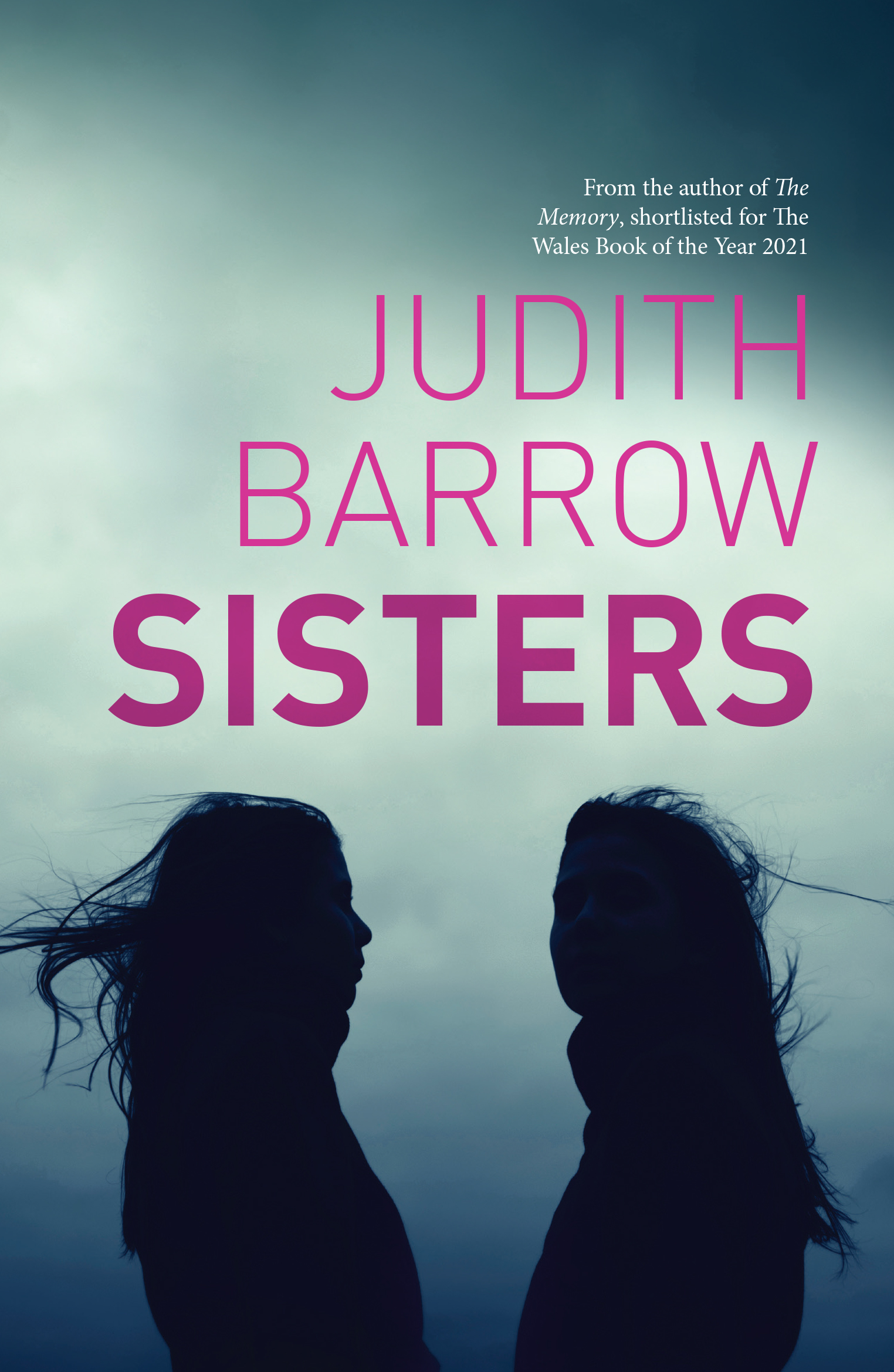
A gripping ‘cuckoo in the nest’ domestic thriller

After the death of their mum, twins Chloe and Charlie are shocked when their dad introduces Lynne as their ‘new mummy’. Lynne, a district nurse, is trusted in the community, but the twins can see her kind smile doesn’t meet her eyes. In the months that follow they suffer the torment Lynne brings to their house as she stops at nothing in her need to be in control.

Betrayed, separated and alone, the twins struggle to build new lives as adults, but will they find happiness or repeat past mistakes? Will they discover Lynne’s secret plans for their father? Will they find each other in time?

The Stranger in My House is a gripping ‘cuckoo in the nest’ domestic thriller, exploring how coercive control can tear a family apart. Set in Yorkshire and Cardiff, from the 60s to the winter of discontent, The Stranger in My House dramatises both the cruelty and the love families hide behind closed doors.

“Judith Barrow’s greatest strength is her understanding of her characters and the times in which they live.” Terry Tyler

https://tinyurl.com/36m89w6t

Grateful for this reader’s review. One of the first for The Stranger in my House, when it was published in November 2024.

The Stranger in my House is an urgently compelling story of abusive power, detailing the damage that happens when those with the power to protect vulnerable children choose to turn their eyes away. Judith Barrow takes us into the dark & haunted world of coercive control, masterfully turning her own power as a storyteller on to this troubling theme, exploring it with insight & sensitivity.

In Lynne, the author has created a monster. Her victims, twin children Chloe & Charlie & their hapless father, are each portrayed with Judith Barrow’s usual precision & humanity; the writing as always, is impeccable.

It is a troubling book, but ultimately, on some level, redemptive. And although I found the ending satisfying & honest, I was nevertheless left with a sense of sadness, not only for Chloe & Charlie, but because decades on from the events in this book we still exist in a world where the emotional needs of children are too often subsumed by those of selfish, self-serving, abusive adults.
The Stranger in my House is a hugely important book & I highly recommend it.

https://tinyurl.com/36m89w6t

Where we Walked @CraflwynEstate @Beddgelert @Snowdonia @ Eryri @Wales #walks #photographs #mountains #viewpoints

The two hundred acres of  Craflwyn estate is set in the heart of beautiful Eryri (Snowdonia), an area steeped in legend.

A walk of two halves today. We parked at the Crafwlyn Estate car park, just outside Beddgelert and, having read the information board, the Photographer and I decided to do the Green Walk. The sign promised an easy to moderately difficult ascent of only one and a half miles to the viewing point. It was the “spectacular views” that clinched it.

The heather was glorious. The path was … somewhere…

The walk turned out to be difficult, and certainly longer than one and a half miles. Quite the opposite in fact, and it and became steeper almost immediately, and very rocky. We assumed it would level out at some point but it never did and we just kept climbing and climbing.

Dinas Emrys is a rocky and wooded hillock near Beddgelert. Rising some seventy-six metres above the floor of the Glaslyn river valley, it overlooks the southern end of Llyn Dinas. The legend is that it’s where Merlin once trod and where a dragon still sleeps. At the top are the remains of a square tower and defensive ramparts belonging to the ancient princes of Gwynedd. We never saw that at any time over the week… ” the square stone tower at Dinas Emrys in Gwynedd, Wales is believed to be the base of a 12th century tower or citadel. The tower is now in ruins, but its rectangular shape and local rubble masonry are still visible.
According to legend, the tower was built by King Vortigern as part of a castle he wanted to construct on Dinas Emrys. However, the walls would mysteriously collapse each night, which led Vortigern to seek the help of Merlin the wizard. Merlin revealed that two dragons, one red and one white, were fighting in a pool beneath the castle. Vortigern and his men dug into the mountain to release the dragons, and the red dragon eventually won the battle. The castle was then named Dinas Emrys in honor of Merlin, and the red dragon became a symbol of the fight against the Saxons.

oplus_32

Just at the point where the ferns and tufts of coarse grass petered out, and the way in front of us rose sharply and consisted of sharp rocks, it began to rain and the view disappeared. We turned and scrambled back down – the second time we’d turned back on a walk that week.

One disgruntled Photographer…

Twenty minutes later and wet through, we saw a sign for the Waterfall trail. A footpath lead through the woodland, following a waymarker to the right.

We passed the dragon bench. Too wet to sit on it though.

We walked up some steps to see a small waterfall. But we could hear loud splashing further along the path.


The large waterfall. Apparently deep enough to swim in.
I didn’t test that theory.

It was a wonderfully peaceful end to the day – and to our last walk of the holiday.

We’d had a great week. The photographer was keen to get home to start downloading, printing off and framimg his photographs.

I was ready to finish the proofreading of my next book, The Stranger in my House, to be published by Honno on the 14th November 2024 .

Described as…

A gripping ‘cuckoo in the nest’ domestic thriller

After the death of their mum, twins Chloe and Charlie are shocked when their dad introduces Lynne as their ‘new mummy’. Lynne, a district nurse, is trusted in the community, but the twins can see her kind smile doesn’t meet her eyes. In the months that follow they suffer the torment Lynne brings to their house as she stops at nothing in her need to be in control.

Betrayed, separated and alone, the twins struggle to build new lives as adults, but will they find happiness or repeat past mistakes? Will they discover Lynne’s secret plans for their father? Will they find each other in time?

The Stranger in My House is a gripping ‘cuckoo in the nest’ domestic thriller, exploring how coercive control can tear a family apart. Set in Yorkshire and Cardiff, from the 60s to the winter of discontent, The Stranger in My House dramatises both the cruelty and the love families hide behind closed doors.https://tinyurl.com/349ucdat

I’m happy to leave things as they are here. So, until next time … thank you for following the Photographer and I on our adventures.