Where we Walked @CraflwynEstate @Beddgelert @Snowdonia @ Eryri @Wales #walks #photographs #mountains #viewpoints

The two hundred acres of  Craflwyn estate is set in the heart of beautiful Eryri (Snowdonia), an area steeped in legend.

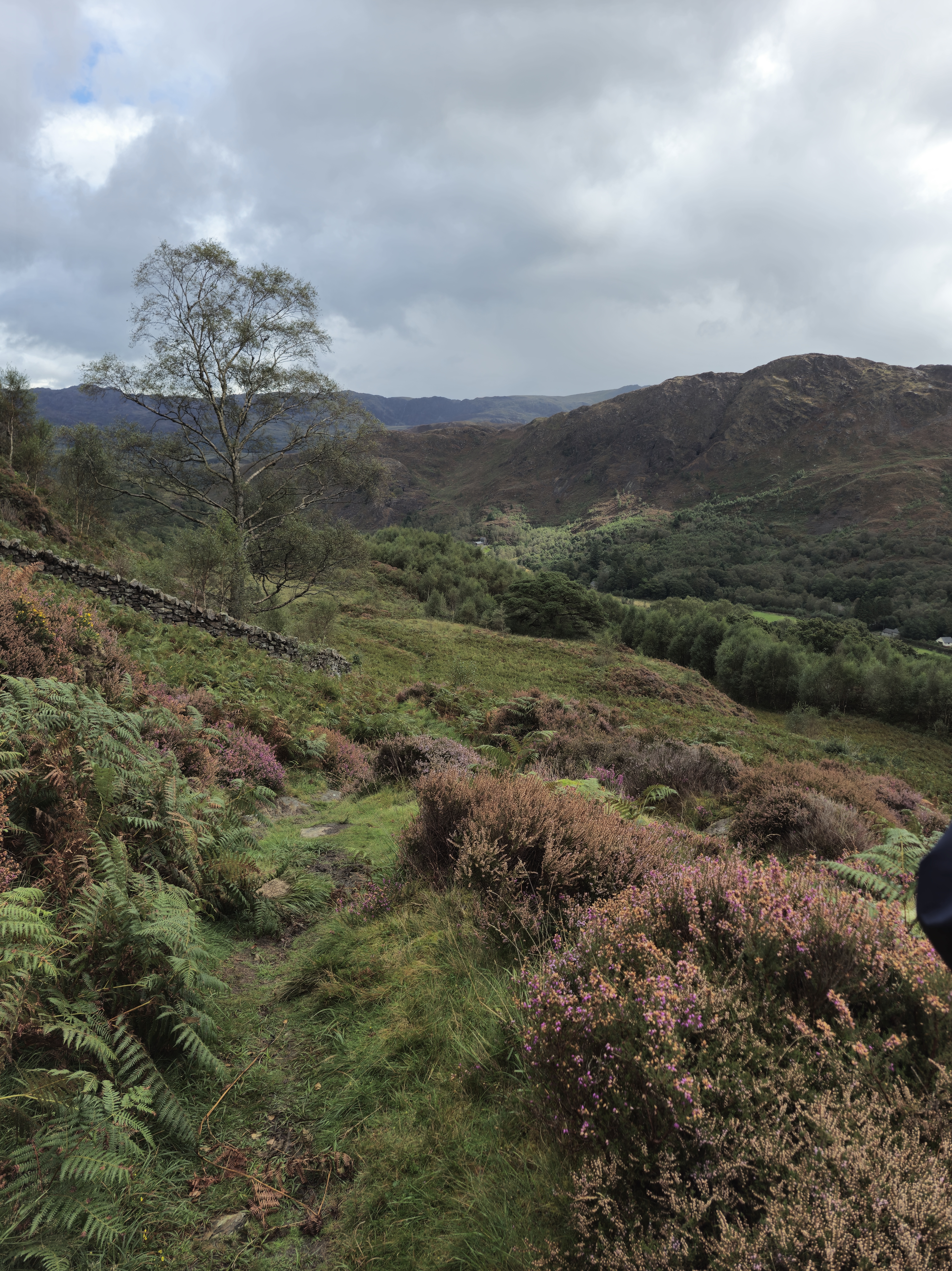
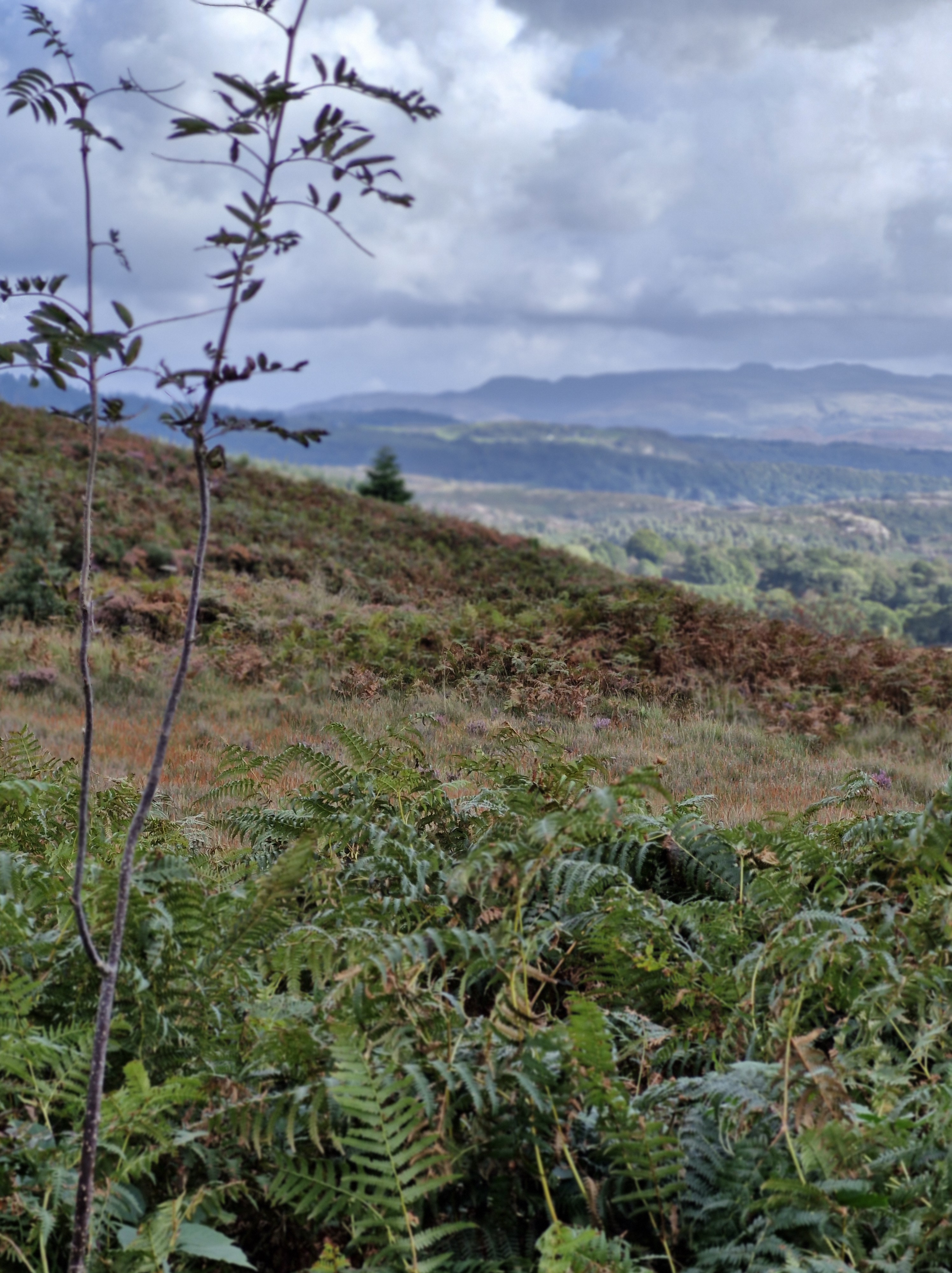
A walk of two halves today. We parked at the Crafwlyn Estate car park, just outside Beddgelert and, having read the information board, the Photographer and I decided to do the Green Walk. The sign promised an easy to moderately difficult ascent of only one and a half miles to the viewing point. It was the “spectacular views” that clinched it.

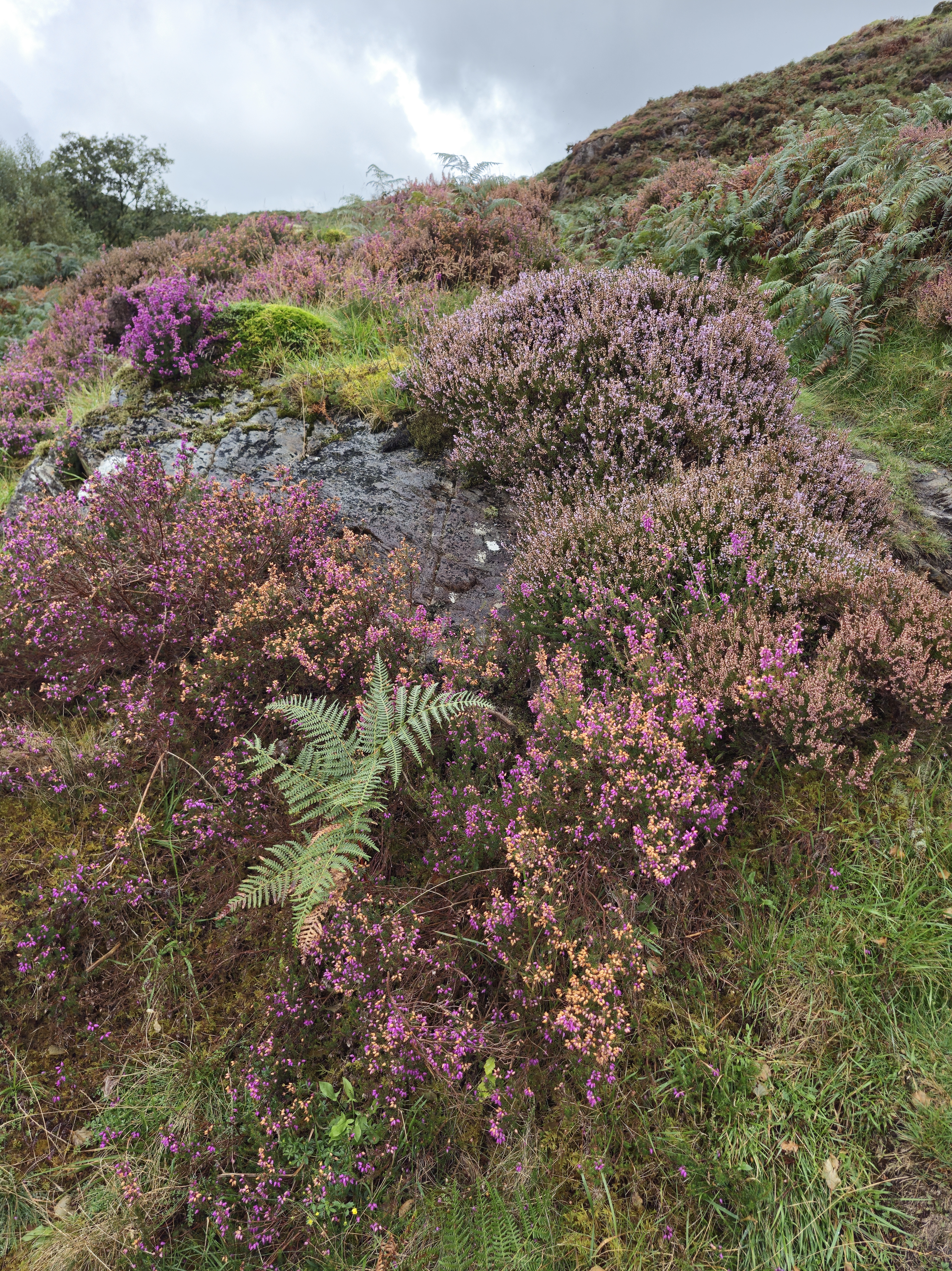
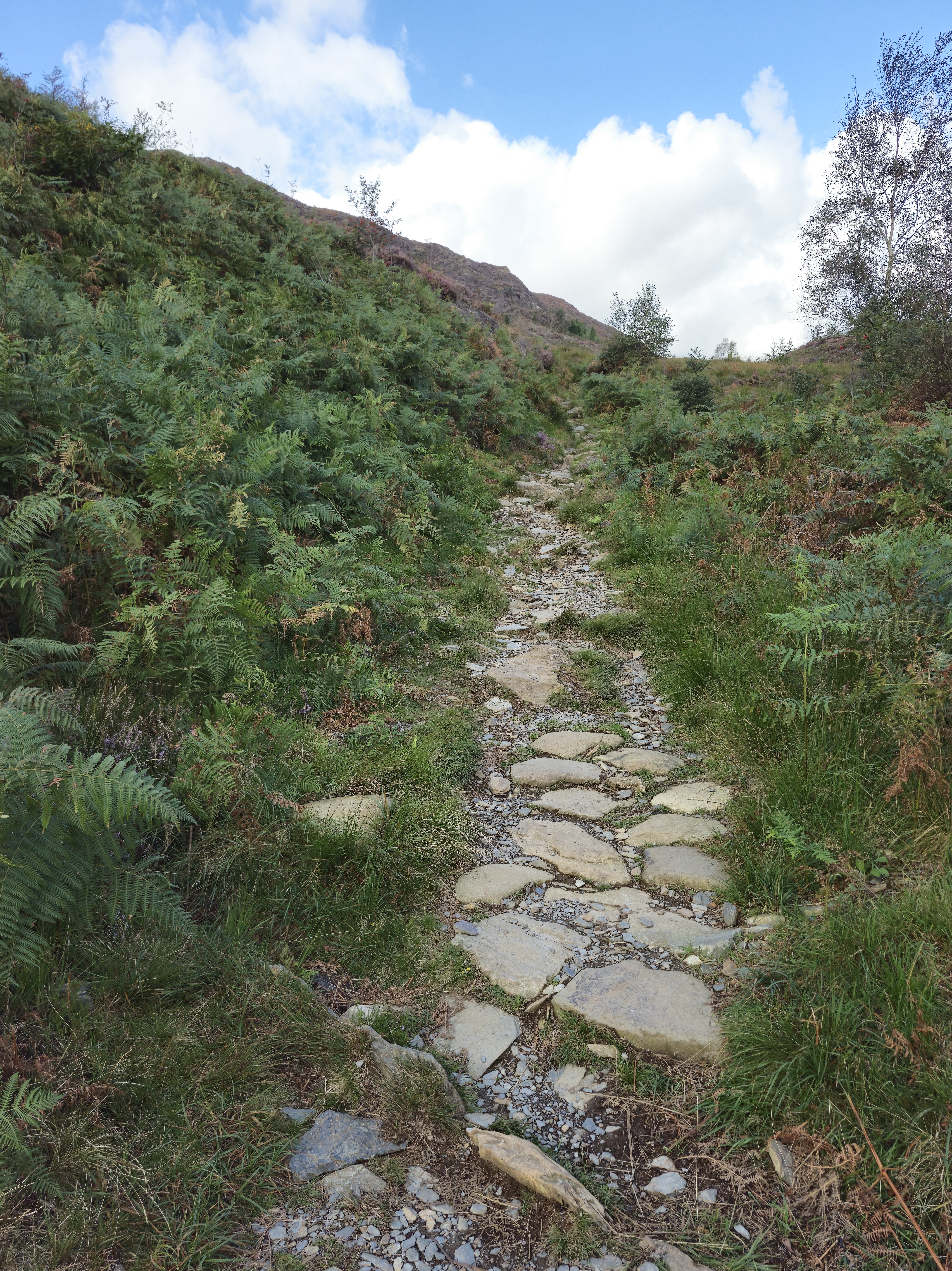
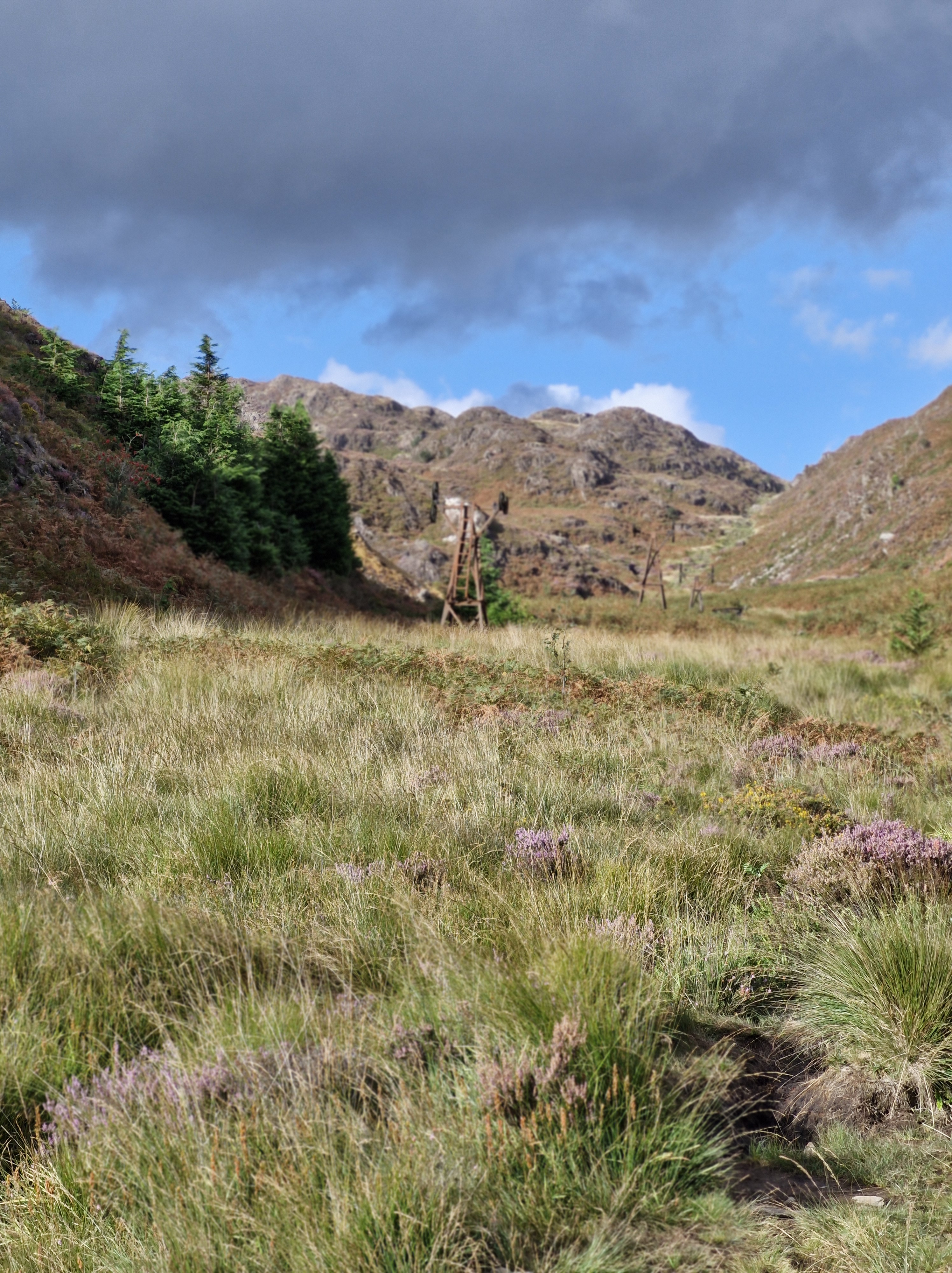
The heather was glorious. The path was … somewhere…

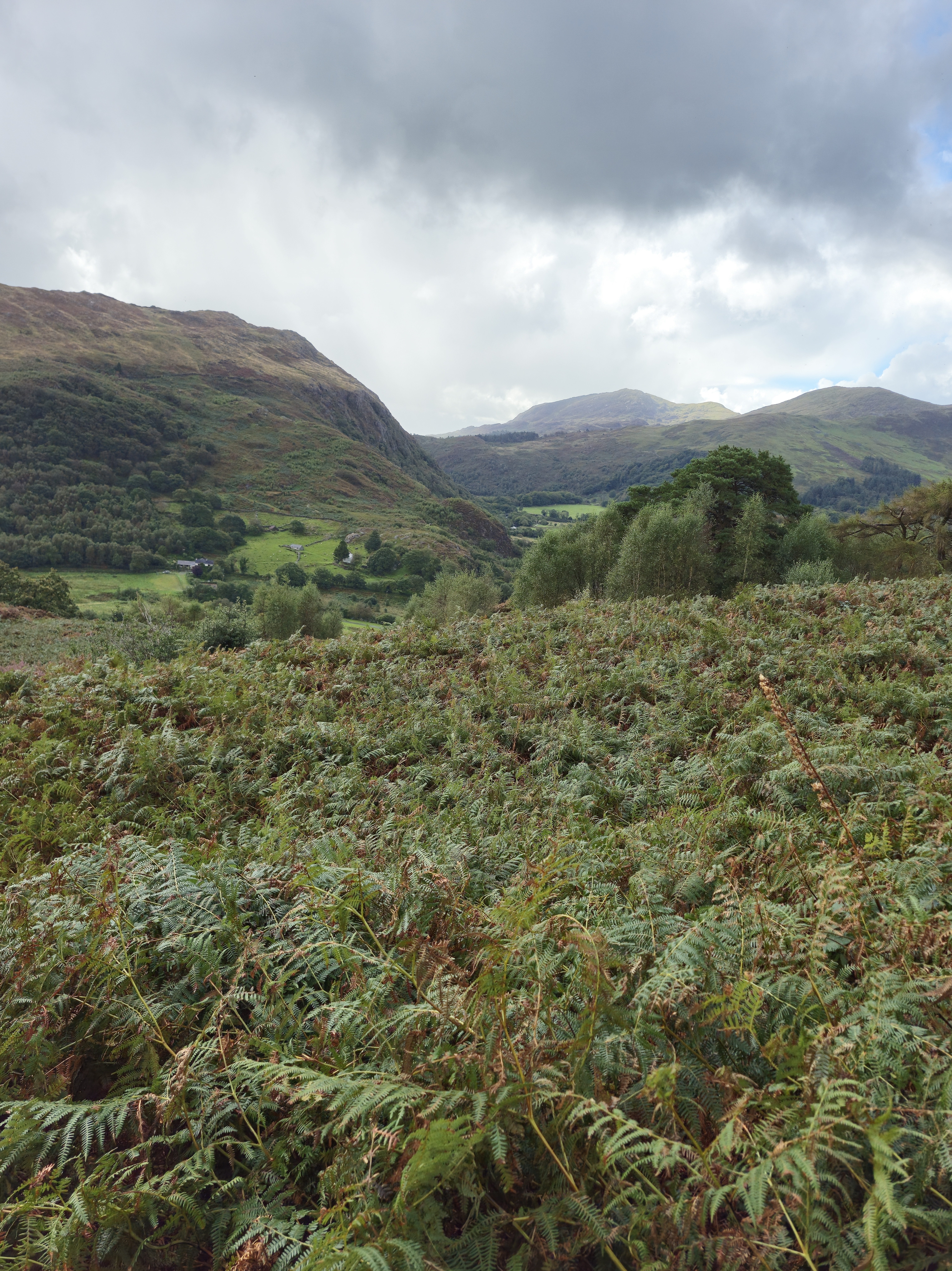
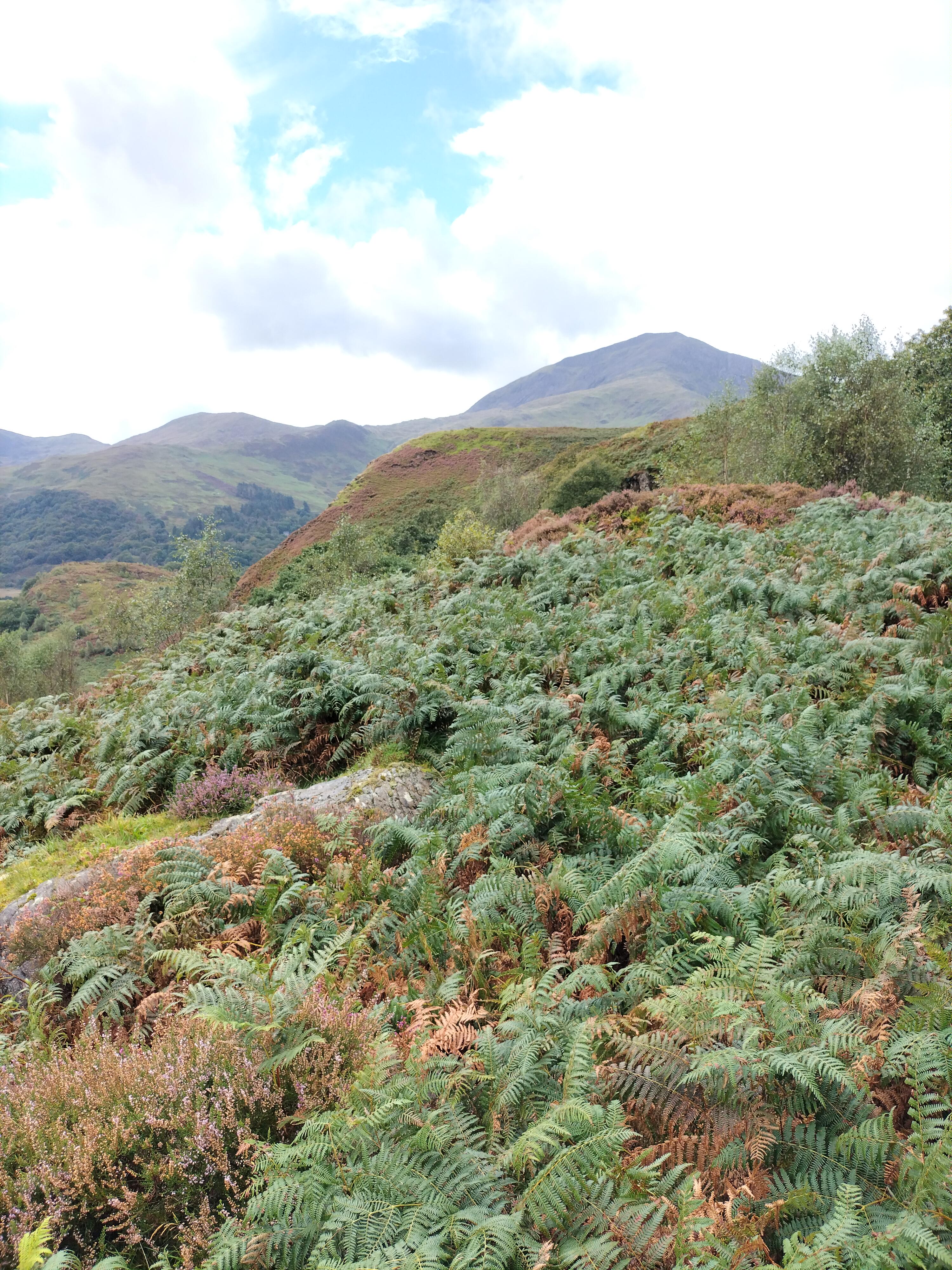
The walk turned out to be difficult, and certainly longer than one and a half miles. Quite the opposite in fact, and it and became steeper almost immediately, and very rocky. We assumed it would level out at some point but it never did and we just kept climbing and climbing.

Dinas Emrys is a rocky and wooded hillock near Beddgelert. Rising some seventy-six metres above the floor of the Glaslyn river valley, it overlooks the southern end of Llyn Dinas. The legend is that it’s where Merlin once trod and where a dragon still sleeps. At the top are the remains of a square tower and defensive ramparts belonging to the ancient princes of Gwynedd. We never saw that at any time over the week… ” the square stone tower at Dinas Emrys in Gwynedd, Wales is believed to be the base of a 12th century tower or citadel. The tower is now in ruins, but its rectangular shape and local rubble masonry are still visible.
According to legend, the tower was built by King Vortigern as part of a castle he wanted to construct on Dinas Emrys. However, the walls would mysteriously collapse each night, which led Vortigern to seek the help of Merlin the wizard. Merlin revealed that two dragons, one red and one white, were fighting in a pool beneath the castle. Vortigern and his men dug into the mountain to release the dragons, and the red dragon eventually won the battle. The castle was then named Dinas Emrys in honor of Merlin, and the red dragon became a symbol of the fight against the Saxons.

oplus_32

Just at the point where the ferns and tufts of coarse grass petered out, and the way in front of us rose sharply and consisted of sharp rocks, it began to rain and the view disappeared. We turned and scrambled back down – the second time we’d turned back on a walk that week.

One disgruntled Photographer…

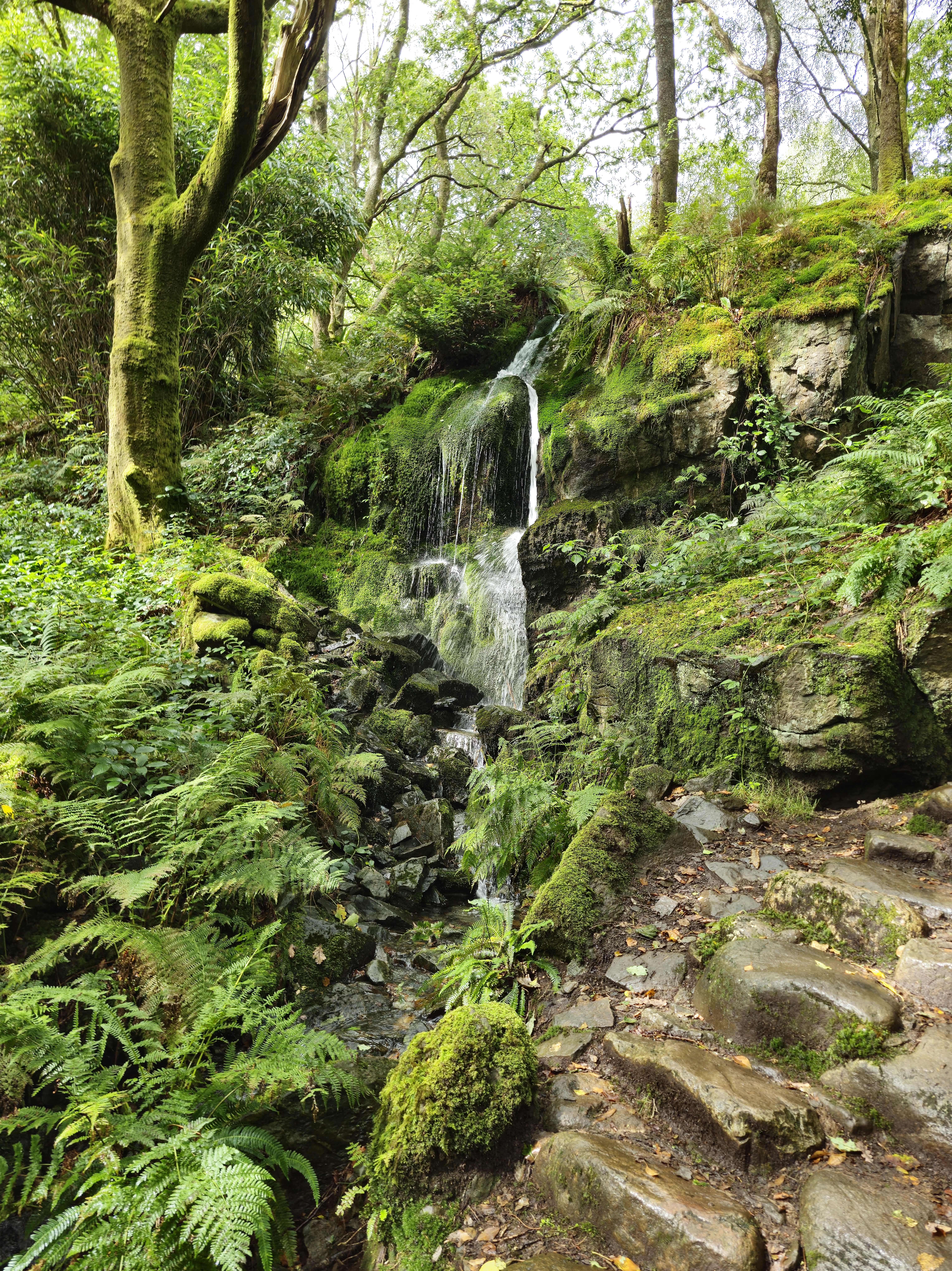
Twenty minutes later and wet through, we saw a sign for the Waterfall trail. A footpath lead through the woodland, following a waymarker to the right.

We passed the dragon bench. Too wet to sit on it though.

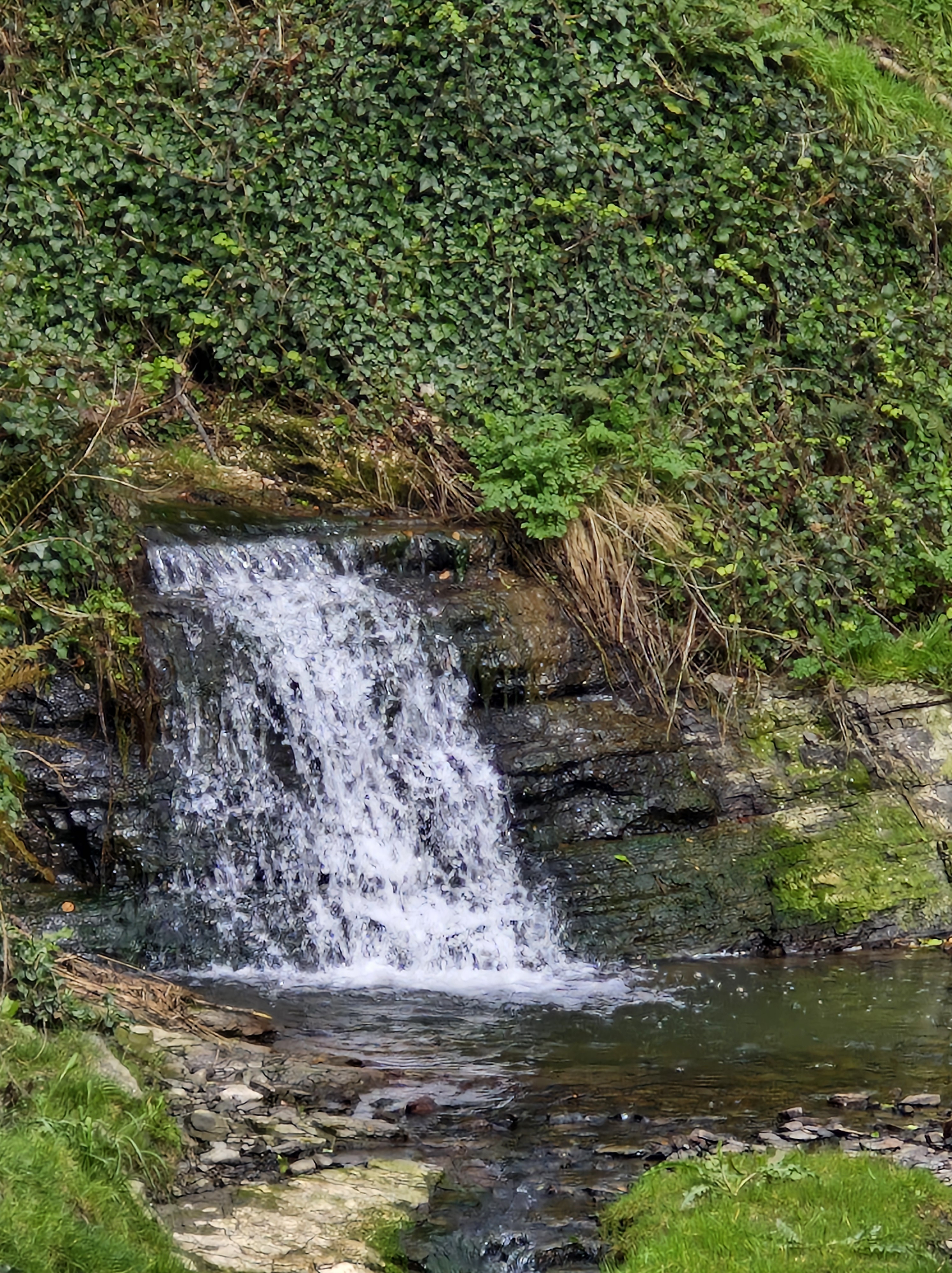
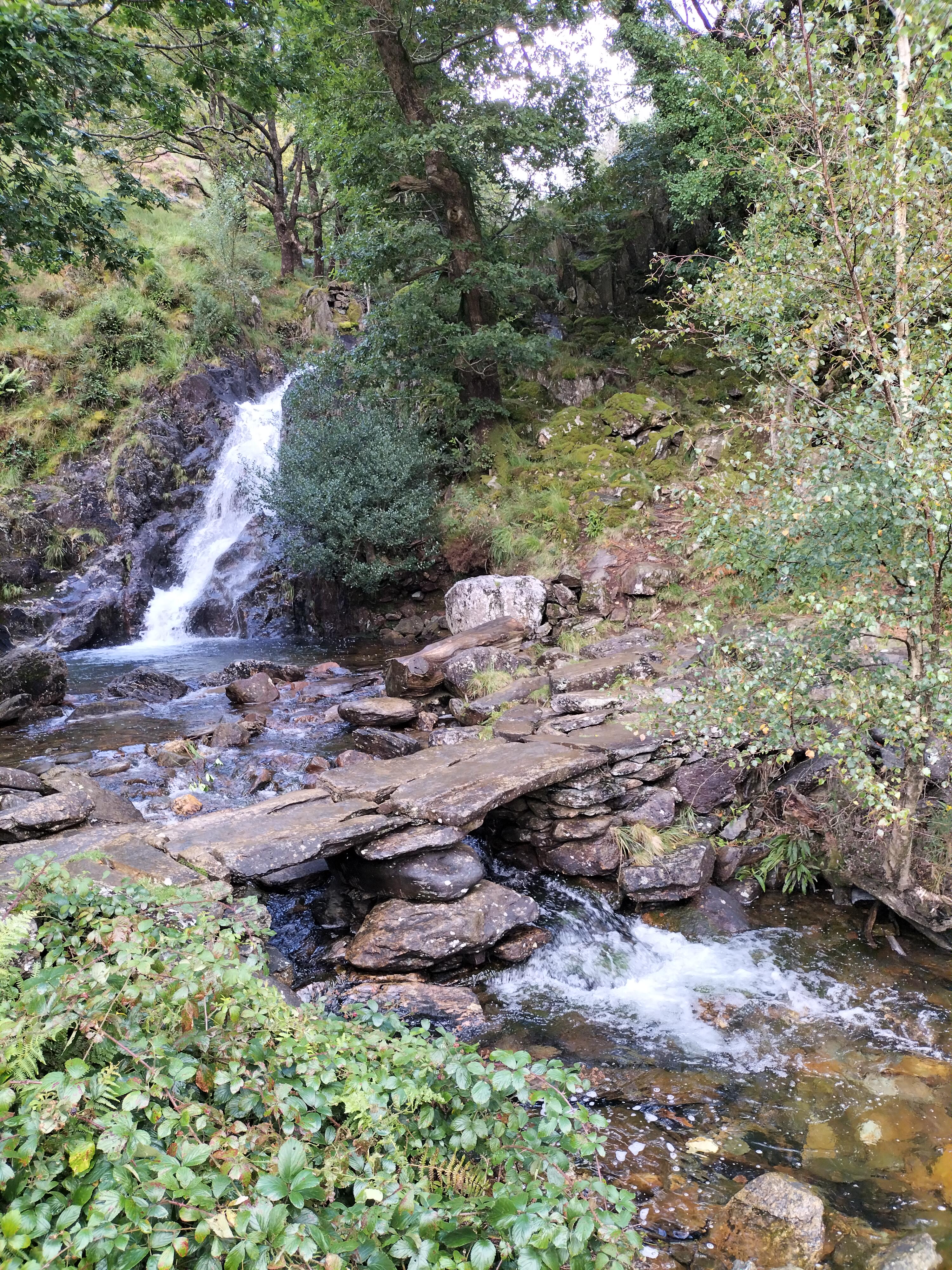
We walked up some steps to see a small waterfall. But we could hear loud splashing further along the path.


The large waterfall. Apparently deep enough to swim in.
I didn’t test that theory.

It was a wonderfully peaceful end to the day – and to our last walk of the holiday.

We’d had a great week. The photographer was keen to get home to start downloading, printing off and framimg his photographs.

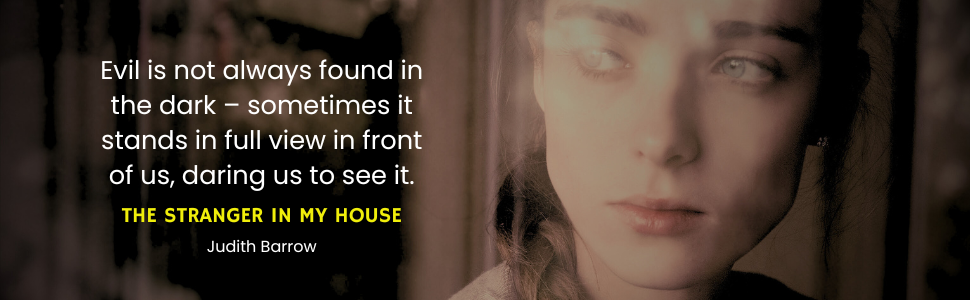
I was ready to finish the proofreading of my next book, The Stranger in my House, to be published by Honno on the 14th November 2024 .

Described as…

A gripping ‘cuckoo in the nest’ domestic thriller

After the death of their mum, twins Chloe and Charlie are shocked when their dad introduces Lynne as their ‘new mummy’. Lynne, a district nurse, is trusted in the community, but the twins can see her kind smile doesn’t meet her eyes. In the months that follow they suffer the torment Lynne brings to their house as she stops at nothing in her need to be in control.

Betrayed, separated and alone, the twins struggle to build new lives as adults, but will they find happiness or repeat past mistakes? Will they discover Lynne’s secret plans for their father? Will they find each other in time?

The Stranger in My House is a gripping ‘cuckoo in the nest’ domestic thriller, exploring how coercive control can tear a family apart. Set in Yorkshire and Cardiff, from the 60s to the winter of discontent, The Stranger in My House dramatises both the cruelty and the love families hide behind closed doors.https://tinyurl.com/349ucdat

I’m happy to leave things as they are here. So, until next time … thank you for following the Photographer and I on our adventures.

Where We Walked: Copper Mine @Cwm Bychan valley in @Snowdoni National Park near @Beddgelert @North Wales #walks #photographs #holidays

The second day, we knew we needed to take it easy, so we planned a short walk for the afternoon. Around three miles from the cottage that we were staying in was the disused Cwm Bychan copper mine, so we decided to explore.


The start of the walk was from the Nantmor National Trust car park, easy enough to find. We went under the railway bridge (still no steam train), and onto the stony path that led up through woods.

We’d been told these were bluebell woods, but, of course, in September no signs of bluebells, but impressive heather anyway.The area also includes internationally rare heathland, found only in the western coastal areas of Europe that provides habitat for numerous butterflies and birds.

The path wound upwards, sometimes not as distinguishable, always following the stream.

We were tempted to sit here, but I knew if I sat down I might not stand up again; the short walk had turned into yet another climb – and the weather looked as though it was changing.

But, gradually the woodland path changed into easier, wider paths on the open mountain, and I was reliably informed that the remains of the copper mines was, “just around the corner”.


And there it was!

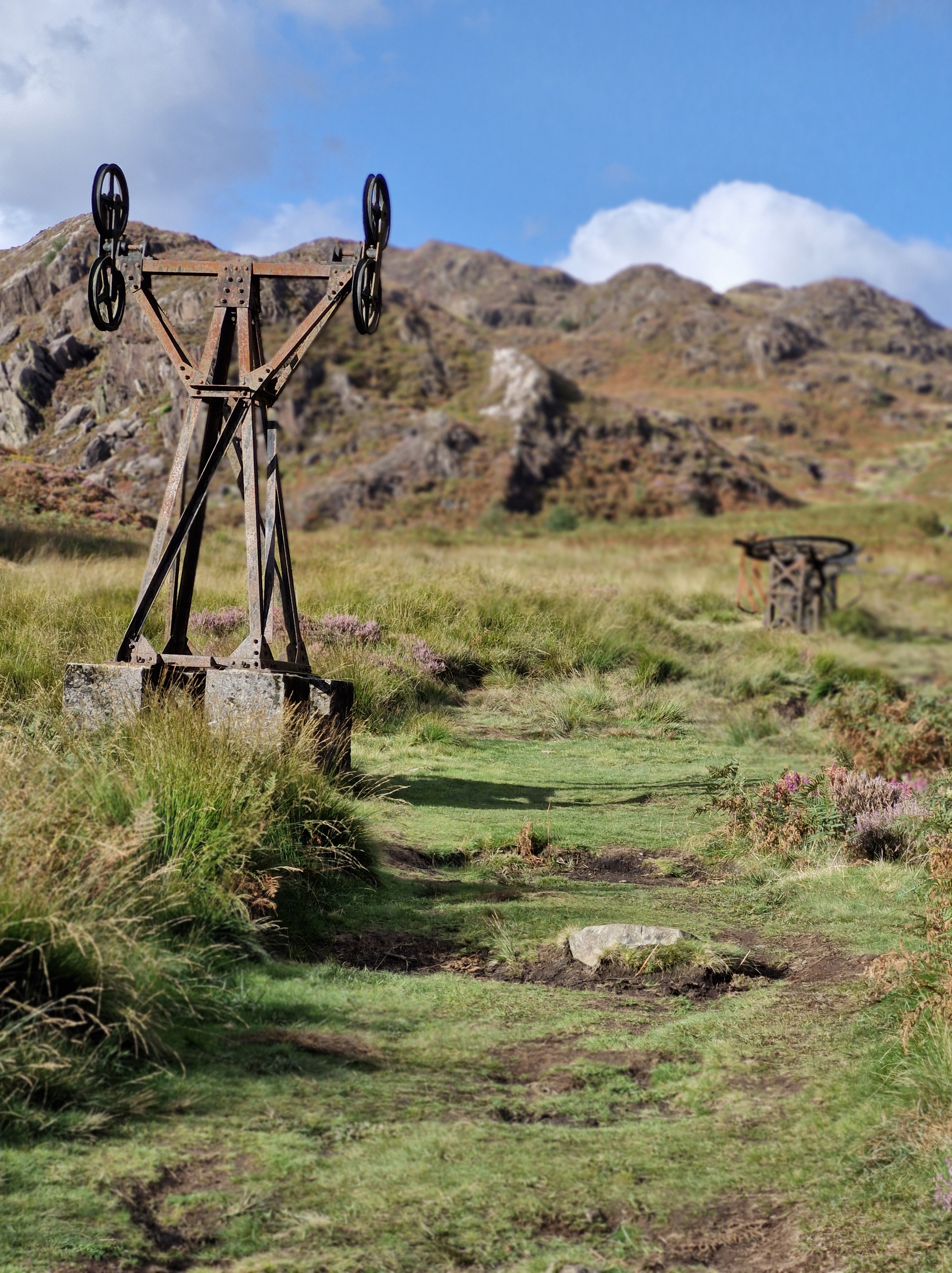
Various relics of that era can still be seen, including the aerial ropeway with its pylons and terminal wheel. And, in the background, the slag heaps of waste copper.

The evidence of the copper mining that used to be carried out here is quite poignant. The silence, broken only by occasional bird calls, the rustle of the breeze through the long grass, the bubbling of the stream, obviously a contrast to how things used to be.

Mining has been dated back to at least the seventeenth century in Cwm Bychan. The mines finally closed in the nineteenth century, then re-opened in the nineteen twenties. It was at this time that an aerial ropeway was built to help remove the Chalcopyrite ore for processing. But the attempt to restart production was short lived and the mine finally closed by the end of that decade.

I needed to research what Chalcopyrite is – a copper-iron sulphide mineral, the primary source of copper metal.

Image courtesy of Wikipedia

I learned that Chalcopyrite, also called Peacock Ore is thought to be an uplifting stone. It may ground nervous energy which allows the body and mind to let go of stress and embrace calm. It also may be used to remove energy blockages, cleansing, activating and aligning the chakras and energy bodies at the same time. To be an excellent aid to increase self-esteem, banish fears and doubts, and soothe the emotions. … fascinating. They must have known this in the nineteen twenties?

.

.

Where We Walked #Nantmor to Beddgelert via Bryn Ddu #Wales #walks #climbs #photographs #holidays – Part Two

Continuing our walk …

From the lookout point we could see Beddgelert – now only two miles away. All down hill. Very downhill!

The village is in the Snowdonia area of Gwynedd, Wales. It’s thought that it’s possibly named after an early Christian missionary called Cilert who settled there to become the leader in the eigth century. The earliest record of the name Beddgelert appears on a document dated 1258( recorded as Bekelert). The local Welsh dialect often shortens the name of the village to Begél.

It didn’t look very much closer through binoculars, to be honest.

Image courtesy of https://en.wikipedia.org/wiki/Welsh_Highland_Railway

Zig-zagging down the steep hillside to reach Beddgelert, and then through the magnificent Aberglaslyn Pass and on to Porthmadog, is the Welsh Highland Railway, the UK’s longest heritage railway. These trains are the world’s most powerful narrow gauge steam locomotives, and run for twenty-five miles from Caernarfon to Porthmadog. They climb from sea level to over six hundred and fifty feet below Snowdon, before descending to Beddgelert. On numerous walks we heard the ‘toot-toot’ of the train. Many times we waited for it to come into view … until we realised the sound echoed all around the mountains … and it was always miles away from where we eagerly anticipated (well, one of us did!) a “great photo opportunity”.

One of the most sought after/ looked for attraction – from a tourist point of view – is the raised mound in the village, called “Gelert’s Grave” and the statue of the faithful hound. The folk tale is synonymous with Beddgelert. By the way, the ‘hill’ (as the photographer first described it to me) in the background is Bryn Ddu mountain – the one we’d just scambled down.

But the grave was actually built by the late 18th-century landlord of the Goat Hotel, David Pritchard, who created it in order to encourage tourism.

We called in to have a wander around the local church, the Church of St. Mary stands at the end of Stryd yr Eglwys (Church Street). Parts of the building date from the 12th century; the chapel section being originally a part of an Augustinian Monastery. the rest the of the monastery was destroyed by fire during Edward I’s war of conquest. It really is a lovely peaceful church. And welcoming, as the following shows …

The village is also linked with the Rupert Bear stories.

Image courtesy of https://www.beddgelerttourism.com/Rupert/

Alfred Bestall wrote and illustrated some of the stories whilst he lived in the village, in a cottage at the foot of the Mynydd Sygun ( Sygun Mountain). There is even a small area known as ‘Rupert Garden’ in the village, dedicated to the Bear; a short walk from Alfred Bestall’s old home.

Lying in the heart of Snowdonia, Beddgelert is small, and a beautiful conservation village in the heart of the National Park, nestled below mountains at the confluence of the Glaslyn and Colwyn rivers. The path alongside the Glaslyn river was the last section of our walk back to Nantmoor. The path sounds so innocuous doesn’t it? Especially when it’s called the Fisherman’s Path – images of quiet contemplation, the swish of fishing rods, the ripple of water…

On to Part Three…

Our Walk Around lake Vyrnwy (With a bit of History Thrown in) #photography #walks #memories #humour #MondayBlogs

‘Let’s go to Lake Vyrnwy,’ Husband said. ‘Take some photos.

“Take some photos”, is a phrase that has been used many time down the years of our marriage. Sometimes it makes my heart sink; it often means I carry on walking along a chosen trail, before realising I’ve left Husband behind, oblivious, and capturing, “just the right shot” and have to retrace my steps. I have complained that this means I have walked miles more than him, but he, (“quite reasonably,” he says) means I’m burning more calories off. I ignore the implication of this… normally… but make sure I eat his chocolate bar as well as my own, when we stop for lunch.

Anyway… Lake Vyrnwy...

Just on the edge of The Snowdonia National Park and south of Lake Bala, Lake Vyrnwy is set amidst the remote and beautiful Berwyn Mountains. With spectacular waterfalls, and unspoilt open countryside. Except that, although the scenery is, as always, fantastic, the waterfalls are sadly depleted. As is the reservoir. However, since these photos were taken in August, and we’ve had such downpours, with fingers crossed, an inch or two may have been added to the water level. One can but hope!

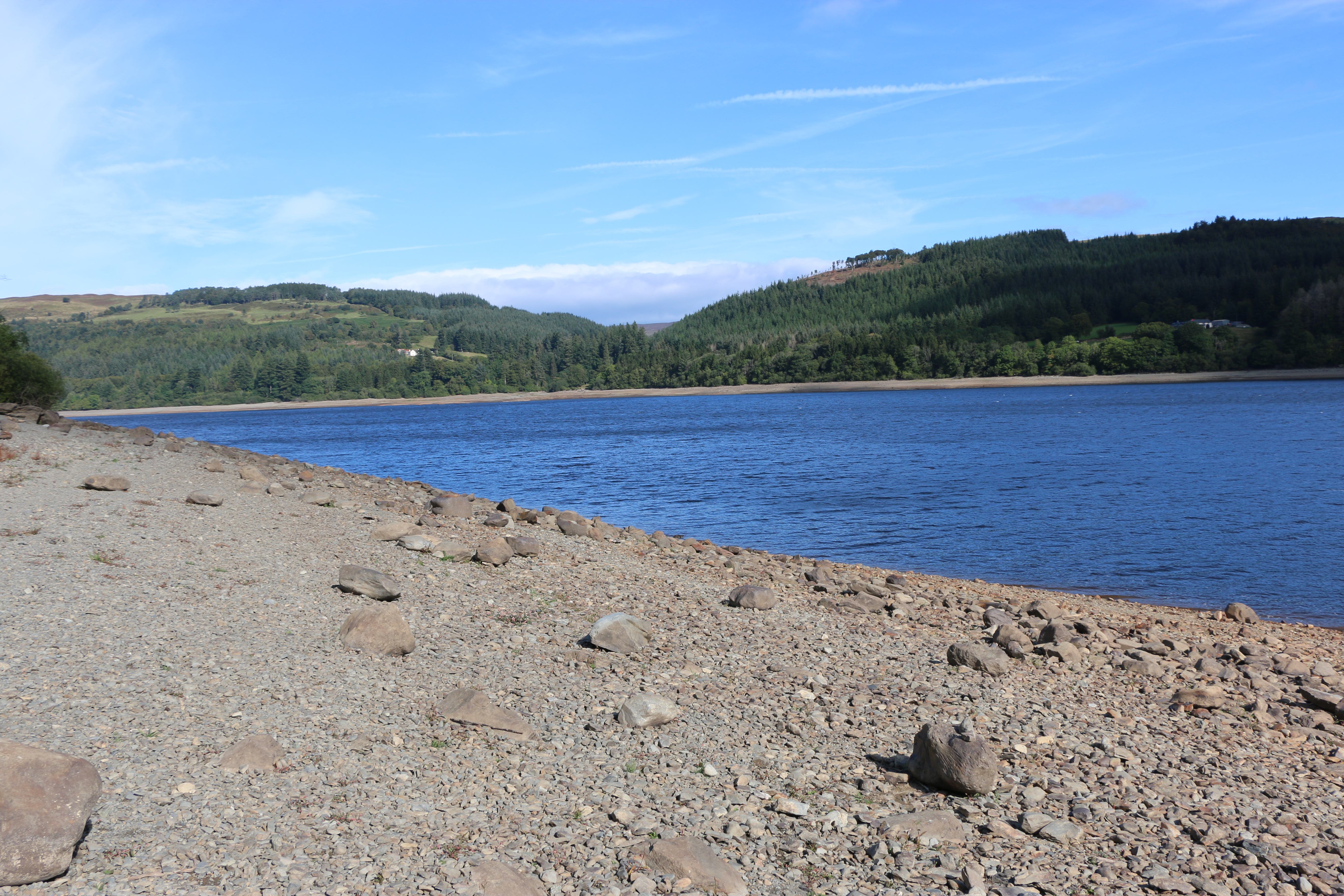
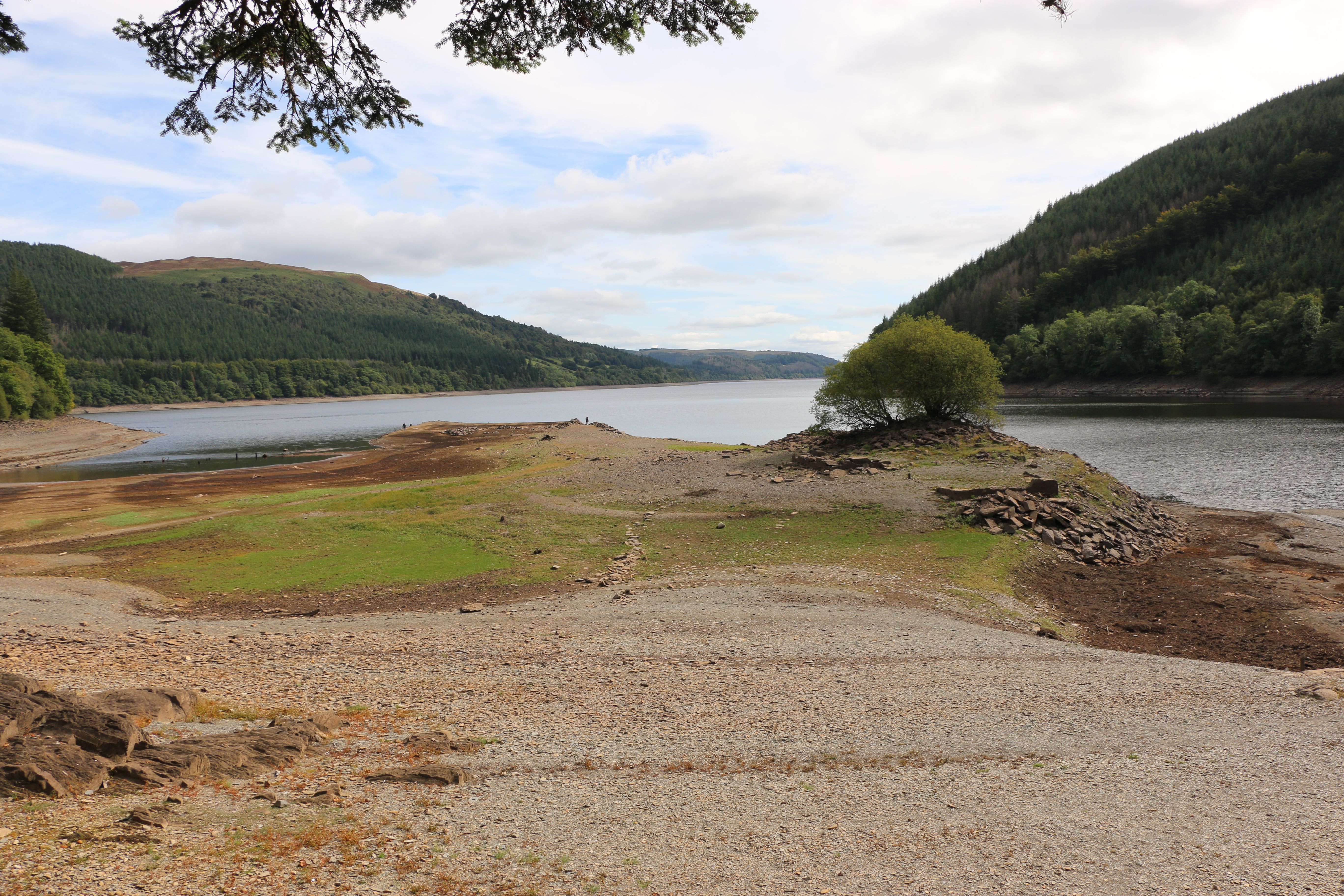
We parked in a designated area that was supposed to be on the edge of the lake. It wasn’t; the water was so low we could have walked quite a few metres on shingle that should… would … in ‘normal times’ be submerged. It reminded us that, underneath, was a village, lost many years ago.

Llanwddyn was a village on the hillside next to the Cedig river. There were thirty-seven houses, three chapels and a Church of St John, and, in the surrounding countryside, ten farmsteads. Farming was the main occupation of the people in the valley, they ate simple food, such as mutton broth, porridge, gruel, and milk and burned peat from the moors in their fireplaces.

But, with expanding industries in the the Midlands and the north-west of England, and the prospect of higher wages, many people left. To make matters worse for those still trying to make a living from the land, in 1873 the local vicar,Reverend Thomas H. Evans published a report that the area was useless for agriculture, because it was waterlogged for much of the winter.

Seeing this, made us realise how many streams must has poured down the hills. Imaging the rush of water, I suppose it’s easy to understand the Reverend’s statement. Yet it has left me wondering why he wrote the report. Was he paid? Were the villagers aware of what he’d done? If they did find out, what was the reaction? I haven’t been able to discover that. The writer in me is itching to research that time. It did coincide with a time when the authorities of Liverpool were exploring the country for sites to build a new reservoir to cope with the growing population on both sides of the Mersey. So who’s to say!

Various sites were under consideration in northern England and Wales, but in most cases there were snags By 1877 a group of engineers arrived in Llanwddyn. Their visit was to look into the possibility of damming the river Vyrnwy. A survey revealed a large area of solid rock, just where the valley narrowed, two miles south of the village, which could act as a base for creating a large, artificial lake that had the potential for holding many millions of gallons of water.

It brings a feeling of awe, of sadness, almost, to be walking on land that is normally submerged under water, on land where a village once stood, where people once lived.

Driving further around the lake we pass a sign at the side of the road – “Track to impressive hillside view. Not to be missed”. Well, if ever there was a challenge to a photographer, that was it. Husband got out of the car and disappeared for a few minutes, soon to return. ‘It doesn’t look too bad. Come on.’

And indeed the first few steps were not too bad. And then we turned a corner… to be faced by an almost vertical path, a rocky vertical path. I stopped; why do I always let myself be fooled?

‘Come on, it’s not far!’ He said that numerous times for the next ten minutes. Hauling me from bend to bend. ” Think of the view!”

I couldn’t think of anything, except how to get my next breath.

But I had to admit, the view was worth it. The coniferous forests planted around the lake by the Forestry Commission are impressive.

On the way back, Husband found two stout branches to use as walking sticks, to scrabble down between mossy rocks and sliding muddy stones. It was either that or an undignified descent on my backside.

In 1880 the Liverpool Corporation Waterworks Act was passed by Parliament, and received the Royal Assent. Preparations were at once put in hand to gather the work-force and equipment necessary for the construction of what was to become the first large masonry dam in Britain and the largest artificial reservoir in Europe at the time. Work on the site began in July 1881.

The stone for the masonry was obtained from the quarry specially opened. All other materials were brought by horse and cart from the railway station at Llanfyllin, ten miles away. Stabling for up to 100 horses was built in Llanfyllin. The labour force topped 1,000 men at the busiest stage of the work on the dam. Many of them were stone masons working in the quarry, dressing the stone which was not easy to handle.

In a very short time the dam was completed. The village of Llanwddyn, and all buildings in the valley that were designated to be covered by the water, were demolished.

©Martin Edwards

St Wddyn’s church was built on the hill on the north side to replace the parish destroyed by the flooding of Vyrnwy valley. Many of the graves were relocated from the graveyard of the old church to St Wddyn’s before it was flooded. It was was consecrated on the 27 November 1888, the day before the valves were closed. It took a year before the water reached and spilled over the lip of the dam.

On a previous walk, some years before, we witnessed a wedding procession coming from the church, led by a chimney sweep in all his glory. Apparently it’s considered lucky to see a chimney sweep on your wedding day, the belief being they bring good luck, wealth, and happiness. The bride and groom did look joyous. I would have loved to have tagged onto the procession, but, that day, we were looking for “a good view of the water”, further along the road.

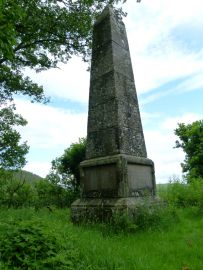
On the same hill as the church a monument was erected in memory of ten men who died in accidents on the site during the building of the dam and another thirty-four who died from other causes at the time.

Stone houses, matching the stone of the dam, were built on either side of the valley for the people whose homes had disappeared under the lake. I suppose there must have been a lot of opposition to flooding the valley to provide Liverpool with water at the time, and since, but records have apparently shown that it brought prosperity and stability to the area.

Our final excursion on our walk was to the waterfalls.

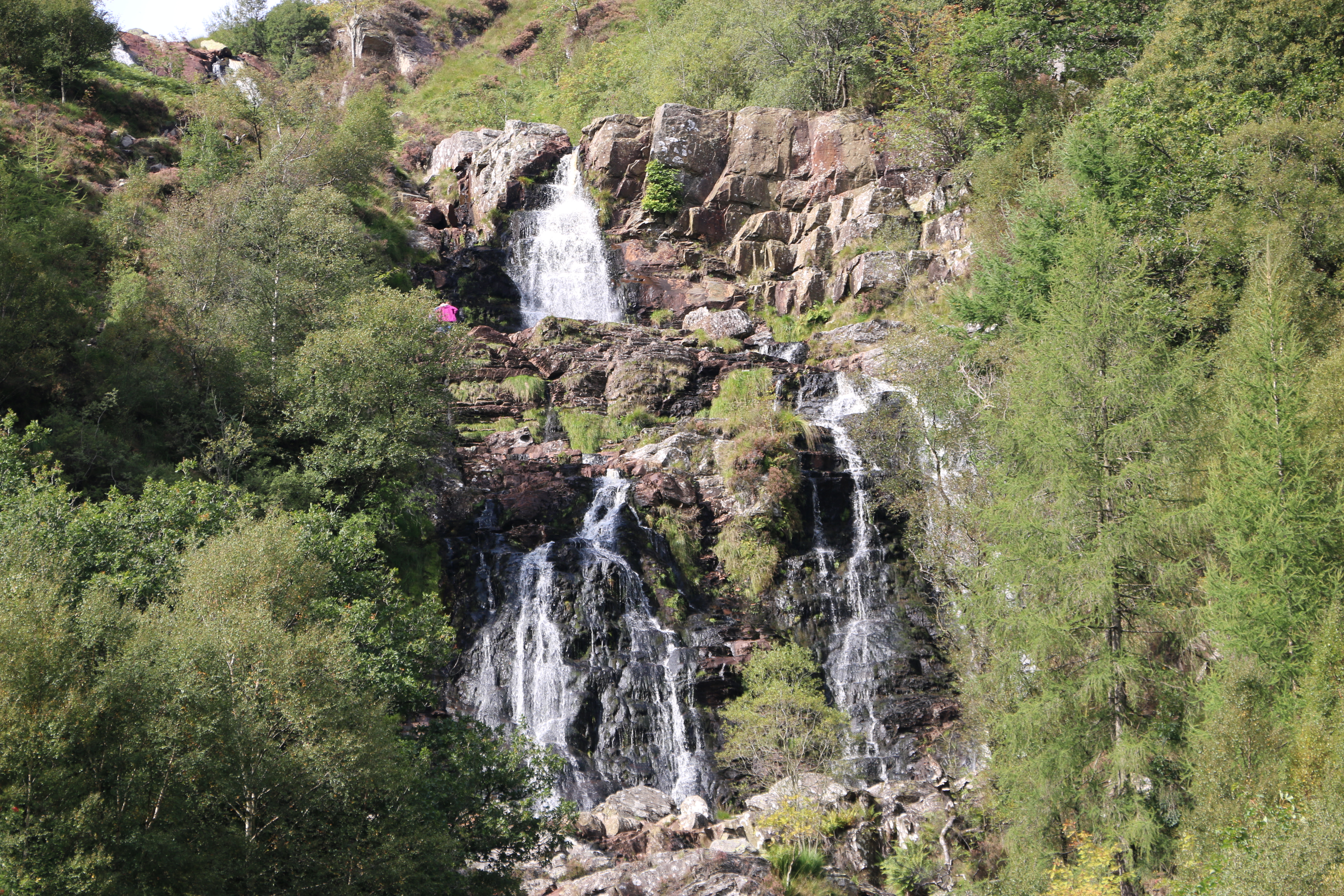
One of the highest is the Rhiwargor waterfall at the northern end of Lake Vyrnwy. From the car park I was relieved to see the relatively flat path along the valley of the river Eiddew. There was a trail leading up and up along the side of the falls. Despite much attempted persuasions, I declined, and opted for a coffee and a picnic at a nearby picnic table. And I ate his chocolate bar! Well, after that impromptu climb earlier, I thought I deserved it. Who said I hold grudges?!!

N.B. The Lake Vyrnwy Nature Reserve and Estate that surrounds the lake is jointly managed by the Royal Society for the Protection of Birds (RSPB) and the Hafren Dyfrdwy (Severn Dee). The reserve is designated as a national nature reserve, a Site of Special Scientific Interest, a Special Protection Area, and a Special Area of Conservation.