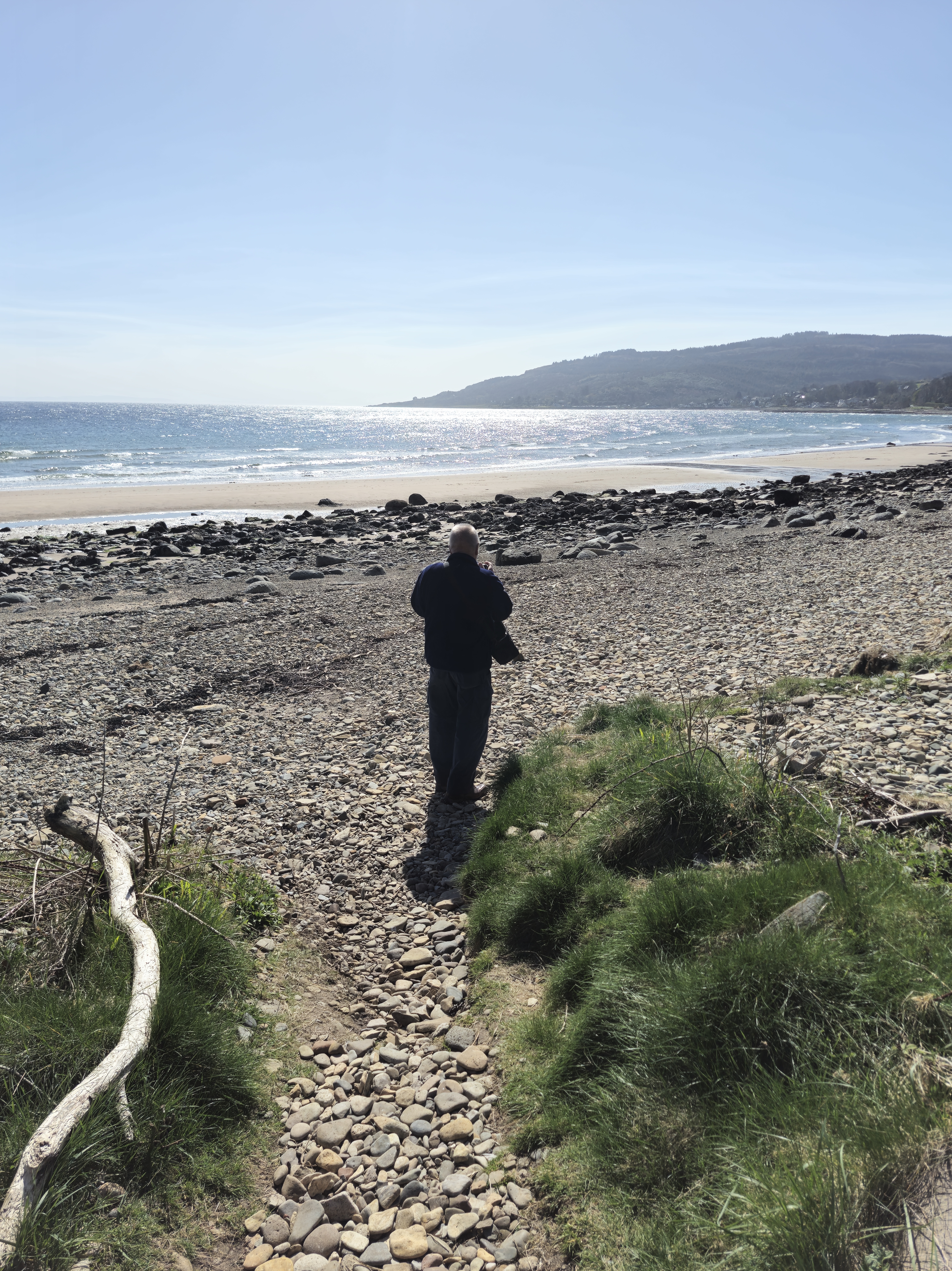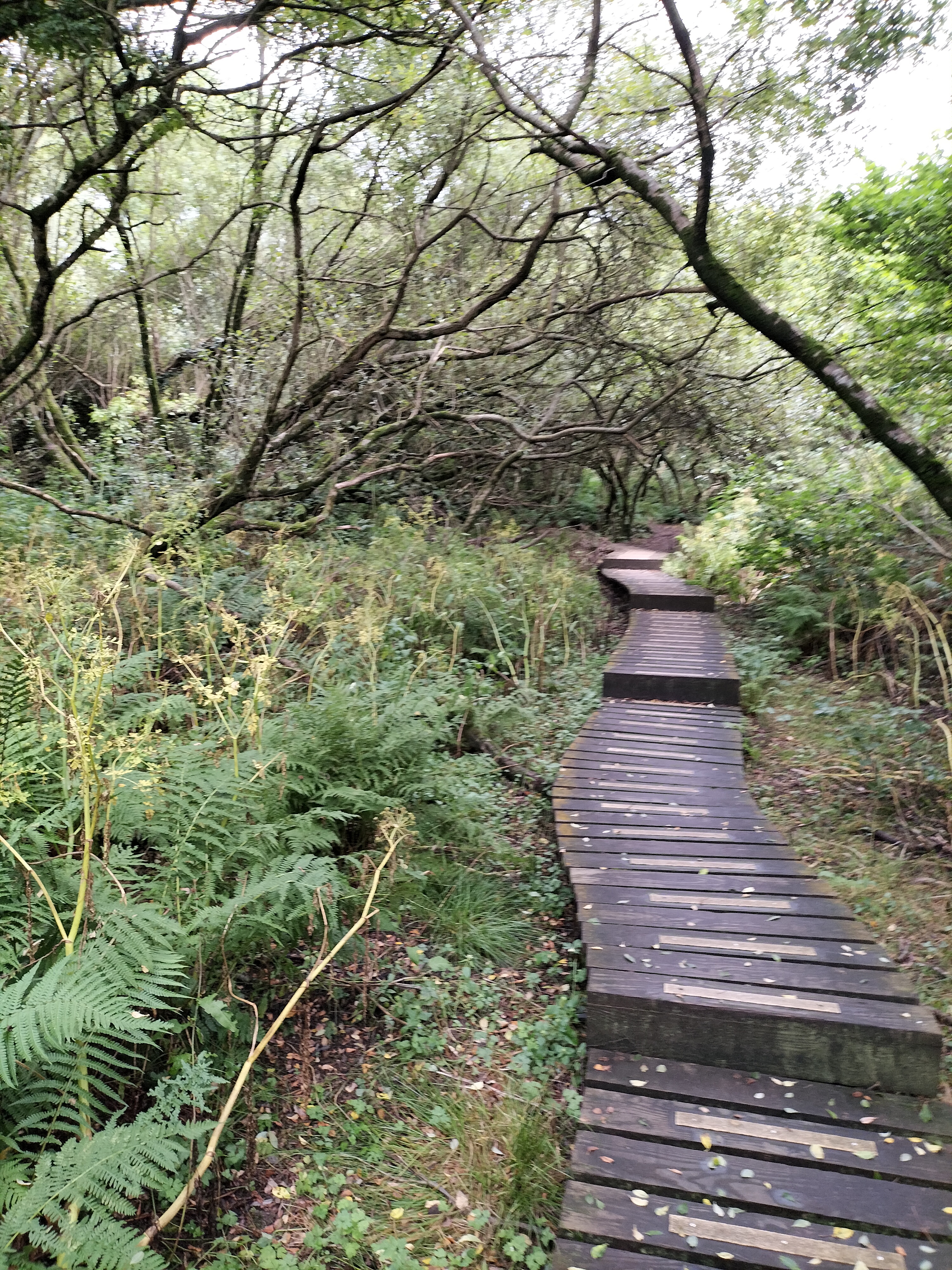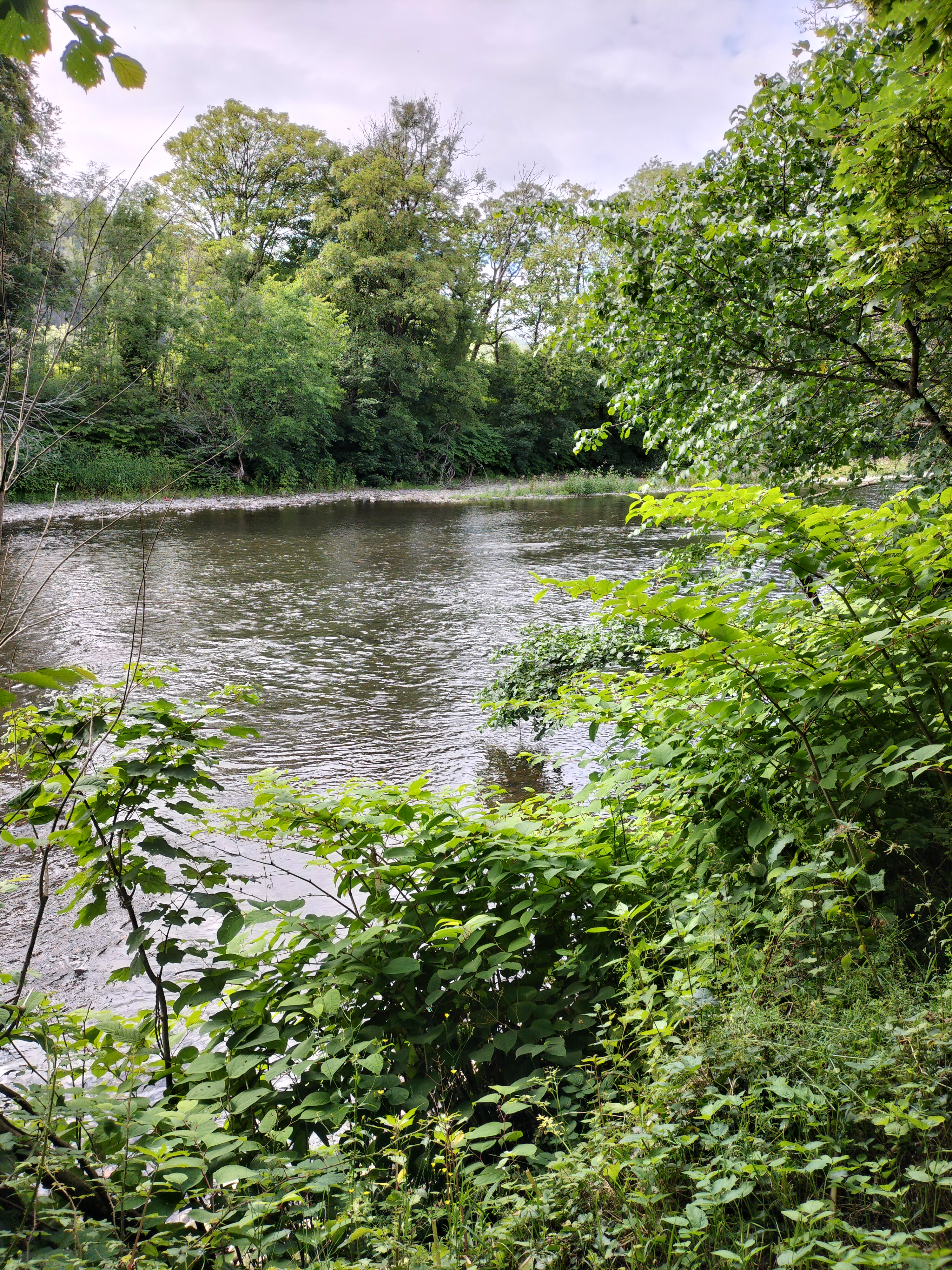
Where We Walked – Elan Valley #walks #photographs #memories #books

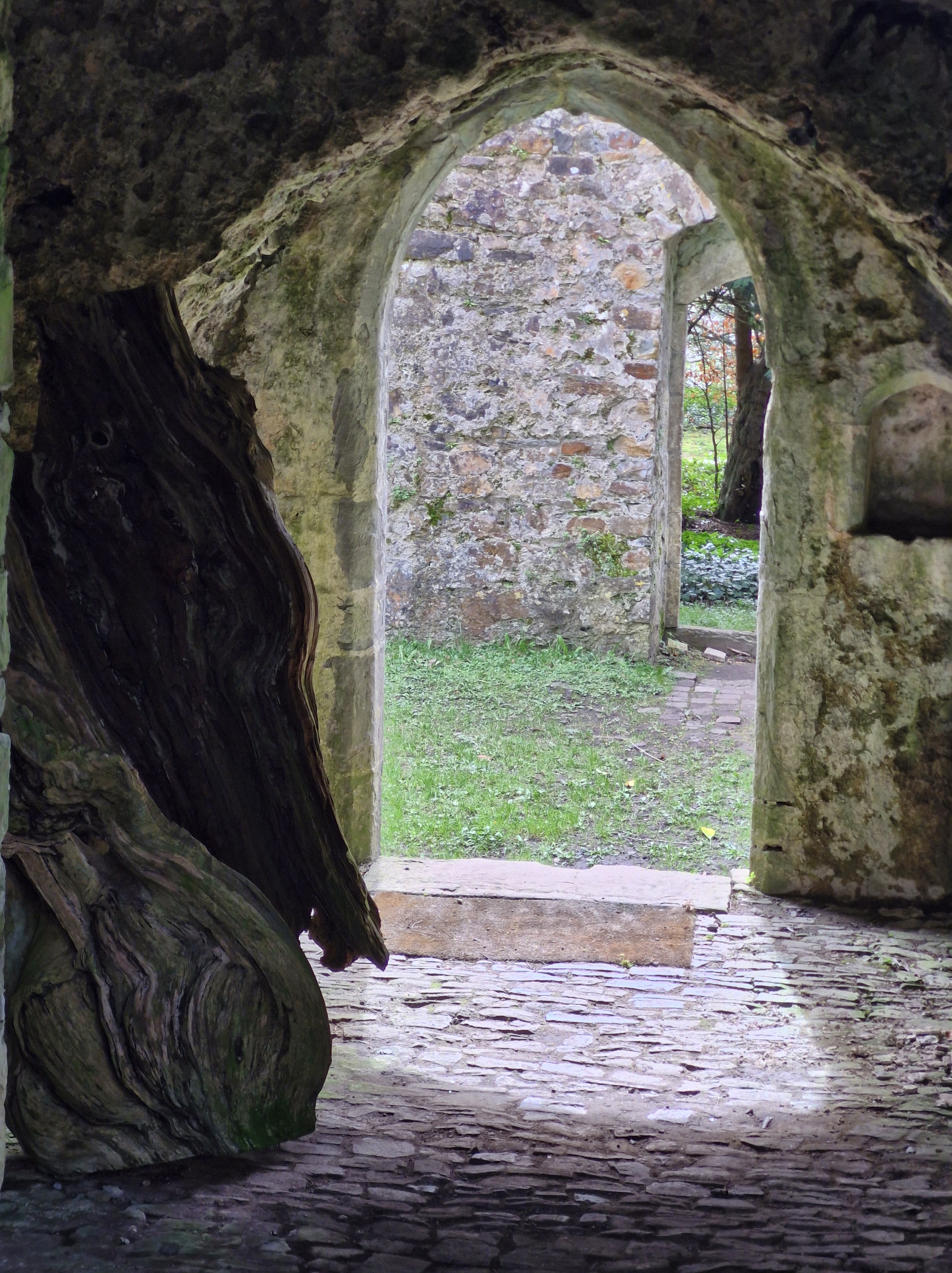
After weeks of what seems to have been constant rain, we embarked on a couple of days away, determined to walk, whatever the weather. We headed for Mid Wales.

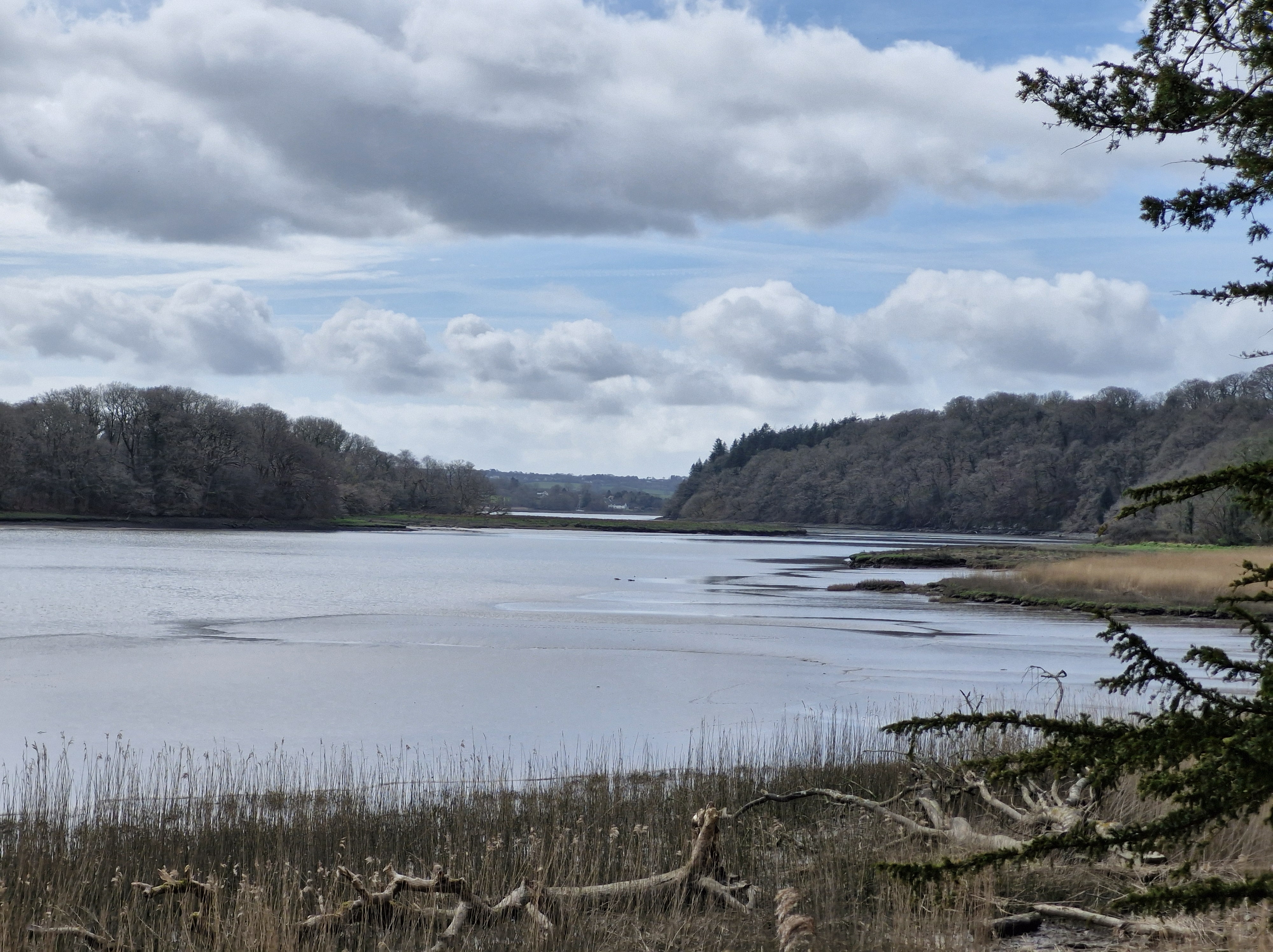
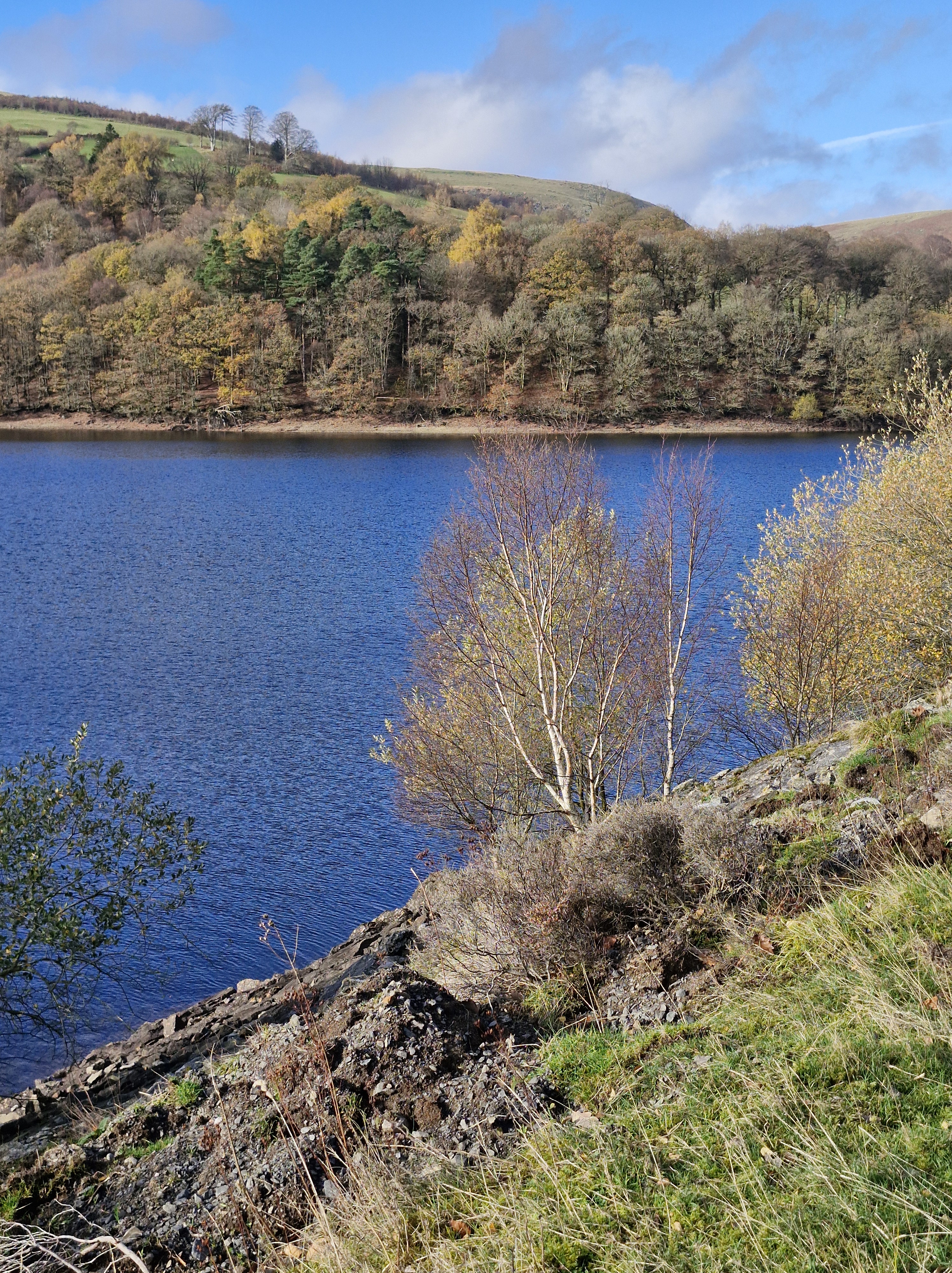
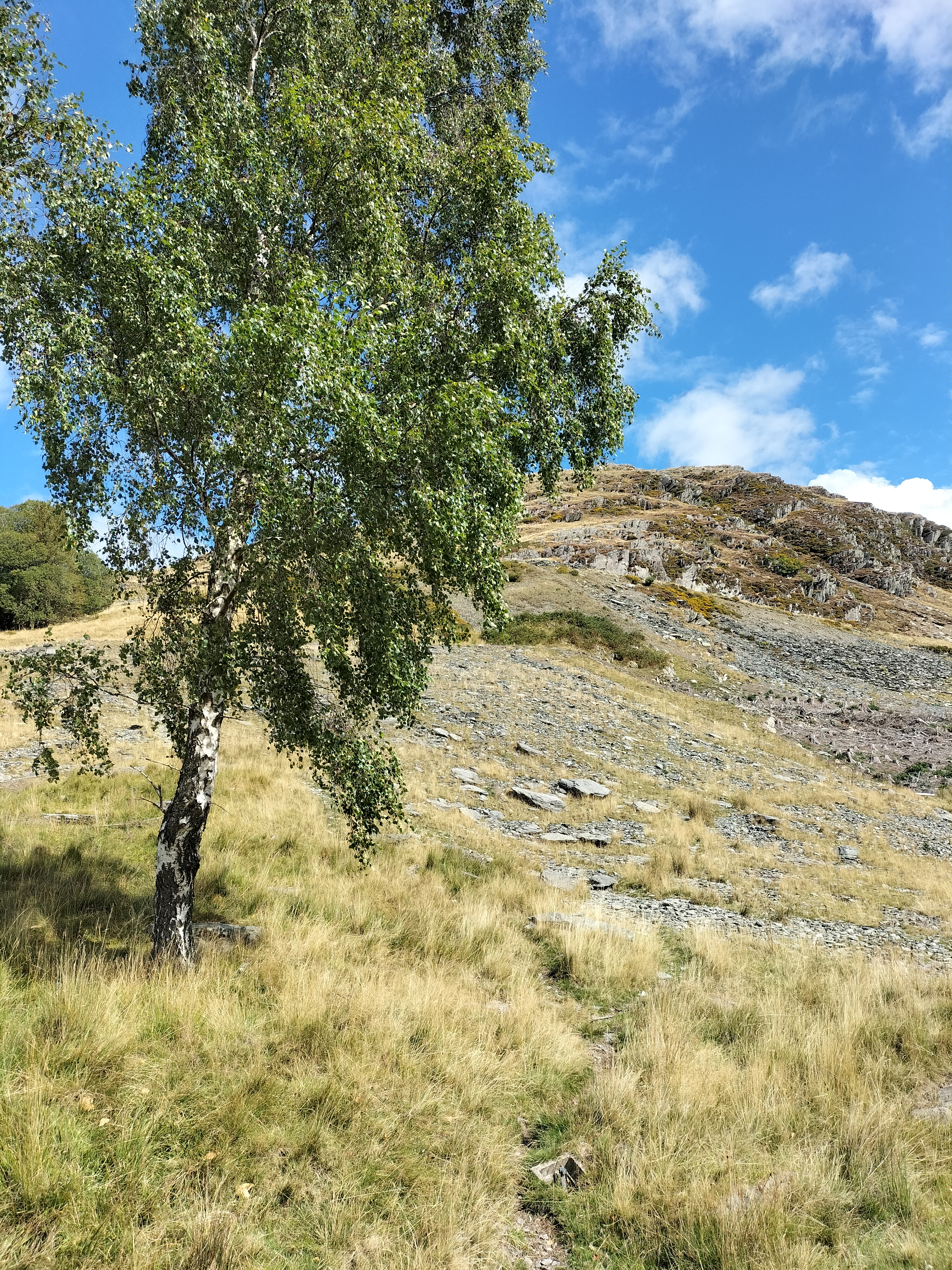
We were lucky: the clouds parted, the rain stopped, the sun came out. We took a trip to Elan Valley and walked around Garreg Ddu to Pen y Garreg.

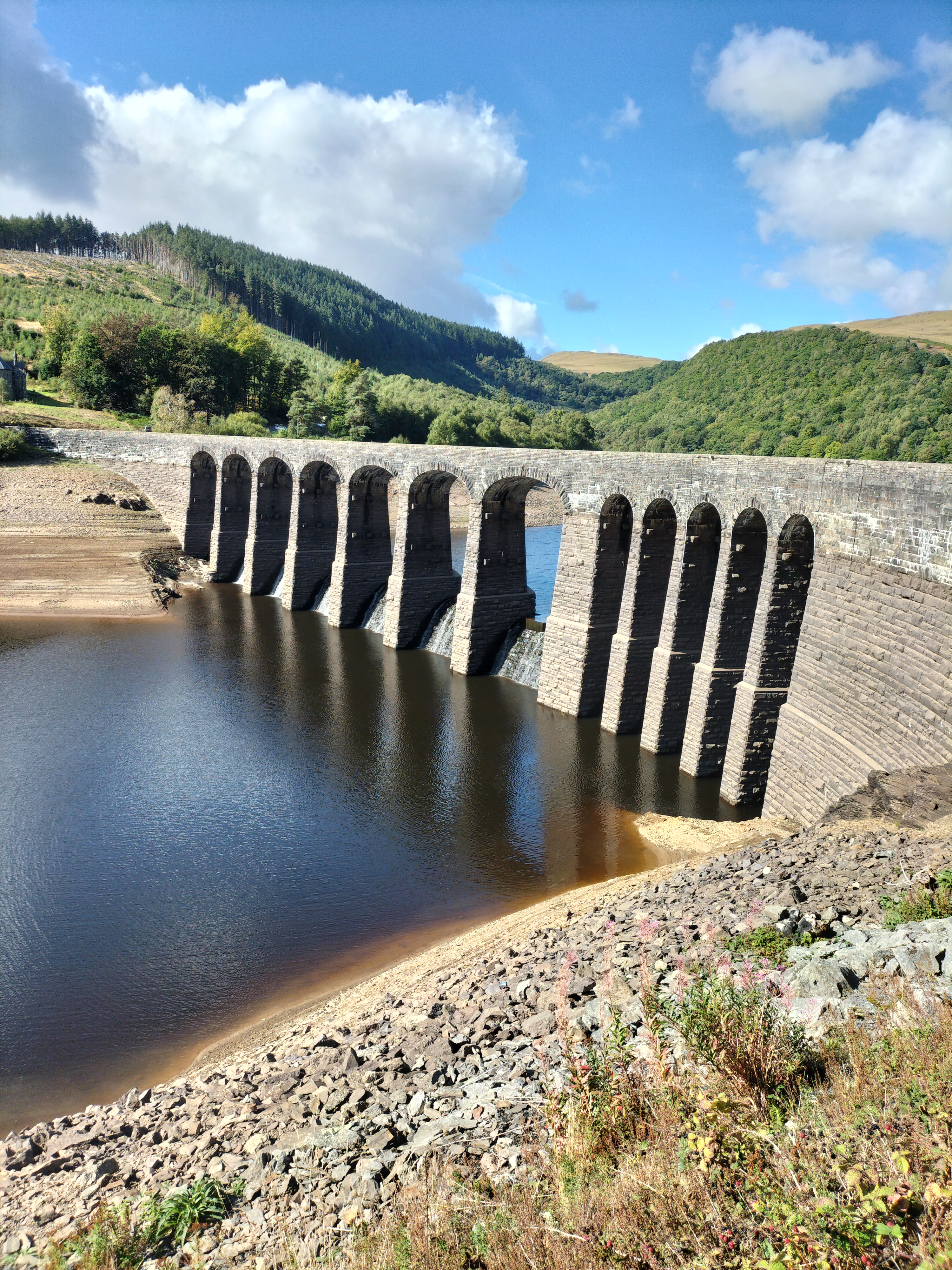
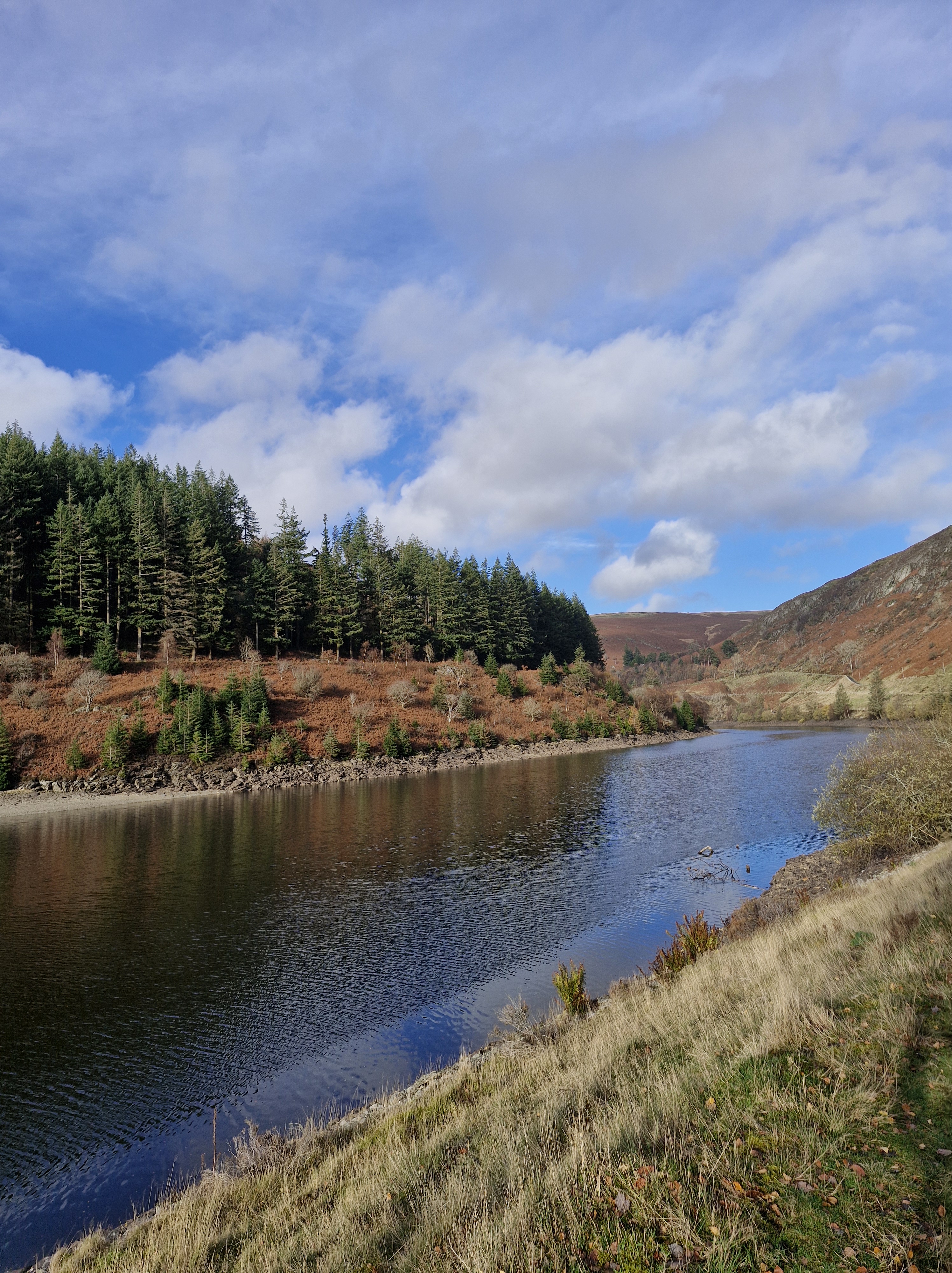
We’ve been a few times in the past, the last being in 2023 when there was a drought declared. Below is the road bridge/ wall between Garreg Ddu and Caban Coch. On the left 2023, on the right this time, in November.

Though there were less daylight hours this time to walk we still were able to see some of the differences in the water levels in the reservoirs between our visits in 2023 to this November.

In 2023 the water was so low we could see the outlines of the houses, the roads and the church that were compulsory purchased in 1892 in order to dam the Elan and Claerwen rivers within the Elan Valley and supply water to Birmingham. This was because of the rapid growth of that industrial city, and the numerous outbreaks of disease that prompted Birmingham City Council to petition the British government to pass the Birmingham Corporation Water Act in 1892, allowing the corporation to acquire the land.

Building work began in 1883. There are six impressive dams altogether. Four follow the Elan River – Craig Goch, Pen y Garreg, Garreg Ddu, and Caban Coch and two are on the river Claerwen – the Claerwen dam and the unfinished Dol y Mynach dam.

The History of Elan Valley:

In 1893 one hundred people in Elan Valley had to move to allow the work to begin, but only landowners received compensation payments. Many buildings were demolished: three manor houses, eighteen farms, a school and a church – the latter being replaced by the corporation and renamed Nantgwyllt Church. Over the next three years a railway line was constructed to transport the workers and thousands of tonnes of building material each day.

Thousands of men and their families lived in wooden huts in the the purpose-built Elan Village, where, eventually a library, a public hall, a shop, and a canteen were built. There was also a hospital, used for injuries and as an isolation hospital. There was even street lighting which was powered by hydroelectric generators. New workers were initially expected to spend the first overnight in a lodging house to be deloused and examined for infectious diseases. Only then were they allowed across the river to the village. Single men lived in groups of eight in a terrace house shared with a man and his wife. A guard was employed to check for illegal importation of liquor and unauthorised visitors. There was a bath house which the men could use up to three times a week but the women only once. And the pub was for the men only. A school was provided for those under elevens, after this the children were expected to work.

The dams were built in two phases. The first phase, which cost six million pounds and employed fifty thousand was opened on the twenty-first of July 1904 by King Edward VII and Queen Alexandra. The building of the second phase dams was delayed due to the two World Wars and work only started in 1946. Because of engineering advancements just one large dam was built instead of the three smaller ones originally planned for. This was the Claerwen. This dam was completed in 1952 and opened by Queen Elizabeth II on the twenty-third of October.

Where We Walked … Well, What We Saw From Where We Walked #Ailsa Craig #Arran #Scotland

Image courtesy of https://ayrshireandarran.com/ailsa-craig/

Ailsa Craig, sometimes referred to as the Granite Jewel of the Firth of Clyde, is an island that is colloquially known as “Paddy’s Milestone”. It was a haven for Catholics during the Scottish Reformation in the 16th century, and is also reknowned for being approximately the halfway point of the sea journey from Belfast to Glasgow, which was a traditional route for Irish labourers emigrating to Scotland to seek work.

The island is actually a volcanic plug from an extinct volcano, and is owned by David Thomas Kennedy, the 9th Marquess of Ailsa – except for the two hectares which were sold to the Northern Lighthouse Board in 1883.

The lighthouse was built around 1886, by Thomas Stevenson, a pioneering Scottish civil engineer. It originally used oil-burning lamps, but these were later replaced with incandescent lighting, and then, in 1990, the lighthouse was automated. Further refurbishment, in 2001, meant it was converted to run on solar power.

The island contains some of Europe’s most important bird colonies, which includes the continent’s biggest gannet colony, as well as puffins, so is managed as a nature reserve by the Royal Society for the Protection of Birds (RSPB). It’s also designated a Site of Special Scientific Interest (SSSI) and a Special Protection Area, mainly because of the colony of grey seals, and the occasional whale. There are also visiting large basking sharks during the warm summer months which can be seen feeding at the surface on the planktonic bloom.

The texture of the rocks on Ailsa Craig is a granite called microgranite that is so hard and resistant to impact, it makes it ideal for the manufacture of curling stones. The manufacturer, Kays of Mauchline, Ayrshire in Scotland, has the exclusive rights to the granite, granted by the Marquess of Ailsa, and has been making these stones since 1851, and providing them for the Winter Olympics since Chamonix in 1924.

I thought it interesting that boulders of of the Ailsa Craig microgranite were transported by glaciers as far afield as County Donegal and Pembrokeshire. Of course this led me down another rabbit hole …

The microgranite is part of the geology of the Precambrian rock of the Pembrokeshire Coast National Park. Formed as the lava pushed through the existing rocks and solidified, these rocks can be seen in various locations, such as the coastline of St Bride’s Bay and the southwest tip of the St David’s Peninsula.

Something else I discovered…

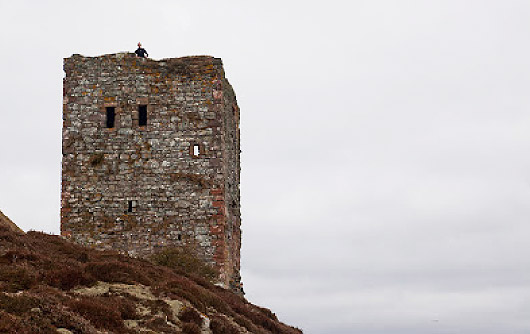
There are ruins on the island of a castle.

Ailsa Craig Castle today – photgraph courtesy of Douglas Wilcox www.seakayakphoto.com

These remains are of a castle built in the middle of the sixteenth century by the Hamilton Family to protect the island from King Philip II of Spain. It stands on a shoulder of rock around three hundred feet above the sea, the only approach to it a steep and narrow footpath, although there used to be an external set of stairs to the tower. The castle was in ruins after the Reformantion but was later restored by Thomas HamiltonIn and the work recorded by an armorial panel high up on the south gable, showing the Hamilton arms. Today only the tower remains.

Where We Walked Kingscross Point Arran Scotland #Walks #Photographs

Our second walk was an easy circular stroll – the Photographer assured me. I was suspicious; I’d heard that before… many times. But this time he was telling the truth!

We walk from the house where we are staying – (borrowed house in order, borrowed dog, Dusk, in tow, borrowed cats fed and left behind) – and saunter along a road and past a church towards the sea. Crossing a bridge onto an unsurfaced road we pass several houses ( noting that alongside one was a building that offered fish and chips ‘occasionally’. I wondered, aloud, whether today was one of the ‘occasional’ days as we clamber over rocks onto the beach …

but eventually realise that the Photographer has lingered way behind Dusk and I.

So she and I turn off at a signpost, go through a gate which leads to a path where we negotiate our way through, between gorse and brambles.

And onto a wooded area with a section of boardwalk.

There is the wonderfully evocative scent of wild garlic. Dusk is more intent on leading the way. Leaving the boardwalk, we enter fields, keeping to the path alongside the hedgerows and past the horses grazing in the next field. Through another gate, another field that slopes upwards. I am reminded here of the Rowan tree that I saw when I was here with a friend on our writing retreat in August last year. Then it was covered in berries – today it’s just in budding leaf.

The Photographer with us once again, we climbed over some large stones to reach the site of the ruins of a Viking fort. Actually, there is very little to see .but apparently there is a Viking boat burial near King’s Cross. The above photograph is courtesy of Walking Arran: Iron Age forts, a Viking burial and Buddhist pilgrims. https://tinyurl.com/yc3fupz9. Unfortunately I deleted the Photographer’s photo – which then was lost in the ether… oops!!

A little snippet of information:

Around the ninth century Arran was part of Viking territories; the Kingdom of Mann and the Isles. Many local place names have Old Norse origins which includes Brodrick (where the ferry lands providing the weather is good and the boat is up to the crossing). Brodick is derived from ‘breda-vick’, meaning ‘broad bay’ and Sannox, from ‘Sandvik’ or ‘sandy bay’, in Old Norse.

We stop for a few moments to take in the peace and quiet, and to look over again towards Holy Isle with the lighthouse and buildings that house those on a Buddhist retreat on the island.

And linger to look across the sea towards the range of mountains in the distance. One of our walks later in the week will take us closer to them. But there’s no doubt we won’t be tackling Goat Fell, the highest one the island – intrepid pensioners though we are!!

Then we scramble down to the path alongside the beach on the other side of the cove. The beach here is more rocky, We turn inland and uphill on a path through fields, then onto a lane which eventually leads back to the church – and homeward.

Another satisfying walk in this lovely island of Arran.

The following day we, and Dusk, had a rest, much to the annoyance of Clary, our friend’s cat – because I was sitting in her place on the settee …

before our next adventure – a hike walk to Loch Garbad

The following gives the ( rather long) history of the Holy Island, which I find fascinating – is courtesy of the website Holy Isle: Centre for World Peace and Health: https://www.holyisle.org/the-island/history/

History

The earliest recorded name for Holy Isle was Inis Shroin, which is old Gaelic for ‘Island of the Water Spirit’.

After the time when the Celtic Christian saint St. Molaise lived on the island at the end of the 6th century, it became known as Eilean Molaise, which is Gaelic for ‘Molaise’s Island’. This name gradually evolved over the course of centuries until early in the 19th century the island became generally known as Holy Isle (or the Holy Isle) and the village on the other side of the bay became known as Lamlash.

Saint Molaise (566 – 640 A.D.)

St. Molaise was born in Ireland, the son of Cairell, the Irish king of what is now called Ulster, and the Scottish princess Gemma. Molaise was a very gifted and spiritually inclined child. He was much loved by his own people and was offered the throne of Ulster when he came of age, but instead he chose a religious and secluded life in a cave on the west coast of Holy Isle. He was then only 20 years old. Some people believe that when St. Molaise chose the cave on Holy Isle as his hermitage, the island was already considered a special, “holy” place.

When he was about 30 years old, Molaise went to Rome and was ordained as a priest by Pope Gregory the Great. When he returned, he entered the great monastery in Leighlin, Ireland which St. Gobban had established. Soon after he became its abbot. Under his guidance the monastery grew in fame and number to about 1500 monks. Molaise played an important part in adopting the controversial Roman method of dating Easter within Ireland. This was an important issue among the different Christian churches, who debated it for several centuries. When Molaise was in his late 50s, he went back to Rome and was consecrated first Bishop of Leighlin by Honorius I. Historians are divided on when Molaise died, estimating between 638 and 641. His feast day is celebrated both in Ireland and Scotland, on the 18th of April.

St. Molaise’s cave and the Healing Well

The cave where St. Molaise lived, is about half way along the western shore of Holy Isle, about ten meters above the high-water mark, and consists of an overhanging sandstone rock with a sunken stone floor. It is thought that in Molaise’s time much of the opening of the cave was closed up by a wall to keep the weather out. The cave can still be visited today. Carvings can be seen in the wall, such as simple crosses, perhaps made by pilgrims, and Norse runes, mainly of personal names. One of these says “Vigleikr the Marshall carved”. Some of the crosses seem to have been carved at around the same time as the names, so perhaps there was an element of pilgrimage to the cave among the Vikings. Lastly, there is an unusually designed cross carved into the roof of the cave.

Close to the cave is a spring, known as the Healing Well which is thought to cure ills and bring blessings.  In the 18th century it was recorded that “the natives used to drink and bath in [the well] for all lingering ailments”. The same source describes the water as “gushing out of a rock”. At the beginning of the 20th century apparently there was a cistern present built of masonry, with a stone spout which delivered the water. The spring is overgrown now so that you wouldn’t get more than a footbath from it but the water is still cold and clear, albeit it does not meet current EU standards for drinking water.

The Monastery: There are several indications of a monastery having existed on Holy Isle, most probably close to what is now the Centre at the north end. It may have been erected at the beginning of the 13th century, although other sources say it was in the 14th century. The monastery buildings could have been made of wood or a dry-built structure which left no traces. In the 16th century it has been recorded to have decayed.

The Vikings: In 1263 King Haakon of Norway brought a fleet of ships to the shelter of Lamlash Bay, before fighting the Scots at the Battle of Largs. Vigleikr, one of his marshals, went ashore at Holy Isle and cut runes with his name on the wall of St. Molaise’s cave. After the battle, King Haakon gave the island of Arran to one of his supporters, but this really didn’t count for much once the Norse had departed.

The Dukes of Hamilton

In 1488 Holy Isle and land in the Lamlash area was owned by one John Hunter, before being passed over to the Earl of Arran in 1527. The island continued to be part of the Arran Estate in Hamilton ownership even into the 20th century, being rented out to various people until that time. In the 18th century, Captain James Hamilton (not related to the dukes of Hamilton who owned Arran) obtained a long lease on Holy Isle from the Duke of Hamilton. In 1779 he built what became known as the Big House (the old farmhouse, now called the Harmony Wing).

Lighthouses

In 1877 the inner lighthouse (facing Arran) was built on Holy Isle, engineered by David and Thomas Stevenson. It is locally known as “Wee Donald”, though the current lighthouse keepers don’t know why anymore. The outer lighthouse, or Pillar Rock, was built in 1905 on the east shore. It had a fog horn and a revolving light that was lit by paraffin. Pillar Rock lighthouse was the first lighthouse built with a square tower and has several rooms inside for the men who worked there. Lighthouse cottages were built to house four families of the lighthouse keepers and a walled garden was made. The lighthouses became automated in 1977, and are now serviced every two weeks by local people living on Arran.

The “Rich American”

In 1957 the Duchess of Montrose died and the death duties were so high that the Arran Estate had to be divided. Part of the land was passed to the Forestry Commission and the National Trust, whilst other parts went into private hands. Holy Isle received a life tenant in 1958: Stewart Huston of Pennsylvania, USA. He was a millionaire who had a special interest in the island because he was descended from Gershom Stuart, who was Minister of Kilbride (at Lamlash) from 1747 – 1796. Despite his interest in the island and its history, he did not visit often, and the land continued to be used for grazing sheep by local shepherds from Arran.

The Universities Federation for Animal WTelfare

In 1968, the UFAW (Universities Federation for Animal Welfare) was asked to advise on the husbandry and management of the island’s animals, which at that time consisted of Blackface sheep and a herd of feral goats. They set up a Field Study Centre in 1969, and after Stewart Huston passed away, they were able to buy the island in 1971. in later years they introduced 25 Soay sheep and 5 Highland cattle, and a few years later 5 Eriskay ponies. When the UFAW could no longer afford to keep it, the island had to be sold again.

The Morris Family

In April 1984, after having been on the market for 20 months, the island was bought by James and Catherine Morris for £120,000. They moved into the farmhouse the following summer with their two young sons. They managed to connect electricity from the south end to the north, which made living in the farmhouse much more comfortable for them. In 1990 all the Highland cattle and seven ponies were taken off the island, leaving the Saanen goats, the Soay sheep and five Eriskay ponies.

In 1987 they decided to put the island up for sale for £1 million. The island remained unsold however, and in the autumn of 1990 Mrs Morris approached Lama Yeshe to offer the island to him, because she felt that its future would be best taken care of by “the Buddhists from Samye Ling”. Lama Yeshe first came to Holy Isle on the winter solstice of that year and became determined to buy the island. Finally the asking price was dropped to £350,000, which Lama Yeshe managed to raise by April 1992.
Walking the Taff Trail – Well a small section of it anyway. And more of a stroll than a walk. #walks #cycling #photos #ThursdayThrowback #memories #history

An update to my post: Tongwynlais: Historic tollhouse given new lease of life:https://www.bbc.co.uk/news/uk-wales-62718289

Edmundo Ferreira-Rocha, of Cardiff council’s Urban Park Rangers, and councillor Linda Morgan cut the ribbon at the opening ceremony. © Tongwynlais Historical Society.

© Tongwynlais Historical Society.

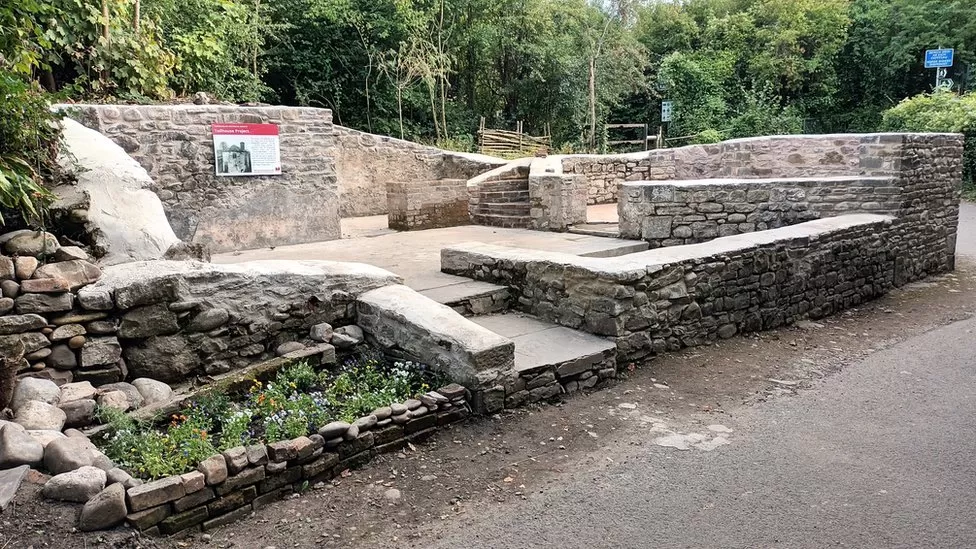
Villagers have restored the shell of a historic “unloved eyesore” tollhouse demolished more than 70 years ago. The original building was among hundreds used to collect money from 18th and 19th century travellers. Volunteers in Tongwynlais, on the edge of Cardiff, have spent more than a year rebuilding it as the first step towards creating a local history trail. “Our volunteers have been fantastic,” said Sarah Barnes, of the Tongwynlais Historical Society.

*******************************************************************************************************

Before this wonderful restoration granddaughter and I walked the Taff Trailso thought you might like to see the before and after. Or, in the case of this blog, the “after and before”.

Put a lovely sunny day, with a dog desperate to go a walk, with a granddaughter who needs to be dragged from her mobile and bribed by the thought of a chocolate brownie and a drink of Sprite, and there was only one place to head for, the cafe in the garden centre at the end of the Taff Trail in Radyr.

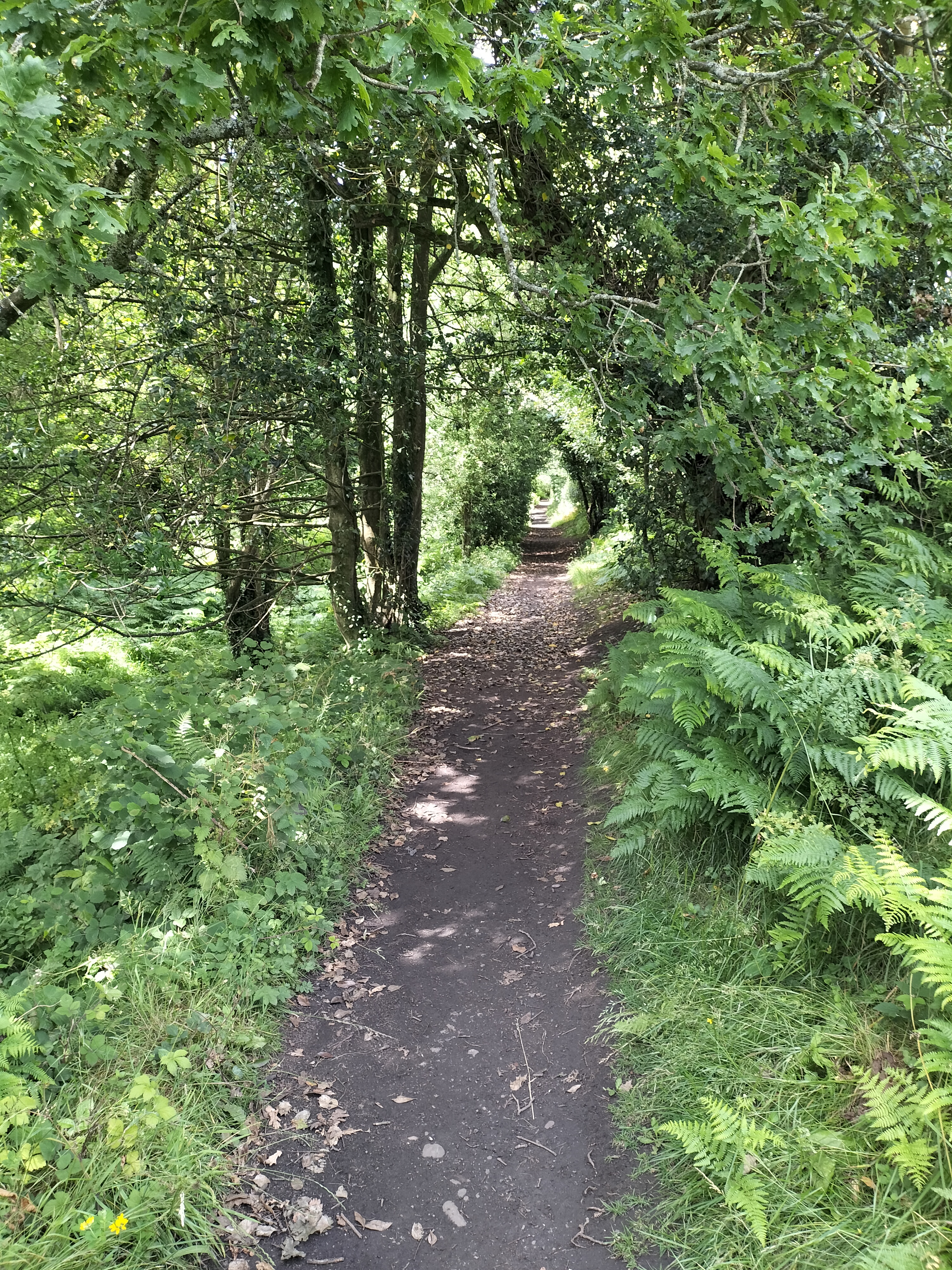
The Radyr section of this lovely river walk is one we’ve done often

But this time we decided to meander along various smaller paths, even though we needed to retrace our steps numerous times. I was so glad we did because look what we found:

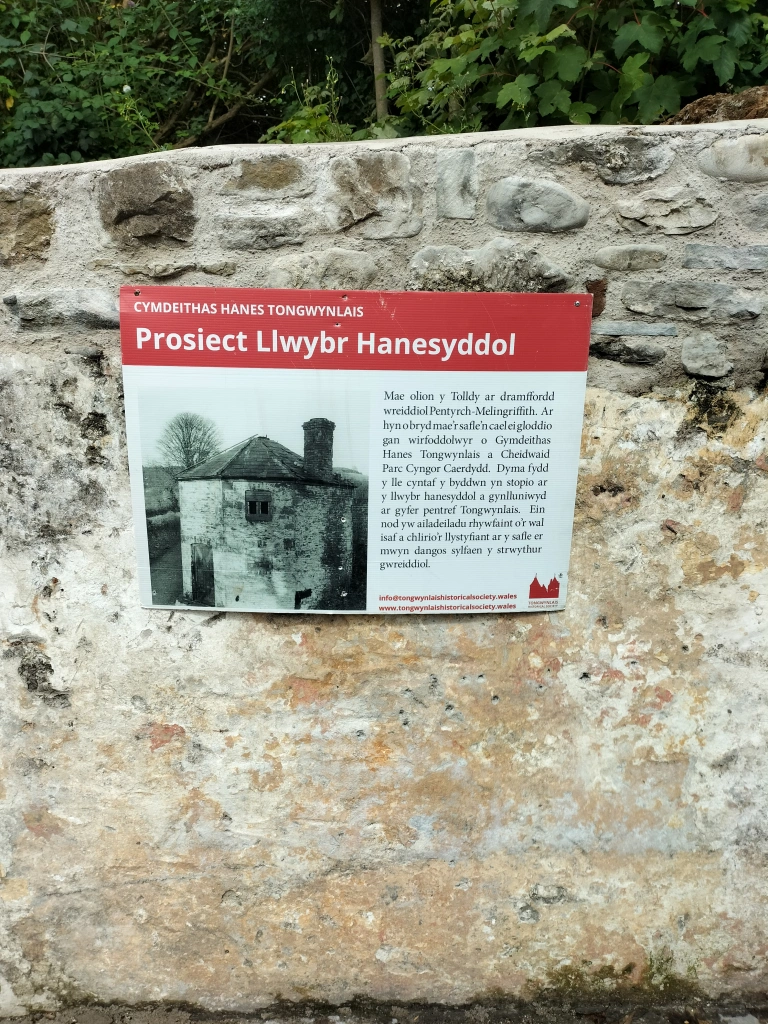
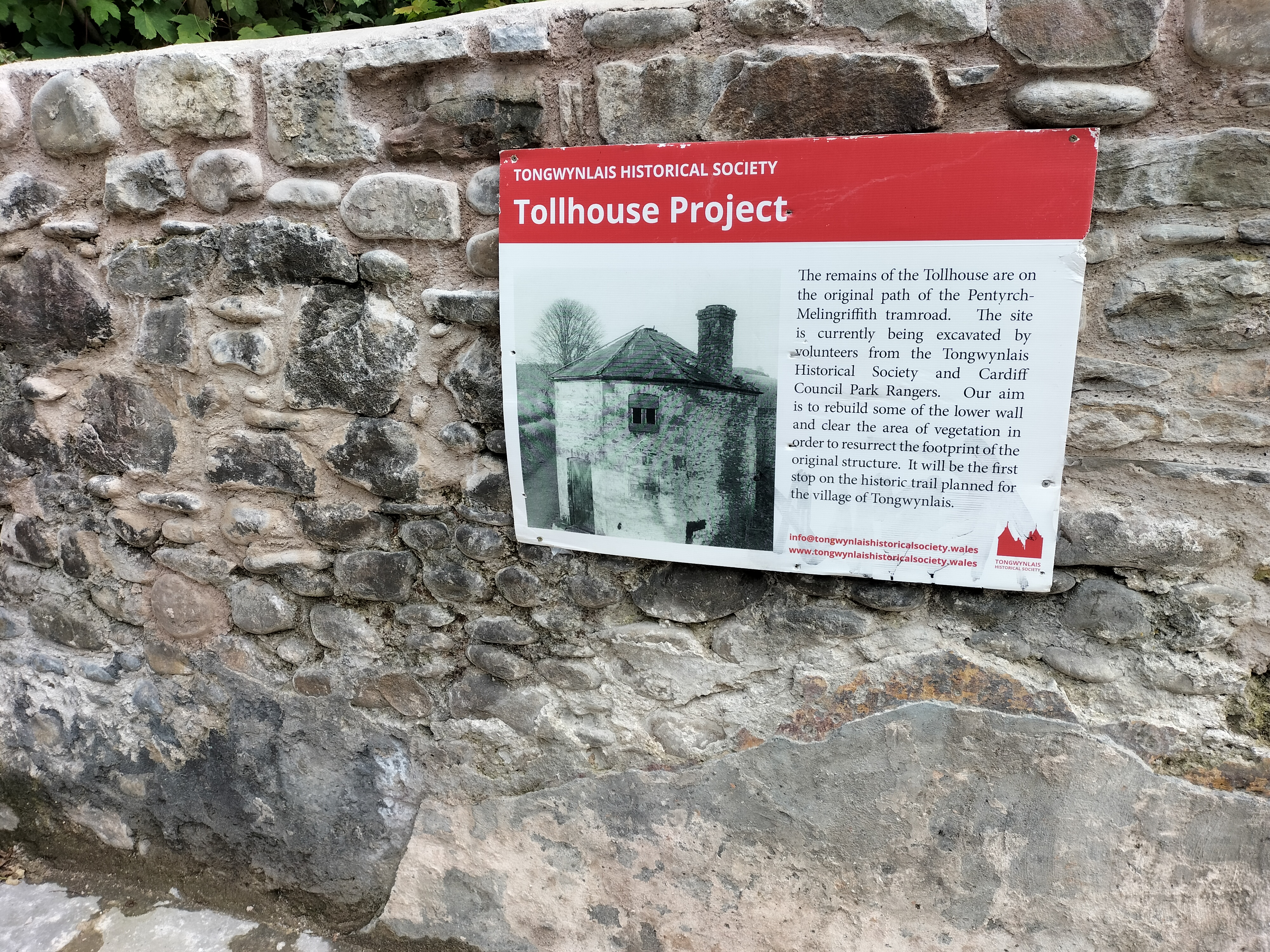
The tollhouse, once used by the Pentyrch and Melingriffith Iron and Tinplate Works in the late 1800s

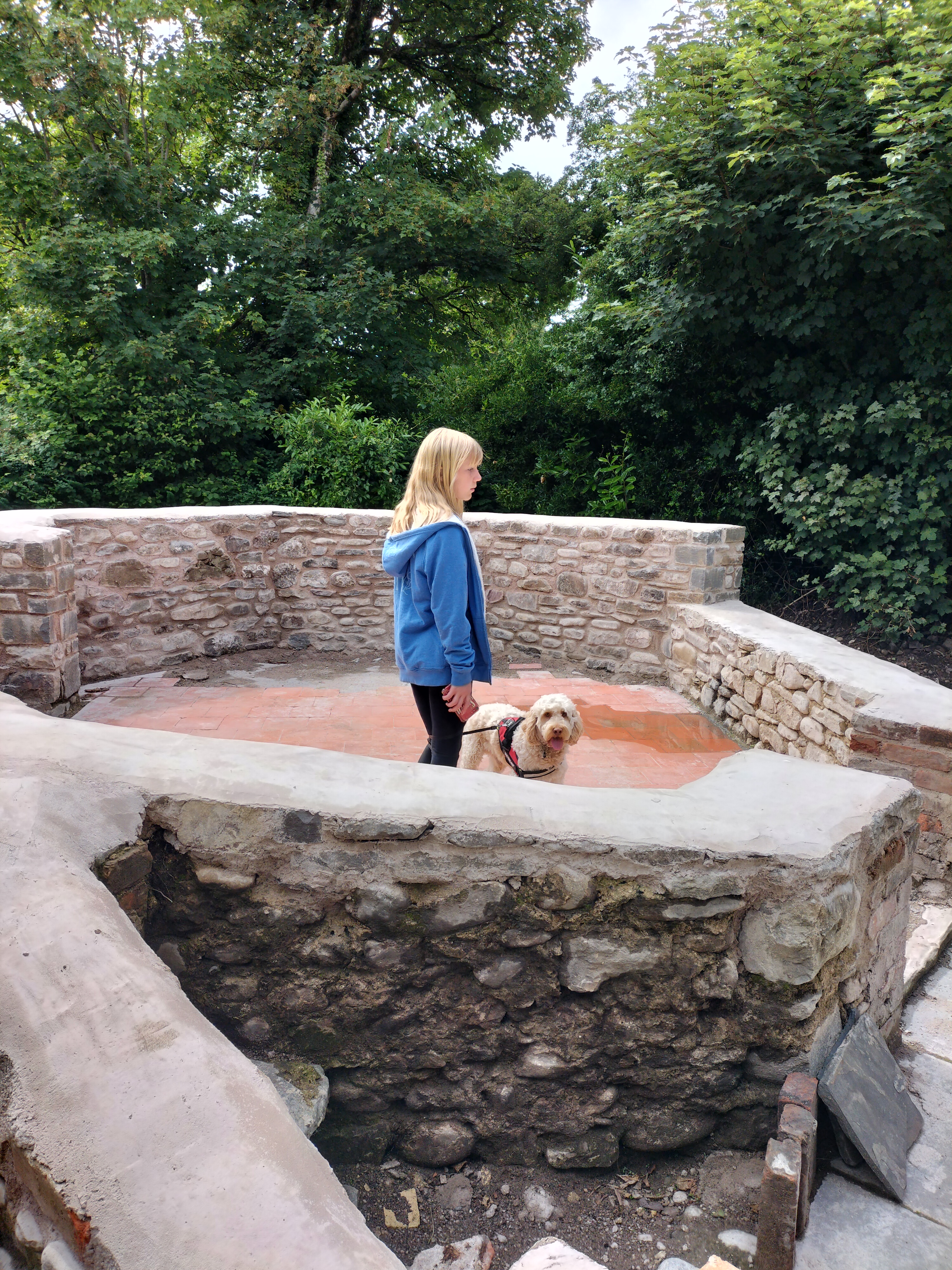
Thanks to the Tongwynlais Historical Society ( co-founders,Sarah Barnes and Rob Wiseman) the Tollhouse returns to life. What was once nothing more than a few visible bricks covered in 70 years of vegetation, is now a recognisable shell complete with growing wildflower garden

I thought I’d better seek permission to add some of the photographs from the Tongwynlais Historical Society. I made contact with a very helpful chap, Jack Davies, whose fascinating website also contains an article about the Tollhouse and other history of the village: https://tongwynlais.com/history/

Granddaughter, Seren, with soulful companion, Benji, who patiently waited to continue his walk.

Seren also very kindly leant a hand to point out this lovely heart shaped stone, with a wonderful inscription:

Which immediately brought to mind (well, my mind anyway), my book, The Heart Stone, which was published by Honno, in 2021: So, never one to pass up on an opportunity…

The inspiration for The Heart Stone partly came from research for my degree on The First World War some years ago; a subject that both fascinates and repulses me. At the time I’d found my grandfather’s army records and discovered he’d volunteered to join the local Pals Battalion with two of his friends, although they were all underage.

I only ever remember him as a small man who spent his days in a single bed under the window in the parlour, who coughed a lot, and was very grumpy. He died when I was eight.

There was no conscription at the beginning of the war. The Pals Battalions were formed, to answer Lord Kitchener’s call for volunteers, by encouraging local magistrates to drum up community spirit and patriotic fervour.

 The gist of the speeches used were that young men,”…  should form a battalion of pals, a battalion in which friends will fight shoulder to shoulder for the honour of Britain and the credit of their town and villages.”

 My grandfather was gassed in 1916 near the Somme. He was also shell-shocked and was unemployed for the rest of his life. Once, my mother told me he had never spoken of his experience but had suffered nightmares for as long as she could remember. And that there were whole streets around the house where they’d lived where the men had never returned.

It’s a haunting image.

Four years ago, after my mother passed away and we were clearing her home, I found my grandfather’s army papers again.

 During the following week, whilst my husband and I were walking along the Pembrokeshire coastal path, we found a smooth stone, almost heart shaped, placed on top of a cairn amongst the Marram grass. Picking up the stone to examine it, a folded paper blew from underneath. There had been words on it but were, by then, indecipherable.

 A love note, I thought; a love note under a heart shaped stone.

 A love note, under a heart shaped stone, from a young man who had never returned.

 And so The Heart Stone started to form.

The Heart Stone was published by Honno Press in Feb 2021

And a Review of The Heart Stone:

https://amzn.to/3bCkx8w

And a buying link:

Amazon.co.uk: https://amzn.to/3hupbc1

Also available from Honno

And a little bit about me:

I’m,originally from Saddleworth, a group of villages on the edge of the Pennines, but have lived in Pembrokeshire, Wales, for over forty years.

I have an MA in Creative Writing with the University of Wales Trinity St David’s College, Carmarthen. BA (Hons) in Literature with the Open University, a Diploma in Drama from Swansea University. I’m also is a Creative Writing tutor and hold workshops on all genres.

And here I am:

https://twitter.com/judithbarrow77
https://www.facebook.com/judith.barrow.

My Review of Long Shadows: Tales of Llys y Garn by Thorne Moore #TuesdayBookBlog #Histfiction

long shadows


I gave Long Shadows: Tales of Llys y Garn 5*

Book Description:

Llys y Garn is a rambling Victorian-Gothic mansion with vestiges of older glories.

It lies in the isolated parish of Rhyd y Groes in North Pembrokeshire. It is the house of the parish, even in its decline, deeply conscious of its importance, its pedigree and its permanence. It stubbornly remains though the lives of former inhabitants have long since passed away. Only the rooks are left to bear witness to the often desperate march of history.

Throne Moore’s Long Shadows: Tales of Llys y Garn comprises a trio of historical novellas that let us into secrets known only to these melancholy birds.

The Good Servant is the story of Nelly Skeel, loveless housekeeper at Llys y Garn at the end of the 19th century, whose only focus of affection is her master’s despised nephew. But for Cyril Lawson she will do anything, whatever the cost.

The Witch tells of Elizabeth Powell, born as Charles II is restored to the English throne, in a world of changing political allegiances, where religious bigotry and superstition linger on. Her love is not for her family, her duty, her God or her future husband, but for the house where she was born. For that she would sell her soul.

The Dragon Slayer tells of Angharad ferch Owain in the early decades of the 14th century. Angharad is an expendable asset in her father’s machinations to recover old rights and narrow claims, but she dreams of bigger things and a world without the roaring of men. A world that might spare her from the seemingly inevitable fate of all women.

In these three tales the rooks of Llys y Garn have watched centuries of human tribulation – but just how much has really changed? If you enjoyed the kaleidoscopic sweep of David Mitchell’s Cloud Atlas you will appreciate Long Shadows.

My Review:

I have long been an admirer of Thorne Moore’s work and have not been disappointed with these three novellas in  Long Shadows: Tales of Llys y Garn

The first, The Good Servant is told from the point of view of the housekeeper, Nelly Skeel; the protagonist, living at the end of the nineteenth century.  Well rounded and well portrayed in her actions, there is a vulnerability about this character; as the reader I found myself both can empathising and sympathising  with her and yet being exasperated. Yet should I? She is of her time and  of a certain status in her world.

And, so, on to The Witch. This story, set in the seventeenth century,  takes the reader through the early years of Elizabeth Powell to her adult life. Told mainly from the protagonist’s point of view with the occasional insight to one or two of the  other characters from a third person narrator, the emphasis is on the restrictions of the religion at that time. and the class struggles; land versus money. I liked Elizabeth, which is something I cannot say about Anthony, her brother. Always there is hope that all will be well but there is an all encompassing darkness to her story…

The Dragon Slayer is the story of Angharad ferch Owain, living during the fourteenth  century. Also told from the protagonist’s point of view we read of her fear of her father, of her future. This protagonist I liked the most. The ending is satisfying. I don’t know why I was surprised, but I was. As with the first two novellas, this tale is dark with themes of the women being mere chattels to be bargained with, used for the progression in society of their families.

I enjoyed the way the women were portrayed as having a strength and internal rebellion. But yet there was always the conflicts of status and money, of land and possessions, of greed and thwarted love. Of patriarchy.

In all three novellas, both the internal and spoken dialogue the author has the tone and subtle dialect that I imagine Rhyd y Groes in North Pembrokeshire to have been in those eras.

And, in all, the descriptions of the buildings, of Llys y Garn and of the ever-changing Welsh countryside are evocative and easily imagined.

Just a comment about the style of the book:  

The intriguing Prelude, giving the history of the “rambling Victorian-Gothic mansion” that is Llys y Garn,  is fascinating.  And I loved the short explanations of the after-years of novella. And  then we have the Interludes; told in a conversational tone these are filled both with historical details and those pertinent to the story,. Finally, the Epilogue, giving the continuing, ever-evolving history of Llys y Garn through the following centuries. 

It is apparent that the author has researched thoroughly for each of these stories; the themes of Welsh legends, myths, superstitions  and tales are woven throughout the history of the decades.  

Watch out for the ravens

This is a collection of novellas I can thoroughly recommend to any reader, especially those who enjoys historical literature.

Links to buy:

Amazon.co.uk: https://amzn.to/2rDFQj7

Amazon.com: https://amzn.to/2Iap5Hr

About the author:

Thorne Moore

Thorne was born in Luton and graduated from Aberystwyth University (history) and from the Open University (Law). She set up a restaurant with her sister but now spends her time writing and making miniature furniture for collectors. She lives in Pembrokeshire, which forms a background for much of her writing, as does Luton. She writes psychological mysteries, or “domestic noir,” and her first novel, A Time For Silence, was published by Honno in 2012. Motherlove and The Unravelling followed, also published by Honno. She has also brought out a book of short stories, Moments of Consequence. Her last novel, Shadows, was published by Endeavour in 2017. She’s a member of the Crime Writers Association.

Praise for Thorne Moore and her novels:

“Thorne Moore is a huge talent. Her writing is intensely unsettling and memorable” – SALLY SPEDDING, AUTHOR

“Totally had me hooked from page one… Highly recommended if you love a good psychological thriller” – BROOK COTTAGE BOOKS

“I devoured this book. Beautifully written, frighteningly real” – CHILL WITH A BOOK

“A compelling blend of mystery and family drama with a gothic twist… The author’s ability to create an atmosphere is exceptional” – JUDITH BARROW, AUTHOR

“Beautifully told, this really did have me captivated” – CLEOPATRA LOVES BOOKS

“Moore has created a figure who reaches out across the decades and grabs our sympathy… Her character transforms the novel” – BOOKERTALK