Unknown's avatar

About Judith Barrow

Pattern of Shadows was my first novel, the sequel, Changing Patterns was published in May 2013. The last of the trilogy, Living in the Shadows was published July 2015. In August 2017, the prequel to the trilogy, A Hundred Tiny Threads,was published. In March 2010, The Memory was published by Honno, a contemporary family saga. I also have an eBook, Silent Trauma, a fiction built on fact novel, published as an eBook. I have an MA in Creative Writing, B.A. (Hons.) in Literature, and a Diploma in Drama and Script Writing. I've had short stories, poems, plays, reviews and articles published throughout the British Isles, notably in several Honno anthologies. I am also a Creative Writing tutor and run workshops on all genres and available for talks and workshops.My blogs are on my website: https://judithbarrowblog.com/ where I review,interview other authors, and generally write about walks & photographs. At the moment I'm running a series of posts called Places in our memories, where writers talk about somewhere that brings back a memory. Always happy to hear from anyone who would like to join in with that. When I'm not writing or teaching creative writing I spend time researching for my writing, painting or walking the Pembrokeshire coastline

On Being an Interviewer and Wanting to Organise a Book Fair?

Many years ago I was asked by a local online television company, Showboat TV to interview for a programme called BookSmart. In slight trepidation I agreed; I had no experience in interviewing anyone. But as an author and a creative writing tutor they obviously thought I would be able to talk to other writers about their books and the way they wrote.

I remember I had just the first two books of the Haworth trilogy published then …

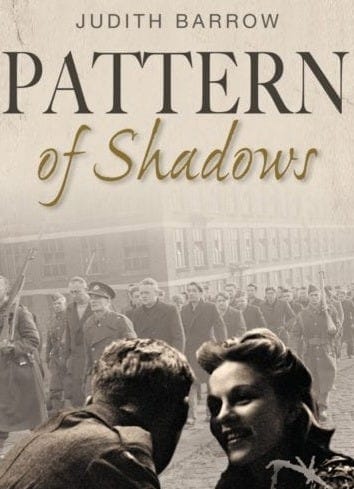
Pattern of Shadows

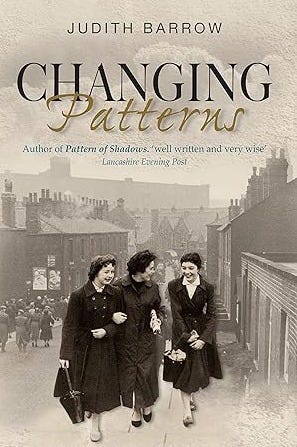
And the sequel: Changing Patterns

But ShowBoat TV had faith in me, and it’s been interesting – and fun. I’ve met many people, authors who live in Wales and authors from all over the world. At first it was filmed and shown through the internet; these days, when I interview, we work through Zoom. Which is what I did when interviewing Debbie Campbell last year, and lately Suzi Quatro. Need I say these were the highlights of my volunteering – and Showboat TV are promising more of this ilk for their viewers.

Viewers, whose numbers, may I say, have risen steadily over the years,because the company provides such a variety of programs. Besides BookSmart, there are interviews with musicians and performances of dramas produced by small companies. All accessible from the homepage, which contains all of the seven free series, with one episode following one each day.

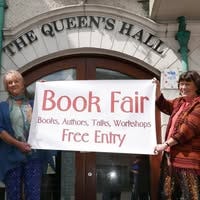
But not only does the company cover all this, but they also travel around filming events, and, in the past, they filmed and were sponsors for the September annual book fairs that I helped to organise, initially with friends and fellow authors, Thorne Moore and Alex Martin – then in later years, when Alex moved away, just with Thorne.

It was hard work – and it began in the January of each year.

When embarking on this, the first thing you do is start with the obvious; find someone like-minded to help you with the organising of the whole affair. More importantly, someone who you know well enough to recognise you’ll be able to work together without egos getting in the way. (And, yes, I’m speaking from experience; enough said!) And someone with a sense of humour. Believe me, if you’re determined to hold a book fair, you’ll need one.

So, to the practicalities – but maybe that’s better left for next time…

Where we Walked Glen Rosa #Arran #Scotland

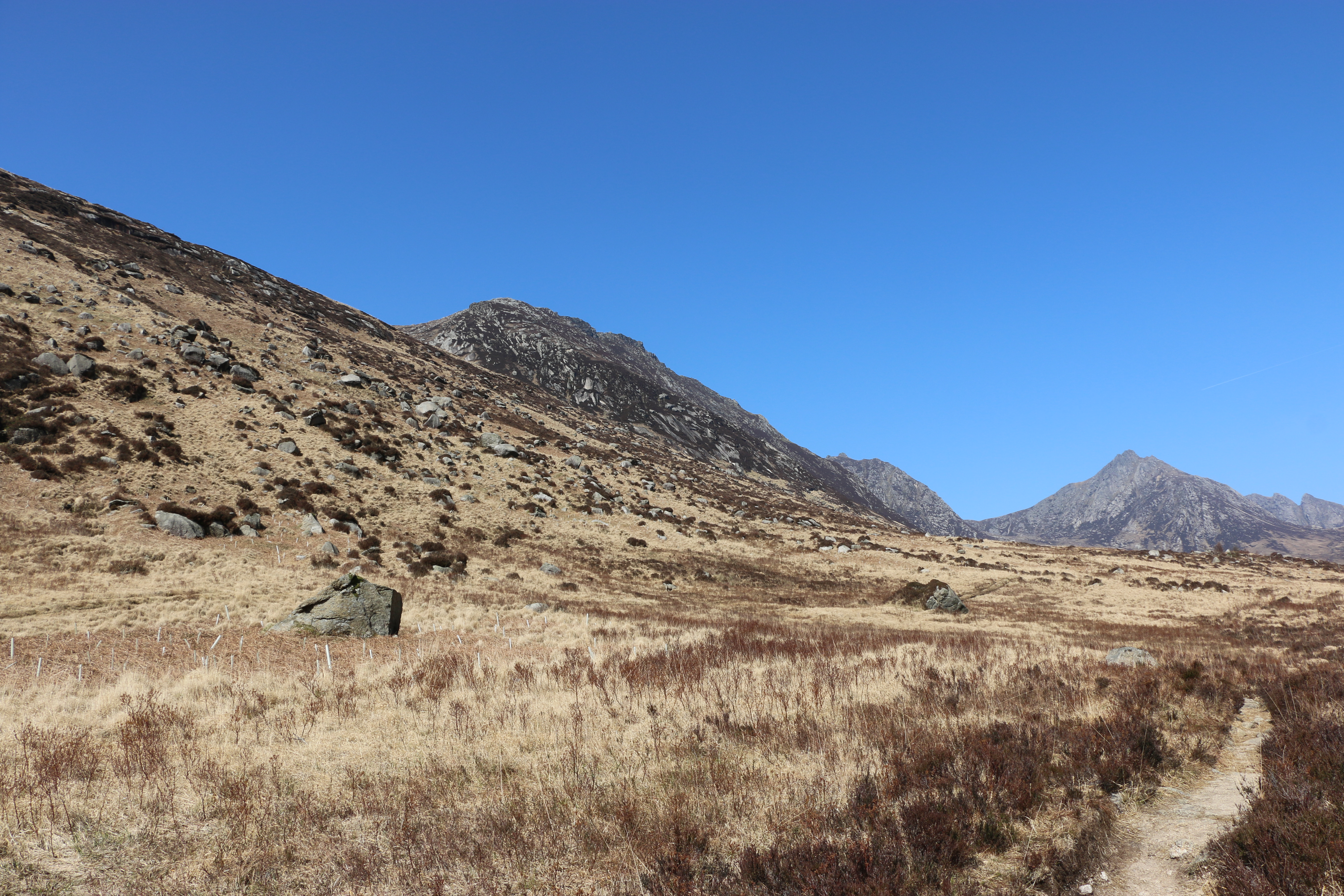
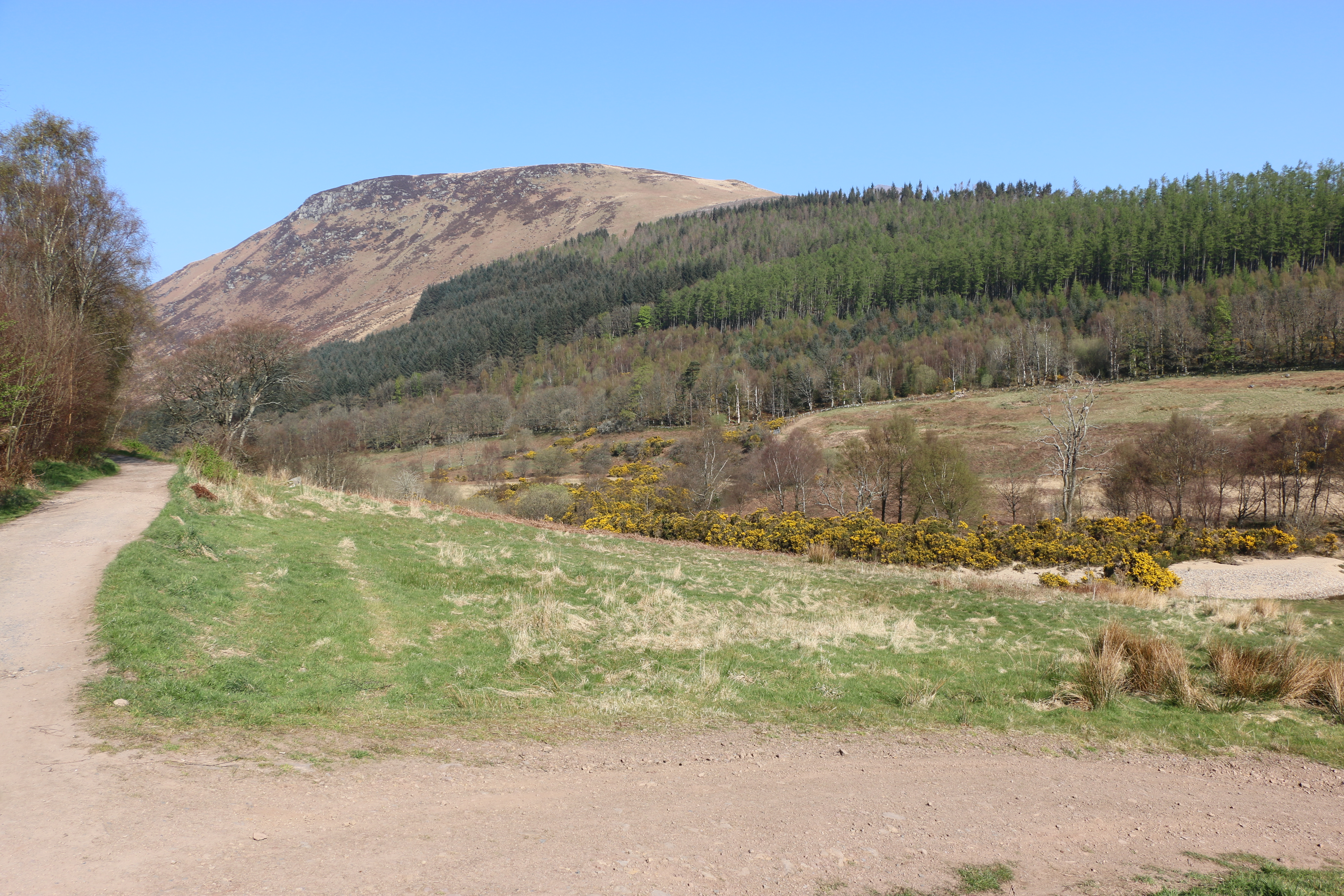
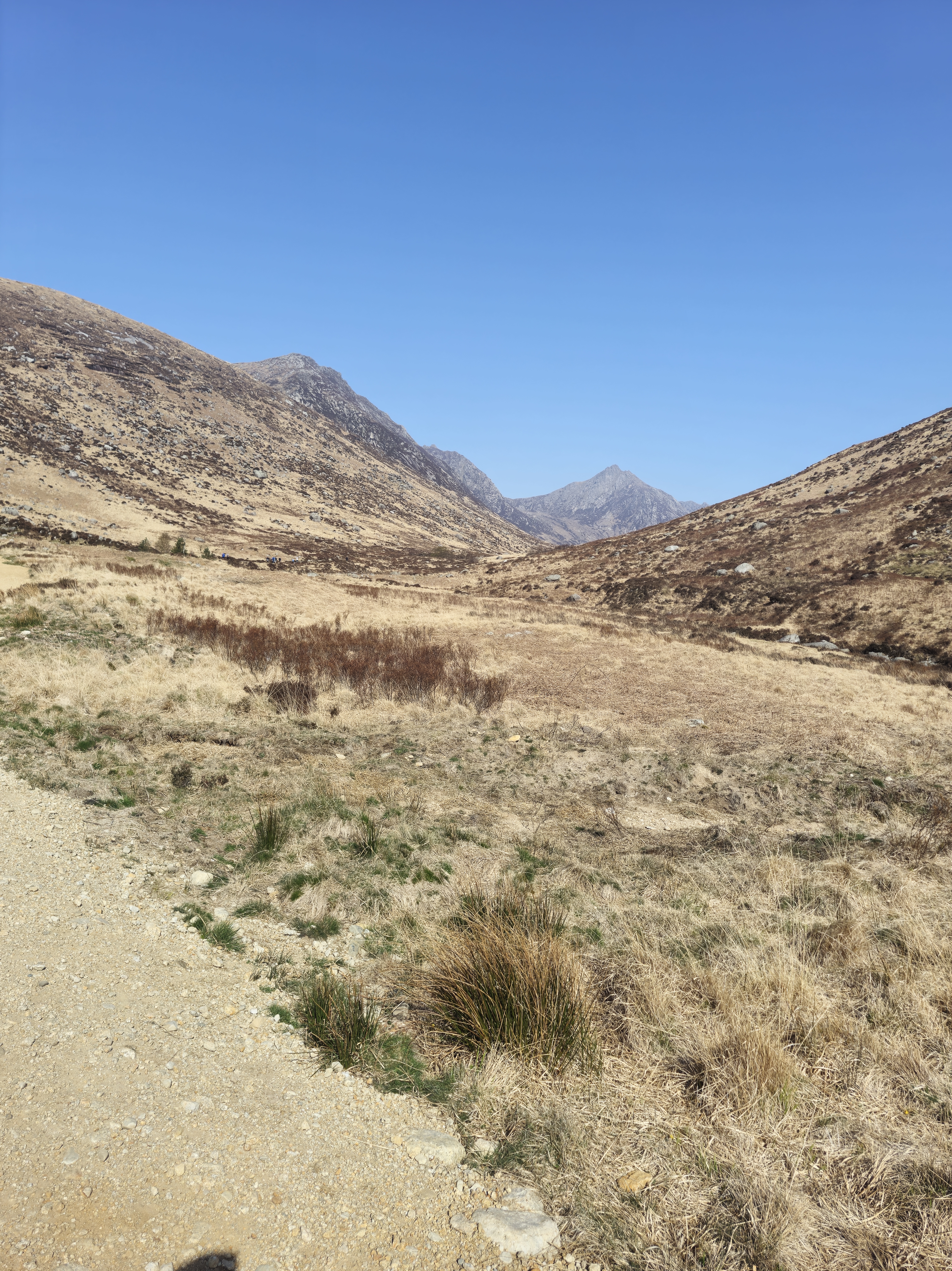
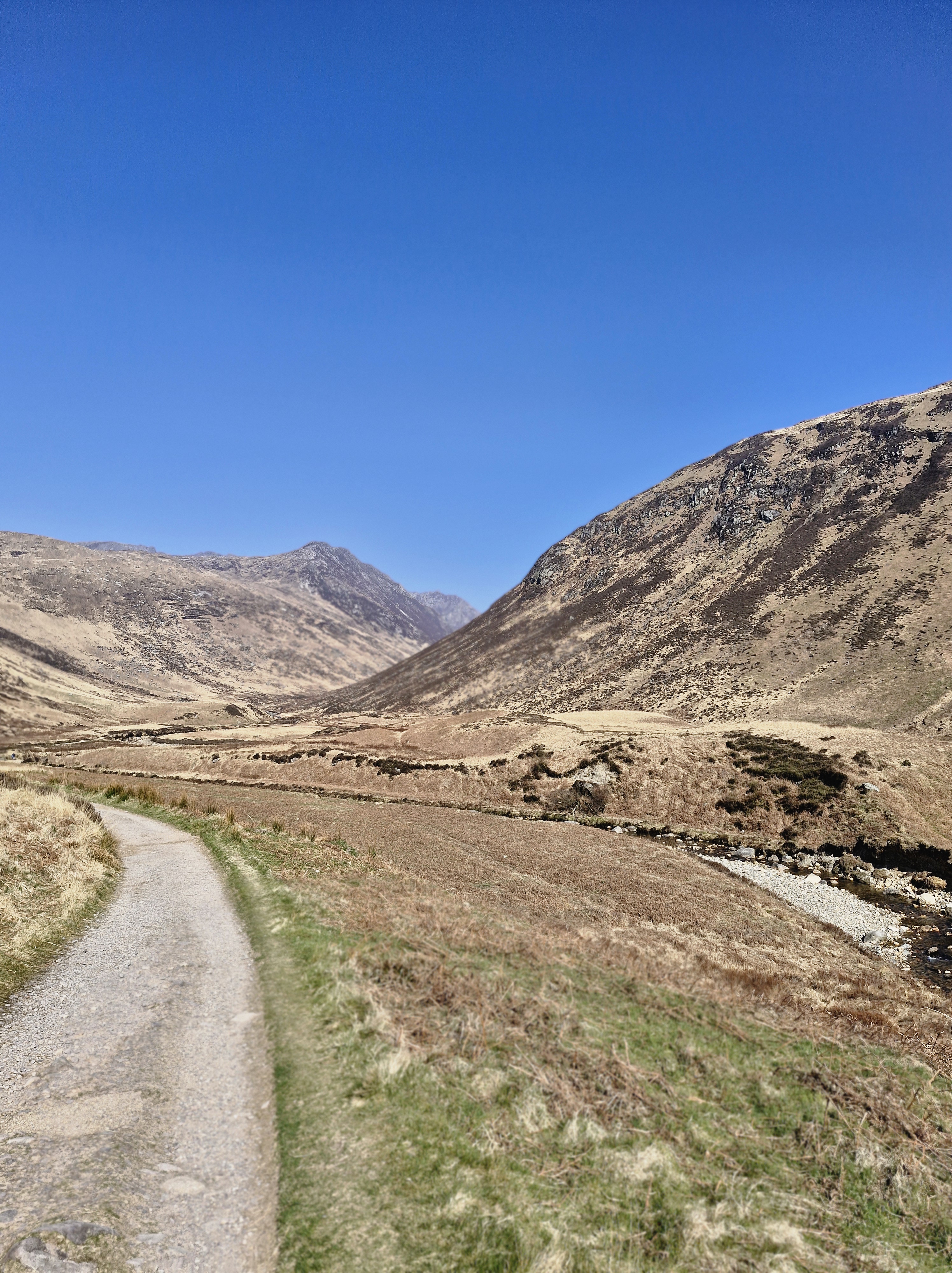
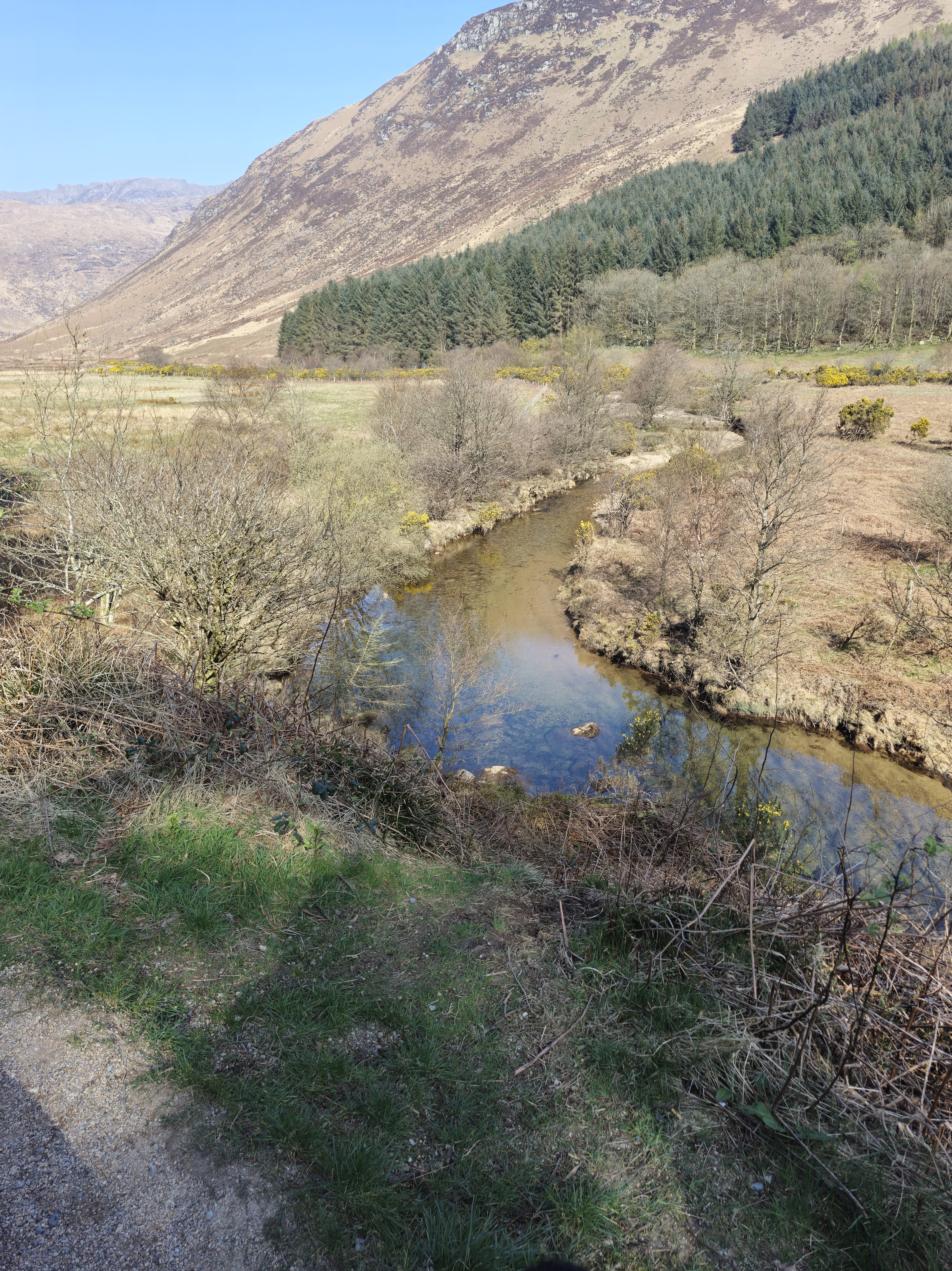
Glen Rosa is a beautiful glen with Goat Fell mountain in the distance – stunning scenery.

Early morning (apparently the best time to do this walk), and we are already driving through Brodick. We turn into a lane just before the Old Brodick Burial Ground, signposted Cart Track, Glen Rosa’. There are two choices according to the directions; drive the first mile on a lane to where the track begins. or walk it. We debate. If it’s interesting, we’ll walk. We park, walk a little way … it’s just a lane between two hedges … nothing much to see.

Photo courtesy of https://creativecommons.org/licenses/by-sa/2.0/The

The Photographer is keen to photograph the glorious views that the directions promise, so back to the cemetary.

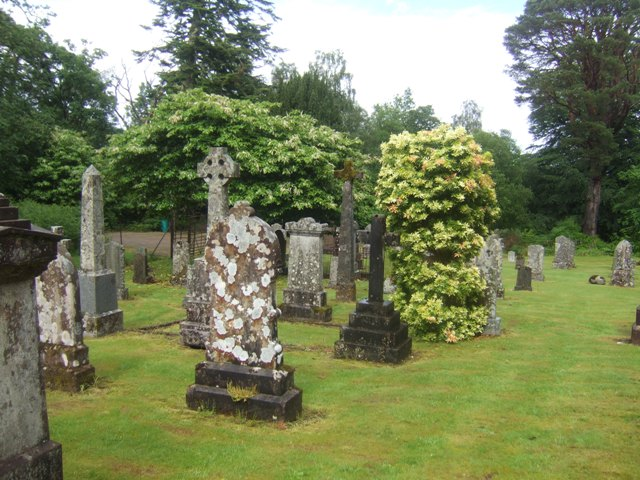
The Brodick Old Cemetery was formerly associated with the Glen Shurig church,, erected in 1839 and demolished about 1931 when the congregation joined the Church of Scotland in Brodick. It looks like an isolated forest clearing and is difficult to acess, but the graveyard has a hundred and twenty-one monumental stones. They are mostly illegible but we do find one dated 1863.

When we arrive where the lane ends and the track begins, just alongside a campsite, we follow the example of others and pull onto the grass verge behind three other cars. We can see the riverbank of Glenrosa Water. We’re keen to get going: out of the car, hoist our rucksacks on our backs, the lead on Dusk.

The view up the glen opens up. We see Cir Mhor in the distance. And beyond it the summit of Cul nan Creagan, Glenshant Hill, and Goat Fell. I see the Photographer’s eyes light up; my heart sinks. ” We’re not going too far are we? It’s quite warm already.” He doesn’t answer – sets off almost at a gallop. Dusk and I follow…

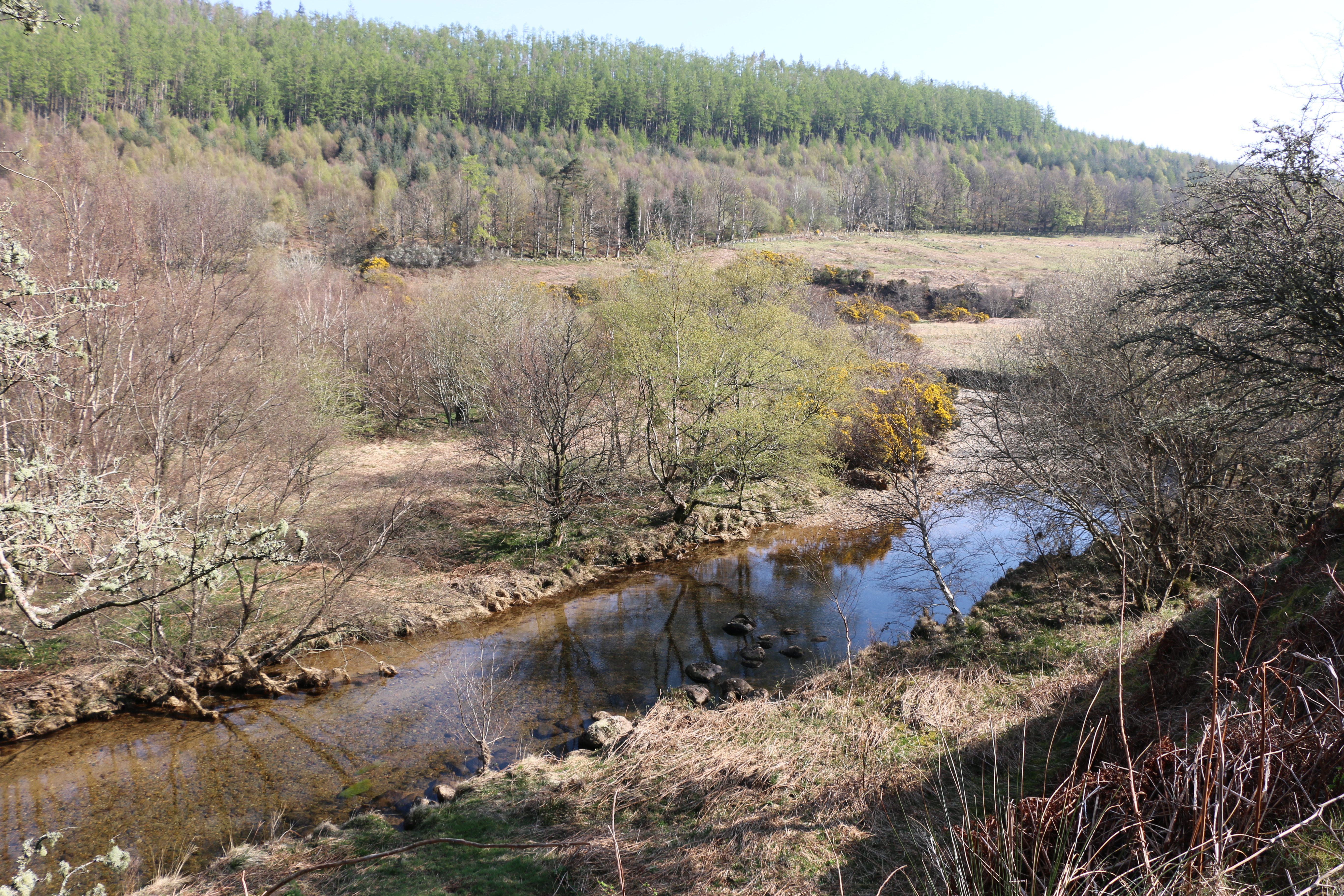
The track is rocky and dusty, but wide, and the surroundings absolutely inspirational.

We arrive at a timber footbridge where the tributary, Garbh Allt, joins the Glenrosa Water and the path splits, with the left-hand fork tracing the smaller stream. The Photographer is already on the path at the other side. We see him looking down …

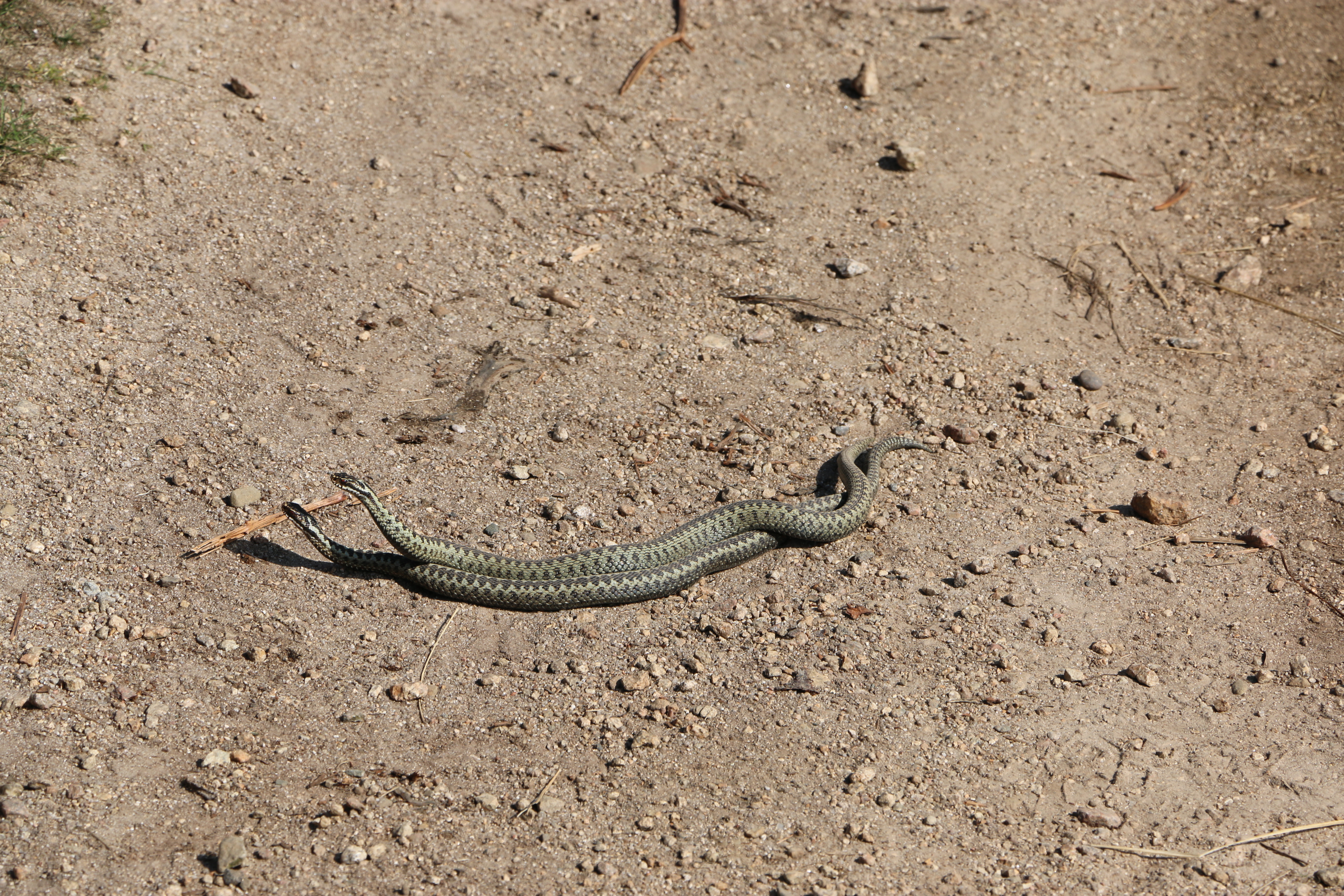
.Dusk and I stop. Two tiny snakes are wriggling around on the path. (For totally personal squeamish reasons I’ve made this photo as small as I can). However tiny they are, we are not going past them. We are going no further

We wait. The Photographer is fascinated, as are three other walkers. But they don’t have a dog – “I need to stay here to protect Dusk!I call. Eventually the snakes wriggle away into the grass, and I tentatively pass the spot they’d been cavorting on.

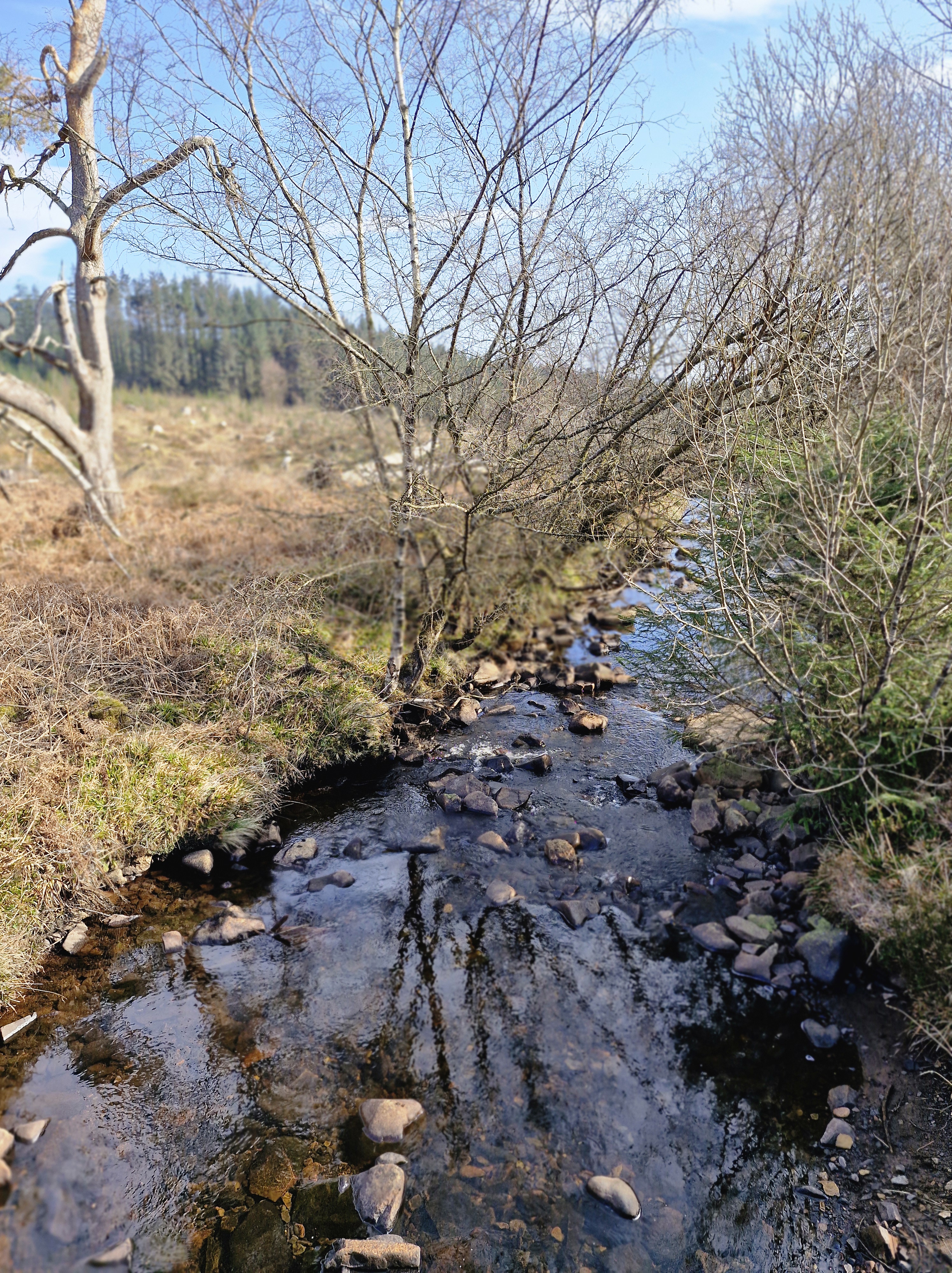
We follow the path alongside the Glenrosa Water. Before long we arrive at the Blue Pool.

A favoured spot for wild swimming, as a wet Dusk demonstrates.

After a stop for a picnic for us and a half of a dog treat for Dusk, we decide to carry on for more photo opportunities. But the path becomes narrower, more overgrown...

Until almost impassable. And after a friendly hiker informs us that it is the start of the breeding seaon for the adders who are coming out of hibernation (I don’t query his knowledge – just the thought decides me) … it’s time to be setting off back to the car … at a gallop.

We could have crossed an old stone bridge to join onto the circular walk, but we’ve been out for quite a few hours and it’s hot, so we retrace our steps and head back to the house.

N.B. Technical note: Goat Fell is labelled as a Corbett mountain. Corbetts are defined as Scottish mountains between 2,500–3,000 feet (762.0–914.4 m) in height with a prominence of at least 500 feet (152.4 m). They are named after John Rooke Corbett, a district valuer from Bristol, who compiled a list of them in the 1920s. He completed the Corbetts in 1939, when he was in his early 60s.

Climbers who climb all of the Corbetts are called Corbetteers, with the first being John Corbett himself. The second completion was by William McKnight Docharty in May 1960. A list of Corbetteers is maintained which as of July 2018 totalled 678.

Where We Walked Garbad Loch #Arran #Scotland #walks #photography

We parked opposite the Eas Mòr Ecology centre, and crossed the road to pass the Forest at the Falls cafe. “We can call in for a drink and a bite to eat afterwards,” the Photographer says when I look longingly at the table where a couple are enjoying a coffee. The aroma is tempting but Dusk and I follow him up the short, steep path ….

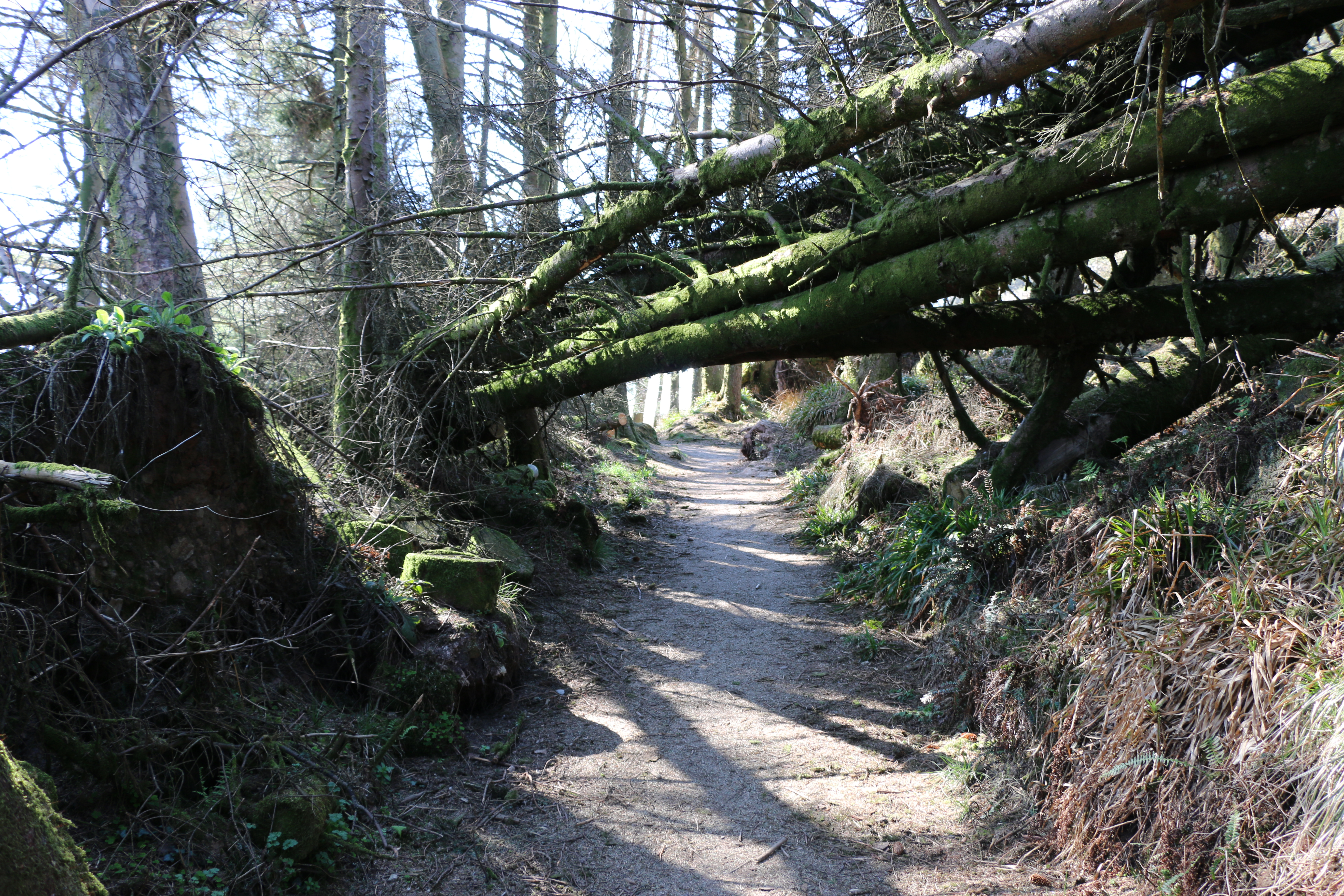
We duck under the trunks of a couple of trees that have fallen across the path. One has a plaque nailed to it – “Bow your heads for you enter sacred and magical lands”. As we were to discover when we finally reached Loch Garbad. But first to the Eas Mór falls.

Photo cortesy of https://tinyurl.com/msk5skns

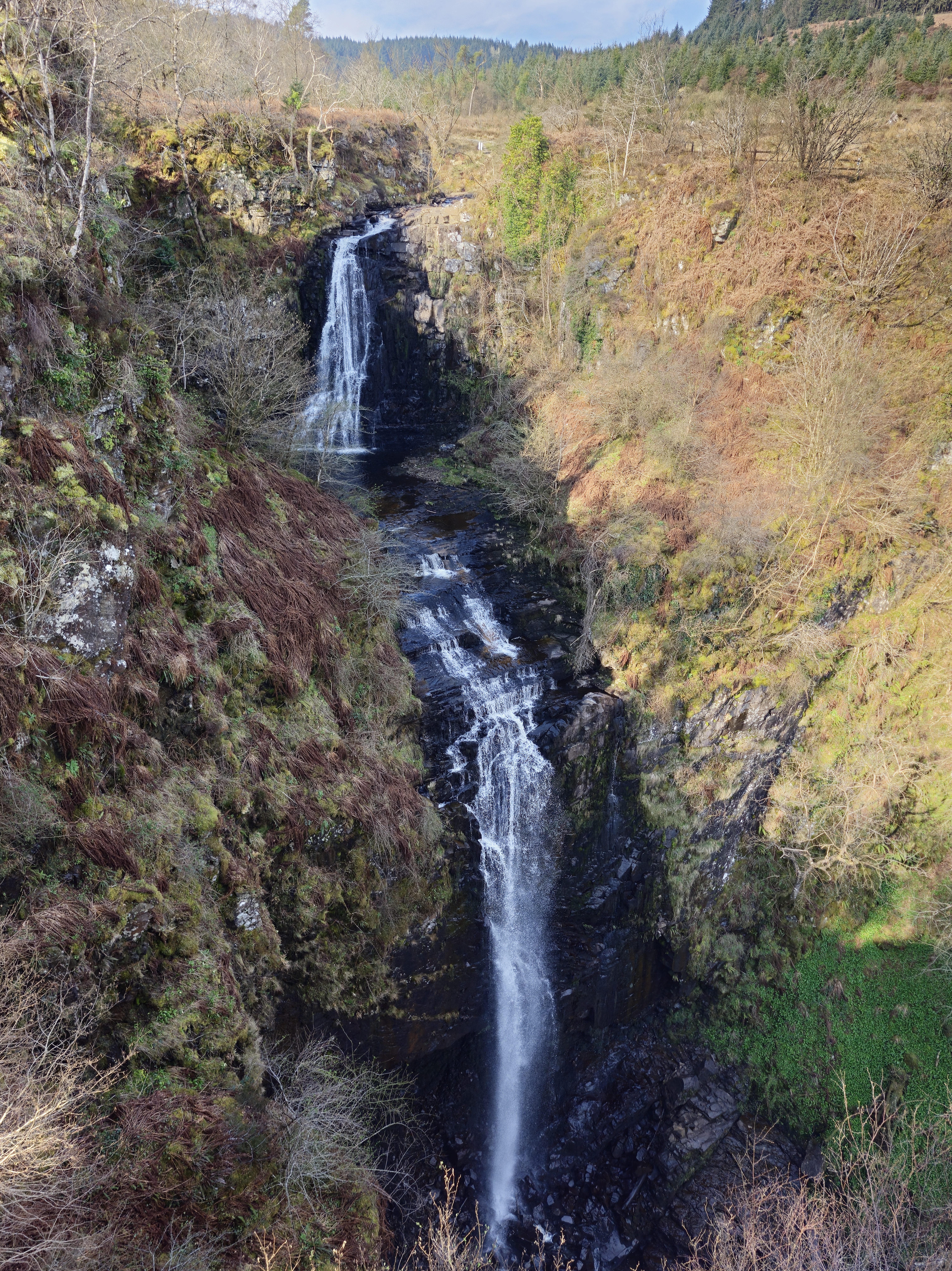
Today the falls are not as magical as the photographs from the travel website promised when we discovered this walk. It’s a little disappointing but it’s because the weather has been so dry. Only a small slender stream of water runs, mostly obsured by the surrounding shrubs and grasses from where we stand. (hence the above borrowed photograph). It’s certainly not as impressive as the Glenashdale Waterfall from our first walk on Arran, but it does fall over the cliff in a single dramatic drop into a deep dark gorge.

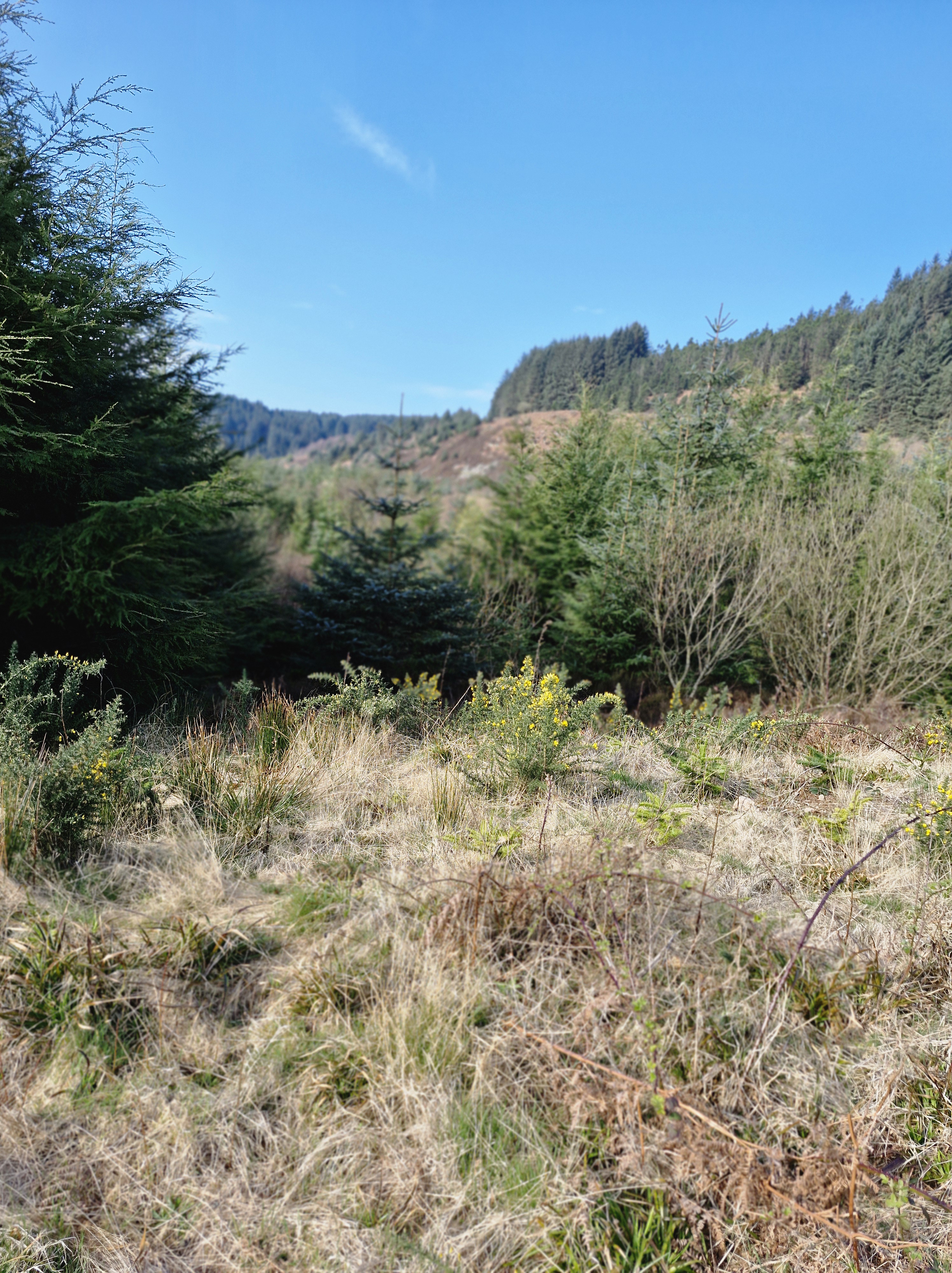
At a stone seat there’s a path junction with a signpost for Loch Garbad. From the description on the map we are following we expected to be walking though woodland but no; all the forest towards the loch has been felled under the Eas Mor project. This is the gradual conversion of the commercial conifer plantations back to semi-natural trees, so many of these have already been planted as saplings. (I’ve included the Facebook link above, because I think it is so impressive what they are doing in so many areas).This is a vast open area of brash (the above ground parts of the tree that hasn’t been removed from the site after felling – the foliage, branches and crown). Not yet as attractive as it will be, but it has opened up a terrific view across to Pladda Island to Ailsa Craig….

We stop for a while to admire and take photographs. Then carry on along the track …

It’s a bit of a slog. We meet only one other couple with a dog. Dusk and it exchange pleasantries, as do we, and then we plod on. (Yes, that is a sly photo of Dusk and me, taken by the Photographer!) The track is rough and narrow in places. I wonder how it must have felt in past times, winding through the overgrown woods, and I appreciate the openness, being able to see that last hill before we get to Loch Garbad.

Not far now.

We’re told to ‘pose’ – As you may be able to see, neither Dusk nor I appreciate this.

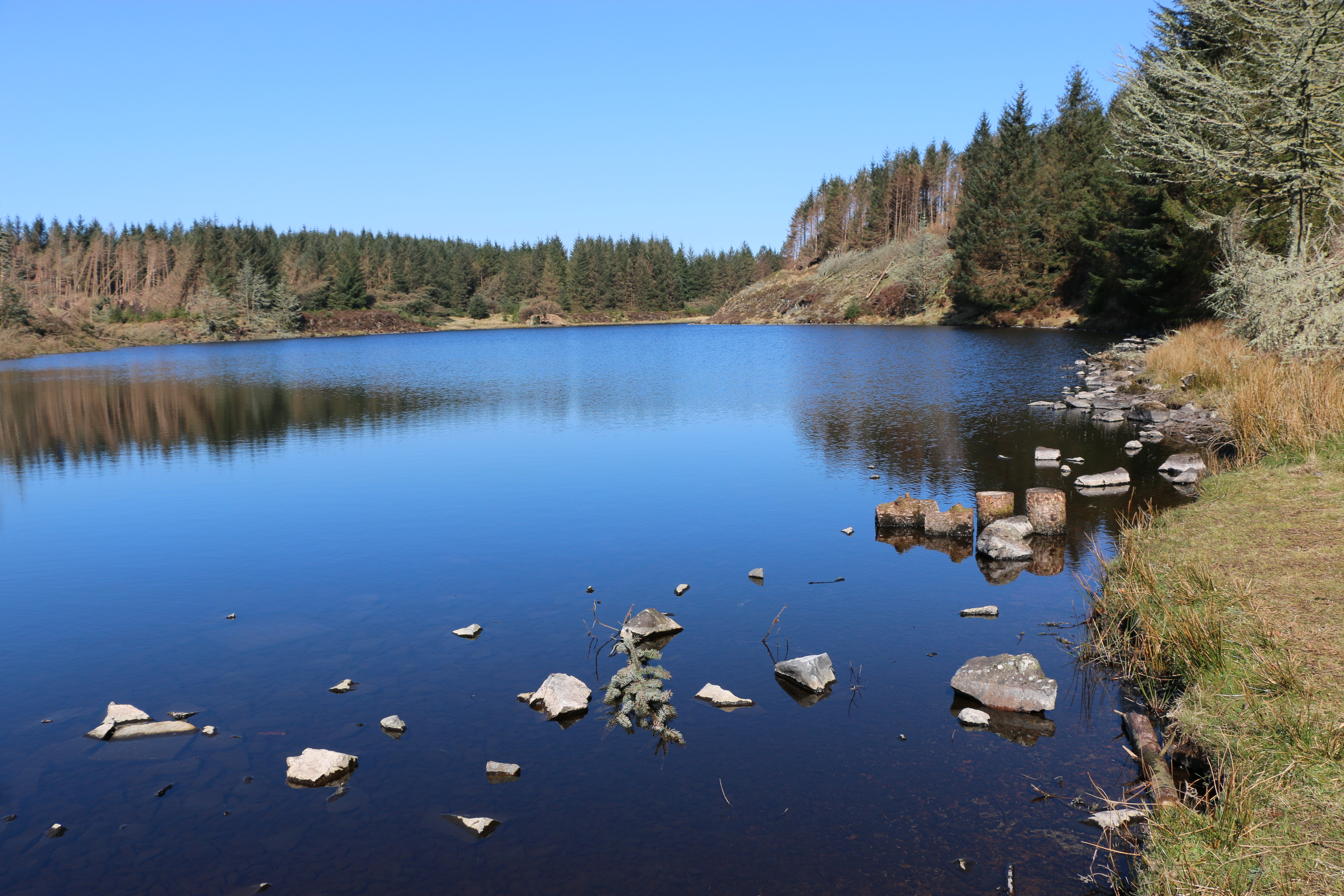
We’re both much happier sitting down for a welcome drink of water and taking in the remote beauty of the loch, whilst the Photographer goes off to do his own thing.

An hour later and we’re off again, somehow managing to take a wrong turn and having to retrace our steps to get onto the right path down the hill. Eventually taking the steps past the waterfall again and towards

The Library in the Woods – which is exactly what it says – housed in a small log cabin it’s a hidden library in beautiful woodland, and filled with books and messages left by visitors over the years. Another project created by Eas Mor Ecology and built in 1998 from trees felled in a storm on Boxing Day.

Time to leave. We take a narrow path downwards through woods and across the bridge over the stream fed by the waterfall. Just in time … to see the cafe closing. “Never mind,” says the Photographer, ” We’ll be back at the house in no time. We can have a coffee there. What’s for tea?”

https://tinyurl.com/4y3ftdnw

My Review of Nine Lives by Terry Tyler #ShortStories #Review #Reading

Book Description:

Winner of ‘Best Short Story Collection’ in the 2014 eFestival of Words, “Nine Lives” comprises nine short dramas in the vein of Terry Tyler’s well-loved novels, some funny, some sad, with her usual unpredictable twists. The first chapter of full-length novel and tale of sibling rivalry, WHAT IT TAKES, is to be found at the end.

The stories:

Angel – The perfect wife of the perfect husband is tempted by the fruit of another.
Shut Up And Dance – Paul says he will love Laura whatever size she is. But will he?
Mia – The threat of ‘the other woman’…
Kiss Your Past Goodbye – Zoe finds out what happened to her first love, who broke her heart.
We All Fall Down – Two old friends meet for a drink – just a swift one, of course!
Bright Light Fright – A tale of vengeance, a burglary, and a nasty shock.
Mama Kin – Emma and Melanie have very different approaches to childcare – oh dear!
Don’t Get Mad – Get Even – Kevin and Marcus have been best friends

My Review:

At the moment I’m finding it difficult to concentrate on reading ( well on anything actually). But, having been a fan of Terry Tyler’s writing for a long time I was pleased to come across this collection of short stories. Not a clue why I haven’t found it before!

The one thing (well, not only the one thing – I could expound on this for ages) that I love about this author’s work is her ability to get inside each character’s head, whoever they are, whether a protagonist or the antagonist … or even a minor character. She brings them alive instantly and draws the reader into the story.

Each of these stories are short, but they pack a punch and made me think. There is always something beyond the words, the characters, the plot. I think it’s life – and the general affliction of humanity; whether it’s pride, or greed, or revenge- or whatever else that lies beneath the facade of what is called ‘real life’.

They may be short, they may be easy reads on the surface – but they dig dip and I loved them.

And the book was the winner of ‘Best Short Story Collection’ in the 2014 Festival of Words, which says everything.

So … highly recommended … to any reader.

Where We Walked … Well, What We Saw From Where We Walked #Ailsa Craig #Arran #Scotland

Image courtesy of https://ayrshireandarran.com/ailsa-craig/

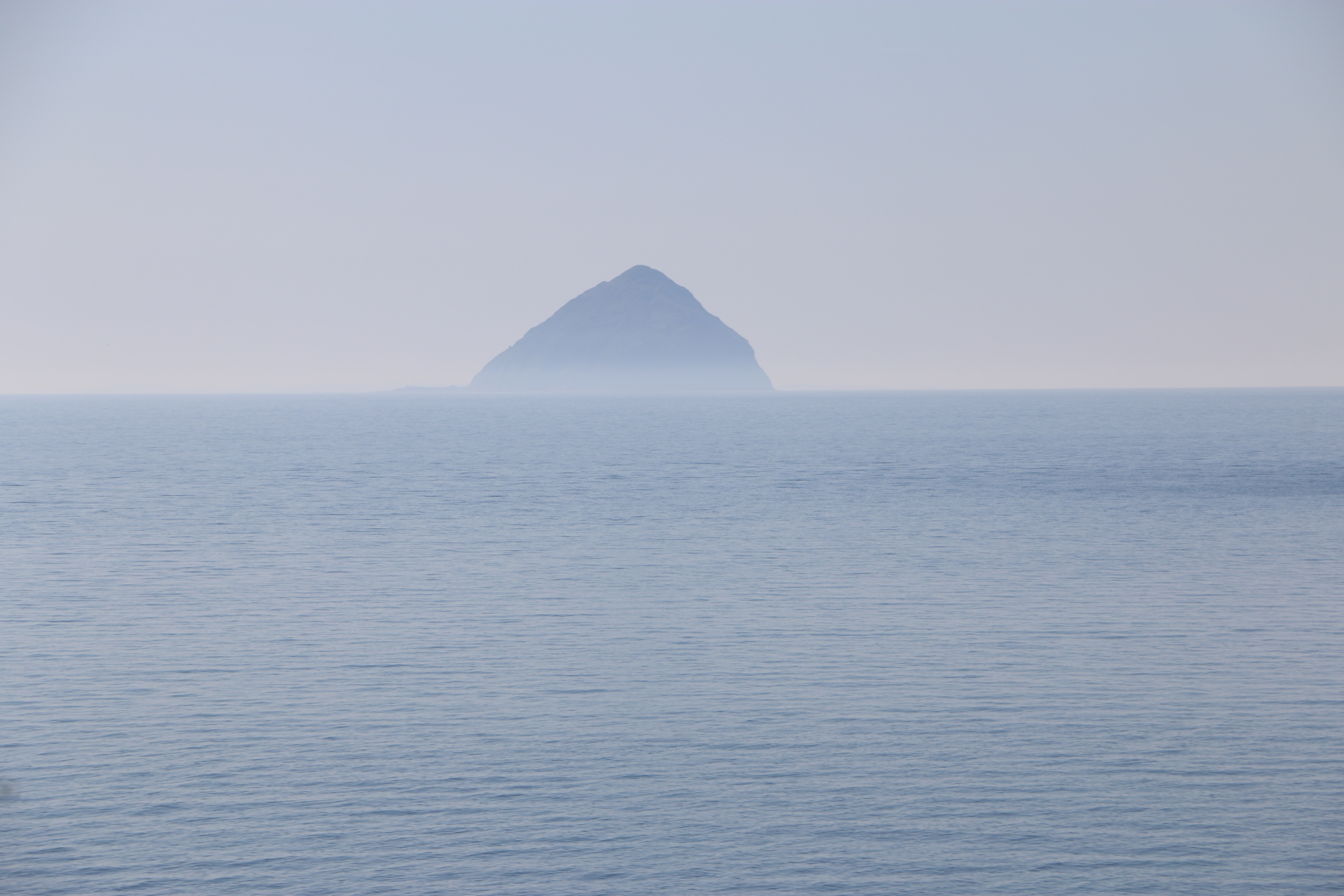
Ailsa Craig, sometimes referred to as the Granite Jewel of the Firth of Clyde, is an island that is colloquially known as “Paddy’s Milestone”. It was a haven for Catholics during the Scottish Reformation in the 16th century, and is also reknowned for being approximately the halfway point of the sea journey from Belfast to Glasgow, which was a traditional route for Irish labourers emigrating to Scotland to seek work.

The island is actually a volcanic plug from an extinct volcano, and is owned by David Thomas Kennedy, the 9th Marquess of Ailsa – except for the two hectares which were sold to the Northern Lighthouse Board in 1883.

The lighthouse was built around 1886, by Thomas Stevenson, a pioneering Scottish civil engineer. It originally used oil-burning lamps, but these were later replaced with incandescent lighting, and then, in 1990, the lighthouse was automated. Further refurbishment, in 2001, meant it was converted to run on solar power.

The island contains some of Europe’s most important bird colonies, which includes the continent’s biggest gannet colony, as well as puffins, so is managed as a nature reserve by the Royal Society for the Protection of Birds (RSPB). It’s also designated a Site of Special Scientific Interest (SSSI) and a Special Protection Area, mainly because of the colony of grey seals, and the occasional whale. There are also visiting large basking sharks during the warm summer months which can be seen feeding at the surface on the planktonic bloom.

The texture of the rocks on Ailsa Craig is a granite called microgranite that is so hard and resistant to impact, it makes it ideal for the manufacture of curling stones. The manufacturer, Kays of Mauchline, Ayrshire in Scotland, has the exclusive rights to the granite, granted by the Marquess of Ailsa, and has been making these stones since 1851, and providing them for the Winter Olympics since Chamonix in 1924.

I thought it interesting that boulders of of the Ailsa Craig microgranite were transported by glaciers as far afield as County Donegal and Pembrokeshire. Of course this led me down another rabbit hole …

The microgranite is part of the geology of the Precambrian rock of the Pembrokeshire Coast National Park. Formed as the lava pushed through the existing rocks and solidified, these rocks can be seen in various locations, such as the coastline of St Bride’s Bay and the southwest tip of the St David’s Peninsula.

Something else I discovered…

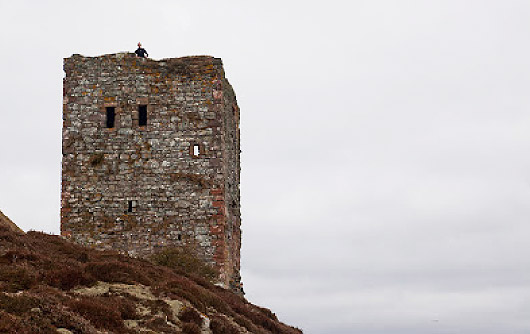
There are ruins on the island of a castle.

Ailsa Craig Castle today – photgraph courtesy of Douglas Wilcox www.seakayakphoto.com

These remains are of a castle built in the middle of the sixteenth century by the Hamilton Family to protect the island from King Philip II of Spain. It stands on a shoulder of rock around three hundred feet above the sea, the only approach to it a steep and narrow footpath, although there used to be an external set of stairs to the tower. The castle was in ruins after the Reformantion but was later restored by Thomas HamiltonIn and the work recorded by an armorial panel high up on the south gable, showing the Hamilton arms. Today only the tower remains.

Where We Walked … Well, What We Saw From Where We Walked #Pladda Isle #Arran #Scotland

We are on our way to walk to Loch Garbad. Dusk is on the back seat. When I hear her move, feel her patting me on the shoulder with her paw, I presume she needs a ‘comfort break’ (as they politly say on coach trips). We turn off the road onto a side lane towards the village of Kildonan, and park on the first layby we come to.

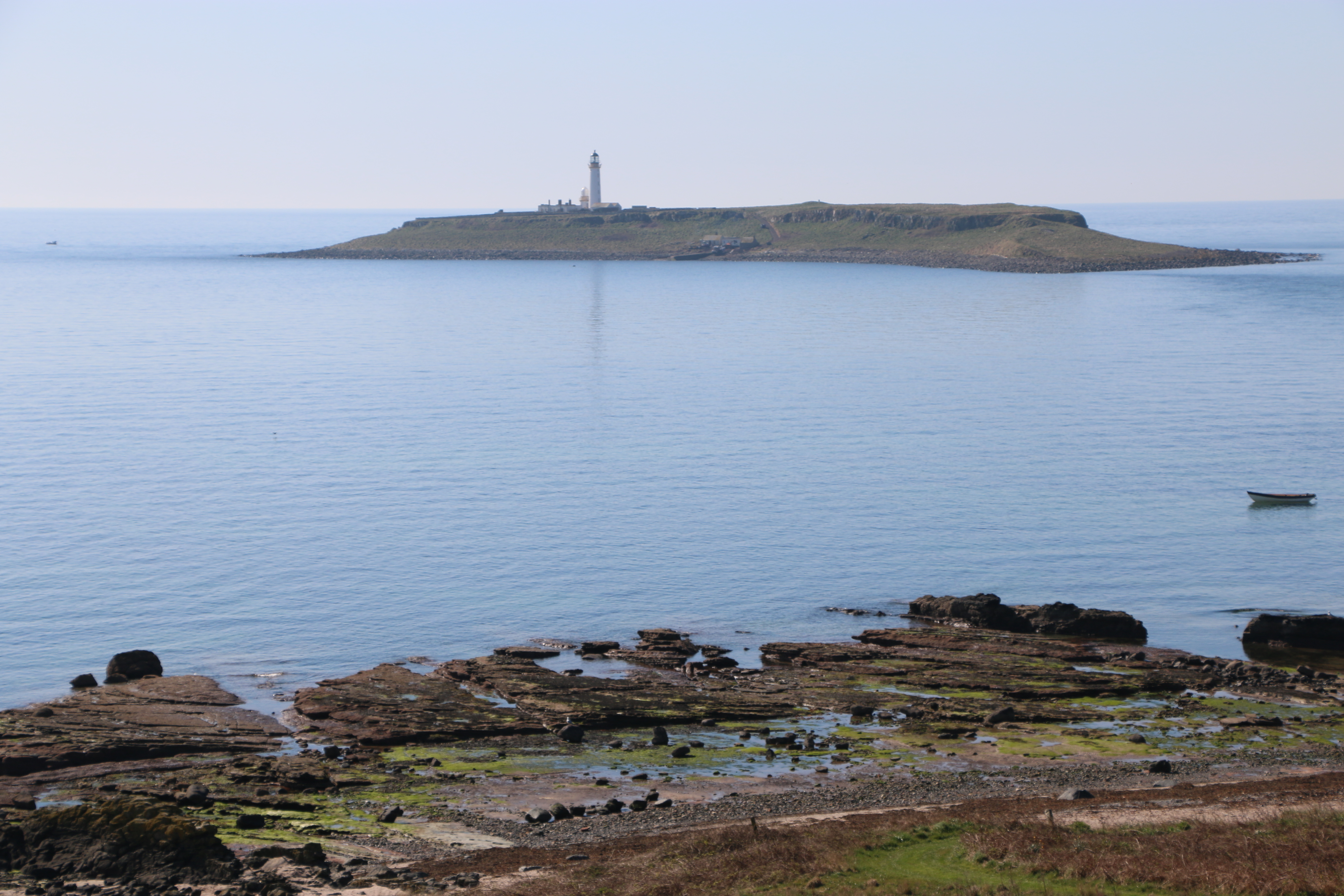
I think Dusk just wanted us to see the glorious coastline and the two islands nearby: Ailsa Craig and Pladda. Ailsa Craig deserves its own blog, so what follows is what we discovered about Pladda Isle.

Pladda Isle (Pladda – Scottish Gaelic: Pladaigh –  the name comes from Old Norse and means “flat isle”)  has been the site of a lighthouse since 1790).

The main structures of the Pladda lighthouse date from 1820 and were constructed under the administration of Thomas Smith of the Stevenson company.

To allow seafarers to distinguish it from the other nearby lighthouses at the Mull of Kintyre, Cumbrae and Copeland, a lower light from a small lantern twenty feet lower than the original one was installed and this carried on for more than one hundred years. And in 1876, a fog signal was also installed on Pladda..  This arrangement operated for about 100 years.

Pladda Isle (Pladda – Scottish Gaelic: Pladaigh –  the name comes from Old Norse and means “flat isle”)  has been the site of a lighthouse since 1790).

In 1901 fixed lights were no longer regarded as suitable for the island so coastal lights and a group of flashing lights were installed. The lower tower was then no longer needed.

The lighthouse keepers who were permanently attached to the station were brought provisions four times a month, two of which landed on Sundays to allow light keepers to attend church.

Everything changed in 1972 when a helicopter began to be used to transport the keepers. But then, in 1990 lighthouse became automated and the lighthouse keepers were no longer needed. The lighthouse is now monitored remotely from Edinburgh and the island is unoccupied. The traditional lantern and lens have been replaced by a couple of solar powered LED lights.

The modern plaque at the base of the main tower bears the crest of the Northern Lighthouse Commisioners and the motto “In Salutem Omnium” – For the Safety of the island

Previously the island was part of the Arran Estate, but in 2022 it was bought and is now privately owned. There are plans to build a luxury property on the island.

ENDNOTE:

For over one hundred and fifty years Robert Stevenson and his descendants designed most of Scotland’s Lighthouses. Battling against the odds and the elements – the Stevensons constucted wonders of engineering that have withstood the test of time, an amazing historical achievement.


Family Crest
“Coelum Non Solum”

Robert Stevenson’s talented family also included the famous writer/novelist Robert Louis Stevenson (his grandson). Visits with his family to remote lighthouses are thought to have inspired his books Kidnapped and Treasure Island.


“There is scarce a deep sea light from the Isle of Man to North Berwick,
but one of my blood designed it.
The Bell Rock stands monument for my grandfather;
the Skerry Vhor for my uncle Alan;
and when the lights come out along the shores of Scotland,
I am proud to think that t
hey burn more brightly for the genius of my father.”


Robert Louis Stevenson

The above was found on the link https://tinyurl.com/yb9x6mpj when I was researching Pladda. It’s fascinating going down these rabbit holes!!

Where We Walked Kingscross Point Arran Scotland #Walks #Photographs

Our second walk was an easy circular stroll – the Photographer assured me. I was suspicious; I’d heard that before… many times. But this time he was telling the truth!

We walk from the house where we are staying – (borrowed house in order, borrowed dog, Dusk, in tow, borrowed cats fed and left behind) – and saunter along a road and past a church towards the sea. Crossing a bridge onto an unsurfaced road we pass several houses ( noting that alongside one was a building that offered fish and chips ‘occasionally’. I wondered, aloud, whether today was one of the ‘occasional’ days as we clamber over rocks onto the beach …

but eventually realise that the Photographer has lingered way behind Dusk and I.

So she and I turn off at a signpost, go through a gate which leads to a path where we negotiate our way through, between gorse and brambles.

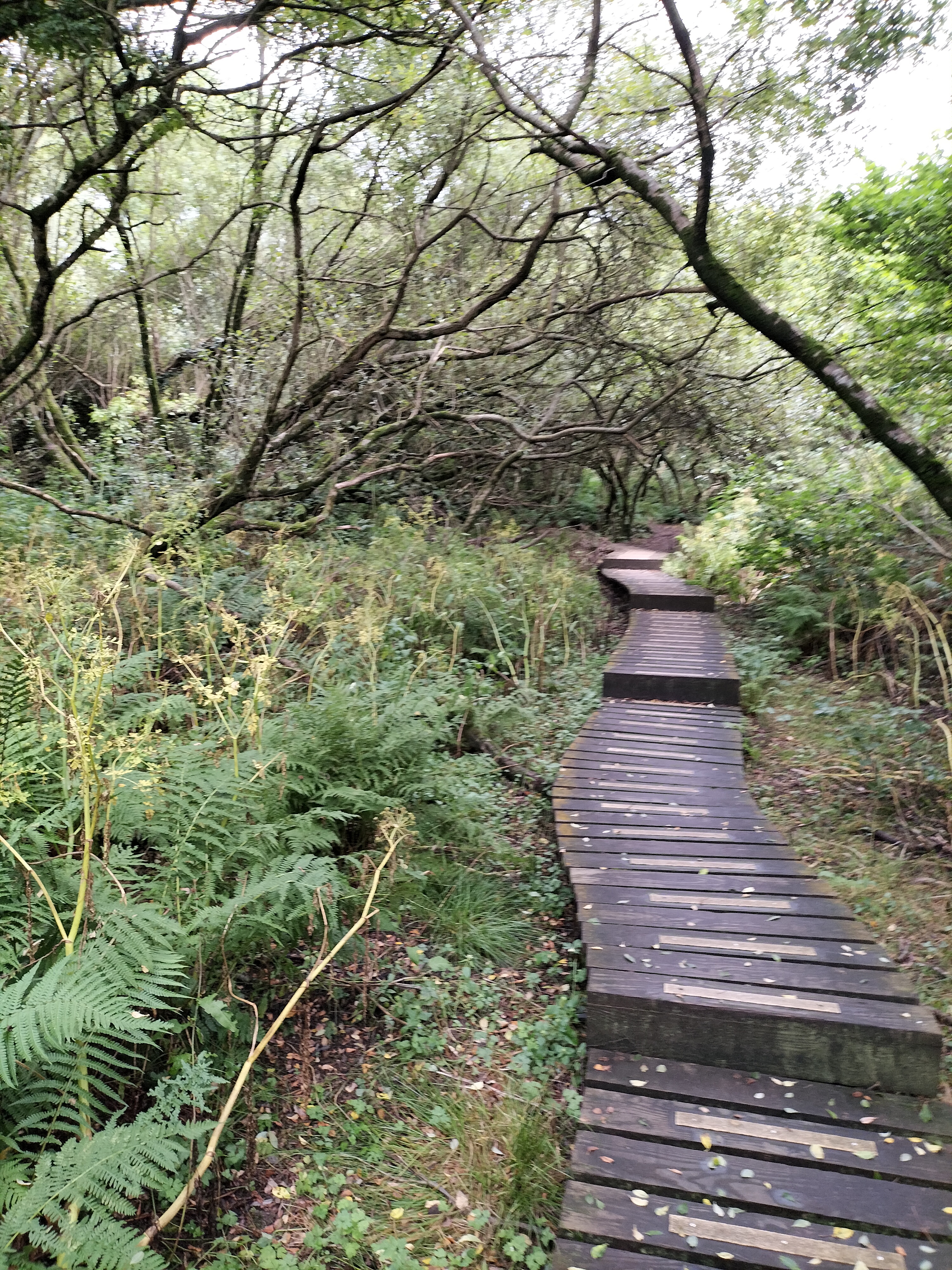
And onto a wooded area with a section of boardwalk.

There is the wonderfully evocative scent of wild garlic. Dusk is more intent on leading the way. Leaving the boardwalk, we enter fields, keeping to the path alongside the hedgerows and past the horses grazing in the next field. Through another gate, another field that slopes upwards. I am reminded here of the Rowan tree that I saw when I was here with a friend on our writing retreat in August last year. Then it was covered in berries – today it’s just in budding leaf.

The Photographer with us once again, we climbed over some large stones to reach the site of the ruins of a Viking fort. Actually, there is very little to see .but apparently there is a Viking boat burial near King’s Cross. The above photograph is courtesy of Walking Arran: Iron Age forts, a Viking burial and Buddhist pilgrims. https://tinyurl.com/yc3fupz9. Unfortunately I deleted the Photographer’s photo – which then was lost in the ether… oops!!

A little snippet of information:

Around the ninth century Arran was part of Viking territories; the Kingdom of Mann and the Isles. Many local place names have Old Norse origins which includes Brodrick (where the ferry lands providing the weather is good and the boat is up to the crossing). Brodick is derived from ‘breda-vick’, meaning ‘broad bay’ and Sannox, from ‘Sandvik’ or ‘sandy bay’, in Old Norse.

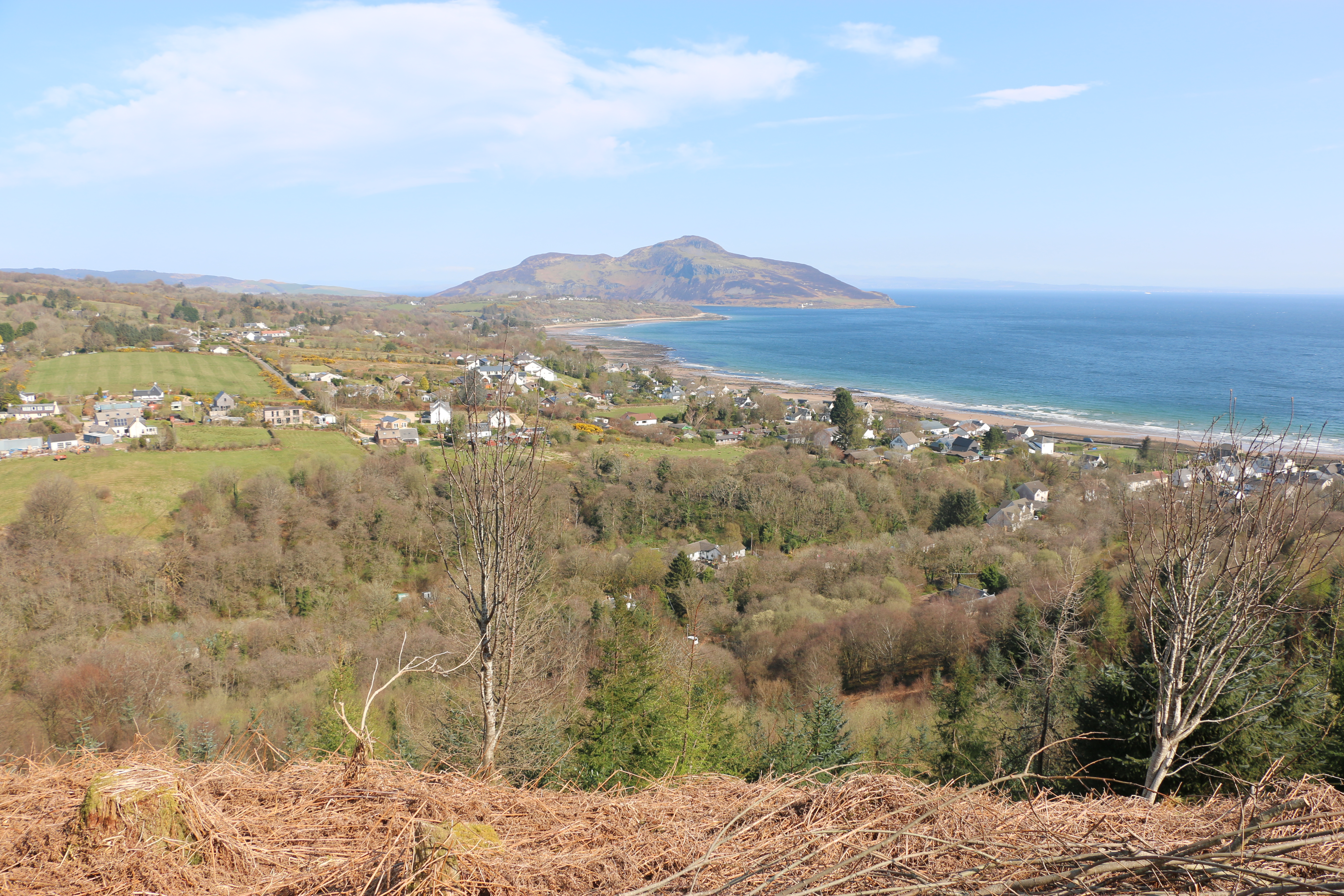
We stop for a few moments to take in the peace and quiet, and to look over again towards Holy Isle with the lighthouse and buildings that house those on a Buddhist retreat on the island.

And linger to look across the sea towards the range of mountains in the distance. One of our walks later in the week will take us closer to them. But there’s no doubt we won’t be tackling Goat Fell, the highest one the island – intrepid pensioners though we are!!

Then we scramble down to the path alongside the beach on the other side of the cove. The beach here is more rocky, We turn inland and uphill on a path through fields, then onto a lane which eventually leads back to the church – and homeward.

Another satisfying walk in this lovely island of Arran.

The following day we, and Dusk, had a rest, much to the annoyance of Clary, our friend’s cat – because I was sitting in her place on the settee …

before our next adventure – a hike walk to Loch Garbad

The following gives the ( rather long) history of the Holy Island, which I find fascinating – is courtesy of the website Holy Isle: Centre for World Peace and Health: https://www.holyisle.org/the-island/history/

History

The earliest recorded name for Holy Isle was Inis Shroin, which is old Gaelic for ‘Island of the Water Spirit’.

After the time when the Celtic Christian saint St. Molaise lived on the island at the end of the 6th century, it became known as Eilean Molaise, which is Gaelic for ‘Molaise’s Island’. This name gradually evolved over the course of centuries until early in the 19th century the island became generally known as Holy Isle (or the Holy Isle) and the village on the other side of the bay became known as Lamlash.

Saint Molaise (566 – 640 A.D.)

St. Molaise was born in Ireland, the son of Cairell, the Irish king of what is now called Ulster, and the Scottish princess Gemma. Molaise was a very gifted and spiritually inclined child. He was much loved by his own people and was offered the throne of Ulster when he came of age, but instead he chose a religious and secluded life in a cave on the west coast of Holy Isle. He was then only 20 years old. Some people believe that when St. Molaise chose the cave on Holy Isle as his hermitage, the island was already considered a special, “holy” place.

When he was about 30 years old, Molaise went to Rome and was ordained as a priest by Pope Gregory the Great. When he returned, he entered the great monastery in Leighlin, Ireland which St. Gobban had established. Soon after he became its abbot. Under his guidance the monastery grew in fame and number to about 1500 monks. Molaise played an important part in adopting the controversial Roman method of dating Easter within Ireland. This was an important issue among the different Christian churches, who debated it for several centuries. When Molaise was in his late 50s, he went back to Rome and was consecrated first Bishop of Leighlin by Honorius I. Historians are divided on when Molaise died, estimating between 638 and 641. His feast day is celebrated both in Ireland and Scotland, on the 18th of April.

St. Molaise’s cave and the Healing Well

The cave where St. Molaise lived, is about half way along the western shore of Holy Isle, about ten meters above the high-water mark, and consists of an overhanging sandstone rock with a sunken stone floor. It is thought that in Molaise’s time much of the opening of the cave was closed up by a wall to keep the weather out. The cave can still be visited today. Carvings can be seen in the wall, such as simple crosses, perhaps made by pilgrims, and Norse runes, mainly of personal names. One of these says “Vigleikr the Marshall carved”. Some of the crosses seem to have been carved at around the same time as the names, so perhaps there was an element of pilgrimage to the cave among the Vikings. Lastly, there is an unusually designed cross carved into the roof of the cave.

Close to the cave is a spring, known as the Healing Well which is thought to cure ills and bring blessings.  In the 18th century it was recorded that “the natives used to drink and bath in [the well] for all lingering ailments”. The same source describes the water as “gushing out of a rock”. At the beginning of the 20th century apparently there was a cistern present built of masonry, with a stone spout which delivered the water. The spring is overgrown now so that you wouldn’t get more than a footbath from it but the water is still cold and clear, albeit it does not meet current EU standards for drinking water.

The Monastery: There are several indications of a monastery having existed on Holy Isle, most probably close to what is now the Centre at the north end. It may have been erected at the beginning of the 13th century, although other sources say it was in the 14th century. The monastery buildings could have been made of wood or a dry-built structure which left no traces. In the 16th century it has been recorded to have decayed.

The Vikings: In 1263 King Haakon of Norway brought a fleet of ships to the shelter of Lamlash Bay, before fighting the Scots at the Battle of Largs. Vigleikr, one of his marshals, went ashore at Holy Isle and cut runes with his name on the wall of St. Molaise’s cave. After the battle, King Haakon gave the island of Arran to one of his supporters, but this really didn’t count for much once the Norse had departed.

The Dukes of Hamilton

In 1488 Holy Isle and land in the Lamlash area was owned by one John Hunter, before being passed over to the Earl of Arran in 1527. The island continued to be part of the Arran Estate in Hamilton ownership even into the 20th century, being rented out to various people until that time. In the 18th century, Captain James Hamilton (not related to the dukes of Hamilton who owned Arran) obtained a long lease on Holy Isle from the Duke of Hamilton. In 1779 he built what became known as the Big House (the old farmhouse, now called the Harmony Wing).

Lighthouses

In 1877 the inner lighthouse (facing Arran) was built on Holy Isle, engineered by David and Thomas Stevenson. It is locally known as “Wee Donald”, though the current lighthouse keepers don’t know why anymore. The outer lighthouse, or Pillar Rock, was built in 1905 on the east shore. It had a fog horn and a revolving light that was lit by paraffin. Pillar Rock lighthouse was the first lighthouse built with a square tower and has several rooms inside for the men who worked there. Lighthouse cottages were built to house four families of the lighthouse keepers and a walled garden was made. The lighthouses became automated in 1977, and are now serviced every two weeks by local people living on Arran.

The “Rich American”

In 1957 the Duchess of Montrose died and the death duties were so high that the Arran Estate had to be divided. Part of the land was passed to the Forestry Commission and the National Trust, whilst other parts went into private hands. Holy Isle received a life tenant in 1958: Stewart Huston of Pennsylvania, USA. He was a millionaire who had a special interest in the island because he was descended from Gershom Stuart, who was Minister of Kilbride (at Lamlash) from 1747 – 1796. Despite his interest in the island and its history, he did not visit often, and the land continued to be used for grazing sheep by local shepherds from Arran.

The Universities Federation for Animal WTelfare

In 1968, the UFAW (Universities Federation for Animal Welfare) was asked to advise on the husbandry and management of the island’s animals, which at that time consisted of Blackface sheep and a herd of feral goats. They set up a Field Study Centre in 1969, and after Stewart Huston passed away, they were able to buy the island in 1971. in later years they introduced 25 Soay sheep and 5 Highland cattle, and a few years later 5 Eriskay ponies. When the UFAW could no longer afford to keep it, the island had to be sold again.

The Morris Family

In April 1984, after having been on the market for 20 months, the island was bought by James and Catherine Morris for £120,000. They moved into the farmhouse the following summer with their two young sons. They managed to connect electricity from the south end to the north, which made living in the farmhouse much more comfortable for them. In 1990 all the Highland cattle and seven ponies were taken off the island, leaving the Saanen goats, the Soay sheep and five Eriskay ponies.

In 1987 they decided to put the island up for sale for £1 million. The island remained unsold however, and in the autumn of 1990 Mrs Morris approached Lama Yeshe to offer the island to him, because she felt that its future would be best taken care of by “the Buddhists from Samye Ling”. Lama Yeshe first came to Holy Isle on the winter solstice of that year and became determined to buy the island. Finally the asking price was dropped to £350,000, which Lama Yeshe managed to raise by April 1992.
Where We Walked – Glenashdale Waterfall and the Giant’s Graves, Arran, Scotland #Walks #Photographs #Viewpoints #Waterfalls #Legends #History

We’ve just returned from a wonderful couple of weeks on Arran. The photographer sourced the walks for us. Today he promises a short outing because it’s rather warm; “maybe a couple of hours allowing for stops… for Dusk, our borrowed border collie, of course”. (Oh, not for photographs then?).

We are going to one of the most famous waterfalls on Arran, Glenashdale Falls, and then on to see the Giants’ Graves.

We follow the directions from a rather old book of walks, which immediately adds a couple of miles on by sending us along a wide rather rough road, instead of going to the end of Whiting Bay and turning onto the forestry track.

Though I have to admit we passed some peaceful scenic views.

We were unable to follow the path through the forest to the Iron Fort due to the damage and fallen trees, caused by the latest storm on the island. So we continued along the wide track for another mile.

We reached Glenashdale Falls, also known as Eas a’ Chrannaig, one of a series of falls on the Glenashdale Burn, which flows from moorland near the summit of Tighvein eastwards towards Whiting Bay.

The viewing platform – not for anyone scared of heights

Not sure why I was encouraged to go along the viewing platform first. Thinking about it, my walking companions may have thought I was heavier than the two of them put together…

The sound of the rushing water competes with the breeze rustling through the trees around us. It’s a magnificent, awe inspiring place.

We retraced our steps from the waterfall and turned left, following a sign to the Giant’s Graves along the wide track … for another mile.

The Photographer trudges through tall grass to the edge of the cliff to take pictures. At one point he disappears completely. Dusk and I wait – patiently – he’s done this disappearing act many times in the past, just to get a good shot of somewhere.

When he returns we walk on, until a sign for a narrow path informs us we’re almost at the site of the Giants’ Graves.

The Giants’ Graves are the remains of two Neolithic chambered tombs on the Isle of Arran in Scotland on a ridge one hundred and twenty metres above the sea and overlooking Whiting Bay to the south. Mostly ruined, with turf covering part of the remains, they still have an air of mystery standing proud in a clearing in the forest.
The North cairn, excavated in 1902, has a chamber that is six metres long, and is around one metre wide. Among the artifacts recovered were pottery shards, flint knives, and leaf-shaped arrowheads.
The South Giant’s Grave has a chamber about four metres long, and over one metre wide. The initial excavations in 1902 only revealed soil and stones, but in 1961/2 more exploration produced nine shards of a round-based vessel, and fragments of burnt bone.

Legend has it that the giant referred to is Fionn mac Cumhaill, an early Irish war-leader, and his followers, known as the Fianna. Between the 10th and 14th centuries, his legend became widely known in Scotland. According to legend, Fionn and the Fianna had superhuman strength and size, being as much as 500 times larger than a man.

It’s getting late; we need to get back to Whiting Bay.

Beyond the graves the narrow path winds its way steeply down. And one of the rare times the Photographer catches me unawares for a photograph … from behind!

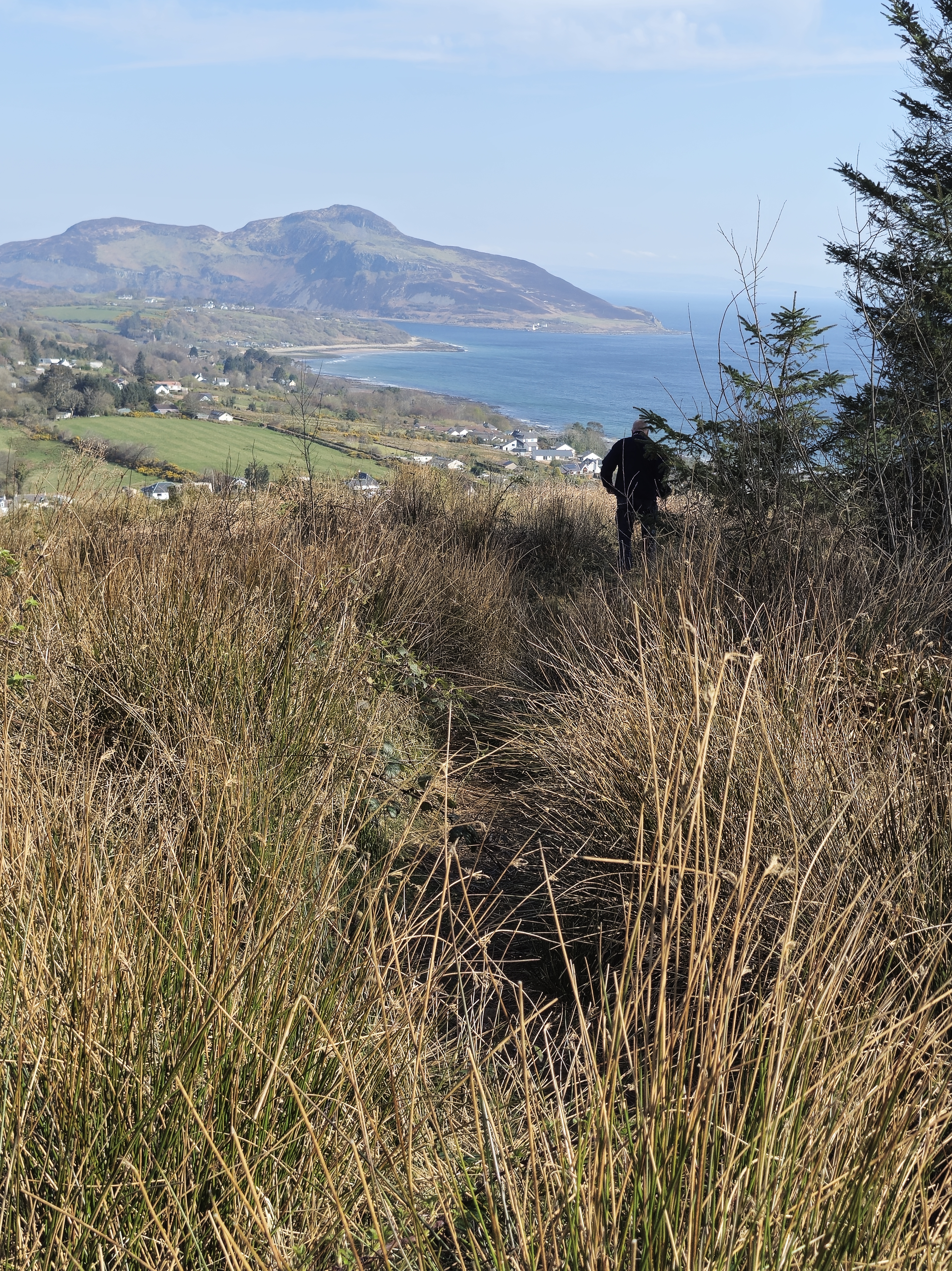
One last photo – Whiting Bay, with Holy Island in the distance.

The walk took us just a little more than the two hours that the more up-to-date directions we later discovered, so the following day we had a rest (using Dusk as our excuse again!) before our next adventure – a coastal trek as far as Kingscross Point, stopping to photograph the ruins of a viking fort and the views of Holy Island, before continuing back to Whiting Bay.

The Holy Island or Holy Isle is an island in the Firth of Clyde, off the west coast of central Scotland, inside Lamlash Bay on the larger Isle of Arran. The island is around three kilometres long and around one kilometre wide. Its highest point is the hill Mullach Mòr. There will be more about the Holy Island in our next post of walking on Arran.

And now a little self indulgent promotion…

A gripping ‘cuckoo in the nest’ domestic thriller

After the death of their mum, twins Chloe and Charlie are shocked when their dad introduces Lynne as their ‘new mummy’. Lynne, a district nurse, is trusted in the community, but the twins can see her kind smile doesn’t meet her eyes. In the months that follow they suffer the torment Lynne brings to their house as she stops at nothing in her need to be in control.

Betrayed, separated and alone, the twins struggle to build new lives as adults, but will they find happiness or repeat past mistakes? Will they discover Lynne’s secret plans for their father? Will they find each other in time?

The Stranger in My House is a gripping ‘cuckoo in the nest’ domestic thriller, exploring how coercive control can tear a family apart. Set in Yorkshire and Cardiff, from the 60s to the winter of discontent, The Stranger in My House dramatises both the cruelty and the love families hide behind closed doors.

“Judith Barrow’s greatest strength is her understanding of her characters and the times in which they live.” Terry Tyler

https://tinyurl.com/36m89w6t

Grateful for this reader’s review. One of the first for The Stranger in my House, when it was published in November 2024.

The Stranger in my House is an urgently compelling story of abusive power, detailing the damage that happens when those with the power to protect vulnerable children choose to turn their eyes away. Judith Barrow takes us into the dark & haunted world of coercive control, masterfully turning her own power as a storyteller on to this troubling theme, exploring it with insight & sensitivity.

In Lynne, the author has created a monster. Her victims, twin children Chloe & Charlie & their hapless father, are each portrayed with Judith Barrow’s usual precision & humanity; the writing as always, is impeccable.

It is a troubling book, but ultimately, on some level, redemptive. And although I found the ending satisfying & honest, I was nevertheless left with a sense of sadness, not only for Chloe & Charlie, but because decades on from the events in this book we still exist in a world where the emotional needs of children are too often subsumed by those of selfish, self-serving, abusive adults.
The Stranger in my House is a hugely important book & I highly recommend it.

https://tinyurl.com/36m89w6t

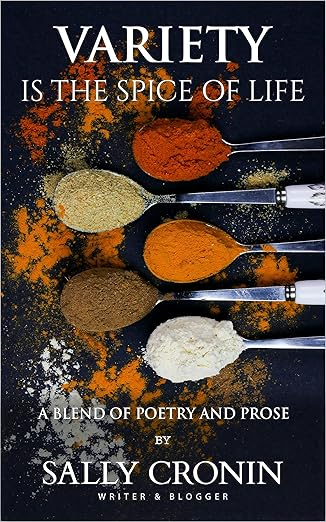
My Review of Variety is the Spice of Life: A blend of poetry and prose by Sally Cronin

Book Description:

Variety is the Spice of Life is a collection of poetry and short stories about relationships with others, including pets and animals inhabiting the world around us. The connection with others brings love and friendship, excitement and sometimes surprises, danger, mystery and sometimes the unexpected.

The poetry explores human nature, the fears, desires, expectations and achievements. Nature offers a wonderful opportunity to observe animals both domesticated and wild. Even in a back garden you can observe a wide variety of creatures and the daily challenges to survive a harsh environment.

The short stories introduces you to a healer whose gift comes with danger, a neighbour determined to protect a friend, a woman on the run, an old couple whose love has endured, an elderly retired teacher who faces a life changing accident, a secret that has been carried for over 70 years and a village who must unite as they face devastating news.

My Review:

I read Sally Cronin’s Variety is the Spice of Life quite a while ago, and recently when ‘tidying up’ my kindle I was surprised and somewhat dismayed to see I’d made notes on this lovely collection of poetry and prose that encompasses such a variety of themes – and not reviewed it.


So here I’m rectifying that.


The poetry at the start of the book is almost a study of the world around us. It’s an invitation to look once more at nature, however small and seemingly insignificant, and is portrayed through wonderfully insightful and sensitive words, so evocative that each piece evokes an image. I remember how, the first time I saw the poems, I read each of them out loud, relishing the sounds, the rhymes, the rhythms. And I would invite any reader to do the same – they come alive in that way, as does all good poetry. Sally has a way of capturing emotions and sensitively showing the uniqueness of the world around us – and the many layers in human nature.


The theme of the individuality, the variety of actions and reactions we are all capable of, is repeated over and over again in many subtle, and sometimes overt ways, throughout her prose. I was tempted to quote, to unpick each of the eight short stories, to describe the core, the main premise that runs through them. But, sticking to my decision not to reveal any spoilers in my reviews, I would just urge any potential reader to discover them for themselves. All reveal the writer’s natural gift for storytelling, of capturing the essence of characters and the world they inhabit. Some stories brought chuckles and a wry smile, others the feelings of sadness, of sharing fears and loss. And tears. Writing a short piece of prose is not an easy task; wrapping up a scene or a journey into a package that reveals a whole plot to the reader in so few words requires a special intuition on the part of the author. Sally Cronin shows she has a talent for such an understanding.


I can do no more, having given Variety is the Spice of Life a second reading, than to stress how much I recommend this offering from Sally. You won’t be disappointed.


A last word on the cover – a brilliant spicy image of the promising within!!

About the author

Sally Cronin is the author of eighteen books including her memoir Size Matters: Especially when you weigh 330lb first published in 2001 which followed her weight loss of 150lbs and the programme she designed to achieve a healthy weight and regain her health. A programme she shared with her clients over her 26 year career as a nutritional therapist and on her blog. This has been followed by another seventeen books both fiction and non-fiction including multi-genre collections of short stories and poetry.

Her latest book Size Always Matters is an extended and updated version of her original book Size Matters and now includes the nutritional element to losing weight and some recipes with ingredients that provide the nutrients necessary for healthy weight loss and continued good health.

As an author she understands how important it is to have support in marketing books and offers a number of FREE promotional opportunities in the Café and Bookstore on her blog and across her social media.

After leading a nomadic existence exploring the world, she now lives with her husband on the coast of Southern Ireland enjoying the seasonal fluctuations in the temperature of the rain.

Find Sally through the following links:

Smorgasbord Blog Magazine: https://tinyurl.com/5xskmavn

LinkedIn: https://tinyurl.com/3tn378xb

Facebook: https://www.facebook.com/sally.cronin

X: https://x.com/sgc58

My Review of A Stolen Future ( A Shade Darker Book 4 by Georgia Rose

Book Description

A rival to overcome… A truth to reveal…

A family firm. A long-held promise. What will it take to protect all she loves?

Alice Fraser has everything she needs. A comfortable home. A few good friends. A satisfying career. But when the promise made doesn’t materialise and everything changes at work she finds herself losing control of all she once held dear.

She could have left. She should have left. Instead she decides to dig in, and make life uncomfortable for her tormentor.

Petty revenge, she calls it. And that’s how it starts. But one day she is pushed too far, and once she takes the next step there is no going back.

A Stolen Future is a gripping domestic suspense novel. If you like character-driven action, suspenseful storytelling and unexpected twists then you’ll love this psychological thriller.

My Review:

From the word go I’ve loved this series from Georgia Rose. In fact I’ve loved all her books, whatever genre. But A Stolen Future is the fourth story that is special, because it’s set in the same village, Melton, and besides being centred on the protagonists and her antagonist, it also touches on and includes characters, now minor ones, whose lives we have seen in depth before.

To that end, I woud encourage any reader to begin – as they say – at the beginning: so it’s

https://tinyurl.com/5n8v36v2

https://tinyurl.com/mw7y2f7b

https://tinyurl.com/55d8brph

I always try not to give spoilers in my reviews, and feel that I’m in danger of doing just that, so I’ll stop there. But what I do need to say is that all these characters are multi layered and immediately identifiable through their dialogue, both spoken and internal. And, together with a cast of wonderful minor characters,, they are embedded in a community that is indicative of so many villages and small towns. And as with all of Georgia Roses’ books the descriptions of the settings give a good sense of place, so I almost felt like on onlooker to life in Melton.

I thoroughly agree with the books description: A Stolen Future is a gripping domestic suspense novel. If you like character-driven action, suspenseful storytelling and unexpected twists then you’ll love this psychological thriller. It’s a book I thoroughly recommend.

About the Author:

Georgia Rose is a writer and the author of the romantic and suspenseful Grayson Trilogy books: A Single Step, Before the Dawn and Thicker than Water. Following completion of the trilogy she was asked for more and so wrote a short story, The Joker, which is based on a favourite character from the series and the eBook is available to download for free at the retailer of your choice.

Her fourth novel, Parallel Lies, encompasses crime along with Georgia’s usual blending of genre and its sequel, Loving Vengeance, has now completed The Ross Duology.

Georgia’s background in countryside living, riding, instructing and working with horses has provided the knowledge needed for some of her storylines; the others are a product of her passion for people watching and her overactive imagination.

She has also recently started running workshops and providing one-to-one support for those wishing to learn how to independently publish and you can find her, under her real name, at http://www.threeshirespublishing.com.

Following a long stint working in the law Georgia set up her own business providing administration services for other companies which she does to this day managing to entwine that work along with her writing.

Her busy life is set in a tranquil part of rural Cambridgeshire in the UK where she lives with her much neglected husband.

The Hidden Danger in Families #coercivecontrol

I love writing about people – especially people in families. There is such a richness of emotion, of action, within families. Nowhere else will love and loyalty vie with dislike and disloyalty, (even hatred in some case), pride with resentment, happiness with complete sadness. Nowhere else are human beings so close.


With The Stranger in my House, I wanted to explore a situation that would completely turn around the characteristic of a family. And I knew that needed to be something drastic. And that the family had to have a weakness within it it. And that weakness in the Collins family was grief, the sadness of losing the mother, the centre of their world. The father Graham is still grieving, bewildered, struggling to cope with running a business and trying to look after his children, eight-year-old twins, Chloe and Charlie.That “something drastic”; the situation that would completely change the characteristic of this family arrives in the form of Lynne, the district nurse who cared for Anna, the wife and mother of the family, who died when the twins were six. Lynne continued to call on Graham after Anna died and slowly but surely becomes part of his life… and consequently of the twins lives, when she and Graham marry.

I’ve always known about coercive control, although that’s not what it’s been called until these last few years. But it’s always been the patriarchal control, the accepted head of the family situation of past times, I was initially aware of. The earliest of my books, A Hundred Tiny Threads the prequel to the Haworth trilogy, is set after WW1 and the protagonist’s father, Bill, is a man of that era; he totally controls the family: by his moods, his temper, his fists.


But these days control of any sort is identified as coercive control, and it’s recognised that this can result in psychological damage that can last for life. It’s difficult, sometimes, for the victim to make sense of what’s happening, to see it as abuse. It’s like imprisoning someone, restricting everything they are. They are robbed of their independence, and their confidence is slowly undermined. It destroys who they are.

Anyone can be guilty of being a coercive controller. And guilt is the right word, because, today, it’s viewed as a crime. To totally have control over another adult human being is a crime. It’s shown in so many ways: physical assault, threats, humiliation, intimidation or other abuse intended to harm, punish or frighten. The perpetrator gaslights the victim by denying things have happened, using the confusion to control, criticising everything they do and say. Victims suffer in silence.

Which is what Graham in The Stranger in my House does, he tells no one, feels completely useless. Isolated, he has no control over what happens to his children or his life.
And neither do his children.

But children grow up. Chloe and Charlie become young adults with minds of their own…

The Stranger in my House: https://bit.ly/3DGwMCU

Find me here:

Amazon: https://bit.ly/3UIid6I

Honno: https://www.honno.co.uk/authors/judith-barrow

Instagram: https://www.instagram.com/judithbarrowauthor/

Threads: judithbarrowauthor

Facebook: https://www.facebook.com/judith.barrow.3/

With Many thanks to @DGKaye for this Review of The Stranger in my House

With many, many thanks to @AnneWilliams for this wonderful review for my latest book, The Stranger in my House. And for all the kind words and reviews (also included) for my earlier books.

A Wonderful Review by Thorne Moore for my Book The Stranger in my House

It’s Been an Odd Day…

 Today – Remembrance Day – has been a day when we paid homage to so many who gave their lives in past wars. A day that must have brought back memories for many. It has for me.

It’s eight years since my mother died. My sister arranged the funeral for eleven o’clock today. Eleven o’clock, on the eleven day of the year – perhaps no one else wanted that time or day – I was never told.

This is a post I wrote shortly afterwards. The relationship between Mum and me, and the one between her and my sister, proved so very different. There’s nothing wrong in that, but at no time was it more obvious than on that day…

I wrote… 

Last week I was at my mother’s funeral. I say at because I felt it was a funeral I was a spectator to, not part of.

During the service I realised something strange. Being the eldest, and living nearer to Mum than me,  my sister had insisted on organising the whole thing. It was a Humanist service which was fine; my mother had no beliefs.

But what was odd, was that what my sister had written about my mother was totally unlike the mum I knew. And I wonder if that is something all siblings share; a different view of the characters of their parents.

The mother my sister saw was a woman who liked poetry. So there were three poems in the service. I’ve never once seen my mother read poetry although she did like to misquote two lines from ‘ What is this life if, full of care…’

The mum I knew read and enjoyed what she herself called ‘trashy books.’ They weren’t, but she did love a romance and the odd ‘Northern-themed’ novels. (I’m always glad she was able to enjoy the first book of my trilogy – dementia had claimed her by the time the next two were published) She still managed a smiling grumble, though, telling me it had  taken me ‘long enough to get a book out there’) And she loved reading anything about the history of Yorkshire and Lancashire. Oh, and recipe books… she had dozens of recipe books and could pour over them for hours. I often challenged her to make something from them. She never did… it was a shared joke.

Mum had a beautiful singing voice in her younger days.  She and my father would sing duets together. Anybody remember Pearl Carr and Teddy Johnson?  My parents knew all their songs. And so did my sister and I… I thought. The songs and singers chosen were not ones I remembered. And Mum loved brass bands! She’d have loved to have gone out to a rousing piece from a brass band, preferably the local band. She loved everything about the area and the house she’d live in for almost sixty years

Which brings me to the main gist of the service. No mention of Mum’s love of nature, of gardening, of walking. Nothing about Mum’s sense of humour; often rude, always hilarious. When telling a tale she had no compunction about swearing if it fitted the story. And her ability to mimic, together with her timing, was impeccable. She was smart, walking as upright in her later years as she had when in the ATS as a young woman, during the Second World War. She worked hard all her life;  as a winder in a cotton mill, later as a carer, sometimes as a cleaner. Throughout the service there was no inkling of the proud Northern woman willing to turn her hand to any job as long as it paid. No mention of her as a loyal wife to a difficult man.

Thinking about it on the way home I realised that my sister had seen none of what I’d known and I knew nothing of what she’d seen in Mum. And then I thought, perhaps as we were such dissimilar daughters to her, Mum became a different mother to each of us? Hence the completely opposite funeral to the one I would have arranged for her.

Is that the answer? A funeral is a public service. Are they all edited, eased into the acceptable, the correct way to be presented for public consumption? Because it reflects on those left behind? I don’t know.

Perhaps, unless we’ve had the foresight to set out the plan for our own funerals, this will  always be the case.

So I’d like it on record that, at my funeral,  I’d like Unforgettable by Nat King Cole (modest as always!), a reading of Jenny Joseph’s When I Am Old (yes, I do know it’s been performed to death but won’t that be appropriate?). I’d like anybody who wants to say anything…yes anything…about me to be able to…as long as it’s true, of course! And then I’d like the curtains closed on me to Swan Lake’Dance of the Little Swans. (Because this was the first record bought for me by my favourite aunt when I was ten. And because, although as a child I dreamt of being a ballet dancer, the actual size and shape of me has since prevented it.)

Thank you for reading this. I do hope I haven’t offended (or, even worse, bored) anyone. I was tempted to put this under the category ‘Fantasy’ but thought better of it!

And, today, I’ve also had thoughts of my grandad. Like do many young men he served in WW1

This is a post from quite a while ago, as well. Today was the day my grandad died. I never really knew him. He was always in bed in the front room of my grandmother’s house and had no patience for a small child. But I do remember that day: my mother crying, the fear of not knowing why, what had happened. Of not knowing what to do.

And I have only one small black and white photograph of him on my study wall. He’s standing in the backyard of the terraced house they lived in in Oldham. Lancashire. This is a poem I wrote about him a long time ago. My mother once told me that he was gassed in WW1 and never recovered.

My Grandad

I look at the photograph.

He smiles,and silently

he tells me

his story…

In my backyard I stand,

Hands wrapped around a mug of tea.

Shirt sleeves, rolled back,

Reveal tattoos – slack muscles.

I grin.

All teeth.

Who cares that they’re more black

Than white.

Underneath

That’s my life.

That’s the grin I learned

When burned

By poison

Spreading

Like wild garlic.

That’s the grin I wear

When I look

But don’t see

The dark oil glistening,

Blistering, inside me.

When I hear, but don’t listen

To my lungs closing.

I posture,

Braces fastened for the photo,

Chest puffed out.

Nothing touches me –

Now.

Later I cough my guts up –

Chuck up.

I trod on corpses: dead horses,

Blown up in a field

Where grass had yielded

To strong yellow nashers.

And in the pastures

I shat myself.

But smelled no worse

Than my mate, Henry, next to me

Whose head grinned down from the parapet –

Ten yards away.

He has perfect, white teeth.

Much good they’ve done him,

Except for that last night at home

When the girl smiled back.

It feels right that I post the images below – if it wasn’t for my mother and grandad, I probably wouldn’t have had the inspiration to write these books.