Pattern of Shadows was my first novel, the sequel, Changing Patterns was published in May 2013. The last of the trilogy, Living in the Shadows was published July 2015. In August 2017, the prequel to the trilogy, A Hundred Tiny Threads,was published. In March 2010, The Memory was published by Honno, a contemporary family saga. I also have an eBook, Silent Trauma, a fiction built on fact novel, published as an eBook. I have an MA in Creative Writing, B.A. (Hons.) in Literature, and a Diploma in Drama and Script Writing. I've had short stories, poems, plays, reviews and articles published throughout the British Isles, notably in several Honno anthologies. I am also a Creative Writing tutor and run workshops on all genres and available for talks and workshops.My blogs are on my website: https://judithbarrowblog.com/ where I review,interview other authors, and generally write about walks & photographs. At the moment I'm running a series of posts called Places in our memories, where writers talk about somewhere that brings back a memory. Always happy to hear from anyone who would like to join in with that. When I'm not writing or teaching creative writing I spend time researching for my writing, painting or walking the Pembrokeshire coastline
Seeing the cover of the next new book revealed is always a thrill for any author, so I am elated to be able to finally show the cover of The Stranger in My House.
A gripping ‘cuckoo in the nest’ domestic thriller
After the death of their mum, twins Chloe and Charlie are shocked when their dad introduces Lynne as their ‘new mummy’. Lynne, a district nurse, is trusted in the community, but the twins can see her kind smile doesn’t meet her eyes. In the months that follow they suffer the torment Lynne brings to their house as she stops at nothing in her need to be in control.
Betrayed, separated and alone, the twins struggle to build new lives as adults, but will they find happiness or repeat past mistakes? Will they discover Lynne’s secret plans for their father? Will they find each other in time?
The Stranger in My House is a gripping ‘cuckoo in the nest’ domestic thriller, exploring how coercive control can tear a family apart. Set in Yorkshire and Cardiff, from the 60s to the winter of discontent, The Stranger in My House dramatises both the cruelty and the love families hide behind closed doors.
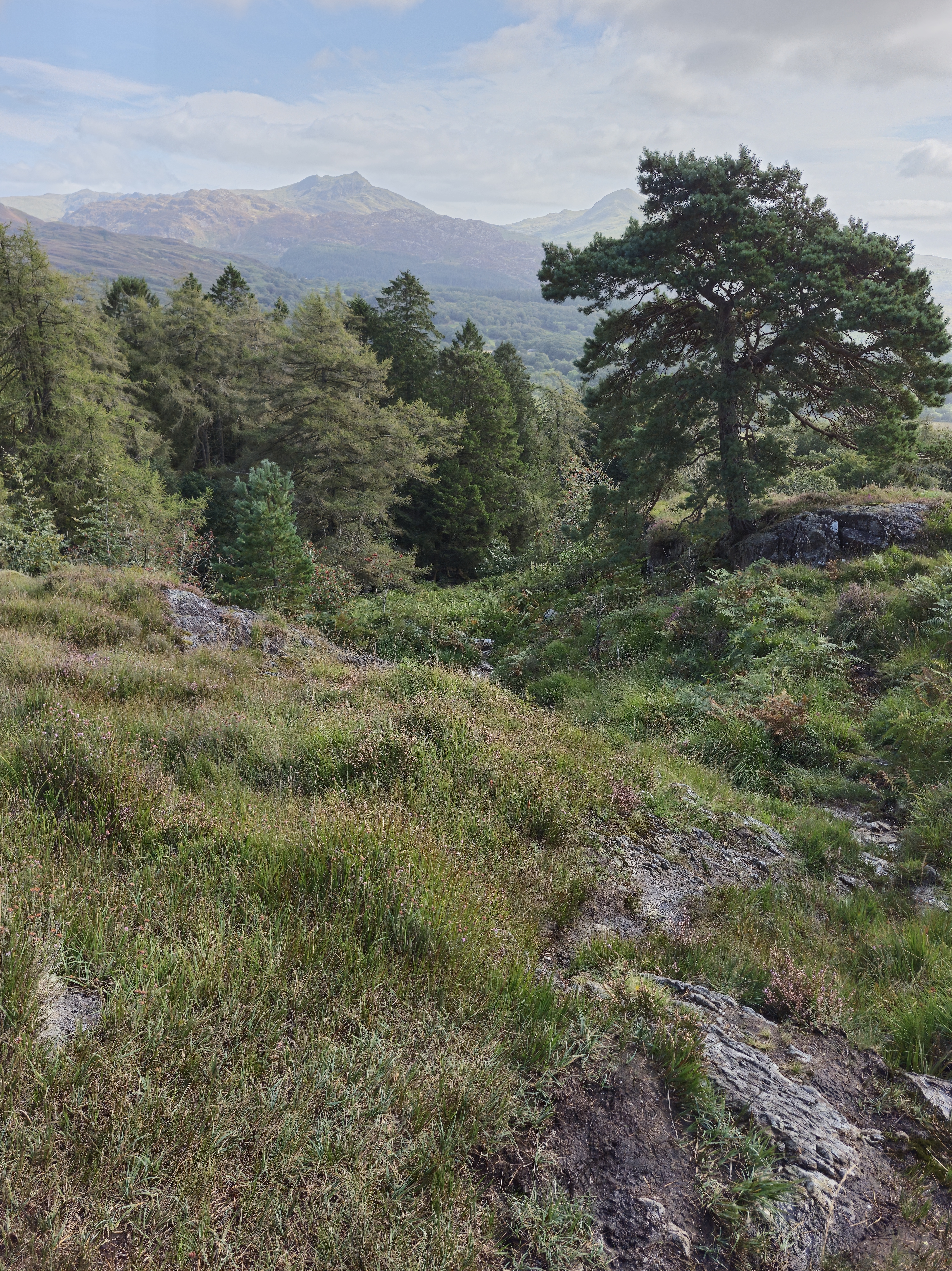
This cover reveal after a glorious day wandering walking around the Ty Canol National Nature Reserve with the friendly Pembrokeshire U3A Natural History Group.
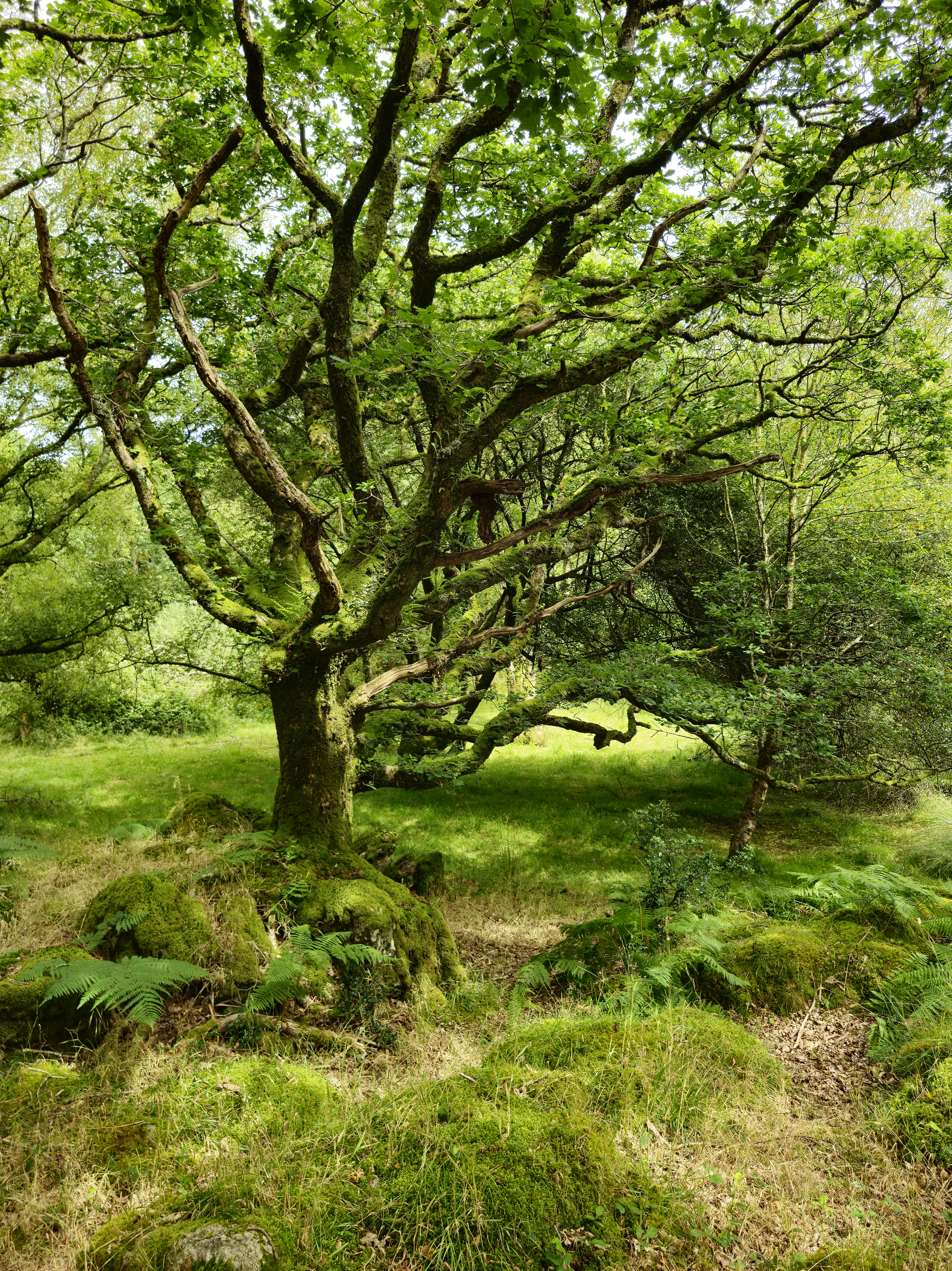
Ty Canol is the largest block of ancient woodland in West Wales. It’s wonderfully peaceful, an atmospheric mix of ancient oak woodland and pasture, set against the backdrop of the magnificent Preseli Mountains of northern Pembrokeshire.
To the north is Hagr y Coed (translation – ‘Ugly Wood’), an area of wet sessile oak, ash, and birch woodland. South is Carnedd Meibion Owen (translation – the Cairn of Owen’s Sons), so named because of the cairns that rise from the rocky outcrop.
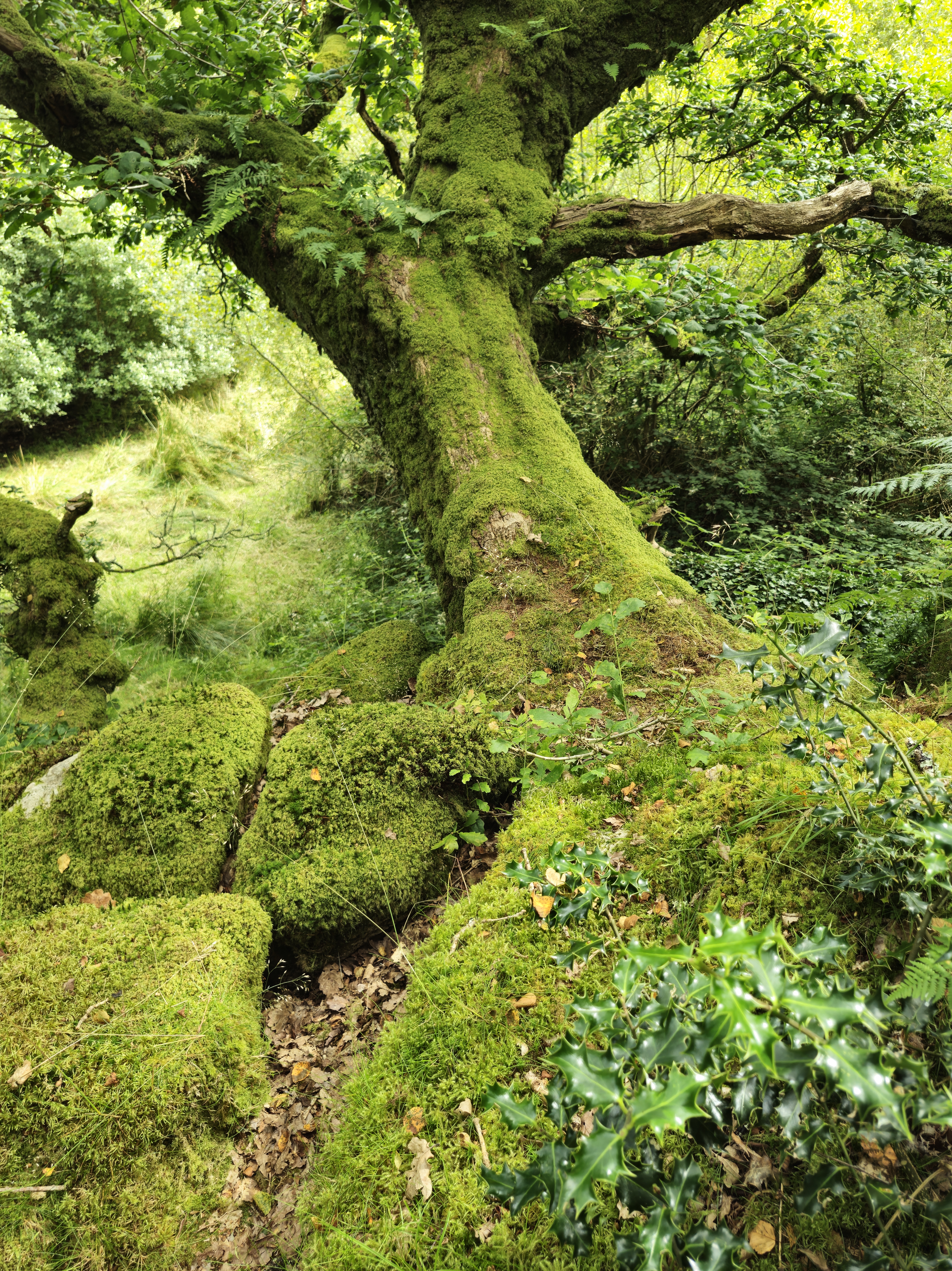
Many of the trees are covered by epiphyte ferns and lichen, many of the latter are extremely rare.
These are not parasitic on the supporting fallen and bent branches, they grow on them only for the support they give. Apparently there are over four hundred varieties of lichen in these woods. They thrive, both because farm animals are allowed to graze in parts of the area, and because oak trees are culled in others, thus creating areas that let in the light: ideal for the plethora of light-loving lichens
I almost expected Frodo Baggins to pop out from behind one of the twisted oaks. Ty Canol,purported to be over six thousand years old, really is a fantastical place
Ty Canol, managed by Natural Resources Wales (NRW) together with the Pembrokeshire Coast National Park Authority is part of an area famous for its achaeological sites.
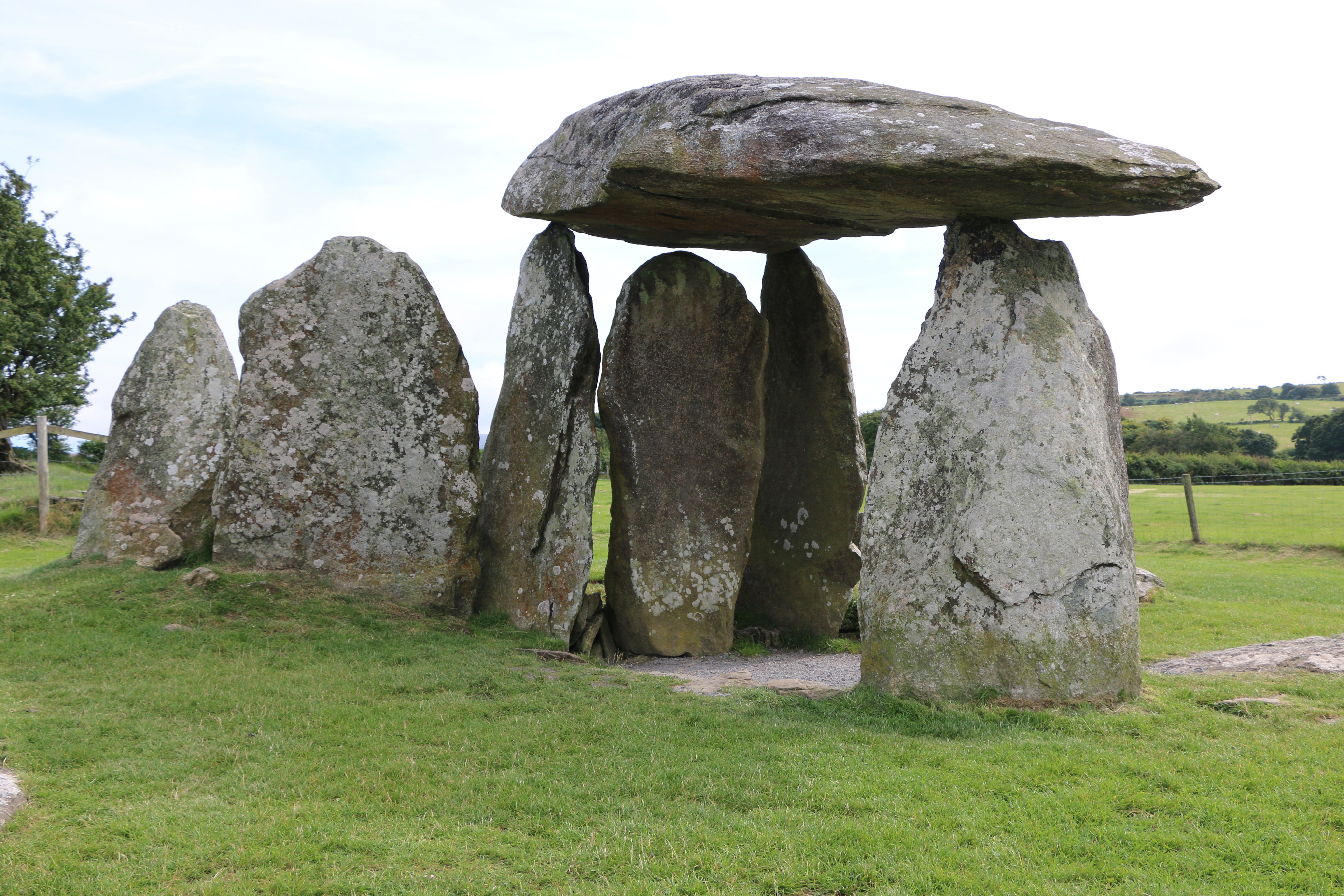
Ty Canol is the backdrop for Pentre Ifan, the famous Neolithic Chambered Dolmen that is thought to date from 3,500 BC.
This is a Cromlech or a Dolmen, typically built with several large upright stones and a cap stone on top. At the time it would have been an inderground tomb, covered by a mound of earth, but today, all the stones are exposed.
Having detoured to take a last look at Pentre Ifan we made our way back home by the scenic routeof Mynydd Preseli, passing Cerrig Lladron .
I thought I would revisit a time of my life when I despaired of ever being in print. It cheers me up as I agonise over yesterday’s efforts, altering and editing before I can even start with today’s writing and the realisation that one of my lovely characters has a cob on and won’t do as I want her to do. I’ve spent hours trying to persuade her, putting her in different scenarios, story lines. But no, she’s adamant – she wouldn’t act in that way, So I’ve gone back to the heady day when I found an agent. And I kept a diary. Sometime… a long time ago. It’s been a fortnight since I met with my agent (get me! – and it was in London and she treated me to a meal in a posh restaurant). Carried away with her enthusiasm for my writing, her promises to make me into a ‘brand name’ and her assurance that she had many contacts in the publishing world that would ‘snap her hand off for my novel’, I signed on the dotted line. Today she telephones, summarily dismissing an offer. ‘We can do better than this.’ What? What’s better than getting this novel published? Than seeing, holding, a book in my hand that I’ve actually written? I get an offer, perfectly acceptable to me, but according to this agent, it’s not enough. ‘We’ll try other publishers, bigger publishers,’ she says.
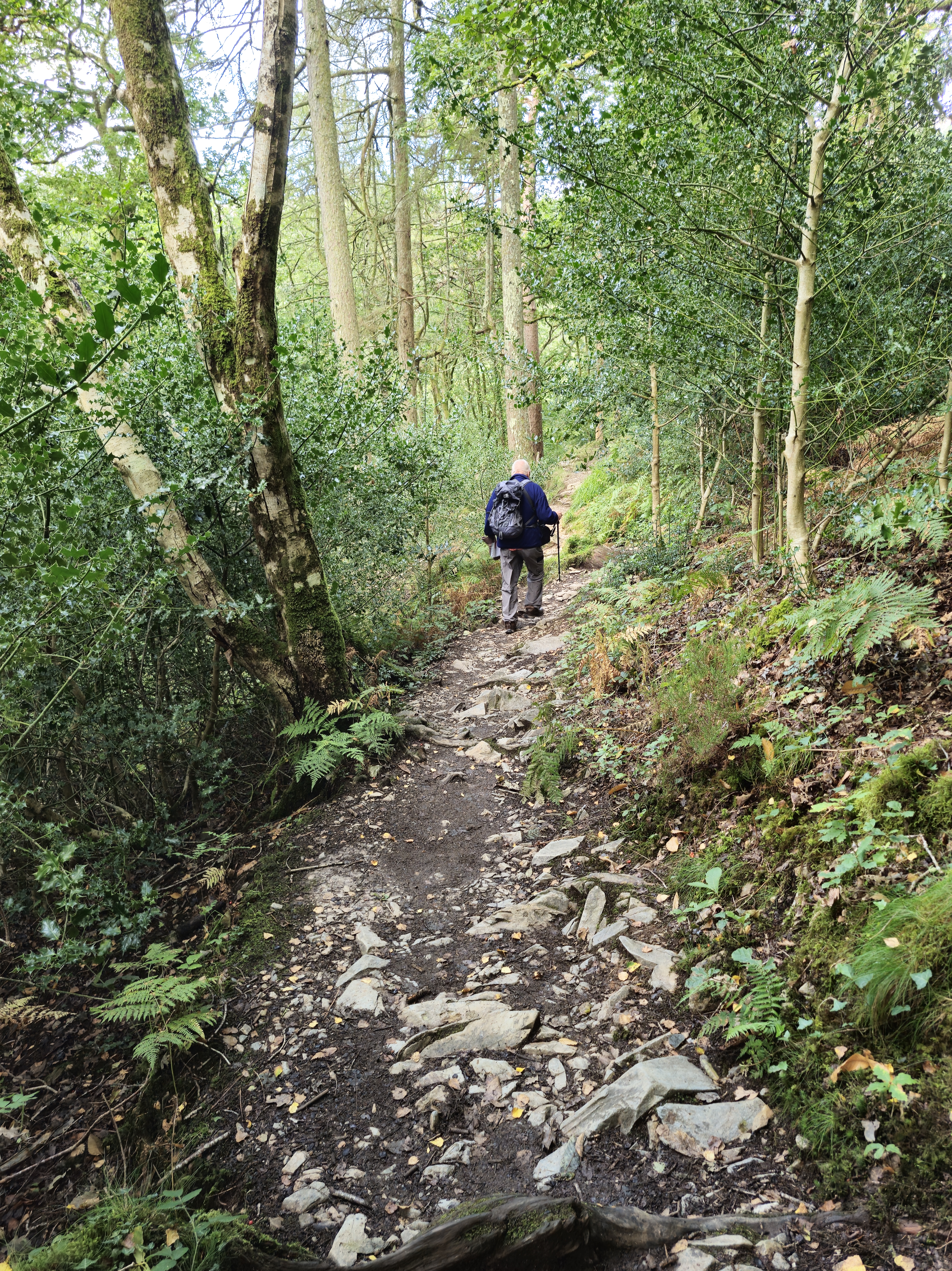
Image courtesy of Pixabay
I’m worried. But she knows the business.
Doesn’t she?
Still a long time ago … It’s been six months of waiting. So far, four rejections from publishers. Couched, mind you, in encouraging remarks:
“Believable characters … strong and powerful writing … gripping story … Judith has an exciting flair for plot … evocative descriptions.” And then the death knell on my hopes:
Image courtesy of Pixabay
‘Unfortunately … our lists are full … we’ve just accepted a similar book … we are only a small publishers … (what? The agent rejects one small independant publishers who I really liked the sound of, but then sends the manuscript to another?) …’I’m sure you’ll find a platform for Judith’s work …’
Yes, yes, we did, we did find ‘a platform’, as they put it. Or rather I did. I found a publisher: I liked their ethos, the way they presented and supported their authors – a feminist press, for goodness sake; one right up my street.
The self-doubt, the frustration, floods back. I’m never going to get the book published.
Still a long time ago: Another three months later.
I’ve had a call from the agent; ‘I think it’s time to re-evaluate the comments we’ve had so far,’ she says. ‘Parts of the storyline need tweaking. I’ve negotiated a deal with a commercial editor for you. It’s a realistic charge by today’s standards,’ she says. ’Think about it,’ she says. ‘In the end we’ll have a book that will take you to the top of your field.’
I think about it. Reject the idea. Listen to advice from my various acquaintances. Think about it again.
And think about it some more.
And then I ring the agent. ‘Okay,’ I say, ‘I’ll do it. I’ll pay’
I have no choice; after all she’s the expert. What do I know?
Still sometime … a long time ago (I have to keep saying “a long time ago”. just in case you think I’m still as gullible as I was then).
Another six months gone. The first commercial editor (the best, apparently) has succumbed to maternity leave. The one who was finally chosen by my agent (the second best?) has had my script all this time. I’ve already paid her.
You’re now wondering what kind of credulous idiot is this, yes? Well, let me say here that this latest saga (an apt word as my first book is actually a saga!) has been going on for over eighteen months and I’m desperate.
All creativity has gone. I can’t write anything but emails – and believe me, there are plenty on this subject. The commercial editor’s reasons (excuses) for the delay are numerous: an urgent journey to Europe to do research for a project, a family crisis (alright, I’ll believe that one) she’s ghost writing a celebrity’s autobiography (how can it be an autobiography if someone else is writing it? That always puzzles me. Surely then, it’s a biography?) Okay, okay, bitterness is creeping in.
We were supposed to be having a meeting to discuss the way forward with my book. It didn’t happen.
Now a friend, a successful and published author herself, is concerned I’m being conned. So am I! I feel foolish but say surely it’s only a few things that need tweaking.
It’s back! I read it in disbelief; if I follow all the ‘suggestions’ it will change from being a saga into romantic fiction. Okay, I like a bit romance; don’t we all? The book does have some romance threaded throughout, but it also crosses other genres: history, crime, domestic thriller.
I ring my agent,
‘Yes,’ she says, ‘it is a little more drastic than I expected but go with it.’
I tried- really I did. For two months I worked. With less and less interest. In the end I stopped. I didn’t recognise my story; I had no empathy with the characters. It wasn’t my book any-more.
So…
I made a decision, one of the biggest I’ve ever made. I sent a letter terminating our contract. Despite persuasive tactics from her I don’t waiver.
In trepidation I start again; I contact the publisher I first found, submit my manuscript. And wait
They will meet with me. No promises…
Pattern of Shadows, the first book of my Haworth trilogy published by Honno finally made the shelves.
This is my favourite review of all time for the trilogy: Mary’s story: WWII in Howarth family generational saga: “Every now and then, I come across books so beautifully written that their characters follow me around, demanding I understand their lives, their mistakes, their loves, and in this case, their families. Taken together, the Howarth Family stories are an achievement worth every one of the five stars I’d give them.”
And, in November, Honno will be publishing my eighth book with them. Cover reveal on the 30th July… so tomorrow!! Hooray!!!
The Stranger in My House.
A gripping ‘cuckoo in the nest’ domestic thriller
After the death of their mum, twins Chloe and Charlie are shocked when their dad introduces Lynne as their ‘new mummy’. Lynne, a district nurse, is trusted in the community, but the twins can see her kind smile doesn’t meet her eyes. In the months that follow they suffer the torment Lynne brings to their house as she stops at nothing in her need to be in control.
Betrayed, separated and alone, the twins struggle to build new lives as adults, but will they find happiness or repeat past mistakes? Will they discover Lynne’s secret plans for their father? Will they find each other in time?
The Stranger in My House is a gripping ‘cuckoo in the nest’ domestic thriller, exploring how coercive control can tear a family apart. Set in Yorkshire and Cardiff, from the 60s to the winter of discontent, The Stranger in My House dramatises both the cruelty and the love families hide behind closed doors.
“Judith Barrow’s greatest strength is her understanding of her characters and the time.” TerryTyler
It’s a writing, The Archers on Radio Four, Sunday lunch, and a gardening day – the latter if the rain holds off. Oh, and a small mention of the cover reveal by Honno, of my next book, The Stranger in my House…. on Tuesday 30th July 2024.
The garden is looking quite good, even after a day and night of being drenched in Pembrokeshire rain.
Photos of Bosherston Lily Ponds, courtesy of Husband, on one of the few sunny days. Lovely now – but when the lilies are out, even more gorgeous.
Swans again – but from a safe distance!!
Must get on…
Hope you all have a lovely Sunday, wherever you are. x
Many people have asked me what was the inspiration for The Memory and my answer is always – memories: memories of being a carer for two of my aunts who lived with us, memories of losing a friend in my childhood; a friend who, although at the time I didn’t realise, was a Downs’ Syndrome child. But why I started to write the story; a story so different from my other four books, I can’t remember. Because it was something I’d begun years ago and was based around the journal I’d kept during that decade of looking after my relatives.
But what did begin to evolve when I settled down to writing The Memory was the realisation of why I’d been so reluctant to delve too far into my memories. The isolation, the loneliness, that Irene Hargreaves, the protagonist, endures; despite being married to Sam, her loving husband, dragged up my own feelings of being alone so much as a child. That awareness of always being on the outside; looking in on other families, relationships and friendships had followed me; had hidden deep inside my subconscious. And now, as content with my life as I am, it unsettled me.
Many people, and as an occasional creative writing tutor I’m one, say that writing is cathartic. Working through Irene’s memories; especially that one memory that has ruled her life, made me acknowledge my own. And that’s fine. I always say to my students, if you don’t feel the emotions as you write, then neither will your reader.
In The Memory I’m hoping the reader will sense the poignant, sad times with Irene, but will also rejoice with her in the happier memories.
Over the last few years I’ve moved from writing the historical family sagas of Haworth trilogy, that moves through the decades from 1914 – 1968, and The Heartstone, set during WW1, to contemporary fiction such as The Memory (which was shortlisted for the Wales Book of the Year 2021 The Rhys Davies Trust Award) and domestic thrillers, such as Sisters.
My next book, due to be published in November 2024 is The Stranger in My House:
“A gripping ‘cuckoo in the nest’ domestic thriller.”
After the death of their mum, twins Chloe and Charlie are shocked when their dad introduces Lynne as their ‘new mummy’. Lynne, a district nurse, is trusted in the community, but the twins can see her kind smile doesn’t meet her eyes. In the months that follow they suffer the torment Lynne brings to their house as she stops at nothing in her need to be in control.
Betrayed, separated and alone, the twins struggle to build new lives as adults, but will they find happiness or repeat past mistakes? Will they discover Lynne’s secret plans for their father? Will they find each other in time?
The Stranger in My House is a gripping ‘cuckoo in the nest’ domestic thriller, exploring how coercive control can tear a family apart. Set in Yorkshire and Cardiff, from the 60s to the winter of discontent, The Stranger in My House dramatises both the cruelty and the love families hide behind closed doors.
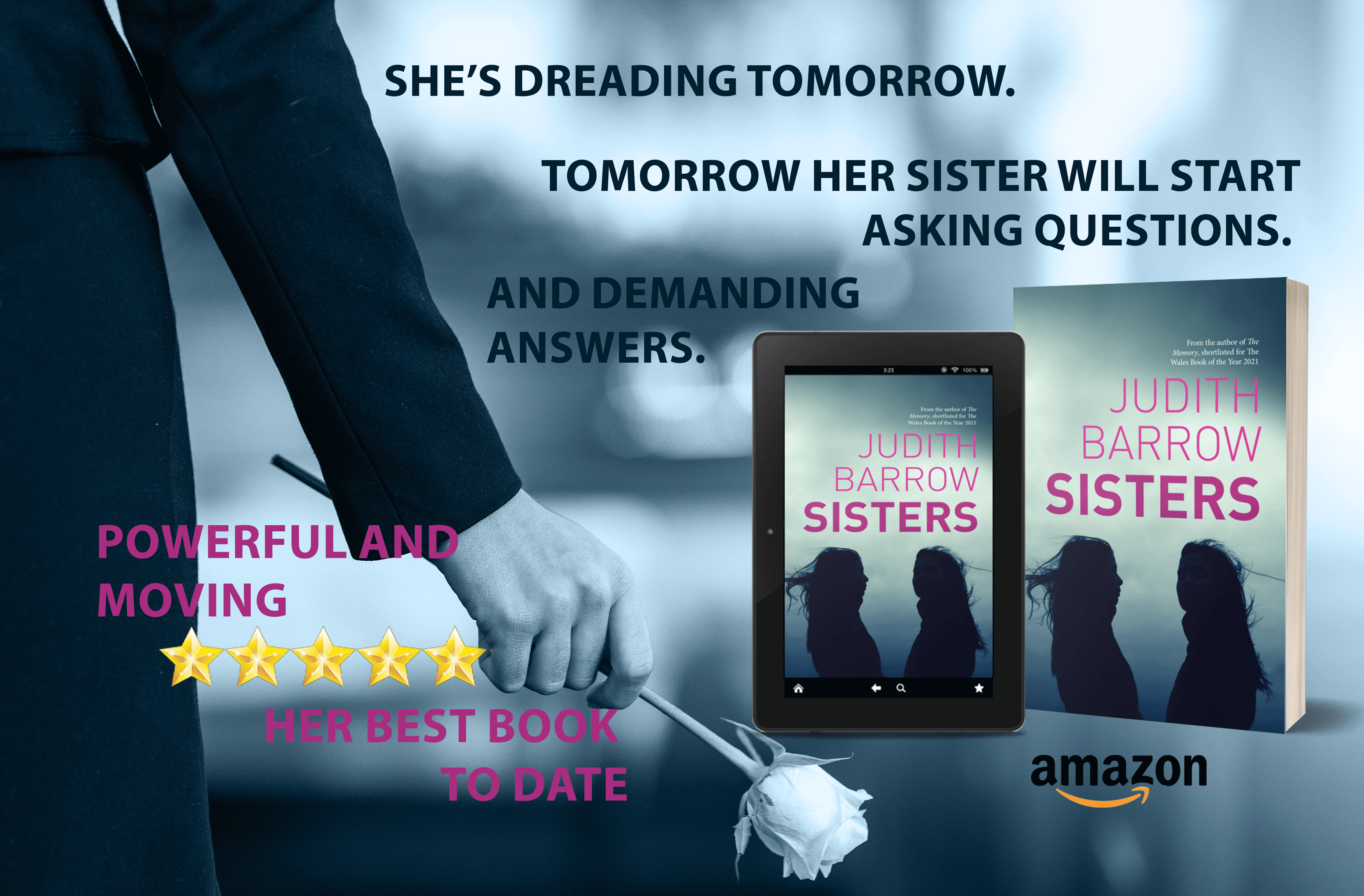
About the book Alison, Danny, Jude. Three girls bound closer than sisters. Nothing can divide them. Until Alison falls for Simon Delaney. Handsome, successful and ambitious, what woman wouldn’t want him? He’s surely her perfect husband. So why does she commit suicide? If it is suicide. The police say yes, except for the driven DC Rosanna Quillan. She says no, but she can only watch as Jude and Danny fight for the prize – the widower. How far would either of them go to have him?
Llyn Crafnant and LlynGeirionydd are separated by the forested slopes of Mynydd Deulyn (Mountain of the Two Lakes) and lie within wonderfully scenic valleys where the Gwydyr forest meets the lower slopes of the Carneddau mountains in Conwy.”The lakes are about a mile apart,” said the photographer casually. “The walk’s about five miles.” What actually happened was that we took the circular route which covers a distance of eight miles and involved some steep climbing.
But, at this point I have to say that wasn’t his fault. We ended up – or should I say – started off walking in the opposite way to the route in the book, having parked in the car park nearLlynGeirionydd, instead of the one near Llyn Crafnant.
This was due to the fact that, at one point, the SatNav took us in the wrong direction. It’s always the SatNavs fault, you know; we once got stuck on a very narrow dirt farm track faced with a sign that joyfully said in large red writing, ” Use your eyes, the SatNav lies”. I think I might have said that before, it’s something I bear in mind when sitting by a certain irate driver having to turn back on a journey.
Anyway, I thought, it’ll be alright; we’ll just read the directions backwards.
I waited on the edge of the grass while the photographer took his first photo of Llyn Geirionydd.
Gwydir Forest is named after the Gwydir River, which takes its name from the ancient Gwydir Estate, established by the John Wynn family of Gwydir Castle, who owned this area (Gwydir is translated as River with Red Banks) The land here was once dominated by lead and zinc mines. Some of the mines have been partially restored and made safe for visitors, but we didn’t visit; our sights were set on getting to Llyn Crafnant Though we did pass an old restored engine-house, and also the waste tips, now left to be naturally covered over.
The First World War had highlighted a shortage in wood production and the forest was stripped bare at the time because many of the early forestry workers, former employees in the forest’s mines, had no experience of forestry. This caused the 1919 Forestry Act to be passed and Gwydir Forest was acquired from Lord Ancaster by the Forestry Commission in 1921.
Most of the original plantations have now been felled and replanted as part of the forestry cycle. We passed quite a few places where this was happening.
The majority of the forest is conifer such as Japanese larch, Norway spruce and Scots pine but apparently, over the last two decades there has been more Welsh Oak, ash and beech planted to give a more varied and softer outline to the forest
“When we get to the top of this track, there’s a little bit of a short climb and the track narrows a bit,” said the Photographer over his shoulder as I puffed and panted behind him. ” Don’t worry, it’ll be so worth it for the view.’
The track did narrow a bit indeed. As the directions said, ‘…into a steep narrow footpath, less than forty centimetres wide (that’s about sixteen inches in old money) in some places, on an unmade and uneven surface, where you can expect mud, rocks and tree roots.‘. The embarrassing thing is, just as I was wobbling leaping gazelle-like from rock to another a young couple (stressing young here!) ran past… with a dog … very quickly.And they even had the breath to wish us a cheerful “good morning.”
Every now and then we caught glimpses of the view. Went past a stile. Down a wider path. Through a gate. Saw the obligatory cow. And then…
The Photographer got his first proper shot of Llyn Crafnant on the northern edge of the Gwydir Forest.
And then lots more. It really is a glorious place
One last look and we walked away from Llyn Crafnant …
Following the arrows we crossed over the road into a small wooded area. And there the arrows stopped. We looked around: there was a stile in the far corner, but it was broken, covered in brambles and branches and looked unused. On the other side of the clearing there was a broad track. After some discussion we chose the track. (later realising we should have tackled the stile).
After an hour of walking up the never-ending road we stopped for breath, and for the Photographer to revell in the scenery and take many photos of the craggy slopes of Mynydd Deulyn.
And for me to have a rest. It wasn’t until we got back to the car that I realised I had somehow managed to take the attractive shot below whilst I was rummaging in my rucksack for the fourth, and last, bottle of water. Naming no names, but someone dared me to include this in the post – and I’m never one to pass on a dare. Which is probably the reason I find myself on these hikes walks.
Another hour of uphill, round a bend, and the road began to descend, until we were …
Back to the start…
I’m often asked what do I think about when I’m walking and with not enough breath to talk. I must say not having enough breath to talk isn’t something that often happens to me. But usually I’m taking in what’s all around us. We walk in so many diifferent kinds of places, so I just soak up the sights and the sounds whether in the country or in more urban areas.
But there are times when I’m thinking how to describe what I’m seeing, wondering if it will fit into a scene in the book I’m currently working on – or intend to work on. Sometimes it will, sometimes it won’t. It’s usually the latter, but that’s okay. And if I can keep it in mind for when we next stop for the Photographer to capture the scenary, I’ll make notes.
And I remembered that moment, that feeling of almost sinister atmosphere when I wrote one of the scenes in Sisters.
“‘Whoops! Watch your step, Miss Clumsy.’ Said in a jokey manner, it still manages to imply the familiar censure. ‘If it wasn’t for me always looking out for you, I don’t know what you’d do.’ He laughs. ‘Probably kill yourself, one of these days.’ He pulls her close, turns her so they are facing the lake, standing on the edge of the steep banking. The sun is sinking lower in the sky, the black shadows of the trees lengthen, their reflection stretch and waver over the lake, the water rendered blood-red.“
Book Description:
An accident and a terrible lie by sixteen-year-old Angie tears her family apart and her younger sister, Lisa, being sent away. They don’t speak for thirteen years, until their mother’s death brings them together. Lisa quickly realises her sister is trapped in a dangerous marriage.
What does Lisa owe to the family that betrayed her? And if she tries to help, will she make things more dangerous for them all?
A powerful story of domestic violence, courage and forgiveness.
Our one leisurely day: Bodnant Gardens, which nestles in the Snowdonian foothills of North Wales, near Conwy. On a hot and sunny day it took us seven hours to walk around and savour the horticultural delights of the gardens and admire the buildings.
Bodnant (Welsh for ‘dwelling by a stream’) was home to the Lloyd family from the reign of James I until the mid 1700s when it passed to the Forbes family. The parkland was designed into the style of an English landscape, and the earlier house was replaced by an Italianate mansion in 1792, courtesy of Colonel Forbes. On his death in 1820 the estate passed to William Hanmer of Bettisfield Park in Flintshire who extended the garden around the mansion house between 1828 and 1837. In 1874 the estate was bought by Henry Davis Pochin, Victorian industrialist, and his wife. There’s an interesting post on the people of Bodnant here.
2024 marks seventy-five years since Bodnant Garden was gifted to the National Trust by Henry McLaren, The 2nd Lord Aberconway.
Our first glimpse of the gardens was through the wonderful and reknowned Laburnum Arch, a fifty-five metre-long avenue of golden flowers. It was created in Victorian times by Henry Davis Pochin in 1880. He employed Edward Milner, apprentice to Joseph Paxton (landscape gardener, designer of hothouses, and the architect of the Crystal Palace for the Great Exhibition of 1851 in London), to help design the formal garden around Bodnant Hall, including the Laburnum Arch, based on pergola walkways of the 16th and 17th centuries. It is believed to be the longest and oldest in Britain.
Rhododendrons are wild shrubs native to South-East Asia. They were first introduced to Bodnant Garden around 1900, many grown from original seed collected on expeditions in central China, sponsored by Bodnant’s owner, Henry Duncan McLaren the second Lord Aberconway). The plants flourished,producing some of the largest shrubs in the western hemisphere. Then some were hybridised to create varieties that were more compact, more richly coloured,with a longer flowering season. This is Rhododendron ‘Elizabeth’ a compact plant with vibrant pink flowers – the most famous of all the Bodnant hybrids and one that is today found in many domestic gardens. The gardeners at Bodnant are always searching to identify ‘lost’ varieties and propagate those under threat to ensure the future of the collection for many more years to come.
Two of the terraces have ponds, which are home to water lilies and a variety of wildlife (we saw ducks).
The borders on each of the five terraces are planted with careful consideration of the surrounding environment and are in keeping with the year of their creation. They are absolutely wonderful.
We also saw a Harlequin ladybird. These are about the same size as native ladybirds. They range in colour and pattern, but some of the most common forms are black with red spots, red with black spots and orange with black spots.Harlequins have attracted negative publicity since they were introduced in Britain 2004, but in reality they are nothing to worry about. They are known to reproduce quickly, gather in large swarms and compete with native ladybirds for aphids. They have shown signs of cannibalism, consuming the larvae and eggs of other ladybirds. But disease and predators are bringing the population under control. Harlequins can also carry an STD ( What?!) called laboulbenia. It is a fungus that forms little scales on the wing cases, and sometimes white crust on some parts of the exoskeleton, which can be seen with the naked eye.The STD also infects native ladybirds – the harlequin is simply another host for the fungus to live on. (the good news is humans cannot be infected. Sigh of relief!!)
I love reflections in water. The river runs throughout the gardens. Above is the Waterfall Bridge, with its vertical torrent of water on one side, and the calm, reflective pool on the other. Home to wildlife including kingfishers, dippers, heron and ducks. (and tadpoles, lots of tadpoles).
The photographer outside The Poem, a poetically-named mausoleum, built by Henry Davis Pochin. Located in an area of the Shrub Borders within the garden, The Poem is the McLaren family mausoleum. It sits on an outcrop of rock at the end of the valley known as the Dell.
The building below is the known as the Pin Mill. Originally built in 1730 as a gazebo at Woodchester, Gloucestershire, and later used as a pin mill and later still as a tannery, the building was moved to Bodnant gardens and reconstructed in 1938/9 as a pavilion at the south end of the canal terrace. The coat of arms on the building is of the family Surman or Shurmer whose connection with the building is a mystery.(One to solve sometime in the future)
The 2020 Sky Original adaptation of The Secret Garden, based on the classic 1910 novel by Frances Hodgson Burnettwas, was partly filmed in Bodnant Garden. The canopy of the cascading yellow flowers of the Laburnum Arch, the gnarled, fantasy-like woods and Italianate follies, all added to the sense of magic in the film.After a day walking around this glorious place, we could understand why Bodnant Gardens was chosen. It truly is one of, if not the best, National Trust gardens we’ve explored.
“A lovely evening walk,” said the photographer. “With spectacular views.”
It was that last sentence that should have warned me before we set off, I thought as I climbed over the stile and looked upwards.
He’s such a clever clogs: climbing the stile one- handed and taking a video. Hmph!!
A little information here: Pen y Gaer is a mountain summit in the Snowdonia – Beddgelert to Conwy region in the county of Conwy, Wales. It’s the location of a Bronze Age and Iron Age hillfort near the village of Llanbedr-y-Cennin. It’s a natural defensive site. There is a long history of occupation.
There are two Bronze Age cairns on the north-west slope, and extensive prehistoric and later field systems, nearby. The remains seen today are mostly of Iron Age origin, but further earthworks, probably of medieval origin, lie on the south-eastern slopes.
The summit can be identified by one of the large cairns.
Pen y Gaer is three hundred and eighty-five metres high with a prominence of thirty-six metres. (My legs and feet can confirm this!)
The photographer was right though, the views are spectacular.
There’s a broad bank of stones about two metres in width, with a partial kerb of large, irregularly placed boulders before getting to the summit; these are the remains of two defence walls, as well as the outlines of a chevaux-de-frise (A defence, usually a timber or an iron barrel covered with projecting spikes and often strung with barbs of glass).
There are two stone circles. Archaeological evidence indicates that in addition to being used as places of burial, the purpose of stone circles was probably connected to agricultural events, such as the summer solstice.
And, of course, sheep – which moved a lot quicker that we did.
The sun was setting, a mist was creeping in. We were (as far as I was concerned) on top of a mountain. At this point there was a discussion: we could carry on having an adventure and take a track (over a stile) to fields and marshland, and meander until we saw buildings, which could or could possibly not be the cottage we were staying in. Or we could take the windy, steep lane that would definitly lead to the cottage where we were staying.
Whilst someone couldn’t resist one last photo … I staggered sauntered past, with that glass of wine in mind, and carried on.
“A lovely evening walk,” said the photographer, gazing admiringly at photographs on the screen of his camera. “And brilliant scenary.”
I have to admit I agreed, as I soaked my feet in a bowl of cool water. Though next time, I decided, I would check out the mileage… and the ascent … of further ‘walks’.
Our first walk: an easy five mile circular walk. We thought…
We followed a footpath alongside a stream and through a field covered in glorious wildflowers, including one that we later discovered was called the Deptford pink which is nationally rare. I took a photo of the flower: it had a long and deep pink petals with pale spots and ragged edges. Unfortunately, later (not having the expertise of the photgrapher), I saw that I’d had my mobile phone turned the wrong way round and had an image of a red, sweaty face … mine (well it was a hot day).
So here is a photo of the Deptford pink courtesy of The Species Recovery Trust.Apparently the plant has been used in traditional medicine for various purposes, such as treating digestive ailments and as a diuretic.
This area is called Coed y Felin and includeds an ancient oak/ash woodland planted with sycamore, beech and sweet chestnut.
Pathways criss-cross this ancient woodland site, leaving clues to its long-held links with the local population. Its timber has been used to support local mining villages for centuries. But Llanrwst has also long been known as a market town with a history of a whole range of industries over the centuries, one of which is a thriving woollen industry. Apparently it’s historically recorded that in the Middle Ages the price for wool at Llanrwst market set the price for wool throughout England and Wales in that period.The photographs below are the ruins of a woollen mill, Felin Uchaf.
The directions told us to zig zag up a steep lane.
And then continue for about one and a half mile along a lane.Or rather, up a very steep lane!
And this is where the five mile circular walk became … a little longer. The signs disappeared. And there were four turn-offs to choose from. So, three times, we wandered up this lane, (which I swear was at least half a mile long from bottom to top) and then down and then up again.
Until I stopped for breath and the photographer declared joyfully, ‘There’s a lovely view from up here.’
After that I believe the person who wrote the directionsbecame bored, jotted down a few notes about going through fields, and went home. And we more or less followed our noses. Or, should I say, because anyone who knows me knows I have no sense of direction whatsoever, I followed the photographer (who, true to form, was really only looking for “great shots”)
We meandered through fields along vague paths, which I was sure were sheep trails … see the evidencebelow?
And note … a stile! After last year’s walks in the Yorkshire Dales here and here, the photographer promised no stiles this time. And yet, on the very first walk – a stile.
It was quite a quiet walk back to the start after that…
PS: The following is an interesting article about Y Pont Fawr – the bridge in Llanrwst that, on our way to the cottage we were staying at, we tried to cross three times before being successful. Because of the high crown of the bridge it’s impossible to see if there’s another vehicle coming the opposite way … until it’s almost too late.
As this piece says further down: “The bridge is too narrow for vehicles to pass on it, and its hump limits forward visibility. This explains the local nickname Pont y Rhegi – “bridge of swearing”.” I’m not saying who added to this nickname, but the photographer refused my request to stop to take a photograph of the bridge.
Pont Fawr, Llanrwst
A ford crossed the river Conwy in this vicinity long before it was bridged. The original bridge was declared unsafe in 1626 and preparations began for its replacement, funded by the people of Caernarfonshire (west of the river) and Denbighshire (east of the river). In 1634 four Lancashire stonemasons were contracted to build the new bridge. The year 1636 and the royal coat of arms are shown on a plaque on the upstream side of the bridge, which is known as Pont Fawr (“large bridge”).
The workmen who built the bridge inserted the keystones for the central arch upside down. This was not discovered until the opening day, when the arch collapsed! The central arch rises to c.18 metres above the water.
The renowned architect Inigo Jones was professionally associated with the wealthy Wynn family of Llanrwst, and legend has it that he designed Pont Fawr. The pictures of the bridge and Inigo Jones (courtesy of The National Library Wales) were used to illustrate Thomas Pennant’s books about his travels in Wales in the 1770s.
Pennant wrote that two of the arches were extremely beautiful, marking “the hand of the architect”, but the third was inferior, having been rebuilt in 1703. Inigo had changed Ynyr, his real Christian name, to Inigo or Ignatius when he went to Italy, according to Pennant.
The bridge features full-height cutwaters (stonework shaped like a ship’s bow). The river is the outlet for rainwater and meltwater from across a large area of Snowdonia including Dyffryn Mymbyr (around Capel Curig), one of the wettest places in Britain. Since the western arch collapsed in 1702 and was rebuilt, the bridge has stood the test of countless floods and the advent of motorised lorries and buses.
The bridge is too narrow for vehicles to pass on it, and its hump limits forward visibility. This explains the local nickname Pont y Rhegi – “bridge of swearing”.
William Peers may have uttered an expletive on a dark night in 1907 when the traction engine he was driving crashed through the wall at the Llanrwst end of the bridge. After crossing the river, he had misjudged the position of the main road. The stoker and two navvies (engaged in building Dolgarrog aluminium works) jumped clear. Mr Peers fell about three metres onto the riverbank. The engine was said to have made a complete rotation in mid air before hitting the riverbed about six metres below the road.
Author Judith Barrow gives a lively account of her experiences moving to Pembrokshire in the 1970s and managing a holiday let with some interesting visitors, sometimes amusing and sometimes rather challenging.