Seeing the results of the Wales Book of the Year Award 2024, and reading one or two of the books of the shortlisted authors over the last month, brought back memories of 2021 when I was nominated for the Literature Wales Book of the Year Award. It still feels strange.
The Memory was published around the first week of the first lockdown and I thought it became lost in all the disruption and anxiety of the pandemic. So, when I first heard that the book was being nominated, it was a complete surprise. Naturally I was also thrilled because, at that time,The Memory was so different from my first four novels, which are historical family sagas. And I wasn’t sure how it would be received by the readers who had enjoyed those books. So, to be recognised by Literature Wales for the Wales Book of the Year Award 2021, The Rhys Davies Trust Fiction Award, was a great accolade for me.
I believe we are all affected by our pasts; experiences that shape our present and future. And, as writers, memories feed our stories. Families fascinate me: the love, the loyalties, the rivalry, the complex relationships. Layers that are in all families. The casual acceptance of one another in a family can bring the best and the worst out in all of us, so there is a wealth of human emotions to work with. This is how The Memory evolved. A little of the background comes from a time when I was a carer for my aunt who lived with us. She developed dementia and I kept a journal so we could talk about what we’d done each day. Many years after she’d died, some of those recollections crept into The Memory. And then there are the memories from my childhood, when I had a friend who was a Downs Syndrome child. The affection she gave, the happiness that seemed to surround her, is something I remembered long after she died of heart failure at the age of eleven. And I wanted that love to be a huge part of the book, a main theme. Fundamentally it’s the story of a secret that is never discussed within a family, but which has had a profound lifelong effect on the relationship between the mother and daughter. The Memory is sometimes poignant, sometimes sad, but is threaded throughout with humour.
Reviewsfor The Memory:
“… As a reader, when a character becomes as completely real to me as Irene does, I often find myself wondering what happened next for her. But Irene’s story is so perfectly and elegantly resolved that I know without a shade of doubt what her future holds.The Memory is not a comfortable or easy read. But if you’re looking for a beautifully written, character-driven story with a dark base but superb resolution, it just might be the perfect choice.”
” …The writing is what I’ve come to expect from Judith Barrow. The effortless prose brings a fresh quality to the mundane and familiar. There’s also a building menace to the book and a sense of foreboding that drives you on right to the surprising end. The Memory is a remarkable book and I wholeheartedly recommend it.”
When The Memory was shortlisted for theWales Book of the Year Award in 2021 I was also pleased for Honno. I’d been published by them for many years and I believe it also gave them some much deserved recognition.
And I’m thrilled that Honno will be publishing my eighth book with them in November.
The Stranger in My House.
After the death of their mum, twins Chloe and Charlie are shocked when their dad introduces Lynne as their ‘new mummy’. Lynne, a district nurse, is trusted in the community, but the twins can see her kind smile doesn’t meet her eyes. In the months that follow they suffer the torment Lynne brings to their house as she stops at nothing in her need to be in control.
Betrayed, separated and alone, the twins struggle to build new lives as adults, but will they find happiness or repeat past mistakes? Will they discover Lynne’s secret plans for their father? Will they find each other in time?
The Stranger in My House is a gripping ‘cuckoo in the nest’ domestic thriller, exploring how coercive control can tear a family apart. Set in Yorkshire and Cardiff, from the 60s to the winter of discontent, The Stranger in My House dramatises both the cruelty and the love families hide behind closed doors.
“Judith Barrow’s greatest strength is her understanding of her characters and the time.” TerryTyler
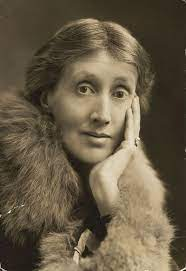
Their mother, Julia Prinsep Stephen had become a widow in 1870 after her first husband, Herbert Duckworth, died of a burst abscess. She already had three children: George, Stella, and Gerald. The latter was born shortly after Herbert’s death in 1870.
Eight years later Julia married Leslie Stephen. English society in the late 1800s was built on a rigid social class system, and as a graduate of Eton and Cambridge, a respected literary critic and biographer, Leslie was seen as one of the literary aristocracy. He was also a widower and father of a girl, Laura, who had a learning disability, and who, incidentally, was the granddaughter of the Victorian novelist William Makepeace Thackeray.
Despite Leslie doting on Laura as a tiny child, by the time she was nine it was obvious that something was wrong; she was slow to talk or read, and veered from total fatigue to violent tantrums. It was a problem for both her father and Julia (although Julia, as friend of the family, had already partly taken on the role as a surrogate parent after Leslie’s wife, Minny, had died when Laura was five). But marriage and producing four children in quick succession: Vanessa in 1879, Thoby in 1880, Virginia in 1882, and Adrian in 1883, increased the difficulties for the two parents. Neither of them were equipped to deal with a child who had special needs.
Besides being agnostics, both Leslie and Julia were humanists, who advocated the rights for women to be the same as for men, to reach their own conclusions in matters of religion. Yet both believed that the home was the true basis for morality, a sanctuary free from corruption, and therefore home was the place for women. So Julia, who despaired that she was unable to discipline Laura, or train her to carry out domestic chores, apparently felt that her stepdaughter was deliberately wilful. And Leslie, who, during a time when society viewed anyone who was not seen as “normal” as undermining that society, was ashamed of her. His domineering patriarchy in in this upper-class, intellectual, and claustrophobic household would be viewed as bullying these days.
He must have been very frustrated by Laura, and it was a conflicted family: having little parental authority over one daughter, whilst succeeding in having total control over the other two.
Unlike their brother, Thoby, neither Vanessa nor Virginia were allowed to go to school. It was still not considered suitable to send girls to school, so they were educated at home by tutors.
Initially, as small children, they spent their days inventing whimsical stories about their neighbours, then progressed to writing illustrated stories and poems, and making up riddles and jokes for a family magazine they called the Hyde Park Gate News. In years to come, biographers of the two sisters were to declare this as early proof of the reciprocal nature between them that, well before any formal training, they nurtured each other’s art, acting as the other’s friend, adversary, and creative muse. And they must have decided between themselves which of them followed which creative path: Virginia the writer, Vanessa the artist. Yet each one’s individual talents led to the same ending, an endeavour to tell stories through their craft, Virginia with words, Vanessa through her paintings.
But, in the background there was always the perceived family problem of Laura. And, in 1886 at the age of sixteen, when Vanessa was seven, and Virginia was four, Laura was sent away to live with a governess. And was absent from the public family.
Four years later, despite being deprived of any early official schooling, and notwithstanding the Victorian restrictions on girls and women, Julia and Leslie decided to encourage their other daughters to pursue their talents. Over time, Vanessa studied both at the Royal Academy Schools and the Slade School of Fine Art, Virginia took classics and history in the Ladies’ Department of King’s College London.
Laura, on the other hand had been diagnosed by psychiatrists as suffering from ‘imbecility’. However I do need to point out that, despite extensive research, I could find no established medical rules of defining mental illnesses at this time. Yet in law, under such acts as the Lunacy Act of 1845 and the Idiots Act of 1886, there were precise specific and distinct legal classifications for certain conditions. These groupings fluctuated though. Laura was initially admitted to Earlswood Asylum in 1893, aged twenty-three, as an “imbecile” but in the 1901 census she was labelled a “lunatic”. which could suggest worsening symptoms
Virginia and Vanessa had battles of their own to contend with; both, as children, were sexually abused by their half-brothers, George and Gerald Duckworth. As an adult Virginia Woolf wrote extensively about this incestuous abuse in her diaries and letters, although there is little I can find about the abuse with either sister. Understandably, many say this was the origin of the fragility of Virginia’s psychological state. But It needs saying that it has been suggested in various papers that there were genetic connections of mental instability on the paternal side: Leslie Stephen was prone to violent mood swings, his father suffered from depression, a nephew had a bipolar disorder and was admitted into an asylum for mania. Virginia herself suffered from depression, and Vanessa is reported to have had at least one nervous breakdown.I should also add here that therefore it could follow that this family history of the Stephen family means it is likely that whatever condition Laura suffered from in her life, her genetic composition means she was more susceptible to other mental disorders.
In 1895, their mother. Julia Stephen died of heart failure, following a bout of influenza. Shortly afterwards, Virginia had her first mental breakdown.And, when their older half-sister Stella Duckworth, who in the absence of their mother had stepped in to run the household, also died two years later, and after their father died in 1904 after a long battle with stomach cancer, Virginia made her first suicide attempt.
Vanessa took charge. After dealing with all the domestic affairs, she moved the family (Vanessa, Thoby, Virginia, and Adrian) from Hyde Park Gate to the Bloomsbury district of London in 1904 to begin a new life.
Here Vanessa, Thoby, Adrian and Clive Bell started The Bloomsbury Group with friends who were writers, intellectuals, philosophers, and artists who rejected the oppressive Victorian principles of their parents’ generation, and they adopted creative freedom, sexual permissiveness, and atheism. They became known for their unconventional lifestyles and love affairs, shocking many outside their social group.
As the older sister Vanessa dealt with many of Virginia’s emotional and mental breakdowns. But she also held true to her own code of conduct; her lifestyle, her unconventional, sometimes eccentric relationships, were reflected in her art: the nude portraits of her friends and family, the use of design in her work. (both considered to be the prerogative of male artists) Yet her loving care for her sister was balanced by the long term and continuous rivalry in their separate spheres of creativity. Reading through the lines during my research I wondered whether, sometimes, this conflict was wearisome for the older sister; whether Vanessa’s marriage, in 1907, to Clive Bell was subconsciously an effort to distance herself from Virginia.
The marriage, a year after their brother Thoby’s death from typhoid, made Virginia descend again into some sort of nervous breakdown. The marriage meant that Virginia and their brother Adrian had to move out of the Bloomsbury house, thus providing a distancing between the two sisters. A distance Virginia resented, because, before long, she began to pursue Vanessa’s husband, Clive. Their love affair lasted, intermittently, over six years. And there is plenty of anecdotal evidence that reveals enough proof, I think, to believe that the underlying reason for the affair was so that Virginia was once again at the centre of her sister’s life.
In 1914 Vanessa began a life-long relationship with Duncan Grant, who was bi-sexual. Taking Vanessa’s two sons, Julian and Quentin, from her marriage to Clive, and accompanied by Duncan’s lover, the writer David Garnett, they moved to Charleston Farmhouse, Sussex. In 1918 Vanessa and Duncan had a daughter, Angelica.
Because I have concentrated on these two women as sisters, and because much has been written about their achievement by far more scholarly people than me, I have left out details of the body of work that both women produced. I was more interested in what made them ‘be’, what formed them as human beings.
I found an extensive amount of articles, journals, newspaper reviews, discussions, diary quotes, lectures etc. on Virginia that revealed much of her personality and mental health. But far less details on Vanessa’s character. Because she didn’t keep a diary as Virginia did there is little written about her personally, except for the time of her son, Julian’s death during the Spanish War, when she became extremely and understandably depressed. But, mainly, there are only facts about her place in the family, about her marriage and relationships, her part in the Bloomsbury set, and the cannon of her work. And I found almost nothing on Laura. Having left few records of her own, she’s as invisible in history as she was in her family. And yet, her small story needs to stand alongside her famous sisters, because, I think, her presence (wherever she was during her life) must have had some effect on Vanessa and Virginia. There had to be some experiences, some memories they shared, that would always have impacted on the three of them.
Troubled by mental illness throughout her life, Virginia was institutionalized several times and attempted suicide twice before drowning herself by filling her overcoat pockets with stones and walking into the River Ouse on March 28, 1941. Her ashes are buried in the National Trust garden of Monks House, Rodmell.
Vanessa died at Charleston Farmhouse, at the age of eighty-one, after a bout of bronchitis, on 7th April 1961. She was buried on 12th April, without any form of service, in Firle Parish Churchyard.
N.B. Leslie and Julia visited Laura until Julia’s death in 1895. Stella visited her until her death in 1897. Her aunt Annie Thackeray Ritchie visited her until her death in 1919. Annie’s daughter Hester Ritchie brought her home for visits on occasion. Then the visits stopped. When Laura died in 1945 the asylum did not know of any living relatives, though both Vanessa and Adrian outlived her and even inherited the remainder of the legacy Leslie had left for her care
Sometimes, family members can become estranged from one another, either by choice or by circumstances. “In one of her informal reminiscences from around 1922, Virginia describes ‘Thackeray’s grand-daughter, (Laura) a vacant-eyed girl whose idiocy was becoming daily more obvious, who could hardly read, who would throw scissors into the fire, who was tongue-tied and stammered and yet had to appear at table with the rest of us.’ Virginia makes the difference between them clear: Laura was not, in fact, one of “us,”’ https://tinyurl.com/36sj5mc5
And, in a way, this is how Lisa (formerly Mandy) feels about her sister, Angie, in my book, Sisters, when she says, “I never wanted to be in Micklethwaite ever again. Yet here I am. And meeting the one person I never wanted to see again. “
Sisters waspublished by Honno on the 26th January 2023:
It’s a funny thing about Judith Barrow’s books. I start reading, thinking they will follow an expected genre, get about halfway through, and realize that they are about something else entirely. In Sisters, for example, I thought I was going to meet another Cinderella, one who lives through and overcomes family trauma, meets her prince, and lives happily ever after. Only… not so much.
When we meet thirteen-year-old Mandy, she’s the classic middle-child of a working-class family on a 1970s housing estate. She’s proudly pushing the pram containing their family’s much-anticipated and beloved baby brother when she runs into her big sister, Angie, a typically boy-crazy young teen. Angie is attempting to show off for a boy when a terrible accident occurs and the precious baby is killed.
A devastated Mandy rushes back to her home, but to her shock is blamed for the tragedy. She waits confidently for her big sister to explain, but Angie doesn’t step forward. Instead, their family falls apart in a meltdown of grief, blame, and shame. Publicly branded a baby-killer, Mandy is bullied at school, shunned by her parents, and lied about by her sister, the one person who could have saved her.
Of course, we can see how the adults who should have provided love and support in spite of what was obviously an accident, instead fail their child. How the sister she’d always looked up to allowed her own fear to keep her from protecting Mandy or even telling the truth. And how all of the social structures of home and school and church fail to protect and support.
The bewildered girl is sent to Wales to live with her aunt and uncle. Mandy changes her name, rejects her birth family, and reinvents herself as Lisa. But that’s only the beginning of the story. As the two girls grow up, we can see that their split-second reactions in a moment of trauma are actually reflections of the people they will grow to be.
Both leave their broken family, and very soon come to life-changing forks in their separate journeys. Angie starts down a dark path where the only piece of herself she sees as valuable, her appearance, is regularly sold.
QUOTE: “There was a moment when Angie had a chance to change her life: that first time she stepped through the door of that house, that first night, that first week, that first time, that first man… But she didn’t.”
At almost the same moment, Lisa steps up to prevent a little boy being kidnapped. She recognizes that protective spirit as her life-calling, and begins training to become a child advocate.
QUOTE: “That day with the little boy, I knew I’d never have a choice if I saw a child in distress. And I knew what I wanted to do with my life.“
The meltdown of Mandy/Lisa’s nuclear family, the way everyone fails each other and her in a moment of ultimate stress— that was the story I expected to read. But it wasn’t the story Sisters had to tell. Instead, as the years pass, we see each sister tentatively begin to rebuild their lives, to unfold their personalities and characters from the smashed wrecks of that devastating moment.
Raised by her loving Aunt Barb and Uncle Chris in far-off Wales, Lisa finds her own strengths and life purpose. As she grows, she rebuilds some of the tattered relationship with her mother, and becomes a strong woman unafraid to love. The frightened little girl who keeps silent to protect the big sister who has betrayed her, channels that strength to protect other children.
But Angie’s path is one where that first instinctive cowardly betrayal sets the pattern for her inability to stand up for herself. It leads almost inevitably to a shameful existence and an abusive marriage.
When their mother dies, the two sisters finally meet up again. And this is where my expected story turned around completely. Instead of vindication for Lisa, we see a family whose core has disappeared, leaving each of them fundamentally lost. Each one has to forgive themselves for the all-too-human failings of being weak, angry, judgemental, scared. Along with each member of the family, the reader has to decide if it’s even possible to reclaim their humanity by reforming the family bonds shattered by tragedy, weakness, and time.
For me, Sisters is more than a story about a family destroyed by tragedy. It’s an exploration of how much we can give up in the face of devastating betrayal and loss, and how much we must give to reclaim our identity in the face of our imperfections.
I was particularly drawn to the settings. I enjoyed the contrasting descriptions of the family home, and the very different worlds the two sisters flee to, from the comfortable chaos of Wales that welcomes Lisa, to the sterile, compulsively bleached home that imprisons Angie. And yes, there was a bad guy, but somehow he lacked substance for me, an outline of nastiness rather than a fully-rounded villain. Instead, the true antagonists are the human failings in each member of the family, and even more their inability to forgive themselves and each other.
Sisters is a slow simmer, an intimate look at a gradually unfolding train wreck. It invites the reader to examine the effects of tragedy in the moment, but also as those effects ripple outward across the years, and especially the amount of strength and determination needed to swim against those ripples until feet finally find firm ground again. It’s not an easy read, but readers willing to explore the collapse of a family will be rewarded with characters who ultimately redeem their lives, reclaim their humanity, and most of all, affirm their båonds of love and family.
I unreservedly recommend this beautifully written, devastating, but ultimately hopeful story.
Ann Hatton and her older sister Sarah, were the daughters of Roger Kemble and Sarah Ward, who led a troupe of travelling actors. Sarah was born in Brecon in July 1755, Ann, otherwise known as Ann of Swansea, in Worcester in April 1764. There were ten other siblings.
All, except Ann, were early performers on stage with their parents.Considered by her family to be unsuitable to be on stage, owing to a disability (she had a slight limp), Ann was more or less excluded from the family. Later in life she often said she received little love from her parents, and that her education wasneglected.
In contrast Sarah was well educated, adored by her parents, and performed her first major Shakespearean role, as Ariel, at the age of nine.
Yet both fell in love with men whom their mother and father thought unsuitable.Ann, at the early age of sixteen, married a man called Curtis who was actually already married, and was later convicted and jailed for bigamy. She was considered to have brought disrepute on the family and was cast out by them; their only concern was their determination to validatetheir respectability within the theatrical world.
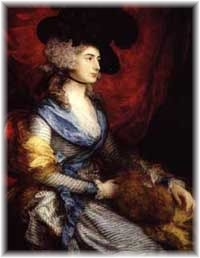
Sarah was dealt with in a different way. Initially sent away to work as a lady’s maid because she began a relationship with William Siddons, (one of the members of her father’s troupe), she was soon forgiven by her parents, who gave their blessing for her to marry William. Sarah was then allowed to continue her acting career. She was so outstanding that she was noticed by David Garrick, actor, playwright, theatre manager and producer, who took her to London to appear on the stage at Drury Lane, although her first role at Drury lane wasn’t a total success.
Rejected and isolated Ann became increasingly depressed and suicidal, actually attempting suicide in Westminster Abbey. She lurched from one catastrophe to another. After her failed marriage she attempted to earn her own money by working for a Dr James Graham, a sex therapist, who ran a business called the Temple of Health and Hymen,in Pall Mall.Her family was enraged to discover he advertised the lectures Ann gave as “given by Mrs Curtis, Mrs Siddons’ younger sister”.
In 1783, Ann produced her first volume of poems, (Poems on Miscellaneous Subjects). Again she gained her family’s wrath; she published the collection under the name of “Ann Curtis, sister of Mrs Siddons”.
The Kemble family was determined to disassociate themselves from Ann, so Sarah, joined with one of their brothers, granted Ann a yearly allowance, but only with a condition that Ann lived at least a hundred and fifty miles away from London.
The annual payment meant that Ann’s reputation and station in society became more acceptable, and in 1792 she married William Hatton.
They emigrated to America, and it was here that she wrote her opera libretto Tammany (otherwise known as The Indian Chief), which was given its première on Broadway. This was the first known libretto written by a woman.
Following the triumph of her libretto, Ann and William returned to Britain, and by 1799, had settled in Swansea in South Wales, where they ran a bathing-house and lodgings near the coast until William’s death in 1806. She then moved to Kidwelly.One of her poems, Swansea Bay, describes her emotions as she left Swansea. Eventually, she returned to Swansea in 1809 where she settled down to write her poetry and Romantic novels. These encapsulated themes of social and moral parody,(sometimes with gothic leitmotifs). She used the pseudonyms of “Ann of Swansea” and Ann of Kidwelly.
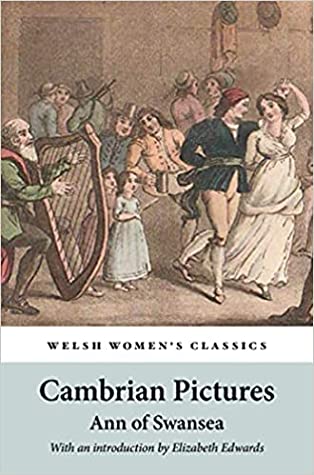
Many of her books were set in Wales; Cambrian Pictures, published by my publishers, Honno, is one of them.
Sarah and her husband William, took up the life of a travelling thespian, playing many parts all over the country. She cleverly chose roles that made her more popular, that protected her image and preserved her reputation as a wife and mother of five children, as well as an actress. This helped her to avoid any rumourmongering and scandal that usually plagued actresses at the time. She ultimately became Britain’s most renowned and highly paid actress in the 1780s, much sought after by equally famous painters, such as Sir Joshua Reynolds, to sit to have her portrait painted. She even gave private readings for the king and queen at Windsor Castle and Buckingham House. Reputed to have a striking stage presence she became most famous for her role as Lady Macbeth; a role she was reported as played to perfection, and she was also called the Queen of Tragedy.
But, after thirty years the marriage between Sarah and William became strained and they separated.
She retired from the stage in June of 1812, playing Lady Macbeth in Macbeth. So enthralled by her performance were the audience that they continued clapping when she finally left the stage and the play ended there.
She died in 1831 and was buried in St. Mary’s, Paddington. Her funeral was attended by thousands, and a statue of her was later created by Francis Legatt Chantrey and erected in Westminster Abbey (ironically, as I said, earlier, the place where her sister, Ann attempted suicide after her first marriage to the bigamist, Curtis, and when she was both ostracized by her family, and desperately poor). .
Ann died and was buried in 1838 in a churchyard in High Street, Swansea. She left most of her belongings to her servant Mary Johns, executor of her will, as a “very small remuneration for her affectionate, honest and undeviating conduct” for almost 16 years.
At no time in my research for this post, did I discover that the two sisters ever met again.
It occurred to me that, sometimes, it is only through fate and coincidence that estranged families are forced into contact. And so it is for the two sisters, Angie and Mandy (later known as Lisa) in my next book, Sisters.Due to be published by Honno on the 26th January 2023, I’m thrilled that it’s now available to be pre-booked.
There are places that remain in our memories, the details may become slightly blurred, nostalgia may colour our thoughts, but they don’t fade. And how those places made us feel at the time is the one thing that remains.
This is a round-up of the Places in our Memories posted over the last few weeks. There have been some wonderful memories shared by writers from all over the world who have joined in the series so far:
Thorne Moore tells us about her first real grasp of history. “The past was just under my feet and nothing was permanent after all…”
Robbie Cheadle tells us about her life as a child and how she’d lived in twenty-one houses and attended fourteen schools, before the age of twelve. And of her love for her sisters…
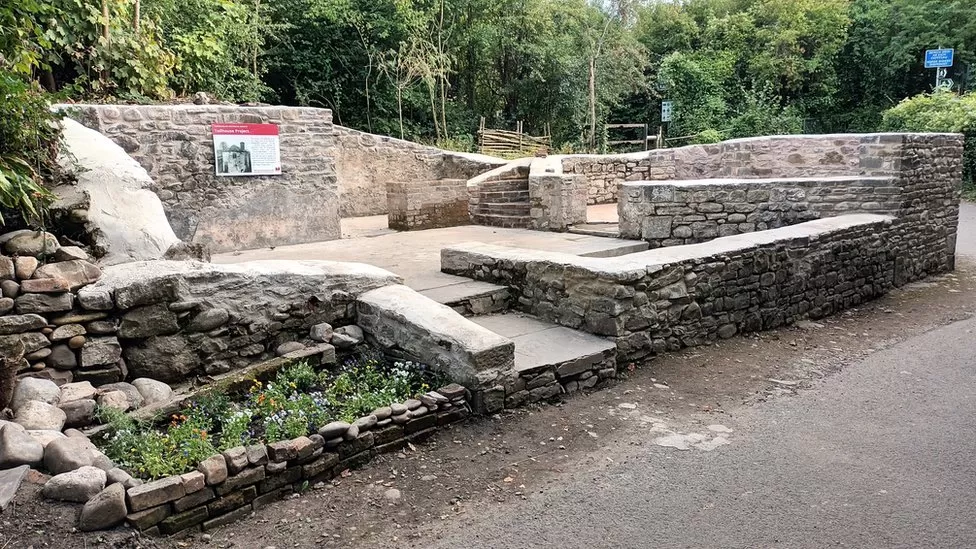
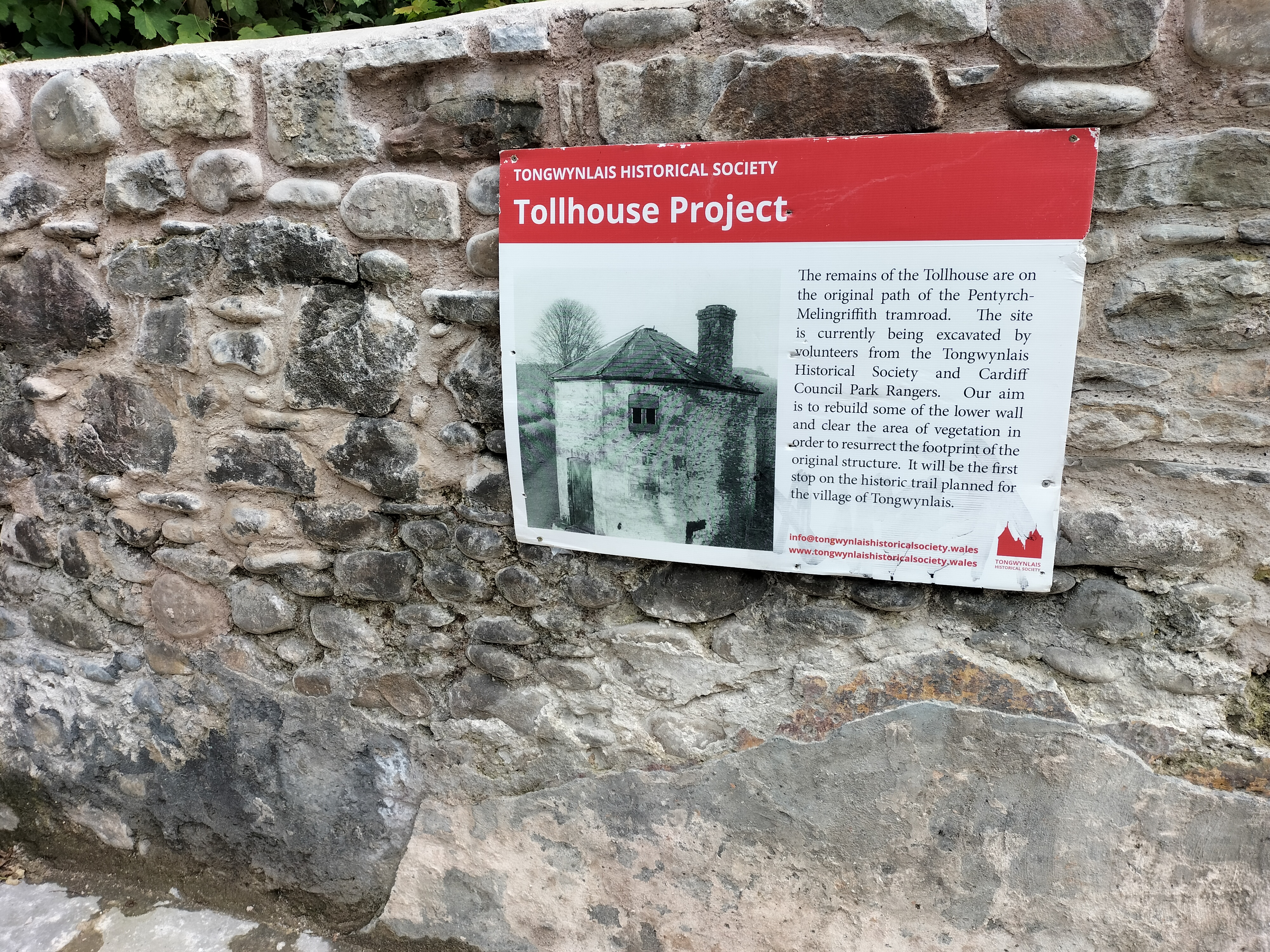
“Villagers have restored the shell of a historic “unloved eyesore” tollhouse demolished more than 70 years ago.The original building was among hundreds used to collect money from 18th and 19th century travellers. Volunteers in Tongwynlais, on the edge of Cardiff, have spent more than a year rebuilding it as the first step towards creating a local history trail.“Our volunteers have been fantastic,” said Sarah Barnes, of the Tongwynlais Historical Society.
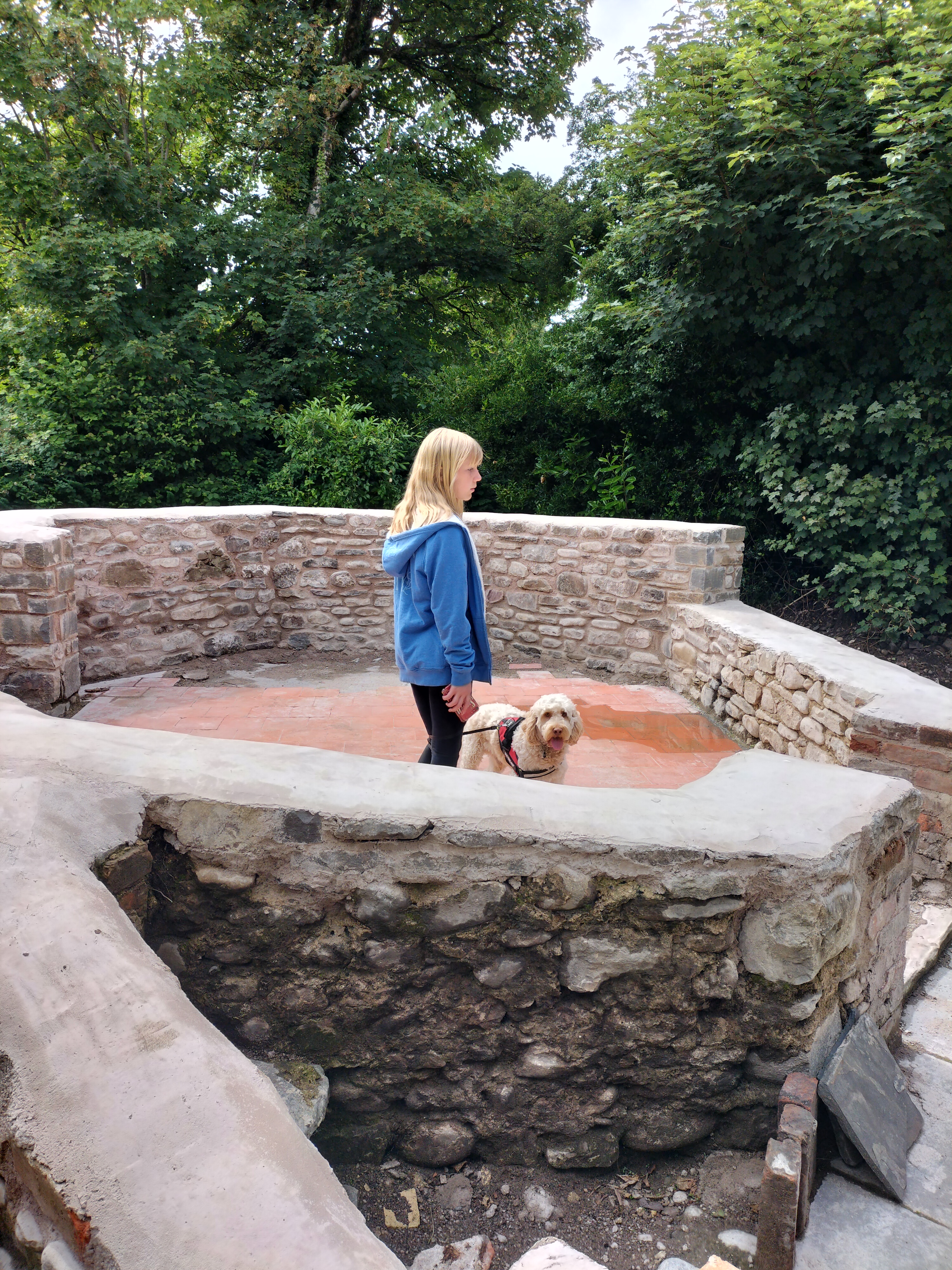
Before this wonderful restoration granddaughter and I walked the Taff Trail – so thought you might like to see the before and after. Or, in the case of this blog, the “after and before”.
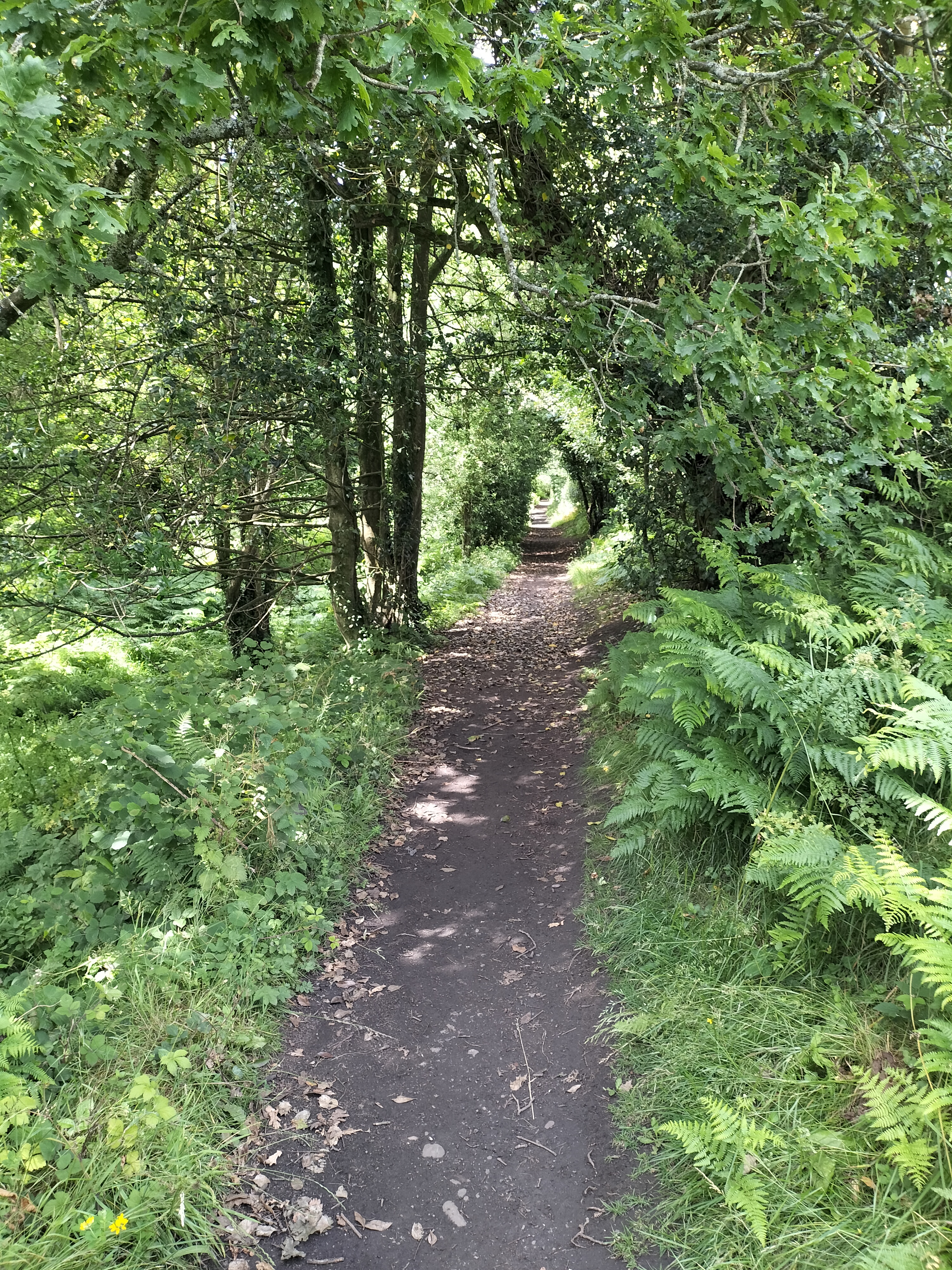
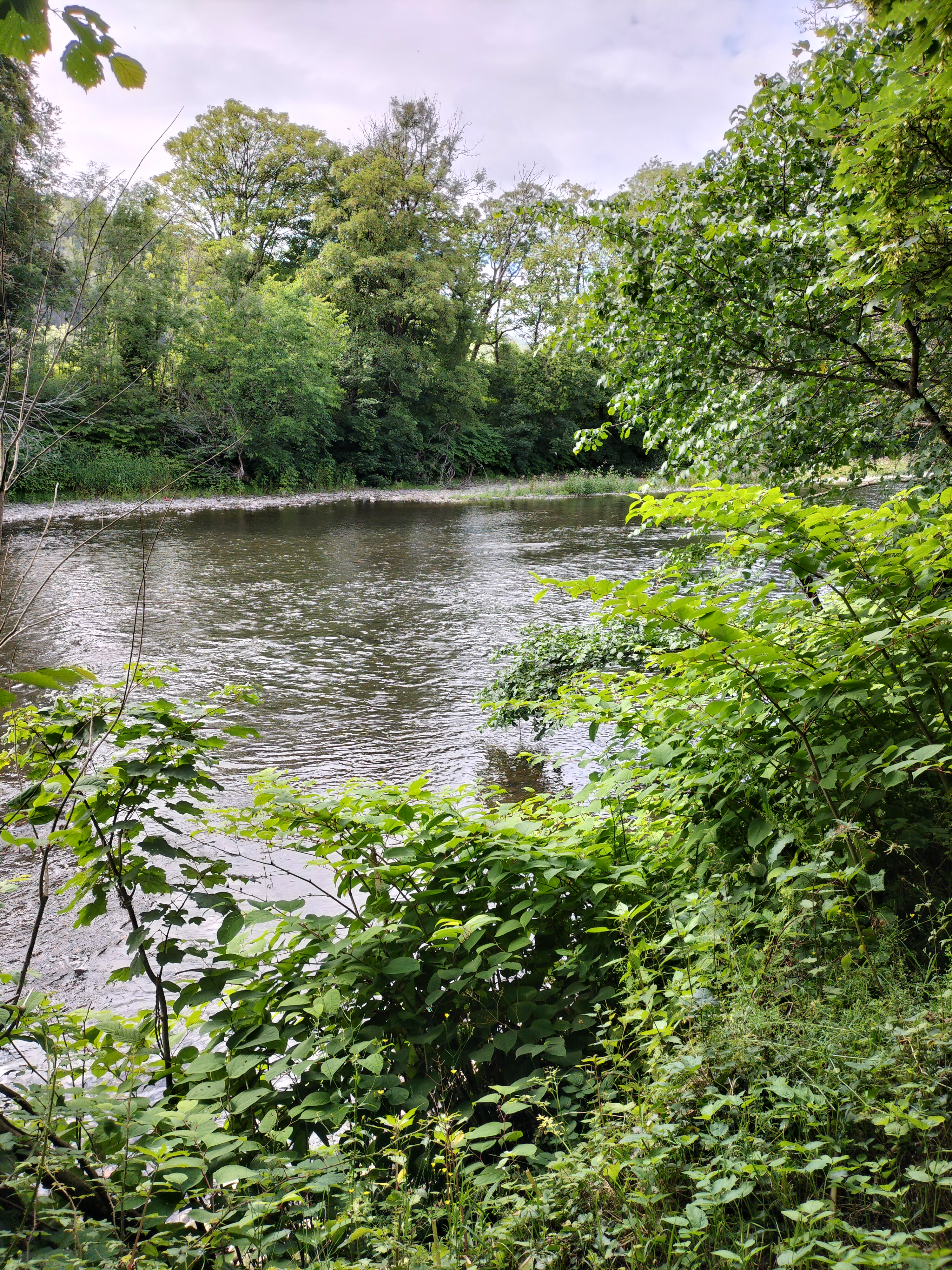
Put a lovely sunny day, with a dog desperate to go a walk, with a granddaughter who needs to be dragged from her mobile and bribed by the thought of a chocolate brownie and a drink of Sprite, and there was only one place to head for, the cafe in the garden centre at the end of the Taff Trail in Radyr.
The Radyr section of this lovely river walk is one we’ve done often
But this time we decided to meander along various smaller paths, even though we needed to retrace our steps numerous times. I was so glad we did because look what we found:
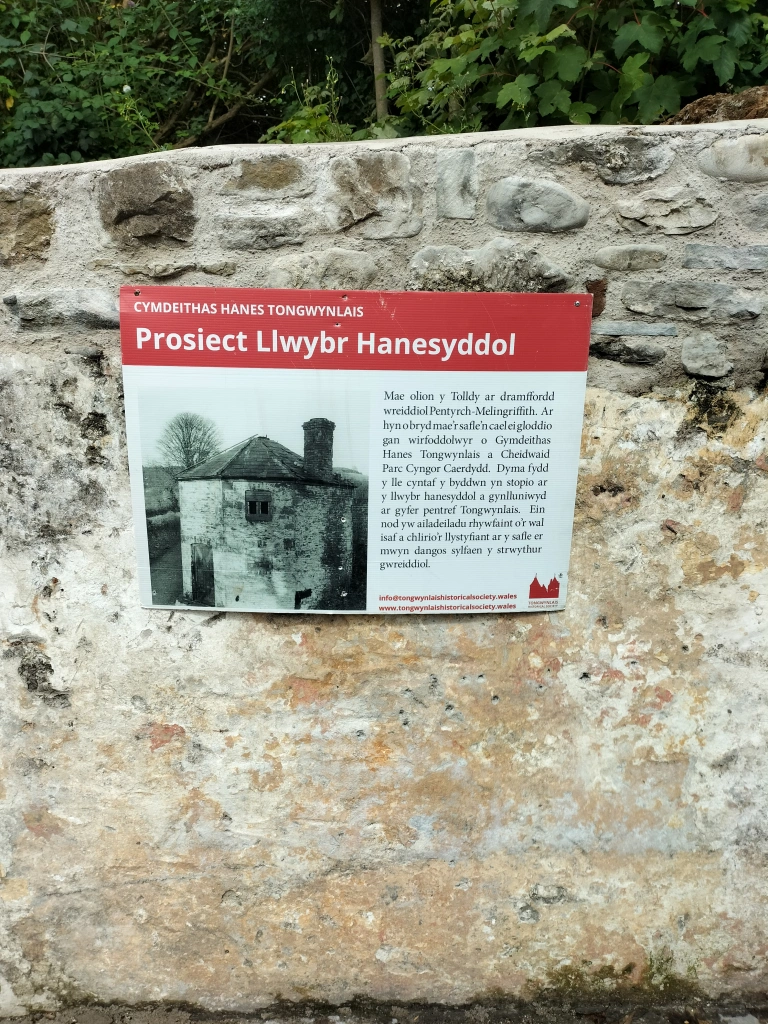
The tollhouse, once used by the Pentyrch and Melingriffith Iron and Tinplate Works in the late 1800s
Thanks to the Tongwynlais Historical Society ( co-founders,Sarah Barnes and Rob Wiseman) the Tollhouse returns to life. What was once nothing more than a few visible bricks covered in 70 years of vegetation, is now a recognisable shell complete with growing wildflower garden.
I thought I’d better seek permission to add some of the photographs from the Tongwynlais Historical Society. I made contact with a very helpful chap, Jack Davies, whose fascinating website also contains an article about the Tollhouse and other history of the village: https://tongwynlais.com/history/
Granddaughter, Seren, with soulful companion, Benji, who patiently waited to continue his walk.
Seren also very kindly leant a hand to point out this lovely heart shaped stone, with a wonderful inscription:
Which immediately brought to mind (well, my mind anyway), my book, The Heart Stone, which was published by Honno, in 2021: So, never one to pass up on an opportunity…
The inspiration for The Heart Stone partly came from research for my degree on The First World War some years ago; a subject that both fascinates and repulses me. At the time I’d found my grandfather’s army records and discovered he’d volunteered to join the local Pals Battalion with two of his friends, although they were all underage.
I only ever remember him as a small man who spent his days in a single bed under the window in the parlour, who coughed a lot, and was very grumpy. He died when I was eight.
There was no conscription at the beginning of the war. The Pals Battalions were formed, to answer Lord Kitchener’s call for volunteers, by encouraging local magistrates to drum up community spirit and patriotic fervour.
The gist of the speeches used were that young men,”… should form a battalion of pals, a battalion in which friends will fight shoulder to shoulder for the honour of Britain and the credit of their town and villages.”
My grandfather was gassed in 1916 near the Somme. He was also shell-shocked and was unemployed for the rest of his life. Once, my mother told me he had never spoken of his experience but had suffered nightmares for as long as she could remember. And that there were whole streets around the house where they’d lived where the men had never returned.
It’s a haunting image.
Four years ago, after my mother passed away and we were clearing her home, I found my grandfather’s army papers again.
During the following week, whilst my husband and I were walking along the Pembrokeshire coastal path, we found a smooth stone, almost heart shaped, placed on top of a cairn amongst the Marram grass. Picking up the stone to examine it, a folded paper blew from underneath. There had been words on it but were, by then, indecipherable.
A love note, I thought; a love note under a heart shaped stone.
A love note, under a heart shaped stone, from a young man who had never returned.
And so The Heart Stone started to form.
The Heart Stone was published byHonno Pressin Feb 2021
I’m,originally from Saddleworth, a group of villages on the edge of the Pennines, but have lived in Pembrokeshire, Wales, for over forty years.
I have an MA in Creative Writing with the University of Wales Trinity St David’s College, Carmarthen. BA (Hons) in Literature with the Open University, a Diploma in Drama from Swansea University. I’m also is a Creative Writing tutor and hold workshops on all genres.
Llys y Garn is a rambling Victorian-Gothic mansion with vestiges of older glories.
It lies in the isolated parish of Rhyd y Groes in North Pembrokeshire. It is the house of the parish, even in its decline, deeply conscious of its importance, its pedigree and its permanence. It stubbornly remains though the lives of former inhabitants have long since passed away. Only the rooks are left to bear witness to the often desperate march of history.
Throne Moore’s Long Shadows: Tales of Llys y Garn comprises a trio of historical novellas that let us into secrets known only to these melancholy birds.
The Good Servant is the story of Nelly Skeel, loveless housekeeper at Llys y Garn at the end of the 19th century, whose only focus of affection is her master’s despised nephew. But for Cyril Lawson she will do anything, whatever the cost.
The Witch tells of Elizabeth Powell, born as Charles II is restored to the English throne, in a world of changing political allegiances, where religious bigotry and superstition linger on. Her love is not for her family, her duty, her God or her future husband, but for the house where she was born. For that she would sell her soul.
The Dragon Slayer tells of Angharad ferch Owain in the early decades of the 14th century. Angharad is an expendable asset in her father’s machinations to recover old rights and narrow claims, but she dreams of bigger things and a world without the roaring of men. A world that might spare her from the seemingly inevitable fate of all women.
In these three tales the rooks of Llys y Garn have watched centuries of human tribulation – but just how much has really changed? If you enjoyed the kaleidoscopic sweep of David Mitchell’s Cloud Atlas you will appreciate Long Shadows.
My Review:
I have long been an admirer of Thorne Moore’s work and have not been disappointed with these three novellas in Long Shadows: Tales of Llys y Garn
Thefirst, The Good Servant is told from the point of view of the housekeeper, Nelly Skeel; the protagonist, living at the end of the nineteenth century. Well rounded and well portrayed in her actions, there is a vulnerability about this character; as the reader I found myself both can empathising and sympathising with her and yet being exasperated. Yet should I? She is of her time and of a certain status in her world.
And, so, on to The Witch. This story, set in the seventeenth century, takes the reader through the early years of Elizabeth Powell to her adult life. Told mainly from the protagonist’s point of view with the occasional insight to one or two of the other characters from a third person narrator, the emphasis is on the restrictions of the religion at that time. and the class struggles; land versus money. I liked Elizabeth, which is something I cannot say about Anthony, her brother. Always there is hope that all will be well but there is an all encompassing darkness to her story…
The Dragon Slayer is the story of Angharad ferch Owain, living during the fourteenth century. Also told from the protagonist’s point of view we read of her fear of her father, of her future. This protagonist I liked the most. The ending is satisfying. I don’t know why I was surprised, but I was. As with the first two novellas, this tale is dark with themes of the women being mere chattels to be bargained with, used for the progression in society of their families.
I enjoyed the way the women were portrayed as having a strength and internal rebellion. But yet there was always the conflicts of status and money, of land and possessions, of greed and thwarted love. Of patriarchy.
In all three novellas, both the internal and spoken dialogue the author has the tone and subtle dialect that I imagine Rhyd y Groes in North Pembrokeshire to have been in those eras.
And, in all, the descriptions of the buildings, of Llys y Garn and of the ever-changing Welsh countryside are evocative and easily imagined.
Just a comment about the style of the book:
The intriguing Prelude, giving the history of the “rambling Victorian-Gothic mansion” that is Llys y Garn, is fascinating. And I loved the short explanations of the after-years of novella. And then we have the Interludes; told in a conversational tone these are filled both with historical details and those pertinent to the story,. Finally, the Epilogue, giving the continuing, ever-evolving history of Llys y Garn through the following centuries.
It is apparent that the author has researched thoroughly for each of these stories; the themes of Welsh legends, myths, superstitions and tales are woven throughout the history of the decades.
Watch out for the ravens
This is a collection of novellas I can thoroughly recommend to any reader, especially those who enjoys historical literature.
Thorne was born in Luton and graduated from Aberystwyth University (history) and from the Open University (Law). She set up a restaurant with her sister but now spends her time writing and making miniature furniture for collectors. She lives in Pembrokeshire, which forms a background for much of her writing, as does Luton. She writes psychological mysteries, or “domestic noir,” and her first novel, A Time For Silence, was published by Honno in 2012. Motherlove and The Unravelling followed, also published by Honno. She has also brought out a book of short stories, Moments of Consequence. Her last novel, Shadows, was published by Endeavour in 2017. She’s a member of the Crime Writers Association.
Praise for Thorne Moore and her novels:
“Thorne Moore is a huge talent. Her writing is intensely unsettling and memorable” – SALLY SPEDDING, AUTHOR
“Totally had me hooked from page one… Highly recommended if you love a good psychological thriller” – BROOK COTTAGE BOOKS
“I devoured this book. Beautifully written, frighteningly real” – CHILL WITH A BOOK
“A compelling blend of mystery and family drama with a gothic twist… The author’s ability to create an atmosphere is exceptional” – JUDITH BARROW, AUTHOR
“Beautifully told, this really did have me captivated” – CLEOPATRA LOVES BOOKS
“Moore has created a figure who reaches out across the decades and grabs our sympathy… Her character transforms the novel” – BOOKERTALK
This is the story of a young woman’s first encounters with rural South Africa. Coming from the all-mod-cons society of Britain at the beginning of the 1980’s, the author is literally transplanted to a farm in the foothills of the Drakensberg mountains in what is now Kwazulu Natal.
Once there, she finds her feet in the ways of Africa with the help of a charming, elderly Dutch couple, an appealing but wily African farm hand, his practical and motherly daughter and a wise and fascinating neighbour who has a fund of local knowledge.
These are tales of a different kind of life, which include living without electricity, hand-milking cows, drought, veld fires and mad-cap adventures into the unknown.
They are stories told with deep affection and respect, and above all a liberal dose of tongue-in-cheek humour.
My Review: I gave African Ways 5*out of 5*
Valerie Poore’s African Ways is a brilliant memoir that draws the reader in from the first page.
It is obvious from the beginning how much this author opens herself to people, places…and adventures that most of us would back away from.
I was enthralled throughout by her wonderful descriptions of the land where she made her home with her husband and two young children for three years in the 1980s ( a farm in Natal, South Africa). The love she has for the country and for the neighbours and friends that surrounded her (some with such fabulous names!) shines through in her writing.
Despite everything: the droughts the families endured, the fires ( I was riveted by her portrayal of the unbelievably brave way she, her husband and friends battled against one fire and then, though exhausted, continued their BBQ), the venomous snakes, the swarm of bees that invaded her home and the lack of electricity, it is obvious she embraced the whole experience.
And, threaded throughout the author reveals her superb sense of humour; there are some great ‘laugh out loud’ stories and even some chuckles, despite the dangers, recollections.
African Ways is a memoir I can thoroughly recommend. In fact I would say, you should…really you should…read this book.
Val Poore was born in London, England, and grew up in both north London and the west of Dorset. After completing her degree in English, History and French at Bournemouth, she took a further course in the conservation and restoration of museum artefacts at Lincoln College of Art which qualified her for nothing at all really. She then spent two years doing furniture restoration before going to South Africa in 1981 with her husband and small children.
Valerie left South Africa permanently in 2001 and has settled in the Netherlands, where she shares her time between a liveaboard barge in Rotterdam and a cottage in Zeeland. She teaches academic and business English on a freelance basis and still writes in her spare time, although she admits there’s not enough of that at the moment. In fact, she has been writing since childhood and wrote stories, articles and radio plays for years before embarking on her first book in 2005. Val loves travelling especially when it involves roughing it a bit. She feels that she has better adventures and more interesting experiences that way.
She has written six books altogether: the Skipper’s Child (teen/kidult fiction), How to Breed Sheep, Geese and English Eccentrics (sort of grown-up, humorous fiction), Watery Ways and Harbour Ways (memoirs of her first years of living on a barge in Holland), Walloon Ways (three years as a weekend Belgian) and African Ways (a memoir her life on a farm in South Africa). Her seventh book (another novel) is in progress but is taking rather longer than she had hoped. This is simply due to real life getting in the way.
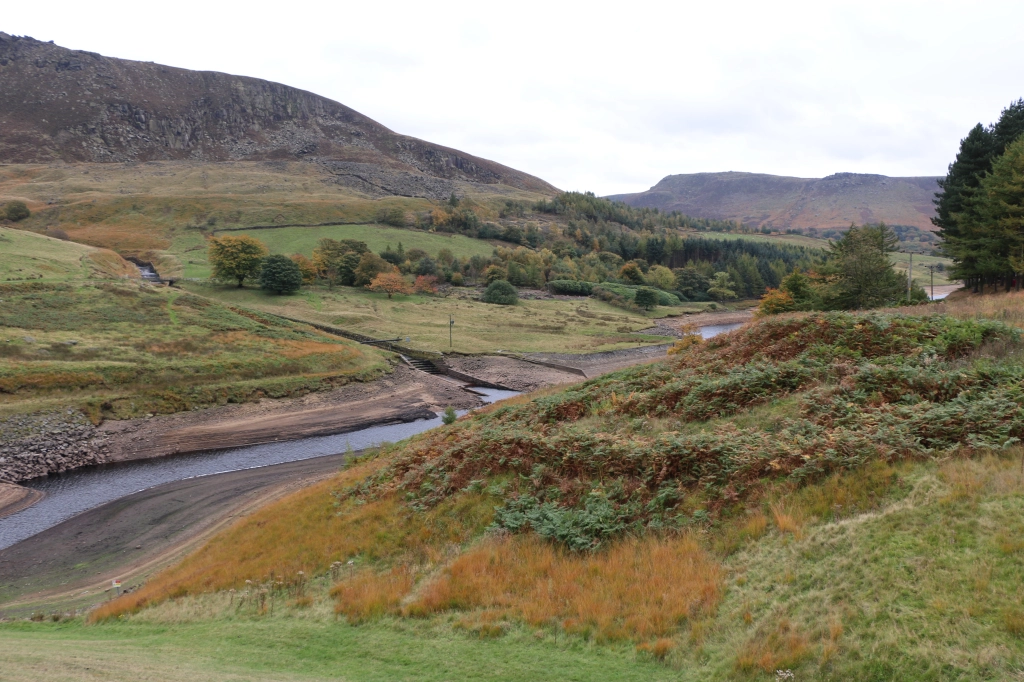
This is the view I saw from the window of my bedroom in the house I lived in as a child until the day I married. The war memorial, an Obelisk, on Alderman’s Hill is called Pots and Pans. No one seems to know why. When I was eleven I had a dog (a Heinz Fifty-Seven variety; a cross between a corgi and a terrier, who probably these days would be called a Torgi) named Rusty. She and I could climb and run back down the hill in twenty minutes. Nowadays I think it would take me an hour just to get to the top. I’m not even going to try.
The house itself doesn’t change. Each tread of the stairs has its own noise; a soft whisper, a sigh of relief underfoot, a crack of protest. Each door sounds my progress through the house; the bedroom door protests its opening on the ill-fitted carpet, the bathroom door shushes closed. Downstairs the living room door opens quietly, then creaks as it’s forced against the many painted-over the hinges and frame. Finally there’s the heavy sigh of kitchen door, as though opening onto another day’s toil.
It’s my mother’s house. Once I lived here too. Now I visit.
.
It’s six o’clock in the morning.With laptop and cup of tea I settle down to write. I must have done this hundreds of times before. I wait to hear the thud of her feet as she stomps across the bedroom, the sound of her peeing in the bathroom, the yank on the chain of the flush of the old-fashioned cistern. I hold my breath, force back the slight irritation, hope she gets back into bed. But the mumblings get louder. I hear her tap on my bedroom door: ‘Judith?’ followed by the feigned echo of surprise; ‘you’re up already?’ as she takes the first two steps onto the landing.
In the past I bit back the exasperation. She knew I wrote at this time. I always have; it’s my time. We had a day of shared memories to get through. Again. Of laughing at the old black and white photographs; the different and often outrageous hairstyles and perms, her hats and frilly blouses, my flower-power flared jeans and mini skirts. Hours of mindless TV; Jeremy Kyle, This Morning, Doctors. Lunchtimes; chomping mournfully through thinly buttered Ryvita on diet days – joyfully savouring meat and potato pies and custard slices on ‘who gives a damn’ days. Then the comfort of the afternoon nap and the quiet hour of companionable reading.
I wait to hear the thud of her feet as she stomps across the bedroom floor.
It doesn’t happen.
Some weeks ago, a quick phone call, a frantic journey brought us to to this part of the country, to the hospital, to the ward, to the bed she sat up … cheerfully waving as we walk towards her. ‘Hello love,’ she shouted, ‘ well, here’s another fine pickle I’ve got myself into.’ She seemed perfectly clear, lucid for a few minutes. Then she called me Olive, her sister who’d died some years ago, mixing up past and present; confused. I held her hand, traced the veins under the thin, wrinkled skin, touched the deformed nail on her right hand little finger that once was trapped in the machinery of her winding frame in a cotton mill and never properly grew back..
And I knew there were hard family decisions to be made.
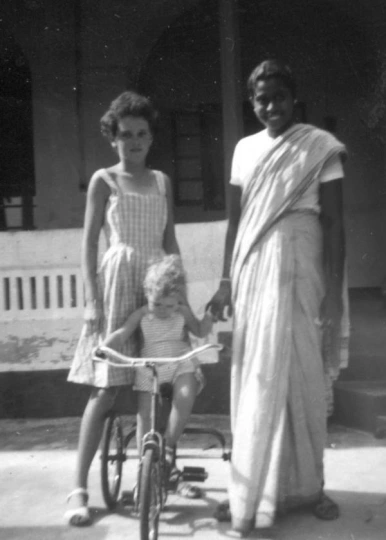
Mum at a family wedding ten years ago.
Yesterday Mum went into residential care. At ninety three she’d lived in this house for sixty-one years.
Today will be the last time I write here; it felt as though it was a ritual I needed to go through. This is what I wrote.



















 Once I lived here too. Now I visit.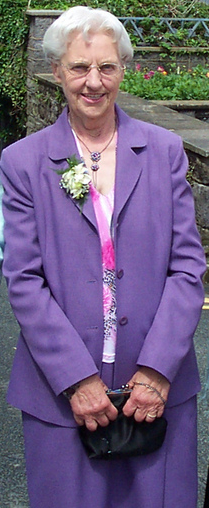
 Judith Barrow