You’ll definitely need a constitution for the official book fair bank account and if you’ll be looking for grants, sponsorship etc.
Get started early; you’ll need plenty of planning time. Work out the best time of year for your area by looking around, seeing what else is on at certain times. Is there any event happening on the date you’d like that might help or hinder footfall to your book fair? Is there a festival you could link up with? Or a similar event to yours which would take away your potential public? If the latter, don’t be inflexible, change your date.
Book your venue. You want somewhere that people will pass and enter easily. (Check for disability access and facilities). And check that there is somewhere outside of the building that you can hang a banner advertising the book fair on the day – or, at the least, somewhere that you can stand A boards outside without causing any obstruction
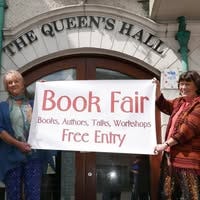
Thorne Moore and I on the morning of our last book fair and hoping this banner will attract enough attention for our last book fair at the. It did – well, alongside the rest of the publicity we’d put out there over the previous few months, it did.
If you intend to ask your authors to give talks, hold creative writing workshops, hold panels on various aspects of writing or genres, or invite publishers to put on an appearance for talks or editor sessions (always a good move and the authors will thank you!), make sure there are enough rooms. Most importantly, make sure the actual room/hall you’ll be holding the book fair in is large enough. You’ll need a fairly spacious area because you’ll be inviting lots of authors to participate… won’t you!?
Also check for the number of tables and chairs the venue has. And make sure you can get your hands on more tables if necessary. You don’t want to have more authors than tables
Find out if the venue has public liability insurance. If not you have two choices, stump up for it yourself (in which case you could be paying out a fortune) or ask the individual authors to take out their own – much the better option and a lot of writers have their own insurance anyway.
Lists, lists and more lists! Try to include as much detail as possible and when things need to be started or completed by. You won’t always hit the targets but you’ll know when they go whizzing by (a bit like that deadline you’ve set for yourself with your WIP). Know which of you is responsible for each task. But don’t forget to ask for or offer help from one another… you are a team working to one goal.
And that’s it! This is what worked for us. And, for anyone brave enough to organise a book fair – good luck.
Oh, and don’t forget – you’re entitled to a little of the publicity for yourself.
Many years ago I was asked by a local online television company, Showboat TV to interview for a programme called BookSmart. In slight trepidation I agreed; I had no experience in interviewing anyone. But as an author and a creative writing tutor they obviously thought I would be able to talk to other writers about their books and the way they wrote.
I remember I had just the first two books of the Haworth trilogy published then …
But ShowBoat TV had faith in me, and it’s been interesting – and fun. I’ve met many people, authors who live in Wales and authors from all over the world. At first it was filmed and shown through the internet; these days, when I interview, we work through Zoom. Which is what I did when interviewing Debbie Campbell last year, and lately Suzi Quatro. Need I say these were the highlights of my volunteering – and Showboat TV are promising more of this ilk for their viewers.
Viewers, whose numbers, may I say, have risen steadily over the years,because the company provides such a variety of programs. Besides BookSmart, there are interviews with musicians and performances of dramas produced by small companies. All accessible from the homepage, which contains all of the seven free series, with one episode following one each day.
But not only does the company cover all this, but they also travel around filming events, and, in the past, they filmed and were sponsors for the September annual book fairs that I helped to organise, initially with friends and fellow authors, Thorne Moore and Alex Martin – then in later years, when Alex moved away, just with Thorne.
It was hard work – and it began in the January of each year.
When embarking on this, the first thing you do is start with the obvious; find someone like-minded to help you with the organising of the whole affair. More importantly, someone who you know well enough to recognise you’ll be able to work together without egos getting in the way. (And, yes, I’m speaking from experience; enough said!) And someone with a sense of humour. Believe me, if you’re determined to hold a book fair, you’ll need one.
So, to the practicalities – but maybe that’s better left for next time…
Winner of ‘Best Short Story Collection’ in the 2014 eFestival of Words, “Nine Lives” comprises nine short dramas in the vein of Terry Tyler’s well-loved novels, some funny, some sad, with her usual unpredictable twists. The first chapter of full-length novel and tale of sibling rivalry, WHAT IT TAKES, is to be found at the end.
The stories:
Angel – The perfect wife of the perfect husband is tempted by the fruit of another. Shut Up And Dance – Paul says he will love Laura whatever size she is. But will he? Mia – The threat of ‘the other woman’… Kiss Your Past Goodbye – Zoe finds out what happened to her first love, who broke her heart. We All Fall Down – Two old friends meet for a drink – just a swift one, of course! Bright Light Fright – A tale of vengeance, a burglary, and a nasty shock. Mama Kin – Emma and Melanie have very different approaches to childcare – oh dear! Don’t Get Mad – Get Even – Kevin and Marcus have been best friends
My Review:
At the moment I’m finding it difficult to concentrate on reading ( well on anything actually). But, having been a fan of Terry Tyler’s writing for a long time I was pleased to come across this collection of short stories. Not a clue why I haven’t found it before!
The one thing (well, not only the one thing – I could expound on this for ages) that I love about this author’s work is her ability to get inside each character’s head, whoever they are, whether a protagonist or the antagonist … or even a minor character. She brings them alive instantly – and draws the reader into the story.
Each of these stories are short, but they pack a punch and made me think. There is always something beyond the words, the characters, the plot. I think it’s life – and the general affliction of humanity; whether it’s pride, or greed, or revenge- or whatever else that lies beneath the facade of what is called ‘real life’.
They may be short, they may be easy reads on the surface – but they dig dip and I loved them.
And the book was the winner of ‘Best Short Story Collection’ in the 2014 Festival of Words, which says everything.
We’ve just returned from a wonderful couple of weeks on Arran. The photographer sourced the walks for us. Today he promises a short outing because it’s rather warm; “maybe a couple of hours allowing for stops… for Dusk, our borrowed border collie, of course”. (Oh, not for photographs then?).
We are going to one of the most famous waterfalls on Arran, Glenashdale Falls, and then on to see the Giants’ Graves.
We follow the directions from a rather old book of walks, which immediately adds a couple of miles on by sending us along a wide rather rough road, instead of going to the end of Whiting Bay and turning onto the forestry track.
Though I have to admit we passed some peaceful scenic views.
We were unable to follow the path through the forest to the Iron Fort due to the damage and fallen trees, caused by the latest storm on the island. So we continued along the wide track for another mile.
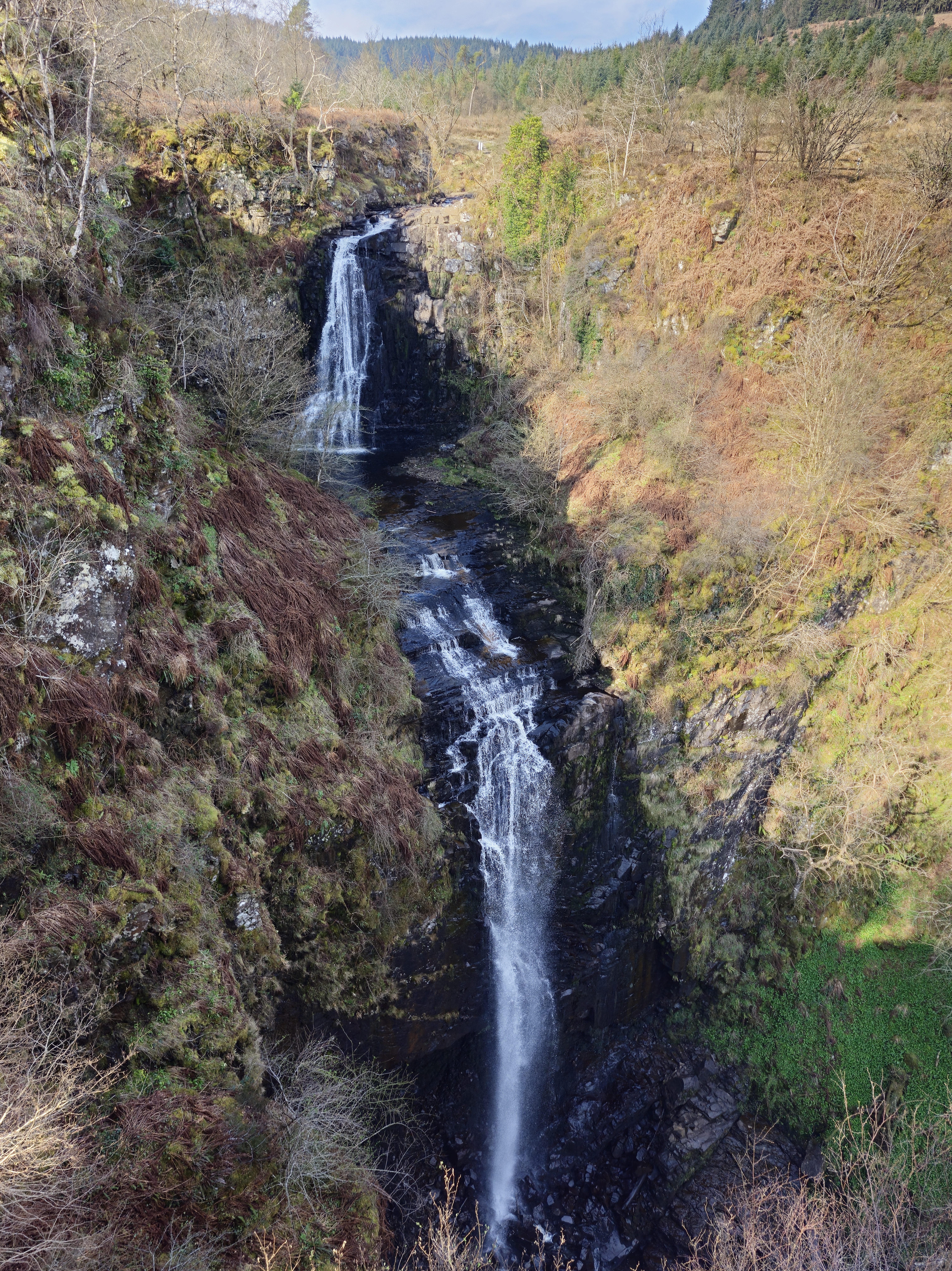
We reached Glenashdale Falls, also known as Eas a’ Chrannaig, one of a series of falls on the Glenashdale Burn, which flows from moorland near the summit of Tighvein eastwards towards Whiting Bay.
The viewing platform – not for anyone scared of heights
Not sure why I was encouraged to go along the viewing platform first. Thinking about it, my walking companions may have thought I was heavier than the two of them put together…
The sound of the rushing water competes with the breeze rustling through the trees around us. It’s a magnificent, awe inspiring place.
We retraced our steps from the waterfall and turned left, following a sign to the Giant’s Graves along the wide track … for another mile.
The Photographer trudges through tall grass to the edge of the cliff to take pictures. At one point he disappears completely. Dusk and I wait – patiently – he’s done this disappearing act many times in the past, just to get a good shot of somewhere.
When he returns we walk on, until a sign for a narrowpath informs us we’re almost at the site of the Giants’ Graves.
The Giants’ Graves are the remains of two Neolithic chambered tombs on the Isle of Arran in Scotland on a ridge one hundred and twenty metres above the sea and overlooking Whiting Bay to the south. Mostly ruined, with turf covering part of the remains, they still have an air of mystery standing proud in a clearing in the forest. The North cairn, excavated in 1902, has a chamber that is six metres long, and is around one metre wide. Among the artifacts recovered were pottery shards, flint knives, and leaf-shaped arrowheads. The South Giant’s Grave has a chamber about four metres long, and over one metre wide. The initial excavations in 1902 only revealed soil and stones, but in 1961/2 more exploration produced nine shards of a round-based vessel, and fragments of burnt bone.
Legend has it that the giant referred to is Fionn mac Cumhaill, an early Irish war-leader, and his followers, known as the Fianna. Between the 10th and 14th centuries, his legend became widely known in Scotland. According to legend, Fionn and the Fianna had superhuman strength and size, being as much as 500 times larger than a man.
It’s getting late; we need to get back to Whiting Bay.
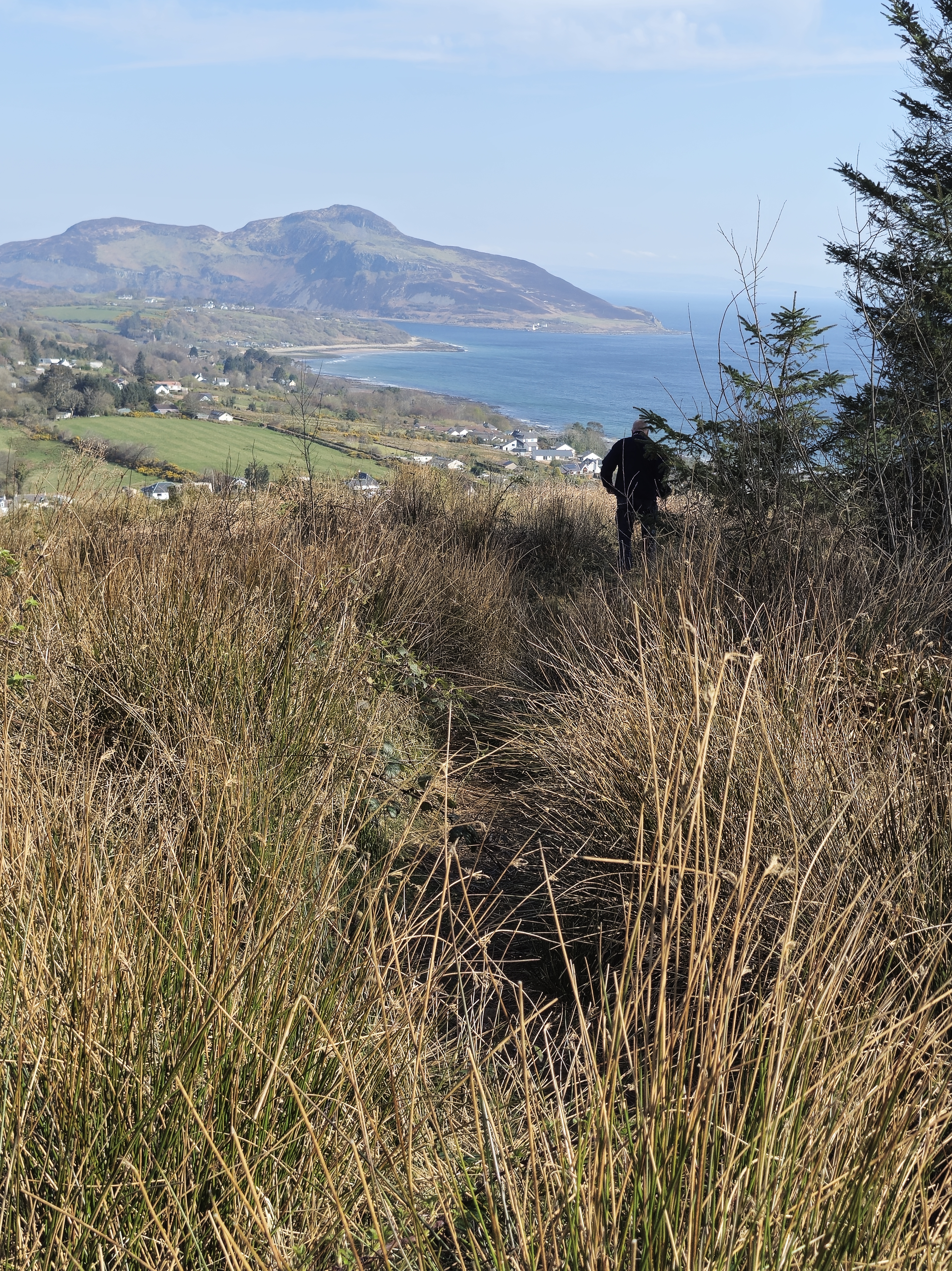
Beyond the graves the narrow path winds its way steeply down. And one of the rare times the Photographer catches me unawares for a photograph … from behind!
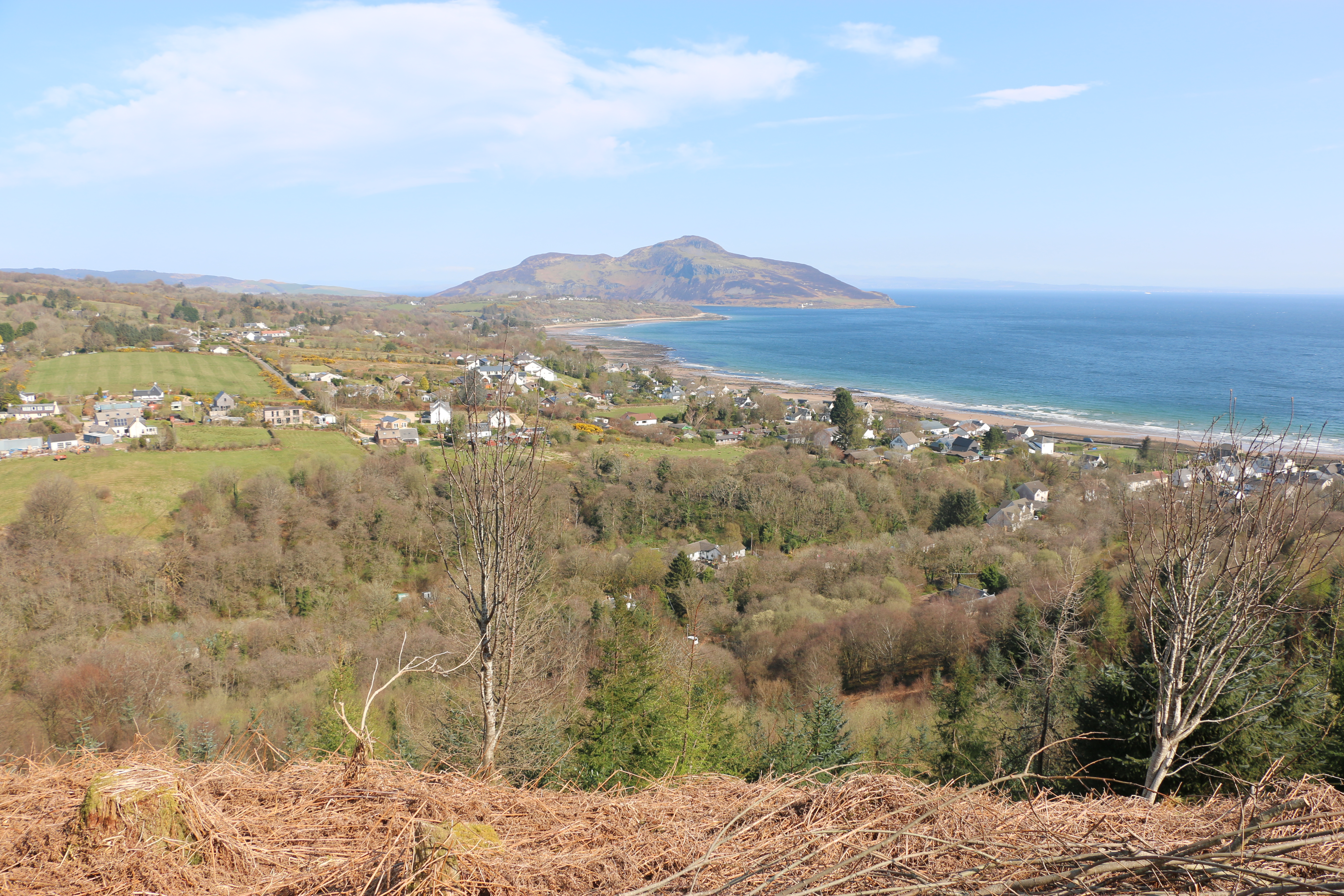
One last photo – Whiting Bay, with Holy Island in the distance.
The walk took us just a little more than the two hours that the more up-to-date directions we later discovered, so the following day we had a rest (using Dusk as our excuse again!) before our next adventure – a coastal trek as far as Kingscross Point, stopping to photograph the ruins of a viking fort and the views of Holy Island, before continuing back to Whiting Bay.
The Holy Island or Holy Isle is an island in the Firth of Clyde, off the west coast of central Scotland, inside Lamlash Bay on the larger Isle of Arran. The island is around three kilometres long and around one kilometre wide. Its highest point is the hill Mullach Mòr. There will be more about the Holy Island in our next post of walking on Arran.
And now a little self indulgent promotion…
A gripping ‘cuckoo in the nest’ domestic thriller
After the death of their mum, twins Chloe and Charlie are shocked when their dad introduces Lynne as their ‘new mummy’. Lynne, a district nurse, is trusted in the community, but the twins can see her kind smile doesn’t meet her eyes. In the months that follow they suffer the torment Lynne brings to their house as she stops at nothing in her need to be in control.
Betrayed, separated and alone, the twins struggle to build new lives as adults, but will they find happiness or repeat past mistakes? Will they discover Lynne’s secret plans for their father? Will they find each other in time?
The Stranger in My House is a gripping ‘cuckoo in the nest’ domestic thriller, exploring how coercive control can tear a family apart. Set in Yorkshire and Cardiff, from the 60s to the winter of discontent, The Stranger in My House dramatises both the cruelty and the love families hide behind closed doors.
“Judith Barrow’s greatest strength is her understanding of her characters and the times in which they live.” Terry Tyler
Grateful for this reader’s review. One of the first for The Stranger in my House, when it was published in November 2024.
“The Stranger in my House is an urgently compelling story of abusive power, detailing the damage that happens when those with the power to protect vulnerable children choose to turn their eyes away. Judith Barrow takes us into the dark & haunted world of coercive control, masterfully turning her own power as a storyteller on to this troubling theme, exploring it with insight & sensitivity.
In Lynne, the author has created a monster. Her victims, twin children Chloe & Charlie & their hapless father, are each portrayed with Judith Barrow’s usual precision & humanity; the writing as always, is impeccable.
It is a troubling book, but ultimately, on some level, redemptive. And although I found the ending satisfying & honest, I was nevertheless left with a sense of sadness, not only for Chloe & Charlie, but because decades on from the events in this book we still exist in a world where the emotional needs of children are too often subsumed by those of selfish, self-serving, abusive adults. The Stranger in my House is a hugely important book & I highly recommend it.“
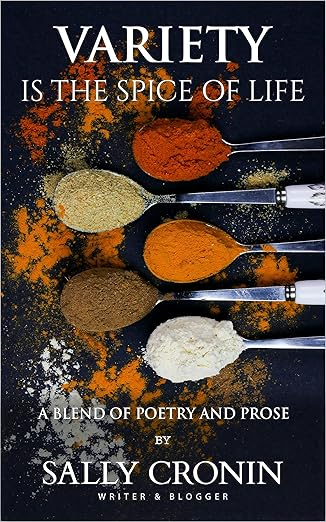
Variety is the Spice of Life is a collection of poetry and short stories about relationships with others, including pets and animals inhabiting the world around us. The connection with others brings love and friendship, excitement and sometimes surprises, danger, mystery and sometimes the unexpected.
The poetry explores human nature, the fears, desires, expectations and achievements. Nature offers a wonderful opportunity to observe animals both domesticated and wild. Even in a back garden you can observe a wide variety of creatures and the daily challenges to survive a harsh environment.
The short stories introduces you to a healer whose gift comes with danger, a neighbour determined to protect a friend, a woman on the run, an old couple whose love has endured, an elderly retired teacher who faces a life changing accident, a secret that has been carried for over 70 years and a village who must unite as they face devastating news.
My Review:
I read Sally Cronin’s Variety is the Spice of Lifequite a while ago, and recently when ‘tidying up’ my kindle I was surprised and somewhat dismayed to see I’d made notes on this lovely collection of poetry and prose that encompasses such a variety of themes – and not reviewed it.
So here I’m rectifying that.
The poetry at the start of the book is almost a study of the world around us. It’s an invitation to look once more at nature, however small and seemingly insignificant, and is portrayed through wonderfully insightful and sensitive words, so evocative that each piece evokes an image. I remember how, the first time I saw the poems, I read each of them out loud, relishing the sounds, the rhymes, the rhythms. And I would invite any reader to do the same – they come alive in that way, as does all good poetry. Sally has a way of capturing emotions and sensitively showing the uniqueness of the world around us – and the many layers in human nature.
The theme of the individuality, the variety of actions and reactions we are all capable of, is repeated over and over again in many subtle, and sometimes overt ways, throughout her prose. I was tempted to quote, to unpick each of the eight short stories, to describe the core, the main premise that runs through them. But, sticking to my decision not to reveal any spoilers in my reviews, I would just urge any potential reader to discover them for themselves. All reveal the writer’s natural gift for storytelling, of capturing the essence of characters and the world they inhabit. Some stories brought chuckles and a wry smile, others the feelings of sadness, of sharing fears and loss. And tears. Writing a short piece of prose is not an easy task; wrapping up a scene or a journey into a package that reveals a whole plot to the reader in so few words requires a special intuition on the part of the author. Sally Cronin shows she has a talent for such an understanding.
I can do no more, having given Variety is the Spice of Lifea second reading, than to stress how much I recommend this offering from Sally. You won’t be disappointed.
A last word on the cover – a brilliant spicy image of the promising within!!
About the author
Sally Cronin is the author of eighteen books including her memoir Size Matters: Especially when you weigh 330lb first published in 2001 which followed her weight loss of 150lbs and the programme she designed to achieve a healthy weight and regain her health. A programme she shared with her clients over her 26 year career as a nutritional therapist and on her blog. This has been followed by another seventeen books both fiction and non-fiction including multi-genre collections of short stories and poetry.
Her latest book Size Always Matters is an extended and updated version of her original book Size Matters and now includes the nutritional element to losing weight and some recipes with ingredients that provide the nutrients necessary for healthy weight loss and continued good health.
As an author she understands how important it is to have support in marketing books and offers a number of FREE promotional opportunities in the Café and Bookstore on her blog and across her social media.
After leading a nomadic existence exploring the world, she now lives with her husband on the coast of Southern Ireland enjoying the seasonal fluctuations in the temperature of the rain.
Today – Remembrance Day – has been a day when we paid homage to so many who gave their lives in past wars. A day that must have brought back memories for many. It has for me.
It’s eight years since my mother died. My sister arranged the funeral for eleven o’clock today. Eleven o’clock, on the eleven day of the year – perhaps no one else wanted that time or day – I was never told.
This is a post I wrote shortly afterwards. The relationship between Mum and me, and the one between her and my sister, proved so very different. There’s nothing wrong in that, but at no time was it more obvious than on that day…
I wrote…
Last week I was at my mother’s funeral. I say at because I felt it was a funeral I was a spectator to, not part of.
During the service I realised something strange. Being the eldest, and living nearer to Mum than me, my sister had insisted on organising the whole thing. It was a Humanist service which was fine; my mother had no beliefs.
But what was odd, was that what my sister had written about my mother was totally unlike the mum I knew.And I wonder if that is something all siblings share; a different view of the characters of their parents.
The mother my sister saw was a woman who liked poetry. So there were three poems in the service. I’ve never once seen my mother read poetry although she did like to misquote two lines from ‘ What is this life if, full of care…’
The mum I knew read and enjoyed what she herself called ‘trashy books.’ They weren’t, but she did love a romance and the odd ‘Northern-themed’ novels. (I’m always glad she was able to enjoy the first book of my trilogy – dementia had claimed her by the time the next two were published) She still managed a smiling grumble, though, telling me it had taken me ‘long enough to get a book out there’) And she loved reading anything about the history of Yorkshire and Lancashire. Oh, and recipe books… she had dozens of recipe books and could pour over them for hours. I often challenged her to make something from them. She never did… it was a shared joke.
Mum had a beautiful singing voice in her younger days. She and my father would sing duets together. Anybody remember Pearl Carr and Teddy Johnson? My parents knew all their songs. And so did my sister and I… I thought. The songs and singers chosen were not ones I remembered. And Mum loved brass bands! She’d have loved to have gone out to a rousing piece from a brass band, preferably the local band. She loved everything about the area and the house she’d live in for almost sixty years
Which brings me to the main gist of the service. No mention of Mum’s love of nature, of gardening, of walking. Nothing about Mum’s sense of humour; often rude, always hilarious. When telling a tale she had no compunction about swearing if it fitted the story. And her ability to mimic, together with her timing, was impeccable. She was smart, walking as upright in her later years as she had when in the ATS as a young woman, during the Second World War. She worked hard all her life; as a winder in a cotton mill, later as a carer, sometimes as a cleaner. Throughout the service there was no inkling of the proud Northern woman willing to turn her hand to any job as long as it paid. No mention of her as a loyal wife to a difficult man.
Thinking about it on the way home I realised that my sister had seen none of what I’d known and I knew nothing of what she’d seen in Mum. And then I thought, perhaps as we were such dissimilar daughters to her, Mum became a different mother to each of us? Hence the completely opposite funeral to the one I would have arranged for her.
Is that the answer? A funeral is a public service. Are they all edited, eased into the acceptable, the correct way to be presented for public consumption? Because it reflects on those left behind? I don’t know.
Perhaps, unless we’ve had the foresight to set out the plan for our own funerals, this will always be the case.
So I’d like it on record that, at my funeral, I’d like Unforgettable by Nat King Cole (modest as always!), a reading of Jenny Joseph’s When I Am Old (yes, I do know it’s been performed to death but won’t that be appropriate?). I’d like anybody who wants to say anything…yes anything…about me to be able to…as long as it’s true, of course! And then I’d like the curtains closed on me to Swan Lake’s Dance of the Little Swans. (Because this was the first record bought for me by my favourite aunt when I was ten. And because, although as a child I dreamt of being a ballet dancer, the actual size and shape of me has since prevented it.)
Thank you for reading this. I do hope I haven’t offended (or, even worse, bored) anyone. I was tempted to put this under the category ‘Fantasy’ but thought better of it!
And, today, I’ve also had thoughts of my grandad. Like do many young men he served in WW1
This is a post from quite a while ago, as well. Today was the day my grandad died. I never really knew him. He was always in bed in the front room of my grandmother’s house and had no patience for a small child. But I do remember that day: my mother crying, the fear of not knowing why, what had happened. Of not knowing what to do.
And I have only one small black and white photograph of him on my study wall. He’s standing in the backyard of the terraced house they lived in in Oldham. Lancashire. This is a poem I wrote about him a long time ago. My mother once told me that he was gassed in WW1 and never recovered.
My Grandad
I look at the photograph.
He smiles,and silently
he tells me
his story…
In my backyard I stand,
Hands wrapped around a mug of tea.
Shirt sleeves, rolled back,
Reveal tattoos – slack muscles.
I grin.
All teeth.
Who cares that they’re more black
Than white.
Underneath
That’s my life.
That’s the grin I learned
When burned
By poison
Spreading
Like wild garlic.
That’s the grin I wear
When I look
But don’t see
The dark oil glistening,
Blistering, inside me.
When I hear, but don’t listen
To my lungs closing.
I posture,
Braces fastened for the photo,
Chest puffed out.
Nothing touches me –
Now.
Later I cough my guts up –
Chuck up.
I trod on corpses: dead horses,
Blown up in a field
Where grass had yielded
To strong yellow nashers.
And in the pastures
I shat myself.
But smelled no worse
Than my mate, Henry, next to me
Whose head grinned down from the parapet –
Ten yards away.
He has perfect, white teeth.
Much good they’ve done him,
Except for that last night at home
When the girl smiled back.
It feels right that I post the images below – if it wasn’t for my mother and grandad, I probably wouldn’t have had the inspiration to write these books.
National Day on Writing is celebrated every October 20. It’s a day dedicated to acknowledging the significance of writing as both a crucial skill and a form of art. This special day encourages everyone to appreciate and engage in writing activities.
So, I will be holding a workshop on forming characters at the Gwyl Lyfrau Aberaeron Book Festival. Booking available here: https://tinyurl.com/383zymrz
After the death of their mum, twins Chloe and Charlie are shocked when their dad introduces Lynne as their ‘new mummy’. Lynne, a district nurse, is trusted in the community, but the twins can see her kind smile doesn’t meet her eyes. In the months that follow they suffer the torment Lynne brings to their house as she stops at nothing in her need to be in control.
Betrayed, separated and alone, the twins struggle to build new lives as adults, but will they find happiness or repeat past mistakes? Will they discover Lynne’s secret plans for their father? Will they find each other in time?
The Stranger in My House is a gripping ‘cuckoo in the nest’ domestic thriller, exploring how coercive control can tear a family apart. Set in Yorkshire and Cardiff, from the 60s to the winter of discontent, The Stranger in My House dramatises both the cruelty and the love families hide behind closed doors.
“Judith Barrow’s greatest strength is her understanding of her characters and the times in which they live.” Terry Tyler
Promoting my books has always been something of a dilemma with me. Going to book fairs, giving talks, book signings, not so much; I always assume people are there because they want to be. They want to chat, to look at my books, to discuss the way I write – sometimes they way they write. It’s fun, I love meeting people. I love talking about my books, why I wrote them, how I came up with ideas, what they mean to me. The reviews readers have given them. I’m always grateful.
But how to talk about my books with people I just have met, casual acquaintances- even perfect strangers? It’s not something I do. It even makes me uncomfortable if I’m in the company of someone who does this, especially in public places, spaces that have nothing whatsoever to do with books, reading or writing. Although I admire that writer’s ability to pluck the subject of their work out of the air and present it to someone they have just met, or engineered a meeting, it’s not something I could do. After all, would I want anyone to feel cornered into buying a book, to be pressurised? Well, no, I wouldn’t. I’ve seen it happen, I’ve seen the reactions of the ‘cornered one’.
It’s a fine line in talking to a potential reader, to presenting my books to someone who might not be interested at all – who escapes with relief, albeit having had to buy a book!. Embarrassing!!
Social media, I know, is different in that there is no real life face to face appearance – it’s one step away. Even so, having followed many writers of all genres on the various platforms, I’ve seen those who singlemindedly try to sell their work, and those who use social media in it’s true sense (as a friend once said to me ” the clue is in the word ” social”). And there are those wonderful people who, so generously share the work, the promotions, the blogs and reviews of others. I’m grateful to those I have ‘met’ and become friends with in real life, as well as on social media.
And there’s another predicament for me when it comes to promoting my books – which platform am I most comfortable with. Which platform can I share general news and chat with, as well as publicity for my work … and which not.
Lately I decided to delete my Twiiter/X account. When the name changed I wondered why it had, what would be the difference, how would this formerly named Twitter be used. I have/had many friends who used and still use this platform in the way I did – to chat about life in general, to talk about books, reading, and writing.
But, gradually I saw something change on the feeds I received on Twitter/X. I’m not talking about all the “retired Generals/ Government Officials/ Admirers of our profiles etc. Bots, eager to get to ‘know’ us, that anyone on this platform (and other platforms, of course) receive. I mean the constant barrage of race/gender/political hatred, that was suddenly there. People, real people, eager for (bullying) us to join in, to follow whatever drum they are so fanatical about. For me (and I stress this is only me), it all got too much. I retreated – with a sigh of relief.
In a way it’s made me sad. Through the years I built up a moderate number of followers on Twitter; people I followed, who shared my passion for writing, for books; a lovely community. But the insiduous invasion of nastiness became something that affected me, my moods, my emotions. Perhaps I need a thicker skin? I was told by some of my real friends to ignore the constant chatter of predudice. But I couldn’t, and disn’t want to. It was too much. Circumventing these things in real life can be difficult enough, why did I need to be confronted with it on the screen? The screen where I write stories that I enjoy writing, where I chat and share emails, enjoy other social media platforms? So I made the decision and left Twitter/X.
I’m hoping by joining Instagram/Threads, and continuing on other platforms I will, eventually, connect again with the writers I got to know over many years. But, for my own peace of mind, it will never again be through Twittter/X.
Because I write about family dramas, family situations, I’ve always been aware of the relationships between people, between family members: the love, the loyalty, the friendship, the instinctive support. But also, I’m aware of and write about the dislike, the jealousy, the rivalry, the misunderstandings, the battle for control.
I don’t need it in the surreal world as well.
And so, a footnote: I’m not going to try to promote my books here. But … I do have links!!If you care to look for them…
I thought I would revisit a time of my life when I despaired of ever being in print. It cheers me up as I agonise over yesterday’s efforts, altering and editing before I can even start with today’s writing and the realisation that one of my lovely characters has a cob on and won’t do as I want her to do. I’ve spent hours trying to persuade her, putting her in different scenarios, story lines. But no, she’s adamant – she wouldn’t act in that way, So I’ve gone back to the heady day when I found an agent. And I kept a diary. Sometime… a long time ago. It’s been a fortnight since I met with my agent (get me! – and it was in London and she treated me to a meal in a posh restaurant). Carried away with her enthusiasm for my writing, her promises to make me into a ‘brand name’ and her assurance that she had many contacts in the publishing world that would ‘snap her hand off for my novel’, I signed on the dotted line. Today she telephones, summarily dismissing an offer. ‘We can do better than this.’ What? What’s better than getting this novel published? Than seeing, holding, a book in my hand that I’ve actually written? I get an offer, perfectly acceptable to me, but according to this agent, it’s not enough. ‘We’ll try other publishers, bigger publishers,’ she says.
Image courtesy of Pixabay
I’m worried. But she knows the business.
Doesn’t she?
Still a long time ago … It’s been six months of waiting. So far, four rejections from publishers. Couched, mind you, in encouraging remarks:
“Believable characters … strong and powerful writing … gripping story … Judith has an exciting flair for plot … evocative descriptions.” And then the death knell on my hopes:
Image courtesy of Pixabay
‘Unfortunately … our lists are full … we’ve just accepted a similar book … we are only a small publishers … (what? The agent rejects one small independant publishers who I really liked the sound of, but then sends the manuscript to another?) …’I’m sure you’ll find a platform for Judith’s work …’
Yes, yes, we did, we did find ‘a platform’, as they put it. Or rather I did. I found a publisher: I liked their ethos, the way they presented and supported their authors – a feminist press, for goodness sake; one right up my street.
The self-doubt, the frustration, floods back. I’m never going to get the book published.
Still a long time ago: Another three months later.
I’ve had a call from the agent; ‘I think it’s time to re-evaluate the comments we’ve had so far,’ she says. ‘Parts of the storyline need tweaking. I’ve negotiated a deal with a commercial editor for you. It’s a realistic charge by today’s standards,’ she says. ’Think about it,’ she says. ‘In the end we’ll have a book that will take you to the top of your field.’
I think about it. Reject the idea. Listen to advice from my various acquaintances. Think about it again.
And think about it some more.
And then I ring the agent. ‘Okay,’ I say, ‘I’ll do it. I’ll pay’
I have no choice; after all she’s the expert. What do I know?
Still sometime … a long time ago (I have to keep saying “a long time ago”. just in case you think I’m still as gullible as I was then).
Another six months gone. The first commercial editor (the best, apparently) has succumbed to maternity leave. The one who was finally chosen by my agent (the second best?) has had my script all this time. I’ve already paid her.
You’re now wondering what kind of credulous idiot is this, yes? Well, let me say here that this latest saga (an apt word as my first book is actually a saga!) has been going on for over eighteen months and I’m desperate.
All creativity has gone. I can’t write anything but emails – and believe me, there are plenty on this subject. The commercial editor’s reasons (excuses) for the delay are numerous: an urgent journey to Europe to do research for a project, a family crisis (alright, I’ll believe that one) she’s ghost writing a celebrity’s autobiography (how can it be an autobiography if someone else is writing it? That always puzzles me. Surely then, it’s a biography?) Okay, okay, bitterness is creeping in.
We were supposed to be having a meeting to discuss the way forward with my book. It didn’t happen.
Now a friend, a successful and published author herself, is concerned I’m being conned. So am I! I feel foolish but say surely it’s only a few things that need tweaking.
It’s back! I read it in disbelief; if I follow all the ‘suggestions’ it will change from being a saga into romantic fiction. Okay, I like a bit romance; don’t we all? The book does have some romance threaded throughout, but it also crosses other genres: history, crime, domestic thriller.
I ring my agent,
‘Yes,’ she says, ‘it is a little more drastic than I expected but go with it.’
I tried- really I did. For two months I worked. With less and less interest. In the end I stopped. I didn’t recognise my story; I had no empathy with the characters. It wasn’t my book any-more.
So…
I made a decision, one of the biggest I’ve ever made. I sent a letter terminating our contract. Despite persuasive tactics from her I don’t waiver.
In trepidation I start again; I contact the publisher I first found, submit my manuscript. And wait
They will meet with me. No promises…
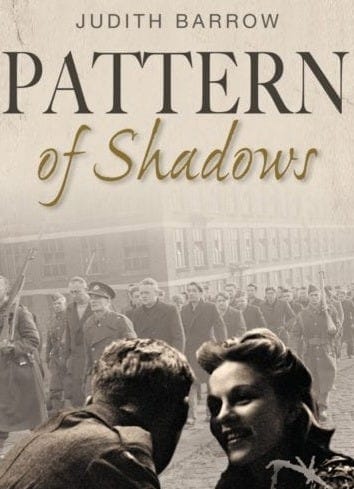
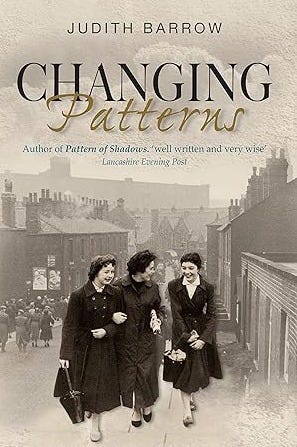
Pattern of Shadows, the first book of my Haworth trilogy published by Honno finally made the shelves.
This is my favourite review of all time for the trilogy: Mary’s story: WWII in Howarth family generational saga: “Every now and then, I come across books so beautifully written that their characters follow me around, demanding I understand their lives, their mistakes, their loves, and in this case, their families. Taken together, the Howarth Family stories are an achievement worth every one of the five stars I’d give them.”
And, in November, Honno will be publishing my eighth book with them. Cover reveal on the 30th July… so tomorrow!! Hooray!!!
The Stranger in My House.
A gripping ‘cuckoo in the nest’ domestic thriller
After the death of their mum, twins Chloe and Charlie are shocked when their dad introduces Lynne as their ‘new mummy’. Lynne, a district nurse, is trusted in the community, but the twins can see her kind smile doesn’t meet her eyes. In the months that follow they suffer the torment Lynne brings to their house as she stops at nothing in her need to be in control.
Betrayed, separated and alone, the twins struggle to build new lives as adults, but will they find happiness or repeat past mistakes? Will they discover Lynne’s secret plans for their father? Will they find each other in time?
The Stranger in My House is a gripping ‘cuckoo in the nest’ domestic thriller, exploring how coercive control can tear a family apart. Set in Yorkshire and Cardiff, from the 60s to the winter of discontent, The Stranger in My House dramatises both the cruelty and the love families hide behind closed doors.
“Judith Barrow’s greatest strength is her understanding of her characters and the time.” TerryTyler
Many people have asked me what was the inspiration for The Memory and my answer is always – memories: memories of being a carer for two of my aunts who lived with us, memories of losing a friend in my childhood; a friend who, although at the time I didn’t realise, was a Downs’ Syndrome child. But why I started to write the story; a story so different from my other four books, I can’t remember. Because it was something I’d begun years ago and was based around the journal I’d kept during that decade of looking after my relatives.
But what did begin to evolve when I settled down to writing The Memory was the realisation of why I’d been so reluctant to delve too far into my memories. The isolation, the loneliness, that Irene Hargreaves, the protagonist, endures; despite being married to Sam, her loving husband, dragged up my own feelings of being alone so much as a child. That awareness of always being on the outside; looking in on other families, relationships and friendships had followed me; had hidden deep inside my subconscious. And now, as content with my life as I am, it unsettled me.
Many people, and as an occasional creative writing tutor I’m one, say that writing is cathartic. Working through Irene’s memories; especially that one memory that has ruled her life, made me acknowledge my own. And that’s fine. I always say to my students, if you don’t feel the emotions as you write, then neither will your reader.
In The Memory I’m hoping the reader will sense the poignant, sad times with Irene, but will also rejoice with her in the happier memories.
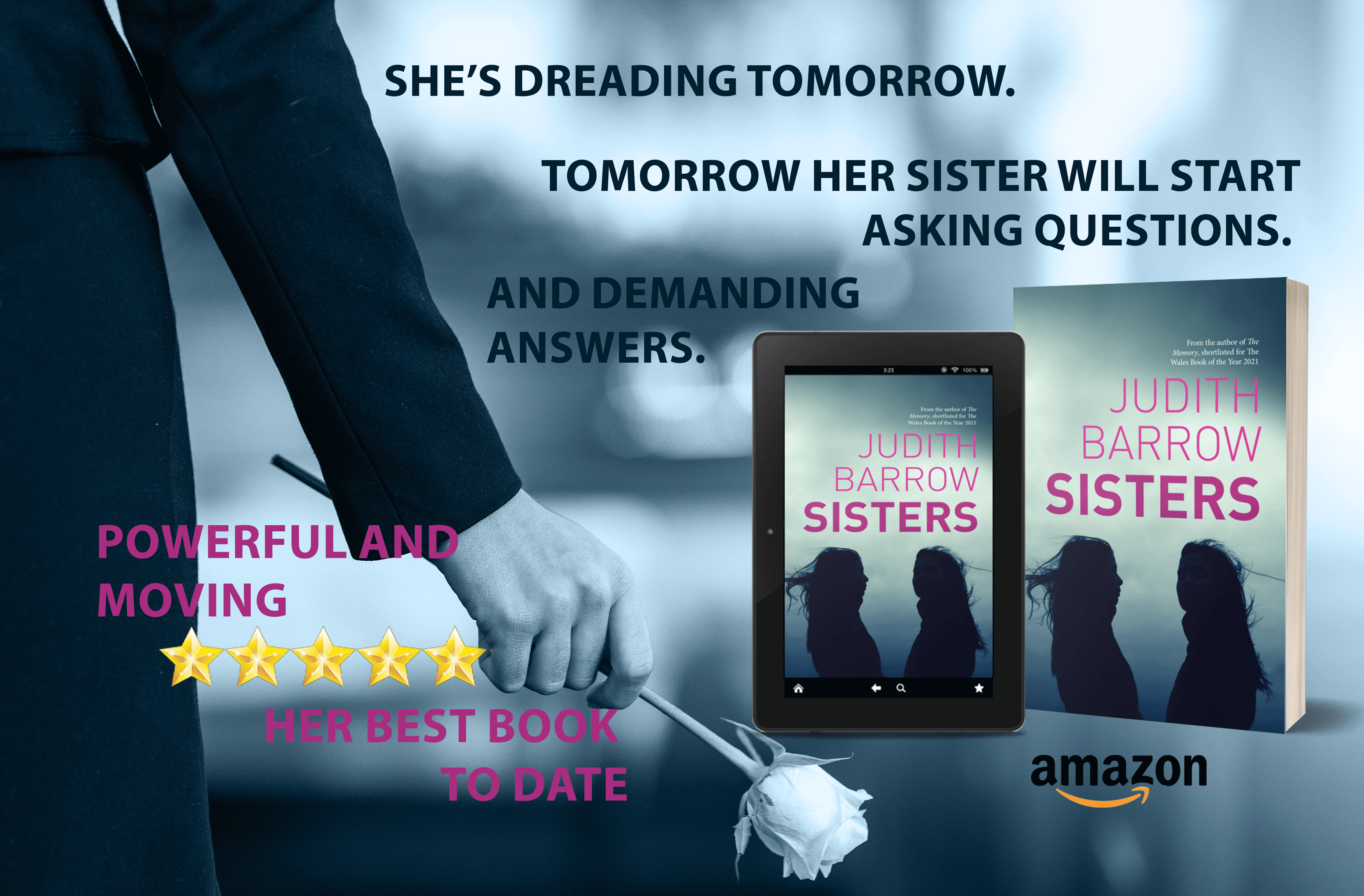
Over the last few years I’ve moved from writing the historical family sagas of Haworth trilogy, that moves through the decades from 1914 – 1968, and The Heartstone, set during WW1, to contemporary fiction such as The Memory (which was shortlisted for the Wales Book of the Year 2021 The Rhys Davies Trust Award) and domestic thrillers, such as Sisters.
My next book, due to be published in November 2024 is The Stranger in My House:
“A gripping ‘cuckoo in the nest’ domestic thriller.”
After the death of their mum, twins Chloe and Charlie are shocked when their dad introduces Lynne as their ‘new mummy’. Lynne, a district nurse, is trusted in the community, but the twins can see her kind smile doesn’t meet her eyes. In the months that follow they suffer the torment Lynne brings to their house as she stops at nothing in her need to be in control.
Betrayed, separated and alone, the twins struggle to build new lives as adults, but will they find happiness or repeat past mistakes? Will they discover Lynne’s secret plans for their father? Will they find each other in time?
The Stranger in My House is a gripping ‘cuckoo in the nest’ domestic thriller, exploring how coercive control can tear a family apart. Set in Yorkshire and Cardiff, from the 60s to the winter of discontent, The Stranger in My House dramatises both the cruelty and the love families hide behind closed doors.
Llyn Crafnant and LlynGeirionydd are separated by the forested slopes of Mynydd Deulyn (Mountain of the Two Lakes) and lie within wonderfully scenic valleys where the Gwydyr forest meets the lower slopes of the Carneddau mountains in Conwy.”The lakes are about a mile apart,” said the photographer casually. “The walk’s about five miles.” What actually happened was that we took the circular route which covers a distance of eight miles and involved some steep climbing.
But, at this point I have to say that wasn’t his fault. We ended up – or should I say – started off walking in the opposite way to the route in the book, having parked in the car park nearLlynGeirionydd, instead of the one near Llyn Crafnant.
This was due to the fact that, at one point, the SatNav took us in the wrong direction. It’s always the SatNavs fault, you know; we once got stuck on a very narrow dirt farm track faced with a sign that joyfully said in large red writing, ” Use your eyes, the SatNav lies”. I think I might have said that before, it’s something I bear in mind when sitting by a certain irate driver having to turn back on a journey.
Anyway, I thought, it’ll be alright; we’ll just read the directions backwards.
I waited on the edge of the grass while the photographer took his first photo of Llyn Geirionydd.
Gwydir Forest is named after the Gwydir River, which takes its name from the ancient Gwydir Estate, established by the John Wynn family of Gwydir Castle, who owned this area (Gwydir is translated as River with Red Banks) The land here was once dominated by lead and zinc mines. Some of the mines have been partially restored and made safe for visitors, but we didn’t visit; our sights were set on getting to Llyn Crafnant Though we did pass an old restored engine-house, and also the waste tips, now left to be naturally covered over.
The First World War had highlighted a shortage in wood production and the forest was stripped bare at the time because many of the early forestry workers, former employees in the forest’s mines, had no experience of forestry. This caused the 1919 Forestry Act to be passed and Gwydir Forest was acquired from Lord Ancaster by the Forestry Commission in 1921.
Most of the original plantations have now been felled and replanted as part of the forestry cycle. We passed quite a few places where this was happening.
The majority of the forest is conifer such as Japanese larch, Norway spruce and Scots pine but apparently, over the last two decades there has been more Welsh Oak, ash and beech planted to give a more varied and softer outline to the forest
“When we get to the top of this track, there’s a little bit of a short climb and the track narrows a bit,” said the Photographer over his shoulder as I puffed and panted behind him. ” Don’t worry, it’ll be so worth it for the view.’
The track did narrow a bit indeed. As the directions said, ‘…into a steep narrow footpath, less than forty centimetres wide (that’s about sixteen inches in old money) in some places, on an unmade and uneven surface, where you can expect mud, rocks and tree roots.‘. The embarrassing thing is, just as I was wobbling leaping gazelle-like from rock to another a young couple (stressing young here!) ran past… with a dog … very quickly.And they even had the breath to wish us a cheerful “good morning.”
Every now and then we caught glimpses of the view. Went past a stile. Down a wider path. Through a gate. Saw the obligatory cow. And then…
The Photographer got his first proper shot of Llyn Crafnant on the northern edge of the Gwydir Forest.
And then lots more. It really is a glorious place
One last look and we walked away from Llyn Crafnant …
Following the arrows we crossed over the road into a small wooded area. And there the arrows stopped. We looked around: there was a stile in the far corner, but it was broken, covered in brambles and branches and looked unused. On the other side of the clearing there was a broad track. After some discussion we chose the track. (later realising we should have tackled the stile).
After an hour of walking up the never-ending road we stopped for breath, and for the Photographer to revell in the scenery and take many photos of the craggy slopes of Mynydd Deulyn.
And for me to have a rest. It wasn’t until we got back to the car that I realised I had somehow managed to take the attractive shot below whilst I was rummaging in my rucksack for the fourth, and last, bottle of water. Naming no names, but someone dared me to include this in the post – and I’m never one to pass on a dare. Which is probably the reason I find myself on these hikes walks.
Another hour of uphill, round a bend, and the road began to descend, until we were …
Back to the start…
I’m often asked what do I think about when I’m walking and with not enough breath to talk. I must say not having enough breath to talk isn’t something that often happens to me. But usually I’m taking in what’s all around us. We walk in so many diifferent kinds of places, so I just soak up the sights and the sounds whether in the country or in more urban areas.
But there are times when I’m thinking how to describe what I’m seeing, wondering if it will fit into a scene in the book I’m currently working on – or intend to work on. Sometimes it will, sometimes it won’t. It’s usually the latter, but that’s okay. And if I can keep it in mind for when we next stop for the Photographer to capture the scenary, I’ll make notes.
And I remembered that moment, that feeling of almost sinister atmosphere when I wrote one of the scenes in Sisters.
“‘Whoops! Watch your step, Miss Clumsy.’ Said in a jokey manner, it still manages to imply the familiar censure. ‘If it wasn’t for me always looking out for you, I don’t know what you’d do.’ He laughs. ‘Probably kill yourself, one of these days.’ He pulls her close, turns her so they are facing the lake, standing on the edge of the steep banking. The sun is sinking lower in the sky, the black shadows of the trees lengthen, their reflection stretch and waver over the lake, the water rendered blood-red.“
Book Description:
An accident and a terrible lie by sixteen-year-old Angie tears her family apart and her younger sister, Lisa, being sent away. They don’t speak for thirteen years, until their mother’s death brings them together. Lisa quickly realises her sister is trapped in a dangerous marriage.
What does Lisa owe to the family that betrayed her? And if she tries to help, will she make things more dangerous for them all?
A powerful story of domestic violence, courage and forgiveness.
Trust is the one thing that families should be able to take for granted. Trust born from love, from the belief that each member knows the other because they have lived together, seen the weakness and strength of each other. Having faith in each other means there is trust in theirselves, in their judgements, in the confidence that they are implicitly correct in that conclusion. But of course trusting can be the automatic option, the unquestionable. It also avoids any confrontation between siblings, parents, relatives. It means that every one can get on with their lives, not having to think too hard about the actions of everyone else in the family. It’s taken for granted that each believes whatever they are told. Don’t question. In turn it’s accepted that each can also reveal whatever they want to disclose about themselves, their thoughts, their actions. And take for granted that they are believed.
There is only one problem with that premise. Everyone is alone in their heads. No one (whatever anyone believes to the opposite) can read minds. What we present to the world, the façade we choose to show is our decision.
And that is where the secrecy comes in. Although it’s undeniable that every family has its secrets, it’s the substance of them that count. Of course secrets can also be trivial, small, kept in a loving way (a celebratory surprise, a present) or as a kindness, hiding something that is better kept under wraps if the person keeping it believes that.
On the other hand, harrowing, life-changing secrets can damage an entire family for some time. Even forever. Those kinds of secrets break that instinctive trust, that belief that those closest to us, who we love and respect, are truthful. Are not lying.
Families can be complicated. That’s an obvious statement. And where there are families with secrets, there are stories. And these are the stories that are at the root of all my books.
Our last walk in the Yorkshire Dales was a short early evening stroll to a small waterfall called Janet’s Foss, just outside Malham. The name for the waterfall apparently comes from an old folktale that a fairy queen, Janet (sometimes Jennet), lives in a cave at the rear of the fall. There are numerous stories about this: usually wraiths are not thought to be ghosts or demons, but rather a strange entity somewhere in between the two, similar to poltergeists but much more powerful when appearing as a full-bodied apparition. With Janet, there are claims that she would have practised black magic in life and this eternal damnation is her punishment. So, from the numerous conflicting tales we were told when we asked, she was either a magical fairy, or a vengeful creature.
The waterfall carries Gordale Beck over a limestone outcrop into a deep pool below. The pool was traditionally used for sheep dipping, which drew in local villagers as a social occasion. We were told that there have also been a few wedding ceremonies there.Our resident font of all knowledge in the local pub told us that the pool is occasionally used by all-weather wild swimmers. When I mentioned this to the photographer he announced he hadn’t brought his swimming trunks. Not sure he had the right idea about ‘wild swimming’.
Image courtesy of Annabelle Bradley
The footpath from Malham starts from Malham Smithy, where the female blacksmith, Annabelle Bradley, runs blacksmith experience days, and also designs and hand forges sculptural and functional wrought ironwork. We’d stopped to watch her work from outside the door, earlier in the week. It was fascinating. Just leaving the link here, just in case you’re interested: https://www.malhamsmithyonline.co.uk/
Walking over a short bridge and alongside a small beck we went through fields and kissing gates. (No stiles!!)
On the footpath to Janet’s Foss a couple of old tree stumps have become home to hundreds of pennies where people have left them and made a wish to Janet.
We could smell the garlic even before we entered the wood.
Here I go again … can anyone else see the profile of a face in these rocks?
We stayed listening to the rhythmic flow of the water, and waiting for the mysterious green mist that was supposed to sometimes rise from the water- until the chattering and clattering of boots announced the arrival of walkers, and brought us back to reality.
Time to make our way back to the cottage we were staying in. Time to pack for our return home the following morning. Time for just one more glass of wine.