A Hundred Tiny Threads #Prequel #familysaga #histfiction #WW1 #reviews #family #relationships #Poetry

It’s eight years this month since the prequel, A Hundred Tiny Threads, to the Haworth Trilogy was published – so a little celebratory post – with an extra personal memory at the end – for one of my oldest books.

It’s 1911 and Winifred Duffy is a determined young woman eager for new experiences, for a life beyond the grocer’s shop counter ruled over by her domineering mother.

The scars of Bill Howarth’s troubled childhood linger. The only light in his life comes from a chance encounter with Winifred, the girl he determines to make his wife.

Meeting her friend Honora’s silver-tongued brother turns Winifred’s heart upside down. But Honora and Conal disappear, after a suffrage rally turns into a riot, and abandoned Winifred has nowhere to turn but home.

The Great War intervenes, sending Bill abroad to be hardened in a furnace of carnage and loss. When he returns his dream is still of Winifred and the life they might have had… Back in Lancashire, worn down by work and the barbed comments of narrow-minded townsfolk, Winifred faces difficult choices in love and life

A couple of reviews:

“When I emerged at the end of this book – during the reading, my immersion was total – it was with a sense of having experienced it all first hand, and of having deeply felt every moment. This was story-telling at its very best… and a book that will long linger in my memory.”

“I loved it… A page-turner that keeps you hooked. The story line has lots of twists and turns and you feel yourself moved on so many different levels. As the book unfolds it gives you moments of tenderness and love, hatred and spite all blended together with conflict, prejudice, guilt, grief and a desperate longing for change. Judith describes the period so well, with some very graphic, cruel and harrowing episodes, enabling you to empathise with each character in turn. I particularly like the fact that the story held together to the last page.”

Three year earlier, on the exact date – the 17th August – the book was published, I’d written the following…

My Grandad

grandad for sally's blog

My grandfather died seventy years ago this week. Obviously i never knew him and have only one small black and white photograph of him on my study wall. He’s standing in the backyard of the terraced house they lived in in Oldham. Lancashire. This is a poem I wrote about him a long time ago. My mother said he was gassed in WW1 and never recovered. 

My Grandad

I look at the photograph.

He smiles,and silently

he tells me

his story…

In my backyard I stand,

Hands wrapped around a mug of tea.

Shirt sleeves, rolled back,

Reveal tattoos – slack muscles.

I grin.

All teeth.

Who cares that they’re more black

Than white.

Underneath

That’s my life;

That’s the grin I learned

When burned

By poison

Spreading

Like wild garlic.

That’s the grin I wear

When I look

But don’t see

The dark oil glistening,

Blistering, inside me.

When I hear, but don’t listen

To my lungs closing.

I posture,

Braces fastened for the photo,

Chest puffed out.

Nothing touches me –

Now.

Later I cough my guts up –

Chuck up.

I trod on corpses: dead horses,

Blown up in a field

Where grass had yielded

To strong yellow nashers.

And in the pastures

I shat myself.

But smelled no worse

Than my mate, Henry, next to me

Whose head grinned down from the parapet –

 Ten yards away.

He has perfect, white teeth.

Much good they’ve done him,

Except for that last night at home

When the girl smiled back.

The Winter of Discontent: The Background to Part Two of The Stranger in my House. #CreativeControl #Families

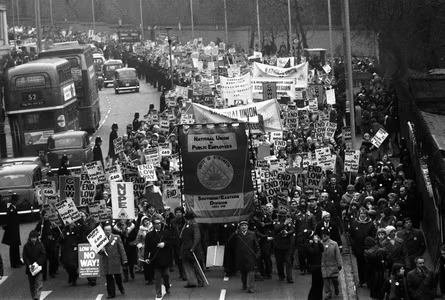
Part Two of The Stranger in my House is set against what is now called the Winter of Discontent – A term that comes from Shakespeare’s play Richard III, but it was used in an interview by the then Prime Minister James Callaghan and was taken up by the media. It lasted between November 1978 to February 1979 in the United Kingdom and, following opposition from the Trades Union Congress (TUC), took on the form of widespread strikes by both the private and public sector. Trade unions demandied pay rises greater than the limits Prime Minister, James Callaghan, and his Labour Party government imposed in an effort to control inflation.

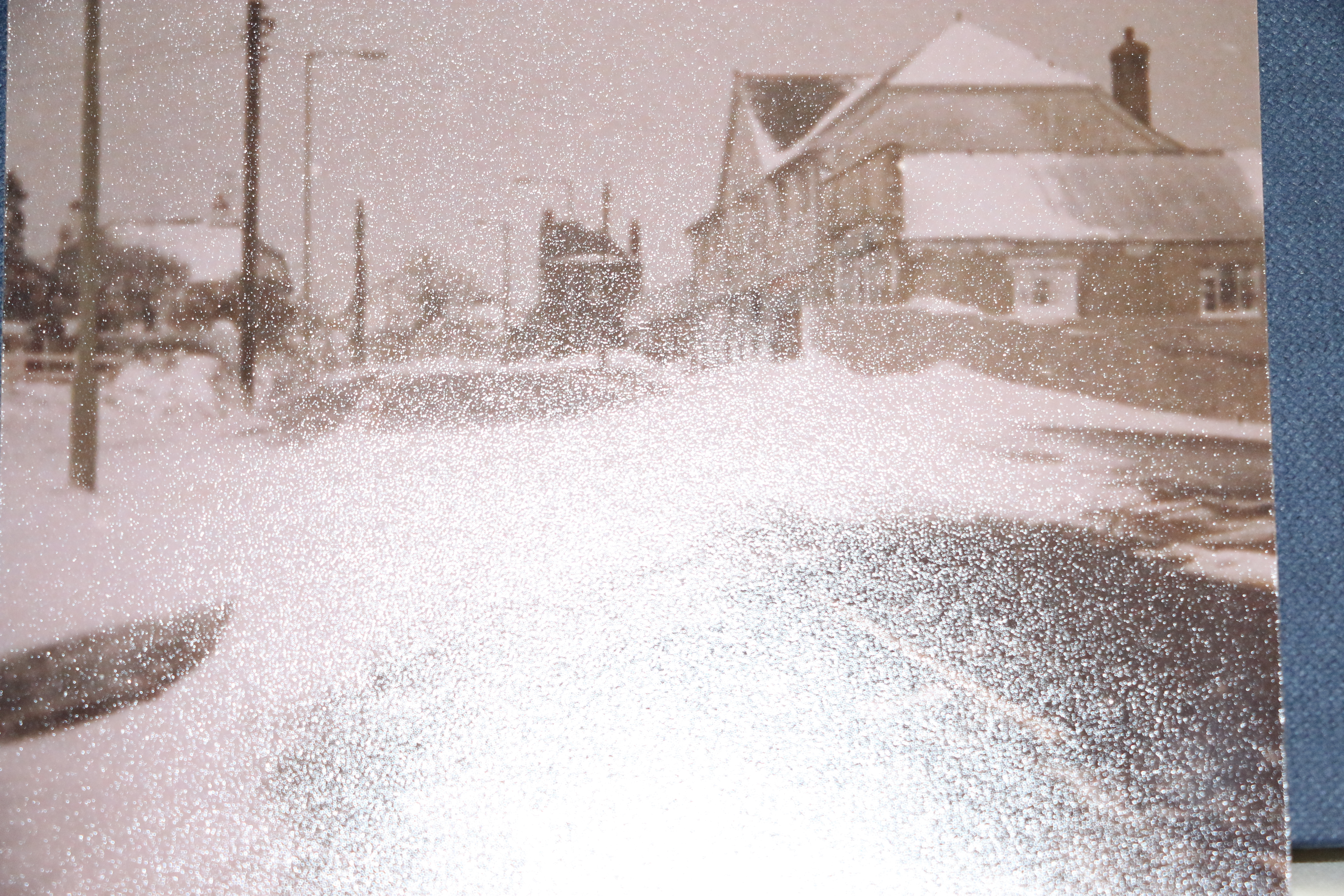
It was also the coldest winter in sixteen years. Heavy snowfall and freezing temperatures disrupted transport, businesses, and energy supplies.

In January 1979 (between the 1st and the 14th), some 20,000 railwaymen held four one-day strikes. There were strikes by haulage drivers, petrol tank drivers, and eventually municipal workers – 1,250,000 of them organised a one-day national strike on 22 January 1979.

The most notorious incident was the grave diggers’ strike on Merseyside, which hit the headlines with the press vilifying trade unions for their lack of sympathy with the bereaved, and, it was argued, with the needs of the nation.

But it was a strike by refuse collectors that came to symbolise the complete breakdown of UK public services. Local councils rapidly ran out of storage space as the binmen continued to strike, so rubbish was left in streets and open public spaces instead.

Photograph courtesy of The Guardian
Photo by Evening Standard/Hulton Archive/Getty Images)

A gripping ‘cuckoo in the nest’ domestic thriller

After the death of their mum, twins Chloe and Charlie are shocked when their dad introduces Lynne as their ‘new mummy’. Lynne, a district nurse, is trusted in the community, but the twins can see her kind smile doesn’t meet her eyes. In the months that follow they suffer the torment Lynne brings to their house as she stops at nothing in her need to be in control.

Betrayed, separated and alone, the twins struggle to build new lives as adults, but will they find happiness or repeat past mistakes? Will they discover Lynne’s secret plans for their father? Will they find each other in time?

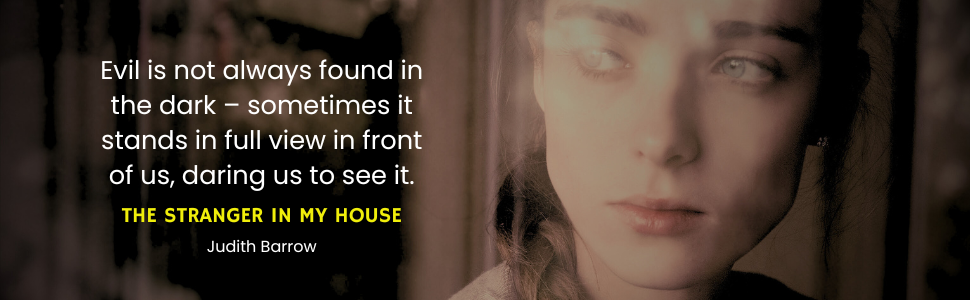
The Stranger in My House is a gripping ‘cuckoo in the nest’ domestic thriller, exploring how coercive control can tear a family apart. Set in Yorkshire and Cardiff, from the 60s to the winter of discontent, The Stranger in My House dramatises both the cruelty and the love families hide behind closed doors.

“Judith Barrow’s greatest strength is her understanding of her characters and the times in which they live.” Terry Tyler

Grateful for this reader’s review. One of the first for The Stranger in my House, when it was published in November 2024.

Received the book today and finished it in the one sitting!

Judith Barrow’s done it again! The Stranger in My House is a book that showcases her renowned credentials. The characters are superbly drawn, the tension grows steadily and with each turn of the page your heart is gripped by the dilemmas facing the young protagonists, twins Charlie and Chloe, and their well-intentioned father. As with The Memory (shortlisted for Wales Book of the Year) it’s the way Barrow takes the ordinary and everyday, that we recognise and identify with, and skilfully uses her eye for human behaviour to turn it into something that becomes a nightmare we can readily believe in.
The story begins in 1967 and over the following decade the sense of time and place is expertly done without being intrusive. At the core of the tale is coercion and the reader can see how cleverly the others are being manipulated by the woman who undermines them and shatters their family bonds. My dislike for Lynne and her son Saul built with the book’s momentum. There was that fear that they would get away with unimaginable cruelty and malice. To counter that, were those whose innate love and kindness provided a heartwarming buffer.
From the start, I was gripped and that grip tightened inexorably. It’s becoming a cliché to say that you couldn’t put a book down – but I couldn’t. I had to know what was going to happen next. It mattered. That is the hallmark of a great author.

The Hidden Danger in Families #coercivecontrol

I love writing about people – especially people in families. There is such a richness of emotion, of action, within families. Nowhere else will love and loyalty vie with dislike and disloyalty, (even hatred in some case), pride with resentment, happiness with complete sadness. Nowhere else are human beings so close.


With The Stranger in my House, I wanted to explore a situation that would completely turn around the characteristic of a family. And I knew that needed to be something drastic. And that the family had to have a weakness within it it. And that weakness in the Collins family was grief, the sadness of losing the mother, the centre of their world. The father Graham is still grieving, bewildered, struggling to cope with running a business and trying to look after his children, eight-year-old twins, Chloe and Charlie.That “something drastic”; the situation that would completely change the characteristic of this family arrives in the form of Lynne, the district nurse who cared for Anna, the wife and mother of the family, who died when the twins were six. Lynne continued to call on Graham after Anna died and slowly but surely becomes part of his life… and consequently of the twins lives, when she and Graham marry.

I’ve always known about coercive control, although that’s not what it’s been called until these last few years. But it’s always been the patriarchal control, the accepted head of the family situation of past times, I was initially aware of. The earliest of my books, A Hundred Tiny Threads the prequel to the Haworth trilogy, is set after WW1 and the protagonist’s father, Bill, is a man of that era; he totally controls the family: by his moods, his temper, his fists.


But these days control of any sort is identified as coercive control, and it’s recognised that this can result in psychological damage that can last for life. It’s difficult, sometimes, for the victim to make sense of what’s happening, to see it as abuse. It’s like imprisoning someone, restricting everything they are. They are robbed of their independence, and their confidence is slowly undermined. It destroys who they are.

Anyone can be guilty of being a coercive controller. And guilt is the right word, because, today, it’s viewed as a crime. To totally have control over another adult human being is a crime. It’s shown in so many ways: physical assault, threats, humiliation, intimidation or other abuse intended to harm, punish or frighten. The perpetrator gaslights the victim by denying things have happened, using the confusion to control, criticising everything they do and say. Victims suffer in silence.

Which is what Graham in The Stranger in my House does, he tells no one, feels completely useless. Isolated, he has no control over what happens to his children or his life.
And neither do his children.

But children grow up. Chloe and Charlie become young adults with minds of their own…

The Stranger in my House: https://bit.ly/3DGwMCU

Find me here:

Amazon: https://bit.ly/3UIid6I

Honno: https://www.honno.co.uk/authors/judith-barrow

Instagram: https://www.instagram.com/judithbarrowauthor/

Threads: judithbarrowauthor

Facebook: https://www.facebook.com/judith.barrow.3/

It’s Been an Odd Day…

 Today – Remembrance Day – has been a day when we paid homage to so many who gave their lives in past wars. A day that must have brought back memories for many. It has for me.

It’s eight years since my mother died. My sister arranged the funeral for eleven o’clock today. Eleven o’clock, on the eleven day of the year – perhaps no one else wanted that time or day – I was never told.

This is a post I wrote shortly afterwards. The relationship between Mum and me, and the one between her and my sister, proved so very different. There’s nothing wrong in that, but at no time was it more obvious than on that day…

I wrote… 

Last week I was at my mother’s funeral. I say at because I felt it was a funeral I was a spectator to, not part of.

During the service I realised something strange. Being the eldest, and living nearer to Mum than me,  my sister had insisted on organising the whole thing. It was a Humanist service which was fine; my mother had no beliefs.

But what was odd, was that what my sister had written about my mother was totally unlike the mum I knew. And I wonder if that is something all siblings share; a different view of the characters of their parents.

The mother my sister saw was a woman who liked poetry. So there were three poems in the service. I’ve never once seen my mother read poetry although she did like to misquote two lines from ‘ What is this life if, full of care…’

The mum I knew read and enjoyed what she herself called ‘trashy books.’ They weren’t, but she did love a romance and the odd ‘Northern-themed’ novels. (I’m always glad she was able to enjoy the first book of my trilogy – dementia had claimed her by the time the next two were published) She still managed a smiling grumble, though, telling me it had  taken me ‘long enough to get a book out there’) And she loved reading anything about the history of Yorkshire and Lancashire. Oh, and recipe books… she had dozens of recipe books and could pour over them for hours. I often challenged her to make something from them. She never did… it was a shared joke.

Mum had a beautiful singing voice in her younger days.  She and my father would sing duets together. Anybody remember Pearl Carr and Teddy Johnson?  My parents knew all their songs. And so did my sister and I… I thought. The songs and singers chosen were not ones I remembered. And Mum loved brass bands! She’d have loved to have gone out to a rousing piece from a brass band, preferably the local band. She loved everything about the area and the house she’d live in for almost sixty years

Which brings me to the main gist of the service. No mention of Mum’s love of nature, of gardening, of walking. Nothing about Mum’s sense of humour; often rude, always hilarious. When telling a tale she had no compunction about swearing if it fitted the story. And her ability to mimic, together with her timing, was impeccable. She was smart, walking as upright in her later years as she had when in the ATS as a young woman, during the Second World War. She worked hard all her life;  as a winder in a cotton mill, later as a carer, sometimes as a cleaner. Throughout the service there was no inkling of the proud Northern woman willing to turn her hand to any job as long as it paid. No mention of her as a loyal wife to a difficult man.

Thinking about it on the way home I realised that my sister had seen none of what I’d known and I knew nothing of what she’d seen in Mum. And then I thought, perhaps as we were such dissimilar daughters to her, Mum became a different mother to each of us? Hence the completely opposite funeral to the one I would have arranged for her.

Is that the answer? A funeral is a public service. Are they all edited, eased into the acceptable, the correct way to be presented for public consumption? Because it reflects on those left behind? I don’t know.

Perhaps, unless we’ve had the foresight to set out the plan for our own funerals, this will  always be the case.

So I’d like it on record that, at my funeral,  I’d like Unforgettable by Nat King Cole (modest as always!), a reading of Jenny Joseph’s When I Am Old (yes, I do know it’s been performed to death but won’t that be appropriate?). I’d like anybody who wants to say anything…yes anything…about me to be able to…as long as it’s true, of course! And then I’d like the curtains closed on me to Swan Lake’Dance of the Little Swans. (Because this was the first record bought for me by my favourite aunt when I was ten. And because, although as a child I dreamt of being a ballet dancer, the actual size and shape of me has since prevented it.)

Thank you for reading this. I do hope I haven’t offended (or, even worse, bored) anyone. I was tempted to put this under the category ‘Fantasy’ but thought better of it!

And, today, I’ve also had thoughts of my grandad. Like do many young men he served in WW1

This is a post from quite a while ago, as well. Today was the day my grandad died. I never really knew him. He was always in bed in the front room of my grandmother’s house and had no patience for a small child. But I do remember that day: my mother crying, the fear of not knowing why, what had happened. Of not knowing what to do.

And I have only one small black and white photograph of him on my study wall. He’s standing in the backyard of the terraced house they lived in in Oldham. Lancashire. This is a poem I wrote about him a long time ago. My mother once told me that he was gassed in WW1 and never recovered.

My Grandad

I look at the photograph.

He smiles,and silently

he tells me

his story…

In my backyard I stand,

Hands wrapped around a mug of tea.

Shirt sleeves, rolled back,

Reveal tattoos – slack muscles.

I grin.

All teeth.

Who cares that they’re more black

Than white.

Underneath

That’s my life.

That’s the grin I learned

When burned

By poison

Spreading

Like wild garlic.

That’s the grin I wear

When I look

But don’t see

The dark oil glistening,

Blistering, inside me.

When I hear, but don’t listen

To my lungs closing.

I posture,

Braces fastened for the photo,

Chest puffed out.

Nothing touches me –

Now.

Later I cough my guts up –

Chuck up.

I trod on corpses: dead horses,

Blown up in a field

Where grass had yielded

To strong yellow nashers.

And in the pastures

I shat myself.

But smelled no worse

Than my mate, Henry, next to me

Whose head grinned down from the parapet –

Ten yards away.

He has perfect, white teeth.

Much good they’ve done him,

Except for that last night at home

When the girl smiled back.

It feels right that I post the images below – if it wasn’t for my mother and grandad, I probably wouldn’t have had the inspiration to write these books.

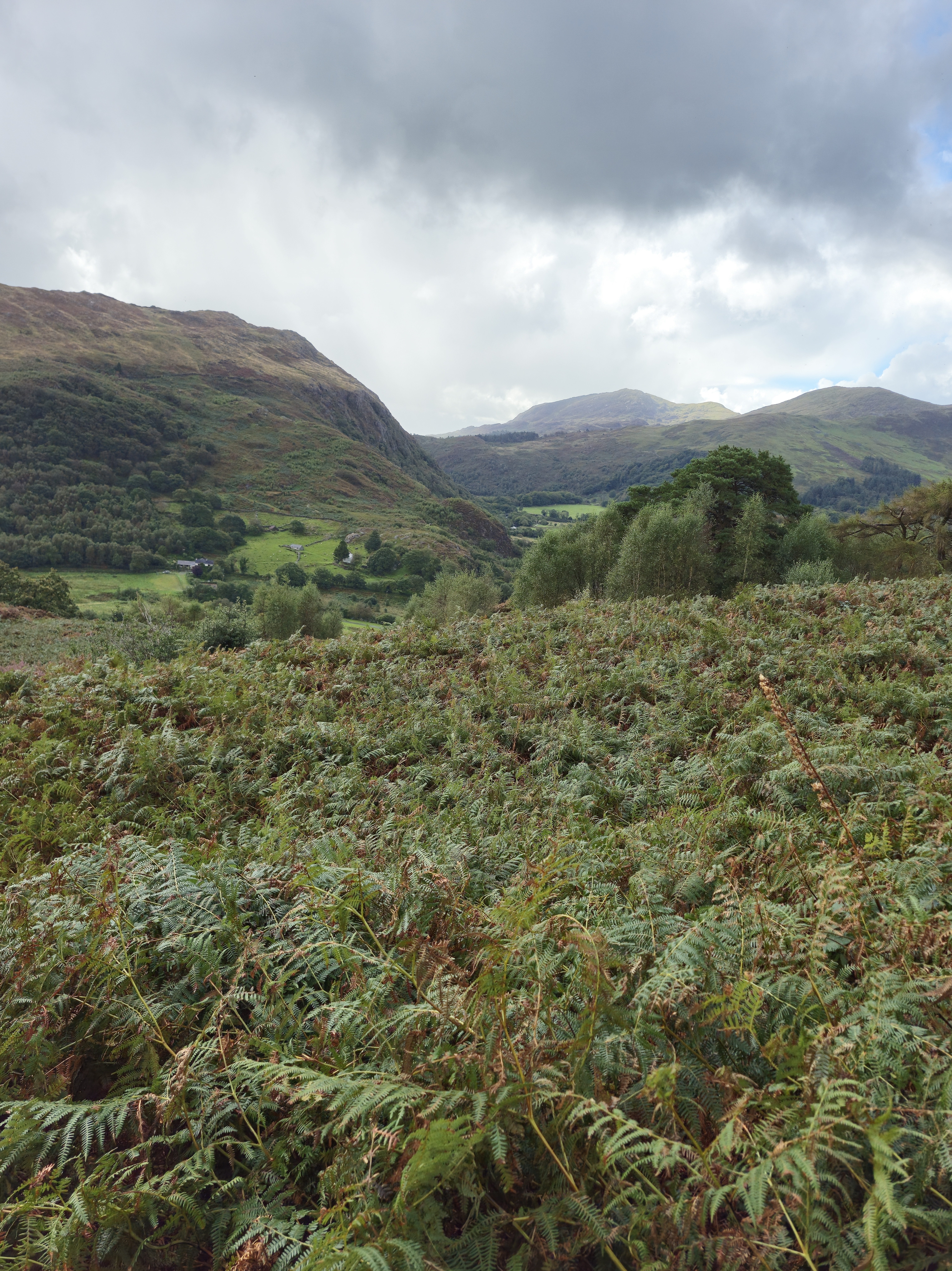
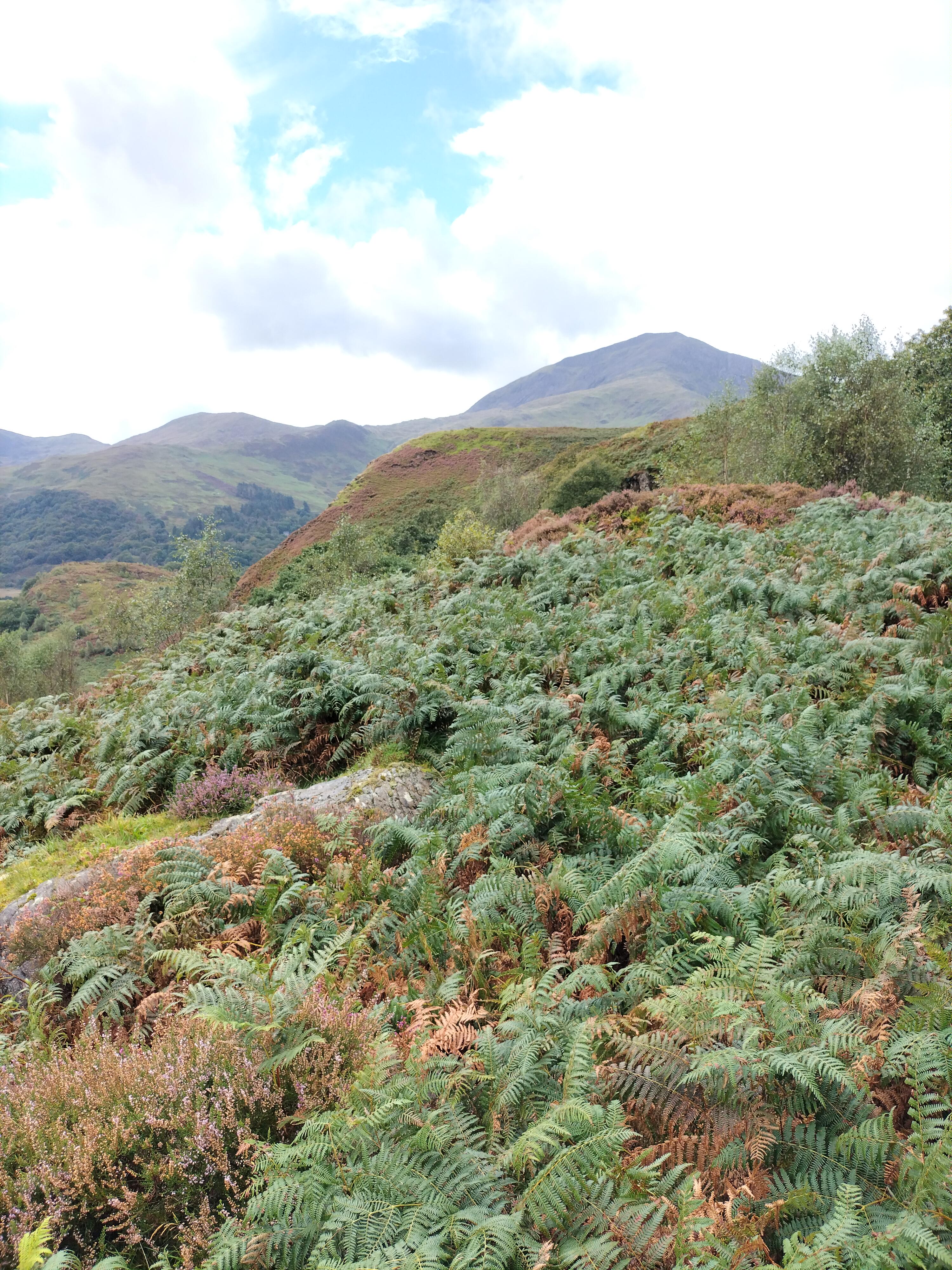
Where we Walked @CraflwynEstate @Beddgelert @Snowdonia @ Eryri @Wales #walks #photographs #mountains #viewpoints

The two hundred acres of  Craflwyn estate is set in the heart of beautiful Eryri (Snowdonia), an area steeped in legend.

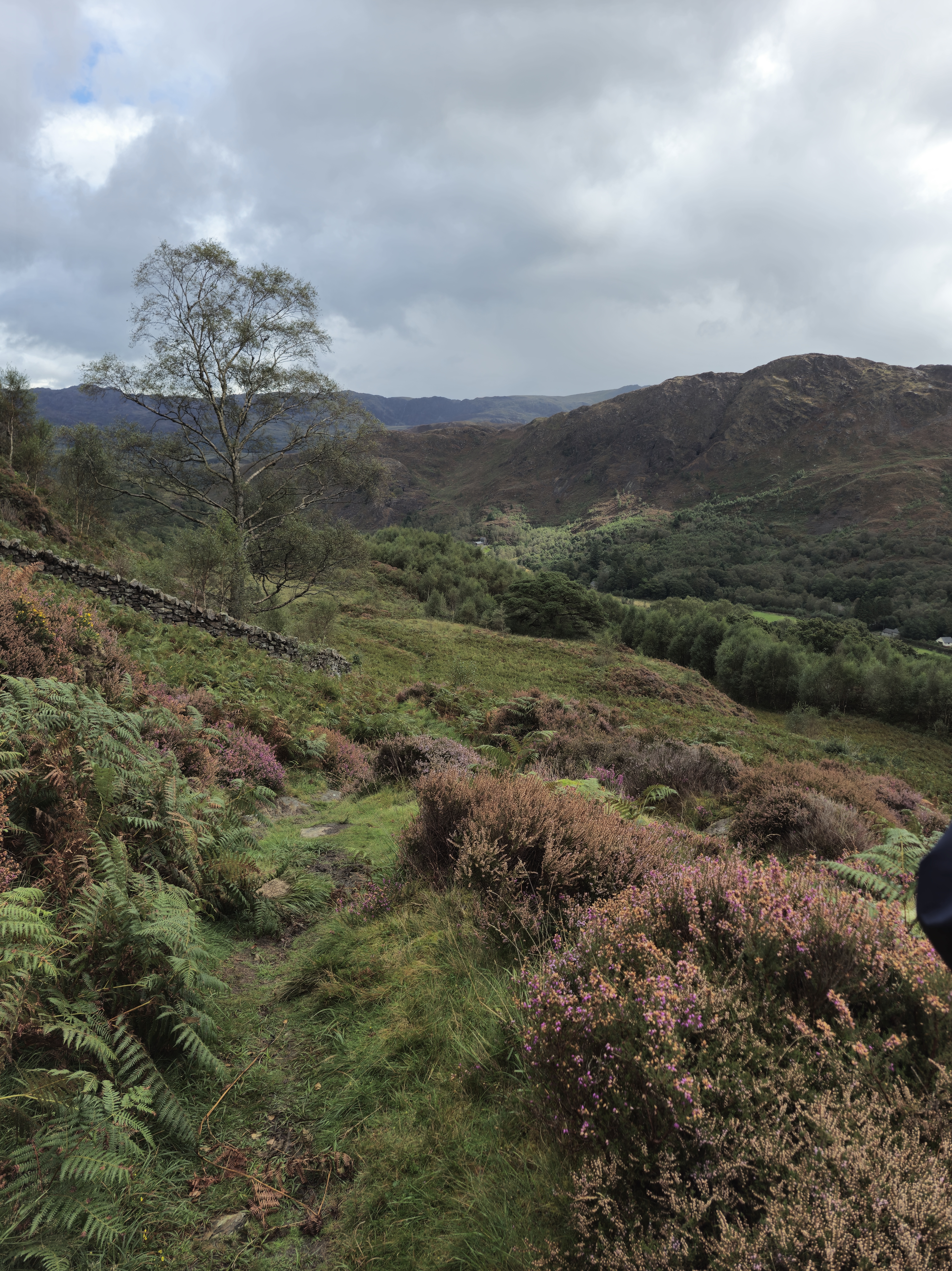
A walk of two halves today. We parked at the Crafwlyn Estate car park, just outside Beddgelert and, having read the information board, the Photographer and I decided to do the Green Walk. The sign promised an easy to moderately difficult ascent of only one and a half miles to the viewing point. It was the “spectacular views” that clinched it.

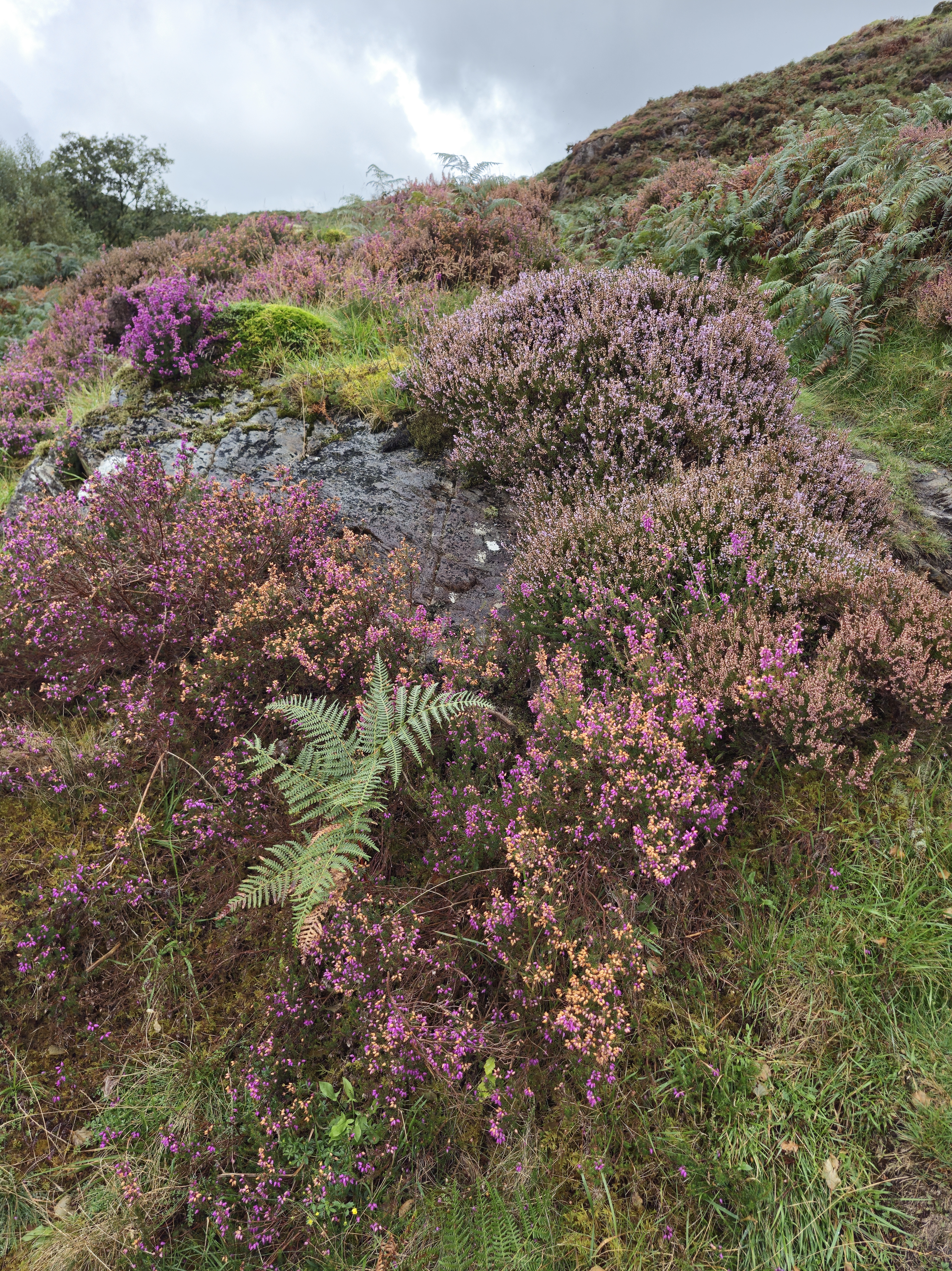
The heather was glorious. The path was … somewhere…

The walk turned out to be difficult, and certainly longer than one and a half miles. Quite the opposite in fact, and it and became steeper almost immediately, and very rocky. We assumed it would level out at some point but it never did and we just kept climbing and climbing.

Dinas Emrys is a rocky and wooded hillock near Beddgelert. Rising some seventy-six metres above the floor of the Glaslyn river valley, it overlooks the southern end of Llyn Dinas. The legend is that it’s where Merlin once trod and where a dragon still sleeps. At the top are the remains of a square tower and defensive ramparts belonging to the ancient princes of Gwynedd. We never saw that at any time over the week… ” the square stone tower at Dinas Emrys in Gwynedd, Wales is believed to be the base of a 12th century tower or citadel. The tower is now in ruins, but its rectangular shape and local rubble masonry are still visible.
According to legend, the tower was built by King Vortigern as part of a castle he wanted to construct on Dinas Emrys. However, the walls would mysteriously collapse each night, which led Vortigern to seek the help of Merlin the wizard. Merlin revealed that two dragons, one red and one white, were fighting in a pool beneath the castle. Vortigern and his men dug into the mountain to release the dragons, and the red dragon eventually won the battle. The castle was then named Dinas Emrys in honor of Merlin, and the red dragon became a symbol of the fight against the Saxons.

oplus_32

Just at the point where the ferns and tufts of coarse grass petered out, and the way in front of us rose sharply and consisted of sharp rocks, it began to rain and the view disappeared. We turned and scrambled back down – the second time we’d turned back on a walk that week.

One disgruntled Photographer…

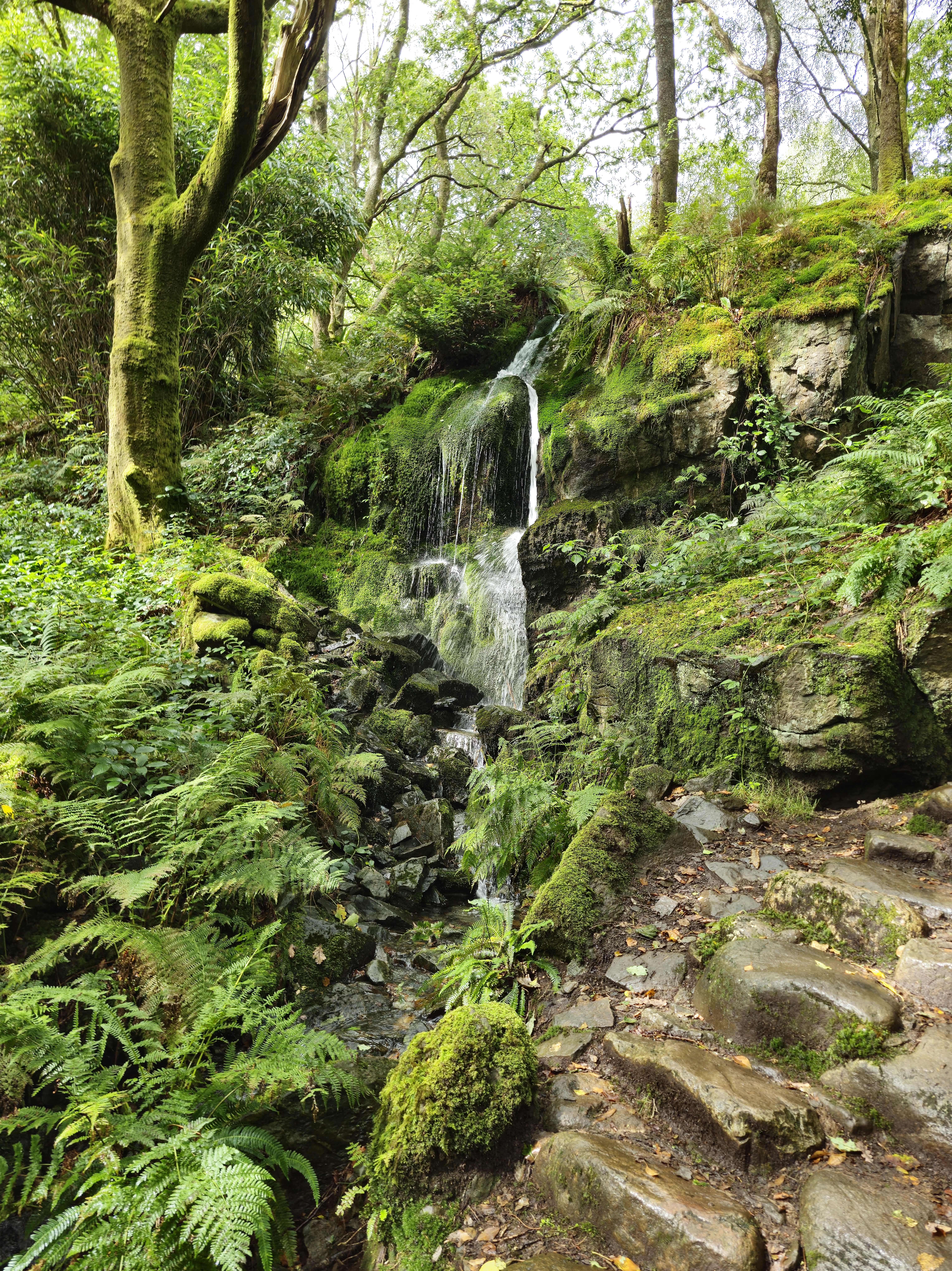
Twenty minutes later and wet through, we saw a sign for the Waterfall trail. A footpath lead through the woodland, following a waymarker to the right.

We passed the dragon bench. Too wet to sit on it though.

We walked up some steps to see a small waterfall. But we could hear loud splashing further along the path.


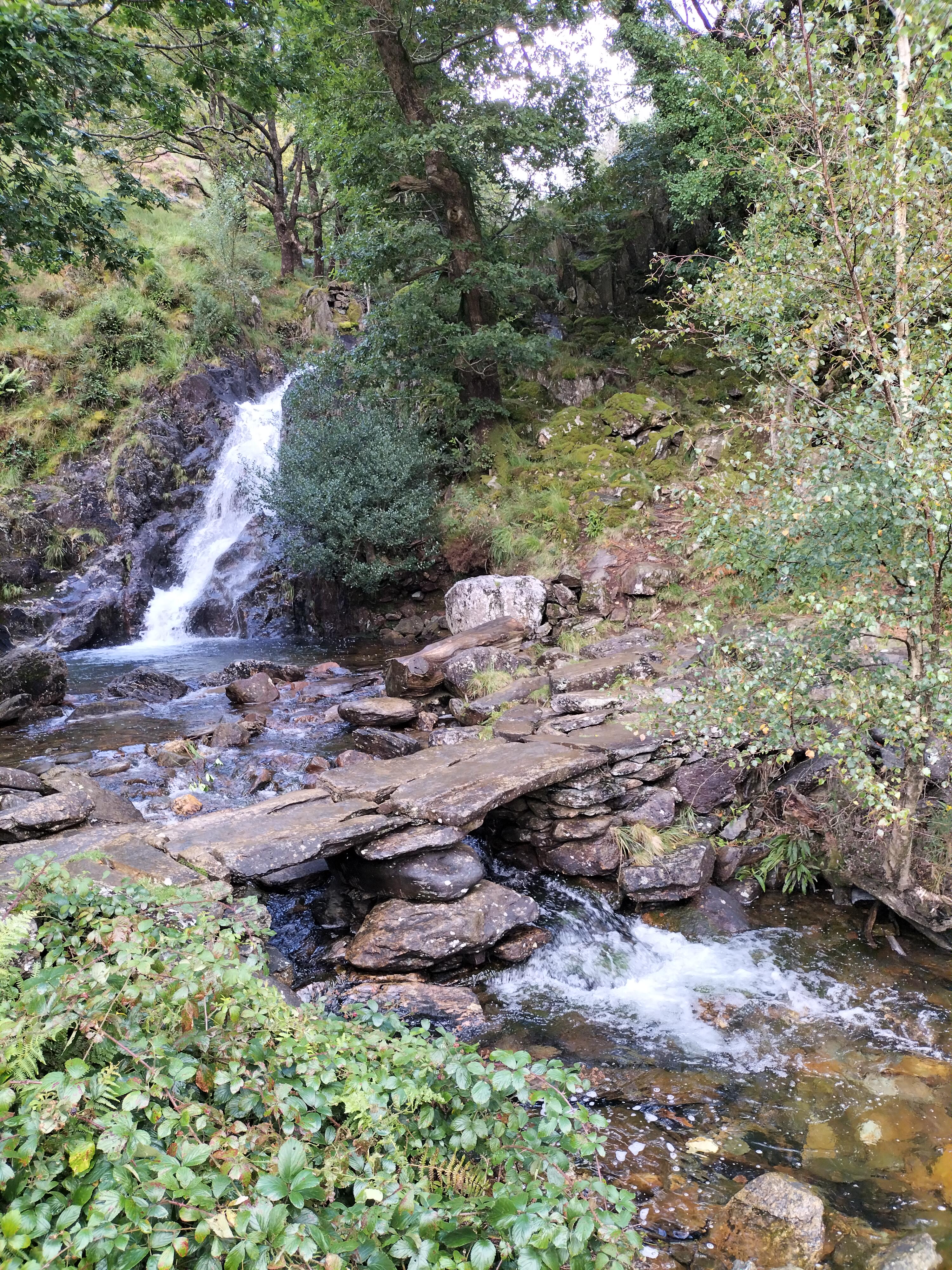
The large waterfall. Apparently deep enough to swim in.
I didn’t test that theory.

It was a wonderfully peaceful end to the day – and to our last walk of the holiday.

We’d had a great week. The photographer was keen to get home to start downloading, printing off and framimg his photographs.

I was ready to finish the proofreading of my next book, The Stranger in my House, to be published by Honno on the 14th November 2024 .

Described as…

A gripping ‘cuckoo in the nest’ domestic thriller

After the death of their mum, twins Chloe and Charlie are shocked when their dad introduces Lynne as their ‘new mummy’. Lynne, a district nurse, is trusted in the community, but the twins can see her kind smile doesn’t meet her eyes. In the months that follow they suffer the torment Lynne brings to their house as she stops at nothing in her need to be in control.

Betrayed, separated and alone, the twins struggle to build new lives as adults, but will they find happiness or repeat past mistakes? Will they discover Lynne’s secret plans for their father? Will they find each other in time?

The Stranger in My House is a gripping ‘cuckoo in the nest’ domestic thriller, exploring how coercive control can tear a family apart. Set in Yorkshire and Cardiff, from the 60s to the winter of discontent, The Stranger in My House dramatises both the cruelty and the love families hide behind closed doors.https://tinyurl.com/349ucdat

I’m happy to leave things as they are here. So, until next time … thank you for following the Photographer and I on our adventures.

The Stranger in my Home #BookLaunch #NationalWritersDay @Gwyl Lyfrau Aberaeron Book Festival #Books #Talks #Interviews #Workshop #CharacterWorkshop #SoYouWanttoWrite

National Day on Writing is celebrated every October 20. It’s a day dedicated to acknowledging the significance of writing as both a crucial skill and a form of art. This special day encourages everyone to appreciate and engage in writing activities.

So, I will be holding a workshop on forming characters at the Gwyl Lyfrau Aberaeron Book Festival. Booking available here: https://tinyurl.com/383zymrz

And the Festival Programme 2024 here:https://tinyurl.com/4jdcjntt

And, courtesy of the organisers of the book festival : https://www.gwisgobookworm.co.uk/ I’ll also be launching my latest book, The Stranger in my House, which is published bu Honno: https://www.honno.co.uk/

A gripping ‘cuckoo in the nest’ domestic thriller

After the death of their mum, twins Chloe and Charlie are shocked when their dad introduces Lynne as their ‘new mummy’. Lynne, a district nurse, is trusted in the community, but the twins can see her kind smile doesn’t meet her eyes. In the months that follow they suffer the torment Lynne brings to their house as she stops at nothing in her need to be in control.

Betrayed, separated and alone, the twins struggle to build new lives as adults, but will they find happiness or repeat past mistakes? Will they discover Lynne’s secret plans for their father? Will they find each other in time?

The Stranger in My House is a gripping ‘cuckoo in the nest’ domestic thriller, exploring how coercive control can tear a family apart. Set in Yorkshire and Cardiff, from the 60s to the winter of discontent, The Stranger in My House dramatises both the cruelty and the love families hide behind closed doors.

“Judith Barrow’s greatest strength is her understanding of her characters and the times in which they live.” Terry Tyler

The Dilemma of Promoting my Books #MondayBlog #books #readers #promoting #socialmedia

Promoting my books has always been something of a dilemma with me. Going to book fairs, giving talks, book signings, not so much; I always assume people are there because they want to be. They want to chat, to look at my books, to discuss the way I write – sometimes they way they write. It’s fun, I love meeting people. I love talking about my books, why I wrote them, how I came up with ideas, what they mean to me. The reviews readers have given them. I’m always grateful.

But how to talk about my books with people I just have met, casual acquaintances- even perfect strangers? It’s not something I do. It even makes me uncomfortable if I’m in the company of someone who does this, especially in public places, spaces that have nothing whatsoever to do with books, reading or writing. Although I admire that writer’s ability to pluck the subject of their work out of the air and present it to someone they have just met, or engineered a meeting, it’s not something I could do. After all, would I want anyone to feel cornered into buying a book, to be pressurised? Well, no, I wouldn’t. I’ve seen it happen, I’ve seen the reactions of the ‘cornered one’.

It’s a fine line in talking to a potential reader, to presenting my books to someone who might not be interested at all – who escapes with relief, albeit having had to buy a book!. Embarrassing!!

Social media, I know, is different in that there is no real life face to face appearance – it’s one step away. Even so, having followed many writers of all genres on the various platforms, I’ve seen those who singlemindedly try to sell their work, and those who use social media in it’s true sense (as a friend once said to me ” the clue is in the word ” social”). And there are those wonderful people who, so generously share the work, the promotions, the blogs and reviews of others. I’m grateful to those I have ‘met’ and become friends with in real life, as well as on social media.

And there’s another predicament for me when it comes to promoting my books – which platform am I most comfortable with. Which platform can I share general news and chat with, as well as publicity for my work … and which not.

Lately I decided to delete my Twiiter/X account. When the name changed I wondered why it had, what would be the difference, how would this formerly named Twitter be used. I have/had many friends who used and still use this platform in the way I did – to chat about life in general, to talk about books, reading, and writing.

But, gradually I saw something change on the feeds I received on Twitter/X. I’m not talking about all the “retired Generals/ Government Officials/ Admirers of our profiles etc. Bots, eager to get to ‘know’ us, that anyone on this platform (and other platforms, of course) receive. I mean the constant barrage of race/gender/political hatred, that was suddenly there. People, real people, eager for (bullying) us to join in, to follow whatever drum they are so fanatical about. For me (and I stress this is only me), it all got too much. I retreated – with a sigh of relief.

In a way it’s made me sad. Through the years I built up a moderate number of followers on Twitter; people I followed, who shared my passion for writing, for books; a lovely community. But the insiduous invasion of nastiness became something that affected me, my moods, my emotions. Perhaps I need a thicker skin? I was told by some of my real friends to ignore the constant chatter of predudice. But I couldn’t, and disn’t want to. It was too much. Circumventing these things in real life can be difficult enough, why did I need to be confronted with it on the screen? The screen where I write stories that I enjoy writing, where I chat and share emails, enjoy other social media platforms? So I made the decision and left Twitter/X.

I’m hoping by joining Instagram/Threads, and continuing on other platforms I will, eventually, connect again with the writers I got to know over many years. But, for my own peace of mind, it will never again be through Twittter/X.

Because I write about family dramas, family situations, I’ve always been aware of the relationships between people, between family members: the love, the loyalty, the friendship, the instinctive support. But also, I’m aware of and write about the dislike, the jealousy, the rivalry, the misunderstandings, the battle for control.

I don’t need it in the surreal world as well.

And so, a footnote: I’m not going to try to promote my books here. But … I do have links!! If you care to look for them…

Just a plug for my publisher: https://www.honno.co.uk/

Memories of the Cover Reveal of A Stranger in My House and a Fascinating Day at Ty Canol National Nature Reserve

Seeing the cover of the next new book revealed is always a thrill for any author, so I am elated to be able to finally show the cover of The Stranger in My House.

A gripping ‘cuckoo in the nest’ domestic thriller

After the death of their mum, twins Chloe and Charlie are shocked when their dad introduces Lynne as their ‘new mummy’. Lynne, a district nurse, is trusted in the community, but the twins can see her kind smile doesn’t meet her eyes. In the months that follow they suffer the torment Lynne brings to their house as she stops at nothing in her need to be in control.

Betrayed, separated and alone, the twins struggle to build new lives as adults, but will they find happiness or repeat past mistakes? Will they discover Lynne’s secret plans for their father? Will they find each other in time?

The Stranger in My House is a gripping ‘cuckoo in the nest’ domestic thriller, exploring how coercive control can tear a family apart. Set in Yorkshire and Cardiff, from the 60s to the winter of discontent, The Stranger in My House dramatises both the cruelty and the love families hide behind closed doors.

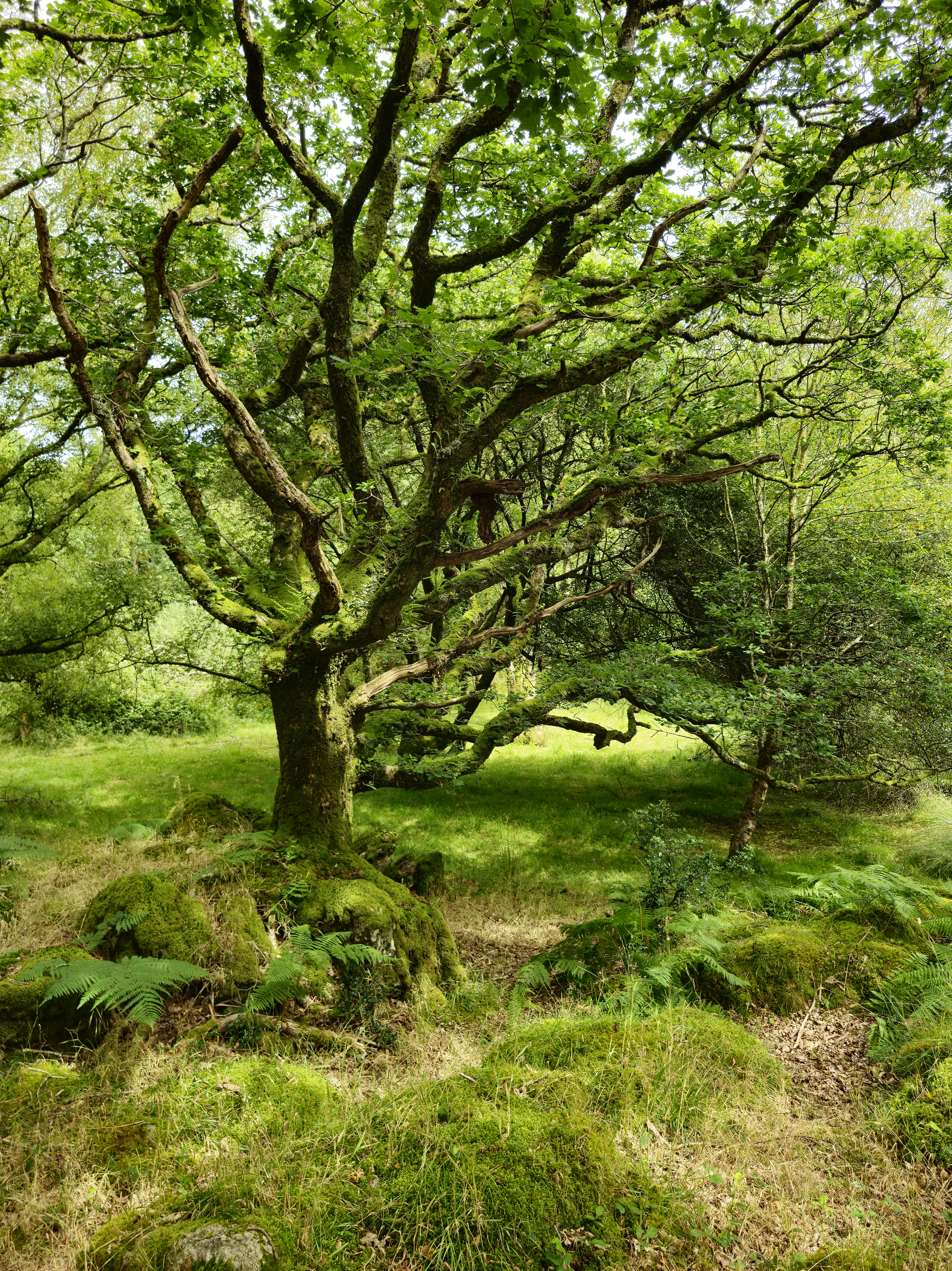
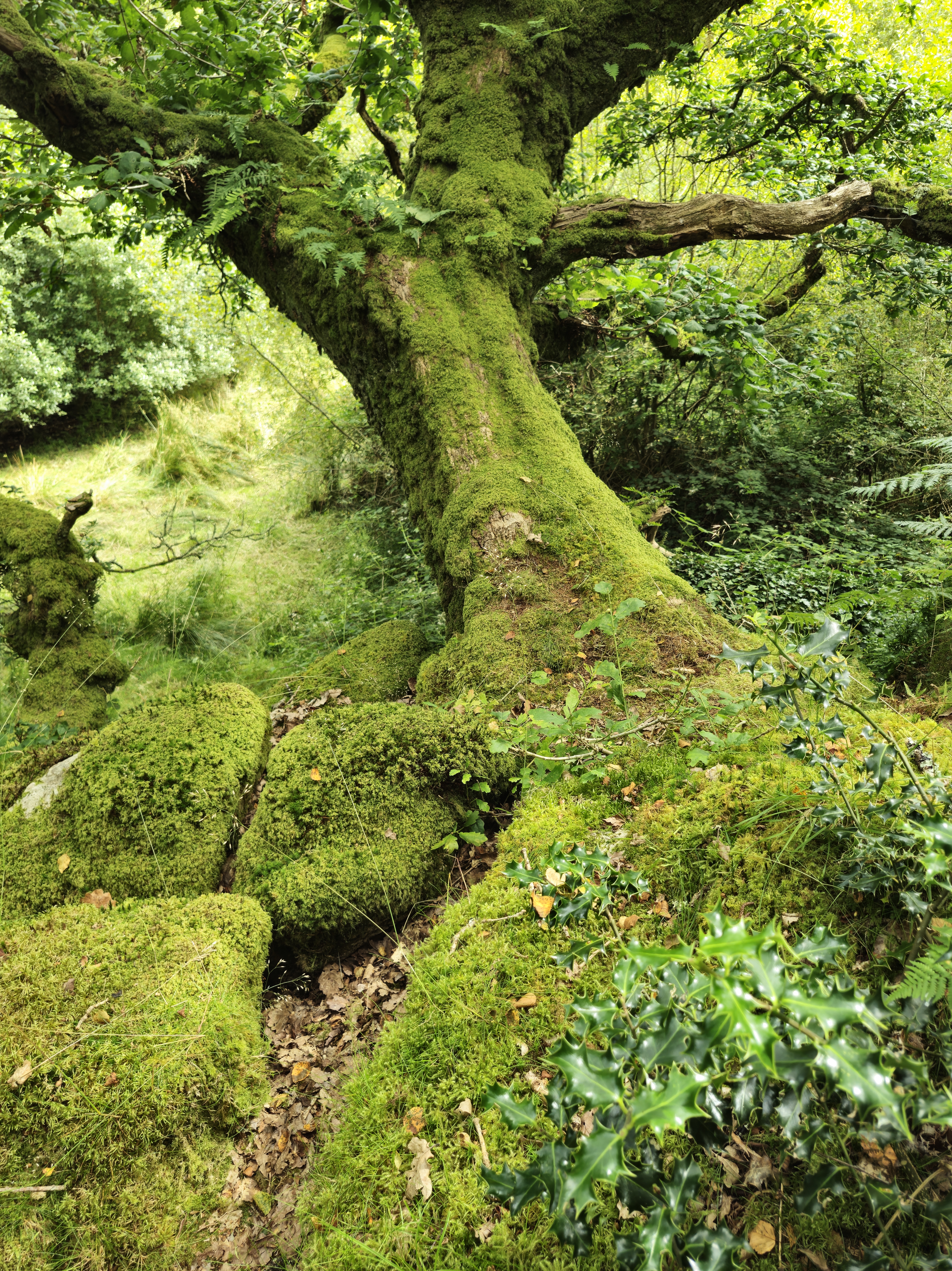
This cover reveal after a glorious day wandering walking around the Ty Canol National Nature Reserve with the friendly Pembrokeshire U3A Natural History Group.

Ty Canol is the largest block of ancient woodland in West Wales. It’s wonderfully peaceful, an atmospheric mix of ancient oak woodland and pasture, set against the backdrop of the magnificent Preseli Mountains of northern Pembrokeshire.

To the north is Hagr y Coed (translation – ‘Ugly Wood’), an area of wet sessile oak, ash, and birch woodland. South is Carnedd Meibion Owen (translation – the Cairn of Owen’s Sons), so named because of the cairns that rise from the rocky outcrop.

Many of the trees are covered by epiphyte ferns and lichen, many of the latter are extremely rare.

These are not parasitic on the supporting fallen and bent branches, they grow on them only for the support they give. Apparently there are over four hundred varieties of lichen in these woods. They thrive, both because farm animals are allowed to graze in parts of the area, and because oak trees are culled in others, thus creating areas that let in the light: ideal for the plethora of light-loving lichens

I almost expected Frodo Baggins to pop out from behind one of the twisted oaks. Ty Canol,purported to be over six thousand years old, really is a fantastical place

Ty Canol, managed by Natural Resources Wales (NRW) together with the Pembrokeshire Coast National Park Authority is part of an area famous for its achaeological sites.

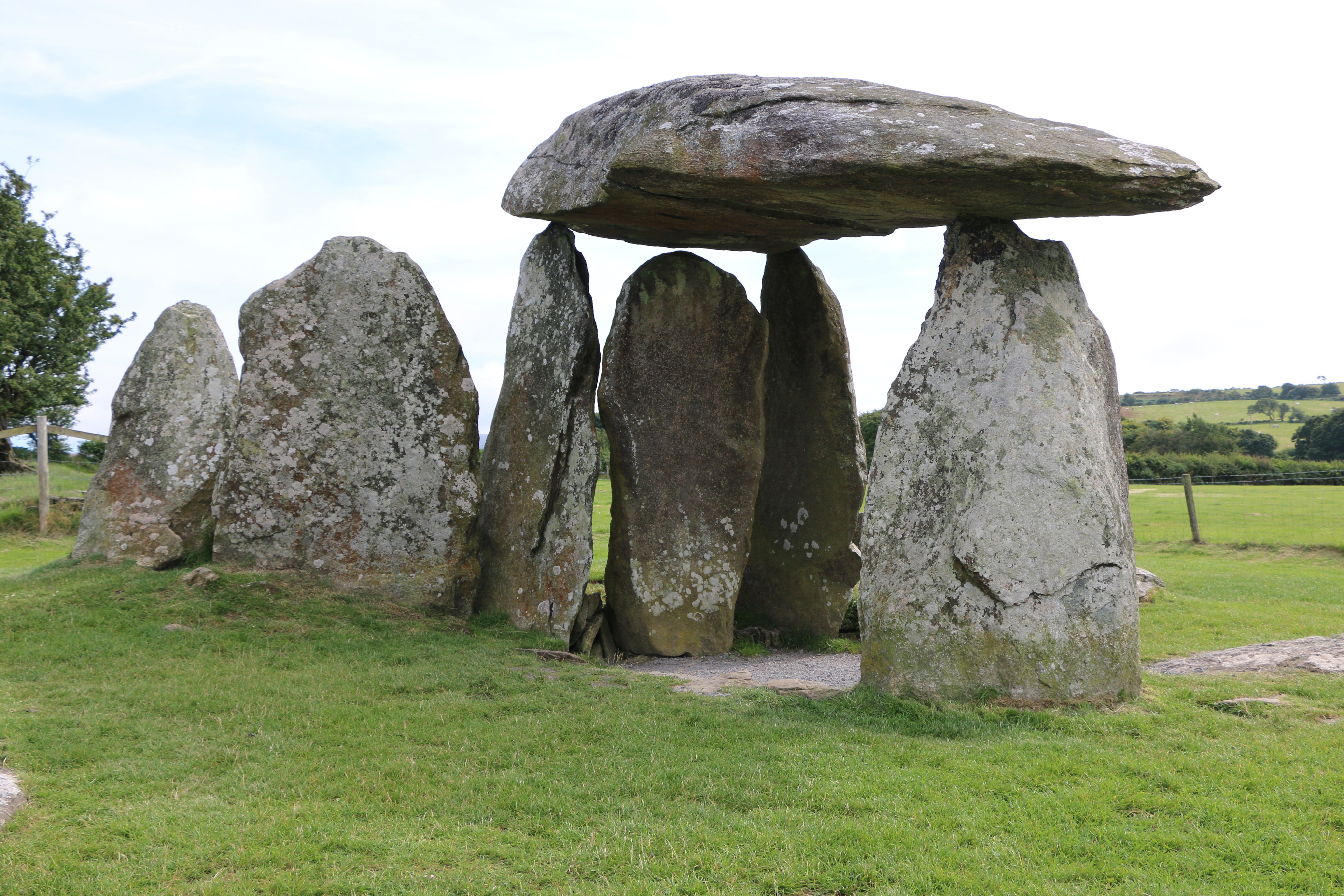
Ty Canol is the backdrop for Pentre Ifan, the famous Neolithic Chambered Dolmen that is thought to date from 3,500 BC.

This is a Cromlech or a Dolmen, typically built with several large upright stones and a cap stone on top. At the time it would have been an inderground tomb, covered by a mound of earth, but today, all the stones are exposed.

Having detoured to take a last look at Pentre Ifan we made our way back home by the scenic route of Mynydd Preseli, passing Cerrig Lladron .

By Tony Holkham at English Wikipedia,

And looking forward to Honno revealing the cover of The Stranger in My House.

Looking Back over my Writing Years – Is it Safe to Smile Now? #memories #writing #agents #publishing #MondayBlogs @Honno

Me in a thoughtful mood.

I thought I would revisit a time of my life when I despaired of ever being in print. It cheers me up as I agonise over yesterday’s efforts, altering and editing before I can even start with today’s writing and the realisation that one of my lovely characters has a cob on and won’t do as I want her to do. I’ve spent hours trying to persuade her, putting her in different scenarios, story lines. But no, she’s adamant – she wouldn’t act in that way,

So I’ve gone back to the heady day when I found an agent. And I kept a diary.


Sometime… a long time ago
.

It’s been a fortnight since I met with my agent (get me! – and it was in London and she treated me to a meal in a posh restaurant). Carried away with her enthusiasm for my writing, her promises to make me into a ‘brand name’ and her assurance that she had many contacts in the publishing world that would ‘snap her hand off for my novel’, I signed on the dotted line.


Today she telephones, summarily dismissing an offer. ‘We can do better than this.’


What? What’s better than getting this novel published? Than seeing, holding, a book in my hand that I’ve actually written? I get an offer, perfectly acceptable to me, but according to this agent, it’s not enough. ‘We’ll try other publishers, bigger publishers,’ she says
.

Image courtesy of Pixabay

I’m worried. But she knows the business.

Doesn’t she?

Still a long time ago … It’s been six months of waiting.

So far, four rejections from publishers. Couched, mind you, in encouraging remarks:


“Believable characters … strong and powerful writing … gripping story … Judith has an exciting flair for plot … evocative descriptions.”

And then the death knell on my hopes:

Image courtesy of Pixabay

‘Unfortunately … our lists are full … we’ve just accepted a similar book … we are only a small publishers … (what? The agent rejects one small independant publishers who I really liked the sound of, but then sends the manuscript to another?) …’I’m sure you’ll find a platform for Judith’s work …’

Yes, yes, we did, we did find ‘a platform’, as they put it. Or rather I did. I found a publisher: I liked their ethos, the way they presented and supported their authors – a feminist press, for goodness sake; one right up my street.

The self-doubt, the frustration, floods back. I’m never going to get the book published.
 
Still a long time ago: Another three months later.

I’ve had a call from the agent; ‘I think it’s time to re-evaluate the comments we’ve had so far,’ she says. ‘Parts of the storyline need tweaking. I’ve negotiated a deal with a commercial editor for you. It’s a realistic charge by today’s standards,’ she says. ’Think about it,’ she says. ‘In the end we’ll have a book that will take you to the top of your field.’

I think about it. Reject the idea. Listen to advice from my various acquaintances. Think about it again.

And think about it some more.

And then I ring the agent. ‘Okay,’ I say, ‘I’ll do it. I’ll pay’

I have no choice; after all she’s the expert. What do I know?

Still sometime … a long time ago (I have to keep saying “a long time ago”. just in case you think I’m still as gullible as I was then).

Another six months gone. The first commercial editor (the best, apparently) has succumbed to maternity leave. The one who was finally chosen by my agent (the second best?) has had my script all this time. I’ve already paid her.

You’re now wondering what kind of credulous idiot is this, yes? Well, let me say here that this latest saga (an apt word as my first book is actually a saga!) has been going on for over eighteen months and I’m desperate.

All creativity has gone. I can’t write anything but emails – and believe me, there are plenty on this subject. The commercial editor’s reasons (excuses) for the delay are numerous: an urgent journey to Europe to do research for a project, a family crisis (alright, I’ll believe that one) she’s ghost writing a celebrity’s autobiography (how can it be an autobiography if someone else is writing it? That always puzzles me. Surely then, it’s a biography?) Okay, okay, bitterness is creeping in.

We were supposed to be having a meeting to discuss the way forward with my book. It didn’t happen.

Now a friend, a successful and published author herself, is concerned I’m being conned. So am I! I feel foolish but say surely it’s only a few things that need tweaking.

It’s back!

I read it in disbelief; if I follow all the ‘suggestions’ it will change from being a saga into romantic fiction. Okay, I like a bit romance; don’t we all? The book does have some romance threaded throughout, but it also crosses other genres: history, crime, domestic thriller.

I ring my agent,

‘Yes,’ she says, ‘it is a little more drastic than I expected but go with it.’

I tried- really I did. For two months I worked. With less and less interest. In the end I stopped. I didn’t recognise my story; I had no empathy with the characters. It wasn’t my book any-more.

So…

I made a decision, one of the biggest I’ve ever made. I sent a letter terminating our contract. Despite persuasive tactics from her I don’t waiver.

In trepidation I start again; I contact the publisher I first found, submit my manuscript. And wait

They will meet with me. No promises…

 Pattern of Shadows, the first book of my Haworth trilogy published by Honno finally made the shelves.

This is my favourite review of all time for the trilogy: Mary’s story: WWII in Howarth family generational saga: “Every now and then, I come across books so beautifully written that their characters follow me around, demanding I understand their lives, their mistakes, their loves, and in this case, their families. Taken together, the Howarth Family stories are an achievement worth every one of the five stars I’d give them.”

Sixteen years late I’m still with Honno.

And, in November, Honno will be publishing my eighth book with them. Cover reveal on the 30th July… so tomorrow!! Hooray!!!

The Stranger in My House.


A gripping ‘cuckoo in the nest’ domestic thriller

After the death of their mum, twins Chloe and Charlie are shocked when their dad introduces Lynne as their ‘new mummy’. Lynne, a district nurse, is trusted in the community, but the twins can see her kind smile doesn’t meet her eyes. In the months that follow they suffer the torment Lynne brings to their house as she stops at nothing in her need to be in control.

Betrayed, separated and alone, the twins struggle to build new lives as adults, but will they find happiness or repeat past mistakes? Will they discover Lynne’s secret plans for their father? Will they find each other in time?

The Stranger in My House is a gripping ‘cuckoo in the nest’ domestic thriller, exploring how coercive control can tear a family apart. Set in Yorkshire and Cardiff, from the 60s to the winter of discontent, The Stranger in My House dramatises both the cruelty and the love families hide behind closed doors.

“Judith Barrow’s greatest strength is her understanding of her characters and the time.” TerryTyler

A writing and Gardening day. And a Small Mention of the Cover Reveal of The Stranger in my House. #Sundaythoughts #photographs #garden #Bosherstonlilyponds

It’s a writing, The Archers on Radio Four, Sunday lunch, and a gardening day – the latter if the rain holds off. Oh, and a small mention of the cover reveal by Honno, of my next book, The Stranger in my House…. on Tuesday 30th July 2024.

The garden is looking quite good, even after a day and night of being drenched in Pembrokeshire rain.

Photos of Bosherston Lily Ponds, courtesy of Husband, on one of the few sunny days. Lovely now – but when the lilies are out, even more gorgeous.

Swans again – but from a safe distance!!

Must get on…

Hope you all have a lovely Sunday, wherever you are. x

Memories Make the Story #MondayBlogs #Memories #families #sisters #secrets

Many people have asked me what was the inspiration for The Memory and my answer is always – memories: memories of being a carer for two of my aunts who lived with us, memories of losing a friend in my childhood; a friend who, although at the time I didn’t realise, was a Downs’ Syndrome child. But why I started to write the story; a story so different from my other four books, I can’t remember. Because it was something I’d begun years ago and was based around the journal I’d kept during that decade of looking after my relatives.

But what did begin to evolve when I settled down to writing The Memory was the realisation of why I’d been so reluctant to delve too far into my memories. The isolation, the loneliness, that Irene Hargreaves, the protagonist, endures; despite being married to Sam, her loving husband, dragged up my own feelings of being alone so much as a child. That awareness of always being on the outside; looking in on other families, relationships and friendships had followed me; had hidden deep inside my subconscious. And now, as content with my life as I am, it unsettled me.

Many people, and as an occasional creative writing tutor I’m one, say that writing is cathartic. Working through Irene’s memories; especially that one memory that has ruled her life, made me acknowledge my own. And that’s fine. I always say to my students, if you don’t feel the emotions as you write, then neither will your reader.

In The Memory I’m hoping the reader will sense the poignant, sad times with Irene, but will also rejoice with her in the happier memories.

Over the last few years I’ve moved from writing the historical family sagas of Haworth trilogy, that moves through the decades from 1914 – 1968, and The Heartstone, set during WW1, to contemporary fiction such as The Memory (which was shortlisted for the Wales Book of the Year 2021 The Rhys Davies Trust Award) and domestic thrillers, such as Sisters.

My next book, due to be published in November 2024 is The Stranger in My House:

“A gripping ‘cuckoo in the nest’ domestic thriller.”

After the death of their mum, twins Chloe and Charlie are shocked when their dad introduces Lynne as their ‘new mummy’. Lynne, a district nurse, is trusted in the community, but the twins can see her kind smile doesn’t meet her eyes. In the months that follow they suffer the torment Lynne brings to their house as she stops at nothing in her need to be in control.

Betrayed, separated and alone, the twins struggle to build new lives as adults, but will they find happiness or repeat past mistakes? Will they discover Lynne’s secret plans for their father? Will they find each other in time?

The Stranger in My House is a gripping ‘cuckoo in the nest’ domestic thriller, exploring how coercive control can tear a family apart. Set in Yorkshire and Cardiff, from the 60s to the winter of discontent, The Stranger in My House dramatises both the cruelty and the love families hide behind closed doors.

Sisters

The Memory

The Heart Stone

Discover the Haworth trilogy

Prequel to the Haworth trilogy

https://tinyurl.com/3m5xhnsu

A Home is a Safe Haven … or Should Be #Promotion #Families #Sisters

A home is a safe haven, a place we live with our families. A place to build memories as well as a basis to build a future. A place where we can just be ourselves.

But what if it’s not?

What happens when there is a family disaster and one member of that family is seen to be at fault? Tension inevitably builds, judgements are made. Whether it’s a total catastrophe or an avoidable misfortune, ifthe finger is pointed, estrangement can follow.

Some of these rifts develop over long periods of time, following a series of mistakes and carelessness, whilst others are brought about by a sudden, unexpected tragedy. Often, when it’s the latter, when it’s something so dreadful, so unforgivable, that the hurt within the family is too great, there seems to be no choice but to expel that member off, to disown them. They are denied a voice, become vilified.The estrangement widens and over the years layers of resentful memories build up.

The misery is more palpable when the alienation is between children. Sibling relationships can be one of the most enduring connections we have in our lives. Usually they are the first people we bond with, after our parents. When that bond is forcibly broken it can lead to unimagineable heartbreak.

Families can be complicated. That’s an obvious statement. And where there are families, there are quarrels, and there are often estrangements. And there are stories. And these are the stories that are threaded through all my books.

None more so than in Sisters, a story built around one of the most devastating tragedies a family can endure.

Sisters is on promotion at 99p ” A moving study of the deep feelings – jealousy, love, anger, and revenge – that can break a family apart”

Readers have asked what was the inspiration for Sisters. I can only answer that it was an incident that I witnessed as a child. An event that tore in two a family that lived nearby. It’s something I’ve never forgotten.

I’ve had some wonderful reviews for Sisters. This is one of my favourite

Review: http://tinyurl.com/3yjkz7ku

I’m going to borrow some words I used when I reviewed The Memory – “absolutely compelling, a story superbly told, and an entirely unforgettable emotional experience”. I used the word “stunning” a few times too – and although this is a very different book, the words seem equally appropriate. With this book, the author has produced another that packs a considerable emotional punch, coupled with an original story that had me pinned to the seat as I read it from cover to cover in one sitting.

A short prologue hints at what is to come, but the book opens in 1970 – with a family who will be torn apart by a tragic accident, where the blame settles with young Mandy, and its consequences are devastating. Sent to live with her uncle and aunt in Wales, they uncover the truth about what happened – that she was unable to share with her parents – and show her the love she needs to move on, to build a new life as Lisa, and to rebuild her relationship with her mother. Meanwhile her older sister Angie, wracked with guilt after setting up an alibi to escape any consequences for her own actions, flees her home and her life follows a difficult path that will prove hard to escape. The narrative resumes in 1983 – when Lisa returns for her mother’s funeral, she finds that her estranged sister’s earlier actions and later life choices have trapped her in a marriage fraught with abuse, both physical and emotional, with no means of escape. Angie’s husband has an agenda all of his own – and, along with a friend from their shared past, the sisters need to work together to bring down a man capable of appalling acts and cruelty who has become a most unlikely pillar of the community.

My goodness, the author’s telling is so much better than that – but this book is far more than its story. Mandy’s voice – that of a confused child, torn between her own grief, her sense of right and wrong, and her love for her family – tears at your heart. We hear Angie’s voice too – the way she deals with her own guilt and justifies her actions – and any sympathy is, at first, difficult to find. The father who rejects his own child, and the mother who condones it – that’s even more complex. But when Mandy – now Lisa – achieves some redemption, we see Angie’s life heading in a different direction. And while there might be some possibility that she reaps what she deserves, the reader’s compassion builds when we see what a mess she’s made of her life. Her husband is the truly evil one, who will stop at nothing to get what he wants – but the strength of character that Lisa has developed, and that really emerges through the writing, means that there might just be some possibility of him being stopped in his tracks.

And I’m back telling the story again – and I really don’t mean to. The character development is tremendously strong – but so is the story’s backdrop, the community that closed ranks against a small child bullied mercilessly and driven from her home, and the differences once thirteen years have passed. And there are the small background details that capture the context and era for both the past and present story – so subtle you barely notice, and really cleverly done. But the most unforgettable thing about this book is the way it makes you feel, by skilfully telling a story that can’t fail to engage the full range of your emotions. And it never feels like manipulation – these are real people who you grow to care deeply for through the course of their experiences. The book’s conclusion is satisfying in every possible way – and this is the point when I really won’t tell you the story, because that would be entirely unforgivable.

A family drama, perhaps a thriller in parts – perfectly structured and beautifully written, tender and gritty, this is a book that defies placing within one genre, and is all the better for it. All I can say is that I entirely loved it – one of my books of the year, and I couldn’t recommend it more highly.

Sample:

Part Four June 1981

Chapter Forty-Three

I’m holding the rail at the top of the steps of the bus and peering through the window. It doesn’t help that it’s dirty and smeared with rain. But I can see Micklethwaite is run-down. Shabby.

Though the doors squeal open I can’t make my legs move. I don’t look at him, but I can sense the driver’s impatience and curiosity, and worry for a moment that he’s recognised me. He’s older, but I know he’s the man who used to be the school caretaker. Can’t remember his name but I wait for him to speak. The old familiar fear prickles my skin, I gulp against the sudden tears thick in my throat.

But all he says is, ’On or off, miss?’

I don’t look round at him when I go down the steps clutching my only luggage, my small, blue suitcase. I’m not intending to stay in Micklethwaite long. Standing on the edge of the flagged square, I look around at what used to be the new shops and flats. It’s depressing, exactly as Mum described it last time she was in Ponthallen. She’d said it had deteriorated beyond recognition and she was right. Most of the shop fronts are boarded up, the windows of the flats above covered in yellowed net curtains or wrecked blinds hanging lopsided. Empty crisp packets and torn greasy chip cartons wrap themselves around the iron railings once fixed to protect the young saplings, now fragmented twigs.

Except for a group of hooded youths slouched in front of an off-licence, the windows plastered in red and orange posters to entice customers in with offers of knocked down beer and wine prices, there’s no one around. What had been there before?

I can’t remember. Then it comes to me; it was the hairdressers, Mavis’s Waves and Curls. Mum used to come out of there once a month with the same tight perm that all the other women had. And each time, red-faced with an embedded line from a hairnet across her forehead, Mum swore she’d find a different hairdresser. Each time it had taken until the evening for that line to fade.

 Angie and I used to tease Mum about it.

The thought makes me feel wretched, broken. Broken was how I felt the last time I was in Micklethwaite, carrying a burden that would be with me all my life. I didn’t think of it in that way then; after all I was just a kid. But I do know no one wanted me here at the time. The sideways glances of hatred and recrimination drove away that feeling of belonging. It’s odd; I haven’t thought of it as home for a long time. I belong in Ponthallen now.

And as for Angie ‒ Angela, I’m not sure how I’ll feel when I see her. It’ll be the first time in over eleven years. The first time I’ll speak to her after my life altered completely because of her.

Links:

Amazon UK: http://tinyurl.com/2r2bu3z4

Amazon.com: http://tinyurl.com/7cw4ss8b

Amazon.com aus: http://tinyurl.com/4rh35v6d

Social Media links:

https://judithbarrowblog.com/


https://twitter.com/judithbarrow77


https://www.facebook.com/judith.barrow.3


https://www.honno.co.uk/authors/judith-barrow

https://www.bookbub.com/profile/judith-barrow
Our One and Only Adventure in a Helicopter #MondayBlogs #Memories #photographs #Adventures @NewZealand @MountCook

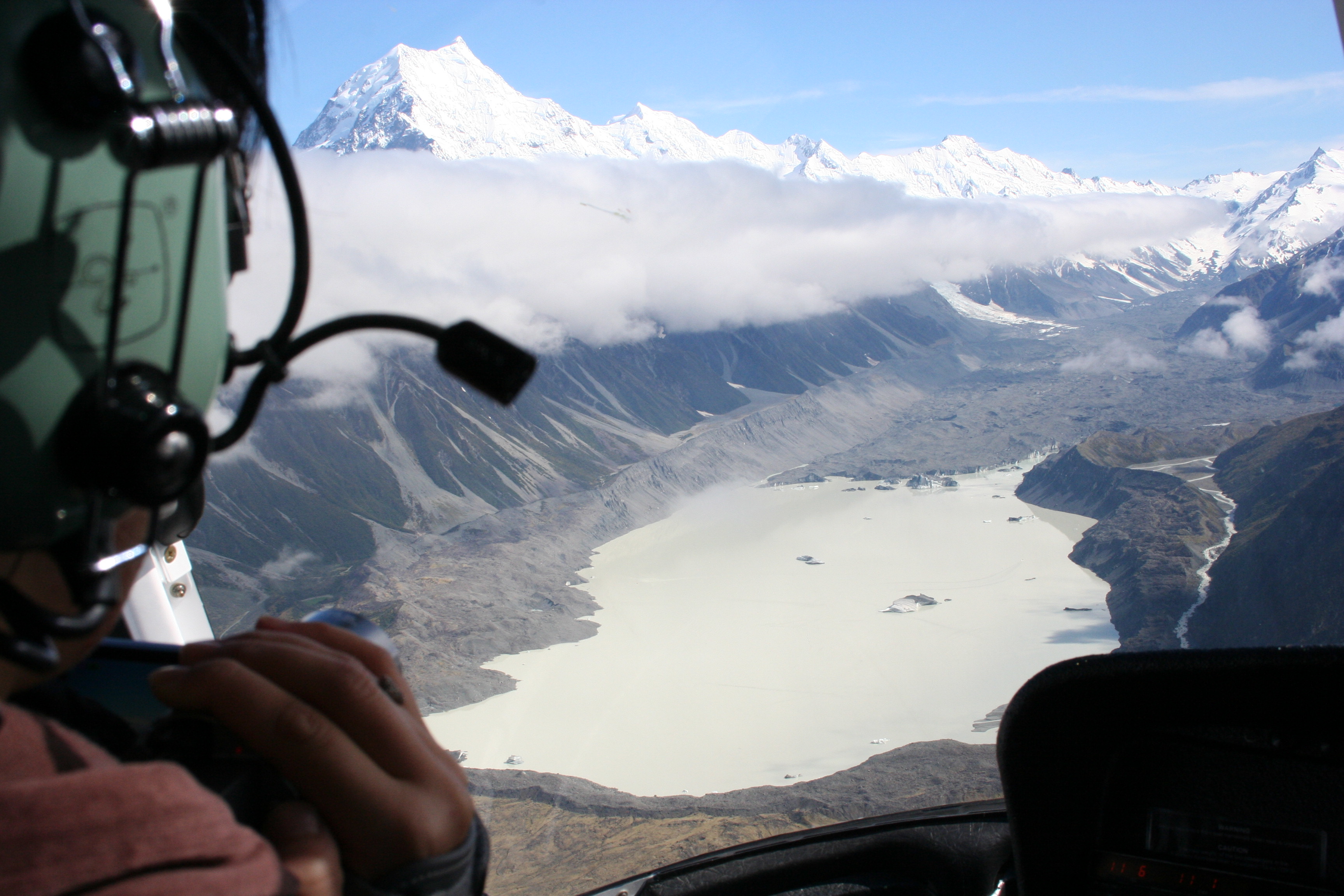
We’d wanted to go to New Zealand for years. And one of us had wanted to go in a helicoptor for … well… for a long time. So, when the opportunity came, and finances allowed, we went. What I didn’t know was that someone had booked a trip to the summit of Mount Cook.

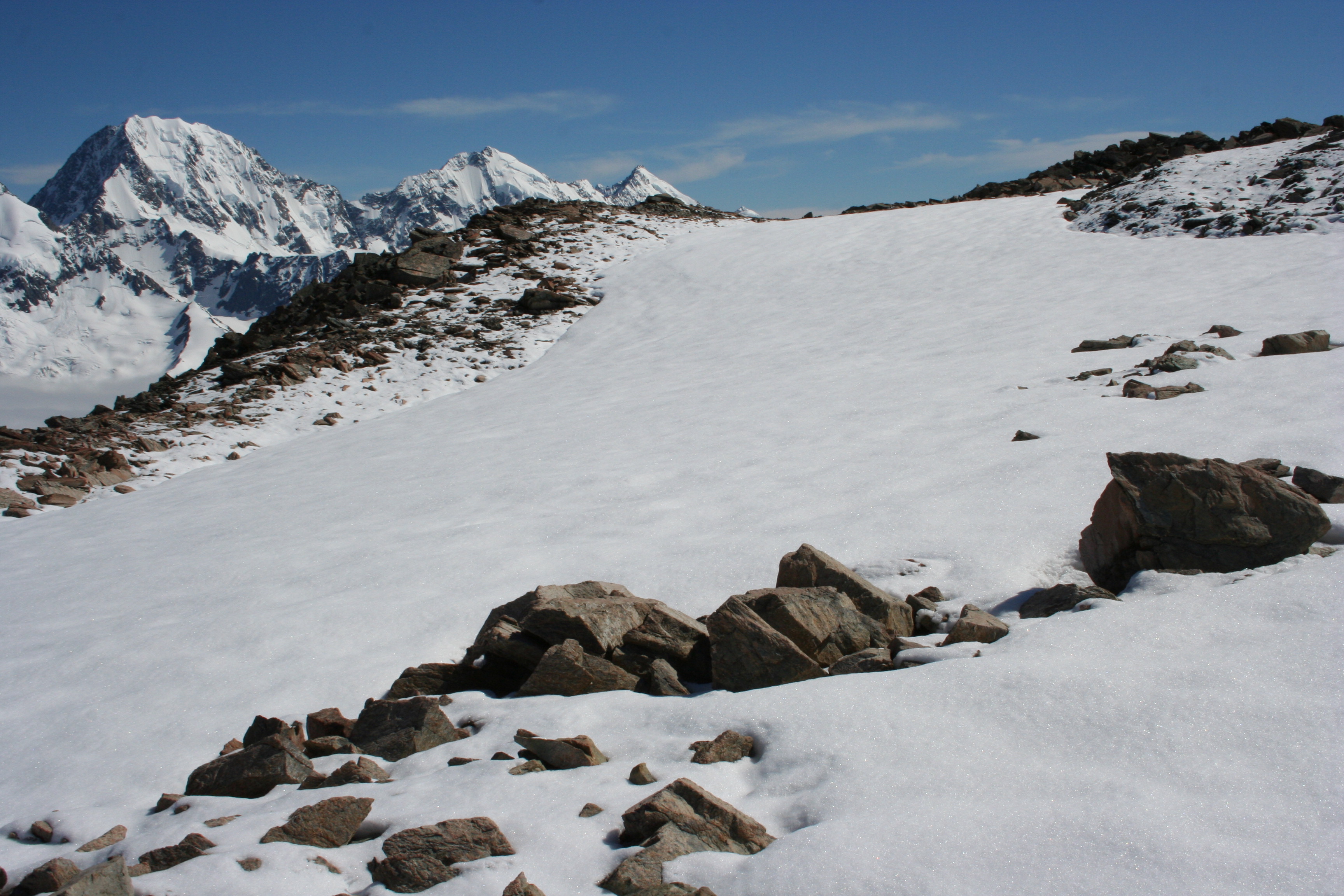
The New Zealand Southern Alps are a range of mountains formed millions of years ago by the clashing of the Pacific and Indo-Australian tectonic plates. Mount Cook (also called Aoraki – Cloud Piercer) at 3753 metres is the highest peak. And the highest place I’ve ever been – and most probably ever will go. It was truly spectacular. And, if I’m honest, rather Intimidating. But, if we’d gone before 1991, it would have been even more nail-biting. In that year a mighty avalanche sent millions of tons of debris crashing onto the glacier below, losing ten metres from the summit and completely changing the eastern face of the mountain.

Mount Cook is bordered by two glaciers: the Tasman Glacier to the east and the Hooker Glacier towards the west coast. I think, at this stage I was just hoping we could land safely… and not on a glacier.

Mount Cook, helped Sir Edmund Hillary to develop his climbing skills in preparation for the conquest of Everest at the age of thirty-three.On the twenty-ninth of May 1953, at around 11:30am he and his Sherpa mountain guide Tenzing Norgay successfully reached the summit of Mount Everest (8844.43m), becoming the first man to stand on the top of the highest mountain in the world.

The first recorded ascent of Mount Cook is by the New Zealand climbing trio of Jack Clarke, Tom Fyfe and George Graham, who reached the top of the mountain on Christmas day in 1894.

According to Māori (Ngāi Tahu) legend, Aoraki and his three brothers were the sons of Rakinui (the Sky Father). While on a sea voyage around the Papatūānuku, (the Earth Mother) their canoe became stranded on a reef. Aoraki and his brothers climbed onto the top side of their canoe when it overturned. The freezing south wind turned them to stone.

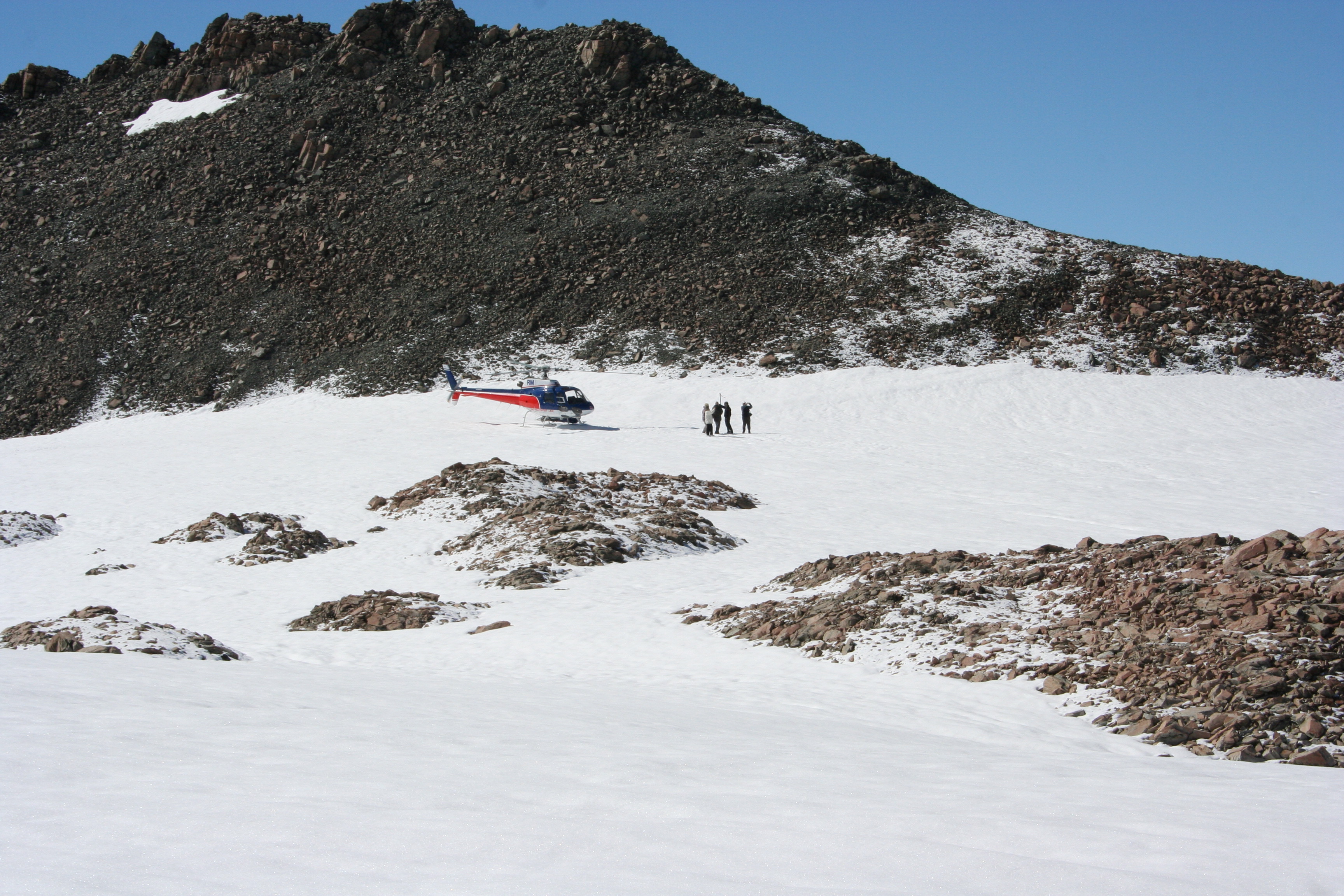
Those tiny figures are us, together with the other passenger and the pilot. As I’d glued the photographer to my side when we first got out of the helicopter, I haven’t a clue who took this photo! Whoever it was, they didn’t get back in the helicopter with us. There could be a story somewhere in that!

It was rather bright… and cold… and windy. The photographer clutched tight hold of his camera. And, as I said, I clutched tight hold to him.

I think by the time he’d finished we had about fifty photographs of the summit and surrounding mountain peaks. He does like to take every angle from all accessible places. I did get a little worried at times at his definition of accessible.

Back safe! It occurred to me afterwards, when I looked back on some of the more difficult hikes we’ve done, how different it is being in control of where your feet go on rocky trails, and how nervous I was actually standing on top of Mount Cook when I knew there was only one way down!

I think this is his “we did it” stance. And let’s go again!

But I was happy to go to the Aoraki Mount Cook village (known mostly for being the top South Island basecamp for climbers, where about only two hundred and fifty people live and there are only around ten pupils in the local school; New Zealand’s only school inside a national park) for some much needed refreshments.

And, anyway, the clouds had descended once more and all flights were off for the day. Phew!!

Trust and Secrets: The two things in families that make or break the familial bond.

Trust is the one thing that families should be able to take for granted. Trust born from love, from the belief that each member knows the other because they have lived together, seen the weakness and strength of each other. Having faith in each other means there is trust in theirselves, in their judgements, in the confidence that they are implicitly correct in that conclusion. But of course trusting can be the automatic option, the unquestionable. It also avoids any confrontation between siblings, parents, relatives. It means that every one can get on with their lives, not having to think too hard about the actions of everyone else in the family. It’s taken for granted that each believes whatever they are told. Don’t question. In turn it’s accepted that each can also reveal whatever they want to disclose about themselves, their thoughts, their actions. And take for granted that they are believed.

There is only one problem with that premise. Everyone is alone in their heads. No one (whatever anyone believes to the opposite) can read minds. What we present to the world, the façade we choose to show is our decision.

 And that is where the secrecy comes in. Although it’s undeniable that every family has its secrets, it’s the substance of them that count. Of course secrets can also be trivial, small, kept in a loving way (a celebratory surprise, a present) or as a kindness, hiding something that is better kept under wraps if the person keeping it believes that.

On the other hand, harrowing, life-changing secrets can damage an entire family for some time. Even forever. Those kinds of secrets break that instinctive trust, that belief that those closest to us, who we love and respect, are truthful. Are not lying.

Families can be complicated. That’s an obvious statement. And where there are families with secrets, there are stories. And these are the stories that are at the root of all my books.

Links:

The Stranger in my House

The Memory

Sisters:

Social Media links

https://judithbarrowblog.com/


https://twitter.com/judithbarrow77


https://www.facebook.com/judith.barrow.3


https://www.honno.co.uk/authors/judith-barrow

https://www.bookbub.com/profile/judith-barrow
Libraries are Important. #Readers #Books #Libraries #Librarians #Pembrokeshire #Wales

Image courtesy of Pixabay

When I was a child my mother took me every Saturday to the small library in our village. I was allowed six books – usually all read by the Wednesday (I was one of those kids who read by torchlight under the bedclothes – and got away with it for years!) I would then wait, not always patiently, until the weekend, when we would go again. I think it was a great relief to both my mother and myself when I was at last allowed to walk to the library by myself.

By the way… In the very olden days libraries were named from the Latin “liber”, meaning “book.” In Greek and the Romance languages, the corresponding term is “bibliotheca”. Or, if you want to go with the medieval version “Calque of Old English bōchord (‘library, collection of books’), equivalent to book +‎ hoard.”

Just thought you might want to know that.

Anyway, when I was a child – libraries were just… libraries. The place one went to to borrow books. For free!!

Image courtesy of Pixabay

Today, libraries are still one of the few free services left. Libraries are used for many different reasons; they contain not only books. magazines, newspapers, manuscripts, but also CDs, DVDs, e-books, audiobooks etc. They connect us to information. And, important in these days, they are also community hubs where authors (if they’re lucky) can go to give talks, hold workshops. It’s where people can connect with other people. They are safe havens.

Reading for pleasure, is one of the most important things one can do, so what we need to make sure of is that future generations have the opportunity to do just that. Books represent the chance for us not only to enjoy the work of so many brilliant writers, but to also to grow, to change, to see life from other points of view. We will only ever see life through our own perspective … unless we read.

In our area, the Pembrokeshire County Council has approved its budget for 2023-24. We will have a Council Tax rise of 7.5%. It would be wonderful if the value of libraries and librarians were understood; if those in authority – those with access to their council budgets – acknowledged this importance for every generation. If enough funding were to ploughed into libraries to preserve them.

Image courtesy of Pixabay

Each month on the Libraries Wales website, they focus on introducing an author based in or writing about Wales. I am thrilled to be the author for April 2023. And I am more than happy, alongside other friends who are also writers, to talk about the value of books and the enjoyment of reading. Just give us the chance!!