A Hundred Tiny Threads #Prequel #familysaga #histfiction #WW1 #reviews #family #relationships #Poetry

It’s eight years this month since the prequel, A Hundred Tiny Threads, to the Haworth Trilogy was published – so a little celebratory post – with an extra personal memory at the end – for one of my oldest books.

It’s 1911 and Winifred Duffy is a determined young woman eager for new experiences, for a life beyond the grocer’s shop counter ruled over by her domineering mother.

The scars of Bill Howarth’s troubled childhood linger. The only light in his life comes from a chance encounter with Winifred, the girl he determines to make his wife.

Meeting her friend Honora’s silver-tongued brother turns Winifred’s heart upside down. But Honora and Conal disappear, after a suffrage rally turns into a riot, and abandoned Winifred has nowhere to turn but home.

The Great War intervenes, sending Bill abroad to be hardened in a furnace of carnage and loss. When he returns his dream is still of Winifred and the life they might have had… Back in Lancashire, worn down by work and the barbed comments of narrow-minded townsfolk, Winifred faces difficult choices in love and life

A couple of reviews:

“When I emerged at the end of this book – during the reading, my immersion was total – it was with a sense of having experienced it all first hand, and of having deeply felt every moment. This was story-telling at its very best… and a book that will long linger in my memory.”

“I loved it… A page-turner that keeps you hooked. The story line has lots of twists and turns and you feel yourself moved on so many different levels. As the book unfolds it gives you moments of tenderness and love, hatred and spite all blended together with conflict, prejudice, guilt, grief and a desperate longing for change. Judith describes the period so well, with some very graphic, cruel and harrowing episodes, enabling you to empathise with each character in turn. I particularly like the fact that the story held together to the last page.”

Three year earlier, on the exact date – the 17th August – the book was published, I’d written the following…

My Grandad

grandad for sally's blog

My grandfather died seventy years ago this week. Obviously i never knew him and have only one small black and white photograph of him on my study wall. He’s standing in the backyard of the terraced house they lived in in Oldham. Lancashire. This is a poem I wrote about him a long time ago. My mother said he was gassed in WW1 and never recovered. 

My Grandad

I look at the photograph.

He smiles,and silently

he tells me

his story…

In my backyard I stand,

Hands wrapped around a mug of tea.

Shirt sleeves, rolled back,

Reveal tattoos – slack muscles.

I grin.

All teeth.

Who cares that they’re more black

Than white.

Underneath

That’s my life;

That’s the grin I learned

When burned

By poison

Spreading

Like wild garlic.

That’s the grin I wear

When I look

But don’t see

The dark oil glistening,

Blistering, inside me.

When I hear, but don’t listen

To my lungs closing.

I posture,

Braces fastened for the photo,

Chest puffed out.

Nothing touches me –

Now.

Later I cough my guts up –

Chuck up.

I trod on corpses: dead horses,

Blown up in a field

Where grass had yielded

To strong yellow nashers.

And in the pastures

I shat myself.

But smelled no worse

Than my mate, Henry, next to me

Whose head grinned down from the parapet –

 Ten yards away.

He has perfect, white teeth.

Much good they’ve done him,

Except for that last night at home

When the girl smiled back.

The Winter of Discontent: The Background to Part Two of The Stranger in my House. #CreativeControl #Families

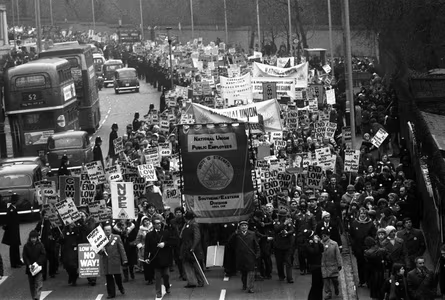
Part Two of The Stranger in my House is set against what is now called the Winter of Discontent – A term that comes from Shakespeare’s play Richard III, but it was used in an interview by the then Prime Minister James Callaghan and was taken up by the media. It lasted between November 1978 to February 1979 in the United Kingdom and, following opposition from the Trades Union Congress (TUC), took on the form of widespread strikes by both the private and public sector. Trade unions demandied pay rises greater than the limits Prime Minister, James Callaghan, and his Labour Party government imposed in an effort to control inflation.

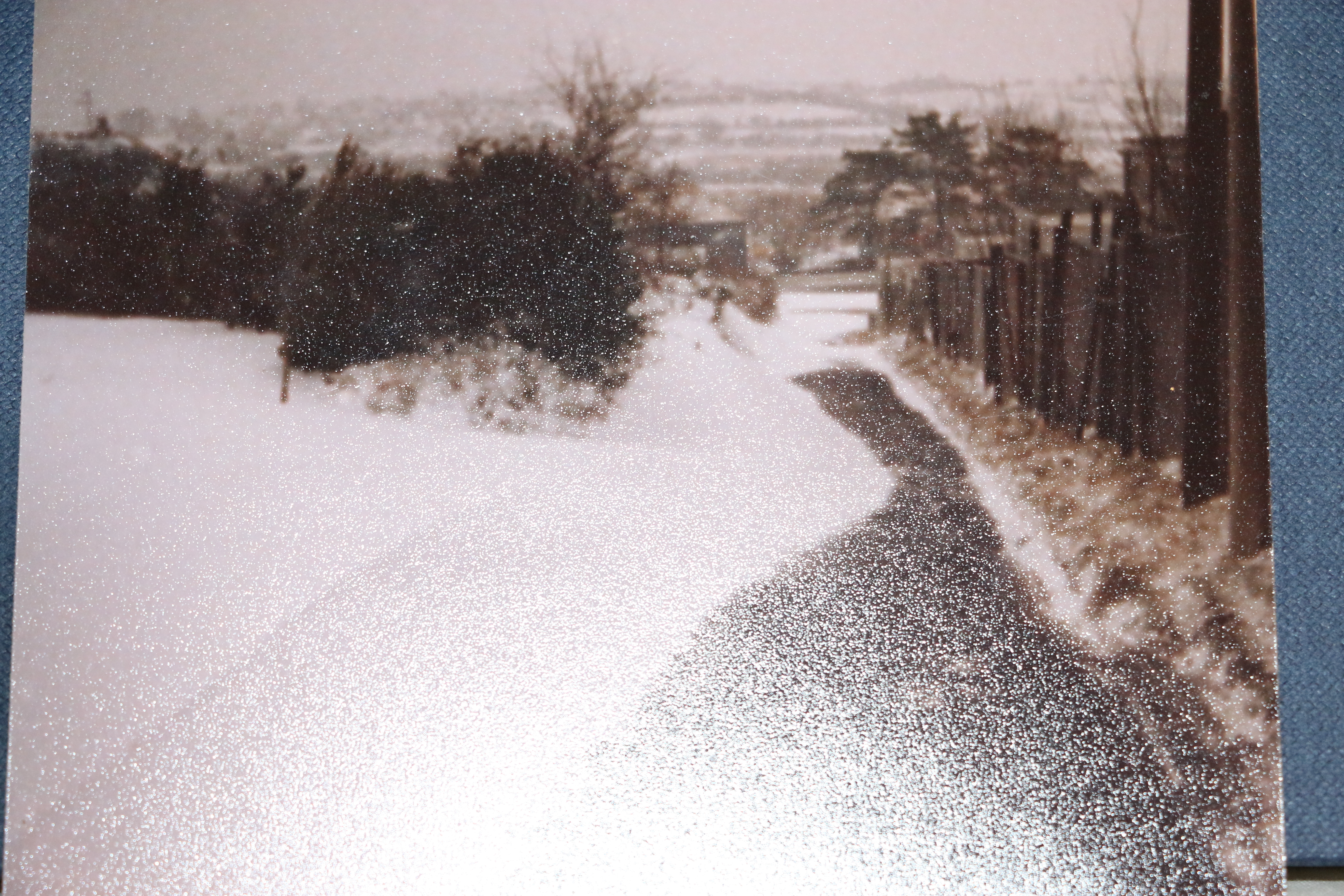
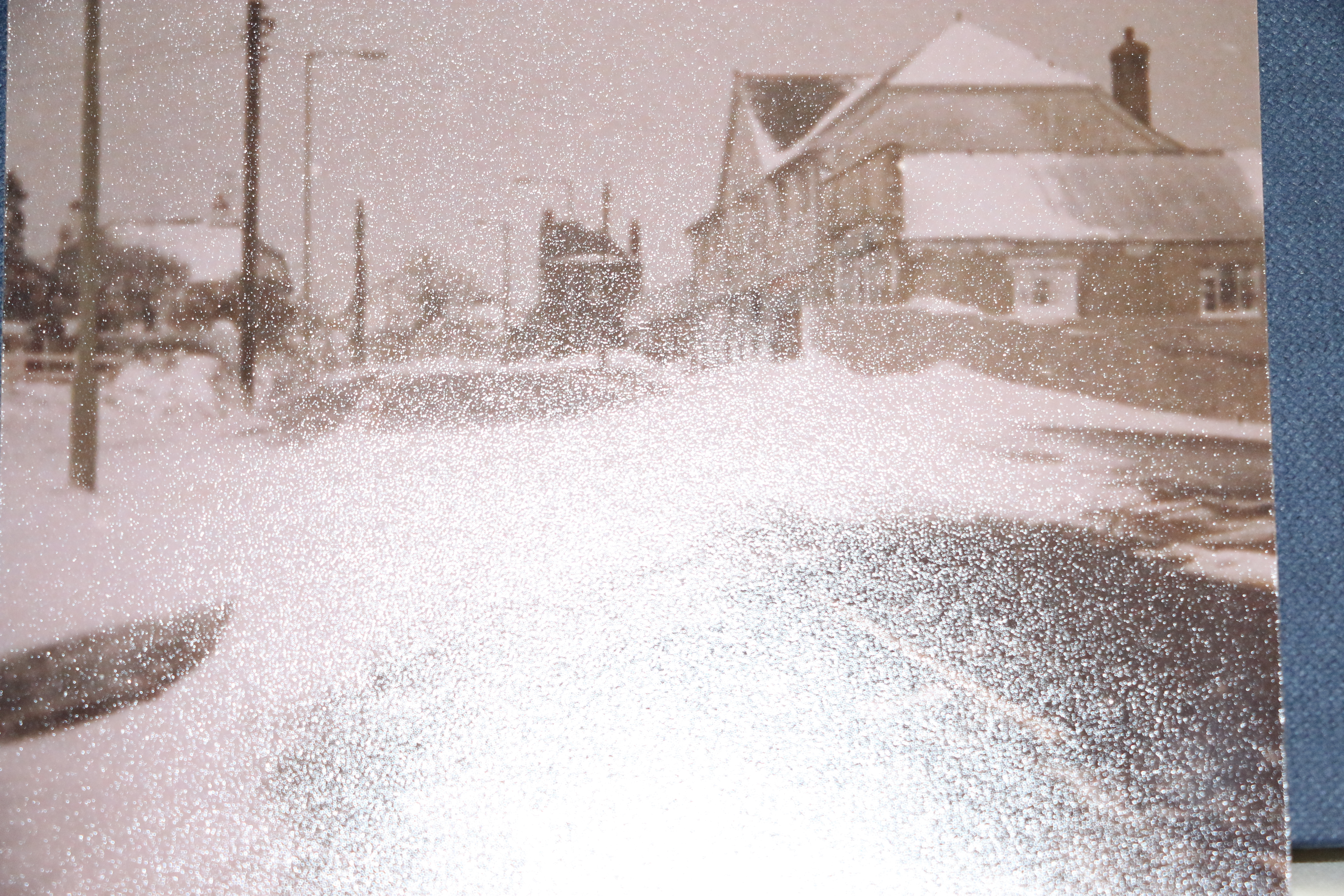
It was also the coldest winter in sixteen years. Heavy snowfall and freezing temperatures disrupted transport, businesses, and energy supplies.

In January 1979 (between the 1st and the 14th), some 20,000 railwaymen held four one-day strikes. There were strikes by haulage drivers, petrol tank drivers, and eventually municipal workers – 1,250,000 of them organised a one-day national strike on 22 January 1979.

The most notorious incident was the grave diggers’ strike on Merseyside, which hit the headlines with the press vilifying trade unions for their lack of sympathy with the bereaved, and, it was argued, with the needs of the nation.

But it was a strike by refuse collectors that came to symbolise the complete breakdown of UK public services. Local councils rapidly ran out of storage space as the binmen continued to strike, so rubbish was left in streets and open public spaces instead.

Photograph courtesy of The Guardian
Photo by Evening Standard/Hulton Archive/Getty Images)

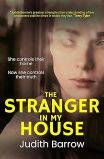
A gripping ‘cuckoo in the nest’ domestic thriller

After the death of their mum, twins Chloe and Charlie are shocked when their dad introduces Lynne as their ‘new mummy’. Lynne, a district nurse, is trusted in the community, but the twins can see her kind smile doesn’t meet her eyes. In the months that follow they suffer the torment Lynne brings to their house as she stops at nothing in her need to be in control.

Betrayed, separated and alone, the twins struggle to build new lives as adults, but will they find happiness or repeat past mistakes? Will they discover Lynne’s secret plans for their father? Will they find each other in time?

The Stranger in My House is a gripping ‘cuckoo in the nest’ domestic thriller, exploring how coercive control can tear a family apart. Set in Yorkshire and Cardiff, from the 60s to the winter of discontent, The Stranger in My House dramatises both the cruelty and the love families hide behind closed doors.

“Judith Barrow’s greatest strength is her understanding of her characters and the times in which they live.” Terry Tyler

Grateful for this reader’s review. One of the first for The Stranger in my House, when it was published in November 2024.

Received the book today and finished it in the one sitting!

Judith Barrow’s done it again! The Stranger in My House is a book that showcases her renowned credentials. The characters are superbly drawn, the tension grows steadily and with each turn of the page your heart is gripped by the dilemmas facing the young protagonists, twins Charlie and Chloe, and their well-intentioned father. As with The Memory (shortlisted for Wales Book of the Year) it’s the way Barrow takes the ordinary and everyday, that we recognise and identify with, and skilfully uses her eye for human behaviour to turn it into something that becomes a nightmare we can readily believe in.
The story begins in 1967 and over the following decade the sense of time and place is expertly done without being intrusive. At the core of the tale is coercion and the reader can see how cleverly the others are being manipulated by the woman who undermines them and shatters their family bonds. My dislike for Lynne and her son Saul built with the book’s momentum. There was that fear that they would get away with unimaginable cruelty and malice. To counter that, were those whose innate love and kindness provided a heartwarming buffer.
From the start, I was gripped and that grip tightened inexorably. It’s becoming a cliché to say that you couldn’t put a book down – but I couldn’t. I had to know what was going to happen next. It mattered. That is the hallmark of a great author.

My Review of Nine Lives by Terry Tyler #ShortStories #Review #Reading

Book Description:

Winner of ‘Best Short Story Collection’ in the 2014 eFestival of Words, “Nine Lives” comprises nine short dramas in the vein of Terry Tyler’s well-loved novels, some funny, some sad, with her usual unpredictable twists. The first chapter of full-length novel and tale of sibling rivalry, WHAT IT TAKES, is to be found at the end.

The stories:

Angel – The perfect wife of the perfect husband is tempted by the fruit of another.
Shut Up And Dance – Paul says he will love Laura whatever size she is. But will he?
Mia – The threat of ‘the other woman’…
Kiss Your Past Goodbye – Zoe finds out what happened to her first love, who broke her heart.
We All Fall Down – Two old friends meet for a drink – just a swift one, of course!
Bright Light Fright – A tale of vengeance, a burglary, and a nasty shock.
Mama Kin – Emma and Melanie have very different approaches to childcare – oh dear!
Don’t Get Mad – Get Even – Kevin and Marcus have been best friends

My Review:

At the moment I’m finding it difficult to concentrate on reading ( well on anything actually). But, having been a fan of Terry Tyler’s writing for a long time I was pleased to come across this collection of short stories. Not a clue why I haven’t found it before!

The one thing (well, not only the one thing – I could expound on this for ages) that I love about this author’s work is her ability to get inside each character’s head, whoever they are, whether a protagonist or the antagonist … or even a minor character. She brings them alive instantly and draws the reader into the story.

Each of these stories are short, but they pack a punch and made me think. There is always something beyond the words, the characters, the plot. I think it’s life – and the general affliction of humanity; whether it’s pride, or greed, or revenge- or whatever else that lies beneath the facade of what is called ‘real life’.

They may be short, they may be easy reads on the surface – but they dig dip and I loved them.

And the book was the winner of ‘Best Short Story Collection’ in the 2014 Festival of Words, which says everything.

So … highly recommended … to any reader.

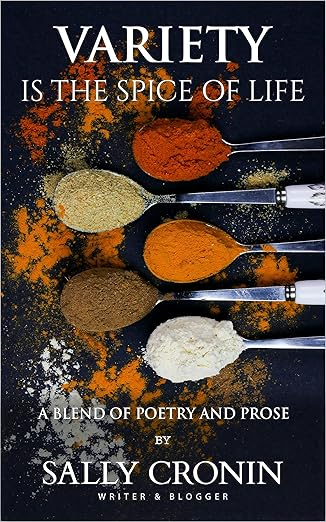
My Review of Variety is the Spice of Life: A blend of poetry and prose by Sally Cronin

Book Description:

Variety is the Spice of Life is a collection of poetry and short stories about relationships with others, including pets and animals inhabiting the world around us. The connection with others brings love and friendship, excitement and sometimes surprises, danger, mystery and sometimes the unexpected.

The poetry explores human nature, the fears, desires, expectations and achievements. Nature offers a wonderful opportunity to observe animals both domesticated and wild. Even in a back garden you can observe a wide variety of creatures and the daily challenges to survive a harsh environment.

The short stories introduces you to a healer whose gift comes with danger, a neighbour determined to protect a friend, a woman on the run, an old couple whose love has endured, an elderly retired teacher who faces a life changing accident, a secret that has been carried for over 70 years and a village who must unite as they face devastating news.

My Review:

I read Sally Cronin’s Variety is the Spice of Life quite a while ago, and recently when ‘tidying up’ my kindle I was surprised and somewhat dismayed to see I’d made notes on this lovely collection of poetry and prose that encompasses such a variety of themes – and not reviewed it.


So here I’m rectifying that.


The poetry at the start of the book is almost a study of the world around us. It’s an invitation to look once more at nature, however small and seemingly insignificant, and is portrayed through wonderfully insightful and sensitive words, so evocative that each piece evokes an image. I remember how, the first time I saw the poems, I read each of them out loud, relishing the sounds, the rhymes, the rhythms. And I would invite any reader to do the same – they come alive in that way, as does all good poetry. Sally has a way of capturing emotions and sensitively showing the uniqueness of the world around us – and the many layers in human nature.


The theme of the individuality, the variety of actions and reactions we are all capable of, is repeated over and over again in many subtle, and sometimes overt ways, throughout her prose. I was tempted to quote, to unpick each of the eight short stories, to describe the core, the main premise that runs through them. But, sticking to my decision not to reveal any spoilers in my reviews, I would just urge any potential reader to discover them for themselves. All reveal the writer’s natural gift for storytelling, of capturing the essence of characters and the world they inhabit. Some stories brought chuckles and a wry smile, others the feelings of sadness, of sharing fears and loss. And tears. Writing a short piece of prose is not an easy task; wrapping up a scene or a journey into a package that reveals a whole plot to the reader in so few words requires a special intuition on the part of the author. Sally Cronin shows she has a talent for such an understanding.


I can do no more, having given Variety is the Spice of Life a second reading, than to stress how much I recommend this offering from Sally. You won’t be disappointed.


A last word on the cover – a brilliant spicy image of the promising within!!

About the author

Sally Cronin is the author of eighteen books including her memoir Size Matters: Especially when you weigh 330lb first published in 2001 which followed her weight loss of 150lbs and the programme she designed to achieve a healthy weight and regain her health. A programme she shared with her clients over her 26 year career as a nutritional therapist and on her blog. This has been followed by another seventeen books both fiction and non-fiction including multi-genre collections of short stories and poetry.

Her latest book Size Always Matters is an extended and updated version of her original book Size Matters and now includes the nutritional element to losing weight and some recipes with ingredients that provide the nutrients necessary for healthy weight loss and continued good health.

As an author she understands how important it is to have support in marketing books and offers a number of FREE promotional opportunities in the Café and Bookstore on her blog and across her social media.

After leading a nomadic existence exploring the world, she now lives with her husband on the coast of Southern Ireland enjoying the seasonal fluctuations in the temperature of the rain.

Find Sally through the following links:

Smorgasbord Blog Magazine: https://tinyurl.com/5xskmavn

LinkedIn: https://tinyurl.com/3tn378xb

Facebook: https://www.facebook.com/sally.cronin

X: https://x.com/sgc58

My Review of A Stolen Future ( A Shade Darker Book 4 by Georgia Rose

Book Description

A rival to overcome… A truth to reveal…

A family firm. A long-held promise. What will it take to protect all she loves?

Alice Fraser has everything she needs. A comfortable home. A few good friends. A satisfying career. But when the promise made doesn’t materialise and everything changes at work she finds herself losing control of all she once held dear.

She could have left. She should have left. Instead she decides to dig in, and make life uncomfortable for her tormentor.

Petty revenge, she calls it. And that’s how it starts. But one day she is pushed too far, and once she takes the next step there is no going back.

A Stolen Future is a gripping domestic suspense novel. If you like character-driven action, suspenseful storytelling and unexpected twists then you’ll love this psychological thriller.

My Review:

From the word go I’ve loved this series from Georgia Rose. In fact I’ve loved all her books, whatever genre. But A Stolen Future is the fourth story that is special, because it’s set in the same village, Melton, and besides being centred on the protagonists and her antagonist, it also touches on and includes characters, now minor ones, whose lives we have seen in depth before.

To that end, I woud encourage any reader to begin – as they say – at the beginning: so it’s

https://tinyurl.com/5n8v36v2

https://tinyurl.com/mw7y2f7b

https://tinyurl.com/55d8brph

I always try not to give spoilers in my reviews, and feel that I’m in danger of doing just that, so I’ll stop there. But what I do need to say is that all these characters are multi layered and immediately identifiable through their dialogue, both spoken and internal. And, together with a cast of wonderful minor characters,, they are embedded in a community that is indicative of so many villages and small towns. And as with all of Georgia Roses’ books the descriptions of the settings give a good sense of place, so I almost felt like on onlooker to life in Melton.

I thoroughly agree with the books description: A Stolen Future is a gripping domestic suspense novel. If you like character-driven action, suspenseful storytelling and unexpected twists then you’ll love this psychological thriller. It’s a book I thoroughly recommend.

About the Author:

Georgia Rose is a writer and the author of the romantic and suspenseful Grayson Trilogy books: A Single Step, Before the Dawn and Thicker than Water. Following completion of the trilogy she was asked for more and so wrote a short story, The Joker, which is based on a favourite character from the series and the eBook is available to download for free at the retailer of your choice.

Her fourth novel, Parallel Lies, encompasses crime along with Georgia’s usual blending of genre and its sequel, Loving Vengeance, has now completed The Ross Duology.

Georgia’s background in countryside living, riding, instructing and working with horses has provided the knowledge needed for some of her storylines; the others are a product of her passion for people watching and her overactive imagination.

She has also recently started running workshops and providing one-to-one support for those wishing to learn how to independently publish and you can find her, under her real name, at http://www.threeshirespublishing.com.

Following a long stint working in the law Georgia set up her own business providing administration services for other companies which she does to this day managing to entwine that work along with her writing.

Her busy life is set in a tranquil part of rural Cambridgeshire in the UK where she lives with her much neglected husband.

Grateful for this promotion and review of my next book from Sally Cronin of Smorgasbord

The Dilemma of Promoting my Books #MondayBlog #books #readers #promoting #socialmedia

Promoting my books has always been something of a dilemma with me. Going to book fairs, giving talks, book signings, not so much; I always assume people are there because they want to be. They want to chat, to look at my books, to discuss the way I write – sometimes they way they write. It’s fun, I love meeting people. I love talking about my books, why I wrote them, how I came up with ideas, what they mean to me. The reviews readers have given them. I’m always grateful.

But how to talk about my books with people I just have met, casual acquaintances- even perfect strangers? It’s not something I do. It even makes me uncomfortable if I’m in the company of someone who does this, especially in public places, spaces that have nothing whatsoever to do with books, reading or writing. Although I admire that writer’s ability to pluck the subject of their work out of the air and present it to someone they have just met, or engineered a meeting, it’s not something I could do. After all, would I want anyone to feel cornered into buying a book, to be pressurised? Well, no, I wouldn’t. I’ve seen it happen, I’ve seen the reactions of the ‘cornered one’.

It’s a fine line in talking to a potential reader, to presenting my books to someone who might not be interested at all – who escapes with relief, albeit having had to buy a book!. Embarrassing!!

Social media, I know, is different in that there is no real life face to face appearance – it’s one step away. Even so, having followed many writers of all genres on the various platforms, I’ve seen those who singlemindedly try to sell their work, and those who use social media in it’s true sense (as a friend once said to me ” the clue is in the word ” social”). And there are those wonderful people who, so generously share the work, the promotions, the blogs and reviews of others. I’m grateful to those I have ‘met’ and become friends with in real life, as well as on social media.

And there’s another predicament for me when it comes to promoting my books – which platform am I most comfortable with. Which platform can I share general news and chat with, as well as publicity for my work … and which not.

Lately I decided to delete my Twiiter/X account. When the name changed I wondered why it had, what would be the difference, how would this formerly named Twitter be used. I have/had many friends who used and still use this platform in the way I did – to chat about life in general, to talk about books, reading, and writing.

But, gradually I saw something change on the feeds I received on Twitter/X. I’m not talking about all the “retired Generals/ Government Officials/ Admirers of our profiles etc. Bots, eager to get to ‘know’ us, that anyone on this platform (and other platforms, of course) receive. I mean the constant barrage of race/gender/political hatred, that was suddenly there. People, real people, eager for (bullying) us to join in, to follow whatever drum they are so fanatical about. For me (and I stress this is only me), it all got too much. I retreated – with a sigh of relief.

In a way it’s made me sad. Through the years I built up a moderate number of followers on Twitter; people I followed, who shared my passion for writing, for books; a lovely community. But the insiduous invasion of nastiness became something that affected me, my moods, my emotions. Perhaps I need a thicker skin? I was told by some of my real friends to ignore the constant chatter of predudice. But I couldn’t, and disn’t want to. It was too much. Circumventing these things in real life can be difficult enough, why did I need to be confronted with it on the screen? The screen where I write stories that I enjoy writing, where I chat and share emails, enjoy other social media platforms? So I made the decision and left Twitter/X.

I’m hoping by joining Instagram/Threads, and continuing on other platforms I will, eventually, connect again with the writers I got to know over many years. But, for my own peace of mind, it will never again be through Twittter/X.

Because I write about family dramas, family situations, I’ve always been aware of the relationships between people, between family members: the love, the loyalty, the friendship, the instinctive support. But also, I’m aware of and write about the dislike, the jealousy, the rivalry, the misunderstandings, the battle for control.

I don’t need it in the surreal world as well.

And so, a footnote: I’m not going to try to promote my books here. But … I do have links!! If you care to look for them…

Just a plug for my publisher: https://www.honno.co.uk/

Memories Make the Story #MondayBlogs #Memories #families #sisters #secrets

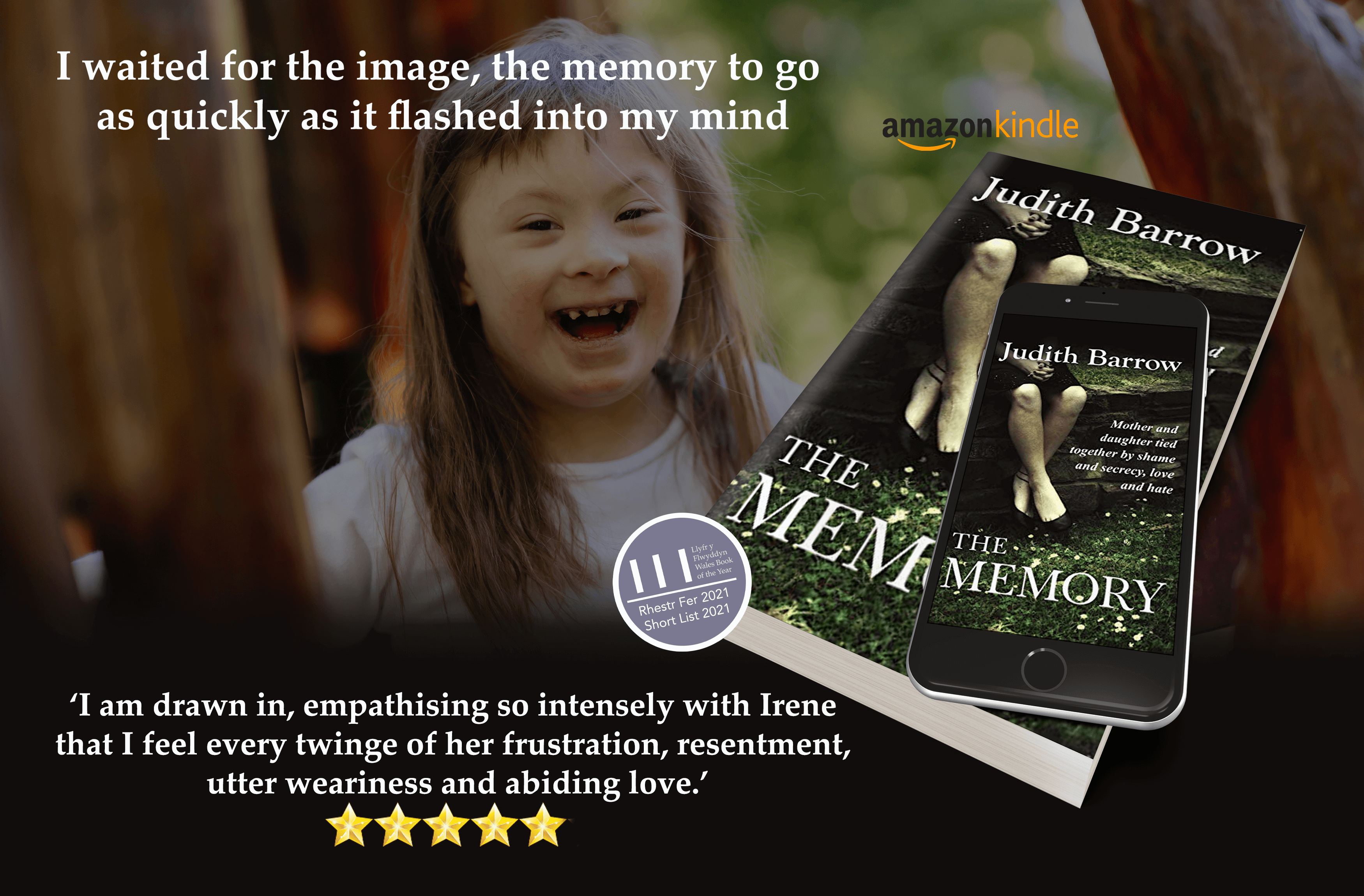
Many people have asked me what was the inspiration for The Memory and my answer is always – memories: memories of being a carer for two of my aunts who lived with us, memories of losing a friend in my childhood; a friend who, although at the time I didn’t realise, was a Downs’ Syndrome child. But why I started to write the story; a story so different from my other four books, I can’t remember. Because it was something I’d begun years ago and was based around the journal I’d kept during that decade of looking after my relatives.

But what did begin to evolve when I settled down to writing The Memory was the realisation of why I’d been so reluctant to delve too far into my memories. The isolation, the loneliness, that Irene Hargreaves, the protagonist, endures; despite being married to Sam, her loving husband, dragged up my own feelings of being alone so much as a child. That awareness of always being on the outside; looking in on other families, relationships and friendships had followed me; had hidden deep inside my subconscious. And now, as content with my life as I am, it unsettled me.

Many people, and as an occasional creative writing tutor I’m one, say that writing is cathartic. Working through Irene’s memories; especially that one memory that has ruled her life, made me acknowledge my own. And that’s fine. I always say to my students, if you don’t feel the emotions as you write, then neither will your reader.

In The Memory I’m hoping the reader will sense the poignant, sad times with Irene, but will also rejoice with her in the happier memories.

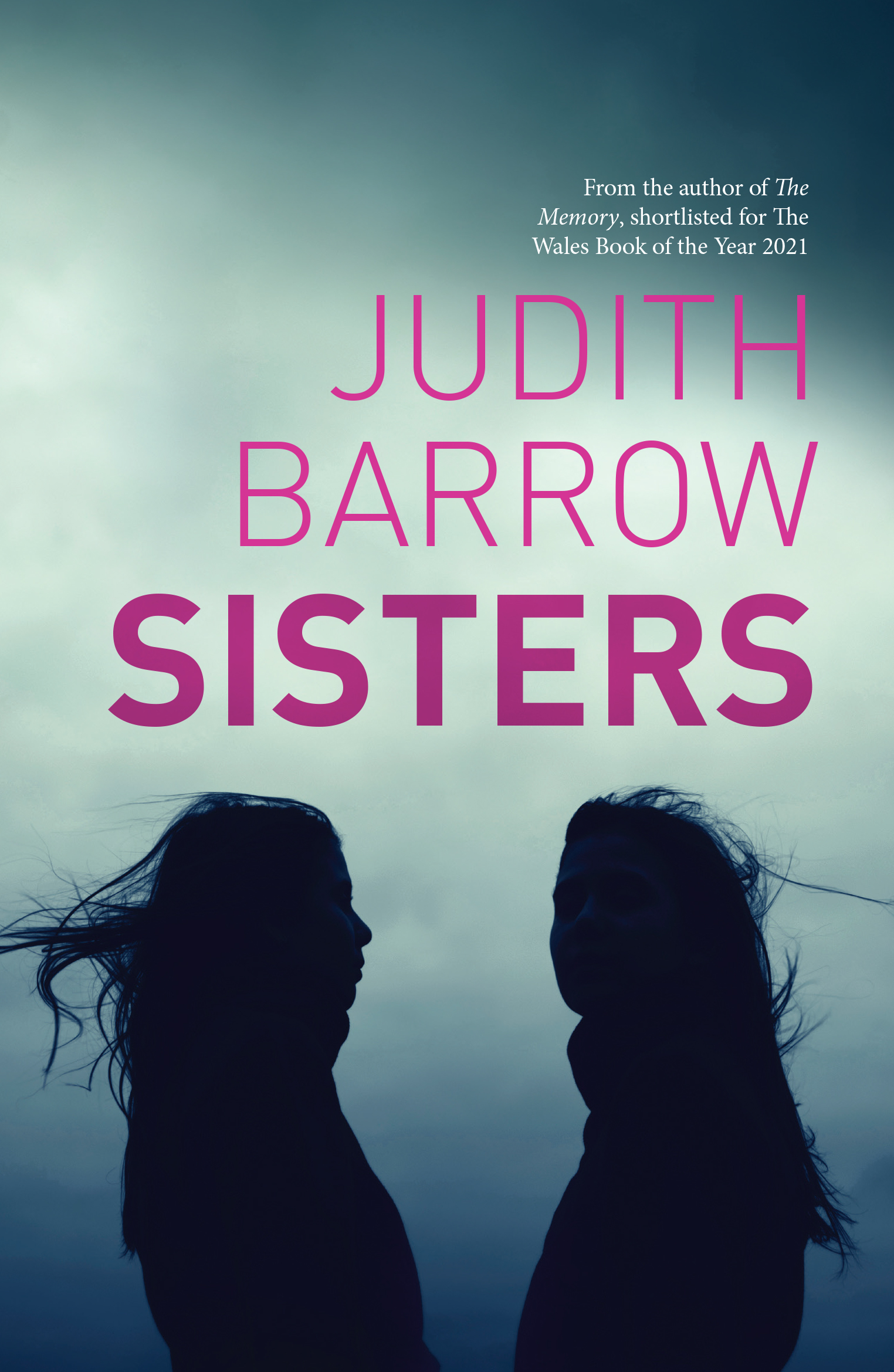
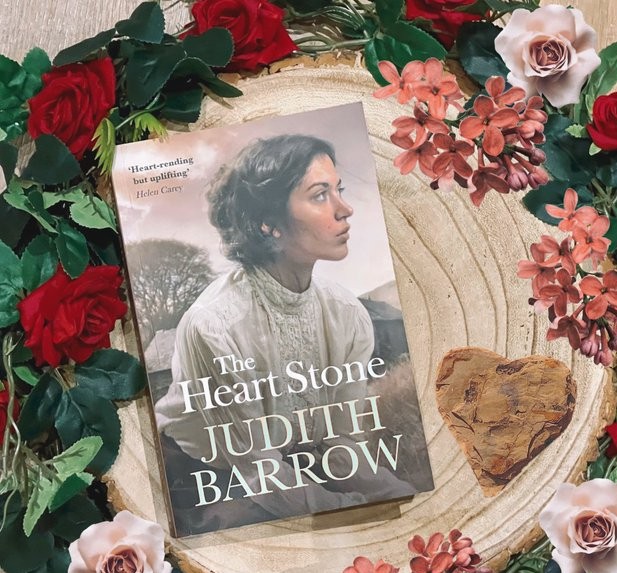
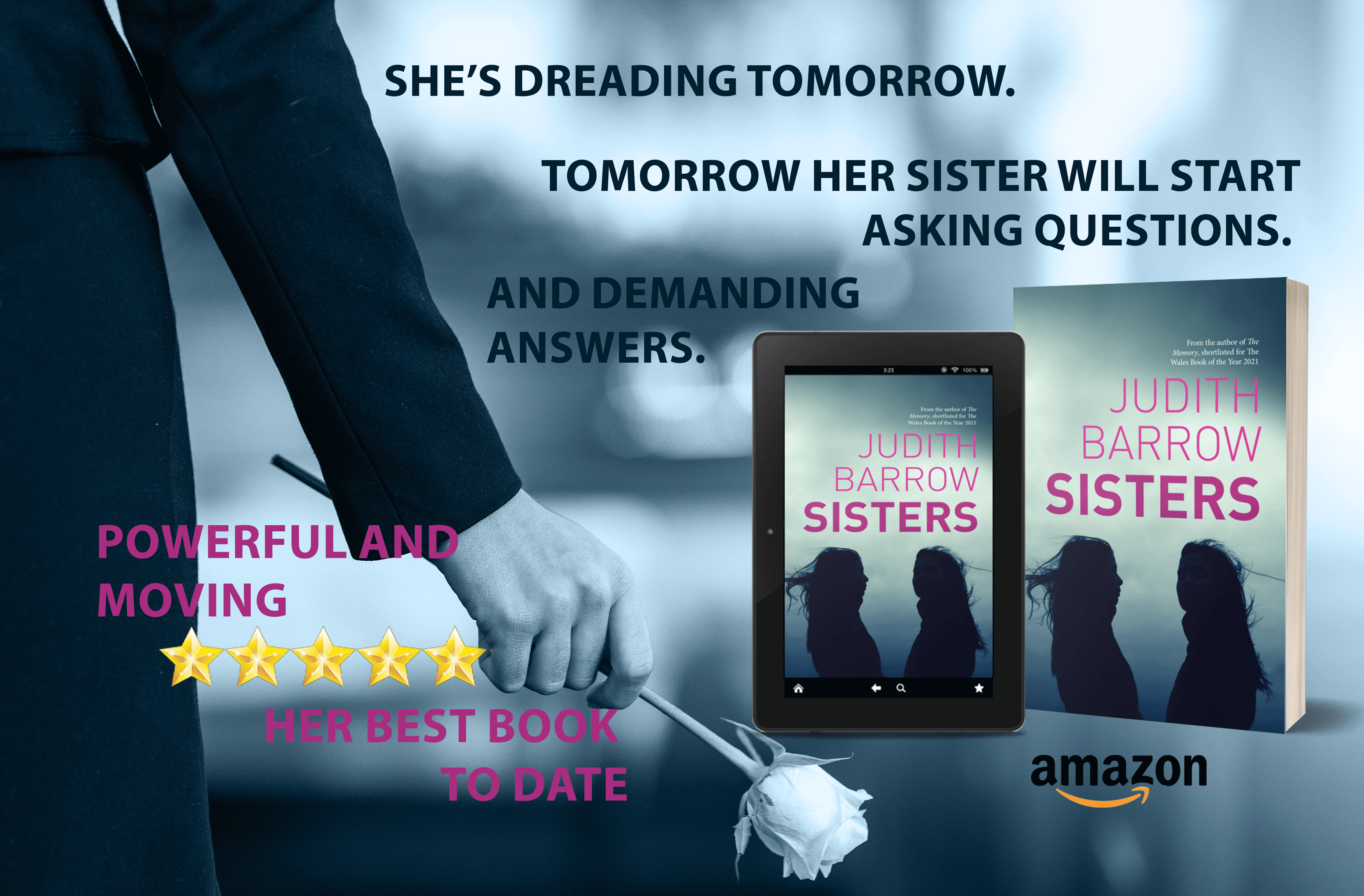
Over the last few years I’ve moved from writing the historical family sagas of Haworth trilogy, that moves through the decades from 1914 – 1968, and The Heartstone, set during WW1, to contemporary fiction such as The Memory (which was shortlisted for the Wales Book of the Year 2021 The Rhys Davies Trust Award) and domestic thrillers, such as Sisters.

My next book, due to be published in November 2024 is The Stranger in My House:

“A gripping ‘cuckoo in the nest’ domestic thriller.”

After the death of their mum, twins Chloe and Charlie are shocked when their dad introduces Lynne as their ‘new mummy’. Lynne, a district nurse, is trusted in the community, but the twins can see her kind smile doesn’t meet her eyes. In the months that follow they suffer the torment Lynne brings to their house as she stops at nothing in her need to be in control.

Betrayed, separated and alone, the twins struggle to build new lives as adults, but will they find happiness or repeat past mistakes? Will they discover Lynne’s secret plans for their father? Will they find each other in time?

The Stranger in My House is a gripping ‘cuckoo in the nest’ domestic thriller, exploring how coercive control can tear a family apart. Set in Yorkshire and Cardiff, from the 60s to the winter of discontent, The Stranger in My House dramatises both the cruelty and the love families hide behind closed doors.

Sisters

The Memory

The Heart Stone

Discover the Haworth trilogy

Prequel to the Haworth trilogy

https://tinyurl.com/3m5xhnsu

Where We Walked #Llyn Crafnant and LlynGeirionydd #Wales #walks #climbs #photographs #stiles #humour #holidays #Sisters #books #readers @honno

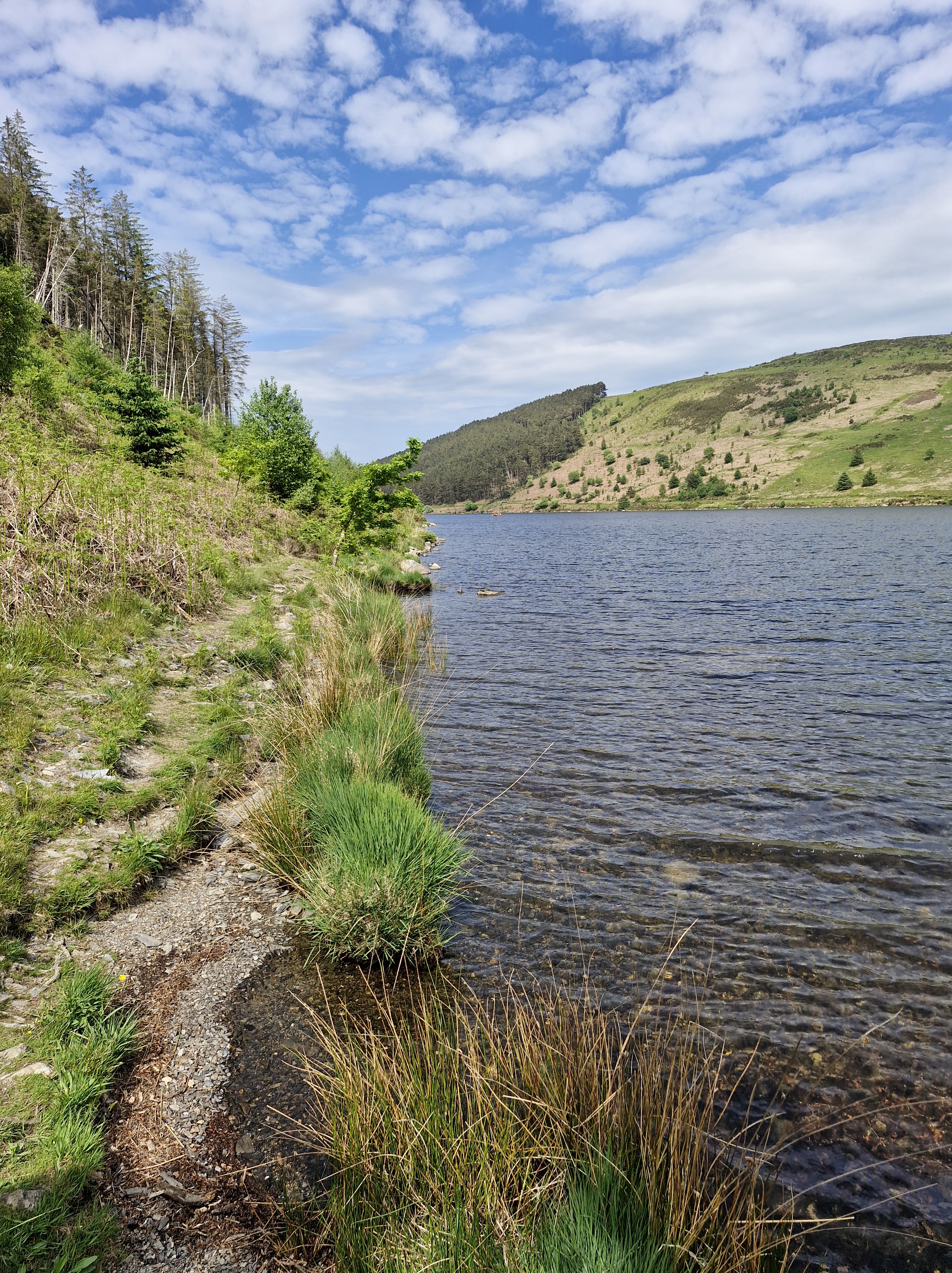
Llyn Crafnant and LlynGeirionydd are separated by the forested slopes of Mynydd Deulyn (Mountain of the Two Lakes) and lie within wonderfully scenic valleys where the Gwydyr forest meets the lower slopes of the Carneddau mountains in Conwy.”The lakes are about a mile apart,” said the photographer casually. “The walk’s about five miles.” What actually happened was that we took the circular route which covers a distance of eight miles and involved some steep climbing.

But, at this point I have to say that wasn’t his fault. We ended up – or should I say – started off walking in the opposite way to the route in the book, having parked in the car park near LlynGeirionydd, instead of the one near Llyn Crafnant.

This was due to the fact that, at one point, the SatNav took us in the wrong direction. It’s always the SatNavs fault, you know; we once got stuck on a very narrow dirt farm track faced with a sign that joyfully said in large red writing, ” Use your eyes, the SatNav lies”. I think I might have said that before, it’s something I bear in mind when sitting by a certain irate driver having to turn back on a journey.

Anyway, I thought, it’ll be alright; we’ll just read the directions backwards.

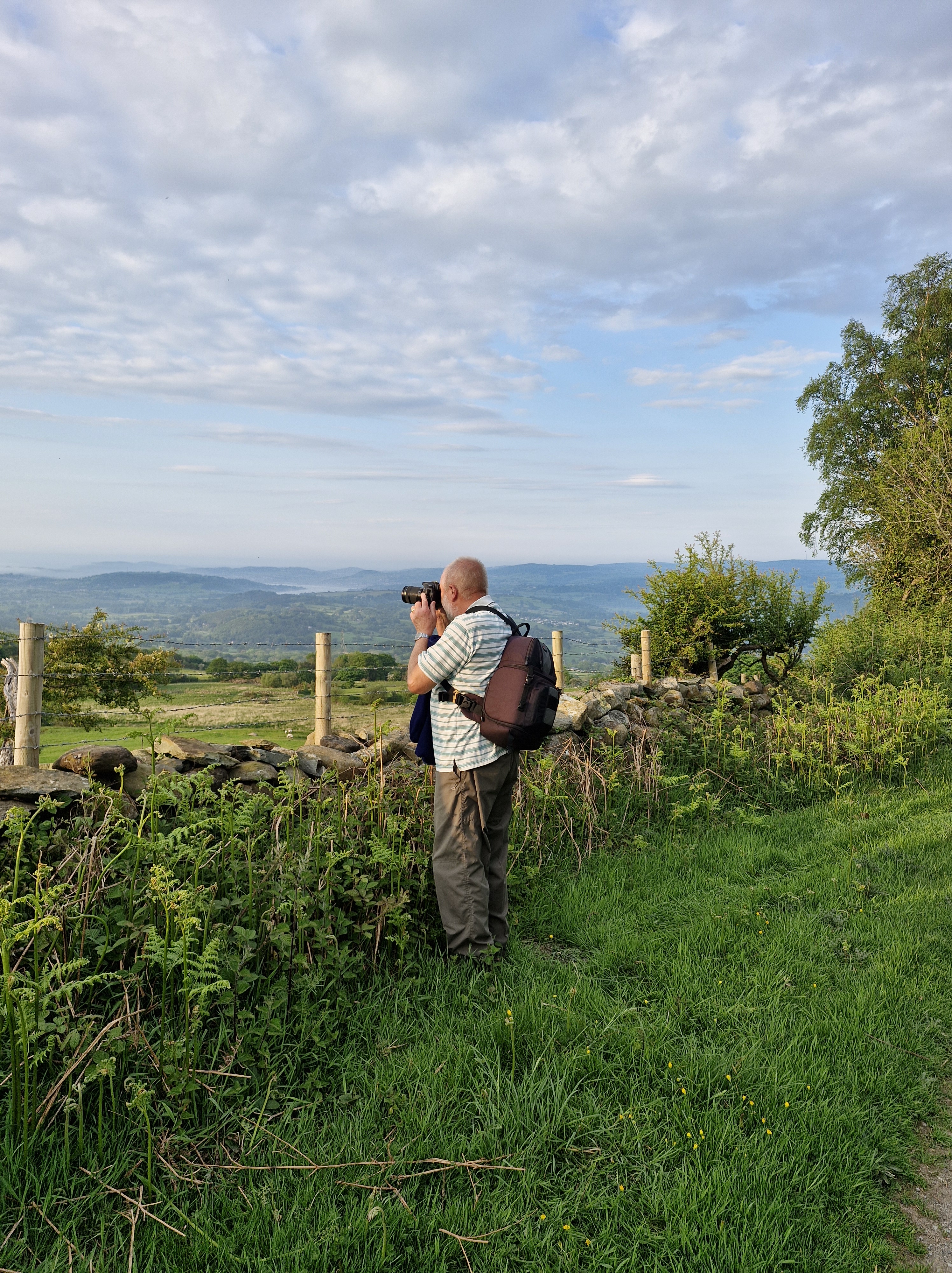
I waited on the edge of the grass while the photographer took his first photo of Llyn Geirionydd.

Gwydir Forest is named after the Gwydir River, which takes its name from the ancient Gwydir Estate, established by the John Wynn family of Gwydir Castle, who owned this area (Gwydir is translated as River with Red Banks) The land here was once dominated by lead and zinc mines. Some of the mines have been partially restored and made safe for visitors, but we didn’t visit; our sights were set on getting to Llyn Crafnant Though we did pass an old restored engine-house, and also the waste tips, now left to be naturally covered over.

The First World War had highlighted a shortage in wood production and the forest was stripped bare at the time because many of the early forestry workers, former employees in the forest’s mines, had no experience of forestry. This caused the 1919 Forestry Act to be passed and Gwydir Forest was acquired from Lord Ancaster by the Forestry Commission in 1921.

Most of the original plantations have now been felled and replanted as part of the forestry cycle. We passed quite a few places where this was happening.

The majority of the forest is conifer such as Japanese larch, Norway spruce and Scots pine but apparently, over the last two decades there has been more Welsh Oak, ash and beech planted to give a more varied and softer outline to the forest

“When we get to the top of this track, there’s a little bit of a short climb and the track narrows a bit,” said the Photographer over his shoulder as I puffed and panted behind him. ” Don’t worry, it’ll be so worth it for the view.’

The track did narrow a bit indeed. As the directions said, ‘…into a steep narrow footpath, less than forty centimetres wide (that’s about sixteen inches in old money) in some places, on an unmade and uneven surface, where you can expect mud, rocks and tree roots.‘. The embarrassing thing is, just as I was wobbling leaping gazelle-like from rock to another a young couple (stressing young here!) ran past… with a dog … very quickly. And they even had the breath to wish us a cheerful “good morning.”

Every now and then we caught glimpses of the view. Went past a stile. Down a wider path. Through a gate. Saw the obligatory cow. And then…

The Photographer got his first proper shot of Llyn Crafnant on the northern edge of the Gwydir Forest.

And then lots more. It really is a glorious place

One last look and we walked away from Llyn Crafnant …

Following the arrows we crossed over the road into a small wooded area. And there the arrows stopped. We looked around: there was a stile in the far corner, but it was broken, covered in brambles and branches and looked unused. On the other side of the clearing there was a broad track. After some discussion we chose the track. (later realising we should have tackled the stile).

After an hour of walking up the never-ending road we stopped for breath, and for the Photographer to revell in the scenery and take many photos of the craggy slopes of Mynydd Deulyn.

And for me to have a rest. It wasn’t until we got back to the car that I realised I had somehow managed to take the attractive shot below whilst I was rummaging in my rucksack for the fourth, and last, bottle of water. Naming no names, but someone dared me to include this in the post – and I’m never one to pass on a dare. Which is probably the reason I find myself on these hikes walks.

Another hour of uphill, round a bend, and the road began to descend, until we were …

Back to the start…

I’m often asked what do I think about when I’m walking and with not enough breath to talk. I must say not having enough breath to talk isn’t something that often happens to me. But usually I’m taking in what’s all around us. We walk in so many diifferent kinds of places, so I just soak up the sights and the sounds whether in the country or in more urban areas.

But there are times when I’m thinking how to describe what I’m seeing, wondering if it will fit into a scene in the book I’m currently working on – or intend to work on. Sometimes it will, sometimes it won’t. It’s usually the latter, but that’s okay. And if I can keep it in mind for when we next stop for the Photographer to capture the scenary, I’ll make notes.

And there have been occasions when I can use those notes. One day we were nearing the end of our walk at Llyn y Fan Fach and Llyn y Fan Fawr near Llanddeusant in Carmarthenshire, Wales. It had been long, so the sun was low in the sky and it felt quite erie as we took a last look out over the water.

And I remembered that moment, that feeling of almost sinister atmosphere when I wrote one of the scenes in Sisters.

“‘Whoops! Watch your step, Miss Clumsy.’ Said in a jokey manner, it still manages to imply the familiar censure. ‘If it wasn’t for me always looking out for you, I don’t know what you’d do.’ He laughs. ‘Probably kill yourself, one of these days.’ He pulls her close, turns her so they are facing the lake, standing on the edge of the steep banking.
The sun is sinking lower in the sky, the black shadows of the trees lengthen, their reflection stretch and waver over the lake, the water rendered blood-red.

Book Description:

An accident and a terrible lie by sixteen-year-old Angie tears her family apart and her younger sister, Lisa, being sent away. They don’t speak for thirteen years, until their mother’s death brings them together. Lisa quickly realises her sister is trapped in a dangerous marriage.

What does Lisa owe to the family that betrayed her? And if she tries to help, will she make things more dangerous for them all?

A powerful story of domestic violence, courage and forgiveness.

Published by Honno Press (26 Jan. 2023)

Where We Walked #Pen Y Gaer #Snowdon #Yr Wyddfa #Wales #walks #climbs #photographs #MondayBlogs #stiles #humour #holidays

“A lovely evening walk,” said the photographer. “With spectacular views.”

It was that last sentence that should have warned me before we set off, I thought as I climbed over the stile and looked upwards.

He’s such a clever clogs: climbing the stile one- handed and taking a video. Hmph!!

A little information here: Pen y Gaer is a mountain summit in the Snowdonia – Beddgelert to Conwy region in the county of Conwy, Wales. It’s the location of a Bronze Age and Iron Age hillfort near the village of Llanbedr-y-Cennin. It’s a natural defensive site. There is a long history of occupation.

There are two Bronze Age cairns on the north-west slope, and extensive prehistoric and later field systems, nearby. The remains seen today are mostly of Iron Age origin, but further earthworks, probably of medieval origin, lie on the south-eastern slopes.

The summit can be identified by one of the large cairns.

Pen y Gaer is three hundred and eighty-five metres high with a prominence of thirty-six metres. (My legs and feet can confirm this!)

The photographer was right though, the views are spectacular.

There’s a broad bank of stones about two metres in width, with a partial kerb of large, irregularly placed boulders before getting to the summit; these are the remains of two defence walls, as well as the outlines of a chevaux-de-frise (A defence, usually a timber or an iron barrel covered with projecting spikes and often strung with barbs of glass).

There are two stone circles. Archaeological evidence indicates that in addition to being used as places of burial, the purpose of stone circles was probably connected to agricultural events, such as the summer solstice.

And, of course, sheep – which moved a lot quicker that we did.

The sun was setting, a mist was creeping in. We were (as far as I was concerned) on top of a mountain. At this point there was a discussion: we could carry on having an adventure and take a track (over a stile) to fields and marshland, and meander until we saw buildings, which could or could possibly not be the cottage we were staying in. Or we could take the windy, steep lane that would definitly lead to the cottage where we were staying.

Whilst someone couldn’t resist one last photo … I staggered sauntered past, with that glass of wine in mind, and carried on.

“A lovely evening walk,” said the photographer, gazing admiringly at photographs on the screen of his camera. “And brilliant scenary.”

I have to admit I agreed, as I soaked my feet in a bowl of cool water. Though next time, I decided, I would check out the mileage… and the ascent … of further ‘walks’.

Who am I kidding?!

A Home is a Safe Haven … or Should Be #Promotion #Families #Sisters

A home is a safe haven, a place we live with our families. A place to build memories as well as a basis to build a future. A place where we can just be ourselves.

But what if it’s not?

What happens when there is a family disaster and one member of that family is seen to be at fault? Tension inevitably builds, judgements are made. Whether it’s a total catastrophe or an avoidable misfortune, ifthe finger is pointed, estrangement can follow.

Some of these rifts develop over long periods of time, following a series of mistakes and carelessness, whilst others are brought about by a sudden, unexpected tragedy. Often, when it’s the latter, when it’s something so dreadful, so unforgivable, that the hurt within the family is too great, there seems to be no choice but to expel that member off, to disown them. They are denied a voice, become vilified.The estrangement widens and over the years layers of resentful memories build up.

The misery is more palpable when the alienation is between children. Sibling relationships can be one of the most enduring connections we have in our lives. Usually they are the first people we bond with, after our parents. When that bond is forcibly broken it can lead to unimagineable heartbreak.

Families can be complicated. That’s an obvious statement. And where there are families, there are quarrels, and there are often estrangements. And there are stories. And these are the stories that are threaded through all my books.

None more so than in Sisters, a story built around one of the most devastating tragedies a family can endure.

Sisters is on promotion at 99p ” A moving study of the deep feelings – jealousy, love, anger, and revenge – that can break a family apart”

Readers have asked what was the inspiration for Sisters. I can only answer that it was an incident that I witnessed as a child. An event that tore in two a family that lived nearby. It’s something I’ve never forgotten.

I’ve had some wonderful reviews for Sisters. This is one of my favourite

Review: http://tinyurl.com/3yjkz7ku

I’m going to borrow some words I used when I reviewed The Memory – “absolutely compelling, a story superbly told, and an entirely unforgettable emotional experience”. I used the word “stunning” a few times too – and although this is a very different book, the words seem equally appropriate. With this book, the author has produced another that packs a considerable emotional punch, coupled with an original story that had me pinned to the seat as I read it from cover to cover in one sitting.

A short prologue hints at what is to come, but the book opens in 1970 – with a family who will be torn apart by a tragic accident, where the blame settles with young Mandy, and its consequences are devastating. Sent to live with her uncle and aunt in Wales, they uncover the truth about what happened – that she was unable to share with her parents – and show her the love she needs to move on, to build a new life as Lisa, and to rebuild her relationship with her mother. Meanwhile her older sister Angie, wracked with guilt after setting up an alibi to escape any consequences for her own actions, flees her home and her life follows a difficult path that will prove hard to escape. The narrative resumes in 1983 – when Lisa returns for her mother’s funeral, she finds that her estranged sister’s earlier actions and later life choices have trapped her in a marriage fraught with abuse, both physical and emotional, with no means of escape. Angie’s husband has an agenda all of his own – and, along with a friend from their shared past, the sisters need to work together to bring down a man capable of appalling acts and cruelty who has become a most unlikely pillar of the community.

My goodness, the author’s telling is so much better than that – but this book is far more than its story. Mandy’s voice – that of a confused child, torn between her own grief, her sense of right and wrong, and her love for her family – tears at your heart. We hear Angie’s voice too – the way she deals with her own guilt and justifies her actions – and any sympathy is, at first, difficult to find. The father who rejects his own child, and the mother who condones it – that’s even more complex. But when Mandy – now Lisa – achieves some redemption, we see Angie’s life heading in a different direction. And while there might be some possibility that she reaps what she deserves, the reader’s compassion builds when we see what a mess she’s made of her life. Her husband is the truly evil one, who will stop at nothing to get what he wants – but the strength of character that Lisa has developed, and that really emerges through the writing, means that there might just be some possibility of him being stopped in his tracks.

And I’m back telling the story again – and I really don’t mean to. The character development is tremendously strong – but so is the story’s backdrop, the community that closed ranks against a small child bullied mercilessly and driven from her home, and the differences once thirteen years have passed. And there are the small background details that capture the context and era for both the past and present story – so subtle you barely notice, and really cleverly done. But the most unforgettable thing about this book is the way it makes you feel, by skilfully telling a story that can’t fail to engage the full range of your emotions. And it never feels like manipulation – these are real people who you grow to care deeply for through the course of their experiences. The book’s conclusion is satisfying in every possible way – and this is the point when I really won’t tell you the story, because that would be entirely unforgivable.

A family drama, perhaps a thriller in parts – perfectly structured and beautifully written, tender and gritty, this is a book that defies placing within one genre, and is all the better for it. All I can say is that I entirely loved it – one of my books of the year, and I couldn’t recommend it more highly.

Sample:

Part Four June 1981

Chapter Forty-Three

I’m holding the rail at the top of the steps of the bus and peering through the window. It doesn’t help that it’s dirty and smeared with rain. But I can see Micklethwaite is run-down. Shabby.

Though the doors squeal open I can’t make my legs move. I don’t look at him, but I can sense the driver’s impatience and curiosity, and worry for a moment that he’s recognised me. He’s older, but I know he’s the man who used to be the school caretaker. Can’t remember his name but I wait for him to speak. The old familiar fear prickles my skin, I gulp against the sudden tears thick in my throat.

But all he says is, ’On or off, miss?’

I don’t look round at him when I go down the steps clutching my only luggage, my small, blue suitcase. I’m not intending to stay in Micklethwaite long. Standing on the edge of the flagged square, I look around at what used to be the new shops and flats. It’s depressing, exactly as Mum described it last time she was in Ponthallen. She’d said it had deteriorated beyond recognition and she was right. Most of the shop fronts are boarded up, the windows of the flats above covered in yellowed net curtains or wrecked blinds hanging lopsided. Empty crisp packets and torn greasy chip cartons wrap themselves around the iron railings once fixed to protect the young saplings, now fragmented twigs.

Except for a group of hooded youths slouched in front of an off-licence, the windows plastered in red and orange posters to entice customers in with offers of knocked down beer and wine prices, there’s no one around. What had been there before?

I can’t remember. Then it comes to me; it was the hairdressers, Mavis’s Waves and Curls. Mum used to come out of there once a month with the same tight perm that all the other women had. And each time, red-faced with an embedded line from a hairnet across her forehead, Mum swore she’d find a different hairdresser. Each time it had taken until the evening for that line to fade.

 Angie and I used to tease Mum about it.

The thought makes me feel wretched, broken. Broken was how I felt the last time I was in Micklethwaite, carrying a burden that would be with me all my life. I didn’t think of it in that way then; after all I was just a kid. But I do know no one wanted me here at the time. The sideways glances of hatred and recrimination drove away that feeling of belonging. It’s odd; I haven’t thought of it as home for a long time. I belong in Ponthallen now.

And as for Angie ‒ Angela, I’m not sure how I’ll feel when I see her. It’ll be the first time in over eleven years. The first time I’ll speak to her after my life altered completely because of her.

Links:

Amazon UK: http://tinyurl.com/2r2bu3z4

Amazon.com: http://tinyurl.com/7cw4ss8b

Amazon.com aus: http://tinyurl.com/4rh35v6d

Social Media links:

https://judithbarrowblog.com/


https://twitter.com/judithbarrow77


https://www.facebook.com/judith.barrow.3


https://www.honno.co.uk/authors/judith-barrow

https://www.bookbub.com/profile/judith-barrow

Walking the Samaria Gorge – White Mountains National Park #memories #holidays #photographs #MondayBlogs

Twenty years ago we went to Crete. Enticed by the write up in brochure in a cafe we decided to walk the Samaria Gorge. The entrance to the Gorge is from Xyloscalo, near the village of Omalos, leads past the old village of Samaria and (sixteen kilometres, that’s ten miles in old money) later eventually ends at Agia Rouméli, a small pretty coastal village with glorious views of the Mediterranean Sea. And tavernas under canopies of eucalyptus and cypress trees. I have to say it was the thought of this last description that persuaded me.

Last week, much to his excitement, husband (the photographer) found some of his photographs taken with one of his old cameras. These reminded me that this was the very first long walk that we actually did together.

Shades of things to come!

When I say “together” I actually mean that, if I didn’t keep an eye on what he was doing, I’d often be walking for ages before realising I’d been talking to myself and he was nowhere in sight. Since then I’ve learned to take a notebook and pen on these excursions so I can sit and write while he takes dozens of different photographs of the same scene, but from different angles, with different lenses, and all that technical stuff.

Armed with strong hiking boots, sunhats, sun cream, bottles of water and snacks we caught the bus at Chania to take us to Xiloskalo at five in the morning. By the end of the hike I was glad we’d started so early; it was sweltering. But I must admit that, at first, I wasn’t quite as enthusiastic as the photographer to be getting up at that time on holiday.

How wrong I was. This is one hike I will never forget.

Declared a National Park in 1962, mainly to protect the endangered Cretan goats (Kri-Kri) which live in the area, the gorge has a rich history dating back to ancient times. Inhabited by people who worshipped the goddess Samaria. It also served as a refuge for Cretan rebels and freedom fighters during various periods of oppression and occupation by foreign powers such as the Turks, the Germans, and the British.

It also is home to the most exquisite plant life

The Cretan ebony is found only in Crete, with purple flowers that adorn the Cretan mountains. Other endemic Cretan plant species are the Cretan crocus, the beautiful Cretan bell several aromatic herbs that thrive on the island. ( N.B. This is not one of husband’s photographs but courtesy of CRETA MARIS. I couldn’t resist showing this gorgeous plant, which wasn’t flowering at the time we went – otherwise you would definitely be seeing various angles and shots of it courtesy of husband)

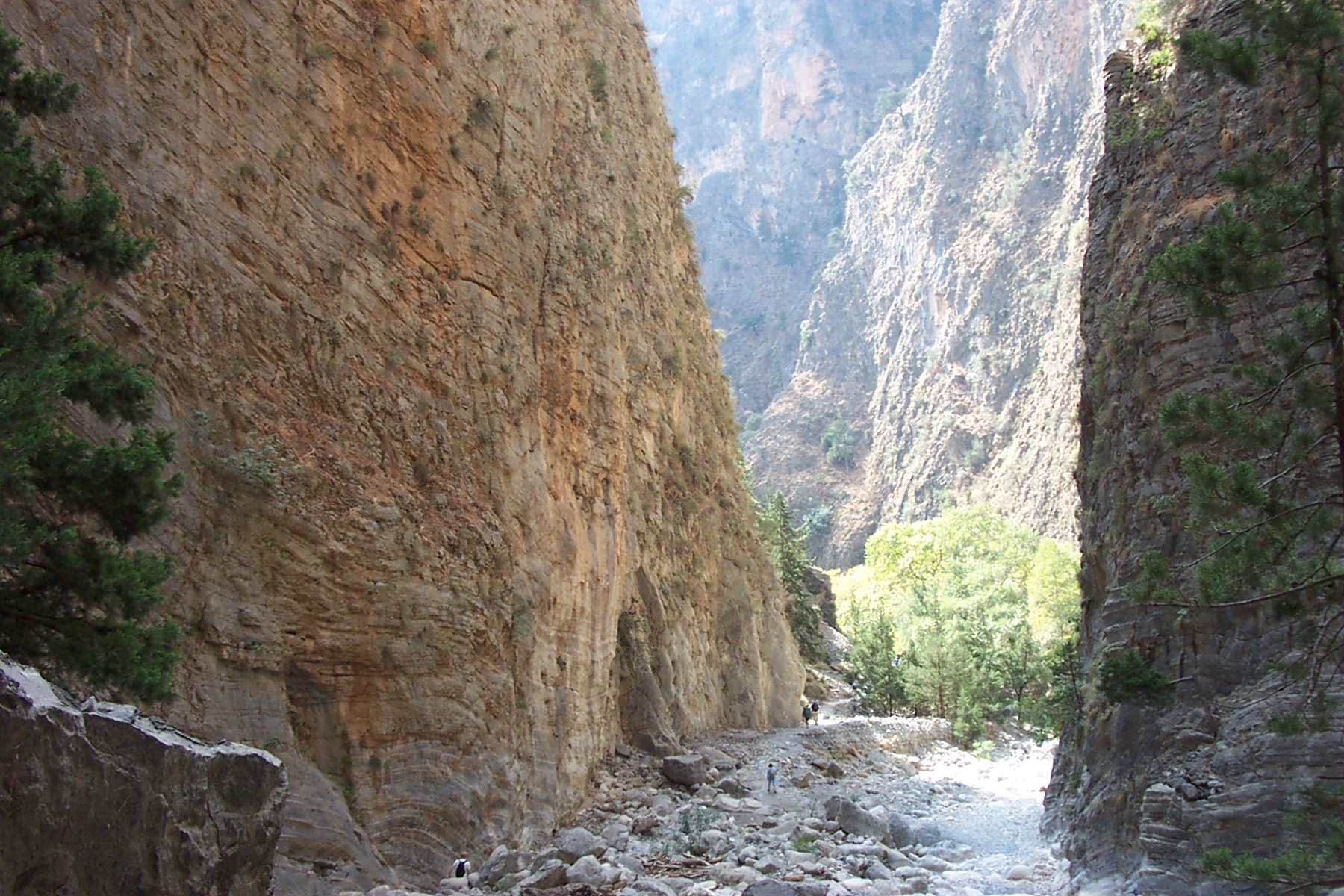
The above is the narrowest and most famous section of the gorge – called Portes or The Iron Gates. It’s thirteen foot wide and one thousand six hundred and forty foot high. This was the most rocky part to walk – though as far as I remember we did much clambering over and around boulders all the way. I was very glad of the stout boots.

It took us six hours before we reached Agia Roumeli and relaxed outside a taverna with a cold glass of water and a dakos ( a hard barley rusk soaked in olive oil with coriander seeds, chopped tomatoes, oregano and cheese). I asked how this was made but I’ve never quite managed to achieve that special flavour we tasted that day)

The gorge is only open from May to October; in the first and last few weeks of that period it may close if there’s a danger of flash floods.

And I was glad that I wasn’t told before we set off that the gorge is home tofour different snakes, the Balkan whip snake, the dice snake, the cat snake and the leopard snake. Although not dangerous I’m relieved i didn’t see one.

Now husband has discovered photographs from his old camera I’m hoping he can find more from other walks we’ve done over the years. They’ve brought back many memories.

Trust and Secrets: The two things in families that make or break the familial bond.

Trust is the one thing that families should be able to take for granted. Trust born from love, from the belief that each member knows the other because they have lived together, seen the weakness and strength of each other. Having faith in each other means there is trust in theirselves, in their judgements, in the confidence that they are implicitly correct in that conclusion. But of course trusting can be the automatic option, the unquestionable. It also avoids any confrontation between siblings, parents, relatives. It means that every one can get on with their lives, not having to think too hard about the actions of everyone else in the family. It’s taken for granted that each believes whatever they are told. Don’t question. In turn it’s accepted that each can also reveal whatever they want to disclose about themselves, their thoughts, their actions. And take for granted that they are believed.

There is only one problem with that premise. Everyone is alone in their heads. No one (whatever anyone believes to the opposite) can read minds. What we present to the world, the façade we choose to show is our decision.

 And that is where the secrecy comes in. Although it’s undeniable that every family has its secrets, it’s the substance of them that count. Of course secrets can also be trivial, small, kept in a loving way (a celebratory surprise, a present) or as a kindness, hiding something that is better kept under wraps if the person keeping it believes that.

On the other hand, harrowing, life-changing secrets can damage an entire family for some time. Even forever. Those kinds of secrets break that instinctive trust, that belief that those closest to us, who we love and respect, are truthful. Are not lying.

Families can be complicated. That’s an obvious statement. And where there are families with secrets, there are stories. And these are the stories that are at the root of all my books.

Links:

The Stranger in my House

The Memory

Sisters:

Social Media links

https://judithbarrowblog.com/


https://twitter.com/judithbarrow77


https://www.facebook.com/judith.barrow.3


https://www.honno.co.uk/authors/judith-barrow

https://www.bookbub.com/profile/judith-barrow

Where We Walked – @VictoriaCave @YorkshireDales #Walks #Photographs @Yorkshire Dales #MondayBlog

Remember me saying in the last post about our visit to Catrigg Force – a small but impressive waterfall just east of the village of Stainforth? And that the first time we found it we’d actually planned to call to see it as the first part of a massively, more strenuous, longer walk – a longer walk, planned by the photographer? One where we could take in the landscape from the Victoria Cave in Ribblesdale? And I said, more to come on that another time? Well, this is it. The above is the last (nearly last) part of the track up to the cave

Another of my photographs when I stopped to take a breath on the path (path?!!) on the way up to the cave. The photographer was already there. Give him his due, he did come back to help me to the top.

And here it it, the limestone Victoria Cave, located east of Langcliffe in Ribblesdale and discovered by chance in 1837, the year of Queen Victoria’s coronation.

Until then the cave was unknown. Tinsmith Michael Horner (1813-1878) struggled through a small hole between rocks,searching for his dog and found the cave. Inside tound bones, coins and various metal objects on the sediment floor. Later, on the 28th June 1838, Joseph Jackson, a keen amateur archaeologist, investigated further. The Victorians were fascinated by ‘bone caves’ where there might be a possibility of finding evidence for the earliest humans and extinct animals. Some animal bones were actually found here. It’s thought that hyenas used the cave as a den and dragged bones that had been scavenged into it, including hippos, narrow-nosed rhino, elephants and spotted hyenas bones. After the last Ice Age the cave was used by hibernating brown bears. In amongst the animal bones of reindeer was an 11,000 year old antler harpoon point, the first evidence for people in the Yorkshire Dales. Some items from the cave are held at the Craven Museum in Skipton.

The roof of the cave has become increasingly unstable over the years and roof falls are possible. We didn’t go in!

This is another one of my photos (yes I do know it’s less inspiring than the photographer’s). But I spotted this from up high, from outside the cave – and thought it was a large teddy bear, or the skeleton of a teddy bear!! Of course, when we got closer… it was just a pile of rocks. Note to self – contact optician

Just before we set off on the downward trail, and with an eye on the clouds bubbling up in the distance, a photograph of the next five miles we needed to go.

And it’s here I will reveal a moment of a basic and elementary photographer’s mistake.

” One last photo before the rain sets in,” he says, scanning the vista. “I didn’t realise it had become so dark so quickly.”

I waited, didn’t say a word while he huffed and puffed, and glared at the sky. For quite a while Then I stated the obvious. ” Your lens cap is still on.”

Good job he has a brilliant sense of humour!!

We followed the trail past the rugged terrain of the Warrendale Knotts before descending the hillside on the way back to Settle.

Where we had a well- earned cup of tea and a scone.

Where We Walked @Catrigg Force @YorkshireDales @England #walks #photographs #memories

This was a walk we did twice when we were in the Yorkshire Dales. The second time we were here was by accident. We got lost – surprise, surprise – and came over a hill to find us again at …

Catrigg Force … a small but impressive waterfall just east of the village of Stainforth. The first time we found it we’d actually planned to call to see it as the first part of a longer walk (more to come on that another time!)

After a snack in the local pub (called the The Craven Heifer in Stainforth – spot a theme in these posts?!!) we headed up a bridleway called Goat Lane. (not sure why it’s called that, we only saw sheep and lambs – definitely no cows… well not at this point anyway!). The track, between parallel stone walls, is a small section of the Pennine Bridleway

We meandered along the upward track for about a mile, past several derelict farm buildings, and stopping to admire the view. In the distance on the moorland, are the Winskill Stones, pedestals of limestone and topped with slate, left behind by ice-age glaciers. Finally we reached the signpost for Catrigg Foss on the left of the track.

No stile this time, a kissing gate, leading to a steep, rocky, narrow, path, down to the stream, Catrigg Beck, which flows from the hills and feeds the waterfall.

The poor quality and lack of any particular viewpoint/perspective in this photograph is because it was taken by me, on my mobile phone, while balancing on the edge of the waterfall and hanging onto a branch of a nearby tree. All without the knowledge of the photographer, who’d wandered off to find the the base of the waterfall.

I followed. Leaving the stream, I made my way down another narrow path alongside a sheer wall of limestone rock and a tree-lined drop to a deep, hidden gully that holds the waterfall and the shallow river, the continuation of Catrigg Beck. There were two separate, quite magical falls, well over six metres in height in the long wooded copse. The sprays of water, a sparkling shower of colours in the sunshine that flickered through the leaves, landed all around us. The only sounds were the waterfalls and the calls of birds. Perfect peace …

Ah well… as I said, this was only the start of a massively, more strenuous, longer walk – a longer walk, planned by the photographer, to take in the landscape from the Victoria Cave in Ribblesdale (discovered by chance in 1837, the year of Queen Victoria’s coronation). This second time we were here was purely by coincidence, and at the end of a quite sedate walk … for us! We ambled through fields, back to where we were staying in a tiny cottage in Langcliffe.

By the way…

Apparently Catrigg Force was a favourite haunt of composer Edward Elgar. He visited the waterfalls and, during his visits to the Yorkshire Dales, was inspired to compose Pomp and Circumstance and the Enigma Variations, his most famous works.

Three fun facts about Elgar – Not only was he a composer, but he was also an amateur chemist. In his spare time, he would tinker with experiments. He was the first composer to fully embrace recording music. And he loved cycling. He had a Royal Sunbeam bicycle that he nicknamed ‘Mr. Phoebus. ‘

.

.